
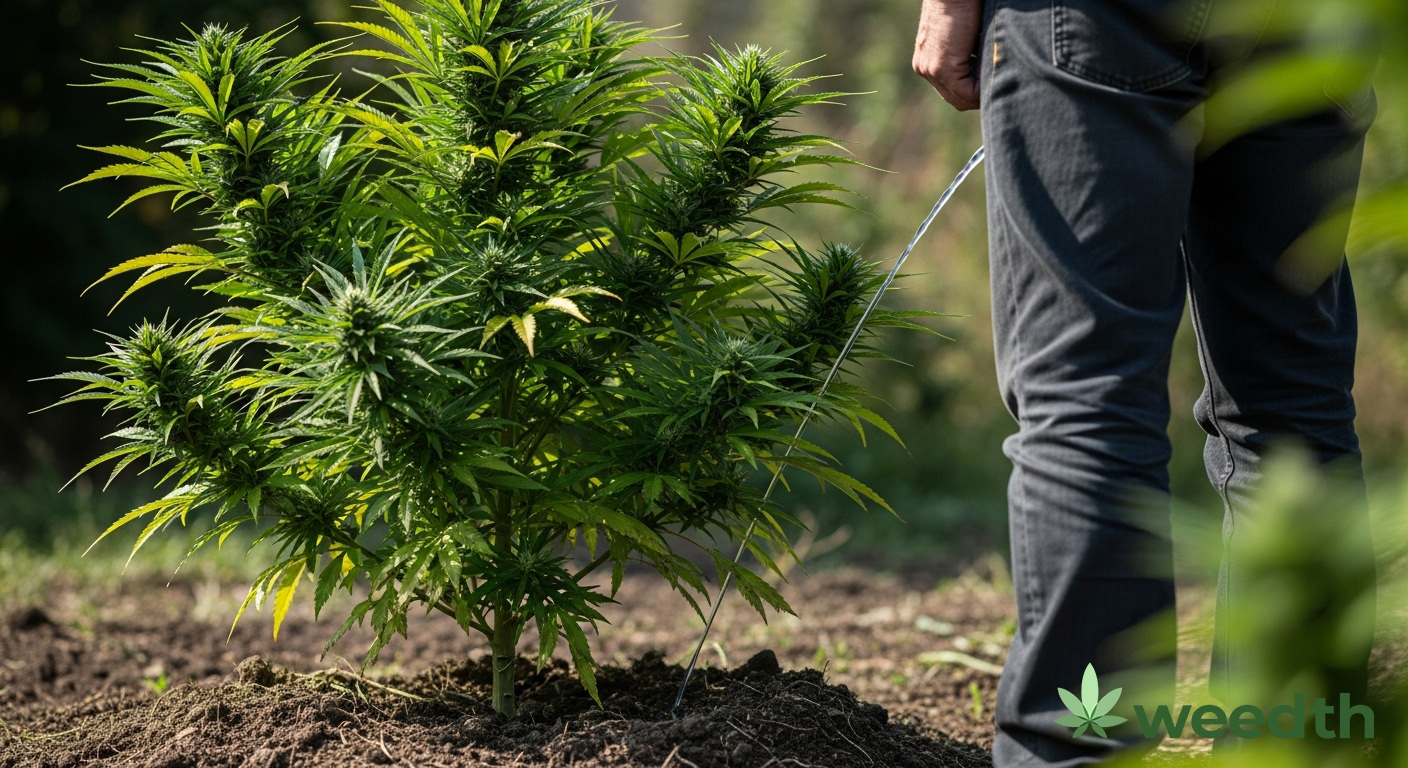
Urine as Fertilizer: The Gross Truth
Would you ever water your prized cannabis plants with human urine? It sounds like a stoner myth or a bad prank – but the science might surprise you. Using urine as fertilizer is a practice that’s been around (quietly) for ages, and it’s getting fresh attention from sustainable farming advocates. Weedth, your friendly expert grower, isn’t afraid to tackle the “ick factor” with a dose of humor and a ton of facts. So let’s dive into the gross truth: Can pee really help your cannabis grow, and should you even try it?
Urine is often called “liquid gold” in gardening circles for a reason. This ubiquitous waste product is loaded with plant nutrients, and people around the world are literally taking the piss – and pouring it on their crops. But is it a stroke of green genius or a recipe for disaster? In this comprehensive guide, we’ll explore urine’s nutrient content and relevance to cannabis cultivation, compare it to traditional fertilizers, explain how to use it safely (if at all), and get real about the risks (from pH and salt to pathogens and plain old stench). We’ll also highlight research and real grower experiences – from boosting veggie gardens to field trials on hay and even hemp. By the end, you’ll have Weedth’s nuanced recommendation on whether to turn your bathroom business into plant food. Let’s get started (and yes, we promise to keep it both technical and lighthearted)!
Liquid Gold? Nutrient Content of Human Urine
Human urine is about 95% water, but it’s the other 5% that interests us growers. That small fraction is jam-packed with nutrients: primarily nitrogen, plus significant phosphorus and potassium, along with a cocktail of micronutrients. In fact, urine contains most of the key elements that plants crave. Chemically speaking, urine is rich in urea, an organic nitrogen compound that breaks down into ammonia – a form of nitrogen plants can use readily. The remaining solids include minerals like P and K, plus trace amounts of calcium, magnesium, sulfur, zinc, boron, and more. Essentially, it’s a free, in-house fertilizer that your body produces every day.
How does this translate into the familiar N-P-K values? The exact nutrient profile varies by diet and individual, but on average fresh human urine is roughly equivalent to an NPK rating of about 10-1-4 (give or take). In gardening terms, that means it’s a high-nitrogen fertilizer – similar in ratio to some commercial “grow” fertilizers used for leafy growth. One analysis puts it at ~0.6% nitrogen by volume, ~0.05% phosphorus (as P₂O₅), and ~0.15% potassium (as K₂O). Put another way, an average adult’s pee outputs a lot of nitrogen relative to the other macronutrients. It’s no wonder urine has a reputation for greening up plants: nitrogen (N) is the nutrient responsible for lush, leafy growth and vigorous vegetative development. Cannabis, especially in its early growth phase, is a nitrogen-hungry plant – so there’s clear relevance here.
Urine doesn’t skimp on the other essentials either. It contains phosphorus (P) needed for root development and flowering, and potassium (K) for overall hardiness and bud formation – though in much lower proportion than nitrogen. It even carries those bonus micronutrients that cannabis needs in smaller doses, like calcium (for cell structure and healthy growth tips) and magnesium (for chlorophyll production). One agricultural expert notes that human urine’s nutrient profile is remarkably similar to that of many commercial complete fertilizers, providing ample N, P, K as well as secondary nutrients. In essence, your bladder is producing a broad-spectrum plant food that could be put to use.
To put the potential in perspective, consider this: the average person produces 100–150 gallons (380–570 liters) of urine per year, containing roughly 9 pounds of nitrogen and 0.8 pounds of phosphorus in total. According to one source, that’s enough nutrients to grow the wheat for a loaf of bread every day for a year. In other words, we each flush away a sizable pile of fertilizer daily. In fact, over 80% of the nitrogen and about 65% of the phosphorus in the food we eat exits our bodies in urine, not feces. Surprising, right? It turns out pee has more of the “good stuff” plants need than our solid waste does, and (bonus gross-out fact) it’s typically sterile or nearly so when fresh. Unlike feces, urine usually doesn’t harbor pathogens in healthy individuals, and it’s much easier to sanitize if needed. So from a purely nutrient standpoint, human urine is a powerhouse fertilizer resource that mostly goes down the drain unused.
How Urine Stacks Up to Other Fertilizers
Before you start peeing in the potting soil, let’s compare urine to the fertilizers growers normally use – both organic and synthetic. This will help us understand the pros and cons in context.
Urine vs. Traditional Organic Fertilizers
Gardeners have long relied on manures, composts, and other organic amendments to feed plants. Compared to these, urine is unusually potent and fast-acting. For example, cow or horse manure might only have an NPK of around 0.5-0.5-0.5 (very low concentrations of nutrients by weight), and even “hot” manures like chicken or bat guano rarely exceed a few percent nitrogen. Human urine’s effective NPK (~10-1-4) dwarfs those in terms of immediately available nutrients. It’s essentially a predigested fertilizer – our bodies have done the work of breaking down protein into urea, so the nitrogen is in a form plants can take up quickly. One farmer involved in urine recycling trials put it simply: “human urine has a nutrient profile similar to many commercial fertilizers, with high levels of N, P, K, plus micronutrients”. In other words, it’s more concentrated than most organic soil amendments.
Another big difference is speed. Traditional organic fertilizers (like compost, manure, bone meal, etc.) release nutrients slowly as soil microbes break them down. Urine, on the other hand, is immediately available to plants – essentially a natural liquid fertilizer. In fact, growers often liken it to a quick shot of nitrogen, akin to a liquid feed. This quick release can be an advantage for a hungry plant, but it also means higher burn risk if overused (we’ll get to that). Organic matter sources also improve soil structure and microbial life, something urine alone doesn’t do (it adds no carbon or fiber). So, many experts note that urine should supplement rather than replace compost or organic matter in soil. It provides the raw nutrients, but not the long-term soil health benefits that compost or mulch offer.
One clear advantage of urine over traditional manures: it’s free and readily available. You don’t need a farm or a compost pile – every person produces it daily in quantity. It’s hyper-local and cuts out the need to transport fertilizer from elsewhere. And if you’re into sustainability, using urine closes an ecological loop by recycling nutrients that would otherwise become pollution in wastewater. Plus, let’s address the yuck factor: Gardeners routinely use animal waste (cow, horse, chicken poop, even seabird or bat guano) to fertilize crops. By comparison, using pee – which is mostly sterile and much easier to handle than feces – might actually be less gross than what we’re already doing. As one commentary put it, almost everything we eat is grown with some form of animal excrement; urine is just another natural output of the cycle. When handled correctly, it doesn’t introduce the dangerous pathogens that raw manure can. In fact, many traditional farming cultures have used “night soil” systems including urine for centuries, and modern ecological sanitation projects in places like Sweden and Finland have extensively researched using human urine as a fertilizer in a safe way. So while the cultural taboo is strong in some places, it’s not a new or inherently outrageous idea globally.
That said, using urine directly on plants requires more finesse than tossing compost on your soil. It’s a strong ammonia-based fertilizer and can cause issues if not managed properly (e.g., leaf burn or salt buildup) – whereas compost is very forgiving. Also, organic certification programs typically ban raw human waste on crops (for valid safety reasons), so don’t expect to see “organically grown with human urine” stickers at the farmers market any time soon. For personal or home use, though, it’s an option some gardeners quietly employ as a free organic nutrient boost.
Urine vs. Synthetic Fertilizers
What about the bottled nutrients and synthetic powders many cannabis growers love? Chemically, urine holds up surprisingly well in comparison. Common synthetic fertilizers for vegetative growth might have NPK ratios like 20-10-10 or 15-5-15. Human urine’s ~10-1-4 profile means it’s lower in phosphorus and potassium relative to nitrogen, but it does supply all three macros to some degree. Think of urine as roughly half-strength compared to a concentrated chemical fertilizer – but remember, it’s delivered in a large volume of water. When you apply urine, you’re often adding several liters at a time (diluted), so the total nutrients reaching the soil can be significant. In field tests, crops fertilized with stored human urine have achieved yields comparable to those using synthetic NPK fertilizer, which speaks volumes about its effectiveness. Multiple studies around the world (on crops like hay, corn, cabbage, and more) confirm that properly applied urine can match the performance of industrial fertilizers in terms of plant growth and yield.
One obvious benefit of synthetic fertilizers is consistency and precision. When you open a bag of 10-10-10, you know exactly what you’re feeding your plants. Urine, by contrast, can vary person to person and meal to meal. A diet high in protein might yield pee with extra nitrogen; someone who ate salty fast food might contribute extra salts. There’s a bit of variability and mystery in using “home-brew” fertilizer. However, the variations aren’t usually drastic enough to prevent use – it just means you should err on the side of caution and observe your plants. Modern guidelines treat urine fertilizer similarly to a roughly equivalent synthetic: you calculate application rates based on the N content (typically the limiting factor) and adjust as needed.
Another angle: environmental impact. Synthetic nitrogen fertilizer is produced through the energy-intensive Haber-Bosch process, which guzzles natural gas and accounts for about 1% of global energy use and significant CO₂ emissions. Phosphorus and potassium come from mining finite mineral reserves. Human urine, on the other hand, is a renewable resource that we create daily – and using it spares the energy and emissions otherwise needed to manufacture or mine those same nutrients. It also reduces load on sewage treatment plants and minimizes nutrient pollution in waterways (urine is a big contributor to waterway nitrogen and phosphorus if not removed in treatment). In short, fertilizing with urine can be seen as eco-friendly: you’re recycling nutrients and reducing reliance on synthetic inputs.
One could say urine is Nature’s own hydroponic solution – albeit a very unorthodox one. In practice, commercial cannabis growers are not collecting employee pee to feed their thousands of plants (rest assured, no one’s literally “pissing on your nugs”). It’s just not practical at scale, and it would be a public relations nightmare. However, for a small-scale or home grower intrigued by self-sufficiency, urine is a readily available analogue to a basic liquid fertilizer. Just remember: with great power (high nitrogen) comes great responsibility in application.
Does It Work? Evidence from Studies and Field Trials
We’ve heard the theory – but does using human urine as fertilizer actually grow healthy plants? The answer from research and real-world trials is a resounding yes (when done right). A number of studies and pilot projects have tested urine on various crops, and the results are encouraging for would-be pee recyclers.
Some of the most extensive trials have been conducted by the Rich Earth Institute in the USA, which specializes in “peecycling.” Over multiple years, Rich Earth and partner farmers applied sanitized human urine on fields of hay, sweet corn, pumpkins, hemp, and other crops. The data showed that urine-fertilized plots produced yields equal to plots fertilized with conventional synthetic fertilizer, and both greatly outperformed unfertilized control plots. For instance, Vermont farmers reported their hayfields yielded significantly more – even allowing an extra cutting of hay they couldn’t get before – thanks to urine fertilization. In side-by-side comparisons, crops like corn and forage grass grew just as robustly with human urine as they did with store-bought fertilizer. In these trials, plant tissue quality (like protein content in hay) remained high, and no significant differences in final yield or feed value were found between urine vs. mineral-fed crops. In short, the plants didn’t care whether the nitrogen came from a factory or a bladder – they responded vigorously to both.
International studies echo these findings. Researchers abroad have grown cabbage, maize, cucumbers and more with human urine as the primary nutrient source, often reporting improved growth and yields compared to unfertilized crops, and yields on par with chemical fertilizer programs. One notable study in Finland found that urine-fertilized cabbage grew bigger and was safe to eat (they even added wood ash to urine to boost potassium, which increased the cabbage yield) – and taste testers couldn’t tell any difference from traditionally grown cabbage. Similarly, trials in Africa and Asia on maize and other staple crops have shown urine can nearly replace commercial nitrogen fertilizer when used carefully, which is a big deal for sustainable agriculture in low-resource settings.
What about cannabis specifically? There’s little formal research on marijuana fed with human urine (understandably, given legal issues in the past), but we can draw insights from related experiences. Cannabis is in the same plant family as hemp, and Rich Earth’s trials on hemp (a cannabis variety grown for fiber/CBD) found urine to be an effective fertilizer for that crop. Anecdotally, some adventurous home cannabis growers have tried using diluted urine during the vegetative stage, treating it like an organic nitrogen feed. Reports from a few grower forums suggest it can work: one grower noted that urine (diluted 10:1 with water) kept their plants green and thriving through veg, and then they switched to a different organic bloom fertilizer for flowering with decent results. Others have used it “in a pinch” when they ran out of nutrients and claim the plants “didn’t seem to mind” once it was properly watered down.
However, it’s important to emphasize that these are not mainstream practices – they’re rare, experimental cases. Most people who cultivate cannabis (indoors especially) prefer the consistency of known nutrient formulations. Still, the fact that some have grown healthy cannabis with a bit of pee shows that in principle, the plant can utilize those nutrients just like any other. Cannabis is a hardy, nutrient-loving plant, especially during vegetative growth when it needs ample nitrogen for all that leafy expansion. So it stands to reason that a nitrogen-rich solution like urine can satisfy the plant’s appetite at that stage. The critical part is managing the concentration and ensuring no harmful residues or imbalances as a result.
In summary, both scientific research and hands-on trials indicate human urine is no joke as a fertilizer. It has successfully grown food crops and even cannabis relatives with yields comparable to conventional fertilizers. When someone jokes about “peeing on the plants,” agronomists might actually respond: “Hey, it works!” But making it work safely and effectively is the key – which brings us to the crucial how-to section.
Using Urine Safely: When and How to Apply It
Let’s say you’re curious (or resourceful) enough to give this a try. How do you actually use urine in the garden without killing your plants or grossing out everyone? The mantra to remember is: Dilution is the solution to pollution (and plant burn). Raw urine is strong stuff – you don’t pour it straight on your pot plants like you’re flushing a toilet. Here are the best practices from both studies and experienced gardeners:
Dilute, Dilute, Dilute: Almost every source agrees that urine must be watered down before application. A common recommendation is a 1:10 dilution (urine:water) – basically one part urine to ten parts water. At this dilution, the nutrient levels become mild enough to feed plants without burning. Some guides suggest ratios anywhere from 1:5 up to 1:15, depending on your plants’ sensitivity. For example, tougher, well-established plants might handle a richer mix (say 1:5), while young or delicate plants want a weaker mix (1:10 or more). One cannabis grower forum advised never exceeding about 1:10 strength for safety. In practice, many gardeners find a middle ground around 1:5–1:8 works well for veggies; for cannabis, leaning toward the gentler side at first is wise. Can you use it straight? Only with extreme caution – some veteran gardeners do pour undiluted urine on very well-watered soil or compost, but this isn’t generally recommended for potted plants. When in doubt, err on the side of more dilution. You can always add another round if needed, but you can’t easily undo fertilizer burn.
Apply to Soil, Not Foliage: Urine should be used as a soil drench, not a foliar spray. Always pour or irrigate it into the soil around the root zone, never directly onto the leaves, stems, or buds of the plant. Why? Two reasons: First, the solution (even diluted) can “scald” or chemically burn leaves on contact, leaving nasty brown spots or killing tissue. Second, you really don’t want urine residue on the leaves or flowers of a plant you plan to eventually consume (for both sanitary and taste reasons!). So use a watering can, bucket, or drip line to deliver the diluted urine to the soil, targeting a distance of a few inches from the plant’s main stem so it can soak down to the roots. After applying, it’s often advised to water the area lightly with plain water (or let rain do it) to help wash the nutrients deeper into the root zone and dilute any remaining strength on the surface. This also helps reduce odor in your grow area.
Use on the Right Plants at the Right Time: Not all plants and growth stages are suitable for urine fertilization. The ideal candidates are established, fast-growing, green plants in vegetative growth – think leafy vegetables, grasses, grains, and yes, cannabis in its vegetative (pre-flowering) stage. Urine’s high nitrogen is perfect for fueling foliar growth. For cannabis, this means you might consider using diluted urine during the early and middle stages of growth when the plant is focusing on stems and leaves. Do NOT use urine on seedlings or newly sprouted plants – it’s too strong and can easily harm tender roots. Wait until your cannabis is a well-rooted juvenile or older (at least a few sets of true leaves and established in soil) before even thinking about it. Also, be cautious using it on plants that don’t like a lot of nitrogen. For example, legumes (peas, beans) fix their own nitrogen and really don’t need extra – urine would be overkill. Root crops (carrots, beets) can be adversely affected by too much nitrogen, leading to lush tops but poor roots.
Timing with Plant Stages: If you’re growing fruiting or flowering plants (tomatoes, peppers, and yes, cannabis buds), you’ll want to stop or greatly reduce urine fertilizer as budding begins. Excess nitrogen in the flowering phase can cause cannabis to focus on leaf production at the expense of buds, potentially delaying or reducing your yield of flowers. Cannabis in bloom prefers a shift toward more P and K and less N. Urine, being low in potassium and very high in nitrogen, is out of balance for that stage. So, you might only use urine during vegetative growth, then switch to other organic feeds (like compost teas, bloom fertilizers, or top-dressed amendments) once you flip to 12/12 light or see first signs of flowering. This way, you avoid nitrogen toxicity in bloom and also avoid any chance of a urine smell clinging to your buds (improbable if applied to soil, but better safe than sorry!). As a rule of thumb: Only use pee on plants that are green and actively growing, not on flowering/fruiting plants.
Frequency of Application: Even diluted, urine fertilizer is potent, so it doesn’t need to be applied constantly. Generally, feeding about once a week to once every two weeks during the growth period is sufficient. Heavy feeders (like corn, brassicas, or a big bushy cannabis in veg) might take a weekly application. Lighter feeders or houseplants could be happy with biweekly or even monthly feeds. Always observe your plants – deep green, vigorous growth is a sign they have enough nitrogen; if they start getting too dark green, clawing leaves, or showing burnt tips, back off the feeding frequency. It’s wise to alternate urine feeds with plain water or other fertilizers. Some experts advise rotating with compost or organic fertilizer applications to keep soil life healthy. For example, one week give diluted urine, the next week water or compost tea, etc. This ensures you’re not overwhelming the system and helps incorporate some carbon/organic matter between the nitrogen hits.
Complement with Other Inputs: Remember that urine alone doesn’t provide a lot of potassium, and its phosphorus, while present, is relatively low. If you plan to rely on it heavily, you might need to supplement K and P from other sources for a balanced nutrition, especially for flowering. One intriguing tip from experienced homesteaders: mix wood ash (from a fireplace or stove) with urine to boost potassium. Wood ash is rich in K (and calcium) but contains no nitrogen; urine is rich in N but lower in K – combined, they form a more complete fertilizer (just be careful, wood ash is highly alkaline). Another approach is to use urine during veg and then something like composted banana peels, kelp meal, or other organic K sources as the plant transitions to bloom. For phosphorus, bone meal or organic bloom boosters can fill the gap. The key point is that urine is best used as part of a larger nutrient plan, not the sole source of fertility for a fruiting crop like cannabis. Soil already contains some nutrients too, so if you’re growing in rich soil you might only use urine sparingly as a booster.
Sanitation and Safety Measures: Though fresh urine from a healthy person is essentially sterile, caution is never a bad idea – especially if you plan to use it on edible plants or share the produce. The World Health Organization (WHO) recommends sanitizing human urine if it will be used on crops others will eat raw. The simplest method is storage: keep the collected urine in a closed container for at least 6 months before use. During storage, two helpful things happen: many potential pathogens die off naturally over time, and the urine undergoes chemical changes (urea converts to ammonia, raising the pH to ~9) that help kill bacteria and viruses. By six months, stored urine is considered sanitized enough for agricultural use in many guidelines. Another method is pasteurization – gently heating the urine to ~160–180°F (70–82°C) for 30 minutes will neutralize pathogens. This can be done on a stove or solar cooker if one is being very thorough. Most home gardeners using only their own household’s urine on their own plants don’t bother with this step (and generally haven’t reported issues). But if you’re using a communal collection (say a whole community project’s urine) or applying to veggies you’ll give to others, it’s a wise precaution. Never use urine from someone who has a serious infection without sanitizing, and be wary if anyone contributing is on medications or heavy drugs – traces of those can be present in urine. (If you’re on prescription meds, you might reserve your urine fertilizer for non-edible crops, or at least be aware that tiny amounts of drug residues could transfer to soil. The good news: a recent study found no significant uptake of pharmaceutical traces in crops fertilized with human urine in field conditions, but perception is another matter.)
Composting and Indirect Use: Not comfortable pouring pee on your plants? You can still reap its benefits by adding it to a compost pile. Urine is an excellent compost activator because it provides moisture and a surge of nitrogen to feed the compost microbes. If you have a pile of dry leaves or straw, for instance, urinating on (or better, into) the pile can speed up decomposition significantly. The heat generated during hot composting will also destroy any pathogens present. Many organic gardeners swear by this method: you’re basically converting the urine into rich compost, which you can later use on any plants with no “yuck” factor attached. Composting also ties up some of the nitrogen in microbial biomass, making it release more slowly and reducing the risk of burning plants. In practical terms, peeing on the compost or adding collected urine to it is a safe way to dispose of it while still recovering the nutrients for your garden. Just don’t pour gallons of urine into a small compost bin all at once (too much liquid can make a compost pile anaerobic). Add gradually or in batches layered with carbon materials.
Storage and Handling: If you plan to collect urine (say, in a jug or bucket) for later use, a few tips will make your life easier. Use a container with a tight-fitting lid – this keeps odors contained and prevents nitrogen loss (urea will convert to ammonia gas if exposed to air). A wide-mouth container or funnel can help in, ahem, aiming effectively, especially for female users. Adding a bit of acid (like white vinegar or citric acid) to the storage container can dramatically cut down odor and preserve nitrogen. Rich Earth Institute suggests about 1–2 cups of vinegar per 5 gallons of urine as needed. The vinegar lowers the pH, which keeps the urea in stable form and prevents it from off-gassing as ammonia. When it’s time to fertilize, you can dilute straight from this stored urine. If the stored urine has aged a long time, be aware it might be quite alkaline (pH 9) and have a strong ammonia smell – dilution and soil application will neutralize this, but handle it in a well-ventilated area. Wear gloves if you’re squeamish or if there’s any chance of bacterial contamination. And obviously, label any bottles so no one accidentally takes a swig of the “lemonade” in the garage!
Now that we have the how-to, let’s summarize some Do’s and Don’ts for quick reference:
Do:
- Do dilute urine with water (commonly ~1:10) before applying. Young cannabis plants or sensitive strains might require extra dilution.
- Do apply it to the soil around plants, ideally on moist soil, and water it in lightly. This ensures nutrients soak down and prevents leaf burn.
- Do use it during vegetative growth and on nitrogen-loving plants. It’s great for green, leafy growth phases.
- Do store or sanitize the urine if using on edible crops for others. A 6-month storage or mild pasteurization can eliminate pathogens.
- Do monitor your soil if using repeatedly – perform occasional soil tests for pH and salt levels, especially in containers or greenhouses. Flush with fresh water if you suspect salt buildup.
- Do consider combining urine with other organic fertilizers (like compost, wood ash, etc.) to balance nutrients and support soil health.
Don’t:
- Don’t apply undiluted urine directly to plants. It can burn roots and microbes due to high nitrogen and salts.
- Don’t get it on the leaves or buds – no foliar feeding with pee! It can scorch foliage and you definitely don’t want it on consumable plant parts.
- Don’t use on very young seedlings or on dormant/dry soil. Tender roots can’t handle it, and dry soil can get “scorched” – always water soil first or dilute extra in dry conditions.
- Don’t overdo it with frequency. Too much of any fertilizer (including urine) can cause nutrient imbalances or leach into groundwater. Remember that excess nitrogen not absorbed will just wash away (or stink up the place).
- Don’t apply to plants in their blooming/fruiting stage (like flowering cannabis) where excess nitrogen is undesirable. Switch to a more bloom-friendly feeding regimen at that time.
- Don’t use if you are not comfortable with the idea or if local regulations prohibit it on the crop in question. In some places, using human waste as fertilizer on consumable crops might be regulated.
- Don’t ignore the “yuck” factor for others. If you share a garden or are giving produce/buds to friends, be transparent if you used human waste in cultivation – and be prepared for some raised eyebrows. Perception matters, even if the science is sound.
Risks and Drawbacks of Using Urine
Despite its nutrient advantages, using urine as fertilizer comes with a bucketful of potential drawbacks that any grower should weigh carefully.
Nutrient Burn and Overfeeding: Because urine is rich in immediately available nitrogen, plants can get nitrogen burn or toxicity if you apply too much. Signs include dark, shiny leaves that start to curl (“claw”) and leaf tips turning brown (burnt). Cannabis is quite susceptible to N toxicity – growers often recognize the telltale excessively deep green foliage. Undiluted urine or too-frequent applications can easily overload the plant. The remedy is simple: dilute properly and don’t feed too often. According to one cultivation forum, urine’s nitrogen is so readily available that it can burn plants much like a strong chemical fertilizer if not moderated. It’s somewhat forgiving when diluted (some sources note nutrient burn from urine is actually rarer than with synthetics, likely because people tend to underapply), but the risk is there. Always start with conservative amounts – you can watch the plant and increase slightly next time if you see deficiency.
pH Effects: Fresh human urine tends to be slightly acidic (commonly around pH 6, though it varies with diet). When stored and urea breaks down to ammonia, urine becomes strongly alkaline (pH 9 or more). Either extreme can potentially affect soil pH if large quantities are used. However, research and field usage suggest that soil often buffers these additions quite well. Soil microbes will convert ammonia to nitrates, a process that can produce some acidity, often balancing out the initial alkalinity. One farmer guide notes that adding ammonia-based fertilizer like urine usually has no lasting effect on soil pH if plants absorb the nutrients (and if the soil has decent buffering capacity). In Rich Earth’s trials, they did not record significant pH changes in the soil from urine use. That said, in a container or very poor soil, repeated heavy urine use could shift pH undesirably. The best practice is to monitor and, if needed, adjust with soil amendments (lime to raise pH if it gets too acidic, sulfur to lower if too alkaline). Diluting with plenty of water also means each application has a mild pH influence.
Salt and Mineral Buildup: Urine can contain a lot of salts, mainly excess sodium and chloride from our diet. When you apply urine, you’re also adding these salts to the soil. In an outdoor setting with rain and natural drainage, small increases in salt are usually washed away or diluted. But in potted plants, greenhouses, or arid climates with little leaching, salt buildup is a real concern. Over time, you might even see a white crust on top of the soil – that’s salt residue, and it’s bad news for plant roots. High salt concentrations can cause osmotic stress, “burning” roots and impairing the plant’s ability to take up water. Rich Earth’s experiments fortunately did not find significant salt accumulation issues in their field plots, but they still urge caution in closed systems. If you notice leaf tips burning or soil crusting, stop using urine and flush the soil thoroughly with clean water to leach out salts. Also, avoid using urine fertilizer in situations where no flushing is possible (e.g., a small container that never gets heavy watering to runoff). Combining urine with organic matter (compost, mulch) can help because the organics encourage microbial absorption of nutrients and improve drainage.
Odor Problems: Let’s be frank – pee smells, especially once it starts breaking down. Fresh urine is not too offensive (mildly pungent), but let it sit a day in a bucket and you’ll get a strong ammonia stink. If you apply urine to soil and it doesn’t soak in or is left pooled, your grow area could start to reek like a poorly kept bathroom. This is more of an issue indoors or in greenhouses. Outdoors, odors dissipate and soil absorption plus microbial action will neutralize smells fairly quickly. To minimize odor, always dig or water the urine into soil rather than leaving it on the surface. Using vinegar in stored urine as mentioned will keep the storage from smelling strongly. Also, don’t store open buckets of pee near your grow – aside from smell, you’ll lose nitrogen that way. If you accidentally overdo it and get an ammonia smell from your soil or runoff, flush the area with water. In an indoor cannabis grow, odor control is already crucial (for the plant’s skunky terpene smell), and you really don’t want to add urine ammonia to the mix. The smell could cling to fabric or just make your grow tent an unpleasant workspace. So, odor is a practical drawback that can be managed with good practices, but it’s a strong argument against using urine in many indoor scenarios.
Pathogens and Hygiene: We touched on this in the usage section – while urine is mostly sterile coming out, it’s not guaranteed to be 100% safe. Certain infections (like leptospirosis, some viruses, or simply external contamination) could pose risks. In normal, healthy individuals, the risk is very low. Still, if multiple people are contributing or if the urine is not fresh, treat it with caution. Pathogens in urine are a much smaller concern than in feces, but not zero. There’s also the matter of personal hygiene: handling pee fertilizer isn’t for the squeamish. Spills can happen. Always wash your hands and equipment after dealing with it (as you would with manure or any garden fertilizer). If you sanitize or store as recommended, pathogens should be neutralized. What about the plants themselves – could they carry harmful bacteria after urine fertilization? Generally not, especially if urine is applied to soil and not on edible portions. One 2024 study found that soil bacterial communities were not significantly harmed or thrown out of balance by even high doses of stored human urine; soil life was about as resilient to urine as it was to synthetic fertilizer. This is good news – it means using urine didn’t turn the soil into a biological hazard or wipe out beneficial microbes. It did, however, slightly increase certain bacteria that process nitrogen (nitrifiers/denitrifiers), which suggests more nitrogen cycling activity. Importantly, the same study noted negligible changes in soil pH and salinity from urine use, aligning with field observations. So the soil bounces back fine, but to be safe with human health, stick to the sanitization guidelines if food crops are involved.
Legal and Perception Issues: In some jurisdictions, using untreated human waste on crops is restricted or regulated. Urine exists in a grey area – it’s not classified as sewage sludge and isn’t explicitly banned for private gardening in most places, but commercial farms would likely face hurdles using it on crops destined for market. If you are a commercial cannabis grower, using human urine would almost certainly violate health & safety regulations (and would be a public relations nightmare if disclosed). Even for home growers, there’s a stigma. Neighbors might raise concerns if they know you’re pouring pee in the garden, and certainly most consumers would balk at the idea of their bud being “fertilized with human urine” (even if logically it’s no worse than bat guano). This social factor is real – one farmer in an interview said he’d use urine on all his crops if consumers would accept it, because he trusts its safety, but he hesitates because of public perception. So, consider the stealth factor: if you do use it, you might keep that info to yourself to avoid any issues or judgments. Legally, for personal use, you’re generally fine, but disposing of large amounts of urine in the environment could breach environmental rules if it leads to runoff (it’s high in nitrogen which can cause water pollution). So apply it in a way that plants can absorb it (don’t dump 50 gallons on a tiny area). And if you live in an apartment… maybe skip the pee fertilizer altogether – your roommates will thank you.
Nutrient Imbalance Potential: As a standalone fertilizer, urine is incomplete for long-term plant health. Relying on it exclusively might lead to certain deficiencies. For instance, continuously using urine could provide so much nitrogen that a plant shows signs of phosphorus or potassium deficiency (reddening/purpling of stems for P, or weak stems and yellow leaf edges for K) if those aren’t supplied from soil or other sources. Cannabis especially, which demands a lot of K during flowering, would suffer if K isn’t supplemented. Thus, while urine can cover the base N needs, a serious grower would still need to keep an eye on other nutrients. Many who experiment with urine do so in already rich organic soil or along with other fertilizers, which helps mitigate this. Urine also contains almost no organic matter, meaning it won’t improve soil texture or water retention. If you pour only urine on sand, you might grow some plants but you’re not building soil fertility in a regenerative way. Over time, soil could become exhausted of other nutrients or organic matter if only urine is added. Always think of it as one part of a bigger fertility plan.
Risks can be managed but are not trivial. Nutrient burn, salt accumulation, smell, and the yucky optics are the main downsides. None of these are insurmountable – but they do mean using urine as fertilizer requires a bit more attentiveness and willingness to adapt than conventional methods. For many growers, especially beginners, these cons might outweigh the benefit of “free fertilizer.” For others (the hardcore organic recyclers), the challenges are just part of the fun.
Indoor vs. Outdoor: Can You Use Urine for Cannabis in Different Setups?
Outdoor Use: Utilizing urine as fertilizer makes the most sense in outdoor, soil-based setups. In fact, that’s where it has been traditionally used and scientifically tested the most. Outdoor soil provides large volume and buffering capacity – excess nutrients can percolate away, and natural rainfall can help leach any buildup. The biology in healthy soil also helps process the urine, turning it into stable forms and mitigating negatives. If you’re growing cannabis outdoors in the ground or large raised beds, adding diluted urine occasionally is not very different from adding a manure tea or a fish emulsion feed (aside from the source). Many off-grid or guerrilla growers have even resorted to peeing near their patch of plants as a quick way to add nitrogen when conventional fertilizer wasn’t available – with mixed results, but generally a dilute application can give plants a quick boost. Outdoor cannabis, especially during vegetative growth, could benefit from the high nitrogen, and any slight odor usually dissipates quickly in open air.
That said, timing and discretion are key outdoors. You wouldn’t want to douse your cannabis colas with urine during flowering (risking residue or bud rot). Instead, apply to soil early in the day so it dries in before night, and well before the plant is budding. Also be mindful of neighbors or passers-by if you have a backyard grow – the sight of someone pouring a mysterious yellow liquid from a jug onto plants might raise questions! If you’re concerned about odor or spillage, you could bury a small porous container near your plant and pour urine into that, letting it leach out underground (this is an old trick: essentially a slow-release urine “fertigation” system). But in most cases, simply watering the ground with diluted urine works fine. Outdoor plants are typically robust and can handle these natural inputs, as long as you respect the dilution guidelines.
One nice side effect outdoors: human urine can act as a mild pest deterrent for some animals. The scent of predator urine (and human counts as a “predator” scent to deer, rabbits, etc.) may keep herbivores away from your garden. Some gardeners report success deterring deer by spreading urine around the perimeter of their plots. This isn’t foolproof (and once diluted, the smell might be too weak to matter), but it’s an interesting bonus to note. Conversely, some animals (like rodents) might be attracted to the salt or the curious scent, so results vary. But compared to other fertilizers like blood meal or fish emulsion which can attract critters, urine is not a big draw for digging pests.
In greenhouse or polytunnel situations (which are semi-outdoor), urine can be used but with caution. The greenhouse environment is enclosed, so odors linger more and water doesn’t flush the soil unless you do it manually. Rich Earth’s guides suggest being extra careful with salts in such environments. If using in a greenhouse soil bed, monitor the soil and perhaps rotate areas – don’t keep dumping urine in the same exact spot every week. Good ventilation will help with any ammonia fumes. Many greenhouse growers instead prefer to compost the urine first or use it on cover crops rather than directly on fruiting greenhouse plants, to avoid any unwanted smell or residue inside the house.
Indoor Use: Here’s where things get tricky. Using urine on indoor cannabis (e.g. in a grow tent or room) is generally not recommended for a few reasons:
- Odor Control: Indoor grows already deal with strong plant odors; introducing urine odor into your home or grow space is not pleasant. Even if you apply carefully, the scent of ammonia can build up, especially if there’s poor ventilation. You don’t want your grow room smelling like a cat litter box – it’s hard to explain that one to guests or landlords!
- Limited Leaching: In containers (pots of soil or coco), salts from urine can accumulate quickly since there’s no natural rain to flush them. Indoor growers do flush their pots by watering to runoff, which could remove some excess, but then you have to manage smelly runoff water. Hydroponic systems are even more sensitive: pouring urine into a hydro reservoir is asking for trouble with pH swings, microbial growth (remember urine is a biological product, so it can breed bacteria if not sterile), and potential slimy precipitates. Recirculating that through pumps and lines could clog or create a film. Essentially, human urine is not a sterile lab-grade nutrient solution – it’s better suited for soil where the soil life can “digest” it.
- Precise Feeding: Indoor cannabis, especially high-value or small-scale grows, often requires precise nutrient control to maximize yields and avoid any nutrient lockouts. Store-bought nutrients are formulated for cannabis with the right balance for each stage. Urine is a bit of a blunt instrument by comparison: great for nitrogen, mediocre for other needs. Using it indoors might lead to deficiencies or overdoses that are harder to correct without comprehensive testing. You could end up chasing your tail trying to adjust for missing elements if urine was your main feed.
- Hygiene in Living Space: Storing jugs of urine in an indoor environment is off-putting and potentially unsanitary if spills occur. If you live in the same space, it’s just an inconvenience (and a psychological hurdle) to handle human waste indoors regularly. Most people would rather keep that in the bathroom or outside.
- Alternatives Abound: There are so many easier, low-odor organic options for indoor growers (like bottled organic nutrients, guano teas, fish or kelp emulsions) that provide similar benefits without the weirdness. The impetus to use urine indoors is low unless you truly have no access to other fertilizers.
For these reasons, Weedth generally advises against using urine in typical indoor cannabis grows. If one is absolutely determined (say, an experiment or during a supply emergency), it should be done in a soil-based medium (not hydro), with very careful dilution and monitoring. Make sure you have good ventilation to exhaust any ammonia smell (your carbon filter might even scrub it out to some extent). And limit it to veg phase only. Even then, the question arises: why go through the hassle when you could compost that urine and use the compost or just use a safer fertilizer? Indoor cultivation is usually about control and maximizing quality; adding a highly variable input like urine runs counter to that philosophy.
Urine fertilizer shines in outdoor, ecologically-minded grows where the soil and environment mitigate many of its downsides. It’s ideal for field cultivation, guerrilla grows, or sustainable gardening setups where the goal is self-reliance and soil building. In an indoor or very controlled setting, it’s often more trouble than it’s worth. Could it work indoors? Yes, technically the plants will absorb the nutrients and could grow fine if you manage it perfectly. But the room for error is small, and the potential headaches (or nose-aches) are large. Most indoor growers will pass on this particular technique.
Weedth’s Final Verdict
So, urine as fertilizer – crazy or genius? In true Weedth fashion, the answer is nuanced. The “gross truth” is that human urine can be a highly effective, completely natural fertilizer for many plants, including cannabis. It’s chock-full of the nutrients that plants need, and numerous studies and hands-on trials have proven that it can produce yields on par with conventional fertilizers in soil-based systems. The idea isn’t pseudoscience or stoner lore – it’s backed by agronomists and environmental scientists looking for sustainable solutions. In the right context, using urine is not only effective but also environmentally friendly, turning waste into resource.
However, just because something works doesn’t always mean it’s the best choice for everyone. Weedth’s take is that urine fertilization is best left to specific situations and experienced, ecologically driven growers. If you’re an outdoor cannabis cultivator aiming for sustainability or working in a remote location, urine offers a free nutrient source that, with care, can keep your plants happy through veg. It might be particularly handy for stealth guerrilla grows where hauling in fertilizer is impractical – your own body can deliver some of the goods. If you do choose to go this route, follow the guidelines to the letter: dilute generously, apply to soil only, and discontinue use well before flowering. In these limited scenarios, Weedth gives a cautious thumbs-up to peecycling.
For the average home grower, especially indoors, Weedth would not broadly recommend using your own urine on your cannabis. The potential downsides – over-fertilization, imbalance, odor, ick factor, and plain unpredictability – usually outweigh the minor cost savings of free fertilizer. Frankly, it’s a lot easier to buy or make a balanced organic nutrient mix than to play amateur chemist with your pee. There’s also something to be said for peace of mind: many growers feel more comfortable knowing exactly what’s in their soil, rather than guessing at their last night’s nutrient analysis from dinner. And if you ever share your bud with friends, you might prefer not to start the conversation with, “By the way, I watered these with my urine.”
Weedth’s professional grower side will tell you that consistency and control are key to great cannabis, and traditional fertilizers (organic or synthetic) give you that edge. The friendly educator side will also say: it’s important to understand these unconventional methods, and there’s no shame in exploring them if you’re curious. In fact, trying something like this can teach a cultivator a lot about plant nutrition and the nutrient cycle – it forces you to observe your plants closely and think about what you’re feeding them. Just be prepared for some trial and error, and don’t use your entire crop as the guinea pig.
In conclusion, urine as fertilizer for cannabis is a bit of a paradox: undeniably effective yet fraught with practical challenges. It’s gross and great at the same time. The truth is that plants don’t care about the source of NPK – nitrogen is nitrogen, whether from a bottle or your bladder. But growers have to care about all the factors surrounding that source. If you’re a die-hard organic recycler growing a few outdoor plants, give it a try in a safe, modest way (you might be urine luck!). If you’re aiming for top-shelf buds in a precise setup, you’re probably better off sticking to proven nutrient regimens.
At the end of the day, Weedth’s recommendation is to approach this practice, if at all, with respect and caution. Use it sparingly, intelligently, and in appropriate settings. And always prioritize the health of your plants and the quality of your harvest (and let’s be real, the comfort of your nose). Fertilizing with urine isn’t likely to become the next big cannabis industry trend – but for the resourceful grower, it remains an intriguing tool in the toolkit. As we like to say, embrace the circle of life: what came from the soil can be returned to the soil, nutrients never truly die – they just get recycled. Gross? Maybe a little. Effective? You bet, when done right.
Don’t flush away the idea completely, but don’t go peeing on your plants without doing your homework either. Stay green, stay growing, and may your harvests be heavy (and appropriately odor-free)!
Share this article
A quick overview of the topics covered in this article.
Follow us
Latest articles
September 26, 2026
September 26, 2026
September 26, 2026
September 26, 2026