
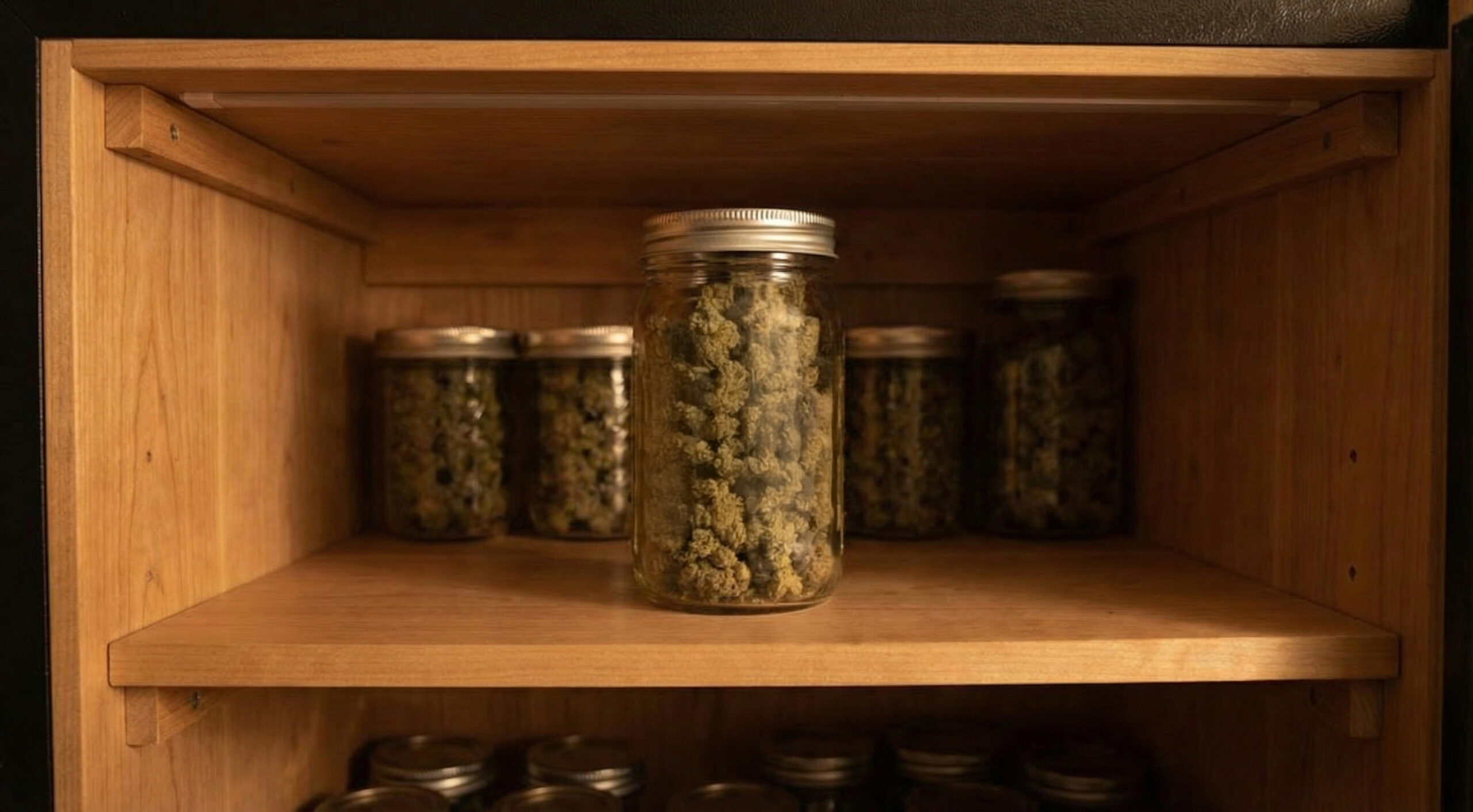
The 60-60 Rule for Drying Cannabis Explained
The 60-60 Rule for Drying Cannabis Explained
Drying cannabis is a balancing act. If you rush the process, the outside dries too fast and traps moisture in the core. If you slow things down too much, you invite mold and a dull, grassy taste. Experienced growers often talk about the “60/60 rule” – aiming for roughly 60 °F (15–16 °C) and 60 % relative humidity (RH) in the drying space. This simple guideline reflects two key goals: keep conditions cool and humid enough to slow evaporation and protect volatile compounds, and keep them stable enough to prevent microbial growth. Understanding why this rule exists and how to apply it helps you dry flowers that taste rich and smooth.
What the 60‑60 rule is and why it exists
The problem it solves in drying
Cannabis buds don’t dry evenly on their own. The outer tissues lose water quickly because they’re exposed to air, while the dense inner tissues remain moist. If the room is warm and dry, moisture races out of the surface and seals the outer layer – a phenomenon called case‑hardening – which leaves the inside wet and fosters mold. If the room is too humid or cold, the bud dries too slowly, risking microbial growth and a swampy smell.
A peer‑reviewed postharvest review notes that conventional indoor drying is often performed at 15 – 20 °C (59 – 68 °F) and 50 – 60 % RH and typically takes 1–2 weeks. These ranges are close to the 60/60 targets and illustrate the benefits of mild, controlled conditions. Industrial drying research emphasises controlling water activity (a measure of free water available to microbes). Keeping water activity between 0.55 and 0.65 (equivalent to roughly 55–65 % RH) prevents mold and bacteria while allowing the flower to stay pliable. A relative humidity of about 60 % corresponds to a water activity of 0.6. By aiming for 60 % RH in a cool room, you slow the rate of drying enough for moisture to migrate evenly from the core to the surface while keeping microbial risks low.
Why slow drying protects aroma
Aromatic compounds in cannabis, especially monoterpenes like myrcene and limonene, are extremely volatile. Laboratory research on terpene degradation notes that light, heat, oxygen and time all cause terpenes to evaporate or oxidize. Even mild increases in temperature accelerate evaporation, and some terpenes begin to break down at 100 °C (212 °F). Slow drying at moderate temperatures reduces the heat and airflow stress on these compounds. It keeps the bud surface moist long enough to shield trichomes and delays oxidation.
Chlorophyll and other green pigments also break down more completely when the drying and curing process is slow and controlled. Research on curing shows that proper curing at 55–65 % RH for several weeks allows enzymes to degrade chlorophyll, sugars and other harsh compounds, resulting in smoother smoke and improved aroma. Rushing the dry leaves chlorophyll intact, producing a grassy or hay‑like flavour that persists even after curing.
What happens when you break the rule
Drying outside of the 60/60 zone usually causes one of two problems. If temperatures are too high or humidity too low, the bud dries too fast. The outer layer becomes crisp while the center remains damp, leading to harsh smoke and a “quick cure” that never seems to mellow. High temperatures also accelerate terpene evaporation and oxidation. On the other hand, if humidity remains high for too long, the bud dries too slowly, and the environment stays within the 0.70–0.85 water‑activity band where molds and yeasts thrive. This slow spoilage manifests as musty smells, ammonia notes and even visible mold.
The science behind flavour loss during drying
Terpenes and volatility basics
Terpenes are responsible for much of cannabis’s aroma and character, but they are chemically fragile. A laboratory summary explains that terpenes are highly volatile and reactive; they evaporate easily and degrade in the presence of heat, light and oxygen. Unsaturated terpenes oxidize into other compounds, changing the flavour profile. Because terpenes have low boiling points, even mild temperature increases during drying cause them to evaporate. Keeping the drying room around 60 °F reduces this volatility, while maintaining moderate humidity reduces airflow stress on trichomes.
Chlorophyll breakdown and smoothness
Raw cannabis contains chlorophyll and other plant pigments that taste bitter and harsh. Slow drying and curing allow natural enzymes to break down these molecules. Articles on curing note that storing buds at 55–65 % RH for several weeks leads to enzymatic breakdown of chlorophyll and residual plant sugars. The result is a smoother smoke and a fade from bright green to a more subtle colour. Rapid drying or high temperatures halt these enzymatic processes, leaving chlorophyll intact.
Airflow and oxidation
Air movement is necessary to remove moisture from the drying space, but too much airflow speeds oxidation. The Science of Cannabis Drying Rooms guide warns against blowing fans directly on plants and recommends controlling air movement to avoid uneven drying and terpene loss. High oxygen exposure promotes oxidation of terpenes and cannabinoids; moderate airflow ensures moisture removal without stripping aromatics. Oxygen reacts with unsaturated terpenes to form peroxides and other compounds that change the smell. Balanced air movement avoids stagnant pockets without creating a wind tunnel.
Setting up a 60‑60 drying space
Creating a reliable drying environment involves more than just setting a thermostat. You need to manage temperature, humidity and airflow simultaneously.
Managing temperature without hot spots
Temperature control is the first pillar of the 60/60 method. Keep the room cool – ideally between 55 and 65 °F (12.8–18.3 °C) according to industry guides. Temperatures above this range accelerate terpene evaporation and encourage uneven drying, while temperatures below make moisture migration sluggish. Use air‑conditioning or dedicated HVAC to maintain consistent temperature throughout the space. Avoid placing drying racks near heat sources or sunlight, which create hot spots. Dark spaces prevent light‑induced terpene degradation and cannabinoid loss.
Managing humidity without swings
Humidity is the second pillar. Aim for a relative humidity around 60 % and keep it steady. Dr. Greenhouse notes that controlling room humidity to around 60 % equates to a water activity of 0.6, which inhibits microbial growth. During the first day or two, freshly cut plants release large amounts of water; extra dehumidification may be necessary to prevent humidity spikes. After that, the plant releases less moisture, and the environment naturally stabilizes. Use hygrometers to monitor the space and adjust dehumidifiers or humidifiers accordingly. Avoid letting humidity drop below 50 % because very dry air can pull moisture out too quickly, damaging trichomes and reducing aroma.
Air movement that does not point at buds
Air movement keeps the environment uniform and prevents pockets of moisture, but it must be gentle. The ARES Scientific guide advises not to blow fans directly onto plants. Instead, use oscillating fans or low‑velocity airflow to circulate air around the room. This prevents the formation of stagnant pockets while avoiding case‑hardening from direct wind. Arrange buds on racks or hang them with enough space for air to circulate around each cola. Regularly inspect for localized dampness and adjust the airflow pattern if certain areas dry faster than others.
Whole plant vs branch drying under 60‑60
Which method matches the rule better
Drying whole plants means hanging the entire plant upside down. This method slows drying because the stems and leaves retain water and because buds are shaded by foliage. Slow drying allows more even moisture migration and fits well with a cool, humid 60/60 room. However, research on industrial hemp warns that whole‑plant hanging can cause the outer layers to dry and shrink around the inner parts, wrapping them and slowing moisture release and creating non‑uniformity. This non‑uniformity increases the risk of mold if the environment is not carefully controlled.
Branch drying – cutting branches or individual colas and hanging them separately – speeds drying because there is less plant mass and leaves for water to travel through. In a 60/60 environment, branch drying finishes a few days sooner than whole‑plant drying. A cultivation guide notes that whole‑plant hanging often takes 10–14 days, while branch hanging typically dries in 7–12 days. For large, dense flowers, branch drying combined with the 60/60 rule prevents trapped moisture by allowing more surface area exposure.
How to avoid uneven drying
Uneven drying happens when some parts of the plant dry quickly while others stay damp. To minimize this risk:
- Sort by size and density. Hang large colas separately from smaller buds so they can dry at their own pace. This prevents small buds from overdrying while waiting for large buds to finish.
- Maintain consistent spacing. Ensure air can move around every bud. Crowded drying racks create microclimates with higher humidity.
- Rotate or reposition branches. Gently change the position of branches every few days to expose different sides to airflow without disturbing trichomes.
These simple steps, combined with stable 60/60 conditions, keep moisture distribution even.
When to split large plants
Large plants with thick stalks can trap moisture deep in dense flowers. If you notice that the stems still feel wet or the core of large buds stays damp after several days, consider splitting the plant. Remove larger branches and hang them separately. This speeds drying in the center while still allowing the outer layers to remain protected. Use clean scissors or pruners to make cuts and avoid squeezing buds during handling.
How long drying should take for best taste
Typical timelines by bud density
Drying time varies with bud density, trimming style and environmental conditions. Under the 60/60 approach:
- Dense colas on whole plants often need 10–14 days. A cultivation guide summarizing the 60/60 window reports that whole plants dried under 58–64 °F and 58–62 % RH commonly take this long.
- Medium‑size branches or individual colas usually dry in 7–12 days.
- Small, airy buds can finish in 5–7 days. However, under 60/60 conditions, they may stay in the room longer so that moisture redistributes evenly.
Other sources outside the strict 60/60 guideline agree that drying typically takes 1–2 weeks or 7–14 days. Some growers extend drying to three weeks for extra flavour development. The rule of thumb is to watch the bud’s behaviour rather than the calendar.
Why time alone is not the goal
Focusing on number of days leads to mistakes. Two buds can dry at different speeds even in the same room due to density and initial water content. Environmental fluctuations also affect speed. Instead of counting days, monitor feel, smell and humidity. A bud ready for curing will feel dry on the outside but still pliable, small stems will snap rather than bend, and a sealed jar test will show stable humidity in the curing range (around 58–62 %). Water activity is the true target – once it drops below about 0.65, microbial growth is suppressed. Whether that takes 8 days or 15 depends on conditions.
The checkpoints that matter more than days
- Surface dryness: Gently squeeze a bud; it should feel dry but not brittle. The outside should not feel cool or tacky.
- Stem snap: Bend a small stem; it should snap cleanly. If it bends without cracking, moisture is still high inside.
- Smell: The aroma should move from grassy to more complex. Sharp ammonia or moldy notes indicate slow spoilage.
- Jar test: Place a few buds in a sealed jar with a hygrometer for 12–24 hours. If humidity rises above 65 % and stays high, the buds need more drying. If it settles between 58 and 62 %, they are ready for curing. This test aligns with the recommended water activity range of 0.55–0.65.
Signs your drying is going too fast
Crispy outside and wet inside
One of the first signs of a too‑fast dry is a crispy exterior coupled with a moist core. When humidity is too low or airflow too strong, moisture is pulled from the surface faster than it can move from the center. The outer tissue becomes brittle and can shatter when handled, while the inner tissue remains damp. This leads to harsh smoke and poor curing because moisture is trapped inside. A drying room that is too warm (> 70 °F) or too dry (< 50 % RH) often causes this.
Sharp or dusty smell
Rapid drying can also produce sharp, hay‑like aromas or a dusty smell. When terpenes evaporate quickly, what remains are less volatile compounds that smell flat. Drying guides note that high temperatures and low humidity accelerate terpene evaporation. A dusty smell may also indicate that the outer leaf material overdried while the interior moisture remained high; those conditions promote oxidation.
Quick cure that never cleans up
If you jar buds that dried too quickly, you may find that the cure stalls. The buds may feel dry on the outside but still release moisture from the core, causing relative humidity in the jar to spike. When you open the jar repeatedly to manage these spikes, the outside becomes even drier and the flavor remains harsh. This is why proper drying speed – not just time – is crucial. A controlled 60/60 dry allows moisture to move gradually from the inside to the outside, preventing case‑hardening and supporting a smooth cure.
Signs your drying is going too slow
Musty smell warning signs
Slow drying happens when humidity is high and air movement is weak. A major warning sign is a musty or sour smell. This indicates microbial activity. Studies on water activity and drying emphasise that allowing a room to climb above 65 % RH puts the product at risk for microbial growth. Musty smells often accompany humidity readings above this level. Acting quickly can prevent mold from spreading.
Soft buds and stagnant air problems
If after several days buds still feel soft, cool and pliable, the environment may be too humid or stagnant. Stagnant air can create microclimates with high humidity around dense buds, encouraging mold even if the room sensor reads 60 %. Check for condensation on walls or on the plant itself. Use gentle circulation fans to break up pockets of stagnant air and ensure uniform drying. Remember not to aim fans directly at the buds.
How to adjust without panic
When you notice slow drying signs, don’t panic. Increase airflow gently by adjusting fan positions or adding a small circulating fan. Reduce relative humidity by running a dehumidifier or increasing ventilation. Slightly increasing the temperature to the upper end of the 60/60 range (around 65 °F) increases vapor pressure deficit, speeding moisture evaporation without overheating the buds. Keep monitoring to avoid overshooting and causing a too‑fast dry.
Dry trim vs wet trim in a 60‑60 dry
How trim style changes drying speed
Wet trimming – removing leaves immediately at harvest – exposes more surface area and speeds moisture loss. In a 60/60 room, wet‑trimmed buds may dry in 5–10 days depending on density. The increased surface area means moisture leaves the bud quickly, so you need to monitor closely to avoid overdrying. Wet trimming can be helpful in humid climates where slow drying might encourage mold, but it can also lead to faster terpene loss.
Dry trimming – leaving leaves on during drying and trimming later – slows the rate because leaves provide a protective barrier. This method is well suited to the 60/60 rule because it naturally moderates the dry. By keeping the bud surface shaded, it reduces case‑hardening and gives moisture more time to migrate from the core. However, excess leaf material can also trap moisture; ensure good airflow around hanging branches.
What to do for flavour‑first grows
If your priority is preserving aroma, lean toward a slower, protective dry. Leave some leaf material on to shield trichomes, and maintain stable 60/60 conditions. Monitor buds frequently so they do not overdry. For very dense or large flowers, consider trimming major fan leaves but leaving sugar leaves until after drying. This hybrid approach balances airflow with protection.
A balanced workflow that stays consistent
No single trimming style fits every environment. The key is consistency. Whichever method you choose, apply it evenly across the batch so that all buds dry at a similar rate. Combine this with stable 60/60 conditions and size‑based grouping. By using a repeatable process, you can refine timing and develop intuition for your climate and cultivars. Keeping notes on drying time, environmental conditions and final quality helps you adjust in future runs.
Transition from drying to curing without losing aroma
The jarring moment and how to confirm it
Knowing when to move from drying to curing is critical. The jarring moment occurs when the buds are dry enough to prevent mold but still contain enough moisture to finish curing slowly. Two simple tests confirm readiness:
- Stem snap test: Small stems should snap cleanly rather than bend.
- Jar test: Place a few buds in a sealed jar with a hygrometer for 12–24 hours. If the humidity inside stabilizes between 55 % and 65 %, the buds are ready for curing. This range corresponds to the safe water activity zone (0.55–0.65) recommended by the ASTM International Cannabis Committee. If humidity rises above 65 %, return the buds to the drying room for another day or two.
First week cure habits that support drying
During the first week in jars, moisture within the buds will continue to redistribute. To prevent humidity spikes, “burp” the jars – open them briefly to exchange moist air with fresh air – once or twice a day. If humidity rises above 65 %, open the jar for a longer period or remove buds for a short air dry. Keep jars in a cool, dark place to protect terpenes and cannabinoids. If buds feel too dry in the first week, consider adding a humidity control pack tuned to 58–62 %, but only after jars are stable; humidity packs are stabilizers, not dehumidifiers.
Avoiding big humidity spikes
The easiest way to avoid spikes is to never jar too early. Use the jar test to confirm readiness. Once curing begins, maintain jars at a stable room temperature (around 60 – 70 °F) and away from direct light. Do not overfill jars; leave headspace so air can circulate during burping. Separate dense buds from airy ones so they equilibrate at the same pace. Remember that moisture moves from inside to outside; quick fixes like leaving a jar open for hours can overdry the exterior. Make adjustments slowly and only as needed.
Common 60‑60 problems and fast fixes
If your room can’t hold 60 °F what matters most instead
Not every grower has a climate‑controlled drying room. When you can’t keep the temperature as low as 60 °F, focus on humidity control and stability. A relative humidity around 60 % is crucial because it correlates with the safe water‑activity range that inhibits microbes. If your room runs warm, compensate by reducing humidity slightly (e.g., 55–58 % RH) to maintain an appropriate vapor pressure deficit. Keep the space dark to minimize terpene loss. Many growers dry successfully at 15–20 °C (59–68 °F) and 50–60 % RH. The exact numbers matter less than consistency.
If your humidity swings daily how to stabilize
Humidity swings come from insufficient dehumidification, poor sealing or large temperature changes. To stabilize:
- Seal the room: Ensure that doors and vents are closed and that there are no drafts.
- Use proper equipment: An appropriately sized dehumidifier with a humidity controller can maintain stable RH. If humidity swings up during the day and down at night, a humidifier may help offset drops.
- Control temperature: Temperature changes affect relative humidity. Insulate the space or run an HVAC system to reduce daily swings.
Regularly monitor conditions with calibrated sensors. If swings persist, consider using drying tents or small enclosed spaces within a larger room to create micro environments that are easier to control.
If buds dry in 3 to 5 days how to slow it down
When buds dry too fast, adjust the environment. Increase relative humidity by adding a humidifier or hanging wet towels briefly (remove them after humidity rises). Lower the temperature if possible. Reduce airflow directly on buds; use only indirect circulation. Group buds more closely together or hang them in a more enclosed area. In some cases, leaving a bit more leaf material on during trimming slows drying. The goal is to return to a gentle moisture migration that takes at least 7–10 days for typical buds.
If buds smell flat after drying what likely happened
A flat or bland smell usually means terpenes evaporated or oxidized during drying. This happens when temperature was too high, humidity was too low or airflow was too strong. The Encore Labs article notes that even mild increases in temperature significantly reduce terpene content. Drying at 60 °F and moderate humidity helps preserve terpenes. Once aroma is lost, curing cannot bring it back. Future runs should prioritize gentle, controlled conditions and minimize handling.
How to scale 60‑60 for bigger harvests
Larger harvests require more space and equipment to maintain 60/60 conditions. Scaling up involves:
- Dividing the harvest: Spread plants into multiple drying rooms or tents to avoid overcrowding. Overcrowding traps moisture and creates microclimates.
- Sizing HVAC and dehumidification: Larger rooms need appropriately sized climate control. Calculate the expected moisture load (pounds of water leaving the plants per day) and select equipment that can maintain 60 % RH at your desired temperature.
- Air distribution: Use ductwork or multiple low‑velocity fans to ensure even airflow across the entire space. Avoid direct airflow on buds.
- Monitoring: Place multiple hygrometers and thermometers around the room to detect hot or humid spots. Adjust equipment placement or add circulation to balance the environment.
By planning ahead, you can scale the 60/60 principle to any size of harvest.
Practical wrap up
The 60/60 rule is not a magic spell; it is a starting point for a low‑and‑slow drying philosophy. Keeping your drying room around 60 °F and 60 % relative humidity slows evaporation, protects terpenes and reduces microbial risks. Scientific research supports this moderate approach: drying cannabis at 15–20 °C and 50–60 % RH for 1–2 weeks is standard practice, and controlling water activity at 0.55–0.65 (equivalent to 55–65 % RH) inhibits microbial growth. Slow drying allows enzymatic breakdown of chlorophyll, which mellows harshness and reveals complex aromas.
Applying the 60/60 rule means more than setting numbers on a meter. It requires consistent temperature, humidity and airflow; grouping buds by size; and monitoring feel, smell and humidity rather than counting days. Recognize signs of a too‑fast or too‑slow dry and adjust accordingly. Decide between whole‑plant and branch drying based on density and climate. Choose a trimming style that supports a controlled dry. When you get the drying right, the curing stage becomes simpler – jars stabilize quickly, flavours deepen and your hard work shows in every joint.
If you want to improve further, practice measuring water activity and experiment with small changes around the 60/60 target. Record the conditions and outcome for each batch. Over time you will develop intuition for your environment and cultivars. Above all, be patient. Low and slow wins every time.
Share this article
A quick overview of the topics covered in this article.
Follow us
Latest articles
September 26, 2026
September 26, 2026
September 26, 2026
September 26, 2026