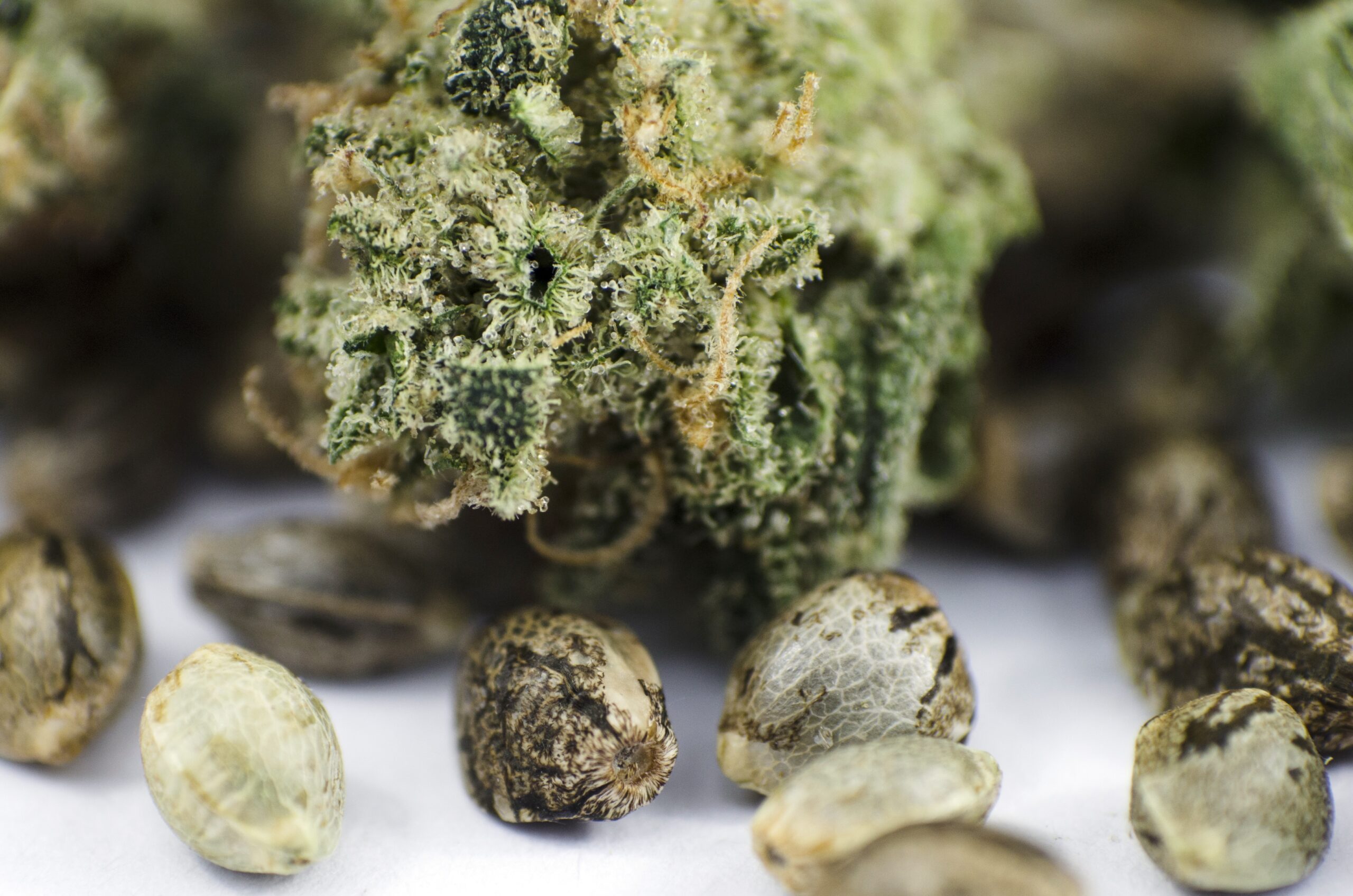
What Are Regular Cannabis Seeds?
Regular cannabis seeds are seeds that can produce either male or female plants. They are the original, “unmodified” seed format in the sense that they contain the full sex-expression lottery. In practical terms, that means you are buying possibility, and you are also buying uncertainty.
If feminized seeds are about predictability, regular seeds are about options. They let you do true selection work. They let you keep males. They let you build projects that are impossible with female-only runs. They also demand planning, because you will not keep every plant.
Important: laws vary by country and region. Make sure seed possession and cultivation are legal where you live before acting on any of this.
Regular seeds in one clear definition
A regular seed is a cannabis seed with a natural sex outcome. It can grow into:
- a female plant (XX)
- a male plant (XY)
Cannabis has sex chromosomes, and research on Cannabis sativa cytogenetics describes a sex chromosome pair with XX in female plants and XY in male plants.
That is why regular seeds are commonly treated as roughly a 50/50 distribution over a large enough sample, even though any small pack can skew by chance. A recent paper discussing sex expression and feminized seed production notes that normal cannabis plants can produce seeds with an XX:XY ratio of about 1:1.
Regular vs feminized vs autoflower
These words get mixed up because they are all seed labels, but they describe different features.
Regular vs feminized is about sex probability
- Regular: male or female.
- Feminized: overwhelmingly female, because seeds are produced using pollen from a genetically female plant.
Scientific horticulture work shows that male flowers can be induced on female plants using silver thiosulfate sprays, and that pollen can then be used to make seeds that are genetically female.
Autoflower is about flowering trigger
Autoflower describes whether the plant flowers by age rather than by day length. A seed can be:
- regular autoflower
- feminized autoflower
- regular photoperiod
- feminized photoperiod
Critical warning: feminized does not mean autoflower, and autoflower does not mean feminized. Treat them as separate checkboxes every time you buy.
Why regular seeds still matter in 2026
Regular seeds are not “better” by default. They are better for certain goals.
You get access to males, which unlocks real projects
If you want to make crosses, preserve a line, or do meaningful selection, you need males. Regular seeds are the simplest path to having them.
Even if you do not breed, regular seeds let you understand the plant more deeply. You see how traits show up across siblings. You learn which plants are naturally vigorous. You learn how much variation exists in one seed lot.
You get a wider selection landscape
Regular packs often show a wider range of expression because you have both sexes and you are usually running them with the intention to select.
That does not automatically mean a regular pack has “stronger” outcomes. It means you have more chances to find an exceptional keeper if you have the space to run a meaningful number of plants.
You build skill that carries into every future grow
Regular seeds force you to plan. They force you to label. They force you to make decisions on time. Those habits translate into cleaner feminized grows too.
Remember: even if you never breed, learning to run a disciplined selection process makes you a better grower.
The real cost of regular seeds
Regular seeds are often priced attractively, and people assume they are cheaper. The real cost is what I call the male tax.
The male tax is not only losing half your plants. It is also:
- the space those plants occupy before sex is known
- the time and resources you spent getting them there
- the planning risk if you miss a male and pollination happens
In indoor environments, a single pollen event can turn a full flower run into seeded flower. This risk is why many cultivation strategies remove males early when flower production is the goal.
Important: regular seeds are cost-effective when you have enough space to absorb the male tax and still end up with the number of females you need.
What you can realistically expect from a regular pack
Sex ratio
Over a large number of plants, regular seeds are often treated as roughly a 1:1 outcome, which is consistent with the XX/XY system described in the literature.
In a small pack, anything can happen. Five seeds can give you four females. Five seeds can give you four males. That is not unusual. It is just probability.
Variation
Regular seeds can show more variation in:
- vigor
- structure
- finishing time
- aroma intensity
- sensitivity to environmental swings
That is a feature when you are selecting, and a headache when you want predictable production.
Planning implication
If you want four flowering females from regular seeds, you usually do not start with four seeds. You start with more than you need, then you select.
Advice: if your space cannot support extra plants early on, feminized seeds are usually the smarter production format.
Indoor: when regular seeds make sense
Indoor space is expensive because it is a controlled environment. You pay for electricity and you pay for climate stability.
Regular seeds indoors are best when you have one of these goals:
You want to learn selection and keepers
Running a small pheno hunt is one of the best education tools. You learn what “normal variation” looks like. You also learn what a standout plant looks like, and why.
You want to start a breeding path
Regular seeds are the straightforward way to access males, and males are central to traditional breeding workflows.
You can isolate properly
This is not optional. Pollen is tiny and travels easily. There are cultivation and breeding publications that emphasize how massive pollen production can be and how easily it can fertilize large numbers of flowers.
Critical warning: if you cannot isolate pollen, do not run males indoors. One mistake can change the entire harvest.
Outdoor: when regular seeds make sense
Outdoors, you gain space and lose control.
Regular seeds outdoors can make sense when:
- you want to explore genetics in full sun and large root volume
- you want to select plants that thrive in your exact climate
- you can control isolation and timing if breeding is part of the plan
The big difference outdoors is pollen spread. Wind and distance make containment harder. If your goal is seedless flower, regular seeds outdoors add risk.
Important: outdoors, feminized seeds are often the simpler choice for flower-only gardens because they remove self-inflicted pollination risk.
Regular seeds for flower-only growers
Some growers still choose regular seeds even when the goal is flower. The reasons are usually:
- they want the genetic variety and are willing to cull
- they trust the line’s stability
- they prefer to keep a strong mother from a regular population
If you do this, the success factor is planning. You need enough starting seeds to end with the female count you want after culling.
A clean mental model:
- Decide how many flowering females you want.
- Decide how many “extra” plants you can realistically run early.
- Buy enough regular seeds so that even with a 50/50 split, you still land above your target.
Tip: the fewer plants you can run, the less regular seeds make sense for flower-only. Feminized exists for a reason.
Regular seeds for future breeding and long-term projects
Regular seeds shine when you treat them like a population, not like a single plant.
What success looks like in regular seed projects
- You run enough plants to compare traits meaningfully.
- You keep records so you can repeat good decisions.
- You protect your production space from accidental pollination.
What beginners often misunderstand
Breeding is not “make seeds once.” It is selection across generations. You are choosing which traits deserve to be passed on.
Scientific reviews highlight that sex expression in cannabis is influenced by both genetics and environment, and that cannabis can show plasticity in sex expression.
That matters because long-term projects need stability. Selection is how you earn stability over time.
Advice: if your goal is future breeding, invest more in population size and record-keeping than in hype traits.
Regular seeds and intersex risk
This topic is often poorly explained.
Regular seeds do not magically eliminate intersex expression. Feminized seeds do not automatically cause it either. Intersex expression can be influenced by genetics and stress, and cannabis shows flexibility in sex expression in the literature.
A practical way to use that information:
- Choose stable lines and avoid vague sources.
- Keep the grow stable.
- Avoid constant stress cycles that can push plants into survival behaviors.
Do not treat “regular vs feminized” as your only stability tool. It is one factor.
How to buy regular seeds without wasting money
Regular seeds are simple. The market around them is not. Use these signals to reduce regret.
Look for clarity, not adjectives
A serious listing should state clearly:
- regular or feminized
- photoperiod or autoflower
- expected size range
- expected finish window range
- what conditions it is suited for, indoor, outdoor, or both
If the listing is mostly emotion and contains few measurable details, it is harder to trust.
Avoid “mystery mixes” for your first regular run
Mixed packs can be fun, but they are bad for learning because you cannot compare siblings. A beginner learns faster when the population is consistent.
Prefer sources that treat storage like it matters
Seed vigor is influenced by age and storage. Sellers who can explain how seeds are stored and shipped are usually safer than sellers who cannot.
Buy enough to select properly
Regular seeds become valuable when you can compare plants. If you only buy a tiny pack and you only end with one female, you did not really “use” the advantage of regular seeds.
You paid for possibility but you did not have enough sample size to benefit.
Remember: regular seeds are a selection format. If you cannot select, feminized often wins.
“How do I know if a seed is regular?”
You cannot tell by looking. Regular and feminized seeds look the same on the outside. The difference is genetic probability and production method.
If the listing does not explicitly say “regular,” treat it as unknown until confirmed.
Tip: save screenshots of the product page when you buy. It helps if you ever need to verify what was promised.
Common questions about regular seeds
Are regular seeds more “natural”?
They are closer to the typical sex distribution you see in nature, yes. They are not automatically better. They are simply different in what they enable.
Are regular seeds cheaper?
Sometimes the pack price is lower. The real cost depends on how many plants you must run to reach your goal.
If you want four flowering females and you can only grow four plants total, regular seeds are often more expensive in practice because you may end up with fewer females than you need.
Can regular seeds be used to make feminized seeds later?
Conceptually, yes. Feminized seed production relies on inducing male flowers on female plants and using that pollen. The scientific literature documents the use of silver thiosulfate for male flower induction on female plants.
For your purposes, the decision is simpler: if you want feminized outcomes, buy feminized from a trusted source. If you want breeding projects, use regular seeds as your foundation.
Does regular mean photoperiod?
Not always. There are regular autoflower seeds. Always confirm both attributes.
When regular seeds are the right choice
Regular seeds make the most sense when at least one of these is true:
- You want to do meaningful selection.
- You want to breed.
- You have enough space to absorb the male tax.
- You want to learn genetics in a hands-on way and you can manage isolation risks.
If none of those are true, feminized seeds are usually the simpler tool for flower-only production.
Choosing regular seeds with clear intent
Regular seeds are not a flex. They are a tool. They give you access to both sexes and a broader selection landscape, and they reward growers who plan ahead.
If you want a clean next step, decide which path you are on:
- Flower-only: regular can work if you have extra space and you want selection, otherwise feminized is usually the efficient move.
- Future breeding: regular is the foundation, and your success will come from population size, isolation, and record keeping.
Share this article
A quick overview of the topics covered in this article.
Follow us
Latest articles
June 24, 2026

June 24, 2026

June 24, 2026
June 24, 2026