
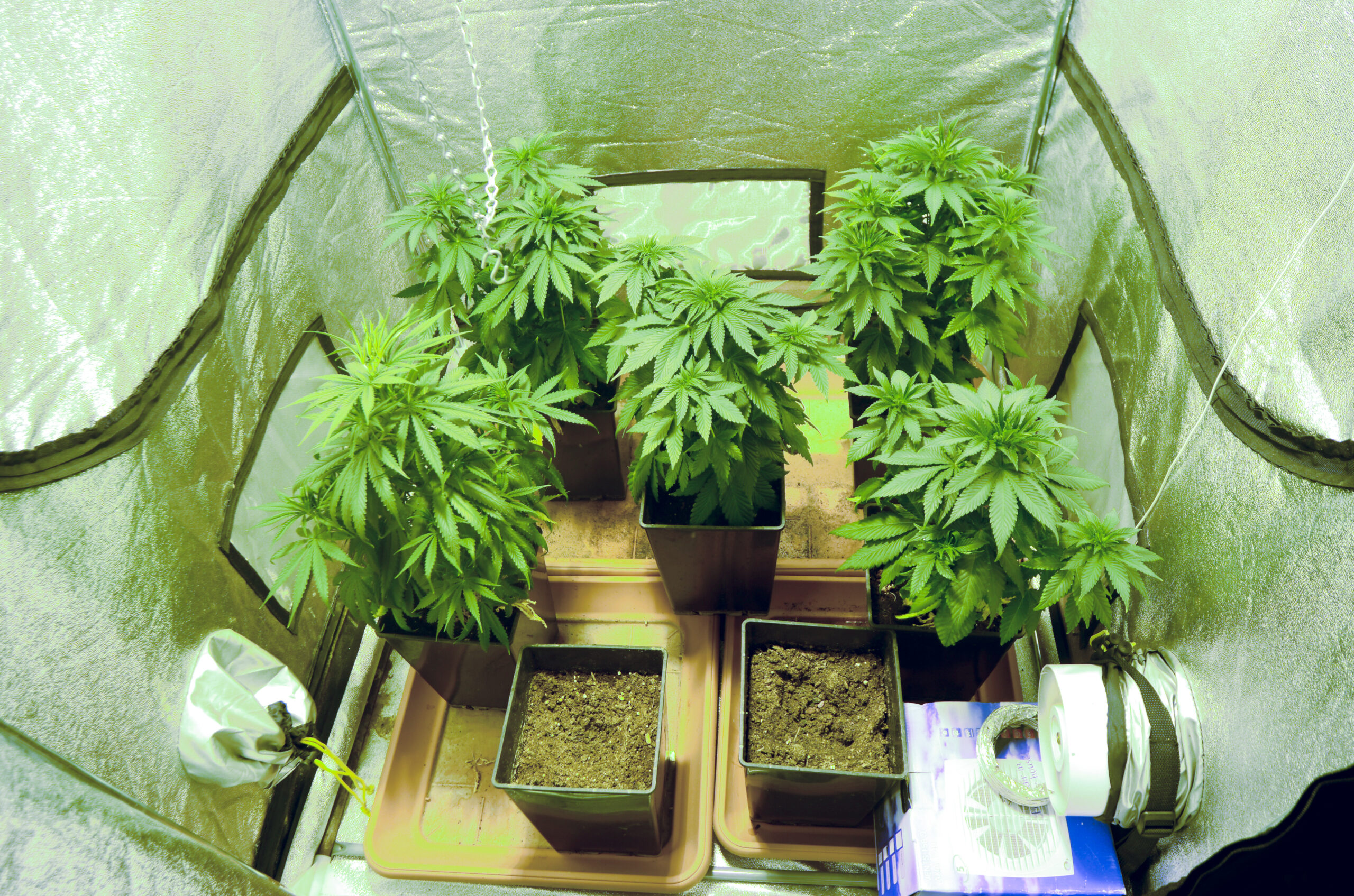
What Do You Need for Growing Cannabis?
Growing cannabis (well) is not about owning “more gear.” It’s about building a closed loop of control: you give the plant light, air, water, nutrients, and time—then you measure what the plant and the room give back, and you adjust. The best growers aren’t the ones with the fanciest room; they’re the ones who can answer (without guessing): How much light did my canopy actually receive today? What’s my root zone doing? Am I steering my plant or stressing it?
We simplify this into a core equation:
Results = Genetics × Environment × Root-zone management × Post-harvest discipline.
If one piece is weak, everything downstream gets harder—often in ways beginners don’t expect. That pattern shows up everywhere: in forums where people ask for the “bare minimum,” the most consistent answers keep circling the same necessities—light, ventilation, humidity control, a decent medium, and basic monitoring tools.
This guide is written for cannabis growers, but the underlying principles apply to almost any high‑value horticultural crop. We’ll stay brand‑neutral on purpose, and we’ll go deep enough that you don’t finish with “okay but… what about ____?”
Legality and safety come first
Before we touch “how,” we address “should” and “safe.”
Know your local rules and treat legality as a grow parameter
Cannabis legality is extremely location-dependent. Even in places where cannabis is legal, rules can differ by plant count, visibility, odor, tenancy/landlord limits, public housing rules, and processing/extraction restrictions. A home cultivation guide from New York State Office of Cannabis Management explicitly notes restrictions such as not growing in federally funded/public housing and encourages understanding rights and responsibilities to avoid housing issues.
Weedth framing: If you can’t grow legally, you can’t grow “successfully.” Legal risk forces bad decisions—hiding heat, skipping ventilation, ignoring electrical load, avoiding proper disposal. Those choices don’t just reduce yield; they increase danger.
Home grows have real health and fire risks—don’t treat them like a hobby lamp in a closet
A public-health review from the National Collaborating Centre for Environmental Health groups home cultivation risks into five buckets: accidental access/poisoning, indoor air quality, pesticide misuse, electrical/fire hazards, and radiation hazards.
Two numbers matter here because they explain why home grows get into trouble fast:
- High‑wattage grow lamps in the 500–1000 W range generate enough heat to cause burns and draw enough power (along with other equipment) to increase shock/overload risk, potentially causing fires.
- Home grows sometimes escalate these risks through non-code electrical alterations (e.g., upsizing breakers), which the same review flags as a hazard.
A separate home cultivation guide warns that indoor cultivation often requires high-powered lamps, temperature controls, and ventilation that can overload circuits; it recommends complying with electrical/fire codes and consulting licensed professionals where needed.
Weedth rule: If you can’t run your room safely 24/7, you don’t have a grow—you have a liability.
Air quality and mold are not “maybe” problems
Indoor cannabis isn’t just plant care; it’s moisture engineering. The same home cultivation guide recommends controlling mold and fungus by reducing moisture sources and using dehumidification, humidity monitoring, fans, and ventilation; it also says to dispose of mold‑infested plants quickly and to use carbon monoxide detectors (and test them).
This is not paranoia—controlled studies show that humidity can directly crush performance and delay flowering (we’ll cover the data later).
Pesticides: what beginners do wrong (and why it’s dangerous)
In home environments, novices are more likely to use products off-label or apply improperly. The public-health review explicitly warns that cannabis cultivation is impacted by pests and molds and highlights concerns about “inappropriate use of pesticides.”
A home cultivation guide goes further: it advises avoiding pesticides if possible, and if using them, limiting use and avoiding products not specifically approved for cannabis; it notes that synthetic pesticides may not be approved in some regulatory contexts, and only minimum‑risk products should be considered (if used at all).
Weedth takeaway: prevention beats treatment. Your best “pesticide” is clean inputs, stable environment, scouting discipline, and not overcrowding plants.
Bonus safety note: don’t turn “processing” into an explosion risk
Even though this article is about growing, first‑time growers regularly slide into “how do I make concentrates?” In jurisdictions that regulate this, home extraction with flammable solvents may be prohibited; official guidance warns about explosion/fire hazards and discourages risky solvent extractions at home.
Weedth says it plainly: If your “post-harvest plan” involves flammable vapor in a home, you’re no longer gardening.
The grow equation that controls everything
Cannabis can be grown outdoors with sunlight, or indoors under electric light. Either way, the plant responds to the same levers: photoperiod, light intensity, climate (temperature/humidity/VPD/airflow/CO₂), and root-zone chemistry and oxygen.
Photoperiod: cannabis is a night-length plant, not a “12/12 myth”
A peer-reviewed horticulture study describes cannabis as a short‑day plant and explains the practical implication: it produces inflorescences when the daily dark period exceeds roughly ~10 hours; growers usually hold vegetative photoperiod around 16–18 hours of light (keeping darkness to 6–8 hours) and then switch to longer uninterrupted darkness to induce flowering.
This is the first “need” most beginners underestimate: you need reliable darkness.
Also: photoperiod sensitivity is not just “hours.” In a controlled photoperiod study on hemp cultivars, a 15‑minute difference near the critical threshold significantly influenced floral initiation in some cultivars.
Weedth translation: if you run timers, leaking doors, bright indicator LEDs, or inconsistent on/off timing, you are literally rewriting your plant’s developmental program.
Light intensity: yield responds to photons, not to vibes
Cannabis is notably high‑light tolerant, and controlled experiments show yield rising with canopy light intensity. In one indoor study, plants grown under average canopy PPFD of 600, 800, and 1000 µmol·m⁻²·s⁻¹ had higher biomass at higher PPFD, including inflorescence dry weight (economically relevant). The same study found no commercially relevant benefit of adding UV for inflorescence cannabinoid concentrations under those conditions.
What you need from this:
- You need a light source (sun or fixtures) that can deliver enough PPFD to hit your goals.
- You also need the ability to avoid stressing the plant early (seedlings/clones do not need flower‑level PPFD).
- You need measurement or at least a systematic method to avoid “too low” (stretch, low yield) and “too high” (bleaching, stress).
This is why online communities repeatedly tell beginners: spend your effort and budget on light and airflow first, then refine everything else.
Humidity and VPD: this is where quality is won or destroyed
Humidity is not just comfort. It’s a direct driver of transpiration, nutrient flow, plant morphology, disease pressure, and (in cannabis) secondary metabolite outcomes.
A controlled study tested two canopy relative humidity ranges during flowering: low RH 37–58% vs high RH 78–98%. Under high RH, VPD during flowering ranged 0.62 to 0.25 kPa and produced dramatic effects: large reductions in total biomass and flower biomass, delayed flowering by about three weeks, increased internode spacing, and large decreases in cannabinoid accumulation (e.g., CBD‑A ~4.9‑fold reduction, CBD ~3.2‑fold reduction).
That’s not a “minor optimization.” That’s “your room is steering the plant into failure.”
To manage humidity properly, you need to understand VPD (vapor pressure deficit): the atmospheric “pull” that drives water loss from leaves. University extension resources explain how VPD increases as air holds less water or temperature increases, and how VPD shifts water loss via transpiration and evaporation.
Weedth rule: don’t chase a single RH number like it’s a sacred value. Chase stable plant water balance—which usually means tracking temperature and RH together (and ideally leaf temperature).
Airflow: the invisible tool that prevents mold, microclimates, and weak stems
Even with “good room RH,” dense canopies create humid pockets. Bud rot (Botrytis) is strongly associated with high humidity conditions; prevention guidance emphasizes avoiding overhead wetting, spacing plants for airflow, and not over‑fertilizing.
A peer‑reviewed disease management review lists the major greenhouse cannabis diseases and explicitly notes the importance of integrated management; it also discusses how reducing humidity and using appropriate climate control can mitigate diseases like bud rot and powdery mildew during high-risk periods.
CO₂: optional early, leverage later
CO₂ enrichment can increase growth if other constraints (light, temperature, VPD, nutrition) are already dialed. From an energy-impact perspective, a recent life‑cycle assessment notes that indoor cultivation often uses CO₂ enhancement at 2–4× outdoor ambient levels, which adds complexity and energy demand.
Weedth stance: CO₂ is not a beginner need. It becomes valuable after you can keep your environment stable.
What you physically need: systems, not shopping lists
Here’s the most important Weedth concept in this entire article:
You’re not buying items. You’re building systems.
A “system” is a set of parts that creates a predictable outcome:
- light system (photoperiod + intensity)
- climate system (temperature + humidity + airflow + odor handling)
- root-zone system (medium + irrigation + drainage + oxygen)
- nutrition system (pH + EC + balanced elements)
- hygiene system (sanitation + scouting + prevention)
- post-harvest system (dry + cure + storage)
Indoor vs outdoor: what changes, what doesn’t
Outdoors: the sun gives you photons “for free,” but you trade control for variability (weather, pests, neighbors, photoperiod timing). Indoors: you buy photons and climate control, but you gain consistency—if your infrastructure is safe and stable.
Online discussions from first-time growers often show the same pivot: people start thinking “tent and light,” then realize climate control and odor management become necessary as the grow progresses.
The essential indoor “stack” (brand-neutral)
We’ll classify needs into core (you can’t run a stable grow without them) and supporting (you can grow without them, but your risk and labor increase).
| System | Core needs | Supporting needs | Why it matters |
|---|---|---|---|
| Light | A controllable light source + a timer | PPFD/DLI measurement tool; dimming controls | Cannabis yield responds strongly to PPFD; photoperiod control drives veg vs flower. 7 |
| Climate | Temperature + humidity measurement; ventilation/air exchange; air circulation | Dehumidification/humidification; CO₂ monitoring; automation | High RH can reduce biomass and cannabinoids and delay flowering; airflow lowers disease risk. 4 |
| Root zone | Containers + suitable medium + drainage + saucers/trays | Automated irrigation; runoff management | Roots need oxygen and stable moisture; errors here look like “nutrient problems” but aren’t. 15 |
| Nutrition | Watering method + pH & EC strategy | Substrate solution monitoring (pour-through) | Nutrient availability is pH/EC dependent; monitoring is a quality-control tool. 16 |
| Hygiene/IPM | Clean space + scouting routine + exclusion | Sticky traps; environmental logging | Major diseases include root rots, bud rot, powdery mildew, hop latent viroid; prevention is key. 12 |
| Post-harvest | Dark drying space with climate control | Moisture measurement approach; storage containers | Drying and storage conditions strongly affect quality and degradation. 17 |
| Safety | Certified equipment + safe wiring + smoke/CO awareness | Professional electrical review | Home grows carry electrical/fire risk; codes and load planning matter. 2 |
Odor control is not optional in many real homes
Odor is one of the most searched “oh no” moments: people underestimate how intense flowering terpenes can become, and forum threads regularly pivot from “what do I need?” to “and then we have to talk about the smell…”
A home cultivation FAQ (policy-level guidance) states that odor reduction can be supported by regulating temperature, humidity, lighting, ventilation, filtration, and circulation; it specifically mentions carbon filtration and negative pressure environments as odor mitigation tools.
Negative pressure means more air is exhausted from the cultivation space than supplied, so air is pulled inward through small gaps rather than pushed outward—reducing odor leaks.
If you’re wondering “how does carbon filtration actually work?” The core mechanism is adsorption—odor molecules bind to the massive internal surface area of activated carbon. Engineering references describe dry adsorption as physical bonding (van der Waals forces) and sometimes chemisorption depending on compounds and media.
Weedth note: odor control is also environment control. If you can stabilize air exchange, pressure, and humidity, you simultaneously reduce mold risk and odor complaints.
Water, nutrients, and the root zone: the part beginners misdiagnose
The most common grow tragedy is this: a root-zone problem masquerades as a leaf symptom. The plant screams through leaves because roots can’t breathe, can’t access nutrients, or are being poisoned by salinity/pH extremes.
Water quality and pH are basic, not “advanced”
For hydroponic nutrient solutions (and many soilless systems), university extension guidance gives a consistent rule of thumb: optimal pH for most hydroponic crops is often ~5.5 to 6.5.
Why this matters: pH influences nutrient availability and solubility; when pH drifts, you can create deficiencies even if nutrients are present.
Weedth mindset: don’t ask “what pH should I use?” as a static number. Ask:
- What system am I running (soil/soilless/hydro)?
- What’s my irrigation water alkalinity doing over time?
- Is my root-zone pH drifting after feedings?
EC is “how much food is in the water,” but it’s also “how easily you can mess up”
Electrical conductivity (EC) is a practical measure of dissolved salts in nutrient solution; it’s one of the main monitoring metrics in fertigation and container systems. Techniques like pour‑through and other substrate monitoring methods exist precisely because growers need a non‑destructive way to track root-zone pH and salinity across a crop cycle.
Also important: nutrients don’t behave independently. Extension guidance explains nutrient antagonism: too much of one element can block uptake of another, causing secondary deficiencies and reduced performance.
So yes—“more feed” can absolutely create “looks hungry” symptoms.
What cannabis research actually says about N–P–K (and what it implies for your shopping cart)
Cannabis nutrition advice online is notorious for “folk science.” The good news: newer research is giving real, quantitative anchors.
For vegetative-stage cannabis under hydroponic conditions, a response surface analysis study found nutrient interactions matter and recommended (for maximum desirability and nutrient use efficiencies) a vegetative-stage nutrient solution in the range of 160–200 mg·L⁻¹ N, 30 mg·L⁻¹ P, and 60 mg·L⁻¹ K.
For flowering-stage soilless cannabis in a deep-water culture study using response surface methodology, researchers predicted optimal concentrations near ~194 mg·L⁻¹ N and ~59 mg·L⁻¹ P for maximizing inflorescence yield; they found yield decreased markedly outside certain N and P ranges, and importantly, inflorescence yield did not respond to K within the tested range (60–340 mg·L⁻¹), suggesting that very high K practices can be unjustified.
Even more relevant to your “what do I need” question: the same paper explains that growers often supply very high P in flower (belief that high P promotes flower development) but notes little evidence to support that practice and flags environmental pollution risk from excess P.
Weedth translation: you don’t need a magical bottle lineup. You need:
- a balanced nutrition plan,
- a way to measure and correct pH/EC drift,
- and restraint (because nutrient overshoot can cause its own problems).
Root-zone monitoring that most cannabis sites don’t explain clearly
General horticulture has well-established monitoring approaches for container systems—cannabis growers often reinvent the wheel, then wonder why they struggle.
The pour‑through extraction procedure is a known nursery/greenhouse tool for evaluating substrate pH and EC without disturbing roots; extension publications describe it as a nutrient management tool and emphasize routine measurement to monitor nutrient availability and scout for problems.
If you grow in containers, the practical “need” is not just a pH meter—it’s a repeatable method.
Irrigation is not just “watering”—it’s plant water status management
Academic work on cannabis irrigation emphasizes that irrigation management and control of plant water status is a key environmental control element in controlled environment cannabis production.
This is why beginners repeatedly get corrected online for overwatering: “watering schedule” is not a calendar—it’s a response to root oxygen, plant size, environment, and substrate behavior.
Genetics and cycle planning: what you need before you even germinate
Seeds vs clones: your first major strategic choice
A university extension fact sheet explains why feminized seeds and vegetatively propagated transplants are used to avoid costly male plant removal; it also explains why clones guarantee genetic properties, while tissue culture can provide high-quality young plants.
So what do you “need” here?
- If you start from seed: you need the ability to manage variation, and potentially sex identification and removal depending on seed type and your goals.
- If you start from clones: you need clean, healthy starting material and strict hygiene because pathogens can be introduced at the beginning and ride the crop to harvest. That same extension resource stresses sanitation and transplant hygiene because pathogen spread and limited crop-protection options make prevention crucial.
Weedth warning: dirty inputs don’t become clean later. They become outbreaks later.
A realistic lifecycle map
Instead of a FAQ, we’ll answer what people actually ask (“How long does it take? When do I flip? Why did it flower early?”) in flow form.
Key takeaways supported by research:
- Photoperiod management is foundational; cannabis flowering is driven by night length, and small differences near thresholds can matter.
- Environment stability isn’t cosmetic—high RH can delay flowering and reduce cannabinoids and biomass.
- Yield responds strongly to canopy PPFD in controlled environments.
The “bare minimum” myth: what forums get right (and what they miss)
When people ask “what’s the bare minimum to start?” the most repeated answer is basically: light, medium, water, and nutrients—plus ventilation and odor control if smell matters.
That’s true—but incomplete.
What those threads also reveal is the hidden reality: beginners don’t fail because they lack nutrients. They fail because they lack:
- measurement (no idea what the plant is experiencing),
- environment stability (humidity swings, heat spikes, poor airflow),
- and post-harvest discipline (ruining quality at the finish).
Weedth’s “minimum you can’t skip” is therefore not just equipment: you need a process (monitor → interpret → adjust).
Pests, disease, and cleanliness: what you need to avoid heartbreak
If you only remember one sentence:
Cannabis is easy to grow; it’s hard to keep clean.
A major disease review identifies the most important greenhouse cannabis diseases as root rots (Fusarium and Pythium), bud rot (Botrytis), powdery mildew (Golovinomyces), cannabis stunt disease (hop latent viroid), and microbes that reduce post-harvest quality.
A government IPM manual gives practical prevention guidance, including:
- avoid over-fertilizing with nitrogen (tender growth becomes more susceptible),
- space and prune to improve air circulation and light penetration,
- recognize bud rot develops under high humidity,
- sterilize tools and sanitize between cycles,
- avoid overhead watering late, especially during flowering.
This is the “need” list most sites underemphasize:
- You need a cleaning routine (not occasional cleaning).
- You need a scouting routine (not “I look sometimes”).
- You need environmental stability to avoid disease windows.
Here’s a diagnostic logic to keep you out of panic mode:
Why this flow works: major pathogens thrive under certain humidity/handling conditions, and many “leaf issues” are root-zone or environment-driven.
Post-harvest: what you need so you don’t ruin the last 10%
This is where “growers” become “producers.”
A university extension resource summarizes common practice for flower products: slow dry in drying chambers around 62°F (≈16.7°C) and 55% RH, typically 5–7 days to reduce moisture content substantially; then cure in a room around 70°F (≈21°C) for 4–5 days, targeting a final moisture content around 15–13%.
The same source notes that floral products should be dried at temperatures below 104°F (≈40°C) to avoid significant terpene loss and discusses how higher temperature strategies may be aimed at extract production rather than aroma preservation.
A comprehensive post-harvest review stresses that drying is the most important post-harvest operation and that storage conditions contribute to degradation; it summarizes findings that storage at ~22°C with light is more detrimental than storage in darkness at ~4°C, reinforcing the “cool and dark” storage principle.
Weedth reality: a perfect grow can be made mediocre by a sloppy dry room. So what do you “need” here?
You need:
- a dedicated drying space (dark, controlled),
- the ability to manage temperature and humidity,
- patience (don’t chase speed),
- storage discipline (cool, dark, consistent).
Share this article
A quick overview of the topics covered in this article.
Follow us
Latest articles
September 19, 2026
September 19, 2026
September 19, 2026
September 19, 2026