Best Organic Soil for Cannabis: Complete Guide
Why Organic Soil Matters for Cannabis
Organic “living” soil has become the gold standard for growers who prioritize bud quality, taste & flavor, and efficient yield. Unlike inert or chemically fertilized media, organic soil is alive with beneficial microbes and rich natural nutrients. The result? Cannabis plants that develop robust aromas and smooth flavor profiles, all while achieving solid yields with fewer inputs. This complete guide answers common soil questions for beginners (“What soil grows the best weed?”) and dives deep into advanced insights on soil biology and chemistry. We’ll break down what makes an ideal organic soil mix for cannabis, compare organic soil vs synthetic soil for bud quality and yield, recommend key organic ingredients (composts, castings, guano, biochar, etc.), consider climate factors like humid tropics vs dry Mediterranean, and discuss using organic soil in pots, raised beds, or native ground. By the end, you’ll know how to craft or choose an organic soil that maximizes Weedth’s core values: bud quality, rich flavor, and efficient yields – without the fluff or hype.
What Makes an Ideal Organic Soil Mix for Cannabis?
The best organic cannabis soil creates a perfect environment for roots – biologically, chemically, and physically. It’s often called “living soil” when teeming with microbes. Below we break down the ideal properties:
Biological Properties (Living Soil Ecosystem)
At its heart, organic soil is alive. A thriving population of beneficial bacteria, fungi (like mycorrhizae), and micro-fauna forms a soil food web that continuously breaks down organic matter into plant-available nutrients. These microorganisms “hand-deliver” nutrients to roots in a symbiotic trade – the plant feeds them sugars, and they feed the plant minerals. This living ecosystem boosts nutrient cycling, protects against pathogens, and even influences cannabinoids and terpenes. Studies show cannabis in organic soil harbors more diverse beneficial microflora than hydroponic grows. The result is often healthier, more resilient plants less prone to deficiencies or diseases. In practical terms, an ideal organic mix comes pre-inoculated with life: quality compost or worm castings (rich in microbes), maybe a dash of forest soil or microbial inoculant, and no sterilizing agents. A “living” soil that’s biologically active will help cannabis run cleaner – ensuring steadier nutrition uptake, better stress resistance, and fewer corrective feedings. This is how growers achieve that famously smooth, flavorful “organic” smoke: not by magic, but by fostering a stable root-zone ecosystem.
Chemical Properties (Nutrients & pH Balance)
Nutrient content and availability are the chemical cornerstone of a great cannabis soil. An ideal organic soil mix contains a balanced range of essential nutrients – from primary macronutrients (N-P-K) to secondary nutrients (Ca, Mg, S) and micronutrients (iron, zinc, etc.). These nutrients are provided in organic forms (manures, compost, meals) that microbes gradually mineralize into soluble forms. This slow-release fertility means no sudden nutrient spikes; cannabis roots can feed as needed from a buffered “nutrient pantry” in the soil. In fact, if you use a rich living soil, often no bottled fertilizer is needed for weeks – the soil’s organic matter continuously feeds the plant. For optimal growth and cannabinoid production, scientific analyses suggest target nutrient levels such as ~190–200 mg/L nitrogen and ~50–60 mg/L phosphorus in soil, though these numbers are guidelines and actual availability depends on microbial activity.
pH is another critical chemical factor. Cannabis thrives in a slightly acidic to neutral soil pH of roughly 6.0–7.0. Within this range, nutrients remain available and roots function efficiently. A quality organic mix will naturally buffer pH via humus and minerals. For example, compost often stabilizes pH and adds cation exchange capacity (CEC), which is the soil’s ability to hold and exchange nutrient ions. Ideal organic soil has decent CEC (10–20 meq/100g is a useful range) thanks to its humus content – meaning it holds onto nutrients and releases them to roots rather than letting them wash away. In short, the best organic soil is nutrient-rich but not “hot” (too strong) – it has ample nitrogen, phosphorus, potassium and trace elements, yet in organic forms that won’t burn plants. It also maintains a stable pH around 6–7 for maximum nutrient uptake. If the soil contains organic amendments like compost, worm castings, or guano, the resident microbes will convert these into a full spectrum of nutrients on demand. All these chemical properties ensure cannabis has a steady, balanced diet from seedling through bloom, fueling healthy growth and bud development.
Physical Properties (Soil Texture & Structure)
Even the richest soil means nothing if roots can’t breathe and drink properly. Texture and structure are the physical keys to an ideal cannabis soil. Cannabis roots prefer a light, loose, and aerated soil texture – often described as loamy. Loam is a balanced mix of sand, silt, and clay particles with plenty of organic matter. It feels fluffy in hand and crumbles easily. This structure creates many air pockets for oxygen and allows roots to expand without obstruction. Aeration is critical because roots need oxygen for nutrient uptake; a compacted or heavy clay soil will smother roots and stunt the plant.
At the same time, good soil must manage water wisely. It should drain excess water freely (to prevent waterlogging and root rot) yet retain enough moisture to sustain the plant between waterings. Achieving this duality is a hallmark of quality soil. A well-structured organic mix accomplishes it by incorporating coarse particles (for drainage) along with organic matter (for water retention). For example, many cannabis growers add perlite – those little white rocks – to loosen soil and improve drainage and aeration. Perlite also holds a bit of water in its pores, helping balance moisture. Similarly, coco coir or peat moss can be included to increase water retention in an organic mix. The end goal is a soil that, when watered, gets wet but not muddy – it should hold moisture like a sponge without becoming a dense, soggy “mud pie.”
Visually, high-quality organic soil is dark, rich, and fluffy, often with visible perlite or pumice for aeration. It does not crust over when dry nor pool water when wet. Example: A perfect cannabis soil might be 1/3 compost (dark, nutrient-rich humus), 1/3 peat or coco (for moisture holding), and 1/3 perlite or lava rock (for drainage and air) – yielding a chocolate-cake consistency that stays damp but airy. This structure promotes extensive root development, allowing the plant to establish a big, healthy root system to support vigorous growth. In sum, the best organic soil has an optimal physical profile: loose texture, excellent drainage, good water retention, and plenty of pore space for roots and microbes to thrive.
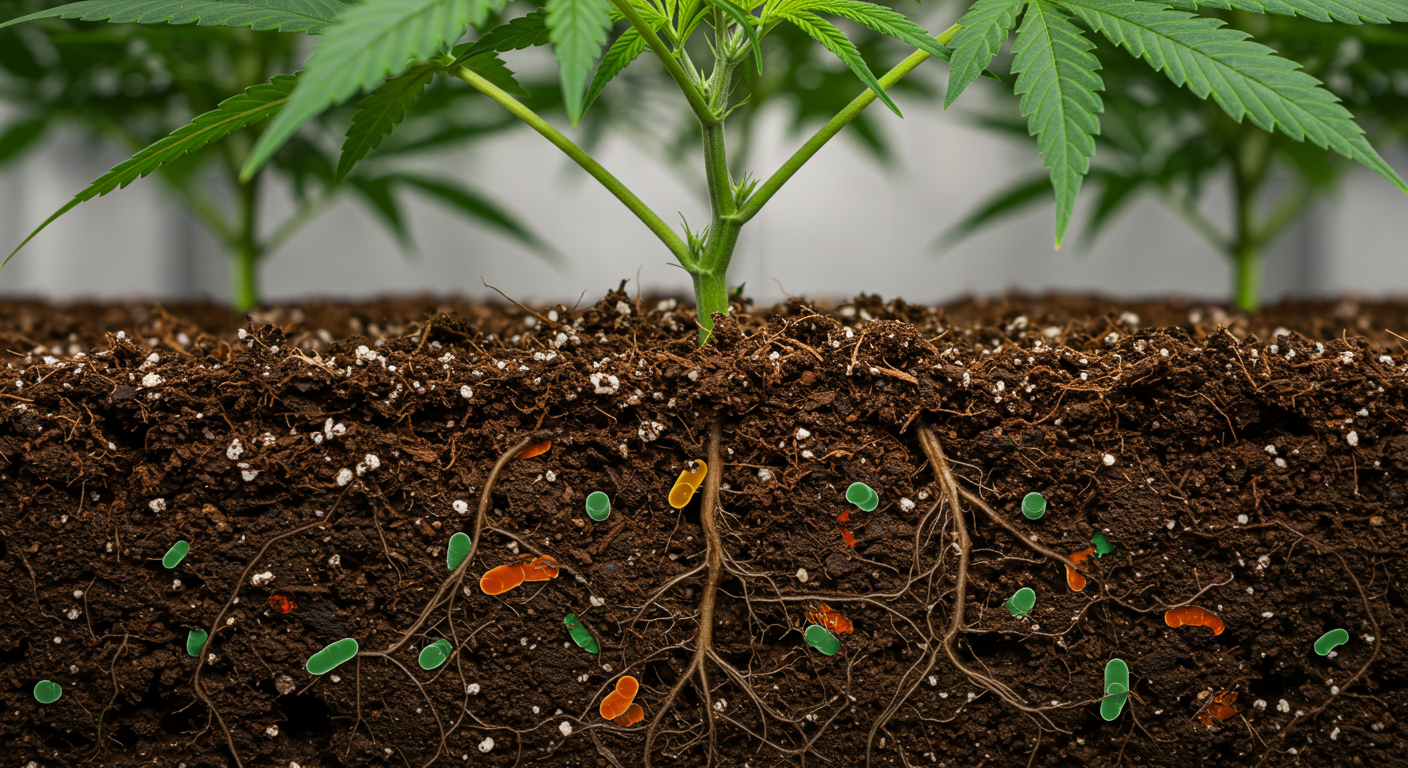
A healthy young cannabis plant growing in a rich organic soil mix inside a fabric pot. Note the loose, dark soil with bits of perlite for aeration – an ideal environment for root development and microbial life.
Organic Soil vs Synthetic Soil: Quality, Flavor, Yield, and Plant Health
How does organic “living” soil actually stack up against conventional synthetic grow methods? Below we compare them on the metrics that matter most: bud quality (potency & terpenes), taste and aroma, yield potential, and plant health.
Side-by-side of organic vs synthetic inputs: on the left, dark worm-casting-rich soil alive with microbes; on the right, inert mineral fertilizer granules. These different approaches lead to distinct outcomes in cannabis quality and growth.
- Bud Quality & Flavor: Organic soil-grown cannabis is legendary for its rich flavor, aroma, and overall bud quality. Growers and connoisseurs often find that organically grown buds have more pronounced and nuanced terpene profiles than those grown with synthetic nutrients. In living soil, the complex soil microbiome and slow-release nutrition allow the plant to express a wider spectrum of aromatic compounds. For example, a side-by-side study found outdoor plants in living soil had greater terpene diversity (especially more heavy sesquiterpenes) and even retained more delicate volatiles compared to indoor plants fed synthetic salts. Many growers describe organic buds as “louder” (more fragrant) and smoother-smoking. In contrast, hydroponic or synthetic-fed buds, while potent, can sometimes have a flatter taste or “chemical” harshness if not flushed well. There’s also evidence that organic methods can reduce cannabinoid degradation: one study noted less oxidized cannabinoids in living soil-grown flower, meaning fresher and cleaner potency. Bottom line: If top-shelf quality, complex flavor and aroma are your goals, organic soil gives you a higher probability of achieving it. The soil’s biology effectively buffers the plant’s chemistry, leading to buds that taste richer and more complex – a key reason Weedth often treats organic as a quality-focused method rather than just a buzzword.
- Yield and Growth Rate: The common trade-off with organic growing is a slightly slower nutrient release and thus potentially slower growth or slightly lower yields in some cases. Synthetic fertilizers deliver immediately available N-P-K, turbocharging growth and often maximizing yield per square foot – which is why many commercial operations rely on them for sheer output. Organic soil, on the other hand, feeds the plant more gradually via microbial activity. This can mean that an organic grow doesn’t always hit the absolute peak of yield that a perfectly dialed-in hydroponic system might. In fact, agricultural meta-analyses across crops show organic yields are on average a bit lower than conventional (~10-20% less), though good management can narrow the gap. For cannabis specifically, side-by-side trials have found organic living soil yields comparable to about 90% of synthetic yields in many cases. For example, if a synthetic setup yields 600 grams, an organic might yield ~540g given similar conditions. However, that difference can often be mitigated by larger soil volumes, optimized compost blends, and skilled care. And importantly, organic methods can produce those yields with fewer purchased inputs (the nutrients are largely in the soil already) and often with a higher market value per gram because of superior quality. Many cannabis enthusiasts are happy to trade a small yield reduction for significantly better flavor and a “clean,” residue-free product. That said, modern organic techniques (like “super soil” and living soil beds) have repeatedly proven capable of excellent yields – easily 1+ gram per watt indoors or multiple pounds per outdoor plant – when properly implemented. In summary, synthetic growing can push slightly faster growth and bigger top-end yields, but organic soil can still deliver efficient, high yields with the added benefit of quality. As one source put it, organic often trades a bit of yield for quality, unless you manage it expertly.
- Plant Health & Resilience: In an organic soil system, you’re not just feeding the plant – you’re cultivating a healthy soil ecosystem, and that in turn cultivates a healthier plant. Beneficial microbes in organic soil improve nutrient uptake, produce natural growth hormones, and even help plants fight off pests and diseases. The result is cannabis that tends to be more resilient and stress-resistant. For example, a rich soil teeming with mycorrhizal fungi will enable roots to access water and nutrients from a larger volume of soil, helping the plant tolerate drought or low nutrient conditions better. Likewise, certain soil bacteria can suppress pathogens (acting like probiotics for your roots) or induce the plant’s systemic defenses. Synthetic grows, by contrast, often use sterile media (like coco coir or rockwool) and rely on precise nutrient dosing. While this controlled approach can yield fast growth, the plant may have a weaker support system if something goes wrong. There’s no buffer of microbes to modulate pH or fight off a root disease – if conditions slip, issues like nutrient burn, lockout, or pest infestations can escalate quickly. Additionally, organic soils often result in stronger root systems; the roots forage through the rich soil and form beneficial associations, whereas in hydroponics roots are trimmed or confined, sometimes making them more vulnerable if pumps fail or conditions shift. Another aspect is environmental health: organic methods avoid harsh chemical salts and thus reduce the risk of fertilizer burn or salt buildup in the root zone. Synthetic feeding demands careful flushing and monitoring to prevent toxic accumulation. On the flip side, a potential challenge is that organic matter can attract fungus gnats or other pests if over-watered – proper management (like letting soil dry out between waterings) is key. Overall, organic soil-grown plants tend to be hardy, naturally robust, and less prone to extreme swings, because the living soil buffers shocks. Synthetic systems give you direct control but less of a safety net – they can produce great results, but mistakes or imbalances aren’t corrected by nature. In conclusion, for plant health and low-risk growing, a rich organic soil is an excellent choice: it builds plant immunity and vigor from the ground up (literally), aligning with a more sustainable and forgiving cultivation style.
Key Organic Soil Ingredients and Their Roles
Crafting the best organic soil mix for cannabis means choosing ingredients that together provide the right biology, chemistry, and structure. Here are some top organic soil components and what they contribute:
- Compost: The cornerstone of organic soil. Compost is decayed organic matter rich in humus, nutrients, and beneficial microbes. It introduces a thriving microbial community and a broad nutrient base. Role: Acts as a natural slow-release fertilizer (packed with nitrogen, phosphorus, potassium, and trace minerals) and inoculates soil with bacteria and fungi that drive nutrient cycling. It also greatly improves soil structure (making soil crumbly and moisture-retentive) and provides buffering capacity to stabilize pH and nutrients. Quality compost in a cannabis mix ensures a living soil food web and continuous feeding for months.
- Worm Castings: Also known as vermicompost, worm castings are essentially super-charged compost produced by earthworms. They are one of the richest soil additives in terms of microbial life and gentle nutrients. Role: Provides a balanced supply of plant-available nutrients (often around 1-0-0 NPK, plus abundant micronutrients) in a form that won’t burn seedlings. More importantly, castings teem with beneficial microbes and enzymes that stimulate root growth and plant immunity. They help soil retain moisture (worm humus holds water like a sponge) and improve texture – castings can bind soil particles into aggregates, preventing compaction. Many growers top-dress worm castings or include 10-20% in their mix for healthier, faster-growing plants and enhanced flavor in the final buds (often attributed to the microbial richness castings bring).
- Bat Guano (and Other Animal Guanos): Guano – the accumulated droppings of bats or seabirds – is a potent organic fertilizer prized by cannabis cultivators. Depending on the source, guanos can be high in nitrogen (e.g., seabird guano) or phosphorus (e.g., bat guano from fruit-eating bats). Role: Boosts nutrient content dramatically. High-nitrogen guano (often used in veg) promotes vigorous leafy growth, while high-phosphorus guano (often used in bloom) supports strong root development and abundant flower formation. Guano is relatively fast-acting for an organic amendment, so it helps bridge the gap between organic and synthetic feeding by giving plants an immediate nutrient kick when needed. It also contains micronutrients and tends to lower soil pH slightly (useful in alkaline soils). Use guano in moderation – a few tablespoons per gallon of soil or as a top dress – because it is “hot” if overused. In the right dose, it enriches the soil’s nutrient pool and fuels higher yield and bud weight organically.
- Biochar: Biochar is a form of charcoal used as a soil amendment. It is made by pyrolyzing organic matter (burning in low oxygen) and has a porous, carbon-rich structure. Role: Primarily, biochar enhances soil structure and nutrient retention. Its porous nature provides refuge for microbes and increases soil’s cation exchange capacity, meaning nutrients (like ammonium, potassium, calcium) stick to biochar surfaces and are not easily leached away. This creates a sort of nutrient bank that plant roots and microbes can draw from, improving fertilizer efficiency. Biochar also improves aeration and drainage by loosening soil (char particles help form aggregates). At the same time, it can hold water in its many pores, aiding moisture retention. Another benefit: biochar is highly stable in soil (it doesn’t decompose quickly), so one application can improve soil for years, making it great for long-term organic beds. By adding 5–10% biochar to a cannabis soil mix, growers promote a thriving microbial habitat (microbes colonize the char) and create a more resilient, buffered soil environment. This can translate to stronger plants, better nutrient use, and possibly enhanced terpene production, since biochar reduces stress and fluctuations in the root zone.
- Perlite (or Pumice): While not organic in the sense of “once-living,” perlite is an inert natural ingredient (expanded volcanic glass) fundamental to most organic mixes. Role: Aeration and drainage. Perlite’s white granules keep soil loose and prevent compaction, ensuring roots get oxygen. They also help excess water drain, preventing the dreaded “muddy soil” scenario. Perlite itself holds a bit of water on its surface but mostly creates air pockets, which is crucial in humid climates or containers where soil can become oversaturated. Including ~10–20% perlite (or similar grit like pumice, rice hulls, or coarse sand) in organic soil is key for an optimal air-water balance in the root zone. The result is faster root growth and less risk of root diseases from waterlogging.
- Coco Coir or Peat Moss: These are common base materials for soil mixes. Coco coir (from coconut husk) and peat moss (from sphagnum peat bogs) are both lightweight, fibrous media with high water retention capacity. Role: They form the bulk structure of many organic potting soils. By holding a lot of moisture, they ensure the mix doesn’t dry out too quickly – especially important in dry climates. They also contribute to a fluffy texture. Peat moss is slightly acidic (helpful for balancing pH in alkaline water regions), while coco coir is pH-neutral and sustainable (peat is not renewable quickly). Using one of these as ~30% of your mix gives it body and consistency. They contain minimal nutrients themselves, so you always pair them with rich compost and amendments. Essentially, peat/coco are the moisture reservoir and root-holding matrix in your soil.
- Other Organic Amendments: Advanced organic growers often incorporate various meals and minerals to fine-tune the soil. For example, kelp meal (seaweed) provides potassium, trace minerals, and natural growth hormones that stimulate root and shoot development. Bone meal and fish bone meal are excellent phosphorus sources (and calcium) to support flowering. Blood meal or fish meal can supply extra nitrogen for heavy feeders. Alfalfa meal adds nitrogen plus a growth stimulant (tricontanol). Rock dusts (like basalt or glacial rock dust) contribute micronutrients and improve soil minerality for robust terpene synthesis. Including some of these in an organic mix can enhance specific aspects: e.g. bone meal for bigger blossoms, kelp for stress resistance and flavor, etc. Finally, mycorrhizal fungi inoculants are worth mentioning – mixing a sprinkle of mycorrhizae with your soil or at transplant can colonize roots with symbiotic fungi, boosting water and nutrient uptake and improving overall plant vigor. Each amendment has a role, but the key is balance. A classic “super soil” recipe, like Subcool’s, calls for a diverse mix of such inputs which, after composting together, create a remarkably rich medium requiring only water through the grow. You can take inspiration from those recipes when formulating your own mix. Just remember: more is not always better – it’s possible to over-amend and end up with soil that’s too hot (nutrient burn) or antagonistic in minerals. Stick to tried-and-true proportions or manufacturer guidelines for each component. When done right, a custom organic soil with these ingredients will feed your cannabis from start to finish and enhance bud quality, flavor, and yield naturally.
Climate Considerations: Tailoring Organic Soil to Your Environment
One huge advantage of organic soil is its adaptability to different climates – but you’ll want to tweak your mix and practices based on your region. Local climate (humidity, rainfall, temperature) affects how your soil performs. Here’s how to optimize organic soil for two common climates at opposite ends of the spectrum:
- Humid Tropical Climates (Hot & Wet): Tropical and subtropical growers face high humidity, heavy rain periods, and intense sun. In these conditions, drainage and disease prevention are top priority. Use a lighter, airier soil mix with extra drainage capacity – for instance, increase perlite or pumice content to ~30% so water doesn’t stagnate around roots. Raised beds or mounded rows are beneficial in high rainfall areas; they keep roots above waterlogged ground and improve runoff. Additionally, heavy rains can leach nutrients quickly from soil, so incorporating slow-release organic amendments (like rock phosphate, slow-release guano, or bone meal) helps ensure fertility isn’t washed out in monsoon conditions. High humidity also means a greater risk of fungal diseases (mold, root rot), so maintaining aerobic soil is key – the beneficial microbes in well-aerated organic soil can outcompete pathogenic fungi. Applying a thick mulch layer (straw, cocoa husks, etc.) over your organic soil is very useful in tropics: it prevents heavy rain from compacting the soil surface, reduces nutrient runoff, and regulates soil temperature. Mulch also keeps the topsoil from drying too fast under intense sun once rains stop. Another tip: because decomposition happens rapidly in hot, moist climates, organic matter can vanish quickly – so consider mid-season top-dresses of compost or teas to continually replenish soil life. In summary, tropical organic soil should be light and fast-draining yet rich, protected by mulch, and frequently refreshed with organic matter. This way, you avoid waterlogging during storms but still retain enough moisture and nutrients during hot dry spells. The reward will be lush, vigorous growth – many landrace sativas evolved in such soils – just keep an eye out for mold as buds develop (healthy soil will give plants some resistance, but good airflow above ground is also crucial in the tropics).
- Dry Mediterranean Climates (Hot & Dry): Mediterranean or arid climates (think California, Spain, Australia) have the opposite challenge – low humidity, infrequent rain, and strong sun. Here the focus is on water retention and drought resilience. You’ll want an organic soil that holds moisture longer and doesn’t get too hot. Increasing the proportion of coco coir or peat moss in your mix can help the soil retain water. Adding water-holding amendments like vermiculite (which soaks up water) or even a bit of clay soil can improve moisture retention as well. However, balance is key – you still need decent drainage, so pair water-holding components with aeration components. A loamy soil rich in organic matter is ideal for dry climates because organic matter acts like a sponge for water. Make sure to include ample compost and castings; not only do they feed the soil, they significantly increase the soil’s capacity to hold water without becoming hard. Using mulch on top of your soil is virtually mandatory in arid outdoor grows. A 5–10 cm layer of straw, wood chips, or even living mulch (cover crops) will shade the soil, keeping it cool and reducing evaporation drastically. This can mean the difference between watering every day versus every 3–4 days. Also, consider drip irrigation or deep watering techniques in combination with your soil: in an organic setup, it’s better to water deeply but infrequently to encourage roots to seek moisture deeper, which builds drought tolerance. In terms of nutrients, arid soils are often less fertile, so an organic soil in these regions should be well-amended – e.g. local manure composts or aged manure can boost the baseline fertility. One caveat: many Mediterranean soils are naturally high in pH (alkaline). If planting directly in native soil, you might need to acidify your organic mix slightly. Adding elemental sulfur or using peat (which is acidic) can help bring pH down into the cannabis-friendly 6–7 range if your native soil is very alkaline. Fortunately, compost itself buffers pH quite well, so a heavy compost content will gradually neutralize moderate alkalinity. Summing up, for dry climates build an organic soil that’s water-wise: lots of organic matter, moisture-holding fibers, protective mulch on top – essentially creating a mini-oasis for your plants. This way you’ll maximize growth and terpene production even under intense sun, and you won’t waste water. Growers in places like coastal California have found that a loamy, mulched living soil bed can outperform plain dirt by keeping roots cool and moist through the heat of summer.
(Of course, most climates fall somewhere between these extremes. The principles still apply: tailor your soil’s water drainage/retention balance to your rainfall and temperature; adjust nutrient load to growing season length and native soil fertility; and use techniques like mulch or raised beds as needed for your environment.)
Organic Soil in Practice: Pots vs. Raised Beds vs. Native Soil
You can enjoy the benefits of organic soil whether you grow in movable containers, built-up garden beds, or directly in the earth. Each approach has pros and cons for cannabis cultivation, especially in the context of organic growing:
- Organic Soil in Pots/Containers: Growing in pots (fabric pots, plastic buckets, etc.) filled with organic soil is very common for both indoor and outdoor setups. The benefit here is control and flexibility – you get to choose or mix the ideal soil blend, and you can move plants as needed for light or shelter. For example, a potted cannabis on a patio can be shifted into shade on an extremely hot afternoon, or indoors if a storm hits. Containers also isolate your crop from poor native soil; if your ground soil is clay or contaminated, pots with a custom organic mix let you bypass that. With pots, it’s crucial to ensure good drainage: use containers with plenty of drainage holes and maybe a layer of stones at the bottom, and use a light soil mix (lots of perlite) to avoid waterlogging in the confined space. One challenge is that potted soil can dry out faster – sun hitting the pot, limited volume of soil – so you may need to water more frequently, especially as plants get large. Smart pot growers often choose fabric aeration pots which keep roots cooler and provide air pruning, benefiting the root health. Also, big plants in small pots will eventually exhaust even a rich organic soil’s nutrients (and root space). You might need to top-dress with compost or liquid-feed organic nutrients in late cycle, or transplant to a larger container as the plant grows. In summary, containers give you great control over the soil environment and mobility, but require vigilant watering and can limit root size. For organic growing, many find success with larger pots (e.g. 20–30 gallons or more) to give the living soil food web room to thrive and to buffer moisture/nutrients longer. If you’re a new grower on a balcony or indoor tent, start with a quality organic potting mix (don’t scoop random yard dirt), and your potted cannabis can flourish.
- Organic Soil in Raised Beds: A raised bed is essentially a large container without a bottom – a frame of wood or fabric placed on the ground and filled with soil. Raised beds combine some advantages of both containers and in-ground growing. They allow you to build an optimal soil mix above native soil (good if local soil is poor), and they offer a bigger volume of soil than pots, which means more stable moisture and nutrient reserves. For organic cultivation, raised beds are often ideal because you can create a sizeable living soil ecosystem that persists year after year (many practitioners do “no-till” gardening in beds, simply adding new compost each season). The plants’ roots can grow extensive networks, sometimes even penetrating into the ground below for extra depth. Pros: Raised beds have improved drainage compared to flat ground (especially important in heavy rain climates – they prevent waterlogging), and they warm up faster in spring which can jump-start growth. They can be easier to work with – you’re not bending all the way to the ground, and compaction is less if you never step on the bed. For organic growers, a deep raised bed (e.g. 12–18 inches or more) filled with loamy compost-rich soil is like a paradise for roots and microbes. Cons: They require upfront labor and materials to build and fill. In hot dry climates, raised beds can dry quicker than ground soil (since they’re elevated – though using mulch and larger volume can mitigate this). They are stationary of course – you can’t move them around. Also, if your raised bed isn’t very deep or is placed on hard terrain, roots might still become confined. All considered, raised beds are often the preferred method for outdoor organic cannabis, as they yield almost tree-like plants given enough space and rich soil. They marry the control of a container with (almost) the boundless nature of in-ground. Just be sure to design for your context: in a rainy area, provide drainage (line the bottom with coarse gravel maybe); in a hot area, use wider beds that hold more water and don’t be shy with mulch. Pro tip: cover crop your raised beds with clover or legumes during off-season or between grows – this protects and enriches the soil, adding natural nitrogen and preventing erosion, so your living soil only gets better with time.
- Organic Soil in Native Ground: Planting cannabis directly in the native soil can be the most “organic” approach of all – the plant grows as any wild plant would. If you’re blessed with good native soil (loamy, fertile earth), your plants can tap into essentially unlimited resources – their roots will go deep and wide in search of water and nutrients, often yielding huge, hardy plants. In-ground organic growing also benefits from the broader local ecosystem: earthworms till the soil, indigenous microbes are already present, and the ground buffers moisture well (deep soil doesn’t dry out as fast as a pot). The key is soil prep: most native soils will need amending to meet cannabis’s appetite. Before planting, it’s wise to till in generous amounts of compost, well-rotted manure, or other organic matter into the planting area. This improves texture and supplies nutrients. Many outdoor growers dig large holes (e.g. 2-3 feet wide and deep) for each plant and fill them with a home-made organic super soil mix – essentially creating an “island” of perfect soil in the ground. Over time, roots will extend beyond, but during critical growth stages they’ll mainly occupy the amended zone. Advantages: No pot size limit – roots can potentially penetrate several feet deep, accessing subsoil moisture (great for dry regions) and anchoring the plant firmly. Ground-grown plants often have excellent vigor and resilience, since they partner with native mycorrhizae and soil fauna. You also save money by not needing containers or as much imported soil (especially if your native soil is decent). Challenges: The native soil might harbor pests (like nematodes, or fungal pathogens), or have imbalanced pH/minerals – so testing your soil is a good idea if you plan to rely on it. There’s also less control: if the ground is heavy clay or very sandy, it can be tough to correct those properties across an entire root zone. For example, heavy clay holds water too much and can suffocate roots; sandy soil dries fast and leaches nutrients. You can amend, but large in-ground areas need a lot of organic matter to shift character. Another issue is mobility – obviously once in the ground, plants can’t be relocated if weather or pests become an issue. Despite these caveats, growing in native soil using organic techniques can yield phenomenal results, especially in climates suited to cannabis. It’s perhaps the most sustainable method too: you’re essentially improving your local soil year after year. Just remember to feed the soil generously with organics (think of how outdoor farmers use compost, cover crops, manure in traditional cultivation). Over years, an initially mediocre native soil can become black gold through organic practices, and your cannabis will thank you with bountiful, flavorful harvests.
Cultivating Quality and Yield through Living Soil
Organic soil growing is a time-tested path to top-tier cannabis. By focusing on soil biology, balanced nutrition, and good structure, you empower your plants to reach their full genetic potential. A well-crafted organic soil mix directly supports Weedth’s priorities: it produces superior bud quality with complex taste and aroma, it enables efficient yields by feeding plants steadily with fewer chemical inputs, and it fosters strong, healthy growth for consistency. Remember that success in organic growing comes from system thinking – you’re not just feeding a plant, you’re cultivating an ecosystem. Keep that soil life thriving (with compost, teas, and proper moisture), adapt your soil strategy to your climate, and pay attention to your growing style (pot vs ground). Beginners will find that starting with rich organic soil forgives many mistakes (the soil buffers pH and nutrients), and advanced growers can leverage living soil to push the envelope of cannabis terpene and cannabinoid expression.
In a direct comparison, organic soil vs synthetic methods isn’t about “which is outright better” – it’s about your goals. Synthetic can pump out big yields quickly, but organic will reward you with buds of unrivaled flavor and a clean profile that savvy consumers increasingly seek out. And yields need not suffer; many artisans achieve comparable yields organically with refined techniques and strain selection. Ultimately, the best organic soil for cannabis is one that meets the plant’s needs in your specific context: rich in humus and nutrients, alive with microbes, tuned to your environment, and used in a setup that lets roots thrive. Build that foundation, and your cannabis will flourish with vibrant health – delivering sticky, aromatic buds that truly reflect the care and natural synergy that went into growing them. With the complete guide above, you’re equipped to craft your own organic soil mix or choose a quality commercial one, and join the ranks of growers proving that when it comes to cannabis, the finest quality blossoms from living soil.
Share this article

Written by : alexbuck
A quick overview of the topics covered in this article.
Follow us
Latest articles
March 12, 2026
March 12, 2026

March 12, 2026