S1 Seeds Explained: What “Selfed” Cannabis Seeds Really Are
S1 seeds are a specific kind of feminized seed. The “S” stands for selfed. The “1” means it is the first selfed generation. In plain terms, an S1 seed is made when one female plant provides both sides of the genetics, because it is pollinated with pollen that ultimately came from that same genetic individual.
S1 seeds matter because they sit in a unique middle ground. They are not clones. They are also not a typical two-parent cross. They are the closest thing to “copying a plant into seed form,” but genetics does not copy perfectly when you turn a plant into a seed population.
What “selfing” means, without the breeding jargon
Selfing is self-pollination. One plant contributes the genetic material that fertilizes its own ovules. In plant breeding, selfing is the most direct form of inbreeding, and it is used to reduce variability and fix traits over generations.
In cannabis, selfing is not usually a natural process in the same way it is in many garden crops, because cannabis is typically dioecious, meaning male and female flowers are on separate plants.
So, when you see S1 in cannabis, it usually implies a human-controlled process that makes selfing possible in a female line.
How S1 seeds are made, conceptually
To self a female cannabis plant, breeders first need viable pollen. Since female plants do not normally produce pollen, the breeder induces male flowers on a genetically female plant, then uses that pollen to pollinate the original plant or a clone of it.
Research going back decades shows that silver-based treatments can induce fertile male flowers on genetically female cannabis, and that the induced pollen can set seed. More recent research continues to document modern versions of this technique and confirms that induced pollen can be viable for pollination and seed set.
Important: you do not need the “how-to” details to understand S1 seeds. For buyers and growers, the key takeaway is simpler: S1 seeds are made from one female genetic line being used as both parents.
What selfing does to genetics and why S1 is not a clone
People often describe S1 seeds as “clone-like.” That is directionally correct, but incomplete.
Selfing increases homozygosity. In diploid plants, selfing reduces heterozygosity by about half each generation. As homozygosity rises, recessive traits that were hidden can appear, including traits that reduce vigor or quality.
This is why S1 can behave in two different ways at the same time:
- More consistent than a random cross, because the genetics come from one line.
- More revealing than a clone, because selfing can expose recessive traits that the original plant carried quietly.
A cannabis-focused study on self-pollinated feminized seeds notes that inbreeding and homozygosity can expose unfavorable recessive alleles, and that self-pollination is used to obtain feminized seed and to fix traits, but it comes with reduced genetic variability.
So the honest expectation is this:
S1 seeds are a “family” made from one mother line, not a photocopy of one plant.
What you can expect when you grow S1 seeds
You will usually get females
S1 seeds are produced through a feminization pathway, so the intention is a strongly female outcome.
You can see tighter “shape” consistency than in outcrosses
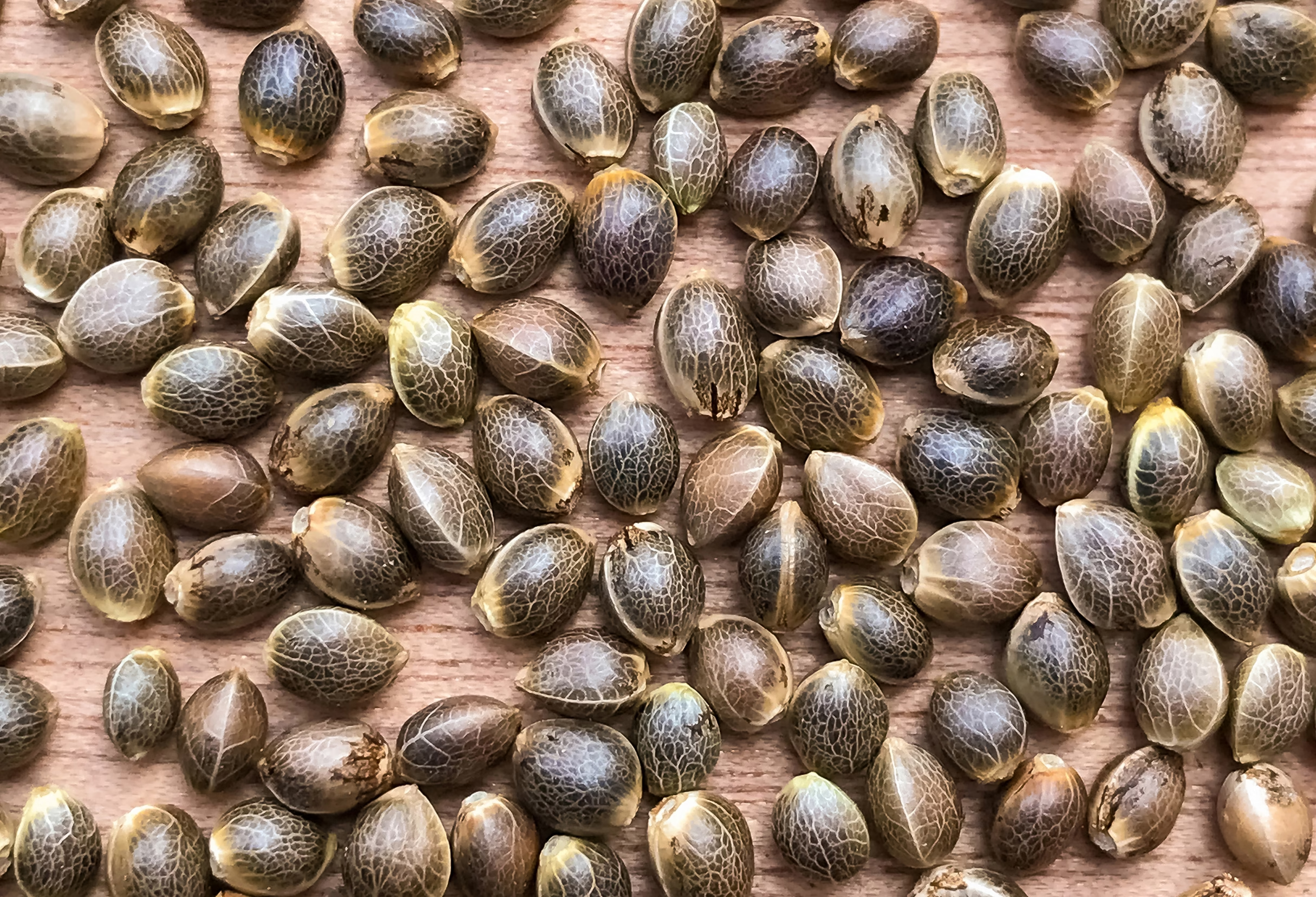
That same cannabis seed morphology study found that self-pollinated feminized seeds showed the least morphological variation in seed shape compared with seeds made from crosses between different parents, supporting the idea that inbreeding reduces variability.
That does not guarantee uniform plants. It supports the broader expectation that selfing narrows variability.
You may see a few plants that feel “off”
Because selfing increases homozygosity, you may see:
- weaker vigor in some individuals
- unusual expressions that were not obvious in the mother
- a wider spread than you expected if the mother line carried hidden recessives
None of that means S1 is “bad.” It means S1 is honest. It shows you what the line contains.
You can sometimes find an “improved” expression
Selfing reshuffles the same deck. Sometimes that reveals a combination that fits your goals better than the original mother. This is part of why breeders use selfing as a selection tool.
S1 compared to labels people confuse with it
S1 vs “feminized”
“Feminized” is a sex-probability label. S1 is a specific feminized method. All S1 are feminized in intent, but not all feminized seeds are S1.
S1 vs F1
F1 hybrids are the first generation from two distinct parents, and reputable horticulture guidance is clear that seeds saved from F1 hybrids will not be true to type because the next generation segregates.
S1 is different. It is one line selfed, so it narrows the gene pool rather than combining two unrelated pools.
A clean mental shortcut:
- F1 adds diversity.
- S1 concentrates a line.
S1 vs R1
R1 is often used to describe a feminized cross made by reversing one female and pollinating a different female. S1 is selfing, meaning the same genetic individual supplies both sides. If a listing uses these labels loosely, ask for clarification.
S1 vs IBL
An inbred line is the result of repeated inbreeding and selection across multiple generations to create a stable, true-breeding population. A plant breeding review notes that producing homozygous lines typically takes multiple generations of inbreeding and selection.
S1 is only the first step in that direction. It is not the same promise as a stabilized line.
When S1 seeds are a smart buy
S1 seeds make the most sense when you care about one of these outcomes.
You want a seed run that stays close to a specific mother line.
You want a tighter learning experience than a wide polyhybrid cross.
You want to explore a cultivar’s “hidden range” without bringing in unrelated genetics.
You want feminized convenience but still want some room for selection.
S1 is especially useful when your goal is to find a keeper that feels like it belongs to a specific profile, instead of hunting random novelty.
When S1 seeds are the wrong tool
S1 is often not the best choice when:
You need maximum uniformity across many plants.
You are extremely sensitive to any increase in variability or weak individuals.
You want the vigor you often see from outcrossing and hybrid vigor dynamics.
You want to build a broad breeding program around male selection.
This is not a knock on S1. It is about matching method to goal.
How to buy S1 seeds without getting misled
S1 is a label that should come with clear expectations. If a seller cannot explain what was selfed and why, treat that as risk.
Here are the buyer-side questions that matter most:
Ask which plant was selfed. Was it a specific mother line or a broad population?
Ask what spread to expect. Is it a tight S1 or a wide S1?
Ask if the line was chosen for stability before selfing. Selfing concentrates whatever the mother already was.
Critical warning: if a listing promises “perfect clones in seed form,” it is overselling. Selfing can narrow variability, but it can also reveal recessives.
The questions people keep asking about S1 seeds
Are S1 seeds always feminized?
They are produced through a feminized method, so they are intended to produce female plants. The broader scientific point behind feminized seed production is that inducing male flowers on female plants is used specifically to obtain genetically female seeds.
Are S1 seeds the same as clones?
No. A clone is genetically identical. An S1 population is a set of siblings made from one line selfed. It can be close, but it can also reveal recessives and variation because selfing increases homozygosity.
Do S1 seeds “herm” more?
The label alone does not answer that. What matters is the stability of the mother line and how the seed was produced and selected. Selfing concentrates genetics, and if a line carries instability, selfing can make it show up more clearly.
Why do some S1 packs feel very uniform while others feel wide?
Because “S1” describes the method, not the quality of selection. Two different mother lines can have very different hidden genetic loads. Selfing reduces variability overall, but it can still produce a noticeable range if the mother was heterozygous and carried recessive diversity.
What is the difference between S1 and F2?
F2 is a filial generation from an F1 cross, and it is known for segregation and wider variation when traits reshuffle in the next generation. Horticulture guidance for F1 hybrids warns that saved F1 seed will not come true to type, which is the same core idea behind why F2 is variable.
S1 is selfing a single line. It usually narrows the pool instead of exploding it.
Can you use S1 seeds for breeding?
Conceptually, yes. Practically, it depends on your goal. Selfing is a tool used in plant breeding to create more homozygous lines over generations, but it is also associated with inbreeding depression in many species when deleterious recessives become exposed.
So S1 can be part of a serious program, but it is not a shortcut to “stable forever.”
Are S1 seeds good for beginners?
They can be, if the beginner wants a more “contained” genetic experience and is not expecting perfect uniformity. If a beginner needs the simplest possible run with the least decision-making, a very stable feminized line may be easier than an S1 that still has a meaningful spread.
How many S1 seeds should I run if I want to find a keeper?
There is no universal number. The logic is simple: S1 narrows the pool, but it does not eliminate variation. If you want to choose, you need enough plants to compare. If you cannot run enough plants to compare, you should buy seeds for predictability, not for hunting.
Where S1 fits in a smart seed strategy
S1 seeds are best understood as a spotlight. They shine a light on what one mother line truly contains. That can produce plants that feel very close to the original, and it can also reveal surprises that were hidden.
If you buy S1 for the right reason, it is one of the cleanest ways to explore a line without introducing unrelated genetics. If you buy S1 expecting perfect clone replication, you will judge it unfairly.
A good next step is to learn the other two labels that most often sit next to S1 on listings: R1 and IBL. Once you understand how those three relate, seed shopping becomes much more predictable.
Share this article

Written by : alexbuck
A quick overview of the topics covered in this article.