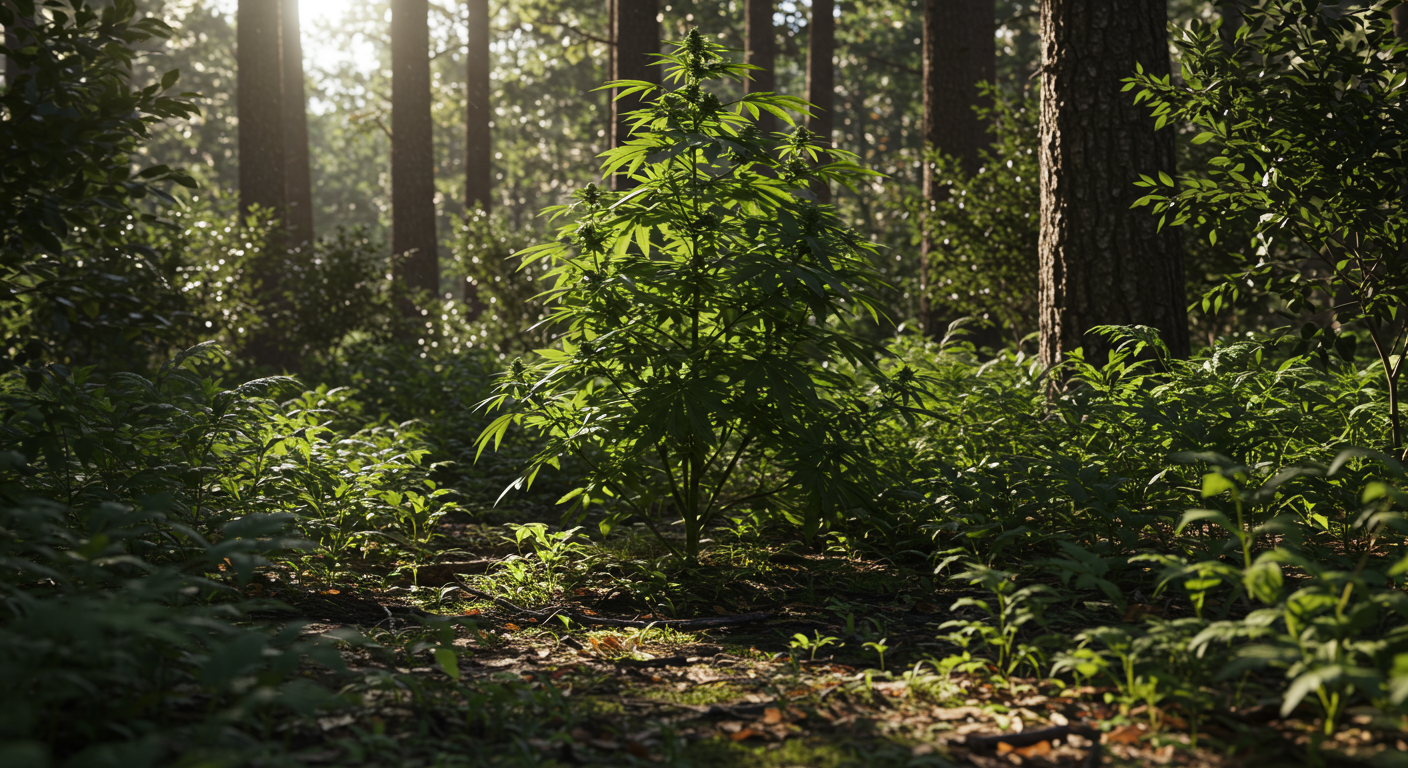
Where Does Wild Cannabis Grow?
People ask “where does wild cannabis grow?” for more than one reason. Sometimes it’s pure curiosity about the plant’s origins and how it ended up worldwide. Sometimes it’s a practical question—someone found a suspicious-looking plant on a riverbank or roadside and wants to identify it. Sometimes it’s a grower trying to reverse‑engineer what nature does right (soil, resilience, timing). And sometimes it’s a genetics question about landraces, cold tolerance, or “autoflower” traits.
This article stays grounded in what we can verify: botany, ecology, peer‑reviewed evidence, and well‑documented environmental realities. It also keeps one boundary clear: we only talk about legal, ethical cultivation. Wild cannabis is a real ecological phenomenon; trespass growing on public land is an environmental problem, not a “strategy.”
What “wild cannabis” actually means in real life
The first mistake is assuming “wild cannabis” always means potent, smokable flower growing untouched in the forest.
In most places, the “wild cannabis” people stumble across is feral cannabis—plants growing without care, commonly descended from low‑THC fiber hemp populations that escaped cultivation and kept reseeding. In North America, it often gets called ditch weed, and the Drug Enforcement Administration definition (as quoted in industry reporting) frames it as wild, scattered plants with no evidence of planting or tending, typically with negligible THC.
By contrast, landraces are not “random wild weed.” In plant science, “landrace” usually refers to a genetically diverse, locally adapted traditional variety shaped by both environment and local selection over time (not modern, standardized breeding).
That distinction matters for growers and for anyone doing field ID:
- “Feral” often means hardy but chemically unimpressive (especially for THC), plus heavy pollen risk to nearby legal flower production.
- “Landrace” means locally adapted genetics that can be uniquely valuable as breeding material—particularly for climate stress resistance and disease tolerance.
Where wild cannabis grows today
You can’t map wild cannabis like a single biome, because cannabis is unusually plastic as a species. But you can map the patterns that repeat.
It’s essentially global, but not uniform
A straightforward baseline: industrial hemp as a crop grows outdoors across a huge climatic range—sub‑arctic to tropical, sea level to high altitudes—and UNCTAD notes outdoor hemp cultivation exists on every continent except Antarctica. The same source notes wild/feral populations occur very far north in Eurasia, approaching the Arctic Circle.
For wild/feral occurrences specifically, recent scientific work modeling occurrence records emphasizes that Cannabis sativa occupies diverse habitats, strongly shaped by climate variables and soils, and that suitable environments often include well‑drained, loamy/alluvial soils with adequate water supply.
Wild cannabis likes disturbed edges and “free irrigation”
Across regions, wild/feral stands commonly persist where two conditions overlap:
First, disturbance: places where soil was turned, roadside edges maintained, construction moved dirt, or agriculture historically ran.
Second, water access: river corridors, drainage ditches, seasonally moist lowlands, or groundwater‑supported margins.
Ecologically, this matches broader distribution modeling language describing favorable environments as having good water supply and soils that support aeration and nutrient cycling.
Practical takeaway for outdoor growers
If you want to understand where cannabis thrives outdoors (legally), focus less on folklore and more on site fundamentals:
- day length and season length (photoperiod fit),
- humidity pressure (mold risk),
- soil structure and drainage,
- and whether water arrives consistently without waterlogging.
Where cannabis came from and how it spread
Cannabis has been traveling with humans—and evolving with climate—for a very long time.
A synthesis of fossil pollen and archaeobotanical evidence narrows the likely center of origin toward the northeastern Tibetan Plateau region, near Qinghai Lake, and pairs that with molecular clock estimates placing the divergence of Cannabis and hops (Humulus) on the order of ~28 million years.
On the domestication side, whole‑genome work published in Science Advances argues that Cannabis sativa was first domesticated in early Neolithic times in East Asia, followed by later divergence and diversification into hemp and drug types.
Why does this matter for a “where does it grow” question?
Because it explains the headline trait that drives everything else: cannabis is built for adaptation. Range expansions, contractions, and human‑mediated movement created repeated bottlenecks, local selection, and wide ecological tolerance.
How wild cannabis survives extremes
If you want the “outdoor grower” value from the wild cannabis question, this is the section that pays. Wild cannabis doesn’t survive by magic. It survives by matching form and timing to stress.
High mountains and high UV: why resin exists at all
In high‑UV environments, cannabinoids and trichomes are repeatedly discussed as part of cannabis’ protective toolkit. Reviews of cannabis secondary metabolite biology summarize earlier evidence that THC can increase under higher UV‑B exposure and that UV‑B may increase trichome density, supporting the broader hypothesis that cannabinoids participate in photoprotection.
But it’s not as simple as “add UV, get better weed.” A controlled indoor study found that adding UV did not produce commercially meaningful yield benefits and had limited effects on THC depending on tissue.
The practical translation is: the environment shapes the resin story, but results depend on intensity, spectrum, cultivar, and the rest of the grow system.
Hot and humid climates: structure is a survival trait
In warm, wet growing seasons, the outdoor killer isn’t lack of nutrients—it’s disease pressure. For cannabis, bud rot (often involving Botrytis cinerea) can destroy inflorescences rapidly under high relative humidity, with published cannabis‑focused work describing fast loss under RH above ~70% at moderate temperatures.
That’s why, across cannabis cultivation practice, genetics and phenotypes that hold tighter, denser flowers can face higher risk in wet climates unless airflow and canopy management are excellent. The biology isn’t controversial: sustained humidity and wetness are what gray mold is optimized for.
Short summers and cold edges: ruderalis and the autoflower trait
In high latitudes with short seasons, photoperiod sensitivity is a liability—if the plant waits too long to flower, frost ends the cycle.
Modern genetics research identifies specific genomic regions associated with photoperiod‑insensitive flowering in hemp (an “autoflower”‑type trait), including work linking an FT ortholog locus to photoperiod insensitivity.
From a grower’s perspective, this is the cleanest scientific bridge between “wild cannabis survives cold” and “autoflower genetics exist”: flowering time is a selectable trait with real genomic architecture, and it’s strongly shaped by latitude and season length.
How to identify wild cannabis without fooling yourself
Field identification deserves humility. Lots of plants can look “kinda like cannabis” to an untrained eye—and legal definitions (hemp vs marijuana) ultimately require lab testing for THC in jurisdictions that codify the 0.3% threshold.
The botanical features that matter most
A high‑quality, extension‑written identification guide describes Cannabis sativa leaves as palmately compound and notes they may be opposite or alternate, with sizes and forms varying with use type (fiber vs seed/flower).
Peer‑reviewed morphological characterization also documents a notable shift in leaf arrangement from opposite to alternate as plants develop—one reason early‑stage ID can differ from later nodes.
If you need a simple field checklist, keep it short:
- Leaf architecture: palmately compound leaves with multiple leaflets (number varies by development and cultivar).
- Phyllotaxy change: early opposite/decussate can transition toward alternate as the plant matures.
- Surface texture: cannabis commonly has pubescence (fine hairs) on many parts.
Look‑alikes are common enough that pros use structured guides
The most responsible approach is using a formal guide that explicitly compares cannabis to similar‑looking plants. The extension publication from University of Florida IFAS Extension is built for exactly that purpose.
What wild cannabis teaches outdoor growers about soil, feeding, and resilience
Wild cannabis isn’t “fed.” It’s supported by soil physics, microbial cycling, and season timing. If you grow outdoors legally and want quality, you’re trying to recreate the functional parts of that system—without the chaos.
Soil texture: why loam is the default answer for a reason
Loam isn’t a brand name. It’s a structure: a balanced soil texture that drains, holds water, and holds nutrients.
A field experiment in Poland comparing loamy and sandy soils found significantly greater growth and yield on loamy soil, even without fertilizer, with highlights stating loamy soil increased growth ~2.5‑fold versus sandy soil in their conditions.
That aligns with agronomy reviews for hemp (a close cultivation analog for outdoor soil requirements), which commonly describe best performance on deep, well‑drained, fertile soils with a moderately neutral pH.
Soil pH: keep it boring and in range
For hemp agronomy, peer‑reviewed reviews often put optimal soil pH around 6.0–7.5, with warnings against high acidity, salinity, and compaction.
For outdoor cannabis, the practical effect is the same: if pH is out of range, nutrient availability and root performance degrade, and you end up “chasing symptoms.” Even industry research discussion notes that substrate pH recommendations vary but that a 6.0–6.5 standard is commonly cited in commercial contexts.
Organic matter and compost: what it does and what it can hide
Compost improves soil structure, porosity, and water holding capacity—this is a consistent theme in soil science and horticulture literature.
But “organic” is not automatically “clean.” Compost quality and sourcing matter; heavy metals and contaminants are a known risk category in cannabis generally, and trespass operations show how persistent chemical legacies can remain in soils.
If your goal is premium bud quality, treat soil inputs like food ingredients: source clean, test when you can, and avoid mystery amendments.
Nutrition timing: avoid the most common outdoor mistake
The outdoor myth is “more fertilizer equals more weed.”
A life‑cycle assessment study of outdoor cannabis production notes a key grow‑relevant point: nitrogen can be counterproductive at high levels, producing flowers with decreased cannabinoid content in their trial context, even as it influences growth.
So the outdoor quality strategy becomes:
Keep plants healthy early, then avoid late‑season overfeeding that makes the plant lush, soft, and humidity‑sensitive right when mold pressure climbs. That’s not ideology—it’s matching plant physiology to pathogen ecology.
Organic IPM: prevention beats “sprays”
In the wild, cannabis survives by being part of a web—predators, microbes, air movement, and timing. Outdoors, your equivalent is IPM.
A California public‑sector guidance document on pest management practices for marijuana growers emphasizes that pests vary by indoor/outdoor context and geography—exactly why prevention and monitoring are foundational.
When biological tools are used, they are not mystical either: neem, Beauveria bassiana, and Bacillus thuringiensis (Bt) belong to a broader, well‑studied set of biopesticide approaches that can reduce reliance on higher‑risk synthetic residues.
If you’re building a quality-first outdoor system, the cleanest frame is:
- limit flower contact with anything you wouldn’t want combusted,
- control humidity through spacing and airflow,
- and use targeted, low‑residue options early, before flowers are dense.
The ethics of “wild”: why trespass grows are not “outdoor cultivation”
Outdoor cultivation can be sustainable. Trespass cultivation on public lands is the opposite.
Peer‑reviewed work modeling trespass cannabis cultivation risk in California and southern Oregon describes illegal cultivation on public lands as a major threat associated with pesticides, habitat destruction, and water diversions—impacts linked to documented wildlife poisonings and broader ecological harm.
More recent monitoring by United States Geological Survey found detectable pesticide compounds in soils at trespass grow sites on federal land, including insecticides and fungicides, underscoring that chemical footprints can persist even after sites are inactive.
If you care about the plant, the culture, and the land, then “Leave No Trace” isn’t a slogan. It’s the baseline.
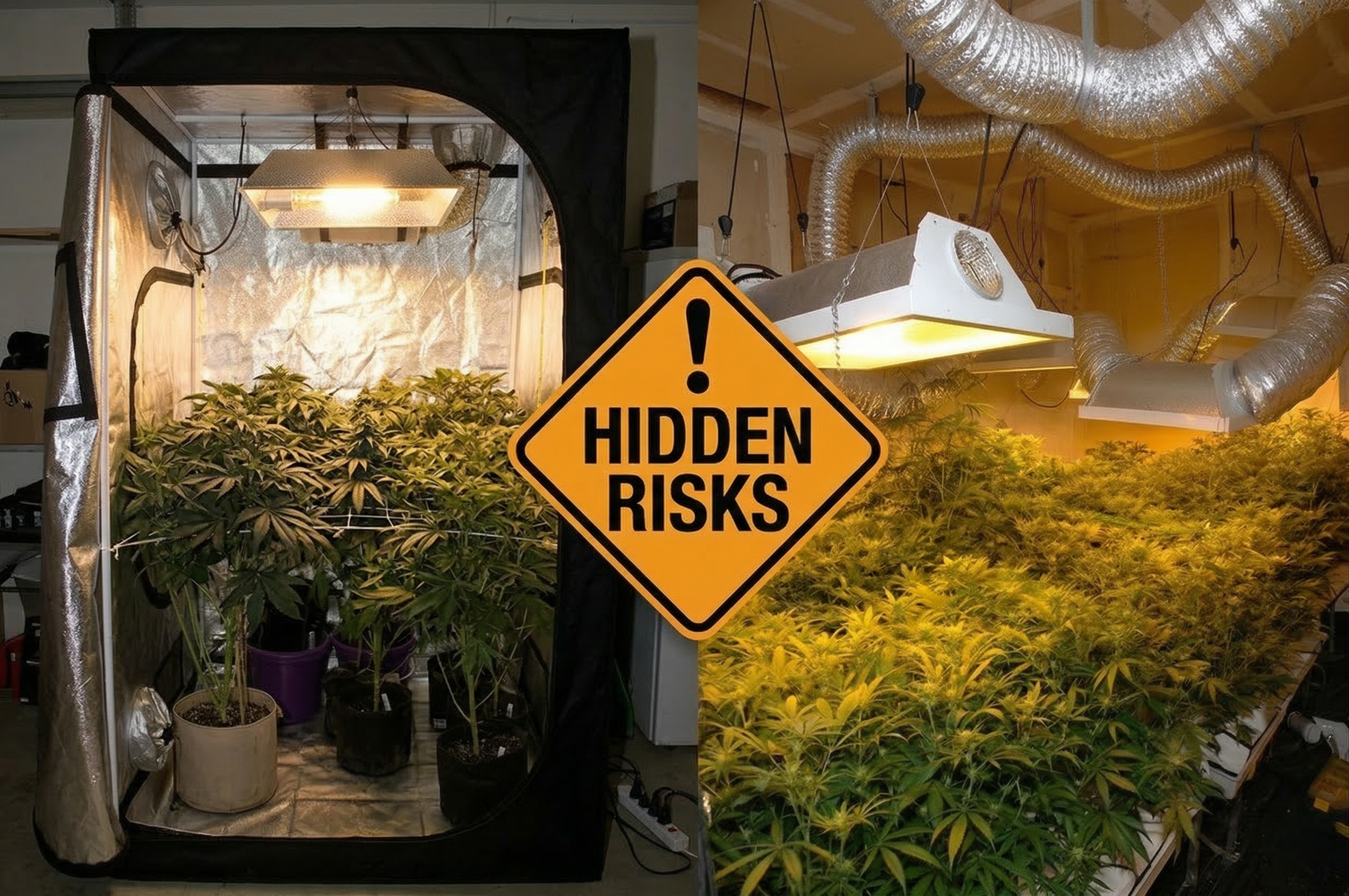
Sustainability reality check: indoor versus outdoor carbon impact is not close
A Colorado State University summary of research tied to a Nature Sustainability life‑cycle assessment reports that indoor cultivation contributes materially to greenhouse gas emissions in Colorado, on the order of ~1.3% of statewide emissions in their estimate and comparable to other industrial sectors.
Peer‑reviewed outdoor cannabis life‑cycle assessment work suggests outdoor production can be dramatically lower carbon than indoor; one study reports outdoor cannabis agriculture can be “50 times less carbon-emitting” than indoor production under their modeled assumptions.
This is not a moral argument. It’s logistics: indoor requires lighting and HVAC; outdoor borrows the sun.
Share this article

Written by : alexbuck
A quick overview of the topics covered in this article.
- What “wild cannabis” actually means in real life
- Where wild cannabis grows today
- Where cannabis came from and how it spread
- How wild cannabis survives extremes
- How to identify wild cannabis without fooling yourself
- What wild cannabis teaches outdoor growers about soil, feeding, and resilience
- The ethics of “wild”: why trespass grows are not “outdoor cultivation”
Follow us
Latest articles
March 13, 2026
March 13, 2026
March 13, 2026