
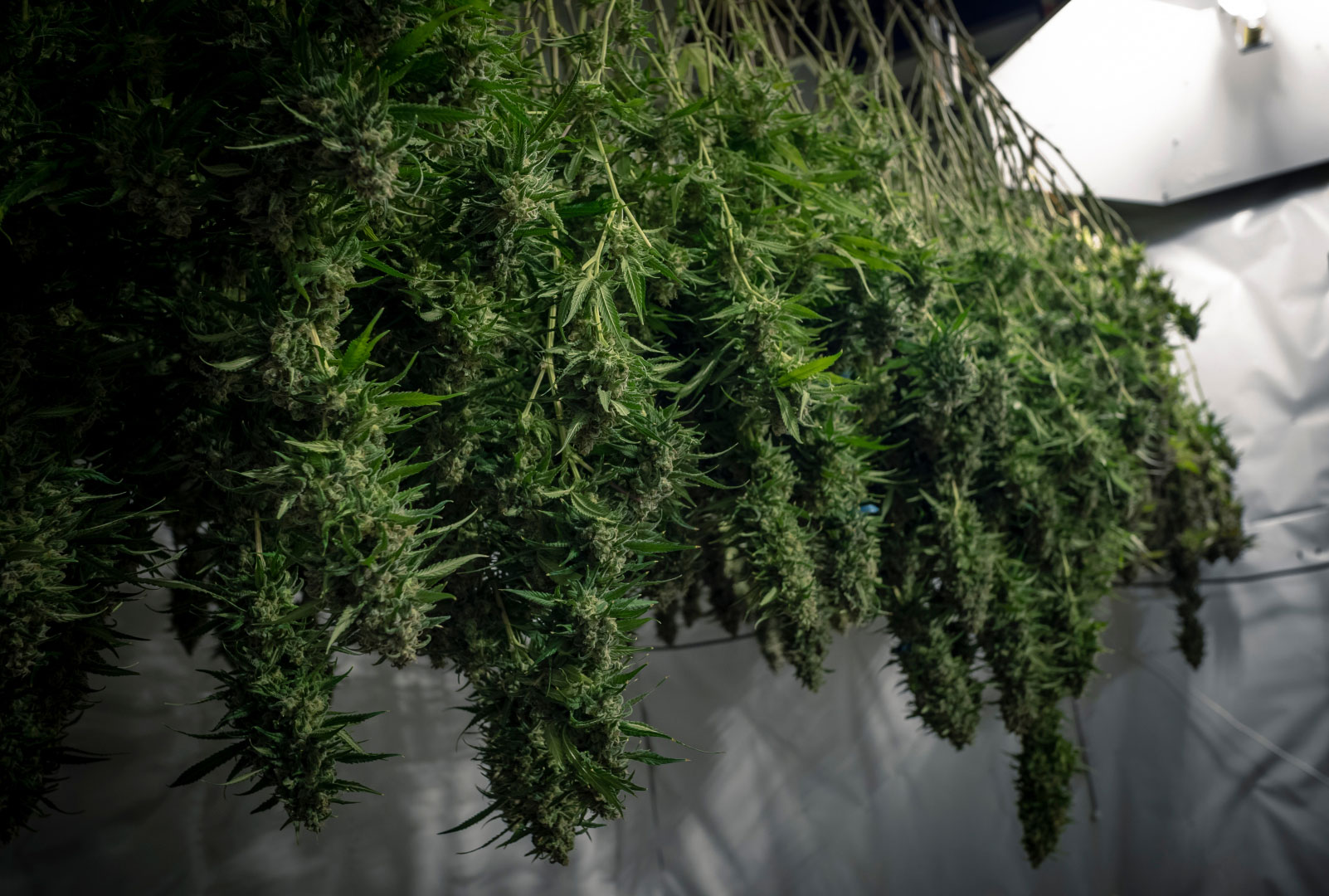
Whole Plant Hang Dry vs Branch Dry Which Preserves Flavor Better
Whole Plant Hang Dry vs Branch Dry Which Preserves Flavor Better
Both methods can preserve great flavor, but they preserve it in different ways. Whole plant hang drying tends to protect aroma by slowing the dry and keeping moisture loss more gradual, while branch drying tends to protect flavor by giving you control and helping you avoid damp pockets when conditions are risky. The better choice is the one that lets you dry evenly, keep air fresh, and avoid extremes.
If you want a simple rule that rarely fails, pick the method that keeps your dry steady and predictable in your space, then use a small jar test to confirm readiness before curing.
Why drying method changes flavor
Drying changes flavor because it controls how quickly water leaves the flower, how evenly moisture moves from the center to the surface, and how much physical handling the buds take during their most delicate stage. Those three factors decide whether your final aroma stays clear and layered, or turns flat, grassy, or stale.
Drying speed and terpene retention
Terpenes are volatile, which means they evaporate easily, especially with warmer air and strong airflow. Drying too fast can strip top notes early, and once they are gone, curing cannot bring them back.
Slower drying usually protects aroma because it reduces the evaporation push and gives the flower time to lose moisture without the surface turning crisp right away. That said, slower only helps when the air stays fresh and the flower is not sitting wet for too long. If slow becomes damp and stagnant, you trade terpene preservation for musty notes and a cure that never feels clean.
The real target is controlled speed, not maximum speed or minimum speed.
Evenness of moisture distribution
A bud never dries evenly on its own. The outside dries first and the center lags, so the quality question becomes how smoothly moisture can migrate outward as the surface dries.
When surface drying outpaces internal migration, you get the classic problem: the outside feels dry and the inside stays wetter. This often leads to jars that spike humidity even though the buds feel ready, and it also raises the risk of grassy flavor that lingers.
A method that slows surface loss and keeps the moisture gradient gentle tends to cure more cleanly, because the flower reaches the jar in a more uniform state.
Handling damage and aroma loss
Handling matters more than people think because it combines physical damage with extra exposure. Every time you cut, move, and trim, you increase contact with air and you break fragile resin heads that carry aroma.
Whole plant drying often reduces handling early because you hang larger pieces and leave the flower alone. Branch drying can still be low-handling, but it is easier to turn into a busy workflow where you keep touching and adjusting. If you want flavor, handling discipline is part of the method.
Whole plant hang dry basics
Whole plant hang dry means hanging the plant intact, or in very large sections, so buds dry while attached to more stem and leaf mass. The main benefit is that it naturally slows and smooths the dry.
Why it often dries more slowly and evenly
Whole plant drying is slower because the plant carries more water mass and the buds are less exposed on all sides, especially if some leaf remains around them. This slows surface drying and gives internal moisture more time to move outward, which reduces the chance of dry shells and wet cores.
It also tends to produce a more forgiving finish. When the dry is gentle, the jarring moment is easier to hit because the batch behaves more consistently, and you are less likely to have some buds overdry while others are still sweating internally.
The common misunderstanding is thinking whole plant drying is automatically safer. It is safer in dry environments, but in humid environments it can become too slow unless your air exchange and spacing are strong.
Best use cases for whole plant drying
Whole plant drying usually fits best when the main risk is overdrying.
If your buds often dry in just a few days, whole plant drying is a natural brake that can keep the surface from crisping too early.
It also fits well when you have enough space to hang plants with gaps between them, and you can keep your drying area cool, dark, and steady.
Whole plant drying is also a good match when you want a simpler workflow with less early handling, because you can hang, monitor, and adjust the room rather than constantly adjusting the harvest material.
Common problems and how to avoid them
The main whole plant failure mode is slow drying that turns into stale drying.
What you will see when it goes wrong often starts with smell. The room begins to smell heavy, damp, or slightly sour, and the buds stay soft deep inside even as the outside starts to feel dry. Dense tops are the first place this shows up.
Root causes are usually crowding, weak air exchange, and high humidity, often combined with dense flower structure.
Fixes you can do now:
Increase spacing so plants are not touching and air can move around every side.
Make air move through the room rather than at the buds, so the room does not develop dead zones.
Reduce load if the space cannot keep up, because too much wet biomass in a small room overwhelms any plan.
If dense tops feel like they are lagging, split only those tops into smaller sections so they can dry more safely.
Prevention for next time:
Plan the hang layout before harvest and commit to leaving gaps.
Treat dense tops as a different category and be ready to split them earlier.
Do not rely on “slow is good” if your environment is already humid, because slow plus humid is where stale odors begin.
Branch drying basics
Branch drying means cutting the plant into branches or smaller sections, then hanging those pieces so you can control spacing and airflow more precisely. The main benefit is flexibility.
Why it is faster and more flexible
Branch drying is usually faster because more bud surface is exposed to air and each piece has less attached wet mass. This can be a major advantage when humidity is high or your space is limited, because you can avoid wet pockets and keep air moving around each piece.
It is also flexible because you can sort by size and density, move pieces away from hot spots, and stage a harvest in waves without overloading the room.
The tradeoff is that branch drying can go too fast if airflow is strong or the room is dry, which can flatten aroma and create a stubborn cure later.
Best use cases for branch drying
Branch drying is often the better choice when the main risk is moisture staying too high for too long.
If you live in a humid climate, or your drying space tends to hold humidity and feels stagnant, branch drying gives you tools to reduce risk, especially on dense buds.
It is also a strong fit for small spaces, because you can spread branches like a single layer instead of trying to fit whole plants.
Branch drying works well for large harvests because it scales into repeatable lots, and it lets you dry tops and lowers differently so you do not sacrifice small buds while waiting on big ones.
Common problems and how to avoid them
The main branch drying failure mode is a fast surface dry.
You will see crispy edges early, a sharp or dusty smell, and buds that feel dry outside but still spike humidity in a sealed jar later. The cure often feels like it never fully cleans up, even if you cure longer.
Root causes are usually direct fan airflow, low humidity, warmer temperatures, and aggressive trimming that exposes too much surface early.
Fixes you can do now:
Stop blowing air directly at buds, because direct airflow strips the surface and pulls aroma away.
Slow the drying rate by hanging larger branches instead of tiny pieces, and leave some protective leaf around buds early if your environment is very dry.
Reduce hot spots by moving branches away from warm corners and keeping the room more uniform.
Prevention for next time:
Decide your cut size based on your climate. Dry climates often benefit from larger pieces, while humid climates often benefit from smaller pieces and more spacing.
Treat airflow as room circulation, not bud airflow, and set fans to move air gently rather than aggressively.
Side by side comparison that matters for taste
Taste outcomes usually come down to control, risk management, and how clean the transition into curing becomes.
Drying time control
Whole plant drying controls time by slowing everything down, which is helpful when your environment pushes toward fast drying.
Branch drying controls time by letting you adjust spacing and piece size, which is helpful when your environment pushes toward slow drying.
In practice, whole plant gives you passive control, while branch drying gives you active control. The best choice is the one that is easiest for you to run consistently.
Risk of grassy notes
Grassy flavor usually sticks around when the flower enters curing with uneven moisture, or when it was jarred too early and spent time sealed while still too wet.
Whole plant drying often reduces this risk because the dry is gentler and moisture tends to equalize better before jarring, especially in drier environments.
Branch drying can still produce a clean cure, but if it dries the surface too fast, you can end up with dry shells that hide internal moisture. That is when jar humidity jumps and the cure feels messy.
If you want the most reliable protection against grassy notes, do not guess on readiness. Use a small jar test for 12 to 24 hours so you see whether the batch is stable before you commit to curing.
Risk of mold and stale odors
Mold and stale odors are mainly about moisture staying high while air stays still.
Whole plant drying can raise this risk in humid conditions because dense tops can hold moisture longer and crowded plants create humid pockets.
Branch drying can lower this risk because it increases exposure and makes spacing easier, but it can also create stale odor problems if people try to slow it down by reducing airflow too much. Slow is fine, but stagnant is not.
If you are in a humid setup, branch drying or a hybrid approach is usually safer for dense flowers, because it reduces the time the core stays wet.
Final smoothness and burn quality
Smoothness is tied to two stages: an even dry and a correct jarring moment.
Whole plant drying often supports smoothness by reducing dry shells and helping moisture exit more evenly, which makes curing more predictable.
Branch drying can match that smoothness when you avoid direct airflow and you sort by bud density, but it is easier to overdry small buds while chasing readiness on dense tops, and that can create a harsher smoke.
If your burn quality often feels inconsistent, it usually means your drying lots were mixed and your jarring decision was made on averages instead of on stable jar behavior.
How to choose based on your environment
Your environment decides which method gives you the best odds with the least stress.
Warm dry climates
Warm, dry climates usually push flower toward a fast surface dry, which is where aroma is lost and dry shells form.
Whole plant drying often preserves aroma better here because it naturally slows surface loss and gives internal moisture time to move outward.
If you must branch dry in a dry climate, keep branches larger, avoid direct airflow, and make sure the drying space does not get too warm, because warmth plus airflow is a fast track to flat smell.
A practical decision point is simple: if your buds are finishing in under a week, whole plant or a hybrid usually gives you better flavor.
Cool humid climates
Cool, humid climates usually push flower toward slow drying and trapped moisture, which increases the risk of stale odors and mold.
Branch drying often works better here because it lets you increase spacing and reduce wet pockets, especially on dense tops.
If you want to whole plant dry in humidity, you need strong spacing discipline and steady air exchange, and you should be ready to split dense tops early if they lag.
A practical decision point is equally simple: if buds stay soft deep inside for too long, branch drying or a hybrid is the safer path.
Limited space setups
Limited space often forces crowding, and crowding is the enemy of clean aroma.
Branch drying is usually the better fit because you can distribute pieces and keep air moving around them, while whole plants quickly turn a small room into a wall of wet biomass.
If you want the benefits of whole plant drying in a small space, use a hybrid where you start with larger sections briefly, then split into branches so you can maintain spacing.
How to choose based on plant structure
Plant structure matters because it controls how moisture escapes, and it changes how forgiving a method will feel.
Dense colas vs airy flowers
Dense colas hold moisture deep inside, so they demand a method that prevents wet cores without turning the outside crisp.
Airy flowers usually dry more evenly and tolerate either method, though they can overdry quickly in very dry setups if branch dried aggressively.
If your buds are very dense and your environment is humid or unstable, branch drying or a hybrid is often safer because you can split tops and increase exposure. If your environment is dry and stable, whole plant drying can work well because it slows the surface and gives the core time to catch up.
Large plants with mixed bud sizes
Mixed sizes create mixed drying timelines, and mixed timelines create mixed jar behavior.
Branch drying gives you an advantage because you can sort tops and lowers, and you can jar in stages instead of forcing everything into one timeline.
Whole plant drying can still work, but you need to monitor different zones of the plant and be willing to break down the plant once smaller buds are close to ready, otherwise they can overdry while you wait for the biggest tops.
Strain traits that influence drying behavior
Some strains make tight, dense flowers with thick calyx stacking, and others make looser flowers with more airflow through the bud. Some have heavier leaf coverage around the flowers, which can slow drying and trap humidity if airflow is weak.
Tight structure and heavy coverage favor more spacing and a little more exposure, especially in humid conditions, while looser structure can handle slower methods without as much risk.
If you repeatedly see jars that spike humidity even though the buds feel dry outside, that often points to dry shell formation, so slowing surface drying and keeping airflow indirect becomes a priority.
Airflow and spacing best practices for both methods
Airflow and spacing decide whether your drying plan behaves as expected. Good numbers do not matter if the air is uneven and the material is crowded.
Ideal spacing to prevent trapped humidity
You want air gaps everywhere.
Pieces should not touch, and they should not overlap like a thick curtain, because contact points trap humidity and dry last. Those are the places where stale odors start.
A good way to check spacing is to stand back and look through the hanging material. If you cannot see open space, you are likely too crowded.
If you cannot create gaps, reduce load or split the harvest into batches.
Fan placement that protects aroma
The goal is room circulation, not bud wind.
Place fans so they move air around the space and prevent dead zones, but avoid pointing airflow directly at the buds. Direct airflow speeds surface drying and carries aroma away, which often leads to flatter smell and dry shells.
If you notice one side of branches drying faster than the other, that is usually directional airflow or a hot spot, so adjust fan angles and reposition material until drying feels more uniform.
When to rotate or move material
Move material when the room is uneven, not as a daily ritual.
If certain areas dry faster, rotate branches into slower zones, and move dense tops into areas with better circulation. Do it gently so you do not knock resin.
Whole plant setups need less movement when spacing is good, while branch setups may need more small adjustments because smaller pieces respond quickly to microclimates.
When you adjust, make one change and give it time, because constant tinkering can create more handling than the buds need.
The best hybrid approach for flavor
Hybrid approaches often give the best results because they combine gentle early drying with control later.
Whole plant for 24 to 72 hours then branch
This is a strong flavor-focused hybrid.
You start with the whole plant or large sections for one to three days so the surface does not dry too fast, then you break into branches once the initial moisture load has dropped. This reduces the risk of dry shells early and reduces the risk of wet cores late.
This hybrid is especially useful when your environment is dry enough to overdry early, but you still want the ability to manage dense tops safely as the dry progresses.
Splitting only the biggest tops
If your main issue is dense colas, split only those.
Keep the rest in larger sections so you preserve the slower, gentler dry, then take the biggest tops and break them down so they do not lag and trap moisture. This keeps aroma higher than fully branch drying everything, while still reducing mold risk where it matters most.
Keeping lots consistent
Consistency is what makes curing easy.
No matter which method you use, group material into lots that behave similarly. Keep dense tops together and airy buds together, then jar and cure those lots separately.
If you mix lots early, you will chase jar humidity and end up overdrying some buds while trying to protect others. When lots are consistent, your jarring moment is clearer and your cure becomes repeatable.
How each method affects the cure
Drying method influences the cure because it changes how uniform the moisture is when you start.
Jarring readiness differences
Whole plant drying often produces more even moisture, so the jar test tends to be calmer and less spiky, assuming the environment was not too humid.
Branch drying often produces a wider spread of readiness, which is not a flaw, but it does mean you should jar in stages rather than forcing everything into jars at once.
Either way, the reliable move is to confirm readiness with a sealed jar test, because touch alone can miss internal moisture.
How to prevent uneven curing
Uneven curing usually begins with uneven jarring.
Prevent it by curing in consistent lots and avoiding mixing small and large buds early in the cure. If you have mixed bud sizes, keep them separate for at least the first couple of weeks, then combine later if you want long-term storage simplicity.
If a jar repeatedly spikes humidity, treat it as a signal that the lot was not uniform or was jarred too early, then correct it by re-drying the lot briefly and restarting the cure rather than trying to fix it through aggressive burping.
Burping strategy adjustments
Whole plant dried lots often need less aggressive burping early because they tend to be more uniform, but you still need regular air exchange in the first week so the jar stays fresh.
Branch dried lots may need closer attention early, especially if surface drying was fast, because internal moisture can continue migrating outward after jarring. In that case, short, frequent burps are safer than long lid-off sessions, because long openings can overdry the outside and lock in the unevenness.
The best burping strategy is the one that matches jar behavior, so let the jar guide your frequency instead of using a fixed schedule.
Choosing the Best Method for Your Setup
If you want the best flavor, choose the method that makes steady drying easiest in your space, then handle the harvest gently and jar only when the lot behaves stable.
If your space is small which method works better
Branch drying usually works better in small spaces because it helps you maintain spacing and avoid trapped humidity. Whole plant drying can still work if you reduce load or use a hybrid, but crowding quickly cancels out the benefits.
If your climate is dry which method preserves aroma
Whole plant drying usually preserves aroma better in dry climates because it slows surface loss and reduces the risk of crisp outsides. If you branch dry in a dry climate, keep pieces larger, keep airflow indirect, and avoid warm hot spots.
If your buds are very dense which method is safer
Dense buds are safer when you can prevent wet cores without forcing the outside to overdry. In humid or unstable conditions, branch drying or a hybrid is usually safer because you can split tops and increase exposure where needed. In stable, drier conditions, whole plant drying can work well if you keep spacing strong and monitor dense tops closely.
If you need a faster dry how to do it without killing flavor
Speed should come from better air exchange and better spacing, not from blasting buds with wind or heat.
If you need to dry faster, split dense tops, increase spacing, and improve room circulation while keeping airflow indirect. Keep the environment steady so you do not swing from too wet to too dry.
A fast dry that preserves flavor feels controlled, not aggressive, and it still relies on a jar test to confirm readiness.
A simple hybrid plan for mixed bud sizes
Start by hanging the plant whole or in large sections for 24 to 48 hours so the surface stays protected, then break into branches and sort by bud size.
Hang dense tops with extra spacing and better circulation, and hang smaller buds in a slightly more protected zone so they do not overdry while you wait for the big pieces. Jar each lot as it passes a sealed jar test, then cure in separate jars until both lots are stable.
That hybrid plan preserves aroma, reduces mold risk, and makes the cure more consistent because each jar starts with a uniform lot instead of a mixed batch.
Does Curing Increase Potency or Just Improve Smoothness
Curing mostly changes how cannabis feels and tastes, not how strong it is on paper. It can make the same flower hit cleaner and feel more effective, even when the cannabinoid numbers barely move. That [...]
Humidity Packs for Curing Do You Still Need to Burp
Humidity packs are popular because they make jars feel more predictable. You drop one in, the hygrometer settles, and the buds stop swinging between too dry and too wet. That convenience is real, but [...]
Curing in the Dark Does Light Ruin Flavor and Aroma
Curing is where a good harvest turns into a clean tasting one. The schedule matters, but the environment you cure in can either protect aroma or slowly strip it away. Light is one of [...]
Share this article

Written by : alexbuck
A quick overview of the topics covered in this article.
- Why drying method changes flavor
- Whole plant hang dry basics
- Branch drying basics
- Side by side comparison that matters for taste
- How to choose based on your environment
- How to choose based on plant structure
- Airflow and spacing best practices for both methods
- The best hybrid approach for flavor
- How each method affects the cure
- Choosing the Best Method for Your Setup
Follow us
Latest articles
March 30, 2026
March 30, 2026
March 30, 2026