
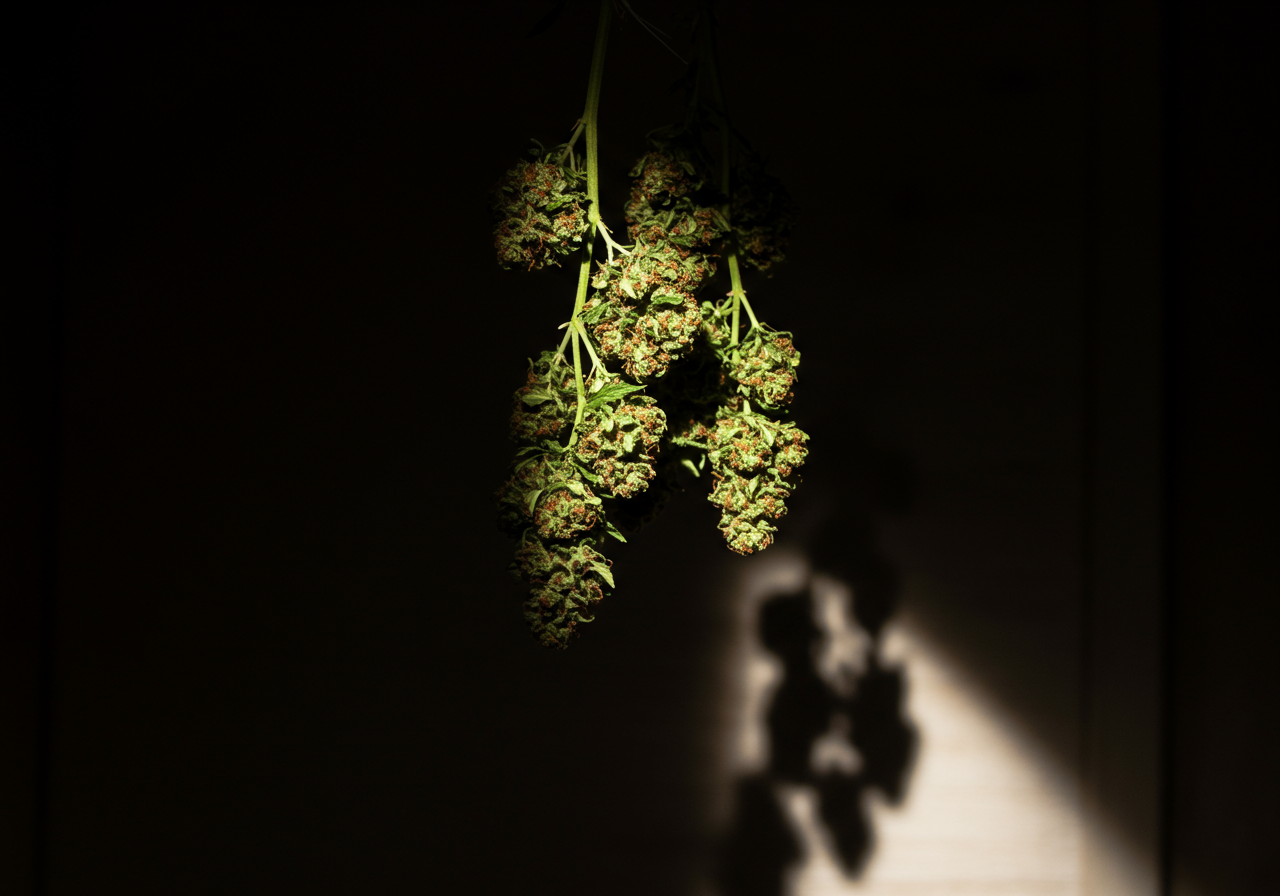
Curing in the Dark Does Light Ruin Flavor and Aroma
Curing is where a good harvest turns into a clean tasting one. The schedule matters, but the environment you cure in can either protect aroma or slowly strip it away. Light is one of the easiest risks to avoid, and it is also one of the most common ones people underestimate.
Why curing environment matters as much as the schedule
A cure is not only “airing jars.” It is a slow balancing act between moisture equalization inside the flower, controlled oxygen exposure, and steady conditions that let harsh notes fade instead of getting locked in.
When the environment swings, the cure becomes inconsistent. You can do the right burping schedule and still end up with muted aroma if the jars sit warm, get hit by light, or absorb smells from the room. Those losses are subtle day to day, and then obvious when you compare the final result.
Heat effects on aroma compounds
Heat pushes aroma out of the flower in two ways.
First, volatile compounds evaporate faster at higher temperatures, so the “top notes” that make a strain smell crisp can fade early. Second, heat speeds up chemical reactions involved in cannabinoid degradation and oxidation pathways, which shifts the profile over time. Studies on cannabis stability consistently flag temperature as a major driver of degradation, and cooler storage conditions slow these changes.
In real life, the goal is not extreme cold during the active cure. It is steady, modest temperatures that do not drift up and down every day. A stable room that stays on the cool side of normal living conditions usually performs better than a “sometimes cool, sometimes warm” spot near appliances, windows, or sunny walls.
What beginners often misunderstand is that short heat spikes count. If jars warm up for a few hours every day, aroma loss can still add up over weeks because evaporation and oxidation are cumulative.
What you will see when it goes wrong looks like this:
- Smell gets flatter week by week even though moisture seems fine.
- The flower tastes “thin” and the finish becomes drier, even if it still burns well.
How to confirm it is heat related:
- Check the actual temperature where jars sit, not the thermostat across the room.
- Compare one jar stored in a consistently cool cabinet to one stored in a warmer area for a week.
Fix you can do now:
- Move jars to the most stable, coolest dark location you have.
- Reduce how often jars sit open in warm air, and keep openings brief and purposeful.
Prevention next time:
- Choose a curing spot first, then build your schedule around it.
- Treat temperature stability as a core part of curing, not a nice extra.
Light effects and oxidation
Light is not just a visibility issue. It is a chemical stressor.
Cannabinoids and many aroma compounds can degrade faster when exposed to light, and photodegradation has been documented in cannabis materials and cannabinoids under controlled conditions.
Light also works with oxygen. Even when jars are closed, there is always some headspace oxygen, and every opening refreshes it. Light exposure plus oxygen increases the chance of oxidative changes, which can show up as a duller aroma and a less vibrant taste over time.
The key practical point is intensity and duration. Direct sunlight is the fastest way to damage stored flower. Strong indoor light is slower, but it still pushes you in the wrong direction if exposure is repeated. If you want the best flavor you can get, “mostly dark” is not the same as “kept away from light.”
How light exposure shows up in taste is usually gradual:
- Fewer bright notes when you break a bud apart.
- A more generic “dry plant” smell instead of distinct aroma.
- A quicker drop in freshness once you open the jar for a session.
Moisture swings that create off-notes
Moisture is the other half of the environment problem. Big humidity swings create two common outcomes.
If humidity spikes high, you raise the risk of musty, stale, or ammonia-like off-notes, and you increase mold risk. If humidity drops too low, the cure can stall and the aroma can feel sharp or hollow because the flower dries unevenly and stops smoothing out.
Many growers target a narrow jar humidity zone during curing because it reduces both problems, and it makes the cure predictable. A widely used target is around the upper 50s to low 60s percent relative humidity inside the container, and higher spikes are treated as a warning sign.
What beginners often misunderstand is that a jar can look fine while still swinging internally. The outside of buds can feel dry while inner moisture migrates outward after sealing, which is why stable conditions matter so much.
How to confirm moisture swings:
- Use a small hygrometer inside the container and track readings after sealing.
- Watch for repeated spikes after you think the cure is stable.
Fix you can do now:
- If spikes are happening, reduce jar fill level, shorten openings, and stabilize the room temperature.
- If jars are too dry, stop over-opening and focus on keeping the storage environment stable so you do not keep stripping moisture.
Prevention next time:
- Jar only when drying is truly complete enough for curing.
- Keep lots consistent so one wetter bud does not spike the whole container.
What light does to stored cannabis
Light causes two main categories of damage: cannabinoid profile shift and aroma loss. Both are slow enough that people argue about them, and fast enough that you can see the difference in real storage comparisons.
Why cannabinoids and terpenes are sensitive
Cannabinoids are not inert. Research on cannabis and cannabinoid stability shows that oxidation and temperature accelerate degradation pathways, including the formation of degradation products like CBN from THC over time.
Terpenes are even more vulnerable because many are volatile. They do not need to “degrade” to be lost. They can simply evaporate, and they can also oxidize into different compounds that smell less pleasant or less complex. Studies focused on terpene loss under environmental stresses show light and temperature can strongly increase terpene evaporation and loss rates.
Why clear jars can be a problem
Clear jars are popular because they are convenient and they seal well, but they have one obvious weakness: they transmit light.
If your jars ever sit in daylight, even indirect daylight, you have a steady exposure cycle that repeats every day. That is enough to slowly push aroma down and accelerate unwanted profile changes compared to dark storage. Studies comparing storage conditions repeatedly show that light and room temperature together are worse for cannabinoid stability than cooler and darker conditions.
Clear jars are not automatically “bad.” They are only a problem when you treat them like display pieces. If you keep them inside an opaque box or cabinet, the jar being clear no longer matters.
How light exposure shows up in taste
Light damage does not usually taste like one specific flavor. It often feels like absence.
You lose the sharp edges that define aroma. The flower can smell weaker when you first open the container, and the smell may not “bloom” as much when you break buds apart. In the smoke or vapor, the top notes fade and the profile becomes flatter.
If you cure in light and also run warm, the result often gets mislabeled as “it just did not cure well.” In reality, it may have cured fine in terms of moisture, but it lost aroma compounds along the way.
The ideal curing environment setup
You do not need a special room. You need a stable micro-environment that protects your jars from the three main threats: heat, light, and contamination.
Temperature targets and how to stay stable
Stability matters more than chasing an exact number, but you still want to avoid warmth.
Cooler conditions slow cannabinoid degradation and help preserve aroma compared to room temperature and daylight exposure.
Practical ways to stay stable:
- Pick an interior closet or cabinet that does not share a wall with a kitchen or a sunny exterior wall.
- Keep jars off the floor if the floor swings hot and cold, and off high shelves if the ceiling area runs warm.
- Avoid placing jars near electronics that run warm all day.
If your home has big daily swings, treat cure storage like you would treat a pantry for delicate food. The most boring, most shaded spot usually wins.
Humidity targets and how to prevent spikes
Jar humidity is driven by how dry the buds are when jarring and how full the container is.
A common curing target is around the upper 50s to low 60s percent RH inside the container because it balances moisture without staying wet enough to create off-notes and risk.
To prevent spikes:
- Do not pack jars full. Leave headspace so air can mix and moisture can equalize.
- Keep lots consistent. Mixing different dryness levels is one of the fastest ways to create repeated spikes.
- In the first week, open jars based on readings and feel, not based on habit.
When spikes keep happening, the root cause is usually “jarring too early” or “too much material in one container,” not the lack of burping.
Air quality and odor contamination
Flower absorbs smells. If you cure near strong household odors, the cure can pick up foreign notes.
Avoid curing near:
- Cooking smells
- Cleaning chemical fumes
- Paint or solvent odors
- Strong incense or fragrance
If you have no choice, double down on container odor control by using an outer box or cabinet and keeping the area clean and neutral.
Choosing containers with light control in mind
Container choice is not only about seal. It is also about light exposure, headspace, and how easy it is to manage lots consistently.
Clear glass vs tinted glass
Tinted glass reduces light transmission, which is helpful if jars may get exposed to ambient light in daily life. Clear glass works just as well if you commit to storing jars in darkness.
Decision points:
- If you tend to check jars often and leave them out, tinted glass adds a safety margin.
- If you store jars inside an opaque box or cabinet, clear glass is fine and simple.
The tradeoff is visibility. Clear jars let you inspect without opening, which can reduce oxygen exposure. You can get the same benefit with tinted glass if it is not too dark, but many people will still open more often because they cannot see as clearly.
Using boxes or cabinets with clear jars
This is one of the best low-effort solutions. You keep the sealing benefits of glass and remove most of the light exposure risk.
A good setup looks like this:
- Jars are stored in a closed box, drawer, or cabinet.
- The box or cabinet is in a stable temperature zone.
- You only pull jars out when you are doing a quick check or scheduled opening.
This also reduces the temptation to “sniff test” constantly, which is a real cause of aroma loss.
When bags make sense and when they do not
Opaque barrier bags can be useful for large amounts because they block light and take less space.
They have downsides:
- They can be easier to compress buds if handled roughly, which can damage trichomes and bruise aroma.
- They make it harder to distribute moisture evenly unless you manage fill level and gently mix when needed.
Bags make sense when you have enough material that jars become unmanageable, and when you can store the bag in a rigid container so it does not get crushed.
Bags do not make sense when you are still learning your dry and cure timing, because it is easier to monitor and correct small jars than a large bag.
Day to day handling without damaging aroma
Handling habits matter because they control how much oxygen, heat, and light your cure sees.
How often to open and why
Open jars to manage moisture, not to “air them out.”
In the early cure, openings release humid air and replace it with drier air, which helps prevent spikes and off-notes. Later, openings become less necessary because moisture equalizes and RH stabilizes.
If your RH is stable for several days and the buds feel consistent, you can reduce openings without fear. If your RH spikes after sealing, you need more active management until it settles.
The simplest rule is this: let the jar readings and the feel of the buds decide frequency, not a rigid calendar.
Minimizing oxygen exposure
Oxygen is not the enemy, but excess oxygen exchange can flatten aroma over time.
To minimize exposure without turning cure into a guessing game:
- Open only as long as needed to exchange air and assess moisture.
- Avoid leaving jars open on a table while you do other tasks.
- Work with one jar at a time and close it before opening the next.
This keeps your handling consistent and reduces the chance you accidentally warm the buds or expose them to bright light.
Avoiding heat from hands and warm rooms
Warm hands and warm rooms matter because the flower warms quickly in small containers.
Good habits:
- Do checks in a cooler part of the home if possible.
- Keep jars out of direct lamp light while open.
- Avoid holding buds for long periods during inspection. Break one piece, assess, and return it.
If you want a repeatable process, do checks at the same time of day in the same spot. That reduces variables and helps you interpret jar behavior more accurately.
What to do if you already cured in light
If you already cured in light, you cannot reverse lost aroma, but you can stop further damage and get the best possible outcome from what remains.
How to assess damage
Start with comparisons and consistency checks.
Smell assessment:
- Open the jar after it has been closed for a day.
- Smell once, then close it again.
- Compare the intensity and clarity to what you remember from early cure.
Texture and moisture:
- Check RH stability over several days.
- Feel for “dry outside, still spongy inside” which suggests uneven moisture.
If aroma is weak but RH is stable, the cure may be complete in moisture terms and the main loss may be volatile aroma compounds.
If RH keeps spiking, the bigger issue is likely moisture management rather than light alone.
How to stabilize what remains
Your goal is to reduce ongoing exposure to light, heat, and excess oxygen exchange.
Do this in order:
- Move jars to a truly dark storage location.
- Reduce unnecessary openings and switch to quick checks.
- Keep temperature steady and cool.
If RH is on target and stable, the best move is often to stop “fussing” and let the flower rest in stable darkness.
How to prevent the same issue next run
Build a simple default routine you can repeat:
- Decide the cure storage location before you jar anything.
- Use an opaque box or cabinet as the standard storage method.
- Treat light exposure as a mistake, not as a minor detail.
If you want to keep clear jars for visibility, keep the box or cabinet rule non-negotiable.
Quick checklist for a clean dark cure
Setup checklist
- Dark storage spot chosen first so jars are not left on a counter “for now.”
- Stable cool area because temperature swings accelerate loss and destabilize jar RH over time.
- Containers not overfilled because dense packing traps moisture pockets and causes repeated RH spikes.
- Simple RH monitoring plan so you respond to actual jar behavior instead of guessing.
Weekly maintenance checklist
- Check RH trends, not single moments because one reading can mislead, while patterns reveal real moisture movement.
- Open only as needed to vent humidity early on, then reduce frequency once stable.
- Keep handling fast and consistent to reduce cumulative oxygen exchange and light exposure.
- Sniff once, then close because repeated smell checks are repeated oxygen refreshes.
Long storage checklist
- Keep it dark all the time because repeated low-level exposure adds up over months.
- Keep it cool and stable since cooler conditions slow degradation compared to room temperature and daylight exposure.
- Avoid odor sources because flower can absorb ambient smells and carry them into taste.
Storage Rules That Protect Aroma
Is room light in a closet enough or do you need total darkness
You do not need a laboratory darkroom, but you do want a “no routine light exposure” rule.
If jars sit in a closet that gets opened briefly once a day, that is usually fine. If jars sit on a shelf in a room with daily daylight cycles, that is a different story. The risk is repeated exposure, especially to daylight, which has stronger components than many indoor bulbs.
The practical standard is this: no direct sunlight, no bright ambient light, and no “display jar” habit. If you can meet that, you are doing what matters most.
How much heat is too much during curing
Instead of chasing a single cutoff, watch for situations that keep jars warm for long periods.
If your storage area regularly feels warm to you, it is too warm for preserving volatile aroma. Temperature is a well-known factor in cannabinoid stability, and cooler storage reduces degradation compared to warm conditions.
A good rule is to keep jars in the coolest stable part of the home, and to avoid spots that get warmer during the day.
Clear jars vs tinted jars what actually changes
Tinted jars reduce light exposure. That is the whole advantage.
They do not fix poor drying or poor moisture management. They do not stop oxygen exchange when you open the container. They simply remove a major stressor.
If you keep clear jars inside an opaque box or cabinet, the difference largely disappears. If you store jars in visible room light, tinted jars are safer.
How often should you open jars in a stable dark cure
Early on, you open based on moisture behavior. Later, you open based on stability.
If RH is stable for several days, buds feel consistent, and there are no off-notes, you can reduce openings dramatically and move toward near-zero openings for storage. Many people keep a gentle check cadence during the first weeks and then shift to occasional checks once the cure is stable.
The mistake is keeping “daily burping” as a ritual long after it stopped being useful. At that point you are mostly refreshing oxygen and potentially bleeding aroma.
Best place to keep jars in a normal home
Pick the place that stays cool, dark, and boring.
A cabinet inside an interior room is often better than a closet on an exterior wall. A drawer can be better than an open shelf. A box inside a cabinet is even better because it adds a second light barrier and buffers small temperature changes.
If you only make one upgrade to your curing process, make it this: jars live in darkness by default, and they only come out for quick, purposeful checks.
Wrap up
Light does not “instantly ruin” a cure, but repeated exposure steadily works against flavor and aroma, especially when paired with warmth and frequent jar openings. If you keep jars cool, keep RH stable, and keep light off the flower, the cure becomes easier and the aroma holds longer. Studies on cannabis stability point to light and temperature as major drivers of degradation, which matches what growers see in real storage comparisons.
A solid next step is to tighten your post-harvest workflow so curing and storage are treated as one system. That usually starts with confirming jarring readiness, then using simple RH monitoring to reduce openings as soon as the jar stabilizes.
Share this article
A quick overview of the topics covered in this article.
Follow us
Latest articles
September 25, 2026
September 25, 2026
September 25, 2026
September 25, 2026