
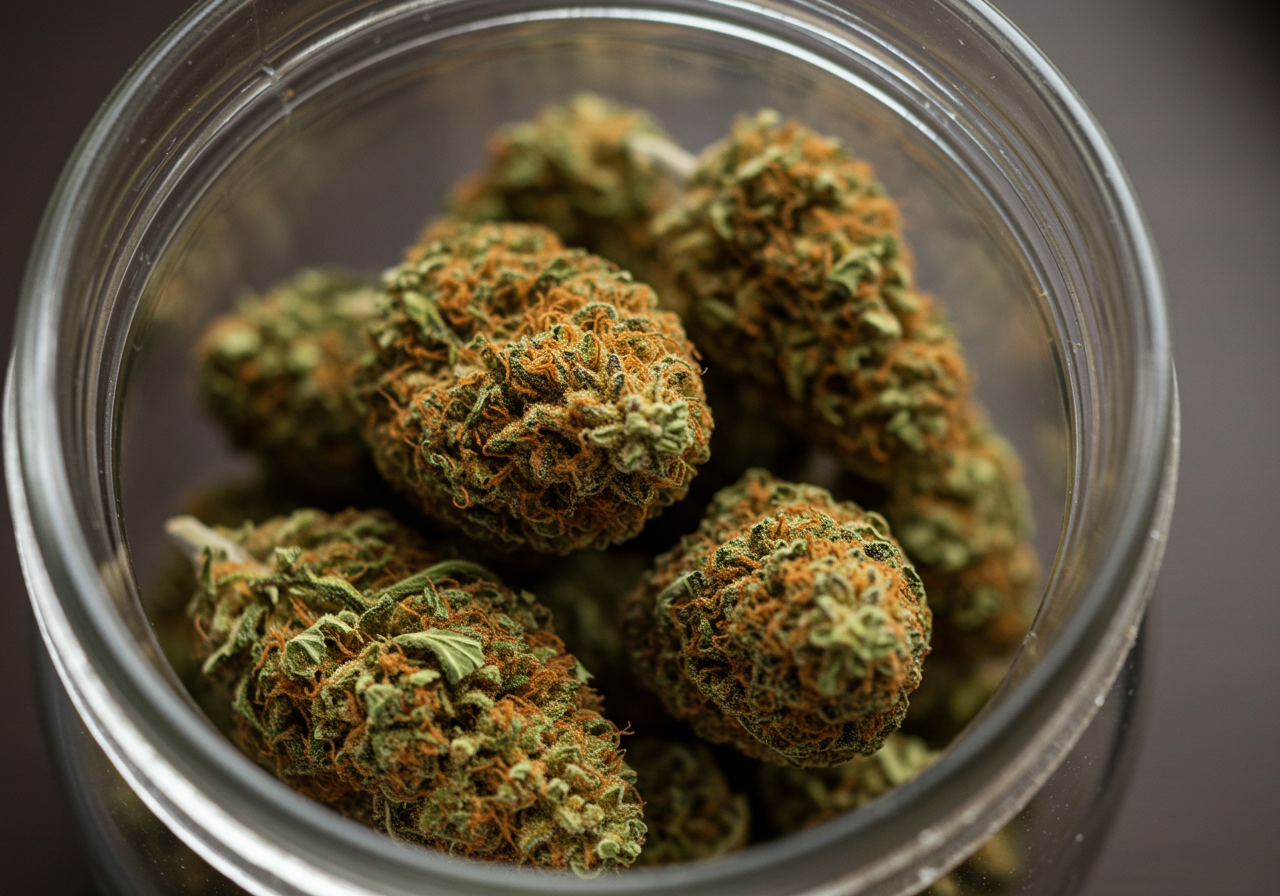
Does Curing Increase Potency or Just Improve Smoothness
Curing mostly changes how cannabis feels and tastes, not how strong it is on paper. It can make the same flower hit cleaner and feel more effective, even when the cannabinoid numbers barely move. That gap between lab potency and real experience is where most confusion comes from.
Why people think curing increases potency
Smoother smoke feels stronger
Harsh flower punishes your throat and lungs. You take smaller hits, you cough, and you cut the session short. After a good cure, the smoke can feel softer and less irritating, so you naturally inhale more comfortably and you keep the vapor or smoke in longer. The dose you actually take can increase, even though the flower itself did not become more potent.
There is also a focus effect. When you are not fighting irritation, you notice effects sooner and more clearly. That can feel like “stronger weed,” but it is often “cleaner delivery.”
A quick way to test this on yourself is to keep the dose constant. Same weight, same grind, same method, and the same pace. If it still feels stronger after curing under those controls, the change is likely quality and aroma, not just bigger hits.
Aroma intensity changes perceived effects
Aromas are not only a nice extra. They shape the whole experience. When curing improves aroma clarity, people often describe the effects as more defined. That is partly because aroma influences expectation and attention, and partly because aromatic compounds can change how you interpret the onset and character of effects.
The important detail is that aroma can get clearer without the flower “gaining THC.” You can have a more satisfying and more noticeable session while the cannabinoid percentage stays similar.
Expectations and confirmation bias
Curing has a reputation, so people expect improvement. When you open a jar after two more weeks, you are ready to notice progress. That mindset can make small improvements feel huge.
This does not mean curing is placebo. It means your brain is part of the measurement tool, and it is easy to over-credit potency when the real improvement is smoothness, aroma, and a cleaner burn.
If you want an honest read, do a simple blind check. Label two jars in a way you cannot remember, then have someone hand you one at random on different days. If you consistently pick the better cured jar without knowing which it is, you are seeing a real quality change.
What actually changes during curing
Chlorophyll breakdown and harshness reduction
Curing is often described as a continuation of post-harvest cleanup. A controlled cure allows moisture to re-equilibrate and supports ongoing breakdown of compounds that contribute to harshness and raw plant taste. Reviews of post-harvest handling describe drying, curing, and storage as key steps that shape final quality, including harshness and aroma expression. (PMC)
What you notice in real life is a shift away from “green” harshness. The throat burn usually drops first. Then the flavor starts to feel less plant-like and more specific.
Beginners often misunderstand the timeline. The harshness does not vanish the moment buds go into jars. It fades when moisture becomes stable and when you stop forcing the buds through repeated big swings.
What it looks like when this goes wrong:
- The smoke stays sharp even after weeks.
- The aroma stays grassy or generic.
- The bud smells better when crushed, but the smoke stays rough.
Root causes to check:
- Drying was too fast and locked in roughness.
- Jarring happened too wet and created off-notes.
- Storage ran warm or bright and degraded aroma.
Fixes you can do now:
- Stabilize storage in a cool and dark place.
- Stop over-opening jars and keep air swaps short and purposeful.
- If jars keep spiking in humidity, pause curing and re-dry slightly, then restart.
Moisture stabilization and burn quality
A good cure is strongly tied to moisture behavior inside the bud. Early on, the outside can feel dry while the inside still holds more water. Over time, moisture equalizes. When that happens, you get a more predictable burn, a steadier draw, and less uneven combustion.
This is also where the cure can change how “strong” it feels. Even burn and smoother draw can deliver cannabinoids more consistently through the session. That feels like potency, but it is really delivery and comfort.
What beginners often miss is that jar humidity can look fine while buds are still uneven. A stable reading over multiple days is more meaningful than one good number.
Aroma development and clarity
Aroma changes are usually the most obvious cure improvement. Early cure often smells muted, sharp, or plant-heavy. With time, the scent becomes clearer and more strain-specific.
The reason is not magic. It is a combination of moisture stabilizing, fewer off-notes, and less chaotic oxidation. At the same time, aroma is fragile. Heat, light, and oxygen exposure can degrade cannabinoids and also reduce perceived freshness over time, which is why storage conditions matter as much as the cure schedule. (ScienceDirect)
A good cure develops aroma best when you keep conditions steady and avoid repeated long jar openings.
What curing does not reliably change
Why THC percentage does not jump from curing alone
Once the plant is harvested, it is no longer producing new cannabinoids. Curing is not a growth phase. It is a post-harvest conditioning phase.
You may see small shifts in lab results because moisture content changes, because sampling varies, or because acidic cannabinoids can slowly convert under certain conditions. But the idea that curing creates a big THC increase is not supported as a reliable effect. Over longer time frames, THC more commonly declines due to degradation pathways that are accelerated by heat, light, and oxygen. (ScienceDirect)
So if someone tells you curing “boosts potency,” the more accurate translation is usually “curing improves the experience.”
Limits of post harvest improvements
Curing can refine what is already there. It cannot create terpenes that were lost during a hot dry. It cannot undo a musty problem caused by jarring too wet. It cannot fix flower that degraded from warm, bright storage.
Post-harvest research discussions emphasize that drying and curing conditions shape terpene retention and final sensory quality, and that poor conditions can cause losses that do not come back later. (PMC)
What matters more than cure length
Length matters less than correctness.
A clean dry and a stable cure environment usually beat a long cure done with repeated humidity spikes or warm storage. After a point, longer time can even work against you if it increases oxidation and terpene loss.
The best question is not “How many weeks?” It is “Is the jar stable, and is the aroma still improving?”
The real relationship between cure quality and effects
How terpene expression can shift the experience
Terpenes do not change your THC number, but they can change how the session feels. A clearer aroma can make effects feel more defined, more enjoyable, and easier to interpret.
This is partly a sensory pathway issue and partly a quality issue. When the flower smells clean and tastes clean, you are more likely to take a consistent dose and notice nuances.
The practical takeaway is simple. If you want the best perceived effects, you protect aroma during drying and you preserve it during storage. Controlled drying work has shown that conditions can influence volatile terpene preservation, which lines up with what people notice in the jar. (PMC)
How harshness masks effects
Harshness competes with effects. It makes the session shorter, makes dosing less consistent, and can leave you focusing on irritation instead of onset.
This is why people often report that the same bud “hits harder” after curing. It is not always more potent. It is easier to consume properly.
If you want to separate potency from harshness, try a method that removes combustion variables. Keep everything else identical. If the difference shrinks, harshness was a big part of the story.
How bad drying ruins both flavor and feel
Bad drying can damage both flavor and the perceived strength. Too fast and you can lock in harshness and lose aroma. Too slow and you can create stale notes that never fully clean up. Either way, the cure has less to work with.
Long-term storage studies show that time and conditions can change cannabinoid profiles, including THC decline and increases in degradation markers, especially under less protective conditions. (ScienceDirect)
That matters because if storage is warm or bright, the flower can feel weaker over time, even if it once cured nicely.
How to cure for maximum perceived quality
Drying method that protects aroma
If you want the best final experience, the dry is the first priority.
Aim for a dry that is slow enough to avoid crisping the outside while trapping moisture inside. Avoid direct airflow blasting the buds. Keep the environment steady rather than chasing numbers hour by hour.
A review of post-harvest operations highlights drying as a major driver of quality and emphasizes the need for consistency to protect final characteristics. (PMC)
When the dry is clean, curing becomes easy. When the dry is messy, curing becomes damage control.
Jar management that avoids humidity swings
Early cure is mainly humidity management and off-note prevention.
Open jars based on behavior, not habit. If humidity spikes after sealing, you need more air exchange and possibly a little more drying. If humidity stays stable, you reduce openings quickly.
What to watch for:
- Fast humidity rise after sealing suggests inner moisture is still active.
- Repeated spikes suggest uneven dryness in the lot.
- A stable week suggests you can shift toward storage mode.
The point is stability. Big daily swings are where flavor and aroma get damaged.
Storage conditions that preserve what you grew
Curing does not stop being important when the buds feel “done.” Storage is where quality either holds or fades.
Protect from:
- Heat, which speeds degradation.
- Light, which accelerates photodegradation.
- Excess oxygen exchange, which increases oxidation over time.
Long-term studies and forensic work consistently show storage conditions influence composition changes over time. (ScienceDirect)
Mistakes that make buds feel weaker after curing
Overdrying and loss of aroma impact
Overdry buds often feel less satisfying. The smoke can feel thin, and the aroma can seem muted. Even when THC is still present, the experience can feel less full.
Overdrying also pushes you into more handling. People keep opening jars and trying to “fix” it. That extra oxygen exchange can further flatten aroma.
If buds are already overdry, the best move is prevention next time. Keep the storage environment stable and avoid letting the jar drift downward week after week.
Heat and light damage
Heat and light are slow thieves. They can make flower feel weaker and taste flatter over time, even if the cure started strong.
This is not a vague warning. Storage studies have tracked composition changes over years and linked them to conditions, with THC declining and degradation markers rising as time and exposure add up. (ScienceDirect)
If you want your flower to still feel good months later, treat cool and dark storage as non-negotiable.
Overhandling and oxidation
Every long jar opening is an oxygen refresh. If you are constantly “checking,” you are constantly accelerating the slow processes that reduce freshness.
Handling also warms buds and breaks trichomes. You cannot see the loss immediately, but you can taste it later.
A useful mindset is this. Once the jar is stable, opening becomes consumption, not curing. Keep cure openings short. Save longer openings for when you actually need product.
Practical expectations for different cure lengths
2 weeks what improves
Two weeks is where most people notice the first real jump in smoothness.
Harshness often drops. The smell usually becomes cleaner. The burn becomes more consistent. If the dry was good, the session starts to feel more complete.
If nothing improves by two weeks, the issue is usually earlier in the chain. Drying speed, jarring too wet, or unstable storage are the usual culprits.
4 weeks what improves
Four weeks is where clarity tends to sharpen.
Aroma can become more defined and less green. The taste becomes more predictable across buds in the jar. The experience often feels more “finished.”
This is also where diminishing returns start for many people. If you keep opening jars frequently, you can plateau or even drift backward in aroma.
8 weeks what improves
Eight weeks is refinement for flower that was already well handled.
The changes are usually smaller and more subtle. Some people prefer this stage for smoothness and integration, especially if storage conditions are ideal.
The risk at eight weeks is not the time itself. It is the chance that warmth, light, or frequent air swaps slowly reduce freshness. Over longer periods, THC degradation and profile drift become more plausible, especially under poor storage. (ScienceDirect)
Reality Check and Expectations
Why buds can feel stronger after curing even if THC is similar
They feel stronger because you can consume them more effectively and because the sensory experience is clearer.
Smoother smoke reduces friction. Clearer aroma improves perception. Stable moisture improves burn and delivery. None of that requires a THC increase.
What changes in the first 2 weeks vs the next 4 weeks
In the first two weeks, moisture behavior is still settling and harshness reduction is most noticeable. In the next four weeks, the changes shift toward aroma clarity and stability.
If you are still fighting humidity swings after two weeks, you are not really curing yet. You are still stabilizing. Fix that first, and then the later improvements have room to happen.
Can curing improve effects by improving terpene expression
Yes, in a practical sense. It can make effects feel clearer and more satisfying by preserving and presenting aroma better. Controlled drying and post-harvest research supports the idea that conditions influence terpene preservation and quality outcomes, which can shape the overall experience. (PMC)
Just keep the framing honest. That is not the same as raising THC.
What mistakes make buds feel weaker over time
The biggest three are:
- Storing warm or in light.
- Letting buds overdry through repeated exposure to dry room air.
- Opening jars too often and for too long.
Over time, those habits increase oxidation and degradation risk and flatten aroma, which can make the whole experience feel weaker. (ScienceDirect)
How to judge improvement without placebo
Use controls.
Keep dose constant by weight.
Keep the method constant.
Keep the time of day consistent.
Keep the session pace consistent.
Then track three things:
- Smoothness, meaning how easy it is to take a normal hit.
- Aroma clarity, meaning whether the smell is distinct when you break a bud.
- Consistency, meaning whether different buds from the jar taste the same.
If those three improve, curing improved quality. If you also feel “stronger,” it is likely because quality improved delivery and perception, not because THC jumped.
Wrap up
Curing does not reliably increase potency in the way most people mean it. It reliably improves smoothness, moisture stability, and aroma clarity when the dry was done well and the jars are managed without big swings. Those changes can make the effects feel stronger because the session becomes easier and more consistent, even if cannabinoid percentages stay similar.
A good next step is to tighten the two decisions that control almost everything in curing: when to jar and how to manage humidity in the first week. If those are correct, the rest of the cure becomes simple and predictable.
Share this article
A quick overview of the topics covered in this article.
Follow us
Latest articles
September 25, 2026
September 25, 2026
September 25, 2026
September 25, 2026