
Why Cannabis Tastes Like Hay and How to Fix It
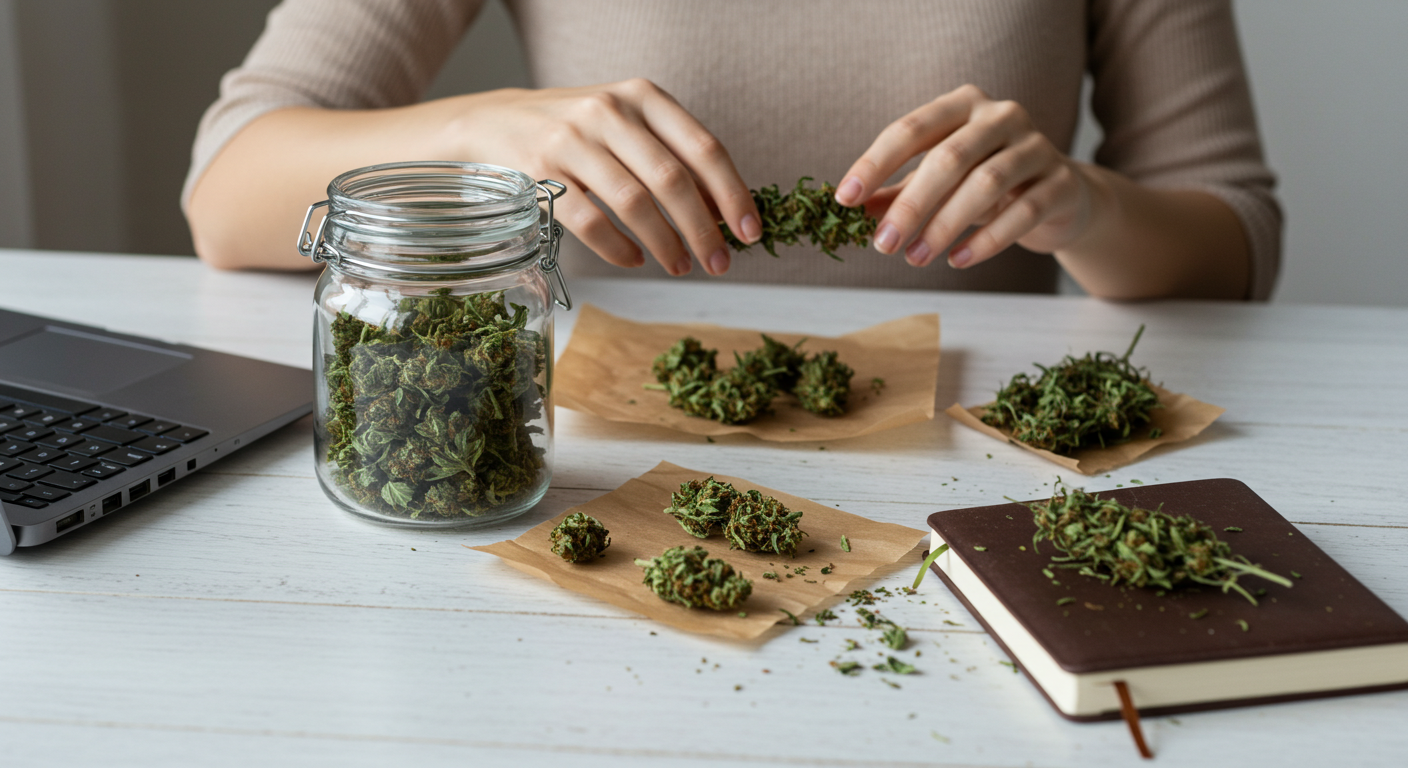
Hay flavor is one of the most frustrating post-harvest outcomes because it feels like it came out of nowhere. The buds can look fine, the cure can seem “normal,” and yet the taste stays flat and vegetal. Most of the time, the hay note is not a mystery. It is a process signal. It tells you something about drying speed, internal moisture, or storage exposure.
What hay smell and taste usually means
Chlorophyll and plant material breakdown
That hay or fresh-cut grass note usually points to leftover “green plant” character that did not get a clean chance to fade. During drying and curing, plant enzymes and microbes associated with aerobic conditions keep working for a while and help break down compounds that contribute to harshness and raw taste. When the process is rushed or conditions swing hard, that cleanup can stall.
This does not mean chlorophyll is the only cause. It means the green profile stayed dominant instead of giving way to clearer aroma. If the jar smells faint and papery, and the taste is bland and plant-like, you are usually dealing with incomplete post-harvest cleanup or aroma loss, or both.
Drying too fast vs jarring too wet
Hay can come from two opposite mistakes, which is why people get confused.
If drying was too fast, the outer surface can set early. Aromatics fade, and the remaining smell reads as generic dry plant. You often see buds that feel “done” quickly, but the taste never fully opens up.
If you jarred too wet, you can trap moisture and create stale, swampy, or ammonia-leaning notes that can blend into a hay impression later. In that case, the issue is not only green taste. It is trapped humidity and poor air exchange while the buds were still releasing water.
A simple way to separate them is how the jar behaves after sealing. If humidity spikes hard and keeps doing it, that points to “too wet.” If humidity sits low and the buds feel crisp early, that points to “too fast and too dry.”
Odor contamination and storage issues
Sometimes the “hay” taste is not your buds at all. It is your environment.
Cannabis is sticky and aromatic, which makes it good at picking up other smells. Cardboard, paint, detergents, incense, cooking grease, and even dusty fabric can leave a dull, papery note that your brain reads as hay. Storage heat and light make this worse because they accelerate aroma loss and leave less strain-specific character behind.
If your buds smelled decent during early cure but went bland after sitting somewhere warm or bright, this is a strong suspect.
The most common causes and how to identify them
Drying too fast signs
Fast drying rarely announces itself with mold or obvious damage. It shows up as a pattern.
You might notice the buds feel dry on the outside within a few days. Stems can start snapping earlier than expected. The smell in the drying space can fade quickly, and the jar smell later feels weak and flat.
Other tells show up when you break a bud open. If the inside does not smell richer than the outside, and the scent stays thin, fast drying is a likely root cause. Research on cannabis post-harvest operations consistently flags drying as a major driver of final sensory quality, especially through terpene retention and process control.
Confirm it with jar behavior. When you seal a small jar for 12 to 24 hours, the RH tends to settle lower than expected and stay there. You can still cure it, but you are working with less aroma than you grew.
Drying too slow signs
Slow drying problems are usually more obvious because the smell turns wrong, not just weak.
Musty, basement, or damp cloth notes are the early warning. Buds feel soft for too long. The drying room smells heavy instead of fresh. If airflow is low and humidity is high, you can also get a “stale plant” smell that some people describe as hay, but it is closer to damp vegetation than dry straw.
The risk with slow drying is that it can cross from “slow and safe” into “stagnant.” When that happens, you are not just losing flavor. You are increasing spoilage risk.
Curing mistakes that lock in bad taste
Even with a decent dry, curing can lock in a bad result if you force big swings.
Common lock-in patterns look like this:
You jar at the edge of “still wet,” then you burp aggressively, then you seal too long, then you panic when RH spikes, then you repeat. The buds bounce between humid and dry states. That stress tends to keep the flavor muddled.
Another lock-in mistake is treating “time” as the cure instead of “stability.” A cure at stable temperature and humidity is not the same as a cure with daily spikes. Peer-reviewed discussions of curing emphasize controlled conditions for enzymatic activity and for reducing harshness and throat burn, which is exactly what you want when hay flavor shows up.
Fix path if drying was too fast
How to stabilize without adding moisture too quickly
If drying was too fast, the biggest goal is to stop further loss. You are not trying to force moisture back into the bud quickly because that often creates a soft outside and a dry inside, which can make flavor feel even duller.
Start with stabilization:
Keep jars in a cool, dark place. Keep temperature steady. Reduce unnecessary jar opening. Every long lid-off session is an oxygen refresh and a humidity swing.
If buds are very dry, you can bring them back toward a better handling moisture slowly. The safest approach is gradual, small adjustments and then waiting a full day to see how the jar settles. Avoid any method that makes the bud surface feel wet. Wet surface plus a dry interior is a common way to create uneven burn and inconsistent taste later.
If you want a measurable anchor instead of guessing, water activity and equilibrium RH are used in cannabis quality control because they relate to stability and microbial risk. A widely cited safe zone for dried flower sits around 0.55 to 0.65 water activity.
How to adjust curing to regain smoothness
Fast dry tends to lock in roughness more than it locks in hay forever. Many batches improve in smoothness with a steady cure, even when aroma never becomes “loud.”
What usually works:
Keep the cure boring. Stable environment. Short, purposeful air swaps early, then reduce quickly once RH behavior is stable. Let time do what it can without constant interference.
What usually fails:
Overcorrecting. If you chase perfection by repeatedly opening jars, moving buds around, and changing humidity tools every few days, you keep resetting the jar atmosphere and you often make the final flavor flatter.
What improvements are realistic
Be honest with your expectations. Fast dry can cause terpene loss that does not return. Research on drying methods shows conditions can affect volatile retention and quality outcomes, and that some losses are simply losses.
What you can often get back is:
Smoother smoke, less sharpness, and a cleaner baseline taste.
What you may not fully recover is:
Strong, distinct aroma and that “freshly opened jar” punch.
If you do see improvement, it usually comes slowly. It is more like the flavor becoming cleaner than becoming louder.
Fix path if you jarred too wet
How to reduce humidity safely
If you jarred too wet, the priority is safety first and flavor second. High RH plus plant material is where mold risk lives.
Open the jar and smell it. If there is any sharp ammonia note, sourness, or damp mustiness, treat it as an urgent signal. Do not “wait and see.”
Then shift to controlled reduction:
Let the buds breathe in a clean, dark area with gentle air movement in the room, not blowing directly at the buds. The point is to let surface moisture escape without flash-drying the outside.
After a short airing, re-jar a small test portion for 12 hours and read the result. If it spikes again, you are still too wet. Repeat the cycle with patience rather than leaving the jar sealed and hoping.
When to re-dry and for how long
Re-drying is the right move when repeated jar tests show high spikes or when buds feel wet inside.
How long is not a fixed number. It depends on bud density, room conditions, and how wet the inside still is. What matters is the behavior after sealing. When the jar stops spiking and starts settling into a stable zone, you are back in curing territory.
A practical checkpoint is stability over multiple seals, not one good reading. If it holds for several days, you have probably crossed the dangerous part.
How to restart the cure
Once buds are no longer pushing high spikes, restart as if it is week one again, but more disciplined.
Use smaller jars so you are not hiding wet pockets inside a big mass. Keep fill levels reasonable so air can mix. Open briefly, then seal, then watch what the jar does. As soon as stability shows up, reduce openings.
This is also where many people get the best flavor recovery. Hay-like off-notes caused by wet jarring can fade when the cure becomes stable and aerobic again. Curing guidance in the scientific literature links controlled curing to reduced harsh smell and throat burn and better shelf stability, which lines up with what you are trying to achieve here.
Fix path if storage conditions are the problem
Light and heat damage signs
Storage damage is sneaky because it looks like “the cure stopped working.”
You might notice the buds feel fine but smell less distinct over time. The taste becomes thin, papery, or generic. Sometimes the effect feels weaker too, even if the buds look normal.
Light and heat accelerate cannabinoid degradation and aroma loss. Studies that look at storage conditions consistently flag temperature and light as major drivers of THC decline and chemical profile change over time.
If your jars sit in a warm room, near a window, or near heat cycling appliances, this can be the main reason the jar went bland.
How to move to a stable environment
Make the storage environment boring again.
Choose a cool space that stays steady day and night. Keep jars out of light. Avoid locations that swing daily, like near exterior walls with sun exposure or near heating and cooling vents.
If you are using clear jars, treat them like they are transparent to damage, because they are. You do not need extreme measures. You do need consistent darkness and stable temperature.
Long storage best practices
Long storage is a quality preservation job.
Aim for minimal oxygen exchange, stable humidity, and stable temperature. Limit opening frequency once the cure is stable. When you do open, do it quickly and seal again.
If you are storing for months, it can help to divide into smaller containers so you are not constantly opening the main supply. That single habit often protects aroma more than any special tool.
Preventing hay flavor on the next harvest
Dialing in drying speed for your climate
Drying should be slow enough to protect aroma but not so slow that air goes stale.
A commonly referenced target range in cannabis post-harvest guidance for slow drying is around 18 to 21°C and 50 to 55% RH with good ventilation. Oregon State Extension gives similar ranges for slow drying hemp flowers, and peer-reviewed reviews describe these ranges as common practice.
If your climate is dry and warm, your main enemy is fast surface drying. Reduce direct airflow on buds and keep the room from becoming hot.
If your climate is cool and humid, your enemy is stagnant damp air. You need fresh air exchange and spacing so moisture can leave the buds instead of lingering around them.
Jarring readiness checklist
The cleanest cure starts with correct jarring. When you jar too early, you trap moisture and risk off-notes. When you wait too long, you lock in dryness and lose aroma.
A practical checklist looks like this:
The outside feels dry, not crisp. The buds still have some give. When you seal a small jar for 12 to 24 hours, the RH rises and then settles instead of spiking upward repeatedly. The smell at first open is not sour, damp, or sharp.
If you only rely on a stem snap test, you will get fooled. Bud structure varies too much. Jar behavior is more reliable than stem behavior.
Burping schedule that avoids setbacks
Burping is not a ritual. It is a response to what the jar is doing.
Early on, you open more often if RH spikes or if smell hints at trapped moisture. You open less as soon as the jar shows stability.
The biggest setback comes from long lid-off sessions that overdry the outside. The second biggest setback comes from sealing too long while the buds are still actively releasing moisture.
If you want a simple principle, make air swaps short and frequent when needed, then reduce them quickly once the jar calms down.
Advanced flavor recovery tips that still stay realistic
Extending cure length the right way
Longer cure can help, but only if conditions are stable.
If you extend cure while repeatedly swinging RH, you often get a flatter result. If you extend cure in a cool, dark, stable setup with minimal opening, you can see gradual cleanup in harshness and a slow improvement in aroma clarity.
Scientific reviews describe curing as a controlled process that supports breakdown of undesired compounds and reduces harshness. That is the direction you want, but it only happens cleanly when conditions stay in range.
Separating batches and controlling humidity
Hay flavor can be batch-specific. One part of the harvest might have dried faster, another might have been jarred a bit wetter, and the mix makes everything confusing.
Separating into small jars is one of the best advanced moves because it gives you clean feedback. Each jar tells you what that specific moisture level is doing.
Humidity control tools can help with stability, but timing matters. Use them as insurance once the jar is already behaving, not as a way to cover up wet buds.
If you have access to water activity measurement, it gives you a direct stability metric that is used in cannabis testing discussions and standards, with commonly accepted ranges around 0.55 to 0.65 aw for dried flower.
When to stop chasing perfection
Some batches improve only to a point. If drying was very fast and aroma is already gone, you may not get a dramatic turnaround. At that stage, chasing perfection can make things worse by adding oxygen exposure and repeated handling.
A good stopping point is when:
Humidity is stable, smell is clean even if it is not loud, and the smoke is as smooth as it is going to get without introducing new risks.
Then you shift your effort to the next run, because prevention is easier than recovery.
Troubleshooting Map
If it smells like hay but looks fine what that usually means
Most often it means one of two things.
Either the dry went a bit too fast and you lost aroma, so the remaining scent reads as generic plant material, or the cure never became stable enough to let green notes fade cleanly.
Check jar behavior for a day. If RH stays low and stable and the buds feel crisp early, think “fast dry.” If RH climbs and keeps climbing, think “still wet inside.”
If it smells musty what to do right now
Musty is a warning smell, not a flavor note.
Open the jar immediately. Do not leave it sealed. Inspect buds closely. If you see anything that looks like fuzzy growth, isolate the jar and do not keep curing it as if it will resolve on its own.
Then reduce humidity safely by airing in a clean, dark space and re-testing in small jars. Your goal is to get the jar out of the danger zone quickly and then restart curing only when the jar stops spiking.
If it tastes harsh even after weeks what likely caused it
Harshness that refuses to fade usually traces back to drying speed and early cure mistakes.
A fast dry can lock in a sharp baseline. Repeated humidity swings can keep the cure from progressing. Warm or bright storage can degrade aroma and make the smoke feel thinner and harsher over time.
The fix is usually stability, not more burping. Cool, dark storage and minimal opening often improve the next two weeks more than aggressive daily handling.
If buds overdried can you still improve smoothness
Yes, often, but keep expectations realistic.
You can usually improve smoothness by stabilizing humidity and stopping further drying. You may not fully restore loud aroma if it was lost during drying.
Make changes slowly. Rapid rehydration tends to soften the outside and create uneven burn, which can make the experience feel worse even if the buds feel nicer to the touch.
What to change next run so it never happens again
Treat hay flavor as a process feedback loop.
Slow the dry just enough that aroma does not disappear early, and keep airflow indirect. Use stable environmental ranges as a baseline, then adjust for your climate. Guidance and reviews commonly point to slow drying around 18 to 21°C and 50 to 55% RH with ventilation as a starting point for traditional hang drying.
Then make jarring a decision, not a date. Use a small jar test and watch RH behavior over 12 to 24 hours. Once curing begins, keep the jar stable and reduce opening frequency as soon as the jar calms down.
If you do those three things, hay flavor becomes rare, and when it does show up, you will know exactly where it came from and what to change next.
Share this article
A quick overview of the topics covered in this article.
Follow us
Latest articles
September 25, 2026
September 25, 2026
September 25, 2026
September 25, 2026