Blueberry Strain Review: Specific Grow, Terpenes, Genetics, Flavor, and Effects,
Blueberry is a legendary indica-dominant hybrid cannabis strain cherished for its unmistakable fresh blueberry flavor and calming effects. Bred in the late 1970s by renowned breeder DJ Short from a mix of Afghan and Thai landrace genetics, Blueberry quickly earned its place in cannabis history. It even won the High Times Cannabis Cup in 2000 for Best Indica, cementing its status as a top-tier strain. Beloved by recreational and medical users alike, Blueberry delivers a balanced experience—uplifting the mood while deeply relaxing the body—making it a go-to choice for those seeking relief with a delicious twist.
Strain Overview
|
Strain Type |
Indica-dominant Hybrid (approximately 80% Indica / 20% Sativa) |
|
Dominance |
Indica-leaning (strong physical relaxation with mild cerebral uplift) |
|
THC – CBD |
High THC (~15–20% on average, up to ~23% in optimal grows) with very low CBD (<1%) |
|
Effects |
Relaxed, happy euphoria with long-lasting calm; can become sleepy at higher doses |
|
Flavor & Aroma |
Sweet blueberry and other fruity notes dominate, with hints of sweet earth, vanilla, or skunk undertones. Rich berry scent intensifies when buds are well-cured. |
|
Flowering Time |
~8 weeks indoors (45–55 days). Outdoor harvest around late September to early October (Northern Hemisphere). |
|
Grow Difficulty |
Moderate: Quite forgiving and suited for beginners, yet rewards experienced growers (robust and nutrient-tolerant). Requires basic care to prevent mold on dense buds. |
|
Preferred Climate |
Warm, sunny, dry conditions. Thrives in mild 65–80 °F (18–27 °C) climates. Cooler nights are tolerated and can enhance bud coloration without harming yields. |
|
Mold/Pest Resistance |
Generally hardy – highly resistant to common pests and environmental stress. Moderate mold resistance: dense flowers can trap moisture, so low humidity and good airflow are important to avoid bud rot. Regular pruning helps prevent mildew. |
|
Medical Uses |
Stress relief, anxiety reduction, and mood elevation; effective for pain and inflammation relief without heavy sedation; aids sleep/insomnia when used in the evening; can stimulate appetite and ease nausea. |
Genetic Lineage
Blueberry owes its genetics to a unique blend of Afghan indica and Thai sativas. It was originally bred by DJ Short, who in the late ’70s crossed a potent Afghani indica with exotic Thai landraces to create this strain. In particular, the lineage includes an Afghani Indica, a Highland Thai (tropical sativa), and a Purple Thai (an Oaxacan x Thai hybrid) as the key ancestors. This rich genetic heritage gives Blueberry its sturdy indica growth traits alongside a sweet fruity terpene profile. The strain’s stable lineage has made it a common parent for many modern hybrids – famous descendants and relatives include Blue Dream, Blueberry Kush, Blue Cheese, and other “Blue” family strains. Blueberry’s successful genetics and consistent quality have kept it in breeding programs for decades, spreading its influence across the cannabis world.
Effect Profile
Blueberry provides a deeply relaxing, full-body high that unfolds gently. The high typically begins with a mild euphoria and mental uplift that melts away stress and negative thoughts. Users report a calming wave of happiness and ease that settles in as muscles relax and tension fades. Despite its strength (THC often around 18–20%), Blueberry’s effect isn’t overwhelmingly sedating at first – many find themselves in a content, clear-headed state of peaceful well-being, without paranoia or mental race. As time progresses or with higher doses, a gentle drowsiness can develop; after a few hours, the body high may transition into pleasant sleepiness, making Blueberry an excellent evening strain for unwinding or combating insomnia in the later stages of the high. Its balanced nature means you can enjoy relief from pain and anxiety while remaining functional for a good part of the experience. Negative effects are mild and typical of many strains – primarily dry mouth and dry eyes, with occasional dizziness or headaches if overindulged. Overall, Blueberry’s high is prized for its long-lasting euphoria coupled with soothing physical relaxation, offering the best of indica comfort without an immediate “couch-lock” crash.
Flavor and Aroma
True to its name, Blueberry exudes a sweet, berry-forward aroma that’s often compared to a punnet of fresh blueberries. When you open a jar of cured Blueberry buds, a burst of fruity sweetness fills the air, underscored by subtle notes of vanilla and earth. Many aficionados describe the smell as a blend of ripe blueberries and gentle floral undertones, with a hint of spice or skunk in the background depending on the phenotype. The flavor is equally lauded – smooth smoke or vapor carries a sweet blueberry taste on the inhale, sometimes with creamy or vanilla-like hints, and a mild, herbal earthiness on the exhale. Notably, well-grown Blueberry can have a complex palate: sweet and tart berry flavors dominate, yet you may detect a spicy-earthy finish and even a whisper of floral or pine. The aroma intensifies during flowering, so good odor control is advised indoors. Proper curing will bring out the richest flavor – a slow dry and cure helps preserve those delicate berry terpenes for a truly mouthwatering smoke. Blueberry’s fragrance and taste are among its standout features, making it a favorite not just for its effects but also for an exceptionally enjoyable, dessert-like flavor profile.
Terpene Profile
Blueberry’s delectable aroma can be credited to its rich terpene profile. Dominant terpenes found in Blueberry include:
|
Terpene |
Characteristics and Contribution |
|
Myrcene |
The most abundant terpene in Blueberry. Delivers earthy, musky sweetness with fruity notes. Myrcene is associated with relaxing, sedative effects, amplifying Blueberry’s calm indica buzz. |
|
β-Caryophyllene |
A secondary terpene contributing a subtle spicy, peppery kick to Blueberry’s flavor. Also known for potential anti-inflammatory properties, it adds depth to the sweet berry taste. |
|
α-Pinene |
Present in moderate levels, adding a fresh pine and herbal undertone to the aroma. Pinene can promote alertness and counteract heaviness, giving Blueberry a slight bright note amidst its indica calm. |
|
Humulene (trace) |
Sometimes found in Blueberry phenotypes, humulene offers an earthy, woody essence that may contribute to the strain’s faint herbal dryness on the exhale. |
These terpenes work in concert to create Blueberry’s signature scent and flavor, while also influencing its effects. For example, the high myrcene content enhances relaxation, and caryophyllene’s interaction with cannabinoid receptors may aid in pain relief. The result is a strain with not only great taste but also a nuanced therapeutic profile thanks to its terpene synergy.
Indoor vs Outdoor Grow Comparison
Blueberry is a versatile strain that can thrive both indoors and outdoors, but growers may observe some differences in growth pattern and results in each environment:
|
Aspect |
Indoor Cultivation |
Outdoor Cultivation |
|
Plant Size |
Compact, bushy structure (approx. 2–3 feet tall indoor on average). Easy to manage in small grow spaces; can be trained to widen canopy. |
Tends to grow larger when given space (can exceed 3–5 feet outdoors). Plants often become wide and bushy, so allow room for lateral growth. |
|
Flowering Time |
~8 weeks of flowering (55 days on average). Quicker finishing due to indica genetics, allowing multiple harvests per year indoors. |
Finishes by late September to early October in northern latitudes. Short flowering period means it can mature before harsh weather in many climates. |
|
Yield |
Medium to High: typically ~400–500 g/m² under good conditions (up to ~18 oz per m²). Responds well to training (SCROG/SOG) to maximize indoor yield. |
High: can produce very generous yields outdoors, often 500+ g per plant, with reports of well over 600 g (20+ oz) per plant in ideal conditions. Ample root space, sunshine, and longer vegetative time boost outdoor yield. |
|
Bud Density |
Very dense, resinous buds. Indoor-grown Blueberry develops tight colas that require good airflow to avoid humidity issues (watch for mold in late flower). |
Equally dense buds when grown outdoors; exposure to full sun can increase resin production. However, outdoor buds need protection from rain/dew – high moisture can lead to bud rot given their density. |
|
Climate Needs |
Prefers a controlled climate: 70–77 °F (21–25 °C) and 40–50% RH during flowering for optimal results. Cooler night temps (down to ~65 °F / 18 °C) can bring out purple hues in buds. |
Thrives in warm, dry climates (Mediterranean-like). Tolerates some cooler nights (rugged Afghani heritage), but prolonged cold or wet weather can stunt growth. Best in sunny conditions; use greenhouse or cover in rainy regions. |
|
Pest & Disease |
Generally resilient indoors – resistant to many pests; keep an eye out for common indoor issues like spider mites. Low stress levels and stable genetics mean fewer disease problems if environment is kept clean. |
Strong outdoor performer with natural pest resistance. Still, caterpillars and aphids can target outdoor plants – regular inspection is advised. Pruning is key outdoors to improve airflow and prevent powdery mildew in humid areas. |
|
Grow Difficulty |
Easy-Moderate: Adaptable to various indoor techniques. Suitable for novice growers – forgiving with nutrients and training. Just maintain ventilation to protect those dense buds. |
Moderate: Outdoor growing is straightforward if climate is favorable. Blueberry isn’t fussy, but ensure a dry environment late in season. May require support stakes if buds get heavy. Its hardy nature helps it handle outdoor stresses well. |
In summary, indoors, Blueberry stays short and manageable, making it ideal for grow tents or limited spaces, whereas outdoors it can reach its full potential in size and yield. Both setups can reward the grower with abundant, sticky, purple-tinged buds if conditions are optimized to this strain’s needs.
Cultivation Notes
Blueberry is known as a grower-friendly strain with a few specific quirks. The plants tend to be short to medium height with a bushy, sometimes asymmetrical structure. Don’t be surprised if your Blueberry grows slightly lopsided or with uneven branching – this is normal and doesn’t affect its ability to produce top-quality buds. In fact, the thick bushy growth can lead to excellent yields if managed well. Regular pruning and training are highly recommended: Blueberry responds very well to topping (cutting the main stem) and other high-stress training, which encourages it to form a bushier shape with more bud sites. This not only maximizes yield potential but also improves light penetration and airflow through the canopy, reducing the risk of mold on the dense flowers.
Nutrient-wise, Blueberry can be a moderate feeder. During veg it enjoys nitrogen-rich fertilization – growers often report that Blueberry thrives with slightly higher N levels early on. Amending your soil with organic matter (like worm castings or guano) can keep this strain happy and boost its vigor. As flowering progresses, ease up on nitrogen and focus on phosphorus and potassium to fatten up those buds. Keep an eye on humidity, especially late in bloom; because Blueberry’s indica genetics produce very compact, resinous buds, they can be susceptible to mold if the environment is too humid. Aim for good airflow around the colas and consider a dehumidifier to keep RH in check (around 40–50% in late flowering). Blueberry is fairly resistant to pests and general stress – it can handle minor fluctuations and even cooler night temperatures (which can bring out beautiful purple-blue colors in the leaves and buds). Overall, even novice growers can succeed with Blueberry, and with a bit of extra care in training and climate control, this strain will reward you with hefty yields of gorgeous, flavorful buds.
Weedth Bud Flavor Tip (Tasting)
- Indoor: To fully savor Blueberry’s famous flavor, ensure a proper cure for indoor-grown buds. Patience pays off – jar-curing for at least 2–3 weeks will deepen the sweet berry aroma and smooth out the smoke. We recommend using a vaporizer or a clean glass pipe when first tasting your indoor Blueberry, as this will highlight its delicate blueberry sweetness and vanilla notes without combustion byproducts dulling the taste. Indoor Blueberry often carries a slightly cleaner, fruitier profile, especially if grown in organic soil; some growers even report hints of floral or vanilla on a slow exhale. For an extra flavor boost, consider dropping nighttime temperatures in the final week of flowering – the cooler temps can bring out purple hues and may enhance terpene retention, making the berry flavor even more vivid in the cured buds.
- Outdoor: Outdoor-grown Blueberry can develop richer, more complex flavors thanks to full sunlight and soil nutrients. To get the best taste, cultivate in healthy, living soil and avoid chemical pesticides which can linger on buds. A common flavor tip for outdoor Blueberry is to do a thorough flush (plain water only) for the last 1–2 weeks before harvest – this helps ensure no harsh fertilizers remain, allowing the pure sweet berry taste to shine through. Sun-grown Blueberry buds often have an earthy undertone accompanying the sweet fruitiness, sometimes even a slight piney or herbal kick from the outdoor terroir. When sampling your outdoor buds, use a freshly cleaned grinder and piece; note the difference in aroma – many find outdoor Blueberry’s scent to be bolder and more skunky-fruity. Cure the harvest slowly in a cool, dark place; outdoor buds that are well-cured will reward you with a smooth smoke where the inhale is like sweet blueberries and the exhale has a pleasant earthy sweetness. Pro tip: try pairing your outdoor Blueberry with a cup of herbal tea or a mild cheese to complement its sweet-earth flavor profile (hence the popularity of Blue Cheese strains!). Enjoy the nuanced taste that only sun-grown Blueberry can offer.
Weedth Bud Boost Tip (Maximizing Yields)
- Indoor: To make the most of Blueberry indoors, focus on training and canopy management. Because Blueberry stays relatively compact, implementing a SCROG (Screen of Green) or simply topping the plant a couple of times can significantly boost your yield by creating an even canopy of bud sites. Blueberry tolerates high-stress training well – techniques like topping, super-cropping, or main-lining will not overly stress it as long as the plant is healthy. In fact, these methods can help control its shape and direct energy to producing thicker colas. Provide ample light (LED or HPS) and keep the canopy at an optimal distance to maximize photosynthesis on those broad indica leaves. Nutrient-wise, feed Blueberry generously during vegetative stage (it can handle robust feeding, especially nitrogen early on), then boost phosphorus and potassium in bloom to fuel bud growth. Consider supplementing with silica and trace minerals (like iron) as Blueberry has shown improved vigor with them. Maintain consistent airflow and slightly lower humidity in late flower to encourage resin production and prevent mold. Many indoor growers also report success using UV or supplemental blue-spectrum light in the final weeks to potentially increase terpene content (making for stickier, more aromatic buds). Finally, patience at harvest – wait until at least ~10% of trichomes turn amber for maximum potency, as Blueberry’s cannabinoids really peak at full maturity. With these indoor tips, you can expect impressive yields of chunky buds – it’s not uncommon to pull 16–18 ounces per square meter from a well-tended Blueberry grow.
- Outdoor: Growing Blueberry outdoors can result in massive yields, and a few strategies can help you reach that potential. First, give Blueberry a long vegetative period by planting early (after the last frost) – the strain’s natural vigor will fill out into a large bush given time. Starting seedlings indoors then transplanting outside in late spring is a great way to jump-start growth. Use a nutrient-rich soil mix; Blueberry loves fertile soil, so mix in compost or aged manure and consider organic amendments (bone meal, bat guano) to steadily feed the plant throughout the season. Because Blueberry can grow wide, allow at least a few feet of spacing for each plant and consider staking or a trellis to support branches laden with heavy buds later on. Regular pruning of lower, inner foliage is crucial outdoors – it improves airflow and directs the plant’s energy to top colas, boosting overall bud size. Keep an eye on the weather: if you anticipate rain during flowering, use a temporary cover or greenhouse to keep buds dry (even a simple tarp frame during storms can save your crop). Blueberry is hardy and cold-resistant for short stretches, but prolonged damp cold can invite mold, so staying proactive is key. Many outdoor growers also practice LST (low stress training) by gently bending and tying down main branches early in the season, encouraging more horizontal growth and additional bud sites – this works wonderfully with Blueberry’s flexible branches and can drastically increase yield under the sun. With good care, outdoor Blueberry plants have been known to produce over 20 ounces (1.25+ lbs) per plant of dried bud in ideal conditions. By boosting your plant’s health with proper nutrition, and protecting it from the elements at the end, you’ll harvest a bounty of dense, sweet-smelling Blueberry buds come fall.
Medical Use Summary
Blueberry’s combination of cannabinoids and terpenes lend it a broad appeal for medicinal cannabis users. Below is a summary of its therapeutic uses and benefits reported:
|
Condition / Symptom |
How Blueberry May Help |
|
Stress & Anxiety |
Profound stress relief is one of Blueberry’s hallmarks. Its calming high eases anxiety and promotes relaxation without extreme sedation. Patients often feel a gentle mood lift and tension release, which can be very effective for everyday stress or generalized anxiety. |
|
Depression & Mood |
The euphoric, uplifting effect of Blueberry can help improve mood and alleviate symptoms of depression. Users report feeling happier and more content, as Blueberry’s cerebral buzz dispels negative thoughts and replaces them with a sense of well-being. This makes it a potential choice for those needing a mental boost coupled with relaxation. |
|
Pain & Inflammation |
Thanks to its indica lineage, Blueberry provides notable analgesic (painkilling) effects. The body high can soothe chronic aches, muscle spasms, and even neuropathic pain. It has mild anti-inflammatory properties (partly via caryophyllene), making it useful for conditions like arthritis or inflammatory pain. Patients with migraines have also found relief using Blueberry. |
|
Insomnia (Sleep Issues) |
While not an immediate knock-out, Blueberry can be very helpful for insomnia when used in the evening. As the initial high tapers, it transitions into a sleepy, sedative phase that can lull one into rest. Those who struggle with staying asleep or unwinding at night may benefit from Blueberry’s latter-half effects, which calm the body and mind into a ready-for-bed state. |
|
Loss of Appetite & Nausea |
Like many THC-rich strains, Blueberry can stimulate appetite and reduce nausea. Many users experience the “munchies” (increased hunger) after consuming Blueberry, which is advantageous for individuals with appetite loss (e.g. due to chemotherapy or illness). Its gentle stomach-settling properties also make it a candidate for easing nausea. |
|
PTSD & Trauma |
The strain’s balanced and soothing nature may help those with PTSD by reducing anxiety and improving sleep, without provoking paranoia. Its mood-uplifting quality can temporarily relieve negative thought loops and promote a calmer mental state, although individual responses vary. |
|
Attention Deficit (ADD/ADHD) |
Some users with ADD/ADHD find Blueberry helpful in unwinding a racing mind, though its relaxing effect can also be counterproductive to focus in some cases. In moderate doses, the strain’s anxiolytic effect might aid those whose attention issues are exacerbated by stress. However, because it can induce a hazy, introspective high, it’s not typically a daytime productivity strain for most. |
Note: Effects can vary by individual. New medical users should start with low doses to gauge Blueberry’s impact on their symptoms. Always consult with a healthcare professional for personalized medical advice.
Ideal User Profile
Blueberry is an ideal strain for cannabis enthusiasts who appreciate a relaxing and flavorful experience. If you are someone looking to unwind after a long day, relieve stress, or ease into a calm evening, Blueberry would likely suit you well. It’s perfect for evening or nighttime use, when its soothing body high and cheerful mental uplift can be fully enjoyed without the need to stay sharply focused. Recreational users who value taste will love Blueberry’s dessert-like berry flavor — it makes each session feel a bit special. It’s also a great choice for those who might be sensitive to the racy anxiety sometimes caused by sativa strains; Blueberry offers a gentler, mellower high that still comes with a pleasant euphoria, minus the jitters.
Medicinal users who might match the Blueberry profile include people dealing with stress, anxiety, or mild depression who want relief coupled with mood elevation. It’s equally well-suited for individuals seeking help with chronic pain or muscle tension who need to remain functional – Blueberry can ease aches and lift the mood without an immediate couch-lock, allowing you to relax yet still converse or watch a movie comfortably. A few hours later, if you do need sleep, Blueberry will gently guide you there, making it a nice option for those with insomnia that want a strain to transition from evening relaxation to bedtime.
In terms of tolerance and experience level, Blueberry is generally approachable for all levels. Newer users will find its typical THC potency moderate to high but not overwhelming if dosed sensibly (and the rich, sweet smoke is friendly for beginners). Experienced users continue to gravitate to Blueberry for its nuanced high and classic flavor — it’s a “feel-good” strain that isn’t so potent as to obliterate your night. Blueberry is often recommended for those who want an old-school indica experience with a happier, uplifting twist. If you love strains that leave you happy, hungry, relaxed, and maybe a bit giggly, Blueberry is likely a great fit for you.
Grower Notes
Cultivating Blueberry is a rewarding endeavor, whether you’re a first-time grower or a seasoned cultivator. This strain’s robust genetics shine through in its garden performance. Growers will notice Blueberry plants are strong and resilient – they can tolerate minor mistakes and bounce back from stress, which is great news for newbies. Its pest and disease resistance is notably high; still, always keep your grow area clean to prevent any mold on those dense buds. One characteristic to be aware of is that Blueberry can have a unique growth structure: as mentioned, it sometimes grows a bit irregular or “funky” in shape, with one branch perhaps stretching out more than others. Don’t worry, this quirk is purely cosmetic. You can manage the shape easily with topping and pruning, shaping the plant into a nice uniform bush. In fact, pruning is your friend with Blueberry – thinning out excess foliage inside the plant allows light and air to reach the bud sites, significantly improving both yield and bud health.
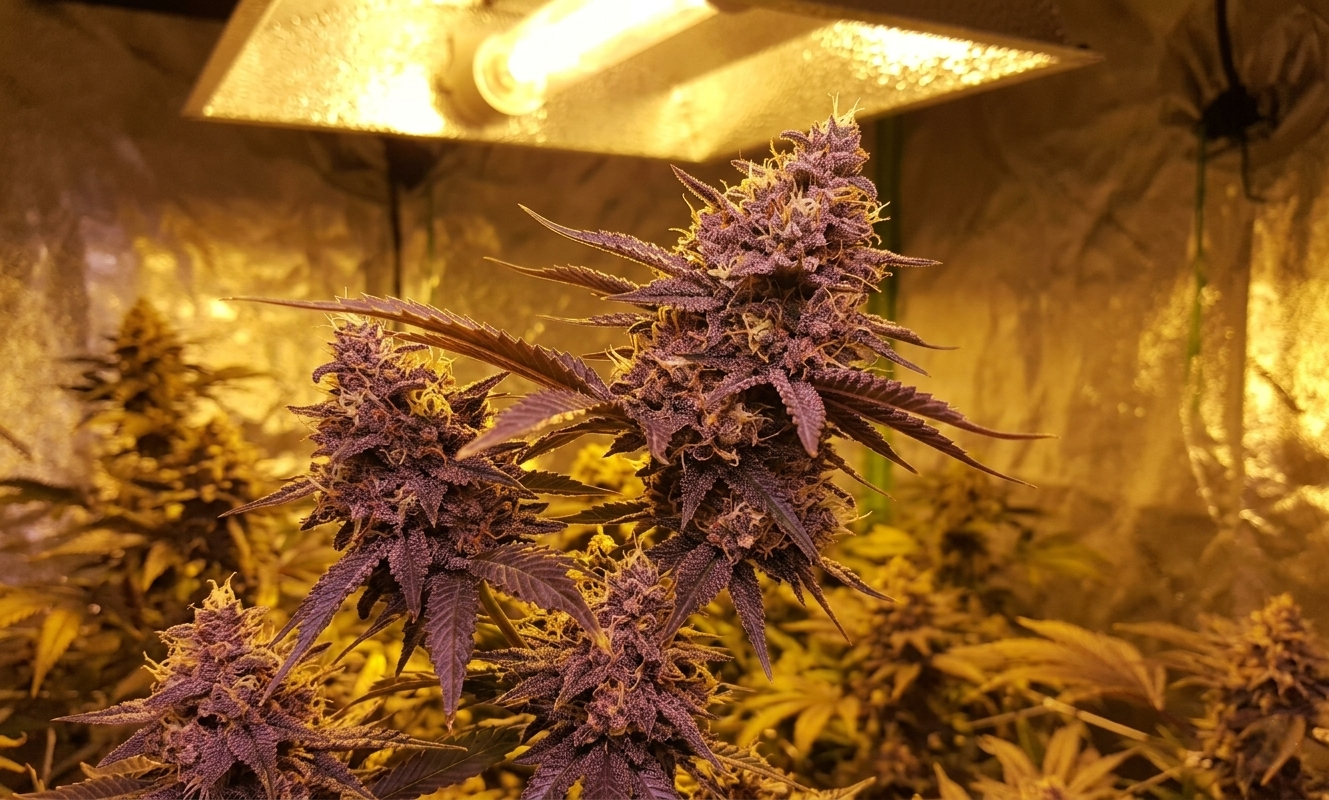
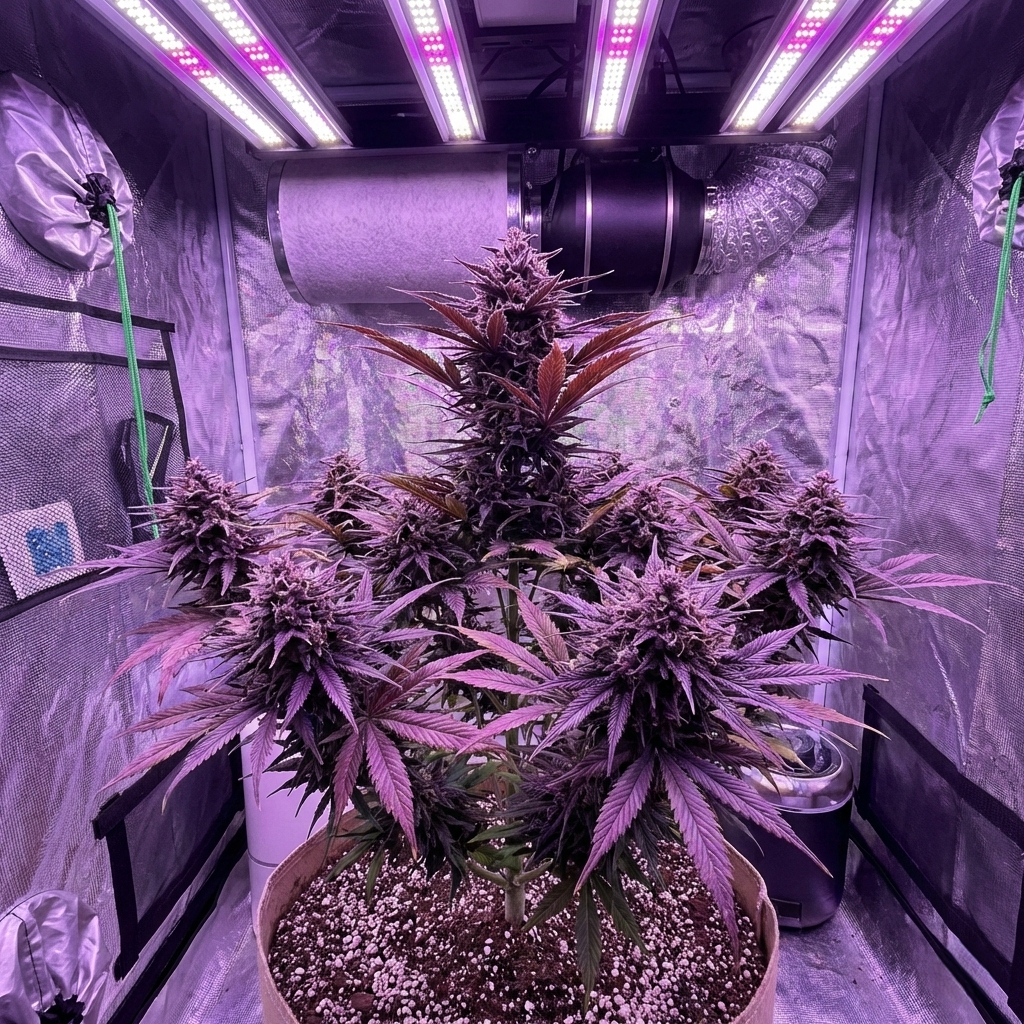
Another thing growers love about Blueberry is the potential for beautiful coloration. As harvest time nears (especially if night temperatures dip), you might see the leaves and even the buds turn shades of purple or blue. This not only makes for bag-appeal but also indicates the plant’s anthocyanin content; many Blueberry phenotypes will develop these colors naturally. If growing indoors, you can coax out these hues by slightly lowering temps in late flowering. Aroma control is important – by mid-to-late flowering, Blueberry gives off a strong sweet-skunky fragrance. Ensure your carbon filters or odor solutions are in place if stealth is a concern, because your grow room will smell like a field of blueberries!
Finally, when it comes to harvest and curing, take your time. Blueberry buds, being thick and resinous, can hold moisture, so dry them slowly in a low-humidity environment and cure in jars to prevent mold and maximize flavor. Properly cured Blueberry can be stored long-term (it’s said to have a great shelf life, maintaining flavor and potency over time). As a grower, you’ll appreciate how well Blueberry retains its quality – those jars of frosty, berry-scented buds will reward your patience for months to come.
Weedth Editor’s Note
Blueberry is truly one of those classic strains that lives up to its reputation. In the ever-expanding world of cannabis genetics, Blueberry remains a benchmark for quality – not just for its delightful flavor, but for the experience and ease it offers both users and growers. Here at Weedth, our team often recommends Blueberry as a starting point for novices (it’s hard to go wrong with a strain that’s forgiving to grow and pleasant to enjoy), yet it’s also a perennial favorite among long-time connoisseurs who appreciate its timeless indica high. Writing this profile, we were reminded of just how versatile Blueberry is: it’s as comfortable easing medical patients’ symptoms as it is being the star of a relaxing weekend smoke session with friends. And let’s not forget the legacy – without Blueberry, we wouldn’t have legends like Blue Dream and so many other “blue” hybrids that have graced the scene. In short, Blueberry is more than just a yummy strain; it’s a piece of cannabis history that continues to grow strong. Whether you’re cultivating it or consuming it, Blueberry offers a reliable, rewarding, and downright delicious experience that every cannabis enthusiast should have at least once. Enjoy, and happy growing! 😊
FAQ
Q: What is the Blueberry strain good for?
A: Blueberry is known for its balanced mind-body effects and is popular among both recreational and medical users. Recreationally, it’s good for relaxation, stress relief, mood enhancement, and mellow evenings where you want to unwind without being glued to the couch. Medically, people often use Blueberry to help with stress, anxiety, pain, and insomnia – it can relax the body and ease mental tension, and later induce sleepiness when you’re ready for bed. Its uplifting yet calming nature makes it a go-to strain for those seeking comfort with a positive twist.
Q: Is Blueberry a sativa or indica?
A: Blueberry is predominantly an indica strain. In fact, it’s an indica-dominant hybrid, roughly 80% indica and 20% sativa. This means Blueberry’s effects and growing traits lean much more toward the indica side: expect relaxing, body-centric effects rather than energetic sativa effects. Its lineage comes from an Afghani indica crossed with Thai sativa landraces, giving it that strong indica foundation with a hint of sativa genetics for a touch of cerebral euphoria. So, no – Blueberry is not sativa-dominant; it’s very much an indica-lover’s strain.
Q: Who created the Blueberry strain, and where did it come from?
A: Blueberry was originally bred by DJ Short, an American cannabis breeder often nicknamed the “Willy Wonka of Pot” for his legendary creations. He developed Blueberry in the late 1970s by experimenting with various exotic landrace strains. The final genetic mix is believed to involve an Afghan indica and Thai sativas (one of which is often referred to as Purple Thai). DJ Short later collaborated with seed banks in the Netherlands to bring Blueberry to a wider market in the ’90s. Since then, Blueberry’s genetics have been shared and reproduced by many breeders (for example, Dutch Passion Seeds popularized a version of Blueberry as well). The strain also won the High Times Cannabis Cup in 2000 for Best Indica, which helped propel it to global fame. So in summary, Blueberry came from North American breeding efforts and quickly became an international sensation among cannabis strains.
Q: Is Blueberry easy to grow for beginners?
A: Yes, Blueberry is generally considered beginner-friendly to grow. It’s a hearty plant with good resistance to pests and stress, meaning it can tolerate minor mistakes in the grow process. Blueberry stays relatively short and bushy (great for indoor tents or small gardens), and it has a reasonably quick flowering time of about 8 weeks. New growers appreciate that Blueberry doesn’t require very special techniques to yield well – as long as you provide decent soil, proper nutrients, and a watchful eye on humidity (those dense buds need airflow to prevent mold), you can expect a rewarding harvest. It also responds well to basic training like topping or LST, which even novices can try their hand at to boost yields. Just keep the environment in the recommended range (temperatures 65–80 °F, not too humid) and Blueberry will reward you. In short, it’s a forgiving strain and a great choice for a first photoperiod grow.
Q: What does Blueberry marijuana taste like?
A: Blueberry is famous for its delicious taste – as the name suggests, it strongly evokes fresh blueberries. Most people describe the flavor as sweet and fruity, very much like a mouthful of ripe berries. On top of that sweetness, there are often subtle layers: you might catch a bit of earthiness or pine and even a slight vanilla or floral note on the exhale. Well-grown and cured Blueberry is like smoking a berry dessert; the smoke is typically smooth and leaves a lingering sweetness on the palate. The aroma complements the flavor closely, so if you smell a jar of Blueberry, it’s a pretty good preview of the sweet, berry and slightly spicy taste you’ll experience when you smoke or vaporize it.
Similar Strains
If you enjoy Blueberry, you might also like these similar cannabis strains that share some of its characteristics:
- Blueberry Kush – An indica-dominant offspring of Blueberry crossed with OG Kush. It carries the same sweet berry flavor and potent relaxing effects, often with an extra sedative Kush punch for nighttime use.
- Blue Cheese – A hybrid that blends Blueberry’s fruity sweetness with the funky tang of UK Cheese. Blue Cheese offers a sweet-and-savory flavor profile (berries and creamy cheese) alongside a happy, stress-relieving body high similar to Blueberry’s calm.
- Granddaddy Purple (GDP) – A classic purple indica renowned for its grape and berry flavors. Like Blueberry, GDP delivers deep physical relaxation and euphoria, making it great for stress, pain, and sleep. Its flavor is more grape-like, but the sweet berry notes and soothing high are in the same wheelhouse.
- Grape Ape – Another flavorful indica with strong fruity notes (more grape than blueberry) and a heavy, tranquilizing effect. Grape Ape is akin to Blueberry in its ability to ease you into relaxation with a sweet tasting smoke, though it can be a bit more sedative.
- Blue Dream – A hugely popular hybrid that is actually a cross of Blueberry and Haze. While Blue Dream is sativa-leaning and more energetic, it inherited Blueberry’s sweet berry flavor and moderate ease of growth. It provides a more daytime-friendly creative buzz but still has a gentle body relaxation. If you love the flavor of Blueberry but want a more uplifting high, Blue Dream is worth a try.
Each of these strains has its own twist, but they all echo some aspect of Blueberry’s appeal – be it taste, aroma, effect, or grow traits. Happy exploring, and enjoy the diverse flavors of the cannabis world!
Share this article

Written by : alexbuck
A quick overview of the topics covered in this article.
Follow us
Latest articles
March 18, 2026

March 18, 2026
March 18, 2026