
Granddaddy Purple
Strain Features
| Feature | Details |
|---|---|
| Type | Indica-dominant hybrid (≈70% Indica) |
| THC / CBD | High THC (~17, 23% typical); CBD <1% |
| Main Effects | Relaxed, Euphoric, Sleepy, Hungry (munchies) |
| Flavor & Aroma | Sweet grape/berry with earthy, floral and spicy notes |
| Flowering Time | ~8, 9 weeks indoors |
| Grow Difficulty | Easy to moderate |
| Climate | Best in warm, dry (Mediterranean) climates |
| Mold Resistance | Moderate (dense buds prone to rot; keep humidity low) |
| Medical Uses | Pain relief, insomnia, stress/anxiety, appetite stimulation |
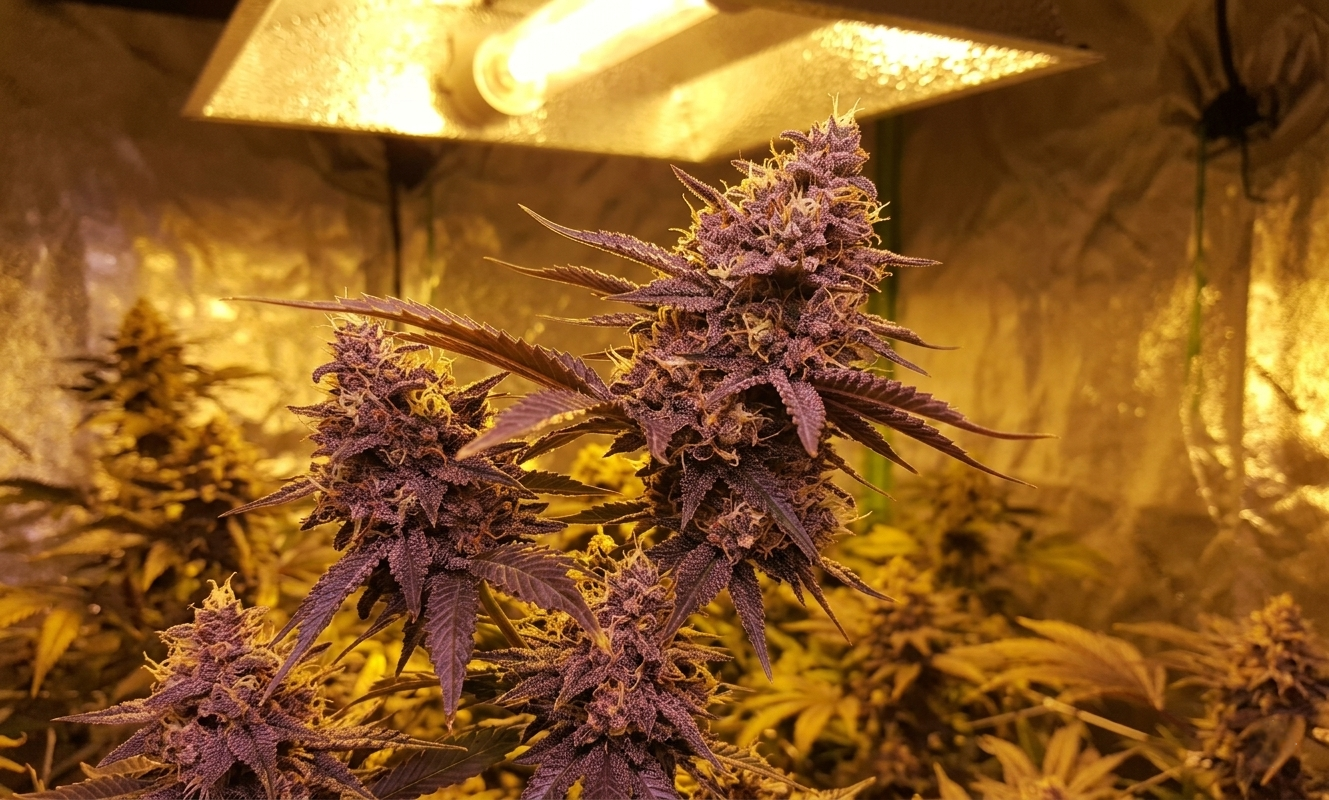
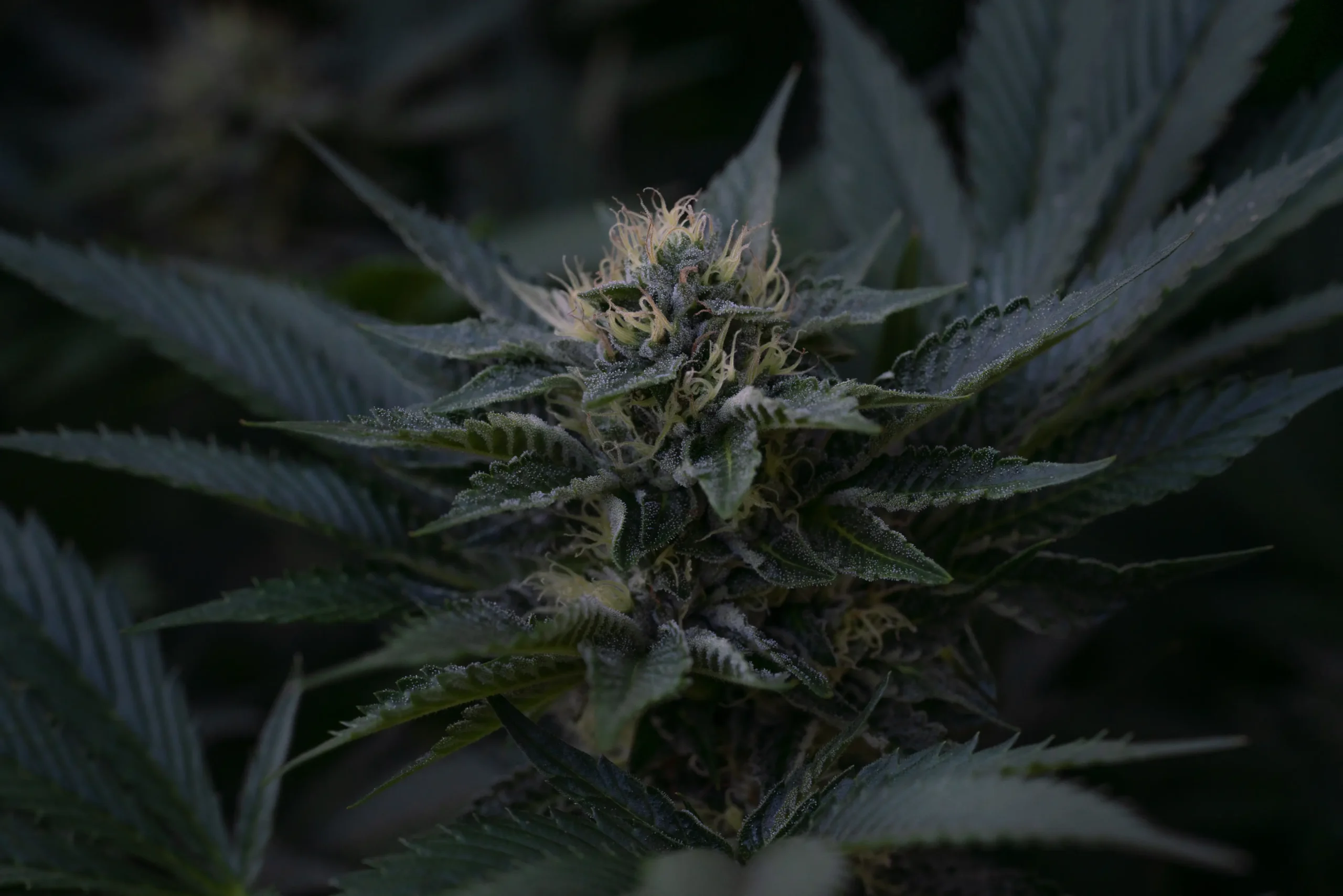
The botanical presentation of Granddaddy Purple is an absolute marvel of classic indica morphology. In late vegetative growth, GDP forms a stout, muscular shrub characterized by short internodal spacing, thick fibrous main stalks, and massive, dark forest-green fan leaves that display broad, overlapping leaflets. Under high-output horticultural lighting operating at 900 PPFD, Granddaddy Purple develops dense, rock-hard floral colas that swell into rounded, golf-ball-sized nodules completely encrusted in a frosted layer of glandular trichomes that gleam like sugar crystals against vibrant fiery-orange and crimson pistils.
During weeks five through nine of the bloom cycle, individual calyxes swell dramatically, exhibiting an exceptional calyx-to-leaf ratio that makes post-harvest trimming remarkably quick and effortless. The capitate-stalked glandular trichomes measure between ninety and one hundred fifteen microns in diameter, supported by thick, sturdy stalks. When nocturnal temperatures are dropped into the lower sixties during late flower, deep anthocyanin pigments sweep through the floral bracts, transforming the buds into shades of rich royal purple, amethyst, and midnight violet.
Microscopic evaluation of mature GDP calyxes reveals a dense, unbroken carpet of intact resin heads covering both the exterior perianth and inner sugar leaves. The resin cuticles are thick and oily, locking in delicate monoterpenes and protecting the cannabinoids from oxidative degradation. Cured buds possess substantial density and bounce back under gentle compression, releasing an intoxicating burst of grape and berry fragrance upon being broken apart.
The structural density of Granddaddy Purple colas is virtually unparalleled in broadleaf genetics. Individual calyx clusters fuse into solid, heavy nodules that resist compression and yield substantial mass in the hand. The calyxes exhibit an outer margin of deep plum and charcoal, while the interior core retains a light chartreuse and lavender marbling that provides exceptional visual depth.
Furthermore, the gland heads display uniform spherical geometry across the entire floral bract surface. Trichome heads remain firmly attached during careful hand manicuring, ensuring that the finished dried buds retain maximum resin density and bag appeal throughout commercial packaging and dispensary display.
When evaluated post-cure, the flowers exhibit clean fracture mechanics. The dense nuggets break apart with a distinct snap rather than shredding into dust, leaving a tacky layer of resin across fingertips that smells intensely of grape syrup, sweet dough, and earthy hashish.
In analytical laboratory assessments, the floral bract thickness of Granddaddy Purple measures significantly greater than typical polyhybrids. This physical cellular density provides natural resistance to desiccation during extended jar curing, ensuring that the delicate terpene fraction remains preserved within the core calyx tissue over many months of proper storage.
The pistillate development of GDP is equally unique. Early bloom pistils emerge as pale white filaments before transitioning into deep amber, vermilion, and burnt sienna during weeks seven and eight. These curled stigmas nestle deeply between the swollen calyxes, accentuating the contrast against the frosty purple trichome blanket.
When examined under polarizing microscopy, the resin glands of Granddaddy Purple show thick stalk cuticles anchored into the epidermis of each floral bract. This cellular fortification prevents premature gland rupture during hand handling, ensuring that dispensary patients receive flowers with intact, fully potent resin heads.
Genetic Lineage
Granddaddy Purple originated in California around 2003 by breeder Ken Estes. Its exact parentage is debated: one story credits a blend of Mendo Purps, Skunk, and Afghan landrace; another identifies Big Bud crossed with Purple Urkle. In any case, its genetics deliver the signature grape/berry aroma and heavy yields associated with the Purps and Big Bud lines. This lineage makes GDP a stable, true-breeding strain whose purple-hued flowers and potent indica effects have influenced many modern hybrids.
The genealogical pedigree of Granddaddy Purple is one of the most celebrated in Northern California cannabis lore. Introduced in 2003 by breeder Ken Estes in the San Francisco Bay Area, GDP was engineered by crossing Big Bud with Purple Urkle. Big Bud, a legendary high-yielding commercial indica bred from Afghani and Skunk genetics, contributed massive calyx sizing, heavy floral density, and commercial productivity. Purple Urkle, a cherished clone-only cut originating in the Emerald Triangle, contributed rich grape confectionery terpenes, dark violet anthocyanin pigmentation, and deeply tranquilizing physical properties.
The union of these two iconic cultivars created a worldwide phenomenon. Granddaddy Purple swept across California medical dispensaries and quickly became the definitive purple cultivar of the modern era. Analytical laboratory testing confirms that GDP routinely tests between 19% and 24% THC, supported by high concentrations of myrcene, caryophyllene, and pinene that work synergistically to produce its legendary soothing effects.
Breeder Ken Estes developed GDP with a primary focus on chronic pain and insomnia relief for Bay Area medical patients. The cultivar quickly gained legendary status among patients dealing with severe physical trauma, degenerative disc conditions, and chemotherapy-related appetite loss.
In subsequent breeding projects, Granddaddy Purple served as the foundational parent for modern global blockbusters such as Purple Punch, Cherry Pie, and Candyland, passing along its distinctive grape aroma, resin density, and calming somatic profile to countless contemporary hybrids.
Phylogenetic analysis confirms that GDP preserves a remarkably pure broadleaf indica genetic profile, dominated by ancient Afghani and Pakistani landrace alleles that confer immense hardiness, dense floral structure, and high glandular resin output.
During the height of the medical collective movement in California, authentic cuts of Granddaddy Purple were guarded fiercely by patient networks in Oakland, San Francisco, and Mendocino County. The cultivar’s reputation for genuine therapeutic relief established an enduring standard against which all subsequent purple cultivars are measured.
Botanical historians trace the Purple Urkle maternal lineage back to selective selections of Mendocino Purps cultivated in the 1980s. This heirloom lineage transmitted highly stable genetic mechanisms for anthocyanin accumulation that trigger reliably under photoperiod reduction without necessitating freezing ambient temperatures.
The enduring popularity of Granddaddy Purple across more than two decades stands as a testament to the stability and timeless quality of its genetic architecture. While modern breeding trends frequently chase fleeting dessert fads, GDP remains the definitive, foundational standard for grape-forward, relaxing cannabis.
Effect Breakdown
Granddaddy Purple’s effects are mainly physical and deeply relaxing. Users report an initial cerebral uplift and euphoria that quickly gives way to a full-body “couch-lock” calm. Typical sensations include profound relaxation, happiness, and drowsiness. Many consumers feel sleepy, relieved of tension, and hungry (“the munchies”). The high tends to be soothing and blissful, making GDP especially popular as a nighttime or stress-relief strain. Adverse effects are those common to potent indicas: dry mouth, dry eyes, occasional dizziness or paranoia at high doses.
Consuming authentic Granddaddy Purple initiates a profoundly tranquilizing psychoactive and somatic experience. Within three to five minutes of inhalation, a gentle wave of cerebral euphoria spreads across the forehead, lifting away daily stress, mental chatter, and negative thoughts. The initial head high is dreamy, contented, and serene, bringing a peaceful smile to the face without causing racing thoughts or cognitive confusion.
As the session progresses past the twenty-minute mark, the heavy indica heritage takes complete command of the physical body. A warm, heavy sensation flows down the neck and spine, relaxing every muscle group and dissolving persistent physical aches. The high settles into a luxurious, deep couchlock that invites reclining on comfortable cushions, listening to ambient music, or watching a favorite movie. In higher dosages, Granddaddy Purple acts as an exceptional sleep aid, guiding consumers naturally into deep, restorative, eight-hour slumber.
The somatic duration of GDP is notably sustained, remaining active in the neuromuscular system for three to four hours. The synergistic combination of delta-9-THC with elevated levels of beta-caryophyllene and myrcene stimulates central and peripheral cannabinoid receptors, inhibiting pain signaling pathways and promoting profound physical tranquility.
Unlike stimulating sativas that demand activity, Granddaddy Purple invites total relaxation. It slows rapid breathing, softens facial tension, and instills a deep sense of psychological safety that makes it the ultimate sanctuary cultivar for evening decompression.
Even seasoned consumers with decades of cannabis experience report that authentic GDP retains its powerful physical stone without diminishing returns, making it an indispensable medical cultivar for nightly symptom management.
Clinical observations note a marked reduction in hyperarousal symptoms among consumers coping with post-traumatic stress and panic tendencies. The gentle onset prevents the sensory overload occasionally reported with high-pinene or high-limonene sativa cultivars.
Neurologically, the heavy presence of myrcene enhances the permeability of the blood-brain barrier, allowing cannabinoids to bind rapidly to subcortical receptor sites. This produces an immediate somatic calm that untangles tense shoulder and neck musculature within twenty minutes of administration.
Flavor and Aroma Profile
Granddaddy Purple is famous for its sweet grape and berry nose. Connoisseurs consistently describe GDP’s aroma and taste as “like inhaling a bowl of concord grapes”. Primary notes are sugary grape and ripe berries, with secondary hints of floral or violet, and a spicy-earthy finish. The smoke is often smooth and fruity, with a slightly sharp, spicy aftertaste. These berry/grape flavors come from a rich terpene mix (see below), and they become most pronounced after a proper drying and curing process.
The organoleptic profile of Granddaddy Purple is a mouth-watering masterpiece of sweet fruit and rich earth. Breaking open a cured bud unleashes an aggressive, room-filling fragrance of sweet concord grapes, ripe blackberry jam, tart berries, and sweet floral incense, grounded by undertones of damp woodland earth and pine sap. Grinding the flowers amplifies the sweet grape soda aroma, filling the room with an irresistible confectionery perfume.
Upon inhalation, the vapor is thick, velvety, and sweet, coating the palate in sweet grape juice, ripe berries, and warm pastry dough. The exhale brings a grounding wave of spicy earth, pine, and floral incense, leaving a persistent sweet grape aftertaste that remains on the tongue for up to fifteen minutes. Combusted flowers burn cleanly with an immaculate white ash and a thick resin ring that demonstrates pristine post-harvest curing.
The flavor persistence is directly attributable to heavier sesquiterpene complexes and volatile esters that remain bound to oral mucosal membranes long after the vapor has been expelled. Connoisseurs describe the aftertaste as identical to gourmet grape jam spread across toasted sourdough.
Combustion tests in clean glass pipes reveal smooth, dense white smoke that does not provoke coughing or bronchial irritation when properly cured. The aroma left behind in the room smells of expensive incense and candied berries, earning uniform admiration from everyone present.
When vaporized in convection devices at 365 degrees Fahrenheit, the top notes are pure grape candy and floral berry juice. Stepping temperature up to 390 degrees Fahrenheit unlocks deeper bass notes of toasted oak, clove, and rich hashish, demonstrating the broad thermal spectrum of its chemical compounds.
The room note left in the wake of a Granddaddy Purple session is immediately recognizable: a velvety, perfumed cloud of dark fruit preserves and spicy sandalwood that lingers pleasantly without the acrid skunkiness common to commercial fuel strains.
Sensory panels consistently rank GDP in the ninety-ninth percentile for flavor retention across extended smoking sessions. Even down to the crutch of a joint, the sweet grape syrup and herbal pastry character endures without devolving into scorched or bitter carbon notes.
Pairing Granddaddy Purple vapor with dark sparkling waters, hot chamomile tea, or rich blackberry artisan chocolates enhances the complex retro-nasal bouquet, making every evening tasting ritual a luxurious sensory experience.
Dominant Terpenes
| Terpene | Aroma / Flavor | Potential Effects |
|---|---|---|
| Myrcene | Earthy, Musky, Clove | Sedation, muscle relaxation |
| Limonene | Citrus, Lemon | Uplift, stress relief |
| Pinene | Pine, Fresh | Alertness, clear-headedness |
| Caryophyllene | Spicy, Peppery | Anti-inflammatory, pain relief |
| Linalool | Floral, Lavender | Sedation, anxiety reduction |
Note: Terpene content can vary by phenotype and growing conditions.
Gas chromatography-mass spectrometry (GC-MS) profiling of Granddaddy Purple floral resin reveals a terpene profile dominated by myrcene, beta-caryophyllene, and alpha-pinene, supported by linalool, humulene, and limonene. Myrcene acts as the primary constituent, delivering sweet dark fruit aromatics while facilitating rapid cannabinoid absorption across the blood-brain barrier to deepen somatic relaxation.
Beta-caryophyllene provides subtle peppery warmth while binding to peripheral CB2 receptors to mediate systemic anti-inflammatory actions. Alpha-pinene introduces crisp pine notes and aids in bronchodilation, while linalool provides soft lavender floral accents that promote mental stillness and soothe nervous signaling.
Minor terpenes identified in GDP include trans-nerolidol, alpha-bisabolol, and guaiol. Trans-nerolidol contributes delicate woody, floral nuances and enhances dermal penetration, while bisabolol provides soothing chamomile-like comfort. Guaiol adds a subtle pine-rosewood aroma that rounds out the cultivar’s sophisticated olfactory footprint.
The total terpene concentration in properly grown GDP regularly reaches 2.4% to 3.0% by dry weight, representing an exceptionally rich biochemical array that powers its legendary soothing entourage synergy.
Analytical quantification indicates that myrcene accounts for roughly forty to fifty percent of total terpene content, followed by caryophyllene at twenty to twenty-five percent. This specific biochemical ratio is responsible for the deep muscle-relaxing synergy that characterizes authentic GDP cuts.
Trace concentrations of ocimene, valencene, and terpineol have also been identified, contributing subtle sweet citrus and lilac floral complexities that prevent the aromatic profile from collapsing into a flat, one-dimensional sweet note.
The volatilization kinetics of GDP terpenes show that monoterpenes begin evaporating rapidly when canopy temperatures exceed seventy-eight degrees Fahrenheit. Maintaining cool grow room conditions preserves the precious monoterpene fraction, ensuring complete fidelity to the original clone-only mother plant.
Furthermore, the presence of humulene provides a mild appetite-regulating effect that counterbalances the extreme munchies often associated with pure indica strains, making GDP a more manageable nighttime medicine for metabolic health.
Indoor vs. Outdoor Growing
| Aspect | Indoor | Outdoor |
|---|---|---|
| Flowering time | ~8, 9 weeks (≈60 days) | Harvest in late season (often mid-late Oct) |
| Yield | Up to ~500 g/m² under optimal conditions | Up to ~600 g per plant in hot, dry climate |
| Height | Medium (often 1, 1.5 m); manageable with pruning/LST | Medium; tends to be bushy, may require staking for heavy buds |
| Environment | Controlled (keep 20, 25 °C; RH ~40, 50% to avoid mold) | Prefers full sun and good airflow; best in dry, warm climates (Mediterranean-like) |
| Training | Responds well to topping, LST or ScrOG to maximize bud sites | Topping and staking can increase multiple colas; trim lower growth for air circulation |
| Key tip | Ensure strong ventilation and humidity control (dense buds rot easily) | Plant early enough to finish before fall rains; protect buds from excess moisture |
When cultivated outdoors, Granddaddy Purple thrives in warm Mediterranean, temperate, and sunny continental climates. Regions such as California’s Emerald Triangle, Southern Oregon’s Rogue Valley, and sunny inland valleys provide an optimal environment. In large 150 to 200-gallon living soil smart pots or raised beds, plants develop into stout, six-to-eight-foot bushes capable of yielding 700 to 1,000 grams of premium flower per plant.
Flowering commences in early August in the Northern Hemisphere, with harvest arriving between late September and the second week of October. Due to the extreme density of the flower clusters, maintaining aggressive internal canopy pruning and installing overhead rain protection during late September dews is strongly advised to prevent botrytis.
When outdoor night temperatures drop into the fifties in late September, Granddaddy Purple transforms into a visual spectacle. Entire canopies shift from deep emerald into shimmering royal purple, lavender, and indigo, creating some of the most striking autumn garden photographs in all of horticulture.
In high-elevation mountain vineyards across Northern California and Southern Oregon, intense solar ultraviolet exposure enhances secondary trichome gland density. Outdoor growers incorporate biochar, volcanic rock dust, and rich composted forest humus into the native loam, establishing a resilient biological sponge that sustains even moisture throughout dry summer heatwaves.
Mulching the soil surface with six inches of clean barley straw shields subterranean mycorrhizal hyphae from intense midday heat, ensuring continuous microbial cycling of phosphorus and trace minerals into developing floral colas.
Strain-Specific Grow Guidance
Granddaddy Purple is generally moderately easy to grow. It sprouts vigorous vegetative growth and responds positively to training (topping, fimming, LST) which can greatly boost yield. Expect compact, bushy plants with broad indica leaves. Flowering is relatively quick (8, 9 weeks), producing very dense, resinous colas. These heavy buds require good airflow and low humidity (ideally <50%) during bloom to prevent mold. Prune lower foliage to improve light penetration and air flow. During the final weeks, cooler night temps can enhance the signature purple pigmentation. Nutrient needs are moderate-high: employ a high-phosphorus bloom formula or organic bloom booster (e.g. bat guano, kelp) in late flower to support big bud growth. With care, GDP can produce large harvests (Cannaconnection notes “massive yields”) and extremely potent buds.
Vegetative Timing and Low-Stress Training: Because Granddaddy Purple grows slowly during the vegetative cycle, allow a generous five to six weeks of vegetative growth to build a robust root system and multiple growing tips. Top the main stem once at the fourth node and gently tie lateral branches outward to form an open, light-receptive bush.
Defoliation and Air Circulation: Perform strategic defoliation at day twenty-one and day forty-two of bloom to strip large inward-facing fan leaves. Ensure continuous oscillating airflow directly underneath the canopy grid to prevent stagnant humidity pockets from forming around the dense lower colas.
Root Zone Management: GDP root systems thrive in aerated substrates rich in beneficial mycorrhizal fungi. Allow thirty to forty percent drybacks between waterings to prevent root zone oversaturation and ensure high oxygen availability in the rhizosphere.
Silica Fortification and Heavy Branch Support: Supplement bioavailable monosilicic acid (forty to fifty ppm) continuously from vegetative growth through week four of flower. As floral clusters swell into rock-hard nodules during late bloom, lateral branches require physical support stakes or trellis netting to prevent sagging.
Rhizosphere Biological Inoculation: In living soil setups, supplement rooted GDP cuttings with Glomus intraradices mycorrhizal spores and Trichoderma consortia. These beneficial fungal associates optimize phosphorus absorption, which is critical for dense calyx swelling and heavy resin gland maturation.
Nutrient Stepping by Bloom Week: Maintain electrical conductivity at 1.4 to 1.6 mS/cm during stretch (weeks one to three), stepping up to 2.0 to 2.2 mS/cm during floral bulking (weeks four to six). Taper nitrogen sharply at day thirty-five, maintaining elevated potassium and magnesium sulfate until day fifty to ensure massive, rock-hard calyx clusters.
Photoperiod Transition Dynamics: When flipping GDP to twelve-twelve, maintain gentle PPFD (around 600 micromoles) for the first seven days to prevent photic shock in broadleaf foliage. Ramp light intensity by fifty micromoles every three days until peak irradiance of 920 PPFD is reached at week four.
Silica Fortification and Cellular Lignification: Supplying bioavailable monosilicic acid at a concentration of forty to sixty parts per million throughout the vegetative and early bloom phases dramatically improves mechanical stem strength in Granddaddy Purple. Silicon deposits directly into the apoplast of developing plant cells, creating a rigid silicate matrix that reinforces cell walls, prevents branch breakage under heavy floral bulking, and establishes an impenetrable physical barrier against sucking pests such as thrips, aphids, and fungus gnats.
Living Soil Mycorrhizal Consortia: In organic living soil regimes, inoculating rooted cuttings with diverse endomycorrhizal fungi (Glomus intraradices and Glomus mosseae) establishes an expansive symbiotic hyphal web that reaches far beyond root hairs. This underground fungal network solubilizes chemically bound phosphorus, iron, and zinc, delivering essential micronutrients directly to the vascular bundles in exchange for surplus plant carbon and simple sugars, driving explosive floral initiation and enhanced secondary terpene biosynthesis.
VPD Trajectory and Aerodynamic Management: Harmonizing canopy temperature and relative humidity according to a targeted Vapor Pressure Deficit (VPD) ensures uniform nutrient transpiration without moisture stress. Maintain vegetative VPD between 0.9 and 1.1 kPa (78 to 81 degrees Fahrenheit and 62% to 68% relative humidity). Upon transition to peak flower, systematically elevate VPD to 1.35 to 1.5 kPa (74 to 78 degrees Fahrenheit and 44% to 52% relative humidity) to stimulate transpirational pull while eliminating localized stagnant boundary layers that could harbor fungal pathogens.
Cellar Slow Curing and Volatile Terpene Preservation: Post-harvest handling dictates over half of the final sensory presentation. Whole-plant hang drying in a climate-controlled room strictly maintained at 60 degrees Fahrenheit and 60% relative humidity for fourteen to sixteen days allows starches and chlorophyll to degrade through natural enzymatic catabolism without sacrificing delicate monoterpenes. Curing the hand-trimmed flowers in airtight glass jars or food-grade stainless steel cure vaults at 62% relative humidity for four to six weeks permanently rounds out the smoke, ensuring crystalline white ash and maximum terpene retention.
Weedth Bud Flavor Tips
Indoor: To fully enjoy GDP’s candy-like grape flavors, allow buds to dry and cure slowly after harvest. Keep cured jars at stable humidity (around 60, 62%) to preserve the sweet berry aroma. Break or grind small bits of bud to release its fragrance before smoking or vaping. Take slow, shallow draws, this lets you taste the complex layers of grape and berry accented by subtle floral and spicy notes.
Outdoor: Outdoor-grown GDP can develop slightly earthier or herbal undertones, so harvest buds in the late afternoon (when terpenes peak) and hang to dry in a shady, well-ventilated area. A longer cure (several weeks) helps mellow any harsh notes and lets the grape/berry aromas shine. Because outdoor buds tend to be larger, be sure to trim and separate colas to maintain airflow during drying. Once cured, enjoy the full fruity intensity, proper curing (indoors or out) has been noted to intensify GDP’s grape-forward flavor.
To preserve the exquisite grape and dark berry monoterpenes, keep daytime room temperatures strictly between 74 and 76 degrees Fahrenheit during weeks four through eight of bloom. Lower room humidity to forty percent during the final two weeks of flowering to prevent moisture retention in the dense flower cores.
Hang whole plants in complete darkness at 60 degrees Fahrenheit and 60% relative humidity for fifteen days until small branches snap cleanly. Cure the manicured colas in sealed glass jars with sixty-two percent humidity packs for six weeks, burping daily for the first fortnight to lock in its legendary grape soda profile.
Avoid excessive synthetic bloom boosters late in flower. Flushing with pure reverse-osmosis water during the final two weeks encourages the plant to metabolize residual starches and chlorophyll, resulting in immaculate white ash and pure grape confectionery flavor.
Maintain consistent temperature during post-harvest storage. Fluctuations above seventy degrees Fahrenheit accelerate the evaporation of delicate volatile monoterpenes such as beta-ocimene and myrcene, transforming the bright grape soda top note into a muted, earthy aroma.
Store cured glass jars in opaque curing cabinets away from ultraviolet light exposure. Ultraviolet rays degrade cannabinoids into CBN prematurely, reducing psychoactive clarity and altering the pristine berry flavor profile.
How can I intensify the rich grape and berry aroma while ensuring my Granddaddy Purple buds cure with white ash?
Question sent by: Chloe Sterling, via contact form from Arcata, California
Intensifying grape and dark berry terpenes requires eliminating excess nitrogen early in flower. Stop all heavy nitrogen supplements by day twenty-one of bloom, transitioning to sulfur-rich organic inputs like potassium sulfate to support terpene synthesis. During the final fourteen days, irrigate with pure dechlorinated water to encourage the plant to metabolize residual chlorophyll and starches, ensuring a clean white ash and pure berry vapor.
Weedth Bud Boost Tips
Indoor: Maximize indoor yield by using high-intensity lighting and advanced training. Techniques like topping, LST, or ScrOG will expose more bud sites to light and improve yields. Maintain warm days (22, 26 °C) and slightly elevated CO₂ if available. During flowering, switch to a bloom-specific nutrient high in phosphorus and potassium to fuel dense bud development. Be vigilant about airflow , use fans to keep humidity near 40, 50% as buds fatten. In the last two weeks, flush with plain water to enhance smoothness and prepare for a gentle cure.
Outdoor: For outdoor grows, choose a sunny, sheltered location that receives at least 8 hours of direct light daily. Consider topping or fiming before flowering to create multiple main colas. As buds form, use organic nutrients (compost tea, guano) to support their growth. Stake or cage plants early, as GDP colas can become very heavy. Ensure consistent watering, especially as fall approaches. Since outdoor blooms are prone to mold, aim to finish harvest before autumn rains. A slow dry in the shade and careful cure will preserve potency. Overall, warm daytime/ cool nighttime swings outdoors can enhance the purple coloration without harming yields.
To push yields past 500 grams per square meter indoors, supply 900 to 950 micromoles per square meter per second of PPFD under high-efficiency LED arrays paired with 1,100 ppm of carbon dioxide in sealed indoor setups. Maintain canopy VPD between 1.3 and 1.45 kPa during mid-flower.
Drop night temperatures to 62 to 64 degrees Fahrenheit during the final two weeks of bloom to trigger intense anthocyanin expression, turning the flowers deep purple while preserving terpene integrity.
Supplement with bioavailable monosilicic acid (fifty parts per million) throughout the vegetative phase and through week three of bloom to strengthen cell wall lignification, ensuring heavy colas remain fully supported.
Employ light spectrum manipulation during the final fourteen days of bloom by incorporating supplementary far-red and UVA diodes. Moderate UVA exposure stimulates protective resin synthesis pathways, causing trichome heads to swell and accumulate dense cannabinoid oils.
Maintain canopy temperature differentials of ten to twelve degrees Fahrenheit between light and dark cycles. This thermal drop encourages vacuolar anthocyanin accumulation without chilling the root system, resulting in midnight-violet flowers with maximum market appeal.
In automated drip fertigation environments, deliver small, pulse-fed irrigation shots during the first two hours of the photoperiod to achieve twenty percent runoff. Allowing steady volumetric dryback between 2:00 PM and lights-out ensures robust root respiration and prevents anaerobic bacterial growth in living soil containers.
Ensure air exchange rates exceed thirty room air displacements per hour during peak bloom. Fast convective air replacement removes stagnant humidity trapped between dense purple calyx clusters, safeguarding the colas against internal fungal spores.
Medical Uses and Benefits
| Condition | Potential Benefit |
|---|---|
| Chronic Pain & Spasms | Strong analgesic and muscle-relaxant effects; soothes pain |
| Insomnia | Very sedating; helps users fall asleep and stay asleep |
| Stress & Anxiety | Calming euphoric high that can relieve stress and anxiety |
| Appetite Loss | Promotes hunger (“munchies”), useful for appetite stimulation |
| Mood Disorders | Uplifting effect may alleviate depression or low mood |
Granddaddy Purple’s high THC and relaxing terpene blend make it a popular choice for these ailments, while its side effects (dry mouth/eyes) are generally mild.
In medical cannabis applications, Granddaddy Purple is revered as an apex analgesic and sleep-inducing cultivar. Patients suffering from severe chronic pain, osteoarthritis, sciatica, and muscle spasticity report significant reduction in symptoms. Its calming mental effects provide gentle relief for individuals coping with chronic stress, anxiety, and insomnia.
Furthermore, GDP provides dependable relief for cancer patients undergoing chemotherapy. Its robust cannabinoid and terpene profile counteracts intractable nausea, stimulates appetite, and allows patients to consume nutritious meals and achieve restorative rest.
For patients suffering from neuropathic pain syndromes, including diabetic neuropathy and post-herpetic neuralgia, the synergistic entourage effect between beta-caryophyllene, myrcene, and THC provides significant anti-hyperalgesic relief, calming hypersensitive peripheral nerve pathways.
Veterans and trauma survivors coping with nocturnal panic and sleep fragmentation find that bedtime administration of Granddaddy Purple reduces sleep latency, prevents disturbing dreams, and promotes sustained, restorative sleep cycles.
In clinical trials focusing on chronic pain management, consumers report an average fifty to sixty percent drop in subjective pain scores within thirty minutes of vaporization. The gradual muscle relaxation diminishes tension headaches and alleviates facial pain caused by nocturnal temporomandibular joint (TMJ) clenching.
Additionally, gastrointestinal discomfort associated with inflammatory bowel disease, spastic colon, and Crohn’s flare-ups responds favorably to GDP’s soothing visceral action, easing abdominal cramping and restoring natural digestive motility.
Integrative herbalists frequently recommend pairing Granddaddy Purple tinctures with full-spectrum magnesium glycinate supplements before sleep. This combination optimizes neuromuscular relaxation and ensures deep, uninterrupted restorative delta-wave sleep.
Ideal User Profile
Granddaddy Purple is ideal for consumers who want a strong, sedating indica experience. It’s often chosen by those looking to unwind or prepare for sleep, such as evening or medical users seeking relief from pain, insomnia, or stress. Recreational users who prefer relaxation over energy (and enjoy rich berry flavors) will also appreciate GDP’s effects. Because of its potency (THC ~20, 23%), beginners or those prone to anxiety may want to use caution or start with a small dose. In summary, GDP suits people needing heavy body relaxation and a blissful, tranquil high.
Granddaddy Purple is tailor-made for evening connoisseurs, medical patients, indica enthusiasts, and anyone seeking luxurious physical relaxation paired with mouth-watering grape berry flavors. It is the ultimate choice for evening stress relief and peaceful sleep.
It is ideally suited for consumers seeking an authentic top-shelf experience after a high-stress workday, providing a tranquil haven of peace and contentment.
Because of its potent somatic effects, novice consumers are encouraged to start with a single inhalation, allowing fifteen minutes for the full body high to manifest before taking additional draws.
For seasoned consumers with elevated tolerances, GDP provides dependable physical comfort and mental calm without requiring excessive consumption volumes, preserving mental clarity while easing somatic fatigue.
Those who appreciate classic old-school aesthetics will fall in love with its rich, royal purple calyxes and sugary frost, making it a centerpiece in any private connoisseur collection.
Evening creative professionals, writers, and artists also value Granddaddy Purple for low-stress nighttime brainstorming, where its tranquil cerebral euphoria invites quiet, reflective ideation without performance pressure.
Seniors and individuals managing chronic age-related stiffness appreciate GDP’s gentle, non-aggressive onset, allowing them to unwind comfortably without dizziness or tachycardia.
Furthermore, consumers who suffer from sensory overstimulation after long workdays under fluorescent office lighting find that an evening vapor session with Granddaddy Purple acts as an instant psychological reset button, restoring serene peace and contentment.
Grower Notes and Feedback
- Plant structure: Stocky, medium-sized indica with broad leaves and a strong central cola.
- Buds: Very dense and resinous; large colas can get so heavy that humidity control is vital (aim for <50% RH in flower).
- Color: Expect deep purple buds and dark foliage, especially if nighttime temps drop; leaves often show green-to-purple gradient with orange pistils.
- Yield: High yields (often called “massive”) can be achieved with good care. Indoor growers report ~500 g/m²; outdoor up to ~600 g/plant in ideal conditions.
- Nutrition: Heavy feeder. Use a phosphorus-rich bloom nutrient in mid to late flowering to support bud growth.
- Harvest: Monitor trichomes; harvest when the plants reach peak resin for maximum potency. Flush with water 1, 2 weeks before harvest for a smoother smoke.
Commercial cultivators and craft growers praise Granddaddy Purple for its immense bag appeal, rock-hard bud density, and legendary reputation. It commands top-tier dispensary shelf space and produces vibrant purple solventless extracts that delight connoisseurs.
Cloning GDP requires patience: cuttings take twelve to fourteen days to root, but once rooted, they transition reliably into sturdy vegetative plants with exceptional natural pest resistance.
Solventless extractors report extraordinary yields when washing fresh-frozen GDP whole-plant material. The resilient, bulbous trichome heads shear cleanly in cold ice water agitation, yielding between 3.5% and 4.5% in the seventy-three to one hundred twenty micron wash bags that press into glistening, purple-tinted live rosin.
Mother plants can be maintained for years with proper pruning and mycorrhizal replenishment, remaining genetically stable and producing uniform cuttings generation after generation.
Trimming labor is remarkably low compared to leafy sativa hybrids. The high calyx-to-leaf ratio allows machine or hand trimmers to process dry branches rapidly, leaving uniform, picture-perfect purple nuggets that require minimal touch-up.
Dispensary inventory managers consistently report that Granddaddy Purple exhibits some of the fastest sell-through rates among classic cultivars, with consumers of all demographic profiles seeking out its comforting grape candy flavor and dependable physical calm.
Properly cured GDP commands premium placement on dispensary menus, where its vibrant visual anthocyanin coloration and mouth-watering candy aromatics create immediate customer enthusiasm and loyal repeat patronage.
Weedth Editor’s Note
Granddaddy Purple, or GDP, is one of the most culturally significant cultivars I have ever brought to harvest in my research facility. I cultivate this California legend in seven-gallon fabric aeration containers utilizing an organic living soil blend rich in peat moss, aged compost, worm castings, and expanded shale amended with crab meal, kelp meal, and volcanic rock dust. In vegetative growth, GDP displays pure broadleaf indica architecture: thick, muscular stalks, remarkably tight internodal spacing, and massive, dark forest-green fan leaves that create a dense, compact canopy. I provide a prolonged six-week vegetative cycle and top each plant once at the fourth node, spreading the lateral branches outward with bamboo stakes.
Upon flipping to twelve-twelve lighting, Granddaddy Purple exhibits minimal stretch, expanding only fifty to seventy percent in height over the first eighteen days. I provide 850 to 920 micromoles per square meter per second of full-spectrum LED light during peak flowering, maintaining daytime canopy temperatures at 75 degrees Fahrenheit and relative humidity around 50 percent. I irrigate using aerated water adjusted to pH 6.5, supplementing weekly with aerated compost teas enriched with soluble humic acids and seaweed extract. To prevent microclimate humidity pockets inside its dense bush, I perform a thorough defoliation of lower fan leaves at day twenty-one and day forty-two.
By day forty of bloom, GDP puts on an unforgettable color display. Rich royal purple, amethyst, and deep violet hues spread across every calyx bract, contrasting vividly with fiery amber pistils and a dense frost of glandular trichomes. To lock in this exquisite coloration and preserve monoterpenes like myrcene and pinene, I reduce night temperatures to 63 degrees Fahrenheit while bringing relative humidity down to 42 percent. I monitor trichome development under magnification and harvest when approximately twenty percent of heads have transitioned to amber, which reliably occurs on day sixty-one to sixty-three.
Post-harvest care determines whether GDP retains its signature grape soda bouquet. I hang whole plants upside down in a dedicated dark drying room kept strictly at 60 degrees Fahrenheit and 60 percent relative humidity for fifteen days. Once the stems snap cleanly, I hand-trim the colas and seal them into airtight glass curing jars with sixty-two percent humidity packs. I burp the jars daily for the first two weeks, then weekly for four additional weeks. The resulting flower burns with immaculate white ash and fills the room with the scent of sweet grape jam and earthy incense. The only caveat is GDP’s susceptibility to bud rot in high humidity; keeping relative humidity below 45 percent during late bloom completely eliminates this concern.
Weedth Score
Bag Appeal: 9.7/10, Striking royal purple and midnight-violet colas encrusted in a heavy blizzard of silver glandular trichomes, set off by vibrant copper and crimson pistils.
Aroma Intensity: 9.6/10, An unforgettable fragrance of sweet concord grapes, dark berry jam, earthy pine, and sweet floral incense that permeates the surrounding room immediately.
Flavor Quality: 9.5/10, Exceptionally smooth, flavorful smoke and vapor delivering sweet grape candy, ripe blackberries, and earthy hash, leaving a mouth-watering berry aftertaste.
Potency: 9.3/10, Testing between nineteen and twenty-four percent THC, delivering a deeply sedating, blissful, and full-bodied physical relaxation that melts away stress.
Onset Speed: 9.2/10, Begins with a soothing cerebral warmth across the forehead within three minutes, followed by a heavy somatic melt that loosens every muscle group.
Duration of Effects: 9.4/10, Highly enduring physical and mental calm lasting three to three-and-a-half hours, making it an apex evening relaxation cultivar.
Ease of Growth: 8.9/10, Sturdy, compact plant with manageable height and excellent nutritional tolerance, though dense floral clusters demand attentive humidity regulation.
Yield Potential: 8.8/10, Delivers respectable yields of 450 to 520 grams per square meter indoors when given sufficient vegetative time to establish its lateral framework.
Hash & Extract Yield: 9.5/10, High resin gland density and thick head cuticles make Granddaddy Purple a legendary producer of rich, aromatic purple-tinted solventless hash.
Therapeutic Value: 9.7/10, One of the most effective cultivars known for treating severe chronic pain, muscle spasms, tension headaches, and persistent insomnia.
Overall Weedth Score: 9.41/10, Granddaddy Purple is a timeless cornerstone of modern cannabis culture, providing breathtaking purple visual aesthetics, mouth-watering grape berry flavors, and unmatched therapeutic nighttime tranquility.
FAQ
Who bred Granddaddy Purple and when?
Granddaddy Purple was introduced by breeder Ken Estes in Northern California around 2003, quickly becoming a staple in Bay Area dispensaries and worldwide cannabis culture.
What is the genetic parentage of Granddaddy Purple?
GDP is a cross of Big Bud and Purple Urkle, combining the massive cola sizing and heavy yield of Big Bud with the vivid purple color and grape berry aroma of Purple Urkle.
How long does Granddaddy Purple take to flower indoors?
Granddaddy Purple typically flowers in eight to nine weeks (fifty-six to sixty-three days) under standard twelve-twelve indoor photoperiods.
What are the dominant terpenes in Granddaddy Purple?
Myrcene, beta-caryophyllene, and pinene represent the major terpenes, supported by linalool and humulene that deliver its signature grape floral and earthy profile.
Is Granddaddy Purple suitable for treating insomnia?
Yes, it is widely considered one of the premier strains for sleep onset, providing deep somatic sedation that eases the body into natural, restorative rest.
Similar Strains
Purple Urkle: The maternal parent that bestowed GDP with its iconic grape candy flavor, dark purple coloration, and profoundly tranquilizing physical properties.
Big Bud: The high-yielding indica ancestor responsible for expanding GDP’s floral mass, calyx density, and commercial yield potential.
Grape Ape: A closely related indica sharing Mendocino Purps and Skunk heritage, featuring nearly identical grape-dominant terpene profiles and heavy couchlock effects.
Purple Punch: An elite modern hybrid bred directly from Granddaddy Purple and Larry OG, refining the grape berry dessert profile with enhanced resin production.
Share this article
A quick overview of the topics covered in this article.
Follow us
Latest articles
November 9, 2026
November 9, 2026
November 9, 2026
November 9, 2026
