
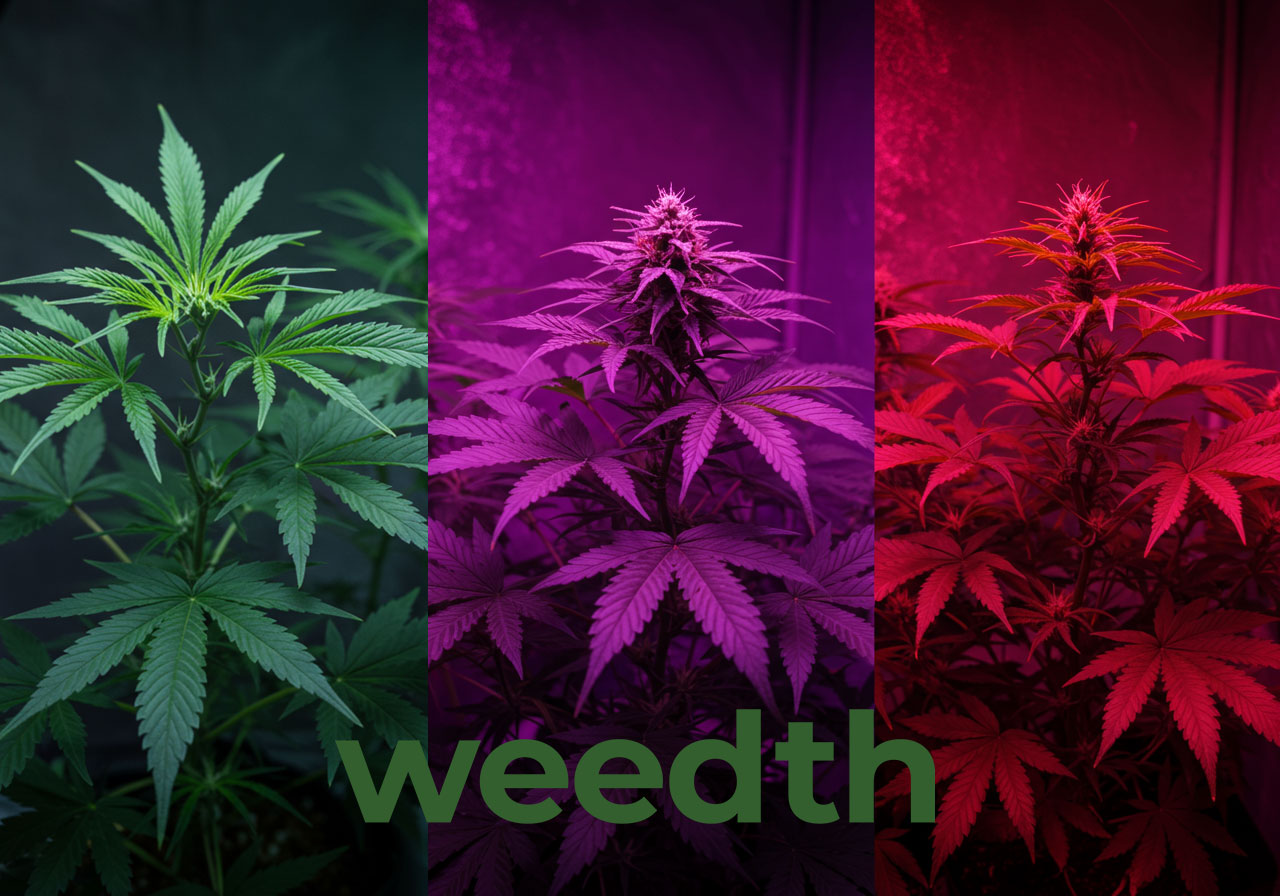
The Ultimate Guide to Grow Light Spectrum
Light is one of the main forces behind healthy cannabis growth, strong structure, and heavy flowering. In indoor cannabis cultivation, the grow light spectrum, meaning the mix of colors and wavelengths produced by a light, can influence how a plant stretches, how dense the canopy becomes, how quickly flowers form, and how efficiently the plant turns light into growth.
Cannabis uses light mainly within the 400–700 nm range, known as Photosynthetically Active Radiation, or PAR. This is the range plants use for photosynthesis. Within this range, blue light and red light play the most visible roles. Blue light, around 400–500 nm, supports compact vegetative growth and strong leaf development. Red light, around 600–700 nm, supports flowering signals, stem elongation, and bud formation.
Cannabis does not respond to every wavelength in the same way. A grow light heavy in blue can keep plants shorter and tighter. A grow light rich in red can encourage stronger flowering behavior and more stretch. A balanced full-spectrum cannabis grow light gives the plant a wider range of usable wavelengths and usually works better than narrow red-and-blue lighting alone.
McCree’s classic plant absorption research showed that photosynthesis is generally strongest in the blue and red regions of the spectrum. For cannabis growers, this explains why most modern grow lights focus heavily on these wavelengths. However, cannabis does not grow under blue and red alone in nature. Sunlight includes green, yellow, far-red, and small amounts of ultraviolet radiation. This is why many indoor growers now prefer full-spectrum LED grow lights that better imitate natural sunlight.
How Different Colors Affect Cannabis Plants
Cannabis reacts differently to each part of the light spectrum. Understanding these responses helps growers choose the right lighting for seedlings, vegetative growth, flowering, and late-stage bud development.
Blue light, 400–500 nm: Blue light supports compact cannabis growth, strong stems, tighter internodes, and healthy leaf development. It is especially useful during the seedling and vegetative stages, when the goal is to build a strong plant structure before flowering. Cannabis grown under enough blue light often stays shorter and bushier, which can help indoor growers manage canopy height.
Too much blue light, however, may slow vertical growth and reduce overall stretch. That can be useful in tight grow tents, but it may not be ideal if the plant needs more size before flowering.
Red light, 600–700 nm: Red light plays a major role in flowering, bud development, and plant stretch. During the flowering stage, cannabis uses red-rich light to support reproductive growth. This is why many bloom-focused lights contain warmer diodes around 2700–3000K or include strong red output around 660 nm.
Red light can help cannabis build larger flowering sites, but too much red without enough blue can produce taller plants with longer internodes. For indoor cannabis, red light works best when balanced with blue and other wavelengths.
Green and yellow light, 500–600 nm: Cannabis leaves reflect much of the green light they receive, which is why they appear green to the human eye. However, green light is not useless. It can penetrate deeper into the cannabis canopy than blue or red light, helping lower leaves and inner bud sites receive some light.
This matters in dense cannabis canopies where upper fan leaves can shade lower growth. Green light may not drive photosynthesis as strongly as red or blue, but it still contributes to a more balanced light environment.
Far-red light, 700–750 nm: Far-red sits just outside the traditional PAR range, but cannabis can still sense it through phytochrome responses. Far-red can influence stretch, shade response, flowering behavior, and end-of-day signaling.
In cannabis cultivation, far-red must be used carefully. A small amount can support natural plant signaling, but too much can increase stretch and make plants harder to manage indoors. For growers with limited vertical space, far-red-heavy lighting may require extra canopy control.
Ultraviolet light, 300–400 nm: UV light is not the main driver of cannabis growth, but it can trigger stress-related responses. Some growers believe controlled UV exposure may support resin production, terpene expression, and secondary metabolite activity, though results depend on intensity, timing, genetics, and overall plant health.
UV should be treated as optional and used carefully. Too much UV can stress cannabis plants, damage leaves, and create safety concerns for the grower. It is not a replacement for strong genetics, proper nutrition, and a well-managed flowering environment.
Spectrum and Cannabis Plant Performance
Light spectrum affects how cannabis grows from seedling to harvest. The plant’s needs change as it moves from early development into vegetative growth and then into flowering.
During the seedling stage, cannabis benefits from a gentle, balanced light with enough blue to encourage sturdy early growth. Young plants do not need extreme intensity. A soft full-spectrum LED or cool white light can help seedlings build healthy leaves without stretching too much.
During the vegetative stage, cannabis needs strong light for leaf production, branching, and root-supported growth. A spectrum with a good amount of blue light helps keep plants compact and structured. This is especially useful for growers using training methods such as topping, low-stress training, SCROG, or mainlining.
During the flowering stage, cannabis shifts its energy toward bud production. A spectrum with stronger red and warm-white output supports flowering behavior and helps the plant focus on reproductive growth. This is where many growers prefer full-spectrum LEDs in the 3000K to 3500K range, or adjustable fixtures that increase red output during bloom.
In late flower, spectrum management becomes more about balance than force. The plant still needs strong light, but excessive intensity or heat can reduce quality. A stable full-spectrum setup helps cannabis finish with better structure, healthier leaves, and more consistent bud development.
The key lesson is simple: blue light builds structure, red light supports flowering, and full-spectrum light gives cannabis the most complete indoor environment.
Color Temperature and White LEDs for Cannabis
When using white LED grow lights, the color temperature, measured in Kelvin, helps describe the light’s visual tone and spectrum bias. Lower Kelvin values look warmer and more red-orange. Higher Kelvin values look cooler and more blue-white.
Cool white, 5000–6500K: This range is rich in blue light and works well for seedlings, clones, mother plants, and vegetative cannabis growth. It encourages shorter internodes, stronger stems, and compact foliage. A 6500K light can be useful for early growth, especially when the grower wants to prevent stretching.
Neutral white, 3500–4500K: This is a balanced range that can work well through much of the cannabis life cycle. Many modern full-spectrum cannabis LEDs sit around 3500K or 4000K because they provide both blue and red support. For growers who want one light from seed to harvest, this range is often practical.
Warm white, 2700–3000K: This range is richer in red light and is commonly used for flowering cannabis. It supports bloom behavior, bud formation, and the plant’s natural shift toward reproductive growth. A 3000K full-spectrum LED can be a strong choice for growers focused mainly on flowering performance.
In practice, many high-quality cannabis LEDs blend different diodes. A grow light may include 3000K warm white, 5000K cool white, 660 nm deep red, and sometimes far-red or UV diodes. This gives cannabis a broader spectrum without forcing the grower to switch bulbs between stages.
For simple indoor cannabis growing, a useful rule is:
Use cooler, blue-rich light for vegetative growth and warmer, red-rich light for flowering. For an easier all-in-one setup, choose a strong full-spectrum LED grow light designed for the entire cannabis life cycle.
Why Full-Spectrum Grow Lights Work Well for Cannabis
Older LED grow lights often used only red and blue diodes, which created the familiar purple or pink glow. These lights covered important chlorophyll absorption peaks, but they often ignored the broader needs of the cannabis plant.
Modern cannabis growers increasingly prefer full-spectrum LED grow lights because they create a more natural light environment. Cannabis evolved under sunlight, not under narrow red-and-blue light. A broader spectrum can support better visual inspection, more even canopy development, and stronger performance across the full life cycle.
Better canopy penetration: Full-spectrum lights include green and mid-range wavelengths that can move deeper into the canopy. This helps lower leaves and interior growth receive more usable light, especially in dense cannabis plants.
More natural plant behavior: A wide spectrum gives cannabis more complete environmental signals. This can support more balanced growth, better structure, and healthier transitions between veg and flower.
Easier plant inspection: White full-spectrum light lets growers see the true color of leaves and buds. This matters because nutrient deficiencies, pest damage, light stress, and leaf discoloration are much harder to diagnose under purple grow lights.
Stronger seed-to-harvest usability: A well-built full-spectrum LED can support cannabis through seedlings, veg, and flowering without requiring separate MH and HPS lamps.
For most indoor cannabis growers, full-spectrum LED lighting is the safest and most efficient choice. Red and blue are still central, but cannabis performs best when the spectrum is not too narrow.
Types of Grow Lights Used for Cannabis
Indoor cannabis growers commonly use several types of grow lights. Each has a different spectrum, heat profile, energy demand, and grow-room behavior.
Metal Halide, MH: Metal Halide bulbs produce a bluish-white light and were traditionally used during the vegetative stage. They support leafy growth and compact structure, but they generate more heat and use more electricity than modern LEDs.
High-Pressure Sodium, HPS: HPS lights produce a warm yellow-orange light rich in red and orange wavelengths. For decades, HPS was one of the most common lights for flowering cannabis. It can produce strong bud development, but it also creates significant heat and lacks the balanced spectrum of modern LEDs.
Ceramic Metal Halide, CMH: CMH lights offer a more balanced spectrum than HPS and can be used for cannabis from veg into flower. They provide better color rendering and broader output than older HID options, but they still produce more heat than LEDs.
Light-Emitting Diode, LED: LED grow lights are now the dominant choice for many indoor cannabis growers. LEDs can be built to produce targeted wavelengths or broad white light. Modern cannabis LEDs offer high efficiency, lower heat, long lifespan, and full-spectrum output. They are especially useful in grow tents, small rooms, and multi-light setups where heat control matters.
In short, traditional cannabis growers often used MH for veg and HPS for flowering. Today, many growers are moving to full-spectrum LEDs because they offer better efficiency, easier environmental control, and strong seed-to-harvest performance.
What About Light Intensity for Cannabis?
Spectrum is only one part of cannabis lighting. Light intensity matters just as much. A perfect spectrum will not help if the light is too weak, too strong, or placed at the wrong distance.
Cannabis needs different light levels at different stages:
Seedlings and clones: Around 100–300 PPFD is often enough. Young plants are sensitive and do not need aggressive light.
Vegetative cannabis plants: Around 300–600 PPFD is commonly used. This supports strong leaf growth, branching, and structure.
Flowering cannabis plants: Around 600–900 PPFD is common for healthy flowering. Some advanced grow rooms may push higher, but this requires strong environmental control.
High-performance flowering rooms: Around 900–1000+ PPFD may be used by experienced growers, especially with optimized CO₂, temperature, humidity, airflow, and nutrition. Without those conditions, very high intensity can stress the plant instead of improving yield.
| Cannabis Growth Stage | Ideal Spectrum (Kelvin) | Primary Light Color | Expected Plant Response |
|---|---|---|---|
| Seedling / Clones | 5000K – 6500K | Blue-heavy | Strong root development, compact stems |
| Vegetative | 4000K – 5000K | Blue/White mix | Lush foliage, short internodes |
| Flowering (Bloom) | 2700K – 3000K | Red/Orange-heavy | Bud swelling, trichome production |
If a grow light is too close or too powerful, cannabis can develop light stress or light burn. Signs include bleaching at the top of the plant, upward leaf curling, crispy edges, yellowing near the light, or stalled growth despite proper feeding and watering.
A good cannabis grow light setup balances spectrum, intensity, distance, canopy shape, and environment. The goal is not simply to blast the plant with more light. The goal is to give the plant the amount of light it can actually use.
Cannabis Lighting by Growth Stage
Seedling Stage
Cannabis seedlings need gentle light and stable conditions. A cooler full-spectrum light with moderate blue output helps prevent stretching and supports healthy early leaves. Light intensity should stay low enough to avoid stress.
At this stage, the goal is not speed. The goal is healthy root establishment and compact early growth.
Vegetative Stage
During veg, cannabis needs stronger light to build branches, fan leaves, and overall plant structure. A spectrum with enough blue light helps create shorter internodes and a stronger canopy.
This is the stage where growers shape the plant. Training methods work best when the light encourages tight, manageable growth rather than uncontrolled stretch.
Pre-Flower and Stretch Phase
When the light cycle changes to flowering, cannabis often enters a stretch phase. During this period, red-rich light can increase elongation, while blue light can help keep stretch under control.
A balanced full-spectrum light is useful here because it supports flowering signals without letting the plant become too tall or loose.
Flowering Stage
During flowering, cannabis benefits from stronger red and warm-white light. This supports bud formation, flower stacking, and reproductive growth.
A good flowering spectrum should still include some blue. Blue helps maintain leaf function, plant structure, and overall balance. Red-heavy light without enough blue can make plants stretch too much and reduce canopy control.
Late Flower
In late flower, the plant is finishing bud development and ripening. A stable full-spectrum light helps maintain photosynthesis while avoiding unnecessary stress.
At this point, growers should watch carefully for light burn, heat stress, foxtailing, and leaf bleaching. Strong light can support dense buds, but too much intensity late in flower can reduce final quality.
Putting It All Together: Cannabis Grow Light Spectrum Recommendations
Use full-spectrum LED grow lights when possible. They provide a more natural range of wavelengths and can support cannabis from seedling to harvest.
For seedlings and clones, use gentle, cool-white or balanced full-spectrum light. Avoid intense light too early.
For vegetative growth, use blue-rich or balanced light, around 4000–6500K, to encourage compact structure and healthy foliage.
For flowering, use warmer full-spectrum light, around 2700–3500K, with strong red output to support bud development.
Avoid narrow-spectrum lighting as your only source unless you fully understand its limitations. Cannabis responds best to a complete light environment, not only red and blue peaks.
Watch the plant, not just the label. If the top leaves bleach, curl, or look stressed, the problem may be too much intensity or poor light distance.
Use PPFD as a guide. Cannabis generally needs lower PPFD in early growth, moderate PPFD in veg, and higher PPFD in flowering.
Keep the canopy even. The best spectrum cannot fix a badly shaped canopy. Training, pruning, spacing, and light distance all affect how well cannabis uses the light.
In the simplest terms: blue light builds structure, red light drives flowering, green light helps canopy penetration, and full-spectrum white light gives cannabis the most balanced indoor environment. For most growers, a strong full-spectrum LED with proper intensity and distance is the best foundation for healthy plants and better harvests.
Share this article
A quick overview of the topics covered in this article.
Follow us
Latest articles
October 28, 2026
October 28, 2026
October 28, 2026
October 28, 2026