Why Gravel Does Not Improve Container Drainage
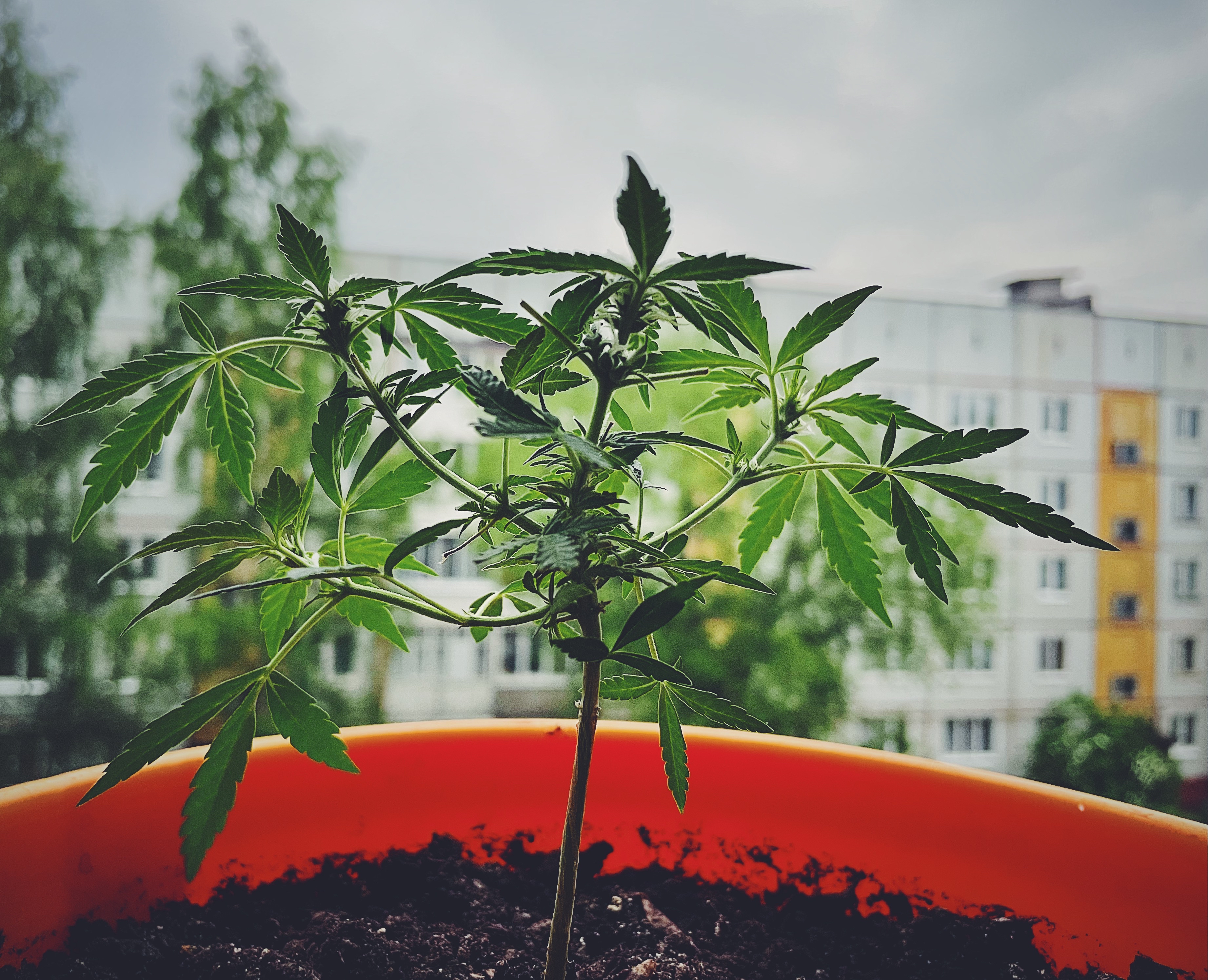
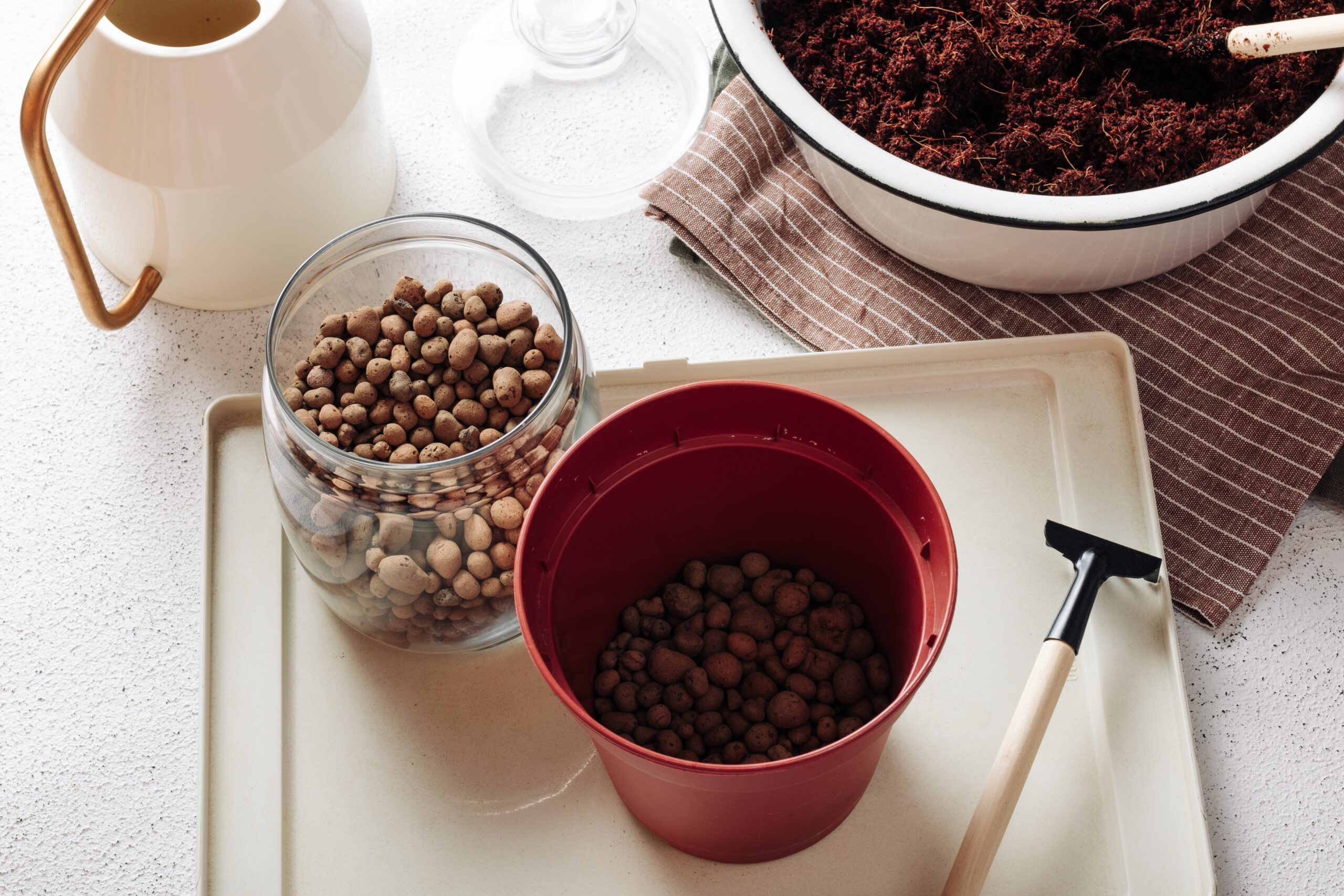
Putting gravel, pebbles, clay balls, or broken pottery in the bottom of a cannabis container does not turn a poor potting mix into a well-drained root zone. It cannot replace drainage holes, it does not prevent overwatering, and it takes away space that roots could have used. In an ordinary top-watered pot, the dependable solution is a suitable container, an evenly structured growing medium, and irrigation that matches the plant.
The old gravel trick feels convincing because water runs quickly through a handful of stones. A planted container is more complicated. The important question is not how quickly water moves through bare gravel. It is how water and air behave inside the fine-pored medium above it, especially after irrigation stops and gravity has removed everything it can.
Important: A drainage layer is not a drainage hole. If a container has no safe route for excess water to leave, gravel simply creates a hidden wet space inside a closed pot.
Why the Gravel Layer Sounds So Logical
Imagine pouring water onto a driveway covered with loose stone. It disappears between the rocks almost immediately. Now picture the same rocks below a potting mix. It is natural to assume that they will pull water downward, keep the mix above them dry, and protect the roots. That simple picture has kept the practice alive for generations.
Three observations make the idea look even more believable:
- Large gaps between stones can carry free water rapidly.
- A gravel layer is easy to see, while the air-water balance inside a substrate is invisible.
- A pot with less growing medium may weigh less after drainage, which can look like proof that the root zone improved.
None of those observations tells us whether the remaining root zone contains enough oxygen. Water must first leave the smaller pores of the potting mix and cross an abrupt interface into much larger pores. That transition is the part the familiar explanation misses.
What is container capacity?
Container capacity is the amount of water a growing medium retains after it has been saturated and allowed to drain freely. It is not the same as the amount of water poured into the pot, and it does not tell us by itself how much of the remaining pore space contains air.
What Happens at the Potting Mix and Gravel Boundary
A container medium contains pores of many sizes. Large pores lose water readily and refill with air. Smaller pores hold water more strongly through capillary forces. After a thorough irrigation, gravity pulls mobile water downward, but some water remains because capillary forces in the medium balance the downward pull.
When fine-pored potting mix sits directly over coarse gravel, the pore pattern changes suddenly. Water in the finer layer may not enter the much larger, air-filled pores below until the upper material becomes wet enough to overcome the capillary barrier at that interface. The result can be a wetter band of medium immediately above the stones. Traditional horticultural guidance describes this as moving the saturated or near-saturated zone upward into the root space.
What is a perched water table in a pot?
It is the wettest zone that remains near the bottom of a container medium after free drainage. Its depth depends heavily on the medium and its pore structure. In a layered pot, a wet zone can also form above the boundary between unlike materials.
The word perched does not mean water floats magically above the gravel forever. Water still crosses the boundary when the hydraulic conditions allow it, and roots, evaporation, irrigation rate, compaction, and time all change the profile. The useful lesson is simpler: a layer of stones is not a pump. It cannot pull the upper mix dry on command.
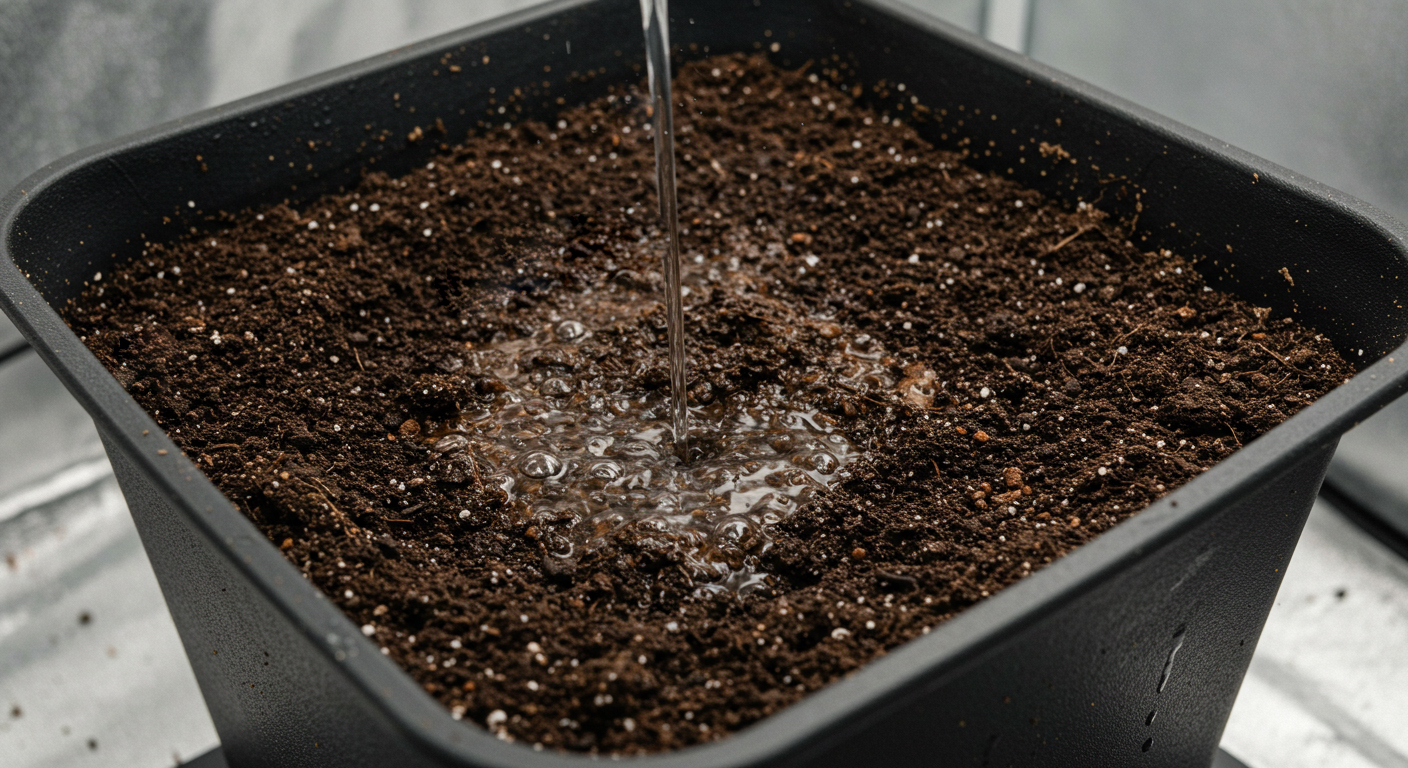
Remember: The bottom of a pot is not either “drained” or “undrained.” Moisture and air change continuously from the bottom of the medium to the top.
The Important 2025 Study That Changed the Conversation
For years, advice against gravel layers relied mainly on established soil-water physics, demonstrations, and related container research. In 2025, a peer-reviewed experiment directly compared drainage-layer materials, layer depths, and three potting media after saturation and free drainage. Its result deserves an honest place in this discussion.
In that experiment, almost all tested drainage layers reduced total water retention in the containers filled with loamless organic media. Most layers had little effect on overall retention in the loam-based media. The author’s models also estimated that several layers reduced water held in the medium above them. A thicker layer was generally more effective than a thinner one, and coarse sand performed more consistently than the other tested materials.
Does that prove that every cannabis grower should put gravel in every pot? No. The study measured water retention after saturation and drainage. It did not grow plants, measure root oxygen through a crop cycle, compare harvests, track salt distribution, or show that a random gravel layer outperforms a correctly formulated medium occupying the full container. It also found that the outcome depended on both the upper medium and the lower material.
This is where headlines can cause trouble. “A layer retained less water” is not the same statement as “gravel is the best way to improve a cannabis root zone.” A stone layer still removes root volume, cannot repair missing holes, and adds another variable that is difficult to reproduce. Modern stratified substrates can be engineered deliberately, but that is different from adding whatever rocks happen to be available.
Weedth Grower Note: Good cultivation advice should change when evidence changes. The newer evidence makes the physics more nuanced, but it does not make a gravel layer the most predictable first choice for an ordinary cannabis container.
| Claim | What the evidence supports | Practical meaning |
|---|---|---|
| “Gravel always makes a pot hold more water.” | Too absolute. The 2025 container experiment found that many tested layers reduced total retention, especially in loamless organic media. | Do not repeat the old warning as a universal law. |
| “Gravel solves poor drainage.” | Not supported. Outcomes depend on medium, layer material, depth, pot design, and irrigation. Plant performance was not tested in that study. | Fix the whole root-zone system rather than trusting one layer. |
| “A gravel layer replaces holes.” | False. Water still needs an outlet from an ordinary top-watered container. | Use a pot with functional drainage holes or a properly engineered reservoir system. |
| “Layered substrates can never work.” | False. Purpose-designed substrate stratification has produced useful water and growth outcomes in nursery research. | Engineered layers are a technical system, not proof that random stones are ideal. |
Why Gravel Is Still a Poor First Fix for Cannabis Containers
It does not create an exit
A closed pot remains a closed pot. Once the gravel voids fill, excess irrigation water has nowhere to go. Roots can still sit above a reservoir of stagnant water, and the grower may not see the problem until odor, wilting, slow growth, or root damage appears.
It reduces usable root volume
A 5-centimeter stone layer in a modest pot may remove a meaningful share of the substrate column. That matters because container height influences the balance between air-filled and water-filled pores. Replacing the lowest part of the root zone with stones does not give the plant a larger home. It gives the plant a shorter column of usable medium.
It cannot correct a compacted or overly fine mix
If the upper medium has collapsed, contains too many fines, or was packed tightly, water distribution and gas exchange remain limited above the gravel. The problem is inside the root zone, so the correction also needs to happen inside the root zone.
It hides useful clues
Growers often judge drainage by the first drops leaving the pot. Water can channel down the wall, pass through one crack, and appear quickly even while much of the medium remains dry or saturated. A hidden stone layer makes the flow path harder to interpret. Pot weight, moisture at depth, irrigation uniformity, and the plant’s response tell us more.
It may add weight, contamination, and cleaning work
Heavy stone is inconvenient when plants must be moved. Outdoor gravel may carry fine sediment, salts, residues, pests, or pathogens. Limestone-rich material can also interact with irrigation chemistry over time. Unknown material collected from a roadside, construction area, shoreline, or treated landscape does not belong in a controlled root zone.
Do not bring unknown outdoor aggregate into the grow
Loose stone can carry dust, salts, herbicide residue, petroleum contamination, pests, or disease material. If an engineered system requires mineral aggregate, use a clean horticultural product with known properties and rinse it according to its intended use.
Drainage, Aeration, and Drying Rate Are Not the Same Thing
These words are often used as if they describe one process. They do not. Separating them makes container decisions much easier.
| Root-zone property | What it describes | What improves it | What can mislead you |
|---|---|---|---|
| Drainage | Movement of free water through the medium and out of the container. | Functional outlets, suitable pore structure, no blocked base, and a manageable irrigation volume. | Seeing runoff quickly through a channel. |
| Aeration | The air-filled pore space and gas exchange available to roots after watering. | Stable coarse pores distributed through the medium, limited compaction, and healthy structure. | Assuming a light potting mix is automatically airy after repeated irrigations. |
| Drying rate | How quickly the container loses water through plant use, evaporation, and drainage. | A correctly sized canopy, airflow, appropriate temperature, container surface area, and irrigation timing. | Treating fast drying as proof of healthy roots. |
| Water distribution | How evenly irrigation rewets the root ball. | Slow, staged application and a medium that readily accepts water. | Measuring runoff without checking dry pockets. |
Cannabis roots need both water and oxygen. A mix that drains so rapidly that it develops dry pockets can be just as difficult to manage as one that remains saturated. The goal is not the driest possible pot. The goal is a repeatable air-water balance that matches container size, plant size, climate, and the grower’s irrigation routine.
What Actually Improves Container Drainage
Start with functional drainage holes
For a conventional top-watered pot, outlets are non-negotiable. They must be open, positioned where water can leave, and numerous enough that one blocked point does not trap the entire irrigation. A molded plug that was never removed can make a purpose-built pot behave like a sealed bucket.
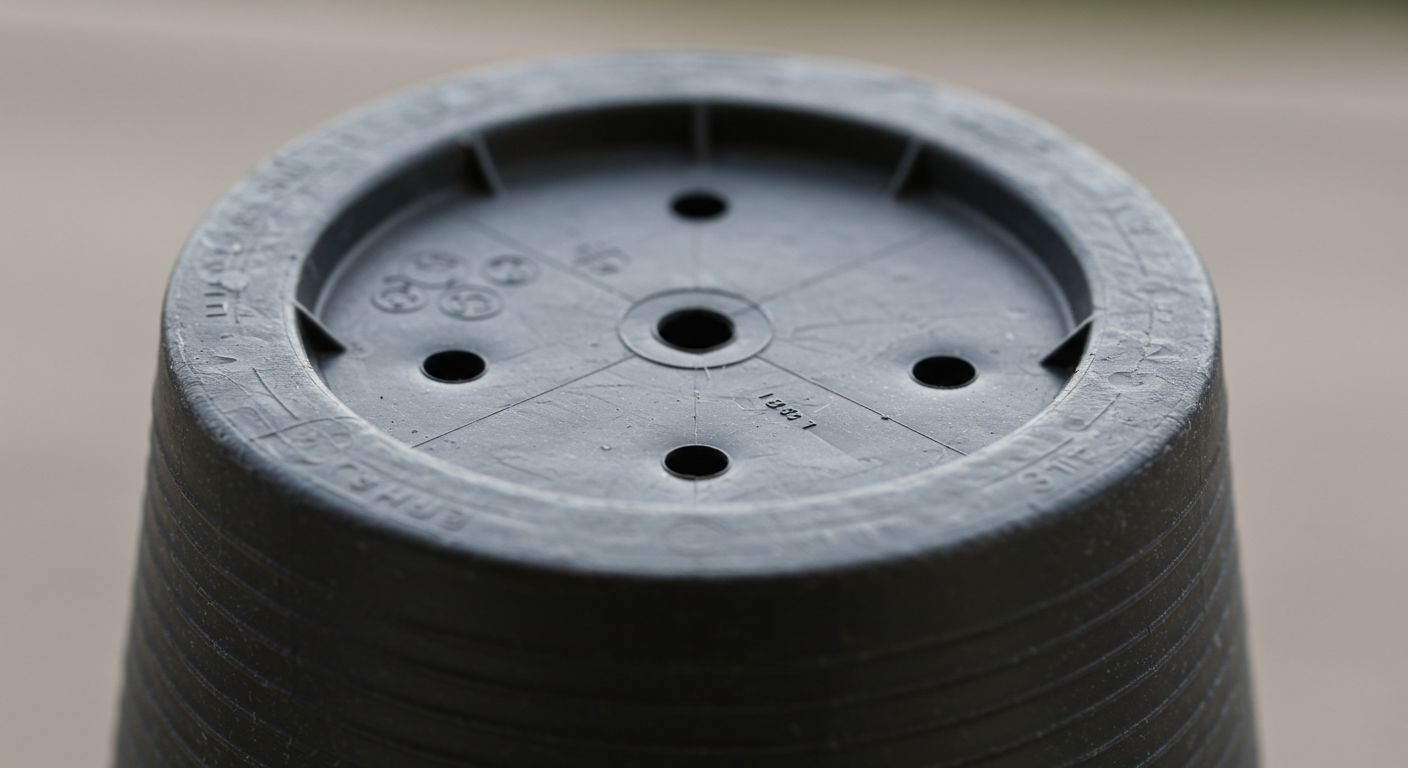
A pot sitting flat in a tight saucer may seal some holes. Raise it on pot feet, a rigid grate, or a clean platform when necessary, and remove collected runoff. Elevating the pot does not change the internal medium, but it can prevent the exterior surface from blocking the outlet.
Use a medium with stable structure throughout the pot
The most predictable approach is to distribute the desired pore structure through the entire root zone. Perlite, pumice, processed bark, rice hulls, and other components can alter air space, water retention, bulk density, and stability when blended correctly. No ingredient is a magic percentage. Particle size, fines, source material, decomposition, and the rest of the recipe all matter.
If a commercial mix already contains a balanced fraction of coarse material, adding more can make it dry too quickly. Test a small batch before changing every container. Wet the mix, let it drain, check how easily it rewets, and compare its weight over several days.
Pro Tip: Measure amendments by volume, not by handful. A repeatable recipe is easier to diagnose than a different mix in every pot.
Choose enough container height
With the same growing medium, a taller substrate column generally contains a larger proportion of air-filled space after drainage than a shallow one. That does not mean tall, narrow pots are always best. They can tip, dry unevenly, or restrict the shape of the root system. It means container height is a real hydraulic variable, not just a styling choice.
Avoid packing the medium
Pressing the mix firmly around a transplant can destroy the larger pores you paid for. Fill evenly, settle the container gently, and water it in. Allow the medium to find its working density rather than compressing it into a solid plug.
Match irrigation to the root ball
A small plant in a large container uses water slowly. Repeated full-volume irrigation can keep the lower profile wet for too long even when the pot has excellent holes. A mature plant with a dense canopy may empty the same container quickly. Water according to current demand, not according to a permanent calendar.
Improve the whole root zone
Use a proven medium, open outlets, suitable container height, gentle filling, slow irrigation, and enough time for the pot to lose moisture before watering again.
Treating gravel as insurance
Do not use a bottom layer to compensate for a sealed pot, dense soil, oversized container, blocked saucer, or irrigation that repeatedly exceeds plant demand.
A Stone Over One Hole Is Not a Gravel Layer
A single curved pot shard, a small piece of rigid mesh, or another durable cover may be placed loosely over an unusually large hole to slow the loss of fresh medium. It should not seal the opening, and it should not become a full layer. In many nursery pots, no cover is necessary because only a small amount of mix escapes during the first irrigations.
Paper coffee filters and fine fabric are popular recommendations, but they can slow flow, stay wet, break down, or collect fine particles. If containment is genuinely needed, use the smallest practical piece of durable, open mesh and confirm that water still leaves freely.
Advice: Losing a spoonful of fresh mix is usually safer than turning a large drainage opening into a finely filtered outlet that becomes easier to clog.
Gravel, Perlite, Pumice, and Clay Pebbles: The Role Matters
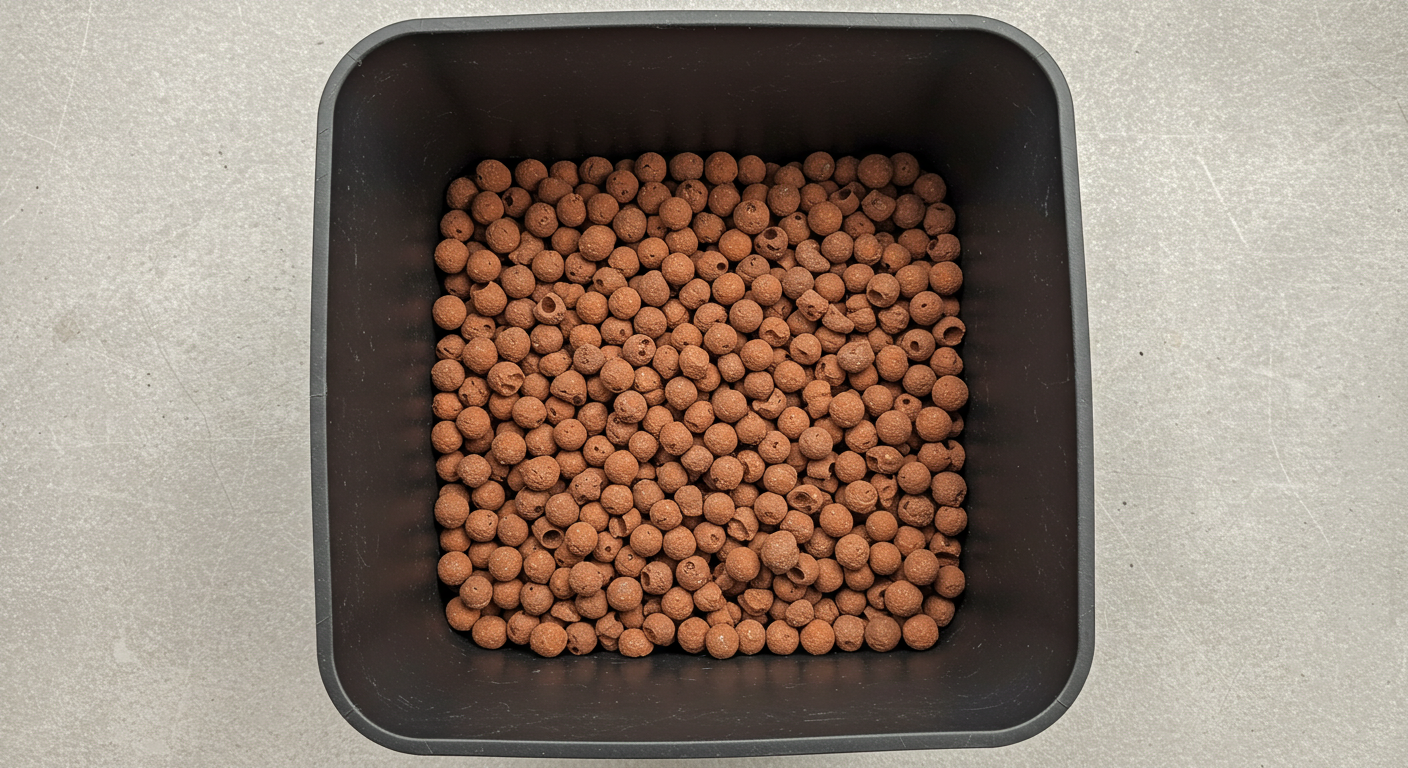
Two growers can use the same mineral material and create completely different systems. Pumice mixed through a peat-based medium changes the pore network around the roots. Pumice placed as a solid bottom layer creates an interface and removes root volume. Clay pebbles in a recirculating hydroponic system act as the primary support medium, not as a decorative layer beneath soil.
| Material or use | Primary function | Air and water effect | Best use | Caution |
|---|---|---|---|---|
| Gravel bottom layer | Ballast or attempted drainage layer | Creates a coarse interface; outcome varies with the upper medium and layer | Ballast outside the root container or below an engineered false bottom | Does not replace outlets and reduces root volume |
| Perlite blended through mix | Low-density structural amendment | Can increase coarse pore space when grade and proportion are suitable | Evenly formulated soilless media | Fine grades and crushed particles behave differently; dust requires care |
| Pumice blended through mix | Stable mineral structure | Adds durable pores while retaining some water on particle surfaces | Reusable or structure-focused container media | Heavy and variable in grade |
| Clay pebbles as hydro medium | Root support in an engineered irrigation system | Large pores and low capillary storage require frequent, controlled delivery | Purpose-built hydroponic systems | Not proof that a few centimeters below potting mix fixes drainage |
| Coarse bark lower stratum | Engineered substrate stratification | Can redistribute air and water when paired with a tested upper layer and irrigation plan | Designed nursery or research-informed systems | Results cannot be assumed for random materials and recipes |
What About Self-Watering Pots and Reservoir Planters?
A self-watering container deliberately stores water below the root medium. A wick, soil column, or capillary insert carries water upward while an overflow sets the reservoir’s maximum level and an air gap helps separate bulk water from much of the root zone. This is not an ordinary sealed pot with stones at the bottom.
These systems work only when their parts work together:
- The overflow must remain open.
- The wick or wicking column must make reliable contact with the medium.
- The mix must have enough capillary continuity to move water upward without becoming airless.
- The reservoir must be cleaned and monitored.
- Fertilizer concentration and salt movement must be managed for bottom-fed irrigation.
Similarly, large architectural planters, green roofs, and bioretention systems may use filter fabrics, drainage cells, aggregate beds, and underdrains. Their dimensions and hydraulic functions are engineered. Their existence does not validate a loose handful of stones in a standard cannabis pot.
How to Fix a Container That Already Has Gravel
Do not repot a healthy plant simply because you discovered stones at the bottom. Repotting is a stress event, and the risk may be greater than the benefit if the plant is growing well, the pot drains, and irrigation is under control. First observe the system you actually have.
Step 1: Confirm that water can leave
Lift the pot from its saucer or tray and inspect the base. Make sure holes are open and that the pot is not sitting in standing runoff. If roots have formed a dense mat across the holes, consider whether the plant is ready for a larger container.
Step 2: Compare wet and dry weight
Water evenly, allow free drainage, and learn the weight of the container at that point. Check it again as the plant uses water. Weight is not a universal moisture meter, but the trend helps reveal whether the pot remains heavy for an unusually long time.
Step 3: Check more than the surface
The top layer can look dry while the lower profile is still wet. Use a clean probe, a calibrated sensor, or careful observation through accessible holes. Do not repeatedly stab the center of a dense root ball.
Step 4: Adjust irrigation before disturbing roots
Slow the application, reduce unnecessary frequency, empty runoff, and restore airflow around the container. If the plant improves and the medium follows a healthy wet-to-dry rhythm, an emergency transplant may not be necessary.
Step 5: Repot when the evidence supports it
Consider transplanting when the medium remains persistently saturated, has collapsed, smells anaerobic, the outlets cannot be restored, roots show clear damage, or the container no longer fits the plant. Prepare the replacement pot and medium first. Support the root ball, remove loose stones without tearing healthy roots, and avoid aggressive washing unless a diagnosed problem requires it.
Do not drill blindly into a planted container
A drill can tear roots, strike a hidden support, damage a floor, or contact water near electrical equipment. Move the plant to a safe work area and use a method appropriate for the container material. When drilling cannot be done safely, transplant instead.
How to Diagnose a Pot That Stays Wet Too Long
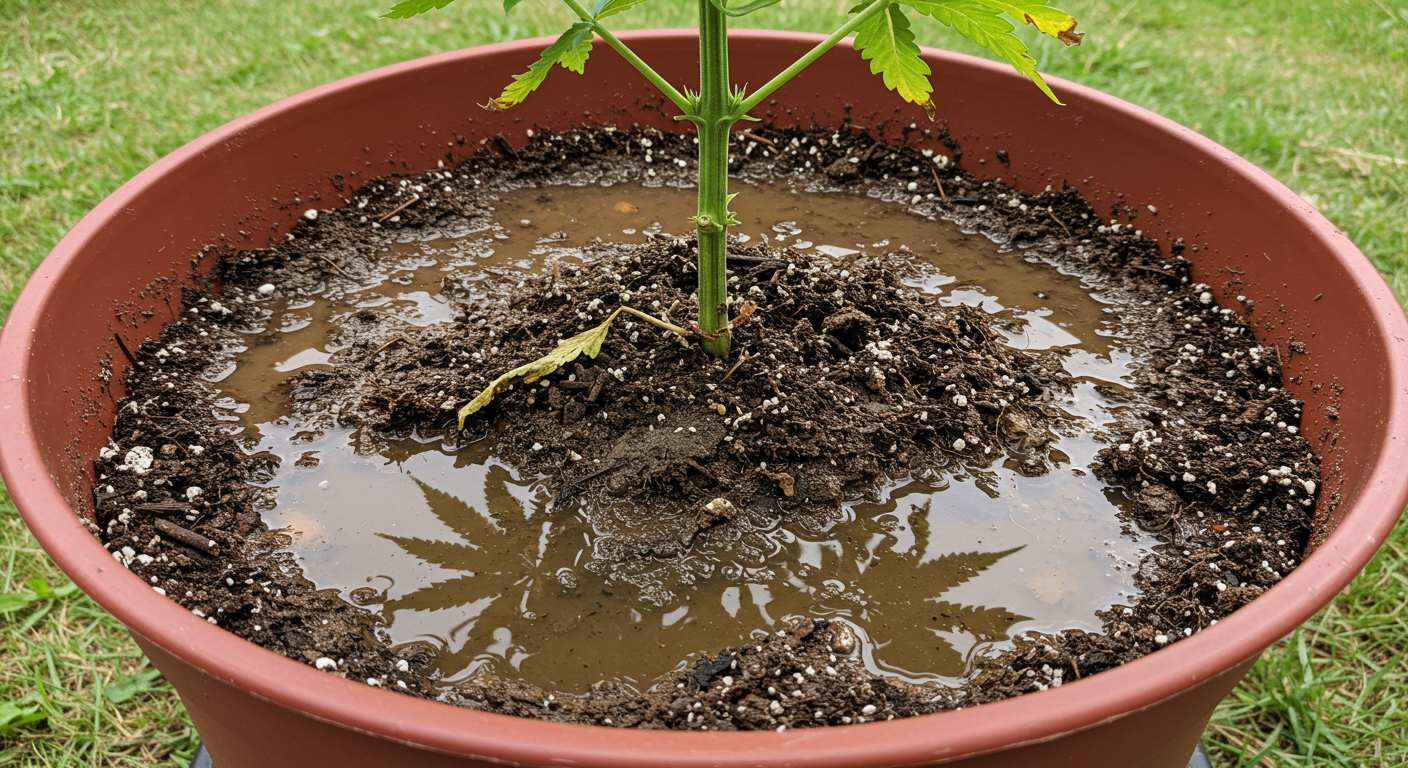
Gravel is only one possible detail. A slow-drying container may reflect a small root system, cool conditions, low airflow, a large pot, a dense mix, high humidity, poor outlets, a water-filled saucer, root damage, or several of these at once.
| Observation | Possible cause | How to confirm | Corrective action | Prevention |
|---|---|---|---|---|
| Runoff appears immediately but the center stays dry | Channeling, hydrophobic peat, or compacted root ball | Probe several depths and compare center moisture with the pot wall | Apply slowly in stages and rewet evenly | Do not let peat-based media become extremely dry; irrigate across the surface |
| Pot remains heavy and leaves wilt | Low root-zone oxygen, root disease, low plant demand, or blocked drainage | Inspect outlets, smell, root color, temperature, and recent irrigation | Stop automatic watering, remove standing runoff, restore drainage, and diagnose roots | Size pots and irrigation to the current plant |
| Only one side stays wet | Uneven application, tilted container, local compaction, or root distribution | Check level, emitter pattern, and moisture at matching depths | Level the pot and correct application before changing the recipe | Test distribution and rotate only when the lighting plan allows |
| Drainage slows over time | Settling, decomposition, root mat, fine-particle migration, or salt buildup | Compare records, inspect outlets, and evaluate the root ball at transplant | Correct blockage or move into fresh, stable medium when appropriate | Use stable components and avoid packing |
Master Advice: Change one major variable at a time. Replacing the medium, drilling the pot, increasing airflow, and cutting irrigation on the same day makes it difficult to learn what actually solved the problem.
A Simple Side-by-Side Drainage Test
If you want to understand a proposed setup before trusting a valuable plant to it, run a small comparison. This is not a laboratory measurement, but it can reveal obvious differences in retention, rewetting, and handling.
- Choose matching containers. Use the same height, diameter, hole pattern, and material.
- Prepare matching media. Measure by volume and keep compaction as consistent as possible.
- Create one changed variable. For example, use the full medium in one pot and a measured gravel layer in the other.
- Record dry weight. Include the empty pot and every material.
- Saturate consistently. Apply the same water volume and rate, then allow both pots to drain on the same open grate.
- Record drained weight. Measure after visible drainage has stopped and again at planned intervals.
- Check the profile. Compare moisture near the top, center, lower medium, and interface.
- Repeat. One irrigation may expose assembly error rather than a reliable pattern.
Do not call the lighter pot the winner automatically. A setup that retains less water may also contain less root medium, rewet unevenly, or demand more frequent irrigation. The best result is the one that gives the future plant a manageable balance of water, air, and root volume.
Common Gravel and Container Drainage Questions
Should I put rocks in the bottom of a cannabis pot?
For an ordinary soil or soilless container, there is usually no good reason to add a rock layer for drainage. Use functional holes and a suitable medium through the full root depth. If weight is needed for stability, add external ballast or use a stable outer container without blocking the inner pot’s outlets.
Does gravel help if my pot has no holes?
No. It creates storage space, not drainage. Use a removable nursery pot with holes inside the decorative container, empty the outer pot after watering, or choose a purpose-built self-watering design with an overflow.
Can gravel prevent root rot?
No single layer prevents root disease. Healthy roots depend on oxygen, sanitation, suitable temperatures, irrigation timing, drainage, and the absence of destructive pathogens. Visibly rotten roots require diagnosis, not more stones.
Can I use sand instead of gravel?
A coarse sand layer produced notable results in the 2025 water-retention experiment, but sand is not one universal material. Grain size, fines, mineral chemistry, layer depth, upper medium, and irrigation all affect the outcome. Fine sand mixed carelessly into an organic medium can fill pores and make the blend denser.
Is a layer of perlite at the bottom better?
It is still a separate layer. Perlite normally gives a more predictable benefit when the correct grade and amount are blended evenly through a compatible medium. A bottom layer also tends to float and migrate during handling and irrigation.
What if gravel stops potting mix from washing out?
A full layer is unnecessary. Use a small piece of open mesh or one loose shard over an unusually large opening, or accept the small initial loss of mix. Never seal the hole.
Are fabric pots automatically safe from poor drainage?
No. Fabric increases exposed surface area and can support air pruning, but a fabric pot can still sit in runoff, contain a dense medium, dry unevenly, or be watered more often than the plant can use. The whole system still matters.
Can I leave an existing gravel layer until harvest?
Yes, if the plant is healthy, water exits freely, and the wet-to-dry pattern is manageable. Monitor it. Repot when the observed root-zone risk outweighs transplant stress, not because a rule says every stone is an emergency.
Why does the pot drain quickly but stay wet for days?
The first runoff may be channel flow. The bulk of the medium can still retain substantial water, especially with a small plant, cool root zone, limited airflow, or compacted mix. Check weight and moisture at depth instead of timing only the first drip.
Do more drainage holes always improve the root zone?
More open outlet area helps when existing holes are insufficient or blocked, but holes cannot transform the pore structure above them. Once outlets are adequate, the medium and irrigation practice become the stronger controls.
Before filling a cannabis container
- Confirm cultivation is lawful where you live.
- Use a container with open, safely positioned drainage holes.
- Make sure the base will not sit sealed against a tray or floor.
- Choose a medium designed for containers, not unknown outdoor soil.
- Distribute structural amendments through the mix when the recipe calls for them.
- Do not pack the medium tightly.
- Match pot size to the current root system and your irrigation routine.
- Test how the filled pot wets, drains, and changes weight.
- Empty standing runoff unless the system is intentionally designed to use a reservoir.
- Record changes so the next container is easier to improve.
The Weedth Answer
Gravel does not provide the kind of reliable container drainage most growers think they are buying. It cannot replace holes, repair a dense medium, or protect a plant from excessive irrigation. Traditional container physics explains why a coarse interface can hold a wetter zone above it, while newer experimental evidence shows that some drainage layers can reduce measured water retention under specific conditions. Both points can be true.
For a normal cannabis pot, the clearer and more repeatable choice is still to give the roots the full container: open outlets, a stable medium with the right pore balance throughout, adequate height, and irrigation based on actual plant demand. If you intentionally build a stratified or reservoir system, treat it as an engineered design and test it as one. Do not ask a handful of stones to solve five different root-zone problems.
Scientific and Official References
- Rowe, A. (2025). Effect of drainage layers on water retention of potting media in containers. PLOS ONE, 20(2), e0318716.
- University of California Agriculture and Natural Resources. Drainage in Containers.
- Purdue University Extension. Evaluating Container Substrates and Their Components.
- University of Massachusetts Amherst. Effects of Growing Media on Water and Nutrient Management.
- Criscione, K. S., Fields, J. S., Owen, J. S., Fultz, L., & Bush, E. (2022). Evaluating stratified substrates effect on containerized crop growth under varied irrigation strategies. HortScience, 57(3), 400–413.
- Virginia Cooperative Extension. Container and Raised-Bed Gardening.
- Rutgers New Jersey Agricultural Experiment Station. Container Nursery Agricultural Management Practices Guide.
Share this article
A quick overview of the topics covered in this article.
- Why the Gravel Layer Sounds So Logical
- What Happens at the Potting Mix and Gravel Boundary
- The Important 2025 Study That Changed the Conversation
- Why Gravel Is Still a Poor First Fix for Cannabis Containers
- Drainage, Aeration, and Drying Rate Are Not the Same Thing
- What Actually Improves Container Drainage
- A Stone Over One Hole Is Not a Gravel Layer
- Gravel, Perlite, Pumice, and Clay Pebbles: The Role Matters
- What About Self-Watering Pots and Reservoir Planters?
- How to Fix a Container That Already Has Gravel
- How to Diagnose a Pot That Stays Wet Too Long
- A Simple Side-by-Side Drainage Test
- Common Gravel and Container Drainage Questions
- The Weedth Answer
- Scientific and Official References
Follow us
Latest articles

August 3, 2026
August 3, 2026
August 3, 2026
August 3, 2026