Cannabis Soil and Growing Media: A Complete Guide to Healthier Roots, Better Buds, and Cleaner Flavor
Before You Start
Is This Guide Right for You?
This guide is for growers who want to choose, build, or troubleshoot a cannabis soil instead of trusting a bag label and hoping the roots agree.
If this is your first grow and soil is only one of many new decisions, start with Grow Basics. If you are comparing soil with coco, peat, rockwool, or other indoor options, read Indoor Grow Mediums next.
Good cannabis starts below the surface.
Most growers look at leaves first. They notice yellowing, burnt tips, drooping, slow growth, thin stems, weak flowers, or poor aroma and they immediately think about nutrients, light, or genetics. Sometimes they are right. But very often, the real story begins inside the root zone.
The soil or growing medium is not just something that holds the plant upright. It controls how roots breathe, how water moves, how nutrients become available, how microbes interact with the plant, and how much stress the plant carries into flowering.
If the root zone is wrong, the plant may still survive, but it rarely expresses its best bud quality.
This is why soil and media choice matters so much in cannabis cultivation. A good medium supports root health and steady nutrient uptake. A poor medium creates hidden stress that can later show up as weak growth, nutrient lockout, harsh smoke, muted aroma, or inconsistent flower development.
The goal is not to say soil is always better than coco, coco is always better than soil, or hydro is only for experts. Each medium can produce excellent cannabis when it matches the grower’s skill, environment, watering style, and quality goals.
The better question is simple:
What kind of root environment are you creating, and does it support the result you want?
If you want a forgiving first grow, a light cannabis-friendly soil may be the easiest path. If you want faster growth and more control, coco can be excellent. If you want a biological system focused on aroma, smoothness, and long-term soil health, living soil becomes more interesting. If you want maximum technical control, hydroponics can work, but it demands discipline.
The medium does not grow the plant by itself. It creates the conditions that allow the roots to do their work.
The Root Zone Comes First
Cannabis roots do more than hold the plant in place. They absorb water and nutrients, exchange oxygen, interact with microbes, store energy, and help the plant respond to stress.
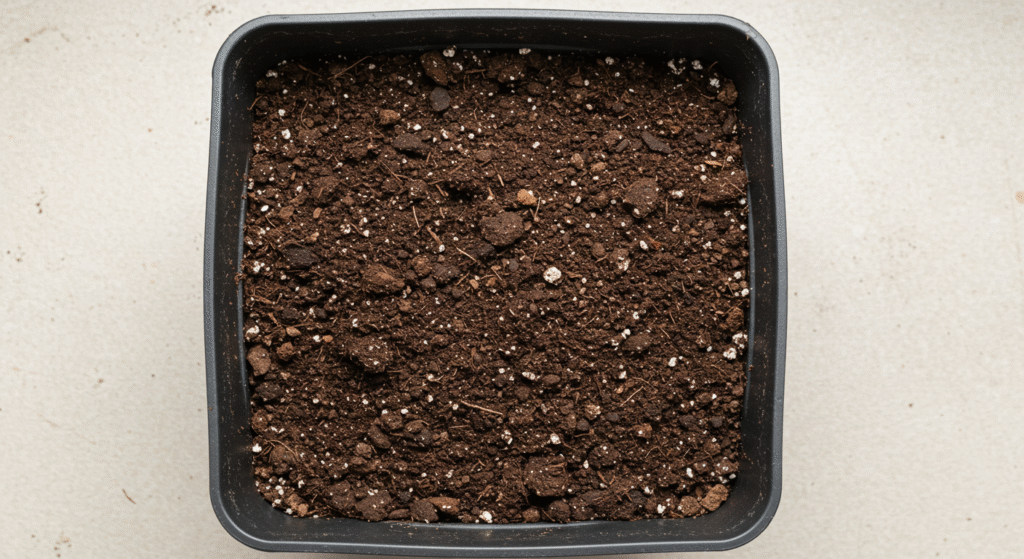
A healthy root zone gives cannabis four things at the same time:
- Enough water to keep growth steady
- Enough oxygen to keep roots alive and active
- Nutrients in a form the plant can actually absorb
- A stable environment that does not swing wildly from wet to dry, hot to cold, or acidic to alkaline
When those parts are balanced, cannabis usually grows with better rhythm. Leaves stay more responsive. Watering becomes easier. Feeding becomes more predictable. Flowering tends to be cleaner because the plant is not fighting constant stress underground.
When the root zone is unbalanced, symptoms can appear everywhere. The plant may look hungry even when nutrients are present. Leaves may droop even when the pot is wet. Buds may form slowly. Aroma may stay flat. The grower may keep adding products, but the real issue may be compact soil, poor drainage, high salt levels, low oxygen, root temperature stress, or pH drift.
Before adding more nutrients, always ask what the roots are experiencing.
This one habit prevents many common cannabis problems.
Question From Growers: “My plant looks hungry, but the pot is still wet. Should I feed more?”
This is one of the most common traps in cannabis growing. A plant can look pale, slow, or weak when the roots are sitting in a wet and oxygen-poor medium. The grower sees yellowing and thinks the plant needs food. Then more nutrients are added to a root zone that is already struggling.
The better move is to check the condition first. Is the pot heavy? Does the soil stay wet for days? Is there poor airflow around the container? Are fungus gnats appearing near the soil surface? Did the symptoms begin after heavy watering rather than after a long period of underfeeding?
If the root zone is too wet, feeding more can make the problem worse. Wet roots do not absorb nutrients efficiently. In that case, the first correction is usually better drying, better aeration, better pot sizing, or better watering rhythm, not a stronger nutrient mix.
“Why does my plant look hungry when the pot still feels wet?”
Question sent by: Tyler Morgan, via Facebook page.
That usually points to a root-zone issue before it points to a feeding issue. When the medium stays wet too long, roots lose oxygen and the plant can act hungry even when nutrients are present.
Soil, Coco, Soilless, and Hydro: What Is the Difference?
Growers often use the word “soil” for anything inside a pot, but cannabis media are not all the same. True soil behaves differently from coco. Coco behaves differently from peat. Hydroponic media behave differently from all of them.
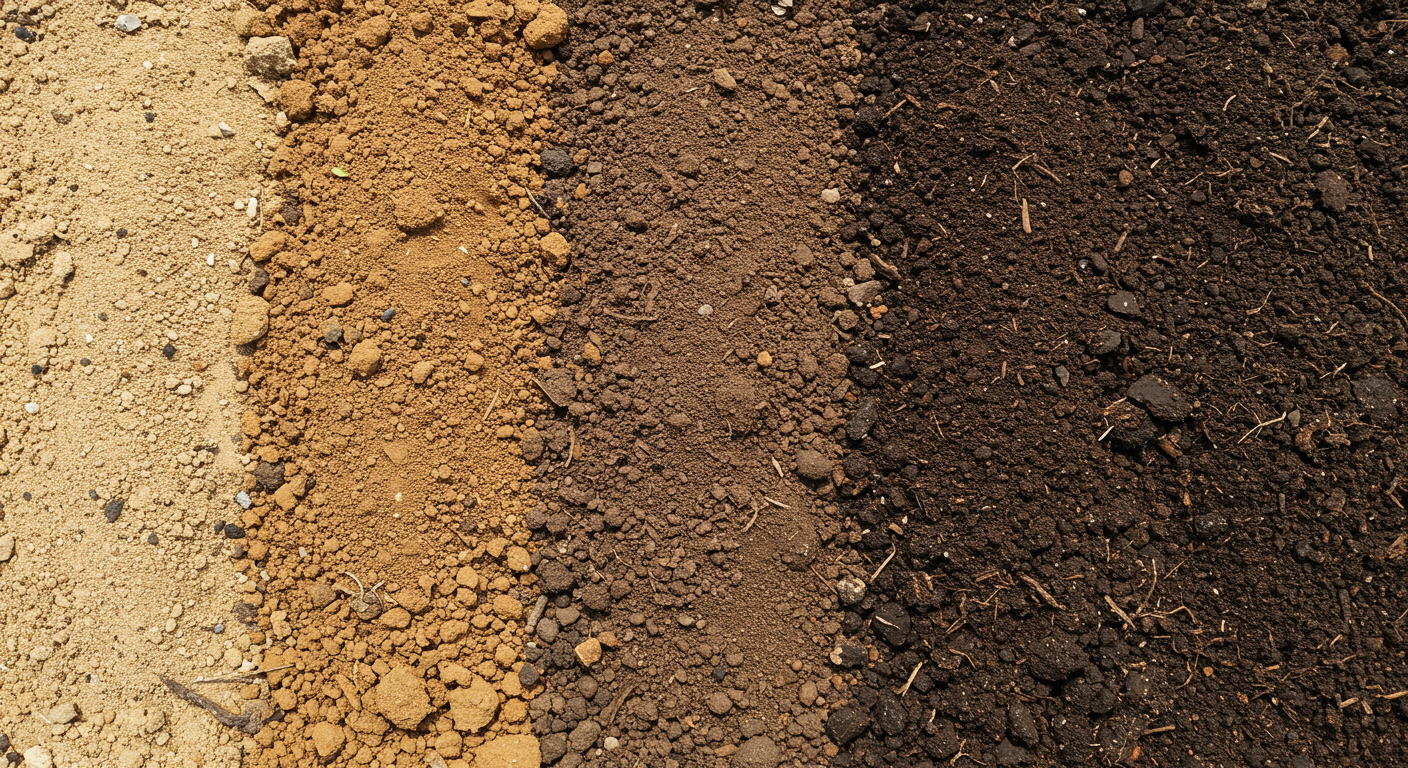
Understanding the difference helps you water correctly, feed correctly, and diagnose problems faster.
| Medium Type | What It Means | Best For | Main Strength | Main Risk |
|---|---|---|---|---|
| Soil | A mineral and organic medium with natural buffering | Beginners, outdoor grows, organic setups | More forgiving and familiar | Can become compact, wet, or too hot with nutrients |
| Living soil | A biologically active soil built around compost, microbes, minerals, and organic cycling | Flavor-focused growers and long-term soil systems | Strong soil life and natural nutrient cycling | Needs larger containers and better moisture control |
| Coco coir | Coconut fiber used as a soilless growing medium | Faster indoor growth and controlled feeding | Excellent air and water balance | Needs regular feeding, pH control, and calcium-magnesium awareness |
| Peat-based soilless mix | A light growing mix made from peat, perlite, lime, and often starter nutrients | Containers, seedlings, controlled indoor grows | Lightweight and easy to customize | Can dry out badly and may need pH buffering |
| Hydroponic media | Inert media that support roots while nutrients come from water | Advanced control and fast growth | Maximum control and speed | Small mistakes can become serious quickly |
There is no single best medium for every grower.
Soil is usually more forgiving. Coco is usually faster. Living soil is usually more biological. Hydro is usually more technical.
That simple difference should guide your decision before you buy a bag of medium or mix your own soil.
What Cannabis Needs From a Growing Medium
A good cannabis medium must do more than hold nutrients. It must create a breathable, stable, and recoverable root environment.
The best cannabis media usually share these qualities:
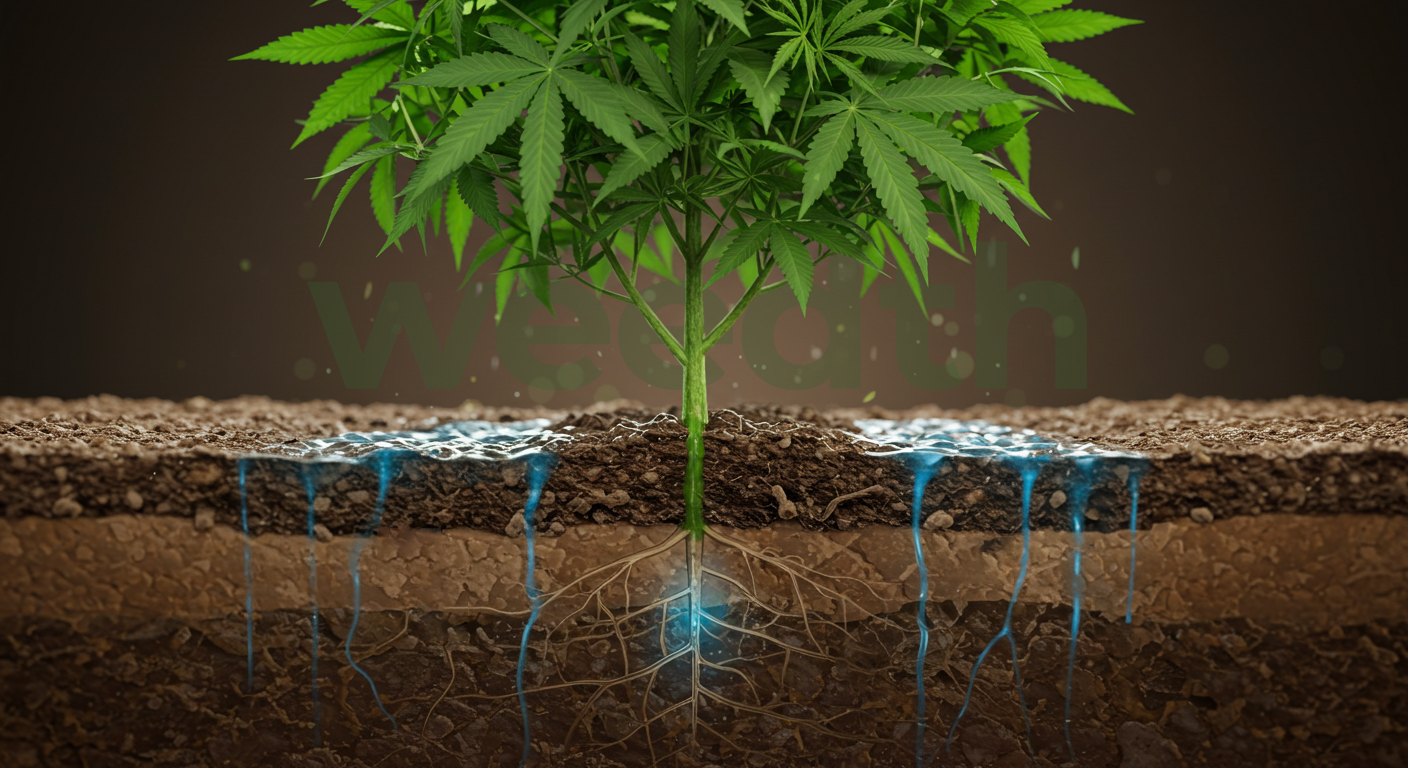
- Loose structure
- Good drainage
- Good moisture retention
- Enough oxygen around the roots
- Stable pH behavior
- Moderate nutrient strength
- Low contamination risk
- No unpredictable slow-release fertilizer pellets
- Enough structure to prevent compaction
A medium can look rich and still be wrong for cannabis. Heavy, wet soil may contain nutrients, but if roots cannot breathe, the plant cannot use them properly.
This is why many cannabis mixes include aeration materials such as perlite, pumice, rice hulls, lava rock, or coarse coco. They create small air spaces that keep oxygen available after watering.
Roots need oxygen as much as they need nutrients.
That sentence should stay in your mind whenever you choose soil, amend a mix, or water a plant.
Weedth Field Note: Do Not Judge Soil by How “Rich” It Looks
A dark, heavy, nutrient-loaded mix can look impressive in the bag, but seedlings and young plants do not need a powerful soil. They need a gentle start. If the mix is too strong, too wet, or too dense, the plant may fail before the grow really begins.
This is where many first grows go wrong. The grower buys the “best” or “richest” soil, plants a young seedling into it, and then watches the plant collapse. The problem is not always transplant shock. Sometimes the medium is simply too hot, too heavy, or too wet for a young cannabis root system.
A good seedling mix should feel light, mild, and breathable. It should not feel like a fully loaded flowering soil.
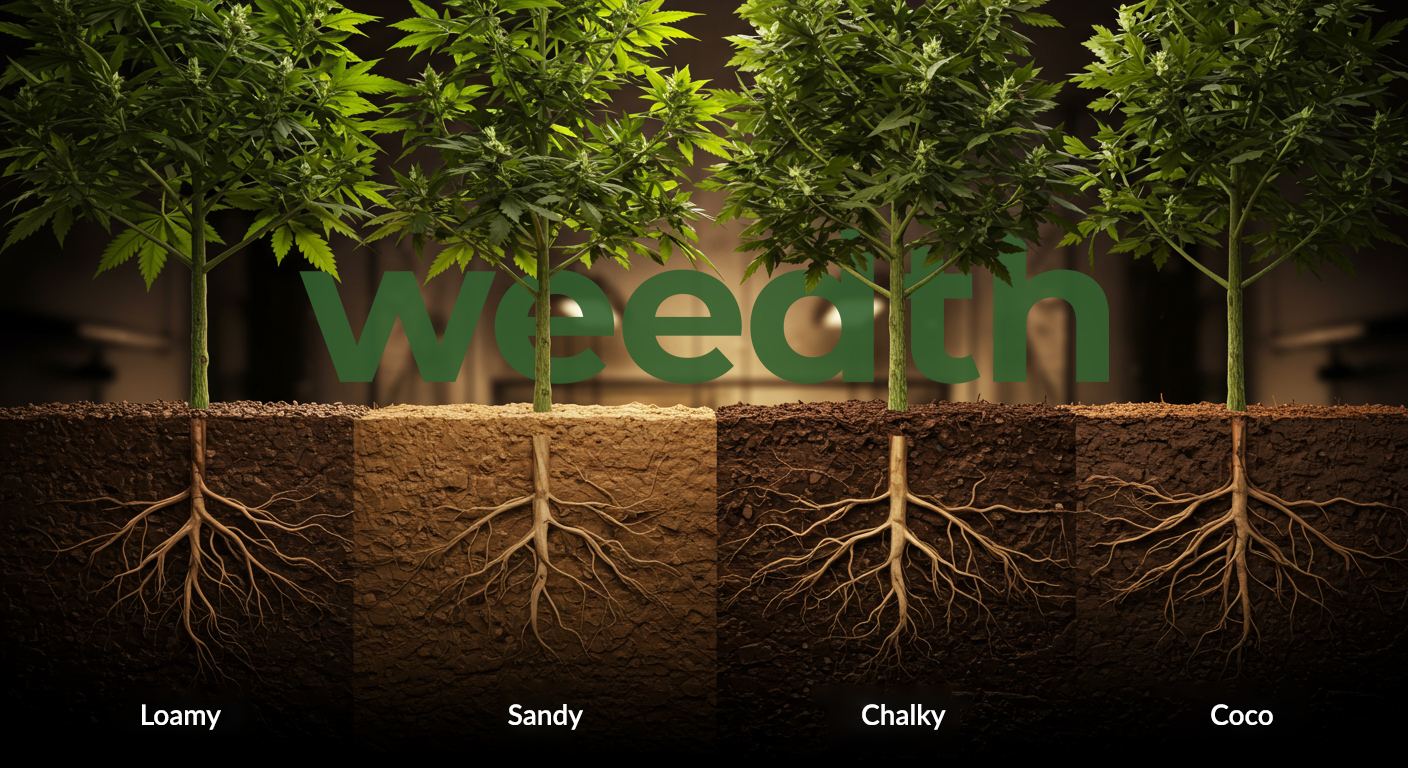
Soil Texture: Sand, Silt, Clay, and Loam
Natural soil is built from mineral particles, organic matter, water, air, and living organisms. The mineral part is usually described as sand, silt, and clay.
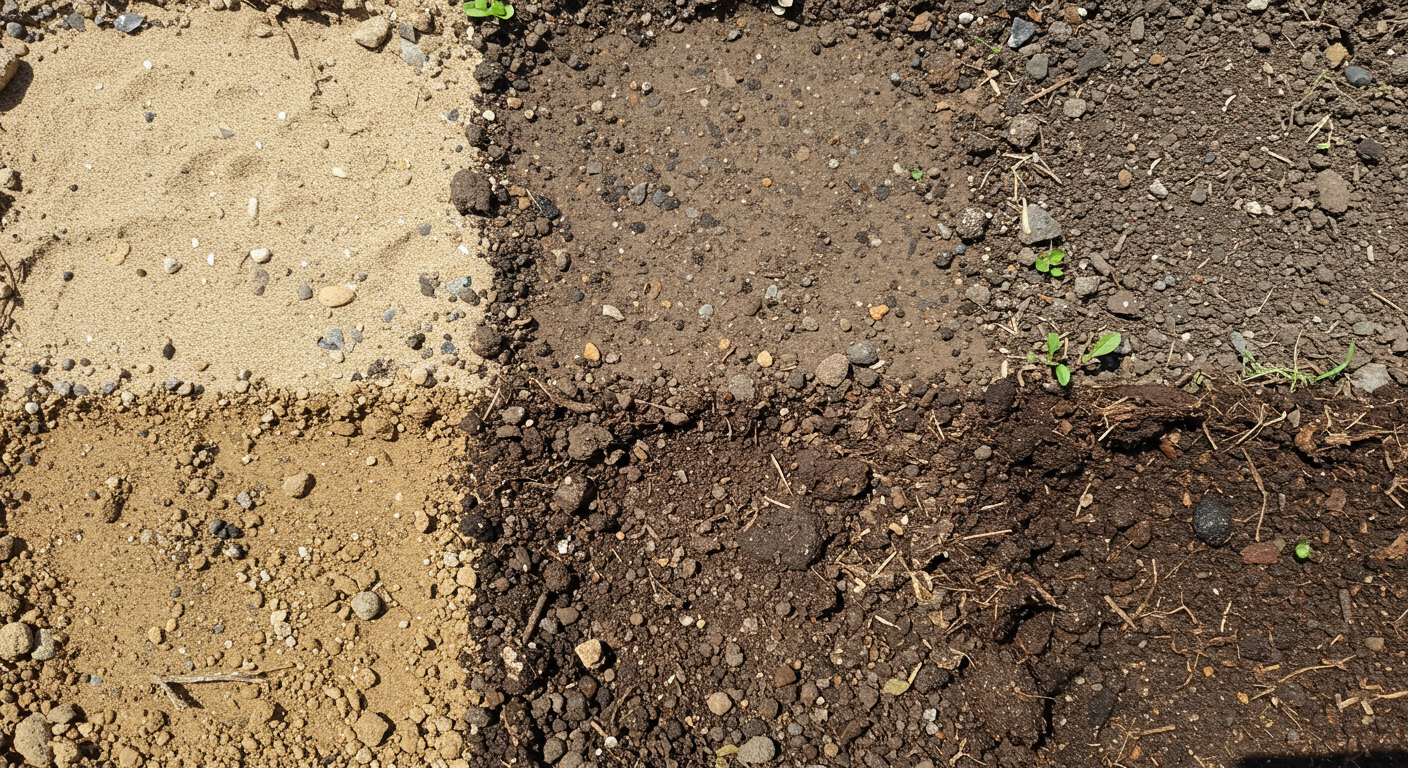
Sand has large particles. It drains quickly and brings oxygen into the root zone, but it does not hold nutrients well. Sandy soil can be useful when improved with compost and organic matter, but by itself it dries fast and needs more support.
Silt has finer particles. It can hold water and nutrients better than sand, but it may compact if it is not managed well. Compaction reduces oxygen around the roots.
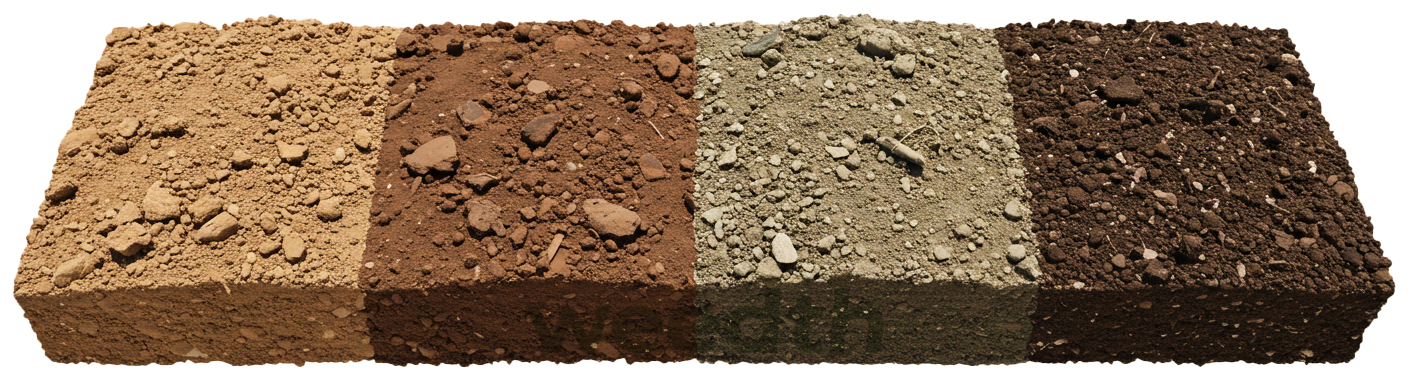
Clay has very fine particles and strong nutrient-holding ability. It can be fertile, but it often drains poorly. Heavy clay can suffocate cannabis roots and cause slow growth, especially in containers.
Loam is the balanced target. A loamy soil contains a healthy mix of sand, silt, clay, and organic matter. It drains better than clay, holds more nutrients than sand, and gives roots a more stable environment.
For cannabis, the ideal direction is usually loose, aerated loam with enough organic matter to hold moisture and nutrients without staying swampy.
Outdoor growers should pay close attention to native soil texture. Indoor growers should be careful with bagged soils that feel dense, muddy, or bark-heavy. A container is not the same as the ground. Soil that works in a garden bed may perform badly in a pot because drainage depth is limited.
Build structure before adding strength.
A good cannabis medium should hold shape, drain evenly, and leave air spaces after watering.
Do not confuse dense soil with rich soil.
A dark, heavy, compact mix can look fertile while quietly starving roots of oxygen.
Soil Structure and Aeration
Texture is about particle size. Structure is about how those particles hold together. Good cannabis soil forms small crumbs with pore spaces between them. Those spaces hold both air and water.
This is the balance cannabis roots want. After watering, the medium should hold moisture but still let air return to the root zone. If every pore fills with water and stays full, roots slow down. If the medium dries too fast, the plant becomes stressed and microbial activity suffers.
Aeration materials help protect that balance.
Common aeration amendments include:
- Perlite
- Pumice
- Rice hulls
- Lava rock
- Expanded clay pebbles
- Coarse coco chips
- Coarse horticultural sand, when used carefully
Perlite is light and easy to find. Pumice is heavier and more durable. Rice hulls are useful in organic systems because they improve structure and slowly break down. Expanded clay pebbles are common in hydroponics and can also be used carefully in some potting systems. Each material has a place, but none of them should be added randomly.
A common starting point is 20 to 30 percent aeration material in container soil, but the correct amount depends on the base mix, pot size, climate, watering style, and plant stage.
If your soil stays wet for too long, roots do not need more fertilizer. They need more oxygen.
“Can too much compost make cannabis soil worse?”
Question sent by: Megan Riley, via email.
Yes. Compost helps when it is finished and balanced, but too much can make the mix dense, salty, wet, or biologically unstable. The goal is living structure, not a pot full of compost.
Organic Matter and Compost Quality
Organic matter gives soil life, structure, and buffering power. It helps the medium hold water, hold nutrients, and support microbes. In cannabis soil, organic matter may come from compost, worm castings, peat, coco, leaf mold, humus, or decomposed plant material.
Good compost can improve almost everything in a soil mix. Poor compost can ruin the whole grow.
Quality compost should smell earthy. It should not smell rotten, sour, sewage-like, or strongly of ammonia. It should not be full of pests, plastic, unfinished material, or mystery debris.

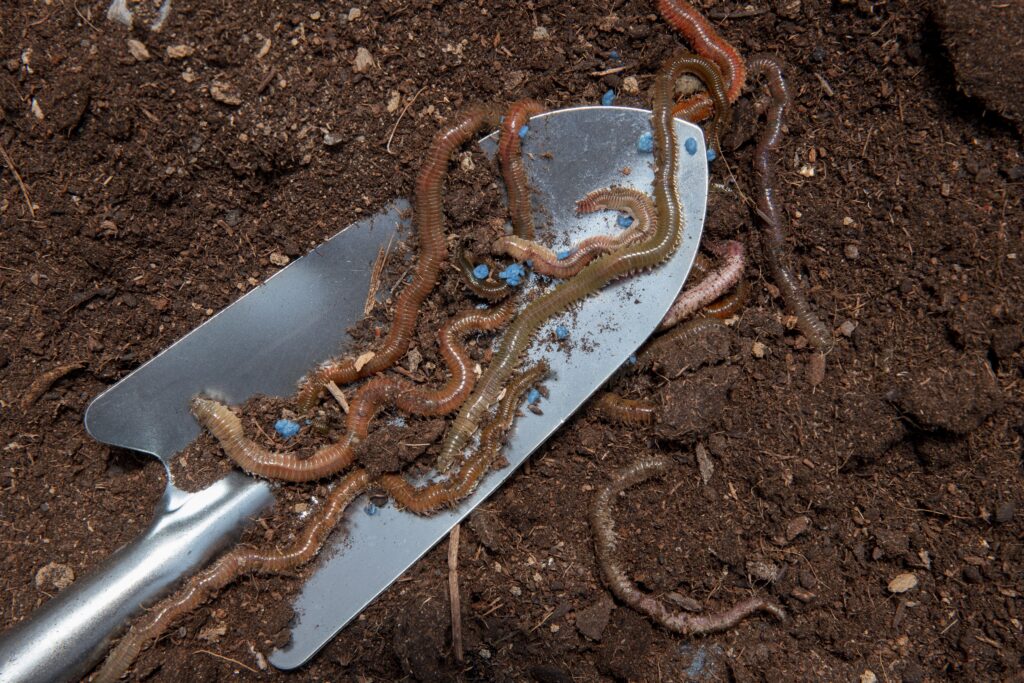
Worm castings are especially useful because they provide mild nutrients, microbial life, and good texture. They are not a complete fertilizer by themselves, but they can make a soil mix more forgiving.
Do not confuse “organic” with “automatically safe.”
Too much compost, manure, guano, or meal-based amendment can still burn plants, attract pests, overload nutrients, or create imbalance. Organic inputs are powerful. They simply work through biology and decomposition instead of dissolving instantly like mineral salts.
Weedth Advice: Every Amendment Should Have a Job
A grower should never add something to cannabis soil just because it sounds natural, expensive, rare, or popular. Every amendment should have a clear purpose.
Ask one question before adding anything:
What does this material change in the root zone?
If it improves aeration, say that. If it holds water, say that. If it buffers pH, say that. If it feeds microbes, say that. If it supplies nitrogen, phosphorus, potassium, calcium, magnesium, sulfur, or trace minerals, say that. If you cannot explain what it does, it probably does not belong in the mix yet.
This is especially important for beginners. Most early soil problems come from doing too much, not too little. A mild and breathable mix is easier to learn than a heavily amended mix that reacts unpredictably.
Do not build cannabis soil like a recipe collection. Build it like a root-zone system.
pH is the availability gate, not a nutrient.
When pH drifts outside the right range, nutrients can be present in the medium but unavailable to the roots. That is why a plant can look deficient even when the grower is feeding.

pH: The Gatekeeper of Nutrient Uptake
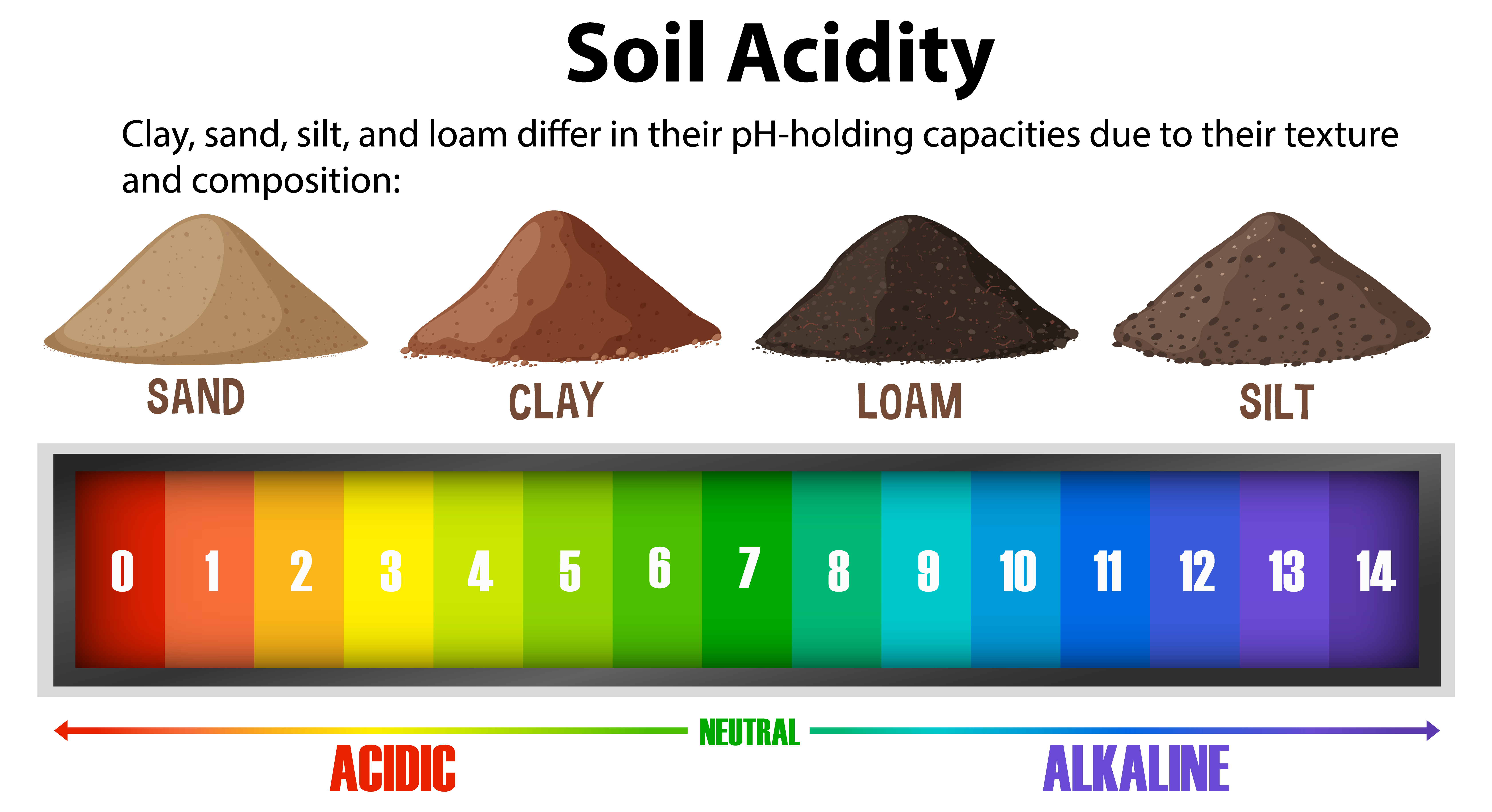
pH controls nutrient availability. The nutrients may be present in the medium, but if pH is outside the workable range, the roots may not absorb them properly. This is called nutrient lockout.

Common working ranges:
| Growing Style | Common pH Range |
|---|---|
| Soil | 6.0 to 7.0 |
| Coco and soilless | 5.8 to 6.5 |
| Hydroponics | 5.5 to 6.2 |
These ranges are practical guidelines, not magic numbers. The goal is stable movement within a healthy range, not chasing one perfect reading every day.
When pH drifts too far, the plant can look deficient even when nutrients are already available in the pot. Many growers respond by feeding more. That can make the problem worse because the real issue is access, not supply.
A plant can be surrounded by nutrients and still starve if pH blocks uptake.
This is why pH should always be part of your diagnosis before you increase feeding.
Important: Do not chase every leaf symptom with more nutrients. If pH, EC, or oxygen are off, extra feeding can make the root zone harder to correct.
EC, TDS, and Salt Buildup
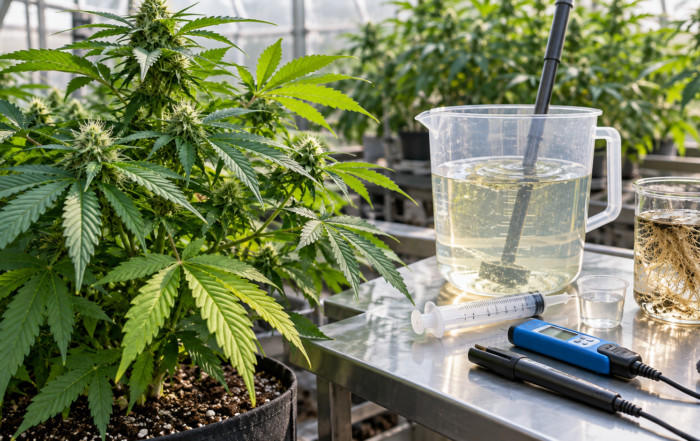
EC stands for electrical conductivity. It measures the amount of dissolved salts in water or nutrient solution. TDS meters estimate dissolved solids from that reading.

In simple terms, EC tells you how strong the nutrient solution is.
This matters most in coco, hydro, and mineral-fed systems, but soil growers can also benefit from understanding runoff strength when problems appear.
High EC can mean the root zone is overloaded with salts. The plant may show burnt tips, dark leaves, clawing, slow growth, or deficiency-like symptoms caused by lockout. Low EC in coco or hydro may mean the plant is not receiving enough nutrition.
Coco growers often monitor runoff because coco can accumulate salts if fertigation and runoff are poorly managed. Soil growers may not measure as often, but repeated feeding without understanding buildup can still create harsh conditions.
Salt stress can damage both plant health and final smoke quality.
When a plant spends late flower fighting excess salts, overfeeding, or lockout, it often becomes harder to finish cleanly.
Cannabis Nutrients: What the Plant Actually Uses
Cannabis needs essential nutrients to build roots, stems, leaves, flowers, enzymes, chlorophyll, resin structures, and defense compounds. The main nutrients are usually discussed as NPK: nitrogen, phosphorus, and potassium.
Nitrogen supports leafy growth and chlorophyll. It is especially important in vegetative growth. Too little nitrogen can cause pale plants and yellowing older leaves. Too much nitrogen can make plants dark, soft, clawed, and overly leafy. In late flowering, excess nitrogen can reduce quality and make finished flower harsher.
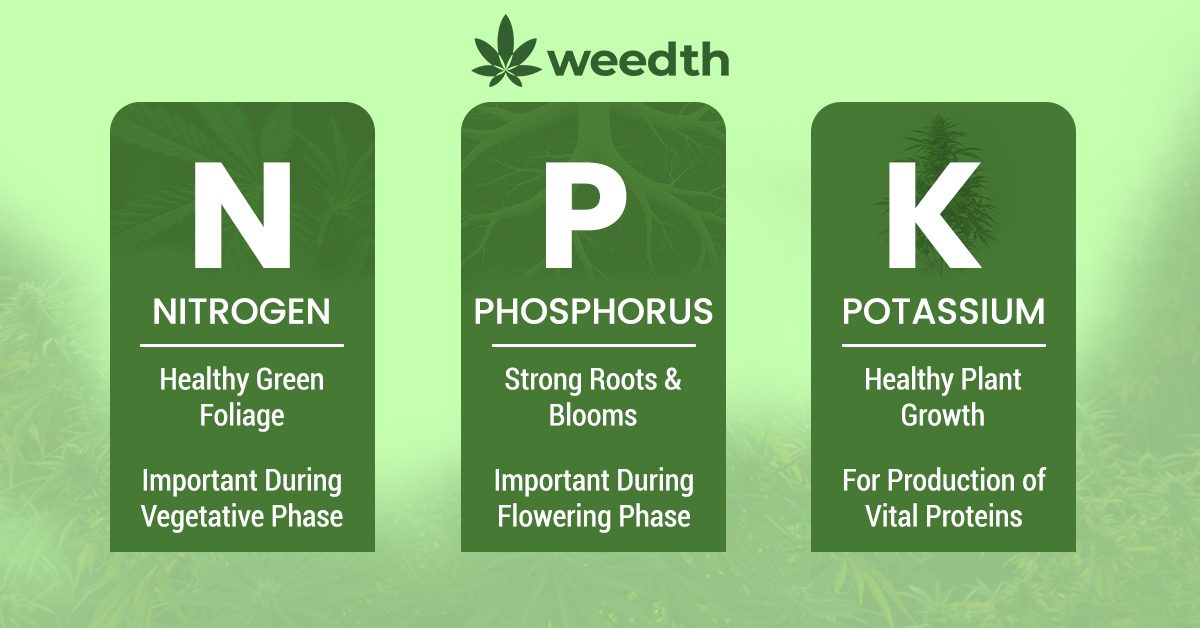
Phosphorus supports roots, energy transfer, and flowering. Cannabis needs phosphorus, but bloom feeding is often exaggerated. More phosphorus does not automatically mean bigger buds.
Potassium supports water movement, enzyme activity, stress response, and flower development. Demand can rise during flowering, but balance still matters.
Cannabis also needs calcium, magnesium, sulfur, iron, zinc, manganese, boron, copper, molybdenum, and other micronutrients. These are needed in smaller amounts, but small does not mean optional.
Calcium and magnesium deserve special attention in coco, reverse osmosis water, fast-growing plants, and high-light indoor setups.
The plant does not need maximum nutrients. It needs available nutrients in the right balance.
That difference is one of the keys to better growing.
How Root Nutrition Affects Bud Quality and Taste
This is where cannabis soil becomes more than a root topic.
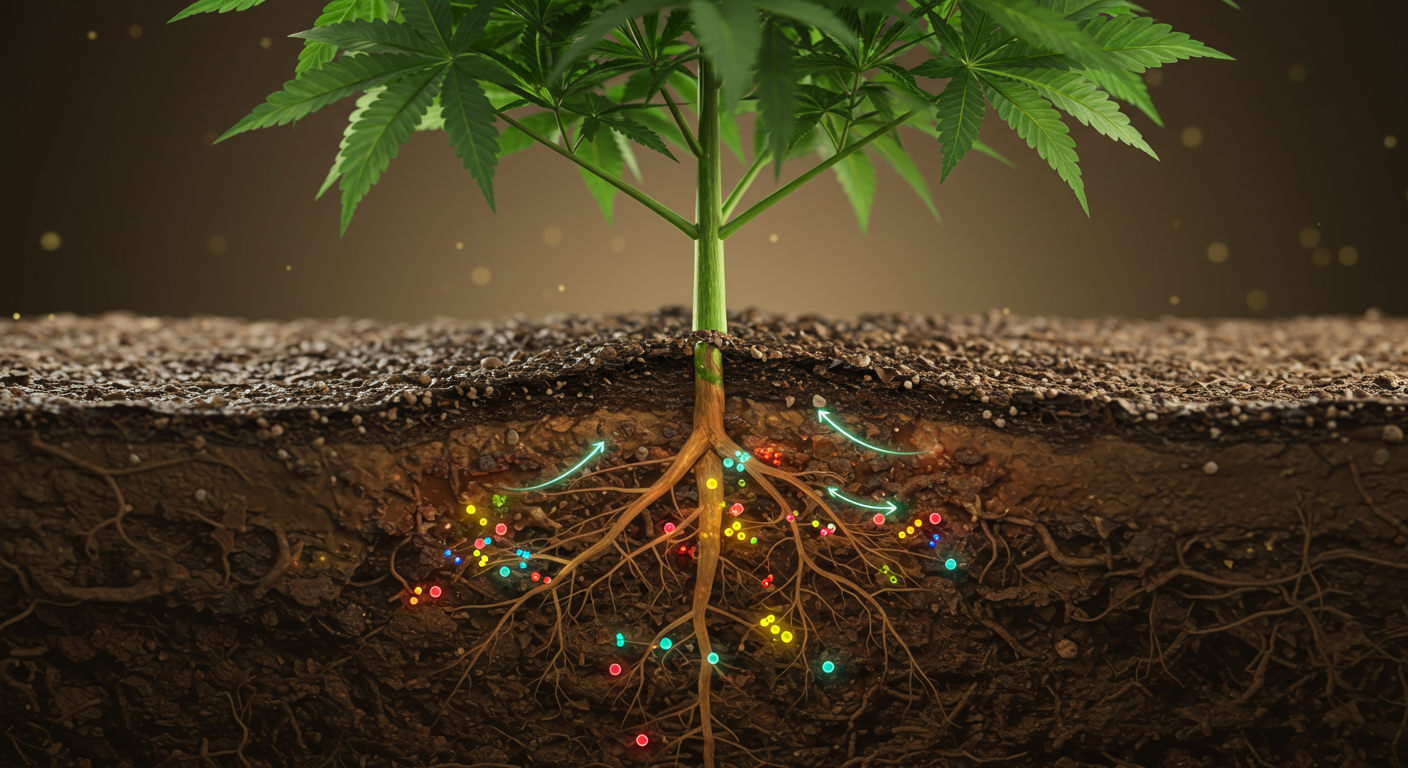
The nutrients absorbed by roots do not directly turn into flavor like ingredients in a recipe. Kelp does not make buds taste like the ocean. Molasses does not make flowers taste like sugar. A plant does not become fruity because something sweet was poured into the soil.
The real connection is deeper.
Roots absorb water and mineral nutrients. The plant uses those resources to build tissues, regulate enzymes, support photosynthesis, manage stress, produce flowers, and create secondary metabolites such as terpenes, flavonoids, and cannabinoids.
That means the root zone can influence final quality by shaping the conditions under which the plant develops.
A healthy root zone can support:
- More stable nutrient uptake
- Better water movement
- Stronger flower development
- Lower stress during flowering
- Cleaner ripening
- Better terpene preservation potential
- Smoother final smoke when drying and curing are also done well
A stressed root zone can reduce quality even if the genetics are strong. Overwatering, pH lockout, salt buildup, root disease, high root-zone temperatures, contaminated soil, or late overfeeding can all carry stress into the flower.
Bud taste is not created by one bottle, one amendment, or one trick. It is protected by the whole grow.
Soil and media matter because they decide how cleanly the plant can move through that grow.
Soil and Terpene Expression
Terpenes are a major part of cannabis aroma and flavor. Genetics set the range, but growing conditions influence how much of that potential is expressed and preserved.
A living soil system may support rich terpene expression because it creates a buffered and biologically active root environment. Organic matter, microbial diversity, steady moisture, and gentle nutrient cycling can all help the plant avoid sharp stress swings.
But living soil is not magic. It can still produce weak flower if the plant is overwatered, grown too hot, harvested too early, dried too quickly, or cured poorly.
Coco and hydro can also produce excellent aroma when nutrition, pH, EC, environment, ripeness, and drying are managed well.
The most accurate way to think about it is this:
Living soil can support strong flavor expression, but it does not replace genetics, environment, harvest timing, drying, or curing.
For Weedth’s quality-first approach, this distinction matters. We do not want growers chasing myths. We want them to understand the system.
Weedth Advice: Protect Flavor Before You Try to Enhance It
Many growers look for flavor in the last bottle they add. The better path is to protect flavor from the beginning of the grow.
Aroma can be weakened by root stress, overfeeding, excess heat, late nitrogen, pH lockout, poor drying, and rushed curing. If those parts are wrong, no flavor additive can fully repair the result.
For better taste, focus on the whole chain:
- Healthy root zone
- Balanced feeding
- Stable flowering environment
- Correct harvest timing
- Slow drying
- Patient curing
Flavor is not something you pour in at the end. It is something you protect through the entire grow.
Where This Guide Goes Next
The foundation is now clear: cannabis soil is not only about what the medium contains. It is about how that medium behaves around the roots.
From here, the guide moves into the main growing media in detail: living soil, super soil, organic soil, mineral feeding, coco coir, peat-based mixes, hydroponic media, and the decision process for choosing the right root-zone system.
The deeper amendment, outdoor ground soil, drainage layer, contamination, and field-testing sections will build on this same principle:
Better roots create better decisions, and better decisions create better buds.
“Why do living soil growers keep telling me to use bigger containers?”
Question sent by: Nathan Brooks, via Facebook page.
Living soil depends on moisture stability, biological activity, and room for nutrient cycling. Very small pots dry and swing too quickly, so the biology has less time and space to work.
Living Soil: A Biological Root-Zone System
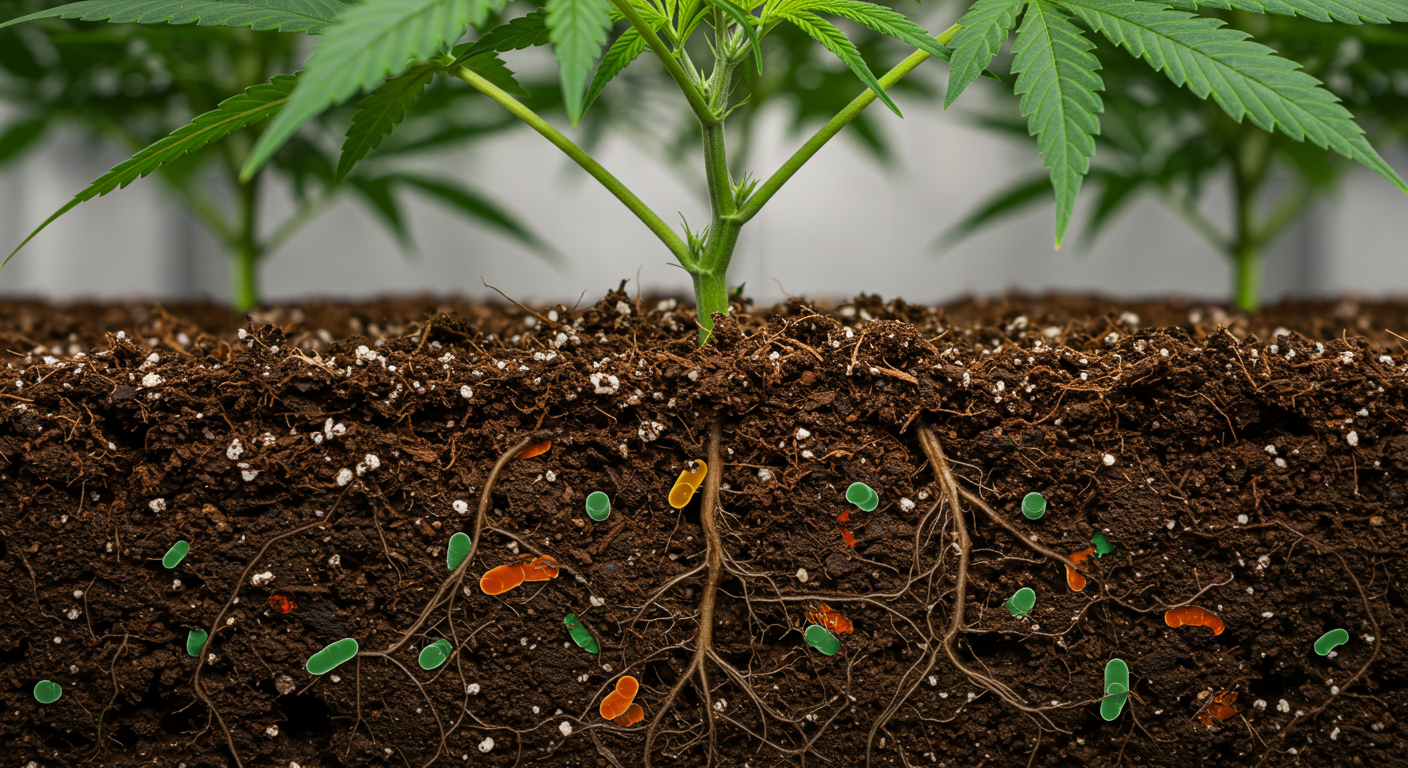
Living soil is not just soil with organic ingredients. It is a biologically active root-zone system built around compost, organic matter, minerals, fungi, bacteria, microarthropods, and slow nutrient cycling.
In a simple bottled feeding system, the grower usually feeds the plant directly through water. In living soil, the grower feeds the soil ecosystem. Microbes break down organic materials and release nutrients in forms the plant can use. Roots interact with that biology, and the soil becomes more than a container filler. It becomes a living buffer.

This is why living soil attracts growers who care about aroma, smoothness, sustainability, and long-term soil health. When the system is built well, the plant is not pushed by sharp nutrient swings. It receives nutrition through a slower and more stable biological process.
Living soil works best when the grower thinks like a soil builder, not only like a plant feeder.
A living soil system usually includes:
- A base material such as peat, coco, composted bark, leaf mold, or a blended potting base
- High-quality compost or worm castings
- Aeration such as pumice, perlite, rice hulls, or lava rock
- Mineral amendments such as gypsum, basalt, rock dust, or lime when needed
- Organic nutrient amendments used carefully
- Mulch or cover crop support
- Microbial life supported by steady moisture and organic matter
The goal is not to add every ingredient possible. The goal is to create a balanced medium that holds water, breathes well, cycles nutrients, and supports healthy roots through the full grow.
Why Growers Choose Living Soil
Living soil can offer a very different growing rhythm from coco or hydro. Instead of mixing nutrients for every watering, the grower focuses on soil structure, moisture, compost quality, top-dressing, mulch, and biology.
The main benefits are:
- Natural nutrient cycling
- Better moisture and pH buffering when built well
- Reduced need for bottled nutrients
- Strong microbial activity
- Reusable soil over multiple cycles
- Support for complex aroma expression
- A more ecological growing style
For flower quality, the appeal is not magic. It is stability. Cannabis often performs better when the root zone is not constantly shocked by wet-dry extremes, pH swings, salt buildup, or heavy late feeding.
A good living soil gives the plant a calmer root environment. That does not guarantee premium flower by itself, but it can support the conditions needed for better terpene expression and cleaner finishing.
Where Living Soil Can Go Wrong
Living soil still needs skill. It can fail when containers are too small, compost quality is poor, the soil is overwatered, amendments are overloaded, or the grower expects instant correction from slow-release inputs.
Small pots are especially limiting. A true living soil system needs enough volume to hold biology, nutrients, moisture, and air. In very small containers, the soil dries too quickly and has less buffering power. The grower may think the soil is alive, but the pot may not have enough volume to behave like a stable ecosystem.
Living soil can also become too wet. Many growers hear “keep soil life moist” and then water too often. The soil surface stays wet, fungus gnats appear, and the lower root zone loses oxygen.
Living soil should be alive, not swampy.
A healthy living soil should smell earthy and feel structured. It should not smell sour, rotten, stagnant, or anaerobic. If the soil smells bad, holds water for too long, or becomes muddy, the biology is not being protected. It is being suffocated.
Weedth Advice: Living Soil Needs Moisture and Air
Many living soil mistakes come from choosing one side of the balance and forgetting the other.
If the soil dries completely, microbial activity slows and the plant can struggle to access nutrients. If the soil stays soaked, roots and microbes lose oxygen. The right target is steady moisture with air still present in the pore spaces.
Use mulch to protect the surface. Use large enough containers to buffer moisture. Water slowly enough for the soil to absorb evenly. Do not let the pot sit in runoff. Do not keep the top layer constantly wet just because the system is organic.
Living soil is not a reason to ignore watering. It is a reason to water with more awareness.
Hot soil can burn young roots fast.
Seedlings and fresh clones usually need a gentler starting layer. Strong compost, manure, mineral amendments, or concentrated super soil should not sit directly against tender new roots.
Super Soil: Powerful, But Not Always Gentle
Super soil is a pre-amended organic soil designed to carry cannabis through much of its life with little or no bottled feeding. It often contains compost, worm castings, minerals, and nutrient-rich amendments.

A well-built super soil can produce strong plants and flavorful flowers. A poorly built or poorly used super soil can burn seedlings, overload nutrients, and create a difficult root environment before the grow has even started.
The most common mistake is placing seedlings directly into a hot mix.
Young roots do not need heavy nutrition. They need stable moisture, oxygen, warmth, and a gentle start. If a seedling is planted into a strong super soil, it may show burned tips, twisted growth, drooping, dark leaves, or sudden collapse.
The Layered Super Soil Method
A safer approach is to separate the root zones by strength.
The lower part of the container can hold stronger amended soil. The upper part can hold a lighter seedling-friendly mix. As roots grow downward, they gradually reach richer nutrition when the plant is larger and better prepared to use it.
This method can work well, but it still requires careful watering. A hot lower layer in a constantly wet pot can create stress. A small plant in a large wet container may not reach the lower nutrition at the right time. A super soil that was not allowed to mature can also behave unpredictably.
Super soil is not beginner-proof. It is powerful soil that must be staged correctly.
Weedth Experience: The Seedling I Lost in 24 Hours
In my early years, I once used a heavy, pre-fertilized soil mix for a cannabis seedling. The plant died within 24 hours.
At the time, I thought the problem was transplant shock or the stress of changing soil. It made sense to me then because the plant collapsed right after the move. But as I learned more about root-zone behavior, seedling sensitivity, and hot soil, the real mistake became clearer.
The seedling was placed into a medium that was too strong and too heavy for its stage. The roots were not ready for that level of nutrition or density.
That kind of mistake costs more than one plant. It costs time, money, confidence, and momentum. A seedling should never be treated like a flowering plant. Start mild, let the roots establish, and increase nutrition only when the plant is ready.
Organic Soil and Nutrients
Organic growing uses materials such as compost, worm castings, kelp meal, alfalfa meal, neem meal, bone meal alternatives, rock dust, gypsum, lime, plant meals, and other natural or minimally processed inputs.
Organic nutrients usually become available through microbial breakdown. This makes them slower than mineral salts, but also more buffered when the soil is built correctly.
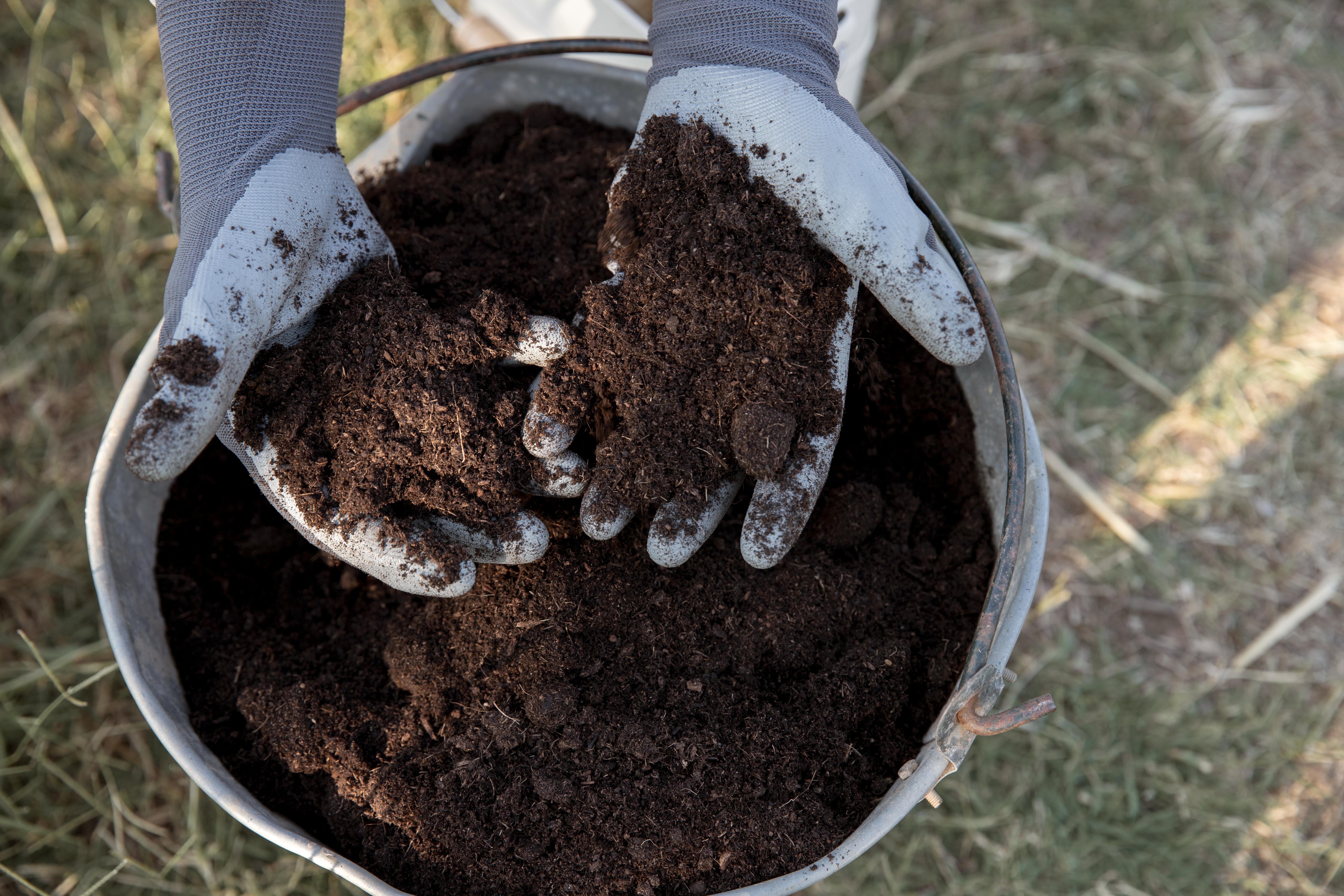
Organic soil works best when it is prepared before planting. Top-dressing can maintain fertility, but it should be done before severe deficiency appears because organic amendments need time to cycle.
Organic growing is not about throwing every natural ingredient into the pot. Too many amendments can overload the soil and create imbalance.
Natural inputs can still burn cannabis when they are used without balance.
The goal is not maximum amendment diversity. The goal is a stable, living medium that gives the plant what it needs when it needs it.
Organic Feeding Is Slower, Not Weaker
One misunderstanding about organic soil is that it is “weak” because it does not always correct deficiencies quickly. That is not the right way to look at it.
Organic amendments work through time, moisture, temperature, microbial activity, and decomposition. They can be very powerful, but they do not behave like instant liquid fertilizers.
This means organic growers should think ahead. Top-dressing a slow organic amendment after a serious deficiency appears may not correct the plant fast enough. It is better to maintain the soil before the plant crashes.
Organic feeding is more like steering a system than pressing a button.
Organic Soil and Flower Quality
Organic soil is often associated with better taste and smoother smoke. There is a reason many growers feel this way, but it should be explained carefully.
Organic soil does not automatically make better cannabis. A poorly watered organic plant can still produce harsh or weak flower. A plant grown in living soil can still lose aroma if flowering temperatures are too high or drying is rushed.
The stronger statement is this:
A well-managed organic root zone can support healthier growth, gentler nutrient cycling, and stronger terpene preservation potential.
That is different from saying organic inputs directly create flavor. The roots support the plant. The plant expresses its genetics. The grower protects that expression through environment, harvest timing, drying, and curing.
Synthetic and Mineral Nutrients
Synthetic or mineral nutrients are usually salt-based fertilizers that dissolve in water and become available quickly. They are common in coco, hydro, and many indoor soil grows.
The strength of mineral feeding is control. If a plant needs nitrogen, calcium, magnesium, or a complete feed, the grower can respond quickly. The weakness is that mistakes also move quickly.
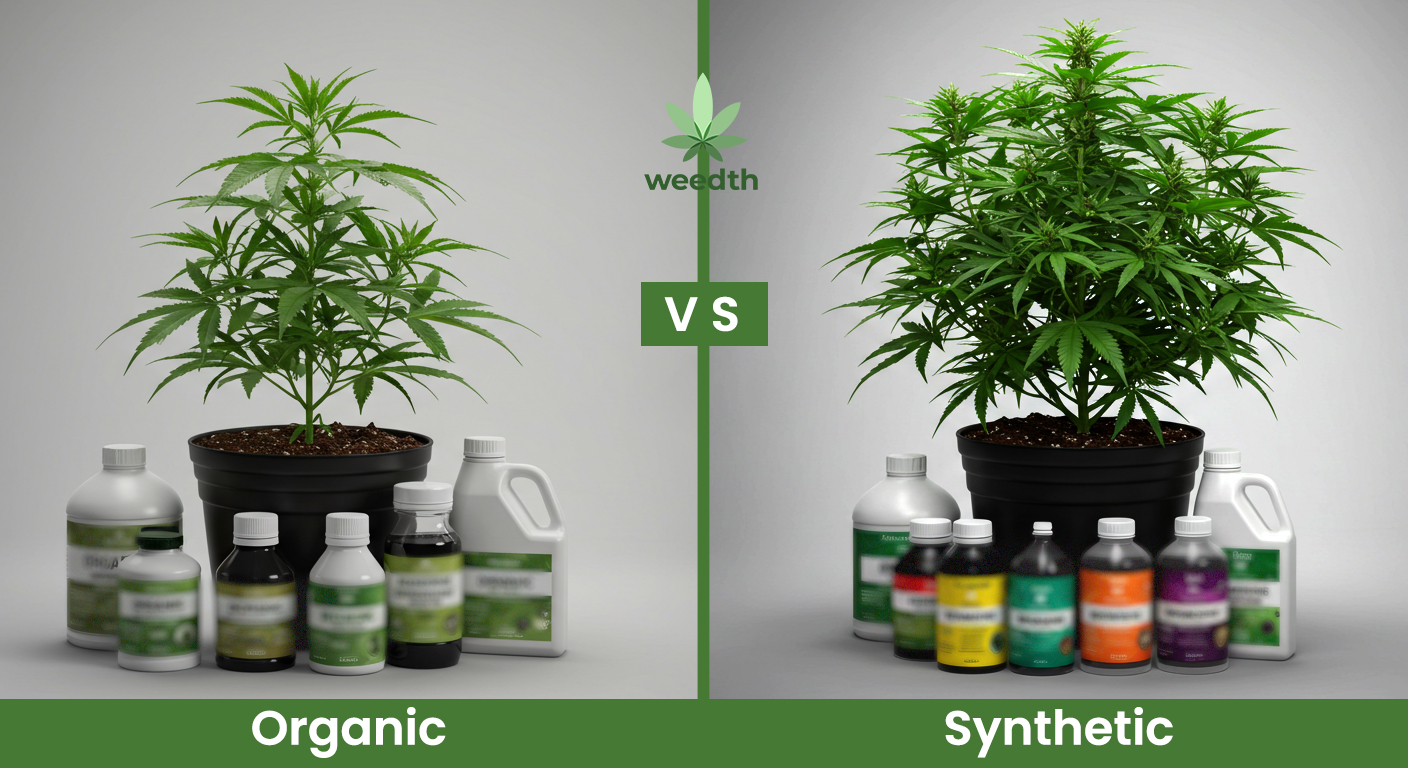
Overfeeding can cause salt buildup, nutrient burn, pH drift, and lockout. In late flower, excessive mineral feeding can make it harder for the plant to ripen cleanly.
Mineral nutrients are not automatically low quality. Poor management is the problem.
Synthetic feeding can produce excellent cannabis when pH, EC, watering, and finishing are handled correctly.
This is important because growers often turn soil discussions into simple arguments. Organic versus synthetic is not the real question. The real question is whether the feeding system supports healthy roots and clean flower development.
Where Mineral Feeding Helps
Mineral nutrients are useful when speed and precision matter. In coco and hydro, they are usually the main feeding system. In soil, they can correct deficiencies faster than slow organic amendments.
They also make it easier to adjust nutrient ratios as the plant moves from vegetative growth to flowering. A grower can reduce nitrogen, manage calcium and magnesium, and avoid pushing unnecessary nutrients late in bloom.
This control is valuable, but it requires measurement. pH and EC matter more when the grower is feeding soluble salts regularly.
Where Mineral Feeding Goes Wrong
The most common mistake is assuming that more food means more flower. Cannabis can only use what the root zone can absorb and what the plant’s environment can support.
If light, temperature, humidity, root oxygen, pH, or water quality are limiting growth, stronger feeding will not solve the problem. It may make the plant worse.
Signs of mineral feeding problems may include:
- Burned leaf tips
- Very dark green leaves
- Clawing
- High runoff EC
- Slow growth despite feeding
- Deficiency symptoms caused by lockout
- Harsh final flower when late feeding is excessive
Mineral nutrients are tools. They reward accuracy and punish guessing.
Hybrid and Bio-Mineral Growing
Many growers do not fit neatly into “organic” or “synthetic.” They use a hybrid approach.
A hybrid grow might use a quality organic base soil with occasional mineral feeding. Another grower might use coco with microbial inoculants, humic acids, enzymes, or organic teas. Some growers use dry organic amendments for long-term nutrition and liquid mineral supplements only when the plant needs faster correction.
This approach can work very well because it combines buffering with control. But it can also become confusing if every product is added without a clear reason.
A grower using ten inputs may not know which one helped, which one hurt, and which one did nothing.
Weedth Rule: Add One Reason, Not Ten Products
Before adding any input to a hybrid system, ask:
- Is this for aeration?
- Is this for water retention?
- Is this for pH buffering?
- Is this for calcium, magnesium, sulfur, or trace minerals?
- Is this for nitrogen, phosphorus, or potassium?
- Is this for microbes?
- Is this for surface protection?
- Is this for correcting a confirmed deficiency?
If the answer is not clear, wait.
A clean simple system is easier to learn from than a crowded system full of mystery inputs.
“I switched to coco and now the plant looks deficient even though I am feeding. What am I missing?”
Question sent by: Brandon Lewis, via email.
Coco can grow fast, but it asks for consistency. If the coco was not buffered well, if pH drifts, or if calcium and magnesium are not managed, the plant can show deficiency patterns even with nutrients in the feed.
Coco Coir: Fast Growth With a Learning Curve
Coco coir is made from coconut husk fiber. It is light, airy, and excellent at holding both water and oxygen. Cannabis roots often grow quickly in coco because the medium gives them easy access to moisture and air.
Coco is popular for indoor growing because it offers fast growth without the full complexity of hydroponics. But coco is not soil. It must be treated as a soilless medium.

Coco contains little nutrition by itself, so the grower supplies nutrients through water. It also interacts with calcium, magnesium, potassium, and sodium. Poorly prepared coco can cause early nutrient problems.
Coco Works Well When
- The grower feeds regularly

- pH is kept in the proper range
- Calcium and magnesium are managed correctly
- Runoff is used to prevent salt buildup
- The medium is not allowed to become unstable
- Water quality is understood
- The grower does not treat coco like soil
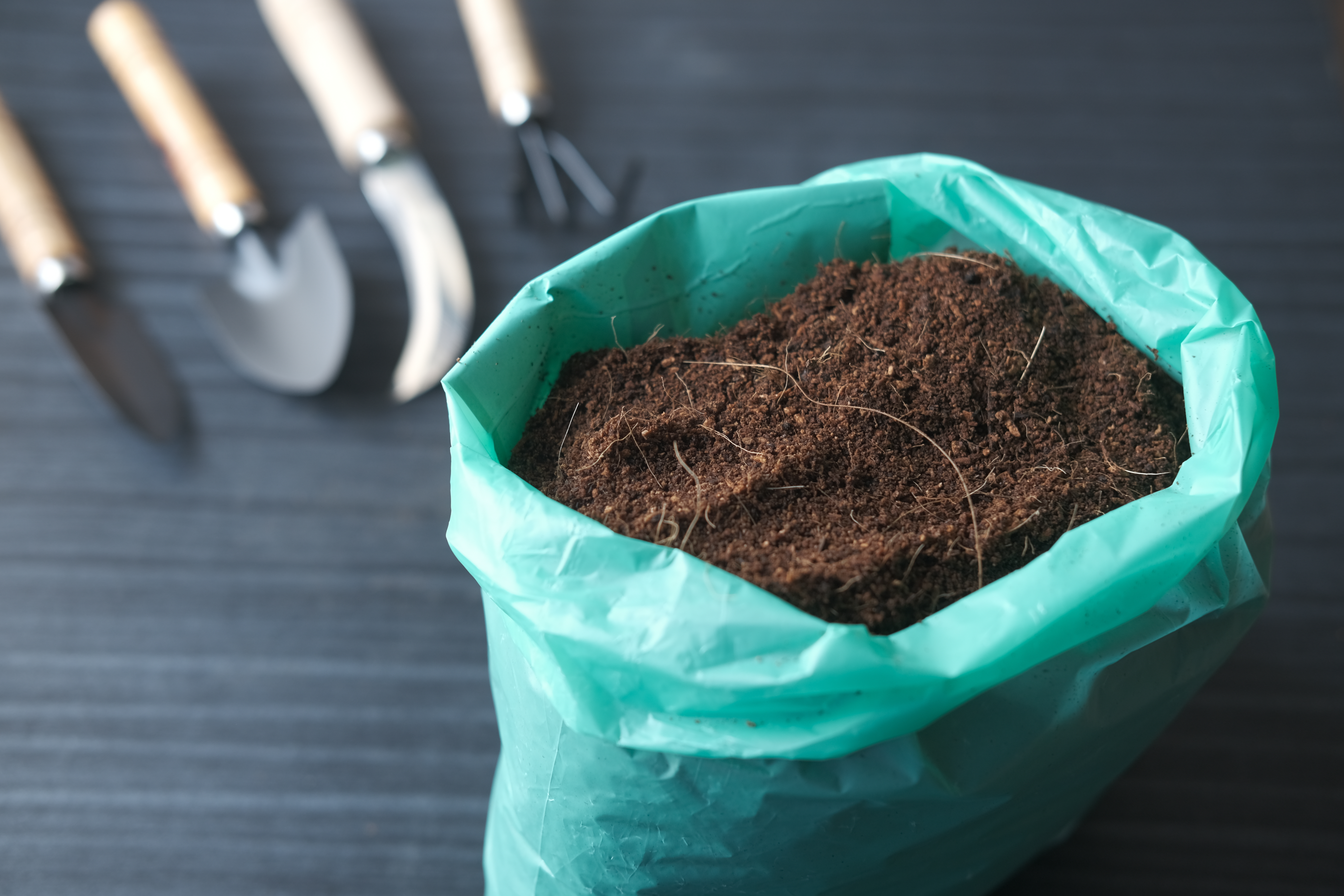
Coco works especially well for growers who enjoy structure. It responds quickly, which can be a benefit. When the plant needs more or less food, the grower can adjust the feed solution and see the result faster than in heavy organic soil.
Coco Can Go Wrong When
- It is watered like soil
- The grower uses plain water too often
- pH is ignored
- Cheap coco contains excess salts
- Calcium and magnesium are not considered
- Runoff EC is allowed to climb too high
- Dry-back becomes too severe
- The grower assumes coco has enough nutrients by itself
Coco can be beginner-friendly for growers who like measurement and routine. It is less beginner-friendly for growers who want to water casually and avoid pH testing.
Coco rewards consistency. Soil forgives more inconsistency.
That difference should guide your choice.
Buffering Coco
Coco can hold onto calcium and magnesium. If it is not properly buffered, it may create early calcium or magnesium problems even when the feed looks reasonable.
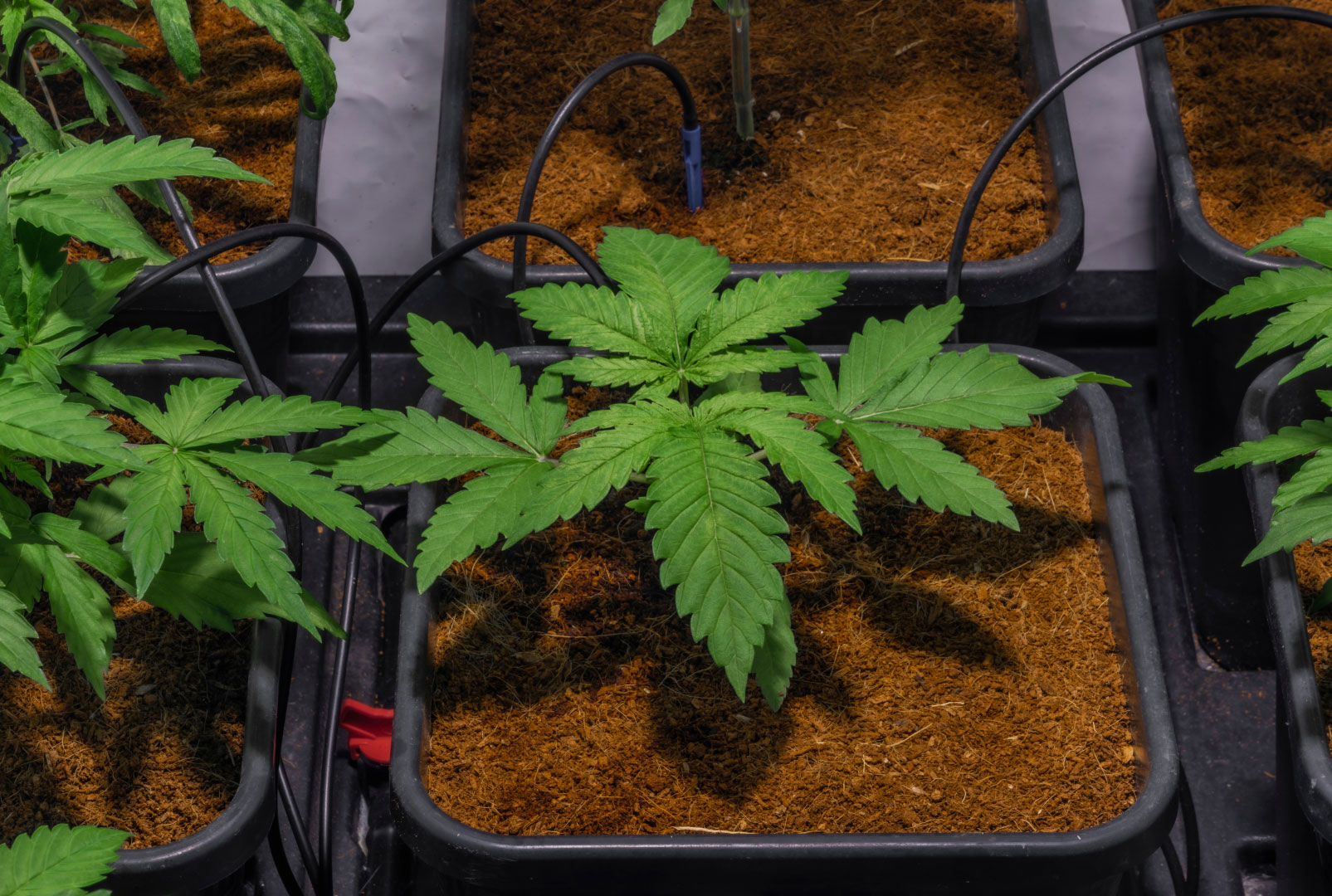
Good commercial coco is usually washed and buffered. Cheap or poorly processed coco may contain excess salts or behave unpredictably.
Before using coco, growers should check:
- Is it washed?
- Is it buffered?
- Does it come from a reliable source?
- Does it smell clean?
- Does it contain excess fine dust?
- Is it intended for horticultural use?
Do not use random coconut fiber or unknown landscaping material as a cannabis medium. Coco should be clean and prepared for growing.
Question From Growers: “I’m growing in coco and the plant still looks deficient. Should I add more Cal-Mag?”
Maybe, but do not jump there first.
Coco does have a strong relationship with calcium and magnesium, so deficiencies are common when coco is unbuffered, water is too pure, or the feed plan is not built for coco. But deficiency-like symptoms can also come from wrong pH, salt buildup, poor runoff, root stress, or EC that is already too high.
Before adding more Cal-Mag, check the basics:
- Is the coco properly buffered?
- Is the pH in the coco range?
- Is runoff EC climbing?
- Are you feeding often enough for coco?
- Are you using plain water too often?
- Is the plant actually deficient, or is uptake blocked?
In coco, the answer is not always “more supplement.” Sometimes the answer is better fertigation rhythm and better root-zone control.
Peat can become hard to re-wet once it dries too far.
When peat-based mixes become hydrophobic, water may run down the sides instead of soaking the root zone. Slow, even rehydration works better than dumping more water at once.
Peat-Based Soilless Mixes
Peat-based mixes are common in container growing. They are usually made with peat moss, perlite, lime, wetting agents, and sometimes starter nutrients.
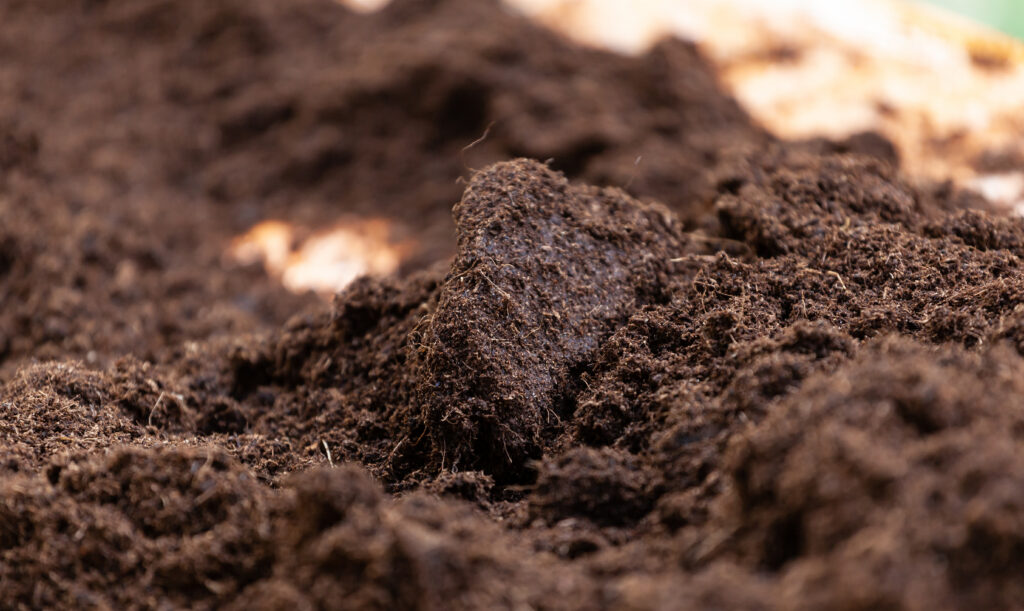
Peat holds water well and creates a light medium when mixed correctly. It can work very well for cannabis, especially when it has enough aeration and proper pH buffering.
The main issue with peat is that it can become difficult to rewet if it dries too much. Once peat turns hydrophobic, water may run down the sides of the pot instead of soaking the root zone evenly.
Peat is also naturally acidic, so lime is often added to stabilize pH.
From a sustainability angle, peat is more controversial because it forms slowly in wetlands. Many growers now look at coco, compost, wood fiber, leaf mold, rice hulls, and other materials as partial alternatives. None of these replacements are perfect. Each one changes how the medium behaves.
When Peat Mixes Work Well
Peat-based mixes can work well when:
- The mix has enough aeration
- pH is buffered properly
- The grower avoids letting it become bone dry
- The container has good drainage
- Nutrient strength matches the plant stage
- Seedlings are not placed into a mix that is too hot
Peat mixes are often forgiving because they hold moisture and can buffer nutrients. But if they are too dense or too wet, they can create the same oxygen problems as heavy soil.
When Peat Mixes Cause Problems
Peat can cause problems when it becomes hydrophobic. A grower waters the pot, sees runoff, and assumes the root zone is hydrated. In reality, water may have run down channels along the side of the pot while the center stayed dry.
This can create confusing symptoms: dry roots in one zone, wet soil in another zone, uneven nutrient uptake, and inconsistent plant response.
If a peat-based mix dries too far, rehydrate slowly. Water in stages and allow the medium time to absorb moisture evenly.
Rockwool is inert, not forgiving.
Rockwool holds water and air well when managed correctly, but it does not buffer mistakes like a living soil can. pH, moisture, and feeding consistency matter from the start.
Rockwool, Clay Pebbles, and Hydroponic Media
Hydroponic media are usually inert. They support roots physically while nutrients come from a water-based solution.
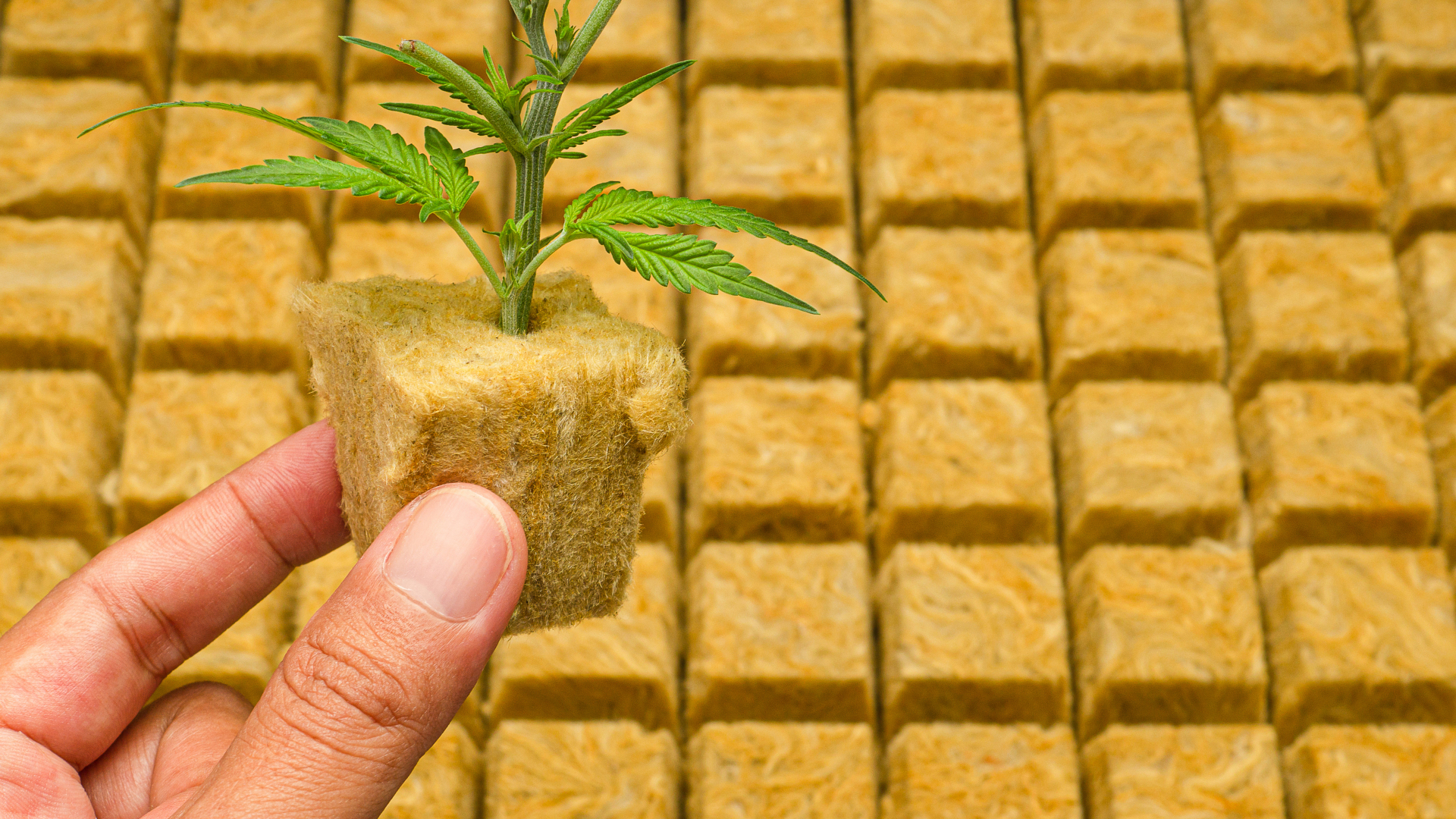
Common hydro media include rockwool, expanded clay pebbles, starter plugs, and other inert supports.
Rockwool
Rockwool holds water and air well. It is common for clones, seedlings, and hydroponic systems, but it must be prepared correctly because its pH behavior can be different from organic media.
Rockwool is not soil and it does not contain meaningful nutrition. The grower must provide water, nutrients, pH control, and oxygen management through the system.
It can produce strong results, but it does not forgive neglect. If cubes stay too wet, roots can struggle. If they dry too much, young plants can wilt quickly.
Expanded Clay Pebbles
Expanded clay pebbles, often called LECA, Hydroton, or clay balls, are common in hydroponic systems. They provide root support and strong air space.

They do not hold much nutrition by themselves. Their main role is structure, drainage, and root anchoring.
In hydroponics, they can work very well. In soil containers, they should not be treated as magic drainage stones. They can be used carefully in certain ways, but the entire potting mix still needs good structure.
Starter Plugs
Starter plugs can be made from peat, coco, composted bark, rockwool, or synthetic foam. They are designed to hold moisture around young roots while still giving some oxygen.
They are useful for seedlings and clones because they create a small, controlled root environment. But once roots appear, the plant must transition into a suitable medium before the plug becomes limiting.
“Why do hydro problems seem to get worse overnight?”
Question sent by: Jason Turner, via Facebook page.
Hydro gives roots fast access to water, oxygen, and nutrients, but that speed works both ways. A pH swing, warm reservoir, low oxygen, or dosing mistake can affect the whole root zone quickly.
Hydroponics: Speed, Oxygen, and Control
Hydroponics can create very fast growth because roots receive direct access to water, oxygen, and nutrients. The grower controls the solution rather than relying on soil to buffer the plant.
This control can be powerful. It can also be unforgiving.

Hydroponic growers must manage:
- pH
- EC
- Reservoir temperature
- Dissolved oxygen
- Pump reliability
- Cleanliness
- Light leaks into reservoirs
- Root disease prevention
- Water changes or solution maintenance
If the system is healthy, cannabis can grow quickly. If the reservoir becomes warm, stagnant, low in oxygen, or contaminated, roots can decline fast.
Hydroponics is not impossible for beginners, but it demands attention. A soil plant may forgive a missed check. A hydro plant may not.
Hydro gives control, but it also removes many of the natural buffers that protect the grower from mistakes.
Choose the medium you can manage every week.
Match the root zone to your watering habits, climate, container size, and experience level.
Do not choose by hype alone.
A powerful system becomes a weak system when the grower cannot keep moisture, pH, feeding, and aeration consistent.
Choosing the Best Medium for Your Grow
The best medium depends on your goal. Do not start with what other growers say is “the best.” Start with the kind of grow you can actually manage.
If You Want the Easiest First Grow
Choose a light, well-aerated cannabis-friendly potting mix. Avoid dense garden soil and avoid extended-release fertilizers. Focus on learning watering before using complicated nutrient schedules.
A beginner soil grow should feel understandable. You water, you observe pot weight, you learn the wet-dry rhythm, and you add nutrition only when the plant needs it.
This does not mean beginner soil should be poor. It means it should be mild, breathable, and predictable.
If You Want Faster Indoor Growth
Coco with perlite can be a strong choice. It gives fast root development and strong control, but you must feed regularly and manage pH.
Coco is a good fit if you are willing to measure, keep a routine, and learn runoff behavior.
If You Want Better Aroma and a More Natural System
A living soil or organic soil system may fit your goals. Use larger containers, quality compost, mulch, and slow top-dressing. Keep the soil alive rather than constantly forcing the plant with bottled inputs.
This path is especially attractive if you care about soil reuse, microbial life, terpene preservation, and a slower craft-growing rhythm.
If You Want Maximum Control
Hydroponics or inert soilless systems give you the most control. They also demand the most monitoring. Use them when you are ready to manage pH, EC, water temperature, reservoir cleanliness, and oxygen.
If You Grow Outdoors
Test and observe your native soil. If it is poor, compacted, contaminated, or badly drained, use raised beds or large containers with a controlled mix. Outdoor cannabis benefits from compost, mulch, drainage planning, and root-zone temperature protection.
Outdoor soil selection deserves its own deep look because the grower is not only choosing a medium. The grower is choosing a landscape, a drainage pattern, a contamination risk, a visibility risk, and a root-zone environment that changes with weather.
That outdoor ground-soil section comes later in this guide.
Quick root-zone checklist
- Does it drain without staying soggy?
- Can the roots get enough oxygen after watering?
- Does the medium match your feeding style?
- Is the pH range easy for you to monitor?
- Will container size support the full plant cycle?
Medium Choice by Grower Personality
Sometimes the best medium is not only about the plant. It is also about the grower.
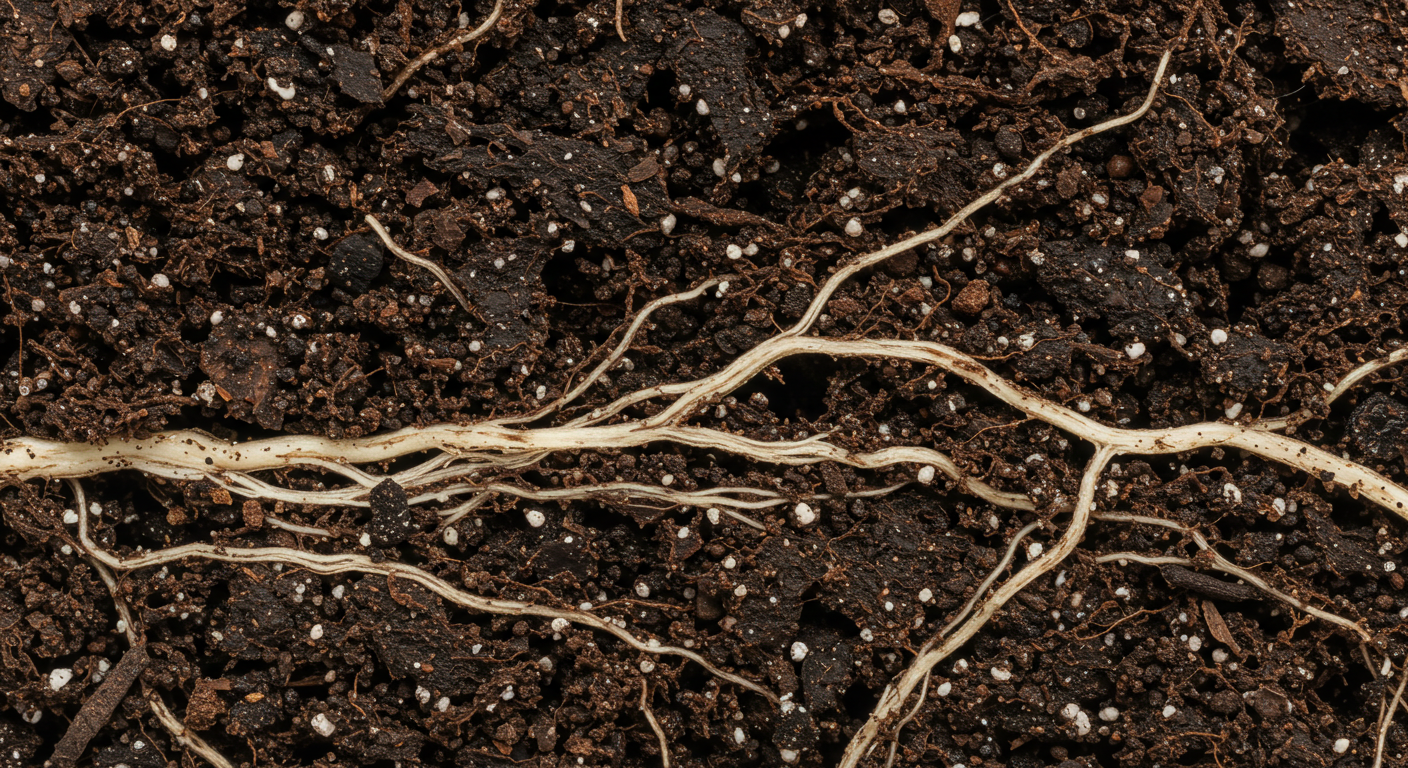
Some growers enjoy daily measurements. Some growers prefer a slower and more natural rhythm. Some growers travel often and need stability. Some growers want to learn from visual plant cues before they dive into EC meters. Some growers want maximum speed and are willing to accept more technical responsibility.
| Grower Type | Better Starting Direction | Why |
|---|---|---|
| First-time grower | Light soil or mild potting mix | More forgiving and easier to read |
| Measurement-focused grower | Coco-perlite | Fast response and strong control |
| Flavor-focused organic grower | Living soil | Supports biological cycling and aroma-focused growing |
| Technical grower | Hydroponics or inert media | Maximum control and speed |
| Outdoor ground grower | Tested native soil, raised bed, or large container | Depends on land quality and drainage |
| Busy grower | Larger soil volume or living soil bed | More buffering and less daily mixing |
| Small-space grower | Light soil or coco | Easier container management |
No medium removes the need to observe the plant. The right medium simply makes the grow easier to manage with your habits.
Weedth Master Advice: Choose the System You Can Actually Maintain
A beautiful living soil recipe is not useful if you overwater it every week. A high-performance coco setup is not useful if you refuse to check pH. A hydroponic system is not useful if you cannot monitor the reservoir. A hot super soil is not useful if you keep starting seedlings directly inside it.
The right medium is not the one that sounds most advanced. It is the one you can manage consistently.
Consistency beats complexity in cannabis growing.
Where This Guide Goes Next
At this point, the main growing media are clear. Soil gives buffering. Living soil gives biology. Super soil gives pre-loaded organic nutrition, but it must be used carefully. Coco gives speed and control. Peat-based mixes give familiar container performance. Hydro gives technical precision.
The next part goes deeper into the materials growers add to these systems.
Not every amendment belongs in every pot. Perlite, pumice, rice hulls, lava rock, LECA, vermiculite, sand, compost, worm castings, biochar, lime, gypsum, kelp, mycorrhizae, mulch, and cover crops all change the root zone in different ways.
The next section will answer the question every grower should ask before adding anything:
What job does this amendment actually do?
“Should I mix every amendment evenly through the pot?”
Question sent by: Chris Allen, via email.
Not always. Mild structure amendments can usually be mixed evenly, but strong nutrient amendments or hot super soil layers may need separation from young roots.
Cannabis Soil Amendments: How to Build the Root Zone With Purpose
A soil amendment is any material added to a growing medium to change how it behaves. Some amendments improve aeration. Some hold water. Some add organic matter. Some buffer pH. Some feed microbes. Some supply nutrients. Some protect the soil surface.

This is where many cannabis growers get confused.
They hear that perlite is good. They hear that worm castings are good. They hear that biochar, kelp, gypsum, pumice, mycorrhizae, compost tea, rice hulls, and rock dust are good. Then they start adding everything at once.
That is not soil building. That is guessing.
Every amendment should have a job. If you do not know what it changes, do not add it yet.
A cannabis potting mix is not better because it has more ingredients. It is better when each ingredient supports the root zone in a clear way. The goal is not complexity. The goal is balance.
A strong cannabis medium usually needs five amendment functions:
- Aeration so roots can breathe
- Water management so the medium does not dry too fast or stay wet too long
- Organic matter so the soil has structure and biological support
- Mineral balance so pH and nutrient availability stay stable
- Nutrient supply so the plant has what it needs without being burned
Once you understand those functions, amendments become easier to use. Instead of asking, “Is this ingredient good?” you start asking, “What problem does this ingredient solve?”
That is the Weedth approach.
Aeration means root access to oxygen.
A medium can hold nutrients and still fail if it collapses around the roots. Good aeration keeps small air spaces open after watering so roots can breathe and microbes can function.
Aeration Amendments: Keeping Oxygen in the Root Zone
Aeration amendments create air space inside the medium. They help water drain more evenly and allow oxygen to return after watering.
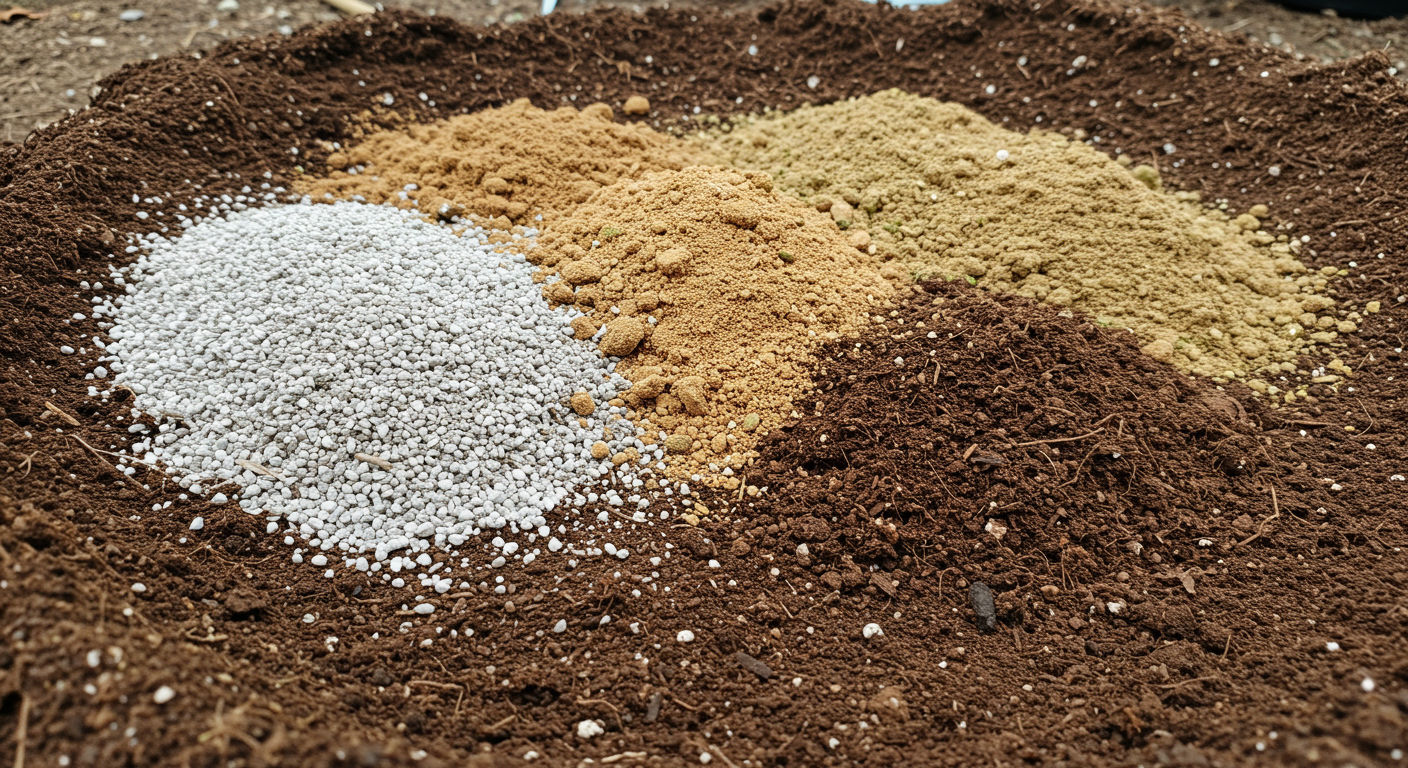
This matters because cannabis roots need oxygen to function. If the medium stays compacted and wet, the roots slow down. Nutrient uptake weakens. Fungus gnats become more likely. Root disease risk increases. The plant may look hungry even when nutrients are present.
Aeration amendments are especially useful in:
- Dense potting mixes
- Compost-heavy mixes
- Indoor containers
- Humid grow rooms
- Large pots that dry slowly
- Living soil systems that need long-term structure
- Outdoor containers exposed to rain
But aeration can also be overdone. A medium with too much aeration may dry too quickly, especially in small pots, hot climates, strong airflow, or fabric containers.
The goal is not the driest medium. The goal is a medium that holds moisture and still breathes.
“Can I fix heavy soil by mixing in more perlite after the plant is already growing?”
Question sent by: Emily Parker, via email.
Usually not without stressing the roots. Perlite works best when it is built into the mix before planting. Once roots fill the pot, it is safer to improve watering rhythm and plan a better mix for the next container.
Perlite
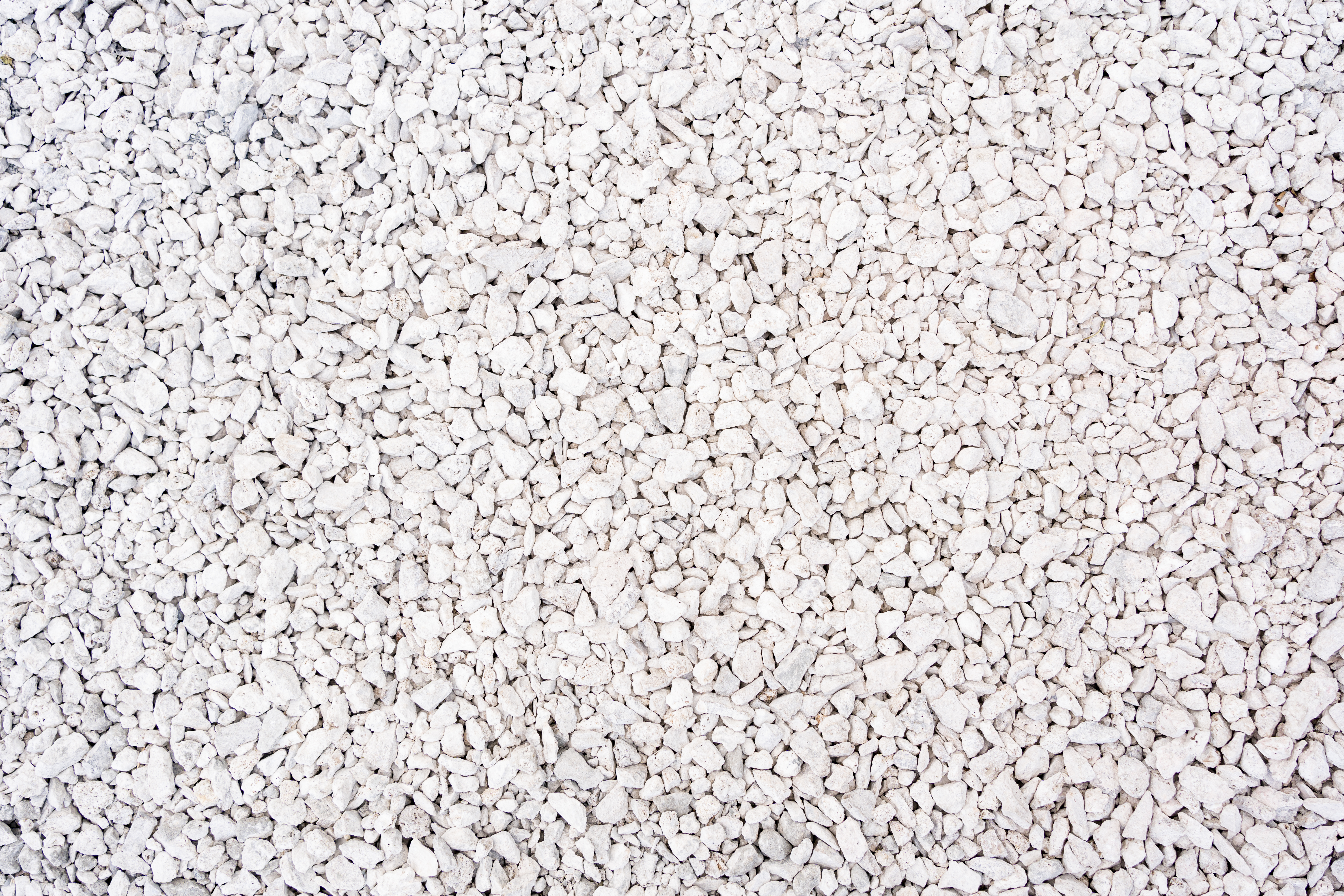
Perlite is one of the most common cannabis soil amendments. It is expanded volcanic glass that becomes very light and porous after heating.
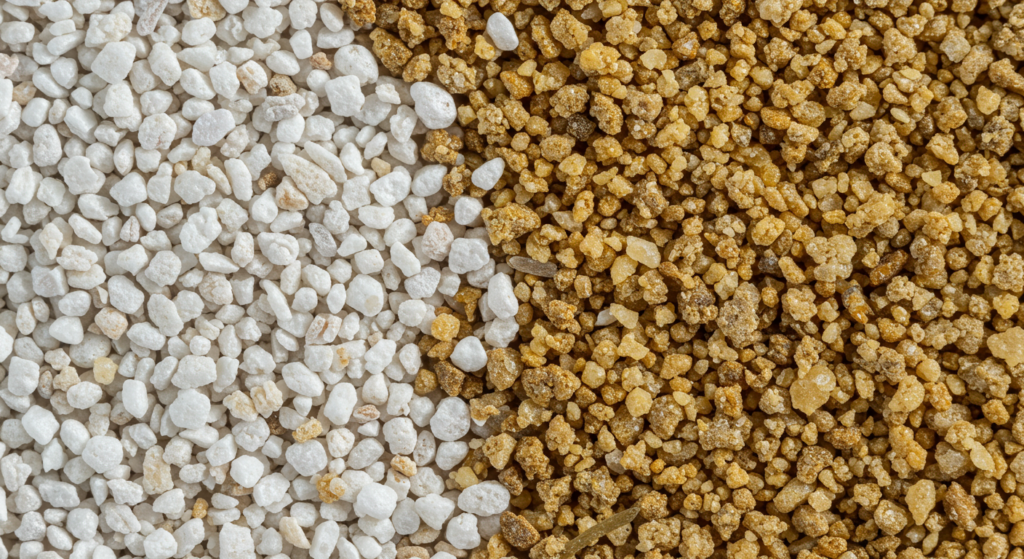
Perlite is used because it improves air space and drainage. It helps keep the medium loose, reduces compaction, and makes heavy potting soil easier for cannabis roots to explore.
What Perlite Does Well
Perlite can help:
- Lighten dense soil
- Improve drainage
- Increase oxygen around roots
- Reduce the risk of waterlogged conditions
- Make beginner soil mixes more forgiving
- Improve coco or peat-based mixes
- Support faster root development in containers
For many cannabis growers, perlite is the easiest aeration amendment to understand and use.
A common starting range is:
| Use Case | Common Perlite Direction |
|---|---|
| Light potting mix | 10 to 20 percent |
| Heavier soil correction | 20 to 30 percent |
| Coco-perlite mix | Often around 30 percent |
| Seedling mix | Light use, not oversized chunks |
| Hot dry environment | Use carefully because it can dry faster |
These are starting points, not universal rules. The correct amount depends on the base mix, container size, temperature, humidity, and watering style.
Where Perlite Can Go Wrong
Perlite is useful, but it is not magic.
Too much perlite can make the medium dry too quickly. This can stress seedlings, small plants, and outdoor containers in hot weather. In fabric pots, high-perlite mixes may need more frequent watering.
Perlite can also float upward over time, especially when the pot is watered aggressively. In living soil systems that are reused for many cycles, some growers prefer pumice because it stays in place better.
Perlite also does not fix bad watering. A grower can still overwater a medium with perlite if the pot is too large, airflow is weak, or the root system is too small.
Perlite improves structure. It does not replace observation.
Pumice
Pumice is a porous volcanic rock used for aeration and long-term soil structure. It behaves somewhat like perlite, but it is heavier and more durable.
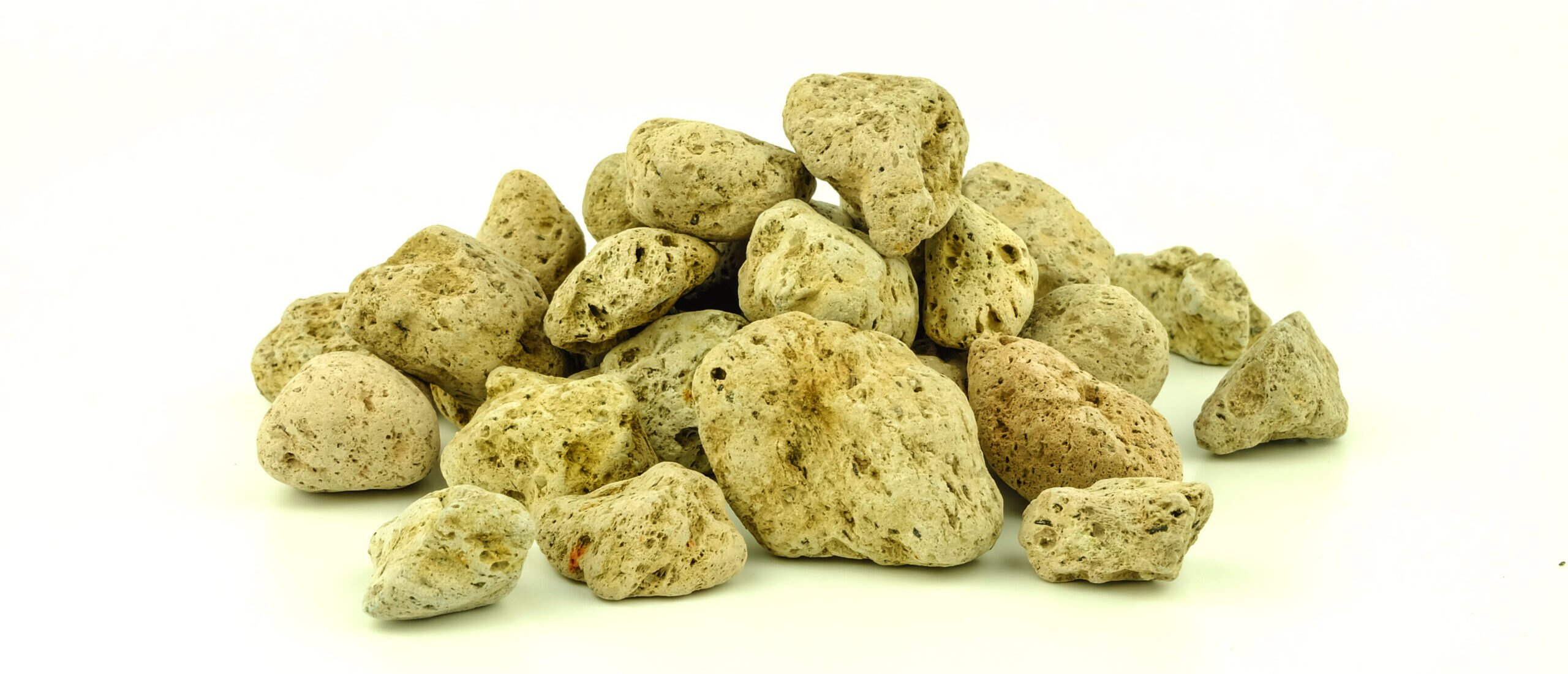
Many living soil growers like pumice because it does not float upward as easily and can stay useful through repeated soil cycles.
What Pumice Does Well
Pumice can help:
- Improve aeration
- Support long-term soil structure
- Resist compaction
- Stay distributed better than perlite
- Work well in reusable soil
- Add weight to containers that dry or tip too easily
Pumice is especially useful in living soil, outdoor containers, raised beds, and long-term mixes where structure needs to last.
Where Pumice Can Go Wrong
Pumice is heavier than perlite. That can be helpful outdoors, but it can make large containers harder to move indoors.
It may also be more expensive or harder to find depending on location.
Pumice should be clean and appropriately sized. Very fine pumice dust can reduce air space instead of improving it. Very large pieces can create uneven texture in small pots.
Use pumice when you want durable aeration, not when you want the lightest possible mix.
Lava Rock and Scoria
Lava rock, often called scoria in horticultural contexts, is another porous volcanic material. It can improve aeration and structure when it is clean, properly sized, and used correctly.

Lava rock is heavier than perlite and often more irregular in shape. It can be useful in outdoor containers, raised beds, and some long-term soil systems.
What Lava Rock Does Well
Clean horticultural lava rock can help:
- Improve air space
- Add durable structure
- Reduce compaction
- Support long-term soil reuse
- Add weight to outdoor containers
- Work as part of a mineral aeration blend
Where Lava Rock Can Go Wrong
Lava rock can be too large, too sharp, too dusty, or too uneven for small cannabis pots. Large chunks create pockets instead of a smooth root environment. Very dusty lava rock can clog pore spaces.
Indoor growers should be especially careful. Lava rock must be clean, commercial, and intended for horticultural use. Random outdoor lava rock, landscape rock, or decorative rock should not be brought into an indoor grow.
This becomes even more important in the safety section later in this guide.
For now, the simple rule is:
Use clean commercial lava rock only when it has a clear purpose. Never use random outdoor stones as cannabis amendments.
Expanded Clay Pebbles, LECA, and Hydroton
Expanded clay pebbles are lightweight round clay balls made by heating clay until it expands. They are often called LECA, Hydroton, or clay pebbles.
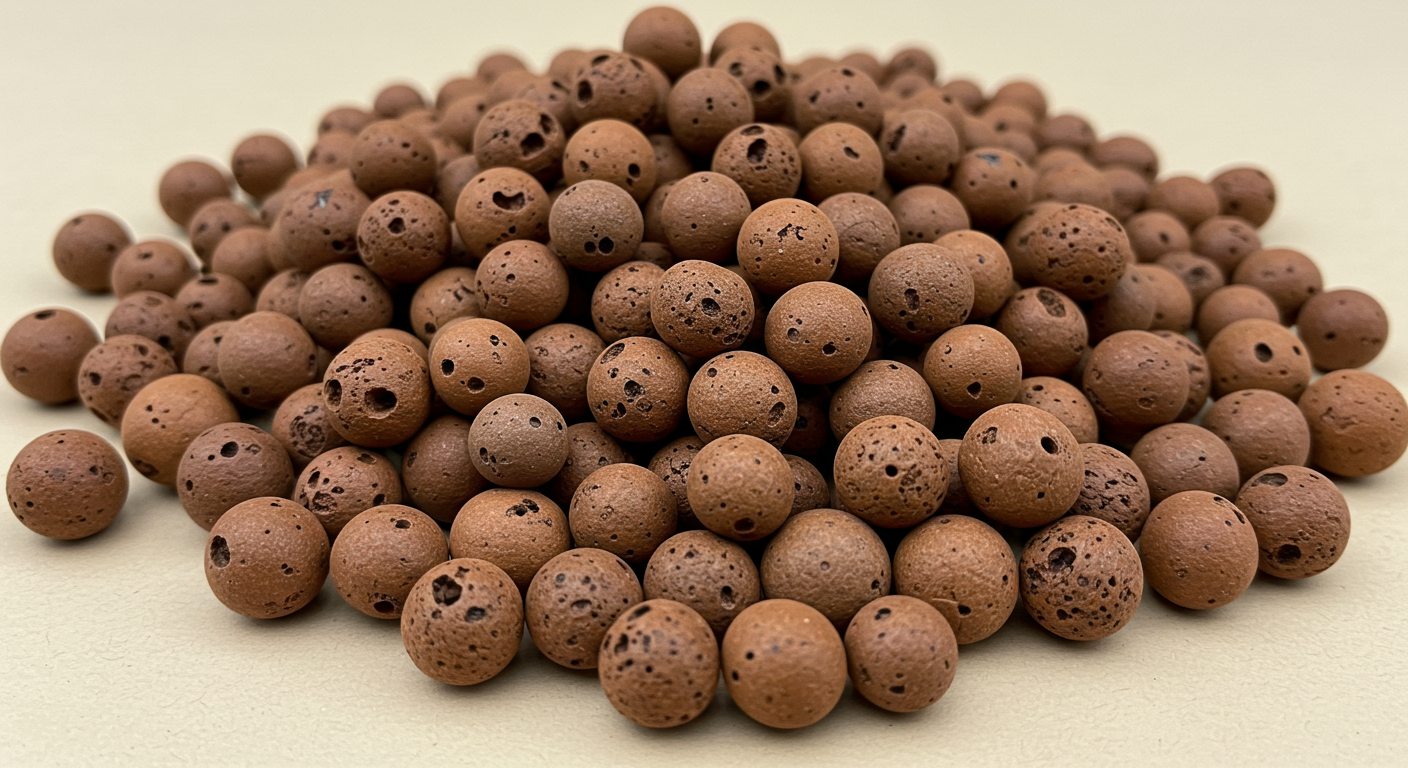
They are best known as hydroponic media, where they support roots and provide strong air space. They can also be used carefully in some potting setups, but they should not be misunderstood.
What Clay Pebbles Do Well
Expanded clay pebbles can help:
- Support roots in hydroponic systems
- Provide air space in net pots
- Reduce compaction in some mixes when used carefully
- Protect drainage hole areas when used as a very thin clean layer
- Add structure to certain semi-hydro or experimental systems
They are clean and useful when they are commercially produced, rinsed, and used for the correct purpose.
Where Clay Pebbles Can Go Wrong
In soil containers, clay pebbles are not a complete drainage solution. A thick layer at the bottom of the pot does not automatically fix drainage. It does not fix overwatering. It does not make a dense soil breathable.
If clay pebbles are mixed into soil in large amounts, the medium can become uneven and dry in strange ways. If they are used as a thick bottom layer, root volume is reduced.
Clay pebbles should also never be replaced with random round stones from outdoors.
LECA and Hydroton are useful growing materials when they are clean and commercial. Unknown stones are contamination risks, not shortcuts.
The bottom-layer debate gets its own section later because it is one of the most misunderstood container-growing topics.
Rice Hulls
Rice hulls are the outer husks of rice grains. In organic soil building, they are often used as a renewable aeration amendment.
They create pore space when fresh and slowly break down over time. This makes them useful in living soil and organic systems where the grower wants aeration and organic matter cycling.
What Rice Hulls Do Well
Rice hulls can help:
- Improve aeration
- Reduce compaction
- Add organic matter over time
- Support living soil structure
- Replace some perlite in organic mixes
- Fit well with sustainability-focused soil building
Rice hulls are especially useful when a grower wants a more natural amendment than perlite.
Where Rice Hulls Can Go Wrong
Rice hulls do not last forever. As they break down, the structure of the mix changes. A soil that was airy at the beginning may become denser later if rice hulls were the only aeration amendment.
Rice hulls should also be clean and intended for horticultural use. Unknown agricultural waste can carry contamination risks.
In long-term reusable soil, rice hulls often work best when combined with a more durable amendment such as pumice or lava rock.
Rice hulls are good organic aeration, but they are not permanent structure.
Coarse Coco Chips
Coarse coco chips are larger pieces of coconut husk. They behave differently from fine coco coir or coco dust.
They can hold water while still creating air space. This makes them useful in some potting mixes, orchid-style mixes, and cannabis blends where the grower wants a balance between moisture and oxygen.
What Coarse Coco Chips Do Well
Coarse coco chips can help:
- Improve structure
- Increase air space
- Hold some moisture
- Support root branching
- Reduce compaction in peat or compost-heavy mixes
Where Coarse Coco Chips Can Go Wrong
Coco materials should be washed and buffered properly. Poor-quality coco can contain excess salts or behave unpredictably with calcium and magnesium.
Fine coco dust can hold too much water and reduce air space. Coarse chips are not the same as fine coco powder.
Use horticultural-grade coco from a reliable source. Do not use random coconut fiber or landscape material in cannabis pots.
Coarse Sand
Sand is one of the most misunderstood soil amendments.
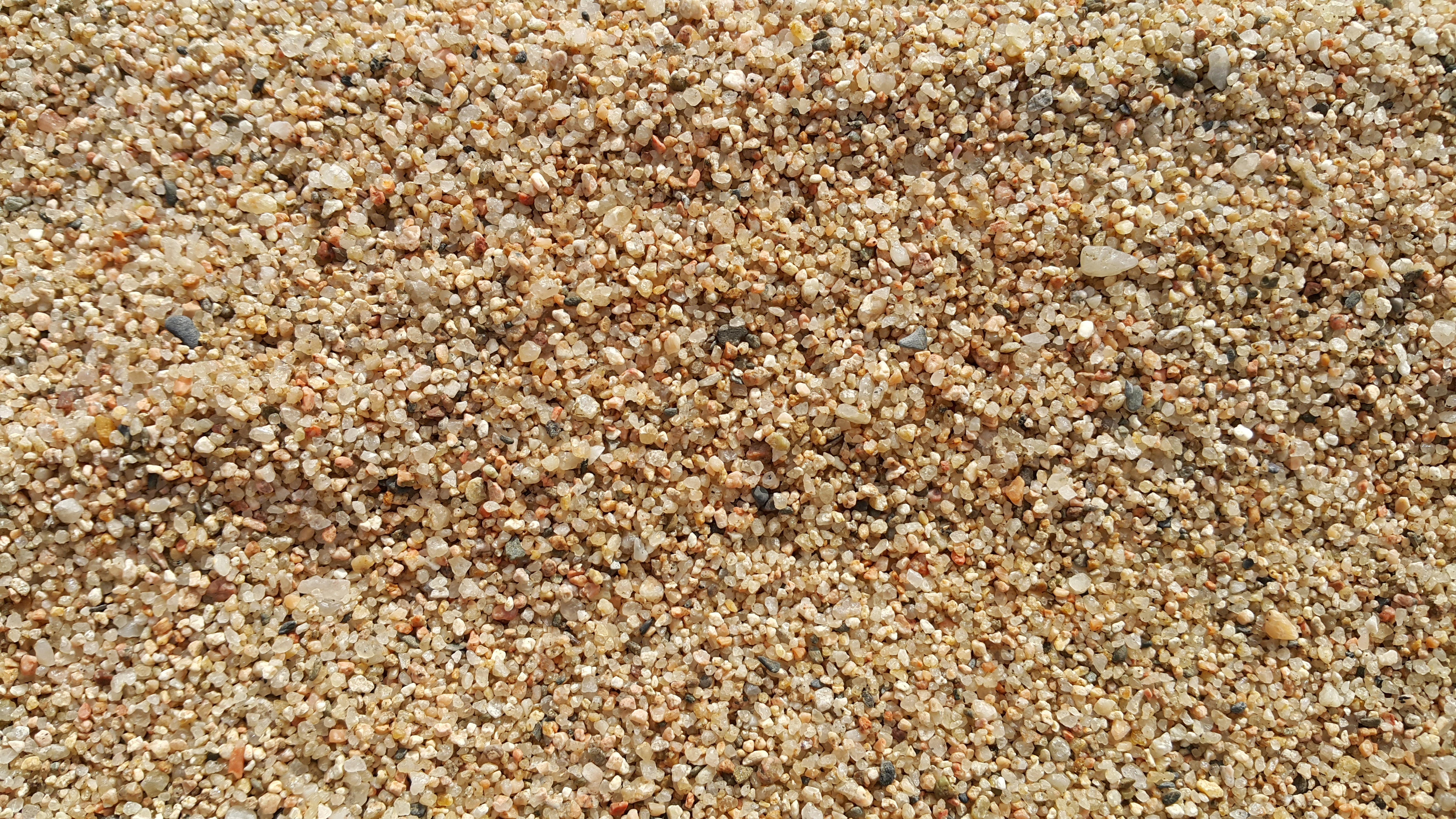
Some growers hear that sand improves drainage and assume any sand can be mixed into cannabis soil. That is not true.
Sand can help only when it is coarse, clean, and used with purpose. Fine sand, beach sand, play sand, roadside sand, or random sand can make a cannabis medium worse.
When Sand Can Help
Coarse horticultural sand or washed sharp sand can sometimes improve structure in a potting mix. It can add weight, improve drainage, and create larger pore spaces when used correctly.
It may be useful in:
- Certain cactus-style mixes
- Very specific outdoor soil corrections
- Small percentages in custom potting media
- Situations where coarse mineral structure is needed
When Sand Can Hurt
Fine sand can fill pore spaces and make soil denser. In clay-heavy soil, adding a small amount of sand can make the structure worse instead of better. The result may become compact, heavy, and hard to drain.
Beach sand may contain salt. Roadside sand may contain contaminants. Construction sand of unknown source may contain unwanted dust, chemicals, or debris.
Do not add random sand to cannabis soil.
If the goal is beginner-friendly aeration, perlite or pumice is usually safer and easier to control than sand.
Weedth Field Note: Sand Is Not Always an Amendment
Sand sounds simple, but it can create serious problems when used casually.
A grower may think, “My soil is heavy, so I will add sand.” But if the sand is fine and the soil is clay-heavy, the mix can become denser. Water may move poorly. Roots may struggle. The grower may end up with a pot that dries on top but stays wet and compacted below.
Sand should not be used unless you know the particle size, source, and purpose.
For most cannabis growers, especially beginners, perlite or pumice is the better first choice for aeration.
“Why is the top of my pot dry while the lower soil still feels wet?”
Question sent by: Hannah Miller, via Facebook page.
The top layer can dry from airflow and light while deeper soil holds water. That is why judging only the surface can lead to overwatering, especially in large pots or dense mixes.
Water-Retention Amendments: Holding Moisture Without Suffocating Roots
Not every cannabis soil problem comes from too much water. Some media dry too fast. Sandy soil, small fabric pots, hot outdoor containers, strong airflow, and high-light indoor setups can dry the root zone quickly.
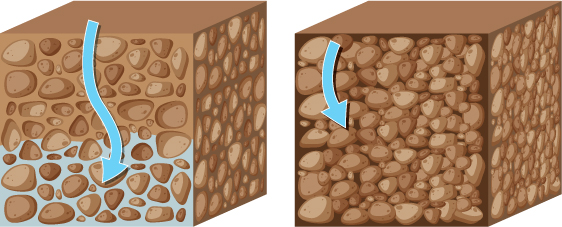
Water-retention amendments help a medium hold moisture longer. They can protect seedlings, reduce watering frequency, and support microbial life.
But this category must be handled carefully.
A water-retention amendment helps only when the medium still has enough oxygen.
If the base mix is already heavy and wet, adding more water-holding material can create root problems.
Vermiculite
Vermiculite is an expanded mineral that holds water and nutrients. It is often used in seed-starting mixes and some potting blends.

What Vermiculite Does Well
Vermiculite can help:
- Hold moisture
- Hold some nutrients
- Support seedling establishment
- Improve sandy mixes that dry too fast
- Reduce watering frequency in dry conditions
It can be useful in small amounts when the grower needs more moisture retention.
Where Vermiculite Can Go Wrong
Too much vermiculite can keep cannabis soil too wet. This is especially risky in humid grow rooms, large containers, dense potting mixes, or beginner setups where watering is already too frequent.
Vermiculite is not a replacement for aeration. It should not be used to fix compact soil.
For cannabis, vermiculite is usually more useful as a minor support ingredient than as a major part of the mix.
Use vermiculite when the medium dries too fast, not when the medium already stays wet.
Peat Moss
Peat moss is widely used in potting mixes because it holds water well and creates a light texture when blended correctly.

It is often part of commercial soilless mixes. It is usually combined with perlite and lime because peat is naturally acidic.
What Peat Does Well
Peat can help:
- Hold moisture
- Create a lightweight base
- Support roots in container mixes
- Buffer some nutrient movement
- Work well with perlite and lime
Where Peat Can Go Wrong
Peat can become hydrophobic when it dries too much. This means it may resist water. A grower may water the pot and see runoff, but the center of the root ball may remain dry.
Peat is also acidic and usually needs pH buffering. It is also less sustainable than some alternatives because it forms slowly in natural wetlands.
Peat works best when it is part of a balanced mix, not when it is treated as a complete cannabis medium by itself.
Coco Coir as an Amendment
Coco coir can be used as a main medium or as part of a soil mix. When used as an amendment, it can improve water retention, texture, and root-zone oxygen.
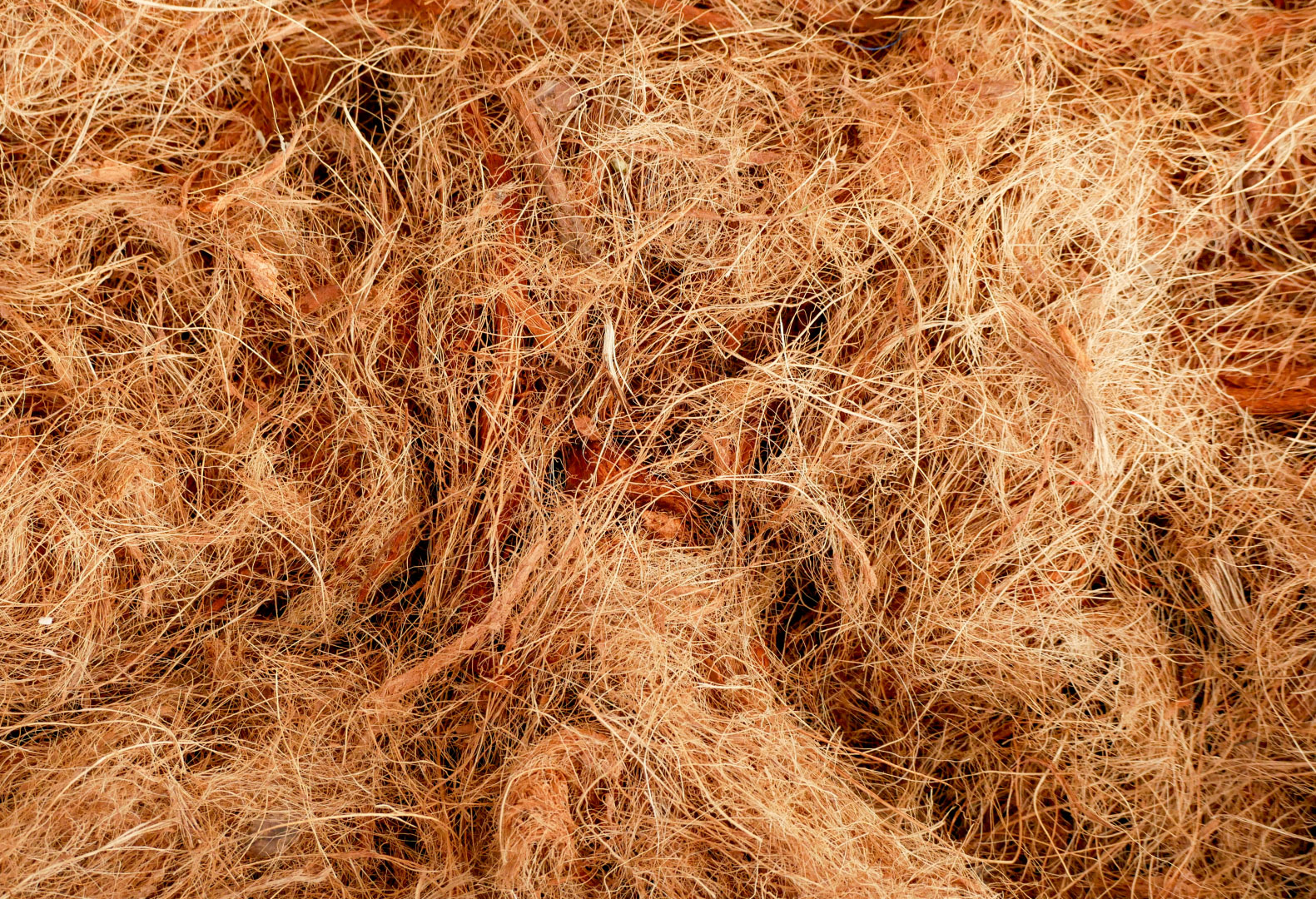
What Coco Does Well
Coco can help:
- Hold moisture while staying airy
- Improve structure
- Reduce peat dependence
- Support fast root growth
- Lighten dense mixes
Where Coco Can Go Wrong
Coco must be clean, washed, and properly buffered. Poor coco may contain salts or create calcium-magnesium issues.
Coco also changes the way a mix behaves. A soil-coco blend may need different watering and feeding than a classic peat-compost-perlite soil.
If coco becomes a major part of the medium, the grower should understand coco management, especially pH and calcium-magnesium balance.
Leaf Mold
Leaf mold is decomposed leaf material. It can improve soil texture, moisture retention, and biological activity.
In outdoor beds and living soil systems, clean leaf mold can be valuable. It gives soil a forest-like structure and supports microbial life.
What Leaf Mold Does Well
Leaf mold can help:
- Improve water retention
- Support soil structure
- Add organic matter
- Feed soil biology
- Improve outdoor beds over time
Where Leaf Mold Can Go Wrong
Leaf mold should be mature and clean. Unknown outdoor leaf mold should not be brought into indoor cannabis pots. It can carry pests, eggs, larvae, fungal spores, weed seeds, or disease organisms.
Indoor growers should use reliable commercial composted materials rather than collecting unknown forest material.
A forest floor can look alive, but that does not mean it belongs in an indoor cannabis pot.
Composted Bark and Pine Bark Fines
Composted bark and pine bark fines are common in container media. They can improve structure, drainage, and water-holding balance.

What Composted Bark Does Well
Composted bark can help:
- Improve structure
- Reduce compaction
- Support drainage
- Hold some moisture
- Add organic matter over time
Where Composted Bark Can Go Wrong
Large bark chunks can create an uneven cannabis root zone. Fresh or poorly composted bark may temporarily tie up nitrogen as it decomposes. Some bark products may be too coarse for small pots.
Use composted, horticultural-grade bark products, not random mulch from outdoors.
Organic Matter Amendments: Feeding Soil Structure and Biology
Organic matter amendments improve the living and physical side of soil. They can feed microbes, improve texture, hold nutrients, and help buffer moisture.
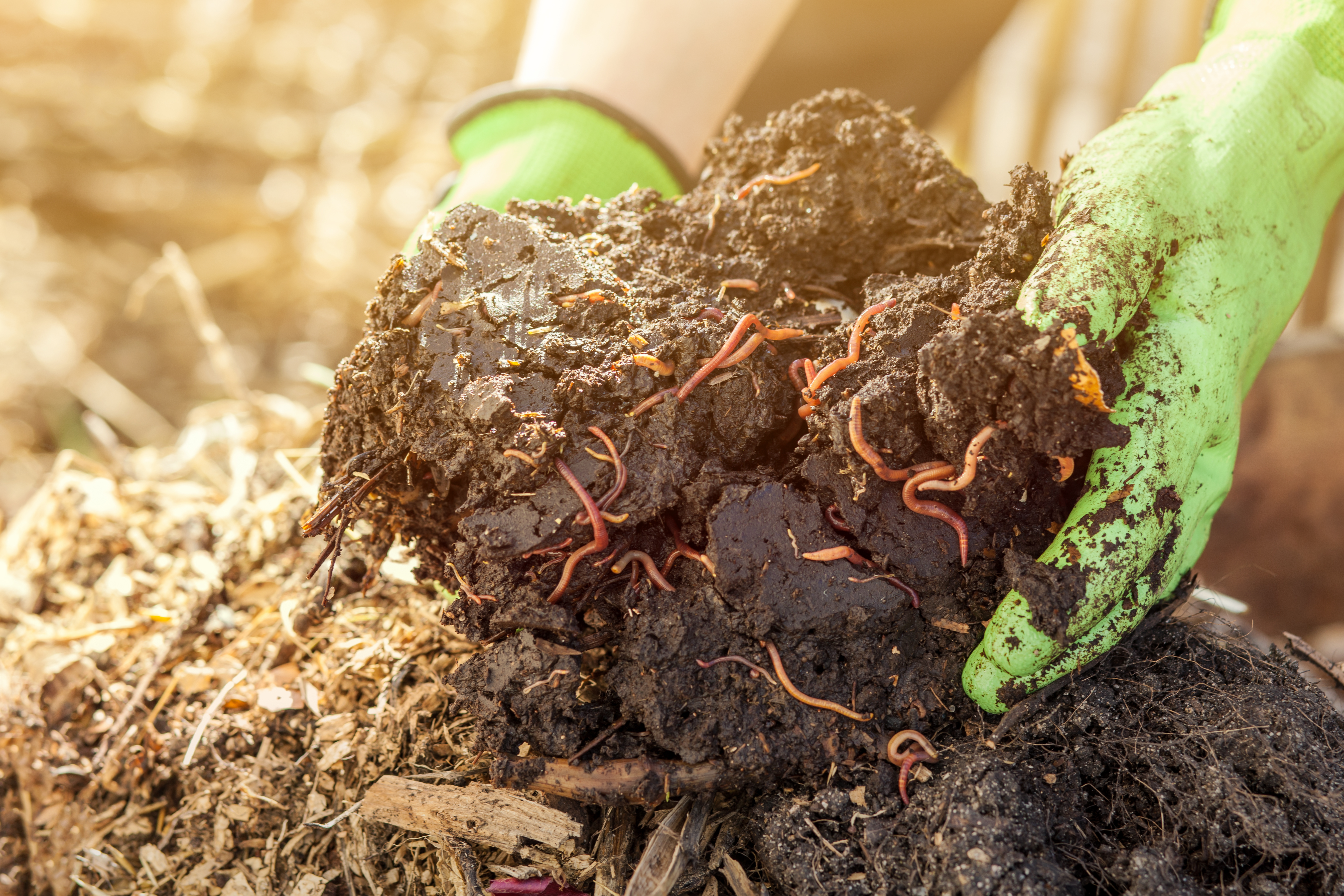
But they can also cause problems when they are immature, contaminated, overloaded, or too dense.
Organic matter is powerful, but it must be clean, mature, and balanced.
Bad compost can create more problems than it solves.
Compost should smell clean, look finished, and feel stable. Sour, hot, salty, pest-heavy, or unfinished compost can damage roots and introduce problems into an otherwise good mix.
Compost
Compost is decomposed organic material. In cannabis soil, it can improve structure, nutrient cycling, microbial life, and water-holding ability.
Good compost smells earthy. It feels mature and stable. It should not be slimy, sour, hot, ammonia-like, rotten, or full of undecomposed scraps.
What Compost Does Well
Compost can help:
- Add organic matter
- Support microbial life
- Improve soil structure
- Hold nutrients
- Improve moisture buffering
- Support outdoor ground soil improvement
- Feed living soil systems
Where Compost Can Go Wrong
Poor compost can introduce pests, weed seeds, pathogens, salts, or unstable nutrients. Too much compost can make a potting mix heavy and wet. In indoor cannabis pots, compost quality matters even more because any pest or pathogen problem can spread quickly.
Compost is not automatically safe because it is natural.
Use compost like a soil-building tool, not like filler.
Worm Castings
Worm castings are worm-processed organic matter. They are one of the most useful mild amendments for cannabis soil.

They provide gentle nutrition, microbial life, improved texture, and better buffering. They are often used in seedling mixes, living soil, top-dressing, and compost-based blends.
What Worm Castings Do Well
Worm castings can help:
- Add mild nutrients
- Support microbial activity
- Improve moisture and nutrient holding
- Improve soil texture
- Make mixes more forgiving
- Support seedlings when used lightly
Where Worm Castings Can Go Wrong
Worm castings can be overused. Too much can make the medium dense and wet. Poor-quality castings may contain pests, excess moisture, or undecomposed material.
Worm castings are excellent support, but they are not a complete soil recipe by themselves.
Worm castings help build a better medium, but the medium still needs aeration.
Humus
Humus is stable organic matter that has decomposed deeply. It improves nutrient holding, water buffering, and microbial habitat.
In high-quality soil, humus is one reason the medium feels rich but still stable. It helps the soil hold nutrients without sharp swings.
What Humus Does Well
Humus can help:
- Increase nutrient holding
- Improve soil structure
- Support microbial habitat
- Improve moisture buffering
- Make soil more resilient
Where Humus Can Go Wrong
The term “humus” is sometimes used loosely in products. Quality can vary widely. Unknown outdoor humus should not be brought indoors because of contamination risk.
Use reliable sources and do not assume every dark organic material is good humus.
Aged Manure
Aged manure can be useful in outdoor soil building, but it requires caution. Fresh manure should not be used in cannabis pots.
What Aged Manure Can Do Well
Properly composted or aged manure can help:
- Add organic matter
- Supply nutrients
- Improve outdoor soil fertility
- Support microbial activity
- Improve poor ground soil over time
Where Manure Can Go Wrong
Fresh manure can be too hot. It can contain pathogens, weed seeds, salts, ammonia, or excessive nitrogen. It can burn plants and create pest problems.
For indoor cannabis, manure is generally not a beginner-friendly amendment. For outdoor beds, it should be well-composted, clean, and used with care.
Do not use fresh manure in cannabis potting soil.
Charged biochar is biochar that has been preloaded.
Fresh biochar can temporarily hold nutrients instead of sharing them with the plant. Charging it with compost, castings, or a mild nutrient source helps it enter the soil as habitat instead of a nutrient sponge.
Biochar
Biochar is carbon-rich material made by heating organic matter with limited oxygen. In soil, it can improve nutrient holding, microbial habitat, and long-term structure.
Biochar is not fertilizer in the normal sense. It works more like a long-term soil framework.
What Biochar Does Well
Biochar can help:
- Improve nutrient holding
- Create microbial habitat
- Support long-term soil structure
- Improve water behavior in some soils
- Fit well in living soil and outdoor beds
Where Biochar Can Go Wrong
Raw biochar can temporarily bind nutrients. This is why many growers charge or inoculate biochar before using it. Charging can be done by mixing it with compost, worm castings, nutrient solution, or biologically active material before adding it to the final mix.
Too much biochar can also change the soil in ways the grower does not understand yet.
Biochar should be charged before heavy use. Treat it as a long-term soil-building amendment, not an instant plant food.
Wood Chips and Woody Material
Wood chips can be useful as surface mulch, especially outdoors. They protect the soil surface, reduce evaporation, and slowly break down.
But mixing large amounts of fresh wood chips into cannabis potting soil is usually not a good idea.
What Wood Chips Do Well
As mulch, wood chips can help:
- Protect soil surface
- Reduce evaporation
- Buffer temperature
- Feed soil life slowly
- Improve outdoor beds over time
Where Wood Chips Can Go Wrong
When mixed into the root zone, fresh woody material can temporarily tie up nitrogen as microbes break it down. It can also create uneven texture in containers.
Wood chips are usually better on top of the soil than mixed deeply into cannabis pots.
Use woody mulch as a surface tool, not as a major potting soil ingredient.
| Amendment | Primary Function | Air / Water Effect | Best Use | Caution |
|---|---|---|---|---|
| Perlite | Improves drainage and air space | More oxygen, less water holding | Heavy mixes and indoor containers | Too much can dry the pot too quickly |
| Pumice | Long-term aeration and structure | Balanced air and moisture support | Reusable soil and living soil beds | Can be heavy in large containers |
| Vermiculite | Moisture retention | Holds more water around roots | Dry climates and fast-drying mixes | Can make wet soils stay too wet |
| Compost | Biology and organic matter | Improves structure when mature | Living soil and outdoor beds | Poor compost can bring salts, pests, or imbalance |
| Biochar | Habitat for microbes and nutrient holding | Can improve structure over time | Long-term soil building | Should be charged before use |
Comparing Physical Amendments by Function
The easiest way to understand amendments is to compare what they actually do.
| Amendment | Main Function | Best Use | Main Risk |
|---|---|---|---|
| Perlite | Aeration and drainage | Beginner soil, coco mixes, heavy potting soil | Too much can dry fast and float upward |
| Pumice | Durable aeration | Living soil, reusable mixes, outdoor containers | Heavy and sometimes expensive |
| Lava rock | Durable structure | Outdoor containers, long-term soil, mineral aeration blends | Must be clean, properly sized, and commercial |
| LECA / Hydroton | Root support and air space | Hydroponics, net pots, very thin hole-protection layer | Does not fix overwatering or dense soil |
| Rice hulls | Organic aeration | Living soil and organic mixes | Breaks down over time |
| Coarse coco chips | Structure and moisture balance | Coco blends, airy potting mixes | Must be clean and buffered |
| Coarse sand | Mineral structure | Specific mixes with clean sharp sand | Fine or random sand can worsen soil |
| Vermiculite | Water and nutrient retention | Seedling mixes, dry sandy media | Too much keeps cannabis too wet |
| Peat moss | Moisture-holding base | Potting mixes and soilless media | Can become hydrophobic and acidic |
| Coco coir | Moisture and aeration balance | Soilless grows and soil blends | Needs buffering and pH awareness |
| Compost | Organic matter and biology | Living soil, outdoor beds, potting mixes | Poor compost can bring pests or pathogens |
| Worm castings | Mild nutrition and microbes | Seedlings, living soil, top-dress | Too much can make soil dense |
| Biochar | Nutrient holding and microbial habitat | Living soil and long-term beds | Should be charged before use |
Weedth Rule: Do Not Build Soil by Trend
Cannabis soil building becomes much easier when you stop chasing trends.
A grower may see one person using pumice, another using rice hulls, another using biochar, another using kelp, another using living mulch, and another using clay pebbles. All of those can have a place. None of them belong everywhere.
The right question is not “What is everyone using?”
The right question is:
What does my root zone need more of right now: air, water retention, organic matter, minerals, biology, or stability?
If the mix is too wet, add structure and improve watering. If it dries too fast, improve moisture retention and mulch. If pH is unstable, test before buffering. If soil biology is weak, improve compost quality and organic matter. If nutrition is low, choose amendments that match the actual deficiency and plant stage.
Soil amendments are not decorations. They are root-zone decisions.
Where This Guide Goes Next
This part covered the physical and organic foundation of cannabis amendments: aeration, water retention, compost, worm castings, biochar, and structural materials.
The next part goes deeper into mineral, pH, nutrient, microbial, and surface amendments. That includes lime, gypsum, sulfur, rock dust, greensand, Epsom salt, kelp meal, alfalfa meal, neem meal, bone meal, blood meal, guano, langbeinite, mycorrhizae, beneficial bacteria, Trichoderma, nematodes, compost teas, mulch, cover crops, and top-dressing.
The goal remains the same:
Every amendment should have a job, and every job should support a healthier root zone.
Mineral, pH, Nutrient, Biological, and Surface Amendments
The previous part covered the physical and organic foundation of cannabis soil amendments. Perlite, pumice, lava rock, rice hulls, coarse sand, compost, worm castings, peat, coco, and biochar all change how the medium holds air, water, organic matter, and structure.
This part moves into the amendments that change soil chemistry, nutrient balance, microbial activity, and surface protection.
These amendments can be powerful. They can also create problems when they are added without a soil test, a clear reason, or an understanding of how slowly they work.
A cannabis grower should never add mineral or nutrient amendments just because they sound beneficial.
The question stays the same:
What job does this amendment do in the root zone?
If it raises pH, that matters. If it lowers pH, that matters. If it adds calcium, magnesium, sulfur, phosphorus, potassium, nitrogen, trace minerals, microbes, or surface protection, the grower should know that before it goes into the mix.
Soil building is not about collecting ingredients. It is about making root-zone decisions with purpose.
Change soil chemistry slowly and with a reason.
Use lime, sulfur, gypsum, and mineral amendments only when the soil condition actually calls for them.
Do not stack mineral fixes blindly.
Adding several chemistry-changing inputs at once can make pH, calcium, magnesium, and salt behavior harder to read.
Important: Mineral amendments change the soil slowly. If you add them after a problem appears, expect gradual movement rather than an instant correction.
Mineral and pH Amendments: Changing Soil Chemistry Carefully
Mineral and pH amendments can shape how nutrients behave in the root zone. They can buffer acidity, supply calcium or magnesium, support sulfur levels, improve some clay soils, or add trace minerals.
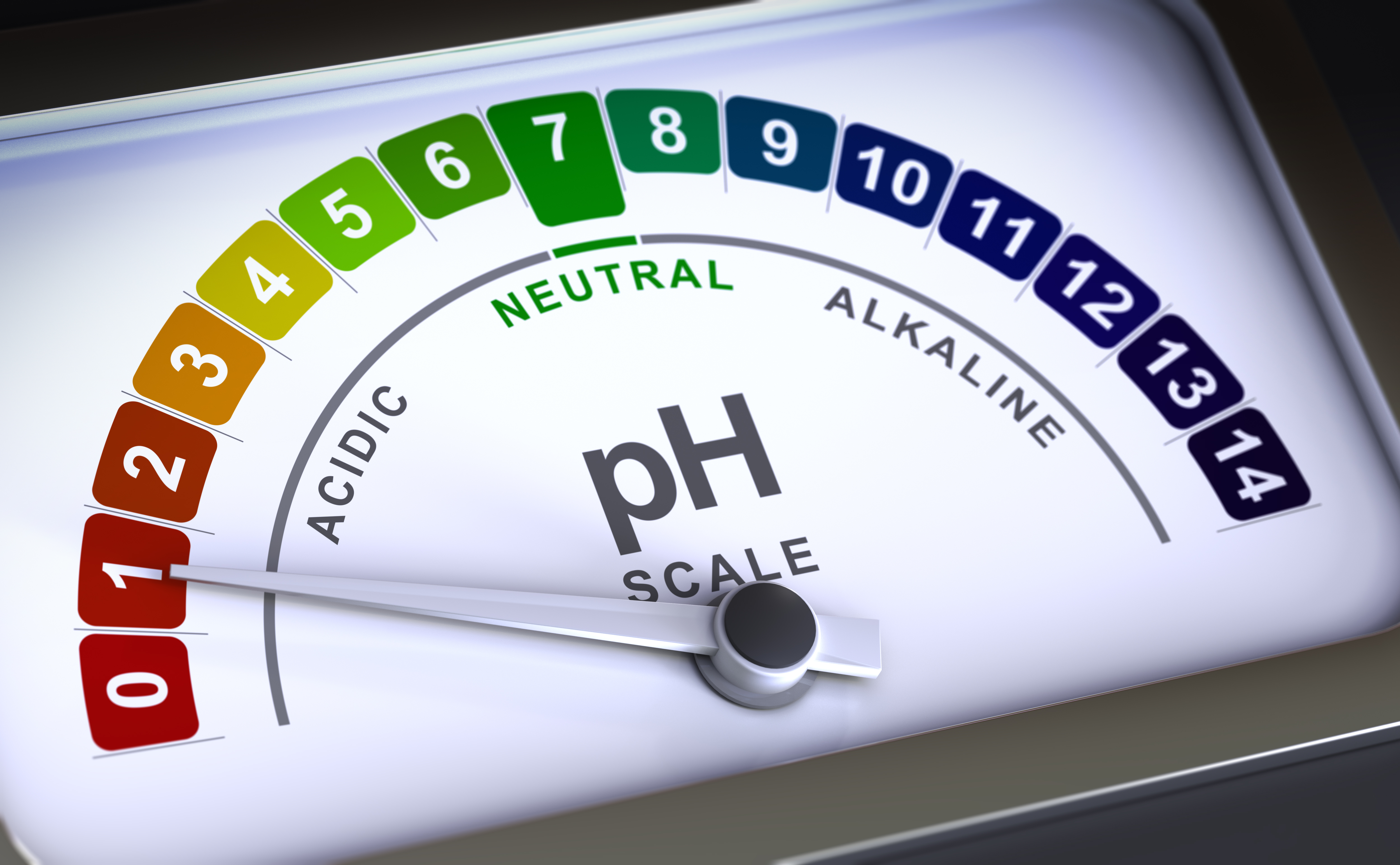
But they can also cause lockout, pH imbalance, salt stress, or nutrient antagonism when used blindly.
This category needs extra caution because pH and mineral balance affect nutrient availability. A grower can create deficiency symptoms by adding the wrong amendment to the wrong soil.
Do not guess with pH amendments. Test first when possible.
Dolomite Lime
Dolomite lime is a calcium-magnesium carbonate amendment. It is often used in peat-based mixes because peat is naturally acidic.
Dolomite lime raises and buffers pH while also supplying calcium and magnesium. It is common in many potting mixes and organic soil recipes.
What Dolomite Lime Does Well
Dolomite lime can help:
- Raise acidic soil pH
- Buffer peat-based mixes
- Supply calcium
- Supply magnesium
- Stabilize soil chemistry over time
- Reduce sharp pH swings in some organic mixes
It can be useful when the base medium is acidic and the plant needs a more stable soil pH range.
Where Dolomite Lime Can Go Wrong
Dolomite lime should not be added blindly. If the soil is already neutral or alkaline, adding lime can push pH too high. That can reduce availability of iron, manganese, zinc, phosphorus, and other nutrients.
Too much dolomite can also create an imbalance between calcium, magnesium, and potassium. Cannabis does not benefit from calcium and magnesium just because they are present in larger amounts. Balance matters.
Dolomite lime is a buffer, not a universal soil improver.
Use it when the medium actually needs pH buffering or calcium-magnesium support.
Calcitic Lime and Agricultural Lime
Calcitic lime, sometimes called agricultural lime, is mainly calcium carbonate. It raises acidic soil pH and supplies calcium, but it does not supply magnesium like dolomite lime.
What Calcitic Lime Does Well
Calcitic lime can help:
- Raise acidic soil pH
- Supply calcium
- Buffer some outdoor soils
- Improve pH conditions in acidic media
It may be a better choice than dolomite when the soil needs calcium but does not need additional magnesium.
Where Calcitic Lime Can Go Wrong
Like dolomite, calcitic lime should be used based on pH and soil needs. Adding it to alkaline soil can make nutrient availability worse.
It also works slowly. It is not an instant fix for a plant that is already showing fast-moving deficiency symptoms.
Lime is a soil preparation tool, not an emergency rescue product.
Gypsum
Gypsum is calcium sulfate. It supplies calcium and sulfur, but it does not raise pH the same way lime does.
This makes gypsum useful when a grower wants calcium or sulfur without strongly pushing pH upward.
What Gypsum Does Well
Gypsum can help:
- Supply calcium
- Supply sulfur
- Support soil structure in certain clay or sodium-affected soils
- Add calcium without using lime
- Support organic soil and living soil mineral balance
Sulfur matters more than many beginners realize. It supports amino acids, enzymes, and plant metabolism. It also plays a role in aroma-related plant chemistry, although it should not be treated as a direct flavor additive.
Where Gypsum Can Go Wrong
Gypsum is sometimes oversold as a clay soil miracle. It can help some clay soils, especially when sodium is involved, but it does not magically fix every heavy clay problem.
If the main problem is poor drainage, compaction, or lack of organic matter, gypsum alone will not solve it. The soil may still need compost, structure, raised beds, aeration planning, and better water movement.
Gypsum can support soil chemistry, but it does not replace physical soil improvement.
Elemental Sulfur
Elemental sulfur is used to lower pH in alkaline soils. Soil microbes convert sulfur into sulfuric acid over time, which can gradually acidify the soil.
What Elemental Sulfur Does Well
Elemental sulfur can help:
- Lower alkaline soil pH over time
- Improve nutrient availability in high-pH soils
- Support outdoor soil correction when used carefully
It is more common in outdoor ground soil management than in small indoor cannabis pots.
Where Elemental Sulfur Can Go Wrong
Elemental sulfur works slowly and depends on microbial activity, moisture, temperature, and soil conditions. It is not an instant pH-down product.
Too much sulfur can push pH too low and damage roots. It can also create uneven pH zones if mixed poorly.
For cannabis, this should be used carefully and usually after a soil test.
Do not use sulfur casually in a small container. pH correction should be measured, not guessed.
Rock Dust and Basalt Dust
Rock dusts are finely ground mineral materials. Basalt dust and similar products are used in living soil and regenerative systems to provide slow-release trace minerals and mineral diversity.
They are not quick fertilizers. They work slowly and are more about long-term soil building than immediate plant feeding.
What Rock Dust Does Well
Rock dust can help:
- Add trace minerals
- Support long-term living soil systems
- Improve mineral diversity
- Feed slow soil processes over time
- Fit into no-till or reusable soil programs
Where Rock Dust Can Go Wrong
Rock dust is often overused because it sounds natural and complete. But more trace minerals are not always better. Heavy applications can create imbalance, dust exposure, or contamination risk depending on source quality.
Quality matters. Mineral amendments should come from reliable sources and should be appropriate for horticultural use.
Rock dust is a long-term soil amendment, not a fast correction for weak plants.
Greensand
Greensand is a mineral amendment often used for potassium and trace minerals. It releases slowly and is more common in organic soil systems.
What Greensand Does Well
Greensand can help:
- Supply slow-release potassium
- Add trace minerals
- Support long-term soil fertility
- Fit into organic and living soil systems
Where Greensand Can Go Wrong
Greensand works slowly. It will not correct an immediate potassium deficiency during heavy flowering. If a plant needs fast correction, a slow mineral amendment may arrive too late.
It should be used as part of soil preparation, not panic feeding.
Greensand is slow soil support, not a bloom emergency tool.
Epsom Salt
Epsom salt is magnesium sulfate. It supplies magnesium and sulfur in a soluble form.
It can be useful when magnesium deficiency is correctly identified, especially if the growing system lacks magnesium or water is very low in dissolved minerals.
What Epsom Salt Does Well
Epsom salt can help:
- Supply magnesium
- Supply sulfur
- Correct a confirmed magnesium shortage
- Support systems where calcium and magnesium balance is understood
Where Epsom Salt Can Go Wrong
Epsom salt is often used too casually. Interveinal yellowing does not always mean magnesium deficiency. pH lockout, root stress, salt buildup, overwatering, or nutrient imbalance can create similar symptoms.
Adding magnesium when the real issue is pH or root damage can make the nutrient balance worse.
Use Epsom salt only when the problem points clearly toward magnesium need, not as a default plant tonic.
| Amendment | Main Function | Best Use | Main Risk |
|---|---|---|---|
| Dolomite lime | Raises pH, adds calcium and magnesium | Acidic peat-based mixes | Can push pH too high or add too much magnesium |
| Calcitic lime | Raises pH, adds calcium | Acidic soil needing calcium but not magnesium | Wrong for alkaline soil |
| Gypsum | Adds calcium and sulfur | Calcium support without strong pH increase | Does not fix all clay or drainage problems |
| Elemental sulfur | Lowers pH slowly | Alkaline outdoor soil correction | Can over-acidify if misused |
| Basalt or rock dust | Trace minerals | Long-term living soil | Slow, not an emergency feed |
| Greensand | Slow potassium and trace minerals | Organic soil preparation | Too slow for urgent deficiency |
| Epsom salt | Magnesium and sulfur | Confirmed magnesium need | Can worsen imbalance if guessed |
Pro Tip: Every amendment should answer one clear question: does this improve air, water, biology, structure, pH, mineral balance, or nutrient supply?
Nutrient Amendments: Feeding the Soil Without Overloading It
Nutrient amendments supply plant nutrients. Some are organic meals. Some are minerals. Some are animal-based. Some are plant-based. Some release quickly. Some release slowly.
This is one of the easiest categories to misuse.
A beginner may think, “This amendment has nitrogen, that one has phosphorus, this one has potassium, and this one has minerals. I will add them all.” That can create a soil that is too hot, too salty, too rich, or badly imbalanced.
Cannabis does not need every nutrient source. It needs the right amount of available nutrition at the right stage.
Kelp Meal
Kelp meal is a dried seaweed amendment used in organic soil. It can supply potassium, trace minerals, and plant compounds that support soil biology and plant metabolism.
What Kelp Meal Does Well
Kelp meal can help:
- Supply potassium and micronutrients
- Support microbial activity
- Fit well in living soil blends
- Support top-dressing in small amounts
- Add diversity to organic nutrient programs
Kelp is popular because it is gentle compared with some stronger amendments, but it is still an input that affects the root zone.
Where Kelp Meal Can Go Wrong
Kelp should not be treated as a magic terpene booster. It can support plant health, but it does not directly create specific flavors in the bud.
Too much kelp can contribute to imbalance. Source quality also matters because sea-derived amendments can vary.
Kelp can support the system, but it does not replace balanced soil, good environment, harvest timing, drying, or curing.
Alfalfa Meal
Alfalfa meal is a plant-based amendment that supplies nitrogen and organic matter. It is used in organic soil and sometimes in teas or top-dresses.
What Alfalfa Meal Does Well
Alfalfa meal can help:
- Supply nitrogen
- Feed microbes
- Add organic matter
- Support vegetative soil fertility
- Fit into plant-based or veganic-style soil blends
Where Alfalfa Meal Can Go Wrong
Alfalfa meal can be too strong for seedlings or young plants if overused. It can heat up biologically as it breaks down and may contribute to excess nitrogen.
It should be used carefully in mixes that will hold seedlings or autoflowers.
Alfalfa is useful, but it belongs in a balanced soil plan, not in every mix at high rates.
Neem Meal and Karanja Meal
Neem meal and karanja meal are seed meals used in organic soil systems. They supply nitrogen and organic matter. Many growers also value them because they can support soil pest management as part of a broader integrated system.
What Neem and Karanja Meals Do Well
They can help:
- Supply slow nitrogen
- Feed microbes
- Add organic matter
- Support living soil fertility
- Fit into organic top-dressing programs
Where Neem and Karanja Meals Can Go Wrong
They can stress plants if overused. They can be too strong for seedlings. They can also have odor and quality variations depending on source.
They should not be treated as a replacement for real pest management. If the root zone is constantly wet and fungus gnats are thriving, neem meal alone will not fix the watering problem.
Neem meal can support a soil system, but it does not excuse poor moisture control.
Bone Meal
Bone meal is an animal-based amendment that supplies phosphorus and calcium. It is used in some organic soil recipes, especially for flowering support.
What Bone Meal Does Well
Bone meal can help:
- Supply slow phosphorus
- Supply calcium
- Support long-term flowering nutrition
- Fit into pre-amended organic soil
Where Bone Meal Can Go Wrong
Bone meal is slow. It is not a fast flowering booster. Its availability depends on soil biology and pH.
Too much phosphorus can cause nutrient imbalance and interfere with other nutrients. Bone meal is also not veganic, and in some indoor situations it may attract pests if soil is kept wet or poorly managed.
Do not add bone meal just because the plant is flowering. Use phosphorus amendments with purpose.
Fish Bone Meal
Fish bone meal is another animal-based phosphorus and calcium source. It is common in some organic flowering soil blends.
What Fish Bone Meal Does Well
Fish bone meal can help:
- Supply phosphorus
- Supply calcium
- Support flowering soil preparation
- Feed soil biology slowly
Where Fish Bone Meal Can Go Wrong
It can have odor. It may attract pests if used poorly. It can overload phosphorus if combined with too many other bloom amendments.
It should be mixed and cycled before planting when used in stronger soil blends.
Fish bone meal is a soil-building amendment, not a last-minute flavor or bloom trick.
Blood Meal
Blood meal is a strong nitrogen amendment. It releases faster than many other organic nitrogen sources and can be very powerful.

What Blood Meal Does Well
Blood meal can help:
- Supply fast organic nitrogen
- Correct nitrogen shortage in soil preparation
- Support vegetative growth when used carefully
Where Blood Meal Can Go Wrong
Blood meal can burn plants. It is risky for seedlings, autoflowers, and small containers when overused. It can create too much nitrogen and push plants into dark, leafy, clawed growth.
Late nitrogen excess can also hurt flower quality and final smoke.
Blood meal is not beginner-friendly unless the grower understands dosage and timing.
Bat Guano and Seabird Guano
Guano amendments can contain nitrogen, phosphorus, or both depending on type and source. They are used in some organic soil recipes and teas.
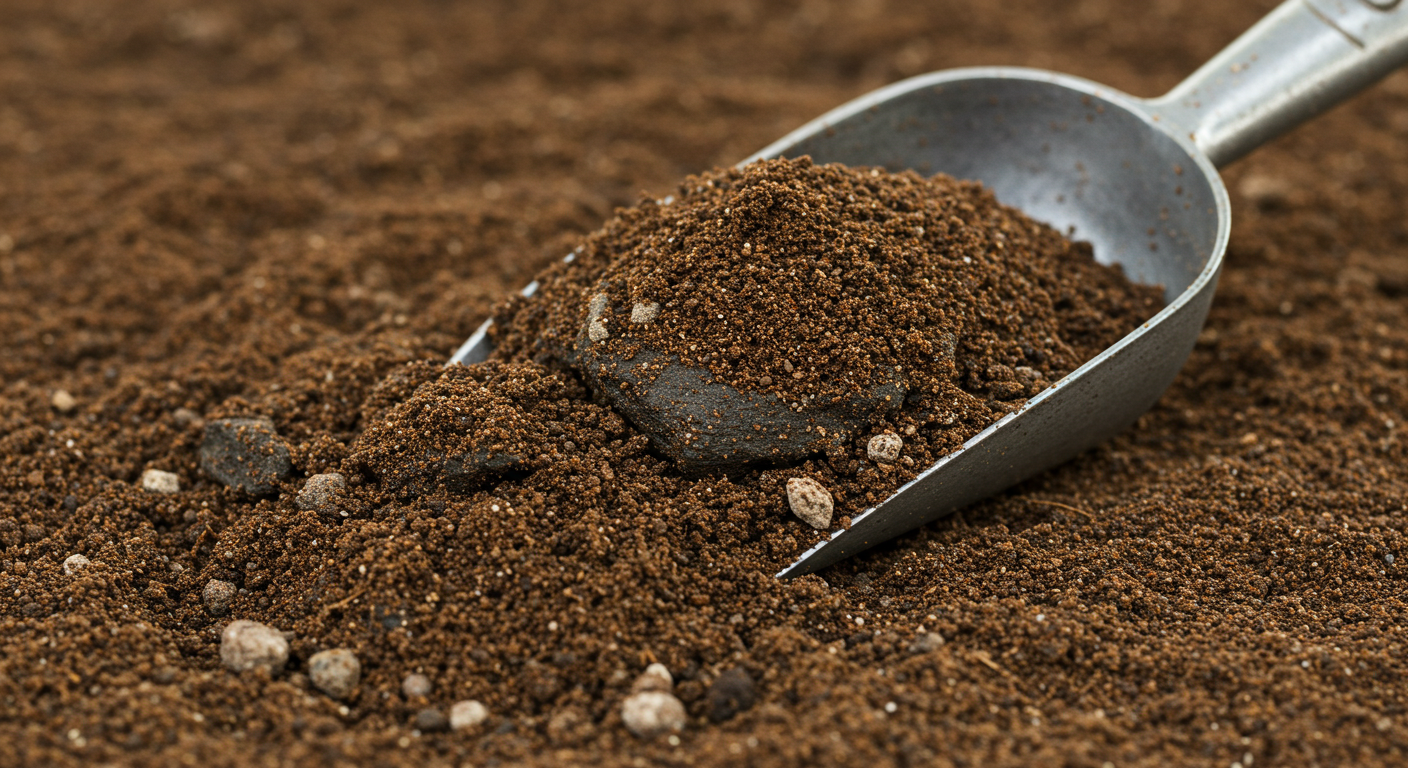
What Guano Can Do Well
Guano can help:
- Supply nitrogen or phosphorus
- Support organic soil fertility
- Add fast-to-medium nutrient availability compared with some meals
- Fit into certain top-dressing programs
Where Guano Can Go Wrong
Guano can be strong. Overuse can burn plants or overload phosphorus. Quality, sourcing, sustainability, and safety should also be considered.
Guano should not be treated as a required cannabis amendment. Many excellent organic soils are built without it.
If an amendment is strong, use less certainty and more caution.
Feather Meal
Feather meal is a slow-release nitrogen amendment made from processed feathers.
What Feather Meal Does Well
Feather meal can help:
- Supply slow nitrogen
- Support long-term vegetative fertility
- Fit into pre-amended organic soil
Where Feather Meal Can Go Wrong
Because it releases slowly, it may not correct an immediate nitrogen deficiency. If added too heavily, it can keep releasing nitrogen later than desired.
Late excess nitrogen can reduce flower quality, slow ripening, and make the final product harsher.
Slow-release nitrogen must be planned before flowering, not thrown in after symptoms appear.
Soybean Meal
Soybean meal is a plant-based nitrogen amendment sometimes used in veganic or plant-based soil systems.
What Soybean Meal Does Well
Soybean meal can help:
- Supply plant-based nitrogen
- Add organic matter
- Feed microbes
- Support veganic soil blends
Where Soybean Meal Can Go Wrong
It can become hot if overused or poorly mixed. Like other meals, it needs microbial processing. It should not be added heavily to seedling mixes.
Source quality matters. The grower should know what is being added and why.
Rock Phosphate
Rock phosphate is a slow-release phosphorus source.
What Rock Phosphate Does Well
Rock phosphate can help:
- Supply long-term phosphorus
- Fit into outdoor beds and living soil
- Support slow mineral fertility
Where Rock Phosphate Can Go Wrong
Phosphorus availability depends strongly on pH and soil biology. Rock phosphate is not a fast bloom correction.
Some phosphate materials can also raise quality concerns depending on source. Use horticultural-grade materials and avoid overuse.
Slow phosphorus is soil preparation, not instant flower fuel.
Langbeinite
Langbeinite, sometimes described as sulfate of potash magnesia, supplies potassium, magnesium, and sulfur.
What Langbeinite Does Well
Langbeinite can help:
- Supply potassium
- Supply magnesium
- Supply sulfur
- Support flowering nutrition in soil blends
- Avoid adding nitrogen when the plant needs potassium support
Where Langbeinite Can Go Wrong
It is still a mineral salt input. Too much can raise EC or create imbalance. It should be used carefully, especially in small containers.
Langbeinite can be useful, but it should be measured like a serious mineral amendment, not sprinkled casually.
Nutrient Amendment Comparison
| Amendment | Main Nutrient Role | Best Use | Main Risk |
|---|---|---|---|
| Kelp meal | Potassium, trace minerals | Living soil, mild top-dress | Overhyped as flavor booster |
| Alfalfa meal | Nitrogen and organic matter | Veg soil, plant-based blends | Can be too hot for seedlings |
| Neem meal | Slow nitrogen and organic matter | Living soil support | Does not fix poor watering or pests alone |
| Bone meal | Phosphorus and calcium | Pre-amended flowering soil | Too much phosphorus, not veganic |
| Fish bone meal | Phosphorus and calcium | Organic flowering blends | Odor and pest attraction risk |
| Blood meal | Fast nitrogen | Careful veg correction | Burns easily, too much N late flower |
| Guano | N or P depending on type | Organic soil and top-dress | Strong, easy to overuse |
| Feather meal | Slow nitrogen | Pre-amended soil | May release too late |
| Soybean meal | Plant-based nitrogen | Veganic soil | Can heat up if overused |
| Rock phosphate | Slow phosphorus | Long-term soil building | Too slow for emergency correction |
| Langbeinite | K, Mg, S | Flowering mineral support | EC and imbalance risk |
Biology supports roots; it does not replace good conditions.
Microbes, fungi, and extracts work best when moisture, oxygen, temperature, and organic matter are already reasonable. They cannot rescue a medium that is constantly soaked, overheated, compacted, or overloaded.
Microbial and Biological Amendments
Microbial amendments are used to support root-zone biology. They can be helpful, but they are often marketed as miracle solutions.
A microbial product cannot replace poor soil structure, bad compost, overwatering, dead roots, or unsuitable pH. Microbes need a livable environment. If the medium is compacted, sour, anaerobic, salty, or dry as dust, inoculants will struggle.
Microbial amendments work best when the root zone is already worth living in.
Mycorrhizal Fungi
Mycorrhizal fungi form relationships with roots. They can extend fine fungal threads into the soil and help increase the effective reach of the root system.
In cannabis soil, mycorrhizae are usually applied at transplant or placed in contact with roots.
What Mycorrhizae Do Well
Mycorrhizae can help:
- Support root exploration
- Improve water and nutrient access in some systems
- Support soil biology
- Improve plant resilience when established early
- Fit well in living soil and organic systems
Where Mycorrhizae Can Go Wrong
Mycorrhizae need root contact. Sprinkling them on the soil surface after the roots are already deep may not do much.
They also do not fix bad watering, bad pH, or dead soil. Some high-phosphorus or heavily salt-fed systems may reduce the benefit of mycorrhizal relationships.
Apply mycorrhizae where roots will touch them, and do not expect them to rescue a poor medium.
Beneficial Bacteria
Beneficial bacteria can support nutrient cycling, root health, and rhizosphere activity. Products may include different bacterial groups depending on purpose.
What Beneficial Bacteria Do Well
They can help:
- Support nutrient cycling
- Compete with some harmful organisms
- Improve root-zone resilience
- Support organic matter breakdown
- Fit into living soil and compost-based systems
Where Beneficial Bacteria Can Go Wrong
Bacteria need suitable moisture, temperature, oxygen, and food. If the medium is too dry, too salty, too wet, or low in organic matter, introduced bacteria may not establish well.
Product quality also matters. Living products can lose effectiveness if stored poorly.
Do not buy microbes before fixing the environment they need to live in.
Trichoderma
Trichoderma is a beneficial fungus often used for root-zone support and competition against some harmful fungi.
What Trichoderma Does Well
Trichoderma can help:
- Support root health
- Compete with some pathogens
- Fit into seedling, transplant, and soil programs
- Support biological resilience
Where Trichoderma Can Go Wrong
It is not a cure-all. If the root zone is waterlogged, cold, stagnant, or full of decaying roots, Trichoderma alone will not solve the problem.
Some microbial products also combine organisms that may not behave the same in every system.
Biological support works best with good root-zone conditions.
Beneficial Nematodes
Beneficial nematodes are tiny organisms used as biological control agents against some soil pests, including fungus gnat larvae and certain root-zone pests.
What Beneficial Nematodes Do Well
They can help:
- Reduce fungus gnat larvae
- Support biological pest control
- Work in moist soil or potting media
- Reduce reliance on chemical controls
Where Beneficial Nematodes Can Go Wrong
They are living organisms. They need correct storage, timing, moisture, and application conditions. If the medium dries out quickly, they may not survive well. If the pest problem is not actually the target pest, they may not help.
They also do not fix the condition that caused fungus gnats. If the medium stays wet all the time, gnats can return.
Beneficial nematodes can help fight larvae, but better watering helps prevent the problem from returning.
Compost Teas and Compost Extracts
Compost teas and extracts are used to introduce or distribute microbes and mild nutrients through the root zone.
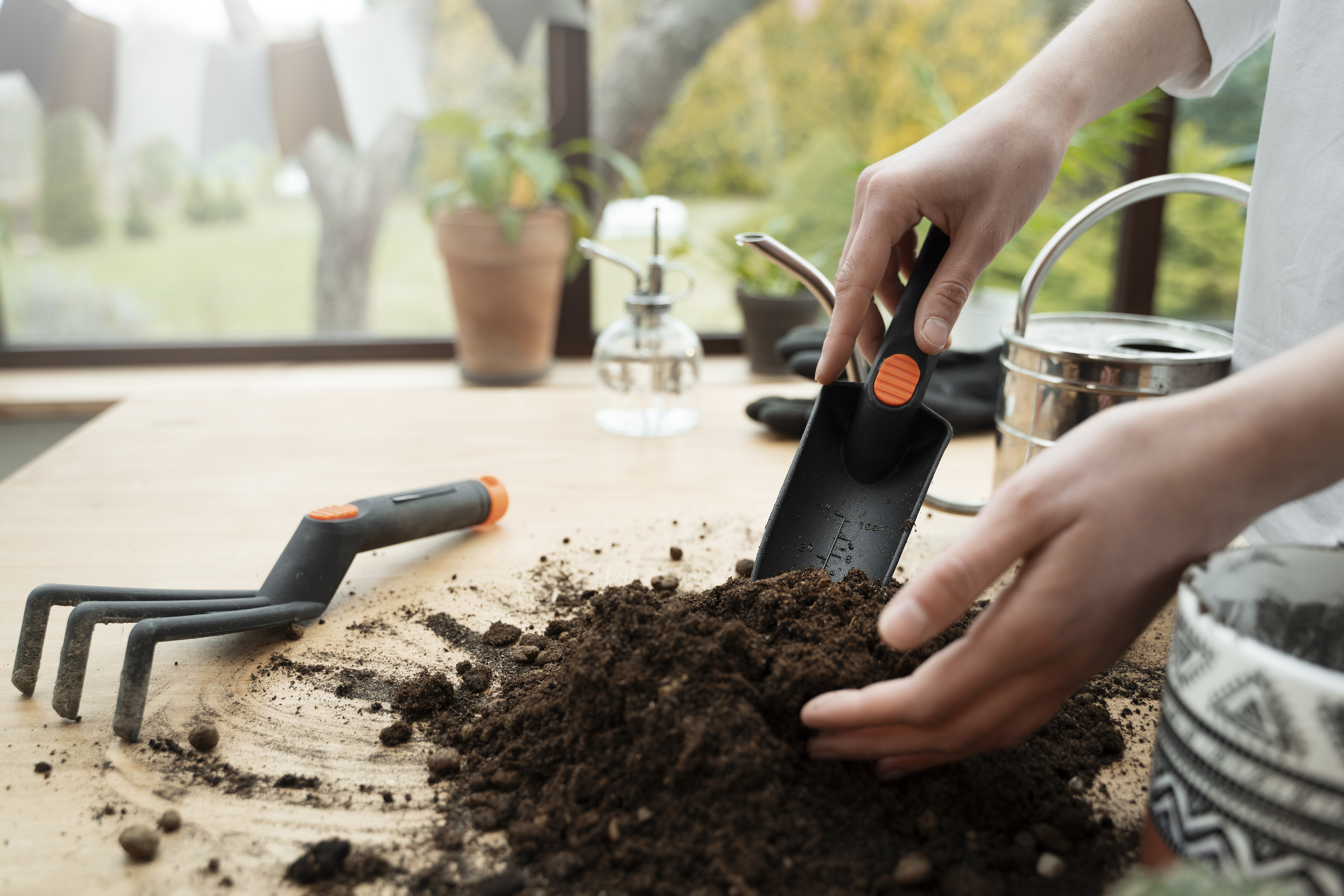
A compost extract is usually a simpler extraction of compost into water. Aerated compost tea involves brewing compost with oxygen and sometimes microbial food sources.
What Compost Teas Can Do Well
They can help:
- Spread microbial life through the soil
- Support living soil systems
- Provide mild biological stimulation
- Help re-inoculate soil after disturbance
- Support compost-based growing programs
Where Compost Teas Can Go Wrong
Poorly brewed teas can become anaerobic. Dirty equipment, bad compost, overlong brewing, warm stagnant water, or too much microbial food can create problems.
Compost tea should not be used to cover up poor soil structure. If the medium is dense, wet, and sour, adding tea may make conditions worse.
Compost tea is support. It is not a substitute for good compost, good aeration, and correct watering.
Sprouted Seed Teas
Sprouted seed teas are made from germinated seeds, often used in living soil circles. They are valued for enzymes and plant compounds that can support soil and root activity.
What Sprouted Seed Teas Do Well
They can help:
- Add enzyme activity
- Support biological soil systems
- Provide plant-based inputs
- Fit into low-bottle organic growing
Where Sprouted Seed Teas Can Go Wrong
They are often overhyped. They should not be treated as secret bloom boosters or direct flavor enhancers.
If used too heavily or brewed poorly, they can create unwanted microbial activity or surface problems.
Sprouted seed teas belong in a balanced living soil system, not in a panic routine.
Humic and Fulvic Acids
Humic and fulvic acids are organic compounds associated with decomposed organic matter. They are used to support nutrient chelation, root activity, and soil chemistry.
What Humic and Fulvic Acids Do Well
They can help:
- Support nutrient availability
- Improve chelation of some minerals
- Support root development
- Fit into soil and soilless feeding programs
- Improve the efficiency of some nutrient applications
Where Humic and Fulvic Acids Can Go Wrong
They are not complete nutrients. They do not replace balanced feeding. Product strength varies, and overuse is unnecessary.
They should be used as support, not as the foundation of the grow.
Enzymes
Enzyme products are used to help break down dead root material and organic residues in the root zone. They are common in hydro, coco, and some soilless systems.
What Enzymes Do Well
They can help:
- Break down dead roots
- Keep root zones cleaner
- Support nutrient recycling
- Reduce buildup in some systems
Where Enzymes Can Go Wrong
They do not solve root disease by themselves. If roots are dying because the medium is too wet, too hot, poorly oxygenated, or contaminated, enzymes may help clean residue but will not fix the cause.
Enzymes clean up some consequences. They do not replace root-zone health.
Surface Amendments: Protecting the Top of the Soil
The surface of the medium is often ignored, but it matters. The top layer is where evaporation happens, where fungus gnats may breed, where mulch can protect moisture, and where top-dressed amendments begin to break down.
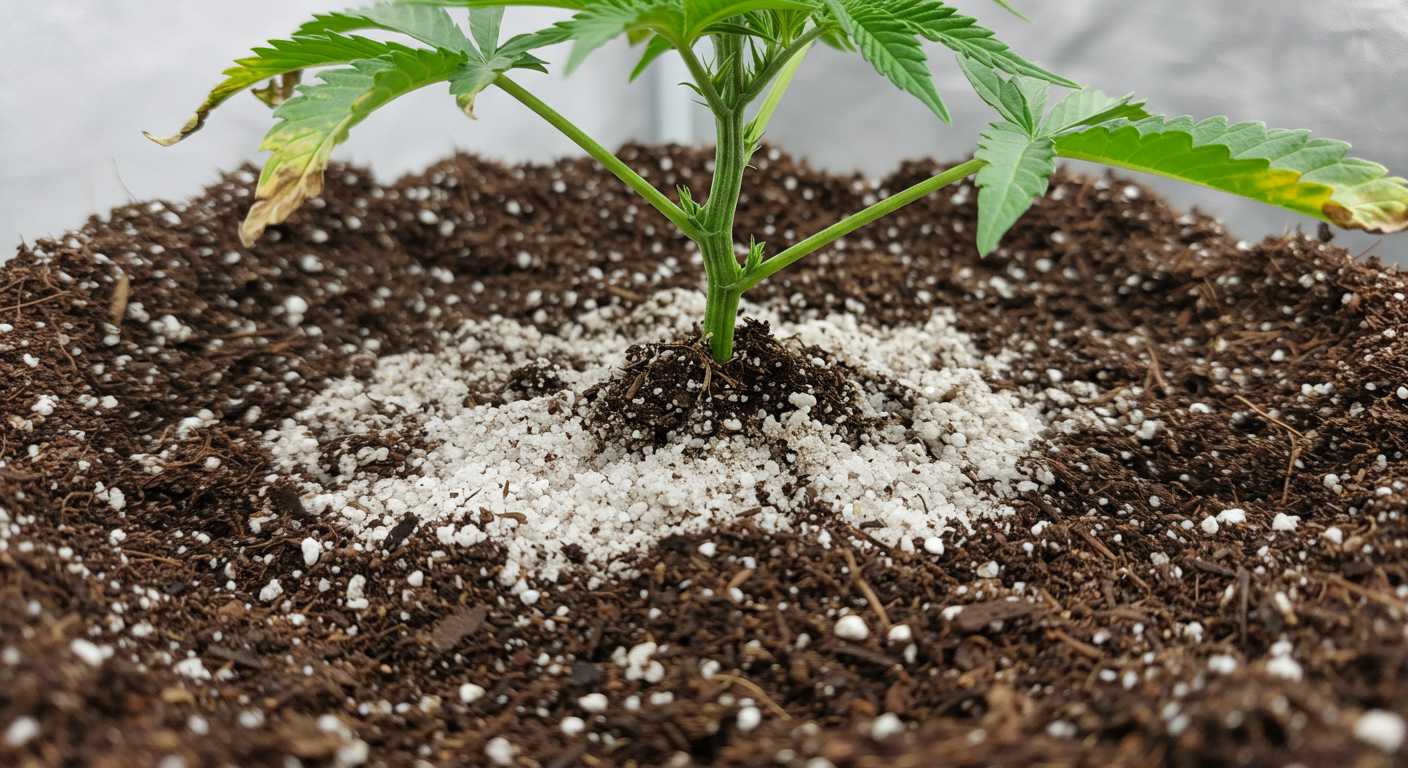
Surface amendments are used to protect the soil, feed biology slowly, and reduce environmental swings.
Use mulch to stabilize the surface.
A clean mulch layer can protect soil moisture, temperature, and biology in larger living systems.
Do not mulch a soggy or pest-heavy pot.
Mulch can hide fungus gnats, wet surfaces, and poor airflow if the root zone is already too damp.
Mulch
Mulch is material placed on top of the soil surface. It can be straw, leaf mulch, chopped plant material, wood chips, rice straw, cover crop residue, or other clean organic material.
What Mulch Does Well
Mulch can help:
- Reduce evaporation
- Buffer soil temperature
- Protect soil life
- Reduce surface crusting
- Feed microbes slowly
- Protect outdoor containers from heat
- Support living soil moisture stability
Mulch is especially useful in living soil, outdoor beds, and hot climates.
Where Mulch Can Go Wrong
Mulch must be clean. Unknown outdoor mulch can carry pests, eggs, spores, weed seeds, or unwanted organisms.
Too much wet mulch can create fungus gnat habitat or mold-prone surface conditions indoors. In small pots, thick mulch may keep the surface too wet.
Mulch should protect the soil surface, not turn it into a wet pest layer.
Straw and Leaf Mulch
Straw and leaf mulch can work well outdoors and in living soil systems when clean and properly used.
What They Do Well
They can help:
- Protect soil from drying too fast
- Reduce temperature swings
- Add organic matter over time
- Feed soil organisms
- Support no-till systems
Where They Can Go Wrong
They should be clean and free from pesticides, weed seeds, mold, pests, or unknown residues. Indoor growers should be careful with outdoor-collected leaves or straw.
Do not bring random leaf litter from outside into an indoor cannabis pot.
Wood Chip Mulch
Wood chips can be useful on the surface of outdoor beds and large living soil containers. They break down slowly and protect the soil.
What Wood Chip Mulch Does Well
It can help:
- Reduce evaporation
- Buffer temperature
- Protect soil structure
- Feed fungal soil communities over time
- Improve outdoor beds slowly
Where Wood Chip Mulch Can Go Wrong
Wood chips should usually stay on the surface. Mixing large amounts of fresh wood chips into potting soil can tie up nitrogen and create uneven texture.
Indoor growers should avoid random outdoor wood chips because they can carry pests, molds, or residues.
Cover Crops and Living Mulch
Cover crops are living plants grown to protect and improve the soil. In cannabis systems, they are more common in outdoor beds, raised beds, greenhouses, and large living soil containers.
Common cover crop directions include clover, vetch, rye, peas, and mixed living soil cover blends.
What Cover Crops Do Well
Cover crops can help:
- Protect bare soil
- Feed microbes through root exudates
- Add organic matter when cut back
- Support soil structure
- Improve long-term living soil systems
- Reduce erosion outdoors
Where Cover Crops Can Go Wrong
In small pots, cover crops may compete with cannabis for water, nutrients, and root space. They can also make watering harder to read.
Living mulch is more useful in large containers, raised beds, or no-till systems than in small beginner pots.
Do not add cover crops to a small cannabis pot just because they look natural. Make sure the soil volume can support them.
“Why did my top-dress not fix the plant right away?”
Question sent by: Andrew Mitchell, via Facebook page.
Top-dressing is usually a slow soil-feeding move. It needs moisture, microbial activity, and time before the plant sees the full effect.
Top-Dressing
Top-dressing means placing amendments on the soil surface instead of mixing them deep into the medium. Compost, worm castings, kelp meal, mineral blends, neem meal, and other amendments can be top-dressed depending on the system.
Water and soil organisms slowly move nutrients downward.
What Top-Dressing Does Well
Top-dressing can help:
- Maintain living soil fertility
- Feed microbes gradually
- Avoid disturbing the root zone
- Support no-till systems
- Replenish nutrients between cycles
- Add compost and castings gently
Where Top-Dressing Can Go Wrong
Top-dressing is slow. It may not correct a severe deficiency quickly enough. Thick, wet, nutrient-rich top layers can also attract fungus gnats if watering and airflow are poor.
Top-dressing should be planned before the plant is in crisis.
Top-dressing is maintenance. It is not always emergency medicine.
Unknown materials are not neutral materials.
Outdoor soil, decorative stones, manure, compost, and reused media can carry pests, salts, herbicides, pathogens, or heavy metals. If the source is unknown, treat it as a risk until proven otherwise.
Materials to Avoid or Use Only With Extreme Caution
Some materials create more risk than value, especially for beginners and indoor growers.
The most dangerous mindset is this:
“It is only a little bit. What could happen?”
In soil, one small contaminated input can become the start of a much larger problem.
Unknown Outdoor Soil
Unknown outdoor soil should not be added to cannabis pots, indoor plants, seedling trays, living soil containers, or clean garden beds.
This includes soil from:
- Roadsides
- Parks
- Forest floors
- Riverbanks
- Lake edges
- Another person’s garden
- Vacant lots
- Old agricultural land
- Construction sites
- Around outdoor decorative plants
- Any place where the soil history is unknown
Unknown outdoor soil can carry:
- Pest eggs
- Larvae
- Fungus gnats
- Mites
- Slugs
- Nematodes
- Weed seeds
- Fungal spores
- Damping-off pathogens
- Soil-borne diseases
- Unwanted roots
- Algae
- Mold-prone organic matter
- Chemical residues or contaminants, depending on source
Do not add even one handful of unknown outdoor soil to “improve” a cannabis pot. If the source is unknown, the risk is not worth the experiment.
Random Outdoor Stones and Decorative Pebbles
Stones look harmless. That is why many growers underestimate them.
A stone collected from a road, garden, forest, riverbank, lake edge, sidewalk, park, or another person’s yard may carry soil dust, algae, fungal spores, insect eggs, larvae, pests, or invisible organic residue. Even if the stone looks clean, the risk is still there.
This also applies to decorative stones if their source, coating, treatment, or storage history is unknown.
Avoid:
- Roadside stones
- Garden stones
- Forest stones
- River stones
- Lake stones
- Landscape pebbles of unknown origin
- Decorative stones with unknown coating
- Used lava rock from outdoor areas
- Clay pebbles or lava rock that were previously used outdoors
- Any stone with soil, moss, algae, insects, roots, or organic residue
One unknown stone can carry enough soil residue to become a contamination point.
This matters even more indoors. One contaminated pot can spread fungus gnats, larvae, pest pressure, spores, or disease organisms to nearby plants and potting mixes.
Fresh Manure
Fresh manure should not be used in cannabis potting soil.
It can be too hot, too high in nitrogen, unstable, salty, contaminated, or full of weed seeds and pathogens.
Only well-composted and properly handled manure should be considered, and even then it is usually more appropriate for outdoor soil building than indoor cannabis pots.
Unfinished Compost
Unfinished compost can heat up, smell bad, attract pests, contain weed seeds, or create unstable nutrient release.
A compost pile may look dark but still be immature. If it smells sour, rotten, ammonia-like, or contains recognizable scraps, it is not ready for a cannabis pot.
Bad compost can turn a clean grow into a pest and pathogen problem.
Fine Sand, Beach Sand, and Road Sand
Fine sand can reduce pore space. Beach sand can contain salt. Road sand can contain contaminants. Construction sand of unknown source may contain unwanted dust or residues.
Only clean coarse horticultural sand should be considered, and even then it is not usually the best beginner amendment for cannabis.
Fresh Wood Chips Mixed Into Soil
Fresh wood chips are better used as surface mulch than mixed into the root zone. When mixed into potting soil, they can tie up nitrogen and create uneven texture.
Slow-Release Fertilizer Pellets
Slow-release fertilizer pellets are risky for cannabis because nutrient release does not always match the plant’s stage.
A seedling may receive too much. A flowering plant may receive nitrogen too late. A stressed plant may be unable to escape the release pattern.
Avoid unpredictable slow-release fertilizers unless you fully understand how they behave.
Weedth Warning: One Contaminated Input Can Affect the Whole Grow
This warning is worth repeating because it protects both the plant and the growing environment.
Do not bring unknown soil, random stones, outdoor leaf litter, outdoor mulch, roadside sand, used garden pebbles, or unknown organic matter into an indoor cannabis grow.
One contaminated pot can affect:
- The cannabis plant inside that pot
- Other cannabis plants nearby
- Houseplants in the same room
- Stored potting soil bags
- Seedling trays
- Living soil bins
- The grow tent or grow room
- The home environment if pests or mold-prone materials spread
In indoor rooms with high humidity, poor airflow, or constantly damp soil, pests and mold-prone materials can multiply faster than growers expect. People with allergies, asthma, mold sensitivity, chronic lung issues, or weakened immune systems may also be more sensitive to contaminated damp organic matter.
This does not mean every outdoor material will harm people. It means unknown outdoor material is not worth the risk in a controlled indoor grow.
If you do not know where it came from, do not put it in the pot.
Weedth Garden Warning: Do Not Infect Your Own Garden
The same warning applies outdoors.
Do not improve a clean garden bed with unknown soil from another location. Do not bring in mystery stones covered in soil residue. Do not move unknown plants, roots, weeds, or organic debris into your home garden.
A small amount can introduce weed seeds, aggressive unwanted plants, pests, soil-borne disease, or contamination. Some weeds are hard to remove once established. Some diseases remain in soil. Some pest problems spread from one bed to another. In serious cases, growers may need to remove soil, replace beds, quarantine plants, or use controls they never wanted to use near their home.
Do not create a problem that later forces you to use chemical controls around your home garden. Prevention is cheaper, safer, and cleaner than rescue.
Amendment Safety Checklist
Before adding any amendment, ask:
- Do I know what this material is?
- Do I know where it came from?
- Is it clean enough for cannabis?
- Is it intended for horticultural use?
- Does it have a clear job?
- Could it carry pests, seeds, larvae, spores, or contaminants?
- Could it change pH, EC, drainage, or moisture in a way I do not understand?
- Is it safe for indoor use?
- Is it too strong for seedlings or autoflowers?
- Am I adding it because the root zone needs it, or because I saw someone mention it online?
If you cannot answer these questions, do not add the material yet.
The safest amendment is the one you understand before it touches the soil.
Where This Guide Goes Next
The amendment foundation is now complete.
The next part moves from ingredients into potting mix design. It will explain how to prepare cannabis potting soil step by step, how to think about beginner mixes, seedling mixes, living soil mixes, and outdoor container mixes, and how to handle the controversial bottom-layer question with clay pebbles, LECA, Hydroton, lava rock, and drainage holes.
That section will also make one point very clear:
A bottom layer may protect a drainage hole, but it does not fix overwatering.
Building Cannabis Potting Soil Safely: Mix Design, Drainage Layers, and Material Safety
A good cannabis potting mix is not built by adding random ingredients. It is built by balancing structure, moisture, oxygen, nutrition, biology, and safety.
This matters because container soil behaves differently from ground soil. In the ground, water can move deeper and roots can spread outward. In a pot, the root zone is limited. If the mix is too dense, too wet, too hot, too salty, or contaminated, the plant has nowhere else to go.
A cannabis pot is a controlled root-zone system. Every material inside it should be clean, intentional, and useful.
Many beginner mistakes happen because the grower tries to improve soil with the wrong material. They add random garden soil, too much compost, fine sand, outdoor stones, decorative pebbles, strong organic meals, or a thick bottom layer of clay pebbles because it sounds logical.
Some of those choices may look harmless. Some may even feel traditional. But cannabis roots do not care about tradition. They respond to oxygen, moisture, pH, nutrients, biology, and contamination.
This section explains how to build a safer potting mix, how to think about common ratios, why bottom drainage layers are misunderstood, and why unknown outdoor soil or random stones should never enter an indoor grow.
What a Cannabis Potting Mix Is Built From
Most cannabis potting mixes are built from five functional groups:
- Base material
- Aeration material
- Organic matter
- Mineral or pH support
- Nutrient and biological support
A mix does not need every possible ingredient. It needs the right balance for the plant stage, container size, environment, watering style, and grower skill.
Base Material
The base material forms the main body of the mix. It may be peat, coco, composted bark, a light potting soil, or a commercial soilless blend.
A good base should be consistent, clean, and easy to amend. It should not smell rotten, sour, chemical, or swampy. It should not be full of mystery chunks, insects, larvae, weed seeds, or dense mud-like material.
Aeration Material
Aeration materials keep the mix breathable. Perlite, pumice, rice hulls, lava rock, coarse coco chips, and some coarse sands can create air space.
This is one of the most important parts of a cannabis mix because roots need oxygen after watering. If the medium cannot breathe, nutrients will not save the plant.
Organic Matter
Organic matter supports structure, moisture buffering, microbial activity, and slow nutrient cycling. Compost, worm castings, humus, and leaf mold can all contribute organic matter.
But organic matter must be clean and mature. Too much compost or castings can make a potting mix heavy and wet.
Mineral or pH Support
Lime, gypsum, rock dust, sulfur, and similar amendments change mineral balance or pH behavior.
These should not be added randomly. They are useful when the mix actually needs them.
Nutrient and Biological Support
Organic meals, mineral nutrients, microbial inoculants, compost teas, and biological amendments can support fertility and root-zone life.
These should match the plant stage. A seedling does not need the same nutrient strength as a flowering plant.
The best potting mix is not the richest mix. It is the mix that matches the plant’s stage and the grower’s system.
How to Prepare Cannabis Potting Soil Step by Step
A beginner-friendly cannabis potting mix should be light, clean, and predictable. It should drain well but not dry instantly. It should hold enough nutrition for early growth without burning seedlings.
Here is a practical step-by-step process.
Step 1: Choose a Clean Base
Start with a reliable potting base, not random outdoor soil. The base should be intended for containers and should already have a reasonable texture.
Avoid heavy garden soil in pots. Avoid unknown outdoor soil. Avoid soil with extended-release fertilizer pellets unless you fully understand the release pattern and nutrient strength.
For most beginners, a light container mix is safer than a dense organic mix.
Step 2: Add Aeration Through the Whole Mix
Aeration should be mixed evenly through the medium. It should not be placed only at the bottom.
Perlite and pumice are the easiest beginner options. Rice hulls can work well in organic mixes. Lava rock and LECA can be used carefully, but only when clean, commercial, and appropriate for the purpose.
A common range for container soil is 20 to 30 percent aeration material, but this depends on the base mix. A heavy compost-rich mix may need more structure. A dry climate or small fabric pot may need less.
Drainage starts inside the whole mix, not only at the bottom of the pot.
Step 3: Add Organic Matter Carefully
Compost and worm castings can improve soil quality, but they should not dominate the mix unless the grower knows how that blend behaves.
For many beginner mixes, worm castings are safer than strong nutrient amendments. They add mild fertility and microbial support without making the soil extremely hot.
If compost is used, it should be mature, clean, and earthy-smelling.
Step 4: Add Minerals Only With a Reason
Do not add lime, gypsum, sulfur, rock dust, or mineral blends just because they sound complete.
Ask what the mix actually needs.
- Is peat making the mix too acidic?
- Does the soil test show low calcium?
- Is magnesium actually needed?
- Is sulfur needed?
- Is the pH too high or too low?
- Is this a long-term living soil that needs mineral diversity?
If there is no clear answer, keep the mix simpler.
Step 5: Keep Seedling Zones Mild
If the mix is strong, use a lighter zone for seedlings or young transplants. Seedlings do not need heavy nutrition. They need oxygen, moisture, warmth, and gentle roots.
This is especially important with super soil, compost-heavy blends, manure-based mixes, or strong organic meals.
Step 6: Moisten the Mix Before Use
A potting mix should be lightly moist before planting or transplanting. Bone-dry peat can repel water. Dry coco may hydrate unevenly. Dry amendments may create dusty pockets.
Moisten the mix evenly, but do not turn it into mud.
The correct feel is damp and workable, not dripping and compacted.
Step 7: Fill the Pot Without Crushing the Soil
Do not pack the pot hard. Lightly settle the mix so there are no huge air gaps, but do not press it into a dense block.
Cannabis roots need pore spaces. If the soil is compacted before the plant even starts, the root system will struggle.
Step 8: Check Drainage Holes
Use containers with open drainage holes. Make sure water can leave the pot. Do not let pots sit in runoff for long periods.
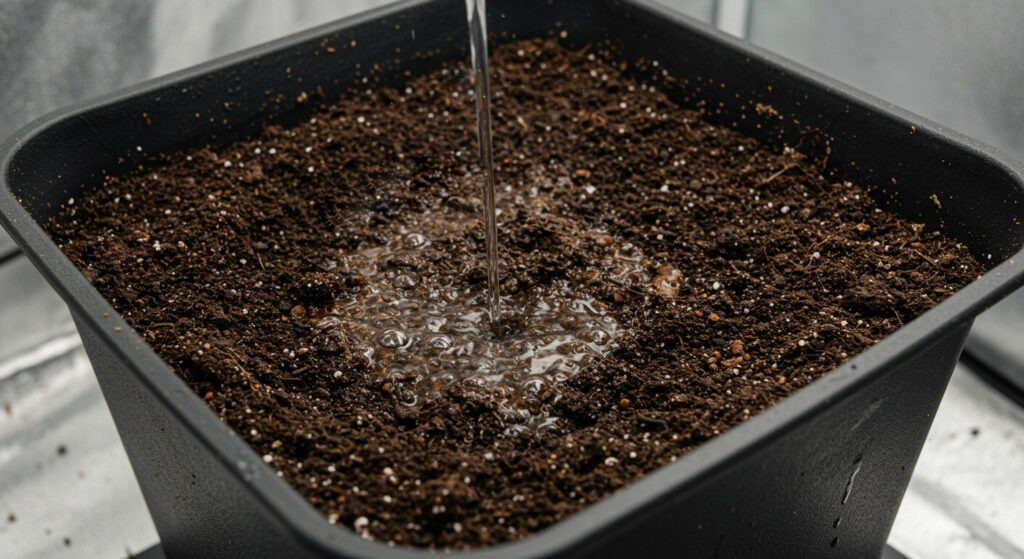
If the drainage holes are very large and soil falls out, use a clean mesh screen or a very thin layer of clean commercial material near the bottom. Do not build a thick rock layer and call it drainage.
Step 9: Observe the First Watering
The first watering tells you how the mix behaves.
Watch for:
- Water pooling on top
- Water running down the sides without soaking in
- Runoff appearing too quickly
- Pot staying heavy for too many days
- Medium shrinking away from the container edge
- Sour or swampy smell after watering
A good mix accepts water evenly, drains excess moisture, and then gradually becomes lighter as the plant uses water.
Simple Beginner Cannabis Soil Mix Direction
A beginner cannabis soil mix should be forgiving. It should not be too hot, too dense, or too complex.
A simple direction could be:
- 50 to 60 percent light potting base
- 20 to 30 percent aeration material
- 10 to 20 percent worm castings or mature compost
- Small mineral or nutrient additions only if needed
This is not a fixed recipe. It is a structure.
If the base mix already contains compost and perlite, add less. If the base mix is dense, add more aeration. If the room is very dry, do not overdo perlite. If the pot is large and the plant is small, avoid a mix that stays wet too long.
The beginner goal is not maximum nutrition. The beginner goal is a root zone that is easy to water correctly.
“Why do seedlings stall in a mix that works great for big plants?”
Question sent by: Allison Grant, via email.
Seedlings have small, tender roots. A mature plant may tolerate a richer mix, but seedlings often need lighter structure, milder nutrition, and steadier moisture.
Seedling Mix: Keep It Light and Mild
Seedlings are not small flowering plants. They are fragile root systems trying to establish themselves.
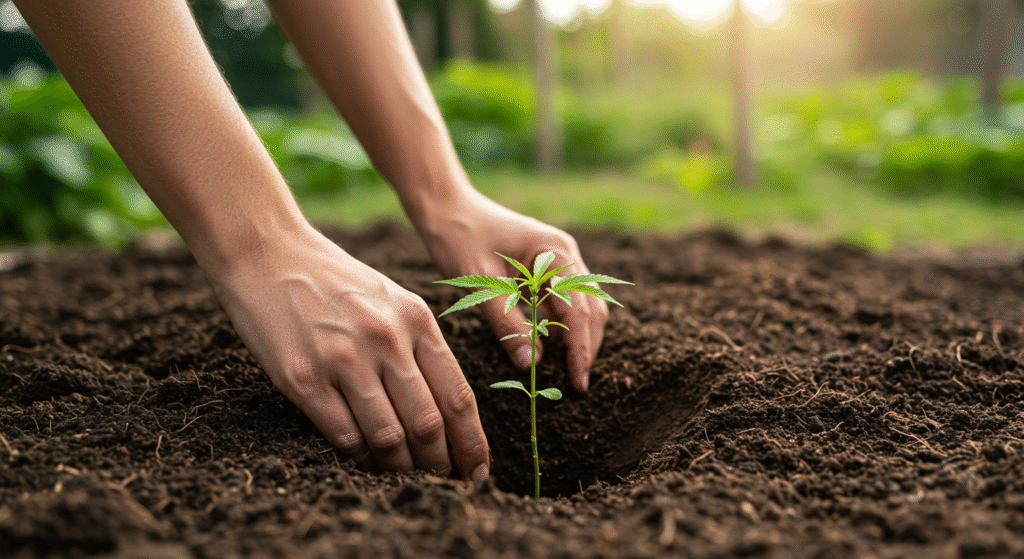
A seedling mix should be:
- Light
- Mild
- Clean
- Fine enough for small roots
- Airy enough to avoid damping-off conditions
- Free from strong nutrient amendments
- Free from unknown outdoor soil
- Free from random compost, manure, or hot super soil
A seedling mix might use a light base, extra perlite or fine pumice, and a small amount of worm castings. Strong amendments should be avoided at this stage.
Weedth Rule: Never Start Seedlings in a Hot Root Zone
A hot soil can damage a seedling before the grow has a chance to begin. When a young plant collapses after transplanting into strong soil, many beginners blame transplant shock. Sometimes transplant stress is involved, but very often the real cause is a root zone that is too strong, too dense, or too wet.
Seedlings need a safe start, not a powerful soil.
“Why are autoflowers less forgiving when the soil is too hot?”
Question sent by: Connor Hayes, via Facebook page.
Autoflowers have less recovery time. Early root stress from hot soil, overwatering, or compaction can reduce growth before the plant has time to rebound.
Autoflower Mix: Gentle, Airy, and Stable
Autoflowers have a limited vegetative window. Early stress can reduce final size because the plant flowers on its own schedule.
For autoflowers, the mix should be airy and not overly hot. Many growers plant autoflowers directly into their final container to avoid transplant stress.
A good autoflower direction:
- Light base mix
- Good aeration
- Mild fertility in the upper root zone
- Stronger nutrition only lower in the container if using a layered system
- Careful watering because seedlings in final pots can be easy to overwater
An autoflower does not give you unlimited time to recover from a bad soil choice.
Living Soil Mix: Build for Biology and Volume
A living soil mix needs more than ingredients. It needs volume, moisture balance, aeration, organic matter, and time.
A living soil direction may include:
- Base material such as peat, coco, composted bark, or leaf mold
- Mature compost
- Worm castings
- Durable aeration such as pumice, perlite, lava rock, or rice hulls
- Mineral support such as gypsum, basalt, or lime when needed
- Organic nutrient amendments used carefully
- Mulch
- Microbial support
Living soil works better in larger containers because larger soil volume buffers moisture, nutrients, temperature, and biology.
Small living soil pots can work, but they are less stable. They dry faster, swing harder, and leave less room for soil life to function.
Weedth Advice: Living Soil Needs Space
If you want living soil to behave like an ecosystem, give it enough room to act like one.
A tiny pot with a few organic amendments is not the same as a mature living soil system. It may contain organic inputs, but it does not have the same buffering power as a large container, raised bed, or no-till setup.
The smaller the soil volume, the less forgiving the living soil becomes.
Outdoor Container Mix: Control With Heat Awareness
Outdoor containers give growers control over soil quality, but they also expose roots to heat, wind, rain, and fast drying.
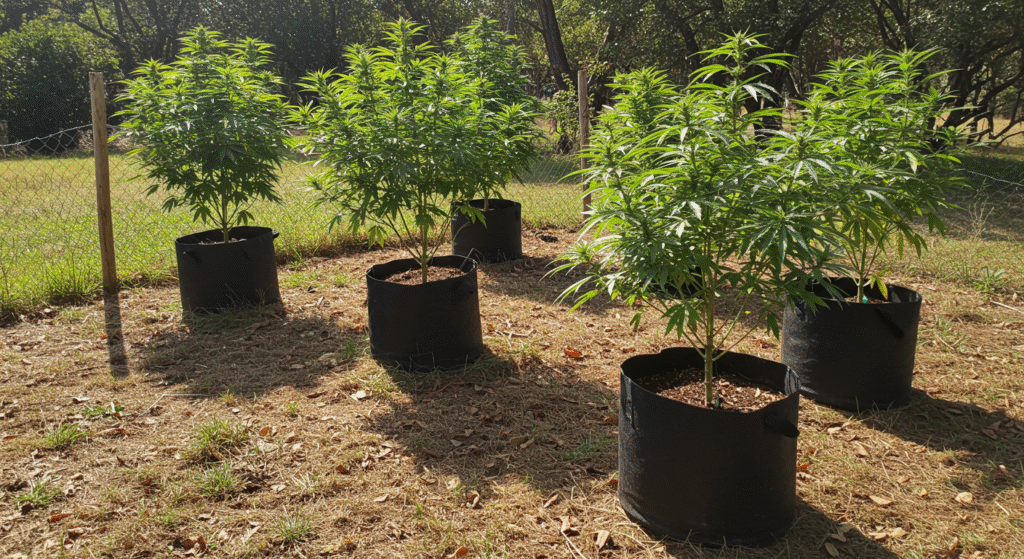
An outdoor container mix should drain well, hold enough moisture, and resist compaction. It should also protect roots from overheating.
A good outdoor container direction may include:
- A quality potting base
- Compost or worm castings
- Aeration material
- Mulch on the surface
- Larger container volume
- Light-colored or fabric containers when heat is a concern
- Careful irrigation planning
Outdoor containers can dry fast in hot weather. But if the mix is too heavy, rain can keep it wet too long.
Outdoor containers need both drainage and moisture buffering. Choosing only one creates problems.
“Do clay pebbles at the bottom of the pot stop overwatering?”
Question sent by: Ryan Carter, via email.
Not really. A bottom layer can change where water sits, but it does not fix a dense mix, oversized pot, or watering too often. Drainage has to be designed through the whole root zone.
Should You Put Clay Pebbles, LECA, Hydroton, Lava Rock, or Stones at the Bottom of a Cannabis Pot?
This is one of the most misunderstood container-growing topics.
Many growers believe that a stone layer at the bottom of a pot improves drainage. It feels logical. Water should pass through soil, hit the stones, and drain away faster.
But container water behavior is not that simple.
In many cases, a coarse bottom layer does not improve drainage. It can reduce root volume and may keep the lower soil wetter than expected because water behaves differently at the boundary between fine soil and coarse material.
The Scientific Truth: The Best Drainage Layer Ratio Is Usually 0 Percent
For classic cannabis potting soil, the most technically correct drainage-layer ratio is usually:
0 percent.
That means no thick bottom layer of stones, gravel, lava rock, or clay pebbles for the purpose of drainage.
Why?
Because drainage is created by:
- The structure of the whole mix
- Open pore spaces throughout the medium
- Proper aeration material mixed evenly
- Correct pot size
- Open drainage holes
- Not letting the pot sit in runoff
- Correct watering rhythm
A bottom layer does not turn dense soil into airy soil. It does not stop a beginner from watering too often. It does not prevent a small plant in a huge pot from sitting above a wet lower zone.
A bottom layer does not fix overwatering.
This point must be clear.
The Beginner Compromise: Hole Protection, Not Drainage Magic
There is still one practical reason some beginner growers may use a very thin bottom layer of clean commercial material.
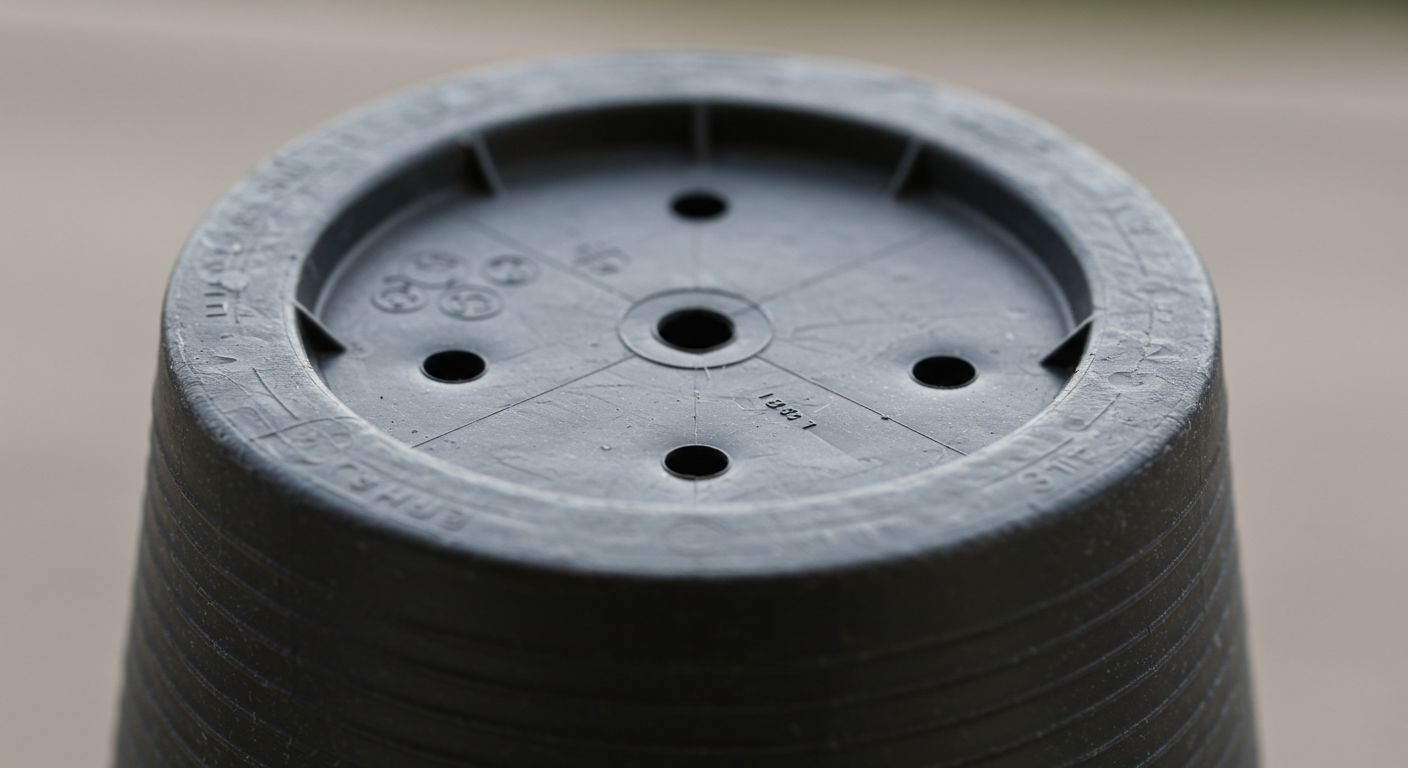
If the drainage holes are large, a thin layer of clean commercial expanded clay pebbles, LECA, Hydroton, or properly sized lava rock can help keep the hole area open and reduce soil loss.
But this must be understood correctly.
This layer is not a drainage miracle. It is not an overwatering solution. It is not a replacement for a good potting mix. It is only a simple hole-protection layer for growers who are still learning container behavior.
If used, it should be:
- Very thin
- Clean
- Commercial
- Intended for horticultural use
- Rinsed before use
- Free from outdoor soil residue
- Free from pests, algae, moss, or debris
- Used only to protect drainage holes, not to create a false drainage system
A better alternative in many cases is a clean mesh screen or a small clean pot shard over the drainage hole.
A bottom layer may protect the hole, but it cannot protect the plant from bad watering.
How Much Bottom Layer Should You Use?
If the goal is true drainage improvement, the answer is still 0 percent.
If the goal is beginner hole protection, use the thinnest practical layer possible. The layer should not take meaningful root space away from the plant.
Avoid filling the bottom 10, 20, or 30 percent of the pot with stones. That reduces soil volume and gives roots less room to grow. It also creates a layered medium instead of a consistent root zone.
For cannabis, root volume matters. Soil volume helps buffer water, nutrients, temperature, and biology. Giving that space to a thick rock layer is usually a poor trade.
Weedth Beginner Advice: Keep It Thin or Skip It
If you are new and worried about drainage holes clogging, a very thin clean commercial layer can be acceptable as a beginner support.
But if your medium is dense, your pot is too large, your plant is too small, or you water too often, the layer will not save you.
Do not use a bottom layer to compensate for a bad mix. Build the mix correctly first.
Why Bottom Layers Do Not Fix Overwatering
Overwatering is not only about how much water you pour once. It is about how long the root zone stays wet.
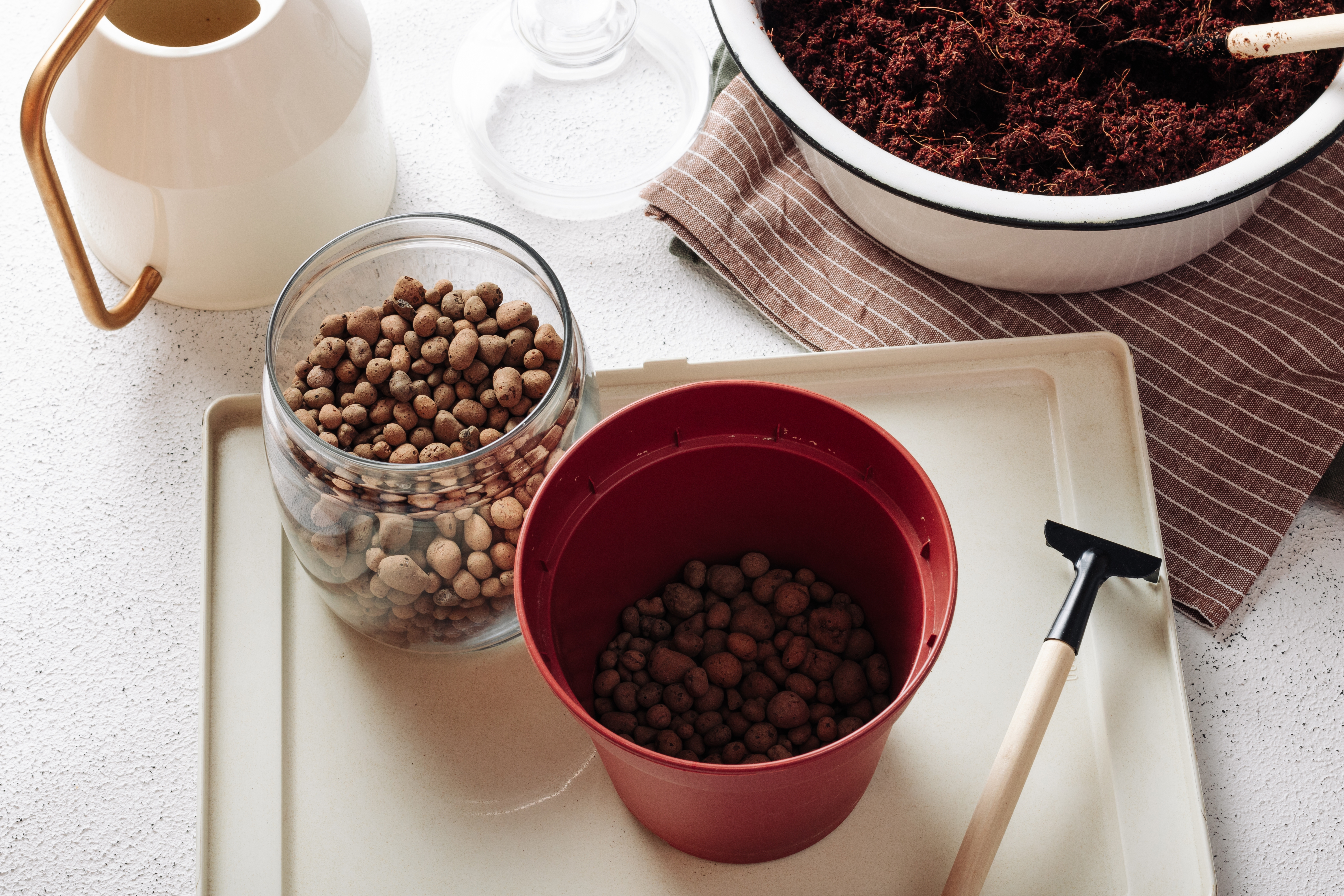
A bottom layer does not change the fact that the upper soil may remain saturated. It does not create air space inside the fine soil above it. It does not make a compact mix breathable.
Overwatering is fixed by:
- Using a breathable mix
- Adding aeration through the whole medium
- Choosing the correct pot size
- Allowing healthy dry-back
- Improving airflow
- Avoiding runoff sitting in saucers
- Learning pot weight
- Watering based on plant need, not a calendar
If a plant is in dense soil and the grower waters too often, clay pebbles at the bottom will not solve the root problem.
The roots live in the whole pot, not only near the drainage hole.
Clean Commercial Materials Only
If clay pebbles, LECA, Hydroton, lava rock, pumice, or any mineral material is used in a cannabis pot, it should be clean, commercial, and suitable for horticultural use.
This matters especially indoors.
Commercial materials are not safe because of the material name alone. They are safer because they are processed, packaged, and intended for growing use.
Once the source is unknown, the risk changes.
A random round stone is not Hydroton. A random red rock is not safe lava rock. A decorative pebble is not automatically horticultural material. A stone from someone’s garden is not clean because it looks clean.
The source matters as much as the material.
Weedth Warning: Never Use Random Outdoor Stones in Cannabis Pots
Stones look harmless. That is exactly why many growers underestimate them.
A stone collected from the street, a roadside, a park, a forest path, a riverbank, a lake edge, a garden bed, a construction area, or another person’s yard may carry soil dust, algae, fungal spores, insect eggs, larvae, mites, slugs, nematodes, bacteria, or invisible organic residue.
Even if the stone looks clean, the risk is not gone.
Do not use:
- Street stones
- Roadside stones
- Forest stones
- River stones
- Lake stones
- Garden stones
- Used landscape pebbles
- Decorative stones of unknown source
- Outdoor lava rock
- Used outdoor clay pebbles
- Any stone with soil, moss, algae, insects, roots, or organic residue
This applies to indoor cannabis pots, houseplant pots, seedling trays, living soil bins, and clean potting soil storage.
One unknown stone can carry enough soil residue to become a contamination point.
Why Random Stones Are a Bigger Risk Indoors
Indoor growing creates a controlled environment. That is good for cannabis, but it can also be good for pests and pathogens if they enter the room.
Warmth, moisture, organic matter, and limited airflow can allow problems to multiply quickly. A single contaminated pot can become a source of fungus gnats, larvae, mites, spores, or soil-borne organisms that spread to nearby pots.
The grower may not notice the problem immediately. Eggs and larvae can be hidden. Fungal spores are not visible. Microorganisms can travel with soil dust or organic residue. By the time symptoms appear, the problem may already be present in multiple containers.
Do not bring an outdoor contamination point into an indoor grow and hope it stays isolated.
Weedth Warning: Never Pot Unknown Outdoor Soil
Unknown outdoor soil should not be used in indoor cannabis pots. It should not be added to houseplants. It should not be mixed into clean potting soil. It should not be used to “improve” seedling trays. It should not be added to a healthy garden bed without knowing its history.
This includes soil from:
- Streets
- Roadsides
- Parks
- Forest floors
- Riverbanks
- Lake edges
- Vacant lots
- Construction areas
- Old gardens
- Another person’s yard
- Around outdoor ornamentals
- Any place where the soil history is unknown
The soil may look dark, rich, and alive. That does not make it safe.
Unknown outdoor soil can carry:
- Pest eggs
- Larvae
- Fungus gnats
- Mites
- Slugs
- Nematodes
- Weed seeds
- Unwanted roots
- Fungal spores
- Damping-off pathogens
- Root disease organisms
- Algae
- Mold-prone organic matter
- Unknown bacteria or microorganisms
- Chemical residues or contaminants, depending on location
Do not add even one handful of unknown outdoor soil to a cannabis pot. If the source is unknown, the risk is not worth the experiment.
“But It Is Only a Little Soil”
This is the exact mindset that creates problems.
One handful of outdoor soil can contain weed seeds, larvae, eggs, spores, or unwanted roots. One small amount can introduce fungus gnats into an indoor room. One contaminated scoop can seed a problem into a clean potting mix bag or a living soil bin.
The issue is not the amount you can see. The issue is what you cannot see.
One small contaminated input can affect the whole grow.
Indoor Household Risk: Plants, Pots, Soil, and People
This warning is not only about cannabis. It is also about the growing space.
A contaminated indoor pot can affect:
- The cannabis plant inside that pot
- Other cannabis plants nearby
- Houseplants in the same room
- Stored potting soil
- Seedling trays
- Living soil bins
- The grow tent or grow room
- The home environment if damp contaminated organic matter spreads pests or mold-prone material
Fungus gnats, larvae, mites, moldy organic matter, and soil-borne issues can become household problems, especially in warm rooms with high humidity or poor airflow.
For people with allergies, asthma, mold sensitivity, chronic lung issues, or weakened immune systems, damp contaminated organic matter may also become a health concern.
This does not mean every outdoor material will harm people. It means unknown outdoor material is not worth bringing into a controlled indoor grow.
Your grow room should not become a quarantine experiment.
Outdoor Garden Risk: Do Not Infect Your Own Soil
The same caution applies outdoors.
Do not bring unknown soil, mystery stones, outdoor plant material, root clumps, or decorative pebbles into a clean garden bed.
A garden can be damaged by:
- Aggressive weed seeds
- Invasive plant fragments
- Soil-borne disease
- Root pests
- Nematodes
- Fungal pathogens
- Chemical residues
- Contaminated organic matter
Some weeds are easy to remove. Others spread through roots, rhizomes, stolons, or deep seed banks. Some soil-borne diseases can persist. Some pest problems move from one bed to another.
If the problem becomes severe, a grower may need to remove plants, replace soil, quarantine beds, clean tools, or use controls they never wanted near their home garden.
Do not create a problem that later forces you to use chemical controls around your home garden. Prevention is cheaper, safer, and cleaner than rescue.
Safe Material Rules for Cannabis Pots
Use this simple decision filter before putting anything into a cannabis pot.
Safe Direction
A material is safer when it is:
- Commercially packaged
- Intended for horticultural use
- Clean and dry
- Rinsed when appropriate
- Stored properly
- Free from outdoor soil residue
- Free from pests, moss, algae, mold, or roots
- Used for a clear purpose
- Matched to the plant stage and medium
Risk Direction
Avoid the material when it is:
- Found outdoors
- Taken from a street, garden, forest, river, lake, or roadside
- From someone else’s yard
- Decorative but chemically treated or unknown
- Covered in soil residue
- Previously used outdoors
- Stored in damp conditions
- Full of moss, algae, insects, roots, or organic debris
- Added only because it “looks natural”
Clean source first. Growing purpose second. If either is unclear, do not use it.
Before a cannabis potting mix is ready
- The base is light enough for roots to explore
- Aeration is mixed throughout, not only at the bottom
- Compost or castings are finished and clean
- Strong amendments are measured, not guessed
- The mix is moistened evenly before planting
- Seedlings have a mild starting zone
Potting Mix Recipes as Starting Frameworks
Recipes can help, but they should not replace observation. A mix that works in one climate may not work in another. A mix that works in a plastic pot may dry too fast in a fabric pot. A mix that works for a photoperiod may be too hot for an autoflower seedling.
Use these as frameworks, not fixed formulas.
Beginner Soil Mix Framework
A beginner-friendly direction:
- 50 to 60 percent light potting base
- 20 to 30 percent perlite or pumice
- 10 to 20 percent worm castings or mature compost
- Optional light mineral support only if needed
Best for:
- First grows
- Indoor containers
- Beginner watering practice
- Mild nutrient starts
Avoid:
- Strong super soil in the top zone
- Heavy compost loads
- Fresh manure
- Unknown outdoor soil
- Thick bottom rock layers
Seedling Mix Framework
A seedling-friendly direction:
- Light seed-starting base
- Fine perlite or small pumice
- Small amount of worm castings
- No strong nutrient amendments
- No hot compost
- No manure
- No outdoor soil
Best for:
- Seedlings
- Young clones after rooting
- Sensitive starts
- Autoflower early stages
The seedling mix should hold moisture but still breathe.
Seedling roots should meet safety first, nutrition second.
Coco-Perlite Framework
A common coco direction:
- 70 percent buffered coco
- 30 percent perlite
Best for:
- Faster indoor growth
- Growers who measure pH and EC
- Controlled feeding systems
- Frequent fertigation
Needs:
- Coco-specific nutrients
- Calcium-magnesium awareness
- pH control
- Runoff management
- Clean buffered coco
Coco-perlite is simple in structure, but it is not low-maintenance. It requires consistency.
Living Soil Framework
A living soil direction:
- Base material such as peat, coco, composted bark, or leaf mold
- Mature compost
- Worm castings
- Durable aeration such as pumice, lava rock, perlite, or rice hulls
- Mineral support such as gypsum, basalt, or lime when needed
- Organic nutrient amendments used carefully
- Mulch
- Microbial support
Best for:
- Larger containers
- Raised beds
- Reusable soil
- Flavor-focused growing
- Organic soil systems
Needs:
- Enough soil volume
- Moisture balance
- Clean compost
- Time to cycle amendments
- Careful top-dressing
- Pest prevention
Outdoor Container Framework
An outdoor container mix may need more moisture buffering than an indoor mix, but it still must drain well.
A direction:
- Quality potting base
- Compost or worm castings
- Aeration material
- Mulch layer
- Optional biochar if charged and used carefully
- Mineral support based on need
Best for:
- Patios
- Legal home gardens
- Poor native soil
- Contaminated ground avoidance
- Growers who want soil control outdoors
Needs:
- Larger containers
- Heat protection
- Water planning
- Drainage holes
- Mulch
- Pot shading in hot conditions
Heavy Soil Correction Framework
If a potting soil is too heavy, do not keep adding nutrients. Improve structure first.
A correction direction:
- Add perlite or pumice
- Add coarse coco chips if appropriate
- Reduce dense compost load
- Avoid vermiculite if the mix is already wet
- Avoid fine sand
- Avoid compacting the pot
- Use fabric pots carefully if drying is too slow
Heavy soil needs air before it needs more food.
Fast-Drying Mix Correction Framework
If the medium dries too fast, improve moisture buffering.
Possible supports:
- More compost or worm castings in moderation
- A small amount of vermiculite
- Coco coir
- Leaf mold in outdoor systems
- Mulch
- Larger container size
- Less extreme aeration
- Better irrigation rhythm
Do not fix a fast-drying mix by overwatering all the time. Fix the structure and container strategy.
Final Potting Mix Checklist
Before planting cannabis into any mix, check:
- Does it smell clean and earthy?
- Does it feel loose and breathable?
- Does it drain without staying muddy?
- Does it hold enough moisture for the plant stage?
- Is it mild enough for seedlings if seedlings will use it?
- Does it contain unknown outdoor material?
- Does it contain slow-release fertilizer pellets?
- Does it contain enough aeration through the whole mix?
- Is the pH appropriate for the medium type?
- Is the container size appropriate for the plant?
- Are drainage holes open?
- Will the pot sit in runoff?
- Do all amendments have a clear job?
If the answer to several of these is unclear, do not plant yet. Fix the root zone before the plant depends on it.
Weedth Master Advice: Build Drainage Into the Mix
The cleanest way to prevent root-zone problems is to build the medium correctly from the beginning.
Do not rely on bottom rocks. Do not rely on miracle products. Do not rely on emergency flushing. Do not rely on strong nutrients to overcome poor structure.
A good cannabis potting mix should breathe from top to bottom.
Drainage is not a layer. Drainage is the behavior of the whole medium.
Where This Guide Goes Next
Container mix design is now clear. The grower needs clean materials, a breathable structure, moderate nutrition, and a clear understanding of what each amendment does.
The next part moves outdoors.
Outdoor cannabis soil is not only about texture. It is about the land itself: legal safety, visibility, slope, drainage, water table, flood risk, forest edge conditions, river terraces, lake and pond edges, sandy drylands, clay lowlands, open fields, pastures, rocky hillsides, coastal soil, and disturbed urban fill.
The next section will teach growers how to read native ground before planting.
Outdoor soil selection starts before the shovel touches the ground.
“How do I know if native ground is worth using instead of a raised bed?”
Question sent by: Olivia Martin, via Facebook page.
Native soil is worth considering only when it drains, smells clean, has structure, and does not carry contamination risk. If the ground is compacted, wet, polluted, or hard to correct, a raised bed or container is usually the cleaner decision.
Outdoor Ground Soil: Choosing, Testing, and Reading Native Soil
Outdoor cannabis soil selection is not only about finding dark soil and digging a hole.

A grower is choosing a living root zone, but also a landscape. That landscape decides how water drains, how long soil stays wet, how hot the root zone becomes, how much oxygen reaches the roots, how easily roots can expand, and whether the site carries contamination, visibility, or legal risk.
Good outdoor soil can grow large, resilient cannabis plants. Poor outdoor soil can slow the plant from the beginning and create problems that no fertilizer can fully solve.
Outdoor soil selection starts before the shovel touches the ground.
Before planting in native ground, the grower should ask three questions:
- Is this place legal, safe, private, and permitted?
- Does the landscape behave like a healthy root zone?
- Does the soil pass basic field tests?
If the answer is unclear, do not plant yet. Outdoor mistakes are harder to correct because the grower cannot easily replace the entire environment once the plant is established.
Important: Outdoor soil decisions come after legal, safety, privacy, and visibility checks. A good root zone cannot fix a risky site.
Legal, Safety, and Visibility Checks Come Before Soil Testing
This part is separate from soil type.
A school, park, hospital, public building, roadside, public trail, or protected area is not a soil type. These are legal, ethical, visibility, and safety filters. They should not be mixed into a soil matrix, but they must be considered before any outdoor grow decision.
Outdoor cannabis should only be grown where cultivation is legal, permitted, private, controlled, and safe.
Do not plant in:
- Public land
- Parks
- Schools or school-adjacent areas
- Hospitals or public building areas
- Roadsides
- Public trails
- Frequently used forest paths
- Protected natural areas
- Wetlands or ecological buffer zones
- Private land without permission
- Any place where cultivation may create legal, environmental, or public-safety problems
This is not only about avoiding attention. It is about responsible cultivation.
Visibility Is a Real Outdoor Risk
Outdoor cannabis becomes larger, more aromatic, and more recognizable as flowering progresses. A small plant that seems hidden in early veg may become obvious later.
If a plant is visible from a road, trail, neighboring property, public path, open field edge, or commonly used forest route, the risk increases.
High-visibility plants are more likely to be:
- Stolen
- Damaged
- Reported
- Disturbed by people or animals
- Exposed to legal consequences
- Harvested before the grower is ready
Visibility is not just a privacy issue. It is a crop-loss, safety, and legal-risk issue.
This guide does not teach stealth tactics. The better Weedth position is simple: use legal, permitted, private, and controlled growing spaces. Do not create a situation where soil quality looks good but the site itself is unsafe or inappropriate.
Read the Landscape Before You Read the Soil
Once the legal and safety filter is passed, look at the land itself.
The same soil texture can behave differently depending on position. A loamy soil in a low basin may stay too wet. A sandy soil on a slope may dry too fast. A clay soil on flat ground may hold water for days after rain. A forest edge may have good organic matter but strong tree-root competition.
Outdoor growers should read the land like a root-zone map.
Look for:
- Slope
- Low spots
- Flood marks
- Standing water after rain
- Cracking dry clay
- Surface crusting
- Compaction
- Tree-root competition
- Native vegetation
- Earthworm activity
- Drainage behavior
- Soil smell
- Soil color
- Sun exposure
- Wind exposure
- Human and animal traffic
- Nearby contamination sources
Do not choose outdoor soil only by how dark it looks. Read how the land holds water, air, heat, roots, and risk.
Good Outdoor Cannabis Soil Usually Shows These Signs
Healthy outdoor soil is usually:
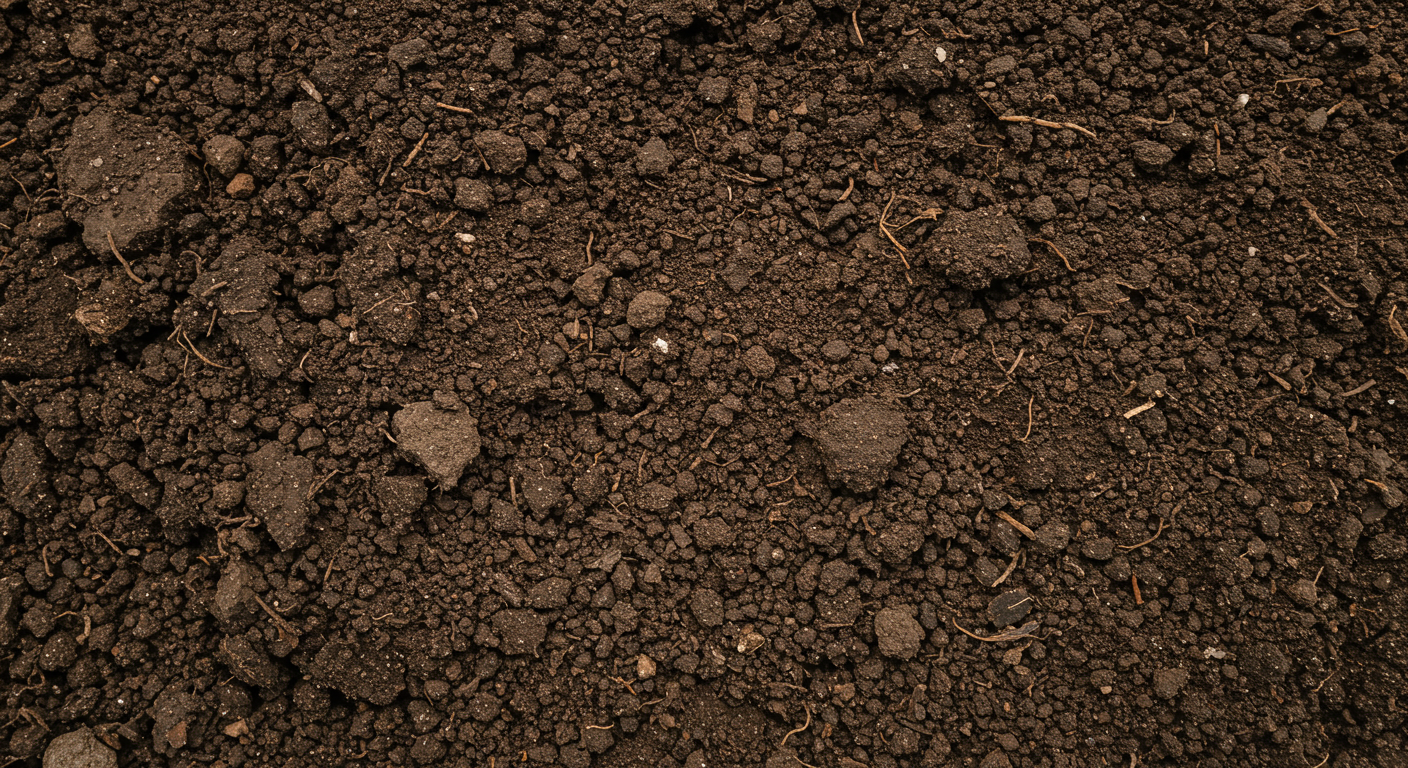
- Loose enough for roots to enter
- Crumbly instead of compacted
- Earthy-smelling
- Dark enough to suggest organic matter, but not swampy
- Moist after rain, but not muddy for days
- Draining within a reasonable time
- Full of small roots and soil life
- Not oily, chemical-smelling, sour, or rotten
- Not full of construction debris, trash, or unknown residues
Good soil should hold moisture, but it should not hold water like a swamp.
Bad Outdoor Cannabis Soil Often Shows These Signs
Avoid or seriously improve soil that is:
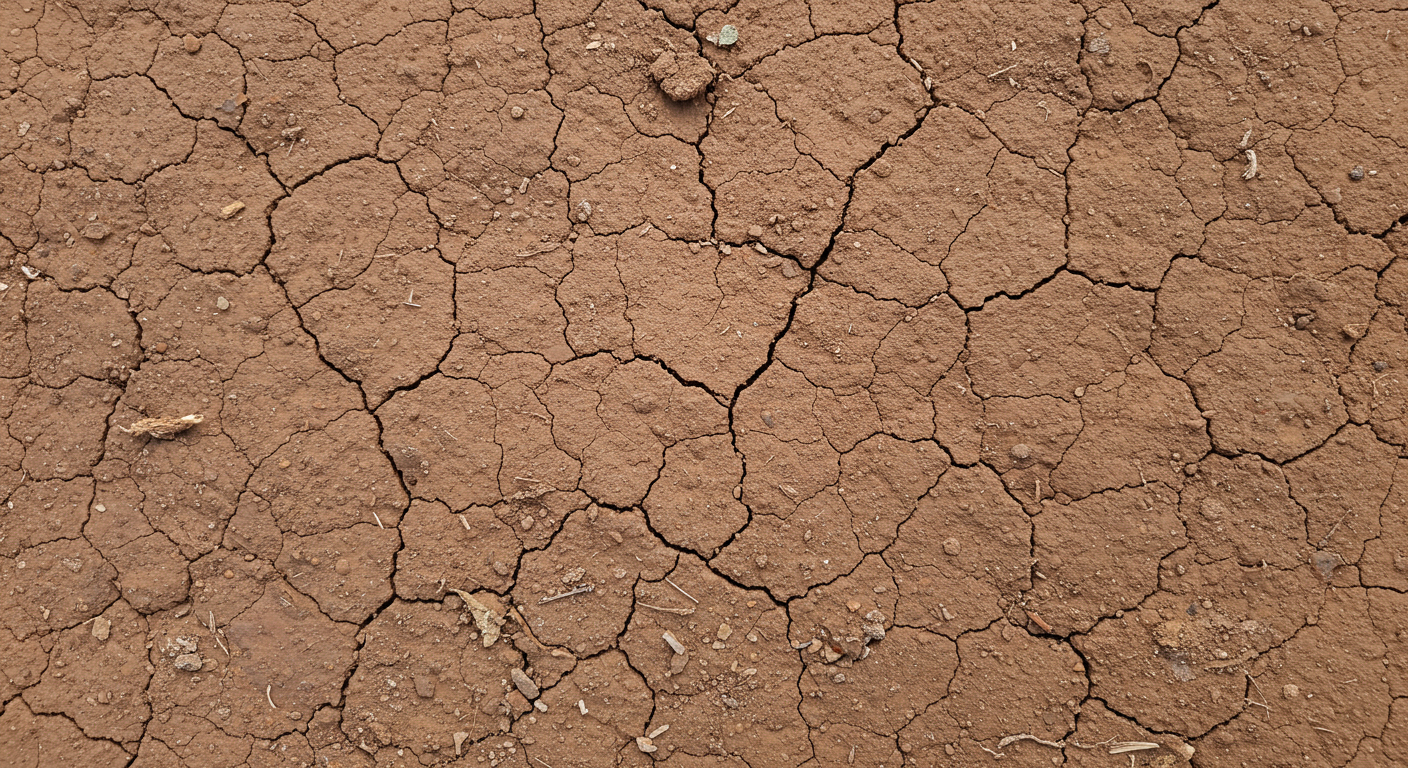
- Sticky and waterlogged after rain
- Sour or rotten-smelling
- Hard as brick when dry
- Dense and compacted
- Full of standing water
- Pale, dusty, and lifeless
- Full of debris or unknown waste
- Near obvious contamination sources
- Covered by aggressive weeds with deep spreading roots
- So wet that earthworms and roots cannot breathe
A plant can recover from mild nutrient shortage. It cannot thrive all season in a suffocating root zone.
Outdoor Soil and Site Type Matrix
This table focuses on soil and landscape character, not public safety categories. Legal, visibility, and permission checks must happen before any soil decision.
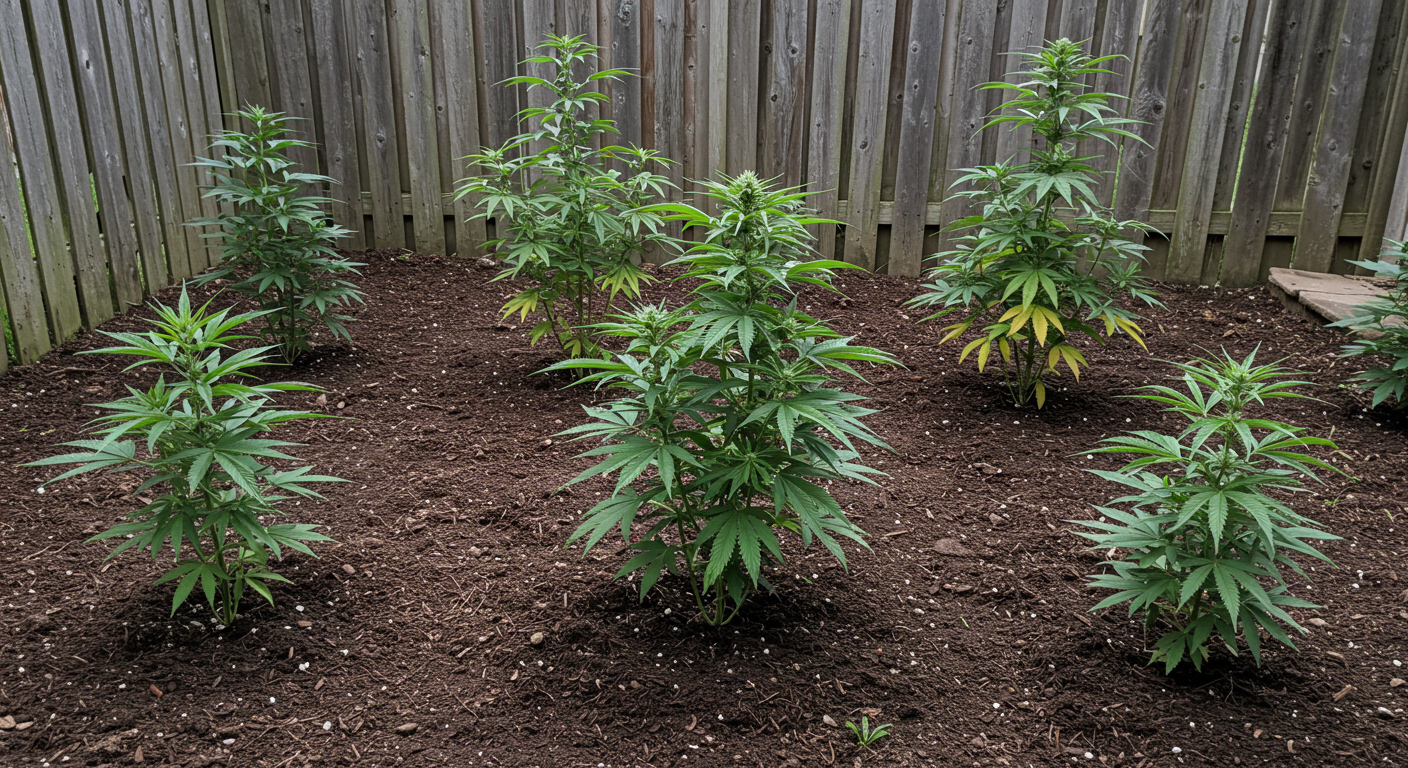
| Soil / Site Type | What It Usually Means | Main Advantage | Main Risk | Weedth Verdict |
|---|---|---|---|---|
| Loamy garden or field soil | Balanced sand, silt, clay, and organic matter | Best natural balance for water, air, and nutrients | Still needs pH, drainage, and contamination checks | Best starting point for outdoor in-ground cannabis |
| Clay-heavy soil or clay lowland | Sticky when wet, hard when dry, slow drainage | Can hold nutrients well | Poor oxygen, compaction, waterlogging, root stress | Improve structure or use raised beds before planting |
| Sandy soil and sandy loam | Fast-draining soil with larger particles | Good oxygen and drainage | Dries fast and loses nutrients through leaching | Can work with compost, mulch, biochar, and irrigation |
| Desert-like sandy dryland soil | Very dry, loose, low organic matter, low water-holding capacity | Rarely suffocates roots | Water and nutrients disappear quickly | Poor choice unless heavily improved and irrigated |
| Silty soil or alluvial soil | Fine particles, often near old flood deposits or river plains | Can be fertile and moisture-retentive | Can compact, crust, or stay wet | Good only if drainage and compaction are acceptable |
| River or stream terrace | Slightly elevated ground near moving water | Fertile sediment may be present | Flooding, contamination, erosion, high water table | Avoid low wet spots and choose only well-drained elevated ground |
| Lake or pond edge | Moist soil near still water | Water source nearby, organic matter may be high | Stagnant wet soil, low oxygen, root rot risk | Risky if soil stays muddy or sour-smelling |
| Wetland, marsh, or boggy ground | Constantly saturated soil | Organic matter may look high | Roots lose oxygen, disease risk increases, ecological concerns | Avoid for cannabis |
| Forest edge or woodland clearing | Leaf litter, biology, partial protection | Organic surface layer and microbial life | Shade, tree-root competition, acidic patches | Test first, edge is usually better than deep forest |
| Deep forest floor or conifer forest | Shaded soil under dense trees or pine-like cover | Natural organic layer | Low light, root competition, acidity, excess moisture or dryness | Usually not ideal |
| Open field or meadow soil | Full sun and airflow, often grass-covered | Strong light exposure and air movement | Compaction, wind, low organic matter, visibility | Good if soil is tested and site is legal and controlled |
| Pasture or grassland soil | Root-dense ground with organic activity | Biology and organic matter can be good | Compaction from animals, dense grass roots | Can work after soil testing and preparation |
| Rocky or shallow hillside soil | Thin soil over stone or gravel | Drainage may be good | Low root depth, low water reserve, fast drying | Better with raised beds, mounds, or deeper prepared holes |
| Coastal sandy soil | Sandy soil with possible salt and wind exposure | Drainage and airflow | Salt stress, low fertility, strong wind, fast drying | Needs salt awareness, organic matter, mulch, and wind protection |
| Disturbed or urban fill soil | Mixed ground, construction debris, unknown history | Sometimes loose and easy to dig | Heavy metals, petroleum, lead, debris, poor structure | Avoid or test carefully before any food or medicinal crop |
This matrix is not a permission slip. It is a thinking tool. A site may look good in one column and still fail because of drainage, contamination, visibility, or legal risk.
Loamy Garden or Field Soil
Loam is the outdoor grower’s natural target. It balances sand, silt, clay, and organic matter in a way that holds moisture without staying soaked. It drains better than clay, holds more nutrients than sand, and gives cannabis roots a more stable environment.
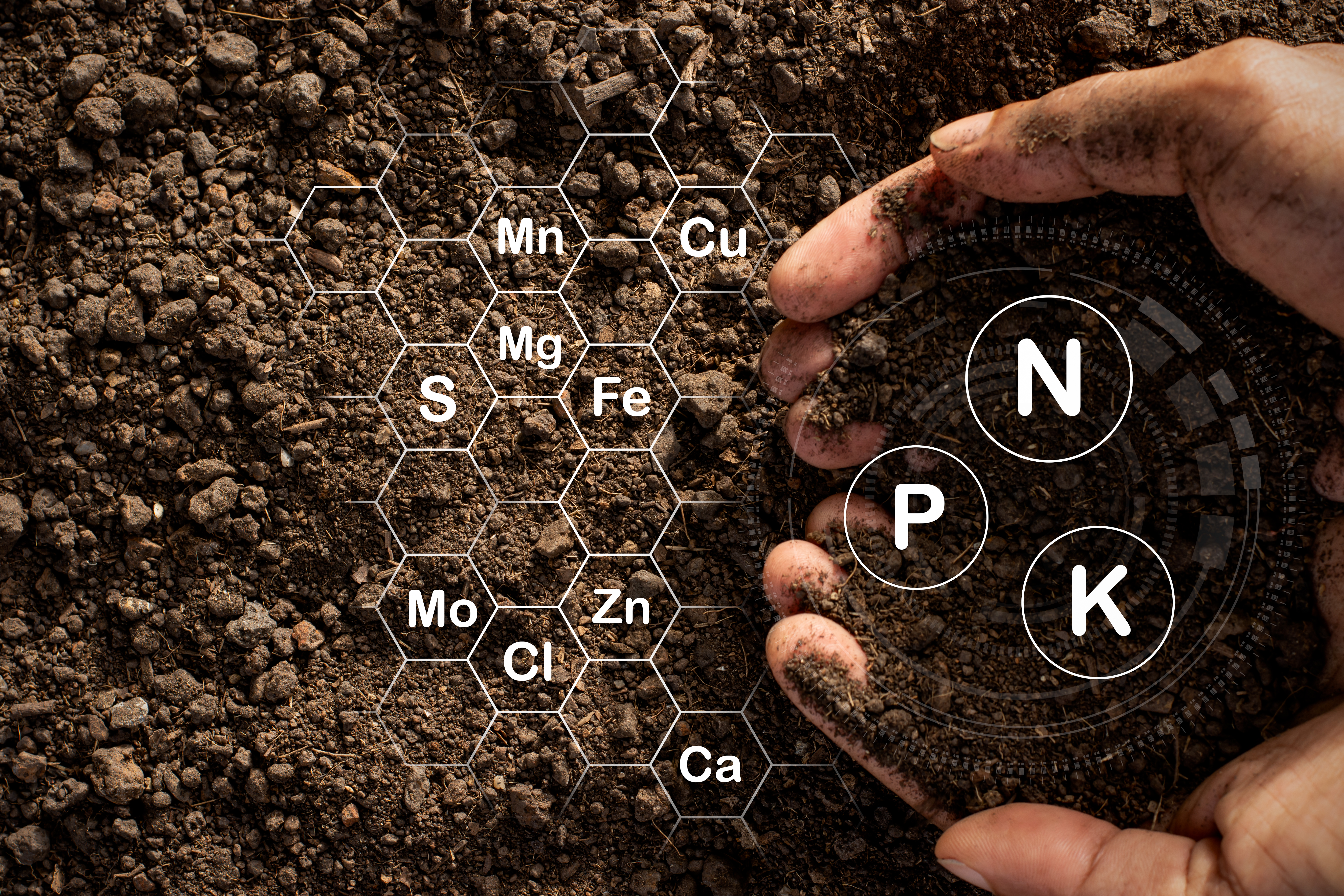
Good loamy soil usually feels crumbly. It holds together lightly when squeezed, then breaks apart without becoming sticky mud.
Why Loam Works Well
Loam can support:
- Strong root expansion
- Balanced water retention
- Good oxygen movement
- Better nutrient holding
- Healthy microbial activity
- Easier amendment integration
What to Still Check
Do not skip testing just because the soil looks loamy.
Check:
- pH
- Drainage
- Compaction
- Organic matter
- Contamination history
- Weed pressure
- Water source
- Legal and visibility factors
Loam is a strong start, not an automatic guarantee.
Clay-Heavy Soil and Clay Lowland
Clay soil is often misunderstood. It is not automatically poor soil. Clay can hold nutrients well because of its high nutrient-holding capacity. The problem is usually physical, not just nutritional.
Heavy clay can stay wet for too long. It can become sticky when wet and hard as brick when dry. Roots may struggle to expand. Oxygen may disappear from the root zone after rain or heavy watering.
The correct Weedth statement is:
Heavy clay may hold nutrients, but if it stays compacted and waterlogged, cannabis roots cannot breathe well enough to use those nutrients efficiently.
Signs of Problem Clay
Clay-heavy soil may be risky when it:
- Forms a sticky ribbon when squeezed
- Holds water for many hours or days
- Cracks deeply when dry
- Smears like wet pottery clay
- Becomes hard and compacted
- Smells sour after rain
- Has little visible root or worm activity
Can Clay Soil Be Improved?
Yes, but it takes structure work.
Useful strategies include:
- Adding mature compost
- Adding leaf mold
- Using aged organic matter
- Avoiding work when clay is wet
- Building raised mounds
- Using raised beds
- Improving surface drainage
- Mulching to reduce hard drying and cracking
Do not assume that a small amount of sand will fix clay. Fine or poorly chosen sand can make clay structure worse and create a dense, concrete-like mix.
Clay is not fixed by wishful amendment. It is fixed by structure, organic matter, drainage planning, and patience.
Sandy Soil and Sandy Loam
Sandy soil has the opposite problem from heavy clay. It usually drains well and gives roots oxygen, but it does not hold water or nutrients for long.
Sandy loam can be workable. Pure sandy soil can be difficult.
Why Sandy Soil Can Help
Sandy soil can offer:
- Fast drainage
- Good oxygen movement
- Easy digging
- Lower risk of waterlogged roots
- Warmer soil in spring
Why Sandy Soil Can Hurt
Sandy soil can also create:
- Fast drying
- Nutrient leaching
- Low organic matter
- Low microbial buffering
- More irrigation demand
- More temperature swings around roots
Cannabis can grow in sandy soil only when water and nutrition are supported.
Useful improvements include:
- Mature compost
- Worm castings
- Charged biochar
- Mulch
- Drip irrigation
- Cover crops in long-term beds
- Organic matter added over time
Sandy soil rarely suffocates roots, but it can starve and dry them faster than the grower expects.
Desert-Like Sandy Dryland Soil
Desert-like sandy dryland soil is different from a mild sandy loam.
This type of site is often very low in organic matter, very fast-draining, hot, dry, and unable to hold nutrients. Water disappears quickly. Fertilizer can leach away. The root zone can become extremely hot during the day and dry out before the plant can use what was applied.
Why It Is Difficult for Cannabis
Desert-like sandy soil can create:
- Severe water stress
- Poor nutrient holding
- Low microbial activity
- Heat stress around roots
- Fast leaching
- Weak buffering
- Poor seedling survival
Cannabis may survive with enough irrigation, but survival is not the same as strong flowering.
When It Can Work
It can work only if the grower rebuilds the root zone. That may require:
- Large planting holes with improved soil
- Raised beds
- Compost
- Worm castings
- Charged biochar
- Mulch
- Shade protection for containers or soil surface
- Reliable irrigation
- Wind protection
Sandy soil can be improved. Desert-like sandy soil must be rebuilt before cannabis can rely on it.
Silty Soil and Alluvial Soil
Silty soil has fine particles and can be fertile. Alluvial soils are often deposited by water over time and may contain a mix of fine mineral particles and organic matter.
These soils can be productive, but they can also compact, crust on the surface, and hold water longer than expected.
Why Silty or Alluvial Soil Can Work
It may offer:
- Natural fertility
- Good moisture holding
- Fine root contact
- Higher organic matter in some areas
- Good nutrient availability when well drained
Why It Can Fail
Problems appear when the soil:
- Crusts on top
- Compacts under foot traffic
- Holds too much water
- Sits in a low flood area
- Has poor oxygen after rain
- Comes from contaminated runoff zones
If the soil is near a river, stream, ditch, old floodplain, or agricultural runoff area, contamination and flooding should be considered.
Fertile sediment is useful only when the root zone still drains and breathes.
River and Stream Terraces
River and stream areas can look attractive because water is nearby and soil may be fertile. Moving water can deposit mineral-rich sediments over time.
But near-water sites carry serious risks.
A low riverbank may flood. A stream edge may erode. Soil may stay wet below the surface. Runoff from farms, roads, or urban areas may carry contaminants. Some riparian areas are ecologically protected and should not be disturbed.
Better Position: Elevated Terrace, Not Wet Edge
The safer soil position is usually not the low muddy edge. It is slightly elevated ground that drains after rain but still benefits from deeper moisture.
Look for:
- No standing water after rain
- No sour smell
- No flood debris line near the planting point
- Soil that drains in a field test
- Stable bank or terrace, not eroding edge
- Legal and environmental permission
Question From Growers: “Can I plant near a river because the soil is naturally rich?”
Maybe, but only if the site passes drainage, contamination, flood, and legal checks.
Near water does not automatically mean good cannabis soil. If the soil stays muddy after rain, smells sour, forms a sticky clay ball, or drains slowly, it is risky for cannabis roots.
Fertile soil near water is still bad soil if the roots cannot breathe.
Lake and Pond Edges
Lake and pond edges are different from rivers and streams. Moving water creates one set of risks. Still water creates another.
Lake and pond soils often stay dark and moist. That can look fertile, but cannabis roots do not want constant saturation.
Main Risks Near Still Water
Lake and pond edges may have:
- High water table
- Stagnant wet soil
- Low oxygen around roots
- Mosquito pressure
- Root rot risk
- Muddy soil after rain
- Sour or anaerobic smell
- Contamination from runoff
- Legal or ecological restrictions
Weedth Verdict
If the soil stays muddy, smells sour, or holds water in a test hole for hours, it is not a healthy root zone for cannabis.
Lake and pond edges can look fertile because the soil stays dark and moist, but cannabis roots do not want constant saturation.
Use raised beds or containers if the legal site is otherwise suitable but native ground is too wet.
Wetland, Marsh, and Boggy Ground
Wetlands, marshes, bogs, and constantly saturated soils should generally be avoided for cannabis.
They may contain organic matter, but the root zone lacks oxygen. Cannabis roots can suffer quickly when they sit in saturated soil for too long. Waterlogging weakens nutrient uptake, encourages root disease, and slows growth.
There is also an ecological issue. Wetlands and riparian zones are often sensitive or protected environments. They should not be disturbed for cultivation.
High organic matter does not help cannabis if the root zone is drowning.
Forest Edge and Woodland Clearing
Forest soil often looks attractive. It may be dark, full of leaf litter, and alive with fungi and insects. But forest soil is not automatically good cannabis soil.
The best forest-related sites are usually edges and clearings, not deep forest floors.
Why Forest Edges Can Work
Forest edges may offer:
- Leaf mold
- Organic surface material
- Microbial life
- Wind protection
- Some moisture buffering
- Better light than deep forest
Main Risks
Forest edges may also have:
- Tree-root competition
- Shade
- Acidic patches
- Heavy leaf litter
- Poor airflow
- Excess humidity
- Hidden compacted subsoil
- Visibility from trails or access routes
Tree roots matter. A cannabis plant growing near established trees may compete with a huge root system for water and nutrients. The top layer may look fertile, but the deeper root zone may be crowded.
Forest soil can look alive on the surface while still being a poor cannabis root zone below.
Deep Forest Floor and Conifer Areas
Deep forest floors are usually not ideal for cannabis. The main issue is light. Cannabis needs strong sun to produce quality flowers outdoors.
In deep forest, the soil may be biologically active, but the canopy blocks light. Airflow may be poor. Humidity may stay high. Tree roots dominate the underground space.
Conifer or pine-like areas can add another challenge. The soil may be more acidic, and the needle layer may alter surface moisture behavior. Some areas may be dry on top but compacted or root-bound below.
Question From Growers: “The forest soil looks dark and alive. Can I plant directly into it?”
Maybe, but test it first and be honest about light.
If the site does not receive enough direct sun, the soil quality will not matter much. If tree roots dominate the area, cannabis roots will compete all season. If the soil is acidic, compacted, or too wet, the plant may struggle even in a beautiful-looking forest floor.
Dark forest soil is not automatically cannabis soil.
Open Field and Meadow Soil
Open fields and meadows can provide strong sun and airflow, which are major advantages for outdoor cannabis.
But open does not always mean easy.
Advantages
Open field soil may offer:
- Full sun
- Better airflow
- Less tree-root competition
- Easier soil testing
- Easier raised bed setup
- Good drying after rain
Risks
Open fields may also have:
- Compaction from machinery or foot traffic
- Low organic matter
- Strong wind
- Fast drying
- Heavy weed competition
- Exposure to animals
- High visibility
- Unknown agricultural chemical history
Old fields may have been treated with herbicides, pesticides, fertilizers, or other inputs. Former agricultural land should be tested before being trusted, especially if the crop is intended for consumption.
Open fields can be strong outdoor sites, but only when soil history, compaction, water access, and visibility are understood.
Pasture and Grassland Soil
Pasture and grassland soils can be biologically active. Grass roots build organic matter over time, and the soil may contain worms, microbes, and good structure.
However, these soils can also be compacted by animals or machinery. Dense grass roots can compete with young cannabis plants. Some pastures may also have manure concentration, parasites, weed seeds, or unknown treatment history.
When Pasture Soil Can Work
It may work when:
- Soil is loose below the grass layer
- Drainage is good
- Compaction is low
- pH is acceptable
- Weed pressure is manageable
- The site is legal and controlled
- Soil history is known
When It Is Risky
It is risky when:
- Animals have compacted the soil heavily
- Water stands after rain
- Grass roots form a dense mat
- Weed pressure is aggressive
- Soil history is unknown
- Manure buildup is fresh or excessive
Pasture soil should be tested and prepared before planting.
Rocky and Shallow Hillside Soil
Rocky hillside soil can drain well, but it may not hold enough water or give roots enough depth.
Cannabis roots need space. Thin soil over rock can limit plant size and make drought stress more likely.
Advantages
Rocky or shallow hillside soil may offer:
- Good drainage
- Air movement
- Less waterlogging
- Warmer spring soil
- Lower risk of saturated roots
Risks
It may also create:
- Shallow root depth
- Fast drying
- Low nutrient reserve
- Heat stress
- Erosion
- Poor water holding
- Difficulty amending deeply
Raised beds, mounds, or large containers may be better than relying on shallow native soil.
Good drainage is not enough if the soil cannot hold water or root depth.
Coastal Sandy Soil
Coastal sandy soil can be airy and fast-draining, but it brings unique problems.
The main concerns are salt, wind, low fertility, and fast drying. Salt stress can damage cannabis roots and interfere with water uptake. Wind can dry plants quickly and physically stress branches.
What to Check
Before using coastal sandy soil, check:
- Water source salinity
- Soil salinity risk
- Drainage
- Organic matter
- Wind exposure
- Mulch needs
- Irrigation plan
- Legal and environmental restrictions
Coastal sites may need compost, mulch, wind protection, and careful water management.
Coastal sand may breathe well, but it often needs serious fertility and moisture support.
Disturbed or Urban Fill Soil
Disturbed soil is one of the riskiest outdoor categories. It may look usable, but its history is often unknown.
Urban fill soil can contain mixed debris, construction waste, old paint residues, petroleum contamination, heavy metals, glass, rubble, compacted subsoil, or unknown chemical residues.
This is especially serious for cannabis because the harvested flower may be inhaled or consumed.
Avoid or test carefully if the site is:
- Near old buildings
- Near roads
- Near garages or workshops
- A vacant lot
- A former industrial area
- A construction debris area
- Near old painted structures
- Near dumping sites
- Near rail corridors
- In unknown urban fill
Do not assume compost can fix contamination. It may improve fertility, but it does not erase heavy metals or chemical residues.
If soil history is unknown and contamination is possible, use clean raised beds or containers instead of native ground.
Test questionable outdoor soil before trusting it.
Use smell, drainage, compaction, pH, and contamination checks before planting into native ground.
Do not romanticize bad ground.
A natural-looking site can still be compacted, contaminated, poorly drained, or too difficult to manage all season.
Avoid or Test Carefully: Soil-Health Risk Areas
These are not automatically illegal categories, but they are high-risk from a soil-health perspective:
- Constantly wet ground
- Wetland or marshy soil
- Low floodplain spots
- Heavy clay lowlands
- Unknown urban fill
- Old industrial ground
- Roadside soil
- Former orchard soil
- Construction debris soil
- Coastal salty soil
- Desert-like sandy dryland soil
- Soil near contaminated runoff
- Soil with chemical, fuel, sewage, or oil smell
Some of these can be improved. Some should be avoided. Some require lab testing before any serious decision.
Do not plant first and diagnose the land later.
Weedth Master Advice: Do Not Fight Bad Ground All Season
Outdoor growers sometimes fall in love with a site because it looks convenient. Then the whole season becomes a fight.
The soil stays wet. Or it dries too fast. Or it is full of clay. Or the pH is wrong. Or roots cannot expand. Or the area is too visible. Or contamination risk was ignored. Or the plant must compete with tree roots all season.
At that point, every watering, feeding, and correction becomes harder.
The better decision is made before planting.
If the native ground is badly drained, contaminated, compacted, too shallow, too wet, too dry, or too visible, do not spend the whole season fighting it. Build a better root zone, use a raised bed, use a large clean container, or choose a safer legal site.
Where This Guide Goes Next
Outdoor soil selection begins with reading the land. The next step is testing the soil directly.
The next part covers simple field tests for outdoor cannabis soil: smell test, squeeze test, ribbon test, jar test, drainage and percolation tests, compaction checks, earthworm checks, pH tests, lab testing, and contamination testing.
Then it explains how to improve native ground soil based on what the tests reveal.
A good outdoor grow starts with a grower who tests before trusting.
“My outdoor soil smells earthy but drains slowly. Is the smell test enough?”
Question sent by: Daniel Cooper, via email.
No. Good smell is a useful clue, but drainage, compaction, texture, pH, and contamination risk still matter. Outdoor soil should pass several simple checks before you trust it with a full season.
Field Tests for Outdoor Cannabis Soil
Outdoor soil can look good and still behave badly.
A dark surface layer may hide compact clay below. A field may look dry on top but hold water in the root zone for days. A forest floor may look rich but be too acidic, too shaded, or too full of tree roots. Sandy ground may feel easy to dig but fail to hold enough water for steady cannabis growth.
This is why outdoor growers should test before planting.
A soil test does not need to be complicated at the beginning. Simple field checks can tell you a lot about drainage, texture, compaction, smell, biological activity, and contamination risk. Lab testing adds more precision when the site is serious, unknown, or intended for long-term growing.
Do not trust native ground because it looks natural. Test how it behaves.
The Smell Test
The smell test is simple, but it can reveal a lot.
Healthy soil usually smells earthy, fresh, and alive. It should not smell rotten, sour, sewage-like, chemical, oily, or swampy.
To check it, dig a small hole and smell the soil from below the surface. Do this when the ground is moist but not flooded.
Good Signs
Good soil may smell:
- Earthy
- Mild
- Fresh
- Like compost or forest soil without rot
Warning Signs
Be careful if the soil smells:
- Sour
- Rotten
- Anaerobic
- Sewage-like
- Chemical
- Fuel-like
- Oily
- Metallic
- Moldy in a heavy stagnant way
A sour or rotten smell often suggests poor oxygen and waterlogged conditions. A chemical, fuel, or oily smell may suggest contamination.
If the soil smells wrong, do not ignore it. Cannabis roots will experience that environment every day.
The Squeeze Test
The squeeze test helps you understand texture and moisture behavior.
Take a handful of moist soil and squeeze it gently in your hand.
What to Look For
If the soil falls apart immediately and feels gritty, it may be sandy. Sandy soil drains fast but does not hold water or nutrients well.
If the soil forms a soft ball and breaks apart when touched, it may have a balanced loamy structure. This is often a good sign.
If the soil forms a sticky dense ball that smears and refuses to break apart, it may be clay-heavy. Clay can hold nutrients, but it can also suffocate roots when compacted and wet.
If the soil feels silky and forms a ball but not as sticky as clay, it may be silty. Silt can be fertile, but it may compact or crust.
Weedth Reading
The best outdoor cannabis soil should hold together lightly but still crumble. It should not behave like dust. It should not behave like pottery clay.
A good root zone has structure, not hardness.
The Ribbon Test
The ribbon test helps identify clay content.
Take moist soil and squeeze it between your thumb and finger, trying to form a ribbon. The longer and stronger the ribbon, the more clay-like the soil likely is.
Short or No Ribbon
This usually suggests sandy or loamy soil. It may drain well, but it may need organic matter if it dries too fast.
Medium Ribbon
This may suggest clay loam or silty clay loam. It can be workable if drainage and compaction are acceptable.
Long Sticky Ribbon
This suggests heavy clay. Cannabis may struggle if the soil stays wet, compacted, and low in oxygen.
Weedth Advice: Clay Is Not Always Poor, But It Must Breathe
Clay-heavy soil can hold nutrients well. The problem is not always fertility. The problem is root access.
If clay is compacted and waterlogged, roots cannot breathe properly. Nutrients may be present, but uptake becomes inefficient because the root zone lacks oxygen.
Heavy clay may feed the soil test and still starve the plant if the roots cannot function.
The Jar Test
The jar test gives a rough picture of sand, silt, and clay proportions.
You place soil in a clear jar, add water, shake it well, and let the particles settle. Sand settles first, silt settles next, and clay settles last.
This is not as accurate as a lab test, but it helps growers understand what kind of soil they are dealing with.
What It Shows
The jar test can reveal:
- High sand content
- High silt content
- High clay content
- Organic matter floating near the top
- Very fine particles that settle slowly
- Mixed or layered soil behavior
Why It Helps Cannabis Growers
Texture affects everything:
- Sandy soil dries fast and leaches nutrients.
- Clay soil holds water and nutrients but may suffocate roots.
- Silty soil can be fertile but compact or crust.
- Loam gives the best natural balance.
The jar test helps you stop guessing what kind of root zone you are building on.
The Drainage and Percolation Test
Drainage is one of the most important outdoor cannabis soil checks.
A site can have good fertility and still fail if the soil holds water too long. Cannabis roots need oxygen. When soil stays saturated, roots weaken, nutrient uptake slows, and root disease risk increases.
Simple Drainage Test
Dig a hole roughly 30 cm deep and 30 cm wide. Fill it with water and let it drain once to pre-wet the soil. Then fill it again and observe how long it takes to drain.
This gives you a practical sense of how water moves through the root zone.
How to Read the Result
If water drains too fast, the soil may be sandy or too coarse. It may need compost, mulch, biochar, or better irrigation planning.
If water drains at a moderate pace, the site may be workable.
If water sits for many hours or remains into the next day, the site is risky for cannabis. The root zone may stay oxygen-poor after rain.
Question From Growers: “My outdoor hole fills with water after rain. Can cannabis handle it?”
Usually, this is a bad sign.
Cannabis can handle watering. It cannot thrive in a root zone that stays saturated. If a planting hole holds water after rain, the soil may be compacted, clay-heavy, low-lying, or close to the water table.
A better solution is usually to choose a better-drained location, build a raised mound, use a raised bed, or grow in a large container with a controlled mix.
Do not plant cannabis into a hole that behaves like a bucket.
The Compaction Test
Compaction limits root growth and oxygen movement. It can happen in old fields, footpaths, lawns, pastures, construction areas, and areas driven over by machinery.

A compacted soil may look normal on the surface, but roots may struggle below.
Simple Compaction Check
Push a metal rod, long screwdriver, soil probe, or sturdy stick into the soil. In healthy, moist soil, it should enter with moderate resistance. If it hits a hard layer quickly, the soil may be compacted.
Also try digging. Does the shovel enter easily? Does the soil break apart into crumbs, or does it lift in hard slabs?
Why It Matters
Compacted soil can cause:
- Shallow roots
- Poor oxygen movement
- Slow drainage
- Weak drought resistance
- Poor nutrient uptake
- Smaller plants
- Higher stress during flowering
Cannabis roots cannot explore soil that behaves like concrete.
The Earthworm Check
Earthworms are one of the easiest visible signs of soil life. They break down organic matter, create channels, improve structure, and support nutrient cycling.
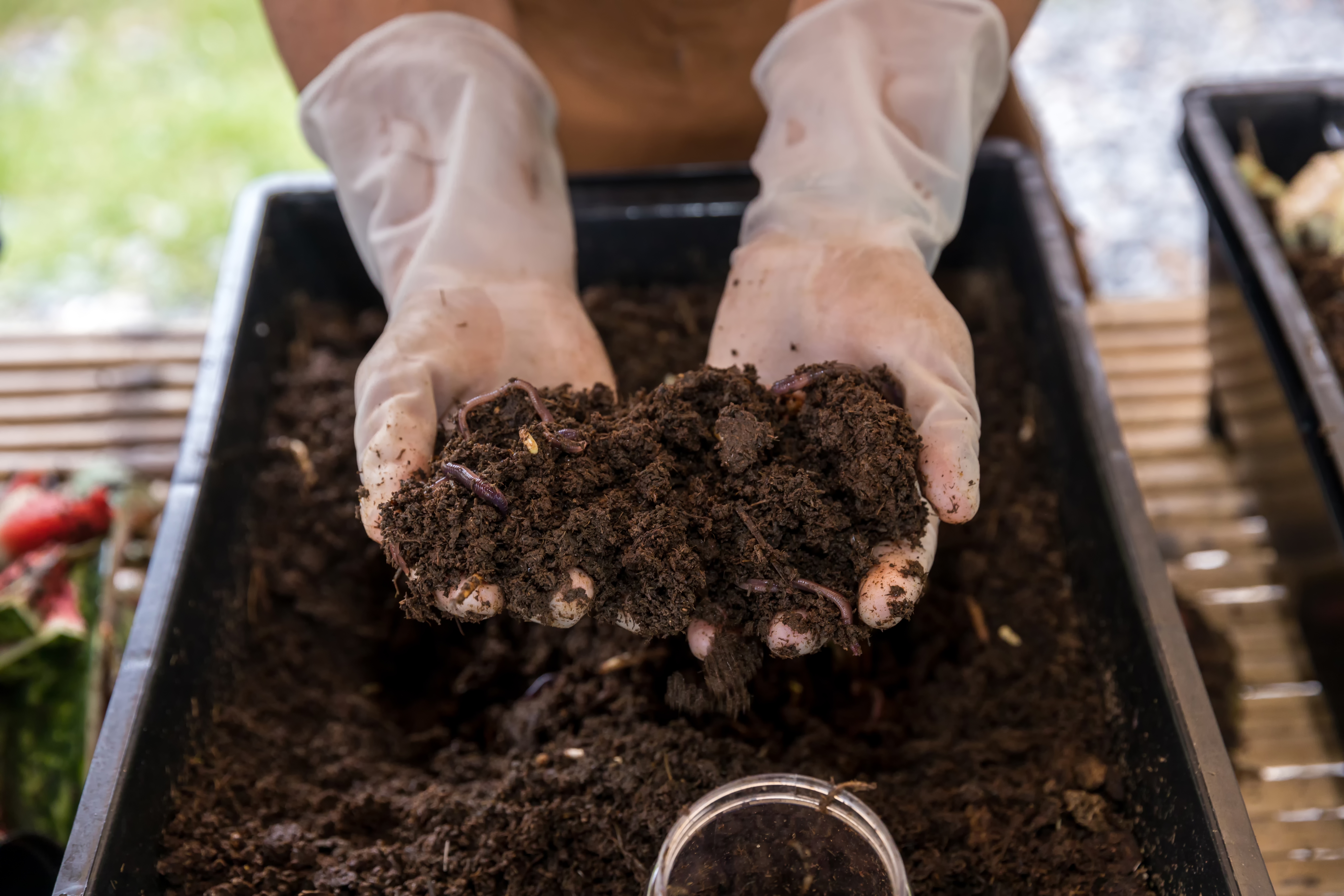
They are not a complete soil test, but they are a strong clue.
Weedth Field Test: The Earthworm Check
Choose a time when the soil is moist but not flooded. Dig into the top 15 to 20 cm of soil and look for earthworms, small roots, crumbly aggregates, and visible soil life.
Good signs include:
- Earthworms
- Small channels
- Crumbly soil structure
- Fine roots
- Mild earthy smell
- Organic matter breaking down
Poor signs include:
- No visible life in moist soil
- Hard compacted layers
- Sour smell
- Slimy organic material
- Excessive dryness
- Pale dust-like soil
What Earthworms Really Mean
Earthworms suggest the soil has organic matter, moisture, and biological activity. That is good.
But earthworms do not guarantee the soil is perfect for cannabis. The site may still have wrong pH, poor drainage, contamination, compaction, or heavy shade.
Earthworms are a good soil-health clue, but they are not a full soil test.
Question From Growers: “The soil is black and full of worms. Is it automatically good?”
No.
Black soil and worms are encouraging, but they are not enough. Some wet soils are dark because they stay saturated. Some low areas have worms and organic matter but still drain too slowly. Some soils can be biologically active and still have pH or contamination problems.
Use the earthworm check with drainage, texture, pH, and site history.
Soil life matters, but root oxygen still decides whether cannabis can thrive.
Native Vegetation Clues
The plants already growing on a site can tell you something about the soil.
Native vegetation is not a lab test, but it can help you read moisture, fertility, compaction, and light.
Moisture-Loving Plants
If the area is full of mosses, rushes, reeds, sedges, ferns, or other moisture-loving plants, the soil may stay wet. That does not automatically make it bad, but it should trigger a drainage test.
Cannabis does not like constantly saturated soil.
Drought-Tolerant Plants
If the site is dominated by dryland grasses, scrub plants, or sparse drought-tolerant vegetation, the soil may dry quickly or hold little organic matter.
This can indicate sandy, rocky, or low-moisture conditions.
Aggressive Weeds
Aggressive weeds can indicate fertility, disturbance, or strong competition. Some weeds are easy to remove. Others spread through rhizomes or deep roots.
If a site is full of aggressive perennial weeds, the grower should think carefully before planting directly into that ground.
Tree Root Competition
If large trees are nearby, assume roots are present underground. Cannabis may compete with those roots all season.
This is especially important near forest edges, orchards, hedges, and mature landscape trees.
Native vegetation helps you read the land, but it does not replace soil testing.
pH Testing Outdoor Soil
Outdoor soil pH affects nutrient availability. Cannabis generally prefers a mildly acidic to near-neutral soil range. If the soil is too acidic or too alkaline, nutrients may be present but unavailable.

Why pH Testing Matters
pH affects access to:
- Nitrogen
- Phosphorus
- Potassium
- Calcium
- Magnesium
- Iron
- Manganese
- Zinc
- Copper
- Boron
- Other micronutrients
A grower may add fertilizers and still see deficiency symptoms if pH is blocking uptake.
Simple pH Testing
Home pH kits can give a rough idea, but results vary. A lab test is more reliable, especially for serious outdoor sites.
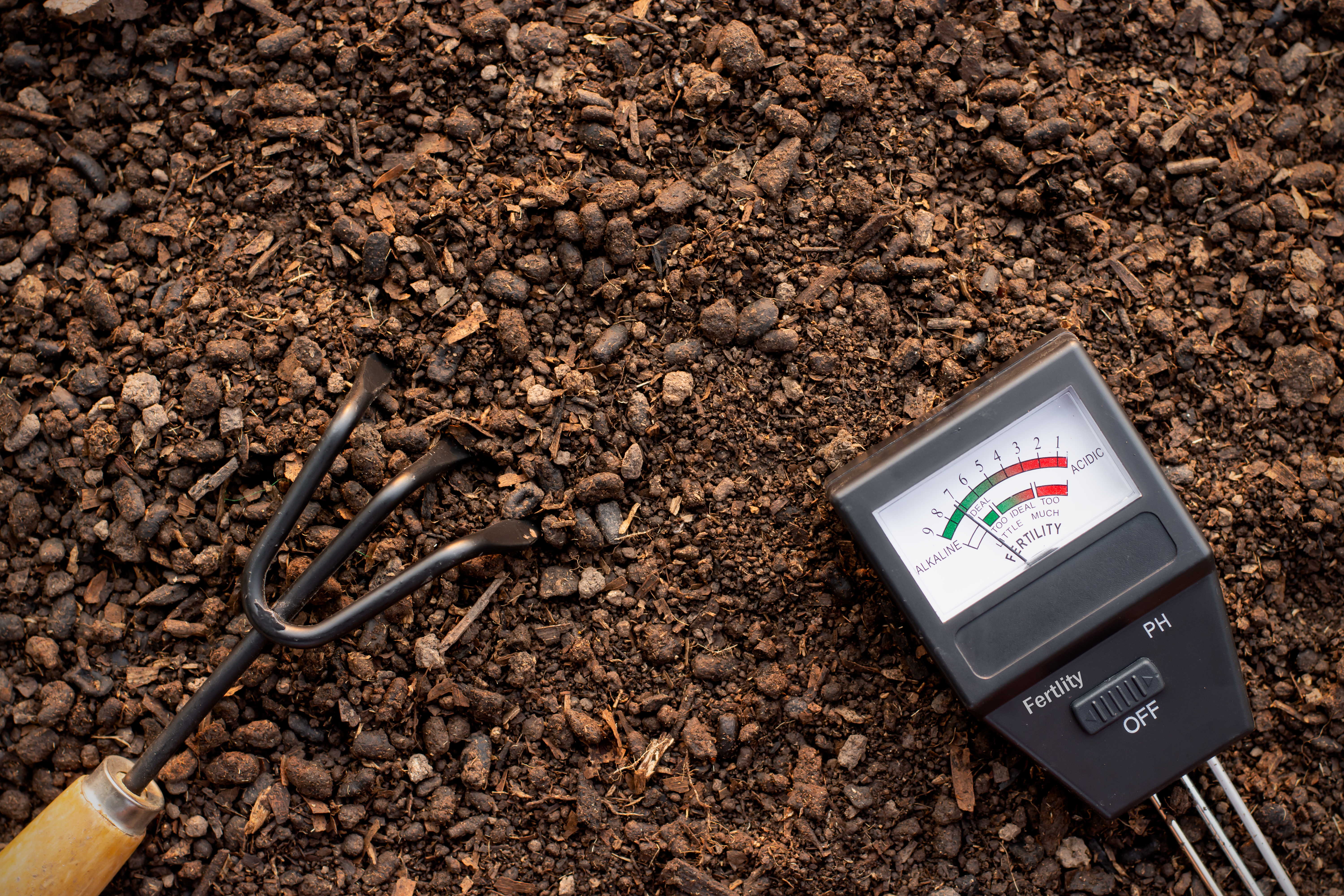
Test different parts of the planting area because pH can vary across a site.
Correcting pH
Do not add lime, sulfur, or strong amendments blindly.
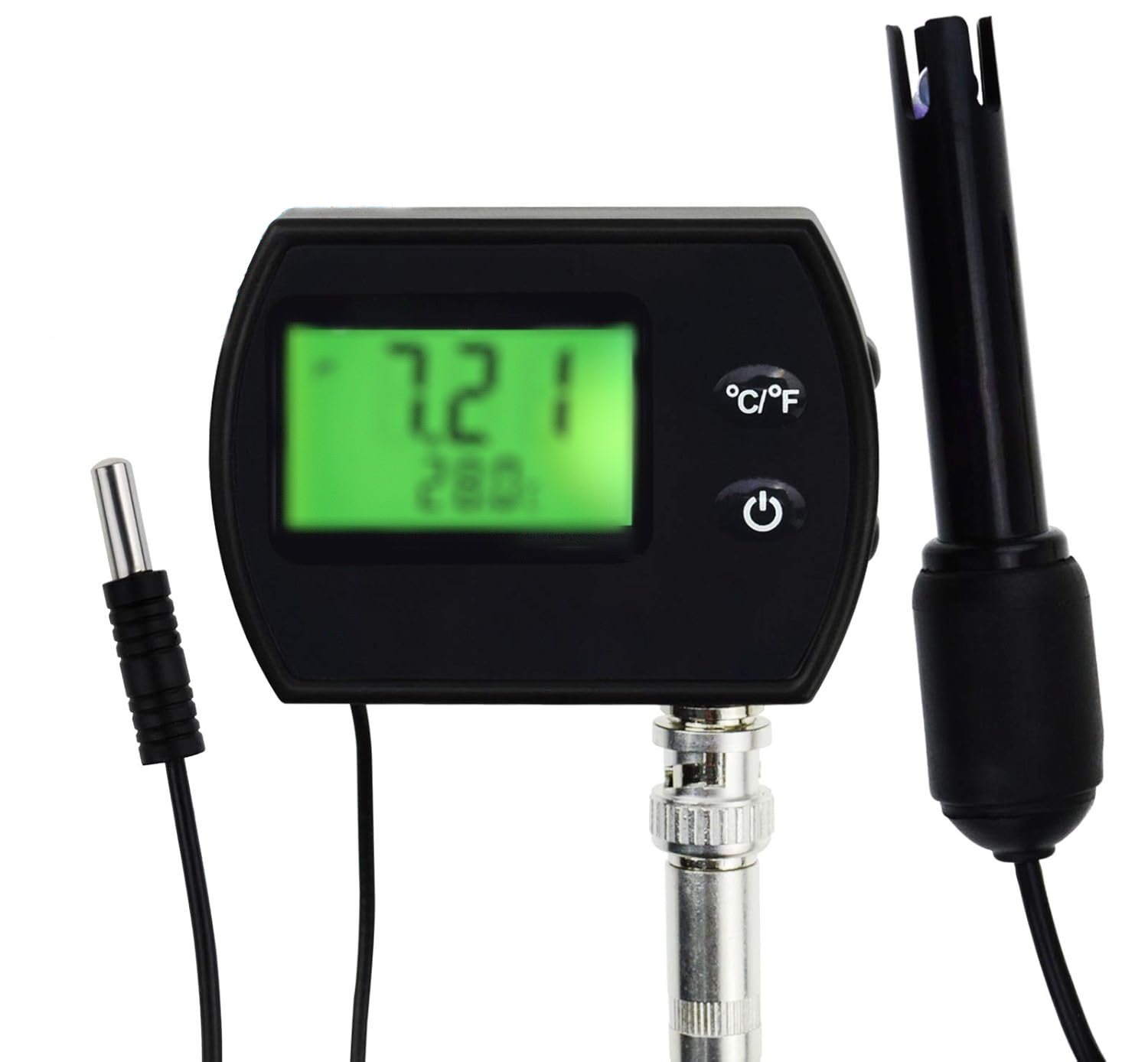
- Lime can raise acidic soil pH.
- Sulfur can lower alkaline soil pH slowly.
- Compost can improve buffering over time.
- Gypsum adds calcium and sulfur but does not raise pH like lime.
pH correction should be measured. Guessing can create a bigger problem than the one you started with.
Lab Soil Testing
A lab soil test is one of the best tools for outdoor cannabis soil planning. It gives information that field tests cannot show accurately.
A basic soil test may include:
- pH
- Organic matter
- Phosphorus
- Potassium
- Calcium
- Magnesium
- Cation exchange capacity
- Soil texture estimate
- Soluble salts
- Lime requirement, if needed
Some labs also offer heavy metal or contamination screening.
When Lab Testing Is Worth It
Lab testing is especially useful when:
- You plan to grow in the same site long-term
- The soil history is unknown
- The site was previously agricultural
- The site is near roads, old buildings, industrial areas, or fill soil
- The soil has extreme pH
- Plants have failed there before
- You want to amend accurately
- You are building a raised bed or outdoor living soil system
Weedth Advice: Test Before You Spend
Many growers spend money on amendments before they understand the soil.
A soil test can prevent waste. It can show that the soil already has enough phosphorus. It can show pH is the real problem. It can show calcium or magnesium imbalance. It can show organic matter is low. It can show salts are high.
A soil test is cheaper than a full season of wrong amendments.
Contamination Testing
Contamination risk deserves serious attention, especially for cannabis because the harvested flower may be inhaled or consumed.
Some soils should not be trusted without testing.
High-risk sites include:
- Urban vacant lots
- Old industrial land
- Roadside soil
- Areas near old painted buildings
- Construction debris sites
- Old orchards
- Former agricultural fields with unknown chemical history
- Near rail corridors
- Near garages, fuel storage, workshops, or dumping areas
- Soil with chemical, oily, fuel-like, or metallic odor
Possible contaminants may include:
- Lead
- Cadmium
- Arsenic
- Petroleum residues
- Solvents
- Pesticide residues
- Herbicide residues
- Construction debris
- Unknown industrial residues
Compost does not erase contamination. Organic matter may improve soil health, but it does not automatically make contaminated soil safe.
If contamination is possible, use a clean raised bed or container instead of gambling with native soil.
How to Improve Native Ground Soil Before Planting
Once the soil has been observed and tested, the grower can decide whether to improve it, avoid it, or build above it.
Native ground can be improved, but only if the problem is fixable.
A soil that is slightly sandy can be improved with organic matter and mulch. A soil that is mildly compacted can be loosened and rebuilt over time. A soil that is low in organic matter can be improved with compost. But a soil that is contaminated, constantly waterlogged, or legally inappropriate should not be treated as a normal amendment problem.
Some soils need improvement. Some soils need replacement. Some sites need to be avoided.
Improving Clay-Heavy Soil
Clay-heavy soil needs structure and oxygen.
The main goal is to improve aggregation, drainage, and root penetration without turning the soil into a dense mess.
Useful strategies include:
- Add mature compost
- Add leaf mold
- Add aged organic matter
- Use mulch
- Avoid walking on wet soil
- Avoid working clay when wet
- Use raised mounds
- Use raised beds when drainage is poor
- Improve surface water movement
- Add gypsum only when appropriate
- Build soil over time with cover crops where possible
What Not to Do
Do not fix clay with a small amount of sand. This can make the soil denser and harder.
Do not dig wet clay aggressively. Working clay when wet can destroy structure and create compaction.
Do not keep adding fertilizer when the real issue is oxygen.
Clay soil needs structure before it needs more feeding.
Improving Sandy Soil
Sandy soil needs organic matter and moisture buffering.
The goal is to help the soil hold water and nutrients long enough for cannabis roots to use them.
Useful strategies include:
- Add mature compost
- Add worm castings
- Add charged biochar
- Use mulch
- Use cover crops in long-term beds
- Use drip irrigation where possible
- Top-dress regularly with organic matter
- Avoid overfeeding because nutrients can leach quickly
- Use larger planting holes or raised beds when needed
Sandy soil can improve over time, but it needs repeated organic matter support.
Sandy soil drains well, but cannabis still needs water and nutrient memory in the root zone.
Improving Desert-Like Sandy Dryland Soil
Desert-like sandy soil usually needs more than amendment. It often needs rebuilding.
The soil may be too low in organic matter, too fast-draining, too hot, and too poor at holding nutrients.
Useful strategies include:
- Build a raised bed with clean soil
- Dig large planting holes and replace part of the root zone
- Add mature compost
- Add worm castings
- Add charged biochar
- Add mulch heavily
- Use drip irrigation or reliable watering
- Protect the soil surface from heat
- Use wind protection if needed
- Avoid small root zones
In extreme dryland soil, native ground may not be worth fighting unless the grower can provide consistent irrigation and rebuild the root zone.
Desert-like sandy soil is not just sandy. It is usually water-poor, nutrient-poor, and biologically weak.
Improving Silty Soil
Silty soil can be fertile, but it may compact and crust.
Useful strategies include:
- Add compost
- Add mulch
- Avoid foot traffic
- Avoid working soil when wet
- Use cover crops
- Maintain surface protection
- Improve drainage if needed
- Break surface crust gently without destroying structure
Silty soils can work well if structure is protected.
Silt can grow strong plants when it stays crumbly. It becomes a problem when it seals and compacts.
Improving Wet Soil
Wet soil is one of the hardest problems to fix quickly.
If the ground stays muddy, smells sour, or holds water after rain, planting directly into it is risky.
Possible solutions:
- Choose a better-drained site
- Build a raised bed
- Build a raised mound
- Improve surface drainage
- Avoid low basins
- Avoid lake or pond edges that stay saturated
- Avoid compacted clay lowlands
- Use large containers with clean mix
Do not try to fix wet soil only with fertilizer. The roots need oxygen first.
Cannabis roots can handle moisture. They cannot handle constant saturation.
Improving Low Organic Matter Soil
Low organic matter soil may look pale, dusty, lifeless, or weak. It may dry quickly, crust easily, or fail to support strong microbial activity.
Useful strategies include:
- Add compost
- Add worm castings
- Add leaf mold
- Use mulch
- Use cover crops
- Add charged biochar carefully
- Reduce disturbance
- Keep soil covered
- Build organic matter over multiple seasons
Organic matter is not only fertilizer. It improves soil structure, moisture behavior, nutrient holding, and biology.
Low organic matter soil needs rebuilding, not just feeding.
Improving Acidic Soil
Acidic soil can reduce availability of some nutrients and increase availability of others to problematic levels. Forest and conifer areas may be more acidic, but do not assume. Test first.
Possible strategies:
- Use lime if soil test recommends it
- Use dolomite lime only if magnesium is also needed
- Add compost for buffering
- Retest over time
- Avoid overliming
pH correction takes time. It should be done before planting when possible.
Do not add lime blindly. High pH can be just as limiting as low pH.
Improving Alkaline Soil
Alkaline soil can reduce availability of iron, manganese, phosphorus, and other nutrients. Some dryland, limestone, or irrigated soils may run high in pH.
Possible strategies:
- Add organic matter
- Use elemental sulfur only when testing supports it
- Use acidifying strategies carefully
- Avoid adding lime
- Check irrigation water alkalinity
- Consider raised beds with controlled mix if pH is difficult
Alkaline soil can be hard to correct quickly. Water source may also keep pushing pH upward.
If both soil and water are alkaline, the root-zone problem may return unless the system is managed as a whole.
Improving Contaminated Soil
Contaminated soil should not be treated like a normal fertility issue.
If the soil may contain heavy metals, industrial residues, petroleum contamination, pesticide residues, lead paint dust, or construction debris, do not simply add compost and plant.
Better options include:
- Lab testing
- Avoiding the site
- Using clean raised beds
- Using large containers
- Using barriers between native soil and imported clean soil when appropriate
- Avoiding root contact with contaminated ground
- Not disturbing contaminated dust
Compost can improve poor soil. It cannot guarantee contaminated soil is safe.
When Raised Beds Are the Better Choice
Raised beds are often the best solution when native soil is questionable but the site is legal, safe, and useful.
Raised beds give the grower control over:
- Soil texture
- Drainage
- Organic matter
- pH
- Amendments
- Root volume
- Mulch
- Soil biology
- Watering strategy
Raised beds are especially useful when native soil is:
- Heavy clay
- Poorly drained
- Shallow
- Rocky
- Low in organic matter
- Difficult to amend deeply
- Mildly questionable but not contaminated
- Too compacted for easy root growth
If contamination is suspected, raised beds may need a clean barrier and enough depth to keep roots away from native soil.
Weedth Master Advice: Build Above Bad Ground
If the native soil is fighting you from every direction, stop trying to force it.
A raised bed or large container may cost more at the beginning, but it can save the entire season. It gives the roots a clean and controlled environment instead of forcing the plant to survive in bad ground.
Sometimes the best soil amendment is not an amendment. It is a better root zone.
When Large Containers Are Better Than Native Ground
Large outdoor containers are useful when:
- Native soil is poor
- Ground contamination is possible
- Drainage is bad
- The site is rocky or shallow
- Soil pH is difficult
- The grower wants full medium control
- The legal grow area is small
- The grower needs to move plants within a private legal space
Containers are not perfect. They heat faster, dry faster, and limit root volume compared with good ground soil. But they give control.
Use containers when control is safer than trusting the ground.
A large clean container is better than a risky native soil site.
Outdoor Soil Preparation Timeline
Outdoor soil preparation should happen before planting, not after the plant is already struggling.
Weeks or Months Before Planting
Best time for:
- Lab testing
- pH correction
- Compost addition
- Raised bed building
- Cover crop planning
- Drainage improvement
- Heavy clay improvement
- Organic amendment cycling
A Few Weeks Before Planting
Best time for:
- Final bed shaping
- Mulch planning
- Irrigation setup
- Light amendment work
- Checking drainage after rain
- Preparing seedling-safe zones
At Planting
Best time for:
- Gentle transplanting
- Mycorrhizal root contact if used
- Watering in carefully
- Protecting mulch surface
- Avoiding hot amendments near young roots
After Planting
Best time for:
- Monitoring moisture
- Watching leaf response
- Checking pest pressure
- Top-dressing gently when needed
- Avoiding panic amendments
The more work you do before planting, the fewer emergencies you create after planting.
Outdoor Ground Soil Decision Flow
Use this simple decision logic before planting in native ground.
- Is the site legal, private, permitted, and safe?
- If no, do not plant.
- Is the site too visible or exposed to public traffic?
- If yes, do not plant there.
- Does the soil drain after rain?
- If no, use a raised bed, mound, container, or different site.
- Does the soil smell clean and earthy?
- If no, investigate or avoid.
- Does the texture support roots?
- If no, improve structure or build a controlled root zone.
- Is contamination possible?
- If yes, test or avoid.
- Is pH acceptable?
- If no, correct before planting or use controlled soil.
- Can water be supplied reliably?
- If no, the site may fail during heat or flowering.
- Is the soil volume deep enough?
- If no, use raised beds or containers.
- Are amendments based on a clear need?
- If no, simplify the plan.
Outdoor cannabis soil should pass the site, safety, drainage, texture, pH, and contamination filters before planting.
Question From Growers: “Can I Just Dig a Hole and Fill It With Good Soil?”
Sometimes, but the surrounding native soil still matters.
If you dig a hole in heavy clay and fill it with loose potting soil, that hole can behave like a bucket. Water may collect in the improved planting hole because the surrounding clay drains slowly. The plant may start well and then struggle after rain.
If you dig a hole in very sandy soil, the improved soil may dry from all sides and lose moisture quickly.
If you dig into contaminated ground, roots may eventually reach the surrounding soil.
A planting hole is useful only when it is part of a site that drains and behaves properly.
Do not build a beautiful pocket of soil inside a bad drainage trap.
Question From Growers: “Should I Replace All Native Soil With Bagged Soil?”
Not always.
If the native soil is healthy loam, it may be better to improve it with compost and mulch rather than fully replace it.
If the native soil is heavy clay, contaminated, too wet, too sandy, or too shallow, full replacement in a raised bed or large container may be safer.
The decision depends on why the native soil is unsuitable.
Improve good ground. Build above bad ground. Avoid contaminated ground.
Final Outdoor Soil Rule
Outdoor cannabis roots need a soil that can breathe, drain, hold moisture, support nutrients, and stay safe through the whole season.
The best site is not always the darkest soil. It is not always the wettest soil. It is not always the easiest place to dig.
The best site is the one where the land, soil, water, safety, and legal conditions all support a stable root zone.
Test before you trust. Improve before you plant. Avoid what cannot be made safe.
Where This Guide Goes Next
The next part returns to indoor, outdoor, and greenhouse management after the medium is chosen.
It will cover containers, root-zone temperature, water quality, watering strategy, microbes, compost teas, companion planting, regenerative practices, reusing soil, troubleshooting, myths, FAQ, and final editorial notes.
The soil is now selected and built. The next challenge is keeping it alive, balanced, and readable through the grow.
Managing the Medium After Planting
Choosing the right soil or growing medium is only the beginning.
A good medium can still fail if it is watered poorly, overheated, overfed, compacted, contaminated, or forced into the wrong container. A simple mix can produce excellent cannabis when it is managed with consistency. A complex living soil can underperform when the grower ignores moisture, root temperature, or pest pressure.
The medium is not a one-time decision. It is a root-zone system that changes through the grow.
Once the plant is in the pot, bed, or ground, the grower’s job becomes observation. How fast does the medium dry? Does the plant drink steadily? Does the pot stay heavy? Does runoff smell sour? Are roots filling the container? Are fungus gnats appearing? Is the plant responding to feeding, or does it look locked out?
These questions matter more than any fixed schedule.
A cannabis grower should learn to read the medium as much as the leaves.
Indoor Soil and Media Strategy
Indoor growing gives control over light, temperature, humidity, airflow, container size, and irrigation. That control can produce excellent cannabis, but it also means mistakes can repeat every day.
If the medium stays too wet indoors, it may stay wet for a long time. If airflow is weak, the soil surface may remain damp. If the container is too large for the plant, roots may sit above a wet lower zone. If the grower waters on a calendar, the medium may never enter a healthy dry-back rhythm.
Indoor soil should usually be light enough to breathe and dry predictably.
For indoor soil grows, focus on:
- Light structure
- Good drainage
- Proper pot size
- Strong airflow
- Controlled watering
- Moderate feeding
- Root-zone warmth
- Clean materials
- Pest prevention
A common beginner mistake is placing a small plant into a very large pot of rich soil. The plant cannot drink fast enough, so the lower medium stays wet. The grower sees drooping and thinks the plant needs more water or more nutrients. In reality, the roots may need more oxygen and less saturation.
Indoor soil problems often begin when a small root system is surrounded by too much wet medium.
Indoor Coco Strategy
Indoor coco has a different rhythm from soil.
Once roots are established, coco often performs better with regular fertigation and some runoff. The grower supplies most of the nutrition through water, so pH and feed consistency matter.
Coco should not be treated like a rich potting soil. It does not hold a large nutrient reserve by itself. It needs feeding, runoff awareness, calcium-magnesium management, and a stable pH range.
A coco plant may look deficient because it is underfed, but it may also look deficient because pH is wrong, runoff EC is too high, or the coco was not properly buffered.
Coco is simple in structure, but it is not casual in management.
Indoor Living Soil Strategy
Indoor living soil works best with enough volume. A small organic pot can dry too fast, swing too hard, and run out of biological buffering. Larger containers, mulch, compost quality, and steady moisture are important.
Living soil should not become bone dry, but it should not stay swampy either. The surface can be protected with mulch, but the grower still needs to watch for fungus gnats and wet top layers.
Good indoor living soil management includes:
- Larger soil volume when possible
- Mulch used carefully
- Clean compost and worm castings
- Moderate top-dressing
- Even moisture
- Good airflow
- No unknown outdoor inputs
- Pest monitoring
Living soil indoors needs stability, not constant interference.
Outdoor and Greenhouse Media Strategy
Outdoor cannabis faces real weather. Rain, heat, wind, cold nights, pests, animals, native soil quality, and seasonal changes all affect the root zone.
A strong outdoor medium must do two things at once: drain after rain and hold enough moisture through heat.
That balance is not always easy.
In-ground outdoor plants can become large because roots have space. But root space only helps when the ground is suitable. Heavy clay, poor drainage, high salinity, extreme pH, contamination, or shallow rocky soil can limit the plant from the beginning.
Raised beds and large containers give more control, but they also require planning. Containers heat and dry faster. Raised beds need enough soil volume and a reliable water strategy.
Outdoor Container Strategy
Outdoor containers are useful when native ground is poor, contaminated, shallow, compacted, or too wet. They allow the grower to use a clean, controlled mix.
But containers are exposed to heat. A black plastic pot in full sun can overheat the root zone. Concrete, tile, stone patios, and walls can radiate heat back into the container.
Protect outdoor containers by:
- Using larger soil volume
- Using mulch
- Keeping pots off hot concrete
- Shading the container while keeping the canopy in sun
- Using light-colored or fabric containers when appropriate
- Watering during cooler parts of the day when needed
- Avoiding tiny pots in strong summer heat
In hot outdoor grows, protecting the roots from heat can be as important as feeding the plant.
Greenhouse Media Strategy
Greenhouses can intensify growth and stress at the same time.
They trap heat. They can hold humidity. They can dry pots quickly under strong sun and then stay damp overnight. They can increase pest pressure if airflow is poor.
Greenhouse media should:
- Drain well
- Resist compaction
- Handle frequent irrigation
- Avoid salt buildup
- Stay breathable under humidity
- Support root-zone temperature stability
- Avoid constantly wet surfaces
Greenhouse growers often benefit from drip irrigation, mulch, moisture monitoring, and careful airflow.
A greenhouse can make a good root zone perform better, but it can also make a wet root zone fail faster.
Seedlings, Clones, Autoflowers, Photoperiods, and Mother Plants
Different plant stages and plant types need different root-zone conditions. A soil that works for a large flowering plant may be too strong for a seedling. A container that works for a photoperiod may be risky for a young autoflower if watered poorly.
Seedlings
Seedlings need a mild, airy, clean medium. They do not need strong feeding at the start.
A seedling mix should provide:
- Gentle moisture
- Oxygen
- Warmth
- Light nutrition
- Clean materials
- Fine enough texture for young roots
- No hot amendments near the root zone
Avoid:
- Heavy pre-fertilized soil
- Fresh compost
- Fresh manure
- Strong organic meals
- Unknown outdoor soil
- Dense garden soil
- Constantly wet trays
A seedling should never be treated like a flowering plant.
Clones
Clones begin without an established root system. They need moisture and humidity while roots form. Starter plugs, rockwool cubes, coco plugs, light seedling mixes, or gentle propagation media can all work.
Once roots appear, clones need a stronger root environment and gradual nutrition. Moving a rooted clone from a mild plug into a hot soil too quickly can stress it.
The transition matters.
A clone needs roots before it needs a rich medium.
Autoflowers
Autoflowers have limited time to recover from early stress. Their internal schedule moves toward flowering whether the grower is ready or not.
This makes root-zone mistakes more costly.
Autoflowers usually prefer:
- Airy medium
- Mild early nutrition
- Stable moisture
- Low transplant stress
- Final containers used carefully
- No hot upper soil zone
Many growers plant autoflowers directly into their final container. This can avoid transplant stress, but it also increases overwatering risk because the seedling is small and the pot is large.
If using a rich soil system, keep the upper seedling zone mild and place stronger nutrition deeper only if the system is designed for that.
Autoflowers do not give unlimited time to repair a bad soil start.
Photoperiod Plants
Photoperiod cannabis gives growers more flexibility. The plant can stay in vegetative growth longer, which allows time for training, transplanting, root expansion, and correction before flowering.
Photoperiods can handle richer soil systems once established, especially if the grower vegs long enough for the root system to fill the container.
Still, young photoperiod plants can be burned by hot mixes just like any other cannabis plant.
Photoperiods are more forgiving with time, but not immune to poor root-zone decisions.
Mother Plants
Mother plants stay in vegetative growth for a long time. Their medium must remain stable through repeated pruning and clone production.
A mother plant medium should resist:
- Compaction
- Salt buildup
- Root binding
- Nutrient depletion
- Watering extremes
- Pest buildup
Mother plants may need periodic transplanting, root pruning, top-dressing, or medium refreshment depending on the system.
A mother plant is not a short grow. Its root zone must be managed like a long-term system.
Containers and Root Health
The container changes how the medium behaves.
The same soil can feel different in a plastic pot, fabric pot, air-pruning pot, or raised bed. Pot shape, volume, color, drainage holes, and material all affect water, oxygen, temperature, and root behavior.

Size the pot to the plant stage and watering style.
A container should give roots room without staying wet for too long between irrigations.
Do not oversize a wet, slow mix.
A big pot with a dense medium can hold water longer than a young plant can use it.
Pot Size
Small pots dry quickly and restrict root volume. Large pots hold more water and nutrients, but they can stay wet too long when the plant is small.
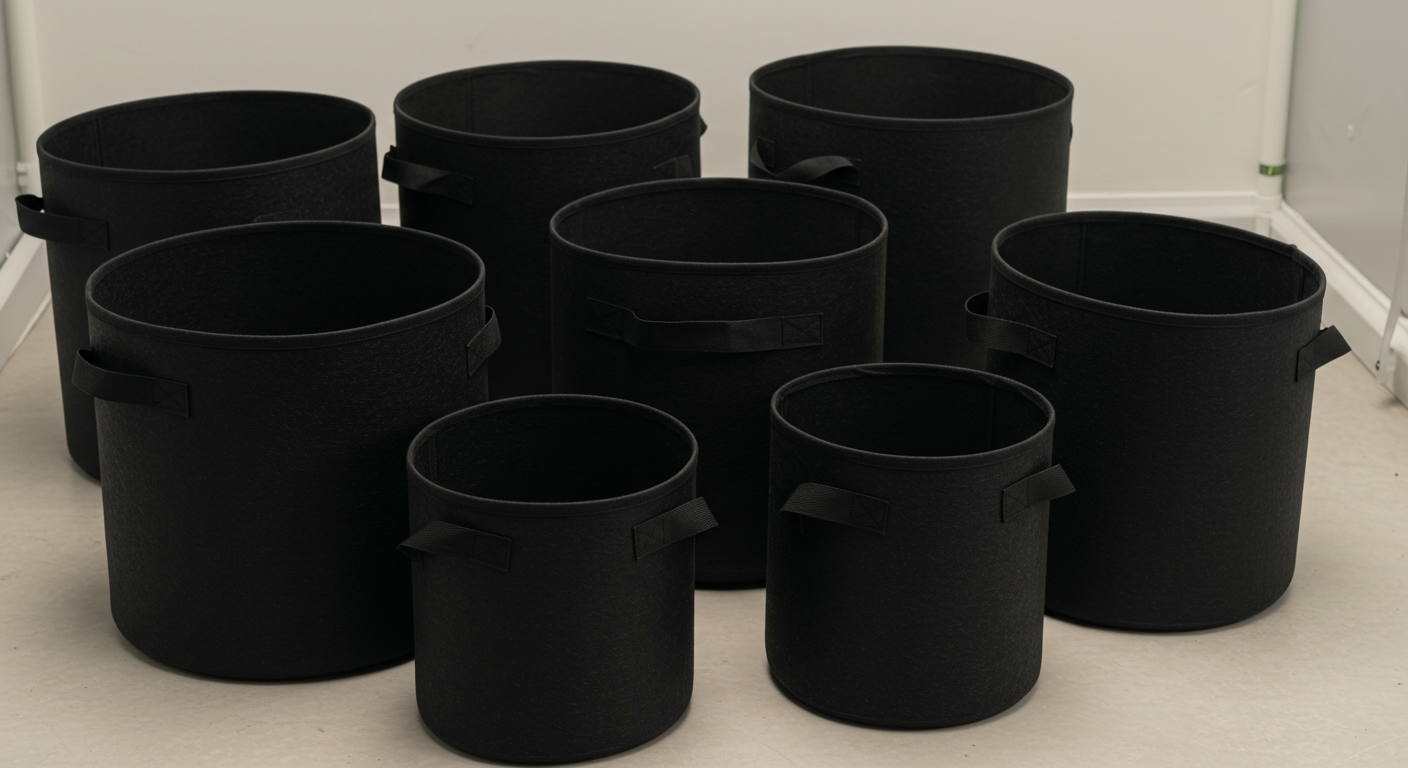
General container direction:
| Plant Type | Common Container Direction |
|---|---|
| Seedlings | Small starter cells or small pots |
| Small indoor plants | 1 to 3 gallons |
| Medium indoor photoperiods | 3 to 7 gallons |
| Autoflowers | Often 3 to 5 gallons |
| Large outdoor plants | 10 to 25 gallons or more |
| Living soil systems | Larger containers are usually better |
| Raised beds | Best for stable outdoor or greenhouse soil volume |
These are not fixed rules. Veg time, plant count, genetics, climate, watering style, grow space, and medium type all change ideal pot size.
The right pot is not the biggest pot. It is the pot that matches the plant and the medium.
Plastic Pots
Plastic pots hold moisture longer and are easy to move, clean, and reuse. They work well when the medium is airy and the grower waters correctly.
The main risks are root circling, heat buildup outdoors, and slow dry-back in large pots.
Black plastic pots in direct sun can become very hot. Outdoor growers should be careful.
“Why do fabric pots dry faster at the edges?”
Question sent by: Sarah Collins, via Facebook page.
Fabric pots breathe through the sides, so edge zones can dry faster than the center. That can be useful, but it also means watering should be even, slow, and adjusted for heat and airflow.
Fabric Pots
Fabric pots allow air pruning. When roots reach the fabric wall, exposure to air encourages branching instead of circling.
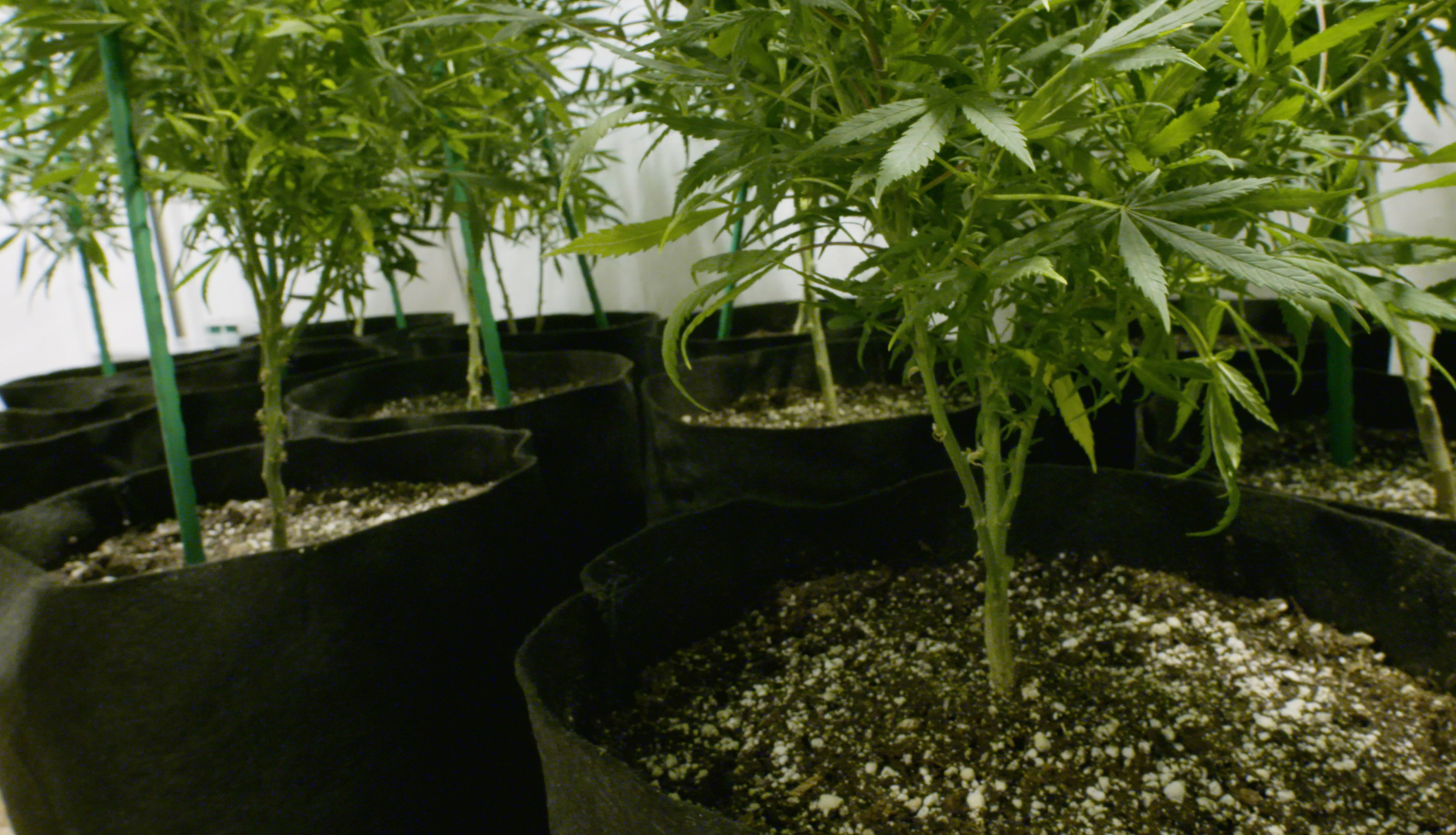
Fabric pots improve oxygen and reduce some overwatering risk, but they dry faster than plastic. In hot outdoor conditions, they may require more frequent watering and mulch.
Fabric pots are useful, but they do not replace good soil structure.
Fabric pots help roots breathe, but the grower still has to manage moisture.
Air-Pruning Pots
Air-pruning pots use holes, cones, or shaped walls to increase oxygen exposure and root branching.
They can build strong root systems, but they may dry faster and require more careful watering.
They work best when the grower understands the wet-dry rhythm of the medium.
“Is a raised bed always better than planting in the ground?”
Question sent by: Patrick Wilson, via email.
Not always, but it gives you more control when native ground is questionable. Raised beds help when drainage, contamination, compaction, or soil quality would otherwise dominate the season.
Raised Beds
Raised beds provide large soil volume and strong biological stability. They are excellent for outdoor, greenhouse, and living soil systems when space allows.
Raised beds can improve:
- Drainage
- Root volume
- Soil biology
- Water buffering
- Organic matter cycling
- Long-term soil reuse
They are especially useful when native ground is poor but the grow area is legal, safe, and controlled.
Raised beds are often the best bridge between native soil and container control.
Important: Root-zone temperature can change how the same medium behaves. A pot that waters well in mild weather can stay too wet in cold conditions or dry too fast in heat.
Root-Zone Temperature
Cannabis roots prefer stability. Cold roots slow nutrient uptake. Hot roots lose oxygen and become more vulnerable to disease.
A practical root-zone target for many soil and coco grows is around 20 to 24°C. Hydroponic reservoirs are often kept cooler to preserve dissolved oxygen.
Temperature stress is often invisible until the plant reacts.
Cold Roots
Cold roots can cause:
- Slow growth
- Poor nutrient uptake
- Purple stems in some cases
- Slower water use
- Increased overwatering risk
- Weak recovery after transplant
Cold soil dries more slowly. This can make growers overwater without realizing the root zone is simply not active enough to use water quickly.
Hot Roots
Hot roots can cause:
- Wilting
- Fast drying
- Reduced oxygen in the root zone
- Root stress
- Higher disease risk
- Poor nutrient uptake
- Afternoon collapse in containers
Outdoor containers are especially vulnerable. The air temperature may be manageable, but the pot surface can become much hotter.
Protecting Root Temperature
Ways to protect roots:
- Use mulch
- Use larger soil volume
- Keep pots off hot concrete
- Shade containers while keeping the canopy in sun
- Avoid black plastic pots in direct summer sun
- Use light-colored containers where possible
- Use fabric pots carefully in heat
- Water during cooler parts of the day when needed
- Protect seedlings from cold wet media
Root temperature is part of the medium, even though growers rarely see it.
| Water Source | Typical Profile | Main Risk | Recommended Treatment | Best Use |
|---|---|---|---|---|
| Tap water | Convenient but variable mineral content | High alkalinity, chlorine, or excess dissolved minerals | Test pH and EC; filter or let chlorine dissipate when needed | Most soil grows when local water quality is acceptable |
| Filtered water | Cleaner and more consistent than raw tap water | Filter type may not remove alkalinity | Test after filtration, not before | Indoor grows that need steadier inputs |
| Reverse osmosis water | Very low mineral content | Needs calcium, magnesium, and buffering awareness | Rebuild the water profile before feeding | Coco, hydro, and high-control indoor systems |
| Rainwater | Soft and low mineral when collected cleanly | Contamination from roofs, barrels, or debris | Collect cleanly and store covered | Outdoor soil and living soil when collection is safe |
Water Quality: The Hidden Part of the Medium
Water is part of the growing medium because it carries nutrients into the root zone.
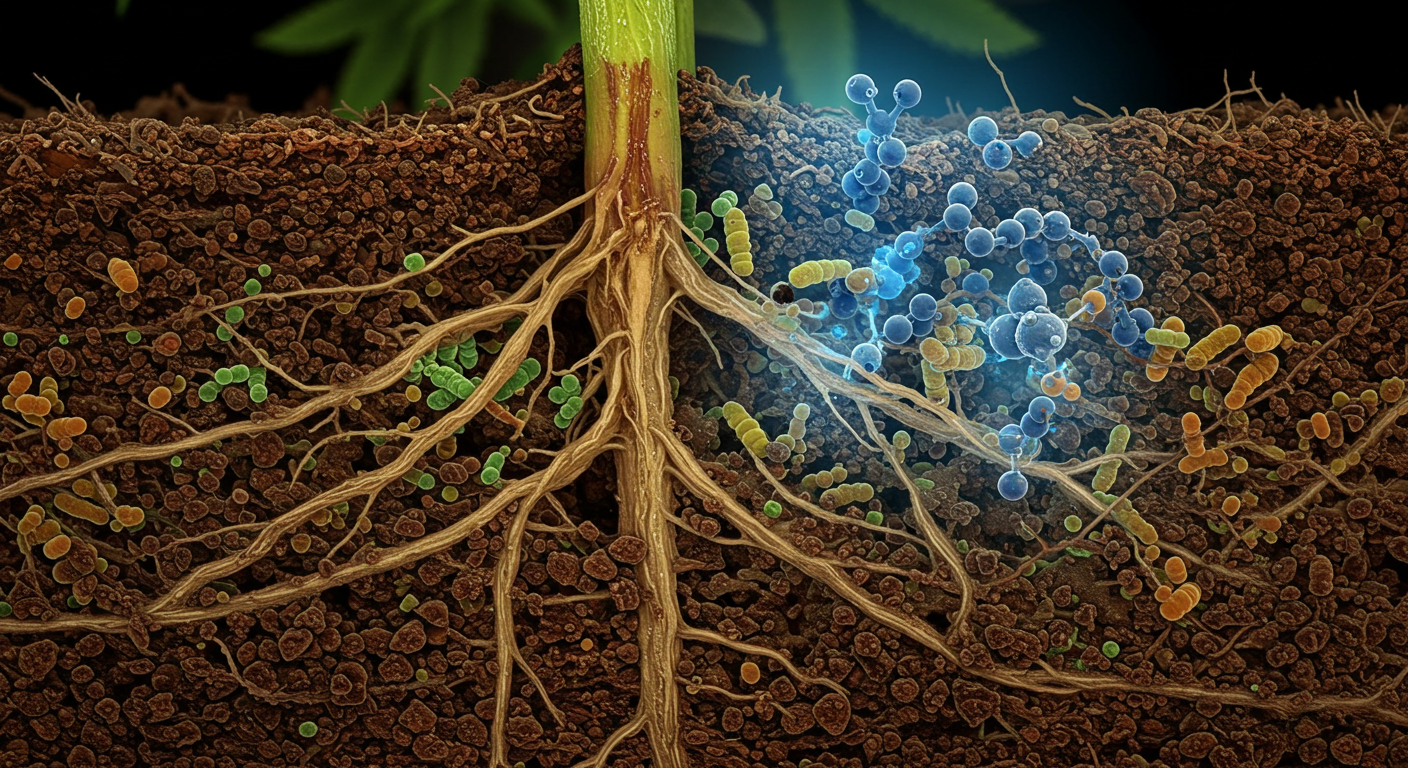
Poor water quality can create pH drift, mineral buildup, chlorine stress, sodium problems, calcium-magnesium imbalance, or salt accumulation.
Two growers can use the same soil and nutrients and get different results because their water is different.
“My nutrients are the same, so why did my plants change after I moved apartments?”
Question sent by: Marcus Bennett, via email.
The water may have changed. Tap water alkalinity, minerals, chlorine treatment, and starting EC can all shift how the same feed behaves in the root zone.
Tap Water
Tap water may work well in one location and cause problems in another.
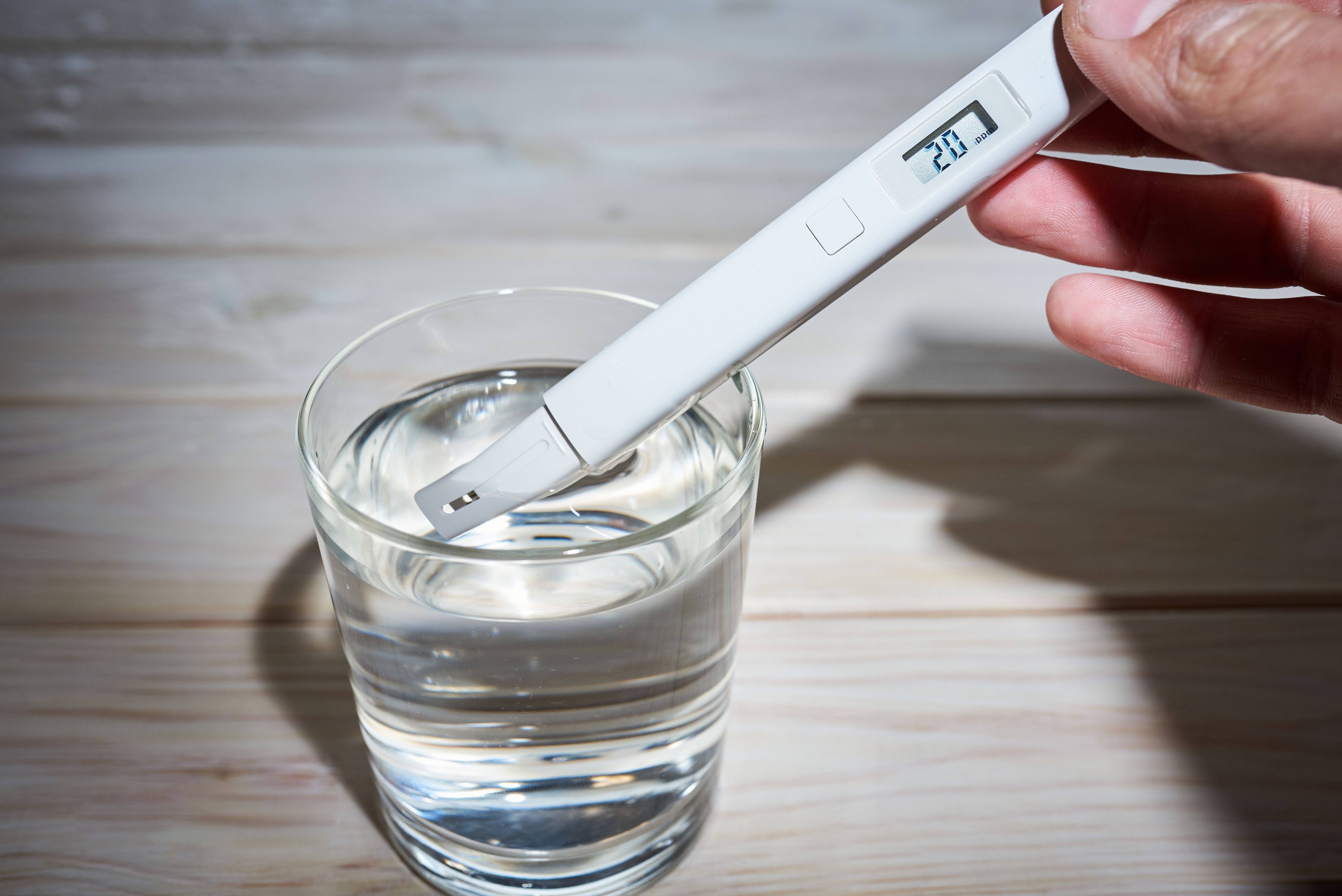
It may contain:
- Calcium
- Magnesium
- Bicarbonates
- Chlorine
- Chloramine
- Sodium
- High dissolved minerals
- High alkalinity
Some tap water is useful because it provides calcium and magnesium. Some tap water pushes pH upward over time or creates mineral buildup.
Letting water sit out can reduce chlorine, but it does not reliably remove chloramine.
Filtered Water
Carbon filtration can reduce chlorine and some contaminants. This is useful for organic and living soil growers who want to protect microbial activity.
Filtration does not always remove everything. The filter type matters.
Reverse Osmosis Water
Reverse osmosis water has very low dissolved minerals. It gives the grower more control, but it usually needs calcium and magnesium added back.
RO water can also have low buffering, which means pH can swing more easily.
RO water is useful, but it is not automatically easier for beginners.
Rainwater
Rainwater can be useful when clean, but quality depends on collection surfaces, pollution, storage, and local conditions.
Do not collect rainwater from dirty roofs, contaminated surfaces, or containers with algae and debris. Stored rainwater should be kept clean and protected.
If the same nutrient plan behaves differently in two gardens, water quality may be the reason.
Field capacity is the wet-but-not-soggy point.
After a thorough watering, a healthy medium should drain excess water and settle into a state where moisture remains but air still exists. That balance is where many root systems perform best.
“Why do my plants droop right after watering?”
Question sent by: Lauren Hughes, via Facebook page.
Drooping right after watering often means the root zone lost oxygen too quickly. The plant may not need more water; it may need better dryback, more aeration, a smaller container, or a lighter mix.
Watering: The Skill Most Growers Underestimate
Watering is not just giving the plant a drink. It controls oxygen, root rhythm, nutrient movement, microbial activity, salt buildup, and pest pressure.
Many cannabis problems blamed on nutrients are actually watering problems.
Watering Soil
In soil, the usual goal is to water thoroughly and then allow the medium to dry partially before watering again.
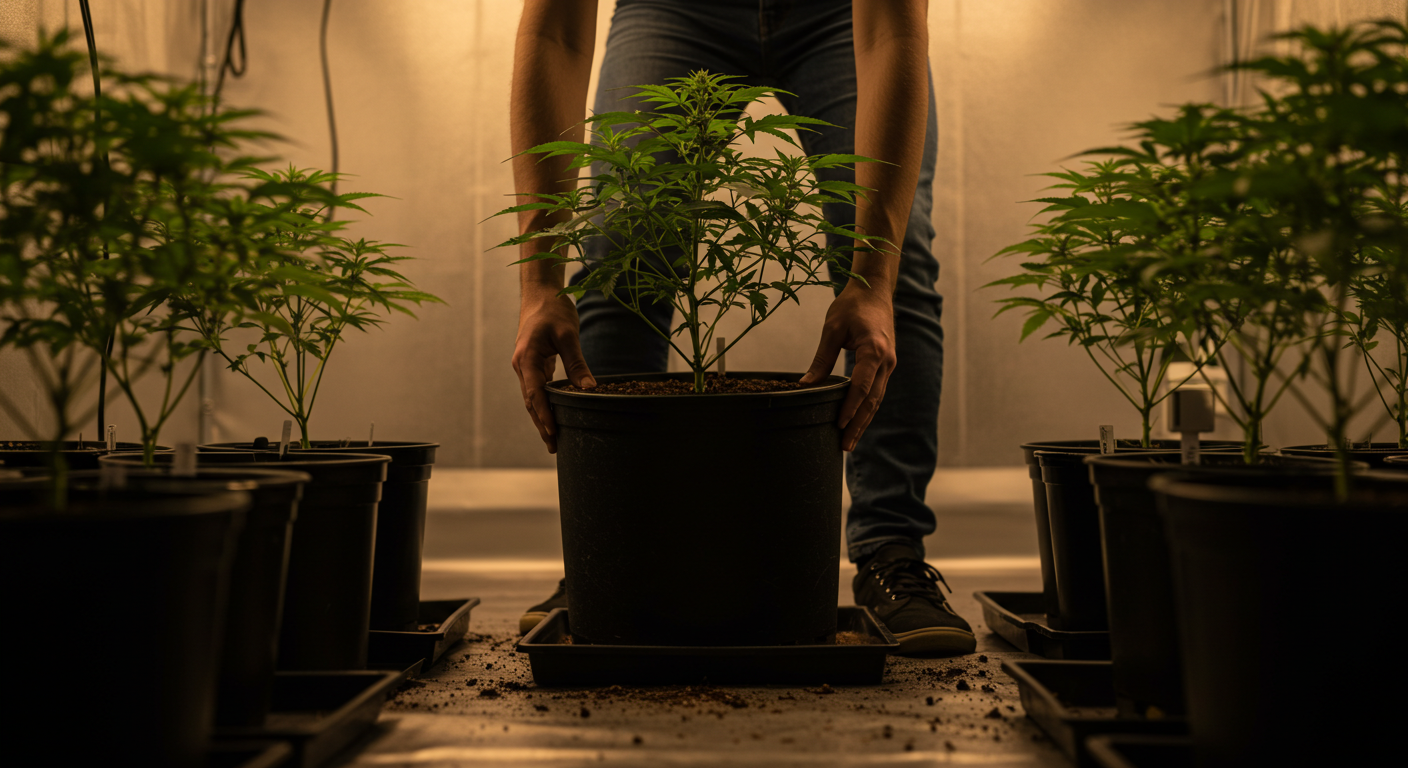
The top layer can dry while deeper soil remains moist. Pot weight is one of the best beginner tools. Lift the pot when fully watered. Lift it again when it is ready for water. Over time, the difference becomes obvious.
Do not water on a fixed schedule unless the plant and medium consistently prove that schedule is correct.
Signs soil may need water:
- Pot feels much lighter
- Upper medium is dry and deeper zone is approaching dry-back
- Plant begins to lose slight leaf pressure, but not severe wilt
- Growth stage and environment support the timing
Signs soil may not need water:
- Pot is still heavy
- Soil surface is wet
- Fungus gnats are active
- Leaves droop downward while medium is wet
- The plant has slowed water use after stress or cold roots
Do not water the calendar. Water the root zone.
Watering Coco
Coco should not be watered like soil.
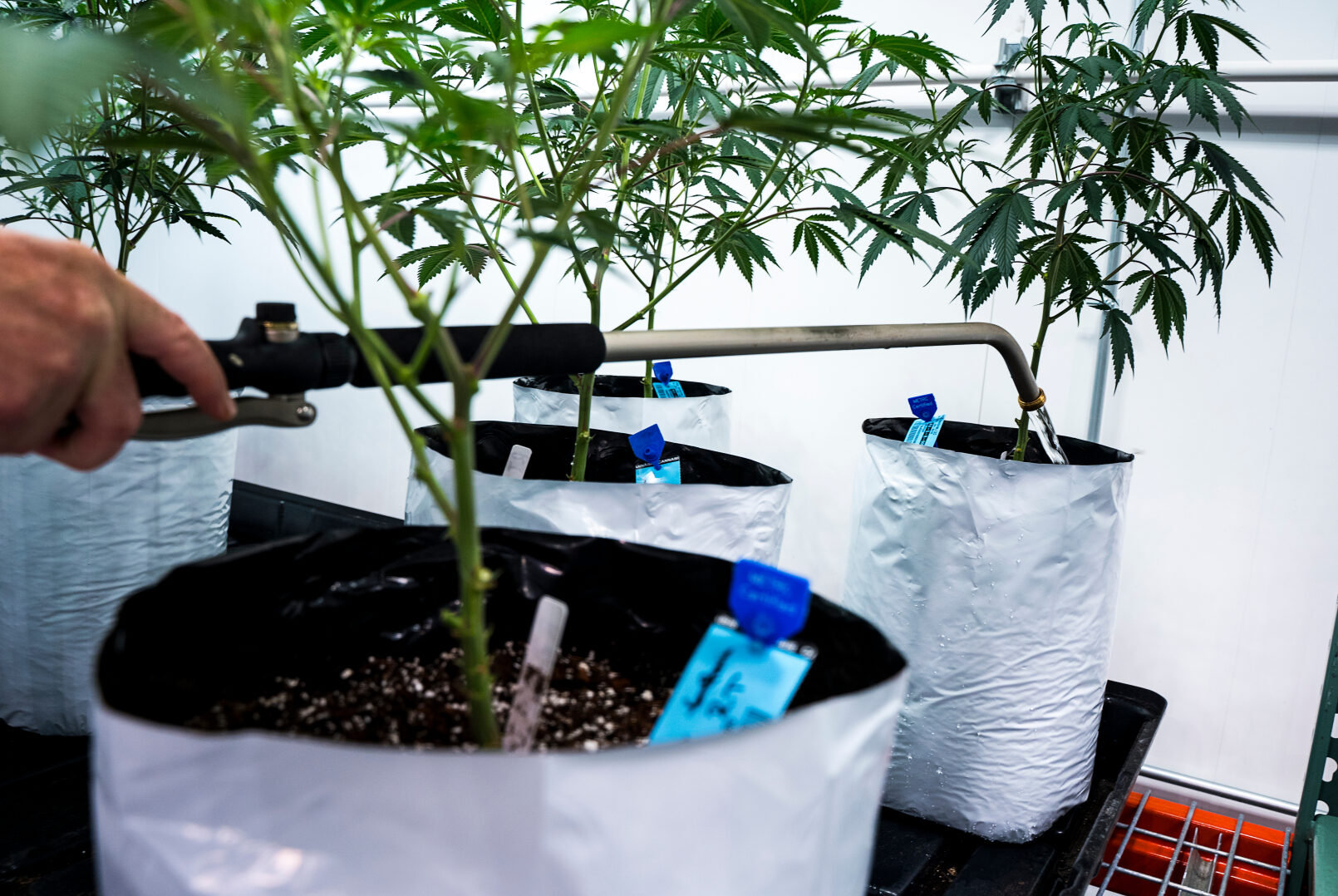
Once roots are established, coco often performs best with regular fertigation. The grower supplies nutrients through water and uses runoff to help manage salts.
Coco can stay moist while still holding air, but it still needs proper pH, feed strength, and runoff awareness.
Plain water too often can disrupt coco feeding. Letting coco dry too far can create salt concentration and root stress.
Coco likes rhythm. Soil likes dry-back. Living soil likes stable moisture.
Watering Living Soil
Living soil should not swing between bone dry and swampy.
Microbes need moisture, but roots need oxygen. Mulch helps keep the surface stable. Larger containers help buffer moisture. Slow watering helps the medium absorb evenly.
Avoid:
- Constantly wet surface layers
- Letting the entire pot become dust dry
- Heavy runoff that washes away soluble nutrients
- Repeated overwatering in small containers
Living soil watering is about consistency.
Question From Growers: “I water until runoff, but now I have fungus gnats. Am I doing something wrong?”
Runoff is not the problem by itself. The problem is how long the medium stays wet afterward.
In soil, especially organic soil, constantly wet top layers create a perfect environment for fungus gnats. If the pot is too large, the soil is too dense, airflow is weak, or watering happens too often, the surface may never dry enough to break the gnat cycle.
A better approach is to water thoroughly when the plant needs it, then let the medium move through a healthy dry-back. Use sticky traps to monitor adults, improve airflow, avoid leaving runoff in saucers, and consider biological controls if the issue continues.
Fungus gnats are not just a pest problem. They are often a watering and root-zone signal.
Automated Irrigation
Automated irrigation can improve consistency when used correctly. Drip systems, blumats, autopots, and other systems can help manage larger grows, outdoor containers, coco systems, and living soil beds.
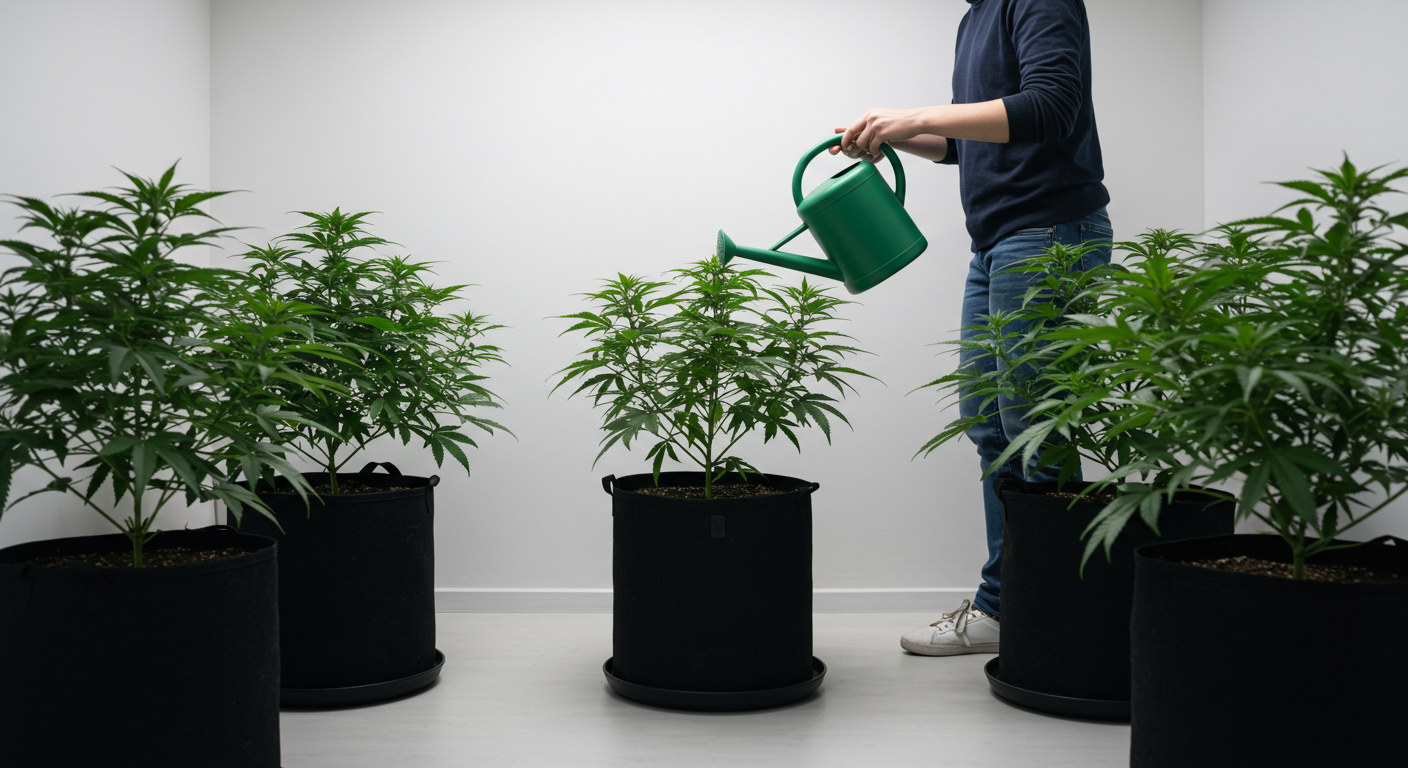
But automation does not remove observation.
A clogged emitter, stuck valve, dry reservoir, wrong timer, or uneven distribution can damage plants quickly.
Use automation to support good root-zone management, not to stop paying attention.
Automation should make observation easier, not replace it.
“Can I reuse soil from a plant that had root problems?”
Question sent by: Rachel Adams, via email.
Be careful. If the previous plant had root disease, pests, severe salt buildup, or unknown contamination, reusing the same medium can carry the problem forward. Reuse is safest when the issue was understood and the medium can be cleaned, rebalanced, or rebuilt properly.
Reusing Soil, Coco, and Hydro Media
Reusing media can save money and reduce waste, but it must be done carefully.
Do not reuse a medium blindly just because the last plant finished harvest. The old root zone may contain salts, pests, disease pressure, depleted nutrients, compacted structure, or pH imbalance.
Reusing Soil
Healthy soil can often be reused.
Before reuse:
- Remove large roots
- Break up compacted areas gently
- Add compost or worm castings if needed
- Restore aeration if structure has collapsed
- Rebalance amendments carefully
- Check pH if problems occurred
- Let soil rest if re-amended strongly
- Inspect for pests
Do not reuse soil from a plant that had severe root disease, heavy pest pressure, or unknown contamination without proper treatment.
Reusing Living Soil
Living soil is designed for reuse when managed well.
After harvest, many growers cut the stem at soil level, leave smaller roots to decompose, top-dress compost and amendments, mulch, and allow the soil to recover.
Living soil can become better over time, but only if balance is maintained.
Watch for:
- Salt buildup
- Compaction
- Pest pressure
- Nutrient depletion
- Overloaded amendments
- Poor drainage
- Bad smells
- Repeated fungus gnat cycles
Reusable soil still needs observation. Living soil is not self-correcting forever.
Reusing Coco
Coco can be reused, but it must be cleaned and reconditioned.
Steps may include:
- Remove roots
- Rinse or flush salts
- Check EC
- Re-buffer with calcium and magnesium if needed
- Remove fine sludge or compacted material
- Inspect for pests and disease
- Avoid reuse after serious root disease
Poorly reconditioned coco can create early calcium-magnesium problems, salt stress, or uneven watering.
Reusing Clay Pebbles
Clay pebbles can be reused in hydro systems if cleaned properly.
They should be:
- Rinsed thoroughly
- Cleared of root debris
- Sanitized if needed
- Dried or stored clean
- Checked for algae or biofilm
Do not reuse clay pebbles from a diseased system without proper sanitation.
“How can I tell overwatering from pH lockout when the leaves look similar?”
Question sent by: Kevin Foster, via Facebook page.
Start with the root zone. Pot weight, watering history, runoff or slurry pH, EC, smell, and root color usually tell the story better than leaf color alone.
| Visible Symptom | Possible Cause | How to Confirm | Corrective Action | Prevention |
|---|---|---|---|---|
| Drooping after watering | Low oxygen in the root zone | Pot stays heavy and lower leaves sag | Let the medium dry to a safer rhythm before watering again | Use a lighter mix, better drainage, and correct pot size |
| Pale growth despite feeding | pH drift or salt buildup | Runoff or slurry readings are outside the normal range | Stabilize pH and reduce excess salts gradually | Track pH, EC, and watering volume consistently |
| Slow growth in rich soil | Compaction or overly hot mix | Roots are sparse, brown, or slow to explore the pot | Improve aeration and avoid adding more fertilizer immediately | Build structure first, then feed with purpose |
| Fungus gnats | Wet upper layer and decaying organic matter | Adults appear near the soil surface after watering | Dry the top layer, improve airflow, and use clean inputs | Avoid constant surface moisture and unfinished compost |
Troubleshooting Soil and Media Problems
Most growing medium problems come from a few root causes:
- Overwatering
- Underwatering
- Poor drainage
- Compaction
- pH drift
- Salt buildup
- Root disease
- Pest pressure
- Water quality issues
- Excessive nutrient strength
- Wrong medium for the grower’s style
The correct diagnosis starts with conditions, not products.
Weedth Diagnostic Rule: Condition First, Product Second
When a plant looks sick, the first instinct is to buy something: more nutrients, a booster, a microbe product, a Cal-Mag bottle, a flushing agent, or a pest spray.
Sometimes a product helps. But if the condition is still wrong, the product becomes another layer of confusion.
Before adding anything, ask:
- Is the medium too wet or too dry?
- Is the pH in range?
- Is the root zone getting oxygen?
- Is the pot size appropriate?
- Is EC too high or too low?
- Is the water source creating problems?
- Did symptoms start after a feeding, transplant, heat event, or watering mistake?
- Is the plant stage sensitive, such as seedling or autoflower?
- Is the medium contaminated or pest-heavy?
Fix the condition that caused the problem. Do not only cover the symptom.
Overwatering
Overwatering does not always mean giving too much water one time. It often means the medium stays wet for too long.
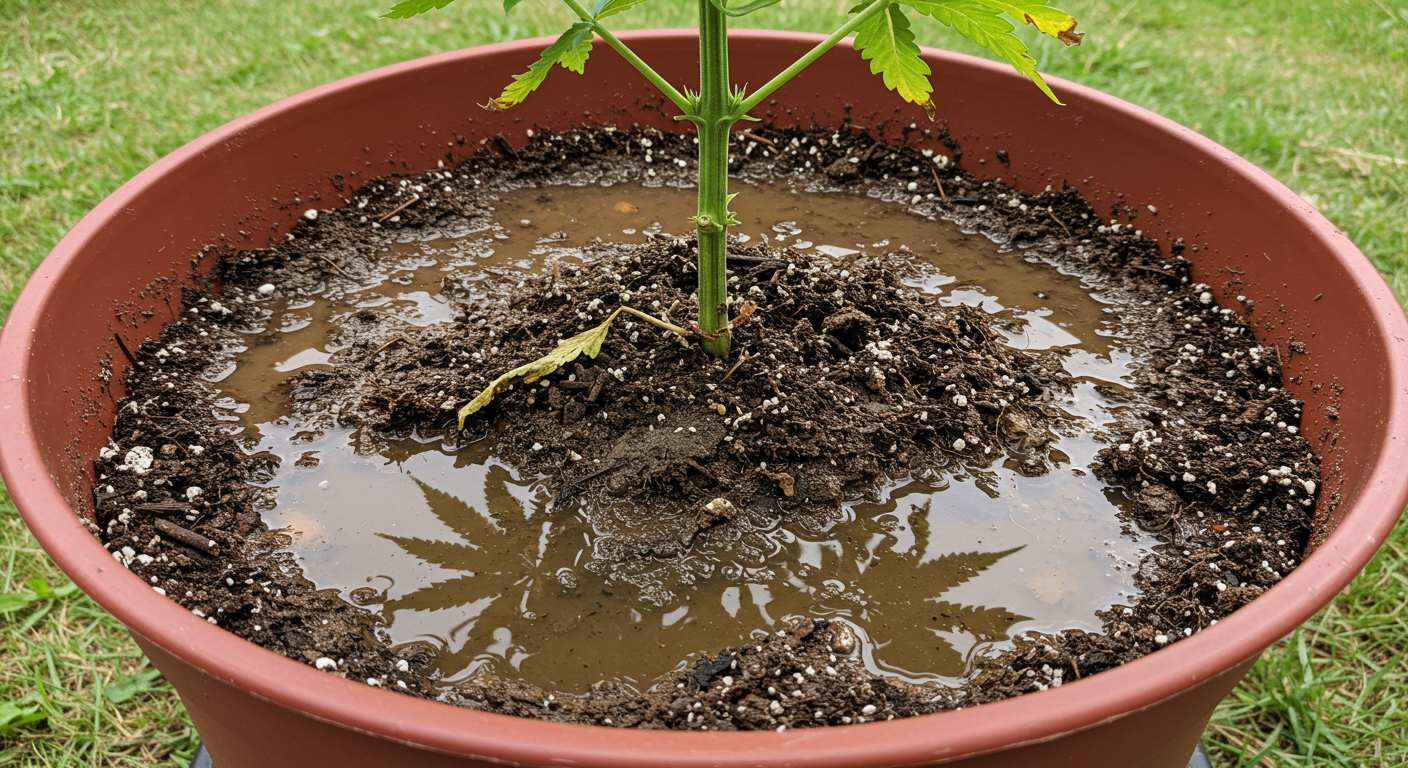
Signs may include:
- Drooping leaves
- Slow growth
- Yellowing
- Fungus gnats
- Heavy pots that do not dry
- Sour soil smell
- Weak root development
- Deficiency-like symptoms despite feeding
What to do:
- Let the medium dry to a healthier level
- Improve airflow
- Check pot size
- Add more aeration in future mixes
- Stop watering on a fixed schedule
- Avoid leaving runoff in saucers
- Check root-zone temperature
Overwatered roots need oxygen before they need more nutrients.
Underwatering
Underwatered plants may wilt, dry out quickly, and show crispy leaf edges. Peat-based mixes can become hydrophobic when they dry too far.
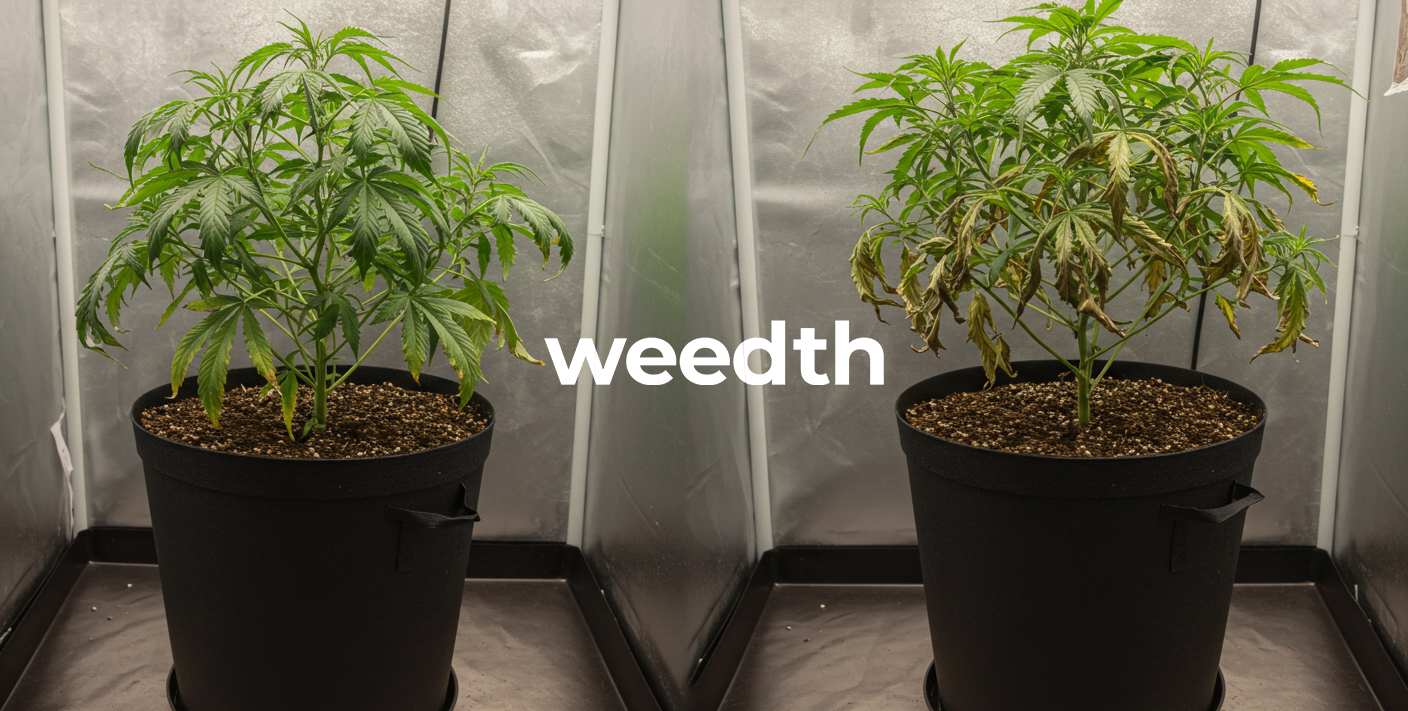
What to do:
- Rehydrate slowly
- Water in stages
- Use pot weight as a guide
- Add mulch in hot climates
- Avoid repeated bone-dry cycles
- Consider larger containers if drying is too fast
- Improve water retention carefully
Do not swing from underwatering to constant saturation. Rehydrate and then rebuild a steady rhythm.
Nutrient Burn
Nutrient burn often appears as burned leaf tips, dark green leaves, clawing, and high runoff EC.
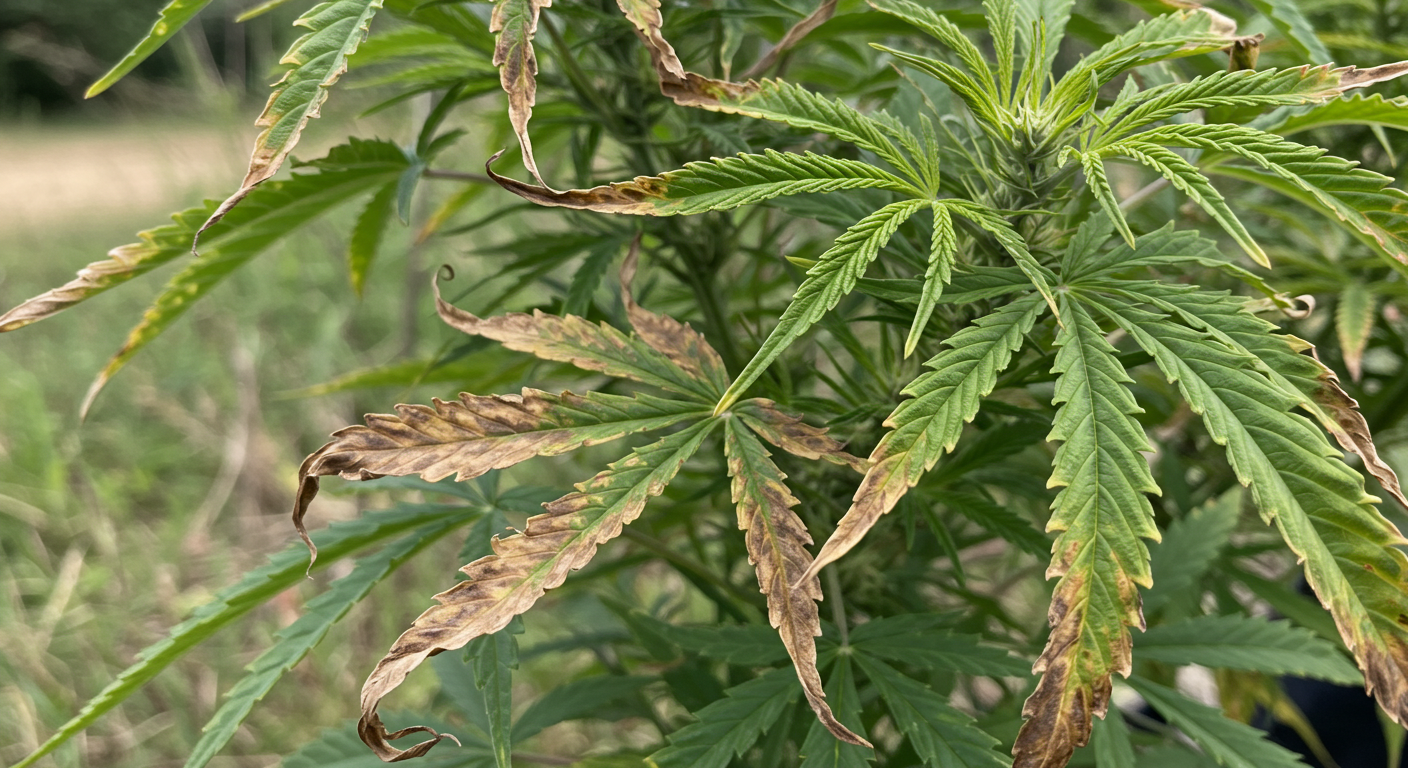
It is common when growers feed too strongly, use hot soil, combine too many amendments, or push bloom boosters without reading the plant.
What to do:
- Reduce feeding strength
- Check runoff EC if possible
- Confirm pH
- Avoid adding more boosters
- Flush only when salt buildup is likely
- Let the plant recover before increasing feed again
More food does not create better buds when the root zone is already overloaded.
pH Lockout
pH lockout can look like deficiency even when nutrients are present.
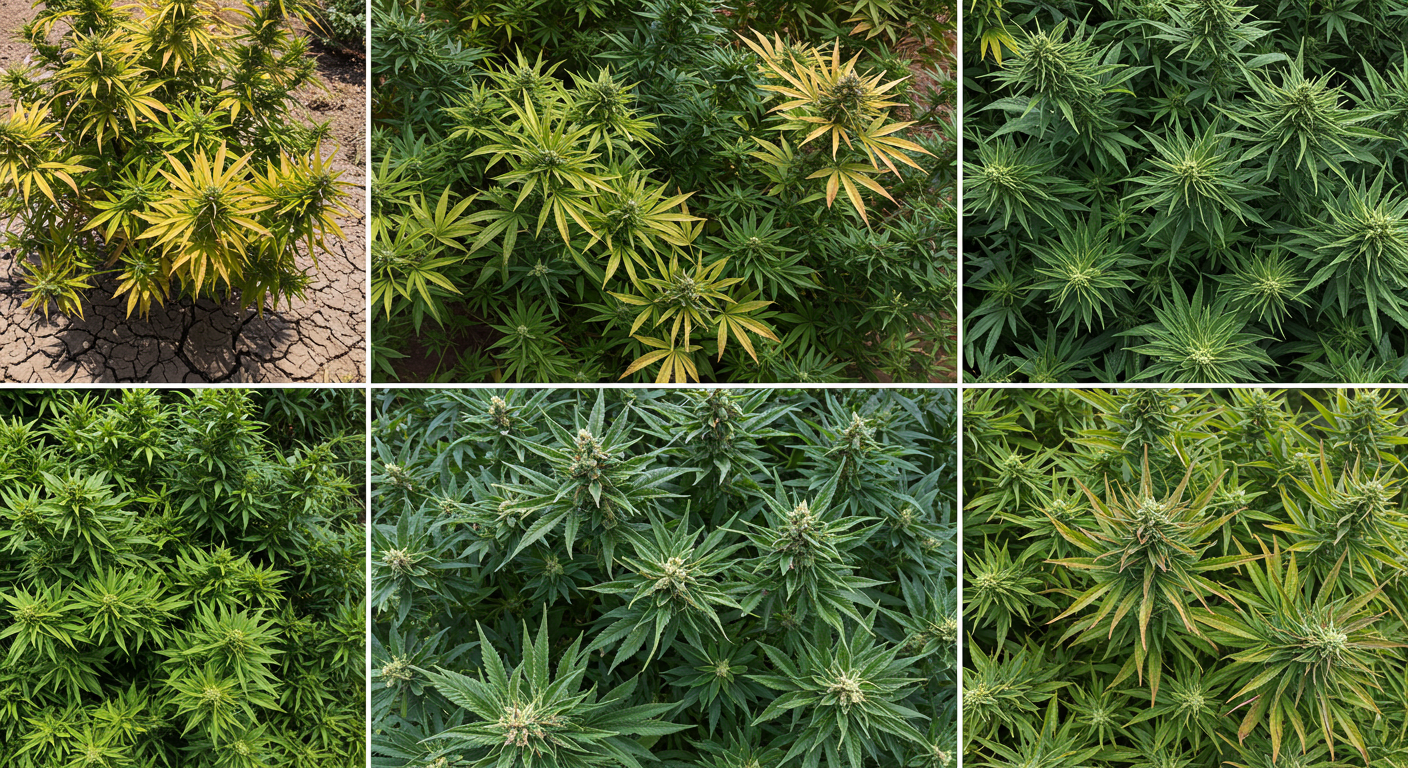
Signs may include yellowing, spotting, interveinal chlorosis, weak growth, or multiple deficiency patterns at once.
What to do:
- Test input pH
- Check runoff or root-zone pH when possible
- Correct gradually
- Avoid adding more fertilizer before confirming access
- Consider water alkalinity
- Review recent amendments
If pH blocks uptake, feeding more can make the problem worse.
Read salt buildup as a pattern.
Look at feed strength, runoff behavior, leaf tips, pot drying speed, and pH together.
Do not respond with random flushing every time.
Over-correcting with heavy flushes can stress roots if the real issue is watering rhythm, temperature, or pH drift.
Salt Buildup
Salt buildup happens when unused fertilizer accumulates in the root zone. It is common in coco, synthetic feeding, high-EC water, and soil grows that receive repeated strong feeding.
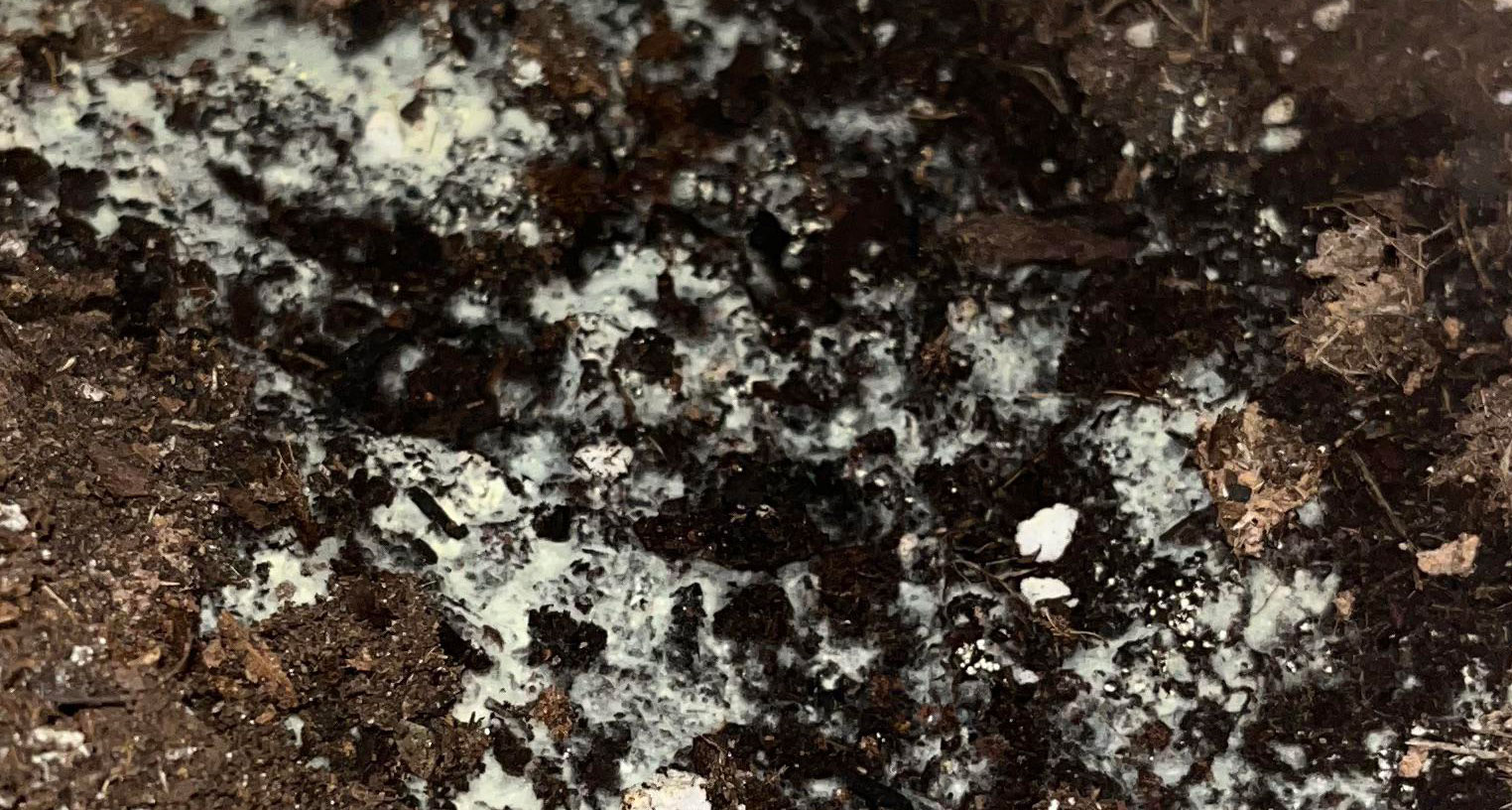
Signs may include:
- Burned tips
- Leaf edge burn
- Deficiency symptoms despite feeding
- High runoff EC
- Slow water uptake
- Harsh late-flower behavior
What to do:
- Measure runoff EC if possible
- Reduce feed strength
- Use proper runoff in coco
- Flush carefully if buildup is severe
- Improve water quality if source EC is high
- Avoid late overfeeding
Salt stress can make a plant look hungry while the root zone is already too strong.
Fungus gnats are often a watering and surface-management clue.
Adults are annoying, but the bigger signal is usually a wet upper layer with organic matter. Dryback, airflow, clean inputs, and surface control matter more than chasing adults alone.
Fungus Gnats
Fungus gnats thrive in moist organic media. Adults are annoying, but larvae can damage young roots and signal poor surface conditions.
What to do:
- Let the top layer dry more appropriately
- Improve drainage
- Improve airflow
- Use sticky traps for adults
- Consider beneficial nematodes or biological controls
- Avoid constantly wet mulch layers
- Do not overuse wet compost or teas
Fungus gnats often reveal a moisture problem before the grower admits it.
Root rot is usually a system problem, not a single-watering mistake.
Warm wet media, low oxygen, poor drainage, dirty reused materials, and weak airflow can combine into root disease pressure. The fix is usually environmental and structural, not just another product.
Root Rot and Root Disease
Root disease is more likely when the medium is warm, wet, stagnant, and low in oxygen.
Signs may include:
- Drooping despite moisture
- Slow drinking
- Yellowing
- Bad smell
- Brown or slimy roots in hydro
- Weak recovery
- Sudden decline after overwatering
Prevention is far easier than rescue.
Prevent root problems by:
- Keeping oxygen in the root zone
- Avoiding waterlogged media
- Managing reservoir temperature in hydro
- Using clean materials
- Avoiding unknown outdoor soil
- Cleaning reused media properly
- Matching pot size to plant size
Healthy roots are protected before symptoms appear.
“Can compact soil make a plant look overwatered even when I water carefully?”
Question sent by: Natalie Price, via email.
Yes. Compaction reduces air space, so even normal watering can leave roots short on oxygen. The plant may droop, stall, or show weak uptake because the medium itself is closing down.
Compaction
Compacted media reduce air space and root growth.
Signs may include:
- Slow drainage
- Hard pot surface
- Water pooling
- Weak roots
- Slow growth
- Wet lower medium
- Poor response to feeding
Fixes include:
- Better aeration in future mixes
- Avoiding heavy garden soil in pots
- Avoiding too much compost or castings
- Not pressing soil too hard into containers
- Using pumice, perlite, rice hulls, or coarse coco appropriately
- Repotting into a better mix if severe
Compaction is a structure problem, not a nutrient problem.
Before blaming genetics or nutrients
- Check pot weight and watering history
- Check pH and salt behavior
- Check whether the medium is compacted
- Check root-zone temperature
- Check pest or disease pressure near the surface
- Check whether the container size matches the plant stage
Important: Most soil myths come from treating one ingredient as magic. Cannabis roots respond to the whole system: structure, moisture, oxygen, biology, chemistry, and grower consistency.
Common Myths About Cannabis Soil and Media
Any Potting Soil Works for Cannabis
No. Cannabis needs drainage, oxygen, suitable pH, and controlled nutrition. Dense soil or extended-release fertilizer soil can create serious problems.
More Nutrients Mean Bigger Buds
Only if the plant is underfed and everything else supports growth. Excess nutrients cause burn, lockout, stress, and harsh quality.
Living Soil Always Produces Better Cannabis
Living soil can produce exceptional flower, but it still depends on genetics, environment, watering, harvest timing, drying, and curing.
Coco Is Just Another Soil
Coco is a soilless medium. It needs regular feeding, pH control, runoff awareness, and calcium-magnesium management.
Hydroponic Cannabis Always Tastes Bad
Poorly managed hydro can taste harsh, but well-managed hydro can produce excellent cannabis. Flavor depends on the full grow and post-harvest process.
Flavor Additives Create Flavor
They do not override genetics. Some inputs support plant metabolism or soil biology, but they do not directly flavor the buds like ingredients in food.
Rocks at the Bottom Fix Drainage
Not really. A thick bottom layer of rocks, gravel, clay pebbles, or lava rock does not fix dense soil or overwatering. Drainage is built into the whole mix.
A very thin clean commercial layer may help protect drainage holes for beginners, but it is not a drainage solution.
Outdoor Soil Is Safe Because It Is Natural
No. Unknown outdoor soil can carry pests, larvae, eggs, weed seeds, fungal spores, disease organisms, and contamination. Natural does not mean safe for indoor cannabis pots.
Advice: When two answers seem to conflict, choose the one that matches your medium, container size, environment, and watering rhythm. Cannabis soil advice is context-sensitive.
Frequently Asked Questions
What is the best soil for cannabis?
The best cannabis soil is loose, well-draining, mildly fertile, and stable. It should hold moisture without staying soaked. For beginners, a light container mix with good aeration is usually safer than dense garden soil or heavily fertilized soil.
Is soil better than coco for cannabis?
Soil is usually more forgiving. Coco usually grows faster and gives more control. Soil is better for growers who want a simpler and more buffered system. Coco is better for growers who are willing to manage pH, feeding, and runoff consistently.
Does living soil improve cannabis flavor?
Living soil can support strong terpene expression and smooth final flower when the whole grow is managed well. It does not guarantee better flavor by itself. Genetics, environment, ripeness, drying, and curing still matter.
Can I use regular garden soil for cannabis?
Regular garden soil is usually not ideal for containers because it can compact and drain poorly. Outdoor in-ground growing is different, but native soil should still be tested and amended if needed.
For indoor pots, do not use unknown outdoor soil. It can introduce pests, weed seeds, pathogens, and contamination.
How much perlite should I add to cannabis soil?
Many growers use around 20 to 30 percent perlite or similar aeration material. Heavy soils may need more. Hot dry climates or small pots may need less because the medium can dry too quickly.
Should I put stones or clay pebbles at the bottom of a cannabis pot?
For drainage improvement, the best technical answer is usually no. Drainage should come from the whole mix, not a thick bottom layer.
For beginners, a very thin layer of clean commercial LECA, Hydroton, clay pebbles, or lava rock may help protect drainage holes, but it does not fix overwatering or dense soil.
Never use random outdoor stones, garden stones, roadside stones, decorative stones of unknown source, or outdoor-used pebbles inside cannabis pots.
What pH should cannabis soil be?
A common soil range is 6.0 to 7.0. Coco and hydro usually run lower. Stability inside the correct range matters more than chasing one exact number.
Can I reuse cannabis soil?
Yes, if the soil is healthy. Remove large roots, add compost or worm castings, correct structure, re-amend carefully, and let the soil rest. Avoid reusing soil that had severe pests, root disease, or heavy salt buildup without proper treatment.
Can I reuse coco?
Yes, but it should be cleaned, flushed, and re-buffered if needed. Reused coco that still contains salts or lacks calcium-magnesium buffering can create early problems.
Why are my cannabis leaves yellow even though I am feeding?
Yellow leaves can come from underfeeding, pH lockout, overwatering, root damage, salt buildup, poor light, natural aging, or pests. Check watering, pH, root health, and runoff before adding more nutrients.
Is extended-release fertilizer safe for cannabis?
It is risky because nutrients release over time whether the plant needs them or not. This can cause nutrient burn and make flowering harder to manage. A cannabis-friendly soil without unpredictable extended-release pellets is usually safer.
Does flushing improve cannabis flavor?
Flushing can help when there is salt buildup, especially in mineral-fed systems. But flavor depends on the whole grow. Balanced nutrition, proper ripeness, slow drying, and curing matter more than relying on a final flush to fix earlier mistakes.
Can I add outdoor soil to improve my potting mix?
Do not add unknown outdoor soil to cannabis pots. Even one handful can carry pests, larvae, eggs, weed seeds, fungal spores, soil-borne disease, or contamination.
Use clean commercial media and known amendments instead.
Are earthworms a sign of good outdoor soil?
Earthworms are a good sign of soil life, but they are not a complete soil test. The site still needs drainage, pH, compaction, contamination, and legal checks.
Is sandy soil good for outdoor cannabis?
Sandy soil drains well and gives roots oxygen, but it dries quickly and loses nutrients through leaching. It can work with compost, mulch, biochar, and reliable irrigation. Desert-like sandy soil is much harder and often needs rebuilding.
Is clay soil bad for cannabis?
Clay soil can hold nutrients, but heavy clay becomes a problem when it is compacted and waterlogged. Cannabis roots need oxygen. Clay-heavy ground often needs compost, structure improvement, raised mounds, or raised beds.
“If I only improve one thing next grow, what should it be?”
Question sent by: Brian Thompson, via Facebook page.
Improve the root zone before chasing products. A balanced medium, clean water, steady dryback, and enough oxygen make every nutrient and training decision easier to read.
Better Roots, Better Decisions, Better Buds
Cannabis soil and growing media should not be chosen randomly. The medium decides how roots breathe, how water moves, how nutrients become available, and how much stress the plant carries into flower.
A simple soil grow can produce excellent cannabis when the medium is airy and watering is correct. Coco can produce fast growth when feeding is consistent. Living soil can support complex aroma when the ecosystem is healthy. Hydro can push growth hard when the grower controls the system carefully.
Outdoor ground can produce large plants when the soil is legal, safe, tested, and well-drained. Raised beds and containers can save a grow when native soil is poor. Amendments can improve the root zone when they have a clear job. They can also create problems when added blindly.
The strongest growers do not chase the richest soil, the longest ingredient list, or the most advanced system. They learn how roots behave.
For better buds, do not start with the flower.
Start with the roots.