
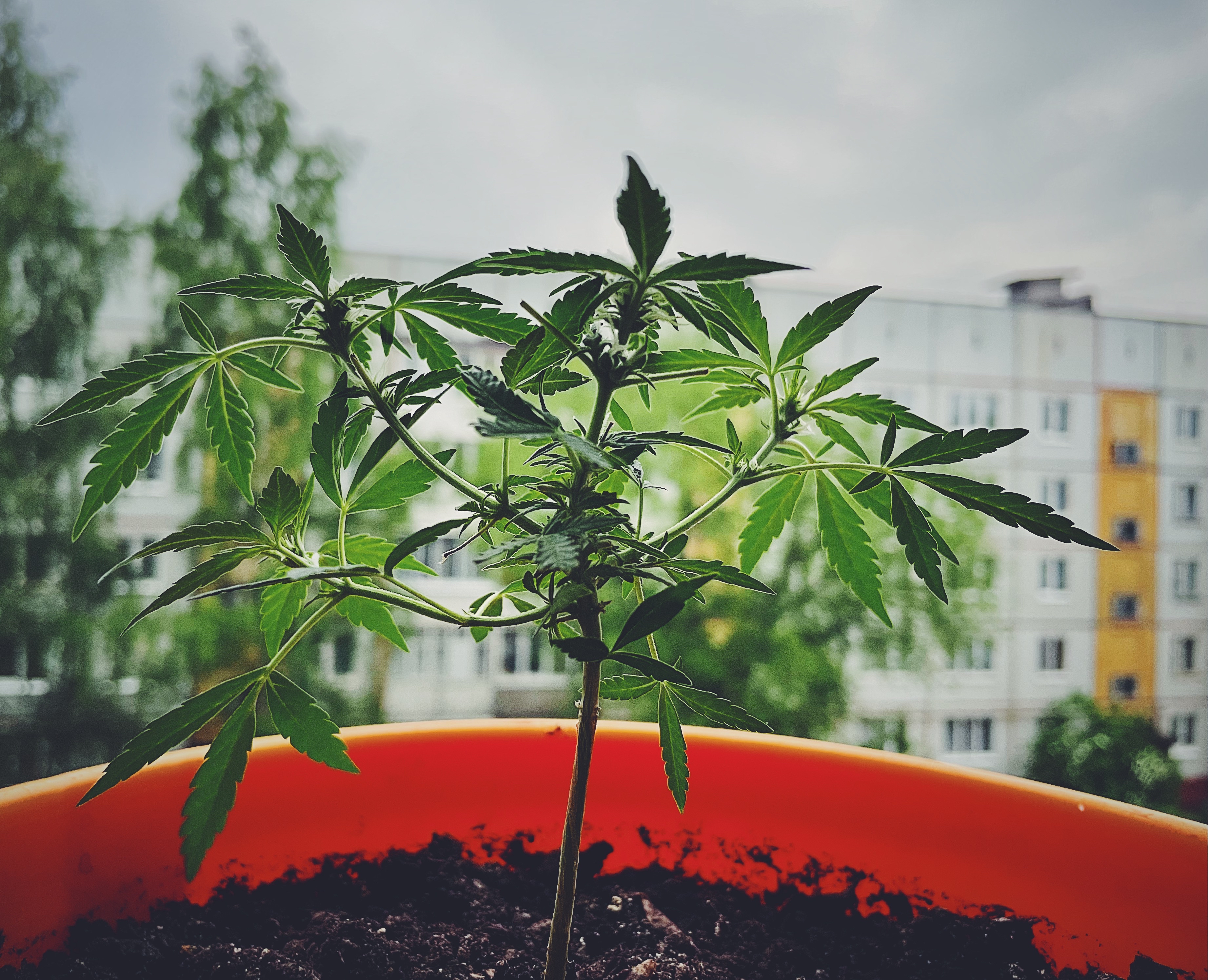
Why One Cannabis Pot Dries Faster Than the Others
When one cannabis pot dries faster than the others, the difference usually comes from plant demand, container design, growing medium, local climate, or uneven irrigation. It does not automatically mean that the thirstier plant is healthier, that the slower pot has root rot, or that the entire garden needs a new watering schedule.
Two pots can receive the same volume of water and still follow very different drying patterns. One plant may have a larger leaf area and a denser root system. One container may sit in the path of a circulation fan. A fabric pot may lose water through its sides while a plastic pot retains it. Even two apparently identical pots can contain different amounts of medium or receive different volumes from a partly blocked dripper.
The useful question is not simply, “Why is this pot dry?” We need to ask where the water went, how evenly the pot was wetted, and whether the plant looks healthy while the change is happening. Once we separate those parts, an uneven row of pots becomes a set of readable clues rather than a reason to water everything at once.
Important: Water the root zone that needs water, not the calendar and not the room as one imaginary plant. A lighter pot deserves inspection. It does not give automatic permission to irrigate every container.
Why Equal Pots Do Not Always Dry at the Same Speed
A container loses water in several ways. Some drains from the bottom immediately after irrigation. Some evaporates from the medium and exposed container walls. Most of the water used by an actively growing plant eventually leaves through the stomata in its leaves as transpiration. The amount retained after drainage depends on the medium, pot dimensions, fill level, compaction, and how completely irrigation reached the root ball.
This means the drying rate is not a single plant trait. It is the result of a complete system:
- Water delivered: how much solution actually entered and remained in the root zone.
- Plant use: how much the canopy and roots moved through the plant.
- Surface loss: how much evaporated from the medium or container.
- Drainage: how much left before the comparison began.
- Storage: how much plant-available water the medium could retain.
A difference in any one of these can make a pot feel light sooner. Several differences often occur together. A large plant in a warm edge position, growing in a slightly underfilled fabric pot, can dry much faster than a smaller plant in plastic near the centre of the room.
What is evapotranspiration?
Evapotranspiration combines water lost through evaporation from the medium and transpiration from the plant. In a planted pot, the two processes occur together. Comparing pot weight over a measured period gives a practical estimate of their combined effect.
First Confirm That the Difference Is Real
The top centimetre of medium can be misleading. A fan can dry the surface while the lower root zone remains wet. A shaded surface can stay dark while roots have already removed much of the water below. Before changing the schedule, compare the same part of each container with the same method.
The simplest repeatable test is the wet-weight and later-weight comparison. Irrigate each pot evenly, allow free drainage to finish, then weigh or carefully lift it. Record that starting point. Check the pots again after a fixed interval, such as 12 or 24 hours, while noting any irrigation, runoff, or environmental change.
If one pot consistently loses more mass over the same period, the drying difference is real. If it only looks dry at the surface but its weight follows the group, the difference is probably superficial. A probe or moisture sensor can add context, but it should sample comparable depths and positions. One reading beside the pot wall cannot represent an entire root ball.
Pro Tip: Number the pots and write down their drained weight. Memory quickly turns “a little lighter” into “always thirsty,” while a simple record shows whether the pattern is consistent, recent, or connected to a room change.
“They are clones in matching pots. Why is one ready for water a day earlier?”
Question sent by: Amelia Reed, via email.
Clones begin with similar genetics, not identical root systems or environments. A stronger early root system, a larger canopy, a warmer position, a lighter fill of medium, or an emitter delivering less water can create a full day of difference. Confirm equal wet weight first, then compare location, canopy area, root-zone depth, and irrigation output before treating it as a plant-health problem.
The Plant Itself May Be Using More Water
Healthy cannabis plants do not all transpire at the same rate. Water use rises and falls with leaf area, light, temperature, humidity, airflow, root activity, growth stage, and the plant’s ability to keep stomata open. Even plants from the same cultivar can develop different architecture and root mass.
A larger canopy usually has greater water demand
A plant with more exposed leaf area has more surface through which water can leave. This is why a vigorous plant often dries its pot faster as it fills the available light footprint. The relationship is not perfectly proportional because shaded leaves, leaf temperature, stomatal behaviour, and root supply also matter, but canopy size is one of the first differences worth checking.
Training changes the picture as well. A plant spread into a broad, well-lit canopy may transpire more than a taller but heavily shaded neighbour. Defoliation can temporarily lower water use, while rapid regrowth can raise it again. Compare the active canopy, not only plant height.
Root systems do not fill every pot at the same speed
A well-colonised root ball can remove water from a larger volume of medium than a recently transplanted or poorly rooted plant. One clone may have rooted several days earlier. One transplant may have suffered more disturbance. A dense root system can also reduce the amount of free medium in the pot, leaving a smaller water reservoir between irrigations.
Fast drying is therefore common when a plant has outgrown its container, but “root-bound” should not be diagnosed from drying speed alone. Look for a combination of clues: roots circling densely at accessible holes, frequent wilting despite thorough irrigation, restricted new growth, a root ball that sheds water, or a plant that has become physically too large for the available medium.
Growth stage changes demand
Water use commonly increases as a plant builds leaf area and enters rapid vegetative growth or the flowering stretch. Demand may stabilise or decline later as vertical growth slows, older leaves are removed, or senescence advances. A plant that entered a stage earlier than its neighbours can move onto a different rhythm before the difference is obvious in photographs.
Genetics influence water use, but labels are not a schedule
Cultivars can differ in leaf area, stomatal behaviour, root architecture, drought response, and growth rate. Research in hemp and controlled cannabis production also shows that genotype and canopy conditions can influence water use. That does not support a universal “indica watering schedule” or “sativa watering schedule.” Observe the individual plant and its root zone.
Remember: A pot that dries faster because the plant is growing vigorously should still show stable posture, active new growth, and a predictable response after irrigation. Faster water use is useful information, not proof of superior health by itself.
The Container Can Change Drying Speed
Container volume and material shape the water reservoir before the plant uses a drop. If pots are described by the same nominal size but come from different manufacturers, their actual internal volume and shape may still differ. Fill height matters too. A pot that contains 10 percent less medium has less water storage and may dry noticeably sooner.
Smaller and shallower containers dry sooner
A small container stores less water and has a larger exposed surface relative to its volume. A shallow, wide pot also exposes more medium to evaporation than a tall pot holding the same volume. Once roots occupy much of that small space, the interval between irrigations can become very short.
Fabric, terracotta, and plastic lose water differently
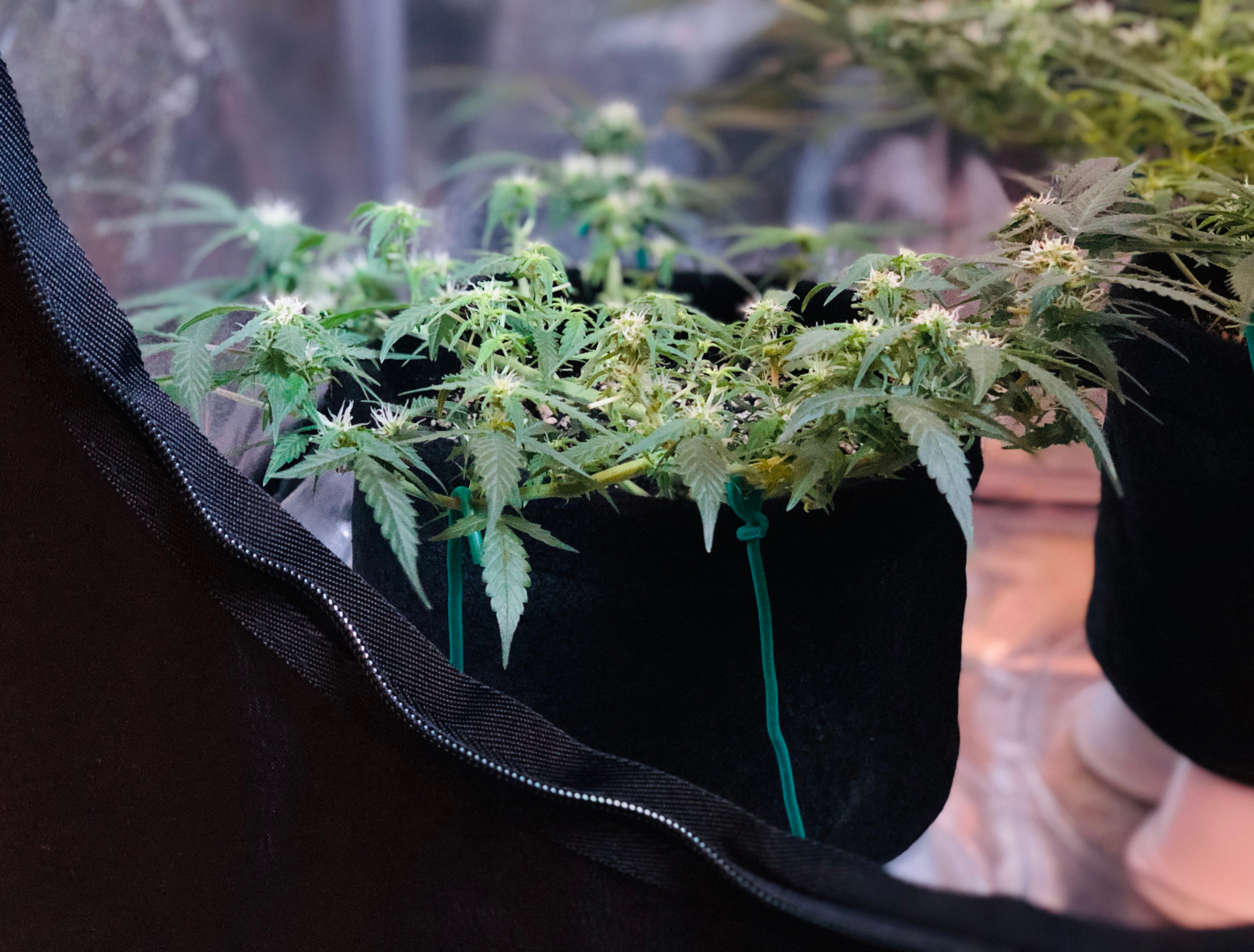
Plastic and glazed containers mainly lose water through the plant, the open medium surface, and drainage holes. Fabric pots and unglazed terracotta can also lose moisture through their sidewalls. That extra evaporation can cool the root zone in hot conditions, but it increases water demand and can create a dry outer ring if irrigation does not reach the full profile.
A fabric pot beside plastic is therefore not a fair drying-rate comparison. Even two fabric pots may behave differently if one has more airflow around its sides or sits on an open rack while the other is pressed against a wall.
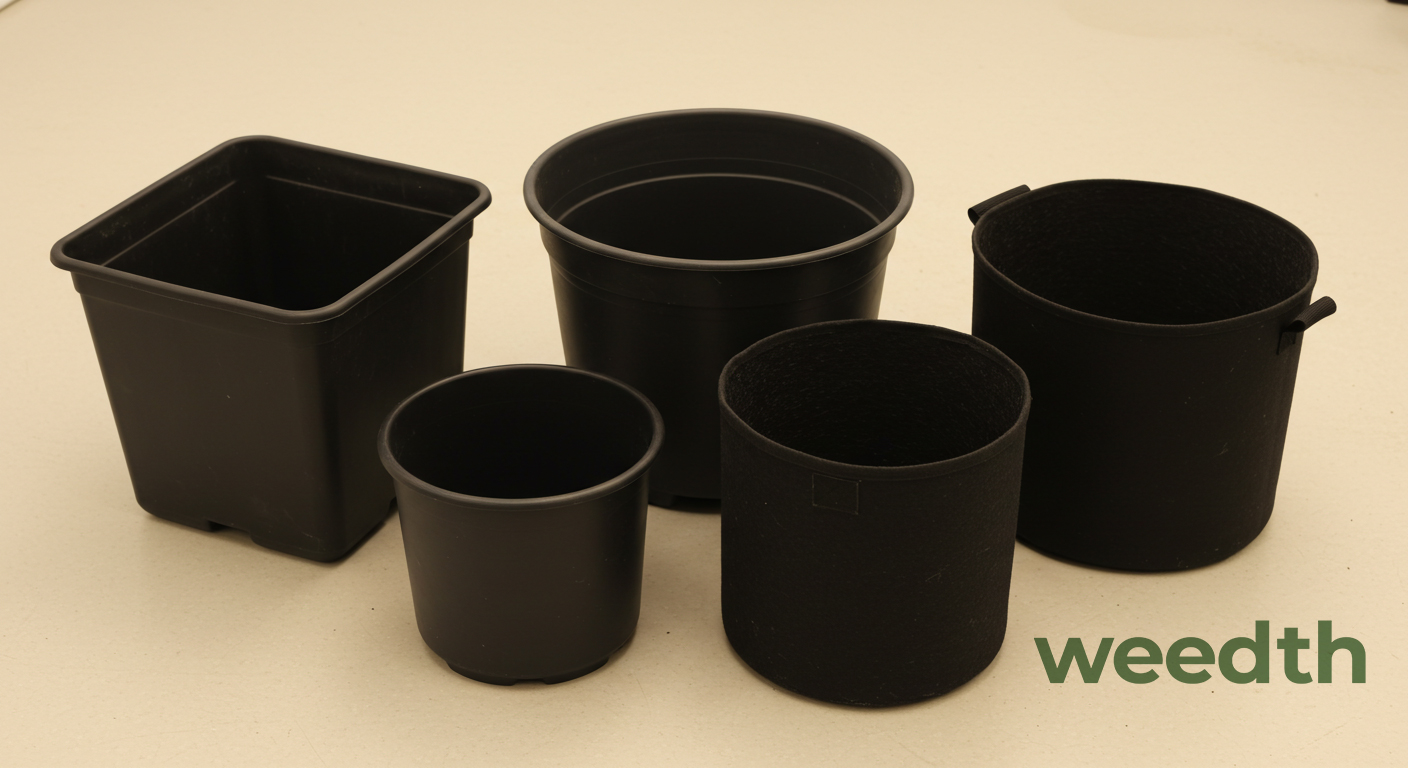
“My fabric pot is light while the plastic pot beside it is still heavy. Is the fabric pot too airy?”
Question sent by: Parker North, via contact form.
Not necessarily. Fabric allows sidewall evaporation, so it normally dries faster under the same air movement. Check whether the medium is evenly moist from centre to edge after watering and whether the plant remains healthy. If the outer root zone repeatedly becomes bone dry, apply more evenly, reduce direct fan exposure, or shorten the interval rather than making the mix dense.
Container colour and surface temperature deserve context
Dark containers exposed to intense sun or radiant heat can develop warmer sidewalls and root zones. Indoors, fixture radiation, hot floors, and nearby equipment can create a similar local effect. Temperature differences may raise evaporation and plant water demand, although pot material, size, shading, and airflow can matter more than colour alone.
Drainage and elevation alter the starting point
A pot raised on an open grate can drain and breathe differently from one sitting flat in a tight saucer. A blocked hole may leave one pot heavier after irrigation. An open-sided rack also exposes the base to more airflow. Standardise saucers, stands, and runoff removal before comparing the plants.
The Growing Medium May Not Be Identical
Two pots filled from the same bag can still hold different amounts of water. Coarse particles may segregate during handling. One container may contain more fines. One may have been compressed around the transplant, while another was filled loosely. Old root balls, amendment pockets, uneven fill levels, and different moisture at planting all create variation.
Particle size and compaction control pore space
Larger, stable pores tend to drain freely and refill with air. Smaller pores retain water more strongly. Excessive compaction reduces large pore space and can slow drainage and gas exchange. A very coarse mix may dry quickly, while a fine or collapsed mix can remain wet for longer. Neither extreme is automatically suitable for cannabis.
Dry peat and bark can become difficult to rewet
Some peat- and bark-based media become water-repellent after severe drying. Water then follows cracks, the container wall, or a few open channels and appears as rapid runoff. The pot may feel light again soon because much of the root ball never became wet. Fast runoff in this case is not fast plant use.
Rewet slowly in several passes. Apply a portion across the surface, wait for it to absorb, then return with another pass. If the product includes a wetting agent, follow its label. Do not improvise with household detergents in a crop intended for consumption.
What is preferential flow?
Preferential flow occurs when water follows a few easy paths through the medium instead of wetting the root ball evenly. It can produce early runoff while dry pockets remain inside the pot.
Living soil, peat mixes, and coco should not be read the same way
A generous living-soil container is often managed to protect a biologically active, consistently moist zone. Peat-based potting mixes may be allowed to lose a moderate share of their stored water before irrigation, but severe drying can make them difficult to rewet. Coco is commonly fertigated more frequently because the grower is managing water content and root-zone electrical conductivity together.
The phrase “let the pot dry out” therefore needs a system attached to it. A useful interval for a large organic bed may be unsuitable for a small coco container, and a high-frequency coco routine can keep a dense peat mix saturated. Compare pots within the same medium and management system before drawing conclusions.
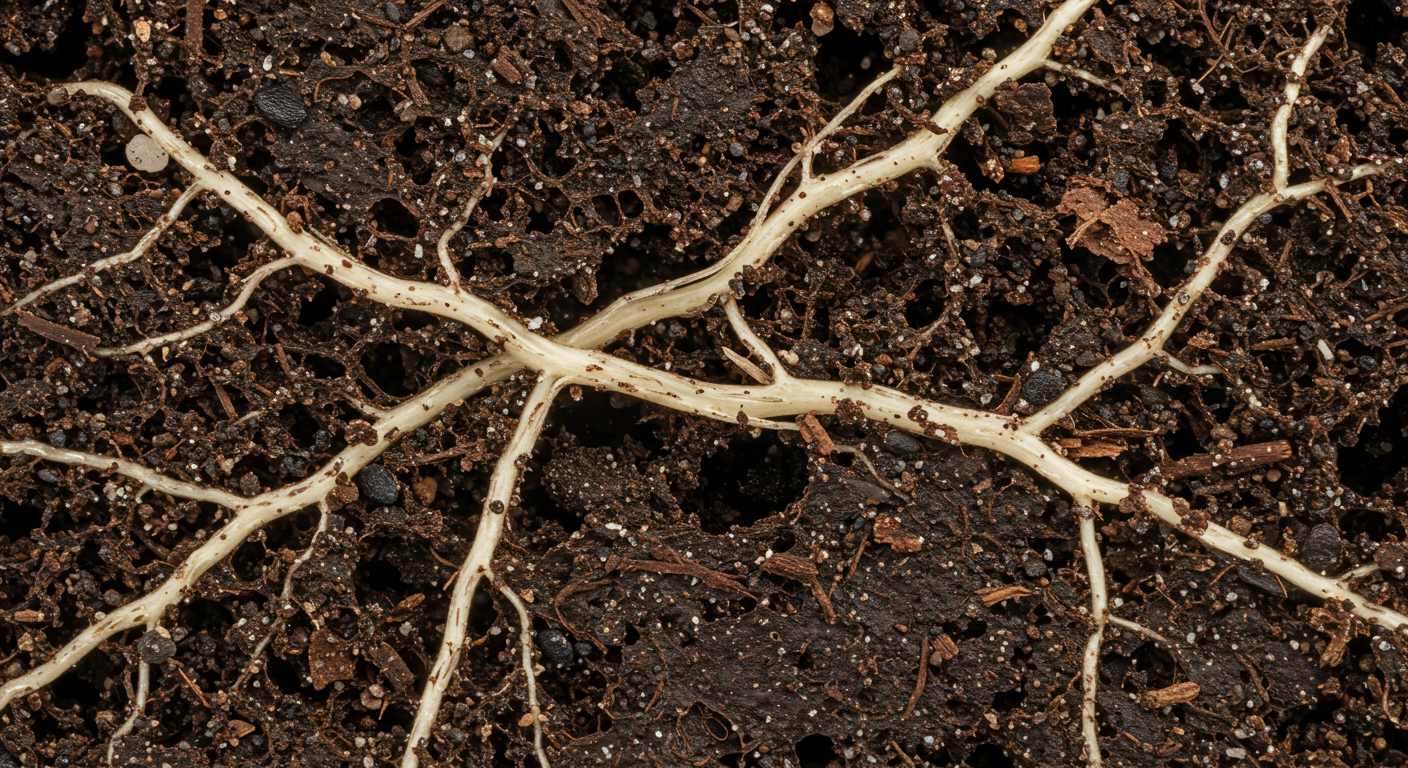
Salt accumulation can change water uptake
When a pot dries more between irrigations, dissolved salts become more concentrated in the remaining solution. A high root-zone EC can make water uptake more difficult and can damage roots over time. The resulting plant may then use less water, leaving the pot wet longer even though the original problem began with aggressive dryback or uneven fertigation.
Do not diagnose salinity from a single runoff number. Compare input solution, irrigation volume, drainage, plant symptoms, and trends over time. Different media require different extraction and sampling methods, so runoff EC is a clue rather than a universal laboratory test.
Advice: If one pot repeatedly reaches extreme dryness, correct the cause before increasing nutrient strength. Less water in the root zone already concentrates the dissolved fertiliser that is present.
Small Environmental Differences Can Create a Large Drying Gap
A grow room is not one uniform climate. Conditions vary near walls, doors, intakes, heaters, dehumidifiers, lights, and fans. Outdoors, a few metres can change sun duration, wind exposure, reflected heat, and rain interception. A pot on the edge of a row often lives in a different environment from one in the centre.
Light raises plant demand
A plant receiving more usable light can photosynthesise and transpire more when temperature, carbon dioxide, root supply, and plant health allow it. Edge effects, fixture overlap, hanging angle, and canopy height can produce meaningful differences. Measure or map the canopy rather than assuming equal distance from a fixture guarantees equal light.
Direct airflow accelerates evaporation
Air movement removes the humid boundary layer around leaves and the medium surface. This supports gas exchange and reduces stagnant pockets, but a fan aimed at one pot can dry its leaves, surface, and fabric sidewall faster than the rest. Leaves should move gently. They should not be held sideways or continuously battered by a concentrated stream.
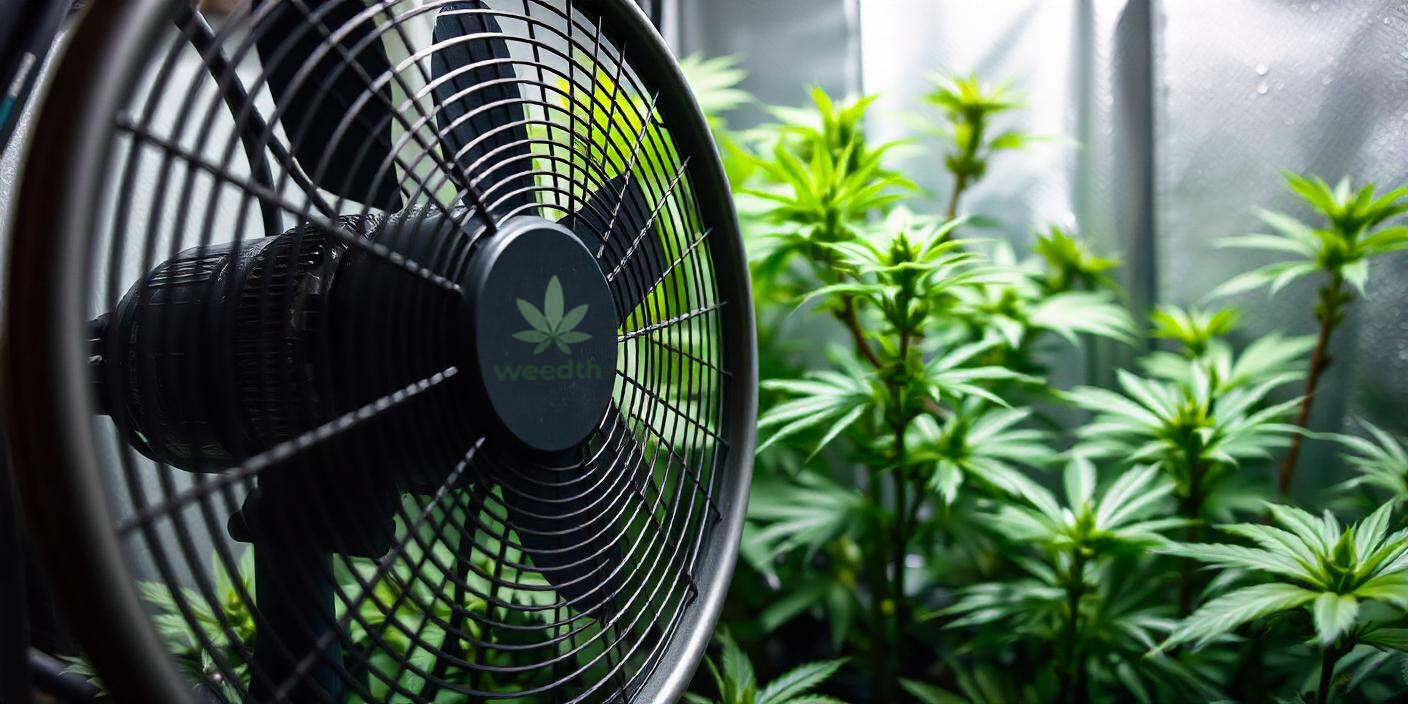
Temperature and humidity work together
Warm, dry air generally creates a stronger evaporative demand than cool, humid air. Growers often describe this relationship with vapour pressure deficit, or VPD. The useful point here is not to chase one perfect number. It is to recognise that a pot near warm, dry supply air can lose water faster even when the room sensor reports an acceptable average.
Sensor placement matters. A probe beside a humidifier, against a cool wall, or above the canopy may not represent the air surrounding a problem plant. Compare conditions at canopy height in several locations, especially during the part of the light cycle when drying is fastest.
Floors and benches change the root-zone climate
A cold basement slab can slow root activity and water use. A sun-heated balcony, metal bench, heating mat, or warm equipment surface can raise evaporation and root-zone temperature. If one pot consistently differs, measure the surface beneath it and the medium temperature as well as the air.
Master Tip: Rotate pots only as a controlled test. Mark the original positions, move the dry pot into an average position, and move an average pot into the dry position. If the drying pattern follows the location, the environment is speaking louder than the plant.
Uneven Irrigation Is Often the Hidden Cause
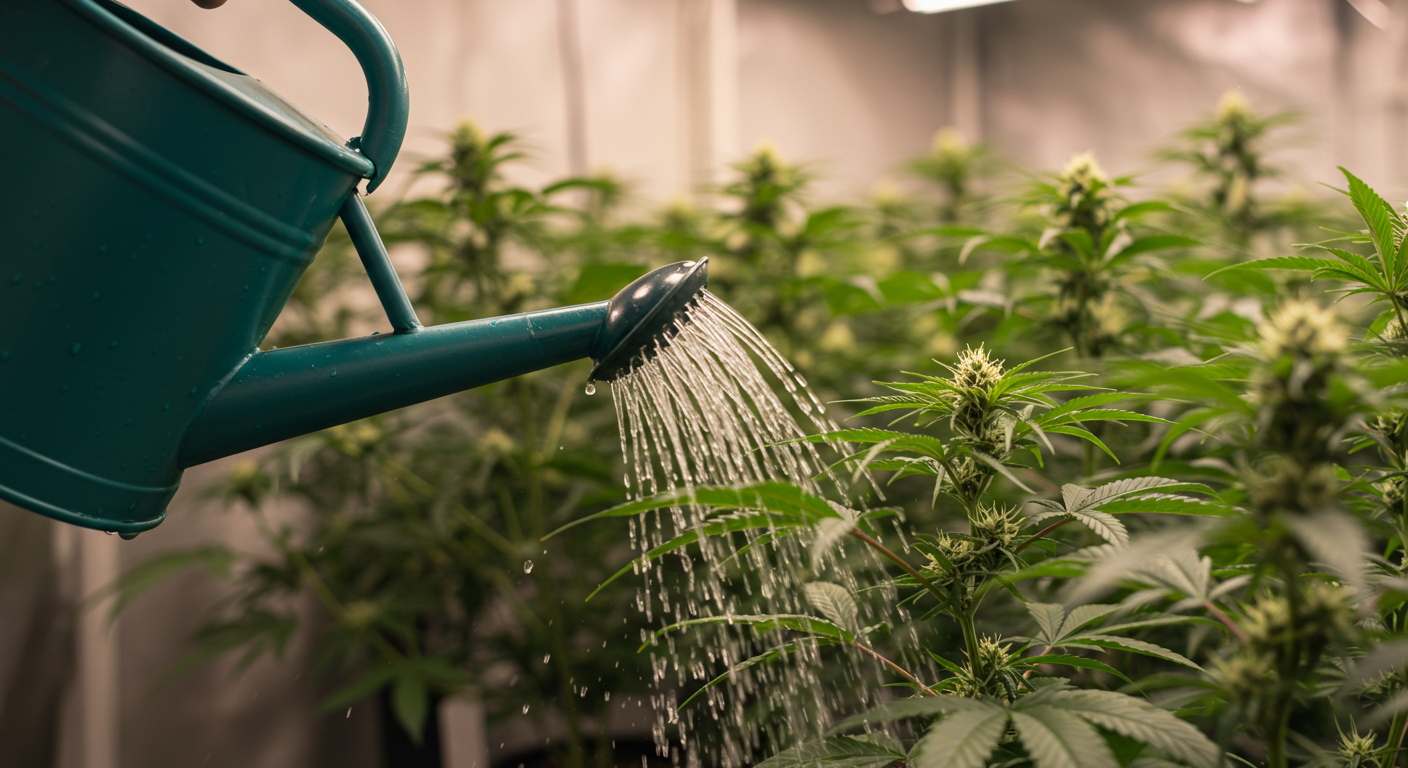
Before searching for a biological explanation, confirm that each pot started equally wet. Hand watering can vary with reach, surface crusting, canopy access, and how long the grower pauses over each container. Automated systems can vary because of pressure, tubing length, emitter characteristics, kinks, mineral deposits, organic particles, biofilm, or roots growing around the outlet.
Equal run time does not guarantee equal volume
Two emitters operating for the same minute can deliver different amounts. Pressure can fall along a poorly designed line. A partially blocked emitter may drip visibly but still under-deliver. An adjustable emitter can change after cleaning or movement. The practical test is a timed catch-volume comparison.
- Remove or redirect each emitter into an identical measuring container.
- Run the irrigation zone for its normal measured interval.
- Compare the collected volumes.
- Inspect the lowest outputs for blockage, pressure, kinks, or worn components.
- Flush and service the system according to its design, then test again.
For multiple emitters in one pot, test each outlet. One working dripper can hide one blocked dripper while leaving half the root zone dry.
“One pot gives runoff first, so why is it also the first one to feel light?”
Question sent by: RiverBench, via Facebook page.
Early runoff may be travelling down a gap or the pot wall instead of wetting the root ball. It can also mean that the pot contains less medium. Apply slowly in stages, compare wet weight after drainage, and check moisture in the centre and outer root zone. Fast runoff is not proof of complete saturation.
Emitter placement controls the wetted volume
A single dripper creates a limited wetting pattern. In a young root ball that may be adequate, but a mature plant in a wide container may need water distributed across more of the surface. Moving or adding emitters changes the root environment, so retest runoff, retained weight, and interval after making the adjustment.
Hand watering can create the same problem
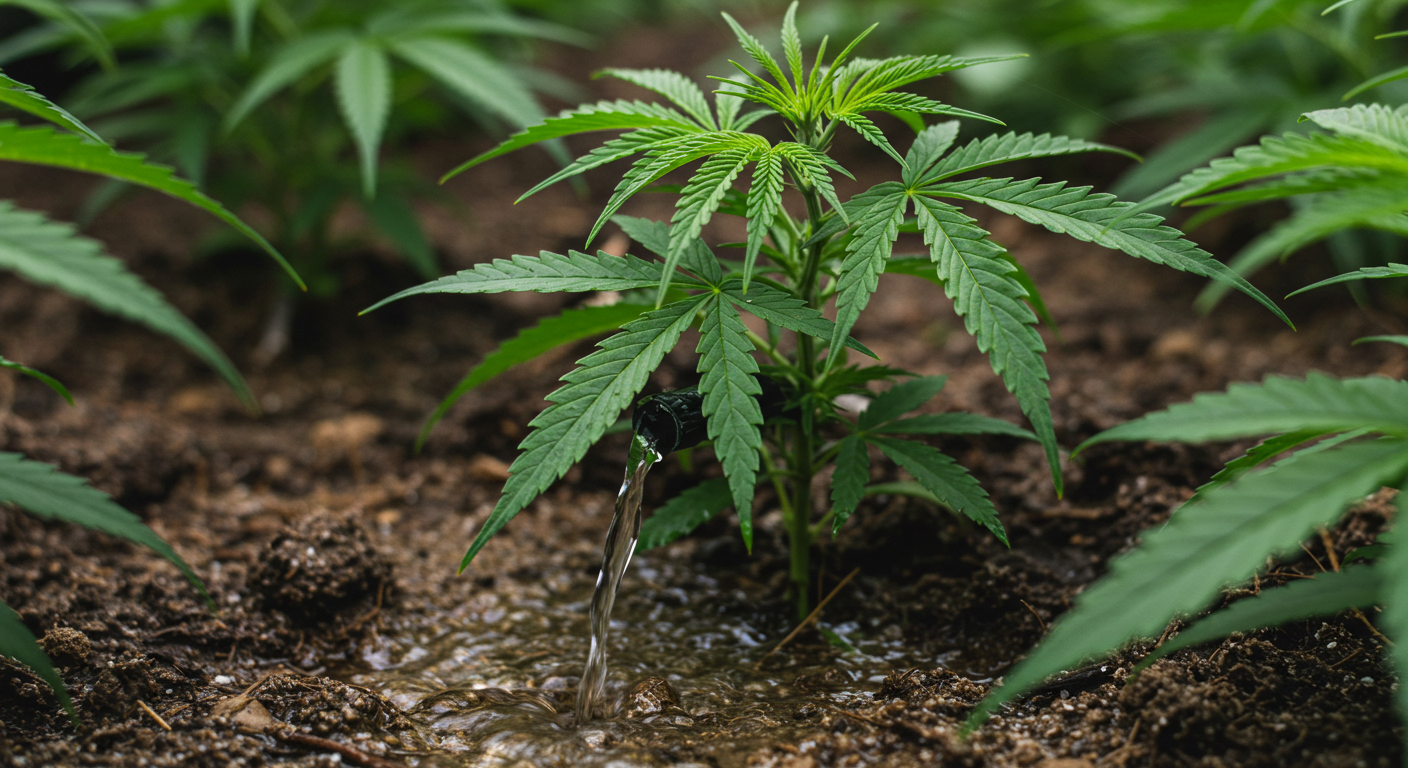
Pouring quickly into one spot encourages channels. Dense foliage can hide the far side of a pot. Water can strike a stem, run to the edge, and leave the centre uneven. Move around the plant where access allows, use a gentle flow, and divide the intended volume into passes.
Compare retained water
Apply evenly, allow drainage to finish, record wet weight, and compare the same interval under stable conditions.
Judge by runoff speed alone
Water can escape through a channel while much of the medium remains dry. Early runoff can coexist with an under-watered root ball.
When Faster Drying Is Normal and When It Signals Trouble
A healthy plant may simply need a shorter interval. The concern begins when the drying pattern changes suddenly, becomes extreme, or appears with symptoms that do not resolve after correct irrigation. Use the whole plant and root-zone trend, not one leaf, to decide how urgent the situation is.
| Pattern | Likely explanation | How to confirm | Useful response | What to avoid |
|---|---|---|---|---|
| Large healthy plant dries first | Greater canopy and root demand | Stable growth, even wetting, repeatable weight loss | Water that pot by measured need or increase appropriate root volume | Watering smaller plants early to keep one schedule |
| Surface dries but pot stays heavy | Fan, heat, or low local humidity at the surface | Check weight and moisture deeper in the medium | Adjust direct airflow and keep using depth-based evidence | Adding water because the surface changed colour |
| Runoff appears quickly and pot dries again | Channeling, hydrophobic media, or low fill volume | Compare centre, edge, and drained wet weight | Rewet slowly in stages and correct the physical cause | Increasing flow rate |
| Pot remains wet and plant wilts | Low root activity, poor aeration, root disease, or cold root zone | Inspect drainage, temperature, roots, odour, and symptom progression | Restore drainage and root conditions before feeding more | Treating wilt as automatic thirst |
| Difference follows a room position | Light, airflow, heat, or humidity gradient | Controlled position swap and local measurements | Balance the environment or manage the zone separately | Blaming genetics without testing location |
| Difference follows one emitter | Uneven output or poor placement | Timed catch-volume test | Clean, repair, balance, or reposition the delivery system | Extending every irrigation event |
Sudden fast drying can be a warning
A newly cracked pot, a disconnected dripper, a torn fabric base, channelled root ball, or unusually hot air stream can change the interval quickly. Severe root loss can also leave water moving through unused channels. If the pot went from average to extremely light without a matching increase in canopy or climate demand, inspect the physical system first.
Slow drying can be more concerning than fast drying
A pot that remains heavy while its neighbours cycle normally may contain a small or damaged root system. Look for cold conditions, poor drainage, compaction, transplant stress, stem injury, pests, pathogens, or excessive container size. Adding nutrient solution to a wet, oxygen-limited root zone can intensify the problem.
Keep diagnostic watering away from electrical hazards
Move scales, probes, runoff containers, and pots without spilling near plugs, power strips, lighting connections, controllers, or fans. Use dry hands, protected circuits, stable trays, and equipment intended for the environment.
A Step-by-Step Test for the Odd Pot
Changing several things at once makes the cause harder to see. Work through the following sequence and keep the plant within a safe moisture range while you investigate.
1. Label the plant and record the pattern
Write down pot number, cultivar, plant age or stage, container type, medium, irrigation time, input volume, visible runoff, and the time it becomes ready again. Note recent pruning, transplanting, pest treatment, fan changes, and weather.
2. Standardise the starting point
Irrigate slowly and evenly until the intended root zone is rewetted. Let free drainage finish. Record the drained weight. If the pot cannot be wetted evenly, stop treating the comparison as a plant-demand test and solve the distribution problem first.
3. Measure loss over a fixed interval
Reweigh at the same time after lights-on or at a fixed outdoor time. The change in mass is approximately the water lost, provided that no irrigation, runoff, leaf removal, or other mass change occurred. One gram of mass loss is approximately one millilitre of water, which makes a basic scale surprisingly useful.
What does dryback mean?
Dryback is the reduction in root-zone water content between irrigation events. It can be described by weight, volumetric water content, or a percentage of the water held after drainage. The useful amount depends on the medium, container, crop stage, climate, and irrigation strategy.
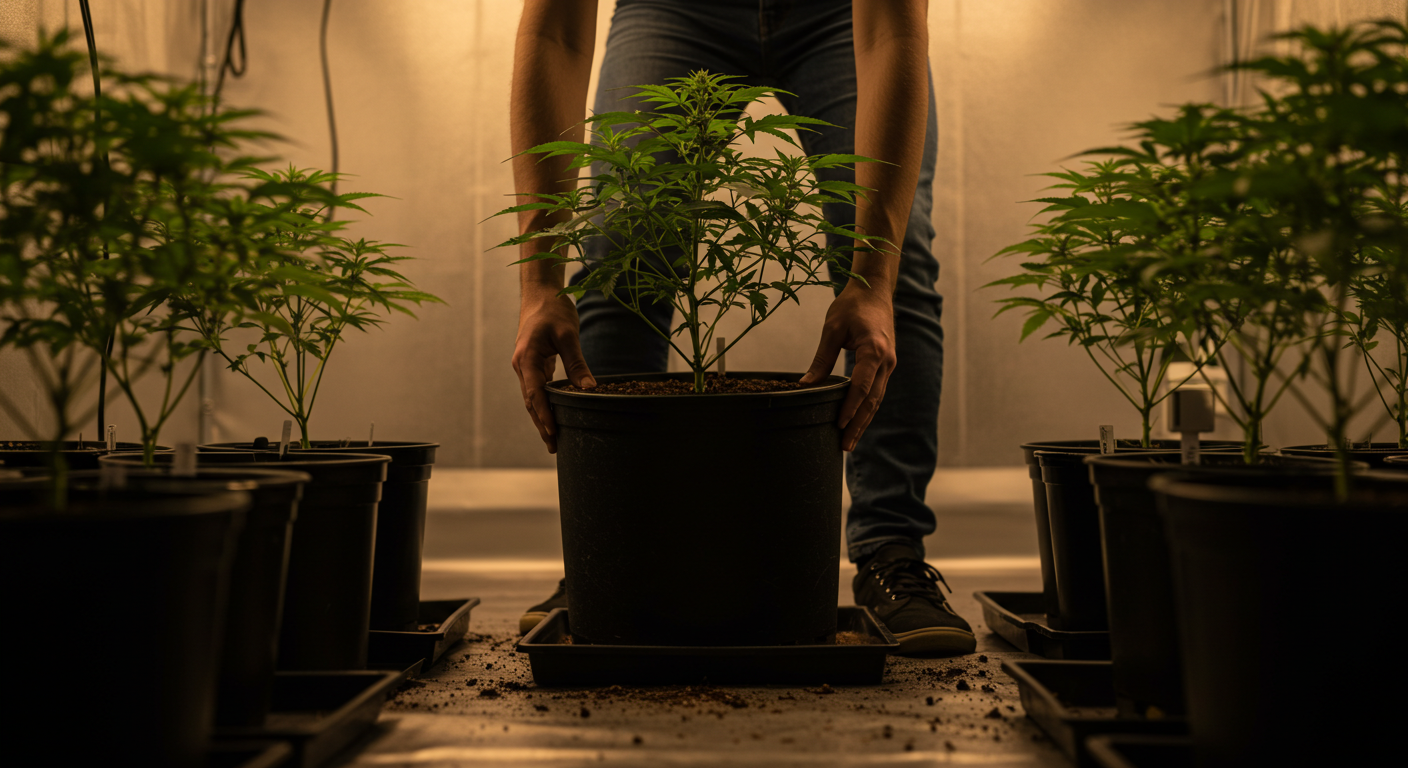
4. Map local conditions
Compare canopy temperature, light exposure, fan direction, nearby intake air, floor temperature, and humidity at the plant’s position. Look during peak light and climate demand, not only when the room is quiet before lights-on.
5. Test irrigation output
For hand watering, measure the actual volume used and observe the surface. For emitters, run the catch test. Check that runoff was removed and that the container was not allowed to wick it back from the tray.
6. Check moisture distribution
Sample the centre and outer root zone at more than one depth using a suitable method. A clean wooden skewer can provide a rough comparison in some mixes. A calibrated moisture sensor offers a trend, but it must match the medium and be inserted consistently. Avoid damaging dense roots with repeated probing.
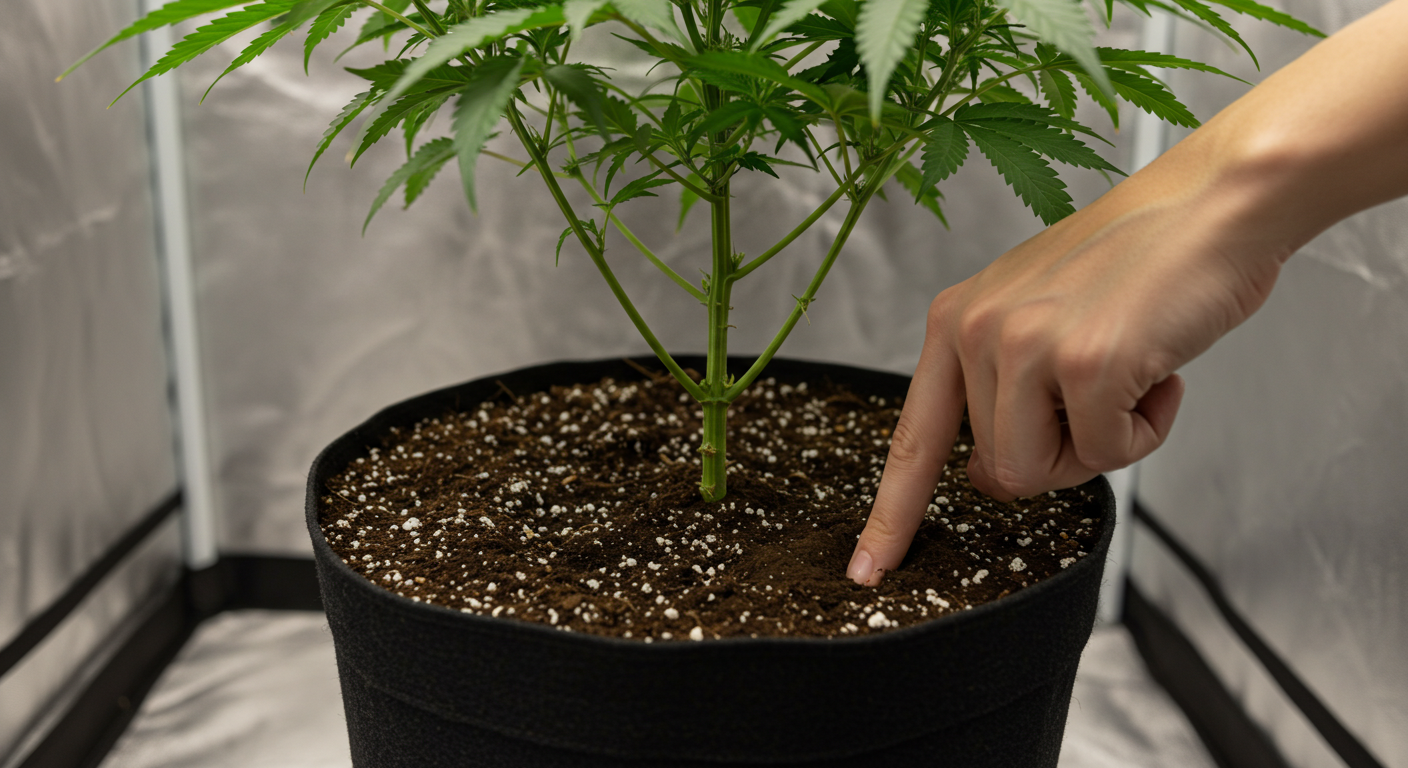
7. Inspect roots only when the evidence justifies it
Use accessible drainage holes first. If transplanting is due, inspect the root ball during that normal operation. Healthy young roots are commonly pale, firm, and branching, although colour can be influenced by the medium and nutrient solution. Soft, foul-smelling, sloughing roots support a very different diagnosis from a dense, healthy root system.
8. Change one variable and watch the trend
Correct an under-delivering emitter, move the direct fan, or adjust the individual irrigation interval. Keep the remaining conditions stable long enough to see whether the weight pattern and plant response move toward the group.
“Should I transplant the fast-drying plant immediately?”
Question sent by: Jonah Mitchell, via email.
Only when the evidence points to insufficient root volume or a failing container system. A healthy plant in a suitable pot may simply use more water. Confirm wet weight, irrigation coverage, roots at the outlets, plant-to-pot scale, and how often intervention is required. Transplanting during avoidable stress can create a larger problem than a shorter watering interval.
How to Adjust Watering Without Overwatering the Rest
Once you confirm that one plant genuinely uses water faster, manage it as an individual. Hand-water that pot when it reaches the same readiness signal used for the others. In an automated system, place it in a compatible irrigation zone or adjust delivery with components designed to maintain predictable pressure and flow.
Do not solve one dry pot by extending a shared irrigation event until every other pot produces excessive runoff. That keeps slower root zones wetter, wastes nutrients and water, and can raise the risk of low oxygen, salt imbalance, and drainage problems.
Several responses are available, and they solve different causes:
- Shorten the interval for one pot when the plant is healthy and evenly rooted.
- Increase retained water per event only when the medium can accept it evenly without prolonged saturation.
- Divide the volume into slower passes when channeling or incomplete wetting is present.
- Repot when root volume is clearly insufficient and the growth stage allows recovery.
- Balance light and airflow when the environment creates the difference.
- Repair the irrigation system when delivery, not plant demand, is responsible.
What to Remember: The goal is not to make every pot dry on the same hour. The goal is to make every root zone move through a healthy, measurable moisture cycle.
Different Growing Systems Need Different Decisions
| System | Why one pot may dry faster | Best first check | Management direction |
|---|---|---|---|
| Peat-based soil or soilless mix | Canopy demand, fill variation, compaction, hydrophobic pockets, fabric sidewalls | Drained weight and moisture distribution | Rewet evenly and adjust individual timing without allowing severe water repellency |
| Coco coir | Root density, emitter output, small container volume, high light, uneven fertigation | Catch volume, substrate water trend, and root-zone EC context | Correct delivery and frequency while protecting irrigation uniformity |
| Living soil | Different plant size, uneven mulch or canopy, local airflow, root distribution | Deeper moisture and total container weight | Protect a continuous moist biological zone without leaving the bed saturated |
| Outdoor containers | Sun duration, wind, reflected heat, rain interception, container material | Position map and daily weight trend | Shade or shelter the root container when appropriate and manage each exposure zone |
| Automated drip | Pressure variation, blocked emitter, placement, tubing length, inconsistent runoff | Timed catch-volume test | Restore distribution uniformity before changing the whole schedule |
Common Questions About Uneven Pot Drying
Is the fastest-drying plant always the biggest yielder?
No. High water use can accompany a large, productive canopy, but it can also come from heat, direct airflow, a porous pot, low medium volume, or incomplete irrigation. Yield depends on genetics, light capture, environment, nutrition, plant health, and the full crop cycle. Water use is one clue, not a yield forecast.
Can one plant need water every day while the others do not?
Yes, especially in a small container, fabric pot, high-light position, or rapid growth stage. Daily irrigation is not automatically excessive or correct. The root zone should receive enough water evenly, drain appropriately, retain oxygen, and show a repeatable trend rather than swinging between severe wilt and saturation.
Should all pots receive the same amount of runoff?
Not as a universal rule. Runoff targets depend on medium, water quality, fertiliser strategy, container volume, and salt management. More runoff is not a cure for an emitter that misses half the root ball, and zero runoff can make salt trends harder to control in some fertigation systems.
Can pests make a pot dry faster?
Pests can alter plant water relations, but the direction is not universal. Root damage may reduce uptake and leave the pot wet. Heavy leaf damage can reduce transpiring area. Some early stress responses may change stomatal behaviour. Confirm the pest and inspect irrigation and environment rather than diagnosing from drying speed alone.
Does leaf droop prove that the dry pot needs water?
Not by itself. A genuinely dry root zone can cause loss of turgor, but heat stress, stem injury, root disease, low oxygen, and other problems can also produce drooping. Check pot weight and moisture at depth before adding water.
“One pot is light. Should I water the whole room now so the schedule stays simple?”
Question sent by: Marcus Hill, via email.
No. Watering the slower pots early trades one scheduling inconvenience for several wetter root zones. Confirm why the outlier is light, irrigate it individually when needed, and correct the underlying difference if it comes from delivery or environment. Uniform plant care means giving each root zone what it needs, not forcing every pot onto the same minute.
Keep the Difference Useful, Not Mysterious
One cannabis pot drying faster than the others is often a normal response to greater plant demand or a more evaporative position. It can also reveal an underfilled container, hydrophobic medium, direct fan stream, clogged emitter, root problem, or a pot that no longer matches the plant.
Start with equal wetting and a measured drained weight. Compare the same time interval, inspect the whole root zone, and test irrigation output. Then change one variable. This approach protects the slower pots from unnecessary watering and gives the faster pot a solution based on evidence rather than guesswork.
Before changing the watering schedule
- Confirm that each pot received and retained a comparable irrigation.
- Compare drained wet weight and later weight over the same interval.
- Check medium depth, fill level, compaction, and dry pockets.
- Compare canopy size, growth stage, and accessible root development.
- Map light, airflow, temperature, humidity, and floor conditions.
- Test emitter output with equal containers and a fixed run time.
- Inspect drainage holes, saucers, stands, and runoff removal.
- Separate healthy high demand from sudden or symptomatic change.
- Adjust the individual pot before extending irrigation for the whole garden.
- Record one correction at a time and watch the next moisture cycle.
Scientific and Horticultural References
- Supplemental greenhouse lighting increased water-use efficiency, crop growth, and cutting production in Cannabis sativa, Frontiers in Plant Science.
- Water- and nitrogen-use efficiencies of hemp based on whole-canopy measurements and modelling, peer-reviewed research.
- Measuring Nursery Plant Water Use in Containers, Virginia Cooperative Extension.
- Properly Watering Container Houseplants, Virginia Cooperative Extension.
- Container Gardening, Oklahoma State University Extension.
- Field Evaluation of Microirrigation Water Application Uniformity, University of Florida IFAS Extension.
- Plants Grown in Containers, NC State Extension Gardener Handbook.
Share this article
A quick overview of the topics covered in this article.
Follow us
Latest articles
September 29, 2026
September 29, 2026
September 29, 2026
September 29, 2026