
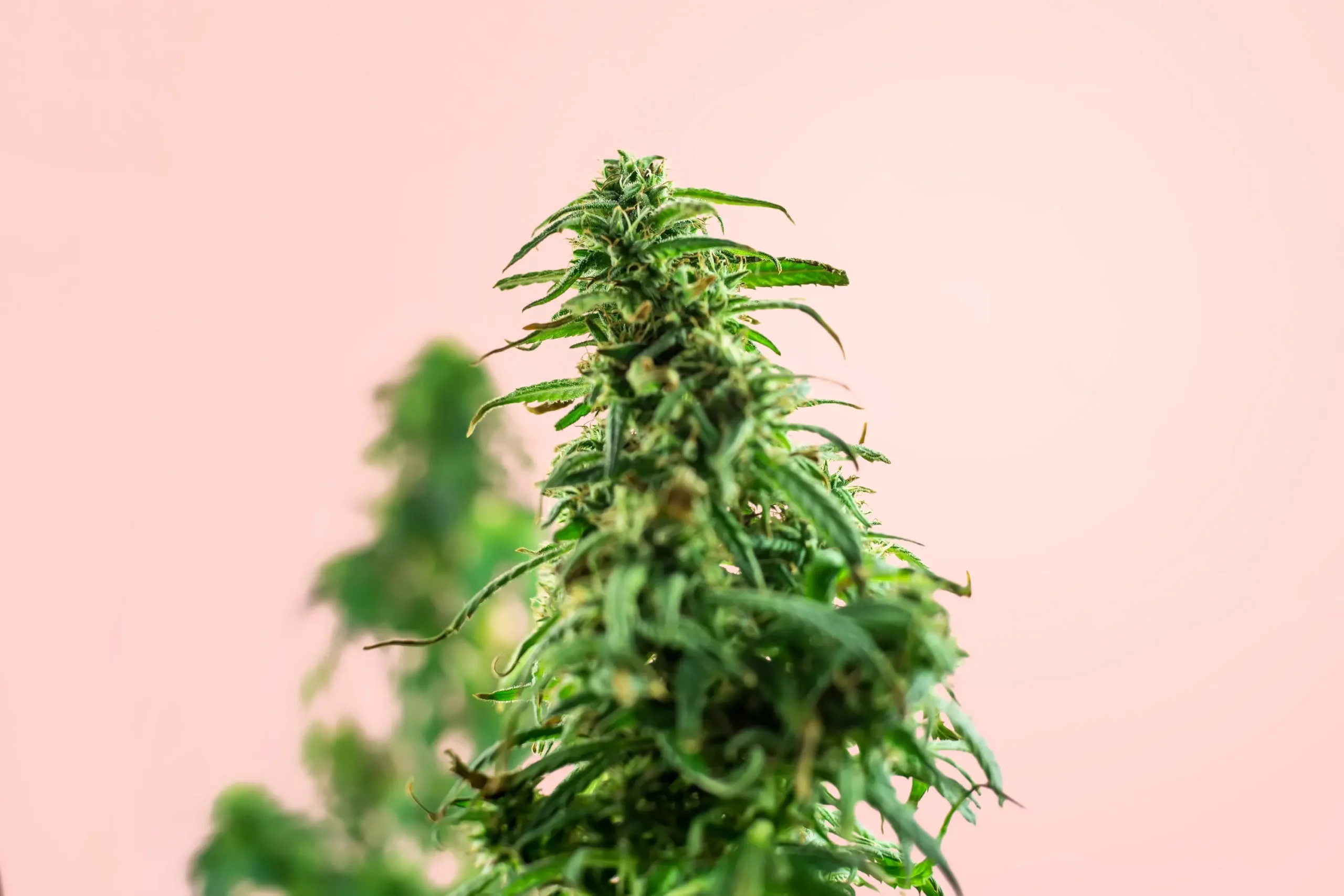
Space Monkey
Space Monkey – Strain Profile & Grow Guide
Space Monkey is an indica-leaning hybrid that can move in two directions at once. Its structure is often broad, branchy, and heavily influenced by Gorilla Glue #4, while the Wookie #15 side can introduce lavender, grape, pear, wine cork, pine, and a calmer creative effect. The result is not one perfectly uniform plant. Space Monkey is better understood as a phenotype-hunting cultivar in which compact, gas-heavy plants and taller, wine-fruit expressions may appear within the same population.
The documented cross is Gorilla Glue #4 x Wookie #15. Both parents bring resin, but they express it differently. Gorilla Glue #4 contributes adhesive trichomes, chem, sour fuel, branch vigor, and a strong physical effect. Wookie #15 adds floral grape, lavender, spicy herbs, and a more unusual aromatic finish. In the best plants, neither side completely covers the other. The flower may open with pear and grape, deepen into pine and lavender, then finish with sour glue and pepper.
Space Monkey is commonly reported around a nine-week flowering period, although individual grow reports range longer. The plant can produce a high yield and a favorable bud-to-leaf ratio, but side branches often need support. Some expressions remain medium with average stretch. Others grow into a wide bush with many laterals that do not have enough strength to hold late flower without a net, stakes, or soft ties.
The main cultivation question is not whether the plant can produce. It is how to organize a variable seed population without forcing every phenotype into one canopy recipe. A dense indica-leaning plant may need more interior thinning and a longer irrigation interval. A more open, wine-grape phenotype may stretch farther, drink faster, and carry longer flowers. Space Monkey rewards growers who label individual plants, support them early, and delay keeper decisions until the cured flower reveals its effect and aroma.
Strain Features
| Feature | Details |
|---|---|
| Strain Type | Indica-leaning hybrid with meaningful phenotype variation |
| Genetic Profile | Gorilla Glue #4 x Wookie #15 |
| THC | Commonly reported from the mid-teens into the low-to-mid 20% range, with batch variation |
| CBD | Usually low |
| CBG | Some tested products report measurable CBG near 1%, but this is not universal |
| Dominant Terpenes | Pinene, beta-caryophyllene, and limonene are frequently reported; linalool and terpinolene may be important in some samples |
| Flavor and Aroma | Pear, grape, lavender, pine, woody herbs, wine cork, sour fuel, pepper, and light citrus |
| Effect Character | Relaxing, happy, meditative, and creative with dose-dependent sleepiness |
| Flowering Time | Approximately 9 weeks in many descriptions; some grow reports extend closer to 10 to 11 weeks |
| Stretch | Average overall, with indica and sativa-leaning differences |
| Plant Architecture | Very bushy, many side branches, medium height, and variable branch strength |
| Bud Structure | Small-to-medium rounded or grape-shaped flowers, heavy resin, and a favorable bud-to-leaf ratio in selected plants |
| Yield Potential | Medium-high to high, depending on phenotype and branch support |
| Grow Difficulty | Intermediate |
| Primary Quality Risk | Treating a variable seed population as uniform and losing branches or quality through late support and mixed harvest timing |
Genetic Lineage
Gorilla Glue #4 gives Space Monkey its adhesive resin, sour chem, and branching drive. It also contributes the tendency for a plant to look structurally capable in early flower, then begin leaning once the flowers gain weight. The Glue side can create gas-heavy, peppery expressions with dense trichomes and a strong body effect.
Wookie #15 contributes a very different aromatic language. Lavender, grape, floral spice, and wine-like notes may appear, sometimes with a dry cork or cellar impression. This parent can also shift the effect from pure heaviness toward a calmer, more meditative creativity. Users may feel physically relaxed while remaining interested in music, conversation, or thought.
The genetic contrast produces real phenotype separation. Indica-leaning plants are often bushier, darker, and more compact. Their aroma may emphasize gas, spice, berries, and earth. The effect can feel like a warm physical embrace with enough mental activity to avoid becoming dull.
Sativa-leaning plants may yield more, stretch slightly farther, and form less visually dense buds. Their aroma can move toward grape wine, pear, floral herbs, and cork. Some growers prefer the effect of these plants even when the bag appeal is lower. The mental phase can become more thought-provoking or creatively active while the body remains calm.
A third category is possible: an early, resinous plant with limited aroma. This is an important warning against selecting by speed and frost alone. A plant can finish early, look excellent, and still produce forgettable cured flower. Space Monkey is particularly suited to a keeper process that includes smoke or vapor evaluation after several weeks of cure.
The line is often described as a good producer, but yield should be interpreted by phenotype. A taller open plant may produce more total mass. A compact gas-heavy plant may produce a higher percentage of dense premium flower. The best choice depends on the garden's goal.
Effect Breakdown
The opening mood shift
Space Monkey commonly begins with happiness, ease, and a low-pressure mental lift. The user may feel more amused, conversational, or emotionally settled. The onset is not always energetic in the traditional sense. It can feel like mental noise has been reduced while sensory interest remains.
Pear, pine, and lavender-forward batches often feel smoother and more daytime-compatible. Gas-heavy examples may create a faster body presence and a stronger sense of weight.
Creative calm
One of the cultivar's most distinctive qualities is a meditative creative state. The user may want to listen to music closely, play an instrument, write, or think through an idea without urgency. The body can feel relaxed while the mind remains positively occupied.
This differs from a sharp sativa effect. Space Monkey is less likely to create restless productivity and more likely to support focused enjoyment. The user may become absorbed rather than driven.
Physical relaxation
The Glue side becomes clearer as the effect develops. Muscles soften, the body feels warmer, and physical discomfort may become less noticeable. At a moderate dose, this relaxation can remain functional. At a larger dose, movement feels less appealing and the user may prefer a seated activity.
Indica-leaning phenotypes can produce a stronger body effect and more appetite. Sativa-leaning plants may maintain mental activity longer.
Late phase and tolerance
Sleepiness varies. Some users describe Space Monkey as suitable for daytime because it calms without knocking them out. Others find the later phase heavy enough for evening use. Harvest maturity, phenotype, and dose all influence the outcome.
Dry mouth and dry eyes are common. Headache or dizziness may occur, especially with stronger batches. Low-tolerance users should start slowly despite the strain's relaxed reputation.
Flavor & Aroma Profile
Space Monkey's aroma is not a single fruit or fuel note. The most complete flowers combine sweet pear, grape, lavender, pine, woody herbs, sour glue, and pepper. Certain expressions smell like wine, cork, or a damp wooden cellar. Others lean toward berries and gas.
Indica-leaning aroma
Compact plants often show stronger fuel, pepper, dark berries, and earth. The scent can resemble sour glue softened by floral sweetness. On the exhale, pine and spice may remain longer than fruit.
Sativa-leaning aroma
Taller or more open expressions may emphasize grape wine, pear skin, lavender, and woody cork. The aroma can feel dry rather than sugary. These plants sometimes have less dramatic visual density but more unusual flavor.
Jar development
Freshly dried flower may smell mainly of fuel and herbs. During cure, grape, pear, and lavender can emerge more clearly. A rushed dry leaves the gas and wood while removing the floral top layer.
Inhale and exhale
The inhale is often smooth, sweet, and lightly floral. Pear, grape, and lavender may appear first. The exhale becomes piney, woody, peppery, and sour. A Glue-heavy cut may finish with chem and earth. A Wookie-heavy cut may leave floral spice and wine skin.
Wine cork as a phenotype marker
The cork-like note reported in selected plants is useful because it separates Space Monkey from generic grape hybrids. It may resemble dry wood, cellar air, or the inside of a recently opened wine bottle. This note is not always present, but when it appears beside grape and lavender it can define a keeper.
Why bag appeal and flavor may disagree
A dense purple flower can attract attention while curing into ordinary gas. A looser green plant may retain the most complex wine-lavender flavor. The cultivar should be judged after cure and use, not only by photographs.
Dominant Terpenes
| Terpene or Volatile Group | Likely Role in Space Monkey |
|---|---|
| Pinene | Supports pine, woody freshness, and a clearer herbal finish |
| Beta-Caryophyllene | Adds pepper, dry spice, and the Glue-like gas foundation |
| Limonene | Contributes citrus lift, fruit brightness, and positive mood |
| Linalool | May strengthen lavender, floral sweetness, and calm physical effects |
| Terpinolene | Can add floral wood, herbs, and a more unusual sativa-leaning aromatic edge |
| Minor Fruit and Fermentation Volatiles | Likely shape pear, grape, wine, cork, and berry impressions |
Terpene data from commercial samples should be treated as batch-specific. Space Monkey's phenotype range means one sample may be pinene-forward while another emphasizes linalool or caryophyllene. The cultivar identity comes from the relationship between fruit, florals, wood, and glue rather than one fixed ranking.
The grower should protect the floral and wine-like fraction. Pine, pepper, and fuel remain noticeable after a poor dry. Lavender, pear, and cork disappear faster.
Indoor vs. Outdoor Growing
| Decision Point | Indoor Growing | Outdoor Growing |
|---|---|---|
| Phenotype Management | Individual plants can be separated and trained according to structure | Wide spacing is needed because phenotype width may vary significantly |
| Canopy Shape | Better suited to SCROG or broad branch training than dense SOG | Early topping creates a wide shrub with many laterals |
| Support | Nets, stakes, or plant yoyos are often necessary | Cages and multiple soft ties protect weaker side branches |
| Flowering Time | Commonly near 9 weeks, but some plants may continue longer | Outdoor harvest can extend into October depending on climate |
| Humidity | Controlled airflow protects dense Glue-leaning flowers | Open sun helps, but morning moisture can remain inside bushy plants |
| Flavor | Stable temperatures preserve lavender, pear, and wine notes | Sun can deepen complexity, while heat can flatten florals |
| Best Fit | Growers willing to phenotype and support branchy plants | Warm, dry climates with room for lateral expansion |
Space Monkey is not ideal for a tightly packed Sea of Green when grown from seed. The population may vary too much in width, branch strength, and finish time. A screen or individually supported plants provide more flexibility.
Indoors, the main advantage is control over separation. Compact phenotypes can be given a longer irrigation interval and more interior thinning. Taller plants can occupy unused screen space. Labeling and movable containers are useful until the structure becomes clear.
Outdoors, the cultivar can create a broad bush with many branches. This shape can yield well, but every side branch should be treated as a future support problem. Install a cage early. Waiting until flowers gain weight leads to repeated handling and damaged resin.
The outdoor finish should be dry enough for Glue-influenced flowers. Open branching helps, but a broad plant can still hold dew in the center. Remove weak interior growth before autumn.
Strain-Specific Grow Guidance
Grow the first cycle as a phenotype map
Do not let the stretch make the decisions
Space Monkey is best approached with labels and records. Note which plants are compact, which stretch, which drink quickly, and which develop aroma early. Do not assume the tallest plant will yield the most premium flower or the earliest plant will be the best keeper.
Clones should be taken before flowering if keeper selection is the goal. The cured result may reverse the ranking established in the room.
Top once, then observe lateral behavior
One early topping usually reveals the plant's branching tendency. Many phenotypes produce abundant side growth without additional cuts. Spread the main branches and allow the plant to show which shoots can reach the canopy.
Repeated topping can create too many weak side branches. The cultivar already tends to be bushy. Branch quality matters more than count.
Avoid uniform spacing across mixed expressions
Compact plants can occupy less horizontal room but may need more interior clearance. Taller phenotypes should be given screen space rather than forced into the same footprint. If all plants remain in fixed positions, the fastest brancher may shade a slower but more valuable phenotype.
Use a screen for separation and support
A screen works well because it solves two problems. It distributes the many laterals across the light zone and later supports branches that may be weaker than they appear. Fill the screen gradually and avoid crossing branches over one another.
A second layer can hold late flowers. Install it before the resin makes movement difficult.
Thin the center before the bush becomes solid
Remove weak inward-facing shoots and leaves that close the main air paths. The cultivar can produce a very good bud-to-leaf ratio, but a bushy structure still creates hidden contact points.
The correct level of thinning varies by phenotype. An open wine-grape plant may need little work. A compact gas-heavy plant may need entire small branches removed.
Feed at a moderate level until the plant proves demand
Grow reports commonly describe average nutrient needs for an indica hybrid. Space Monkey can tolerate some fluctuation, but heavy feeding is not required to create resin. Begin with a balanced program and increase only when water use, leaf color, and growth support it.
Excess nitrogen worsens the bushy canopy and can delay clean aromatic development. Late salts also reduce smoothness.
Match irrigation to phenotype
A wide compact plant may have a different root-to-canopy ratio than a taller expression. Do not water every container because one plant is dry. Use individual weight and recovery.
During late flower, dense plants may slow water use earlier. Adjust before humidity rises around the root zone and interior canopy.
Support every major lateral
Space Monkey's side branches can be numerous and below-average in strength. A branch that stands well at week five may lean dramatically after the final swell. Nets, stakes, or soft supports should carry the flower before failure begins.
Outdoors, connect support to a stable cage rather than pulling all branches toward the central stem. Separation protects airflow.
Harvest by phenotype, not room average
Some plants may finish near nine weeks. Others may need longer. Compare calyx swelling, pistil activity, trichomes on calyx tissue, water use, and aroma. A bland early plant should not be kept simply because it finishes first.
Indica-leaning phenotypes may show physical maturity earlier, while open sativa-leaning plants continue stacking. Separate harvest dates are normal in a seed run.
Grade flower before drying
Round compact buds, long open flowers, and leafy lowers lose moisture differently. Sort the harvest by structure. The densest Glue-leaning tops need space and time. Looser wine-grape flowers may dry faster and should be removed separately.
Manage sex identification without losing the best structure
Space Monkey has commonly circulated as regular seed, so a seed-grown run may include male and female plants. The early canopy should remain flexible until sex becomes clear. Avoid building one irreversible screen around every plant before the population is identified.
Take labeled cuttings before the final selection if breeding or keeper work is planned. A promising female may reveal itself only after flower aroma develops, while a structurally interesting male may show useful branching, stem aroma, or early resin near the floral clusters. Growers who are not breeding should remove males promptly once confirmed, but they should do so without damaging neighboring roots or branches.
When several plants share a container or tightly interlocked screen, removal becomes difficult. Individual containers and branch lanes make the sexing period safer. This is another reason Space Monkey performs better in a flexible phenotype layout than a dense single-style canopy.
Use preflower timing as a phenotype clue
Early preflower does not automatically mean early harvest, but it can help classify the population. A compact plant that shows sex quickly may begin flower formation sooner and finish with a heavier body effect. A taller plant may show later and continue stacking after the compact plants look complete.
Record the interval from photoperiod change to visible flower, not only the final day count. This reveals which plants are truly fast and which simply color or frost early. The record becomes especially useful when clones are run again.
Separate branch weakness from branch flexibility
Some Space Monkey branches bend easily without being unhealthy. Flexible stems can be guided across a screen and may carry weight well when supported. Weak stems remain thin, collapse at nodes, or fail to harden as flowers develop.
Support should work with flexibility. Tie branches at multiple gentle points rather than using one tight attachment near the top. A single heavy cola can lever a flexible branch downward even when the lower stem is healthy. Distributed support protects the entire line of flowers.
Build an outdoor plant for inspection
Outdoor Space Monkey can become broad enough that the center is physically inaccessible by late summer. Create walking or reaching lanes while the plant is young. Remove branches that grow directly toward the central trunk and preserve an open bowl or candelabra structure.
This design makes it possible to inspect for caterpillar damage, trapped leaves, and internal moisture. It also allows late support to be attached without crawling through resinous branches. Outdoor yield is not only a question of plant size. It is a question of how much of the plant can still be managed in September and October.
Use the cure to compare effect, not only flavor
Space Monkey phenotype selection should include a controlled effect comparison. Use similar amounts, similar time of day, and similar setting. One plant may feel deeply calming but mentally flat. Another may feel creative and meditative with less physical relief. A third may be potent but anxious.
Aroma can guide selection, but the line is valued for the relationship between calm and creativity. The keeper should match the intended use. A flower producer may choose the best overall balance, while a personal garden may keep both a gas-heavy evening cut and a wine-grape daytime cut.
Use post-harvest structure to refine the next canopy
After trimming, compare how each phenotype produced flower along the branch. Some plants may form isolated round buds with clean stem spacing. Others may build longer connected flowers that require more airflow and support. This physical map should influence the second-cycle pruning plan.
If a plant produced excellent tops but excessive lower popcorn, remove more inner shoots next time. If a wine-grape phenotype produced long but airy branches, improve light placement rather than forcing heavier feed. The dried branch tells the grower which part of the structure was productive and which part only looked promising in the room.
Keep a clone only after the effect remains consistent
A first sample can be influenced by mood, setting, and dose. Evaluate the keeper more than once. The most useful Space Monkey cut should reproduce its calm, creative character without becoming anxious or dull across several sessions. This is especially important when the line produces strong differences between plants.
Match the keeper to the intended garden role
Space Monkey may not produce one plant that leads every category. The best daytime effect, strongest yield, densest flower, and most unusual aroma can appear on different phenotypes. Decide whether the garden needs a production cut, a personal-effect cut, or a resin cut before making the final ranking.
Keeping two complementary clones can be more honest than forcing one winner. A compact gas phenotype and an open wine-lavender phenotype may serve completely different uses while sharing the same lineage.
Keeper Note: Photograph the whole branch after trimming, not only the best flower. The branch reveals internode use, lower-bud quality, and support efficiency. This record is often more useful for the next cycle than a close-up bud image.
Weedth Bud Flavor Tips
Protect lavender and wine notes from heat
The delicate top layer disappears before pine and gas. Keep final-week canopy temperature stable and move outdoor harvests into shade immediately.
Dry by branch class
Separate dense compact tops from longer open branches. A single drying timeline will over-dry one group or leave another too wet.
Keep circulation indirect
Direct fan air leaves a loud but incomplete flower. Gas survives while pear, grape, and lavender disappear. Air should move around the branches.
Cure long enough for the Glue edge to soften
Freshly dried Space Monkey may smell dominated by sour fuel. Several weeks of cure can reveal pear, floral spice, and wine cork. Avoid constant jar opening.
Store phenotypes separately
Do not combine indica and sativa-leaning plants. The cure may reveal that the lower-bag-appeal phenotype has the most interesting flavor.
Use clean tools and gentle handling
Sticky resin can coat scissors quickly. Clean tools preserve trim quality and reduce compression. Handle flowers by the stem when possible.
Compare aroma at multiple stages
Record live flower, drying-room, two-week cure, and six-week cure aroma. Space Monkey changes enough that one-stage evaluation is unreliable.
Weedth Bud Boost Tips
Use fewer strong branches
The cultivar produces many laterals naturally. Remove those that cannot reach strong light or support useful flower. Premium yield improves when the remaining branches mature evenly.
Extend vegetative growth only for selected structure
A broad phenotype can fill space quickly. Additional vegetative time may create congestion rather than yield. Stop when the main branch lanes are established.
Support before the weight arrives
Early support maintains canopy position and prevents flower contact. This protects both yield and resin.
Preserve the bud-to-leaf advantage
Selected plants can trim efficiently. Do not create extra leaf mass with prolonged nitrogen. A clean transition supports a higher flower percentage.
Keep light even across variable heights
Use branch positioning, risers, or separate zones to prevent short valuable plants from being shaded. Uniform average intensity matters more than one very bright center.
Test processing performance by phenotype
Glue-heavy frost may look ideal, but lavender-grape plants may produce more aromatic resin. Small labeled tests reveal actual performance.
Keep the best effect, not only the best yield
Space Monkey's value includes its meditative creativity. A higher-yielding plant with a flat effect may be less useful than a moderate producer with distinctive calm focus.
Medical Uses & Benefits
Space Monkey is commonly chosen for stress, anxiety, mild pain, low mood, and situations where the user wants physical relaxation without complete mental shutdown. The calming effect may reduce emotional noise while preserving interest in music, conversation, or creative activity.
The Glue-influenced body phase may ease muscle tension and general discomfort. Some users report pain numbing, appetite stimulation, or relief from nausea. These reports vary and do not establish treatment.
The cultivar can become sleepy at higher doses, especially in indica-leaning phenotypes. This may support evening relaxation, but the more active phenotypes may remain mentally engaging.
High THC can also cause dry mouth, dry eyes, headache, or dizziness. People prone to anxiety should begin with a small dose even though the strain is often described as calming.
Medical use should be discussed with a qualified professional. The strain should not be presented as treating PTSD, depression, pain, or any other condition.
Ideal User Profile
Space Monkey suits consumers who enjoy relaxation with a creative or meditative edge. It is especially appropriate for music, quiet hobbies, conversation, or a low-pressure afternoon. The user should appreciate floral, woody, and fuel profiles rather than expecting straightforward fruit candy.
Indica lovers may prefer the gas-heavy compact phenotypes. Users who want more mental activity may prefer the wine-grape expressions. Because commercial flower does not always identify phenotype, experience can vary.
Growers should choose Space Monkey when they enjoy phenotype hunting and can support a branchy canopy. It fits screen training, broad plants, and gardens where individual labeling is practical.
It is less suitable for a dense uniform Sea of Green from seed. The variability in width, finish, and aroma works against a one-size production plan.
Intermediate growers will gain the most. The plant is not unusually fragile, but branch support, individual irrigation, and separate harvest timing require attention.
Grower Notes and Feedback
A recurring observation is strong phenotype variation. Indica-leaning plants can be gassy, spicy, berry-like, and physically heavy. Sativa-leaning plants may smell of wine, grape, cork, or lavender and produce a more active creative effect.
Growers often describe the plants as very bushy with many side branches. This makes them suitable for SCROG and broad training, but less ideal for a tightly packed single-cola method.
Branch strength is a repeated concern. Many laterals need sticks, nets, or plant supports. The yield can be high, but unsupported flowers may fall out of the ideal light zone.
Nutrient demand is generally described as average. The cultivar can tolerate modest feeding errors, yet aggressive nutrition is not necessary. The best flower often comes from stable uptake and a clean finish.
Flowering time is commonly listed near nine weeks, but at least some detailed grow reports extend to roughly 75 days. The safest range is phenotype-dependent rather than exact.
The flower-to-leaf ratio can be very good. This reduces trimming work and improves premium yield, provided the interior branches were selected correctly.
The effect can be more memorable than the appearance. A looser sativa-leaning flower may provide exceptional creative calm even when the dense indica plant photographs better.
Weedth Editor's Note
The tradeoff I would plan around
Five Space Monkey plants can turn keeper selection into a debate between the eyes, the scale, and the final jar. In one room, the earliest plant produces dense frosty flowers and finishes ahead of the group. It looks efficient, trims quickly, and seems like the obvious production choice. After cure, the aroma is weak and the effect is ordinary.
Two compact plants finish next. Their branches need support, but the flowers remain attractive and the aroma develops into gas, pepper, and dark berries. The effect is physically warm and calm. These plants satisfy the expectation created by the Gorilla Glue side.
The remaining two plants are taller and less visually dense. During flowering, one smells like grape skin and lavender. The other develops a dry wine-cork aroma that seems strange beside the gas-heavy plants. Their total yield is higher, but the buds have less conventional bag appeal.
After six weeks of cure, the ranking changes. The wine-cork plant becomes the most distinctive, with pear, grape, floral wood, and a thoughtful effect that encourages playing music rather than simply listening. The best gas-heavy plant remains valuable for evening flower, but the early frosty plant is removed from the keeper list.
The next run gives the wine-cork cut a wider screen, earlier support, and slightly less nitrogen. The compact gas cut receives more interior thinning and a slower irrigation rhythm. Both improve because they are no longer forced into the same plan.
Space Monkey teaches a simple but important lesson: a mixed population should not be selected at harvest. The cultivar reveals its real hierarchy only after structure, flavor, and effect have all been evaluated.
Weedth Score
Growing Experience 8.2/10 Productive and trainable, but phenotype variation and weak side branches require planning
Bud Structure and Visual Appeal 8.7/10 Resinous and attractive, though the most flavorful expressions may be less dense
Aroma Complexity 9.2/10 Pear, grape, lavender, wine cork, pine, pepper, and sour glue create unusual depth
Flavor and Smoothness 8.8/10 Excellent after a careful cure; floral notes are easy to lose
Effects and High Experience 9.0/10 Relaxing, meditative, happy, and creatively engaging
Overall Satisfaction and Recommendation 8.8/10 A rewarding phenotype-hunting cultivar for growers who value effect as much as bag appeal
I would keep Space Monkey for the phenotype that combines calm body weight with wine, pear, and lavender. The best plant may not be the earliest, densest, or darkest one in the room.
FAQ
What is Space Monkey's lineage?
Space Monkey is documented as Gorilla Glue #4 crossed with Wookie #15.
How long does Space Monkey flower?
Nine weeks is commonly reported, but some detailed grow reports extend closer to 10 or 11 weeks. Follow the individual phenotype.
How much does Space Monkey stretch?
Average stretch is common, though sativa-leaning phenotypes may move farther than compact gas-heavy plants.
Is Space Monkey suitable for SCROG?
Yes. Its many lateral branches respond well to a screen. The screen should separate and support the branches rather than become overcrowded.
Is Space Monkey good for Sea of Green?
A uniform clone run may work, but seed-grown populations are generally too variable and bushy for a tight single-cola Sea of Green.
Does Space Monkey need branch support?
Usually yes. Side branches can be numerous and weaker than expected. Nets, stakes, or soft ties should be installed before late flower.
Why does one plant smell like gas and another like wine?
The cultivar contains meaningful phenotype variation. Glue-leaning plants often emphasize gas and spice, while Wookie-leaning plants may show grape, lavender, pear, or cork.
Does Space Monkey need heavy nutrients?
No. Average balanced feeding is commonly sufficient. Excess nitrogen worsens the bushy structure and can reduce smoothness.
Why did my early frosty plant cure with weak aroma?
Early resin and fast finish do not guarantee strong volatile compounds. Phenotype and premature harvest can both produce visually impressive but bland flower.
Is Space Monkey mold resistant?
No universal resistance claim should be made. Bushy plants and dense flowers still require airflow, interior cleanup, and late humidity control.
Is Space Monkey a daytime strain?
Many users find moderate doses daytime-compatible because the effect is calm but creative. Indica-leaning phenotypes and larger doses can become sleepy.
How should a keeper be selected?
Evaluate cured aroma, effect, branch structure, yield, finish time, and support needs. Do not select by frost or density alone.
Similar Strains
Gorilla Glue #4 shares sour fuel, adhesive resin, branching vigor, and physical relaxation, but lacks the same lavender-wine complexity.
Slurricane offers grape, color, resin, and evening calm with a denser dessert profile.
Romulan provides pine, body relaxation, and an introspective effect, but usually has less fruit and floral aroma.
Grape Ape shares grape and physical calm with a shorter, heavier structure and less creative activity.
MAC 1 offers strong resin and balanced effects, but leans toward citrus incense rather than lavender and wine cork.
Share this article
A quick overview of the topics covered in this article.
Follow us
Latest articles
August 20, 2026
August 20, 2026
August 20, 2026
August 20, 2026