
Silver Pearl
Fast-cycle canopy design, resin protection, SOG strategy, and skunk-citrus flavor preservation
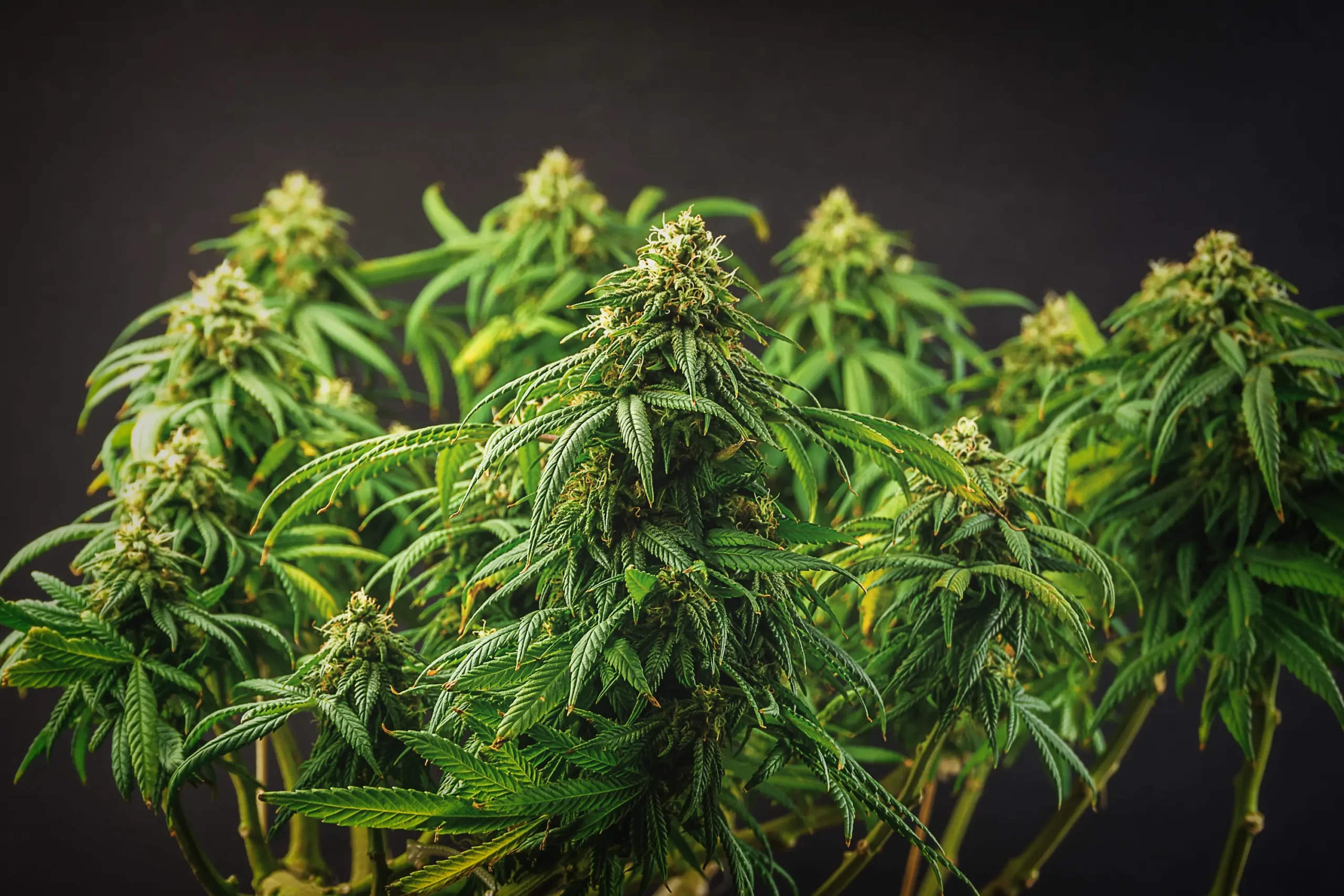
Silver Pearl is a fast-finishing hybrid built from Early Pearl, Skunk #1, and Northern Lights #5 genetics. The strain is unusual because its finished effect and aroma can lean bright and energetic while the plant itself stays relatively compact and can finish indoors in roughly seven to eight weeks. That combination made it an early example of a sativa-leaning experience compressed into an efficient indoor structure. The best plants form deep-green, resin-heavy flowers with a high bud-to-leaf ratio and enough natural uniformity to work well in close spacing.
The cultivation question is how to exploit its speed and compact footprint without overcrowding the resin-dense flowers. Grow reports describe a plant that can be placed relatively close together and works well in a Sea of Green, yet one reported phenotype stretched more than twice its flip height. That means short stature should not be confused with zero stretch. Silver Pearl is most efficient when the grower uses a short veg, maintains a single-level canopy, and gives each top enough air space to finish without the dense buds pressing against neighbors.
Aroma is more variable than the name suggests. Public descriptions range from skunk, citrus, pine, honey, dark chocolate, sweet spice, and even ammonia-like pungency. Tested samples commonly list myrcene, pinene, and limonene among the dominant terpenes. The strain's Weedth value lies in this contrast: fast production does not have to mean bland flower. A careful grow should preserve resin and aromatic clarity through moderate feeding, sensible canopy density, a full final swell, and a slow postharvest process rather than treating the cultivar as a speed crop that can be rushed.
Strain Features
| Feature | Details |
|---|---|
| Type | Balanced to sativa-leaning hybrid depending on preserved line and phenotype |
| Lineage | Early Pearl x Skunk #1 x Northern Lights #5 |
| Potency | Usually moderate-to-high THC by modern standards; reported values vary by batch |
| CBD | Typically low |
| Flowering time | Commonly about 45-54 days indoors, making it unusually fast for its energetic effect profile |
| Stretch | Generally manageable, but individual reports show roughly 2x or greater expansion after the flip |
| Architecture | Short to medium height, relatively open or Christmas-tree form, with fewer major side branches in some lines |
| Bud structure | Deep green, sticky, resin-heavy; good bud-to-leaf ratio and easy trimming in better expressions |
| Aroma | Skunk, citrus, pine, honey, sweet spice, dark chocolate, and occasional sharp ammonia-like pungency |
| Common terpenes | Myrcene, pinene, and limonene are frequently reported in tested samples |
| Training fit | Excellent for SOG, short veg, restrained LST, and light canopy correction |
| Feeding behavior | Often reported as easy and not excessively hungry; moderate feeding is a sensible baseline |
| Environment | Best indoors or in protected cultivation where fast finish and close spacing can be controlled |
| Difficulty | Easy to moderate. Speed is forgiving, but dense resinous tops still need airflow |
| Primary quality risk | Packing plants too tightly because the cultivar is marketed as compact |
| Best suited for | Growers wanting a fast, resinous crop with more cerebral energy than a typical short-flowering indica |
Silver Pearl is most useful when viewed as a room-efficiency cultivar. It does not need a long vegetative phase to produce worthwhile flowers, and its low leaf burden can simplify harvest. The danger is interpreting that efficiency as permission to crowd the canopy. Fast resin-dense flowers still need air and light around them. The best run balances plant count with actual mature bud spacing.
Genetic Lineage
Silver Pearl combines Early Pearl, Skunk #1, and Northern Lights #5, three lines that contribute distinct cultivation functions. Early Pearl brings faster outdoor and indoor finishing logic along with a brighter sativa-leaning influence. Skunk #1 contributes hybrid vigor, strong aroma, and reliable flower formation. Northern Lights #5 adds compactness, resin, and a heavier physical foundation. The resulting cultivar compresses those traits into a plant that can finish quickly without feeling like a purely sedating indica.
The genetic combination helps explain why the plant can stay relatively short while still stretching noticeably after flowering begins. Early Pearl and Skunk influence can lengthen the frame, but the Northern Lights side keeps internodes and final height more manageable than a long Haze. Growers should therefore plan for a compact plant with real transition growth, not a static column.
The lineage also explains the resin. Silver Pearl is repeatedly described as sticky enough that flowers look glazed or pearled with trichomes. Good bud-to-leaf ratio means the resin is concentrated on useful floral tissue rather than hidden inside a mass of fan and sugar leaves. That makes the cultivar efficient both during cultivation and trimming. It also makes rough handling costly because the attractive surface trichomes are easy to damage after drying.
Aroma variation is another genetic legacy. Skunk can push pungency and sharpness, Early Pearl can contribute brighter sweet-citrus elements, and Northern Lights can deepen the base toward pine, spice, earth, or resin. Different preserved versions may emphasize different parts of that spectrum. Keeper selection should prioritize the aroma that survives cure, not only the loudest live plant.
WEEDTH GROWER NOTE: Silver Pearl is a three-way hybrid, so its identity is the balance: compact resin, Skunk pungency, and a brighter early-finishing side. Select for the whole package rather than one extreme trait.
Effect Breakdown
Opening: quick mental lift
Silver Pearl is often reported as euphoric, creative, and mentally energizing. The onset can feel quicker and brighter than its compact growth might suggest. At a moderate dose, users may become more conversational, imaginative, or interested in activity. That makes the cultivar more compatible with daytime or afternoon use than many equally fast indicas.
Peak: stimulation can become intense
Some reports describe the cerebral effect as strong enough to feel almost psychedelic. The safest interpretation is that higher doses can produce immersive, fast-moving thoughts and heightened sensory focus. That intensity can be enjoyable for experienced users but uncomfortable for people prone to anxiety. A cultivar that tastes sweet or smooth can still produce significant impairment, so dosing should not be based on perceived harshness.
Body balance
The Northern Lights side is reflected in a physical calming layer that often arrives underneath the mental lift. The body can feel relaxed or tingly without immediately becoming sedated. Later in the session, that balance may shift further toward calm. Some users report a heavier finish, especially at larger doses. Silver Pearl is therefore more balanced than a pure stimulant-style sativa, even when the first phase feels active.
Side effects and duration
Dry mouth and dry eyes are common. Anxiety, dizziness, or an uncomfortable rush can occur at high doses. The effect is generally substantial enough that driving, machinery, and risky physical work are inappropriate. User reports are descriptive rather than clinical evidence, and different batches may have different cannabinoid and terpene profiles.
Flavor & Aroma Profile
Pungent core: Skunk and sharp resin
Silver Pearl often announces itself with skunky, pungent, and resinous aroma. Some batches are described with an ammonia-like sharpness, which should be interpreted carefully: a naturally acrid terpene profile is different from an actual spoiled or contaminated smell. Healthy cured flower can have a nose-stinging edge without smelling wet, rotten, or chemically tainted.
Sweet layer: honey, spice, and dark chocolate
Classic descriptions also mention honeyed sweetness and dark chocolate. Those notes are not present equally in every phenotype, but when they appear they give the strain a surprising dessert-like undertone beneath the skunk. Think less of modern frosting sweetness and more of dark cocoa, honey, dry spice, and resin. The effect of cure is important because raw green material can hide these subtleties.
Citrus and pine brightness
Pinene and limonene commonly appear in tested samples, which fits reports of pine and citrus. These high notes can make the aroma feel fresher than the heavy Skunk base suggests. On vaporization, citrus and pine may appear first; at higher temperature or combustion, skunk, spice, and roasted sweetness become more prominent. A good sample should have multiple layers rather than only one sharp odor.
Fast flower still deserves a slow finish
Silver Pearl's short flowering time can create a psychological trap: after a fast seven-to-eight-week bloom, growers may also rush the dry. That wastes part of the cultivar's appeal. Cannabis postharvest research shows that drying temperature and method can alter terpene retention substantially. Production speed stops at harvest. Quality speed does not. Give the flowers enough time to equalize moisture and reveal the honey-citrus-skunk balance.
Dominant Terpenes
| Terpene | Aroma contribution | Role in Silver Pearl's sensory profile |
|---|---|---|
| Myrcene | Earthy, herbal, musky | Often reported as the leading terpene in tested samples. It gives depth beneath the sweeter and sharper notes. |
| Pinene | Pine, fresh wood, resinous brightness | Fits the crisp pine aspect and keeps the profile from feeling completely heavy. |
| Limonene | Citrus peel, bright sweetness | Supports lemon or citrus notes and the high aromatic top layer. |
| Beta-caryophyllene / other minors | Pepper, spice, woody pungency | Can contribute to the dry spice and skunk-resin finish even when not a top-three measured terpene. |
These terpenes are useful first as aroma markers. A test showing myrcene, pinene, and limonene does not guarantee a particular mood state. Silver Pearl can feel energetic even when myrcene is prominent, which is another reason to avoid simplistic claims that one terpene controls the entire high.
For cultivation, the volatile pine and citrus fraction is the part most vulnerable to excess heat and fast drying. The heavier skunk and resin notes may remain after rough handling, creating the illusion that aroma quality is intact. Evaluate the cured flower for brightness plus depth. If only the pungent base remains, the postharvest process probably preserved the durable compounds and sacrificed the more volatile ones.
Indoor vs. Outdoor Growing
| Silver Pearl issue | Indoor | Outdoor / greenhouse |
|---|---|---|
| Cycle speed | Major advantage. Roughly 7-8 week flowering supports efficient turnover. | Early finish can help avoid deep autumn, depending on latitude and phenotype. |
| Plant density | Works well in SOG, but mature flower spacing still matters. | Close planting is less useful outdoors; individual plants benefit from more branch room. |
| Stretch | Manageable with short veg and even canopy, though some plants more than double. | Open sun reduces ceiling concern but plants can still lengthen significantly. |
| Bud density | Humidity and airflow can be controlled around sticky tops. | Fast finish reduces exposure time, but wet weather can still affect dense flowers. |
| Flavor | Easy to keep canopy temperature moderate and dry slowly. | Cool sunny finish can preserve citrus-pine; hot drying sheds and direct sun are harmful. |
| Training | SOG or light LST fits natural efficiency. | Simple topping or radial training is enough; heavy architecture work is rarely necessary. |
| Best fit | Growers prioritizing fast turnover, high resin, and uncomplicated canopy management. | Growers needing an earlier finish but still wanting a hybrid with lively effects. |
Indoor cultivation is Silver Pearl's natural efficiency zone. The plant can be flowered small, placed in a relatively tight grid, and harvested before many sativa-leaning hybrids reach full maturity. The caveat is mature canopy density. Plant spacing should be decided by the size of finished colas, not the width of young seedlings. Leave a route for air between tops.
Outdoors, the cultivar's speed can be useful in temperate regions where later plants face rain. The plant does not need to become enormous to be productive. A moderate-sized, well-supported outdoor Silver Pearl can finish with less autumn exposure than a long-season sativa. A greenhouse adds extra protection but should be ventilated aggressively near harvest because resinous flowers and stagnant humid air are a poor combination.
Strain-Specific Grow Guidance
Use short veg as part of the design
Silver Pearl is not a cultivar that needs a long vegetative phase to justify the flowering cycle. In a multi-plant SOG, a short veg allows each plant to build one dominant top plus a few useful secondary branches without turning the room into a thicket. In a smaller plant-count setup, veg can be extended modestly and the plant spread with LST. The key is that speed should be preserved through efficient architecture, not wasted by growing extra material that later gets removed.
Do not underestimate stretch because the plant starts short
At least one grow profile reports stretch above 2x, which is enough to upset a low-room SOG if the plants are already tall at flip. Keep the starting canopy level and leave vertical reserve. The stretch can be used productively: lower tops rise into the same light plane, reducing the need for repeated topping. A short plant that doubles can still finish at an ideal indoor height when the transition is planned.
SOG: the cultivar's most logical high-efficiency system
Silver Pearl's relatively compact structure, fast finish, and good bud-to-leaf ratio make it naturally compatible with Sea of Green. The goal is not maximum plant count. It is enough plants to fill the footprint quickly while keeping mature tops separate. Use uniform containers, even irrigation, and similar flip size so the canopy does not become a patchwork of dominant and shaded plants.
If plants are grown from seed, phenotype variation makes a very tight SOG less predictable on the first run. Give slightly more room, note stretch and finish time, then use clones from a selected mother for the truly uniform cycle. Clone uniformity is where SOG becomes most efficient because each top occupies similar volume and receives similar light.
Topping and LST
One early top can make sense in a lower plant-count garden, especially when laterals are already strong. In dense SOG, topping is often unnecessary because the main-cola structure is an advantage. LST is useful when one plant begins to outrun its neighbors. Bend the dominant shoot early and let nearby branches rise. Avoid late high-stress work because the flowering cycle is short; time spent recovering is a larger percentage of the entire run than it would be on a twelve-week cultivar.
Feeding: moderate is enough until the plant proves otherwise
Grow reports describe Silver Pearl as relatively easy and not excessively fertilizer-hungry. Begin with a moderate nutrient program. A fast cultivar can still be overfed, and there is less time for the root zone to recover from chronic salt stress before harvest. Watch new growth color, leaf-tip condition, and water uptake. Healthy speed is the signal to preserve, not something to push with ever-higher concentration.
Transition away from heavy nitrogen promptly once flower formation is established. The strain's value lies in high bud-to-leaf ratio. Excess nitrogen can work against that by maintaining extra foliage and delaying clean ripening. In organic media, avoid late rich top-dresses that remain mineralizing after the plant is close to finish.
Canopy airflow: compact spacing needs adult-plant thinking
The SOG label can encourage growers to place pots according to young-plant width. Plan instead for finished cola diameter plus air gaps. Fans should move air through and above the canopy, while extraction or dehumidification prevents humidity accumulation after lights out. A fast crop can still develop Botrytis if dense flowers spend repeated nights in saturated air.
Defoliation: low leaf burden is an advantage, do not erase it with overwork
Silver Pearl often has a favorable bud-to-leaf ratio, which means aggressive defoliation is rarely necessary. Remove large leaves only when they are persistently blocking a flower lane or trapping moisture. Clear weak growth below the useful light zone after stretch. Keep enough healthy leaf to drive the rapid flowering cycle. A plant that naturally trims easily should not be turned into a stress experiment.
Light management
Fast flowering does not require extreme light intensity. Provide even, sufficient coverage and maintain appropriate distance as plants stretch. Watch the tallest tops for bleaching or upward curl. Because the cycle is short, a week of light stress represents a significant portion of the productive flowering period. Consistency beats peak intensity when the goal is resin and usable yield.
Harvest timing: do not cut simply because week seven arrived
Early finishing is a trait, not an alarm clock. Begin checking resin and bract maturity before the expected window, then let each plant show completion. Mature flowers should have swollen bracts, reduced fresh pistil production, a strong resin surface, and an aroma that has shifted from green growth to defined skunk, pine, citrus, honey, or cocoa. A slower phenotype may need another week even if neighboring plants are ready.
Handling resin-heavy flower
Silver Pearl's visual appeal comes from sticky surface resin. Handle branches by stems whenever possible. Avoid squeezing buds during inspection and do not over-trim the flower into perfectly smooth shapes. Sugar leaves carrying mature trichomes can protect the flower during drying, then be removed carefully after the surface is less fragile. Rough wet trimming can turn a 'pearl' cultivar into a pile of resin on gloves and scissors.
The costly mistake to avoid with Silver Pearl
Silver Pearl is fast enough that recovery time matters. Make major structural decisions in veg or early transition, then let the plant spend the short flowering cycle building resin instead of healing.
Silver Pearl's short cycle makes root establishment before flowering more important than a long veg period. A plant does not need to be large, but it should be actively rooted and able to take up water consistently before the flip. If a transplant is still stalled, moving immediately to flowering can lock that slow start into the entire short production window. Give young plants enough time to resume clear daily growth after transplant, then flip while the canopy is still small. The difference between a short healthy veg and an under-rooted veg is significant because there are fewer later weeks available to compensate.
In SOG, irrigation uniformity becomes a cultivar-specific quality issue because many small Silver Pearl plants can reach peak flower demand at almost the same time. One dry corner can finish lighter and harsher even when the room average looks perfect. Check that each container actually receives similar water and drains correctly. Hand-watered rooms should rotate inspection order so the same plants are not always evaluated last. Automated rooms should verify individual emitters rather than trusting pump operation. Uniformity is what turns the strain's speed into a repeatable system; without it, a fast crop simply produces inconsistent results faster.
Plant count should be based on finished top width, not legal maximum or empty floor area. If a selected Silver Pearl clone produces a cola roughly the width of your hand at maturity, the centers of neighboring plants need enough separation that those flowers do not merge into one continuous canopy block. This spacing may look generous during week one. By week six it often looks correct. A small amount of visible floor early in the cycle is not lost yield if it prevents shaded lower buds, wet contact points, and uneven light later. The cultivar already recovers space through transition stretch.
Because the flowering period is short, diagnose problems by trajectory. A small calcium, magnesium, or nitrogen symptom that appears in week two may matter if it is spreading every day; an old damaged leaf that remains stable may not justify a major feed change. Fast cultivars tempt growers to react aggressively because there is little time. Aggressive corrections can be worse than the original issue. Make one change at a time, observe new growth and water use, and keep the root zone stable. The goal is to preserve momentum, not to create perfect-looking old leaves.
Silver Pearl's good bud-to-leaf ratio also changes harvest labor. A clean phenotype often needs less detailed trimming than a leafy modern hybrid. Use that advantage to protect trichomes rather than polish buds excessively. Remove obvious protruding leaves and damaged tissue, then stop. Over-trimming can shave resinous bract edges and turn natural flowers into uniform shapes at the cost of potency-rich surface material. If the sugar leaves are heavily frosted and lie close to the flower, leaving a small amount can protect the bud during storage and preserve aroma until use.
A fast SOG should include a deliberate reset and sanitation window between cycles. The strain's short finish makes it tempting to reload the room immediately, but rapid turnover can also carry pests, spores, salt deposits, or clogged irrigation parts from one crop to the next. Clean trays, inspect drains, remove fallen plant material, service fans, and verify the next batch before it enters. This is not generic housekeeping added for length. It is directly tied to the economic logic of Silver Pearl: a fast cultivar is valuable only when each cycle begins from the same clean baseline instead of accumulating problems every seven or eight weeks.
For phenotype selection, compare more than speed. The earliest plant is not automatically the best Silver Pearl. Record days to mature flower, stretch ratio, bud-to-leaf ratio, resin texture, aroma after cure, and effect balance. A plant that finishes three days later but retains clear citrus-honey complexity and stronger resin may be the better long-term mother. Speed is already built into the cultivar family. Selection should use that baseline to improve quality rather than reducing the plant to a race for the first harvest date.
Silver Pearl's short cycle also rewards tight harvest-window organization. Before week six, prepare labels, clean drying lines, trimming tools, and separate containers for any phenotype you are comparing. Fast plants can move from almost-ready to fully mature quickly, and a room of similar tops may need to be harvested within a narrow span. Organization prevents the last plants from sitting under excessive light or declining while the first batch is being processed. It also preserves phenotype information. Mixing two visually similar plants into one drying lot makes it impossible to learn whether the better cured aroma came from a specific mother. Efficient cultivation should produce better data with every cycle, not just faster turnover.
Because Silver Pearl often forms a high proportion of useful top flower, dry-weight evaluation should separate premium flower from total harvested biomass. Weighing every small lower bud can make a crowded SOG look productive even when much of the crop is low-grade. Compare the percentage of dense, resinous, well-lit flowers from each spacing arrangement. If slightly wider spacing produces fewer total grams but a much higher proportion of top-quality buds, the room may actually be more efficient for Weedth's goals of flavor and bud quality. This is especially relevant to Silver Pearl because the strain's low leaf burden and fast finish make premium-flower percentage a realistic optimization target rather than an afterthought.
Finally, treat mother-plant health as part of the fast-cycle system. A selected Silver Pearl clone can make uniform SOG easy, but repeated cuts from a stressed, pest-damaged, or nutritionally imbalanced mother carry inconsistency into every new batch. Maintain the mother under stable vegetative conditions, rotate or refresh it when vigor declines, and reject weak cuttings instead of filling every empty pot. Uniform starting material is the hidden first week of the flowering cycle. The more consistent the clones, the less corrective training the room needs and the more accurately you can judge small changes in spacing, light distribution, or postharvest handling.
Weedth Bud Flavor Tips
Silver Pearl's postharvest priority is keeping the high notes attached to the pungent base. Skunk and heavy resin will remain obvious even after a rough dry, while citrus, pine, honey, and cocoa nuance can disappear. Keep the harvest cool and dark from the moment it is cut. Do not leave finished branches under grow lights while the rest of the room is harvested.
Because flowers can be dense and sticky, whole-branch drying helps slow the surface. Use indirect circulation and enough separation that colas do not touch. Fast cultivars can create harvest bottlenecks when many plants finish together, so prepare drying capacity before the chop. Crowding a drying room destroys the very efficiency gained during cultivation.
Scientific work on cannabis drying shows that hotter drying reduces terpene retention. Silver Pearl is a strong example of why slow quality work should follow fast plant work. The crop saved weeks in flowering; there is no reason to sacrifice flavor to save two more days after harvest.
During cure, look for aromatic separation. Skunk should be obvious, but not alone. Pine or citrus should appear above it, and sweeter phenotypes may develop honey or dark cocoa. If a sharp ammonia-like note appears, confirm that it is a clean aromatic edge rather than excess moisture or spoilage. A wet, sour, or decomposing smell requires immediate inspection rather than romanticizing it as genetics.
PRO TIP: Prepare drying space before a SOG harvest. Silver Pearl's greatest practical strength is synchronized speed, which becomes a liability if all the dense tops enter an undersized drying room at once.
Weedth Bud Boost Tips
Silver Pearl's best yield strategy is cycle efficiency plus uniform canopy. In a selected clone run, SOG can produce a high percentage of top-quality flower with minimal vegetative time. Keep plants at similar height, remove only weak lower shoots, and let each main top occupy its own light column. Uniformity is more valuable than an extreme plant count.
A lower plant-count grow can use one early top and gentle LST to create four to eight useful leaders, depending on space. Do not build an elaborate manifold that consumes weeks of recovery. The strain's economic advantage is the short cycle. Training should enhance that trait rather than cancel it.
Moderate nutrition protects speed. A root zone that remains clean and oxygenated can support rapid flower development without high salt concentration. Avoid stacking multiple bloom boosters simply because harvest is approaching quickly. The plant cannot use nutrients faster just because the calendar is short. Feed according to uptake and health.
Branch support may be minimal in a small SOG, but a light net can keep tall tops vertical and separated. It also creates a visual grid for airflow. The net should not crush finished colas together. If a top begins leaning, support it early rather than allowing resinous flowers to rest against a neighbor.
Unproven finishing tricks such as severe drought, extended darkness, excessive ultraviolet exposure, or very high phosphorus-potassium concentrations are unnecessary for a cultivar already selected for resin. The dependable bud boost is to keep the plant unstressed through every day of its short bloom. A seven-week plant does not have spare weeks to recover from a dramatic experiment.
Medical Uses & Benefits
Silver Pearl users commonly report euphoria, creative energy, mood lift, and a later relaxing body component. Some people seek that profile when dealing with stress, low mood, or fatigue, but those are subjective experiences rather than clinical evidence. There are no controlled medical trials proving that Silver Pearl treats those conditions.
The strain can also produce anxiety or mental overstimulation, especially at a high dose. That is particularly relevant because the effect may be more cerebral than its short plant structure suggests. Terpenes such as myrcene, pinene, and limonene have biological properties under investigation, but their presence in the flower does not predict an individual's therapeutic response.
Anyone using cannabis for a medical condition should seek qualified clinical guidance. High-THC cannabis can interact with medical risk factors and impair judgment, coordination, and reaction time. Adult consumers should start low, wait for the full effect, and avoid driving or hazardous work.
Ideal User Profile
Silver Pearl fits the user who wants a lively hybrid high from a fast, old-school resinous cultivar. It can work for afternoon social activity, creative hobbies, music, or a relaxed day when mild body calm is welcome but immediate couch-lock is not. Very low-tolerance users should dose carefully because some reports describe a surprisingly strong mental peak.
The ideal grower values short cycles, simple training, and efficient trimming. Someone running a perpetual room or a limited indoor footprint can benefit from a cultivar that reaches maturity faster than many sativa-leaning options. Growers who want giant outdoor trees or elaborate training projects will find other strains more rewarding.
Flavor preference should include skunk, pine, citrus, honey, spice, and resin rather than only modern fruit candy. The cocoa-like sweetness in some phenotypes is a bonus, not a guarantee. Silver Pearl is most interesting when its pungent and sweet sides remain in balance.
Grower Notes and Feedback
Grower feedback supports Silver Pearl's reputation as easy and fast, but it also shows why close spacing should be handled carefully. One indoor profile reports a manageable Christmas-tree structure, relatively few side branches, low fertilizer demand, and suitability for SOG. The same plant still stretched more than twice its flip height, proving that compact genetics can make real transition growth.
The bud-to-leaf ratio is a consistent practical advantage. Fewer leaves around the flowers reduce trimming time and make it easier to see the actual bud surface during late-flower inspection. That does not remove mold risk, but it does improve airflow compared with an equally dense cultivar buried in foliage. Preserve that advantage by avoiding excessive nitrogen.
Resin is the visual signature. Growers should expect sticky flowers and trichome-rich surfaces rather than enormous fluffy sativa spears. This is why handling discipline matters. Gloves and scissors can collect significant resin during trimming. Work gently, keep tools clean, and avoid rolling or squeezing buds to test density.
Aroma descriptions conflict more than growth descriptions. Skunk and citrus are common, but honey, dark chocolate, pine, sage-like herb, and sharp ammonia-like pungency all appear in different reports. This is a good reason to keep a post-cure phenotype scorecard. Live-plant smell alone may not predict which expression becomes most complex in the jar.
Effect reports lean energetic and euphoric but can include strong physical relaxation. That makes Silver Pearl more balanced than a pure daytime sativa. The contrast is useful editorially because it mirrors the plant: a compact, fast frame carrying a brighter mental experience than the morphology suggests.
For commercial-style home efficiency, the strain's greatest advantage is not theoretical grams per square meter. It is days saved without giving up resin quality. A cultivar that finishes a week or two earlier reduces climate exposure, opens the room sooner, and lowers the amount of time a mistake can accumulate. That is a real form of yield efficiency.
FIELD ADVICE: After the first seed run, clone the plant with the best combination of manageable stretch, fast finish, clean resin, and complex cured aroma. Uniformity is what turns Silver Pearl from a good fast strain into a highly efficient room strain.
Weedth Editor's Note
How I would judge the finished flower
Silver Pearl is the kind of strain I would use when I want a room to move quickly without feeling disposable. I would keep the veg short, make only the training moves that are necessary, and let the plant spend its limited flowering time on buds instead of recovery. In a uniform clone run, I would be very comfortable using a SOG approach.
I would still leave more space between finished tops than the young plants seem to need. Resin-heavy buds can swell quickly, and a tidy early grid can become a humid wall by week seven. I want to be able to see air channels between colas. That small sacrifice in plant count can protect far more usable flower than an extra pot squeezed into the corner.
Feeding would stay moderate. Silver Pearl does not interest me as a strain to push until the leaf tips burn. Its advantage is natural speed and resin. I would rather preserve clean roots, even leaf posture, and a smooth transition into senescence. A fast plant should look calm, not rushed.
The cure is where I would decide whether the plant is a keeper. I want skunk first, then something else: citrus, pine, honey, cocoa, or dry spice. If the flower is only loud but not layered, I would keep hunting. When Silver Pearl shows both resin and aromatic contrast, the short cycle feels like a bonus instead of the entire reason to grow it.
Weedth Score
Growing Experience 9.0/10 Fast, relatively easy, and highly compatible with efficient indoor systems; requires sensible mature spacing.
Bud Structure & Visual Appeal 8.9/10 Sticky deep-green flowers with strong resin and good bud-to-leaf ratio.
Aroma Complexity 8.5/10 Skunk, citrus, pine, honey, cocoa, and spice can be excellent, though phenotype variation is real.
Flavor & Smoothness 8.4/10 Very good after a slow dry; rushed postharvest handling can reduce it to generic pungency.
Effects & High Experience 8.6/10 Bright and euphoric with a balanced physical layer; high doses can become mentally intense.
Overall Satisfaction & Recommendation 8.8/10 A standout choice for growers who value cycle efficiency without surrendering resin or personality.
Silver Pearl is a reminder that fast does not have to mean simple. The plant is efficient, the trim is manageable, and the resin can be excellent. The main demand is restraint: do not overveg, overfeed, overcrowd, or overdry a cultivar whose genetics are already doing most of the work.
PERSONAL CLOSER: Give me a fast room full of clean, separate resinous tops and a jar that still smells of skunk, citrus, and honey. That is Silver Pearl at its best.
FAQ
How fast does Silver Pearl flower?
Many descriptions place it around 45-54 days indoors, roughly seven to eight weeks. Phenotype and environment can extend that window, so inspect actual flower maturity before harvesting.
Is Silver Pearl good for SOG?
Yes. Short veg, relatively compact structure, fast finishing, and a good bud-to-leaf ratio make it one of the more logical SOG candidates. Leave enough mature cola spacing for airflow.
How much does Silver Pearl stretch?
Usually manageable, but at least one indoor profile reports more than 2x stretch. Plan for meaningful transition growth even though the plant starts compact.
Should I top Silver Pearl?
In a dense SOG, usually not necessary. In a lower plant-count garden, one early top can help create several even leaders. Avoid elaborate training that consumes much of the short cycle.
Does it need heavy nutrients?
Generally no. Grow reports describe modest demand and good tolerance. Start moderate and preserve root health rather than chasing high concentration.
Is Silver Pearl beginner-friendly?
Yes, especially indoors, because it is fast and not usually fussy. Beginners still need to manage humidity and avoid packing plants too tightly.
What does Silver Pearl taste like?
Common descriptions include skunk, citrus, pine, honey, sweet spice, dark chocolate, and resin. Some batches have a sharp ammonia-like pungency.
What are its common terpenes?
Tested samples frequently list myrcene, pinene, and limonene among the dominant terpenes. Exact order depends on phenotype and batch.
Is the effect energizing or relaxing?
Usually both in sequence: a brighter euphoric or creative head effect first, with a calmer physical layer later. High doses can become mentally intense or more sedating.
Can it be grown outdoors?
Yes, and its relatively fast finish can be useful in temperate climates. Outdoor spacing should be wider than indoor SOG, and dense flowers still need a dry finish.
How do I preserve the honey and citrus notes?
Keep late-flower heat moderate, harvest gently, dry cool and slowly with indirect airflow, and avoid repeated warm storage or pre-grinding.
What is the biggest Silver Pearl mistake?
Treating 'compact and fast' as permission to overcrowd. Mature sticky tops need air. Efficiency comes from uniformity and cycle speed, not from eliminating every gap.
Similar Strains
Silver Pearl's best comparisons are cultivars that combine short or moderate flowering time with resin and a brighter mental effect. The closest relatives also share its Skunk or Northern Lights heritage.
| Strain | Similarity and difference |
|---|---|
| Northern Lights | Shares compact resin production and fast flowering. Northern Lights is generally heavier and more sedating, with less bright cerebral energy. |
| Skunk #1 | Shares hybrid vigor and pungent aroma. Skunk #1 is often larger and more overtly skunky, with a somewhat longer or broader phenotype range. |
| Power Plant | Comparable for fast productive sativa-leaning effects, but generally taller and more obviously sativa in architecture. |
| Cinderella 99 | Another compact route to energetic effects. Cinderella 99 is more tropical-fruity and often slightly longer flowering. |
| White Russian | Shares strong resin, efficient indoor growth, and balanced potency. White Russian is usually heavier and less distinctly citrus-honey in aroma. |
| AK-47 | Comparable as a fast, potent hybrid with a bright mental component. AK-47 often has a sharper spicy-floral aroma and a slightly different branch structure. |
Silver Pearl remains distinctive because the three-way lineage produces an unusual efficiency profile: short enough for rapid indoor turnover, resinous enough to feel substantial, and mentally active enough that the finished experience does not read like a typical fast indica.
Share this article
A quick overview of the topics covered in this article.
Follow us
Latest articles
August 20, 2026
August 20, 2026
August 20, 2026
August 20, 2026