
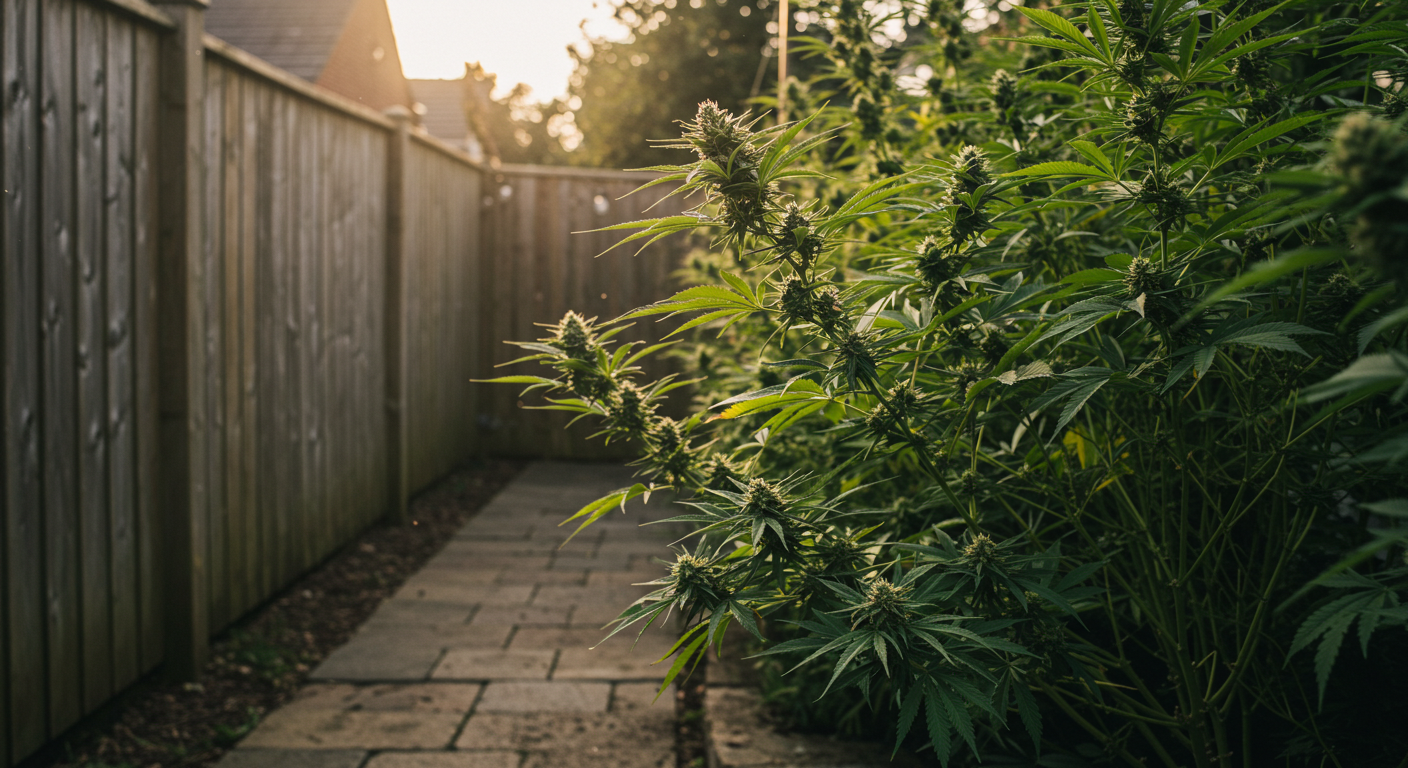
How Much Can One Cannabis Plant Yield Outdoors?
Outdoor cannabis yield is not a “strain number” or a meme-worthy pound count—it’s the end result of canopy size × season length × sunlight (DLI) × plant health, then reduced again by drying/curing shrink and trim loss. Even official and scientific sources agree on one thing: yields vary so widely that single-number formulas are unreliable across gardens, climates, and cultivation styles.
In real-world home grows, a large survey in the Australian Capital Territory found a median dry yield of 120 g per plant, with an interquartile range of 40–280 g, and some growers exceeding 600 g per plant (outliers). Importantly, most respondents were growing outdoors (garden/balcony), with a smaller portion indoors.
For legal medical plant-count calculations, Government of Canada’s cannabis regulations use an expected yield of 250 g dried cannabis per outdoor plant as an administrative planning constant—not a promise, but a useful “middle-of-the-road” benchmark.
At the other extreme, scientific field trials can produce surprisingly modest per-plant yields if plants are small, grown at higher densities, limited by rooting volume, or managed for objectives beyond maximum dry flower mass. One outdoor fertilizer-response trial reported a maximum of 38 g dry flower per plant in its highest-yielding treatment.
The practical takeaway: if you want a realistic expectation for outdoor photoperiod plants (dried, trimmed flower), plan around ~50–300 g per plant for typical home grows, ~250–600 g when you manage water, canopy, and pests well, and ~600 g–1.5 kg+ only when you deliberately build “big plants” (long veg window, large root zone, heavy training/trellising, and strong season-long plant health). Those upper figures are achievable in some settings, but they are not the median experience.
Assumptions and what “yield” means
This guide focuses on legal cultivation contexts. Regulations differ by country/state/province; nothing here is legal advice. Always follow local rules for plant counts, security, odor, pesticide use, water rights, and waste disposal. (For example, Canada’s federal regulations explicitly embed expected per-plant yields into personal-production plant limits, and also include site restrictions like prohibitions near certain public places for registered medical production sites.)
We assume:
- Genetics unspecified: default = photoperiod cultivars (the common outdoor “full season” model). Autoflowers are covered as a special case because their timeline and yield ceiling differ.
- Climate unspecified: we discuss temperate, Mediterranean, continental, and subtropical scenarios, focusing on how sunlight, humidity, and season length shift outcomes.
- Grow area unspecified: we provide examples for 1 plant, 10 plants, and 100 plants, plus “per-area” conversions.
Most importantly: “Yield” can mean different things. In this article, unless stated otherwise, yield refers to:
Final dried, trimmed flower mass (“sellable”/usable dried product). That is the number most growers compare—and the number most often misunderstood. Even the United Nations Office on Drugs and Crime manual cautions that yield estimation is difficult and that fixed formulas (wet:dry:saleable; grams per plant) are not meaningfully universal because outcomes depend strongly on cultivar, technique, nutrition, light, and timing.
Realistic outdoor yield ranges per plant
The most defensible real-world ranges
Home cultivation (mixed methods, mostly outdoor): In a large peer-reviewed study of post-decriminalisation home cultivation practices, respondents reported a median yield of 150 g fresh plant material per plant and a median of 120 g dry plant material per plant, with wide dispersion (dry IQR 40–280 g, and some responses above 600 g). Most growers in this dataset grew outdoors in gardens or on balconies.
Regulatory “expected yield” for planning plant limits: Current Canadian federal regulations use 250 g dried cannabis per outdoor plant as the expected yield in the personal medical production plant-limit formula. Treat this as a planning constant, not a guarantee.
Field-trial reality check: A multi-year outdoor fertilizer response trial reported the highest-yielding treatment at 38 g dry flower per plant (and reported THC yield per plant as well). This is a reminder that “outdoor” alone does not guarantee large plants—experimental design, plant size, density, and management goals often cap per-plant mass.
Why the internet is full of “pounds per plant” (and why that can be true)
Per-plant yield is largely a canopy engineering problem:
- If a plant is allowed to form a large, well-lit canopy over a long season, yield can be huge.
- If it flowers early, stays small, gets root-bound, or loses flower to mold, yield can be modest—even in full sun.
This is why serious analysts and regulators often prefer yield per area (g/m² or g/ft²) for comparability. For example, a Washington State cannabis yield report (based on interviews and literature synthesis) discusses yields in grams per square foot and notes outliers strongly distort averages; trimmed means can be more reliable for “typical” performance.
Quick reality bands for outdoor photoperiod plants
Use these bands as planning ranges (dried, trimmed flower). They are anchored to the survey median/IQR, the regulatory expected-yield constant, and per-area yield reporting frameworks—not to marketing claims.
- Small plant / short season / minimal inputs: ~25–100 g (0.9–3.5 oz)
- Typical home grow (the “normal garden” outcome): ~50–300 g (1.8–10.6 oz)
- Well-managed backyard plant (trained, watered, pest-managed): ~250–600 g (0.55–1.32 lb)
- Purpose-built big outdoor plant: ~600 g–1.5 kg+ (1.3–3.3 lb+)
The last band is real—but it is not the median. If you want it, you must deliberately design for it.
Yield drivers that matter most outdoors
Outdoor yield is a stack. If one layer collapses (early flowering, root restriction, drought, mold), your final number collapses with it.
Below are the drivers that consistently show up across scientific literature, regulatory guidance, and real-world grow data.
Genetics and flowering behavior
Cannabis is generally treated as a short-day plant: flowering is triggered when nights get long enough, but the exact threshold varies by genotype. A controlled photoperiod study on cannabis explants reported that one genotype required a photoperiod no longer than ~13.8 hours (≈10.2 hours uninterrupted darkness) for flowering induction in that experimental system, highlighting genotype-specific thresholds.
In outdoor production, this interacts brutally with latitude and season:
- In subtropical/tropical daylengths (near ~12 hours of light year-round), many photoperiod cultivars can initiate flowering earlier than intended unless the cultivar is selected for that environment. A large outdoor/indoor photoperiod study in hemp (same species, different chemotypes) found critical daylength thresholds for some cultivars around 13 h 45 min to 14 h, and noted that small differences (even ~15 minutes) could significantly shift floral initiation timing in some types.
- Earlier flowering usually means less vegetative canopy time, which usually means less final biomass and flower mass—unless you compensate with plant count, rapid cycling, or suitable genetics.
Sunlight and seasonal DLI
Outdoors, your “light budget” is mostly governed by sky physics: latitude, cloud cover, and season. A practical explanation from Michigan State University notes that outdoor daily light integral (DLI) can reach ~60 mol·m⁻²·d⁻¹ on long, cloudless summer days and fall below 5 mol·m⁻²·d⁻¹ on dark winter days in northern regions. Higher DLI generally supports higher plant quality and biomass accumulation in many crops.
For outdoor cannabis, translate that into grower logic:
- Mediterranean climates (bright, dry summers) often give you a huge DLI advantage—but only if water, nutrition, and heat stress are managed.
- Continental climates can deliver intense summer DLI, but late-season frost or early autumn rain can cut flowering short.
- Temperate maritime climates may have lower peak DLI and higher humidity—yield can still be good, but disease pressure often becomes the limiter.
- Subtropical climates can have long seasons but high humidity (mold pressure) and photoperiod complications—yield potential is high, but risk is high too.
Canopy size, branching, and training
Your canopy is your solar panel. Outdoor yields explode when you:
- Build a wide canopy that intercepts light efficiently
- Keep airflow through the canopy so humidity doesn’t turn into rot
- Support branches so late-flower weight doesn’t snap your structure
A biology overview from the Canadian Food Inspection Agency notes that planting density changes branching and morphology: high density produces taller, more slender plants with reduced branching, while low density results in less competition and more branching—useful when your goal is flowers/cannabinoids rather than fiber.
Training and pruning are not magic buttons; they are architectural tools. Scientific work on pruning and management shows results are cultivar- and context-dependent. For example, a controlled study on nitrogen and pruning in a CBD-type cultivar found pruning did not necessarily increase biomass or cannabinoid concentration, underscoring that training must align with genetics, nutrition, and environment rather than being assumed universally beneficial.
Root volume and planting method
Root volume is one of the most underestimated yield levers. Bigger, healthier root systems support:
- Higher water uptake on hot days
- More stable nutrient delivery
- Better resilience against wind and drought
A cannabis yield meta-analysis (covering diverse scientific yield reports) identified pot size/root volume among predictors of yield outcomes, alongside variety, density, light intensity, fertilization, and flowering duration—basically confirming what outdoor growers learn the hard way: root restriction caps yield.
Water, nutrition, and the “too much nitrogen” trap
Outdoors, the yield ceiling is often set by water consistency more than anything else. But nutrition matters in a specific way:
- Underfeeding stunts canopy development and flower building.
- Overfeeding—especially with excessive nitrogen—can push leafy growth, delay maturation, and (in some contexts) reduce cannabinoid concentration.
In an outdoor fertilizer response trial, researchers explicitly observed tradeoffs between fertilizer regime, yield, and THC outcomes, with a highest-yielding treatment reported at 38 g dry flower per plant (in their system) and evidence that fertilizer strategy influences outcomes.
Temperature, humidity, VPD, and disease pressure
Outdoors you don’t “control” weather—but you can control plant architecture, spacing, irrigation method, and microclimate.
A recent study found that elevated canopy-level humidity (outside optimal VPD thresholds) can delay flowering development, reduce biomass accumulation, and decrease cannabinoid concentrations—a direct yield and quality hit.
And when humidity stays high in dense flowers, disease can wipe yield fast. A commercial cannabis IPM guide from the British Columbia government explains that bud rot (Botrytis) develops under high humidity; recommends spacing plants for airflow, avoiding overhead watering during flowering, and maintaining balanced nutrition (avoid over-fertilizing).
Pests, pollination, and seed formation
Outdoor risk includes insects, mites, and accidental pollination.
Pollination changes the plant’s priorities. Once heavily seeded, many cultivars divert energy away from sinsemilla flower mass and resin development. That’s why “male removal / controlled pollination” is a core yield concept in many cannabis systems, including forensic and cultivation manuals.
Scenarios, conversions, and planning tables
This is the Weedth way: we don’t just say “it depends.” We give you a planning framework that survives real gardens.
Table of yield scenarios by footprint and management tier
The simplest way to predict per-plant yield is:
Dry Yield per Plant ≈ (Dry Yield per Canopy Area) × (Effective Canopy Footprint)
Because canopy yield per area varies widely by management and environment, we express scenarios as ranges.
| Plant footprint (effective canopy) | What it looks like outdoors | Low-effort backyard (dry yield/plant) | Intermediate (dry yield/plant) | High-input outdoor (dry yield/plant) |
|---|---|---|---|---|
| ~2–4 ft² (0.2–0.4 m²) | balcony / small pot / early flowering / minimal training | 25–80 g | 60–150 g | 120–250 g |
| ~9–16 ft² (0.8–1.5 m²) | typical backyard plant with training + support | 80–200 g | 200–450 g | 450–900 g |
| ~25–50 ft² (2.3–4.6 m²) | “big plant” footprint (wide canopy, trellis, long veg) | 150–350 g | 350–800 g | 800 g–1.5 kg+ |
Why these ranges are believable:
- Median home-grow dry yield of 120 g per plant with many outdoor growers supports the lower and middle bands for typical gardens.
- A regulatory planning constant of 250 g dried per outdoor plant matches the middle-to-upper middle band for well-run single-plant outdoor grows.
- Per-area yield reporting literature shows typical central values around ~40 g/ft² can be discussed for cannabis systems (with variability and outliers), making large-canopy plants capable of high totals when managed well.
Climate lens: how the same plant footprint yields differently
Climate shifts yield through three main levers: sunlight, season length, and humidity/disease pressure. Use these as multipliers, not absolutes.
- Temperate: moderate sun, moderate season, moderate humidity → “typical” performance aligns closely with the home-grow survey distribution.
- Mediterranean: high sun, long dry summer → yield potential rises, but irrigation becomes essential.
- Continental: strong summer sun but shorter fall window → big potential if you start early and finish before cold/wet.
- Subtropical: long season but humidity + photoperiod complications → potential for multiple harvests per year exists, but mold pressure often becomes the limiter.
A European production overview notes outdoor cultivation can produce up to three harvests a year depending on weather, light, and strain—this is most relevant to climates that allow multiple cycles or rapid turnover.
Table of per-plant vs per-area conversions
If you track yield per area (g/m² or g/ft²), you can translate it to per-plant yield once you know plant spacing / canopy footprint.
Useful constants
- 1 m² = 10.764 ft²
- 1 acre = 4,046.86 m²
- 1 oz = 28.35 g
- 1 lb = 453.59 g
Worked conversions
| Given | Convert to | Result | Why it matters |
|---|---|---|---|
| 1,757 lb/acre (open-field floral hemp avg.) | g/m² | ~197 g/m² | A real national benchmark for flower-type cannabis in open fields (hemp sector); useful for outdoor per-area realism. |
| 40 g/ft² (illustrative “central” canopy yield) | g/m² | ~431 g/m² | Helps estimate what a well-run canopy can do per area in some cannabis systems. |
| 431 g/m² and a 1.5 m² canopy | g per plant | ~647 g/plant | Shows how canopy size converts to “pounds per plant” without magical thinking. |
| 197 g/m² and a 1.5 m² canopy | g per plant | ~296 g/plant | Roughly lines up with the 250 g/plant regulatory planning constant. |
Single plant vs 10 plants vs 100 plants
Instead of guessing, scale with canopy area.
Assume three realistic setups:
- Setup A (small plants): 0.4 m² canopy per plant (≈4.3 ft²)
- Setup B (medium plants): 1.5 m² canopy per plant (≈16.1 ft²)
- Setup C (big plants): 3.0 m² canopy per plant (≈32.3 ft²)
Now apply two per-area yield benchmarks:
- Benchmark 1: 197 g/m² (national open-field floral hemp average; conservative for many cannabis goals)
- Benchmark 2: 431 g/m² (illustrative higher-performance canopy figure used in yield-per-area discussions; highly variable)
| Plant count | Canopy size per plant | Total canopy area | Total dry yield at 197 g/m² | Total dry yield at 431 g/m² |
|---|---|---|---|---|
| 1 | 0.4 m² | 0.4 m² | ~79 g | ~172 g |
| 10 | 0.4 m² | 4 m² | ~788 g (0.79 kg) | ~1,724 g (1.72 kg) |
| 100 | 0.4 m² | 40 m² | ~7.9 kg | ~17.2 kg |
| 1 | 1.5 m² | 1.5 m² | ~296 g | ~647 g |
| 10 | 1.5 m² | 15 m² | ~3.0 kg | ~6.5 kg |
| 100 | 1.5 m² | 150 m² | ~29.6 kg | ~64.7 kg |
| 1 | 3.0 m² | 3.0 m² | ~591 g | ~1,293 g |
| 10 | 3.0 m² | 30 m² | ~5.9 kg | ~12.9 kg |
| 100 | 3.0 m² | 300 m² | ~59.1 kg | ~129.3 kg |
This table is “math honest.” It shows that big yields come from big canopies, not from wishful strain descriptions.
Timelines, phenology, and the harvest math that changes your final number
Outdoor phenology: why “veg time” is a yield engine
Outdoor photoperiod plants typically follow:
- vegetative growth while daylength is long enough
- flowering initiation as nights lengthen
- flowering bulk and maturation until harvest window closes
Because flowering triggers vary by genotype, photoperiod mis-match can cause early flowering and smaller plants—especially in tropical/subtropical daylength conditions unless genetics are selected appropriately.
A Weedth timeline template
Adjustments by climate:
- Mediterranean: extend canopy build and flower finishing if heat and water are managed.
- Continental: shorten finishing window; prioritize early/fast-finishing genetics and weather risk mitigation.
- Subtropical: potentially multiple cycles (or continuous production), but humidity and photoperiod interactions become the main strategic challenge.
Harvest measurement pitfalls: wet vs dry vs “final jar weight”
This is where yield myths are born.
- Fresh plant material contains a lot of water; drying removes most of it. In a greenhouse study dataset, only ~18.6% of wet weight remained after drying (≈82% weight loss).
- A practical drying reference explains plant materials often move from ~80% moisture toward ~10% moisture for storage stability—implying massive water removal and therefore massive weight reduction.
- For forensic/legal contexts, the UNODC manual explicitly warns against universal wet:dry:saleable formulas because variability is too high across methods and conditions.
So what should you record?
If you want numbers that mean something year-to-year:
- record wet trimmed weight at harvest (same trimming standard each time)
- record dry weight after drying completes
- record final “ready” weight after curing (some additional moisture equalization occurs)
And always state your basis: fresh, dry, or dry + cured + trimmed.
Decision flowchart: maximizing outdoor yield without gambling your season
Common yield-limiting problems and fixes
Outdoor yield losses often come from a small set of repeat offenders. This table keeps it practical and non-dramatic.
Table of common yield-limiting problems and fixes
| Symptom | Likely yield limiter | What’s happening | Fix strategy grounded in outdoor reality |
|---|---|---|---|
| Tall, airy plant; weak branching | Early flowering + low canopy development | Photoperiod mismatch or delayed transplant reduces veg time and branch building. 9 | Match genetics to latitude/daylength; start earlier (legally); build canopy before flowering triggers. |
| Great veg, weak flower bulking | Water stress swings | Drought cycles reduce photosynthesis and flower building; outdoor heat amplifies it. | Prioritize consistent irrigation; mulch; improve soil water-holding; avoid “feast/famine.” |
| Mold inside buds late flower | High humidity + dense flowers | Bud rot (Botrytis) thrives in humid conditions; dense flowers trap moisture. 15 | Increase spacing, prune for airflow, avoid overhead watering in flower, choose less dense structures where possible. 15 |
| Powdery mildew flare-ups | Humid canopy + poor air exchange | Spores spread; leaf surfaces stay favorable. 15 | Improve airflow, prune crowded growth; early intervention matters. 15 |
| Huge plant, disappointing yield | Shaded interior canopy | Lower canopy produces weak “larf” because light doesn’t penetrate. | Train for an even, open canopy; selectively remove unproductive lower growth; support branches so tops stay in prime light. 11 |
| Leafy flowers, slow ripening | Excess nitrogen late | Nutrient regime pushes vegetative growth into flowering; can reduce desired outcomes. 20 | Avoid excessive N in late flower; target balanced feeding; don’t over-fertilize. 15 |
| “My wet harvest looked massive, dry yield is tiny” | Moisture loss misconception | Drying removes most water; 65–80%+ shrink is common. 18 | Measure dry yield, not wet; standardize trimming and drying; compare like-to-like each season. 1 |
| Yield good but inconsistent year-to-year | Untracked variables | Without recording canopy area, irrigation events, and disease, you can’t diagnose performance. 1 | Track canopy footprint + dry yield (g/m² and g/plant). Run one change at a time each season. |
Share this article
A quick overview of the topics covered in this article.
Follow us
Latest articles
September 24, 2026

September 24, 2026
September 24, 2026
September 24, 2026