
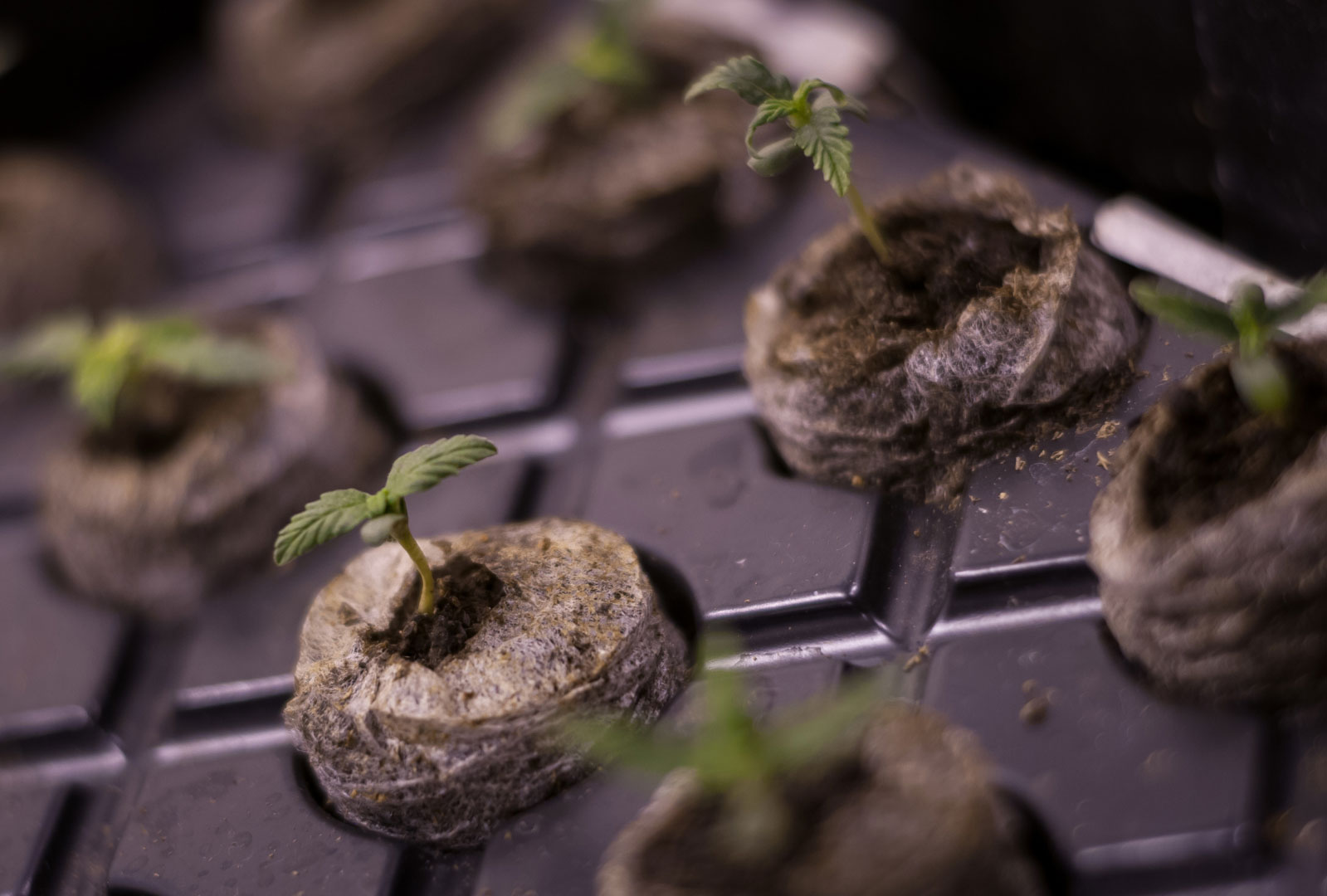
Are Regular Cannabis Seeds Worth It
Regular cannabis seeds are “worth it” when you want genetic control (breeding, pheno-hunting, preservation), when you’re comfortable identifying/removing males early, or when you’re deliberately building a long-term garden where selection matters more than convenience. They’re not automatically “better” in potency, yield, or quality—those outcomes depend on genetics and cultivation—but regular seeds do unlock options that feminized and autoflower seeds can’t fully replace.
For most growers focused on seedless flower (sinsemilla), feminized seeds often win on efficiency because you’re trying to avoid fertilization—fertilized flowers are typically less potent because seed development diverts resources and acts as a “dilution + carbon drain” on flower chemistry.
Hermaphroditism is the real fear behind most seed-shopping questions. The science-backed version is simple: any cannabis line can throw herm traits under the wrong stressors (especially photoperiod/interruptions) and genetics can increase or decrease that likelihood. Feminized seed production methods and parental selection can influence how often “male flowers in the progeny” show up, which is why feminized seed quality isn’t just marketing—it’s process.
Autoflowers aren’t “a third gender”—they’re a flowering-behavior category (day-neutral / photoperiod-insensitive). They can flower under continuous light, and the trait can behave like a Mendelian/recessive locus in some backgrounds (e.g., Autoflower1), with strong effects on plant timing and size. That means autos can be amazing for speed and simplicity, but less forgiving if early growth is weak because you can’t “veg longer to recover.”
Assumption note (Weedth standard): If your exact goals aren’t specified, we assume a typical home grower wants (1) high-quality seedless flower, (2) predictable outcomes, (3) minimal surprises, and (4) a path to leveling up without wasting seasons.
The core trade‑offs behind regular, feminized, and autoflower seeds
Cannabis is naturally a mostly dioecious plant—separate male and female plants—with extensive outcrossing in wild/traditional populations, and it’s wind-pollinated (meaning pollen movement is a serious variable outdoors).
That biology is why the seed type question matters:
- Regular seeds are produced by a male plant pollinating a female plant. Expect a mixed sex outcome and plan to sex plants. Regular seeds are the default tool for breeding because you need males for controlled crosses.
- Feminized seeds are produced by using a genetically female plant to make functional pollen (sex expression manipulation), then pollinating a female flower—producing seeds that can be overwhelmingly female when the process is done correctly.
- Autoflower seeds are day-neutral/photoperiod-insensitive lines that can flower independent of day length (including flowering under continuous light in some cultivars), governed by identifiable genetic loci in at least some lineages.
Why “seedless” is the default goal for flower growers
Modern high-cannabinoid flower production usually aims for unfertilized female flowers because fertilization reduces flower “potency” in the way growers mean it: fewer phytocannabinoids per unit flower and changes in terpene accumulation.
A government biology review explicitly notes that seedless female inflorescences are obtained by removing males, resulting in increased THC/cannabinoids/terpenes, since seeds are a dilution effect and redirect carbon allocation away from specialized metabolism.
A controlled research study in Frontiers in Plant Science found fertilization after pollination significantly decreased phytocannabinoid content and altered terpenoid accumulation—reinforcing the practical sinsemilla rule with lab chemistry.
A Weedth decision matrix you can actually use
| Seed type | What you gain | What you pay | Best for | Not ideal for |
|---|---|---|---|---|
| Regular | Ability to select males + females; true breeding workflows; long-term genetic control | Must sex plants; risk of accidental pollination if males missed | Breeding, pheno-hunting, preservation, learning plant sexing | Small plant counts where “wasted” males hurt |
| Feminized (photoperiod) | High probability of female plants; efficient use of plant count/space | Can still produce males/herms depending on genetics + production quality; variability from seed-to-seed | Flower-focused grows, limited space, “I want fewer surprises” | Breeding where male selection matters |
| Autoflower | Flowers independent of day length; fast cycles; outdoor short-season flexibility | Less control over vegetative duration; early stress can permanently cap size; day-neutral trait strongly controls timing | Speed runs, harsh seasons, “set-and-go” schedules | Long veg training cycles, mother-plant cloning workflows |
This table reflects biology + breeding realities documented in academic and extension sources (sex expression lability, photoperiod insensitivity, and feminized seed production considerations).
Seed vs clone: the part growers argue about because both sides are right
Cloning is popular because it preserves a known profile—many production systems use cuttings/tissue culture to maintain consistent genetics and chemistry.
Seeds, however, are the gateway to genetic diversity and selection. Even feminized seeds “result in genetically different plants,” while clones are genetically identical to the mother. That’s why seeds are the pheno-hunter’s playground but clones are the production manager’s comfort zone.
Weedth master advice (one sentence, then we move on): If you care about repeatability, clones win; if you care about discovery and control over the future, seeds win.
Is seeded cannabis less potent
“Seeded” flower almost always means the plant was pollinated (by a male or by hermaphroditic male flowers), and that changes the plant’s priorities.
A peer‑reviewed study measured the effect directly: fertilization following pollination substantially decreased the concentration of nearly all measured phytocannabinoids, while the overall cannabinoid profile ratios stayed similar (it’s not that the plant becomes a different chemotype; it becomes a less concentrated one).
That fits with the broader biological framing: seed development redirects energy and carbon and literally adds seed mass that doesn’t contribute to trichome resin. The Canadian biology review describes seed formation as both a dilution factor and a drain on carbon allocation away from specialized metabolism, explaining why seedless flowers are preferred for cannabinoid production.
Do cannabis seeds contain THC
In classic organ-by-organ cannabinoid testing, intact or crushed achenes (“seeds”) lacked detectable cannabinoids—supporting the practical reality that seeds aren’t where the resin lives.
So when people ask “are there cannabinoids in the seeds,” the grown-up answer is: the chemistry you want is primarily produced and stored in glandular trichomes—especially around female inflorescences—not inside the seed.
Are there disadvantages to smoking cannabis seeds
Two problems collide here:
- Seeds generally don’t offer meaningful cannabinoid value (see above).
- Combustion of cannabis (and plant material generally) has known health risks; public health guidance consistently treats smoking as a high‑risk consumption mode compared to non‑combustion alternatives.
Add a practical issue growers rarely say out loud: seeds are oily, can crackle/pop, and make smoke harsher. The “worth it” meter is basically at zero for most people.
How many seeds is one ounce
This question has two meanings—so here’s both, cleanly:
If you mean “one ounce of bud”: there is no universal number. One ounce (28.35 g) is a weight target; seed count depends on how heavily the flower was pollinated and how mature the seeds are. The only honest answer is “it varies wildly,” because seed set is a biological outcome, not a packaging standard.
If you mean “one ounce of seeds”: you can estimate from thousand seed weight (TSW). Hemp/cannabis seed lots commonly show TSW values roughly in the teens to 30s g per 1000 seeds (some smaller, some larger depending on maturity and variety).
A quick estimate using realistic TSW ranges:
- If TSW = 15 g → 28.35 g is ~1,890 seeds
- If TSW = 25 g → 28.35 g is ~1,134 seeds
- If TSW = 35 g → 28.35 g is ~810 seeds
How much cannabis can you get from one seed
The real answer: your environment sets the ceiling, and genetics decides how close you get to it. The fastest way to make this concrete is to anchor to controlled-environment trials.
In one indoor trial, when canopy-level PPFD increased from 600 to 1,000 µmol·m⁻²·s⁻¹ (12 h photoperiod), per‑plant inflorescence dry weight moved from ~27.6 g to ~44.7 g over the tested cycle—showing how strongly yield responds to light intensity under controlled conditions (while reminding you these are study‑specific conditions, not a promise).
A separate photoperiod study found that moving from 12 h to 13 h flowering photoperiod increased total inflorescence dry weight by about 35% to 50% in two high‑THC cultivars, with the authors cautioning against directly translating per‑plant gains to per‑area commercial gains.
So yes—one seed can become a small plant or a large plant. But the yield question becomes answerable only when you define light, canopy space, and time.
Are regular seeds less likely to herm
Let’s cut through the internet fog.
Hermaphroditism is not a “feminized seed-only curse.” Cannabis sex expression is labile: it is influenced by environment and hormones, and stressors can induce staminate (male) flower development on female plants.
A detailed hermaphroditism study notes that altered photoperiod conditions and extended darkness early in growth have been associated with hermaphroditic flower formation, and that stress can interact with internal phytohormone pathways.
So, are regular seeds less likely to herm?
- What science supports: genetics + stress = outcome; no seed category is immune.
- What practical industry sources warn: feminized seeds can have “a greater chance of producing male and hermaphroditic plants,” which is why reputable feminization requires discipline, selection, and process control.
The most accurate Weedth answer is:
Regular seeds aren’t magically anti-herm. But when feminized seeds are produced from unstable parents (or pushed through sloppy reversal conditions), the risk can show up more often in the grower’s tent.
Can feminized seeds turn hermie
Yes—because sex expression can be influenced by stress, and because “female-only” is a probability statement tied to genetics + production method, not a law of nature.
Are hermie seeds worth keeping
This is where Weedth gets honest:
- If you’re growing for clean, seedless flower, herm-derived seeds are usually not “worth it,” because you’re potentially re‑rolling the same instability story.
- If you’re growing for learning, selection, or research, they can be useful—as long as you treat them as high-risk until proven otherwise.
One peer-reviewed hermaphroditism paper found that progeny from hermaphroditic seed formation showed genetic variation similar to cross‑fertilized progeny after one generation of selfing, and that offspring sex ratios from herm pollen donors were biased toward females.
That does not mean “herm seeds are safe.” It means the genetic outcomes are more nuanced than the internet’s one‑sentence verdict.
Can you still harvest a hermie plant
You can, but the “should you” depends on what actually happened:
- If the plant produced a few staminate structures late and you catch it early, you might salvage usable flower.
- If pollination occurred broadly, expect seed formation + reduced phytocannabinoid concentration and altered terpene outcomes compared with unpollinated flowers.
In other words: harvesting is possible, but “top-tier” quality is less likely when fertilization is widespread.
The downside to feminized seeds and the downside to autoflowering seeds
What’s the downside to feminized seeds
Feminized seeds are a tool—and tools have failure modes.
A major extension resource explains that feminized seeds are produced via chemical treatment (e.g., silver thiosulfate) that induces a female plant to produce male flowers with genetically female pollen, which is then used for pollination; it also cautions that feminized seeds can have a greater chance of male/hermaphroditic plants and notes the lack of a robust seed certification program in some markets.
Modern scientific literature on feminized seed production emphasizes both effectiveness and challenges—especially seed viability and the occurrence of male flowers in progeny—reinforcing that “feminized” is not a synonym for “problem-proof.”
There is also a non-grow-tent downside: chemical masculinization methods raise questions about environmental handling and best practices, which matter more as cultivation scales up.
What’s the downside to autoflowering seeds
Autoflowers (photoperiod-insensitive/day-neutral) are often bought for simplicity. Their hidden price is time control.
A genetics mapping paper describes photoperiod insensitivity (“autoflowering”) as a trait with major impacts on phenology and yield-related outcomes; it also documents that heterozygous plants at an autoflower locus flowered earlier under field conditions, producing smaller plants with less total biomass—an example of why “fast” can mean “smaller” if you don’t match the plant to the environment.
A Plant Journal study on photoperiod-insensitive hemp notes that day-neutral/autoflowering cultivars can flower under continuous light and shows that multiple genetic routes to photoperiod insensitivity exist (i.e., not all “autoflower” behaves identically across lineages).
So the downside isn’t “they’re weak.” The downside is:
- Less recovery time after early mistakes
- Less control over plant architecture via extended vegetative time
- More importance on early environment being dialed in
Which is better: autoflowering or feminized seeds
This is not a morality contest. It’s a constraints contest.
Use this Weedth flowchart (read it like a checklist, not a religion):
This logic matches the underlying biology: photoperiod control vs day-neutral flowering, and breeding needs vs flower-only convenience.
Seed quality, organic labels, storage, and why stores may not sell seeds
What seeds should you stay away from
In cannabis culture, this question often really means: “How do I avoid wasting a grow?”
In seed science terms, avoid seeds that are likely compromised by immaturity, poor storage, or contamination.
A hemp seed maturity study describes clear differences between mature, semi-mature, and immature seeds: mature seeds had higher thousand-seed weight, lower moisture (~10% ±2), and larger dimensions; immature seeds had higher moisture (~20% ±2), smaller size, and far poorer germination/emergence outcomes.
Storage matters just as much: a hemp seed storage guideline thesis concluded that temperature and relative humidity strongly affect germination loss and mold, and it estimated safer storage conditions (e.g., ≤25°C and ≤70% RH, roughly ≤10% equilibrium moisture) for limited time horizons.
At a higher level, genebank standards for orthodox seeds explain that longevity improves by lowering seed moisture and temperature—this is the universal backbone behind “cool, dry, dark” seed storage advice.
Does it matter if seeds are organic or not
For most home cannabis growers, “organic seeds” is often less important than “viable, mature, correctly stored seeds.”
But in regulated organic agriculture, “organic seed” has a formal meaning:
- The USDA states that organic producers must use organic seeds/seedlings/planting stock unless organic varieties are not commercially available, and that organic seeds cannot be genetically engineered or treated with prohibited substances.
- Official USDA Agricultural Marketing Service guidance explains the “commercial availability” exception and clarifies how operations justify non-organic seed use (form/quality/quantity), emphasizing documentation over personal preference.
- A detailed organic seed sourcing explainer notes organic seed must be produced under organic rules (e.g., land management history and certification) and that many synthetic treatments are prohibited in organic systems.
Weedth translation: “Organic” describes how the seed crop was produced and handled—not whether the genetics are elite. If your goal is living-soil alignment or certification-grade compliance, organic sourcing matters. If your goal is simply strong seedlings and stable plants, seed maturity + storage quality usually matter more.
Why don’t dispensaries sell seeds
Sometimes they do. Sometimes they can’t. Sometimes they just don’t want the inventory headache.
A clean example: New York State Office of Cannabis Management has published guidance stating adult-use consumers can purchase seeds or immature plants for home cultivation from licensed retail dispensaries/microbusinesses/other authorized dispensers (availability varies by licensee).
At the same time, seed sales can fall under separate seed-labeling and compliance frameworks. For example, the Minnesota Department of Agriculture describes cannabis seed labeling expectations, recordkeeping, packing/sell-by testing windows, and permitting requirements for labelers in that state context.
In Health Canada licensing language, cannabis seeds also show up as a regulated output under cultivation licenses—illustrating how seeds can be treated as a licensed activity/product class rather than a casual accessory.
So the “dispensaries don’t sell seeds” question is often really about regulatory structure + supply chain—not a conspiracy.
Germination basics that prevent most beginner failures
This section is intentionally “general horticulture + cannabis-relevant,” because seed biology doesn’t care what plant you’re growing.
Is two inches too deep for seeds
For most small seeds: yes.
A seed-starting fact sheet states: “Most seeds should be planted at a depth of about twice their diameter.”
A hemp seed maturity paper puts real numbers on cannabis/hemp seed size (mature seeds reported around 3.24–4.81 mm in width/length). Twice that diameter is roughly 6–10 mm (~0.25–0.4 inches); even three times is still well under 1 inch.
So if you’re planting cannabis seeds at ~2 inches deep, you’re usually forcing the seedling to spend too much stored energy just to reach light, increasing failure and “helmet head” emergence problems.
Can you use toilet paper rolls to start seeds
You can—but it’s a tool with trade-offs.
A practical paper-pot guide explains the basic concept of transplantable paper containers and highlights two key realities:
- It’s often better for the plant’s root system if the seedling is removed from the paper pot for transplanting (roots establish more easily).
- Any paper left above the soil surface can wick moisture and dry out the seedling zone.
Translated for cannabis growers: toilet paper rolls can work as temporary seedling sleeves, but you must manage moisture, airflow, and transplant timing carefully—or you create a mold-friendly, root-restricting environment.
The most common seedling killer is not “bad genetics”—it’s damping off
A university extension guide on damping off notes it thrives in cool, wet conditions, can wipe out whole trays, and recommends sterile containers, clean media, and good drainage as prevention (also listing low light and overwatering among factors that increase risk).
Weedth takeaway: Seedlings don’t need expensive anything. They need you to stop doing the two things humans love most: overwatering and improvising with dirty gear.
Share this article
A quick overview of the topics covered in this article.
Follow us
Latest articles
September 25, 2026
September 25, 2026
September 25, 2026
September 25, 2026