

Outdoor Cannabis at High Elevation
Outdoor cannabis can work at high elevation, but the main question is not simply how many meters or feet above sea level the garden sits. The practical question is whether the site gives the plant enough frost-free time to establish, flower, and finish while also tolerating stronger solar exposure, wind, rapid temperature swings, and a root zone that may move from cold to dry within the same day.
For most growers, season length is the first high-elevation constraint to solve. A bright mountain site can look excellent at noon and still be a poor cannabis site if cold air pools there before dawn, the first autumn frost arrives before the cultivar can finish, or exposed wind repeatedly strips moisture from leaves and containers. Elevation changes the environment as a package. It should not be treated as a single number that automatically makes a garden better or worse.
This resource stays focused on that high-elevation decision. For the broader outdoor process, including general site planning, containers, irrigation, plant training, flowering, pests, and harvest, use the Outdoor Grow Comprehensive Guide rather than repeating the full outdoor system here.
Start With the Real Constraint: Season Length, Not Elevation Alone
High elevation is not a universal climate category. A garden at 1,800 m (about 5,900 ft) in one region may have a much longer season than a garden at the same elevation somewhere else. Latitude, slope, local topography, prevailing weather, continental versus maritime influence, and nearby terrain all change the result. Treat elevation as a reason to measure more carefully, not as a substitute for local observations.
Mountain horticulture guidance repeatedly identifies a cluster of recurring pressures: shorter growing seasons, cool nights, stronger wind, large day-night temperature differences, intense sunlight, and frost that can arrive later in spring and earlier in autumn. Those pressures matter to cannabis because a photoperiod plant may still be building flowers when the local weather window is already narrowing.
What “high elevation” means in this article
There is no single global elevation at which a cannabis garden becomes “high elevation.” Here, the term means a site high enough that elevation-related changes in temperature, frost timing, wind, solar exposure, or growing-season length materially affect cultivation decisions. Use local weather data and your garden measurements rather than a universal altitude cutoff.
Do not confuse elevation with latitude
Elevation and latitude solve different questions. Latitude strongly shapes seasonal day length and the timing of long summer days and shortening autumn days. Elevation mainly changes the atmospheric and local climate context around those days. Moving 1,000 m uphill does not create the same photoperiod change as moving hundreds of kilometers north or south.
That distinction matters for flowering. If two gardens share nearly the same latitude but sit at different elevations, their astronomical day length is essentially the same. Their temperature, frost risk, cloud pattern, wind exposure, and usable finishing window may be very different. A cultivar can therefore receive a suitable flowering signal at both sites but still finish safely at only one of them.
Lower atmospheric pressure is real, but it is rarely the first field variable to manage
Atmospheric pressure decreases as elevation rises, so the partial pressure of carbon dioxide also falls. Plant physiology at altitude is more complicated than simply saying “less CO2 means less growth,” because gas diffusion changes with pressure and plants can acclimate. Reviews of alpine plant physiology describe reduced CO2 partial pressure as one of several high-elevation filters alongside low temperature, intense radiation, wind, short seasons, and shallow or difficult soils.
For an outdoor cannabis grower, that makes atmospheric pressure useful background science but usually a poor first management target. You cannot practically correct the barometric pressure of an open garden. You can, however, choose a warmer microclimate, avoid a frost pocket, protect roots from repeated cold saturation, reduce destructive wind, and select genetics that finish before the season collapses. Those are the interventions with immediate field value.
Do not use altitude as a reason to add outdoor CO2. Open-air supplementation disperses rapidly and is not a practical substitute for site selection. The high-elevation garden should be designed around the environment it actually has rather than trying to turn an outdoor site into a sealed controlled room.
Start with the frost-free window
Before choosing containers, nutrients, or training methods, write down the local spring and autumn frost pattern. Do not rely on one average date. Look for a range: typical last spring frost, unusually late spring frost, typical first autumn frost, and an early-frost scenario. If reliable local historical weather is available, use it to understand probability rather than treating an average date as a promise.
Then ask how much of that frost-free window is actually usable. A site can technically stay above freezing while still delivering cold nights that slow establishment, delay root activity, or make late flowering difficult. A warm south-facing pocket may gain useful heat during the day, while a nearby valley bottom at lower elevation may become colder before dawn because dense cold air drains downhill and pools there.
| High-Elevation Signal | What It Can Mean | What to Measure Before Planting |
|---|---|---|
| Late spring frost | Permanent outdoor placement may need to happen later than regional calendars suggest. | Local minimum temperatures at canopy height and the actual last-frost pattern for the site. |
| Early autumn frost | Long-flowering genetics may run out of safe finishing time. | First-frost history plus the cultivar’s observed flowering and maturity pace. |
| Large day-night swing | A hot afternoon does not guarantee a warm root zone or canopy overnight. | Afternoon maximum and predawn minimum in the same planting zone. |
| Exposed ridge wind | Higher water demand, branch loading, abrasion, and fast container dry-down. | Wind direction, gust exposure, shelter pattern, and how fast the root zone loses moisture. |
| Intense clear-sky sun | High leaf and container surface temperatures even when the air feels cool. | Canopy temperature, pot-side temperature, sun path, and midday plant response. |
The lower site is not always the warmer site
Cold-air drainage is one of the easiest mountain effects to miss. On calm, clear nights, air near the ground cools, becomes denser, and moves downhill. Depressions, valley bottoms, fences, walls, hedges, and terrain shelves can slow that movement and create frost pockets. A planting spot that looks sheltered can therefore record a colder predawn minimum than a slightly higher, more open slope.
If the garden has meaningful relief, test at least two points with comparable sensors. Put one in the suspected cold pocket and one in a nearby reference zone that appears better drained by air. Keep the sensor model and height consistent. A repeated difference across several clear, calm nights is far more useful than deciding by how the site “feels” at sunset.
Distinguish frost risk from average temperature
A site can have a respectable seasonal average and still be dangerous because of a handful of short predawn events. Cannabis flowers do not experience the monthly average. They experience the coldest hour of the night, the wettest storm, the strongest gust, and the actual number of days available after flowering begins. This is why climate normals should be combined with extreme-event history and local measurements.
When comparing two sites, record not only the lowest temperature but also how long the temperature remains near the local danger zone. A brief dip and a multi-hour cold event are not equivalent exposures. Do not invent a universal cannabis injury threshold; use local observations, cultivar behavior, and conservative weather planning to decide how much margin you need.
Field Advice: At high elevation, the best planting spot is often the place with the best season, not the highest midday temperature. A few extra degrees at noon are less useful if the same pocket loses them rapidly before dawn.
Map the Mountain Microclimate Before You Choose the Planting Spot
Mountain gardens can change dramatically over short distances. A wall can create a warm reflection zone. A gap between buildings can accelerate wind. A rocky south-facing bank may heat quickly in the day and dry aggressively. A north-facing corner may stay cooler, hold snow longer, and start the season later. These are microclimates, and at elevation their differences can be large enough to change whether a cannabis plant finishes successfully.
Map slope and aspect first
Aspect is the direction a slope faces. In the Northern Hemisphere, south-facing slopes generally receive more direct solar energy, while north-facing slopes tend to stay cooler and retain moisture longer. East-facing sites receive earlier sun and may dry dew sooner. West-facing sites often carry the strongest afternoon heat and can also be exposed to drying winds. In the Southern Hemisphere, reverse the north-south solar interpretation.
Do not choose by compass direction alone. A south-facing location behind tall trees may receive less useful light than an open east-southeast location. A sunny west-facing wall may extend warmth in a cool mountain garden but overheat a black container in late afternoon. Map what the plant actually experiences.
Record sun path and shadow movement
High elevation often brings clear, bright conditions, but the local horizon can still steal hours of direct light. Ridges, conifers, buildings, and steep slopes may delay sunrise or create an early afternoon shadow. Record the first direct light, midday shading, and the time the planting point falls into evening shadow. Repeat the observation later in the season because solar angle changes.
Keep this separate from photoperiod. The sun may be astronomically above the horizon while the plant is already shaded by terrain. For photosynthesis and canopy temperature, that local obstruction matters. For flowering physiology, the broader light-dark signal and any artificial night lighting matter in a different way.
Find wind corridors before the plant is large
Wind that feels manageable around a small spring plant can become a structural problem after the canopy expands. Walk the site on several windy days and look for repeating directions. Note gaps in fences, saddles between terrain features, roof corners, and exposed ridge lines. Tie lightweight survey tape to stakes around candidate sites if it helps you visualize movement, but remove it after testing so it does not become litter or a wildlife hazard.
The goal is not to eliminate wind. Moderate movement can strengthen stems and dry surfaces. The problem is repeated mechanical loading and desiccation. If the same side of the plant will receive the strongest gusts all season, plan support before flowering adds weight.
Use paired temperature measurements, not a regional forecast alone
Regional forecasts are valuable for alerts, but high-elevation microclimates can diverge sharply from the nearest weather station. Put minimum/maximum sensors or loggers at the height of the vulnerable canopy rather than on a sunny wall, inside a shed, or directly on the soil. Use radiation shielding for air temperature measurements so direct sun does not heat the sensor body and create a false “air temperature.”
Record at least afternoon maximum, predawn minimum, wind notes, cloud cover, and whether the night was calm. The pattern matters more than one extreme. A candidate site that repeatedly runs several degrees colder than another before dawn deserves a different cultivar choice or a different planting decision.
“My property is around 2,100 m, but one part of the yard is much warmer in the afternoon. Should I automatically use that spot?”
Question sent by: FrostLineGrower, via contact form.
No. Compare the full daily cycle. A warm afternoon pocket can still become the coldest predawn pocket if cold air settles there. Log both locations through several clear nights, check wind exposure and direct-sun duration, then choose the site with the better seasonal balance rather than the highest single afternoon reading.
Map snowmelt, drainage, and spring access
Snow patterns are information. A location that holds snow long after nearby ground clears may warm slowly and delay soil preparation. A zone that melts early beside masonry may become workable sooner but can also dry quickly. Look at where meltwater travels, where it ponds, and whether access becomes muddy or unsafe.
Do not plant simply because the soil surface is exposed. Check whether the root zone is workable and whether deep layers are still cold or saturated. A bright mountain day can thaw the surface while deeper soil remains slow, wet, and oxygen-limited.
Use spring soil temperature as a readiness check, not just calendar date
Mountain spring can produce deceptive planting weather. Several sunny days may warm the upper few centimeters while deeper soil remains cold. Instead of using one warm afternoon as proof that the site is ready, check the root zone at the depth where new roots will actually establish. Repeat the measurement in the morning and afternoon to understand the swing.
The purpose is not to chase a universal cannabis soil-temperature number. It is to avoid transplanting into a root zone that remains persistently cold and saturated while the canopy is being pushed by strong sunlight. If the site has not stabilized, waiting or using a temporary movable container can be more sensible than forcing permanent placement.
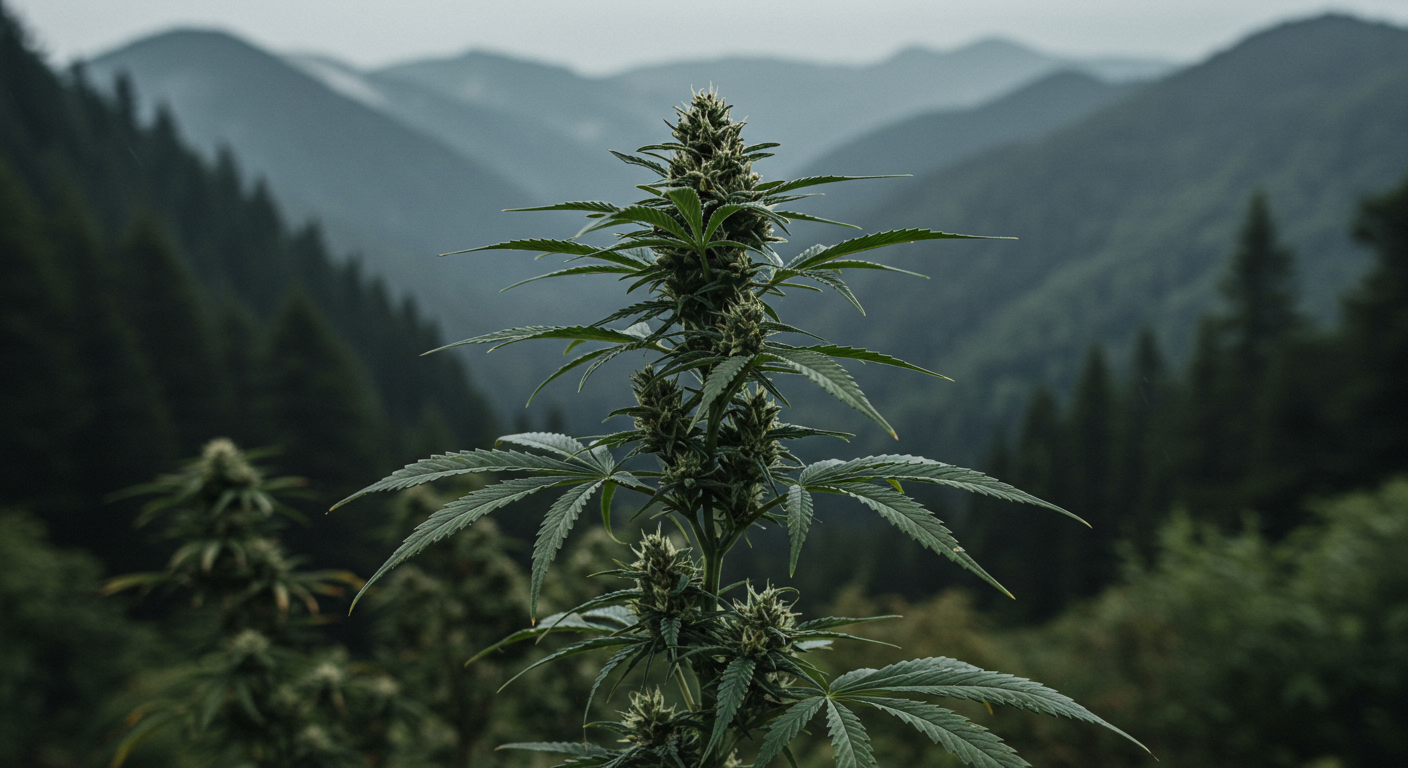
Match Genetics and Flowering Timing to the Frost-Free Window
A high-elevation cannabis garden often succeeds or fails on finish timing. A plant can grow vigorously through summer and still become a poor fit if it begins flowering too late or needs more mild autumn weather than the site reliably provides. The correct question is therefore not “Can cannabis grow here?” but “Can this cultivar complete its flowering cycle here with enough margin for weather variability?”
Use a finish window, not a catalog date
Treat breeder or seed-source timing as a starting estimate, not a local guarantee. Outdoor finish depends on cultivar photoperiod response, latitude, seasonal light change, local temperature, plant health, and weather. If you have records from the same genetic line in a comparable climate, those observations are more useful than a generic month printed for a wide market.
Build an earliest, likely, and latest finish window. Then compare that range against your first-frost risk, cold rain, snow probability, and the point at which the site stops drying well after storms. A cultivar that technically could finish at the extreme end of the season may still leave too little operational margin for a first-time high-elevation grow.
Score the finish window against three deadlines
A useful mountain finish plan compares the plant against three separate deadlines. The thermal deadline is when repeated cold begins to reduce the reliability of late flower development. The weather deadline is when frost, snow, cold rain, or wind becomes frequent enough that crop protection turns into constant rescue work. The operational deadline is when access, drying conditions, water infrastructure, or legal harvest logistics become harder to manage.
If the likely finish falls comfortably before all three, the cultivar has margin. If it overlaps one deadline, management needs to be stronger. If it overlaps all three, the genetic choice is probably too late for the site even if one unusually warm year could succeed.
Latitude controls the seasonal day-length pattern
Do not use elevation as a flowering-calendar shortcut. Two sites at similar latitude have similar astronomical day length even if one is near sea level and the other is high in the mountains. What elevation changes is whether the plant has enough warmth and weather stability to use that photoperiod window successfully.
This distinction also protects against the common “12/12 outdoors” mistake. Cannabis cultivars can begin reproductive development under day lengths longer than 12 hours, and critical photoperiod varies by genotype. Watch actual flowering development rather than waiting for an indoor-style 12-hour day.
Favor evidence of timely outdoor maturity
For a short mountain season, prioritize genetics with documented outdoor performance in comparable finish windows. Useful evidence includes repeated harvest timing, early flowering response, branch structure that tolerates support, and reasonable disease behavior under cool late-season nights. Avoid choosing solely by broad “indica” or “sativa” labels. Those labels do not provide the finish precision a mountain garden needs.
Autoflowering genetics can avoid the photoperiod timing problem because flowering is less dependent on seasonal day length, but that does not make them automatically superior. Their fixed life cycle can give less recovery time after hail, transplant shock, cold nights, or root-zone mistakes. The correct choice still depends on the local season and the grower’s ability to establish the plant quickly.
- Compare the cultivar’s observed finish behavior with your local frost-risk window.
- Keep a weather margin instead of planning to finish on the first likely frost date.
- Track first visible flowering signs and update the expected finish window each week.
- Assuming a calendar date from another latitude will transfer directly to your site.
- Choosing a long-flowering cultivar because the summer vegetative growth looks strong.
- Treating one unusually warm autumn as proof that the site always has a long finish window.
Use season-extension tools as margin, not as a rescue strategy
Temporary frost cloth, movable containers, simple rain protection, or a sheltered microclimate can add useful flexibility, but none of them should be the only reason a poorly matched cultivar is expected to finish. If the predicted harvest repeatedly lands after the local weather turns unstable, change the genetic or timing plan rather than building an increasingly complicated rescue system around it.
Remember: High elevation rewards margin. A cultivar that finishes slightly earlier than necessary is usually easier to manage than one that needs every warm day the mountain can possibly provide.
Build a Root Zone and Water Plan for Fast Weather Swings
Mountain weather can shift quickly from a cold night to a bright, dry afternoon. That swing can create a root-zone problem that looks contradictory: the soil may be cool and slow in the morning, then containers can lose water rapidly once strong sun and wind arrive. The root system needs enough air space after rain or irrigation and enough water-holding capacity to avoid repeated midday drought.
Choose the growing system around site exposure
Native ground can buffer temperature well because of its large thermal mass and root volume, but only when drainage, structure, pH, salinity, and contamination are acceptable. Raised beds provide more control and can warm earlier, but exposed sides may lose moisture faster. Containers offer the greatest media control but are the most sensitive to sun, wind, and rapid temperature change.
If you are still deciding between native soil, raised beds, and containers, use the Cannabis Soil and Growing Media Guide for the broader root-zone framework. At high elevation, pay special attention to whether the chosen system creates enough moisture buffer for windy afternoons without staying saturated after cold rain.
Do not let clear air fool you about water demand
Cool air does not automatically mean low water use. Strong solar radiation and wind can increase leaf and soil-surface water loss even when the thermometer looks comfortable. Watch the root zone and the plant instead of watering from air temperature alone.
For containers, learn the wet weight and the normal dry-back pattern. For in-ground plants, check moisture at multiple depths because the surface can look powder-dry while deeper soil remains adequate. The general watering process should follow root-zone condition rather than a fixed calendar; the Watering Basics guide covers that method in more depth.
Protect irrigation reliability from wind, cold, and access problems
High-elevation gardens are often farther from convenient water infrastructure. If the site depends on hose runs, storage tanks, pumps, filters, or drip lines, test the complete installed system before planting. Measure delivered flow at the end of the line, not only at the source. Check whether morning cold affects fittings or whether exposed tubing moves in wind.
Remote or steep access raises the cost of a small failure. A clogged emitter in a hot, windy afternoon can create a much larger dry-back than the same failure in a sheltered lowland bed. Keep a backup watering method that can be used legally and safely if the normal system stops working.
Measure container exposure separately from air temperature
Containers can be the most volatile part of a high-elevation setup. A dark pot in direct sun can become much warmer than the surrounding air, while the same pot can cool rapidly after sunset. Wind also removes moisture from the container surface and foliage. If using containers, compare the sunny and shaded sides of the pot, note afternoon root-zone temperature, and track how quickly the medium loses water on clear windy days.
Large root volume usually gives more buffering than a small pot, but volume alone does not fix poor drainage or a heat-absorbing container. Position, material, color, insulation, and the growing medium all influence the result. The best container is the one that stays within a predictable moisture and temperature pattern on your site.
Plan irrigation around storage and recovery time
High-elevation watering plans should include the time required to recover from a failure. If a tank runs dry, how long does it take to refill? If a pump fails, can the garden be hand-watered? If access is blocked by a storm, how much moisture reserve does the root zone have? These are not questions about giving more water. They are questions about making the water system resilient.
For a remote or exposed site, keep records of daily water use during the most demanding weather. That becomes the basis for reserve capacity. A backup sized from real use is more useful than an arbitrary tank volume copied from another grow.
Mulch can smooth extremes, but do not use it blindly
A clean mulch layer can reduce evaporation and moderate soil-surface temperature, but the correct depth and material depend on the root zone and climate. In a cool, wet mountain spring, heavy mulch can slow warming and keep the surface moist longer than needed. Later in a dry, windy summer, the same buffering effect may be helpful. Treat mulch as a seasonal tool, not a permanent rule.
“The afternoons are dry and windy, but the nights are cold. Should I water every day just to be safe?”
Question sent by: CedarRoute, via email.
No. Daily watering is not automatically safer. Check how much water the root zone actually lost, how deeply the previous irrigation wet the medium, and whether the plant recovered overnight. The goal is to prevent severe dry-down without keeping a cold root zone chronically saturated.
Watch water chemistry if evaporation is high
Where irrigation water already contains meaningful dissolved salts, repeated evaporation can concentrate them in containers or poorly leached zones. High elevation itself does not create salinity, but dry air, strong sun, and frequent irrigation can make an existing water-quality problem more visible. If leaf-edge burn, unexplained nutrient imbalance, or rising substrate EC appears, test source water and root-zone conditions before increasing fertilizer.
Manage Intense Sun, UV, Wind, Hail, and Large Day-Night Temperature Swings
High-elevation sunlight can be visually striking, and solar radiation generally becomes more intense as the atmosphere thins. UV exposure also tends to increase with elevation. That does not mean outdoor cannabis at altitude automatically produces stronger or better flower. The plant experiences the entire environment at once, and the same site may combine strong light with cool nights, wind, drought, hail, and a compressed finish window.
Separate useful light from excess leaf heat
A cool mountain breeze can hide how much radiant energy is hitting the canopy. Air temperature and leaf temperature are not the same measurement. On bright, still moments, leaves, dark pots, rocks, and walls can become much warmer than the surrounding air. If the plant wilts only during the brightest period and recovers later, check root-zone moisture and canopy temperature before assuming a nutrient problem.
Do not respond by shading automatically. Shade reduces incoming energy and can help during unusually intense heat, but it also reduces photosynthetic light. Use temporary shade only when measurements and plant response show that radiant load is a real constraint. A cannabis-specific universal shade percentage is not established for outdoor mountain gardens.
Do not market UV stress to yourself as a potency technique
Altitude studies in hemp have reported differences in cannabinoid, terpene, and flavonoid profiles between mountain and lowland sites. Those observations are interesting, but they do not prove that increasing UV is a reliable method for increasing potency in modern drug-type cannabis. Controlled UV studies have found minimal or inconsistent cannabinoid benefits, and high UV treatments can reduce photosynthetic performance or yield.
More UV is not a guaranteed quality upgrade
Do not intentionally remove plant protection, create artificial UV exposure, or stress a mountain crop because altitude is associated with stronger sunlight. High-elevation cannabis research does not support a universal rule that more UV produces more cannabinoids. Manage the plant for healthy photosynthesis and a safe finish first.
Wind management starts with plant architecture
A high-elevation plant does not need to be hidden from every breeze. It needs a structure that can tolerate the site’s recurring gusts. Early in the season, gentle movement can help stems adapt. As the plant grows, the lever arm becomes longer and flowering branches become heavier. A gust that barely moved a June plant can split the same branch in September.
Install stakes, cages, trellis, or other lawful support before the canopy is difficult to reach. Anchor the support to something stable enough for the actual site. Do not tie a large plant rigidly at one point and assume it is protected. Support should distribute load without sawing into stems or crushing flowers.
Use windbreaks carefully
A permeable windbreak can reduce wind speed while allowing some airflow. A solid wall can create turbulence and abrupt pressure changes on the leeward side. The correct placement depends on wind direction, distance, and the height of the barrier. Before building anything permanent, observe where snow drifts, leaves collect, or wind visibly changes direction around existing structures.
Do not create a sealed pocket that solves wind but creates stagnant humidity around late flowers. Mountain climates can be dry overall and still produce dew, rain, or short humid periods. Good protection reduces destructive gusts while keeping the canopy able to dry.
Plan for hail as a separate hazard
Hail can injure leaves, split branches, and damage flowers in minutes. If hail is a recurring local hazard, consider a structurally sound overhead protection system designed for weather load and legal for the property. Any netting or cover must be high enough and strong enough that it does not collapse onto a mature flowering canopy.
After hail, inspect stems and flower clusters rather than immediately pruning everything that looks bruised. Remove tissue that is clearly broken, hanging, or decaying. Support recoverable branches and monitor wounds for disease. Avoid heavy feeding as a reflex; physical injury is not a nutrient deficiency.
Do a second hail inspection after the plant has dried
The first inspection shows obvious breakage. The second inspection, after surfaces have dried and the plant has had time to respond, often reveals split petioles, bruised flower tissue, torn bark, and branches that were bent but not fully broken. Photograph the same damaged sites so you can distinguish healing from expanding necrosis.
Sanitation matters more after tissue is wounded. Remove detached plant debris from around the canopy and avoid leaving damaged flowers compressed against supports. If cool wet weather follows hail, increase inspection frequency because damaged tissue can stay wet longer and is harder to evaluate from a distance.
Large day-night swings change how you read the plant
A plant that looks slightly soft at the end of a bright, windy day may regain turgor as radiation falls. A plant that stays limp through the cool evening may have a different problem. Likewise, dark or purple coloration after cold nights can have genetic and temperature-related causes and should not be diagnosed as phosphorus deficiency from color alone.
Track symptoms against time of day. Mountain stress is often rhythmic. Record whether the issue appears after sunrise, peaks in afternoon, improves after sunset, worsens after cold nights, or follows wind events. That timing can separate environmental stress from a root-zone or nutritional problem.
Watch the transition between bright days and cold nights
The most stressful period may not be the hottest or coldest moment by itself. A plant can experience strong daytime radiation, high transpiration demand, and rapid dry-back, then move into a cold night that slows root activity. Repeating that cycle can make irrigation timing more difficult than in a climate where day and night are more stable.
When this pattern is present, avoid large late-evening corrections unless the root zone is genuinely dry. A heavy irrigation immediately before a cold night can leave the medium wetter and colder for longer. Conversely, allowing a container to enter the night severely dry can reduce the plant’s buffer for the next bright morning. The correct timing comes from the measured dry-back pattern.
Master Advice: At elevation, environmental stress often arrives as combinations. Diagnose the combination before changing the feed. A bright, windy, cool-air day can create water stress without heat stress, while a sunny sheltered pocket can create hot leaves above a cold root zone.
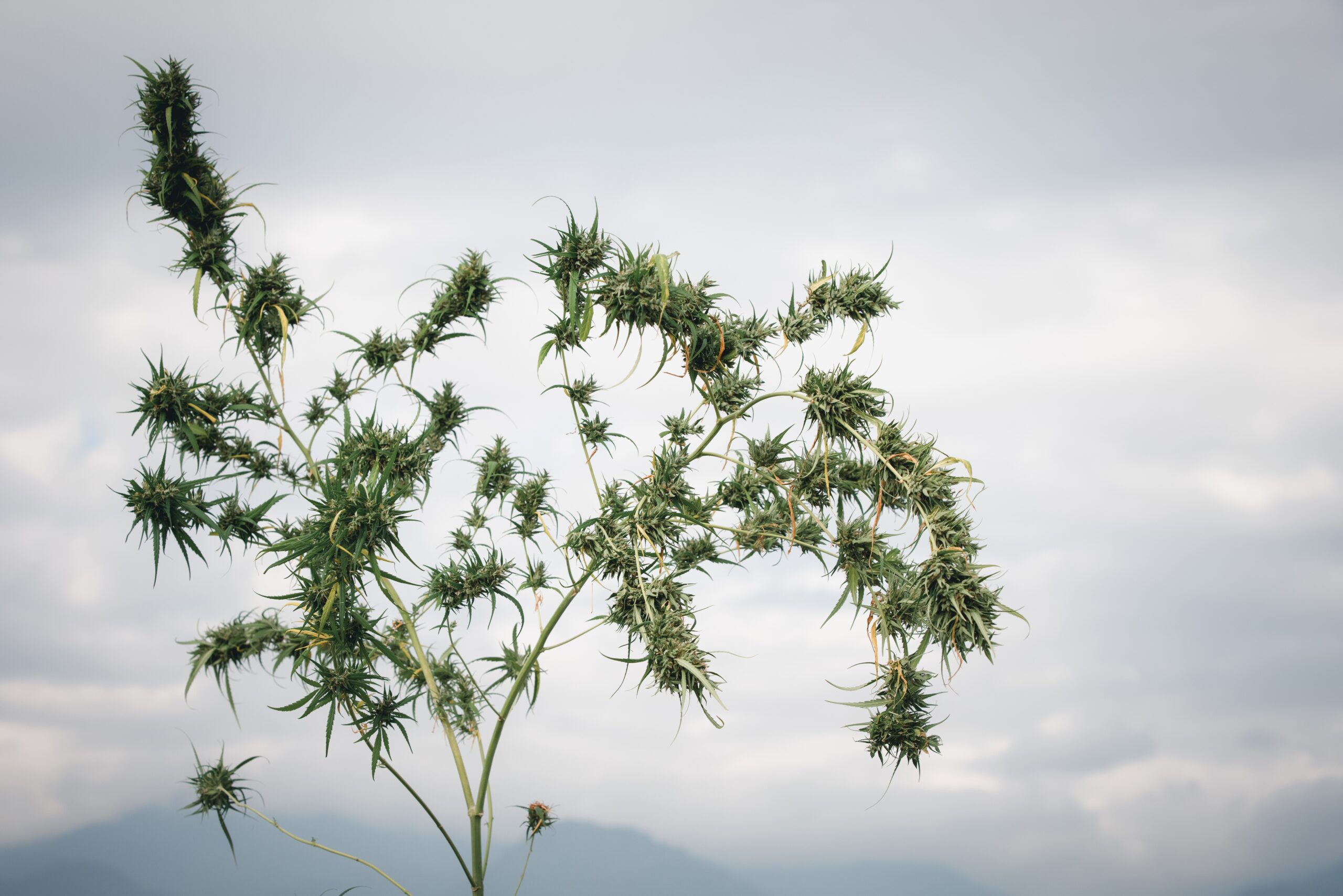
Diagnose High-Elevation Stress Before You Correct It
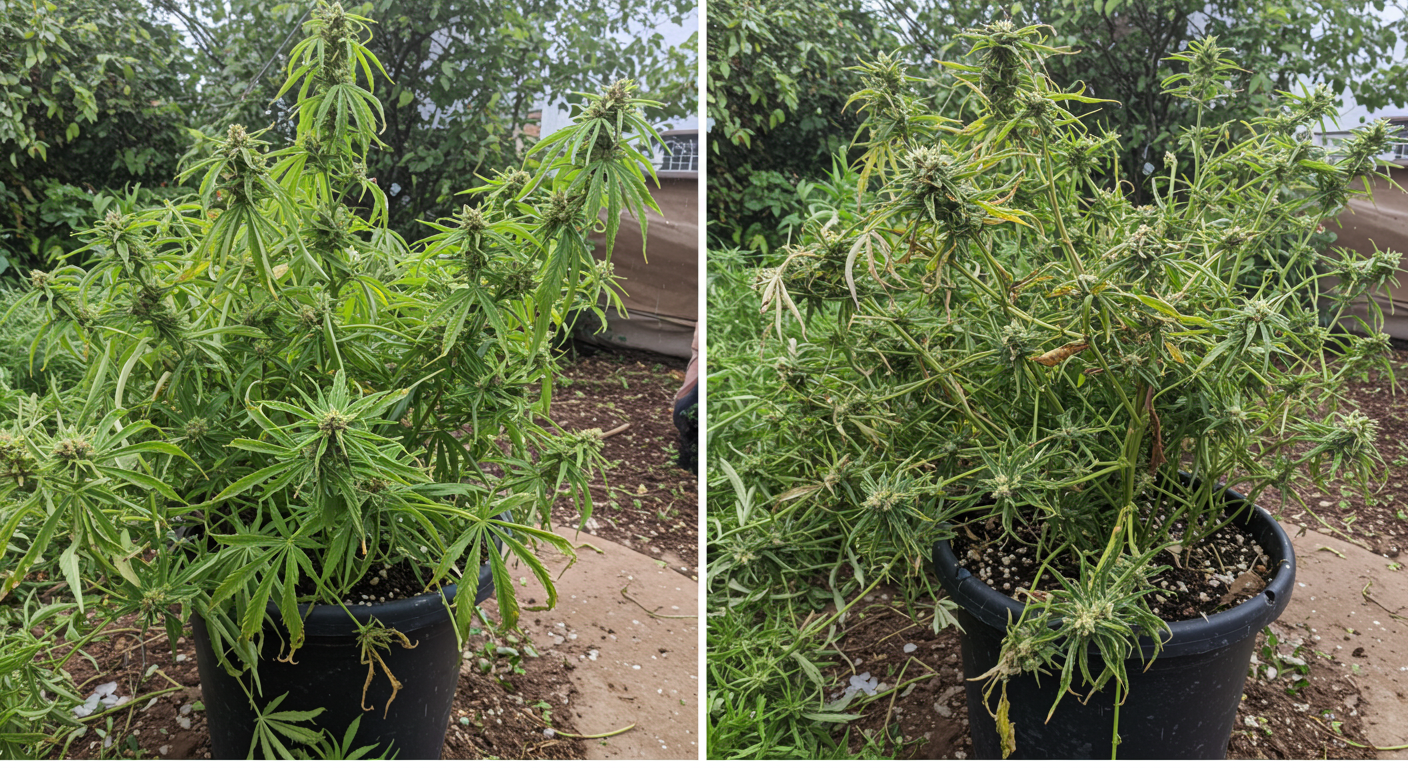
The biggest diagnostic mistake in a mountain garden is reacting to one visible symptom without asking what changed in the environment. Leaf curl, droop, pale growth, edge burn, stalled development, purple color, or small flowers can come from more than one pathway. High elevation adds enough variability that a correction based on appearance alone can easily make the problem worse.
Wilting can mean dry roots, cold roots, damaged roots, or high atmospheric demand
Check root-zone moisture first. If the medium is dry and the plant improves after correct irrigation, the diagnosis is straightforward. If the medium is wet and cold, adding more water can deepen an oxygen problem. If the root zone is adequately moist but the plant wilts only during bright wind, transpiration demand may temporarily exceed uptake.
Use the whole pattern: root-zone moisture, root-zone temperature, wind, sun, time of day, and recovery. Do not treat every midday droop as a request for more water.
Leaf-edge burn is not automatically fertilizer burn
Wind exposure, dry root zones, salt accumulation, root injury, and fertilizer concentration can all produce damaged margins. Measure source-water EC if relevant, inspect the wetting pattern, and compare exposed and sheltered leaves. Damage concentrated on the windward side suggests a different pathway from uniform burn across the entire plant.
Purple color is not a complete diagnosis
Some cannabis genetics naturally express purple stems, petioles, or flowers. Cold nights can also increase anthocyanin expression in some plants. Nutrient limitations can contribute to discoloration, but color alone is not enough to identify them. Look for growth rate, leaf position, root-zone pH, recent weather, and whether the symptom progresses after temperatures recover.
Small late flowers may reflect the season, not a missing booster
If the plant entered flowering late and the site is losing warmth and daily light, late-season flower development can slow. Adding a strong bloom product does not restore lost season length. Confirm that the root zone is functional and nutrition is reasonable, then decide whether the real constraint is the shrinking weather window.
Use a change-one-variable rule
When the plant is stressed, avoid changing irrigation frequency, fertilizer strength, shade, pruning, and container position all at once. Make the smallest correction that addresses the strongest evidence, then observe the response. Mountain weather already introduces many uncontrolled variables. Your management should reduce confusion, not add to it.
| Symptom | Possible Cause | How to Confirm | Corrective Action | Prevention |
|---|---|---|---|---|
| Midday droop, evening recovery | High solar/wind demand or insufficient available water | Check root-zone moisture, wind, and canopy temperature during the event | Correct irrigation if genuinely dry; reduce extreme exposure only if measurements support it | Build enough root volume and irrigation capacity before peak summer |
| Droop in wet, cold medium | Low root-zone oxygen or cold-limited root activity | Check moisture depth, drainage, and root-zone temperature | Stop unnecessary irrigation and improve drainage/aeration if structurally poor | Avoid overwatering during cold spells and use a suitable medium |
| Windward leaf-edge damage | Desiccating wind or mechanical exposure | Compare windward and sheltered canopy surfaces | Improve support and moderate destructive wind without sealing airflow | Map wind corridors before the plant becomes large |
| Repeated predawn cold injury | Frost pocket or inadequate finish window | Compare canopy-height minimum temperatures across zones | Move containers if possible, improve temporary protection, or use a better site next cycle | Map cold-air drainage before planting |
| Late-season slowdown | Cold nights, reduced light, root stress, or cultivar timing | Review flowering onset, weather trend, root-zone condition, and maturity progression | Correct only confirmed root-zone problems; avoid trying to fertilize away a seasonal limit | Select genetics with a safer finish margin |
“My leaves turn dark and purple after cold nights. Should I add more phosphorus?”
Question sent by: Lukas Becker, via email.
Not from color alone. Check whether the cultivar naturally colors, whether growth is actually slowing, whether root-zone pH and nutrition are in range, and whether the change follows cold nights. If the plant resumes normal growth after warmer conditions, the color may be a temperature or genetic response rather than a phosphorus shortage.
Know when the mountain has become the limiting factor
There is a point where management cannot replace season. If repeated frost protection, storm repairs, cold roots, weak drying weather, and an unfinished cultivar are all appearing together, the correct lesson may be to change the next cycle’s site, timing, or genetics. A successful high-elevation system is one that reduces rescue work each season because the original decisions fit the environment better.
Commission the Site Before Planting and Run a Weekly Mountain-Garden Routine
A high-elevation garden becomes easier when the most important uncertainties are tested before the plant depends on them. Commissioning means proving that the site, water system, support plan, and seasonal assumptions work in the real garden rather than on paper.
Pre-season: test the site through several weather patterns
Before permanent planting, record candidate-site temperatures through clear calm nights, windy days, and at least one cold event if the season allows. Map direct sun, note shadow from terrain and trees, observe snowmelt or spring drainage, and test water delivery. If a site is difficult to access after rain, snow, or wind, include that operational risk in the decision.
Check local legal requirements separately. High elevation does not reduce responsibility for plant counts, property permission, visibility rules, fire restrictions, water rights, structures, electrical work, wildlife protection, or safe access. Do not assume rural or remote land is automatically unrestricted.
Do not turn weather protection into a fire or structural hazard
Mountain wind, dry vegetation, temporary fabrics, heaters, extension cords, and improvised structures can create serious risk. Follow local fire restrictions and building rules. Do not use open flames, homemade heaters, unsafe wiring, or unstable frames around a cannabis garden.
Before planting: run a seven-point commissioning check
- Season: Confirm a realistic frost-free window and an early-frost scenario.
- Microclimate: Compare at least one candidate site against a reference point for minimum temperature, wind, and sun.
- Root zone: Confirm drainage, water-holding capacity, and whether the medium warms and dries predictably.
- Water: Run the irrigation system at full operating distance and confirm actual delivered flow.
- Support: Install the basic wind/branch support before the plant is too large to work around.
- Weather response: Know what you will do for frost, hail, wind, or an inaccessible site.
- Finish: Choose genetics with enough seasonal margin that one early cold event does not end the plan.
Weekly: inspect the same variables in the same order
Consistency makes mountain observations useful. Start with the weather record, then inspect root-zone moisture, irrigation output, wind damage, support tension, canopy exposure, pest or disease signs, and flowering progress. Photograph the same representative branches if the plant is entering flower. A repeated sequence makes it easier to notice change before it becomes damage.
During stable summer weather, the routine may be short. When a cold front, hail warning, heat pulse, or strong wind event approaches, increase inspection frequency. Do not wait for the weekly visit if the site conditions can materially change in a few hours.
Keep a simple mountain event log
A useful log does not need to become a laboratory notebook. Record the date, minimum and maximum canopy-height temperature, notable wind or hail, irrigation volume or duration, root-zone moisture observation, and one sentence about plant response. During flowering, add the stage and any change in the finish window.
After several weeks, patterns become visible. You may discover that one wind direction causes most branch damage, one container dries much faster, the cold pocket only appears on clear calm nights, or a particular section of the garden loses direct sun earlier than expected in late season. Those findings are the real value of monitoring.
Recheck after every major environmental event
After hail, inspect wounds and support. After heavy rain, check root-zone drainage and whether the plant is leaning. After a cold night, compare minimum temperatures and tissue response. After several hot, windy days, verify irrigation uniformity and salt accumulation. The event itself becomes a field test of the system.
- Review the next 7 to 10 days for frost, hail, wind, and unusually hot clear-sky periods.
- Record canopy-height minimum and maximum temperature when weather risk is increasing.
- Check the coldest mapped zone, not only the convenient sensor near the house.
- Confirm root-zone moisture at more than the surface.
- Verify irrigation flow, emitters, hoses, or tank level.
- Inspect stakes, cages, trellis, and windward branches.
- Look for abrasion, hail wounds, broken stems, or leaf-edge desiccation.
- Check whether containers are overheating in direct afternoon sun.
- During flowering, update the earliest, likely, and latest finish window.
- Compare late-season maturity against the real weather window instead of a catalog date.
- Change one management variable at a time when diagnosing stress.
- Record what worked so the next season needs less emergency intervention.
What a well-matched high-elevation garden looks like
A successful mountain cannabis garden does not look like a constant fight against altitude. The plant sits in a microclimate that avoids the worst frost pocket, the root zone can survive both cold mornings and bright windy afternoons, the support system is ready before flowers become heavy, and the cultivar is progressing toward maturity with weather margin still available.
The strongest sign that the plan is working is not a specific temperature or elevation number. It is predictability. Water use follows a pattern you understand. Cold nights occur where the map predicted. Wind damage is controlled. Flowering begins early enough that the finish window remains realistic. When the mountain does something unusual, you already know which measurement to check first.
Share this article
A quick overview of the topics covered in this article.
Follow us
Latest articles
September 2, 2026

September 2, 2026
September 2, 2026

September 2, 2026