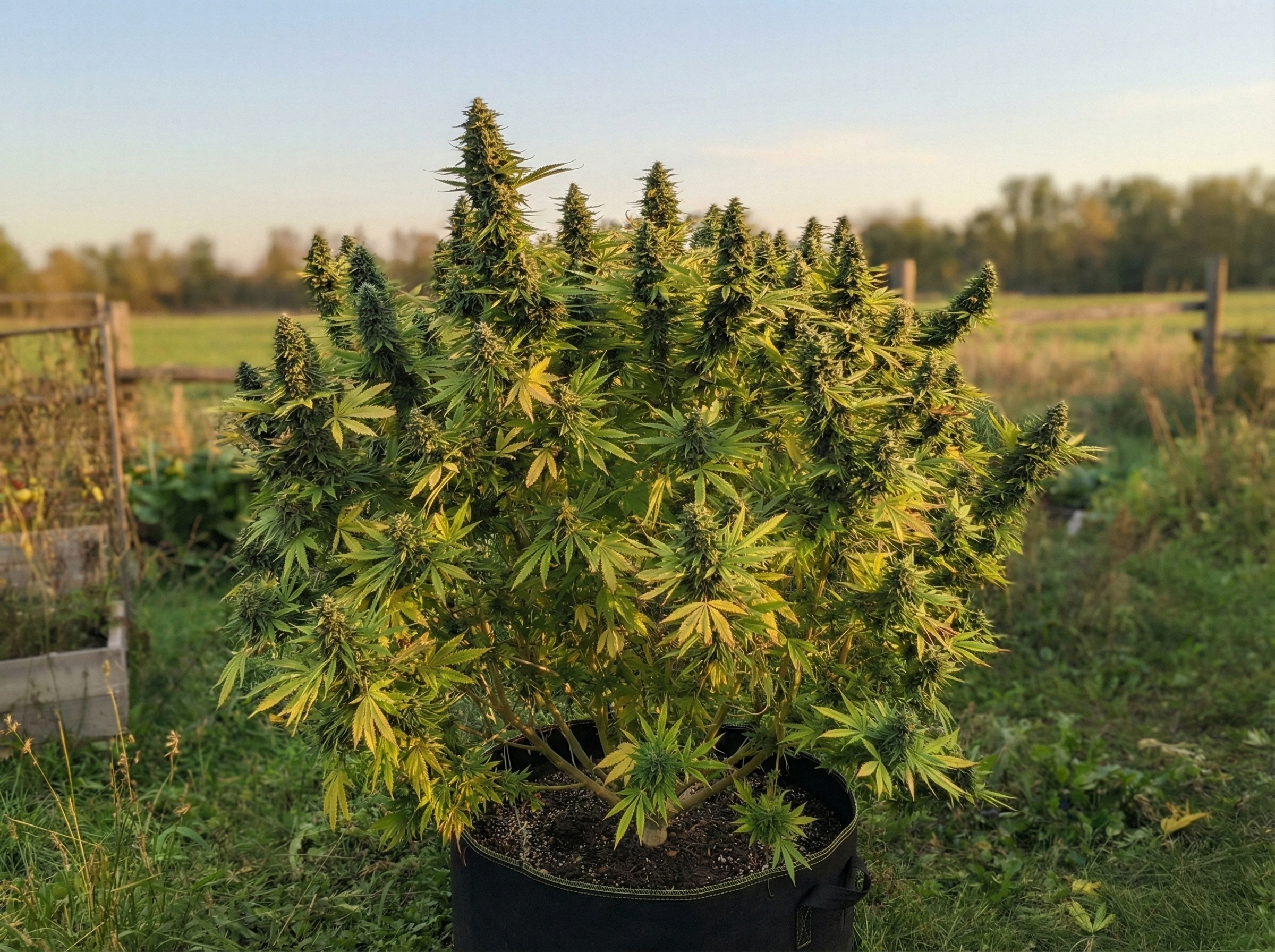

Outdoor Cannabis in Humid Subtropical Climates
Humid subtropical climates can grow vigorous outdoor cannabis, but they punish slow drying. Warm nights, high dew points, frequent rainfall, dense summer vegetation, still pockets of air, and late-season storms can keep leaves and flowers wet long after the rain has stopped. In this climate, the central question is not simply whether cannabis can tolerate heat and humidity. It is whether your site, root zone, canopy, and seasonal timing can return to a dry, oxygenated state quickly enough after each wet period.
A productive site may receive excellent sunlight and still be a poor flowering site if dawn leaves the canopy dripping, the soil stays saturated for days, or the garden sits behind a wall that blocks the morning breeze. Conversely, a slightly more exposed site with reliable drainage and faster morning dry-down may carry flowers through a difficult wet season with much less disease pressure.
This resource is therefore built around one practical rule: manage the duration of wetness, not humidity as a single number. Relative humidity matters, but so do dew point, rainfall timing, canopy density, wind, soil drainage, plant spacing, irrigation timing, and how quickly dense flowers dry after sunrise.
Quick Definition
Leaf wetness duration is the number of consecutive hours that free water remains on plant surfaces. In many plant disease systems, the length of that wet period is more useful than a single relative-humidity reading because spores often need enough continuous surface moisture to germinate and infect.
In This Resource
- Start With the Real Humid-Subtropical Problem
- Map Night Humidity, Dew, Rain, Airflow, and Drainage
- Choose the Seasonal Window and Plant Architecture Around the Wettest Weeks
- Build a Site and Root Zone That Shed Water Quickly
- Manage Flowering Canopies Through Dew, Downpours, and Storm Cycles
- Diagnose Moisture Problems Before You Reach for a Correction
- Commission the Garden Before Flowering and Run a Weekly Humid-Weather Routine
Start With the Real Humid-Subtropical Problem: Warm Nights That Do Not Dry the Canopy
The first decision is whether your site can dry. Humid subtropical climates are often described with monthly rainfall and average relative humidity, but those averages hide the periods that matter most to a flowering cannabis plant. A garden can have a sunny afternoon and still spend most of the night near saturation. If the temperature falls toward the dew point, moisture condenses on leaves and flowers. If sunrise is followed by shade, weak air movement, or another shower, the wet period continues.
That sequence is more dangerous than a brief afternoon humidity spike. Flower diseases are not responding to a weather-app percentage in isolation. They respond to moisture at the tissue surface, temperature, susceptible plant tissue, pathogen presence, and enough time for infection to develop.
Think in Wet-to-Dry Cycles, Not Average Humidity
For planning, divide each day into a wet-to-dry cycle. Ask when the canopy first becomes wet, why it becomes wet, and when it becomes fully dry again. Rain may start the cycle. Dew may start it even when no rain falls. Irrigation can extend it. Shade and blocked airflow can keep it going.
Record four times during several representative days: when rain or dew begins, when direct morning light reaches the canopy, when visible surface moisture disappears, and when the interior of dense flower clusters feels dry rather than cool and damp. You are not trying to build a laboratory disease model. You are learning whether your garden typically dries in a short morning window or carries moisture deep into the day.
Field Advice: In a humid subtropical garden, the best-looking afternoon is often less informative than the worst-looking hour after sunrise. Walk the site early enough to see where dew is still sitting.
Humidity Is Not the Same as Condensation
A very humid night does not guarantee visible dew on every leaf. Condensation depends on surface temperature as well as the surrounding air. Leaves and flower surfaces can radiatively cool below the measured air temperature, especially under clear skies, so moisture may condense even when a nearby sensor never reports exactly 100% RH. The reverse can happen under wind or cloud cover, when surfaces remain warmer and stay visibly dry despite high ambient humidity.
This is why a subtropical field log should contain both instrument data and a plant-surface observation. If the logger says 93% RH but the inner canopy is dripping at dawn, record the wet canopy. If the logger says 97% RH and flowers are dry because steady wind prevented condensation, record that too. Over time, those paired observations teach you how your specific garden translates weather into actual tissue wetness.
Warm Nights Change the Meaning of High RH
Relative humidity rises as air cools even if the actual amount of water vapor changes very little. That is why a warm, humid afternoon can become a near-saturated night without a major weather front. Dew point helps explain the moisture load because it describes the temperature at which the air would reach saturation. When nighttime air temperature approaches the dew point, dew formation becomes more likely on exposed plant surfaces.
You do not need to manage an outdoor garden to an indoor VPD chart. Outdoors, wind, radiant cooling, sun exposure, rainfall, leaf temperature, and boundary-layer conditions change too quickly for a single VPD target to control the site. Use temperature, RH, and dew point as context, then confirm what happened on the plant itself.
Dense Flowers Can Be More Humid Than the Air Around Them
A cannabis canopy has multiple climates at once. Air outside the row can move freely while the center of a dense flower remains humid. Research measuring cannabis inflorescences has found substantially higher relative humidity inside flowers than in the surrounding air, with the greatest internal humidity occurring in the morning. That is exactly the time when subtropical dew and overnight moisture can be slowest to leave.
This is why a weather station reading of 60% RH at midday does not prove the flowers are dry. Late in flowering, gently inspect representative flowers from different canopy positions. Look for trapped moisture, collapsed brown tissue, unusual soft spots, detached sugar leaves, or sections that stay cool and damp after the exterior has dried.
Warning
Do not squeeze dense flowers repeatedly to check moisture. Rough handling creates wounds and can move spores between sites. Inspect gently, use clean hands or gloves, and sanitize tools between suspicious plants.
Botrytis Is a Major Risk, but It Is Not the Only Moisture Problem
Gray mold or bud rot caused by Botrytis species is one of the best-known flower diseases in cannabis. Humid or wet conditions favor pathogen development, and dense mature inflorescences can create a protected humid microclimate. In field production, cool wet weather near harvest can be especially damaging.
Powdery mildew behaves differently. It can be favored by high humidity without requiring free water on the leaf surface in the same way many foliar pathogens do. Root and crown problems add another layer. A site that receives repeated heavy rain can remain oxygen-limited even while the canopy looks dry. Treat these as separate moisture pathways rather than one generic “humidity problem.”
Do
Track canopy wetness, root-zone saturation, and flower condition as separate observations.
Avoid
Assuming every disease-looking symptom is caused by high RH or that reducing irrigation will solve a wet canopy.
Grower Question
“It is humid every night where I live. Does that mean outdoor flowering is automatically a bad idea?”
Question sent by: Ethan Brooks, via email.
No. Persistent humidity raises the management burden, but the practical result depends on how quickly your site dries, how much rain falls, whether the root zone drains, how dense the canopy becomes, and whether flowering overlaps the wettest part of the year. Measure those factors before deciding.
Map Night Humidity, Dew, Rain, Airflow, and Drainage
Before selecting the final planting position, build a moisture map. A humid subtropical property can contain very different microclimates only a few meters apart. One location may receive a clean morning breeze while another stays still behind a hedge. One bed may drain rapidly while a low corner remains wet after every storm.
Use One Reference Point and Several Risk Points
Choose one open, representative location as a reference. Then identify the places most likely to stay wet: behind a solid fence, beside dense vegetation, at the bottom of a slope, below roof runoff, near a downspout, beside a wall, under tree shade, or in a depression where water collects.
Use the same type of temperature/RH logger at the reference and risk points when possible. Mount sensors at comparable heights and protect them from direct rain and solar heating according to the device instructions. Logging at 10- to 30-minute intervals is usually enough to show the overnight shape of temperature and humidity without creating an unreadable dataset.
| Observation | What to Record | Why It Matters | Red Flag |
|---|---|---|---|
| Night RH and temperature | Overnight trend, not one reading | Shows how long the site remains near saturation | Risk point stays wetter and cooler than reference until late morning |
| Dew | First visible moisture and dry-off time | Approximates practical leaf-wetness duration | Flowers or leaves remain wet well after sun reaches the property |
| Rain | Start, stop, intensity, total if available | Separates storm wetness from dew wetness | Frequent events arrive before the canopy fully dries |
| Wind | Direction and whether leaves actually move | Air exchange speeds drying | Still pocket behind structure or vegetation |
| Drainage | Ponding and time for root zone to lose saturation | Roots require oxygen after rainfall | Standing water or saturated soil persists into the next day |
| Morning sun | Time direct light reaches canopy | Radiant heating accelerates dry-down | Dense shade during the first hours after sunrise |
Record Rainfall Pattern, Not Just Total Rain
Two weeks can receive the same total rainfall and create very different disease pressure. One may receive a single heavy storm followed by four dry sunny days. Another may receive light rain every afternoon with humid nights between events. The second pattern can be harder because the canopy has less uninterrupted time to dry and the root zone may never complete a normal wet-to-ready cycle.
When possible, record rainfall by event and note the recovery interval between events. A simple field log might read: 18 mm overnight, canopy dry by 10:30 a.m., root zone still wet next afternoon. Another entry might read: 4 mm at 4:00 p.m., dew overnight, new shower at 8:00 a.m., flowers still damp at noon. The second sequence immediately tells you why a weekly rainfall total is not enough.
Walk the Property After Real Rain
A drainage test with a hose can reveal obvious problems, but a subtropical downpour is better evidence. After a meaningful storm, inspect the site while rain is still falling, again shortly after it stops, and once more the next morning. Mark where water flows, where it ponds, which containers sit in runoff, whether mulch has washed against stems, and whether soil has splashed onto lower foliage.
Check raised beds from both sides. A bed may look dry at the surface while water is perched over compacted subsoil below. Containers should drain freely without sitting in saucers or depressions that refill from surrounding runoff.
Recheck the Airflow Map as Vegetation Fills In
A spring airflow map can become obsolete by midsummer. Hedges leaf out, weeds grow taller, neighboring crops close their rows, and the cannabis canopy itself becomes a windbreak. A position that felt open at planting can become a sheltered pocket by flowering.
Repeat a simple airflow walk every few weeks. Use lightweight flagging or observe leaf movement at several heights without relying on one handheld wind reading. Note whether the air reaches the lower canopy, whether two rows block each other, and whether the prevailing breeze enters from a direction now blocked by vegetation. Trim or manage legal surrounding vegetation where appropriate, but do not clear protected habitat or neighboring property simply to increase airflow.
Measure Morning Dry-Down Directly
Leaf wetness sensors can provide useful relative data, but you can learn a great deal with disciplined observation. On several humid mornings, inspect the same leaves and flower sites at sunrise, 30 minutes later, one hour later, and then hourly until dry. Use representative positions: top exposed flower, interior flower, lower shaded branch, and foliage near the center of the plant.
Write the dry time next to each position. If the top is dry at 8:00 a.m. but the interior flower remains damp until 11:00 a.m., the interior is the management problem. That difference can guide spacing, selective pruning, support, and site choice more effectively than one ambient RH number.
Remember: The plant does not experience the weather station. It experiences the microclimate at each leaf, flower, stem, and root.
Map Rain Splash and Runoff Contamination
Heavy rainfall can move soil particles, plant debris, and pathogens. Keep lower flowers and leaves away from bare soil where possible. Note where water from roofs, paths, neighboring beds, compost areas, or animal traffic crosses the grow area. Do not position cannabis where contaminated runoff can enter the root zone.
If a water source changes color, smell, or turbidity after storms, treat that as a separate water-quality issue. Do not assume rain automatically improves irrigation quality.
Grower Question
“My weather app says 95% humidity every morning, but the plants look fine by lunch. What should I measure next?”
Question sent by: MapleGrower, via Facebook page.
Measure how long the canopy and flowers actually remain wet, especially in the interior and lower shaded zones. Compare that with morning sun and air movement. The duration of wetness and speed of dry-down are more actionable than the peak RH alone.
Choose the Seasonal Window and Plant Architecture Around the Wettest Weeks
Humid subtropical climates often have long growing seasons, but a long season is not automatically a useful flowering season. The challenge is matching reproductive development to the portion of the year when the plant can finish before persistent rain, tropical systems, cool wet fronts, or repeated heavy dew become unmanageable.
Build a Local Weather Calendar Before a Cannabis Calendar
Start with several years of local weather normals and recent observations. Mark the months with the highest rainfall, the highest nighttime dew points, tropical-storm exposure, and the first meaningful cool fronts. Then overlay day length and the likely photoperiod response of the cultivar.
The goal is not to predict a harvest date months in advance. It is to identify whether the likely flowering period overlaps your most difficult moisture window. A cultivar that flowers late into the wettest weeks may demand much more intervention than one that reaches maturity earlier, even if both grow vigorously during summer.
Use the Wet Season as a Risk Window, Not a Fixed Calendar
Many humid subtropical regions have a recognizable rainy season, but onset and intensity shift from year to year. Tropical systems, stalled fronts, and local convection can produce unusually wet periods outside the statistical peak. Build your plan around a risk window rather than assuming the same dry and wet dates every season.
For each year, compare the current pattern with the long-term normal. If the season is already running wetter than usual, shorten the interval between canopy inspections and reassess whether late-flowering cultivars still fit the site. If the year is unusually dry, do not abandon disease monitoring; warm humid nights and isolated storms can still produce long wetness periods.
Do Not Use Latitude as a Harvest Date
Latitude determines the astronomical day-length pattern, but it does not tell you exactly when a specific cannabis genotype will begin flowering or finish. Cultivars differ in critical photoperiod and developmental rate. Twilight and artificial night lighting can further modify the effective dark period.
Use the site’s latitude to understand the seasonal light curve, then verify flowering from the plant. Once true reproductive development appears, begin tracking the finish window from observed morphology rather than from a generic calendar.
Establishment Timing Affects the Canopy You Carry Into the Wettest Months
Planting earlier is not automatically safer. A longer vegetative period can produce a larger, denser canopy by the time humidity and rainfall peak. Planting later can reduce final size but may also shift flowering into a less favorable weather window. The right timing is therefore a compromise among photoperiod, cultivar response, root establishment, expected canopy size, and the local wet-season curve.
For a first season, resist the urge to maximize plant size before you understand the site. A moderately sized plant that can be inspected, supported, and dried after rain is often easier to manage than a huge plant with interior zones you cannot see or reach.
Plant Architecture Can Change Drying Time
In humid climates, a plant’s architecture affects moisture behavior. Very dense branching and tightly packed foliage reduce air exchange inside the canopy. Later, dense inflorescences create their own humid microclimate. This does not mean you should strip plants aggressively. Excessive defoliation can remove productive leaf area, create wounds, expose flowers abruptly to harsh sun, and stress the plant.
The better target is functional spacing. Remove dead, damaged, diseased, or clearly unproductive interior material. Keep branches supported so they do not collapse into each other after rain. Maintain enough separation that air can move through the canopy and sunlight can reach wet surfaces during morning dry-down.
Important
Do not choose a cultivar solely because a seller describes it as “mold resistant.” That phrase is not a standardized disease-resistance rating. Use documented local performance when available and still manage canopy moisture.
Late Flower Deserves Its Own Weather Threshold
Vegetative plants and early flowers can often recover from rain with little consequence when the canopy dries quickly. Dense late flowers are different. Their interior can stay wet after the surface looks dry, and any damaged tissue can become an entry point for decay.
As flowers gain mass, shorten your inspection interval after rain. A weather pattern you tolerated in early flower may be unacceptable near maturity. This is also when the finish-window plan should become dynamic: crop maturity and disease pressure must be weighed together rather than following a target date blindly.
Build a Site and Root Zone That Shed Water Quickly
A humid subtropical grow can fail from below before anything rots above. Repeated rainfall fills pore space with water. If the root zone drains slowly, oxygen diffusion falls and roots lose the conditions needed for normal respiration. The plant may wilt in wet soil, use less water, and become more vulnerable to secondary problems.
Native Ground: Test Drainage Before You Amend
Do not improve a poorly draining site by simply digging a deep hole and filling it with loose potting mix. In heavy native soil, that can create a basin where water collects around the amended root zone. Read the slope, soil texture, compaction, and where storm water moves first.
Where legal and appropriate, a broad raised planting area can be safer than a deep isolated hole in chronically wet ground. The exact design depends on local soil, rainfall intensity, erosion risk, and access. If the site sits in a drainage path or remains saturated after storms, select another location rather than trying to engineer around a fundamentally bad hydrologic position.
Raised Beds and Mounds Can Improve Drainage, but Only if Water Has Somewhere to Go
Elevating the root zone can help when the native surface drains slowly, but a raised bed does not repeal the site’s hydrology. If runoff surrounds the bed or the underlying soil remains saturated, the lower profile may still stay wet. The bed also needs erosion control so repeated heavy rain does not wash fine particles and nutrients away.
During commissioning, dig a small observation point at the edge of the root zone rather than disturbing major roots. Compare surface appearance with moisture below. If the upper layer looks dry while the lower layer remains saturated day after day, modify drainage or site choice before flowering makes relocation difficult.
Containers Need Drainage and Storm Stability
Containers give you control over the medium, but they can create other subtropical problems. Drainage holes can become blocked by ground contact, roots, fabric folds, debris, or saucers. Tall plants can tip when the medium is saturated and wind loads increase. Lightweight containers can shift in tropical squalls.
Before the wet season or flowering, run a full irrigation and verify that every container drains freely from multiple outlets. Check the support system while the medium is wet, because a saturated container is heavier and branches carry more wind load after rain.
| Root-Zone Question | Useful Check | Humid-Climate Goal | Common Mistake |
|---|---|---|---|
| Does water leave the site? | Inspect during and after a real storm | No persistent ponding around roots | Judging drainage from dry-season appearance |
| Does the container drain? | Timed full irrigation | Even drainage without blocked outlets | Leaving fabric pots in standing runoff |
| Does soil re-aerate? | Moisture at depth over following days | Wet-to-ready cycle returns predictably | Adding irrigation because the surface looks dry |
| Does rain splash soil onto plants? | Inspect lower canopy after storm | Minimal splash and debris | Bare soil directly beneath low branches |
| Is runoff clean? | Trace flow path | No contaminated upstream source | Allowing roof or path runoff into the bed |
Container Placement Matters as Much as the Container Material
A breathable fabric pot cannot drain correctly if its base is pressed into saturated clay or sitting in a shallow depression. Raise containers on a stable, load-bearing, free-draining surface where local rules allow, while keeping them secure against wind. Avoid narrow supports that create unstable tipping points beneath tall plants.
Check the area between containers as well. Dense grass and weeds can trap humid air around the lower canopy and make inspection difficult. Maintain a clean, legal working zone that allows air movement and lets you see drainage outlets, fallen leaves, pests, and standing water.
Mulch Helps, but Thick Wet Mulch Can Hide Problems
Organic mulch can soften rain impact, reduce soil splash, stabilize moisture, and protect the soil surface. In very humid conditions, however, a thick layer packed against the stem can remain wet and conceal crown problems. Keep mulch appropriate to the site and maintain a small clear zone around the main stem rather than piling wet organic material against it.
Routine Irrigation Should Not Extend the Wettest Part of the Day
When natural rainfall is frequent, irrigation must respond to the root zone rather than the calendar. Water at the root zone, not across flowers. If irrigation is needed, earlier daytime application usually gives you more time to observe drainage and allows incidental surface moisture to dry before night.
Do not compensate for humid air by withholding all water. High humidity can reduce transpiration, but sunny subtropical days can still create substantial water demand. Check soil or container moisture at depth and compare plant water use. The objective is a root zone that is adequately hydrated and then regains air, not a permanently dry or permanently saturated medium.
Grower Question
“It rained yesterday, but the top of my fabric pot is already dry. Should I water again?”
Question sent by: Olivia Carter, via contact form.
Not from the surface alone. Check the pot’s weight and moisture deeper in the root zone. In humid weather the top can dry while the center remains heavy and oxygen-limited. Irrigate only when the active root zone shows that it is ready.
Manage Flowering Canopies Through Dew, Downpours, and Storm Cycles
Flowering is when humid subtropical management becomes less forgiving. More biomass means slower air exchange, flowers retain water more easily, branches become heavier, and repeated storms can arrive with little recovery time between them.
Use Support to Preserve Air Gaps, Not Just Prevent Breakage
Trellis, stakes, or other legal garden supports are often discussed as structural tools, but in a humid climate they also protect drying space. Rain-heavy branches can bend into neighboring branches and create a dense wet mass. Support should keep the canopy open enough that wet flowers do not remain pressed together.
Install major support before late flower. Adding rigid hardware deep inside a mature wet canopy is difficult and can damage flowers. After high wind or heavy rain, inspect attachment points, broken branches, and any area where flowers shifted into contact.
Insect Injury Can Turn a Moisture Problem Into a Rot Problem
Humidity is only part of the disease triangle. Wounds caused by caterpillars, boring insects, broken stems, rubbing branches, or rough handling can provide damaged tissue where decay begins more readily. In late flower, inspect for insect feeding and frass at the same time you inspect for moisture-related browning.
Do not diagnose every interior brown patch as pure humidity damage. If the tissue surrounds feeding injury or a broken stem, note the initiating damage. Integrated pest monitoring and moisture management support each other because preventing wounds can reduce the number of vulnerable entry sites during wet weather.
After Rain, Inspect in a Consistent Order
Start at the top and work down. Look first for physically damaged or folded flowers, then for interior flower moisture, dead sugar leaves, brown bracts, gray growth, stem injury, and branches resting on other branches. Finish at the lower canopy and root zone where splash, debris, and ponding may be present.
If you find suspicious tissue, stop moving through healthy plants with the same gloves or tools. Isolate the inspection process. Remove clearly diseased material only when you can do so safely and legally, bag it rather than dropping it under plants, and clean tools afterward.
Pro Tip: Photograph the same representative flower sites after each significant rain. A side-by-side sequence makes small color and structure changes easier to notice than memory alone.
Do Not Blow Contaminated Air Through the Garden Without Thinking
Outdoor air movement is usually beneficial for drying, but improvised high-velocity fans are not automatically a solution. A fan placed on wet ground can blow soil, debris, and spores through the canopy. Electrical equipment outdoors also introduces weatherproofing and shock hazards.
Prefer site-level airflow from plant spacing, open orientation, and removal of airflow barriers. If powered equipment is legally and safely used in a protected structure, it must be outdoor-rated and installed according to electrical codes. This resource does not recommend improvised extension-cord fan setups in rain.
Sanitation Is Most Valuable Before the Garden Looks Diseased
Dead leaves, broken flowers, pruned material, and storm debris remain wet easily and can support pathogen survival. Remove them from beneath plants rather than allowing a damp litter layer to accumulate. Keep pruning tools clean and avoid moving directly from a suspicious plant to healthy plants without sanitation.
Sanitation also means minimizing unnecessary wounds. Do major structural pruning before the most disease-sensitive late-flower period when possible. During wet weeks, avoid handling plants simply because you are anxious about humidity. Every touch is not helpful intervention.
Temporary Rain Cover Must Still Vent
A properly designed rain shelter can reduce direct flower wetting, but a low plastic cover with closed sides can create a greenhouse of warm saturated air. It may also increase wind load dramatically during storms. Any protective structure needs legal approval where required, structural stability, adequate headroom, and open ventilation.
Do not let plastic touch flowers. Condensation on the underside can drip back onto the canopy. After a storm, inspect whether the shelter actually shortened wetness duration. If the interior remains humid longer than the uncovered reference area, the cover is solving the wrong problem.
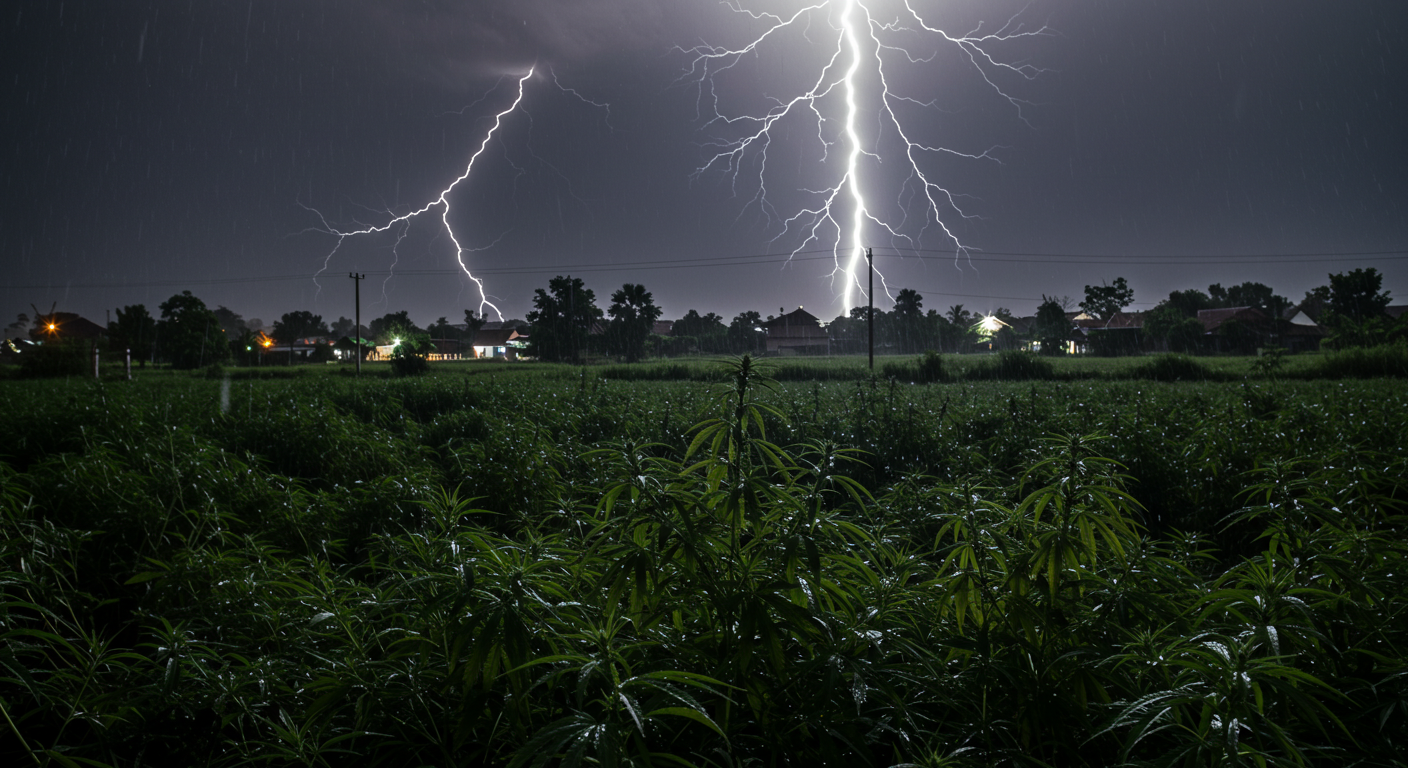
Tropical Storms Change the Decision From Drying to Crop Safety
When severe weather is forecast, do not prioritize saving every branch over personal safety. Secure loose legal garden materials before conditions deteriorate, confirm drainage paths, and avoid working outdoors during dangerous wind, lightning, or flooding.
After the event, wait until access is safe. Then inspect structural damage, standing water, broken branches, contaminated floodwater, and electrical hazards before touching the plants. Floodwater is not ordinary rainwater; it may contain sewage, chemicals, fuel, animal waste, or other contaminants.
Safety Note
Do not consume or process cannabis that has been contaminated by floodwater, sewage, unknown chemicals, or visible mold. When contamination is uncertain, prioritize health and local public-health guidance over salvaging the crop.
Late-Flower Weather Can Move the Finish Decision
If a mature crop is approaching its finish window and a prolonged wet pattern is arriving, the decision becomes a risk comparison. Immature flowers do not become mature simply because rain is forecast, but waiting has a cost when disease pressure is increasing rapidly.
Use the separate finish-window procedure to compare actual flower maturity with the forecast, site dry-down, existing disease signs, and how much wet weather is expected. Do not harvest solely because one rainy day appears in the forecast, and do not ignore developing rot because a calendar says two more weeks.
Diagnose Moisture Problems Before You Reach for a Correction
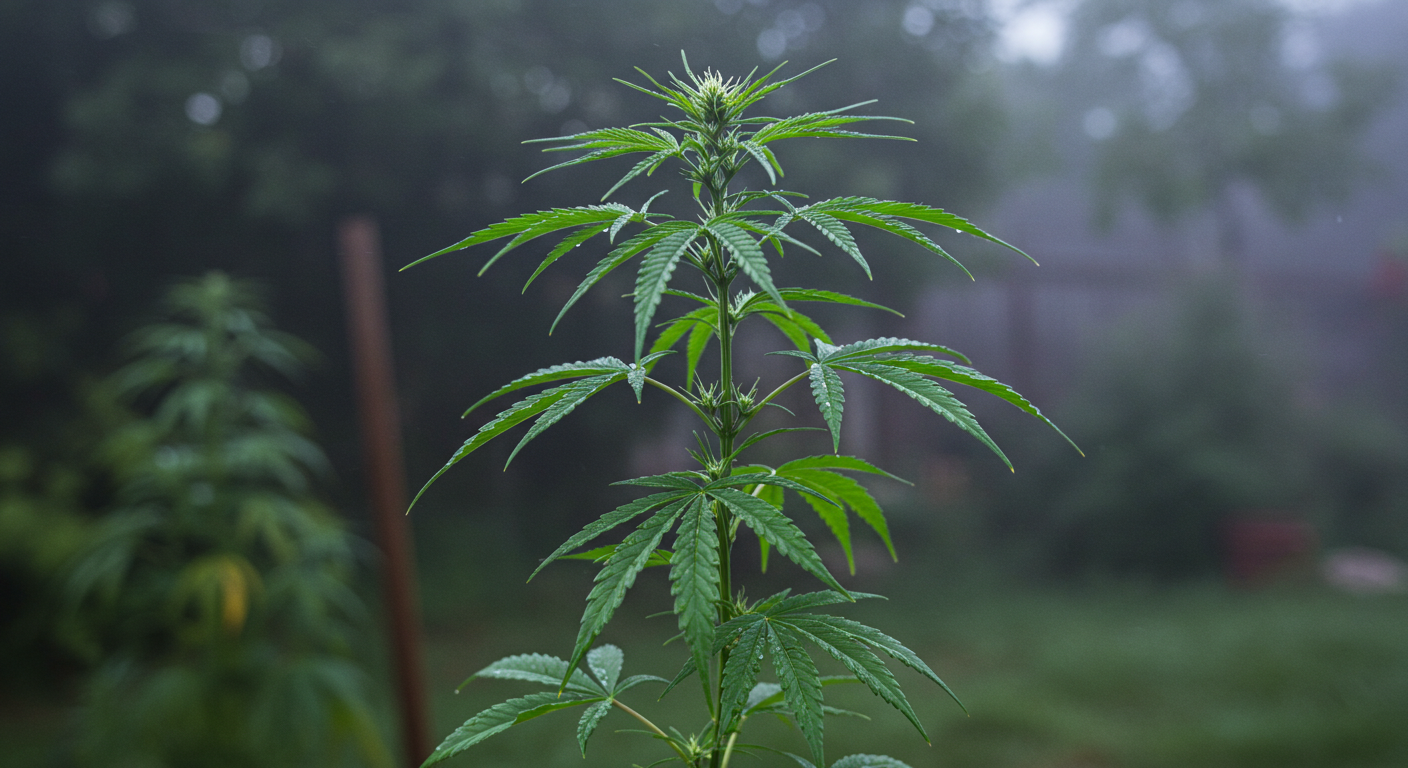
Humid subtropical grows generate many look-alikes. Leaves can droop from saturated roots, heat, drought, vascular disease, or physical storm damage. Brown flower tissue can result from fungal decay, caterpillar injury, mechanical breakage, or natural senescence. White material can be powdery mildew, residue, trichomes, or dust.
The safest workflow is observe, isolate, measure, then act.
Use a Diagnosis Confidence Ladder
Start with what you can confirm directly. Level one is environment: was the tissue wet for a long time, was the root zone saturated, or was there storm injury? Level two is pattern: one flower, one branch, one low zone, or the whole garden? Level three is tissue evidence: gray sporulation, expanding white colonies, soft decay, vascular discoloration, or clearly damaged roots. Level four is laboratory or professional diagnosis when the problem matters enough to justify it.
This ladder prevents a common mistake: choosing a treatment because one symptom resembles a photo online. A diagnosis becomes stronger when environment, pattern, and physical signs point in the same direction.
Bud Rot: Look Beyond the Exterior
Bud rot often begins where moisture and susceptible tissue remain protected. Watch for a single sugar leaf that dies abruptly while surrounding leaves remain healthy, localized browning within a flower, soft collapsing tissue, gray fungal growth, or sections that separate too easily.
Do not smoke, vaporize, or process visibly moldy flowers. Removing an exterior patch does not prove the remaining material is safe. Mold and associated contamination can extend beyond what is obvious to the naked eye.
Powdery Mildew Is Not a “Wet Leaf Only” Disease
Powdery mildew can develop under high humidity even without long periods of free leaf water. That means a garden that dries quickly after rain can still develop powdery mildew if the canopy is dense, susceptible material is present, and humidity remains favorable.
White patches that expand across leaves, petioles, stems, or flower bracts deserve prompt identification. Do not spray an unknown home remedy onto flowering cannabis. Product legality, residue limits, crop labeling, harvest interval, and inhalation safety all matter.
Wet Roots Can Mimic Drought
A plant with oxygen-limited or diseased roots may wilt even though the soil is wet. Before irrigating a wilted plant, check moisture at depth. If the root zone is saturated and heavy, more water is not a rescue.
Compare neighboring plants. If symptoms follow the lowest part of a bed, the containers closest to runoff, or one blocked drainage zone, the pattern points toward root-zone conditions rather than an isolated nutrient deficiency.
| Symptom | Possible Moisture-Related Cause | Confirm With | Do Not Assume |
|---|---|---|---|
| Single dead sugar leaf in dense flower | Interior flower decay | Gentle interior inspection | Normal late-flower fade |
| White expanding patches | Powdery mildew | Pattern and diagnostic examination | Trichomes or water spots |
| Wilt in wet soil | Low root oxygen or root disease | Moisture at depth, drainage, root condition | Underwatering |
| Brown flower after storm | Rot or physical injury | Texture, spread, fungal signs, wound location | Automatic harvest readiness |
| Lower leaf spots after rain | Splash-borne disease or debris | Distribution near soil and rain path | Nutrient deficiency from color alone |
Do Not Use Smell as the Only Mold Test
Healthy cannabis can have complex earthy, fermented, sulfurous, fruity, or fuel-like aromas depending on genotype and maturity. A strange odor can alert you to investigate, but smell alone cannot confirm that a flower is safe or contaminated. Conversely, early mold may not create an obvious smell.
If tissue looks abnormal, inspect structure and spread instead of trying to decide from aroma. When mold is visible or contamination is suspected, do not taste, smoke, or inhale the material as a test.
Change One Major Variable at a Time
If the garden is too wet, do not simultaneously stop watering, strip half the canopy, apply a spray, change nutrients, move containers, and build a cover. You will not know what helped, and several corrections can create new stress.
Choose the highest-confidence problem first. Open a blocked drainage path. Correct a collapsed branch. Remove diseased debris. Adjust irrigation timing. Then observe the next wet-to-dry cycle and verify whether the condition improved.
Do
Use symptom pattern, moisture measurements, weather history, and repeated observation before correcting.
Avoid
Responding to every humidity problem with more defoliation or an unverified spray.
Grower Question
“After three rainy days my plant is drooping, so should I give a light feeding to help it recover?”
Question sent by: Emma, via X.
First check the root zone. If it is still saturated, feeding adds more solution to a system that may already be oxygen-limited. Restore drainage and allow the root zone to re-aerate before deciding whether nutrition is actually the problem.
Commission the Garden Before Flowering and Run a Weekly Humid-Weather Routine
The best time to discover a drainage problem, weak support, blocked airflow zone, or inaccessible inspection point is before flowers become dense. Commission the garden while the canopy is still manageable, then repeat a shorter version every week and after major weather events.
Pre-Flower Commissioning Test
Choose a normal irrigation day or wait for a representative rain event. Then walk the entire system as if you were troubleshooting late-flower disease pressure.
- Confirm legal access and safe entry. Make sure you can inspect the garden without crossing unstable ground, flood-prone paths, or restricted areas.
- Check morning sun and airflow. Identify which plants dry first and last.
- Test drainage. Verify containers, beds, and surrounding ground do not trap water around roots.
- Inspect support. Simulate the extra weight of wet branches by checking all ties, stakes, and trellis points.
- Map dense zones. Mark canopy areas where branches touch or air remains still.
- Establish reference flowers. Select several healthy sites you can inspect repeatedly without excessive handling.
- Record baseline dry-down. Note when dew or rain ends and when representative plant surfaces become dry.
- Verify the backup plan. Know what you will do if repeated rain, tropical weather, disease, blocked access, or drainage failure occurs.
Weekly Humid-Weather Routine
Practical Checklist
- Review the next 7 to 10 days for rain clusters, warm humid nights, storms, and cool wet fronts.
- Compare overnight RH and dew point trends with what actually happened on the canopy.
- Check the slowest-drying flower and foliage positions after dawn.
- Inspect representative flowers for sudden brown tissue, dead sugar leaves, soft spots, or unusual odor.
- Look for powdery white growth on leaves, stems, and bracts.
- Verify branches remain separated and support has not loosened.
- Remove dead plant material from the canopy and ground according to safe sanitation practice.
- Check root-zone moisture at depth before irrigating.
- Confirm every container or bed still drains as designed.
- Inspect for storm splash, erosion, blocked drainage, and contaminated runoff.
- Record what changed and whether the canopy dried faster or slower than the previous week.
Keep a One-Page Weekly Moisture Record
A useful record does not need dozens of sensor columns. For each week, note the wettest overnight RH period, number of rain events, longest observed canopy wetness, slowest-drying zone, root-zone recovery time, disease observations, and any change you made. Add one photograph of the same representative canopy position.
After a month, patterns become visible. You may learn that the northeast plant always dries last, that two consecutive calm nights matter more than one heavy shower, or that a particular container remains wet a full day longer than the others. Those findings are the beginning of a site-specific humid-climate protocol.
After-Rain Verification
Every meaningful correction should produce an observable result. If you widened branch spacing, did the interior dry earlier the next morning? If you moved a container out of a low spot, did the root zone stop remaining saturated? If you changed irrigation timing, did it reduce overnight wetness without creating drought stress?
Use the next comparable wet event as the verification test. Weather will never repeat perfectly, so look for directional improvement rather than false precision. A successful change should reduce one clear risk without creating another.
Build a Simple Moisture-Risk Score
You can summarize each week with a three-level field score:
| Level | Conditions | Action |
|---|---|---|
| Green | Canopy dries early, root zone drains, no disease signs, stable forecast | Maintain routine and keep records |
| Yellow | Repeated dew, slower drying, dense late flowers, rain cluster approaching | Increase inspection frequency and correct clear airflow/drainage issues |
| Red | Persistent flower wetness, visible disease, saturated roots, storm damage, or contaminated flooding | Stop routine assumptions, isolate the problem, prioritize safety and crop-health decisions |
The score is not a disease forecast and it is not a pesticide trigger. It is a way to stop treating every humid week as equivalent.
What Success Looks Like in a Humid Subtropical Garden
A resilient humid-climate garden is not dry all the time. Rain and dew are normal. Success means the system recovers: leaves and flowers dry after wet periods, water drains away from roots, branches remain supported and separated, dead tissue is removed, disease symptoms are noticed early, and the grower changes the plan when weather pressure rises.
The most useful measurements are therefore the ones that show recovery. How many hours did the interior canopy stay wet? How long did the root zone remain saturated? Did the same flower site dry earlier after a canopy correction? Did the container regain a predictable wet-to-ready irrigation cycle? Did a storm expose a drainage or support weakness?
Master Advice: In humid subtropical climates, do not try to eliminate humidity. Build a garden that can repeatedly recover from it.
Share this article
A quick overview of the topics covered in this article.
Follow us
Latest articles
October 25, 2026
October 25, 2026
October 25, 2026