
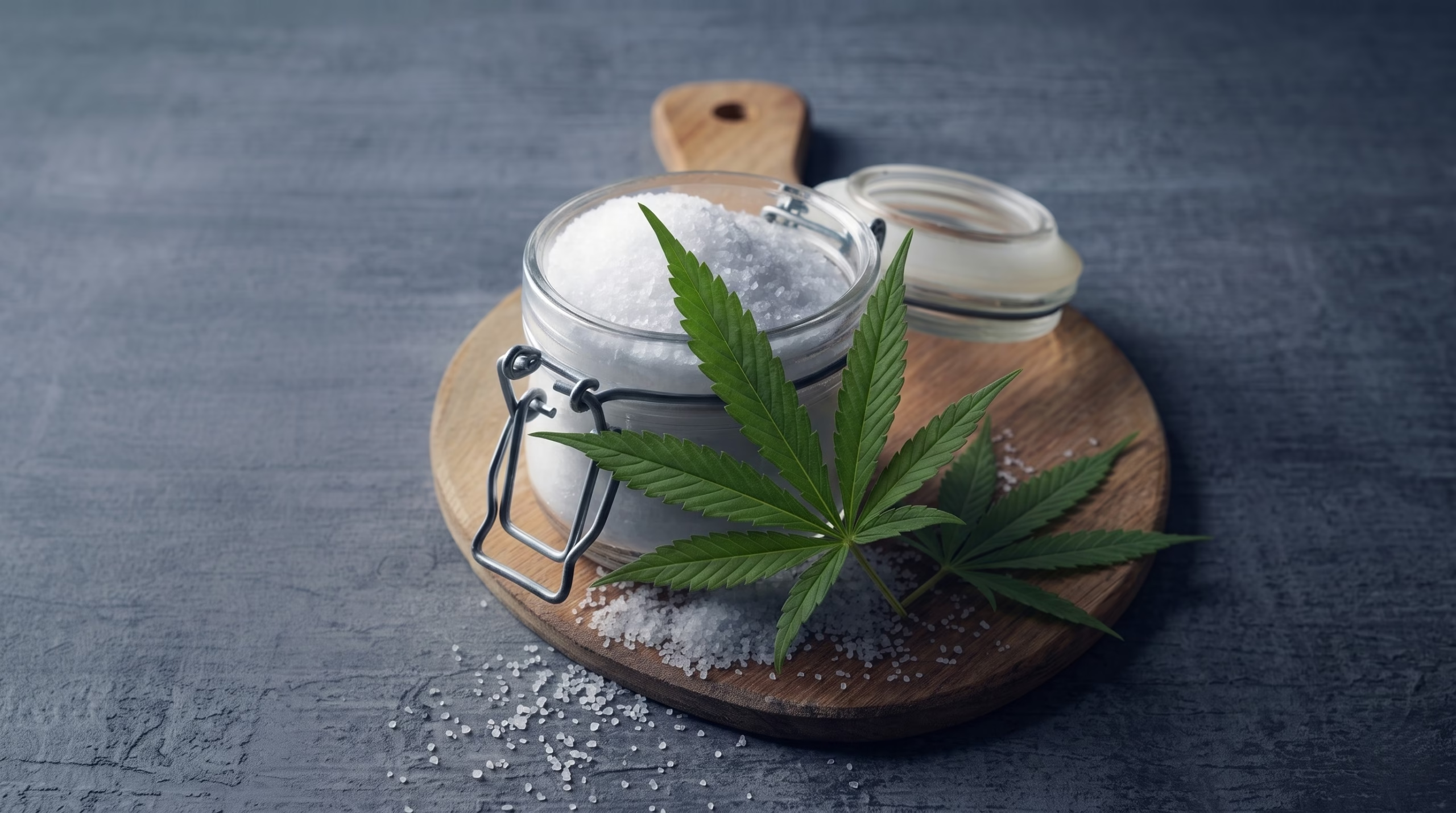
What Epsom Salt Really Does for Cannabis Plants
That is the real answer to the question, “What does Epsom salt do for cannabis plants?” It supplies two essential nutrients, and whether that becomes helpful, neutral, or harmful depends on the actual limiting factor in the grow: media chemistry, irrigation water, pH, root health, plant stage, cultivar behavior, and whether the symptoms you are seeing are a true magnesium or sulfur shortage in the first place. University extension sources are especially blunt here: adding Epsom salts to soil that already has enough magnesium can inhibit calcium uptake, foliar sprays can scorch leaves, and there is no evidence of a general productivity bonus unless a genuine magnesium deficiency exists.
Cannabis-specific research makes the picture even clearer. In a vegetative-stage medical cannabis study, plant development was optimal at 35–70 mg L⁻¹ magnesium, while lower magnesium supply impaired growth and photosynthesis. The most severe deficiency treatment caused visible symptoms and a substantial biomass reduction. In a separate flowering-stage hydroponic cannabis study, magnesium deficiency reduced inflorescence yield by about 30%, while sulfur deficiency reduced inflorescence yield by 34%, even though cannabinoid concentrations changed much less dramatically than internet lore usually suggests. In other words, magnesium and sulfur matter, just not in the simplistic, “more Epsom equals more fire” way social media often sells it.
This article stays on the science, diagnosis, and decision-making side of the topic rather than turning into a step-by-step cultivation recipe. And because made-up first-person claims are not a good foundation for an educational piece, the story section later on is presented as a clearly labeled composite vignette, not a literal diary. The goal is the same one good cannabis writing should always have: make the confusing stuff legible, correct the bad information, and help a beginner stop guessing.
The Short Scientific Answer
Epsom salt is magnesium sulfate heptahydrate, commonly written as MgSO₄·7H₂O, and extension sources describe it as a soluble magnesium source with roughly 10% magnesium by weight. Because it is a sulfate salt, it also contributes sulfur. That is the whole engine: no hidden hormones, no secret bud hardener, no mystical trichome booster. It is a nutrient source, full stop.
For cannabis, magnesium matters because it sits at the center of the chlorophyll molecule and is deeply involved in photosynthesis, enzyme activation, carbohydrate movement, and overall physiological function. Sulfur matters because plants absorb it largely as sulfate and use it to build sulfur-containing compounds such as cysteine, methionine, and glutathione, which are central to metabolism and stress handling. So when Epsom salt helps a cannabis plant, it is helping because it is relieving a real magnesium shortage, a real sulfur shortage, or both. It is not stimulating the plant in a magical sense.
Cannabis research supports that basic plant-nutrition logic. In vegetative-stage medical cannabis, low magnesium supply restricted plant height, shoot biomass, photosynthesis, transpiration, pigment levels, and stomatal conductance, while the study identified 35–70 mg L⁻¹ Mg as the optimal range for development in the cultivar tested. In flowering-stage drug-type cannabis, magnesium deficiency showed up as interveinal chlorosis and later necrosis, while sulfur deficiency showed a different pattern and still cut flower yield. That is the key point beginners need to hold onto: Epsom salt is not a performance enhancer in the abstract. It is a corrective input when magnesium-sulfur nutrition is the bottleneck.
That distinction matters because many grow issues that look like nutrient deficiency are not primarily caused by low nutrient supply. Plant tissue testing and extension guidance both emphasize that a plant can show deficiency-like symptoms even when the soil or feed technically contains the nutrient, because the real issue may be improper pH, nutrient antagonism, root-zone stress, or root damage. In plain English: a leaf can scream “I’m hungry” when the pantry is full but the door is jammed shut. If that is the situation, throwing in Epsom salt may only add salts and confusion.
There is also a misconception that Epsom salt is a pH tool. It is not. The Mid-Atlantic nutrient management guidance describes magnesium sulfate as a neutral salt with little or no effect on soil pH. So if the real issue is an out-of-range root-zone pH causing nutrient lockout, Epsom salt can supply magnesium without actually fixing the access problem that caused the symptom in the first place. That is a huge reason so many online fixes seem to work inconsistently: sometimes the diagnosis was right, often it was not.
The shortest trustworthy answer, then, is this: Epsom salt can correct magnesium-related or sulfur-related problems in cannabis when those problems are real, but it is not a universal remedy and it is not equally useful in every grow. A balanced program plus testing beats superstition every time.
Important: Epsom salt is most useful as a corrective tool, not as a default habit. If the diagnosis is weak, adding magnesium sulfate can make the root zone more confusing instead of more stable.
What Magnesium Sulfate Is Actually Doing Inside the Plant
To understand what Epsom salt does, it helps to stop thinking like a bottle label and start thinking like a leaf. Cannabis does not know it was fed something called Epsom salt. It only knows whether magnesium and sulfur are available in the root zone, whether roots can take them up, and whether the plant can move them to the tissues that need them most.
Why Magnesium Matters So Much
Magnesium is one of those nutrients that sounds secondary until you look at what it touches. Reviews in plant science describe magnesium as the central atom in chlorophyll, a key player in photosynthetic CO₂ assimilation, and a regulator of multiple enzymatic and structural processes. That means magnesium deficiency does not stay small for long. It begins as a color problem because chlorophyll is involved, but it quickly becomes an energy problem, a sugar-transport problem, and a growth problem.
The cannabis-specific magnesium paper makes that abstract biology very concrete. Under severe magnesium deficiency, cannabis plants showed shorter growth, lower photosynthesis, lower transpiration, reduced pigment levels, and lower total plant biomass. The authors also observed that symptoms began in older leaves first, which is exactly what you would expect from a nutrient that the plant can remobilize from older tissue to support newer growth. That symptom pattern is not random. It reflects the plant’s internal triage system.
This is why many magnesium-deficient cannabis plants first show that familiar interveinal yellowing on lower or older fan leaves: the plant is pulling mobile magnesium out of older tissue to keep newer tissue alive and photosynthesizing. In the flowering-stage cannabis study, mild interveinal chlorosis developed first in lower fan leaves, then spread and became necrotic as the deficiency progressed, with inflorescences being less affected early on. That progression is classic nutrient stress behavior: protect the most valuable sinks as long as possible, sacrifice older tissue first.
Why Sulfur Still Matters
Sulfur gets much less attention in grow conversations than nitrogen, phosphorus, potassium, calcium, or magnesium, but plant science does not treat it as minor. Sulfur is an essential macronutrient. Plants absorb it mainly as sulfate, then assimilate it into organic molecules, starting with cysteine and feeding forward into methionine, glutathione, proteins, coenzymes, and stress-response chemistry. In other words, sulfur is not just there. It is woven into the plant’s metabolism.
For cannabis, sulfur deficiency can be misleading because it often overlaps visually with other disorders. In flowering-stage drug-type cannabis, sulfur deficiency first appeared as yellowing on younger upper sugar leaves and upper fan leaves, then progressed toward broader chlorosis and senescence. Despite having little major effect on vegetative and root biomass, it still cut inflorescence yield by 34% relative to controls. That is a perfect example of why “the plant still grew” is not the same thing as “the plant was fully nourished.” Flower production can take the hit even when the whole plant is not collapsing.
This matters for beginners because sulfur deficiency is easy to miss and easy to confuse. Nitrogen deficiency often yellows older foliage first because nitrogen is mobile. Sulfur problems more often show in younger tissue, but cannabis can present mixed or stage-specific patterns under controlled environments. So if a grower sees pale upper growth and immediately assumes it needs more nitrogen, they may move in the wrong direction. Extension sources repeatedly recommend tissue analysis in these ambiguous cases because visual diagnosis alone is not always reliable.
Epsom Salt Can Help Without Being a Cure-All
The beauty of Epsom salt, when it is correctly used, is also what makes it so easy to abuse: it is simple. One soluble material, two useful nutrients, no direct liming effect. That simplicity is why it appears in everything from commercial vegetable recommendations to ornamental troubleshooting. But those same extension sources are careful: Epsom salt is recommended when magnesium is actually needed, not as a ritual or a default.
And that restraint matters even more in cannabis because online cultivation culture tends to reward dramatic shortcuts. If the leaves are yellow, someone says Cal-Mag. If that fails, someone says Epsom. If that fails, someone says flush. What the science says instead is more boring and more useful: match the symptom pattern to the plant’s nutrient mobility logic, check pH and root conditions, pay attention to water chemistry, and verify with tissue or media testing when possible. That is how you separate a real magnesium-sulfur issue from a false positive.
Tip: Before blaming magnesium, check the boring things first: recent pH drift, irrigation changes, EC buildup, root stress, and how the symptoms are distributed across old versus new leaves.
When Epsom Salt Helps and When It Is the Wrong Move
The right question is not “Is Epsom salt good for cannabis?” The right question is “What exact problem is it solving here?” If the answer is vague, the move is probably wrong.
The Situations Where Epsom Salt Makes Sense
Epsom salt makes sense when the grow really is short on magnesium, sulfur, or both, and when the limitation is supply, not merely access. That can happen in low-buffer root zones, in systems where irrigation water contributes little magnesium, or in soils that are sandy, acidic, or low in relevant reserves. University and extension material on sulfur and magnesium repeatedly flags sandy, low-organic-matter soils as higher-risk environments for sulfur issues because sulfate leaches readily, while magnesium problems also show up more often in acidic, sandy conditions.
Controlled-environment systems add another layer. The University of Minnesota notes that potting media has relatively low buffering capacity, so greenhouse growers depend heavily on nutrient fertigation through irrigation water. That means shortfalls or imbalances can show up faster than they do in a biologically buffered field soil. Cannabis studies in hydroponic or controlled systems reflect exactly that reality: tight changes in nutrient supply can produce clear physiological and yield responses.
So yes, Epsom salt can be helpful in cannabis production. If magnesium is genuinely deficient, cannabis loses photosynthetic capacity, biomass, and flower yield. If sulfur is deficient, flower yield can also fall. In those situations, a soluble Mg-S source is a rational corrective option. That is the sober version of the truth behind all the “Epsom saved my grow” anecdotes floating around online. Sometimes those anecdotes are not totally wrong. They are just overgeneralized.
The Situations Where Epsom Salt Is the Wrong Answer
The wrong answer starts the moment Epsom salt is used as a reflex. Extension guidance is unusually consistent on this: if your soil or media already has enough magnesium, extra Epsom salt offers no general proof of better productivity and can do harm instead. The harm can show up as nutrient imbalance, inhibited calcium uptake, added soluble salts, or leaf scorch from foliar use.
One of the most important scientific caveats is cation competition. The cannabis magnesium study found that elevated magnesium supply restricted calcium uptake and altered potassium relations in the plant. General crop guidance says the same thing more broadly: magnesium deficiency can be induced by high potassium, and excess magnesium can, in turn, interfere with calcium or potassium dynamics. So if a grower is already pushing potassium-heavy nutrition or is battling calcium-related problems, blindly adding Epsom salt can tilt the balance further out of range.
That is why the “Epsom fixes blossom-end rot in tomatoes” myth is useful here even though it is not a cannabis example. Extension specialists keep debunking it because it illustrates the exact logic error growers make everywhere: they see a symptom, add a nutrient that is not the limiting one, and accidentally worsen the real deficiency. In cannabis, the analog is the grower who sees pale leaves, adds magnesium sulfate, and never realizes the real issue was calcium balance, pH drift, root stress, or simple overfertilization.
My lower leaves are yellowing, but runoff EC is still high. Should I add Epsom salt anyway?
Question sent by: Lena, by email.
Not automatically. High runoff EC tells you salts are already present, which means the plant may be struggling with uptake, imbalance, or root-zone stress rather than simple underfeeding. If the symptom pattern truly fits magnesium deficiency, Epsom salt might still be part of the answer. But if pH is drifting, calcium and potassium are competing, or the root zone is stressed, adding more soluble input can make the picture messier. In that situation, the smarter move is to read the chemistry first, not the panic.
Epsom Salt Does Not Replace Diagnosis
Remember: The plant does not care what the internet calls the fix. It only responds to what is actually missing, what is actually available, and what the roots can actually use.
A cannabis plant can show deficiency-like symptoms while the medium still contains the nutrient. Tissue-analysis guidance emphasizes that poor uptake can stem from improper pH, root problems, or antagonism, not just low nutrient content. This is one reason feed charts so often overpromise and underdeliver: they assume every yellow leaf is a supply issue. Plants do not work that way.
And again, Epsom salt does not meaningfully raise pH like dolomitic lime would. So if the true issue is acidic media reducing availability, or some other pH-related lockout, magnesium sulfate may add Mg without restoring the chemistry that lets the plant use nutrients normally. That distinction matters enormously in media-based cannabis production, where pH and salts can drift faster than many beginners realize.
The Myth That Epsom Salt Boosts Potency
This is one of the biggest internet myths around cannabis nutrition: the idea that strategic Epsom use automatically increases THC, terpene intensity, resin frost, or bud density. I did not find peer-reviewed cannabis evidence showing that Epsom salt itself, used beyond deficiency correction, reliably delivers that outcome. What the literature does show is that nutrient stress and nutrient excess can change plant chemistry in complex ways, often with a much clearer effect on yield than on major cannabinoid concentrations. In the flowering deficiency study, magnesium and sulfur shortages reduced flower yield far more clearly than they improved chemistry. In a 2025 controlled-environment study, excessive nutrient concentration did not improve yield or cannabinoid levels, even though plants tolerated high solution concentrations.
That is the part a lot of blog posts get wrong. They confuse physiological response with useful outcome. Yes, nutrients can nudge chemical composition. No, that does not mean more Epsom equals better buds. In fact, multiple cannabis nutrition studies now point toward a less exciting but more responsible conclusion: once the plant has enough, excess fertilization often becomes wasteful, environmentally messy, and commercially irrelevant.
Does the Response Change by Strain, Indoor or Outdoor, and by Growth Stage?
This is where the clean internet answer, “all cannabis responds the same,” falls apart.
Strain and Cultivar Differences Are Real, Even if Direct Epsom Trials Are Limited
I did not find a large body of peer-reviewed studies comparing Epsom salt response across named cannabis strains in the way growers talk about it online. But the broader cannabis nutrition literature clearly does not support the idea that every cultivar behaves identically. A 2019 genotype study found that the growth response of medical cannabis to potassium supply differed between two cultivars, including different sensitivities in gas exchange, water relations, and growth. A greenhouse survey of 13 CBD hemp cultivars found significant differences among cultivars in nutrient acquisition and partitioning, including macronutrients. And a 2026 mass-balance study reported cultivar-specific nutrient uptake patterns, with calcium and magnesium uptake rising over time and differing between cultivars.
That does not prove one cultivar likes Epsom salt and another hates it. What it does prove is more useful: nutrient demand is genotype-sensitive. So the smartest answer to the strain question is this: cannabis cultivars are not all nutritionally identical, and while direct Epsom-specific cultivar data are limited, existing cannabis nutrition research gives no reason to assume a single magnesium-sulfur strategy will fit every cultivar equally well.
This also helps explain why anecdotal reports vary so wildly. One grower may genuinely see improvement after adding Epsom salt because their cultivar, medium, and water chemistry put magnesium near the margin. Another may see no effect because their plant was never short on magnesium. A third may make things worse because the issue was calcium balance or pH. All three stories can exist at once without cancelling one another out.
Indoor and Outdoor Are Not Biologically Different Species, but They Are Different Nutritional Environments
Cannabis grown indoors is still cannabis. The plant’s core magnesium and sulfur biology does not change just because the walls are made of drywall instead of sky. What changes is the environmental context.
In controlled environments and container systems, the root zone is often less buffered than field soil, nutrition is delivered more precisely through fertigation, and errors can show up faster. The University of Minnesota notes that potting media lacks the buffering capacity of mineral soils, and greenhouse crops depend on irrigation-based nutrient delivery. Cannabis research in these systems reflects that sensitivity: nutrient concentrations, EC, and solution composition are tightly linked to plant response and nutrient waste.
Outdoor soil adds more complexity and, sometimes, more forgiveness. Organic matter and clay can buffer nutrient swings. Irrigation water can contribute sulfate. Some soils already contain adequate magnesium. And field-grown hemp in Yunnan did not respond significantly in yield, CBD content, or CBD yield to added magnesium-and-boron fertilizer under the soil conditions tested, leading the authors to say extra Mg and B might not be necessary there. That is a critical corrective to the indoor-forum mentality that assumes every plant always benefits from an additional supplement.
At the same time, outdoor conditions can create their own risks. Sulfate is readily leached in sandy, low-organic-matter soils, and sulfur deficiency is more likely in such conditions. Magnesium deficiency risk also rises in acidic, sandy soils. So outdoor is not automatically safe from Mg/S problems. It is just governed by a different set of buffers and losses than an indoor fertigation system.
The best practical conclusion is simple: indoor and outdoor cannabis do not need different magnesium because the plant is a different species; they need different management because the root-zone environment behaves differently.
Growth Stage Changes the Stakes
Stage matters. Magnesium demand and symptom expression are not identical from vegetative growth through flowering, and sulfur-related consequences may hit flower production more directly than beginners expect. The vegetative magnesium study found a clearly defined optimal magnesium range for development and function in the cultivar tested. The flowering deficiency study showed that magnesium and sulfur deficiencies could leave major cannabinoid concentrations relatively stable while still dragging down inflorescence yield.
That means a grower can make a dangerous mistake by evaluating nutrient adequacy only through the lens of “the plant still looks okay.” Plenty of plants look okay enough before a hidden deficiency shows up in the harvest bucket. Sulfur is especially sneaky in that respect. In the flowering study, sulfur deficiency did not cause spectacular collapse across all biomass categories, but it still cut flower yield by about a third.
So if you want the stage-based answer in one sentence: magnesium and sulfur both matter throughout the crop life cycle, but deficiencies during reproductive stages can quietly tax flower yield even when the plant does not look catastrophically sick.
Common Questions
Is Epsom Salt Basically the Same Thing as Cal-Mag?
No. Epsom salt is magnesium sulfate. It gives you magnesium and sulfur. It does not give you calcium. That alone is enough to kill the “same thing as Cal-Mag” myth. In fact, cannabis magnesium research found that higher magnesium supply restricted calcium uptake, which is the opposite of what a grower wants if the underlying problem is low calcium or calcium transport stress.
This matters because many growers reach for Epsom salt when they really mean, “I think I’m missing a secondary nutrient, and I don’t know which one.” That is not a harmless guess. If the actual issue is calcium nutrition, Epsom salt can add salts while leaving calcium unresolved or even making calcium uptake more difficult.
Will Epsom Salt Make Buds Denser or Increase THC?
There is no good evidence that Epsom salt is a universal density-or-potency enhancer when magnesium and sulfur are already sufficient. Cannabis studies do show that nutrient supply can affect yield and chemistry, but the cleanest repeated signal is that deficiency hurts yield, while excess nutrition often fails to improve yield or cannabinoids. In the flowering deficiency work, magnesium-deficient plants had about 30% less inflorescence yield, and sulfur-deficient plants had 34% less, without a matching blockbuster increase in cannabinoids. In the 2025 Utah State study, increasing nutrient concentration did not improve yield or cannabinoid content.
So the honest answer is: Epsom salt may preserve flower production when it corrects a real deficiency. That is very different from “Epsom makes buds better.” It can help you avoid losing quality and weight. That does not make it a magic booster.
Can Epsom Salt Fix Yellow Leaves Overnight?
Usually not, and sometimes not at all, because yellow leaves are a symptom, not a diagnosis. Tissue-analysis guidance emphasizes that deficiency-like symptoms can result from pH problems, nutrient imbalance, or root uptake issues. If that is the real cause, Epsom salt may not fix the problem, because the problem is not that the fertilizer bag lacks magnesium.
Even when magnesium is truly low, recovery is a process. In cannabis, deficiency symptoms progressed over time and physiological damage included weakened photosynthesis and pigment loss. Old tissue that has already gone necrotic is not likely to become pristine again. What you are really watching for is healthier new growth and stabilization of the canopy. The fantasy of an overnight green miracle is mostly internet theater.
Is Foliar Spraying the Best Way to Use Epsom Salt?
Foliar magnesium has a place in crop production, and extension documents for multiple crops do reference foliar magnesium sulfate as a corrective measure. But extension sources also warn that Epsom salt sprays can scorch foliage, and soluble salts in general contribute to salt stress if mismanaged. So even outside cannabis, foliar Epsom is not treated as a casual spray-and-pray method. It is a targeted emergency or corrective tool.
For cannabis specifically, the more important principle is not foliar versus root in the abstract. It is correct diagnosis, then appropriate delivery. If the root zone is chemically out of balance, the pH is off, or the medium is already salty, foliar application can become a symptom-management tactic rather than a real solution. Meanwhile, if the plant truly lacks magnesium in the rhizosphere, the sustainable fix usually involves getting the root-zone nutrition back into range.
Foliar Epsom Sprays Can Create a New Problem Fast
Epsom salt foliar sprays are easy to over-romanticize because they feel fast. But if concentration, timing, leaf sensitivity, or room conditions are wrong, sprays can scorch foliage while the underlying root-zone issue stays unresolved.
Can I Use Epsom Salt Preventively All Season Just in Case?
That is exactly the habit extension specialists push back against. Unless testing or a well-established system history tells you magnesium is typically limiting, routine Epsom use can be unnecessary or harmful. Excess magnesium can compete with calcium, increase soluble salts, and in soil systems may contribute to leaching losses or groundwater contamination concerns.
Preventive use also trains growers to solve invisible problems with visible products. The better preventive strategy is to know your irrigation water, know your medium, and understand whether your production system historically drifts toward magnesium shortage. Michigan State’s greenhouse guidance specifically recommends water analysis because naturally occurring magnesium in irrigation water changes whether supplemental magnesium is needed at all.
Does Every Cultivar Need the Same Amount?
No convincing evidence says that. What the current cannabis literature supports is a more nuanced answer: cultivars differ in nutrient acquisition, partitioning, and response patterns, so identical magnesium-sulfur management across all genetics is a rough approximation, not a law of nature. That means some cultivars may reveal deficiency sooner, some may tolerate imbalance longer, and some may partition nutrients differently across organs and stages.
That also means “this worked on my last run” is weaker evidence than many growers think. If the cultivar changed, the water changed, or the medium changed, the old Epsom habit may no longer map cleanly onto the new crop.
I grow in coco under LEDs. Should I add a little Epsom salt every run just to be safe?
Question sent by: waldgarten, through our Facebook page.
Only if your system history actually points in that direction. Coco and indoor fertigation setups can show magnesium issues faster than a buffered field soil, but that still does not make routine Epsom use automatically smart. If your base feed, water chemistry, and plant response are already in range, adding magnesium sulfate every run just in case can create a needless imbalance. “Preventive” only makes sense when it is based on real pattern recognition, not forum habit.
Master Advice: Use Epsom salt when magnesium or sulfur is truly the limiting factor, and do not ask it to solve problems that belong to pH, calcium balance, root health, or overall feed design.
Is Outdoor Cannabis Less Likely to Need Epsom Salt Than Indoor Cannabis?
Not categorically. Outdoor soil can be more buffered and forgiving, and field-grown hemp under adequate soil conditions may show no benefit from extra magnesium. But sandy, low-organic-matter outdoor soils can lose sulfate through leaching and also be prone to magnesium issues when pH is low. Indoor container systems can show faster swings because the root zone is less buffered. So the better answer is not “outdoor needs less” but “outdoor and indoor fail in different ways.”
A Grower Story
This is a fictionalized composite scene built from common grower mistakes and symptom patterns documented in the literature. It is not presented as a literal personal grow diary.
The room looked fine from ten feet away. That was the trap.
Canopy still full. Tops still praying just enough to keep morale alive. Resin was coming on. But down in the middle and lower fan leaves, that pale, vein-hugging yellow had started to creep in, the kind of yellow that makes a grower stop mid-scroll, stand up too fast, and start opening ten tabs with titles like MAGNESIUM DEFICIENCY FIXED IN 24 HOURS.
The first instinct was classic internet instinct: “Hit it with Epsom.”
Because that is what the internet loves, a single product with a neat villain and a dramatic ending. Yellow leaves? Epsom. Rust spots? Epsom. Slow growth? Epsom. Neighbor looked at your plant funny? Probably Epsom.
But something felt off. The yellowing was there, yes, but the newer growth was not collapsing. The lower fans wore the first signs. A few margins were drifting toward damage, but the whole room did not scream catastrophe. Then came the part no one wants to hear because it is less fun than opening a bag: the questions.
What is the root-zone pH doing?
What has happened to runoff EC?
Did the water source change?
Was potassium pushed harder this cycle?
How buffered is the media, really?
And most importantly: is this an actual magnesium shortage, or a plant that cannot use what is already there?
That pause changed everything.
Instead of treating Epsom salt like a lucky charm, the grower treated it like what it really is: a tool that only makes sense when the problem matches the tool. Media and water numbers suddenly mattered more than forum confidence. The yellow leaves stopped being a command to buy something and became a clue to interpret.
And that is the emotional pivot most growers remember when they level up. Not the first time they use a supplement. The first time they stop assuming every symptom deserves a bottle.
Because when the real issue is magnesium, magnesium matters. A lot. Cannabis loses photosynthetic function, biomass, and flower yield when magnesium gets too low. But when the real issue is pH drift, calcium competition, or salt imbalance, Epsom salt can become the nutritional equivalent of turning your music up to fix a check-engine light. It changes the feeling in the room, not the cause.
That is the lesson worth carrying out of the vignette and back into the grow. Not “never use Epsom.” Not “always use Epsom.” Just this: if your diagnosis got stronger, your supplement choice got smarter. And if your diagnosis is weak, every bag in the room becomes a coin toss.
What to Remember: Epsom salt helps when magnesium or sulfur is truly the limiting factor. It is not a shortcut for weak diagnosis, pH drift, or root-zone imbalance.
The Final Verdict
So, what does Epsom salt do for cannabis plants?
At the scientific level, it supplies magnesium and sulfur, two essential nutrients that support chlorophyll function, photosynthesis, metabolism, and flower production. In cannabis, magnesium deficiency can reduce photosynthesis, stunt growth, and cut inflorescence yield. Sulfur deficiency can also reduce flower yield, even when vegetative biomass does not look dramatically worse.
At the practical level, Epsom salt is not magic. It is useful when magnesium-sulfur nutrition is the real limiting issue. It is unnecessary when the plant already has enough. And it can be counterproductive when the real culprit is pH, root stress, calcium imbalance, potassium antagonism, or general overfertilization. Extension sources and cannabis studies converge on the same lesson: test before you guess, because symptoms alone are easy to misread.
Does response differ across strains? Probably yes in a meaningful but not simplistic way. Direct Epsom-by-strain data are limited, yet cannabis research clearly shows genotype differences in nutrient uptake and nutrient response, so “every cultivar reacts the same” is not supported.
Does indoor versus outdoor change the answer? Yes, but because the root-zone environment changes, not because cannabis somehow becomes a different plant. Indoor container and soilless systems are usually less buffered and more sensitive to feed and water chemistry. Outdoor soils may buffer more, but sandy, low-organic-matter soils can still run into sulfur and magnesium issues. A field study even found no significant benefit from extra magnesium and boron where the soil context was already adequate, which is exactly why blanket advice fails.
If you want the beginner-friendly one-liner to remember, make it this:
Epsom salt does not make cannabis plants special. It helps cannabis plants only when cannabis plants are short on what Epsom salt actually contains.
That is the whole truth, and honestly, it is better than the myth.
References
- Morad, D., & Bernstein, N. (2023). Response of Medical Cannabis to Magnesium (Mg) Supply at the Vegetative Growth Stage. Plants, 12(14), 2676.
- Llewellyn, D., Zheng, Y., Dixon, M., & Adie, K. (2023). Foliar Symptomology, Nutrient Content, Yield, and Secondary Metabolites of Cannabis in Response to Single-Element Nutrient Deficiencies. Plants, 12(3), 422.
- Saloner, A., & Bernstein, N. (2019). Response of Medical Cannabis (Cannabis sativa L.) to Potassium Supply Under Long Photoperiod. Frontiers in Plant Science, 10, 1369.
- Kalinowski, J., Edmisten, K., Davis, J., McGinnis, M., Hicks, K., Cockson, P., Veazie, P., & Whipker, B. E. (2020). Augmenting Nutrient Acquisition Ranges of Greenhouse Grown CBD (Cannabidiol) Hemp (Cannabis sativa) Cultivars. Horticulturae, 6(4), 98.
- Hershkowitz, J. A., Westmoreland, F. M., & Bugbee, B. (2025). Elevated root-zone P and nutrient concentration do not increase yield or cannabinoids in medical cannabis. Frontiers in Plant Science, 16, 1433985.
Share this article
A quick overview of the topics covered in this article.
Follow us
Latest articles
October 24, 2026
October 24, 2026
October 24, 2026
October 24, 2026
