

4-4-4 Fertilizer for Cannabis: Uses, Timing, and Limits
A 4-4-4 fertilizer is a balanced NPK fertilizer. The three numbers tell you that the product contains 4% nitrogen, 4% phosphate, and 4% potash by weight. For cannabis grown in soil, it is often used as a general-purpose dry amendment that supports steady vegetative growth and helps maintain fertility in a biologically active root zone.
That simple answer can become misleading if the number is treated as a complete feeding program. A 4-4-4 product may be a useful foundation in a soil-based container, a raised bed, or a living-soil system. It may be a poor fit for coco coir, rockwool, or recirculating hydroponics, where nutrition is normally delivered as a measured soluble solution. The ingredients, release rate, existing soil fertility, container size, water quality, plant stage, and root health all change the answer.
Think of 4-4-4 as a description of nutrient balance, not a promise of a particular result. Once we separate the label from the plant’s real needs, it becomes much easier to decide whether it belongs in your setup, when it should be applied, and when another approach makes more sense.
Remember
A balanced fertilizer does not mean every cannabis plant needs the same amount at every stage. The correct application depends on the root zone, what is already present in it, and how quickly the product can become available.
What the Three Numbers on 4-4-4 Actually Mean
Fertilizer labels use a guaranteed analysis. The first number is nitrogen, shown as N. The second represents phosphate, shown as P2O5. The third represents potash, shown as K2O. The shorthand NPK is useful, but the label does not state the exact amount of elemental phosphorus and potassium in the bag.
Balanced NPK Ratio
A balanced ratio has equal listed proportions of nitrogen, phosphate, and potash. In a 4-4-4 fertilizer, each listed nutrient category makes up 4% of the product by weight. It does not mean the product supplies every nutrient in equal biological effect.
In practical terms, 1 kg of a true 4-4-4 fertilizer contains 40 g of listed nitrogen, 40 g of phosphate, and 40 g of potash. The remaining weight is made up of carrier materials, organic matter, minerals, moisture, and other ingredients. A 10 kg bag therefore contains 400 g of listed nitrogen, not 10 kg of plant food available on the day it is applied.
That final distinction matters most with dry organic or biologically processed products. Nutrients may need microbial activity, appropriate moisture, oxygen, and temperature before they become plant available. A number on a label describes concentration. It does not tell you the release speed, the root-zone pH, the calcium and magnesium supply, or whether the plant can currently absorb what is already present.
| Label term | What it tells you |
|---|---|
| 4-4-4 | The listed ratio of nitrogen, phosphate, and potash is equal by weight. |
| Guaranteed analysis | The minimum stated nutrient percentages in the product, not a feeding schedule. |
| Slow release | Nutrients are intended to become available over time. Check the label to see which nutrient is slow release and how that claim is supported. |
| Organic or natural | A description of source or certification context. It does not automatically mean safe at every dose, complete, or immediately available. |
| Complete fertilizer | Usually that N, P, and K are present. Check separately for calcium, magnesium, sulfur, and micronutrients. |
What 4-4-4 Fertilizer Is Usually Used For
Most cannabis growers reach for 4-4-4 when they want an all-purpose soil amendment rather than a stage-specific liquid feed. It can be incorporated into a soil mix before planting, used as a measured top dress while the plant is building roots and foliage, or used to restore fertility in a bed between cycles. Its equal ratio makes it easier to use as a general base than an amendment heavily weighted toward one macronutrient.
It is most at home in a medium that can buffer changes and support nutrient cycling. That usually means a well-structured soil-based mix with enough aeration, moisture management, and biological activity. In a large living-soil container, the amendment may become one part of a broader fertility plan that includes compost, mineral balancing, mulch management, and appropriate irrigation.
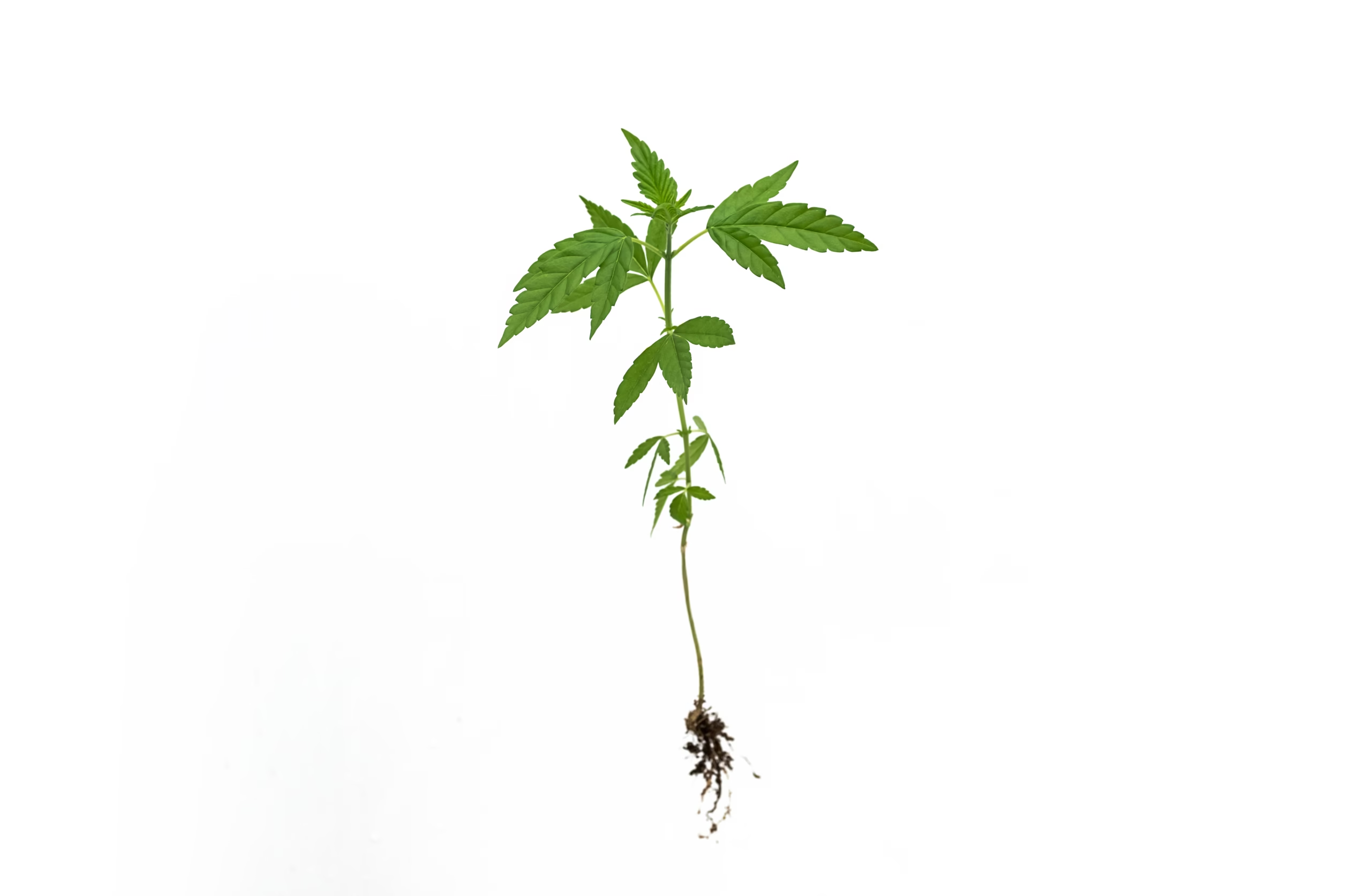
It is less suitable as a default answer for every yellow leaf or slow plant. A plant growing in saturated soil, a cold container, a root-bound pot, or a medium with unsuitable pH may look underfed even when nutrients are present. Adding more dry fertilizer to that situation can make the diagnosis harder and increase salt pressure after the roots recover.
Use 4-4-4 as part of a soil plan
Match it to a healthy, aerated soil-based medium, a realistic release timeline, and the product label. Review existing fertility before adding more.
Use it as an emergency rescue
Dry amendments do not correct sudden root-zone problems overnight. Diagnose water, pH, salts, temperature, pests, and root oxygen first.
Why Release Rate Changes the Whole Answer
Two fertilizers can both read 4-4-4 and behave very differently. A product based mainly on soluble mineral salts can influence the root zone relatively quickly. A dry amendment made from meals, composted materials, mineral ingredients, or other organic sources usually depends more on moisture, temperature, aeration, particle size, and microbial activity. Neither approach is automatically better. They require different timing and observation.
In a biologically active soil, microbes convert organic forms into ions that roots can take up. That process slows in dry, cold, waterlogged, compacted, or poorly aerated conditions. This is why a top dress may appear to do very little at first, then become noticeable later when the root zone warms and the plant resumes active growth. It is also why applying a large dose to compensate for a slow response can create a delayed excess.
Mineralization
Mineralization is the microbial conversion of organic nutrient compounds into simpler mineral ions that plant roots can absorb. Its rate changes with temperature, moisture, oxygen, soil biology, and the materials in the fertilizer.
Read the label before assuming a product is slow release. The presence of organic ingredients does not tell you exactly how much nitrogen is immediately soluble, how much is water-insoluble, or how long a given dose will last in your container. That information, together with the ingredient list and the manufacturer’s directions, is more useful than the three large numbers on the front of the bag.
Advice
Apply a dry amendment before the plant is visibly starving, not after. Soil-based nutrition works best when it supports a stable root zone rather than chasing an advanced deficiency.
Where 4-4-4 Fits: Soil, Coco, and Hydroponics
Soil-based containers and living soil
This is the most natural setting for a 4-4-4 amendment. A soil-based container has some nutrient-holding capacity and can buffer minor fluctuations. The amendment may be mixed into a fresh medium or applied as a top dress, provided the container is large enough, the soil is not already heavily fertilized, and the plant has time to respond.
Even in soil, container volume changes the margin for error. A small pot has less buffering capacity than a large bed. A rich pre-amended mix may already contain enough nutrition for a young plant. Adding 4-4-4 without accounting for that starting fertility can create a medium that is too strong before the roots have established.
Peat-based and soilless potting mixes
Some bagged mixes look like soil but are mostly peat, coco, bark, perlite, or compost. They can still work with a dry amendment, but nutrient cycling and pH buffering may differ from mineral soil or a mature living-soil bed. The mix needs adequate moisture and aeration, and the grower should pay close attention to what fertilizers were already included in the bag.
Coco coir, rockwool, and hydroponic systems
These systems are normally managed with measured soluble nutrition. Coco behaves more like a hydroponic medium than soil, even though it is brown and fibrous. Rockwool and recirculating hydroponics depend even more directly on the nutrient solution. A dry 4-4-4 amendment may release unevenly, complicate EC management, clog irrigation, or leave the root zone short of nutrients at the moment the plant needs them.
That does not make 4-4-4 a bad product. It means the delivery method does not match every medium. If your system is built around frequent fertigation and EC measurement, use a nutrient program designed for that system rather than forcing a soil amendment into it.
| Root-zone system | How 4-4-4 may fit | Main limitation to watch |
|---|---|---|
| Large soil container or raised bed | Often useful as a base amendment or measured top dress when the soil plan supports gradual nutrient cycling. | Existing fertility, delayed release, and over-application in a limited root volume. |
| Living soil | Can support maintenance fertility when it complements the established biology and mineral balance. | Assuming microbes can rescue a compacted, dry, flooded, or nutrient-heavy pot. |
| Peat-based potting mix | Possible, after checking the initial charge and using a measured, label-led approach. | The mix may already be fertilized or may not cycle nutrients like a mature soil. |
| Coco coir | Usually not the main nutrition tool. | Uneven availability and poor compatibility with frequent, measured fertigation. |
| Rockwool or hydroponics | Generally unsuitable as the primary feed. | No predictable soluble nutrient profile, reservoir imbalance, and hardware problems. |
When Cannabis Can Use a 4-4-4 Amendment
Plant stage matters, but the label is not a stage switch. Cannabis needs nitrogen, phosphorus, potassium, secondary nutrients, and micronutrients throughout its life. The balance of demand and the amount already in the root zone change as the canopy, roots, and flowers develop.
Seedlings and recently rooted plants
Young roots are easily stressed by a rich medium. If a seedling or clone is in a lightly amended mix, use the product directions cautiously and allow roots to establish before adding nutrition. If it is already in a fertile mix, more 4-4-4 can be unnecessary or excessive. A pale young plant does not automatically need food. Check light intensity, watering, root temperature, and pot size first.
Vegetative growth
A balanced amendment often makes the most sense while the plant is building leaves, stems, and roots. Nitrogen supports green growth, while phosphorus and potassium remain part of the wider nutrient picture. The goal is even, steady development, not the darkest possible leaves or the fastest possible stretch.
Transition and early flowering
Some soil growers use 4-4-4 into the transition period because it continues to supply a broad base of nutrition. Whether that is suitable depends on the soil test, previous top dress, container volume, cultivar, and flowering plan. Do not assume that flowering means nitrogen becomes unwanted overnight. Controlled cannabis research shows that nutrient response remains complex during flowering and that oversupplying a nutrient does not automatically improve flower yield.
Mid and late flowering
At this stage, a new top dress may not have enough time to mineralize before harvest. Dense flowers also make root-zone and moisture mistakes more costly. If the plant is genuinely underfed, the response should be based on diagnosis and the expected release time of the amendment, not a reflex to add a larger dose of a balanced product.
| Plant stage | Question before using 4-4-4 | Practical direction | What can go wrong |
|---|---|---|---|
| Seedling or fresh clone | Is the starting mix already fertilized and are roots established? | Keep the root zone gentle and follow the product label only when the medium and plant stage allow it. | A rich medium can stall small roots and make early symptoms difficult to interpret. |
| Vegetative growth | Does the soil need a broad maintenance feed, and is there time for it to release? | Often the most suitable period for a balanced soil amendment. | Adding more to a waterlogged, salty, or compacted pot instead of correcting the cause. |
| Early flowering | Is the product part of an established soil plan, or is it being used as a late correction? | Use only with a clear timeline and an understanding of current fertility. | Delayed release overlaps with later feeding and creates an unintended surplus. |
| Late flowering | Will the amendment become available before harvest, and is the diagnosis certain? | Avoid last-minute soil loading. Focus on root health, irrigation, climate, and targeted diagnosis. | A late amendment does not repair damaged leaves and may leave excess nutrients in the medium. |
How to Apply 4-4-4 Without Guessing
Use the product label as the starting point because ingredient density and nutrient availability differ. The same 4-4-4 grade can be supplied as fine powder, granular pellets, composted ingredients, mineral blends, or coated material. A universal spoon-per-pot rule ignores those differences and can overfeed small containers.
Pre-amending a fresh soil mix
Pre-amending can create a more even nutrient distribution than placing a concentrated layer near the surface. Mix thoroughly through the intended root zone, moisten the medium appropriately, and allow the product to condition only when its directions call for that. Do not create a concentrated “hot layer” beneath a transplant, where new roots may meet a stronger zone before they can explore the rest of the container.
Top dressing an established plant
A top dress is spread evenly across the soil surface, kept away from direct contact with the main stem, and watered in according to the label. It is a maintenance method, not a way to force nutrients down to the bottom of a dry container. The soil must still wet evenly and drain properly after application.
Calculating the amount of product
The arithmetic is simple. Multiply the mass of fertilizer by 0.04 to calculate the listed nitrogen in a 4-4-4 product. For example, 100 g of product contains 4 g of listed nitrogen. That calculation helps compare a label recommendation with your container size, but it does not tell you how much nitrogen is immediately available or whether the medium already contains enough.
| Product amount | Listed N in a 4-4-4 product |
|---|---|
| 25 g | 1 g nitrogen |
| 50 g | 2 g nitrogen |
| 100 g | 4 g nitrogen |
| 250 g | 10 g nitrogen |
Do not stack complete fertilizers without a reason
A rich soil, compost, a liquid nutrient, a dry 4-4-4 amendment, and a flowering booster can all contribute nutrients at once. The label on each product may look reasonable alone, while their combined load becomes excessive. Track every input before adding another one.
Is 4-4-4 Enough for Cannabis Flowering?
Sometimes it can be part of a complete soil plan. It is not automatically enough on its own. Flowering cannabis still depends on root health, appropriate nitrogen, phosphorus, potassium, calcium, magnesium, sulfur, micronutrients, water, light, temperature, and humidity. A 4-4-4 label does not tell you whether the product supplies those secondary and micronutrients in useful amounts.
The common idea that flowering plants need almost no nitrogen and extreme amounts of phosphorus or potassium is too simple. In controlled cannabis research, plant response changed with nutrient concentration, cultivar, growth stage, and the hydroponic system used. More phosphorus or potassium was not a universal route to more flower yield. That does not mean a balanced amendment is always the correct choice. It means the soil and plant should guide the decision instead of a one-ratio rule.
For a soil grower, 4-4-4 may provide a steady base through vegetative growth and into early flowering. A different amendment, a more complete mineral program, or no additional fertilizer at all may be more appropriate later. The best plan is one that accounts for how long each input will remain active in the root zone.
Master Tip
Do not judge a flowering nutrition plan by how much phosphorus and potassium it lists. Judge it by whether the root zone stays healthy, the nutrition is complete, the timing makes sense, and the plant continues to develop without excess.
When 4-4-4 Does Not Solve the Problem
Leaves can yellow, curl, or lose vigor for many reasons that have nothing to do with an empty nutrient supply. Before adding a dry amendment, inspect the pot and the environment. A plant that is too wet may be short of oxygen. A root zone with high salts may make nutrients harder to absorb. Cold roots, unsuitable pH, pests, light stress, and root disease can all create symptoms that resemble deficiency.
| What you see | What else may be happening | How to check | First response | Why more 4-4-4 may not help |
|---|---|---|---|---|
| Lower leaves yellowing | Normal aging, low nitrogen, poor root function, inadequate light, or a too-small container. | Compare new growth, recent feeding, pot weight, root-zone moisture, and progression over several days. | Confirm the cause before changing nutrition. | Nitrogen cannot correct a saturated or damaged root system. |
| Drooping plant in a heavy pot | Low root-zone oxygen, cold medium, poor drainage, or root disease. | Lift the container, inspect drainage, check deeper moisture, temperature, and root condition if accessible. | Pause automatic watering and restore appropriate root-zone conditions. | The plant may already have nutrients but be unable to absorb them. |
| Burnt tips after feeding | Excess concentration, accumulated salts, uneven dry pockets, or stacked inputs. | Review every product and recent application, then assess root-zone EC where the system allows it. | Return to the last stable program and correct gradually. | Another complete fertilizer can raise the total nutrient load further. |
| Pale new growth despite rich soil | pH issue, micronutrient imbalance, wet roots, pest damage, or a mixing problem. | Look at new growth shape, soil pH, irrigation behavior, pests, and the full fertilizer analysis. | Diagnose the root-zone and micronutrient context. | A balanced NPK label may not correct missing or unavailable micronutrients. |
Common Questions About 4-4-4 Fertilizer and Cannabis
Can I use 4-4-4 fertilizer for every stage of cannabis?
It can remain part of a soil-based plan across more than one stage, but it should not be used blindly from seedling to harvest. The root zone, existing fertility, release time, container volume, and stage determine whether it still fits. Cannabis needs more than the three macronutrients shown on the front label.
Is 4-4-4 fertilizer good for vegetative growth?
It can be useful in soil during vegetative growth because it provides a broad, balanced nutrient base. It is not automatically needed if the medium is already fertile, and it is not a substitute for suitable light, irrigation, container volume, and root-zone oxygen.
Can I use 4-4-4 fertilizer in coco coir?
It is usually a poor primary choice for coco because coco is commonly managed with soluble nutrients and measured fertigation. A dry amendment may not release predictably enough to keep nutrient solution strength and availability stable.
How long does a 4-4-4 top dress take to work?
There is no universal number of days. Soluble ingredients can act sooner, while organic materials may need time to mineralize. Temperature, moisture, oxygen, microbial activity, particle size, and product formulation affect the timeline. Use it before a deficiency becomes severe rather than expecting an instant correction.
Does 4-4-4 make cannabis flowers bigger?
No fertilizer ratio can promise bigger flowers. A suitable nutrition program supports healthy growth, but flower development also depends on genetics, canopy light, root volume, irrigation, temperature, humidity, plant health, and the timing of each input. Excess nutrition can reduce quality and create new problems.
Making 4-4-4 Work for the Root Zone You Actually Have
4-4-4 fertilizer is most useful when it is treated as a measured soil amendment, not a magic cannabis formula. Read the guaranteed analysis and ingredients, find out what is already in the medium, choose a delivery method that matches the root zone, and leave enough time for the product to do its job.
If the plant is healthy and the soil plan is stable, a balanced amendment can support steady growth without turning feeding into a constant reaction. If the plant is struggling, slow down and identify the real limitation before adding more nutrition. A healthy root zone makes every fertilizer decision easier to read.
Before You Add a Balanced Dry Amendment
- Confirm the medium is soil-based or otherwise appropriate for dry amendments.
- Read the full label, including ingredients, micronutrients, release information, and directions.
- Account for compost, pre-amended soil, liquid feeds, and every other fertilizer already in use.
- Check pot weight, drainage, root-zone moisture, and plant health before feeding.
- Use the manufacturer’s rate as the starting point rather than a generic spoon-per-pot rule.
- Apply evenly, keep it away from direct stem contact, and water the root zone evenly.
- Record the date and amount so later changes can be interpreted.
- Give gradual products time to release before adding another complete fertilizer.
References
- Optimisation of Nitrogen, Phosphorus, and Potassium for Soilless Production of Cannabis sativa in the Flowering Stage Using Response Surface Analysis.
- Response of Medical Cannabis (Cannabis sativa L.) to Nitrogen Supply Under Long Photoperiod.
- Nitrogen mineralization from organic residues: research opportunities.
- University extension guidance on fertilizer analysis and nutrient source selection.
Share this article
A quick overview of the topics covered in this article.
Follow us
Latest articles

September 9, 2026

September 9, 2026

September 9, 2026