
Drought Planning and Water Reserves
Drought planning starts before the garden is visibly thirsty. The central question is not how often outdoor cannabis should be watered. It is whether the garden can keep the active root zone within a workable moisture range when rainfall disappears, temperatures rise, restrictions tighten, a pump fails, or the normal water source becomes temporarily unavailable.
A useful water reserve is sized from measured demand, not from a generic tank recommendation. First measure how much water the garden actually receives during a demanding irrigation day. Then decide how many days the system must operate without its normal source. Add known delivery losses and the portion of stored water that cannot be practically withdrawn. That produces a reserve that belongs to your site rather than to someone else’s garden.
This resource stays focused on drought readiness, reserve sizing, source reliability, storage, delivery failure, and recovery checks. It does not repeat the full outdoor cultivation process. For broader planning, use the Outdoor Grow Comprehensive Guide. For the fundamentals of deciding when and how to irrigate, use Cannabis Watering Basics.
Measure Real Water Demand Before You Size the Reserve
Reserve planning fails when the first number in the calculation is a guess. A drought tank cannot be sized reliably from plant count alone because the same number of plants can have very different water demand in native ground, raised beds, large containers, small containers, coco, or other fast-draining media. Canopy size, wind, temperature, humidity, solar load, mulch, root depth, irrigation efficiency, and plant stage all change how quickly water leaves the system.
The first job is therefore to create a verified peak-demand baseline. This is not the hottest theoretical day your location has ever experienced. It is a measured irrigation day during conditions that are reasonably close to the demanding part of your season. Record how much water the entire garden receives, how the root zone responds, and how much moisture remains before the next irrigation.
Separate plant demand from irrigation volume
Water delivered by the irrigation system is not identical to water used by the plant. Some water may remain outside the active root zone. Some can run off, drain below roots, leak from fittings, evaporate from wet surfaces, or accumulate in a small wetting column around one emitter. If 100 liters leave a tank, that does not prove 100 liters were stored where roots could use them.
For reserve sizing, measure delivered volume because that is what the tank must supply. For crop diagnosis, also inspect root-zone response because a large delivered volume can still fail to hydrate the full root system. Keeping those two measurements separate prevents a common mistake: increasing storage capacity when the real failure is poor distribution.
Days of Autonomy
Days of autonomy is the number of days a garden can continue its planned irrigation without replenishment from the normal water source. It is a planning variable, not a universal cannabis target. A garden with reliable municipal backup may need a different autonomy period from a remote site that can become inaccessible for several days.
Measure a complete irrigation event
Choose a day when the garden genuinely needs irrigation and the weather is representative of a demanding period. Start with a known water volume. If a tank is graduated, record the level before and after the irrigation. If water comes from a hose or pump, use a flow meter where available or time a measured flow into a known container and calculate the approximate delivered volume from runtime.
Record the amount used by each irrigation zone if the garden is divided into zones. This matters because a large in-ground bed may need a long, slow soak while a group of containers may need a different frequency. Combining everything into one total hides the part of the garden that will deplete reserve water first.
Measure the interval, not just the event
One irrigation volume becomes useful only when it is paired with the time until the next irrigation. If the garden receives 80 liters today and needs another 80 liters tomorrow, reserve demand is very different from a garden that receives the same 80 liters every three days. Record the actual interval as weather changes.
During the warmest part of the season, repeat this measurement on more than one irrigation cycle. The purpose is to capture a reasonable peak operating rate, not a single unusual event. If demand continues to rise as the canopy expands, the reserve calculation should be updated rather than treated as permanent.
Do not size a reserve from visible wilt
Visible wilt is a poor measuring cup. Midday leaves can soften temporarily under high atmospheric demand even while deeper soil remains moist. Conversely, a plant can appear acceptable in the morning while a fast-drying container is only hours from a serious deficit. Use root-zone moisture, container weight where practical, irrigation records, and plant recovery together.
Recent drought research in floral hemp also argues against deliberately pushing severe water deficit as a quality strategy. A 2024 study found that severe drought reduced floral yield and cannabinoid concentrations, while moderate deficit had different effects under the tested greenhouse conditions. That does not create an outdoor irrigation recipe. It does support a practical boundary: a drought reserve should prevent uncontrolled severe stress, not help the grower manufacture it.
“Can I just estimate reserve size from the number of plants?”
Question sent by: RootZoneRick, via email.
Use plant count only as an inventory check. Size the reserve from measured water delivery during demanding conditions. Ten plants in deep native ground can behave very differently from ten large plants in exposed containers, and the reserve has to support the actual irrigation system you are running.
Use weather as a multiplier on the baseline
Once you have a measured baseline, weather becomes useful. Hotter air, lower humidity, stronger wind, larger canopies, and intense solar exposure can shorten the irrigation interval. Cool cloudy days can lengthen it. The correct response is not to apply a fixed percentage increase every time the forecast rises. Compare the forecast with days already recorded in your log and watch how root-zone dry-down changes.
This is where a reserve becomes more than a tank. A useful plan tells you how quickly stored water is being consumed and whether the remaining volume still covers the number of autonomy days you intended to protect.
Track peak demand as a rolling number
Drought planning improves when peak demand is treated as a rolling measurement rather than a seasonal guess. After every unusually hot, windy, or dry period, compare the total water delivered with the previous peak. If the garden uses more water while the root zone still reaches the intended moisture range, update the planning number. If water use rises but the root zone remains uneven, investigate distribution before raising the reserve target.
A simple log can include date, weather pattern, irrigation volume by zone, time until the next irrigation, and the lowest tank level reached. Over several weeks, this shows whether demand is rising because the plants are larger, because the weather is harsher, or because the system is becoming less efficient. That distinction matters when deciding whether the next investment should be more storage, a larger root zone, better shade for containers, or irrigation repair.
Build Drought Buffer in the Root Zone and Delivery System
A drought-resilient garden does not depend on storage alone. The most efficient reserve is the water you do not have to replace immediately. Root-zone volume, infiltration, moisture-holding capacity, mulch, irrigation placement, and reduced runoff can all extend the useful interval between irrigations without forcing the roots into chronic saturation.
This does not mean maximizing water retention at any cost. Cannabis roots still need oxygen. Heavy ground that stays waterlogged after a deep irrigation is not a drought solution, and a small container kept constantly wet is not safer simply because the weather is dry. The target is a root zone that receives water evenly, holds a useful amount, drains excess, and dries at a rate the reserve can support.
Native ground usually gives the largest physical buffer
When native soil is suitable, an in-ground plant can explore a much larger volume than a container plant. Deeper soil also changes temperature more slowly and can store water below the rapidly drying surface. That can reduce how often irrigation is needed during moderate drought.
The advantage disappears when the ground is shallow, compacted, contaminated, highly saline, or poorly drained. Before relying on native ground as your drought buffer, verify infiltration and the depth of the usable root zone. The broader Cannabis Soil and Growing Media Guide covers those root-zone decisions in more detail.
Containers trade mobility and control for smaller reserves
Containers are easy to fill with known media and can be moved or protected, but they have a hard physical limit: the root zone ends at the pot wall. Exposed containers can heat and dry rapidly, especially when they are small, dark-colored, elevated above the ground, or surrounded by masonry. During drought, that can turn one daily irrigation event into two smaller events or create a need for emergency hand watering.
For planning purposes, treat container groups as their own demand zone. Do not let a large native-ground bed hide the fact that several small containers are consuming reserve water on a much shorter cycle.
Coco and other fast-draining media need a different reserve philosophy
Fast-draining substrates can support high root-zone aeration, but their usable moisture buffer and irrigation frequency are often very different from mineral soil. In drought planning, the risk is not only total volume. It is interruption frequency. A tank that contains enough water for three days on paper can still fail a fast-draining system if the pump, timer, or emitter does not deliver the required small events.
If the garden uses a substrate that normally depends on frequent irrigation, reserve planning must include backup delivery. Stored water without a working way to distribute it is not functional autonomy.
Mulch reduces evaporative loss but does not replace measurement
Organic mulch can reduce surface evaporation, moderate root-zone temperature, limit weed competition, and improve infiltration. Those are useful drought functions. Extension guidance consistently supports mulching as part of water conservation, but the effect varies with material, depth, soil, weather, and irrigation method.
After adding mulch, re-measure the irrigation interval. Do not assume a published percentage reduction applies to your cannabis garden. Also verify that irrigation water penetrates the mulch and reaches the active roots. A dry mulch surface can hide moist soil, while a wet mulch surface can hide a dry layer below if water is being intercepted or applied too lightly.
Field Advice: Every water-saving change should be followed by a new dry-down observation. If you cannot show that the root zone stays usable for longer, do not count the change as reserve capacity.
Reduce runoff before buying more storage
During drought, wasted water is reserve water. Sloped beds, hydrophobic potting mix, crusted soil, and overly fast irrigation can all send water away from the roots. If irrigation runs out the side of a bed or down a path before it infiltrates, increasing the tank only increases the amount available to waste.
Slow the application rate, divide a large irrigation into pulses when appropriate, improve the wetting footprint, and repair hydrophobic channels before increasing storage. In containers that have become extremely dry, the medium may initially shed water. A slower rewetting sequence can be more useful than one large pour.
Extend useful moisture with root volume, mulch, even wetting, and leak control
Improve the system so stored water reaches the active root zone and remains available for a predictable interval.
Keeping the root zone permanently wet because drought is expected
Water reserves are meant to prevent uncontrolled deficit. Chronic saturation reduces aeration and can create a different root problem before the drought becomes serious.
Group the garden by how quickly each zone can fail
Reserve planning becomes easier when the garden is divided by failure speed. A large in-ground plant with deep roots may have a longer moisture buffer than a small fabric container in full wind. Newly transplanted plants may need closer observation even though their absolute water volume is small. Fast-draining substrate can have adequate total reserve water but still become stressed quickly if one scheduled event is missed.
Mark the zones that cannot safely miss an irrigation event and the zones that can tolerate a longer interval. During a source interruption, this helps you allocate water by root-zone risk rather than by plant size or convenience. It also tells you where a manual backup hose or spare emitter should be positioned before drought begins.
Size the Water Reserve From Verified Peak-Day Use
Once peak demand is measured, reserve sizing becomes a straightforward planning exercise. The calculation should remain simple enough to update as the garden changes.
Required usable reserve = verified peak-day irrigation volume × desired days of autonomy + known delivery losses + unusable storage volume.
Each part of that expression comes from the site. Peak-day irrigation volume comes from your records. Days of autonomy comes from how long the normal source could realistically be unavailable. Known losses include water used for flushing lines or unavoidable transfer losses. Unusable storage is the tank volume below an outlet, around sediment, or otherwise inaccessible to the delivery system.
Do not count the tank’s label as usable capacity
A container sold as 500 liters does not automatically provide 500 liters to the plants. The outlet may sit above the bottom. A pump may stop drawing before the tank is empty. Sediment may occupy some volume. The tank may also need headspace or an overflow level below the nominal top.
Run a practical drawdown test. Fill the storage system to a known level, operate the normal delivery method, and record how much water can actually be removed before flow becomes unreliable. Use that measured usable volume in the reserve calculation.
Choose autonomy from the failure you are protecting against
There is no universal number of reserve days for cannabis. A garden beside a house with two independent water sources has a different risk from a remote property reached by a road that closes after storms. A municipal system under seasonal restriction has a different risk from a well that loses output during prolonged drought.
Define the scenario first. Are you protecting against one missed irrigation? A pump repair? A weekend away? A temporary watering restriction? A dry well recovery period? Delivery access after wildfire, storm, or road closure? The autonomy period should cover the realistic failure, not an arbitrary number that makes the tank look reassuring.
Use the demanding stage, not the planting-day stage
A small transplant may use little water compared with the same plant several months later. Reserve sizing done in spring can be obsolete by midseason. Update the measured peak-day demand after major canopy expansion and again as flowering progresses if irrigation behavior changes.
For a first season, it is safer to treat reserve size as a living calculation. Record actual peak use and compare it with the remaining tank capacity. If the reserve no longer covers the planned autonomy period, the system needs more storage, lower demand, a second source, or a shorter expected failure window.
Separate emergency reserve from normal working water
If every irrigation draws the storage tank close to empty, the garden does not really have an emergency reserve. A practical system distinguishes working water from protected water. That can be done physically with separate tanks or operationally with a minimum refill threshold that triggers action before the reserve is consumed.
For example, you might decide that once stored water falls below the volume needed for your chosen autonomy period, the garden enters a drought caution state. The exact threshold depends on measured demand. The useful part is that the threshold exists before the water is nearly gone.
“My tank lasts three days now. Can I assume it will last three days in late flower?”
Question sent by: LakeEffectGrow, via contact form.
No. Treat three days as the current measured autonomy, not a permanent property of the tank. Recalculate after the canopy expands, during hotter weather, and whenever irrigation frequency or delivery volume changes.
A simple reserve worksheet
| Measurement | What to Record | Why It Matters |
|---|---|---|
| Peak-day delivered volume | Total liters or gallons delivered during a verified demanding day | Creates the base demand number |
| Autonomy period | Number of days the normal source may be unavailable | Defines the failure period the reserve must bridge |
| System losses | Line flushing, transfer loss, leakage that cannot yet be eliminated | Prevents the tank from being sized only for ideal delivery |
| Unusable tank volume | Water that remains below the outlet or cannot be pumped reliably | Converts nominal capacity to usable capacity |
| Refill threshold | Stored volume at which backup sourcing begins | Stops the reserve from being discovered only after it is gone |
Include refill delay in the autonomy decision
The reserve must cover not only the duration of a source failure but also the time required to respond. If delivered water must be ordered, include the realistic delay between ordering and arrival. If a well needs time to recover, include that recovery period. If a remote garden can only be reached on certain days, include access delay. A reserve that technically lasts until noon on the day a refill becomes available has almost no operational margin if the delivery is late.
Keep this conservative without inventing a universal safety percentage. Write down the actual lead times that apply to the property and revise them after real events. The goal is not to build the largest possible storage system. It is to prevent a predictable gap between the last usable stored water and the next dependable supply.
Do not count future rain until it is captured
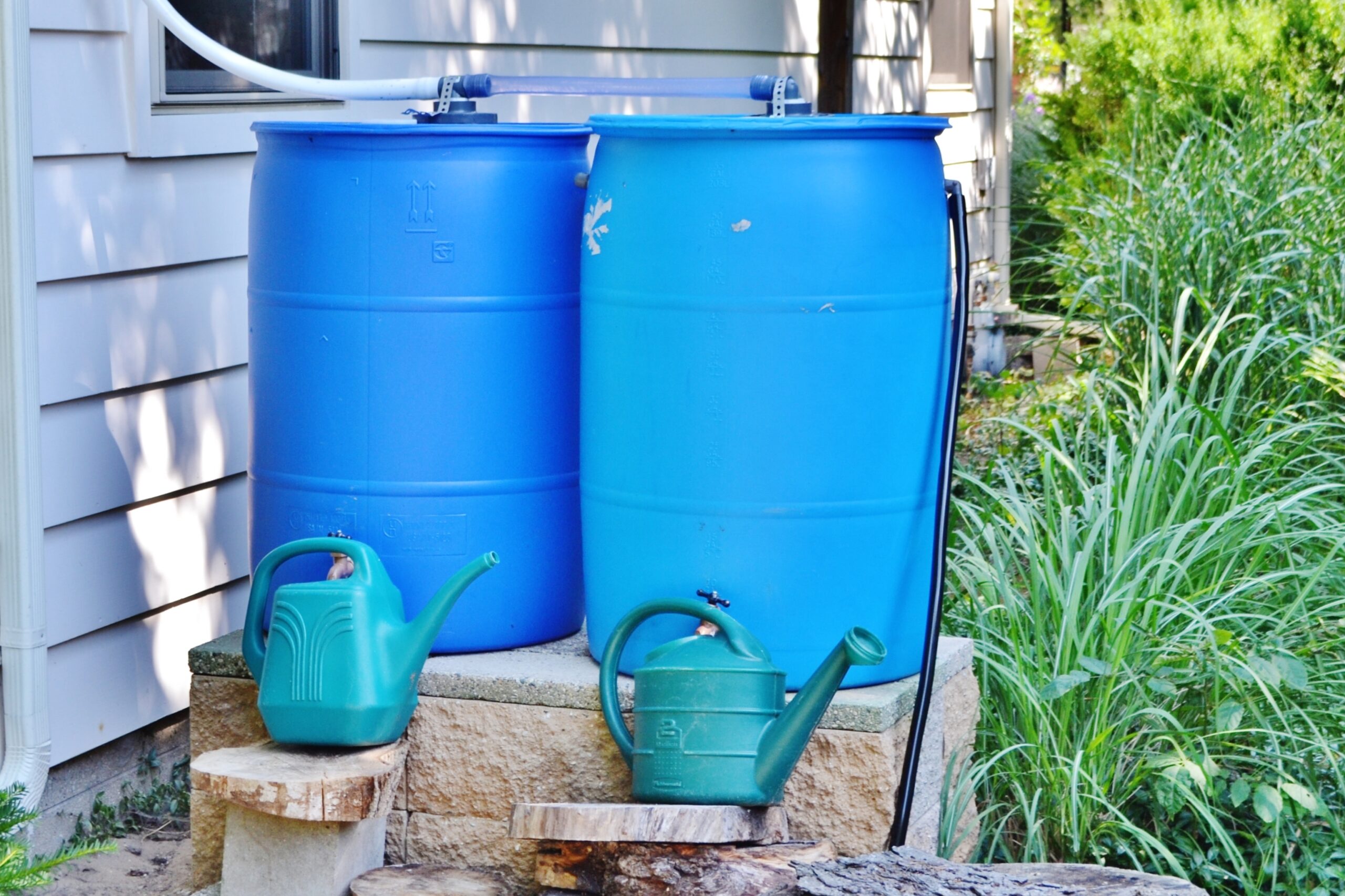
Forecast rain is not stored water. Even when rain arrives, a short storm may wet only the surface, run off a dry slope, miss containers, or be intercepted by covers. Rainwater harvesting can improve resilience, but the reserve calculation should count water only after it is actually in the tank or has measurably recharged the root zone.
If rainwater collection is part of the system, tank size depends on catchment area, local rainfall, demand, dry-period length, and budget. Extension guidance on rainwater harvesting makes the same point: one storage size does not fit every garden.
Protect Stored Water Quality and Source Reliability
Drought can change water quality at the same time that it reduces water quantity. A shallow well may become more mineralized as levels fall. Municipal restrictions can push a grower toward a secondary source. Rainwater storage can sit for weeks. Repeated irrigation without rainfall can allow salts from water and fertilizer to accumulate in the root zone.
The reserve plan should therefore answer two questions: Do I have enough water, and is the water still suitable for repeated irrigation?
Test the normal source before the drought is severe
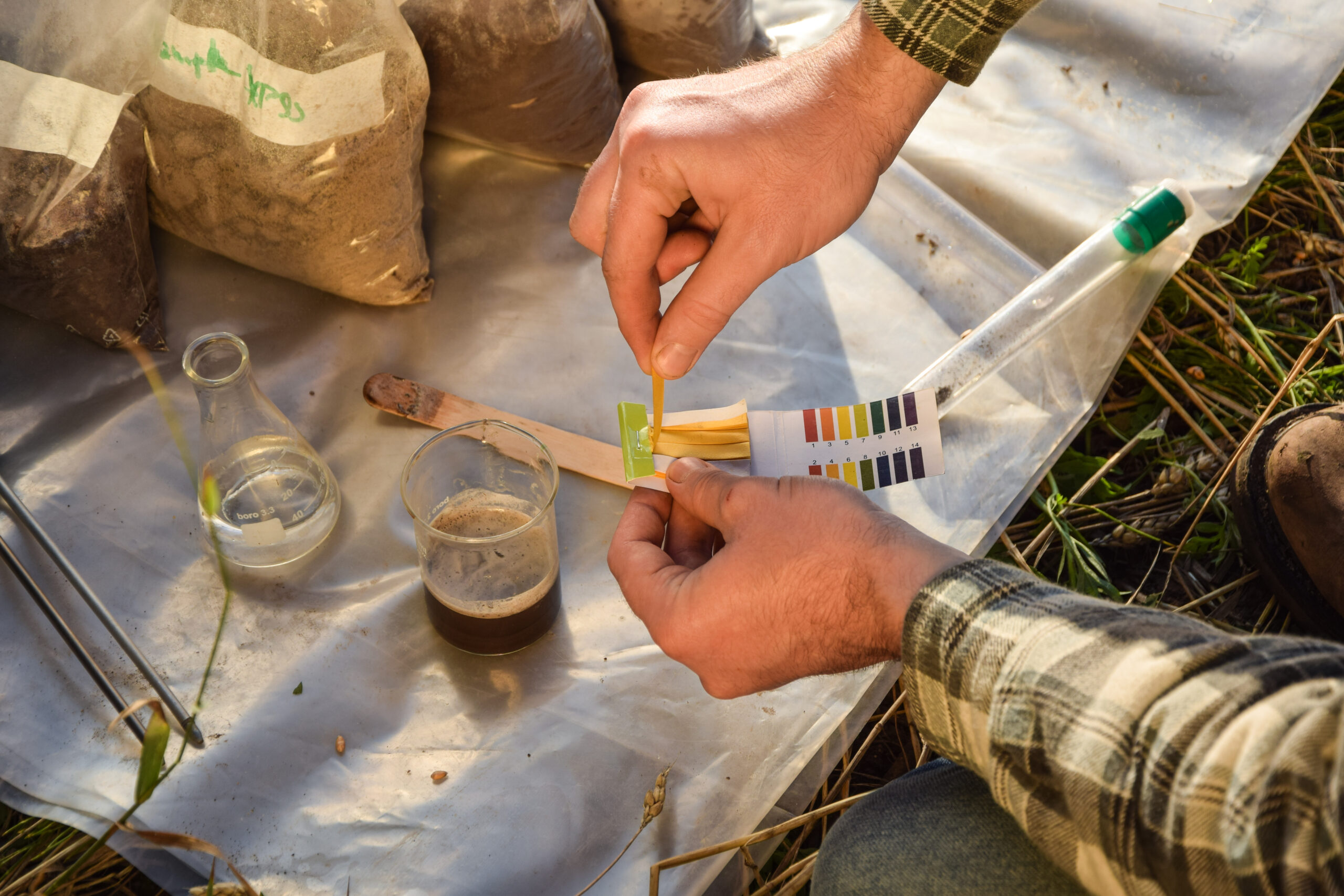
For a new or uncertain irrigation source, a laboratory test provides a stronger baseline than a handheld meter alone. Useful parameters include EC, pH, alkalinity, hardness, sodium, chloride, and where relevant sodium adsorption ratio. Penn State’s irrigation-water guidance emphasizes that water chemistry should be interpreted together rather than from pH alone.
During a long dry season, re-test if the source changes visibly, if a well level falls substantially, if a different source is introduced, or if plants begin showing unexplained salt-related symptoms. A handheld EC meter can help identify change over time, but it cannot tell you which ions are causing the increase.
Keep source-water EC separate from fertilizer EC
When stored water is used for fertigation, record the EC of the source before fertilizer is added and the EC after mixing. That keeps water quality separate from nutrient strength. During drought, this distinction becomes especially useful because the same fertilizer recipe added to increasingly saline source water produces a different final solution.
Root-zone EC is a third measurement. Source water can be acceptable while salts accumulate in the medium because rainfall is absent and irrigation volume is tightly rationed. Do not assume that a low source-water EC guarantees a low root-zone EC.
Sodium and chloride deserve attention during prolonged drought
General horticultural water-quality guidance treats elevated sodium and chloride as potential problems, especially when irrigation is frequent and rainfall is not diluting the root zone. These are not cannabis-specific toxicity thresholds. They are screening signals that tell you when a source deserves closer interpretation.
If a backup water source has materially higher sodium, chloride, or EC than the normal source, do not switch blindly during a drought. Consider whether dilution with better water is possible, whether the soil can drain accumulated salts, and whether the source should be professionally interpreted before repeated use.
Do not store irrigation water in containers that previously held toxic materials
Use tanks appropriate for water storage and know their previous use. Rainwater-harvesting guidance also recommends opaque storage, screened vents, stable foundations, safe overflow routing, and access for cleaning. A drought reserve should not introduce chemical contamination, algae, insects, or structural hazards.
Opaque, covered storage is easier to manage
Light encourages algae growth in stored water. Open tanks can collect debris and provide insect access. Storage should be covered or screened as appropriate, accessible for inspection, and positioned on a foundation designed for the weight. Water is heavy, so large tanks require serious structural planning rather than a casual platform.
Keep the outlet, pump, and filter accessible. A beautifully hidden tank that cannot be cleaned, flushed, inspected, or repaired is a weak drought asset.
Do not let stagnant storage become a blind spot
If water is stored for extended periods, inspect odor, visible growth, sediment, screens, and filters before the drought season. If the system uses captured roof runoff, maintain the catchment and diversion components that keep debris out. If water is meant only for irrigation, label it clearly so it is not mistaken for potable water.
Local rules for rainwater harvesting, cistern installation, backflow prevention, mosquito control, and water restrictions vary. Verify the rules that apply to the property rather than assuming a garden system is exempt.
Keep reserve water physically safe to use
Large tanks change the safety profile of a garden. They need a stable base, secure lids or covers, protected openings, controlled overflow, and plumbing that will not create trip hazards or uncontrolled discharge. In freezing climates, seasonal plumbing may also need protection or draining. In hot climates, exposed tubing and pumps can age faster in direct sun.
Do not place a heavy tank on a platform that was never designed for the load. Do not route overflow toward foundations, electrical equipment, septic areas, unstable slopes, or neighboring property. If a pump or controller uses mains electricity outdoors, use equipment and installation methods appropriate to wet outdoor conditions and local electrical rules.
Commission the Irrigation System and Find Hidden Losses
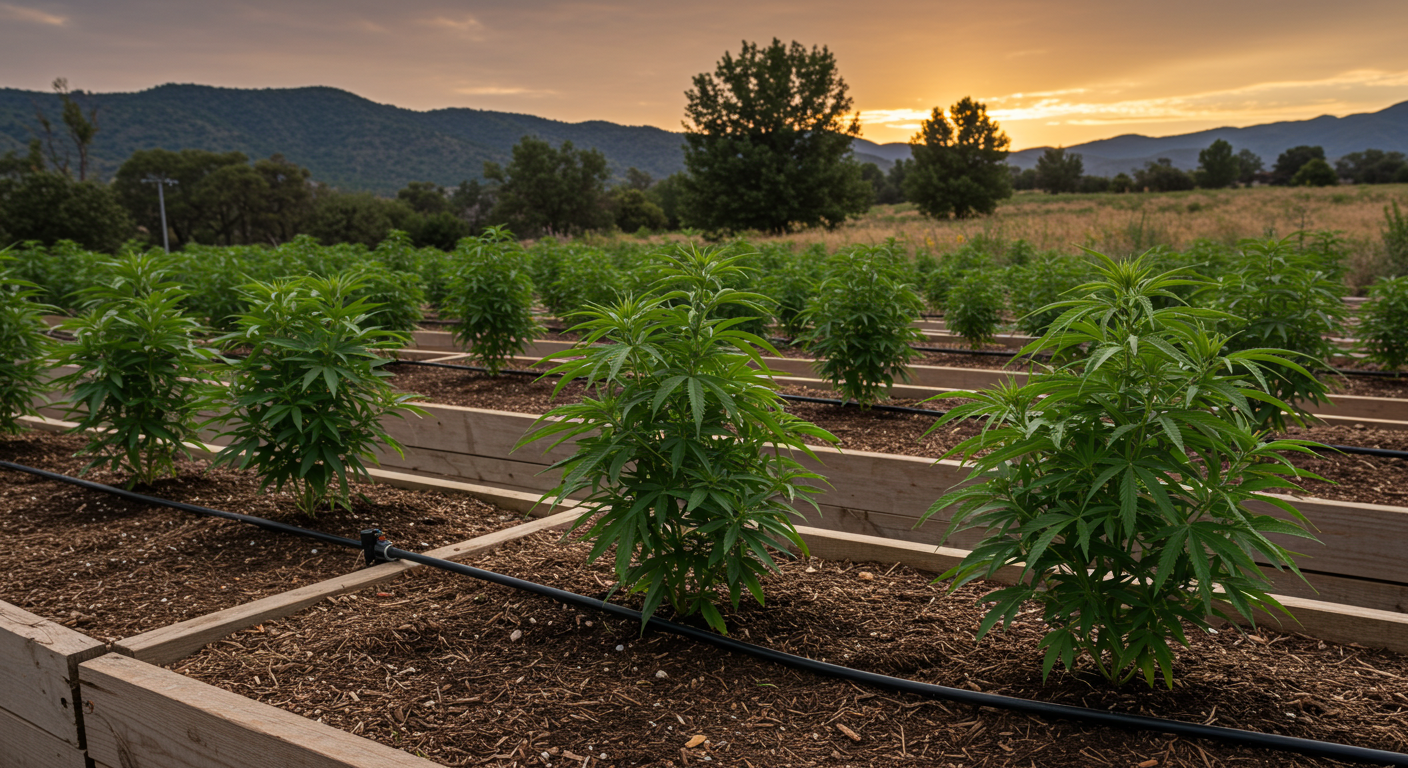
A reserve is only as reliable as the path between the tank and the root zone. Drought is a poor time to discover that the first emitter receives twice the water of the last, the pump cannot maintain pressure as the tank level drops, or a filter clogs after switching to stored water.
Commission the system before the dry period. The goal is to prove that the reserve can be withdrawn, moved, filtered, distributed, and verified under the same conditions in which it will be needed.
Measure emitter output at several positions
For drip irrigation, collect output for a fixed time from representative emitters near the beginning, middle, and end of each zone. Include high and low elevation points when the site slopes. UCANR guidance on microirrigation evaluation uses pressure and emitter-discharge measurements for exactly this reason: apparent operation is not the same as uniform delivery.
Record the collected volume. Large differences can indicate pressure problems, clogging, line length limitations, or emitter variation. Fix distribution before increasing runtime, because longer runtime can simply overwater the high-output locations while the weak locations remain behind.
Test pressure with the tank at realistic levels
Gravity-fed and pump-fed systems can behave differently as the storage level falls. A full tank may produce acceptable flow while the same system struggles near the reserve threshold. Run a test at more than one tank level and record whether the final emitters still operate properly.
If the system needs a pump, include the pump’s power source in the failure plan. A water tank paired with an electric pump is not independent of a power outage unless there is a safe, tested backup delivery method.
Filter stored and secondary water appropriately
Drip emitters have small passages and are vulnerable to suspended solids, mineral precipitation, biological growth, and debris. Oklahoma State Extension identifies filtration and water quality as major reliability issues for drip systems. A drought reserve that repeatedly plugs emitters can create localized severe stress even while plenty of water remains in storage.
Clean the filter before the drought period, learn the normal pressure or flow behavior of the clean system, and record when maintenance is needed. If a secondary source contains more sediment, expect the maintenance interval to change.
Map the wetting pattern, not only the emitter
An emitter can deliver the correct volume into a cup and still fail the plant if its wetting pattern covers only a narrow part of a large root system. After a timed irrigation, inspect moisture at several distances and depths. In containers, verify that water spreads through the medium rather than channeling down one side. In beds, confirm that emitter placement still matches the expanded root zone.
As the plant grows, the irrigation architecture may need to grow with it. This is one reason reserve demand should be measured after system adjustments rather than assumed from spring settings.
“The tank is full, but one plant still dries much faster than the others. Is that normal?”
Question sent by: PrairieRoots, via Facebook page.
It can reflect plant size or exposure, but first rule out a delivery problem. Catch-test that plant’s emitter, inspect the wetting footprint, check for hydrophobic channels, compare container or soil volume, and look for extra wind or reflected heat. A full reserve does not correct uneven distribution by itself.
Test the manual backup before automation fails
An automated system can fail during the exact period when the garden depends on it most. Keep a manual method that can move reserve water to the highest-risk zones if a timer, valve, pump, pressure regulator, or controller fails. That may be a gravity hose, watering wand, portable transfer pump, or another safe method appropriate to the site.
Measure how long the manual backup takes. If hand watering the entire garden requires several hours, that labor is part of the drought plan. A backup method that exists only on paper but cannot be completed before the hottest part of the day is not a reliable backup.
Run a simulated source failure
Turn off the normal water source and operate only from the reserve. Complete one full irrigation cycle. Confirm that valves, pumps, gravity head, filters, hoses, and timers work as expected. Record the tank drawdown and compare it with the predicted volume.
This commissioning test is one of the highest-value parts of drought planning. It converts the reserve from stored potential into a proven system.
Escalate the Response Before Plants Reach Severe Drought Stress
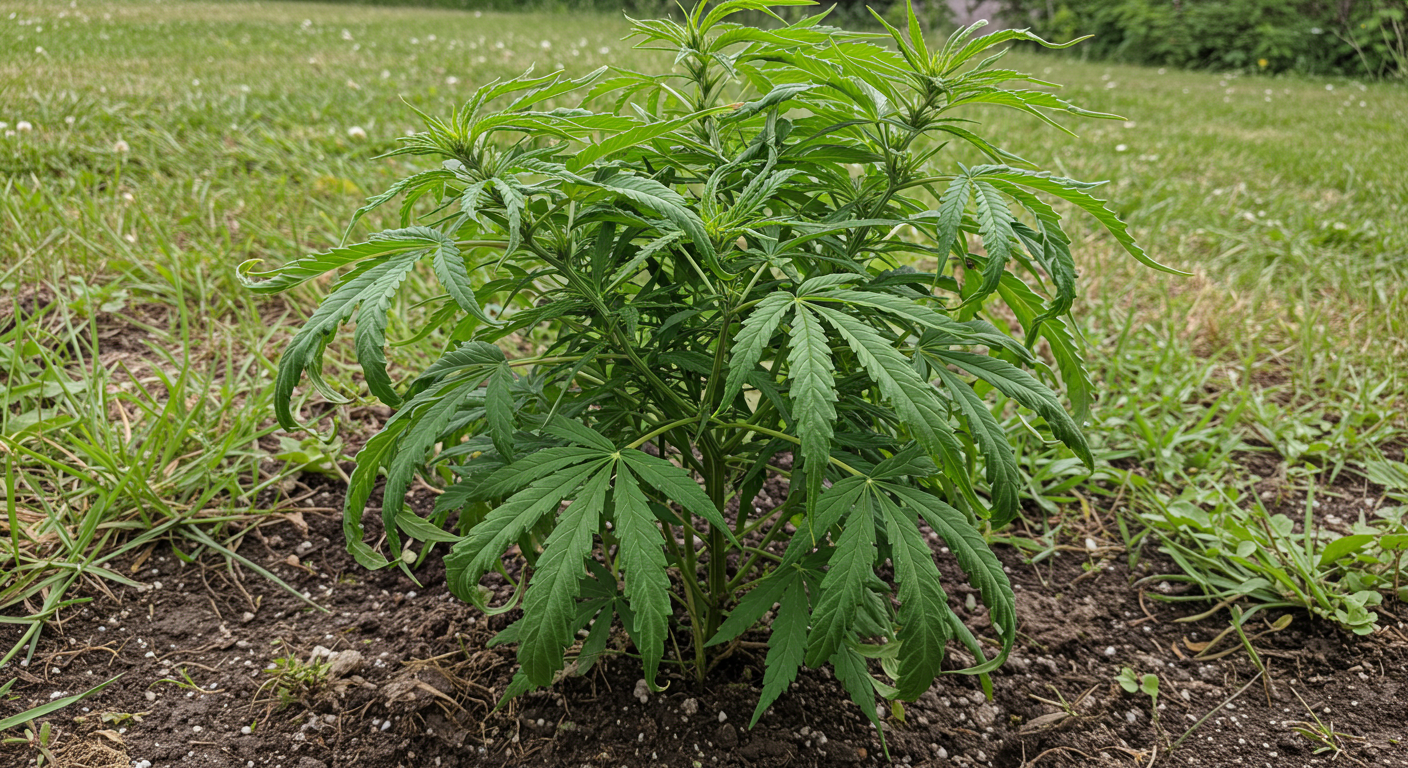
Drought management should have escalation levels. If every dry period is treated as an emergency, the grower tends to overcorrect. If the plan waits until plants are severely wilted and the tank is almost empty, it reacts too late. A simple staged response keeps decisions proportional to the problem.
Normal: demand is within the measured operating range
In normal dry weather, continue the established irrigation method and monitor reserve volume. Check root-zone moisture rather than watering by calendar. Refill storage at the planned threshold. Repair small leaks immediately because they become meaningful when the drought lasts for weeks.
Caution: autonomy is shrinking or dry-down is accelerating
Enter a caution state when peak-day demand rises enough that the stored volume no longer covers the planned autonomy period, when irrigation intervals shorten unexpectedly, or when a backup source becomes uncertain.
At this stage, reduce avoidable losses. Verify emitters. Remove competing weeds. Repair leaks. Confirm mulch coverage where appropriate. Postpone unnecessary transplanting or other operations that increase water demand. If movable containers are being cooked by reflected afternoon heat, reduce that site load rather than simply increasing water.
High risk: supply failure is likely before refill
A high-risk state means the reserve may run out before the normal source returns. This is the point to activate the backup source or change operational priorities. Do not wait for visible severe stress before taking action.
Prioritize plants with small root volumes, recent transplants, active flowering, or known fast dry-down. If local drought rules restrict irrigation, follow the rules. A home grow does not override emergency water restrictions.
Emergency: the garden cannot maintain the normal moisture range
If water is insufficient to maintain the established irrigation program, the objective shifts from perfect growth to preventing uncontrolled severe drought. Measure where water will protect the greatest active root volume. Avoid repeated tiny surface splashes that disappear before reaching deeper roots.
Do not respond by adding stronger fertilizer to less water. Reduced irrigation can increase salt concentration in the root zone, and severe drought can impair photosynthesis and growth. The plant needs usable water and an oxygenated root zone more than it needs an aggressive feeding correction.
| Drought State | Operational Signal | Response |
|---|---|---|
| Normal | Reserve covers planned autonomy and root-zone dry-down is predictable | Continue measured irrigation and routine refill |
| Caution | Demand rises, refill becomes less certain, or autonomy shrinks | Audit losses, re-test delivery, protect moisture, prepare backup source |
| High risk | Reserve may be depleted before the source returns | Activate backup supply and prioritize vulnerable zones |
| Emergency | Normal irrigation cannot be maintained | Protect the active root zone, avoid fertilizer escalation, and monitor recovery closely |
Prioritize root survival over cosmetic canopy appearance
When water becomes limited, avoid spending reserve volume on cosmetic responses that do not meaningfully recharge the active root zone. Frequent light sprays on soil surfaces can disappear quickly. Repeated foliar misting can consume water while adding little to root supply and may be inappropriate around dense flowers. The reserve should first protect the part of the system that keeps the plant supplied over the next several hours and days.
Similarly, do not remove large amounts of healthy foliage simply to reduce transpiration during a short drought emergency. Heavy pruning is another stress and can expose previously shaded tissue to stronger sun. If the site has a recurring water shortage, solve the mismatch through plant count, container size, root-zone design, irrigation capacity, or reserve size before the next season rather than repeatedly using emergency canopy reduction.
Do not use severe drought as a potency trick
The idea that a stressed cannabis plant automatically produces better flowers is too simple. Controlled studies have reported different outcomes depending on drought intensity, timing, genotype, and stage. Severe drought in floral hemp has reduced yield and cannabinoid concentrations. Other controlled cannabis work has found stage-specific metabolic responses followed by recovery.
The practical lesson is not that water stress has no biological effect. It is that deliberately allowing a drought emergency in the hope of improving quality is an unreliable production strategy. A reserve exists to give the grower control over when and how dry-down occurs.
Do not correct drought and salt accumulation with one blind flush
If water is scarce, a large flush can consume the reserve and still fail if drainage is poor or the source itself is saline. First identify whether the problem is true water deficit, uneven wetting, root-zone salt accumulation, poor aeration, or a delivery failure. Then choose the correction that matches the diagnosis.
Recovery should be gradual and measurable
After a severe dry-down, the medium may not accept water evenly at first. Rewet slowly enough to restore the full root zone without creating runoff or a saturated surface layer. In a hydrophobic container, several smaller passes can distribute water more evenly than one rapid application.
Watch the plant through the next light cycle. Recovery is more convincing when leaf posture, root-zone moisture, irrigation uptake, and new growth stabilize together. One hour of improved appearance does not prove the root system has fully recovered.
Run a Weekly Drought Audit and Verify Recovery
A drought plan becomes reliable through repetition. The weekly audit should be short enough that it actually gets done and specific enough to catch a failing reserve before the plants show serious symptoms.
Start with stored volume and autonomy
Record the usable water currently in storage. Divide that by the recent peak-day delivered volume to estimate current autonomy. If the garden is divided into zones with different schedules, use the demand pattern that will deplete the reserve fastest.
Compare the result with the autonomy period you planned. If the margin is shrinking, act before the next heat event or supply interruption.
Recheck one representative irrigation event
At least periodically during drought, measure the actual water drawn from storage during a normal irrigation. Timer drift, pressure changes, added emitters, plant growth, and manual watering can all change total use. If actual drawdown differs materially from the budget, update the reserve calculation.
Inspect the source and tank
Check the refill source, water level, inlet, outlet, overflow, screens, tank cover, sediment, filter, pump, and power supply. Look for leaks around fittings and wet ground that suggests hidden loss. If a well or pond level is dropping, record the trend rather than waiting for complete failure.
Check representative root zones
Inspect at least one plant from the highest-demand zone, one from the lowest-demand zone, and any plant with a history of irregular dry-down. Check below the surface. A drought plan is successful only if stored water produces a repeatable moisture response where roots are active.
Recheck water quality when the source changes
If the reserve is being refilled from a new well, captured rain, delivered water, or another source, record that change. Measure EC when appropriate and obtain laboratory testing when the source is uncertain or will be used repeatedly. Keep source-water chemistry separate from the fertilizer recipe.
Reset the reserve calculation after meaningful rain
Rain does not automatically reset the drought plan. After a useful rainfall event, check how deeply the root zone was recharged and how much stored water was actually replenished. A short storm may fill a rain barrel while barely wetting deep soil, or it may soak an in-ground bed while contributing almost nothing to covered containers.
Update the reserve ledger only with confirmed storage and confirmed root-zone recharge. This prevents a common planning error in which the grower assumes the drought has ended because rain appeared in the forecast or the soil surface looks wet. The next irrigation decision should still come from the active root zone.
Use a pre-drought commissioning day
Before the dry season becomes serious, run the complete system on reserve water only. Measure tank drawdown. Catch-test emitters. Inspect the wetting pattern. Confirm that the pump works at a lower tank level. Verify that hoses reach every zone. Make sure stored water can be delivered without relying on a missing adapter, flat battery, locked gate, or unavailable person.
If the test fails, that is useful information. Fix the weak point while normal water is still available.
Use this audit before drought and repeat it during the dry period
- Measure a complete irrigation event in liters or gallons instead of estimating from plant count.
- Record the interval until the next irrigation during demanding weather.
- Separate delivered water from the moisture actually reaching the active root zone.
- Calculate usable reserve from measured peak-day demand and the failure period you need to bridge.
- Measure unusable tank volume rather than trusting nominal tank capacity.
- Set a refill threshold that protects the planned emergency reserve.
- Do not count forecast rainfall until water is captured or root-zone recharge is verified.
- Keep storage covered, opaque where practical, screened, stable, and accessible for cleaning.
- Know the source-water EC and obtain fuller water testing when source quality is uncertain.
- Keep source-water chemistry separate from fertilizer strength in the records.
- Clean filters and catch-test representative emitters before the drought period.
- Confirm the wetting pattern reaches the expanded root zone.
- Test the system with the normal source turned off.
- Check that pumps, gravity head, timers, hoses, power, and manual backup delivery work at lower tank levels.
- Repair leaks and runoff before buying more storage.
- Recalculate autonomy after major canopy growth, heatwaves, or irrigation-system changes.
- Escalate the drought response before the reserve is nearly empty.
- Follow local drought restrictions, rainwater rules, and water-storage safety requirements.
- After a severe dry-down, rewet gradually and verify recovery through the next light cycle.
What a drought-ready garden looks like
A drought-ready garden is not one with the largest tank. It is one in which the grower knows the verified daily water demand, knows how long the stored supply can bridge a failure, knows whether water is reaching the entire root zone, and knows when to activate the backup before severe stress begins.
The strongest reserve plan also improves normal irrigation. Measuring flow exposes clogged emitters. Tracking dry-down reveals containers that are too small. Testing source water separates drought symptoms from salt problems. Commissioning the backup identifies failures while there is still time to repair them.
Plan water as a system: source, storage, delivery, root-zone response, and refill. When those five parts are measured, drought becomes a managed operating condition rather than a last-minute search for more water.
Share this article
A quick overview of the topics covered in this article.
Follow us
Latest articles

September 4, 2026
September 4, 2026
September 4, 2026
September 4, 2026