
Can Cannabis Seeds Carry Plant Pathogens?
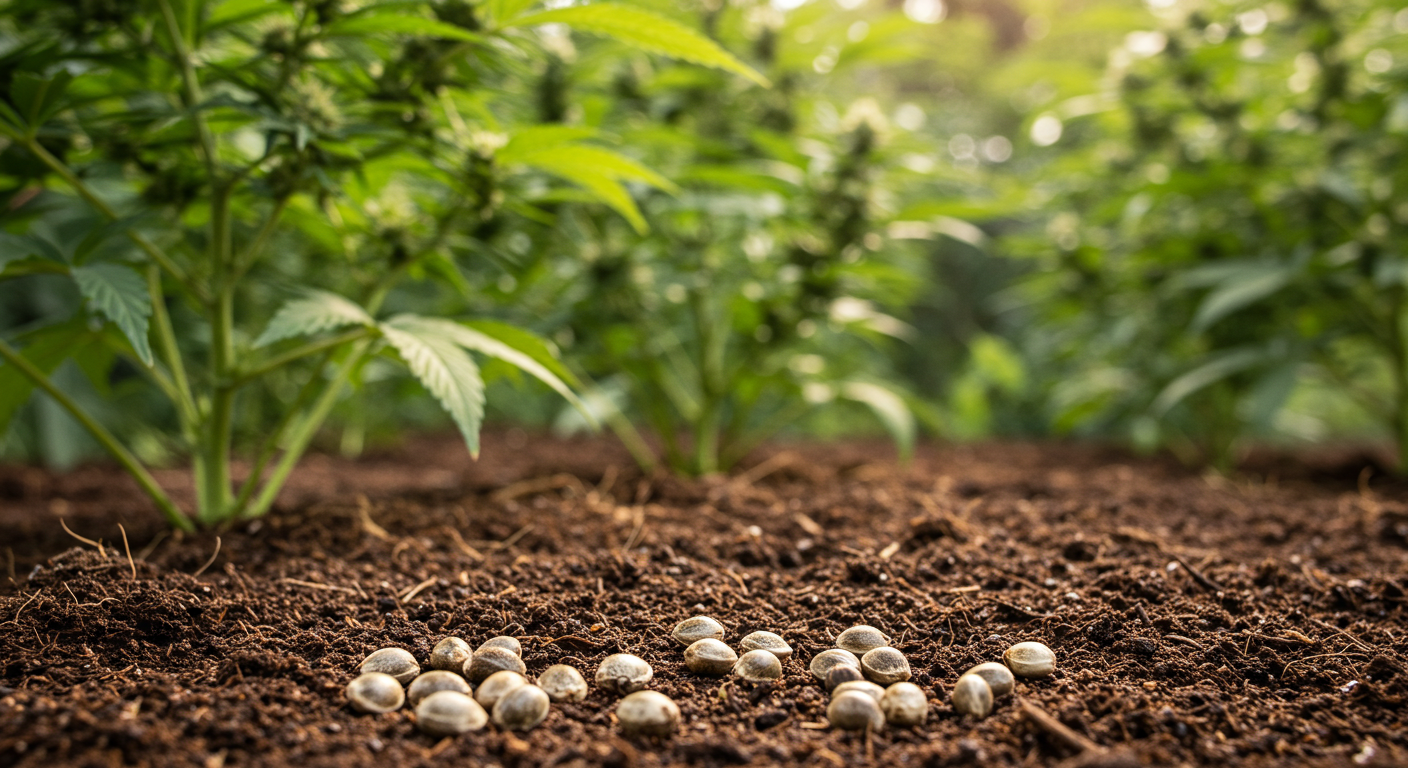
Yes. Cannabis and hemp seeds can carry plant pathogens, but “carried on or in a seed” and “successfully transmitted into the next plant” are not the same claim. Some pathogens have strong cannabis-specific evidence for seed transmission. Others have only been isolated from seed surfaces or internal seed tissues. Still others cause seedling disease but usually reach the seedling from contaminated media, water, trays, or the surrounding environment rather than from the seed itself.
That distinction changes what a grower should do. A mold colony on one seed does not prove that an entire lot is systemically infected. A tray of damping-off seedlings does not prove the seed was the source. At the same time, a clean-looking seed is not proof of pathogen freedom. Hop latent viroid (HLVd) can be present in cannabis or hemp seed and can produce infected seedlings, while a 2026 hemp study found beet curly top virus (BCTV) inside seed tissues but much lower transmission into seedlings than the percentage of seeds that tested positive.
This resource stays focused on the seed-health question: what “seed-borne” really means, which cannabis pathogens currently have useful evidence behind that label, how to investigate a suspicious seed lot, which look-alikes can mislead you, and how to contain and recheck a problem without assuming every weak seedling came infected from the pack.
Resource Navigation
In This Resource
- Start With the Difference Between Seed-Borne and Seed-Transmitted
- What Cannabis Research Actually Shows Can Travel With Seed
- Where a Seed-Associated Problem May Show Up First
- Confirm the Pathogen Without Guessing the Source
- Separate Seed-Borne Disease From Common Look-Alikes
- Know Which Conditions Increase Seed-Lot Risk
- Contain a Suspicious Lot Before You Treat Anything
- Know What Seed Sanitation Can and Cannot Fix
- Reinspect at 24 Hours, 3 Days, and 1–2 Weeks
- Make the Seed-Lot Decision From Evidence, Not Appearance
Start With the Difference Between Seed-Borne and Seed-Transmitted
Seed pathology uses words that sound similar but answer different questions. For a home grower, getting these terms right prevents two opposite mistakes: dismissing a genuine seed pathway because the seed looked normal, or blaming a seed company for a root-zone disease that actually started in the grower’s wet media or dirty tray.
A microorganism can sit on the outer fruit or seed tissues, occur internally, remain dormant until germination, or be detected as genetic material without establishing a systemic infection in the emerging plant. Those are different biological situations. The strongest evidence of seed transmission comes from a grow-out or transmission experiment showing that a pathogen associated with seed appears in the resulting seedling under conditions designed to exclude other routes.
Seed-borne vs seed-transmitted
Seed-borne means a pathogen or potentially pathogenic organism is carried on or within seed material. Seed-transmitted means that seed association results in infection of the next plant. A pathogen can be seed-borne without transmitting efficiently, and the transmission rate can differ sharply among genotypes, seed lots, environments, and pathogens.
Detection is not the same as infection
PCR and RT-PCR can answer whether target DNA or RNA is present in the tested sample. Culture can show that a viable fungus or bacterium can be recovered. Neither result automatically proves the organism caused a later symptom. Causality becomes stronger when the organism is repeatedly associated with disease, isolated or detected from appropriate tissues, and shown to infect healthy plants or seedlings under controlled conditions.
The 2026 BCTV hemp work is a useful example. BCTV was detected in a large fraction of surface-disinfected seeds in two genotypes, yet only a small fraction of seedlings became positive in grow-out tests. The seed therefore represented a real pathway, but the rate of positive seed detection greatly overstated the observed rate of seedling transmission. That is exactly why a seed-health article should not collapse “found in seed” into “every seedling will be infected.”
Remember: A high percentage of pathogen-positive seeds can coexist with a much lower percentage of infected seedlings. Always separate seed detection rate from transmission rate when judging risk.
Important: When you read a study or laboratory report, ask which endpoint was measured: pathogen detected on seed, pathogen detected inside seed, viable organism recovered, infected seedling produced, or disease reproduced. Those findings carry different weight.
Cannabis “seeds” also carry a microbiome
Cannabis seed is not sterile by default. Research on hemp and drug-type cannabis has recovered diverse bacteria and fungi from seed and from seedlings raised under conditions intended to limit environmental acquisition. Some of those microbes are potential pathogens. Others are harmless epiphytes, ordinary environmental fungi, or beneficial endophytes that may compete with pathogenic fungi.
That means a microbial detection result is not automatically a disease diagnosis. Seed-associated genera such as Alternaria, Fusarium, Penicillium, Aspergillus, Cladosporium, and Rhizopus include species with very different biology. Identification to genus alone may be useful for screening, but the grower still needs species-level context, tissue pattern, pathogenicity evidence, or an appropriate diagnostic assay before deciding what the result means.
“If I see white or gray fuzz on one seed, does that mean the whole pack carries a plant pathogen?”
Question sent by: Rachel Morgan, via email.
Not necessarily. Visible fungal growth tells you that the individual seed and its immediate environment deserve attention, but it does not identify the fungus, prove that it is pathogenic to cannabis, or establish that every seed in the lot is affected. Separate the affected seed or tray, photograph the pattern, review moisture and sanitation conditions, and watch whether the same problem repeats across siblings from the same lot. Repeated lot-linked disease is more informative than one moldy seed.
What Cannabis Research Actually Shows Can Travel With Seed
The cannabis evidence base is still much smaller than the seed pathology literature for major food crops. Even so, several findings are strong enough to guide practical decisions. The most useful approach is to rank evidence by what was demonstrated rather than produce a long list of organisms that have merely been found somewhere on a hemp seed.
| Evidence Level | Cannabis / Hemp Example | What the Evidence Supports |
|---|---|---|
| Direct seed transmission demonstrated | HLVd | HLVd has been detected in infected cannabis and hemp seed, and controlled studies have produced infected seedlings from infected seed. Transmission rates have been high in some tested material, but they should not be treated as a universal percentage for every genotype or lot. |
| Seed-transmitted fungal disease demonstrated | Alternaria rosae | A Plant Disease report linked seed-transmitted A. rosae with severe germination failure and damping-off in industrial hemp. This is stronger evidence than simply recovering an Alternaria isolate from seed. |
| Potential seed transmission demonstrated at low grow-out frequency | Beet curly top virus (BCTV) | A 2026 hemp study detected BCTV inside surface-disinfected seed tissues and recovered a small number of infected seedlings in grow-out tests, supporting a seed pathway but also showing that positive seed detection did not equal the seedling transmission rate. |
| Seed association and pathogenic potential | Alternaria, Fusarium, Stemphylium and other fungi | Multiple studies have isolated fungi from surface-disinfected cannabis or hemp seeds, including genera that contain cannabis pathogens. This supports seed association and risk screening, but it does not prove every isolate, lot, or species will transmit disease. |
| Seedling pathogen, seed source not established by symptoms alone | Pythium, Rhizoctonia, some Fusarium infections | These organisms can cause damping-off or root disease. A sick seedling may acquire them from substrate, irrigation water, trays, tools, or environmental inoculum, so the symptom itself cannot identify the seed as the source. |
HLVd is the clearest reason not to dismiss the seed pathway
HLVd is often discussed as a clone and mother-plant problem because mechanical spread through vegetative propagation is so important. That should not hide the seed evidence. Studies have detected HLVd in hemp and cannabis seed, in pollen and anthers, and in seedlings produced from infected seed. A 2023 study reported high seed transmission in hemp, while 2025 work documented HLVd-positive cannabis seed and subsequent detection in cotyledons and later true leaves.
The practical implication is not that every commercial cannabis seed lot should be assumed infected. It is that a seed-grown plant is not automatically outside the HLVd biosecurity system. If a collection depends on pathogen-tested stock, seed introductions need traceability and testing logic rather than an assumption that only clones can carry systemic pathogens.
Do not use a surface rinse as proof that HLVd risk is gone
HLVd can be associated with internal seed tissues or become systemic in the seedling. Laboratory sanitation findings on extracted sap or seed surfaces do not prove that a home seed soak can clear an internally infected embryo without affecting viability. If HLVd status matters, use an appropriate diagnostic testing strategy rather than treating surface disinfection as pathogen certification.
Alternaria gives a direct fungal seed-transmission example
Cannabis and hemp seed surveys frequently recover Alternaria, but the strongest practical example is not a survey. A 2023 disease report investigated major emergence failure in industrial hemp and identified seed-transmitted Alternaria rosae as the cause of damping-off. The important part is the causal chain: affected seed, fungal recovery and identification, and disease linked to the seedling problem.
This does not mean every dark Alternaria-like colony on cannabis seed will cause damping-off. Alternaria is a large genus and seed lots differ. It does show that seed-transmitted fungal disease is not theoretical in Cannabis sativa and that repeated emergence failure within a particular lot deserves more than a watering adjustment.
Important: Do not generalize from one pathogenic Alternaria species to every Alternaria isolate recovered from seed. Species identity and pathogenicity matter.
Fusarium belongs in the risk discussion, but evidence must stay specific
Fusarium species cause serious cannabis and hemp diseases, including seed rot, damping-off, crown and root disease, and wilt. Fusarium has also been isolated from cannabis or hemp seed, including surface-disinfected seed in multiple studies. That makes seed a plausible pathway for some species and lots.
However, Fusarium is also a major soilborne and substrate-associated pathogen complex. When a seedling collapses with Fusarium, you cannot identify the seed as the source unless the investigation links the organism back to the seed lot or excludes other pathways. This distinction is especially important in reused media, outdoor soil, shared propagation trays, or facilities where Fusarium has already been present.
Weedth Verdict: The evidence supports a real cannabis seed-health risk, not a reason to treat every seed as contaminated. HLVd, seed-transmitted Alternaria rosae, and emerging BCTV data show why source and lot records matter. Broader fungal surveys show why a pathogen name recovered from seed still needs interpretation.

Where a Seed-Associated Problem May Show Up First
Seed-associated disease does not have one signature symptom. The timing depends on whether the pathogen damages the seed before emergence, attacks the hypocotyl or roots during emergence, remains latent until the seedling develops more tissue, or establishes a systemic infection that becomes visible later. The first question is therefore not “what disease is this?” but “where and when is the failure appearing across the lot?”
Before emergence: missing plants can hide seed decay
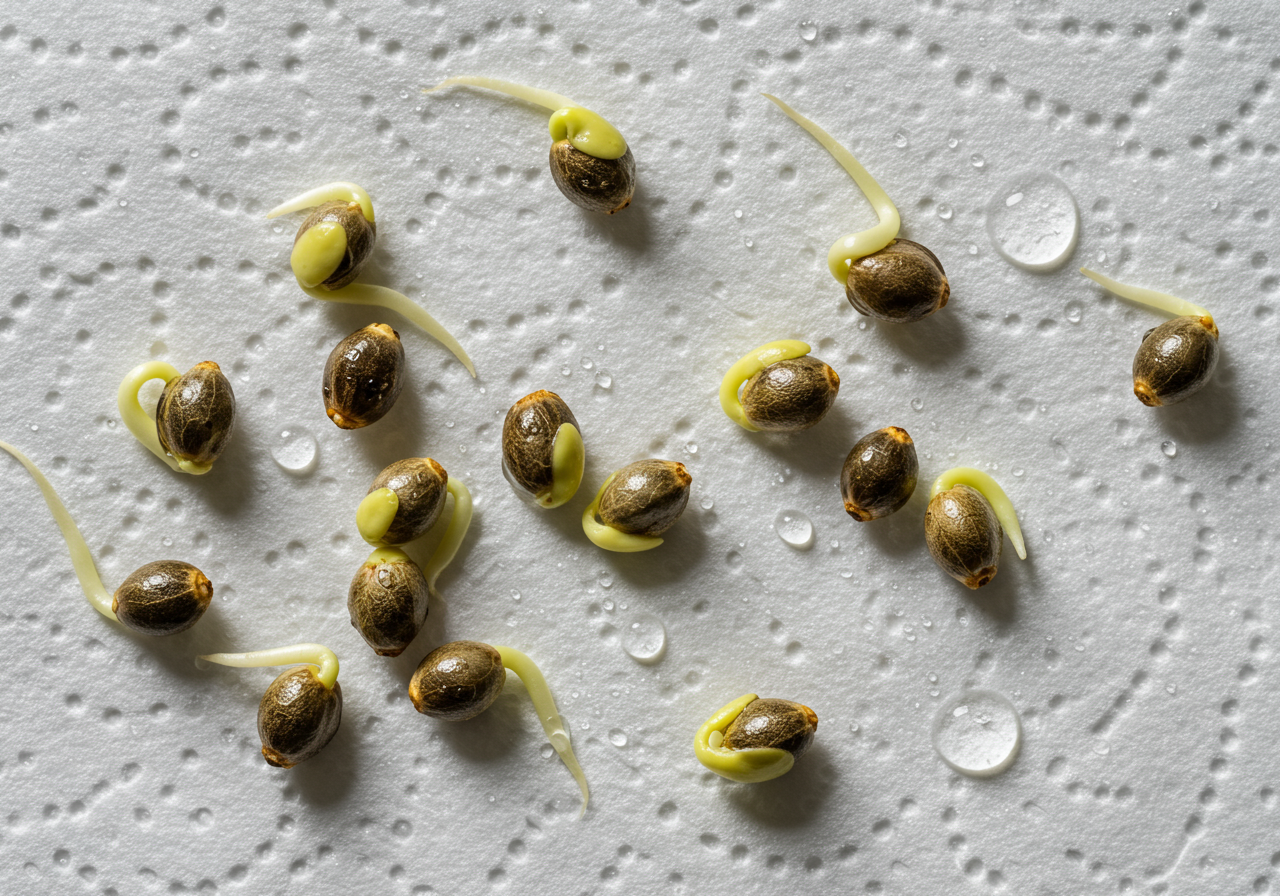
Pre-emergence disease is easy to mistake for poor germination. A seed may never emerge because it was nonviable, physically damaged, stored badly, planted under unsuitable conditions, or decayed after sowing. If several seeds from one lot fail while comparison material under the same controlled setup emerges normally, pathogen involvement becomes more plausible but is still not proven.
Do not repeatedly dig up every slow seed. If you are investigating a pattern, sample a limited number using clean tools and record whether the seed remains firm, has begun to germinate, has dark or soft internal tissues, or is surrounded by obvious fungal growth. A laboratory can obtain much more from an intact representative sample than from a tray that has been repeatedly handled and contaminated during home inspection.
At emergence: watch the hypocotyl, crown, and root transition
Post-emergence damping-off often becomes visible at the narrow transition between root and shoot. Seedlings may develop a water-soaked or brown constriction, lose support, collapse, or show progressive root discoloration. These signs can be caused by several fungi and oomycetes, including organisms that may be seed-associated and organisms acquired from the growing environment.
The distribution is useful. One randomly collapsed seedling in a wet tray tells you less than repeated lesions appearing in siblings from one lot while a comparison lot in the same propagation system remains healthy. Pattern is not a substitute for testing, but it helps decide which samples and environmental sources should be tested.
Field Advice: When damping-off appears, photograph the entire tray before removing plants. The spatial pattern can help distinguish a lot-wide starting-material problem from a wet corner, contaminated irrigation emitter, reused cell, or local substrate issue.
Cotyledons and first true leaves can reveal systemic infection
Systemic pathogens may not announce themselves during radicle emergence. In 2025 HLVd work, the viroid was detected on infected cannabis seed coats and later in expanded cotyledons and true leaves, with detection in young root tissue occurring later in that specific experiment. The useful lesson is not a universal sampling schedule. It is that an early root-negative result or healthy radicle does not automatically clear systemic seed transmission.
BCTV also illustrates why seedlings require follow-up. The 2026 study detected BCTV inside seed tissues at much higher percentages than the rate of positive seedlings found in grow-out tests. If a pathogen can be present in seed but transmit inefficiently, only continued grow-out and appropriate testing can tell you which seedlings actually established infection.
“Three seedlings from one pack are stunted, but the rest look normal. Should I assume the seed lot is infected?”
Question sent by: ColdMorningGrow, via contact form.
Treat the pattern as a reason to investigate, not as a diagnosis. Keep the affected seedlings and their siblings separated from unrelated clean stock, compare root and crown condition, review media moisture and environmental history, and preserve the seed-lot record. If the pattern is important enough to affect whether you keep or share the line, submit representative plant material for the appropriate diagnostic test. A mixed lot can contain both infected and healthy seedlings, but ordinary environmental variation can also produce a mixed tray.
Confirm the Pathogen Without Guessing the Source
A strong diagnosis has two parts: identify the problem and reconstruct how it could have arrived. A laboratory result can tell you that HLVd, BCTV, a specific fungus, or another target was detected. It cannot always tell you whether the organism came from the seed, media, water, tray, tool, insect vector, neighboring plant, or later handling. Source attribution needs comparison samples and records.
Use the right test for the suspected pathogen
HLVd is an RNA viroid, so diagnostic laboratories commonly use RT-PCR or RT-qPCR assays. BCTV is a DNA virus and can be tested with appropriate PCR-based methods. Fungal pathogens may be investigated through culture, microscopy, species-specific molecular testing, sequencing, or combinations of these methods. The correct tissue and sampling time depend on the organism and the laboratory protocol.
A home hand lens can help document visible mycelium, sporulation, lesions, insects, or root condition, but it cannot confirm HLVd, identify an internal virus, or reliably distinguish closely related fungal species. Use visual tools to choose samples and record symptoms, not to create a species-level diagnosis from appearance.
Test the cohort, not only the worst plant, when source matters
If your real question is “did this lot introduce the pathogen?”, the sickest plant is only one piece of evidence. A stronger investigation may include an affected seedling, an apparently healthy sibling from the same lot, a healthy comparison plant or lot, and relevant environmental samples when the suspected pathogen can come from media, water, trays, or surfaces.
For a home grower, that may be more testing than the value of the plants justifies. You do not need to turn every seed failure into a laboratory project. But when the decision affects a breeding population, valuable genetics, a mother collection, or material you intend to share, the cost of a mistaken source assumption increases sharply.
Field Advice: When source attribution matters, include at least one apparently healthy comparison. Testing only the sickest seedling can confirm a pathogen without showing whether the entire lot or propagation environment is involved.
Pro Tip: Write the diagnostic question before you collect a sample. “Is this seedling HLVd-positive?” and “Did this seed lot introduce HLVd into my garden?” are different questions and may require different samples.
Preserve the pack and lot information
Keep the original package, source name, lot or batch number if one was provided, purchase or acquisition date, and any documentation about testing. Photograph the packaging before it becomes wet or damaged. If no supplier lot exists, create your own intake ID but do not mislabel it as a supplier batch number.
This record becomes valuable only when a pattern appears. If six months later a second grow from the same lot shows the same unusual damping-off or a systemic pathogen is confirmed in several siblings, you can connect those events. Without a lot record, the evidence collapses into “I think these were from the same pack.”
Preserve source and comparison evidence
Keep the original seed documentation, identify affected and unaffected siblings, and record shared media, water, trays, and handling before deciding where the pathogen came from.
Blame the pack from one symptom
Do not call a seed lot contaminated because one seedling collapsed in a wet tray or tested positive after weeks of exposure to other plants. Confirm the pathogen and reconstruct realistic alternative routes.
Separate Seed-Borne Disease From Common Look-Alikes
The symptoms that make growers suspect “bad seed” are some of the least specific symptoms in propagation: low emergence, twisted cotyledons, weak roots, seedling collapse, yellowing, stunting, and uneven growth. Each can result from noninfectious conditions. A useful investigation tries to falsify the seed-source hypothesis rather than collect only evidence that supports it.
| Observation | Seed-Borne Explanation | Common Non-Seed Look-Alikes |
|---|---|---|
| Low emergence | Seed decay, infected embryo or seed-associated fungus may reduce emergence in some lots. | Old or poorly stored seed, excessive planting depth, unsuitable temperature, waterlogging, physical damage, or low inherent viability. |
| Seedling collapse | Seed-transmitted fungal infection can produce damping-off. | Pythium, Rhizoctonia, or Fusarium from media, water, trays, reused containers, or the propagation environment. |
| Brown roots | A seed-associated fungus may establish root infection. | Saturated media, low oxygen, salt injury, temperature stress, transplant damage, or environmental root pathogens. |
| Stunting / short internodes | Systemic seed-transmitted HLVd or another pathogen may reduce vigor. | Genetics, strong light, low temperature, root restriction, nutrient imbalance, irrigation stress, or normal seedling variation. |
| Leaf distortion / chlorosis | Some systemic pathogens can affect new growth. | pH or nutrient problems, edema, pests, spray residue, physical damage, viral infection acquired later, or environmental stress. |
| Visible mold on seed surface | A seed-associated fungus may be present. | Saprophytic mold colonizing dead tissue after the seed failed for another reason, or contamination introduced by wet media, dirty tools, or handling. |
Damping-off describes a disease outcome, not one source
Growers often use “damping-off” as though it names a single pathogen. It does not. Seed decay and seedling collapse can result from multiple fungi and oomycetes. Some can be seed-transmitted. Others live in media or irrigation systems. Several may occur together.
If the stem base is constricted and the seedling collapses, the action is to contain the affected area, inspect roots and neighboring cells, reduce avoidable spread, and obtain a diagnosis when the stakes justify it. The action is not to immediately bleach every remaining seed or change six environmental variables at once.
Remember: A tray can contain a real pathogen and still have the wrong source attribution. “The seedlings have Fusarium” does not automatically mean “the seed lot brought Fusarium.”
A healthy-looking seed tells you very little about internal status
Seed coat color, striping, size, and firmness can help identify obviously damaged or poorly developed seed, but they cannot certify pathogen freedom. HLVd-positive cannabis seed in controlled studies did not require a visually dramatic lesion, and BCTV was found inside embryo and endosperm tissue after surface disinfection in the 2026 hemp study.
The reverse is also true. A discolored or scarred seed is not automatically infected. Mechanical handling, maturity differences, storage, and seed coat variation can change appearance without causing disease. Use appearance as a sorting and documentation tool, not as a laboratory test.
Do not consume or repurpose obviously contaminated seed because a plant treatment failed
Plant-health decisions and food/feed safety are separate. Some seed-associated fungi can produce mycotoxins under suitable conditions. Do not assume that rinsing, germination failure, heating, extraction, or later plant processing makes visibly moldy or suspect seed safe for consumption. Follow applicable food, feed, and disposal guidance for the intended use.
Know Which Conditions Increase Seed-Lot Risk
Seed-borne disease begins with the biology of the parent plant and continues through harvest, drying, cleaning, storage, distribution, and germination. A home grower rarely knows every step. That makes provenance and lot-level behavior more useful than trying to infer risk from a glossy package or a cultivar name.
Infected parent plants can place systemic pathogens into reproductive tissues
HLVd has been detected in cannabis inflorescences, pollen, anthers, and seed. BCTV has now been detected inside hemp embryo and endosperm tissues. These findings show that pathogens can enter seed through more than superficial contamination after harvest. When internal infection occurs, wiping or surface disinfection does not address the whole problem.
This is one reason pathogen testing of breeding and seed-production stock matters. The home buyer usually cannot audit the parent plants, so the practical substitute is documentation: source reputation for traceability, clear lot identity, declared pathogen testing when available, and willingness to preserve those records rather than mixing seed from several sources into one unlabeled container.
Flower infection and wet seed production can increase fungal opportunity
Cannabis flowers host diverse fungi, including genera that later appear on seed. Wet weather, dense reproductive canopies, damaged flowers, delayed drying, and poor post-harvest handling can increase fungal colonization opportunity. The relationship is not simple enough to convert one humidity reading into a universal seed-risk threshold, but production conditions matter.
For stored seed, moisture and temperature influence both viability and fungal behavior. Seed that is stored damp, exposed to condensation, or repeatedly warmed and cooled can deteriorate even without a named pathogen. Poor storage can therefore create a weak lot and also make fungal growth easier, producing a mixed problem that is difficult to untangle later.
Field Advice: When you receive seed, record the condition of the package and seed before storage. Condensation, musty odor, visible mold, wet packaging, or damaged containers are intake findings, not normal seed traits to forget after the pack is opened.
Warm, wet propagation conditions amplify many seedling diseases
A seed may carry only a small amount of fungal inoculum and still produce severe disease if germination occurs in chronically saturated, low-oxygen conditions. Conversely, a clean seedling can acquire damping-off pathogens from a contaminated tray or medium under the same conditions. The propagation environment therefore changes disease expression even when it does not change where the pathogen originally came from.
Avoid turning that principle into “keep seedlings dry.” Young plants need reliable moisture. The better goal is even moisture with air in the root zone, clean equipment, and enough observation to notice whether the tray remains saturated long after neighboring plants would normally dry down.
“If a seed lot came sealed and looked dry, can I assume it is pathogen-free?”
Question sent by: GreenShelfLife, via Facebook page.
No. Good packaging and dry seed are positive quality signals, but internal seed transmission can occur without visible surface contamination. Keep the lot information, store it correctly, and evaluate the seedlings as a cohort. If the source provides pathogen testing, check what organism, tissue, method, and date were actually tested rather than treating “tested” as a universal health certificate.
Contain a Suspicious Lot Before You Treat Anything
When several seedlings from one lot fail in a similar way or a systemic pathogen is suspected, the first move is not a chemical treatment. It is to stop losing information and stop creating new exposure routes. Keep the lot, affected seedlings, sibling seedlings, and unrelated clean plants identifiable while you decide what you are dealing with.
Separate the lot or tray from unrelated propagation material
Move suspicious seedlings away from mother plants, clones, and unrelated seed lots where practical. Use a separate runoff tray and do not pour runoff into shared reservoirs. Work on clean plants first and suspicious material last. If you need to cut, sample, or remove diseased tissue, use tools that will not return directly to clean stock without cleaning and appropriate disinfection.
For a suspected seed-borne fungus, physical separation also prevents spores or contaminated debris from spreading during handling. For HLVd, the major concern is mechanical movement through sap, tools, plant material, and certain root-associated pathways rather than ordinary airborne dispersal. Match the barrier to the plausible pathogen instead of applying one dramatic protocol to every disease.
Do not mix sibling identities during diagnosis
Label each affected plant or at minimum each cohort position before you remove anything. If plant 3 tests positive and plant 7 remains negative, that information matters. “The tray tested positive” is not the same as knowing which plant, tissue, and date produced the result.
Keep unused seed from the same lot sealed and separately labeled. Do not casually sow the rest into another room “to see what happens” while the first group is under investigation. If you intentionally perform a grow-out comparison, make it a controlled observation with separate tools, media, and records rather than a second uncontrolled exposure.
Master Advice: When the source is uncertain, preserve evidence before intervention. The original pack, lot number, unused seed, photos, affected seedlings, healthy siblings, substrate history, and diagnostic results are more valuable than a tray that has been sprayed, transplanted, mixed, and relabeled three times.
Decide what must stop immediately
Stop sharing cuttings, seedlings, tools, runoff, or plant material from the suspect cohort until the risk is understood. If HLVd or another systemic pathogen is confirmed, do not propagate an apparently healthy sibling simply because it looks better than the positive plant. If a destructive damping-off fungus is confirmed, review the environmental and sanitation pathway as well as the seed lot before restarting propagation.
Shipping or returning suspect plant material can also spread pests or pathogens and may be regulated across borders or agricultural zones. Do not mail potentially infected seedlings, roots, soil, or unverified plant material simply to solve a customer-service dispute. Use photos and diagnostic documentation and follow the relevant plant-health and cannabis rules for your location.
Freeze the evidence and the exposure network
Keep suspect material identified, separate it from clean stock, preserve unused seed and lot records, and stop sharing tools or runoff while you investigate.
Treat first and reconstruct later
Do not drench, transplant, discard labels, mix siblings, and then try to decide whether the original problem came from seed, substrate, water, or handling.

Know What Seed Sanitation Can and Cannot Fix
Seed sanitation is one of the easiest topics to oversimplify. Surface disinfection can reduce some external microbes under a validated protocol. It cannot be assumed to remove pathogens located inside the embryo or other internal seed tissues. Aggressive treatments can also reduce germination or injure the seed. The useful question is therefore not “what should I soak every seed in?” but “what organism and location am I trying to manage, and is there evidence the treatment works without damaging this seed lot?”
Laboratory surface sterilization is not a universal home cure
Cannabis tissue-culture studies use sodium hypochlorite, hydrogen peroxide, ethanol, or combinations of treatments to establish cleaner in vitro material. Concentrations and exposure times vary, and some protocols that reduced contamination also reduced germination. Recent hemp work has shown that seed-associated microbes can persist in tissues not reached easily by simple surface sterilization.
Those studies are valuable because they demonstrate the limits of surface access. They should not be copied into a home garden as a universal recipe. A protocol designed to prepare explants for sterile culture is solving a different problem from preserving the viability of a small, valuable cannabis seed lot.
Do not improvise concentrated disinfectant seed soaks
Strong oxidizers and disinfectants can injure seed, skin, eyes, surfaces, and clothing. More importantly, a harsh surface treatment may still fail against an internal viroid or virus. Use a validated crop-appropriate method only when there is a clear reason, and do not substitute chemical intensity for diagnosis.
Seed treatments can suppress damping-off risk without proving the seed was the source
Agricultural hemp research has evaluated biological and fungicidal seed treatments for damping-off pathogens such as Pythium, Fusarium, and Rhizoctonia. That work is useful for crop production, but it does not mean a home cannabis grower should apply an agricultural product without checking crop registration, local law, label restrictions, intended use, and whether treatment is appropriate for a plant ultimately grown for flower.
A successful treatment can also complicate source attribution. If a treated lot emerges well, you have learned that the treatment or changed conditions improved establishment. You have not necessarily proven that the untreated seed was internally infected. Keep research questions and production decisions separate.
Testing and clean parent stock prevent more than rescue treatments
For systemic pathogens, prevention begins upstream. Seed-production plants that are pathogen-tested and kept under strong sanitation reduce the chance that infected reproductive tissue becomes the starting point for the next generation. At the buyer end, lot traceability, controlled intake, and testing of suspicious or high-value material are more reliable than trying to sterilize an unknown internal infection away after purchase.
If HLVd is confirmed in a seed-grown plant, the management decision should include the rest of the collection, tool history, sibling cohort, and any material propagated from that plant. A surface treatment applied months earlier does not change a current positive molecular result.
Tip: If the objective is simply to grow a few plants, prevention can stay simple: buy traceable seed, store it dry and correctly, keep lots labeled, start new material away from valuable clean stock, and investigate repeated lot-linked failures. Escalate to laboratory testing when the biological or financial stakes justify it.
Reinspect at 24 Hours, 3 Days, and 1–2 Weeks
The outline below begins when you first notice a suspicious pattern, not when the seed is purchased. These checkpoints are operational review points. They are not universal incubation periods and they do not clear HLVd, BCTV, or fungal disease simply because a plant looks normal after two weeks. Different pathogens become detectable in different tissues and at different times.
| Checkpoint | Plant Status | Main Task | Risk / Check |
|---|---|---|---|
| Within 24 hours | Affected seedlings and siblings remain identified and physically separated. | Photograph the tray, record plant IDs and lot, inspect roots/crowns where possible, stop shared runoff and tools, and decide whether diagnostic sampling is justified. | Do not destroy the pattern by transplanting every plant, changing all media, spraying multiple products, or mixing lots before you document the baseline. |
| Around 3 days | Some acute damping-off problems will progress; environmental corrections should also begin to show whether saturation or propagation stress was contributing. | Recheck lesion progression, collapse, new emergence, root condition, and whether disease is clustered by lot or by physical location in the tray. | A temporary improvement does not prove the seed was clean, and continued decline does not prove the seed was the source. |
| 1–2 weeks | Surviving seedlings may separate into normal and persistently abnormal groups; some laboratory results may be available. | Compare sibling growth, review diagnostic results, repeat sampling if the laboratory recommends it, and decide whether plants can remain isolated, require further testing, or should be removed. | Do not use symptom-free appearance at two weeks as universal clearance for systemic pathogens. Testing window and tissue choice are pathogen-specific. |
| Later vegetative growth | Latent systemic infections may become clearer as more tissue develops or stress changes expression. | Maintain lot and plant identity, watch for recurring stunting or abnormal growth, and follow pathogen-specific retesting guidance when initial risk remains meaningful. | A negative test is only as strong as the assay, tissue, sampling quality, timing, and pathogen distribution in the plant. |
Use cohort behavior as a screening signal
Sibling patterns become more informative over time. If one lot repeatedly shows poor emergence or identical crown lesions while a comparison lot grown in the same medium, tray design, temperature, and irrigation remains healthy, the evidence for a lot-linked factor strengthens. That factor could be pathogen load, seed vigor, storage history, or another seed-quality issue. Testing is what separates those explanations.
If disease instead follows one wet corner, one reused tray, one irrigation line, or one batch of substrate across multiple unrelated seed lots, the environment becomes the stronger source hypothesis. This kind of pattern analysis is simple enough for a home grower and often prevents unnecessary disposal of valuable seed.
Pro Tip: Photograph comparison material, not only sick plants. A healthy sibling and a healthy unrelated seedling grown under the same conditions give later photos and laboratory results much more context.
A negative result may need context or repetition
Molecular and culture tests have detection limits. Pathogen distribution within a young plant can be uneven, and sampling the wrong tissue too early can reduce the value of a negative result. For HLVd in particular, published cannabis studies show that tissue and timing influence detection. Follow the laboratory’s sample instructions and discuss retesting if the result conflicts with a strong exposure history or repeated symptoms.
Do not create your own universal “test again in seven days” rule. A laboratory that validates a particular assay is better positioned to advise on sample type and retest timing. The practical home-grow rule is to keep the plant isolated until the evidence is strong enough for the decision you plan to make.
Make the Seed-Lot Decision From Evidence, Not Appearance
The correct decision can be different for each situation. A single low-value seed that develops obvious rot may simply be removed while the grower improves sanitation and watches the rest. A breeding lot with repeated seedling disease deserves a more formal investigation. A confirmed HLVd-positive seedling in a clean genetic collection justifies much stronger containment than ordinary surface mold on one non-germinating seed.
The decision should combine four layers: pathogen certainty, source certainty, transmission consequence, and value of the material. You can be certain a seedling has a pathogen without being certain the seed carried it. You can have strong evidence that seed carries a pathogen without knowing that every seed will transmit it. Keeping those uncertainties visible produces better decisions than forcing every problem into “good seeds” or “bad seeds.”
Before You Clear, Keep, Test, or Discard a Suspicious Lot
- The original seed pack, supplier lot or grower intake ID is preserved.
- Affected seedlings and apparently healthy siblings remain individually or cohort-labeled.
- You documented whether the problem began before emergence, at the crown/root transition, or later in new growth.
- You checked media moisture, root oxygen, temperature, trays, tools, water, and other realistic non-seed pathways.
- A diagnostic result is interpreted as detection, viable recovery, or demonstrated infection according to what the assay actually measured.
- You did not assume that surface disinfection can clear an internal virus or viroid.
- Unused seed from a suspect lot remains sealed and separate while the investigation is active.
- You stopped propagation or sharing from confirmed systemic-positive plants.
- A 24-hour, 3-day, or 1–2-week symptom check is not being used as a universal pathogen-clearance period.
- The final keep, retest, isolate, or discard decision matches the biological consequence and value of the material.
Cannabis seeds are therefore neither sterile starting points nor automatic disease vectors. The useful position is narrower and more practical: some important cannabis pathogens can move through seed, some fungi are commonly seed-associated, and many seedling diseases can also arrive from the propagation environment. Trace the lot, preserve the pattern, confirm the pathogen when the stakes justify it, and do not claim a transmission route that the evidence has not actually shown.
Weedth Verdict: Treat seed health as a traceability and evidence problem. Preserve lot identity, separate suspect cohorts, test when the consequence justifies it, and never turn one symptom or one positive seed assay into a transmission claim it cannot support.
Share this article
A quick overview of the topics covered in this article.
- Start With the Difference Between Seed-Borne and Seed-Transmitted
- What Cannabis Research Actually Shows Can Travel With Seed
- Where a Seed-Associated Problem May Show Up First
- Confirm the Pathogen Without Guessing the Source
- Separate Seed-Borne Disease From Common Look-Alikes
- Know Which Conditions Increase Seed-Lot Risk
- Contain a Suspicious Lot Before You Treat Anything
- Know What Seed Sanitation Can and Cannot Fix
- Reinspect at 24 Hours, 3 Days, and 1–2 Weeks
- Make the Seed-Lot Decision From Evidence, Not Appearance
Follow us
Latest articles

September 4, 2026
September 4, 2026
September 4, 2026
September 4, 2026