What Is a HID Grow Light? A Cannabis Grower’s Guide
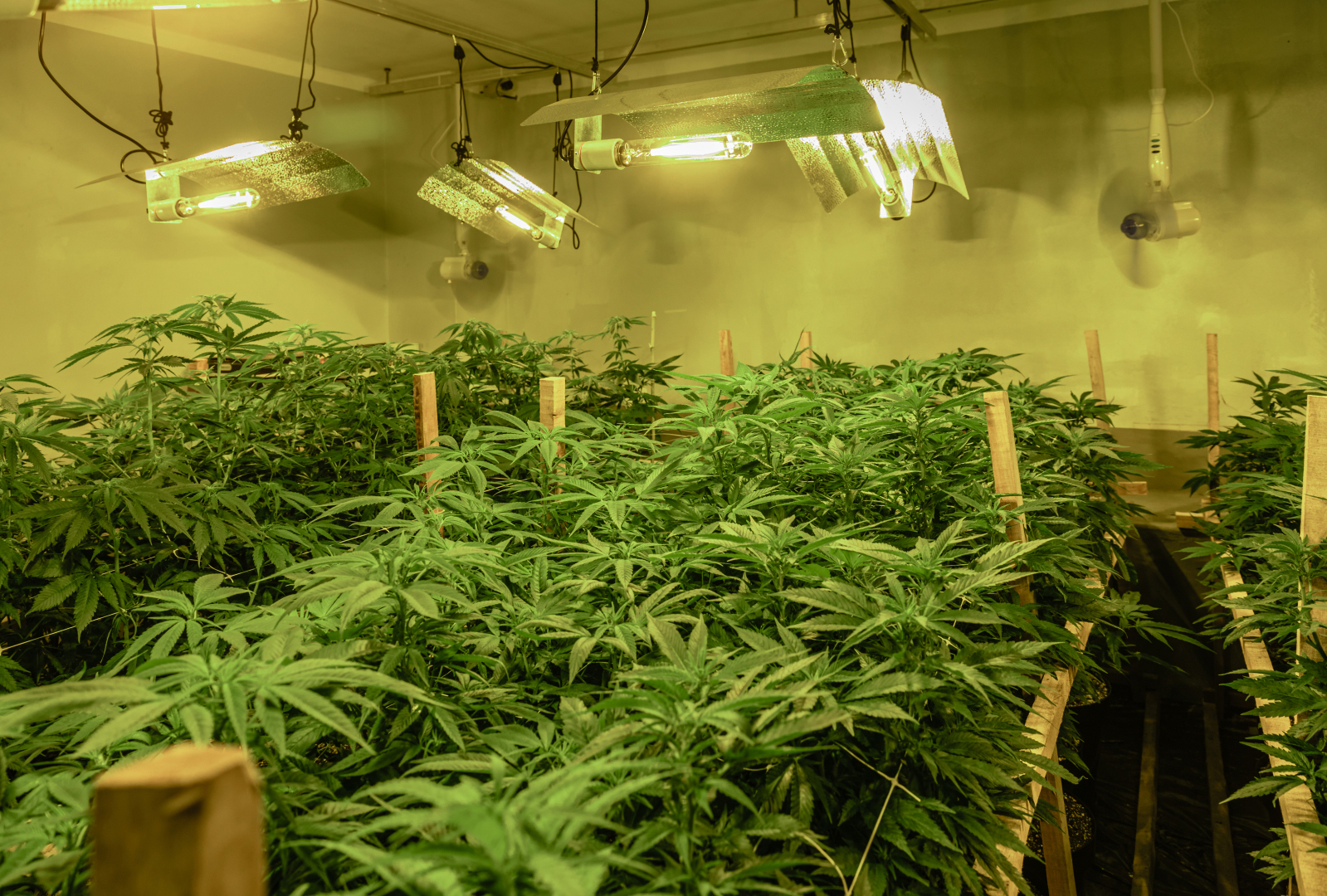
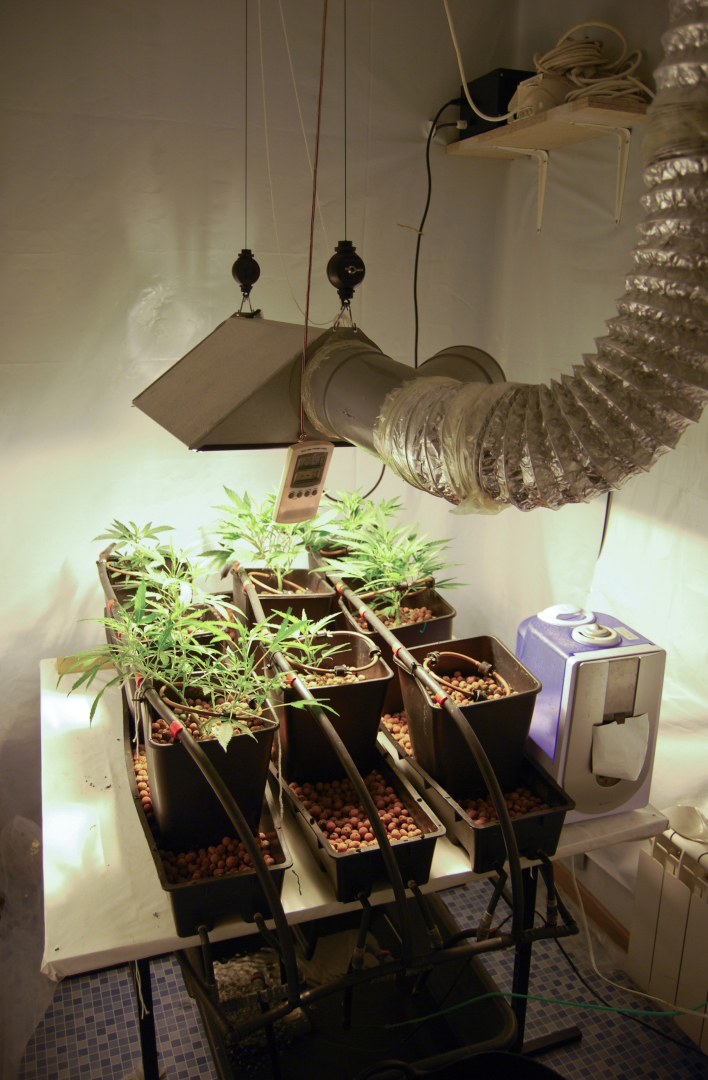
A HID grow light can look almost comically simple from below: one very bright lamp, a reflector, and a cable disappearing above the garden. The real system is more involved. The lamp creates light through an electrical arc, the ballast starts and regulates that arc, the reflector shapes where the photons land, and the room has to carry away the heat produced by the complete fixture.
For decades, HID systems helped indoor cannabis growers produce vigorous plants and heavy flowers before modern horticultural LEDs became widely available. They can still grow excellent cannabis. The harder question is whether a particular HID system fits your canopy, climate, electrical capacity, operating budget, and tolerance for bulb replacement. Let’s separate the technology from the old rules of thumb so you can judge the equipment in front of you.
This guide explains high-pressure sodium (HPS), metal halide (MH), and ceramic metal halide (CMH) lighting; how ballasts and reflectors work; why HID changes leaf temperature and irrigation demand; how to compare it fairly with LED; and when an existing HID room is worth keeping. It also covers failure signs, used-equipment checks, lamp disposal, and the mistakes that can turn a productive light into an electrical or fire risk.
HID means high-intensity discharge.
A HID lamp makes light by sustaining an electrical arc through gases and vaporized materials inside a sealed arc tube. Cannabis systems most often use high-pressure sodium, metal halide, or ceramic metal halide lamps. Unlike an ordinary household bulb, a HID lamp requires a compatible ballast to start and control the current.
How a HID grow light works
A HID lamp does not produce light with a glowing wire filament, and it is not a collection of solid-state diodes. When power reaches the system, the ballast supplies the conditions needed to strike an arc between electrodes inside the lamp. The materials in the arc tube heat, vaporize, and emit radiation. The exact chemistry and construction influence the visible color, spectral distribution, efficacy, operating temperature, start-up behavior, and useful service life.
The ballast is not an optional accessory. A discharge lamp presents an electrical characteristic that would allow current to rise destructively if it were connected directly to the supply. The ballast limits and regulates that current. Some systems also use a separate ignitor; others integrate the starting function into the ballast. This is why a HID lamp must be matched to the correct lamp type, wattage, socket, voltage, and ballast specification rather than screwed into any large-looking socket.
After ignition, most HID lamps need several minutes to reach stable output and color. If a hot lamp loses power, it may not restrike immediately because pressure remains high inside the arc tube. The lamp must cool before the ballast can start it again. That delay is normal for many HID systems, but repeated cycling during normal operation can also indicate an aging lamp, overheating fixture, failing capacitor, unsuitable ballast, or unstable supply.
What to Remember: A HID grow light is a matched system. Lamp, ballast, reflector, socket, wiring, timer, hanging hardware, ventilation, and room conditions all affect whether it works safely and whether the canopy receives useful light.
The main HID grow-light types
HID is an umbrella category, not one spectrum or one cultivation method. HPS, MH, and CMH are related discharge technologies, but they do not behave identically. The labels tell you how the lamp produces light. They do not tell you the PPFD across your canopy, the age of the lamp, the condition of the reflector, or whether the ballast and lamp are compatible.
| HID type | Typical cultivation role | Main advantage | Main limitation |
|---|---|---|---|
| High-pressure sodium (HPS) | Flowering or full-cycle production in established rooms. | High photon output, proven flowering performance, and widely available legacy equipment. | Amber-heavy appearance, strong radiant heat, lamp replacement, and lower system efficacy than strong modern LEDs. |
| Metal halide (MH) | Vegetative growth, mother plants, or the vegetative half of an MH-to-HPS system. | More blue radiation and clearer plant appearance than conventional HPS. | Generally less efficient for flowering than HPS and requires the correct ballast or a compatible conversion system. |
| Ceramic metal halide (CMH or CDM) | Full-cycle small rooms, vegetative growth, and growers who value broad white light. | Broad spectrum, good color rendering, and a compact high-intensity source. | Still produces substantial heat and needs a purpose-matched lamp, socket, and ballast. |
| Double-ended HPS | Purpose-built larger rooms with adequate mounting height and environmental control. | High output and efficient photon delivery within a correctly designed fixture. | Very hot exposed lamp, stricter handling and mounting requirements, and poor fit for short home tents. |
High-pressure sodium
HPS lamps use a ceramic arc tube containing sodium and other materials. Their output appears yellow, amber, or orange to human eyes, although the spectrum contains more than one narrow color. HPS became strongly associated with cannabis flowering because it can deliver a large photon output from a compact source and because its lower blue fraction often permits more leaf expansion and stem extension than a blue-rich source.
That does not mean yellow light contains a special “bud-fattening” instruction. Flowering is triggered primarily by the uninterrupted dark period in photoperiod-sensitive cannabis, while flower production depends on total usable light, canopy capture, genetics, temperature, carbon dioxide, irrigation, nutrition, and time. HPS can support dense flowers because it can supply substantial radiation. An amber appearance alone does not guarantee adequate intensity or quality.
Single-ended HPS lamps are common in older home systems. Double-ended HPS lamps connect at both ends and operate in dedicated fixtures. A double-ended lamp is not an upgrade that can be improvised into a single-ended reflector. Its socket arrangement, operating position, ballast, enclosure, clearances, and handling requirements belong to the approved fixture design.
“Can I use HPS from seedling to harvest?”
Question sent by: Derek Molina, via e-mail.
Yes, a compatible HPS system can support a complete cannabis cycle, but the lamp should not deliver flowering intensity to a newly rooted plant. Increase distance or use approved ballast dimming so the young canopy receives gentle, even light. HPS may encourage more extension than MH or a blue-rich LED, so early training and enough vertical reserve become especially useful.
Metal halide
MH lamps use mercury and metal-halide compounds to create a broader, bluer-looking output than conventional HPS. They were commonly used for vegetative growth because plants often develop more compact morphology under a higher blue fraction. Natural-looking color also makes leaves easier to inspect than they are beneath amber HPS.
An MH lamp can flower cannabis, and an HPS lamp can grow vegetative cannabis. The traditional switch from MH to HPS is a practical convention rather than a biological requirement for two separate lamp technologies. The switch also introduces risk: not every ballast can operate both lamp types, and an apparently matching base does not prove electrical compatibility. Use only combinations explicitly approved by the ballast and lamp manufacturers.
Conversion lamps were designed to let certain ballasts operate a different discharge chemistry. They are not universal adapters. A conversion lamp must still match the exact ballast class, wattage, socket, operating position, and fixture requirements. If the labels are missing or the product documentation cannot be verified, the safe conclusion is that compatibility is unknown.
Ceramic metal halide, CDM, and LEC
CMH uses a ceramic arc tube rather than the quartz arc tube associated with conventional MH. You may also see the name ceramic discharge metal halide (CDM). “LEC” is commonly used in grow-light discussions, but it originated as a brand-specific term and should not be treated as the technical name for every ceramic metal-halide fixture.
CMH lamps can produce broad white light with useful color rendering, which makes pest, nutrient, and maturity inspection easier. Some growers choose 315-watt or 630-watt CMH systems for full-cycle cultivation. The room still receives almost all of the electrical input as heat eventually, and the lamp remains a hot high-pressure source. Broad spectrum does not remove the need for clearance, ventilation, secure mounting, and eye protection.
Important: Do not choose CMH because “sun-like” appears on a product page. Compare its measured photon output, efficacy, PPFD map, reflector, lamp age, heat path, and replacement cost with the alternatives that fit the same canopy.
The parts of a complete HID system
A bare lamp is not a grow-light plan. Each component solves a different problem, and a weakness in one part can erase the advantage of another. Before buying new or used equipment, identify every part from the wall connection to the canopy.
| Component | Function and verification |
|---|---|
| Lamp | Creates radiation through an electrical arc. Verify the technology, wattage, base, operating position, age, condition, and approved ballast. |
| Ballast | Starts the lamp and regulates current during operation. Verify the input voltage, lamp type, rated wattage, dimming rules, cord condition, ventilation, and certification. |
| Ignitor and capacitor | Support starting and electrical operation in systems that use separate components. Verify the correct specification, enclosure, service condition, and qualified replacement requirements. |
| Socket and reflector | Hold the lamp and redirect light toward the canopy. Verify the heat rating, secure contacts, corrosion, reflector cleanliness, deformation, and compatible lamp orientation. |
| Hood or open reflector | Shapes distribution and may isolate lamp heat from room air. Verify the glass condition, seals, duct size, airflow direction, leaks, and the manufacturer’s thermal limits. |
| Hangers and support | Keep the hot fixture at a controlled height. Verify the load rating, secondary retention, structural anchor, cable condition, and clearance from fabric or plants. |
| Timer or controller | Maintains the photoperiod. Verify the load rating for HID starting current, contactor requirements, reliable darkness, and safe enclosure. |
| Ventilation and cooling | Remove lamp and room heat while maintaining a suitable environment. Verify the exhaust route, intake capacity, seasonal temperature, filter resistance, fan rating, and failure plan. |
Magnetic and electronic ballasts
Magnetic ballasts use coils and related components to regulate the lamp. They are heavy, can hum, and may run hot, but many are durable and serviceable. Electronic or digital ballasts are smaller, often quieter, and may offer dimming or multi-lamp compatibility. Those conveniences do not make every digital ballast compatible with every lamp.
Dimming deserves special care. A ballast labeled for multiple output settings should be used only within the permitted lamp and setting combinations. Running a lamp outside its approved range can alter arc conditions, spectrum, output, and service life. “Super lumens” or overdrive settings increase electrical and thermal stress. They should not be treated as free output.
Digital ballasts can also generate electromagnetic interference if the design, cables, grounding, or installation is poor. Radio interference, unstable timers, communication problems, or audible electrical noise should not be accepted as normal because the garden still lights. Follow the manufacturer’s cable limits and installation guidance, and stop using equipment with damaged insulation, overheated connectors, or erratic operation.
Open, wing, and air-cooled reflectors
An open reflector allows lamp radiation and convective heat to enter the room directly. It is simple and avoids a glass barrier, but the room ventilation must remove the heat. Wing reflectors spread the point source across a wider area; their shape and mounting height strongly influence uniformity.
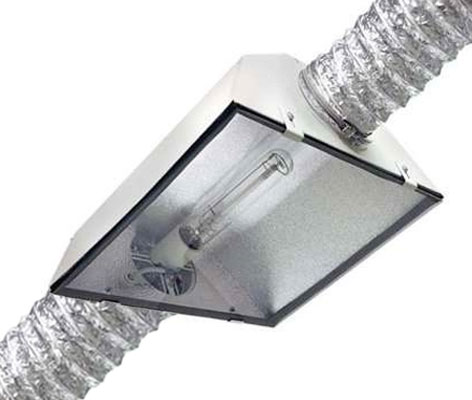
An air-cooled hood encloses the lamp behind glass and moves separate airflow through the hood. It can reduce radiant and convective heat reaching the canopy, but it adds duct resistance, joints, cleaning, and a glass surface that absorbs some light. Pulling dusty or humid grow-room air through the hood can soil the glass and reflector. A separate cooling loop can keep odor-control airflow independent, but every added fan and duct still needs a safe route and maintenance plan.
Build one verified lamp and ballast system.
Match every electrical specification, support the fixture from a rated anchor, provide the required clearance, and design ventilation around measured room behavior.
Assembling a kit from parts that merely fit together.
A matching plug, socket, or lamp base does not prove electrical, thermal, or photobiological compatibility.
HID spectrum and cannabis growth
Spectrum affects photosynthesis, leaf expansion, stem extension, architecture, color perception, and plant signaling. It can also interact with secondary metabolism. Yet spectrum is only one part of the light environment. A spectrum comparison becomes misleading when photon density, uniformity, fixture efficacy, canopy temperature, or cultivar changes at the same time.
HPS typically has a low blue fraction and substantial yellow, orange, red, and longer-wavelength output. Conventional MH generally contains more blue and produces a whiter appearance. CMH can provide a broader spectral distribution than either conventional option. These differences may change morphology, but none exempts the grower from measuring the amount and distribution of light.
Controlled cannabis studies have reported different yield and chemical responses under HPS and various LED spectra. Those studies do not support a universal claim that one lamp chemistry always produces stronger, denser, or more flavorful flowers. Cultivar, intensity, spectrum, environment, canopy geometry, and the way results are expressed all matter. Concentration per gram and total compound yield per plant are not the same outcome.
Master Advice: Compare complete fixtures at comparable canopy PPFD and uniformity. If one treatment receives more photons, more heat, or a different leaf temperature, the lamp label is not the only variable being tested.
How much HID light does cannabis need?
There is no reliable “one lamp per plant” rule. A single trained plant can occupy the same area as several smaller plants, and a reflector sends light to an area rather than to a plant count. Start with the productive canopy dimensions, the manufacturer’s measured map, the intended hanging height, and the room’s reflective conditions.
PPFD describes photon density at a surface. PPF describes total photosynthetic photons emitted by the fixture. Daily light integral (DLI) combines PPFD with the hours of operation. Input watts describe electrical consumption, not the number or distribution of plant-usable photons. Lumens and lux weight light for human vision, which makes them less suitable for comparing HPS, MH, CMH, and LED spectra.
For non-CO2-supplemented indoor cannabis, young plants commonly begin around 100 to 250 micromoles per square meter per second, established vegetative plants often use roughly 250 to 500, and a healthy flowering canopy may use approximately 500 to 900. These are broad starting ranges, not promises. Photoperiod, acclimation, cultivar, leaf temperature, carbon dioxide, water supply, root health, and environmental stability determine how much light the crop can use.
Use the lowest setting or greatest safe distance that provides even light to young plants. Increase intensity gradually as the roots, leaf area, and water use develop. During flowering, measure several points across the canopy. One impressive center reading can hide weak corners and a center that is already too hot.
“How far should a 600-watt HPS be from cannabis?”
Question sent by: Alicia Grant, via Facebook page.
There is no universal safe distance because reflectors, lamps, air cooling, room airflow, canopy temperature, and plant condition differ. Start with the fixture manufacturer’s clearance and map. Then measure PPFD and leaf temperature across the canopy while watching the highest leaves for bleaching, upward cupping, stalled growth, or unusually rapid dry-back. The back-of-hand test cannot measure photon density and should not replace instrument data.
Heat changes more than the room thermometer
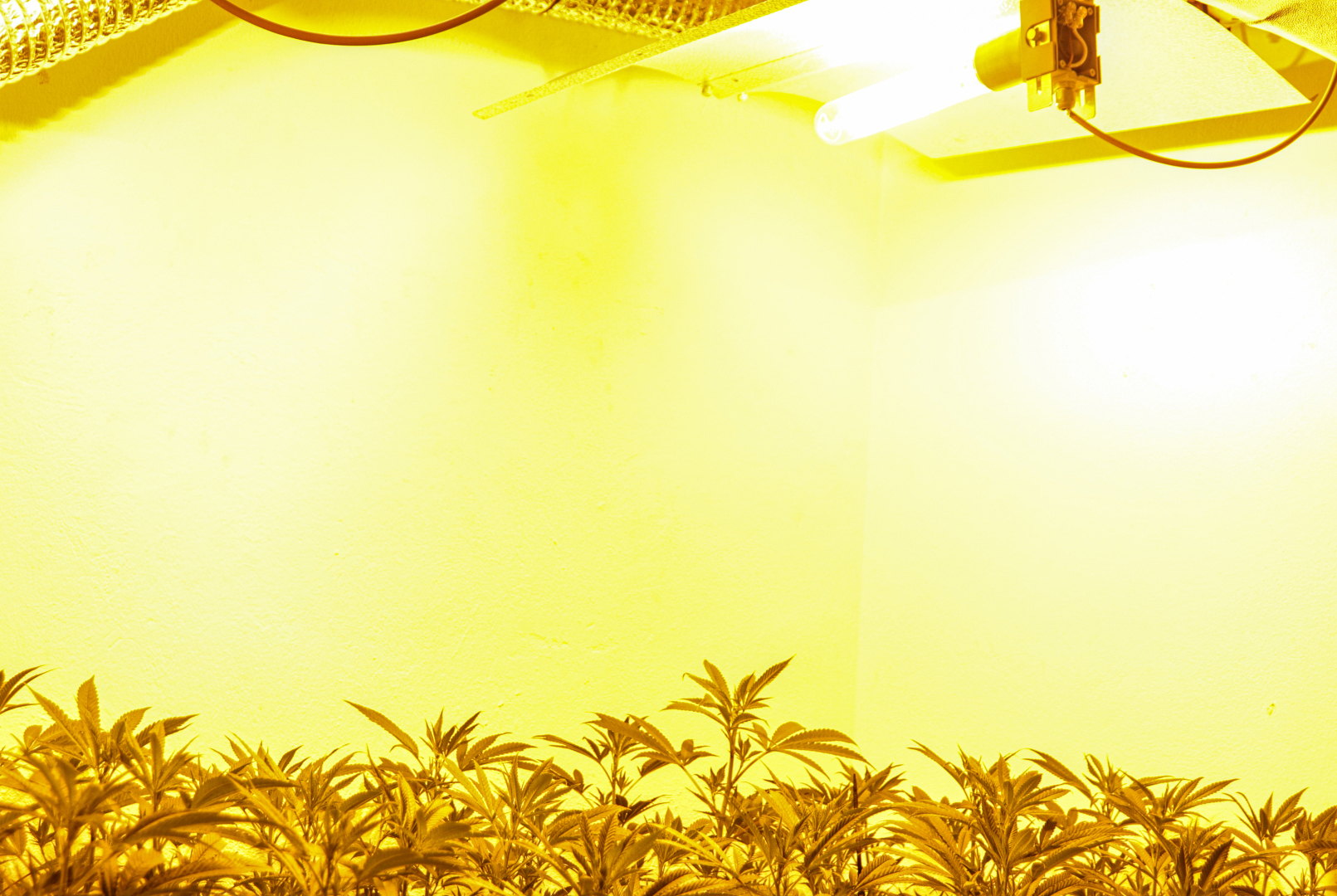
Every electrically powered grow light adds heat to the building eventually. HID’s practical distinction is that a hot lamp and reflector can deliver substantial radiant energy directly to leaves and flowers. The air temperature sensor may look acceptable while exposed tissue runs warmer than shaded tissue or than it would under a high-efficacy LED at a comparable room temperature.
Leaf temperature influences transpiration and vapor pressure deficit. A change in transpiration changes water movement, nutrient delivery, root-zone dry-back, and humidity release. This is why a feeding or irrigation schedule copied from an HPS room may not transfer cleanly to LED, and why replacing LED with HPS without revisiting the environment can produce rapid water demand and top-canopy stress.
Air-cooled hoods remove part of the heat near the lamp, but they do not make the system heat-free. The ballast, remaining radiation, duct fan, and all electrical energy still enter the building’s thermal calculation. In winter, that heat may offset part of the room’s heating demand. In summer, it may require stronger exhaust or air conditioning. Compare an annual operating plan, not a cool-day test.
HID lamps operate at high temperature and pressure.
Keep water, leaves, fabric, cords, and combustible materials outside the manufacturer’s clearances. Never touch or move a hot lamp. Isolate power and allow the fixture to cool before inspection. Replace cracked glass, damaged sockets, scorched connectors, or compromised wiring with approved parts, and use a qualified electrician when the circuit or repair exceeds your competence.
HID electricity and operating cost
The wattage printed on a lamp is not always the total draw from the wall. The ballast consumes additional power, and fans or cooling equipment add further demand. Use a safe, suitable power meter or verified manufacturer data for the complete fixture. Then calculate the daily energy use from actual draw and photoperiod.
Daily lighting energy in kilowatt-hours = actual fixture watts ÷ 1,000 × operating hours. A complete cost comparison should add ventilation, air conditioning, dehumidification, replacement lamps, reflector maintenance, and any seasonal heating benefit. It should also compare the photons reaching the productive canopy, not simply two fixtures with the same advertised watts.
| Example input | Vegetative schedule | Flowering schedule |
|---|---|---|
| Measured complete draw | 660 W | 660 W |
| Operating time | 18 hours per day | 12 hours per day |
| Lighting energy | 11.88 kWh per day | 7.92 kWh per day |
| Thirty-day lighting energy | 356.4 kWh | 237.6 kWh |
| Not included | Cooling, exhaust, circulation, and humidity control | Cooling, exhaust, circulation, and humidity control |
This example is not a universal 600-watt HPS draw. It demonstrates the method using a hypothetical fixture measured at 660 watts. Multiply monthly kilowatt-hours by your current electricity tariff, then repeat the calculation for the supporting equipment. Electricity prices, taxes, and seasonal rates vary by location.
Compare the room you will operate, not two boxes
Here is a practical comparison that keeps the decision honest. First, map the canopy you can reach. Record the HID fixture’s actual draw, lamp hours, PPFD grid, room temperature, leaf temperature, exhaust setting, and summer cooling demand. Then compare an LED or another HID system at the same productive area and usable intensity.
Let’s include replacement parts and the environmental equipment that changes with the light. A low purchase price can remain a good value in a cold, purpose-built room. The same fixture can become expensive in a short warm tent. The answer belongs to the complete operating system.
Does HID still make sense for cannabis?
HID is not obsolete because LED exists, and it is not automatically economical because the fixture is inexpensive. Existing HPS, MH, or CMH equipment may remain sensible when it is safe, compatible, fully documented, and already supported by sufficient height, ventilation, cooling, and electrical capacity. A grower who understands that room may gain less from an immediate replacement than from correcting canopy uniformity or maintenance.
A new small home tent usually favors a quality dimmable LED. Modern LEDs can offer higher fixture efficacy, lower profile, immediate dimming, broad white light, and more distributed output without bulb changes. That can reduce cooling demand and make one fixture easier to use from young plants through flowering. The comparison still depends on fixture quality; a poor LED is not improved by its technology label.
| Situation | HID may still fit | LED replacement may fit better |
|---|---|---|
| Existing room | Safe infrastructure, known ballast and lamp history, stable climate, and measured productive results. | Cooling demand is high, edges are weak, or replacement parts are becoming unreliable. |
| New short tent | Rarely, unless a low-output purpose-built HID system has verified clearance and heat control. | Low-profile dimmable bars or boards preserve height and distribute light more easily. |
| Cold-season room | Radiant heat is useful and does not create warm-season problems. | The room needs efficient photons year-round or summer cooling dominates cost. |
| Young plants and mothers | Dimmed compatible HID or a modest MH/CMH system can work in a suitable room. | Propagation LEDs provide gentler shallow coverage with less heat and simpler control. |
| Large flowering canopy | Purpose-built HPS infrastructure can remain productive with maintenance and environmental control. | Distributed LED bars improve uniformity, efficacy, dimming, and access to a defined canopy. |
| Limited electrical capacity | Only after a qualified load assessment confirms safe operation. | A higher-efficacy fixture may deliver the target photons with lower total input and cooling demand. |
Advice: Keep a functioning HID room when the measurements support it. Replace it when the canopy, energy, heat, maintenance, and safety calculation supports the change. Technology age alone is not a cultivation diagnosis.
Buying a used HID grow light
Used HID equipment can appear inexpensive because the fixture body survives longer than lamps, capacitors, sockets, cords, and reflector surfaces. The unknown history is the real cost. A seller may not know how many hours the lamp has operated, whether it has been overdriven, whether the ballast has overheated, or whether a replacement cord matches the original specification.
Ask for the exact model numbers and original manuals before connecting anything. Confirm local input voltage and frequency, ballast output, lamp technology and wattage, socket type, approved operating position, cord ratings, and enclosure requirements. Look for heat discoloration, pitting, cracked ceramics, loose contacts, swollen components, damaged insulation, corrosion, dust packed into cooling openings, or a reflector that has lost its finish.
A used lamp should not be valued as new simply because it ignites. HID output and spectrum change with age, and a weakened lamp can encourage the grower to lower the fixture or increase the ballast setting. That response may create a hotspot when a fresh lamp is later installed. Begin with a known compatible lamp and record its installation date and operating hours.
“A used 1,000-watt HPS kit is cheaper than a new LED. Is it the better deal?”
Question sent by: Noah Bennett, via e-mail.
Not until you price the room around it. Verify the ballast, lamp, reflector, cord, timer or contactor, circuit, hanging height, exhaust, cooling, and replacement history. Then compare actual canopy PPFD and total operating cost. A very bright used point source can be poor value if the tent cannot provide safe clearance or if air conditioning costs more than the fixture saving.
HID lamp aging and maintenance
A HID lamp can continue to glow after its useful horticultural output has declined. Visual brightness is a poor maintenance meter because human vision adapts and weights wavelengths differently from a quantum sensor. Track operating hours, follow the lamp maker’s replacement guidance, and compare PPFD at fixed points using the same meter, reflector, warm-up period, and room conditions.
Reflectors also age. Dust, mineral residue, oxidation, fingerprints, and heat discoloration reduce or distort delivery. Clean only with the power isolated, the lamp fully cool, and methods approved for the surface. Do not handle quartz lamp surfaces with bare fingers; contamination can create hot spots on certain lamps. Replace damaged glass rather than operating an enclosure with an improvised panel.
Keep the ballast’s cooling path clear without opening an energized enclosure. Tighten or service electrical connections only according to the manufacturer’s instructions and with suitable competence. A loose connection can generate heat without drawing enough current to trip a breaker.
Record the system before the garden depends on it
- Write down the lamp model, ballast model, wattage, voltage, and installation date.
- Keep the lamp and ballast manuals with the grow-room records.
- Measure PPFD at repeatable canopy points after a full warm-up.
- Inspect cords, plugs, sockets, hangers, glass, ducting, and reflector condition.
- Keep ballast and hood cooling paths free from dust and obstruction.
- Test the timer or controller under the real HID load.
- Record unexpected shutoffs, slow starts, color changes, flicker, noise, and heat.
- Plan lamp replacement and lawful recycling before output becomes uncertain.
Common HID problems and what they mean
Do not diagnose a HID system from one symptom alone. A lamp that does not start could have lost supply power, reached the end of life, overheated, or become incompatible after a part change. A lamp that repeatedly turns off and returns after cooling points toward a different set of checks than one that never ignites.
| What you notice | Possible causes | Safe response |
|---|---|---|
| Lamp will not start | No supply, failed timer, hot-restrike delay, aged lamp, incompatible lamp, damaged socket, or ballast fault. | Isolate power, allow full cooling, verify documentation and supply safely, then use qualified service if the cause is not external and obvious. |
| Lamp cycles off and on | End-of-life lamp, overheating, wrong lamp-ballast combination, voltage problem, or failing ballast components. | Stop relying on the fixture, isolate it, and inspect the matched system rather than repeatedly restarting it. |
| Color shifts strongly | Warm-up phase, lamp aging, arc-tube change, incorrect operation, or failing components. | Allow normal warm-up, compare with previous records, and follow lamp replacement guidance. |
| Ballast hum becomes louder | Loose mounting, magnetic vibration, aging component, or electrical fault. | Do not open or touch energized equipment. Isolate power and obtain competent inspection. |
| Plug, cord, or socket discolors | Loose connection, overload, heat exposure, corrosion, or damaged contact. | Stop using the equipment until the damaged parts and underlying cause are corrected. |
| Center plants bleach or curl | Excess PPFD, high leaf temperature, poor acclimation, dry root zone, or reflector hotspot. | Reduce intensity or increase approved distance, restore root-zone stability, and map the canopy. |
| Corners stretch while center thrives | Poor distribution, reflector mismatch, excessive claimed footprint, or canopy too large. | Reduce the productive area, improve reflector placement, or redesign fixture overlap. |
“My HPS shuts off, then comes back later. Is the timer doing that?”
Question sent by: Erin Walsh, via contact form.
It could be, but thermal cycling is also a warning sign associated with aging lamps, overheating, unstable supply, or ballast problems. Do not keep resetting the system or assume the return of light means it is healthy. Isolate power, let the fixture cool, review the exact lamp and ballast pairing, and have the system inspected if the external cause is not clear.
HID safety in a cannabis grow room
Water, humidity, hanging equipment, hot glass, flexible tent fabric, and long photoperiods make a grow room an unforgiving place for improvised electrical work. Use equipment approved for its intended environment and supply voltage. Protect the circuit appropriately, keep connections above possible spills, provide strain relief, and prevent cords from resting against reflectors, lamps, ducting, or sharp frame edges.
Do not hang a fixture from a filter strap, plastic clip, plant support, or an anchor with an unknown rating. Use primary support sized for the complete load and a secondary retention method where appropriate. Account for the force of moving ducting and for the weight of dust accumulation, glass, cables, and accessories.
HID lamps can contain mercury and other materials that require careful handling and regulated disposal. Requirements differ by country, state, province, and municipality. Keep spent lamps intact, do not place them where they will be crushed, and use an approved lamp-recycling or hazardous-waste route. If a lamp breaks, isolate the area and follow the lamp manufacturer’s and local environmental authority’s cleanup guidance.
Pro Tip: Put the lamp model, ballast model, installation date, replacement date, circuit, and emergency shutoff procedure in the grow log. Clear records make maintenance faster and prevent an unverified lamp from entering the system later.
HID and final flower quality
HID can produce high-quality cannabis, but the lamp name does not determine aroma, resin, density, or smoothness on its own. Genetics establish the potential. Light intensity and spectrum interact with leaf temperature, irrigation, nutrition, carbon dioxide, canopy structure, harvest timing, drying, and curing.
Excess radiant heat near the top flowers can accelerate water loss, bleach exposed tissue, and create a maturity difference between the center and edges. A hot, uneven canopy may finish in patches, forcing a compromise at harvest. Better uniformity allows more flowers to develop under similar conditions and gives the grower a clearer drying and curing starting point.
HPS is sometimes credited with heavier flowers, while CMH or mixed spectra are credited with stronger aroma. Controlled studies show that spectrum can influence morphology and chemical profiles, but results vary with cultivar and experimental design. Protecting flower temperature, keeping leaves functional, avoiding severe stress, and harvesting at the right maturity are more defensible quality priorities than buying a lamp from a terpene claim.
Frequently asked questions about HID grow lights
Is HPS the same as HID?
HPS is one type of HID. The HID category also includes metal halide, ceramic metal halide, and mercury-vapor lamps. In cannabis cultivation, “HID” usually refers to HPS, MH, and CMH systems.
Is CMH a HID grow light?
Yes. CMH produces light through a high-intensity discharge inside a ceramic arc tube. It needs a compatible ballast and fixture, just like other HID technologies.
Are HID grow lights better than LED?
Neither category wins every situation. Good modern LEDs usually offer higher efficacy, a lower profile, better dimming, and more distributed coverage. Existing HID can remain productive where the room already manages its heat and electrical demand. Compare complete systems at the same canopy and useful photon delivery.
Do HID grow lights use a lot of electricity?
High-output HID systems can use substantial electricity, and ballast losses make complete draw higher than the lamp label alone. Cooling and exhaust can add more. Calculate from measured fixture draw, operating hours, supporting equipment, and your local tariff.
Can I dim a HID grow light?
Only when the ballast, lamp, and manufacturer instructions permit it. Dimming can change output and lamp behavior. Do not assume a setting is safe because the ballast control allows it, and do not place a lower-wattage lamp on a higher setting.
Can I put an MH bulb in an HPS ballast?
Only if the exact ballast and lamp documentation approves that combination. Some switchable ballasts and conversion lamps support specific alternatives. A matching base is not proof of compatibility.
Why does a HID lamp take time to become bright?
The arc tube must warm and reach stable operating conditions. Many HID lamps also need a cooling period before they can restart after a power interruption because internal pressure remains high.
How often should HPS or MH bulbs be replaced?
Follow the lamp manufacturer’s rated maintenance guidance and track actual operating hours. Confirm output with repeatable PPFD measurements rather than waiting for the lamp to fail or judging brightness by eye.
Can a HID grow light start a fire?
Any high-power electrical system can create fire risk when it is overloaded, damaged, poorly connected, incorrectly mounted, or placed too close to combustible materials. HID adds a very hot lamp and reflector. Use approved equipment, correct circuit protection, manufacturer clearances, secure mounting, and qualified electrical help where needed.
Should I buy a HID light for my first small tent?
A quality dimmable LED is usually the easier new purchase for a small tent because it preserves height and reduces the radiant-heat burden. A HID system can work, but only when the enclosure provides the required clearance, ventilation, electrical capacity, and safe mounting.
Does HPS make cannabis buds bigger?
HPS can deliver enough photons to support heavy flowering, but the lamp does not override genetics or a limiting environment. Large healthy flowers require usable and even light, functional roots and leaves, stable irrigation, suitable nutrition, and enough time. More intensity beyond the crop’s supported range becomes stress rather than guaranteed mass.
Use HID as a measured system
A HID grow light is a high-intensity discharge lamp operated by a compatible ballast and shaped by a reflector. HPS, MH, and CMH can all grow cannabis, but they create different spectra and practical tradeoffs. Their shared characteristics are a concentrated hot source, warm-up and restrike behavior, replaceable lamps, and a room that must safely support their electrical and thermal load.
If you already own a documented HID system, measure what it does before replacing it. Check PPFD across the real canopy, leaf temperature, fixture draw, cooling demand, lamp hours, and condition. If you are building a new compact garden, compare the complete HID room with a dimmable LED system rather than comparing sticker prices.
The useful question is not whether HID is old or powerful. It is whether this exact lamp, ballast, reflector, canopy, and environment work together safely. Once we answer that with measurements, the choice becomes much simpler.
Selected research behind this guide
The practical recommendations above use general lighting engineering, environmental safety guidance, and controlled cannabis research. These sources support the central mechanisms and comparisons:
- US EPA technology assessment explaining HID arc discharge, ballasts, operating temperature, and restart behavior
- US EPA guidance on mercury-containing HID lamps and disposal requirements
- Cannabis lighting study comparing HPS and LED spectra, fixture efficacy, yield, and electrical economics
- Cannabis yield, potency, and photosynthetic responses to increasing light intensity
- Study of HPS and LED spectral effects on cannabis morphology and secondary-metabolite production
- Research on spectrum, canopy position, plant density, yield, cannabinoids, and terpenes in cannabis
Share this article
A quick overview of the topics covered in this article.
- How a HID grow light works
- The main HID grow-light types
- The parts of a complete HID system
- HID spectrum and cannabis growth
- How much HID light does cannabis need?
- Heat changes more than the room thermometer
- HID electricity and operating cost
- Does HID still make sense for cannabis?
- Buying a used HID grow light
- HID lamp aging and maintenance
- Common HID problems and what they mean
- HID safety in a cannabis grow room
- HID and final flower quality
- Frequently asked questions about HID grow lights
- Use HID as a measured system
- Selected research behind this guide
Follow us
Latest articles
August 4, 2026
August 4, 2026

August 4, 2026
August 4, 2026