
Cannabis Seeds vs Clones: Which Is Better for a First Grow?
For most first grows, cannabis seeds are the easier and lower-risk starting point when a verified, healthy clone source is not available. A well-rooted clone can be faster and more predictable, but only when its identity, health, and history are trustworthy. That distinction matters. A seed introduces genetic variation and a delicate germination stage. A clone can introduce pests, pathogens, weak roots, or an unknown growing history. Neither option is automatically better; the better option is the one whose risks you can actually manage.
This guide will help you choose without turning the decision into a slogan. We will compare time, cost, space, genetics, root development, disease risk, indoor and outdoor use, autoflowering plants, and the practical work that begins after the plant enters your garden. The goal is not to make seeds sound simple or clones sound advanced. It is to show what each starting material asks from you.
Important: Confirm that cultivation, plant acquisition, seed possession, clone transport, plant counts, and the intended location are lawful where you live. A seed, rooted clone, unrooted cutting, and mother plant may not be treated the same way under every local rule.
The Short Answer: Seeds or Clones for a First Grow?
Choose seeds when you want a clean starting point, easy storage and transport, access to autoflowering genetics, or the chance to select among different plants. Seeds are also the more practical choice when you cannot isolate incoming live plants or verify a clone source.
Choose a rooted clone when you have lawful access to healthy, correctly labeled plant material from a trusted source, want a more uniform canopy, and value a known genetic individual more than genetic variety. A good clone can remove the germination stage and may shorten the early timeline, but it should still be inspected and quarantined.
If both choices are available, source quality should break the tie. A fresh, well-stored seed from documented stock is usually preferable to a mystery clone. A vigorous, pest-free, properly rooted clone with a reliable history can be preferable to old or poorly stored seed. The label alone does not decide the quality of the start.
The easiest start is the one you can verify
The first grow becomes harder when the starting material brings questions that cannot be answered. A seed may produce variation, but it gives us a clear observation window from germination onward. A verified rooted clone can remove uncertainty about sex and shorten the early stage, yet an unknown clone imports someone else’s growing history along with the plant. In practice, source quality changes this decision more than the words seed or clone.
| Decision factor | Seeds | Clones | What it means for a first grow |
|---|---|---|---|
| Starting risk | No outside live plant enters the garden, although seed quality and storage still matter. | Can carry pests or pathogens even when leaves look healthy. | Seeds are usually easier when no quarantine area is available. |
| Early timeline | Requires germination and seedling establishment. | A rooted clone has already passed germination and early seedling growth. | Clones may save time, but recovery and rooting quality determine how much. |
| Uniformity | Sibling plants can differ in height, vigor, aroma, flowering time, and structure. | Share the donor plant’s genotype, so growth can be more consistent. | A uniform canopy is easier to light, train, and irrigate. |
| Sex | Regular seeds require sex identification; feminized seeds greatly favor female plants but are not an absolute biological guarantee. | A correctly labeled clone normally retains the donor plant’s sex. | Source accuracy still matters, and environmental stress can influence sexual expression. |
| Root beginning | A seedling develops from an embryonic root and builds its system in place. | Adventitious roots form from stem tissue and may differ among cuttings. | Healthy establishment matters more than the presence of one root type. |
| Autoflowering plants | The normal and practical route. | Usually impractical because the cutting keeps the donor’s biological age and flowering clock. | Choose seed for an autoflowering first grow. |
| Storage and planning | Can be stored under suitable cool, dry, dark conditions and started when needed. | Living material needs immediate care, light, humidity control, and root-zone management. | Seeds allow more scheduling flexibility. |
What Counts as a Seed, Clone, or Plantlet?
A cannabis seed is produced through sexual reproduction. It contains an embryo created from parental genetic contributions. Even seeds sold under the same cultivar name are not necessarily genetic copies of one another. The amount of variation depends on the parents, the breeding method, and how stable the line is.
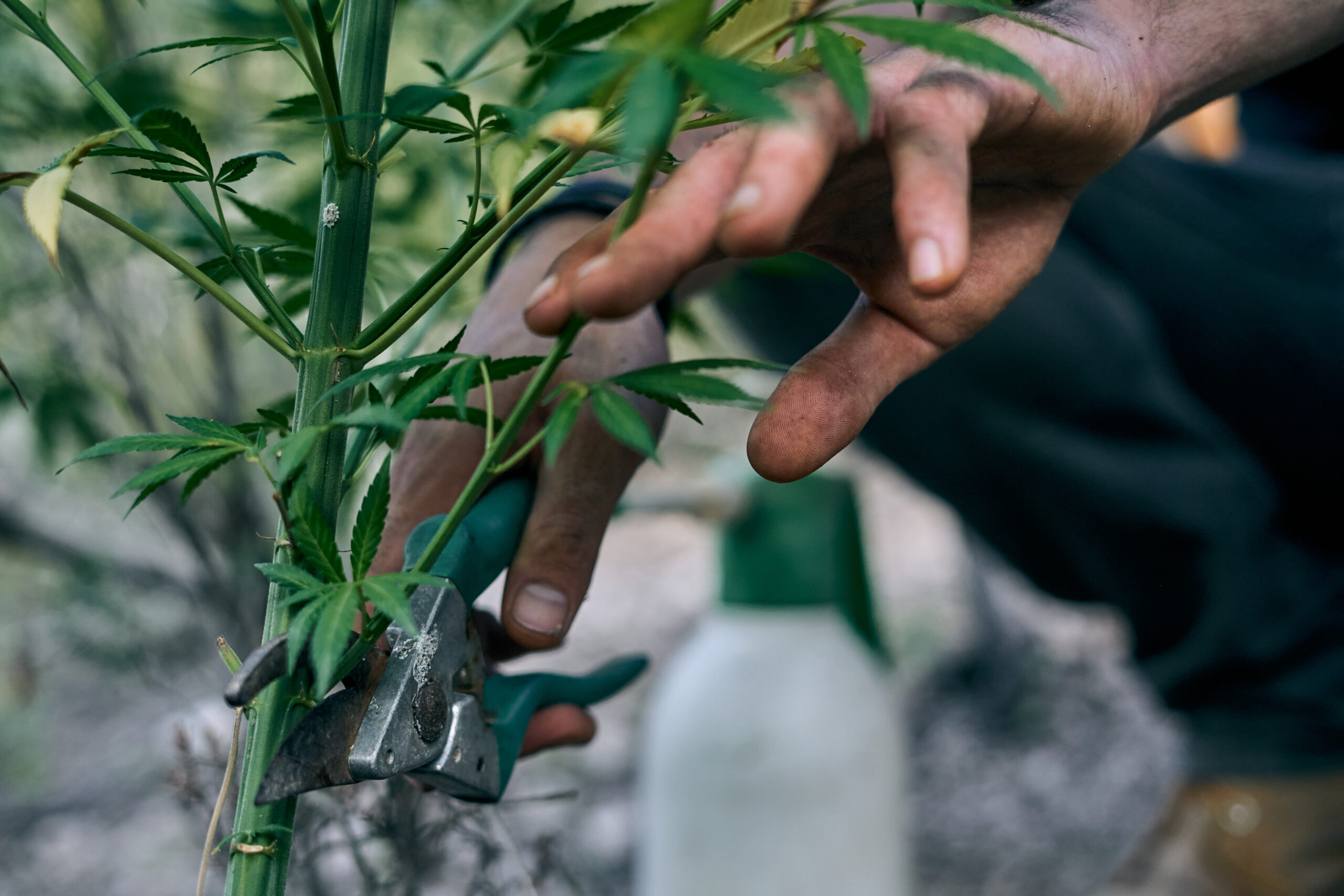
A clone is a vegetatively propagated piece of a donor plant. In ordinary home cultivation, the term usually means a stem cutting that has produced roots. It carries the donor’s genotype, but it does not arrive with a reset life history. Its health, physiological age, root development, and exposure to stress all come from the propagation chain.
You may also encounter an unrooted cutting. It is not equivalent to a ready-to-transplant clone. The cutting must stay hydrated, form callus and adventitious roots, then develop enough root mass to support new growth. Rooting success depends on cutting condition, sanitation, humidity, temperature, light, hormone treatment, and the condition of the donor plant.
A tissue-culture plantlet is produced through in-vitro micropropagation and then acclimated to ordinary growing conditions. Tissue culture can support clean-stock programs and large-scale multiplication, but the words “tissue culture” do not replace documentation. The sanitation program, testing, laboratory practices, acclimation quality, and source identity still matter.
Key Term
Genotype and phenotype
The genotype is the inherited genetic makeup of a plant. The phenotype is the plant we observe after that genotype interacts with its environment, health, age, and cultivation history. Clones share a genotype, but they do not automatically produce identical size, yield, aroma, or flower quality in different conditions.
Starting from Cannabis Seeds
Seeds give you the full beginning of the plant’s life. You see germination, cotyledons, the first true leaves, early root-zone behavior, and the way each seedling responds to your environment. That complete timeline is useful because nothing happened in another room before the plant reached you.
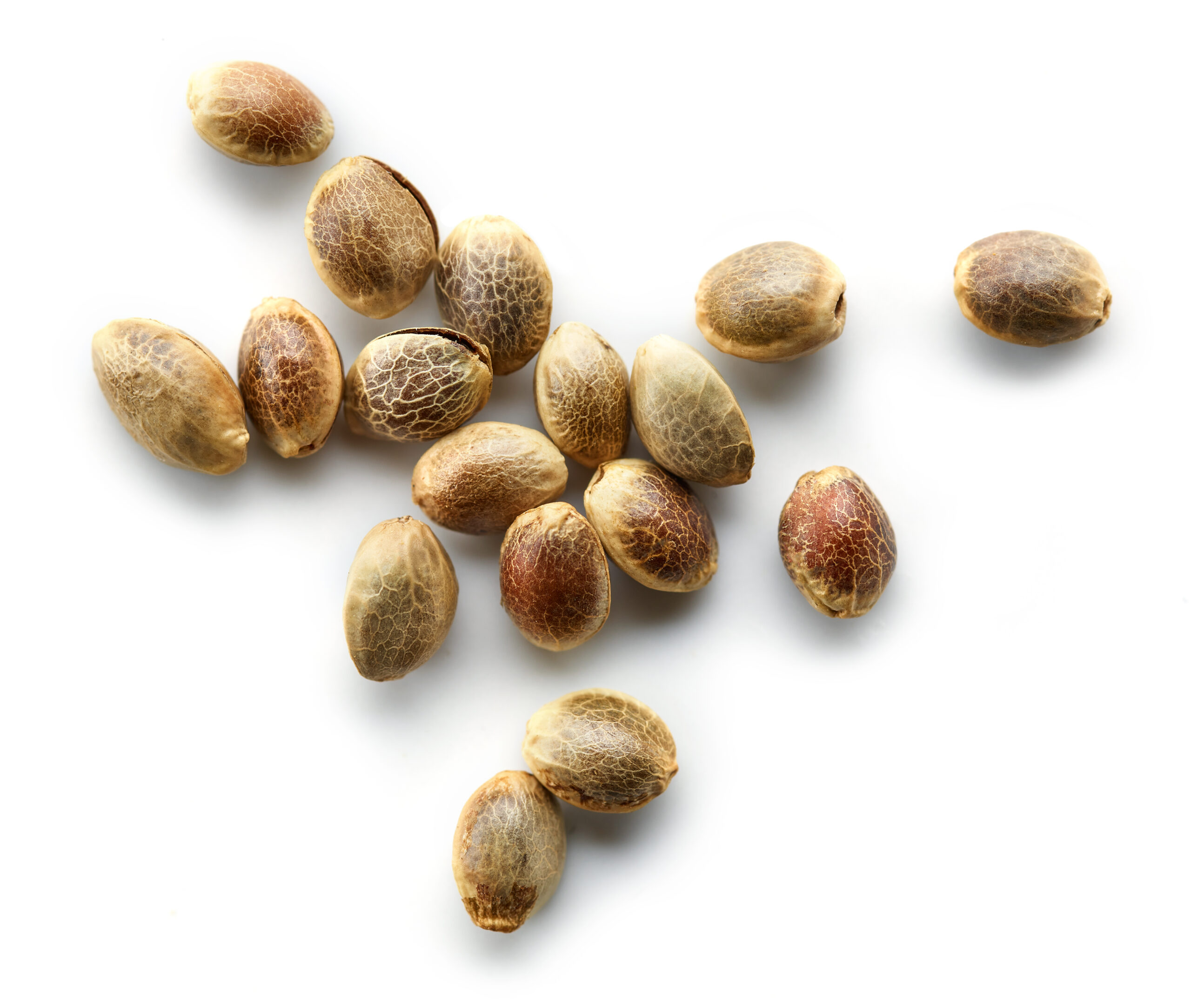
That does not make every seed reliable. Viability changes with maturity, storage temperature, moisture, physical damage, and time. A dark, firm seed may look promising, but appearance alone cannot prove germination. A pale seed is not automatically dead, and a beautifully patterned seed is not automatically vigorous. Good records and a reputable, lawful source matter more than shell color.
Regular cannabis seeds
Regular seeds can produce male or female plants. They are valuable for breeding, preservation, and growers who want the complete reproductive population, but they add a decision point to a first grow. Plants must be monitored as they mature, and unwanted pollen-producing plants must be managed lawfully and in time to protect the intended crop.
The common shortcut that regular seed means an exact fifty-fifty outcome is too neat. Sex ratios can approach that expectation across a sufficiently large population, but a small pack can produce an uneven result by chance. If your local plant limit is low, that uncertainty can consume valuable space before sex is confirmed.
Feminized cannabis seeds
Feminized seeds are produced through methods intended to create pollen without a Y chromosome, greatly increasing the likelihood of female offspring. For a first grow focused on unseeded flowers, they can reduce the space and time spent identifying male plants.
“Feminized” should not be translated as an unbreakable promise that every plant will remain exclusively female under every condition. Breeding quality, inherited tendency, severe stress, plant health, and environmental instability can influence sexual expression. Inspect flowering plants instead of allowing a label to replace observation.
Autoflowering cannabis seeds
Autoflowering genetics begin flowering mainly according to age rather than requiring a seasonal or indoor reduction in day length. They can suit small spaces, short outdoor seasons, and growers who want a compact timeline, but that schedule also reduces recovery time. Early root restriction, overwatering, transplant damage, or strong training can consume a meaningful part of the plant’s limited vegetative window.
For this reason, an autoflower is normally started from seed. Taking a cutting does not restart its internal clock. By the time the cutting forms roots, the donor and cutting may already be moving toward flowering, leaving little time to build a productive structure.
Remember: Feminized, regular, and autoflowering describe different decisions. “Feminized” concerns the expected sex of the offspring. “Autoflowering” concerns flowering behavior. A seed can be both feminized and autoflowering.
Why seeds can be a strong first choice
- No incoming live plant: Seeds do not bring mites, aphids, thrips, or living root-zone pests into the room. Seed-borne problems can exist, but the risk profile is different from accepting a rooted plant with leaves, roots, and growing medium.
- Easy timing: Properly stored seeds can wait until the room, weather, and equipment are ready. A clone cannot be placed on a shelf for later.
- Broad legal access: Where lawful, seeds may be easier to obtain than live plants. Local rules still decide what can be possessed or shipped.
- Natural selection opportunity: Variation lets you compare vigor, structure, flowering behavior, aroma, and environmental fit.
- Practical outdoor establishment: A seedling can build its root system in the intended container or soil from an early stage.
What seeds ask you to manage
Germination is the first vulnerable stage. The seed needs moisture and oxygen at the same time. A saturated, cold medium can slow germination and favor decay, while a dry pocket can stop the process after the seed has begun to absorb water. Planting depth, medium structure, temperature, and gentle moisture control matter more than elaborate germination rituals.
Seedlings also differ. One may emerge first and stretch, another may remain compact, and a third may lag before catching up. If you start several seeds under one light, do not let the fastest seedling force every other plant into the same watering schedule. The small root zone and canopy of each plant should guide early care.
“If I use feminized seeds, can I skip checking the plants during flowering?”
Question sent by: Lauren Pierce, via email.
No. Feminized seed greatly improves the probability of female plants, but every plant should still be inspected. Confirm preflowers, watch for unusual reproductive structures, and correct avoidable stress. The label helps us plan; the plant tells us what is actually happening.
Starting from Cannabis Clones
A clone offers something a seed cannot: access to a specific genetic individual. If the donor plant has already been grown, flowered, harvested, dried, and evaluated, a correctly labeled cutting can preserve that genotype. This is more meaningful than buying a clone based only on a cultivar name. A name predicts; a documented donor provides evidence.
Clones can also make the canopy easier to manage. Cuttings from the same healthy donor often stretch, branch, and mature more similarly than sibling seedlings. When pots, root development, light exposure, and irrigation are also consistent, that uniformity can simplify training and reduce height differences.
A clone can save time, but not a fixed number of days
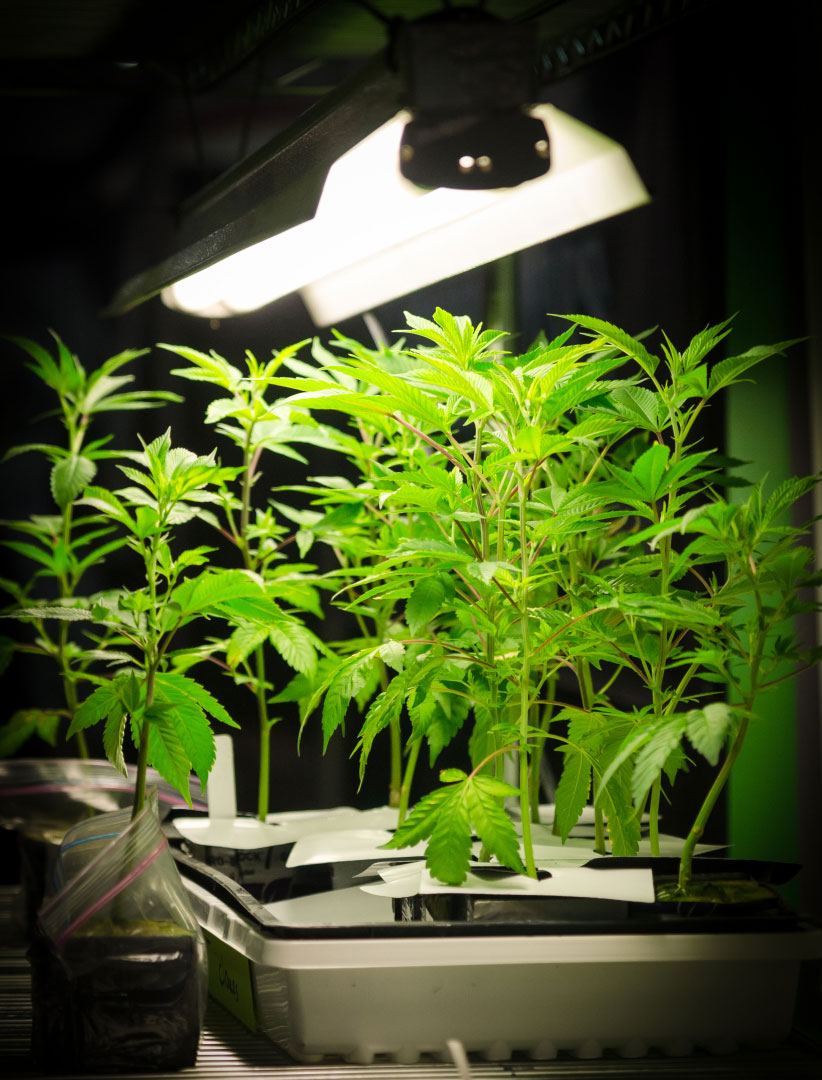
A rooted clone has already completed germination and at least part of early vegetative development. That can shorten the path to a plant large enough for training or flowering. The actual time saved depends on what you receive.
A compact clone with white, branching roots and active new growth may establish quickly. A tall cutting with a tiny root plug, yellow lower leaves, or a stressed growing tip may need substantial recovery. An unrooted cutting can take days or weeks to form usable roots, and some cuttings fail. Compare developmental condition, not simply calendar age.
“Guaranteed female” needs one condition
A clone retains the donor plant’s genetic sex, so a cutting from a confirmed female donor is expected to be female. The condition is correct identity. Mislabeling, mixed trays, poor records, or an unverified seller can break that promise. A clone from a plant that has never been flowered is not “proven” merely because someone says it is.
Clonal identity also does not prevent stress-related intersex expression. Light interruptions, extreme root stress, severe temperature problems, physical damage, and genetic predisposition can still matter. Treat the clone as known material, not invulnerable material.
The health history comes with the clone
This is the largest difference between seed and clone risk. A clone arrives with living leaves, stem tissue, roots, and often a propagation plug. Spider mites, broad or russet mites, thrips, aphids, fungus gnats, powdery mildew, root pathogens, and viruses or viroids can travel with that material.
Visual inspection is essential, but it has limits. Research has detected hop latent viroid in asymptomatic cannabis stock plants and rooted cuttings. A clone can look green and vigorous while still carrying a problem that becomes obvious later or spreads through tools, contact, or shared systems.
Warning
Do not place an incoming clone directly into the main garden
Keep new live plant material separate long enough to inspect new growth, leaf undersides, stems, plugs, roots, and pest traps. Use dedicated tools and prevent shared runoff. When the source or crop value justifies it, laboratory testing can reveal risks that appearance cannot.
Rooted clone, unrooted cutting, and weak transplant are different purchases
Before accepting a clone, ask whether it is rooted and how that was confirmed. A few roots at the edge of a plug do not equal a fully established root ball. Roots should be appropriately colored for the medium, distributed rather than circling in one wet corner, and capable of holding the plug together without being packed into a hard mat.
Then look above the root zone. New growth should be active, leaves should have reasonable color and posture, and the stem should not show rot, collapse, or mechanical damage. A recently rooted clone may have one older leaf that is less attractive, but a pattern of worsening chlorosis or wilt deserves caution.
“The clone is small but already rooted. Is it automatically ahead of a seedling?”
Question sent by: HarborGrow, via Facebook page.
Not automatically. A healthy rooted clone may be developmentally ahead, but a stressed cutting with little root mass can spend its advantage recovering while a vigorous seedling keeps growing. Compare roots, new growth, plant health, and the time needed for acclimation rather than comparing height alone.
Seeds Are Not Automatically Clean, and Clones Are Not Automatically Dirty
The useful comparison is risk pathway, not a perfect-versus-contaminated story. Seeds eliminate many of the pests that travel on living leaves and growing media, yet they can still be immature, damaged, poorly stored, mislabeled, or affected by seed-associated microorganisms. A clean shell also does not confirm genetic identity.
Clones can be produced through excellent sanitation, tested stock programs, clean tools, controlled propagation rooms, and disciplined record keeping. They can also be passed through several gardens with no testing or quarantine. The word “clone” tells you how the plant was propagated; it does not tell you how carefully it was handled.
Advice: Ask questions that can produce evidence. “Is it healthy?” invites an opinion. “When was the donor last tested, what was included, how were tools sanitized, when did this cutting root, and has it shared irrigation with other plants?” reveals the production chain.
A practical clone quarantine sequence
- Prepare the isolation area first. Give the clone its own tray, tools, labels, and pest-monitoring cards before it arrives.
- Record identity and source. Note the date, stated cultivar, donor history, propagation medium, treatments, and any test documentation.
- Inspect before transplanting. Use magnification on growing tips and leaf undersides. Check stems, nodes, plug edges, and root condition.
- Prevent cross-contamination. Work with established plants first and incoming material last. Clean hands and tools before returning to the main room.
- Watch new growth. Fresh leaves often reveal mites, nutrition problems, or systemic symptoms more clearly than old shipping damage.
- Use testing when appropriate. Visual health cannot rule out every pathogen. The value of the garden and reliability of the source should guide the testing decision.
Quarantine is not a fixed number of days that magically makes a clone safe. It is a process that gives symptoms and pests time to become detectable while maintaining separation. A longer period with shared tools and shared runoff is weaker than a shorter, genuinely isolated period with careful inspection.
Genetic Uniformity Does Not Mean Identical Plants
Clones from one donor share a genotype, which is why they can make a room more predictable. Yet they can still differ in root number, cutting position, size, carbohydrate reserves, disease status, transplant timing, light exposure, water supply, and accumulated stress.
One clone may come from the soft tip of a vigorous branch and another from a lower, more mature section. One plug may remain saturated while another drains well. After transplanting, a direct fan or uneven irrigation can widen the difference. By flowering, genetically identical plants may no longer look identical.
Clonal lineages can also accumulate somatic mutations and epigenetic changes over repeated propagation. That does not mean every old clone is unstable, nor does it erase the value of clonal preservation. It means “genetically identical forever” is too absolute for a living, repeatedly propagated plant.
Seeds create a different kind of variation. Siblings recombine parental genetics, so one seed may produce a compact plant while another stretches. Stable breeding can narrow the range, while highly heterozygous or complex crosses may produce broader differences. If you want every plant to fit one canopy plan, that variation is extra work. If you want to search for an exceptional plant, it is the opportunity.
Key Term
Phenotype selection
Phenotype selection is the process of growing genetically distinct plants, recording their performance, and choosing individuals with the traits that fit a goal. A meaningful selection considers the complete cycle, not just fast seedling growth or an attractive leaf shape.
Root Systems: Moving Beyond the Taproot Myth
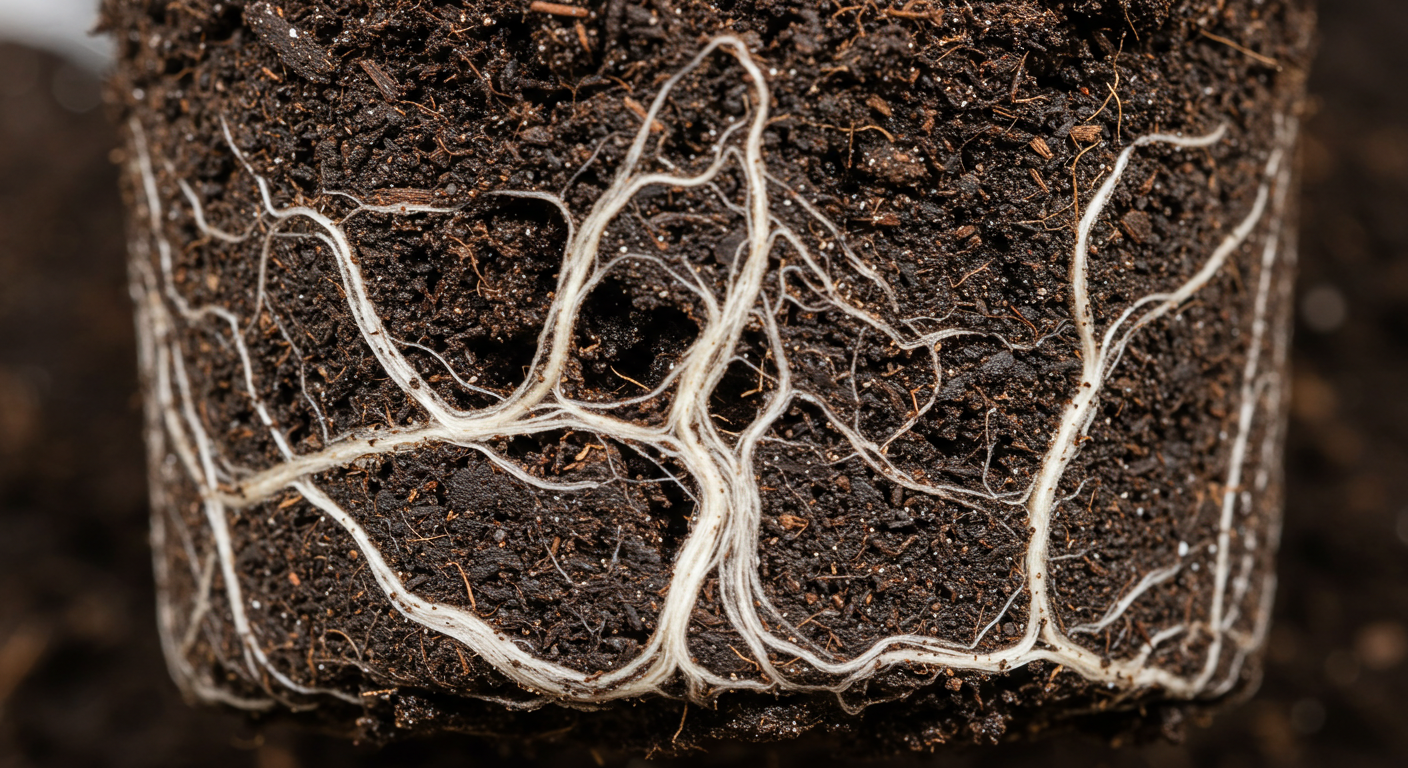
Seedlings begin with a radicle that can develop into a dominant primary root with lateral branches. Clones form adventitious roots from stem tissue. This anatomical difference is real, but the common conclusion that a seed plant must always be stronger, deeper rooted, or higher yielding is not.
Container walls, medium structure, irrigation pattern, oxygen, temperature, transplant timing, and available root volume can matter more than the plant’s original root type. A seedling can become root-bound in a small pot. A properly propagated clone can fill a large container with a dense, functional root system. Root health should be judged by distribution, activity, color, branching, oxygen access, and the plant’s response.
Transplanting changes the comparison
A seed started in its final container avoids transplant disturbance, but a very large wet container can be difficult to water correctly around a tiny seedling. A seed started in a small cell is easier to manage, yet it must be transplanted before restriction becomes severe.
A clone usually arrives in a plug or small pot. Move it into a medium whose moisture behavior you understand. A wet propagation plug surrounded by a much drier, coarser substrate can create a sharp moisture boundary. Soaking the entire final container repeatedly to “help the clone” can leave the new roots without enough oxygen.
Pro Tip: After transplanting, check the original plug and the surrounding medium separately. The surface of the new pot can look dry while the plug remains saturated, or the new medium can stay wet while a small plug dries rapidly.
Time: How Much Faster Is a Clone?
A clone can shorten the early timeline because it is already living vegetative tissue. However, there is no honest universal answer such as “a clone saves exactly three weeks.” The comparison depends on the starting points.
A rooted, actively growing clone should be compared with a germinated seedling, not with a dry seed and not with a mature plant. An unrooted cutting should be compared with the entire propagation process still ahead. A clone recovering from shipping or pest treatment may pause while a seedling advances steadily.
| Starting material | Work still ahead | Planning reality |
|---|---|---|
| Dry seed | Imbibition, germination, emergence, seedling establishment, and vegetative growth. | Most flexible to store and schedule, but the longest biological beginning. |
| Young seedling | Root-zone expansion, early canopy formation, and possibly later sex confirmation. | Health and vigor can already be observed, but phenotype remains developing. |
| Unrooted cutting | Callus and root formation, acclimation, then vegetative growth. | Not a shortcut unless you can propagate reliably. |
| Rooted clone | Acclimation, transplant establishment, canopy building, and health verification. | Can be the fastest start when roots and source are genuinely strong. |
| Acclimated tissue-culture plantlet | Careful transition, root-zone expansion, and vegetative growth. | Quality depends heavily on laboratory and acclimation procedures. |
Cost: The Plant Price Is Only the First Line
Seeds may look expensive per pack, while one clone may look inexpensive per plant. That comparison misses the infrastructure around each option.
Seed costs can include extra seeds for germination uncertainty, a propagation tray, small containers, gentle lighting, and the time required to identify sex when regular seeds are used. Those items are often modest and reusable. Seeds do not require a permanent mother plant unless you later decide to preserve a selected phenotype.
Clone costs can include transport, immediate lighting and care, quarantine space, magnification, pest monitoring, testing, treatments, and losses from poor rooting. If you make your own clones, the donor plant needs space, light, containers, nutrition, pruning, pest management, and electricity even when the flowering room is empty.
The clone can still be economical. A verified cutting from a proven donor may save time and reduce variation, especially when uniform production has value. The point is to compare the complete system, not the sticker price.
Spend on source quality and verification
Choose viable, documented seeds or healthy, properly rooted clones. Put money into the risk that could compromise the entire grow.
Buy the cheapest unknown live plant
A low-cost clone can become the most expensive input in the room if it introduces pests, disease, weak roots, or the wrong identity.
Indoor, Outdoor, Greenhouse, and Small-Space Decisions
Indoor grows often reward uniformity
Indoor light is a limited, designed footprint. Plants that stretch at very different rates can create bright tops, shaded lower growth, and uneven irrigation demand. Clones from one verified donor can make height and flowering behavior more predictable, which is useful in a tent or low room.
Seeds still work very well indoors. Start enough lawful plants to allow for expected variation, label every container, and use flexible training. Do not force every seedling to match the fastest plant. If one phenotype clearly needs a different irrigation interval or canopy height, manage the difference instead of pretending it is not there.
Outdoor growing changes what “faster” means
Outdoors, the finish date must fit local day length, frost risk, humidity, and seasonal weather. A clone can provide a head start in a short season if it is healthy, appropriately hardened, and matched to the region. A seedling can establish from an early stage in the site and avoids importing live-plant pests.
Neither route guarantees stronger branches or larger harvests. Sunlight, wind exposure, root volume, water supply, nutrition, cultivar adaptation, planting date, training, and late-season weather shape the result. Harden indoor-raised seedlings and clones gradually before full outdoor exposure. Tender leaves can be damaged by intense sun, wind, and rapid moisture loss.
Greenhouses need the same quarantine discipline
A greenhouse feels separate from an indoor room, but warm protected conditions can also help pests reproduce quickly. Incoming clones should not go directly beside established plants. Screens, sanitation, airflow, irrigation separation, and scouting are part of the starting-material decision.
Small tents and balconies reduce the margin for a wrong choice
When you can lawfully grow only one or two plants, losing a plant to poor germination, an unwanted sex, or a contaminated clone has a larger effect on the whole project. Feminized seed reduces one uncertainty. A verified rooted clone reduces several others. The correct choice depends on which failure you can prevent.
“Are clones always the better choice for a short outdoor season?”
Question sent by: Dominic Hall, via contact form.
No. A healthy clone with suitable flowering behavior can provide useful size before the season changes, but a stressed or poorly hardened clone can lose that advantage. A fast-finishing seed-grown plant may fit the climate better. Compare finish window, source health, acclimation, and local weather instead of using plant age alone.
Yield, Potency, and Quality: Which One Wins?
Seeds do not automatically yield more because they can form a primary root. Clones do not automatically yield more because they begin with mature tissue. Yield is an outcome of genetics, plant health, root volume, canopy management, light, carbon dioxide availability, temperature, humidity, water, nutrition, pest pressure, flowering time, and the grower’s decisions.
A clone from a proven high-yielding donor gives you a known genotype, which can improve predictability. That does not guarantee the donor’s result in a different room. If the new environment provides less light, weaker roots, unstable temperature, or different harvest timing, the clone can perform very differently.
Seeds create a distribution of possibilities. One plant may outperform the parents in your specific environment, while another may be less suitable. This is why phenotype selection requires complete records and repeated evaluation. The most vigorous seedling is not necessarily the most aromatic, resilient, or productive flowering plant.
Potency follows the same logic. Genetics sets possibilities, while plant health, environment, maturity, harvest timing, drying, and storage influence the final flower. Starting material is important because it selects the genetic and health foundation, not because seed or clone status directly determines cannabinoid content.
What to Remember: A clone offers predictability only when the donor has actually been evaluated and the clone is correctly identified. A cultivar name without donor records is still a prediction.
Can You Grow Seeds and Clones Together?
Yes, but a mixed first grow can become unnecessarily complicated. Seedlings and clones may require different humidity, light intensity, irrigation frequency, transplant timing, and canopy management. Seed plants may vary among themselves, while clones may arrive at different root strengths.
If you mix them, label every plant, keep incoming clones quarantined first, and avoid linking all containers to one inflexible irrigation schedule. Let plants reach comparable establishment before making major flowering decisions. A calendar built around the oldest clone can push young seed plants too quickly.
There is also a learning advantage to choosing one route. When all plants began as seeds, you can compare seedling variation. When all began as clones from one donor, differences point more strongly toward environment, roots, or handling. A simpler population makes cause and effect easier to read.
Which Option Fits Your Situation?
| Your situation | Usually the stronger starting option | Why |
|---|---|---|
| No quarantine space and no verified clone source | Seeds | They avoid bringing an unknown living plant and propagation medium into the garden. |
| Trusted, tested, rooted clone from a proven donor | Clone | You gain a known genotype, likely sex, and a shorter early timeline. |
| Autoflowering first grow | Seeds | Cloning does not reset the age-driven flowering schedule. |
| You want to discover and keep a unique phenotype | Seeds | Genetic variation creates the population from which selection is possible. |
| Low indoor ceiling and one even canopy | Verified clones | Clonal uniformity can simplify height, training, and flowering management. |
| You cannot provide immediate care on arrival | Seeds, stored correctly until ready | A clone is living material and cannot wait without light and root-zone care. |
| Remote outdoor site with strict sanitation concerns | Often seeds or locally raised seedlings | They reduce live-plant import risk, but season length and establishment conditions still decide. |
| You want the simplest learning comparison | One starting method, not a mix | Fewer starting variables make plant responses easier to interpret. |
How to Inspect Cannabis Seeds Before Starting
- Confirm the source and label. Record cultivar, seed type, lot or pack details, purchase date, and stated parental information.
- Review storage history. Cool, dry, dark, stable storage is more meaningful than seed color alone.
- Look for physical damage. Cracks, crushing, mold, or severe softness are warning signs. Do not perform aggressive squeeze tests that can damage viable seed.
- Plan for the seed type. Regular, feminized photoperiod, and feminized autoflowering seeds create different space and timing decisions.
- Prepare labels before germination. A misplaced label can erase the value of careful genetic selection.
- Start only when the environment is ready. Do not germinate first and then begin searching for a light, container, or safe location.
How to Inspect a Cannabis Clone Before Accepting It
- Verify identity. Ask whether the donor has been flowered and evaluated, and how the clone was tracked.
- Ask about testing and treatments. Record what was tested, when, which tissue was sampled, and what products were recently applied.
- Examine new growth. Twisting, bronzing, severe stippling, unusual brittleness, and distorted meristems deserve close investigation.
- Inspect leaf undersides with magnification. Look for insects, mites, eggs, cast skins, webbing, feeding scars, and powdery growth.
- Check stems and nodes. Avoid collapsed tissue, rot, severe lesions, and unexplained dieback.
- Inspect the plug and roots. Confirm the cutting is rooted, not merely held upright by the medium. Look for functional distribution and no foul odor.
- Confirm the transition plan. Learn the previous light level, photoperiod, humidity, medium, irrigation, and nutrition so acclimation is gradual.
- Keep it isolated. The best visual inspection does not replace quarantine.

Common Seeds vs Clones Myths
“Clones are exact copies in every way”
They are clonal genetic copies of the donor, but roots, health, environment, development, and accumulated changes can differ. Expect greater genetic consistency, not identical performance under all conditions.
“Seed plants always have better roots”
Seedlings and clones begin with different root anatomy. Final root function depends heavily on propagation quality, medium, oxygen, water, container volume, temperature, and time. A healthy clone can build a powerful root system; a poorly managed seedling can build a weak one.
“Clones are always faster”
A strong rooted clone often shortens early development. An unrooted, stressed, diseased, or poorly acclimated cutting may not. Compare the plant you are receiving, not the category name.
“Feminized seeds cannot produce unexpected reproductive structures”
Feminized breeding greatly favors female offspring, but genetics and environment remain biological systems. Inspect the crop and maintain a stable flowering environment.
“Seeds cannot carry any disease risk”
Seeds remove many risks associated with living plant material, but they are not a universal sterility certificate. Quality, storage, sanitation, and source documentation still matter.
“A clone of a high-yield plant will produce the same harvest”
The genotype may be the same. The light, roots, canopy, water, nutrition, climate, health, timing, and grower decisions may not be. Use the donor result as evidence of potential, not a harvest guarantee.
Frequently Asked Questions
Are clones always female?
A correctly labeled clone from a confirmed female donor is expected to be female because it retains the donor’s genotype. Mislabeling and unverified source history can still create surprises, and intersex expression can occur under genetic or environmental influence.
Do clones yield less than seed-grown plants?
Not inherently. Root health, vegetative time, canopy coverage, environment, genetics, and cultivation determine yield. Clones and seed plants can both produce excellent or poor results.
Can an autoflowering cannabis plant be cloned?
A cutting can sometimes root, but it keeps the donor’s age-driven flowering schedule. The time spent rooting leaves little vegetative growth, making autoflower cloning impractical for normal production. Start autoflowering plants from seed.
How much time does a clone save?
There is no fixed amount. A vigorous rooted clone can skip germination and early seedling development. A weak cutting may spend much of that advantage forming roots or recovering from transport and transplanting.
Can a clone carry hop latent viroid without symptoms?
Yes. Research has identified the viroid in asymptomatic stock plants and rooted cuttings. Source testing, sanitation, quarantine, and careful propagation records are stronger protection than appearance alone.
Are feminized seeds guaranteed to be female?
They are produced to make female plants overwhelmingly likely, but “100 percent under every biological and environmental condition” is too absolute. Observe the plants during flowering.
Can I take clones from a flowering plant?
Cuttings can sometimes be rooted from flowering material and returned to vegetative growth under an appropriate photoperiod, a process often called revegetation or monster cropping. It is slower, less predictable, and more stressful than using healthy vegetative donor material.
Which is better outdoors?
Neither is universally better. Seeds reduce live-plant import risk and can establish early in the site. Healthy, hardened clones can provide a useful head start and known flowering behavior. Local season, cultivar fit, source health, transplant timing, and weather decide the advantage.
Should I keep a mother plant on my first grow?
Usually not unless preserving a specific genotype is already part of the plan. A mother plant needs continuous space, light, nutrition, pruning, sanitation, and pest management. You can grow and evaluate plants first, then decide whether the value justifies a dedicated donor area.
Can I tell a good seed or clone by appearance alone?
Appearance can reveal damage and obvious health problems, but it cannot prove genetic identity, future yield, hidden pathogen status, or long-term vigor. Combine observation with records, source history, and testing when appropriate.
The Weedth Answer
If this is your first grow and you do not have access to a verified, clean clone source, start with well-documented seed. Feminized photoperiod seed often offers the simplest balance for a flower-focused first grow, while autoflowering seed can suit a short or compact schedule if you are prepared to avoid early stress. Regular seed makes sense when breeding, preservation, or full-population learning is part of the goal.
If you can obtain a healthy, well-rooted, correctly labeled clone from a trusted and appropriately tested source, a clone can make the canopy more uniform and shorten the early timeline. Quarantine it anyway. Trust is supported by records, testing, sanitation, and plant condition, not by confidence alone.
Most importantly, do not let the seed-versus-clone decision distract from the environment. A strong start still needs a lawful location, safe electricity, appropriate light, moving air, a suitable root zone, careful irrigation, stable temperature and humidity, and daily observation. Choose the starting material whose unknowns you can reduce, then give that plant a system you can understand.
Final Decision Checklist
Before a seed or clone enters the grow
- Confirm the cultivation plan and starting material are lawful.
- Decide whether you value genetic variety or genetic uniformity more.
- Verify the seed type or the clone donor’s identity and history.
- Review seed storage or clone propagation and testing records.
- Prepare the room, containers, labels, light, and irrigation before starting.
- Use a separate quarantine area for every incoming live plant.
- Inspect roots as carefully as leaves.
- Match the choice to indoor height, outdoor season, and available time.
- Use seed for a practical autoflowering grow.
- Budget for the full system, not only the seed pack or clone price.
- Avoid mixing starting methods unless you can manage different schedules.
- Keep records from the first day so later performance has context.
Scientific and Extension References
- Transmission, Spread, Longevity and Management of Hop Latent Viroid in Cannabis
- Vegetative Propagation of Cannabis sativa: Effects of Cutting Position, Leaf Area and Propagation Conditions
- Effects of Rooting Hormone, Light and Carbon Dioxide on Cannabis Cutting Propagation
- Mother Plant Age and Light Intensity Minimally Alter Adventitious Root Formation in Medicinal Cannabis Cuttings
- Morphological Characteristics and Rooting Success of Cannabis Cuttings
- Female Pollen Induction and Feminized Seed Production in Cannabis
- Sex Determination and Hermaphroditism in Cannabis sativa
- Integrated Management of Pathogens and Microbial Contaminants in Greenhouse Cannabis
- Genetic and Epigenetic Considerations in Clonal Cannabis Propagation
- Somatic Mutation and Genetic Diversity in Clonally Propagated Cannabis
- Ten Frequently Asked Questions About Growing Cannabis
Share this article
A quick overview of the topics covered in this article.
Follow us
Latest articles
September 24, 2026

September 24, 2026
September 24, 2026
September 24, 2026