
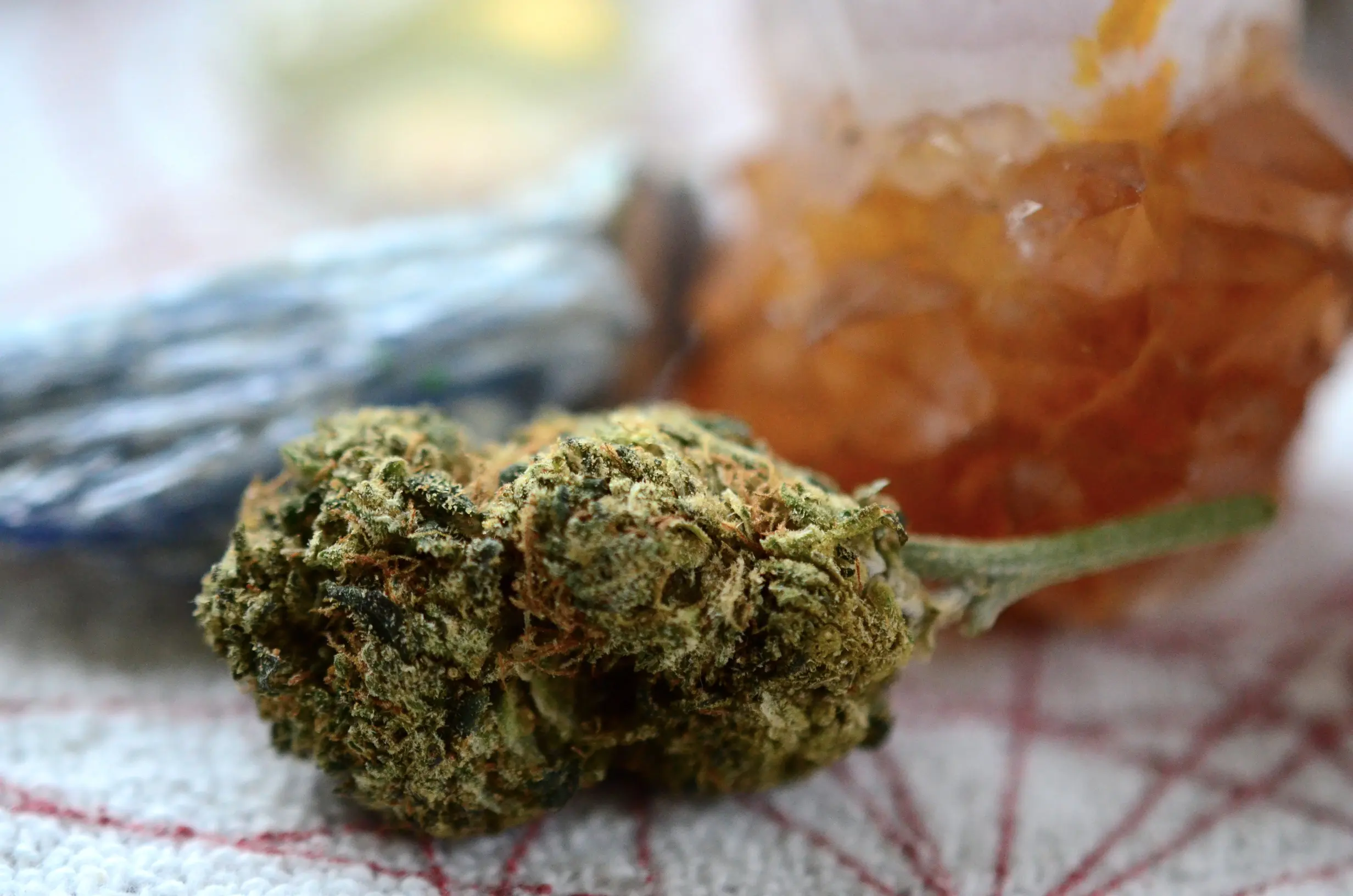
Cinex
Cinex is a fast, citrus-forward sativa hybrid built for people who want movement rather than sedation. Its strongest expressions combine sweet orange peel, lemon, earthy skunk, and a faint diesel or fermented-fruit edge. The effect often feels direct and task-oriented, with less dreamy haze than many daytime strains. That functional reputation makes Cinex approachable, but it can still become anxious or overly intense when a high-THC batch is consumed too quickly.
In the garden, Cinex carries the vigor of Cinderella 99 and the resinous, fruit-skunk complexity associated with Vortex. The plant generally grows quickly, branches willingly, and finishes faster than its sativa presentation suggests. It is often easier than XJ-13 because the stretch is more predictable and the plant tolerates pruning well. The complication is phenotype variation. Some plants lean toward sweet citrus and a neat multi-branch structure. Others show stronger diesel, funk, or skunk and may stretch farther or finish with looser flowers.
The central grow question is not whether Cinex can produce. It is how to keep its speed organized so the harvest remains uniform and aromatic. Moderate feeding, early structural pruning, a shallow canopy, and a dry but not overheated finish usually produce better flower than aggressive nutrient schedules or late corrective training. Cinex is capable of becoming a high-efficiency indoor plant, yet it should still be selected for flavor and effect rather than weight alone.
Strain Features
| Feature | Details |
|---|---|
| Strain Type | Sativa-dominant hybrid with a clear, energetic, and creativity-oriented effect. |
| Genetic Profile | Cinderella 99 x Vortex. |
| THC / CBD | Commonly mid-to-high THC, often reported around 17-23%; CBD is usually minimal. |
| Dominant Terpenes | Limonene often leads, followed by beta-caryophyllene and pinene; myrcene varies by phenotype. |
| Aroma | Sweet citrus, orange rind, lemon, earth, skunk, light diesel, and occasional floral fruit. |
| Effect Character | Focused, energetic, creative, and euphoric with limited body weight at moderate doses. |
| Flowering Time | Approximately 7-9 weeks, with many examples finishing around 50-60 days. |
| Stretch | Moderate. Taller phenotypes can double, while compact expressions remain easier to contain. |
| Plant Structure | Fast lateral branching, medium internodes, narrow-to-medium leaves, and resinous light-green flowers. |
| Yield | Moderate to high when the canopy is uniform; clone-based SOG can be efficient. |
| Feeding Behavior | Moderate appetite. Early nitrogen supports vigor, but late nitrogen can reduce finish quality. |
| Environmental Tolerance | Handles slightly cooler conditions better than many warm-climate sativas, but still needs dry flowers. |
| Grow Difficulty | Easy to moderate. Pruning and phenotype observation are more important than heavy intervention. |
| Best Time of Use | Morning to late afternoon; evening use may interfere with sleep for sensitive users. |
Genetic Lineage
Cinex combines Cinderella 99 and Vortex, two lines known for fast flowering relative to their energetic effects. Cinderella 99 contributes rapid growth, citrus and tropical fruit, manageable flowering time, and a strong cerebral entry. Vortex adds resin, skunk, sour fruit, and a more psychedelic or expansive quality. The cross can therefore appear straightforward in the garden while producing a surprisingly layered effect.
The parent combination commonly separates into two broad aroma directions. A citrus-forward phenotype smells like sweet orange peel, lemon oil, and fresh herbs. It often has a cleaner structure, firmer flowers, and a direct focused effect. A funkier phenotype carries more diesel, fermented fruit, skunk, or earthy spice. That plant may feel stronger and more physically present, but it can also be less uniform in height or flower density.
Cinex is sometimes labeled simply as a sativa, yet its flowering speed and training response show the influence of domesticated hybrid genetics. It does not need to be treated like a twelve-week Haze. The plant can be topped, cloned, and flowered in a production-style room without losing its distinctive daytime character. The grower should still allow enough space for lateral movement and should not confuse fast ripening with a short compact plant.
Selection note: Fruity and diesel-smelling phenotypes are both reported. Keep them separate through harvest and cure before deciding which expression best fits the garden.
Effect Breakdown
Immediate Clarity
Cinex usually begins with a clear shift in attention. The mind feels faster, details become easier to notice, and the user may feel ready to move, talk, organize, or create. Unlike a dreamy Haze, the first phase often feels practical. Mundane tasks can become more tolerable and social hesitation may decrease. This is the dose range that supports the cultivar's reputation for focus.
Creative Momentum
The middle phase is more expansive. Ideas arrive quickly, music feels engaging, and physical movement can feel natural. The body remains light, although a subtle release of tension develops around the shoulders and face. Cinex can work well for a walk, studio session, gardening, or a social afternoon because it adds stimulation without automatically producing heavy physical impairment.
The Anxiety Boundary
A high dose can move the experience from focused to fragmented. The user may jump between tasks, speak rapidly, or become overly aware of heartbeat and surroundings. Dry mouth, dry eyes, and anxious thought loops are among the common negatives. The cultivar's positive reputation should not encourage careless dosing. A small increase can change a functional session into an uncomfortable one for sensitive users.
The comedown is usually cleaner than that of a heavy indica. Some batches leave a calm, satisfied afterglow, while others maintain mental activity for several hours. A diesel-forward phenotype may finish with more body relaxation. Cinex is not a reliable knockout strain and is better placed earlier in the day.
Flavor & Aroma Profile
Sweet Citrus Expression
The classic fruit-forward plant smells like orange peel, lemon candy, and sweet green herbs. The citrus is often broader than a pure lemon strain. It can resemble tangerine, orange zest, or a mixed bowl of tart fruit. A light floral note may appear around the edges, especially in flower that was dried slowly and kept cool.
Diesel and Skunk Expression
A second phenotype leans toward pungent earth, skunk, fuel, and fermented citrus. The aroma may be less immediately sweet but more complex after grinding. Pepper and sour resin become stronger on the exhale. Some users describe a faint cheese-like or savory funk, which fits the broader reports of unusual pungent Cinex batches.
Flavor Through the Session
On inhale, the best flower produces sweet citrus with little harshness. Earth and pepper appear in the middle, then a skunky or lightly diesel note remains after exhale. Overdried flower tastes mostly woody and spicy. Immature flower can smell like sharp lemon leaf without the round sweetness that develops near full maturity.
Cinex can retain flavor well when the flowers are not excessively dense, but the top notes are still vulnerable. The fast flowering period sometimes encourages a fast post-harvest process. That is a mistake. A cultivar that finishes quickly on the plant still benefits from a patient dry and several weeks of cure.
Dominant Terpenes
Limonene
Limonene commonly drives the sweet orange and lemon character. It also contributes to the bright first impression that makes Cinex feel clean and modern rather than heavily earthy. The actual concentration varies, and a limonene-dominant label does not guarantee one psychological effect. For growers, the practical point is that this aromatic layer is heat-sensitive and should be protected during late flower and drying.
Beta-Caryophyllene
Beta-caryophyllene creates pepper, dry spice, and some of the pungent skunk-diesel depth. It can keep a citrus phenotype from tasting one-dimensional. Laboratory research shows CB2 receptor activity, but that does not turn a Cinex flower into a standardized anti-inflammatory product.
Pinene
Pinene contributes fresh herbs, pine, and a sharper sense of cleanliness on the palate. It is often associated with the clear presentation of the cultivar, although user effects cannot be assigned to one terpene. A pinene-rich plant may smell less sweet and more like citrus leaves, evergreen, and dry wood.
Myrcene
Myrcene appears at varying levels and adds earth, ripe fruit, and physical softness. A myrcene-heavier phenotype may feel less purely stimulating and may produce a more relaxed finish. It can also deepen the fermented-fruit or musky side of the aroma.
Terpinolene
Terpinolene can appear as a secondary influence through the parent lines. It supports floral fruit, herbs, and a faint perfumed quality. When present, it makes the aroma more complex but also increases the importance of a cool dry because floral top notes disappear quickly under heat.
Chemotype warning: Cinex is known for fruity and diesel-leaning expressions. Treat the dominant terpene list as a guide, then use actual aroma, laboratory data, and cured flower quality to evaluate the plant in front of you.
Indoor vs. Outdoor Growing
| Aspect | Indoor Cultivation | Outdoor Cultivation |
|---|---|---|
| Plant Shape | Medium height with strong branching; easy to prune into a uniform canopy. | Can become a broad, upright shrub with many productive laterals. |
| Flowering Time | Usually 7-9 weeks under stable conditions. | Often finishes by early to mid-autumn, depending on latitude and phenotype. |
| Best System | Clone SOG, compact SCROG, soil, coco, or hydro all work. | In-ground or large aerated containers with early support. |
| Main Risk | Overfilling the room, late nitrogen, and uneven phenotype height. | Wind, caterpillars, rain, and loss of citrus during a hot finish. |
| Climate | Comfortable in standard indoor temperatures and able to handle modest cool periods. | Does well in warm sun and can tolerate cooler nights better than many sativas. |
| Yield Strategy | Early pruning, a shallow canopy, and consistent moderate feeding. | Long veg, several main arms, and removal of shaded interior shoots. |
| Difficulty | Easy to moderate, especially with a selected clone. | Moderate because environmental variables and plant size increase labor. |
Indoor cultivation suits Cinex because the plant finishes quickly and adapts to several media. Hydro can accelerate growth and support an efficient clone SOG, while soil or coco gives the grower more time to read irrigation and may support richer aroma. The key is not the medium but the ability to keep the canopy level and the root zone active.
Outdoor Cinex benefits from an early start without requiring an extremely long autumn. The plant can become large, but it remains easier to support than a very long-flowering Haze. Morning sun is valuable because it dries dew, and a position open to breeze helps protect the many branch junctions that develop after topping.
Greenhouse growers should use the cultivar's cooler tolerance without allowing the house to remain damp. Open vents before condensation appears, move air below the canopy, and avoid watering late in the day when night temperatures are falling.
Practical choice: Cinex is one of the better candidates for a grower who wants sativa-style flower without committing to a long flowering cycle.
Strain-Specific Grow Guidance
Use the First Two Weeks to Identify the Phenotype
Compare leaf width, internodal spacing, branch angle, and aroma from rubbed stems. A compact citrus plant can be run at higher density. A taller diesel-forward plant needs more spacing and an earlier flip. Make these decisions before the canopy is locked into a screen.
Top Early and Keep Four to Eight Useful Leaders
Cinex responds well to topping because the side branches recover quickly. One or two early cuts can create a broad plant, but keep only leaders that can reach independent light. Too many shoots turn a fast plant into a labor-heavy mass of small flowers.
Choose SOG or SCROG From Plant Uniformity
A uniform clone population can perform efficiently in SOG with a brief veg. Seed plants are better spread under a smaller SCROG or separated by height. Mixing unknown phenotypes at high density makes irrigation and harvest timing unnecessarily difficult.
Feed Early Vigor Without Carrying Nitrogen Too Far
More feed is not automatically more quality
Cinex can use a healthy amount of nitrogen during early vegetative growth, especially in inert media, but it does not need to remain dark green in late flower. Excess nitrogen delays the clean citrus finish, increases leaf mass, and may soften the flowers. Taper the vegetative emphasis as soon as stretch is established.
Prune for Light, Not for a Bare Plant
The plant is easy to prune because branches are visible and leaves are not excessively broad. Remove weak inner shoots and selected fans that completely block developing sites. Avoid repeated heavy stripping. The cultivar's yield depends on active leaf area supporting many medium-sized flowers.
Keep the Canopy Dry During the Final Weeks
Cinex is not famous for extreme mold sensitivity, yet fast, resinous flowers can still trap moisture where branches touch. Lower late-flower humidity, maintain gentle movement through the canopy, and inspect any leaf that dies suddenly from the base. A clean-looking room can still hold wet contact points.
Support Before the Final Weight Shift
Branches may appear strong because the plant is upright through mid-flower. Late swelling can change that quickly. A light support net or individual ties keep tops from leaning into neighbors and preserve the open structure created during veg.
Distinguish Genetic Foxtails From Heat Stress
Some expressions form pointed or stacked calyxes naturally. Genetic foxtailing appears consistently across the plant and still produces healthy resin. Heat or light stress is concentrated near the fixture and may include bleaching, stalled aroma, or thin new growth. Do not lower quality by cooling or dimming an entire room to correct a normal trait.
Harvest When Citrus Becomes Round, Not Merely Sharp
Immature Cinex often smells like lemon leaf and green skunk. Mature flower develops sweeter peel, earth, and a stronger resin base. Combine aroma with calyx swelling and mostly cloudy trichomes. A slightly early harvest emphasizes speed but may feel shorter and more anxious.
Keep Phenotypes Separate Through Cure
Label each plant at harvest and cure it separately. The best live aroma is not always the best smoke. One plant may retain orange sweetness while another becomes complex diesel and pepper. Selection should include effect, smoothness, trimming labor, and growth efficiency.
Use a Three-Stage Canopy Plan
During early veg, establish four to eight leaders and remove only shoots that clearly grow toward the center. During transition, spread those leaders and allow secondary branches to rise into remaining gaps. After stretch, define a shallow productive layer and remove growth that remains permanently below it. This staged approach preserves vigor while preventing the plant from wasting energy on shaded flower.
Match Irrigation to the Fast Root System
Healthy Cinex can increase water use rapidly once the canopy expands. That does not mean the root zone should stay continuously wet. Track container weight or substrate moisture and maintain a repeatable wet-to-dry rhythm. In coco or other inert media, smaller well-timed irrigations may be appropriate, while soil should be allowed enough dryback to restore oxygen. Sudden droop in a wet pot points toward root-zone stress, not thirst.
Protect the Citrus Phenotype From Excess Light
The tallest citrus-forward tops may bleach or produce thin new calyxes when pushed too close to the fixture. Keep the canopy level before increasing intensity. If only the highest flowers fade in color or lose aroma, correct height and heat rather than reducing light for the entire room. Cinex can use strong light when leaf temperature, irrigation, and nutrition remain balanced.
Use Stem Rubs as an Early Clue, Not a Final Verdict
Stem aroma can help separate sweet citrus plants from funkier expressions, but it cannot replace evaluation of cured flower. A sharp orange stem may finish with average flavor, while a less obvious plant may develop deeper lemon-skunk complexity late in bloom. Use early aroma to organize observations, then select only after harvest and cure.
Prevent a False Early Finish
Cinex can produce orange pistils and visible resin quickly. Those signs are easy to confuse with full maturity. Continue watching for calyx expansion, reduced water use, and a shift from green citrus to sweet peel and resin. Harvesting only by pistil color often produces lighter flowers, shorter effects, and a harsher vegetal edge.
Weedth Bud Flavor Tips
Do Not Let Fast Flowering Become Fast Drying
Cinex may finish quickly, but its citrus profile still needs a controlled dry. Hang branches with enough spacing for even moisture movement and use indirect circulation. A hot, rapid process produces a clean-looking flower with a weak palate.
Harvest During a Mild Environmental Window
When possible, cut during the cooler part of the cycle or day. Move outdoor branches out of sun immediately. The goal is to prevent the exposed flowers from heating after they are no longer supplied by the root system.
Evaluate Citrus and Funk Separately
During cure, record the aroma at one, two, and four weeks. Citrus-forward flower should gain sweetness and separation. Diesel-forward flower may begin sharp and then reveal fermented fruit, skunk, and pepper. Do not reject a pungent plant before the cure has settled the green edge.
Avoid Flavor Additives and Jar Tricks
Do not add fruit peel, flavoring, or wet organic material to the storage container. Those practices can introduce mold and mask the cultivar's real profile. Correct moisture through proper drying and use a stable storage environment rather than trying to perfume the buds.
Flavor target: A finished Cinex flower should keep recognizable citrus after the first exhale. If only earth remains, the post-harvest process was probably too warm or too fast.
Separate the Bright and Fermented Aroma Directions
A bright phenotype benefits from a cool dry that preserves orange and lemon oil. A fermented-fruit phenotype may initially smell sharp or almost overripe, then become more coherent after several weeks. Store them separately and avoid blending before evaluation. One plant may be the superior daytime flower while another offers the more complex evening jar.
Judge Smoothness After Moisture Equalizes
Do not make the final quality decision immediately after the outside of the bud feels dry. Cinex flowers can retain moisture close to the stem, and the smoke may change considerably after internal moisture equalizes during early cure. Reassess aroma, burn, and throat feel after two and four weeks before choosing a keeper.
Weedth Bud Boost Tips
Indoor: Use Speed to Shorten the Cycle
Cinex does not need an extended veg to produce a useful canopy. With selected clones, a short veg and a uniform SOG can create efficient turnover. With fewer plants, top early and fill a compact screen. The yield advantage comes from using the plant's speed, not from building an oversized bush.
Indoor: Reserve Strong Light for a Level Canopy
The cultivar can use strong flowering light when roots and climate are healthy. Keep tops level so one branch does not bleach while the rest remain underlit. Increase intensity gradually and use plant response rather than a fixed number copied from another room.
Outdoor: Build a Wind-Resistant Frame
Create several main branches around a cage and secure them before flowering. Cinex can form many productive laterals, but a tall unsupported plant can split during wind or rain. Support should preserve branch separation and allow inspection from all sides.
Remove Low-Value Depth After Stretch
Clean the lower growth that remains below direct light once stretch is complete. Cinex can produce many small flowers if every shoot is kept. Removing the least promising sites improves premium yield, airflow, and trimming efficiency.
Use the Second Run to Select Efficiency
Compare grams of premium flower, days in veg, trimming time, and flavor retention between phenotypes. The heaviest plant may not be the best keeper if its aroma disappears or its canopy requires constant correction. Cinex is valuable because a selected plant can combine speed, quality, and manageable labor.
Indoor: Increase Premium Flower Percentage
The most useful yield metric is not total wet weight. Count how much dried flower comes from the evenly lit zone and how much becomes loose lower material. Cinex improves when lower branches that cannot reach the canopy are removed early. This concentrates trim labor and drying space on flowers that preserve the cultivar's citrus resin identity.
Outdoor: Finish Before Weather, Not Before Maturity
In cooler regions, choose the fastest healthy expression and place it where morning sun removes dew. Do not harvest an immature plant simply because one rainy day is forecast, but do not gamble a finished crop against a prolonged wet pattern. Use local weather, flower density, and actual trichome maturity together when deciding whether to protect, partially harvest, or wait.
Medical Uses & Benefits
Cinex is most often used as a daytime or functional cultivar. Reported benefits come from consumer experience rather than strain-specific clinical trials, and the energetic effect can be helpful or uncomfortable depending on dose and individual sensitivity.
| Reported Use | How the Profile May Relate |
|---|---|
| Stress and Depression | The bright euphoric effect may improve mood and reduce mental heaviness, especially when paired with activity. |
| Fatigue | Cinex can feel activating and may help some users begin tasks. Persistent fatigue still requires medical evaluation. |
| Pain | The clear head and lighter body relaxation may reduce the distraction of mild pain without immediate sedation. |
| Anxiety | Small doses are often described as positive and focused, while larger doses can produce racing thoughts or physical anxiety. |
| ADHD-Like Symptoms | Some consumers report improved task engagement, but others become more distractible. Evidence is anecdotal and individual response varies. |
| Appetite and Nausea | THC can stimulate appetite and reduce nausea for some users, though Cinex may be less appetite-heavy than many indicas. |
Medical note: Cinex is typically THC-dominant. Anyone with panic sensitivity, psychosis risk, heart concerns, pregnancy, or medication interactions should seek professional medical guidance before use.
Ideal User Profile
Cinex suits a user who wants to remain engaged with the day and prefers citrus-skunk flavor over heavy dessert sweetness. It is especially attractive to growers who want a faster sativa-style crop.
Daytime users seeking focus, creativity, and a positive emotional lift.
Growers who want a forgiving plant that responds well to pruning.
Cultivators interested in clone SOG or a short-cycle SCROG.
Flavor users who enjoy orange, lemon, earth, and skunk.
Experienced consumers who can recognize the dose before anxiety appears.
It is less suitable for people who need immediate sleep, dislike cerebral intensity, or want a completely uniform seed population without selection. The cultivar can be beginner-friendly, but a new consumer should still start with a small amount.
Grower Notes and Feedback
Growers often describe Cinex as fast and cooperative. Cuttings root reliably, branches recover after topping, and the plant can fill space without a long vegetative period. That speed can create overconfidence. A room can become crowded quickly if the grower keeps every lateral.
The most useful feedback concerns phenotype separation. Fruity plants may be sweeter and easier to market by aroma, while diesel-forward plants can feel stronger and retain more depth after cure. Both can be valuable. The correct keeper depends on whether the priority is flavor purity, potency, yield, or cycle speed.
Cinex is often called easy to trim because the flowers can have a good calyx-to-leaf ratio. This is more true of the compact citrus expression than of a taller plant with narrow sugar leaves. Dry trim tends to preserve aroma and makes it easier to judge how much leaf the finished flower actually carries.
Growers in cooler regions appreciate that Cinex can tolerate modest temperature drops better than many sativas. That tolerance should not be confused with a preference for cold, wet late flower. Stable root temperature and dry flowers remain the goal.
The cultivar responds to correction quickly when the root system is healthy. A plant that remains stalled despite adjusted feeding often has an irrigation, root, or pest issue rather than a genetic need for stronger nutrients.
Field advice: Select the keeper after cure. Cinex can smell impressive in late flower, but the winning plant is the one that keeps citrus or complex funk after drying.
Growers often praise Cinex because it recovers quickly from topping and minor errors, yet that resilience can encourage overtraining. A plant that continually replaces removed growth may look cooperative while the harvest date keeps moving farther away. The cleanest runs establish the structure early and then allow uninterrupted flowering.
The cultivar can smell more intense in the room than in the finished jar when drying is too warm. This is an important diagnostic pattern. Strong live aroma does not guarantee preserved flavor. Record drying temperature and duration alongside the grow notes so a disappointing jar is not blamed automatically on genetics.
A Practical Cinex Troubleshooting Order
When growth slows, begin with irrigation and root-zone oxygen, then check pH and salt concentration, and only then change the nutrient strength. When the canopy stretches unevenly, confirm whether the difference follows phenotype before assuming a light problem. When citrus weakens, review canopy temperature and harvest maturity before adding supplements. This order prevents several corrections from being made at once and keeps the plant's real response visible.
If lower leaves yellow during rapid stretch, consider whether the plant is moving nitrogen into new growth, but do not automatically return to a heavy vegetative formula. Evaluate the speed and distribution of yellowing. A gradual lower fade on an otherwise vigorous plant differs from widespread pale growth caused by poor uptake. Cinex finishes best when nutrition supports the transition without locking the plant into excessive green leaf production.
Weedth Editor's Note
How I would judge the finished flower
Cinex stands out to me as a practical sativa hybrid. It brings enough speed and brightness to feel useful, yet it does not demand the long flowering window of a classic Haze. That combination makes it easier to recommend to a home grower who wants daytime flower without a complicated calendar.
I would identify the phenotype before deciding plant count. A compact citrus clone can be run efficiently at higher density. A taller diesel plant deserves more width and a small screen. I would not mix both in one rigid layout and expect uniform results.
My feeding approach would remain moderate. The plant's speed can make it look hungry, but late nitrogen creates a leafy finish and weakens the clean peel aroma. I would rather keep roots active and leaves medium green than push for maximum darkness.
The flavor is the final test. Cinex should still taste like citrus after the first inhale. A fast dry removes the part that makes the strain memorable. I would give the harvest more curing time than its quick flowering period might suggest.
For a beginner, Cinex is a good training plant because it recovers quickly and shows clear responses. The grower still needs to manage height and avoid overpacking, but the cultivar usually gives useful feedback instead of collapsing after a small mistake.
I would keep the final selection only after comparing two full cure stages. Cinex can impress with speed and room aroma, but the keeper should also retain citrus on the palate, finish without excessive leaf, and remain clear rather than anxious at a moderate dose.
Weedth Score
Growing Experience 8.6/10 – Fast, forgiving, and responsive to pruning with manageable flowering time.
Bud Structure & Visual Appeal 8.3/10 – Bright resinous flowers with good calyx development; phenotype variation affects density.
Aroma Complexity 8.7/10 – Citrus, earth, skunk, diesel, and floral fruit can form a layered profile.
Flavor & Smoothness 8.5/10 – Clean and pleasant when cured slowly, but citrus can fade under heat.
Effects & High Experience 8.8/10 – Focused and creative with a clean finish; anxiety risk rises with dose.
Overall Satisfaction & Recommendation 8.6/10 – A strong fast-flowering choice for daytime users and practical growers.
Fast in the room and bright in the head. Cinex works best when the grower keeps the canopy simple and the citrus intact.
FAQ
Is Cinex easy to grow?
Cinex is generally easy to moderate. It grows quickly, responds well to topping, and finishes relatively fast. The main tasks are controlling plant density, separating phenotypes, and reducing late nitrogen.
How long does Cinex flower?
Most examples finish in about seven to nine weeks. Many growers report a window around 50-60 days, although phenotype and environment can move the harvest date.
How much does Cinex stretch?
Stretch is usually moderate. Compact plants may increase by roughly half to double their height, while taller expressions can move more. Flip seed plants with space remaining until their behavior is known.
Is Cinex better for SOG or SCROG?
Uniform clones work well in SOG. Seed plants or branchier phenotypes are easier to manage in a compact SCROG. Choose the method from plant uniformity rather than from the strain name alone.
Why does my Cinex smell like diesel instead of orange?
Diesel and pungent phenotypes are part of the reported range. The plant may be authentic but expressing more Vortex-like funk. Cure each phenotype separately before selecting a keeper.
Does Cinex need heavy nutrients?
No. It benefits from adequate nitrogen early, then moderate balanced feeding. Excess late nitrogen can create leafy flowers, delay ripening, and flatten citrus flavor.
Can Cinex grow outdoors in a cool climate?
It can tolerate cooler conditions better than many sativa-dominant plants and has a relatively quick finish. A dry autumn, morning sun, and protection from prolonged rain are still needed.
When is Cinex ready to harvest?
Look for full calyx swelling, fewer fresh pistils, mature sweet or pungent aroma, and mostly cloudy flower trichomes. Do not harvest only because the calendar reaches day fifty.
Is Cinex good for sleep?
It is usually better for daytime use. Some users feel relaxed during the comedown, but the initial stimulation can delay sleep. A heavier evening cultivar is more predictable for insomnia.
Why are my Cinex plants finishing at different heights?
Seed populations can separate into compact Cinderella 99-leaning plants and taller Vortex-influenced expressions. Train and space them individually, or use selected clones when uniformity matters.
Can Cinex be harvested in stages?
Yes. If the upper canopy is mature and lower branches are clearly behind, remove the finished tops and give the remaining sites a short, stable finish. Do not use staged harvest as a substitute for better canopy planning.
Similar Strains
Cinderella 99: Shares fast flowering, citrus fruit, and clear daytime energy with a slightly simpler lineage.
Jack the Ripper: Offers strong citrus-resin intensity and creative effects, often with a sharper edge.
XJ-13: Comparable functional brightness with more lime-pine Haze character and greater mildew concern.
Chernobyl: Another energetic citrus-terpinolene cultivar with tropical and lime variation.
Jilly Bean: Provides sweet fruit and happy social effects with a bushier, more colorful growth pattern.
Super Lemon Haze: A longer-flowering, more Haze-dominant option for users who want stronger lemon and sustained stimulation.
Share this article
A quick overview of the topics covered in this article.
Follow us
Latest articles

September 9, 2026

September 9, 2026
September 9, 2026