
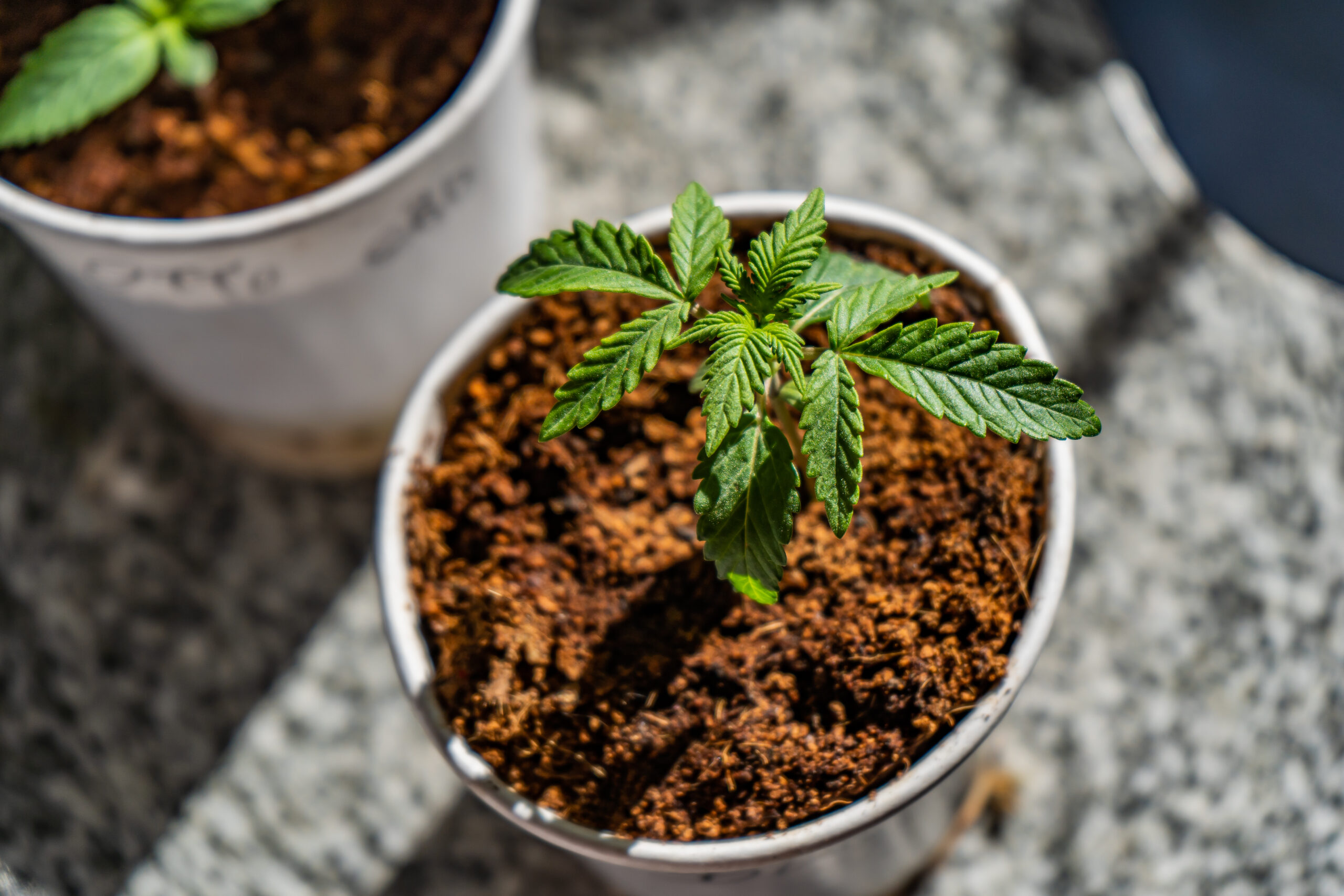
How Often Should You Water Seedlings in Cups?
Seedlings in cups do not need frequent “big waterings.” They need a small, consistent moisture zone that stays breathable. Most slow seedlings are not underfed. They are overwatered early, which keeps roots shallow and oxygen-starved.
If you take one idea from this guide, make it this: in a cup, you are managing oxygen first and water second. The easiest way to do that is to water less at a time, then let the cup earn the next watering.
Why Seedlings in Cups Get Overwatered So Easily
Small containers have tiny margin for error
A cup is a very small ecosystem. There is not much soil volume to buffer mistakes, and there is not much space for roots to “escape” a wet zone. When you overwater a cup, the whole container can stay saturated for too long. That means the seedling sits in a low-oxygen environment for days.
In bigger containers, extra water can spread and drain through a larger profile. In cups, extra water often just turns the cup into a swamp.
Important: the smaller the container, the more your watering becomes a precision task, not a routine.
Roots need both moisture and oxygen
Seeds and seedlings do not just drink. Roots need oxygen in the pore spaces between particles. If those spaces are filled with water for long periods, roots slow down. When roots slow down, the plant stalls above ground, even if the leaves still look “okay.”
This is why overwatering in cups is so sneaky. The seedling can look green and alive while it is quietly failing to build roots. Then one day it stops growing, droops, or becomes fragile.
The fastest seedlings are usually the ones with the most oxygen, not the most water.
Why “watering on a schedule” fails in cups
A schedule assumes the cup dries at the same rate every day. That almost never happens.
Drying speed changes with:
temperature, airflow, light intensity, humidity, and how much the seedling has grown since yesterday.
So the same schedule that worked last week can become too frequent this week, or not frequent enough next week. In cups, schedule watering often creates a cycle of overwatering, then waiting too long, then overwatering again.
The fix is simple: stop watering by calendar and start watering by signals.
The Shot Glass Method
What the method is in plain terms
The shot glass method is exactly what it sounds like. Instead of soaking the whole cup, you give a small measured amount of water at a time, focused where the seedling can actually use it.
A “shot glass” is a concept, not a strict measurement. The point is micro-watering with intention. You are giving enough to keep a zone moist, not enough to flood the entire container.
Why micro-watering beats soaking the whole cup
When you soak the whole cup early, you create two problems:
First, the cup stays wet too long, so oxygen stays low.
Second, roots have no reason to expand. If the entire cup is equally wet, the seedling can survive with a small root ball and never explore outward.
Micro-watering avoids both. You maintain a moist core where the seedling is, while leaving surrounding areas slightly drier so oxygen stays available and roots have a reason to chase moisture.
This is how you get faster root expansion without forcing it.
The goal: steady moisture without waterlogging
The goal is not dryness. It is not “keep it wet.” The goal is a steady moisture level that feels like a damp sponge, while still allowing air to move through the medium.
If the cup never dries even a little, growth usually slows. If the cup dries completely, the seedling stresses and roots can stall. Your sweet spot is controlled dryback.
What Actually Controls Watering Frequency
Cup size and drainage holes
Cup size is obvious. A bigger cup holds more medium and buffers water better. A smaller cup swings faster.
Drainage holes are the part many people underestimate. If a cup has poor drainage or sits flat on a tray with no airflow under it, water lingers, and frequency drops. If drainage is good and the cup can breathe, frequency rises because the cup dries more predictably.
A cup that cannot breathe will always punish “normal” watering habits.
Medium type and density
Light, airy mixes drain and dry faster. Dense mixes hold water longer and reduce oxygen.
If your medium is dense, you can still use the shot glass method, but your volumes must be smaller and your dryback time will be longer. If your medium is airy, you can water a bit more often without suffocating roots.
The medium decides the rhythm as much as your environment.
Temperature and airflow
Warm air increases evaporation and plant water use. Airflow pulls moisture from the surface and speeds dryback.
Cold, still environments slow everything down. That includes germination and root growth, but also dryback. In those conditions, it is very easy to overwater because you do not “feel” the cup changing.
If your room is cool, your cup will stay wet longer. That means your watering frequency should drop, even if you are tempted to treat it the same.
Light intensity and daily dryback
More light drives more transpiration as the seedling develops. That increases water demand and speeds dryback.
Early on, light does not pull much water because the plant is tiny. Later, the same cup can dry quickly because the leaf area increases and the root system becomes more active.
This is why frequency changes week to week. The plant becomes a stronger pump over time.
Seedling size and root development stage
A seedling in its first days is basically living off stored energy and minimal root function. It uses little water.
As roots expand, water use accelerates. A seedling that looked like it needed water every four days can suddenly need water every one to two days, not because you changed anything, but because the plant finally has roots that can actually drink.
When growth accelerates, water needs change fast.
Setting Up the Cup for Predictable Moisture
Drainage and airflow basics
A great watering technique cannot save a cup with poor drainage. Your setup needs to let excess water leave and let air re-enter.
Hole placement and why it matters
Bottom holes are essential, but side holes near the lower edge can help too, because they allow additional airflow and reduce the chance of a stagnant wet zone at the base.
The practical goal is simple: after watering, the cup should drain, then the medium should slowly dry back. If it stays heavy and cold for days, drainage and airflow are not doing their job.
Elevating cups so they can drain and breathe
If cups sit flat in their runoff, they can reabsorb water and stay saturated. Elevating cups slightly so air can reach the bottom helps drying and oxygen exchange.
You do not need anything fancy. You just need the cup to not sit in a puddle.
Important: runoff sitting under cups is a hidden overwatering source.
The “starter zone” concept
The starter zone is the small area where the seedling lives at first. You want this zone stable, and you want the outer zone slightly drier so roots expand outward.
This turns watering into guidance, not random soaking.
Moist center vs drier outer ring
Early on, keep the center moist and the outer ring less wet. That prevents the whole cup from staying saturated and encourages roots to search.
If the entire cup is uniformly wet, roots often stay lazy. If the center is dry, the seedling stalls. The balance is what creates predictable progress.
How to Apply Water With the Shot Glass Method
Where to pour, not just how much
Where you place water changes root behavior.
If you always water right at the stem, roots stay clustered near the stem. The seedling becomes top-heavy and slow to expand. If you place water slightly away from the stem, roots grow outward to chase it, and the plant anchors faster.
The method evolves as the seedling grows.
Center watering vs ring watering
In the earliest stage, center watering makes sense because the roots are tiny and close to the stem. You are maintaining the starter zone.
As soon as the seedling is established, shift to ring watering. You water in a small circle around the plant, not directly on the stem. This is one of the simplest ways to encourage a wider root system in a cup.
A good transition is to move the ring outward little by little as the plant grows.
Encouraging roots to expand outward
Roots expand toward moisture and oxygen. Ring watering creates a moisture gradient that pulls roots outward while the center stays breathable.
If you keep the center constantly wet, oxygen drops and roots slow. If you keep the outer ring bone dry, roots stop exploring. You are aiming for a gentle gradient.
How to avoid runoff and channeling
Runoff in a cup is often a sign you poured too much too quickly, or the medium is channeling water down one path. When channeling happens, one side gets wet and the rest stays dry, which creates uneven root development.
To avoid this, pour slowly and pause. Let the medium absorb water instead of flooding it.
If your medium repels water when dry, do not try to fix that with one big pour. Use smaller additions so it rehydrates evenly.
When to pause and let the cup dry back
Dryback is not a punishment. It is oxygen time. A gentle dryback helps roots breathe and expand.
If you watered and the cup stayed heavy for days, you should pause longer before watering again, even if the surface looks dry. In cups, the surface can be deceptive. The core can stay wet while the top dries.
Remember: the seedling lives in the core, not on the surface.
How to Tell When to Water Again
The lift test: cup weight as your main signal
The lift test is the most reliable method in cups.
Right after you water properly, lift the cup and feel the weight. That is your “fully watered” reference.
Then lift it once or twice a day. As it dries, it becomes noticeably lighter. When it reaches the point where it feels light but not bone-dry, that is often your best watering moment.
This turns watering into a measurable decision instead of a guess.
If you only use one signal, use cup weight.
Surface look is misleading, what to check instead
The surface can look dry while the core is wet. It can also look moist while the core is dry, especially if you mist the top.
Instead of staring at the surface, check:
the cup weight, the feel of the medium slightly below the surface, and what the drainage holes suggest.
If you want a quick check, push a clean finger slightly into the medium near the edge of the cup. The edge often reflects the real moisture trend better than the center.
Drainage hole clues
Drainage holes can tell you a lot without digging.
If you see constant moisture at the holes and the cup stays heavy, the cup is not drying and roots are likely oxygen-limited.
If the holes are dry and the cup is very light, you may have gone too far.
You are looking for a normal rhythm: wet after watering, then gradually drying.
Leaf posture cues, what matters and what doesn’t
Leaf posture can help, but it should be a secondary signal because many things affect leaves.
A healthy seedling often looks perky and upright. If it droops, people assume it needs water. In cups, droop can also mean the opposite: the roots are oxygen-starved from being too wet.
The key is context. If the cup is heavy and the plant droops, do not water. Let it dry back and restore oxygen.
If the cup is light and the plant droops, watering is likely appropriate.
Heavy cup plus droop is a classic overwatering pattern.
Common Mistakes and Quick Fixes
Overwatering patterns and how to reset
Overwatering in cups usually looks like slow growth, heavy cups, and a seedling that never seems to “take off.” Sometimes leaves look thick or puffy. Sometimes they droop even though the medium is wet.
To reset, the first step is simple: stop adding water until the cup earns it by weight. Let the medium dry back enough to pull oxygen in.
Then restart using micro-watering. Smaller volumes. More intentional placement. Longer gaps when the cup stays heavy.
Important: the reset is not “water less forever.” It is “let roots breathe so they can start drinking properly.” Once roots recover, frequency can increase naturally.
Underwatering patterns and how to recover
Underwatering in cups usually shows up as a seedling that wilts quickly and a cup that feels extremely light. The medium may pull away from the sides. Growth becomes stop-start.
Recovery is not a flood. Flooding a very dry medium can cause channeling and create uneven wet zones. Rehydrate in stages. Add small amounts, allow absorption, then add again if needed.
After recovery, focus on steadier micro-zones so you do not swing between extremes.
Watering too close to the stem
Watering right on the stem keeps the crown area constantly wet and encourages shallow roots. It can also create a weak stem base and reduce oxygen where the plant needs it most.
Shift your watering point slightly outward as soon as the seedling is established. Let the center breathe.
No dryback at all, why it stalls growth
If your cup never dries even a little, roots do not get enough oxygen. Growth stalls, and the plant can look “stuck” for long stretches.
No dryback is usually caused by:
too much water per event, poor drainage, low airflow, or a medium that holds too much water for your conditions.
Fix the setup and the volumes, then let the cup cycle normally.
A Simple Frequency Framework
This framework is meant to give you a starting expectation, then you adjust using cup weight and dryback.
Early days: keeping a stable micro-zone
In the earliest stage, your watering is often small and infrequent. The seedling does not use much water. Your job is to keep the starter zone moist enough to support root establishment without soaking the whole cup.
Many growers overwater here because they want to “support growth.” In reality, early growth is supported by oxygen and gentle moisture.
Mid stage: longer gaps as roots spread
As roots spread outward, you often see the cup begin to dry more evenly. At this stage, you may water slightly more per event, but you still avoid full saturation unless the plant is clearly established and the cup dries predictably.
The gap between waterings often becomes more obvious. The cup goes from heavy to light in a way you can feel.
Late cup stage: preparing for transplant
Late in the cup, roots are more developed and water use rises. Many seedlings will start needing water more often because the root system is active and the cup volume is limited.
This is also when you want a healthy rhythm that prepares the plant for transplant. A plant that never experienced dryback often transplants poorly because roots are underdeveloped.
A plant that experiences gentle dryback and then gets rewatered tends to have a stronger root response.
Why the “correct” frequency changes week to week
Frequency changes because the plant changes and the environment changes.
If you increase light, the cup dries faster.
If the weather warms, the cup dries faster.
If the seedling doubles in size, water demand can jump quickly.
So the correct question is not “how often should I water.” It is “how fast does this cup dry right now, and is that dryback healthy.”
The Questions That Decide Your Perfect Rhythm
How fast does the cup dry in your environment
Your environment sets the base rhythm. A warm, breezy space dries cups quickly. A cool, still space keeps cups wet.
Use cup weight to learn your environment instead of guessing.
Does your medium hold water or shed it
Some mixes hold water and stay heavy. Some drain fast and dry quickly. The same watering volume behaves very differently in each.
If your medium holds water, reduce volume and extend gaps. If your medium sheds water, you may need more frequent micro-watering, but still avoid flooding.
Are you seeing healthy dryback between waterings
Healthy dryback looks like a predictable shift from heavy to lighter without the seedling collapsing.
If you never see dryback, you are likely overwatering or under-ventilating.
If dryback is extreme and the plant wilts often, you are underwatering or drying too aggressively.
The goal is calm, repeatable cycling.
Are roots developing or staying shallow
Roots tell the truth. You will not always see them, but you can infer them.
If the seedling’s growth is steady and the cup starts drying faster over time, roots are developing. If the plant stays small and the cup stays wet for days, roots are likely shallow and oxygen-limited.
Share this article
A quick overview of the topics covered in this article.
Follow us
Latest articles
September 24, 2026

September 24, 2026
September 24, 2026
September 24, 2026