How to Germinate Cannabis Seeds Fast (Without Killing Them)
Fast germination is mostly about removing friction. Seeds already know what to do. They just need the right mix of warmth, moisture, and oxygen, and they need it in a steady way.
The goal is not to force a seed open. The goal is to create conditions where the seed can start quickly and keep momentum into early root growth.
Important: Only germinate and grow cannabis where it is legal.
What “fast” actually means
When people say “germinate fast,” they usually mean two things:
They want the seed to crack quickly and show a taproot.
They want the seedling to emerge and establish without stalling.
Those are related, but not identical. A seed can crack fast and still stall if it gets planted wrong, stays too wet, or gets chilled.
A realistic “fast” target looks like this:
A healthy seed cracks and shows a taproot in about 24 to 72 hours under stable conditions. Some go faster, some take longer. “Fast” becomes more consistent when your environment stays consistent.
The speed formula: warmth, moisture, oxygen, and seed quality
Every germination method is basically a way to balance four variables.
Temperature: Warmth speeds up the chemistry inside the seed. Too cold slows everything down. Too hot can damage the embryo.
Moisture: The seed needs to hydrate. Too little and it stays asleep. Too much and it can suffocate.
Oxygen: Seeds need oxygen to run metabolism. Waterlogged conditions are the most common reason “fast” becomes “stuck.”
Seed quality: Old, poorly stored, immature, or damaged seeds often germinate slower even in perfect conditions.
If you want speed, keep the first three stable and start with decent seed quality.
Seed quality: the part you cannot fix with technique
A lot of “fast germination” tricks are really attempts to compensate for weak seeds.
Seeds that tend to germinate faster usually have these traits:
They look mature and fully developed.
They were stored cool, dry, and sealed.
They have not been heat-cycled in shipping or storage.
Seeds that often germinate slowly or unevenly:
Very old seeds.
Seeds stored warm with humidity swings.
Seeds with cracked shells or obvious damage.
If a seed is slow because it is old, your job changes. You focus on gentle, stable conditions, not aggressive speed tactics.
The fastest environment setup
You can use different methods, but the fastest results usually come from the same environment rules.
Temperature range that supports speed
A warm, stable room temperature tends to be enough for most growers. If your space runs cool, speed usually improves when you keep the germination zone warm and steady.
The biggest enemy is not “slightly cool.” It is temperature swings, especially cold nights.
Moisture level that hydrates without drowning
Fast germination happens when the medium is evenly moist, not wet.
Most people slow seeds down by overdoing water. They soak everything, then the seed sits in a low-oxygen environment.
A good mental cue is this: the seed should feel like it is in a humid, moist pocket, not sitting in a puddle.
Oxygen and airflow
Oxygen is why methods that trap water can backfire. A seed that has hydrated still needs to breathe.
If you are using a closed container or dome, it should hold humidity without turning the environment stagnant.
Important: If you ever smell sour or musty odors in your germination setup, assume the environment is too wet and not getting enough fresh air.
The three most common fast-germination methods
There is no single “best.” There is a best fit for your situation. Speed comes from stability, not from the method name.
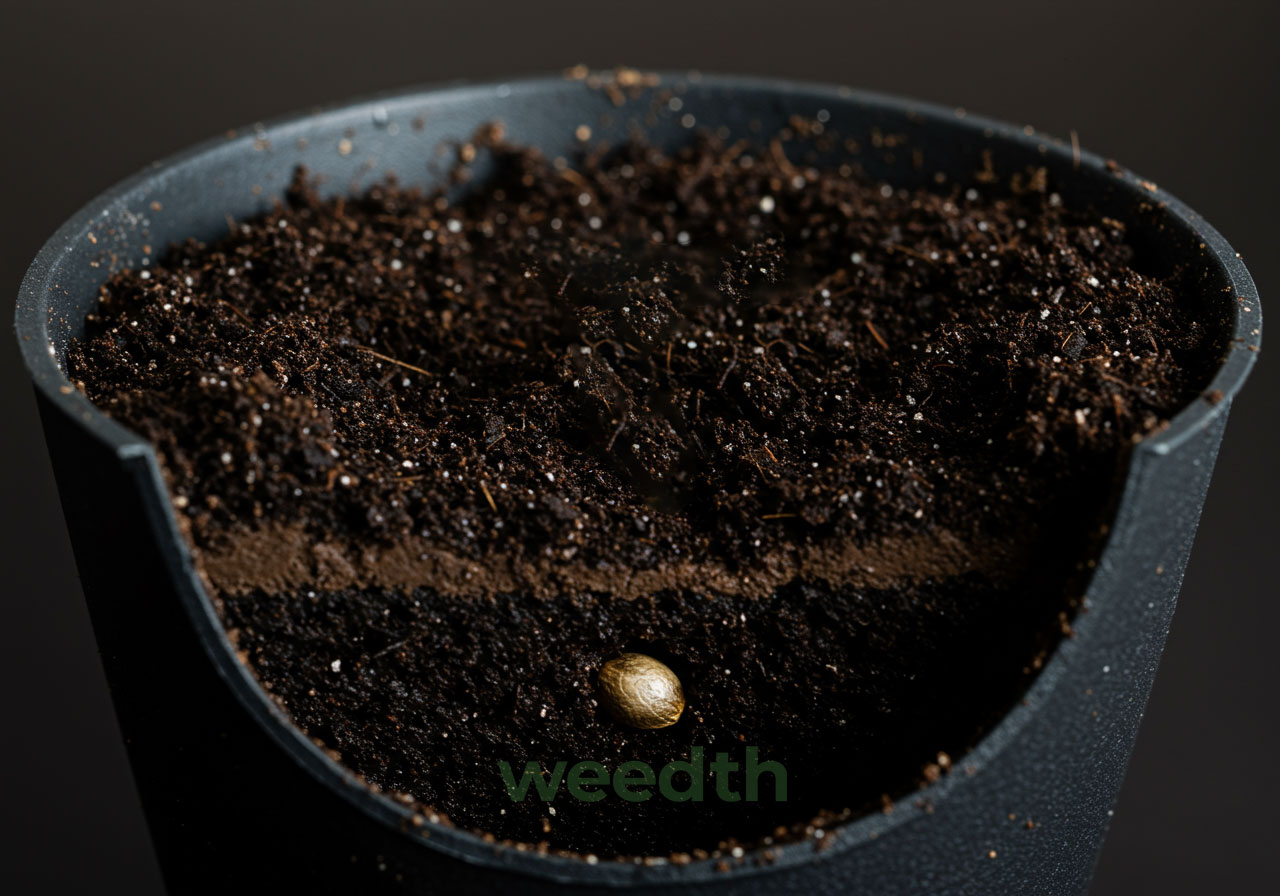
Method 1: Direct sowing into a light, moist medium
This is the simplest method and it often produces the smoothest transition into seedling growth because you do not handle the taproot.
It can be fast when:
Your medium is light and airy.
Moisture is even, not saturated.
Temperature stays stable.
It can be slower when:
The medium stays too wet for too long.
The medium is dense and holds water tightly.
The surface crusts or dries while the seed zone stays cold.
Direct sow is a good choice when you want fewer moving parts and you trust your moisture control.
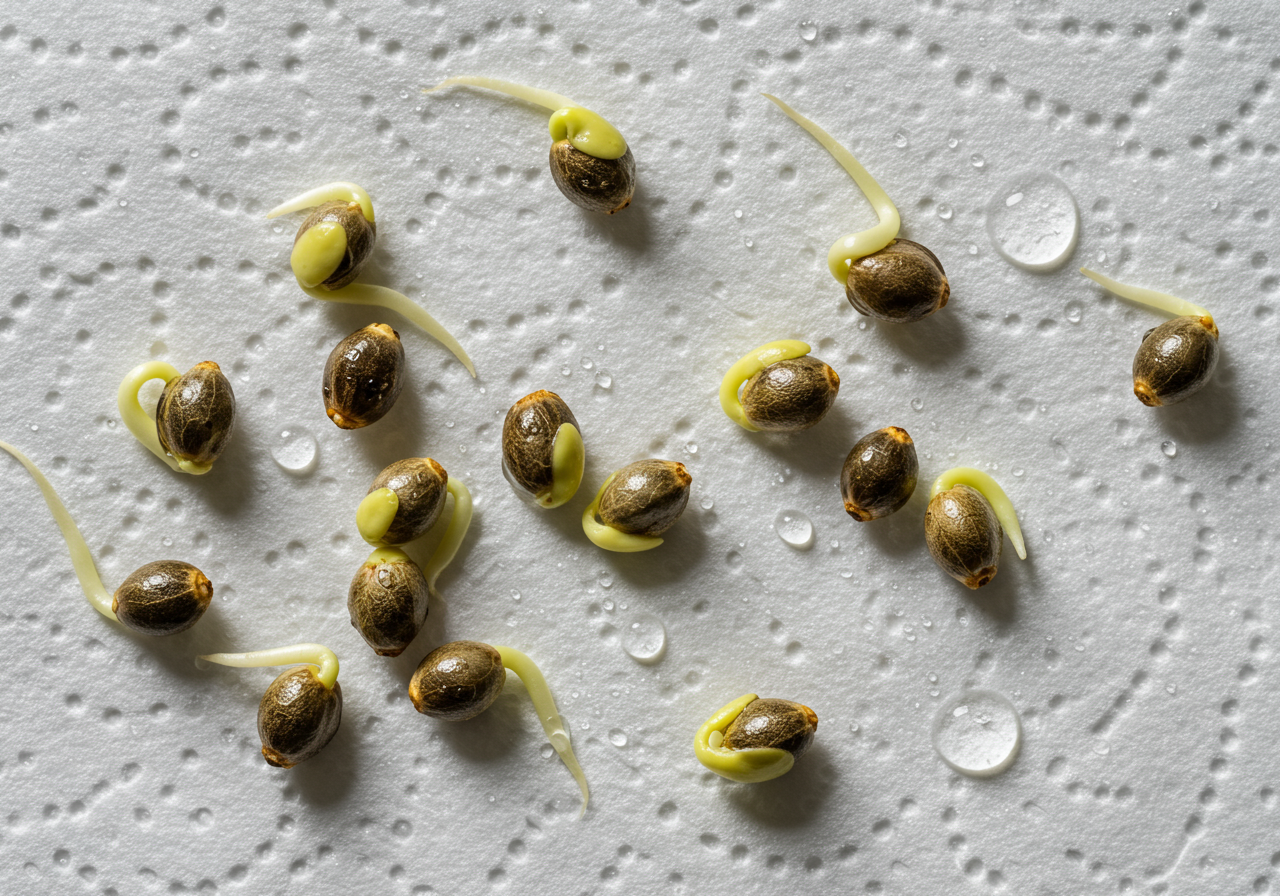
Method 2: Moist paper method
This is popular because you can see progress quickly. It can be fast, but it is also easy to over-wet and suffocate the seed.
It works best when:
The paper is moist, not dripping.
The setup stays warm and stable.
You check it calmly, not constantly.
The main risk is the transition. Once the taproot appears, rough handling can slow the seedling. The taproot is fragile.
Method 3: Short pre-soak, then move to a medium
Some growers use a short soak to hydrate the seed quickly, then move it into a medium to complete germination and emergence.
This can help speed when:
The seed coat is very dry.
You want faster hydration before planting.
The risk is soaking too long and reducing oxygen. If you use a soak, treat it as a hydration step, not a storage step.
Tip: The moment the seed is fully hydrated, it needs oxygen. Do not trap it in a low-oxygen environment for longer than necessary.
A fast workflow that stays safe
This is a simple, consistent workflow that works with most methods. It avoids the two biggest mistakes: overwatering and overhandling.
- Prepare the germination zone first
Get your temperature stable before the seed goes in. A cold start slows everything and encourages overwatering because people mistake “slow” for “dry.” - Create a moist environment, not a wet one
Moisture should be even. If you can squeeze water out of your medium or paper, it is too wet for speed. - Minimize “checking”
Every time you open a container, you change temperature and humidity. You also increase contamination risk. Check on a sensible rhythm instead of chasing the moment it cracks. - Once the taproot appears, handle less, not more
The fastest seedlings are the ones that do not get stressed in the transition.
If you use paper, move the seed gently and plant it without compressing the medium tightly around it. You want contact and support, but you also want oxygen pockets.
Important: Taproots do not like to be touched, bent, or dried. A small mistake here can turn a “fast germination” into a slow recovery week.
How fast should you expect results
This is the realistic range most growers should plan around:
Within 24 hours: some seeds crack, especially fresh ones in ideal warmth.
Within 48 hours: many healthy seeds show clear progress.
Within 72 hours: most viable seeds that are going to germinate under good conditions will show a taproot or clear cracking.
If you are beyond that window, it does not mean failure. It means something is off, usually temperature, moisture balance, or seed age.
Why seeds germinate slowly and how to diagnose it
Slow germination is usually one of these situations.
It is too cold or swings too much
You will see long delays with no visible progress. Seeds often look unchanged. The setup feels cool at night and warmer in the day.
Fix is usually stability. Warm the zone and keep it steady.
It is too wet and oxygen is low
You will see softening without real root push, or a seed that cracks and then stalls. Sometimes you get a sour odor.
Fix is usually reducing water and increasing oxygen availability. Moist, not soaked.
It is too dry at the seed level
You will see no progress and the setup feels dry to the touch. This is more common with paper setups that dry out at the edges or with shallow planting where the top dries.
Fix is restoring even moisture, then leaving it stable.
Seed is old or weak
You will see slow, uneven timing across seeds. Some pop, some do nothing, some take much longer.
Fix is patience and stable conditions. Aggressive techniques can damage weak seeds.
Speed vs safety tradeoffs
The urge to go faster often creates the exact conditions that slow seeds down.
Over-soaking reduces oxygen and can stall germination.
Overheating can damage the embryo and reduce viability.
Overhandling damages the taproot and delays establishment.
The clean rule is this: speed comes from consistency, not intensity.
After germination: how to avoid the most common stall
Many beginners get a taproot, then the seedling struggles. That usually comes from one of these:
Planted too deep in a dense medium.
Medium packed tightly with poor oxygen.
Kept too wet “to be safe.”
Temperature dropped right after planting.
Once the seed is germinated, the root still needs oxygen and warmth. Keep conditions steady and resist the urge to constantly adjust.
Questions people ask all the time
What is the fastest germination method
The fastest method is the one you can keep stable without overwatering and without handling the taproot too much. For many growers, that is direct sow in a light medium. For others, it is a moist paper method with careful moisture control.
Should seeds germinate in light or darkness
Seeds do not need light to germinate. The bigger issue is temperature stability and moisture balance. Light becomes relevant after emergence for seedling growth.
Can I speed germination with heat
Warmth helps, but overheating hurts. The safest strategy is gentle, steady warmth rather than aggressive heat.
If a seed cracks but does not grow a taproot, is it dead
Not immediately. It may be stalled from low oxygen, cold conditions, or too much water. Stabilize the environment and give it time. Do not keep manipulating it.
How long is too long
If you are past 3 days with no sign of cracking, something is likely off, or the seed is weak. Past a week, odds drop sharply unless the seed is old and conditions were imperfect early on.
A clean ending that keeps your success rate high
If you want faster germination, focus on the boring fundamentals: stable warmth, even moisture, and good oxygen. Pick the method that lets you maintain those conditions with the least fuss. Then stop interfering.
A good next step is learning how to tell when a seed is mature and viable before you even start. That one skill saves more time than any “fast germination” trick because you stop wasting days on seeds that were never going to pop quickly.
Share this article
A quick overview of the topics covered in this article.
Follow us
Latest articles
April 19, 2026
April 19, 2026
April 19, 2026