
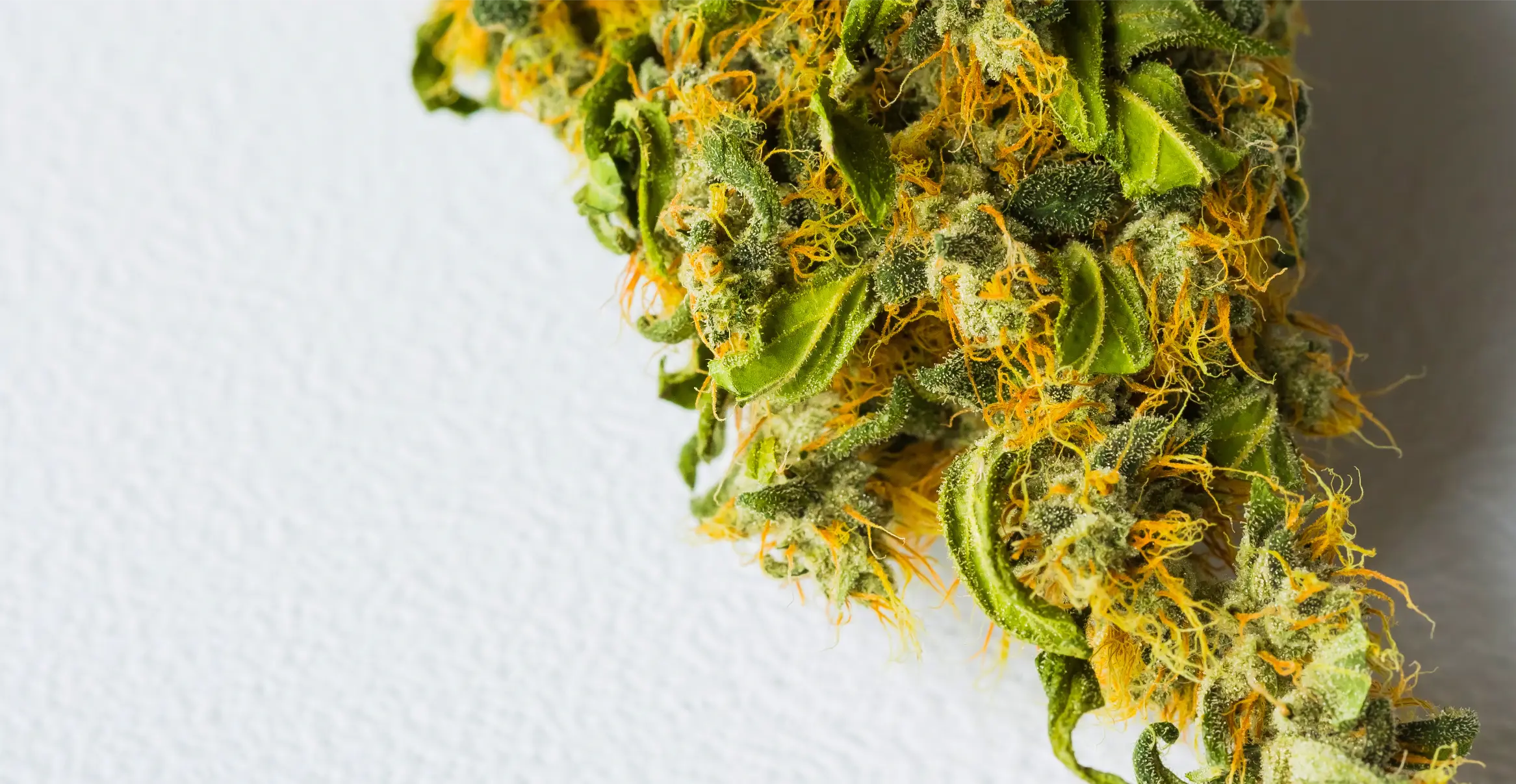
Wonder Woman
Wonder Woman is a high-yielding hybrid built for compact indoor production, dense flower and a long-lasting effect that begins brighter than the plant's squat structure suggests. Its commonly reported lineage combines ICE with Top 44. That pairing brings resin, fuel and Afghani-Skunk depth from one side, then speed, limited branching and production efficiency from the other.
The cultivar's core grow question is simple: how can a grower build very dense colas without creating a mold problem inside them? Wonder Woman can tolerate strong light and concentrated nutrition when the root zone is healthy. It can also produce enough flower mass to overwhelm airflow and drying capacity. The most successful crop is not the one with the largest wet colas. It is the one that carries high density through harvest, drying and cure without losing the sweet fruit, pine and fuel profile.
Strain Features
| Feature | Details |
|---|---|
| Strain Type | Balanced to slightly indica-leaning hybrid |
| Commonly Reported Lineage | ICE x Top 44 |
| Typical THC | Commonly moderate to high; tested products vary |
| CBD | Usually low |
| CBG | Small amounts may appear in some tested samples |
| Effect Direction | Energetic, focused and cheerful at first, followed by long physical relaxation |
| Aroma | Skunk, fuel, ammonia-like sharpness, peach, sweet fruit, pine and herbs |
| Flavor | Sweet fruit, pine, fuel, pepper and earthy skunk |
| Dominant Terpene Pattern | Often pinene-led, followed by myrcene and terpinolene in tested samples |
| Flowering Time | Commonly 8 to 11 weeks, with faster historical expressions possible |
| Outdoor Harvest | Early to mid-autumn in a warm, dry climate |
| Height | Short to medium indoors |
| Stretch | Low to moderate |
| Branching | Limited to moderate, with strong upper production |
| Yield | Very high under optimized indoor conditions |
| Bud Structure | Extremely dense, compact and relatively easy to trim |
| Feeding | Can tolerate high EC under strong light and active roots |
| Training | SOG, top-plus-four-arm structure, limited topping and staking |
| Main Grow Risk | Internal flower moisture and mold in dense colas |
| Outdoor Suitability | Best in dry Mediterranean-style conditions; less suitable for humid autumns |
| Grow Difficulty | Moderate; environmental control matters more than complex training |
| Best Use Time | Afternoon to evening |
Different records give different flowering times. Some preserved production descriptions emphasize very fast maturation, while modern product libraries often report a longer nine-to-eleven-week range. Phenotype and source material matter. Harvest should be based on the actual plant.
Genetic Lineage
ICE contributes heavy resin, compact indica-facing structure and a deep aroma that can include fuel, earth and skunk. Its own background is commonly associated with Afghan, Skunk, Northern Lights and Shiva-type genetics. That mixture explains the dense flowers and strong body component.
Top 44 contributes speed, low branching and suitability for high-density indoor gardens. It helps concentrate production near the top of the plant and reduces the need for a long vegetative period.
Together, the parents create a plant that can look like a compact production indica while producing a surprisingly alert opening effect. The physical stone arrives later and lasts, but it does not always dominate the first stage.
The Compact SOG Expression
This phenotype stays narrow, stretches little and forms one major top with limited side branching. It is ideal for short veg and repeated plant spacing. Its main weakness is cola density. Humidity and branch contact must be controlled carefully.
The Multi-Arm Expression
A second expression produces several useful branches. It responds well to one early top and can be organized around the main tip plus four upper arms. This plant uses a little more horizontal space and can produce a safer distribution of flower mass than one enormous central cola.
The Taller Hybrid Expression
Some modern plants grow taller than historical descriptions suggest. These may carry more obvious pine, fruit and energetic effect. They need additional support and an earlier flip, but the slightly more open structure can reduce mold pressure.
Effect Breakdown
Opening: Brighter Than Expected
Wonder Woman often starts with mental energy. Users report focus, humor, talkativeness and a cheerful lift. This can feel surprising from a compact plant with dense indica-like flowers.
The onset may improve engagement with music, games, conversation and simple projects. It can feel socially comfortable rather than intensely cerebral.
Peak: Focus and Euphoria
At moderate doses, the mind remains active. The effect may be focused enough for familiar tasks, but impairment is still present. A user should not confuse subjective clarity with safe performance.
The cheerful quality can make the strain useful for relaxed gatherings. Some users become giggly or more conversational. Others experience quiet concentration.
Body Phase: Long Relaxation
Physical calm develops after the mental peak. Muscles soften, movement slows and the body feels heavier. The effect can remain balanced for a long time before becoming overtly sedating.
A high dose increases the body stone and may produce couch-lock. Appetite stimulation and heavy eyes are common later in the session.
Late Phase
The comedown can last. This makes Wonder Woman useful for early evening, but a large afternoon dose may still affect the user at bedtime. New users should plan enough time and avoid redosing quickly.
Negative Effects
Dry mouth, dry eyes and headache are commonly reported. High doses can cause dizziness, anxiety or mental fog. Hydration and a measured dose improve the experience.
Flavor & Aroma Profile
Wonder Woman is not one single aroma. Tested and reported examples move between sweet fruit, peach, pine, ammonia-like sharpness, skunk and jet fuel.
Living Plant Aroma
During early bloom, the plant may smell herbal and piney. As flowers harden, fuel and skunk become stronger. Fruity plants can show peach skin, sweet pulp or mild citrus.
A sharp ammonia-like aroma can be part of the profile, but the grower must distinguish it from unhealthy microbial smell. Clean aromatic sharpness comes from the flower and resin. Root rot or spoiled drying material smells sour, damp and unpleasant in a different way.
Dry Flower
Freshly dried flower often leads with pine, fuel and green herbs. Sweet fruit can remain hidden until cure. Dense flowers must be dried evenly or the interior will retain a wet vegetal smell.
Cured Aroma
After several weeks, peach, sweet fruit and pine can become clearer. Fuel and skunk remain underneath. The best examples combine brightness and depth rather than smelling only acrid.
Flavor Progression
The inhale may begin sweet and piney. The middle shows fruit and herbs. The exhale brings fuel, pepper and earth. A smooth cure leaves a lingering sweet-skunk aftertaste.
Why the Same Strain Can Taste Different
Modern products carrying the name may not share identical genetics. Environmental differences also matter. High nitrogen, heat and rapid drying push the profile toward harsh skunk and earth. A cooler finish and patient cure preserve fruit and pine.
Dominant Terpenes
Tested samples have commonly shown pinene as the leading terpene, followed by myrcene and terpinolene. Beta-caryophyllene and limonene may also appear. The actual flower should be tested before making medical or sensory assumptions.
Pinene
Pinene contributes pine needles, fresh wood and a sharper herbal aroma. It fits the strain's focused, energetic onset and keeps the profile from becoming completely heavy.
Myrcene
Myrcene adds earth, musk and ripe fruit. It supports the long physical relaxation and can soften the pine and fuel.
Terpinolene
Terpinolene combines herbs, flowers, fruit and light wood. It may help explain the strain's energetic mental direction and complex sweet-skunk aroma.
Beta-Caryophyllene
Beta-caryophyllene adds pepper, spice and resinous depth. It is most obvious on the exhale and in fuel-heavy expressions.
Limonene
Limonene can brighten peach and sweet fruit with citrus peel. It may be more noticeable in less skunky phenotypes.
Terpene Interpretation
A pinene-led result does not guarantee alertness, and myrcene does not guarantee sedation. Dose, THC level, minor compounds and individual response matter. Terpenes describe aroma more reliably than they predict one exact effect.
Indoor vs. Outdoor Growing
| Factor | Indoor | Outdoor |
|---|---|---|
| Main Advantage | High yield, compact height and environmental control | Large individual plants in warm dry sun |
| Main Risk | Hidden moisture inside dense colas | Mold after rain or prolonged humidity |
| Plant Shape | Narrow SOG column or short multi-arm plant | Medium shrub with dense upper flowers |
| Flowering Time | About 8 to 11 weeks, phenotype-dependent | Early to mid-autumn |
| Yield | Very high per square meter in optimized rooms | High in Mediterranean-style climates |
| Feeding | Strong tolerance when roots, light and irrigation are active | Moderate to strong in fertile, well-drained soil |
| Training | SOG, one top plus four arms, light lower cleanup | Early topping, branch spacing and support |
| Support | Stakes or netting useful despite short height | Essential for wind and heavy colas |
| Humidity | Must decline through late flower | Dry autumn strongly preferred |
| Flavor | Precise pine-fruit preservation | Deeper earth and fuel with greater weather risk |
| Difficulty | Moderate | Difficult in humid regions |
Indoor Strength
Indoor growing is the natural fit because the room can be kept dry as the flowers harden. Compact plants use vertical space efficiently. High-density methods can produce substantial weight, but airflow and plant count must be balanced.
A single central cola is efficient to light, yet it is also the most dangerous shape for internal moisture. The multi-arm structure distributes flower mass and makes inspection easier.
Outdoor Limitations
Wonder Woman can produce large flowers outdoors, but dense buds and autumn rain are a poor combination. A warm dry climate is strongly preferred. Morning sun and open air are essential.
In a humid region, a greenhouse does not automatically solve the problem. A closed greenhouse can trap more moisture than an open site. Ventilation and dehumidification must be designed, not assumed.
Strain-Specific Grow Guidance
Choose the Architecture Before Veg Ends
There are two reliable routes.
SOG route: Use uniform plants, short veg and narrow spacing. Keep one dominant top and only the strongest side branches. This minimizes veg time and creates a repeatable canopy.
Top-plus-four route: Top once and retain four upper branches plus the strongest central replacements. Spread them slightly and stake each arm. This creates several medium colas instead of one massive central flower.
The second route is often safer in humid rooms because flower mass is distributed. It also gives the grower more access for inspection.
Plant Count and Spacing
High-density production descriptions can encourage overcrowding. The correct plant count depends on final width, container size and airflow. Leaves from neighboring plants should not form a sealed wall.
A practical test is whether the grower can see through the lower canopy and reach every main stem. If inspection requires crushing branches aside, density is too high.
Feeding and EC
Wonder Woman can tolerate high EC under strong light and active roots. Some historical production schedules pushed concentration aggressively. Modern growers should not copy a number without matching the environment.
Increase nutrient strength in small steps. A plant using the feed well will maintain healthy leaf posture, steady drinking and controlled runoff. Excess appears as burnt tips, dark clawed foliage, slowed water use and harsh finished aroma.
Peak nutrient demand usually occurs during stretch and early bulking. Reduce concentration as the plant stops building new leaf mass. Carrying maximum EC to harvest increases salt pressure without guaranteeing more flower.
Root-Zone Conditions
Dense upper growth requires a healthy oxygenated root system. In hydro, maintain dissolved oxygen and stable solution temperature. In coco, irrigate frequently enough to control EC but provide drainage. In soil, avoid compaction and chronic saturation.
A short plant can still have a large appetite. Do not estimate irrigation from height alone. Use canopy area, container weight and runoff behavior.
Light Intensity
Wonder Woman can use strong light and convert it into dense flower. The top of a narrow SOG canopy should be level. A few high branches create hotspots and can bleach the most valuable buds.
Raise intensity gradually. Stronger light increases demand for water, nutrients, CO2 and cooling. A sudden increase can create stress even in a tolerant plant.
Temperature
Dense flowers change the airflow plan
Normal warm indoor temperatures support growth. Late flower should be kept cooler to protect pine and fruit. Excess heat also increases the gap between room humidity and flower-interior moisture behavior.
Avoid very cold nights. Cold slows root activity and can create condensation when lights turn off.
Humidity Targets as a Trend
Exact humidity targets depend on temperature and airflow, but the direction should be clear. Vegetative plants can use moderate humidity. Early flower should become drier. Late flower should be the driest stage.
Do not drop humidity so low that plants transpire excessively and flower surfaces dry while interiors remain wet. Stable conditions and continuous air exchange are better than large swings.
Airflow Design
Use airflow below, through and above the canopy. Fans should move leaves gently rather than blast one side of a cola. The purpose is to prevent stagnant pockets.
In a SOG, place airflow pathways between rows. In a multi-arm room, keep the center of each plant open. A dehumidifier removes moisture from the room, but air movement carries moisture out of the flower boundary layer.
Mold Inspection Routine
Begin internal checks before visible symptoms appear. Inspect the largest colas twice weekly during late flower and more often after any humidity event.
Look for:
• A single sugar leaf that dies suddenly while surrounding leaves remain healthy
• Brown or gray tissue inside the flower
• A soft cool area near the stem
• A musty odor that differs from fuel or ammonia-like terpenes
• Caterpillar damage outdoors
If rot is found, remove affected material with a margin and inspect neighboring flowers. Do not place questionable flower into the drying room.
Defoliation
Remove weak lower growth and selected fan leaves that block air. Avoid stripping the plant bare. Healthy leaves regulate water movement and support dense flowers.
A useful schedule is lower cleanup before flip, final lollipopping around the end of stretch and minimal removal afterward.
Flower Support
Short plants can still collapse under dense colas. Install stakes or netting before week four. Support should keep flowers separated rather than bundling them together.
Week-by-Week Flower Plan
Week 1: Moderate stretch begins. Maintain healthy nitrogen and finalize plant position.
Week 2: Select the final flower-bearing branches. Remove weak lower shoots.
Week 3: Stop major training. Install support and confirm airflow between plants.
Week 4: Resin and flower density increase. Watch runoff EC and irrigation demand.
Week 5: Colas harden. Begin regular internal inspection. Reduce excess nitrogen.
Week 6: Humidity risk rises. Check dehumidifier capacity at lights-off and early morning.
Week 7: Fast phenotypes may approach maturity. Do not assume every plant is ready.
Weeks 8 to 9: Most flowers continue swelling. Support and airflow are critical.
Weeks 10 to 11: Slower modern expressions finish. Taper feed and avoid late saturation.
Dense-Cola Engineering
The plant's natural tendency is to stack calyxes into a solid mass. The grower cannot change that identity, but flower size and distribution can be managed. One giant top creates a dramatic photograph and the highest internal moisture risk. Several medium tops create more surface area, better inspection access and a more even dry.
The top-plus-four method works because it divides assimilate flow among strong branches without creating dozens of small sites. Begin with one healthy topping during active veg. Keep the four strongest upper branches and remove weak inward-facing shoots. Tie the branches outward only enough to create separation. The finished shape should be compact, not flat.
In a SOG, the same principle applies across plants. Each plant carries a narrow top, while spacing between plants replaces spacing between branches. The room becomes one distributed cola rather than a single plant carrying all the risk.
Understanding Moisture Inside the Flower
Relative humidity describes the room, not the exact air trapped inside a dense flower. The flower interior contains living tissue, water and limited air exchange. At night, transpiration changes and room temperature may fall. Moisture can remain around the stem even when a wall sensor shows an acceptable number.
The first warning may be one small sugar leaf turning brown or pulling out easily. The outside of the cola can remain green and frosty. This is why visual inspection from a distance is insufficient.
Gently spread natural flower gaps and look at the stem-side tissue. Healthy tissue is firm and aromatic. Rotting tissue becomes dull, tan, gray or brown. It may feel soft and smell musty. Do not squeeze the whole flower, because crushing damages trichomes and can spread spores.
Dehumidifier Capacity and Lights-Off Risk
A room can hold more moisture when warm. When lights switch off and temperature falls, relative humidity rises even if the total water in the air has not changed. Wonder Woman's dense canopy can release enough moisture to create a dangerous nighttime spike.
Check humidity during the first hours of darkness and just before lights turn on. A daytime reading alone misses the most important period. The dehumidifier should be sized for the crop at peak flower, not for the empty room.
Drainage and maintenance matter. A full reservoir, blocked filter or warm exhaust can reduce performance. Redundancy is valuable in a high-density crop, because one failed device can damage flowers quickly.
Airflow Without Windburn
Place air movement at several heights. Lower airflow prevents humid air from collecting beneath the canopy. Mid-level airflow moves moisture between plants. Upper airflow prevents warm stagnant pockets around the lights.
Leaves should move gently. Constant hard movement can dry one side of a cola, curl leaf edges and create false confidence because the surface feels dry. Indirect oscillating air is safer.
Do not aim all fans in one circular direction that leaves a calm center. Smoke-test or ribbon-test the empty room before plants become too large, then adjust as the canopy fills.
Irrigation and Room Humidity
Large irrigation events close to lights-off can increase nighttime humidity. When possible, schedule the largest irrigation early enough that plants use water during the active period. This does not mean allowing severe nighttime drought. It means avoiding unnecessary saturation immediately before the room cools.
In coco and hydro, frequent small irrigations can maintain root stability without one huge late event. In soil, water according to container weight and root demand. Never dry the plant excessively as a mold strategy. Severe drought reduces photosynthesis and can damage flower quality.
Outdoor Rain Response
After rain, gently shake only the main branches if the plant is strong and supported. Do not whip heavy colas. Use moving air and morning sun to dry the surface. Inspect for caterpillar damage because injured tissue often becomes the starting point for rot.
Temporary covers must be high enough that flowers do not touch them. Condensation on plastic can drip back onto the plant. Open sides are necessary for ventilation.
If several days of cold rain are forecast near maturity, an earlier clean harvest may produce better usable quality than waiting for ideal trichome color and losing entire colas. This is a risk decision, not a universal rule.
High-EC Strategy in Context
Historical high-EC results were usually achieved under strong discharge lighting, high plant density and active hydroponic roots. Modern efficient LEDs can create different leaf temperatures and calcium demand. The same nutrient number may not produce the same plant response.
Start with a moderate baseline. Increase only when the plant drinks rapidly, leaf color remains healthy and runoff or reservoir behavior is stable. Hold each change long enough to observe the result.
If tip burn appears while the plant remains vigorous, the upper limit may be close. If clawing, dark color and slowed water use appear together, concentration is too high. Reduce feed gradually and check root-zone EC. A sudden large flush can create another stress swing.
Finishing a High-EC Crop
Peak feeding should occur before final maturity. As fresh pistil production slows and the plant stops expanding, lower nutrient concentration. Maintain balanced minerals rather than supplying only water too early.
The goal is to avoid salt accumulation while keeping leaves functional. A controlled fade supports maturity. Rapid collapse does not improve flavor.
Track input and runoff through the final weeks. A plant can appear healthy above the medium while root-zone concentration rises because water demand has declined.
Harvest-Day Sanitation
Clean the drying room before cutting. Remove old plant material, dust and standing water. Sanitize tools and prepare separate containers for clean flower, trim and rejected material.
Do not trim moldy flower in the same area as clean flower. Spores and fragments can spread through tools, gloves and air. Bag rejected material immediately and clean the work surface before continuing.
Handle dense colas by the stem. Place them in shallow clean trays during transport, not deep piles. Compression traps heat and moisture.
Drying Dense Colas by Stages
For the first day, confirm that surface moisture is leaving and no flowers touch. The room should smell aromatic, not sour or swampy.
During the middle of drying, rotate inspection points rather than physically rotating every branch. Check the base of the largest flowers. Smaller branches may become ready earlier and can be moved to curing containers separately.
Near the end, the outer flower should feel dry while the interior retains slight elasticity. Small stems may snap, but large stems often bend. Use several indicators. Jarring too early creates a dangerous moisture rebound.
Curing and Moisture Rebound
After flowers enter containers, internal moisture moves outward. Check the first hours and first day carefully. If the flowers become soft or container humidity rises excessively, return them to drying conditions rather than repeatedly leaving the lid open for a few minutes.
Burping cannot rescue flower that was jarred while the center was wet. It is a fine adjustment method, not a primary drying process.
Keep batches separated by plant and cola density. This makes it easier to identify a moisture problem and prevents one wet flower from affecting an entire harvest.
Production Metrics That Matter
Wet weight is misleading. Record dry trimmed weight, premium-flower percentage, rejected material, trim time and drying loss. A slightly smaller crop with no mold can outperform a record wet harvest with substantial loss.
Also record grams per day of total cycle, not only grams per square meter. A fast phenotype with a shorter veg may produce more annual output than a heavier plant that occupies the room longer.
For a flavor-focused garden, add aroma retention and smoke smoothness to the scorecard. Production should include quality, safety, repeatability and labor efficiency across the complete harvest and post-harvest process for every future carefully controlled indoor production cycle.
Harvest Timing
For a brighter focused effect, harvest when most calyx trichomes are cloudy and amber is limited. For deeper body relaxation, allow additional amber development.
The densest top may mature differently from lower flowers. Check several sites. Sugar-leaf trichomes often amber earlier than the flower.
Weedth Bud Flavor Tips
The Drying Room Is Part of Mold Prevention
A clean harvest can still develop problems if dense flowers are hung too closely. Space branches so air reaches every side. Large central colas may need to be divided at natural branch joints.
Whole Branch or Smaller Sections
Whole branches slow drying and can preserve aroma in a controlled room. Smaller sections are safer when humidity is high or flower density is extreme. Choose based on conditions.
Temperature and Air
Use darkness, moderate temperature and gentle continuous air exchange. Direct fan pressure causes uneven drying and strips volatile pine and fruit.
Cure
The first cure stage may smell mostly like fuel and pine. Peach, sweetness and softer skunk can become clearer after three to six weeks. Keep flowers whole and store them in smaller airtight containers.
Outdoor Harvest
Harvest after dew dries. Inspect for insects and damaged tissue. Wet outdoor colas should not be packed into a crowded room. Remove questionable material before drying.
Weedth Bud Boost Tips
Indoor Yield
Use a repeated canopy. SOG plants should be similar in height and width. Multi-arm plants should carry equal branches. Uneven structure wastes light.
Strong light and higher EC can raise yield only when root oxygen, irrigation and climate are stable. Increase variables gradually and record the response.
Remove shaded lower growth. The cultivar's value is dense upper flower, not a deep layer of small buds.
Reduce Mold Without Reducing Yield
Distribute flower mass across several arms, maintain spacing and use support that prevents colas from touching. Mold prevention protects usable yield more effectively than chasing extra wet weight.
Outdoor Yield
Use full sun, large root volume and strong support. Open the center before flowering. In a wet climate, smaller earlier-finished plants may produce more usable flower than giant late plants.
Post-Harvest Planning
Calculate drying capacity before the crop finishes. A high-yield room needs enough hanging space, dehumidification and containers. Do not let production exceed safe processing capacity.
Medical Uses & Benefits
Consumers commonly report using Wonder Woman for stress, low mood, fatigue, anxiety and physical tension. The energetic opening can improve engagement, while the later body phase may reduce discomfort.
The cultivar may be useful for people who want relief without immediate sleep. High doses can become heavy and may cause headache or anxiety. The strain is THC-dominant and does not provide the balance of a high-CBD cultivar.
These are self-reported experiences, not evidence that Wonder Woman treats a medical condition. Medical users should consult a qualified professional, start with a low dose and consider interactions.
Ideal User Profile
Wonder Woman suits adults who like a bright opening followed by a durable relaxing finish. It can work for social afternoons, comedy, music, games, food and early evening recovery.
Flavor users who enjoy pine, peach, sweet skunk and fuel may appreciate the profile. It is less suited to people who want pure candy or low-odor flower.
For growers, the ideal user is comfortable managing environment and drying dense buds. Complex training is not required. Humidity discipline is.
Grower Notes and Feedback
Yield is the most repeated positive. The plant can create a large amount of dense flower in a small vertical space. Trimming is relatively easy because the buds are compact and the leaf ratio is manageable.
Mold susceptibility is the most important negative. Outdoor growers in humid regions often struggle because the flowers retain moisture. Indoor growers succeed when they reduce humidity before problems appear.
High EC tolerance is another recurring observation. Experienced growers can push the plant, but beginners often get better results with moderate feeding and stable roots.
The effect is frequently described as longer-lasting and more energetic than the plant's appearance suggests. This gives the cultivar broader use than a pure nighttime indica.
Weedth Editor's Note
The point where this plant reveals itself
I would choose the top-plus-four structure over one enormous central cola in any room where humidity control was not perfect. Distributing the flower makes support, inspection and drying much easier.
I would raise EC only after the plant proved it could use the current level. Dense buds are not a reason to keep feeding harder. Root oxygen and stable irrigation are what allow the plant to carry strong nutrition safely.
My main harvest preparation would be drying-room space. Wonder Woman can produce more volume than expected. I would rather divide the largest colas and preserve the entire crop than protect one impressive shape and risk moisture inside it.
I would recommend the strain to an intermediate indoor grower who values yield and understands humidity. It can be simple to train, but it should never be treated casually in late flower.
Weedth Score
Growing Experience 8.3/10 Productive and compact, but dense flowers demand disciplined climate control.
Bud Structure & Visual Appeal 9.0/10 Extremely dense, resinous and easy to trim.
Aroma Complexity 8.5/10 Pine, peach, fuel, sweet skunk and herbs create contrast.
Flavor & Smoothness 8.4/10 Strong when dried evenly; harshness appears quickly after a rushed finish.
Effects & High Experience 8.6/10 Energetic and cheerful before a long body calm.
Overall Satisfaction & Recommendation 8.6/10 A serious high-yield cultivar for controlled indoor rooms.
The impressive cola is only a success when its center is as clean, dry and aromatic as its surface.
FAQ
What is Wonder Woman's lineage?
It is commonly described as ICE crossed with Top 44.
Is Wonder Woman indica or sativa?
It is a balanced hybrid that often looks indica-dominant but can produce an energetic opening effect.
How long does it flower?
Modern reports often place it around eight to eleven weeks. Faster historical expressions may finish earlier.
Is Wonder Woman high yielding?
Yes. It is known for very high indoor yield when light, nutrition and climate are optimized.
Is it a heavy feeder?
It can tolerate strong feeding under high light and active roots. Moderate feeding is safer for inexperienced growers.
What is the best training method?
SOG works well. A single topping followed by four strong upper arms is another productive and mold-conscious approach.
Why is mold a concern?
The flowers become extremely dense and can trap moisture near the stem even when the surface looks dry.
Can it grow outdoors?
Yes, but it performs best in a warm dry climate. Humid autumn weather creates significant bud-rot risk.
How can mold risk be reduced?
Use plant spacing, open structure, lower late-flower humidity, continuous air exchange, branch support and regular internal inspection.
What does Wonder Woman taste like?
Common notes include pine, sweet fruit, peach, fuel, pepper and skunk.
What are the dominant terpenes?
Tested samples commonly show pinene, myrcene and terpinolene. Actual profiles vary.
When should it be harvested?
Harvest after full swelling when flower trichomes are mostly cloudy. More amber produces a heavier body effect.
Is it beginner-friendly?
The plant shape is beginner-friendly, but high-EC feeding and dense-bud humidity management require experience.
Similar Strains
ICE: Shares resin, fuel, dense flowers and a strong body component. It can be more intense and less production-uniform.
Venus: Another balanced production hybrid with Top 44 influence, higher vertical growth and a sweet pine-skunk profile.
White Russian: Offers dense resinous flower, balanced effects and strong indoor performance.
Super Skunk: A heavier skunk alternative with strong physical relaxation and dense, pungent flowers.
Northern Lights: Easier and shorter, with pine-earth flavor and lower mold risk when the canopy is kept open.
Big Bud: A classic high-yield alternative with large flowers and similar support and humidity requirements.
Share this article
A quick overview of the topics covered in this article.
Follow us
Latest articles
September 8, 2026
September 8, 2026
September 8, 2026

September 8, 2026