
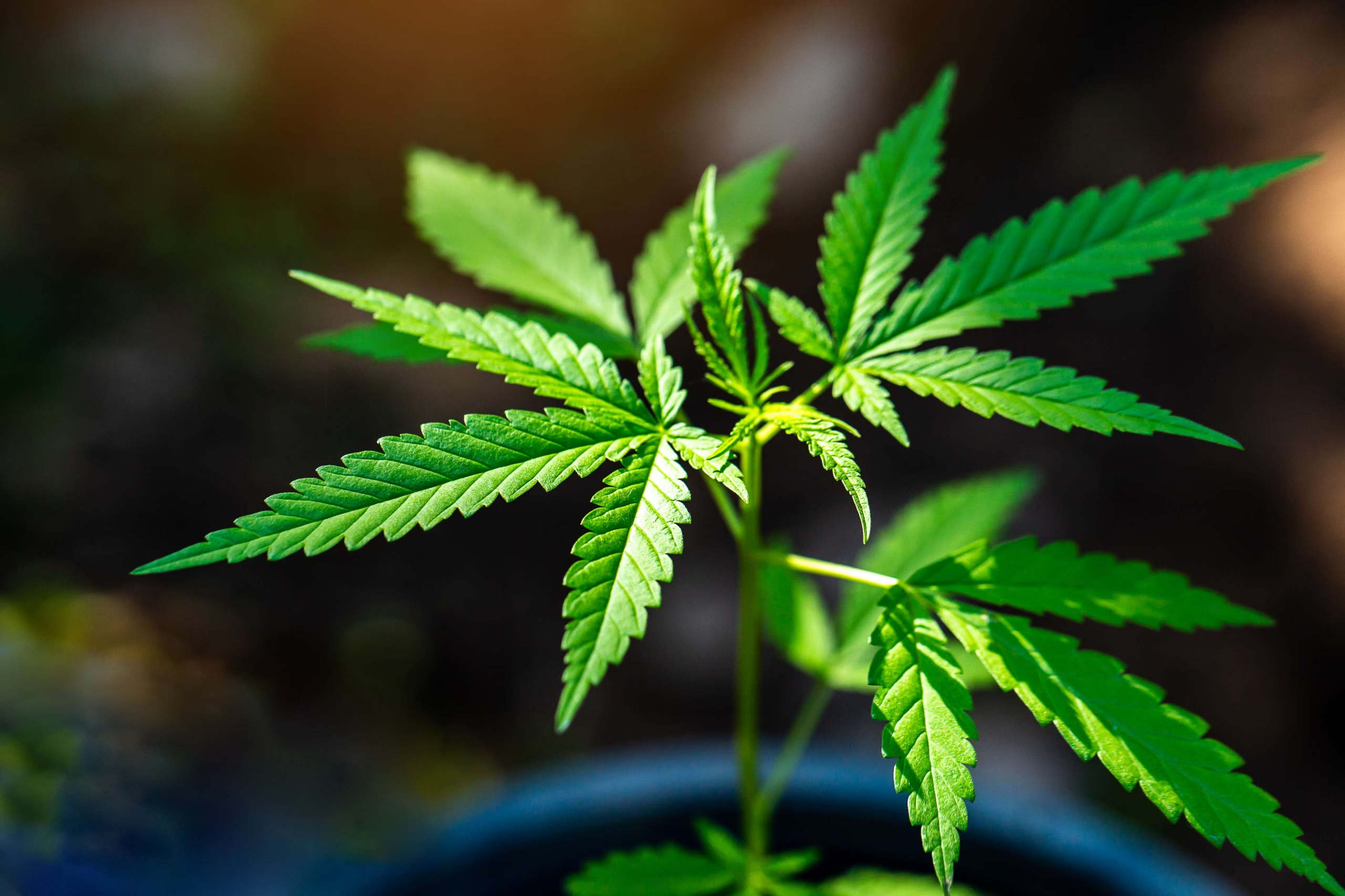
What Kind of Grow Lights Do Cannabis Plants Need?
A cannabis plant does not need a lamp with a particular brand name or a dramatic purple glow. It needs enough plant-usable light delivered evenly across its leaves, for the right number of hours, without turning the room into an electrical or heat-management problem.
For most home indoor gardens, the best starting point is a dimmable, broad-spectrum horticultural LED sized for the real canopy. Modern LEDs are efficient, easy to control, and available in shapes that spread light across a tent more evenly than a single intense bulb. HPS, metal halide, CMH, fluorescent, and supplemental lights can still have useful roles, but each one asks the room to solve a different set of problems.
That is the practical answer to “what kind of grow lights for cannabis?” Now let us make it useful. We will compare the main technologies, match them to propagation, vegetative growth, and flowering, then choose a system by canopy size, climate, ceiling height, power, and budget. By the end, you should know what type belongs in your space and which specifications still need checking before you buy.
Use this guide only for lawful cultivation with the property owner’s permission. Local rules may govern plant numbers, electrical work, locked access, ventilation, odor, visibility, and alterations to a property. Bring in a qualified professional when circuit capacity, permanent wiring, fire protection, structural hanging points, or HVAC work exceeds your competence.
A grow-light type is the technology that creates the light, not proof that the fixture suits cannabis.
LED, HPS, MH, CMH, and fluorescent describe different light sources. A complete buying decision also needs actual power draw, photon output, canopy distribution, spectrum, dimming, heat behavior, safety certification, and a realistic coverage map.
The best default and the exceptions
If you are building one small or medium indoor garden from the beginning, a full-cycle LED usually gives you the simplest route from rooted cutting or seedling to harvest. Choose a white broad-spectrum horticultural fixture with dimming, published photosynthetic photon efficacy, and a PPFD map measured over a footprint close to yours. Bar-style fixtures are especially useful over square or rectangular canopies because they can distribute diodes across the area instead of concentrating most of the output in the center.
That recommendation is a default, not a claim that every LED beats every discharge lamp. A poorly designed LED can create a severe hotspot, weak corners, unreliable drivers, and misleading coverage claims. An existing HPS room with adequate cooling, safe electrical capacity, and experienced management may remain productive. A CMH can suit a modest area where broad white light and radiant warmth are useful. Fluorescent fixtures can serve seedlings and clones without asking a young root system to support flowering intensity.
What to Remember: Choose the room-light system, not the lamp in isolation. A fixture that looks efficient on a product page can become an expensive choice if it requires extra cooling, leaves the canopy edges weak, or cannot be dimmed for young plants.
| Light type | Best practical role | Main strength | Main limitation |
|---|---|---|---|
| Broad-spectrum LED | Full-cycle home tents and controlled rooms. | Efficient, dimmable, low-profile, and available with even bar-style coverage. | Quality and performance data vary widely between fixtures. |
| HPS | Established flowering rooms that can manage radiant heat and ventilation. | Proven high-intensity flowering performance and relatively low initial fixture cost. | Higher heat load, bulb replacement, and lower fixture efficacy than strong modern LEDs. |
| Metal halide | Vegetative rooms in an existing HID system. | Blue-rich white light and useful vegetative intensity. | Heat, lower efficiency, and the need to change lamps or systems for flowering. |
| CMH or ceramic metal halide | Small full-cycle or vegetative spaces where broad white light is valued. | Good color rendering and a broader spectrum than conventional HPS. | Still creates substantial radiant heat and requires a ballast and lamp maintenance. |
| T5 fluorescent or CFL | Seedlings, clones, mothers, and low-intensity shelves. | Gentle output, simple placement, and useful coverage close to small plants. | Inefficient and difficult to scale for a dense flowering canopy. |
| Supplemental LED bars | Targeted side, inter-canopy, far-red, or UV experiments after the main light is stable. | Can address a specific distribution or spectrum goal. | Adds complexity, wiring, heat, and new safety questions without replacing the main fixture. |
Broad-spectrum LED grow lights
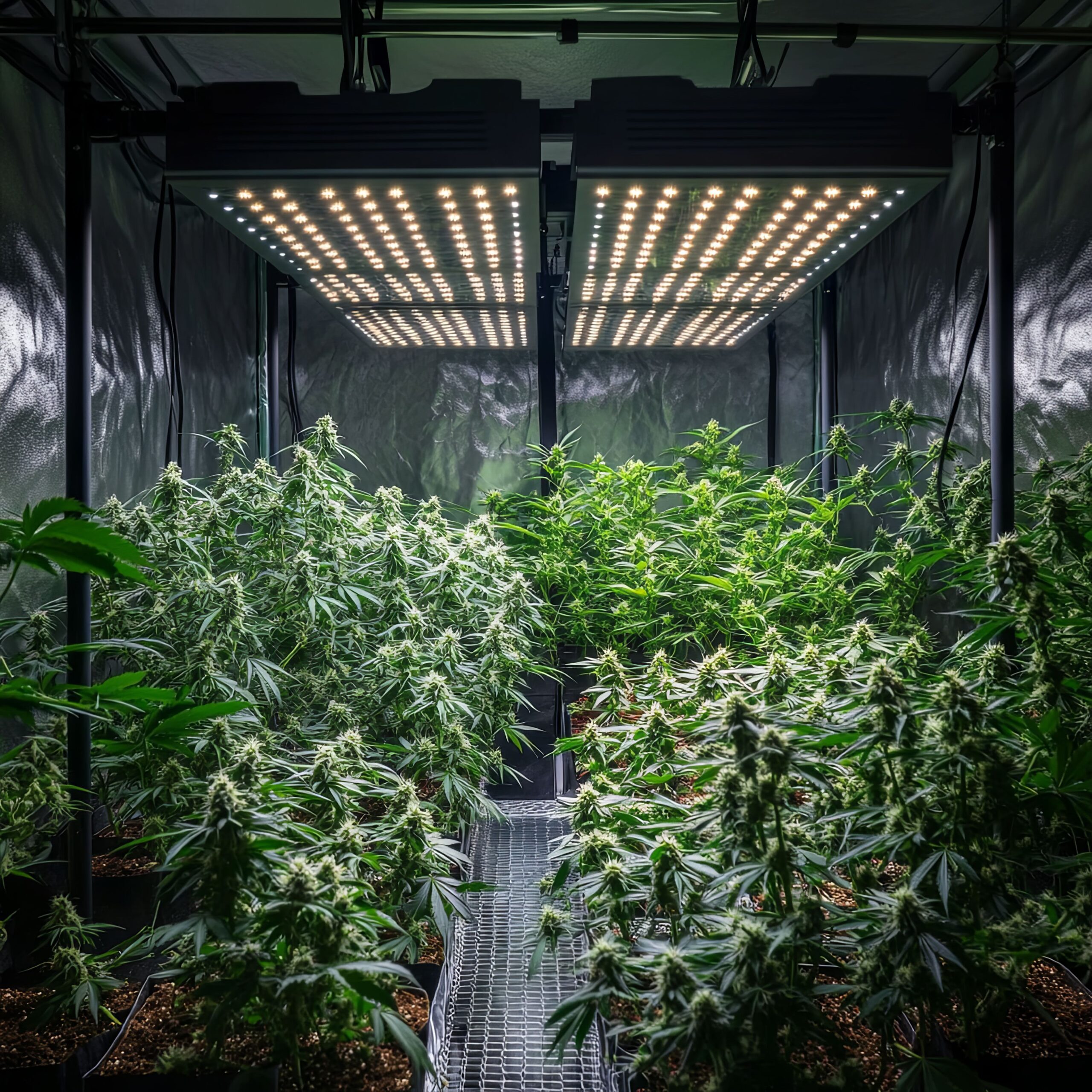
Modern horticultural LEDs use semiconductor diodes to convert electrical energy into light. They can combine white diodes with deep-red and other wavelengths, allowing one fixture to support vegetative and flowering growth. The useful advantage is not simply that an LED “runs cool.” All electrical lighting eventually adds heat to the room. The advantage is that an efficient LED produces more photosynthetic photons for each joule of electricity and sends less longwave radiant heat directly toward the leaves than an HPS lamp.
This changes how the room behaves. Under HPS, leaves and flowers may run warmer than the surrounding air because of radiant energy from the lamp. Under LED, the air temperature can look similar while leaf temperature is lower. A grower changing technologies may therefore need to revisit temperature, humidity, airflow, irrigation demand, and fixture distance instead of copying the old room settings.
Bar LEDs, board LEDs, and compact fixtures
The LED label covers several fixture shapes. A multi-bar fixture spreads diodes across a wide frame and can create good uniformity over a level canopy. A board-style fixture concentrates diodes on one or more panels. It can be compact and effective, although center intensity may rise faster than edge intensity. Compact spot-style or COB fixtures create a stronger point source and may work in narrow or modular layouts, but they usually need more attention to spacing and overlap.
For a home tent, distribution often matters more than the visual style of the fixture. Compare maps at the intended hanging height. Look for a useful average across the canopy rather than one impressive center number. Make sure the bars, frame, driver, filter, ducting, hangers, and required plant-to-light separation all fit inside the vertical stack.
Pro Tip: A dimmer is part of canopy control. It lets one full-cycle LED serve young plants, helps you introduce higher intensity gradually, and provides room to respond when heat, water use, or plant height changes.
When LED is the strongest choice
LED is usually the most practical kind of grow light when the room is warm, the ceiling is low, electrical capacity is limited, or one fixture must cover the complete cycle. It also makes sense when you want to distribute several smaller fixtures across separate zones or move the driver outside a compact enclosure.
Do not choose by “equivalent wattage.” That phrase compares a product with an older lamp according to a manufacturer’s own method and tells you little about the photons arriving at your canopy. Compare actual input power, total photon flux, photosynthetic photon efficacy, PPFD distribution, dimming range, ingress or environmental rating, warranty, and service options.
“Do I need separate veg and bloom LEDs for my first tent?”
Question sent by: Connor Hayes, via e-mail.
Usually not. A well-designed broad-spectrum LED can support both stages. During early growth, dim it or raise it to provide gentle, even light. As the root system and canopy develop, increase intensity in measured steps. Separate veg and bloom channels can be useful for experiments or multi-room production, but they are not required for a healthy full cycle.
HPS and metal halide grow lights
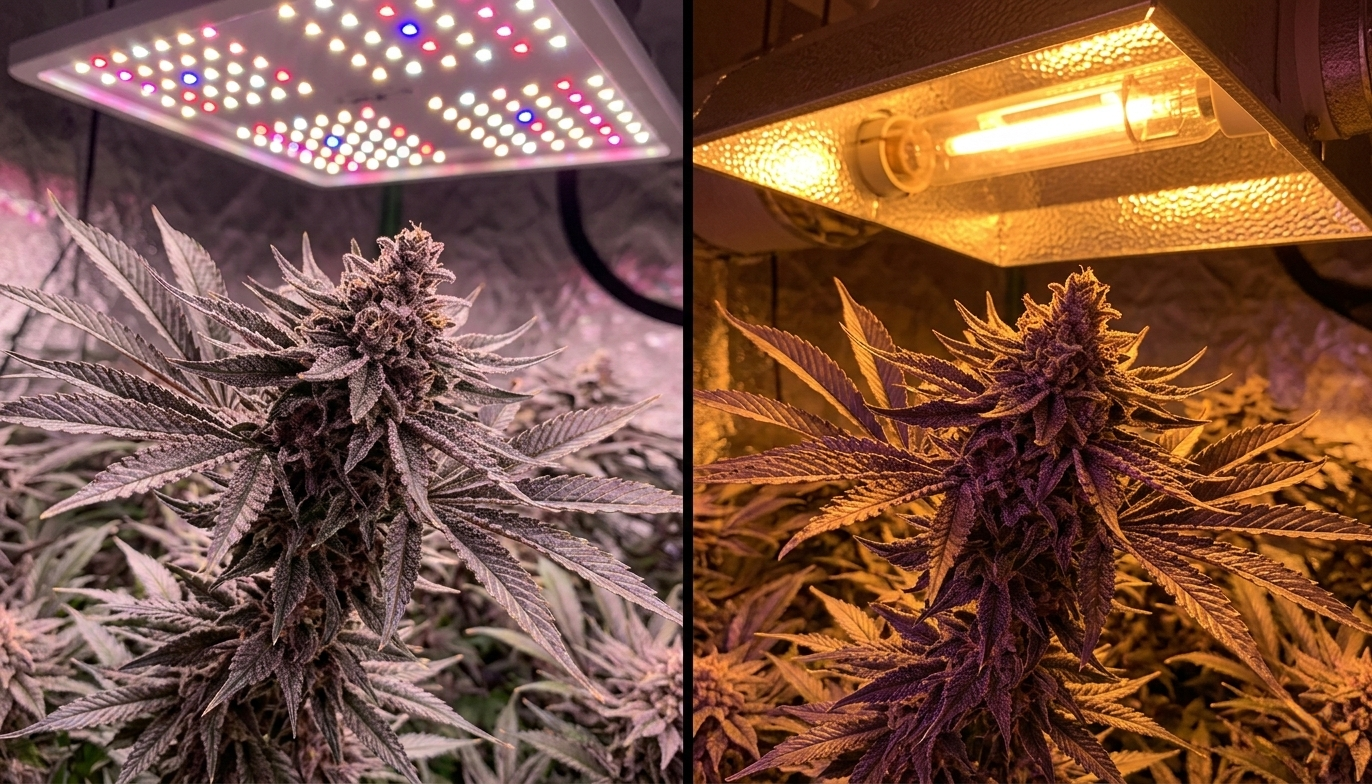
High-intensity discharge lighting creates an electrical arc inside a gas-filled tube. The main cannabis types are high-pressure sodium, commonly called HPS, and metal halide, or MH. For many years, growers used blue-rich MH during vegetative growth and warm HPS during flowering. The approach can still grow excellent flowers, but the complete system includes more than a bulb. It needs a compatible ballast, reflector, secure socket, enough clearance, and a ventilation plan that can handle significant radiant and convective heat.
HPS remains useful where the infrastructure already exists and the room benefits from the heat. A cold-season basement or a commercial-style room with purpose-built cooling may use that heat rather than fight it. The same lamp becomes much less attractive in a short tent during a warm summer. There, the added exhaust or air-conditioning demand can erase the apparent saving from a lower purchase price.
What HPS still does well
HPS can deliver strong flowering intensity from a relatively simple point-source system. Its long history also means replacement lamps, ballasts, reflectors, and operating knowledge may be readily available in some regions. The radiant warmth can raise leaf and flower temperature, which may be useful in a cool space when it is monitored carefully.
The tradeoff is system efficiency and control. Lamps age, output changes, reflectors collect dust, and a hot central source can create a steep intensity gradient. Many HPS systems are less flexible at low output than a dimmable LED. Air-cooled reflectors remove some heat, but ducting consumes height and can complicate odor control and airflow.
Where metal halide fits
Metal halide lamps provide a whiter, relatively blue-rich spectrum that can support compact vegetative growth and make leaf color easier to inspect than under HPS. They are most defensible when you already own a safe, compatible HID system or run a separate vegetative room that needs the heat.
Buying an MH-to-HPS switching system for a new small tent is harder to justify today. A full-cycle LED can remove the bulb change, reduce the heat burden, and give you dimming without maintaining two lamp types. MH is still capable cultivation equipment, but capability and suitability are not the same decision.
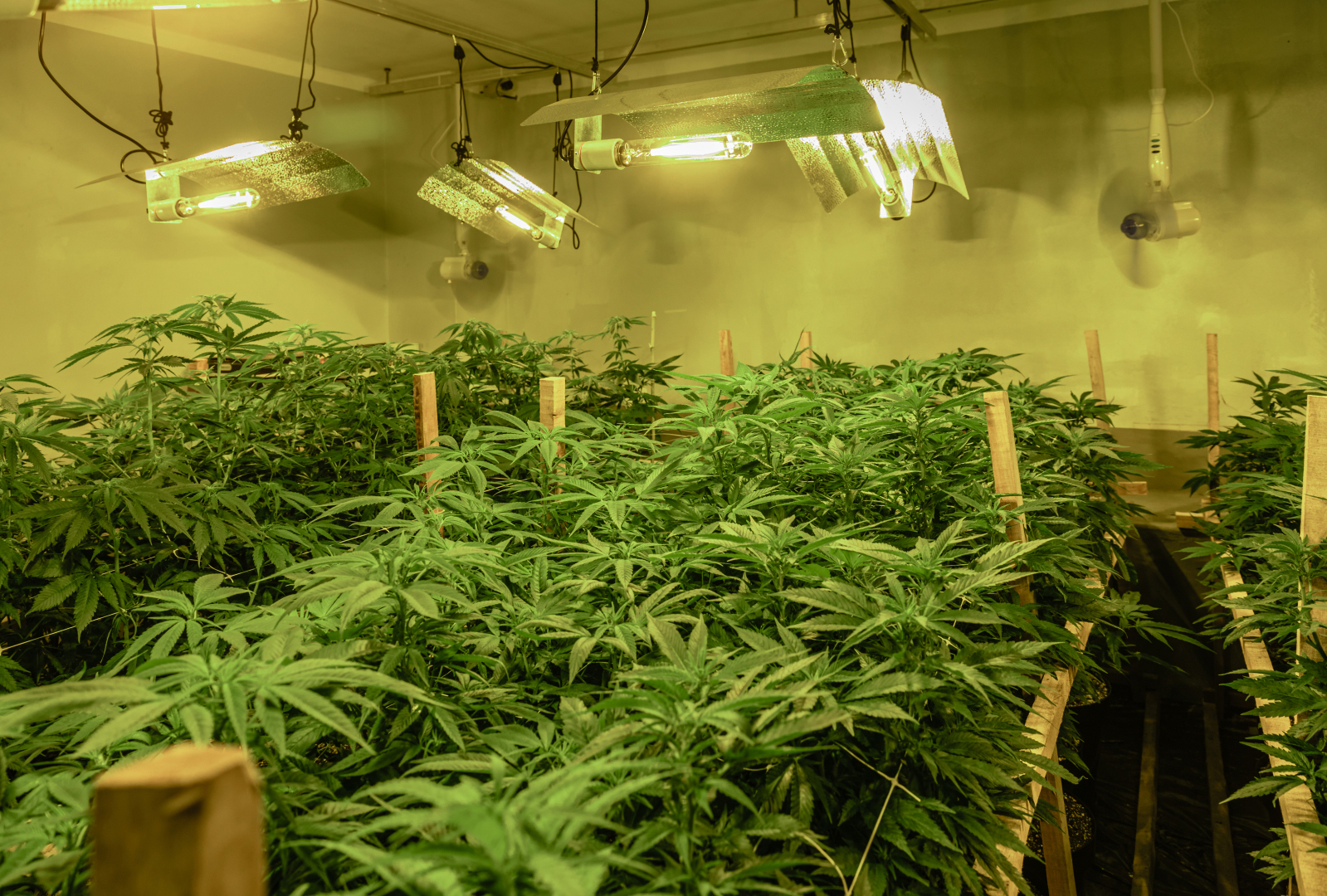
Advice: If an existing HPS or MH system is safe and the room is stable, replace it because the full cost calculation supports the change, not because the technology looks old. Record electrical use, cooling demand, canopy temperature, bulb hours, and actual production before comparing it with LED.
CMH and LEC grow lights
Ceramic metal halide is another HID technology. You may also see the term LEC, although that name has commercial origins and is often used loosely. CMH lamps generally produce broad white light with better color rendering than conventional HPS. That makes plant inspection easier and allows one lamp type to support more than one stage.
CMH occupies a middle position rather than a magic one. It can provide a useful spectrum and strong point-source intensity, but it still relies on a hot lamp, reflector, and ballast. It also sends more radiant heat toward the canopy than a comparable LED arrangement. A 315-watt CMH may fit a modest room that can use its warmth. A low tent with limited exhaust may find the same fixture awkward.
Some growers associate CMH with richer aroma, more resin, or a more “sun-like” result. Spectrum can affect morphology and secondary metabolism, but those claims should not be detached from photon intensity, cultivar, leaf temperature, nutrition, and harvest handling. Controlled cannabis studies have found spectrum-dependent responses, yet they do not establish one lamp type as a universal quality winner.
Important: Broad spectrum does not mean identical to sunlight, and it does not guarantee better flowers. Evaluate CMH by the same system criteria as any other light: usable photons, canopy uniformity, heat, electrical demand, lamp aging, safety, and the environment around the plant.
Fluorescent lights, T5 fixtures, and household bulbs
Fluorescent lighting can be a sensible propagation tool. T5 tubes spread gentle light across a shelf, while compact fluorescent lamps can support a small group of seedlings or cuttings. Their low point intensity makes it easier to place young plants close to the source without asking new roots to keep pace with a flowering-level canopy.
The limitations appear as the plant becomes larger. Fluorescent lamps produce fewer useful photons per unit of electricity than strong modern horticultural LEDs. Their light does not carry as effectively through a deep canopy, and scaling them across a flowering area creates more tubes, sockets, wiring, heat, and replacement work. A lamp that keeps a clone shelf compact is not automatically suitable for dense mature flowers.
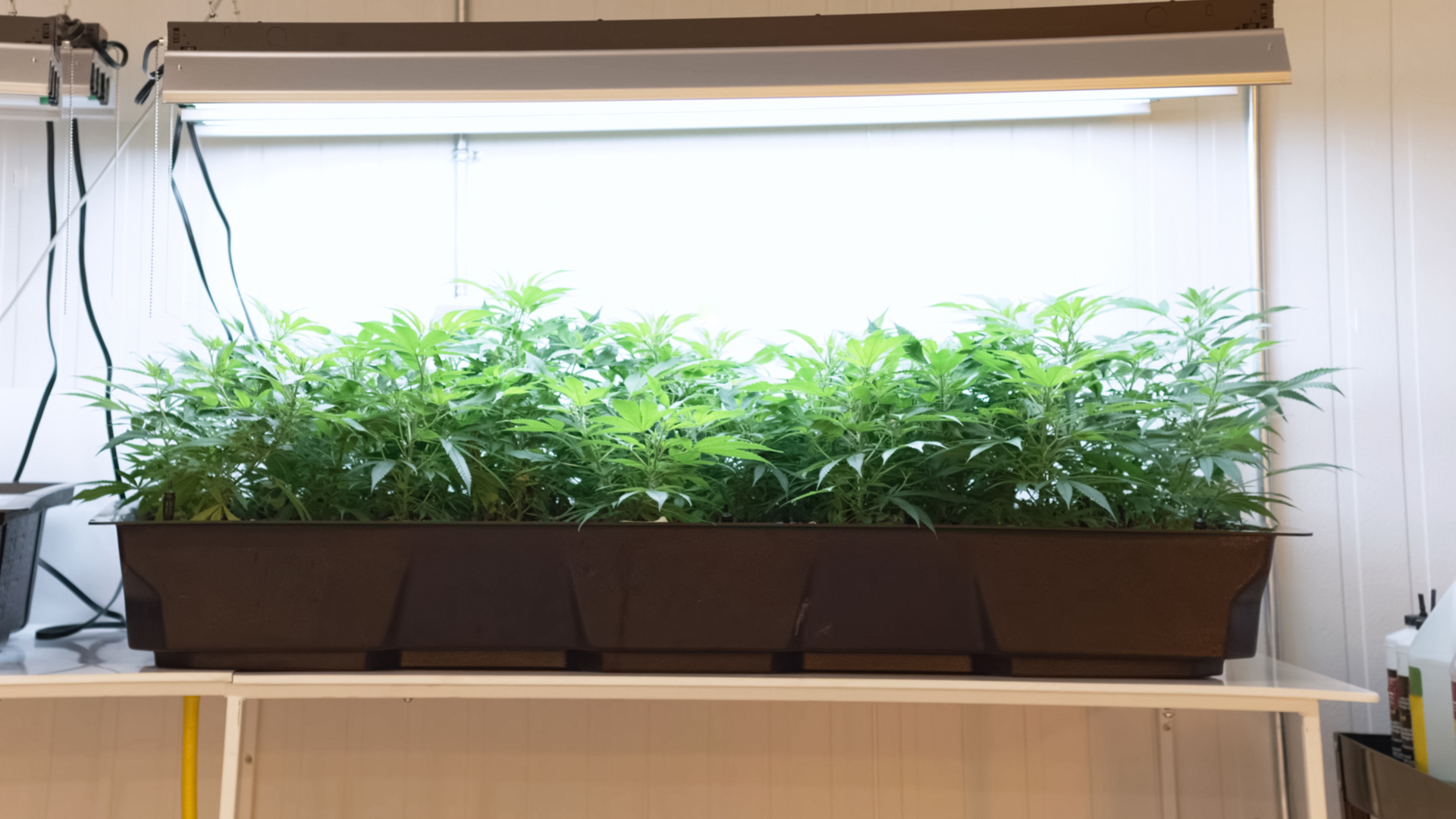
Household white LED bulbs and shop lights can also grow young cannabis plants when the output and coverage are adequate. They are best treated as low-intensity or temporary tools. Many do not publish a horticultural PPFD map, lack moisture-appropriate construction, and concentrate light in a shape designed for people rather than a plant canopy. Incandescent bulbs are too inefficient and heat-heavy to serve as a sensible primary grow light.
“Can I flower one cannabis plant under ordinary LED shop lights?”
Question sent by: Marissa Cole, via Facebook page.
The plant may survive and form flowers if it receives enough light, but ordinary shop lights are rarely designed to provide strong, even flowering PPFD over a cannabis canopy. Check actual power draw and measure or estimate intensity across the whole area. If the center is adequate but the edges are weak, a smaller trained canopy may be more realistic than adding more household fixtures and connections.
Blurple LEDs and narrow-spectrum fixtures
Older LED grow lights often combine red and blue diodes, producing the familiar purple appearance. Cannabis can grow under them because red and blue photons both support photosynthesis and plant signaling. Their main weakness is practical rather than absolute: purple light makes it difficult to see natural leaf color, early pest stippling, nutrient symptoms, fading flowers, or a patch of mold.
A working blurple fixture does not need to be discarded in the middle of a cycle. Use neutral room light when inspecting plants, verify canopy intensity if possible, and manage the real coverage rather than the manufacturer’s nominal footprint. When buying new, a white broad-spectrum fixture usually offers clearer inspection, easier comparison data, and more flexible full-cycle use.
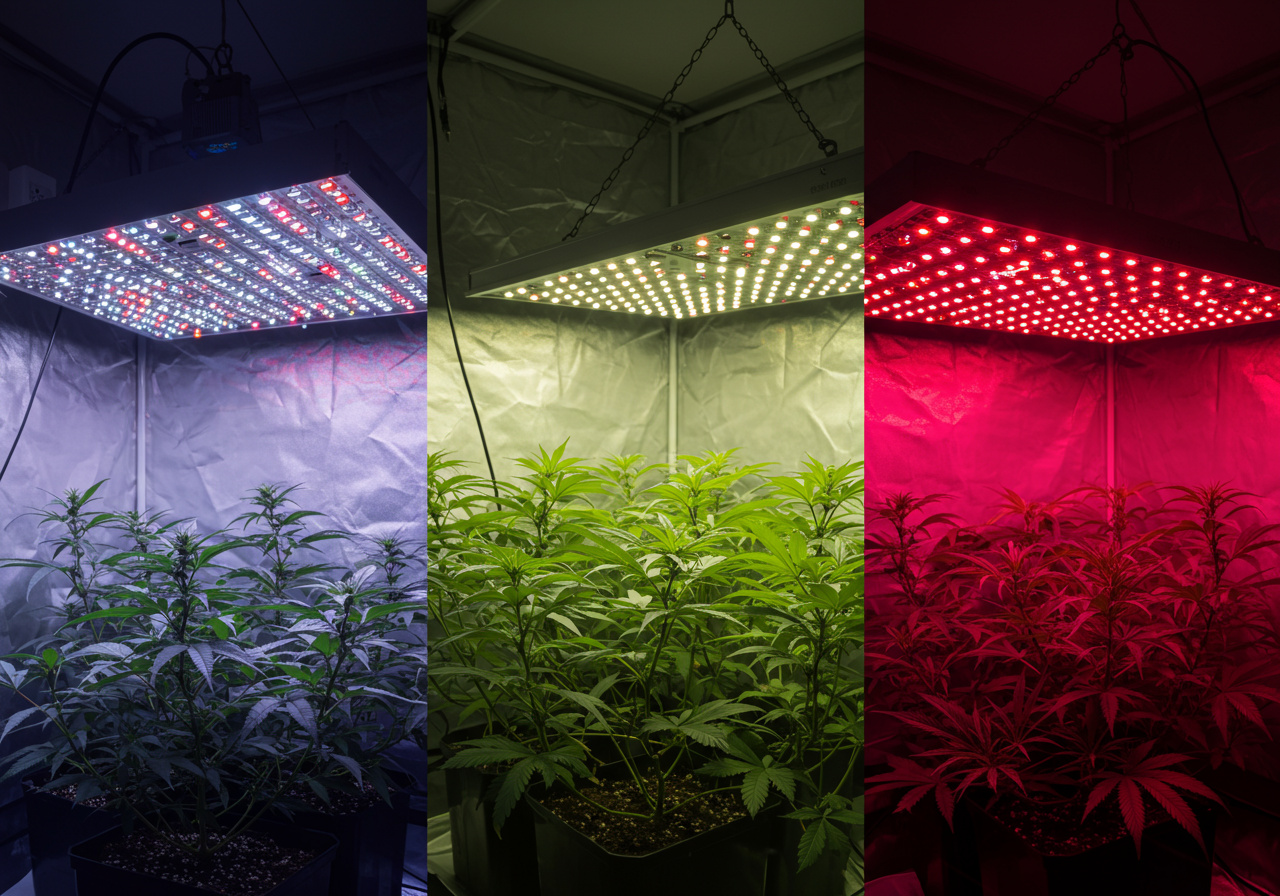
Remember: A plant does not see “purple” as a product category. It responds to photon quantity, wavelength distribution, timing, and the environment. Judge the fixture by measurable performance and the plant’s response.
Supplemental UV, far-red, and inter-canopy lights
Supplemental light is added to a functioning primary system for a specific reason. Far-red can influence phytochrome signaling and morphology. UV can create plant stress and presents eye and skin hazards. Side, inter-canopy, and subcanopy bars can move photons into shaded parts of a dense crop. None of these should be the first purchase for a room that still has weak overhead coverage, unstable irrigation, or an uneven canopy.
Recent cannabis research shows that supplemental and spectral treatments can change growth, distribution, or chemistry under particular experimental conditions. The results are not a license to stack accessories. Dose, timing, cultivar, measurement range, and the base environment all matter. A treatment that helps a supported research crop may reduce yield or quality in a stressed home garden.
Start with a stable broad-spectrum baseline. If you later test a separate channel, record its spectrum, intensity, duration, distance, and the exact dates it operates. Change one major variable at a time. This gives you a chance to learn from the plant instead of collecting several effects that cannot be separated.
UV and high-output horticultural fixtures can create eye, skin, electrical, and fire hazards.
Follow the fixture’s photobiological-safety guidance, keep water away from drivers and connections, use equipment rated for the environment, and secure every fixture with suitable hardware. Do not work beneath operating UV equipment or bypass electrical protection. Ask a qualified electrician to evaluate circuits or permanent wiring when needed.
Match the light type to the growth stage
Young plants need a different lighting job from established flowering plants. The easiest system is not always the one with the most modes. It is the one that can deliver low, even intensity at the beginning and higher, uniform intensity later without forcing you to rebuild the room.
| Stage | Practical light options | Selection priority | Common mistake |
|---|---|---|---|
| Seedling and fresh clone | Dimmed broad-spectrum LED, T5 fluorescent, or a suitable propagation bar. | Gentle uniformity, low heat at leaf level, and adjustable height. | Using a flowering fixture at full output before roots can support demand. |
| Vegetative growth | Broad-spectrum LED, CMH, MH, or a well-sized white horticultural fixture. | Coverage, manageable structure, dimming, and room for training. | Choosing blue-looking light while ignoring insufficient PPFD at the edges. |
| Transition and stretch | Full-cycle LED, HPS, CMH, or a controlled mixed system. | Stable photoperiod, gradual intensity, and enough vertical reserve. | Changing spectrum, intensity, nutrition, and irrigation on the same day. |
| Established flowering | Efficient broad-spectrum LED, HPS, CMH, or a measured hybrid layout. | Even productive PPFD, heat control, leaf function, and reliable darkness. | Buying by watts while the center burns and the corners remain underlit. |
| Mothers and maintenance plants | Dimmed LED, propagation LED, T5, or moderate white light. | Stable compact growth at a sustainable operating cost. | Using flowering intensity where slower, manageable growth is the goal. |
Typical PPFD starting points may range from roughly 100 to 250 micromoles per square meter per second for young plants, about 250 to 500 for vegetative growth, and about 500 to 900 for established flowering without supplemental carbon dioxide. These are not universal prescriptions. Cultivar, photoperiod, acclimation, leaf temperature, CO2, water availability, root health, and canopy structure change the useful range.
A level canopy at a moderate and consistent PPFD can outperform a tent with one intense center and dim edges. When the whole area receives usable light, plants develop at a more similar pace and the grower can make better decisions about watering, feeding, support, and harvest timing.
Choose by room and canopy, not by plant count
Plant count is a poor way to size a grow light. One trained plant can fill the same canopy as several smaller plants. The fixture sees leaf area, distance, and geometry. It does not know how many stems emerge from separate containers.
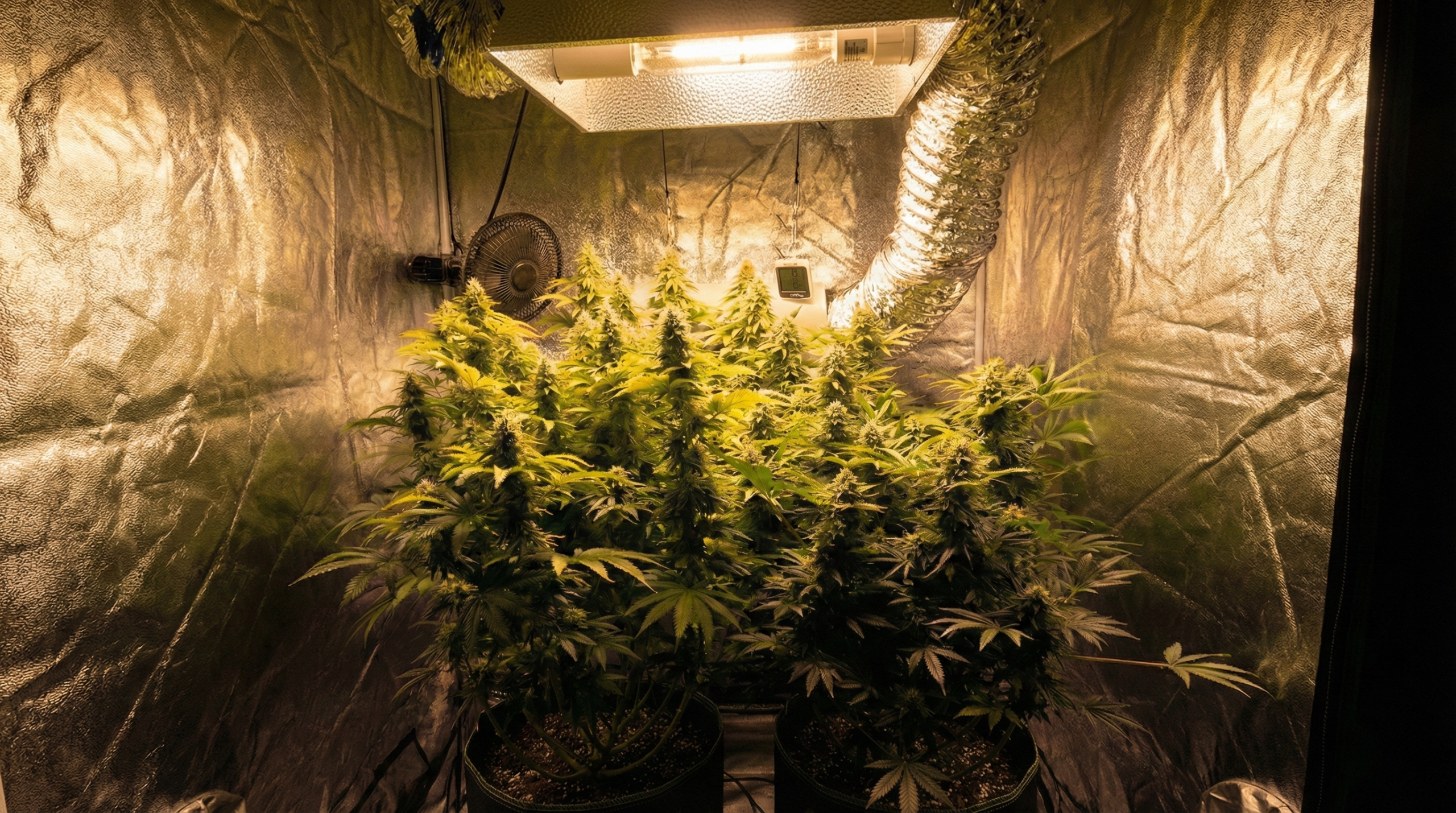
Measure the productive canopy in length and width. Then subtract the space needed for the tent walls, intake openings, drainage trays, equipment, and access. Check the complete vertical stack from the floor to the highest safe fixture position: container, medium, plant, canopy depth, required separation, fixture frame, hangers, filter, and ducting.
| Growing situation | Usually the easiest fit | Why | Check before buying |
|---|---|---|---|
| Low 2 x 2 ft or 60 x 60 cm tent | Low-profile dimmable LED. | Preserves height and reduces the radiant-heat burden near the canopy. | Real map, dimmer range, driver position, and edge coverage. |
| 3 x 3 ft or 90 x 90 cm full-cycle tent | Broad-spectrum bar or well-spread board LED. | Can cover a square canopy evenly from seedling to flower. | Map shape, actual draw, hanging height, and access around the frame. |
| Cold room with existing HID ventilation | HPS, CMH, or LED after a full heat-cost comparison. | Radiant lamp heat may be useful during the cold season. | Summer conditions, bulb age, cooling energy, and circuit load. |
| Warm apartment or limited exhaust | Efficient dimmable LED with a remote-capable driver. | Reduces direct radiant heat and offers better intensity control. | The room still needs a route for total electrical heat and humidity. |
| Clone or seedling shelf | Propagation LED or T5 fluorescent. | Provides gentle light across shallow trays. | Shelf clearance, splash protection, and even tray coverage. |
| Greenhouse supplement | Dimmable horticultural LED or a purpose-built existing HID system. | Can fill seasonal or daily sunlight gaps. | Measured sunlight, target DLI, controls, mounting, and wet-location suitability. |
Build the choice from the canopy outward
Here is a practical way to choose without getting trapped in product labels. First, draw the canopy you can reach and manage. Then reserve the vertical space needed for containers, plants, the fixture, hanging hardware, and safe separation. Only after that should we compare lights.
For each candidate, place its PPFD map over that real canopy. Check actual input power, efficacy, dimming, heat path, safety certification, warranty, and whether a failed driver or lamp can be serviced. The winning fixture is the one that gives the whole garden a stable operating range, not the one with the largest number in the center of a chart.
The measurements that separate a light from its marketing
Lumens and lux describe light according to human vision. Plants respond to photons across a broader plant-relevant range. Horticultural lighting therefore uses measurements such as photosynthetic photon flux, photosynthetic photon flux density, daily light integral, and photosynthetic photon efficacy.
- PPF describes the number of photosynthetic photons a fixture emits each second. It helps describe total output, but not where those photons land.
- PPFD describes photon density at a surface. A grid of PPFD readings reveals center intensity, edge weakness, and uniformity.
- DLI combines intensity with hours of light. The same PPFD creates a different daily dose under 18 hours than under 12.
- PPE or fixture efficacy describes photons produced per joule of electrical input. Higher efficacy can reduce electricity and cooling demand for the same photon output.
- Actual input power tells you the electrical load. It is not a direct measure of plant-usable output.
Ask how and where the PPFD map was measured. Hanging height, room reflectivity, grid spacing, and test area affect the result. A map measured in a reflective tent can look different from the same fixture in an open room. Compare fixtures under similar conditions and pay attention to the average, minimum, and uniformity rather than only the maximum.
Master Advice: Never let a single center PPFD number choose the fixture. The crop grows across an area. Compare the map, the mounting height, the actual canopy, and the environmental cost of delivering that light.
Total cost includes the environment
The purchase price is only the first part of a grow light’s cost. Electricity operates the fixture, but the room may also need to remove its heat. Exhaust fans, air conditioning, dehumidification, humidification, and circulation can all change after a lighting upgrade. Bulbs and reflectors age. Drivers and fans can fail. A fixture that cannot be repaired may require a complete replacement.
LED often wins the long-term calculation because higher efficacy can produce the required photons with less electrical input. It can also reduce radiant heat at the leaf surface. HPS may remain economically reasonable when equipment is already owned, electricity is affordable, heat is useful, and ventilation is built for it. CMH may justify itself in a small existing system. Fluorescent lighting may be inexpensive for propagation but costly if multiplied to cover a flowering room.
Calculate with the real photoperiod. Multiply fixture input power by operating hours, then include the equipment that supports it. Compare the cost per cycle and per square meter or square foot of productive canopy. Do not compare a weak LED with a high-output HPS simply because their labels mention the same wattage.
How light type affects watering, temperature, and plant behavior
Changing the fixture changes more than the electricity bill. Radiant energy affects leaf temperature. Canopy temperature affects transpiration. Transpiration changes water and nutrient movement. Fixture shape changes airflow above and through the canopy. Higher usable intensity can accelerate growth only when roots, water, carbon dioxide, temperature, and humidity can keep pace.
A plant moved from HPS to LED may show lower leaf temperature at the same air temperature. If the grower copies the old thermostat setting, leaf processes may run differently. A plant moved from a weak fluorescent shelf to a strong LED may drink faster after acclimation, yet the medium may initially stay wet if the roots are still small. Watch trends instead of assuming a technology-specific watering schedule.
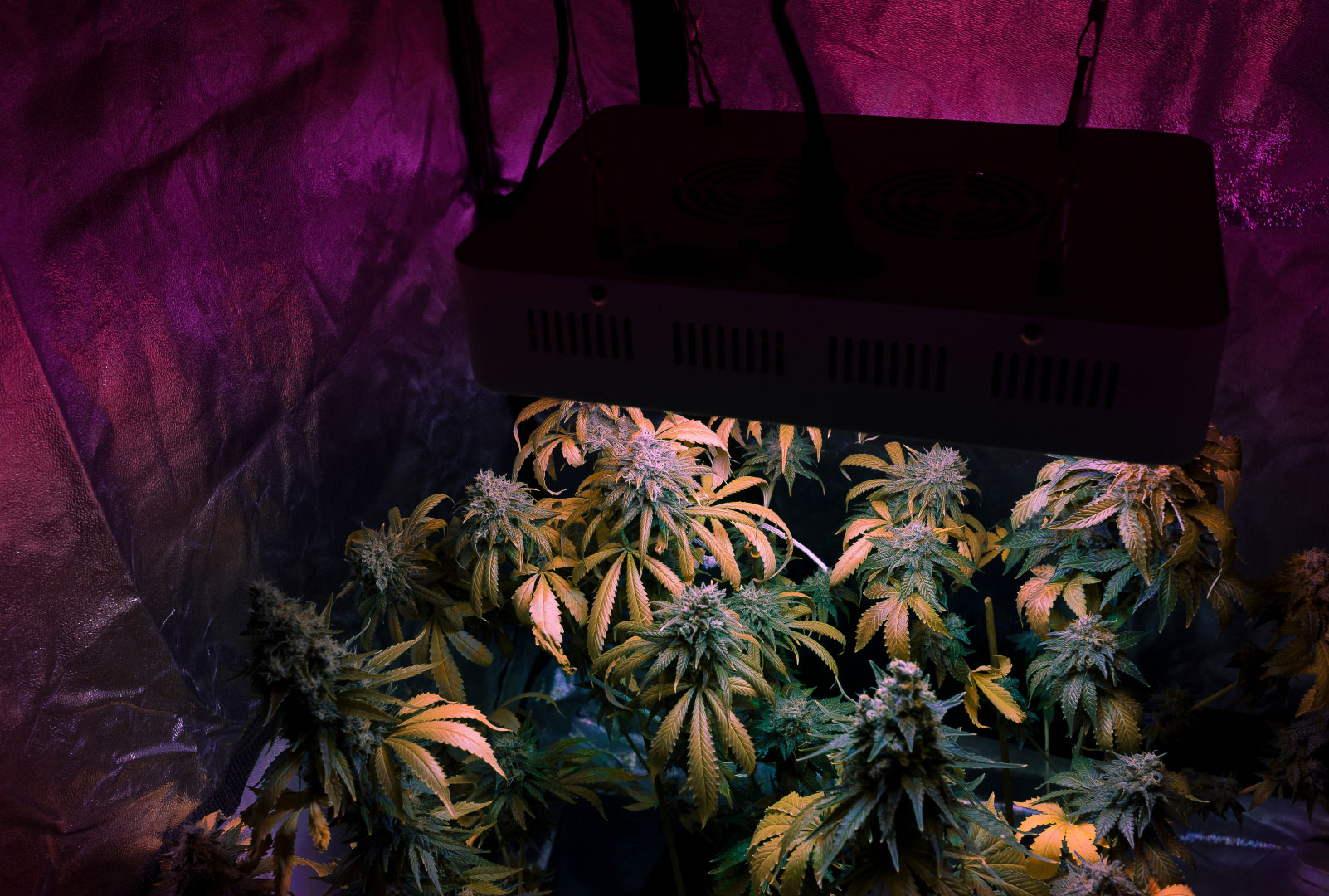
Quality is also a system result. Strong, even light can support productive flower development, but excess intensity can bleach exposed tops, accelerate dry-back, and weaken aroma potential by overheating flowers. Uneven light can leave the top finished while shaded flowers remain immature. The aim is to preserve functional leaves and a stable root zone while the canopy receives a daily light dose it can use.
Common lighting claims that need context
“LED always produces better cannabis than HPS”
No technology guarantees quality. Modern LEDs can improve efficacy, uniformity, and environmental control, but cultivar, propagation health, canopy management, nutrition, irrigation, temperature, humidity, harvest timing, drying, and curing still shape the result. A well-managed HPS room can outperform a poorly designed LED tent.
“HPS penetrates deeper because it is more powerful”
A high-output point source can create strong top-canopy intensity, and its radiant heat changes the way the crop feels. Light distribution through a canopy, however, depends on fixture geometry, angle, distance, reflection, leaf arrangement, and the wavelengths involved. The top may be saturated while lower sites remain light-limited. Better overhead uniformity and an open canopy are usually the first fixes.
“Full spectrum means the same as sunlight”
Full spectrum is a flexible marketing phrase, not a complete technical specification. Two fixtures can both use the label while producing different wavelength distributions, photon outputs, and morphology. Read the spectral power distribution, then return to the PPFD map and room conditions.
“More watts make bigger buds”
Input watts tell you how much electrical power the fixture consumes. They do not tell you how efficiently it creates photons or how evenly those photons reach the canopy. Increasing intensity can support more growth within a supported range, but returns depend on the whole system. Beyond the plant’s useful capacity, more input can become heat and stress.
“UV is required for resin”
It is not. Cannabis produces glandular trichomes and secondary metabolites without supplemental UV. Controlled research has not established a universal UV program that increases yield or cannabinoid concentration across cultivars. UV can damage plant tissue and human eyes or skin. Treat it as optional advanced equipment with a measured purpose.
Choose a fixture from a measured canopy plan.
Use the productive area, PPFD map, actual draw, dimming range, room heat path, safety rating, and service options to make the decision.
Choose by color, equivalent watts, or one center reading.
Those shortcuts hide weak corners, excess heat, poor control, and specifications that do not describe the real garden.
Troubleshooting a light before replacing it
When plants react poorly, the technology name is rarely a complete diagnosis. Start with the pattern. A problem limited to the highest central leaves suggests something different from a whole canopy stretching toward a weak fixture.
| What you see | Likely lighting or environment issue | Check first | Useful first response |
|---|---|---|---|
| Long stems and wide internodes | Low or uneven PPFD, excessive distance, heat, or cultivar tendency. | Map, hanging height, edge intensity, temperature, and canopy shape. | Improve even intensity gradually before buying a different spectrum. |
| Bleached tops near the center | Excess PPFD, high leaf temperature, dry air, or poor acclimation. | Top PPFD, leaf temperature, humidity, airflow, and root-zone moisture. | Reduce intensity or increase distance, then allow new growth to show the response. |
| Healthy center and weak corners | Poor fixture distribution or an oversized claimed footprint. | PPFD grid at the actual hanging height. | Reduce the canopy, improve overlap, or choose a better-spread fixture. |
| Room overheats after lights turn on | Total electrical heat exceeds ventilation or cooling capacity. | Actual draw, exhaust path, driver location, intake air, and seasonal conditions. | Reduce output safely and correct the heat plan before adding plants or fixtures. |
| Plants look yellow only under purple light | Narrow spectrum is distorting visual inspection. | Leaf color under neutral white light. | Inspect with the grow light off and diagnose from the real color and pattern. |
| Light output changes or flickers | Driver, ballast, lamp, connector, timer, or supply problem. | Manufacturer guidance and safe visual inspection with power isolated. | Stop using damaged or unstable equipment and obtain qualified service. |
“My cheap blurple still works. Will switching to white LED automatically improve the harvest?”
Question sent by: NorthRoom88, via X.
Not automatically. A modern white LED may improve efficacy, coverage, dimming, and plant inspection, but the result depends on what was limiting the old setup. Measure the current canopy, record power and room behavior, then compare a replacement at the same productive area. If watering, heat, roots, or canopy shape are the larger limitations, changing color alone will not solve them.
Frequently asked questions about cannabis grow-light types
Can any LED light grow cannabis?
Many LEDs can keep a cannabis plant alive, but productive flowering requires enough even photon density, suitable duration, reliable construction, and an environment that can support the resulting demand. Household LEDs can help with seedlings or a tiny maintenance area. A horticultural fixture with transparent performance data is easier to size and manage for a complete crop.
Is LED or HPS better for flowering cannabis?
For most new home setups, a strong broad-spectrum LED is easier to recommend because it can deliver high efficacy, dimming, broad distribution, and a lower radiant-heat burden. HPS remains capable and can make sense in an established cool room with appropriate electrical and ventilation infrastructure. Compare the complete operating system, not only flower-stage tradition.
Do cannabis plants need different lights for veg and flower?
No. A dimmable full-spectrum LED or a suitable CMH can support both stages. Separate MH and HPS lamps are one traditional method, not a biological requirement. Photoperiod, intensity, spectrum, and total daily light can be adjusted without changing the entire technology.
Are red and blue grow lights enough?
Red and blue photons can support photosynthesis, so narrow-spectrum fixtures can grow cannabis. A broad white spectrum is usually more practical because it supports natural visual inspection and can provide a balanced full-cycle environment. Performance still depends on intensity, distribution, and fixture efficacy.
How many watts of LED do I need per plant?
Do not size by plant. Size by productive canopy and verified photon distribution. Several small plants can fill the same area as one trained plant. Use a PPFD map for the exact footprint, check actual draw, and make sure the light can deliver useful intensity without creating a center hotspot.
Can I mix LED and HPS?
Yes, but a mixed room becomes harder to interpret. The fixtures have different radiant-heat patterns, spectra, hanging requirements, and distribution. Measure the combined PPFD grid, check leaf temperatures in each zone, and make sure the electrical and cooling systems can support the total load. Mixing is a system design choice, not an automatic quality upgrade.
Is CMH better for terpenes?
There is no universal evidence that CMH produces better terpene expression across cultivars and environments. Spectrum may influence plant chemistry, but temperature, flower-surface heat, harvest maturity, drying speed, oxygen exposure, and curing have major effects on aroma retention. Choose CMH for its complete room fit, not a guaranteed terpene promise.
How close should a grow light be to cannabis?
There is no distance that applies to every technology or fixture. Use the manufacturer’s measured map as a starting point, then verify PPFD at canopy level and watch leaf response. A bar LED, compact board, CMH reflector, HPS hood, and fluorescent tube distribute light differently. Distance is a way to reach the desired distribution, not a target by itself.
Should I buy UV or far-red with my first grow light?
Usually no. Put the budget into a reliable primary fixture, safe electrical setup, environmental control, and a way to evaluate canopy intensity. UV and far-red are optional tools for controlled experiments after the base room is stable.
Choose the light that leaves room to grow well
For most home growers, the answer remains a dimmable broad-spectrum horticultural LED with a credible PPFD map and a shape that matches the real canopy. It offers the clearest route to full-cycle use, manageable heat, even distribution, and gradual control. HPS and MH remain productive in rooms built around their heat and electrical demand. CMH can suit a modest full-cycle or vegetative area. Fluorescent and propagation LEDs belong where young or maintenance plants need gentle light.
The technology name narrows the options, but it does not finish the decision. Let us make the last check from the plant’s point of view. Is the canopy evenly lit? Can the roots and room support that intensity? Can you reach every plant, inspect its real color, and keep the fixture safely away from water? If the answer is yes, you have chosen more than a lamp. You have built a light environment the crop can actually use.
- You measured the productive canopy rather than using plant count.
- The complete vertical stack fits the room with safe fixture separation.
- The fixture publishes actual input power, total photon output, efficacy, and a useful PPFD map.
- The map covers your canopy evenly at a realistic hanging height.
- The dimmer or control range can support young plants and mature flowering plants.
- The room can remove the fixture’s total heat and manage leaf temperature.
- Drivers, ballasts, sockets, cables, timers, and connections suit the environment.
- The fixture has appropriate third-party safety certification for your region and application.
- You understand lamp, driver, fan, or reflector maintenance and replacement costs.
- You will establish the main light before adding UV, far-red, or inter-canopy accessories.
Selected research behind this guide
Lighting results change with cultivar, intensity, spectrum, canopy structure, and the surrounding environment. The following research and technical resources support the comparisons and safety guidance in this article:
- Cannabis lighting: blue photon fraction, fixture efficacy, yield, and production economics
- Effects of three light spectra on cannabis yield, morphology, and growth trajectory
- Influence of LED, HPS, and metal halide spectra on cannabinoid production
- Cannabis yield response to indoor light intensity and ultraviolet radiation
- Cannabis inflorescence yield and cannabinoid response to ultraviolet-B exposure
- Subcanopy and inter-canopy supplemental lighting in medicinal cannabis
- DesignLights Consortium horticultural lighting technical requirements
- UL Solutions: horticultural lighting safety and performance testing
- OSHA Nationally Recognized Testing Laboratory program
Share this article
A quick overview of the topics covered in this article.
- The best default and the exceptions
- Broad-spectrum LED grow lights
- HPS and metal halide grow lights
- CMH and LEC grow lights
- Fluorescent lights, T5 fixtures, and household bulbs
- Blurple LEDs and narrow-spectrum fixtures
- Supplemental UV, far-red, and inter-canopy lights
- Match the light type to the growth stage
- Choose by room and canopy, not by plant count
- The measurements that separate a light from its marketing
- Total cost includes the environment
- How light type affects watering, temperature, and plant behavior
- Common lighting claims that need context
- Troubleshooting a light before replacing it
- Frequently asked questions about cannabis grow-light types
- Can any LED light grow cannabis?
- Is LED or HPS better for flowering cannabis?
- Do cannabis plants need different lights for veg and flower?
- Are red and blue grow lights enough?
- How many watts of LED do I need per plant?
- Can I mix LED and HPS?
- Is CMH better for terpenes?
- How close should a grow light be to cannabis?
- Should I buy UV or far-red with my first grow light?
- Choose the light that leaves room to grow well
- Selected research behind this guide
Follow us
Latest articles
July 28, 2026

July 28, 2026
July 28, 2026
July 28, 2026