
What Is the Secret to Big Cannabis Buds?
The secret to big cannabis buds is not a single booster, pruning trick, or calendar week. Large, well-finished flowers appear when the plant has the right genetics, enough usable light, a productive canopy, healthy roots, steady water, balanced nutrition, and enough uninterrupted flowering time to express that potential.
That answer may sound less exciting than a bottle with an oversized cola on the label, but it gives us something much more useful: a system we can inspect and improve. If the flowers are small, airy, slow, or uneven, we can work backward and find the factor that is limiting them. We do not have to guess, strip half the plant, or keep raising the feed.
This guide explains what actually makes cannabis buds bigger and denser, why some popular fixes disappoint, and how indoor and outdoor growers can build more productive flowers without sacrificing aroma, health, or safety. We will also separate individual bud size from total dry yield, because the largest-looking cola is not always the best measure of a successful harvest.
Use this guide only for lawful cultivation, with the property owner’s permission. Local rules may govern plant numbers, locked access, visibility, odor, electrical work, water use, and cultivation methods.
Master Advice: Big buds are the visible result of a plant that kept working. Protect photosynthesis, roots, water balance, flower health, and finishing time before you look for another input.
First, Decide What “Big Buds” Means
Growers often use big to describe several different outcomes. One person wants a single long top cola. Another wants heavier trimmed jars. A third wants firm flowers with less loose material after drying. These goals overlap, but they are not identical, and improving one does not guarantee the others.
A wet cola can look enormous because it contains water, stem, and leaves. A dry, carefully trimmed flower may look smaller while contributing more usable flower mass. A plant with many medium-sized tops may also produce more uniform dry yield than a plant dominated by one impressive central cola.
Bud bulking is the accumulation of flower tissue and dry matter during flowering.
It is related to bud size, but it is not the same as wet weight, firmness, resin coverage, potency, aroma, or final trimmed yield. Those traits can change at different rates and may respond to different limits.
| Goal | What it measures | Main drivers | Common confusion |
|---|---|---|---|
| Larger individual buds | Size of each flower cluster | Genetics, branch position, light, time, plant structure | A large wet cola may lose considerable volume after drying and trimming |
| Higher dry yield | Total finished flower mass | Productive canopy area, flower count, light capture, crop health | More medium tops can outweigh one oversized cola |
| Denser flowers | Flower mass relative to volume | Genetics, light exposure, climate, maturation | Drying a flower too far can make it feel firm without adding dry matter |
| More resin or stronger aroma | Secondary-metabolite expression and preservation | Genetics, healthy flowering, harvest timing, drying and storage | Frostier does not always mean larger or heavier |
| More marketable tops | Uniform, well-lit flowers with useful structure | Canopy design, light distribution, branch support, selective cleanup | Maximum plant height does not guarantee a productive canopy |
Before changing anything, choose the result you actually want. If your priority is dry yield, measure dry trimmed weight and canopy area. If your priority is flower uniformity, compare tops from the center and edges. If your priority is quality, record aroma, resin condition, maturity, and drying performance as well as size.
The Real Secret Is Removing the Limiting Factor
A cannabis plant cannot use unlimited amounts of every resource. At any moment, one or two factors usually create the tightest limit. More fertilizer will not help when usable light is low. More light will not help a saturated root zone that cannot supply oxygen. Extra vegetative time will not help if the final canopy becomes too crowded to illuminate or inspect.
Think of flower development as a chain. Genetics sets the possible range. The canopy captures light. Healthy leaves convert that light into carbohydrates. Roots supply water and mineral nutrients. Temperature, humidity, and airflow determine whether gas exchange can continue. Flowering time allows the plant to turn that work into mature inflorescences. The shortest working link controls the result.
What to Remember: When buds stay small, ask what the plant cannot currently do. Can it capture enough light, move enough water, keep roots oxygenated, maintain healthy leaves, and finish without disease? That question is more useful than asking which bottle is missing.
| Layer | What it controls | Evidence to check | Best timing |
|---|---|---|---|
| Genetics | Flower architecture, vigor, finish time, density potential | Cultivar history, phenotype behavior, breeder range, previous cycle | Before germination or cloning |
| Root capacity | Water and nutrient supply, resilience, plant size | Root health, container volume, drainage, dry-back, water use | Before and during vegetative growth |
| Canopy architecture | Number and position of productive flower sites | Branch spacing, access, shade, support, canopy depth | Mostly before early flower ends |
| Light | Energy available for growth and flower mass | PPFD map, DLI, sun path, edge performance, leaf response | Every stage, especially flower |
| Water and nutrition | Transport, metabolism, tissue building, leaf function | Input and root-zone trend, plant demand, pH, EC, moisture | Continuously |
| Flower climate | Gas exchange, heat load, disease pressure, finish quality | Leaf temperature, humidity, airflow, night conditions, weather | Continuously, with tighter control late in flower |
| Time | Flower set, bulking, resin development, ripening | Actual flower development, weekly change, trichomes, cultivar duration | Do not harvest before the plant has finished |
Genetics Sets the Ceiling
No cultivation technique can make every cultivar produce the same flower structure. Genetics influences internode spacing, calyx-to-leaf ratio, branch strength, flowering duration, density, total vigor, disease tolerance, and how the plant partitions biomass. Two healthy plants in the same room can therefore produce very different-looking flowers.
Dense genetics can produce compact, heavy tops, but density is not automatically superior in every environment. A tightly packed cola can become difficult to dry after rain or protect from high late-flower humidity. A more open flower may finish more reliably outdoors in a wet climate while still delivering excellent aroma and usable yield.
Phenotype matters too. Seeds from the same cultivar are related, not identical copies. One plant may stretch more, feed more lightly, finish later, or make a different ratio of top flowers to lower material. If a keeper consistently combines vigor, manageable structure, quality, and a realistic finish under your conditions, its record is more valuable than a generic yield claim.
“My two plants receive the same light and feed, but one makes much denser buds. What am I missing?”
Question sent by: Nathan Cole, via e-mail.
You may not be missing anything. Genetic and phenotypic differences can change flower density, branch structure, water use, nutrient tolerance, and finishing speed. Compare root health, canopy position, and stress history first. If those are similar, record each plant separately instead of forcing both to behave the same. The denser plant may also need closer airflow and mold inspection later in flower.
Light Provides the Energy, but Distribution Decides Who Gets It
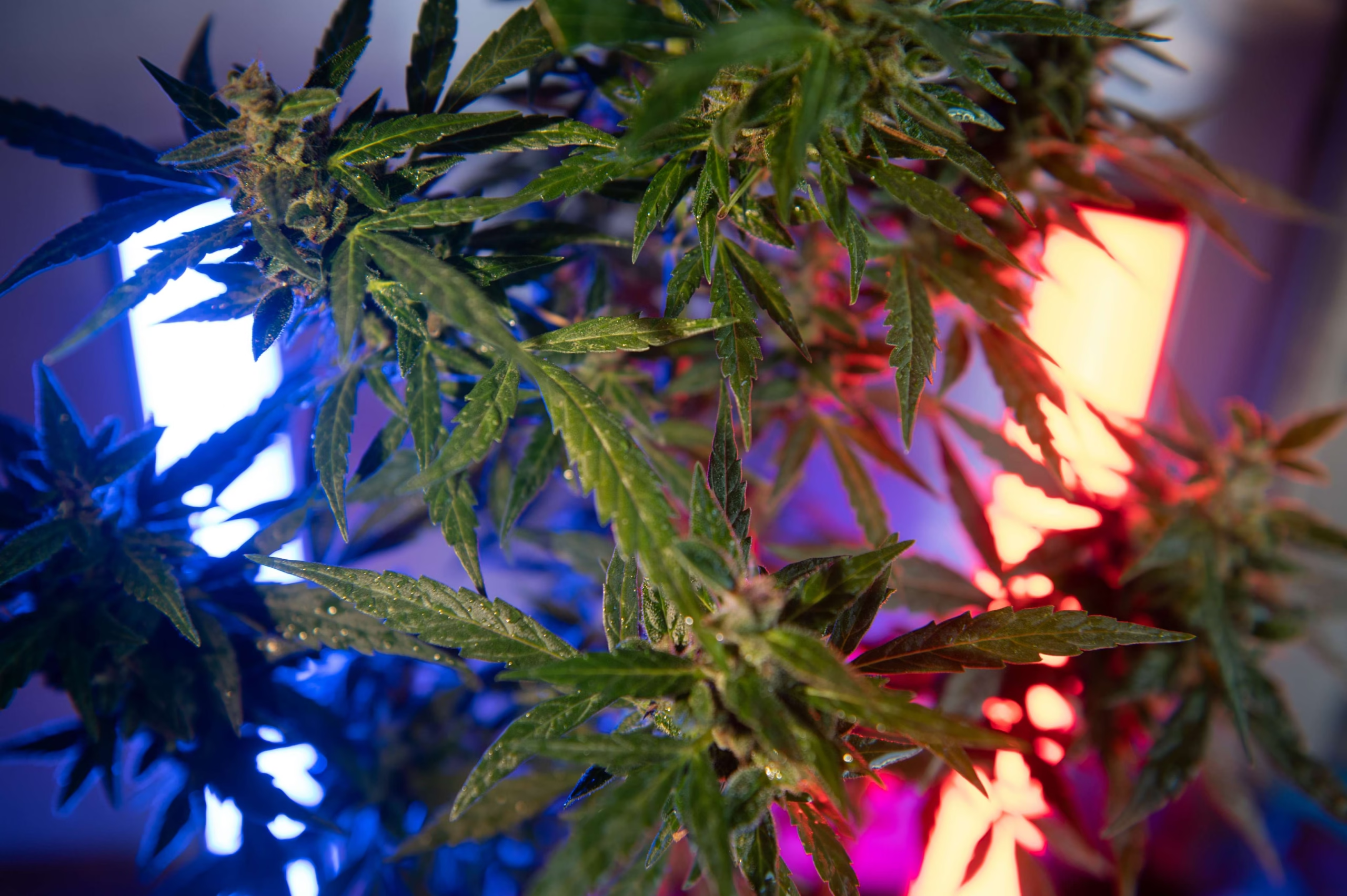
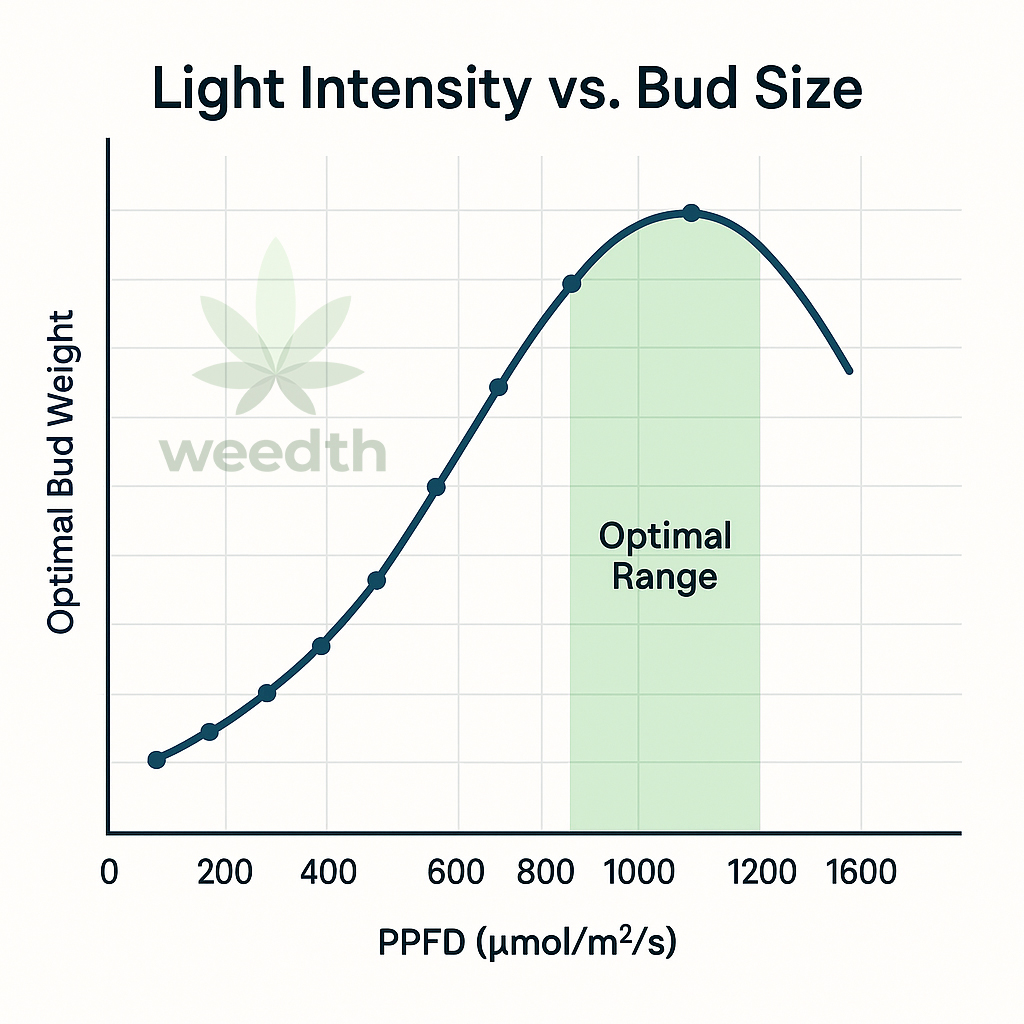
Light is one of the strongest controllable drivers of cannabis flower yield. In a controlled University of Guelph study, dry inflorescence yield and apical flower density continued to increase as canopy light increased across the tested range. Potency did not rise in the same way. That distinction matters: more usable light can build more flower mass without automatically making each gram more potent.
The lesson is not to copy the highest intensity from one experiment. The plants in that study grew in a specific controlled environment with particular genetics, spacing, nutrition, temperature, humidity, and carbon dioxide conditions. A home garden with different heat removal, root volume, or canopy health may reach its useful limit much earlier.
Uniformity matters as much as the center number. A fixture can produce an impressive PPFD reading directly below its center while the edges receive much less light. Outdoors, a tall top may receive full sun while interior and lower sites remain shaded. In both cases, the crop contains different energy zones, so flower size and maturity become uneven.
PPFD describes the amount of photosynthetically active light arriving each second. DLI adds that light across the entire day.
PPFD is a momentary intensity measurement. DLI reflects intensity and duration together. Neither number is useful without canopy area, distribution, plant response, and environmental context.
Indoor light priorities
Start with a fixture sized for the actual usable canopy, not only the tent shell. Study the full PPFD map, including corners. Hang and dim the light so the canopy receives a useful, even field without persistent bleaching, upward tacoing, stalled tops, or an environment that cannot remove the added heat and moisture demand.
Measure several points at canopy height. If the center is far stronger than the edges, lowering the fixture may make the center problem worse while improving little at the perimeter. A higher, properly sized, dimmable fixture or a better bar layout can create a more uniform result than chasing the highest central reading.
Outdoor light priorities
Track the sun path during the actual flowering season. Trees, roofs, fences, and neighboring plants can create late-summer shade that did not exist in spring. Orient and support branches so strong flower sites receive direct sun while the plant still has enough foliage to power them.
Pro Tip: Compare the best, average, and weakest flower positions. If only the center top performs, improve distribution and structure before increasing total intensity.
“My light is powerful, but the buds around the tent edges stay small. Should I turn it up?”
Question sent by: Melissa Grant, via Facebook page.
Not until you check the light map. Turning up an uneven fixture can overexpose the center while the edges remain relatively weak. Measure or compare canopy intensity across several points, flatten large height differences, and confirm that branches are not shading one another. Better distribution often creates more usable flower than a higher center peak.
Build a Productive Canopy Before Flowering Gets Heavy
Canopy management decides how many flower sites can receive useful light, air, and support. The goal is not to make every branch identical or to remove every shaded leaf. The goal is to create a reachable canopy with enough productive sites to use the available light without becoming an overcrowded mass.
Vegetative time can increase plant size and the number of potential flower sites, but it also costs time, space, electricity indoors, and season length outdoors. Research on plant density shows the tradeoff clearly: lower density can allow more yield per plant, while higher density can increase yield per area. More vegetative time can raise total inflorescence yield mainly by creating more flower-bearing structure, not necessarily by turning every individual bud into a giant one.
Topping and low-stress training
Topping can divide apical dominance and create several main branches. Low-stress training can spread those branches into a flatter light field. Both are most useful when the plant is healthy and has enough recovery time before heavy flowering. A weak, recently transplanted, overwatered, or pest-stressed plant does not become productive because it received more training.
Lollipopping and lower cleanup
Removing clearly unproductive lower shoots can reduce small shaded material and improve access. Do this selectively and early enough for the plant to adjust. A severe late-flower cleanup removes source leaves and living tissue when the plant has little time to rebuild them.
Defoliation
Defoliation is a tool, not a ritual. Remove leaves that are dead, diseased, badly damaged, trapped against wet flowers, or creating a specific airflow and access problem. Research on large cannabis plants found that architecture treatments could improve local light exposure and chemical uniformity, but not every removal treatment reliably increased whole-plant yield. Timing, severity, plant size, and cultivar all matter.
Shape the canopy around usable light.
Keep a manageable number of healthy, supported branches in positions that can receive light and be inspected through flower.
Strip the plant because flower week arrived.
Do not remove functional foliage by a fixed calendar rule. Every cut should solve a visible light, airflow, disease, or access problem.
Healthy Leaves Build Flowers
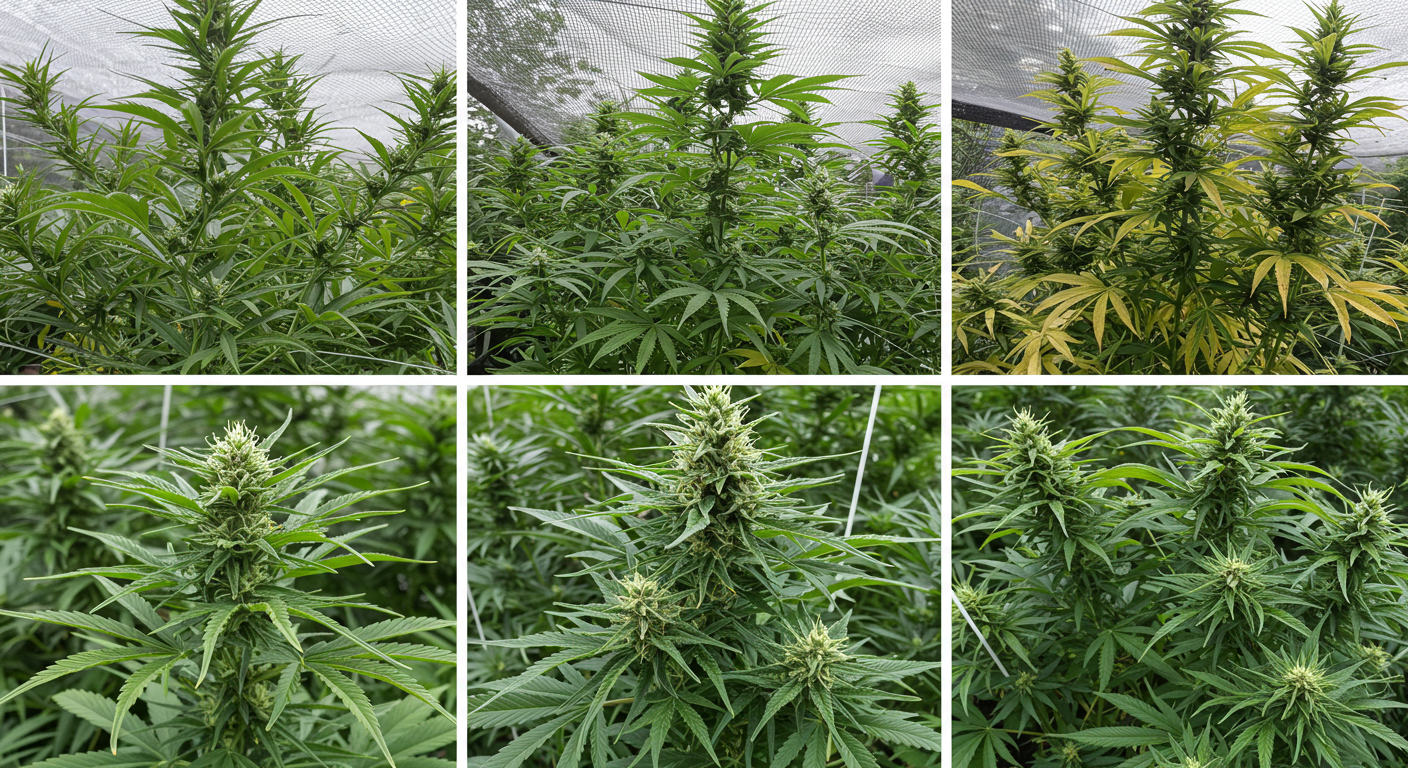
Flowers are strong sinks for carbohydrates and mineral resources, but they do not work alone. Healthy leaves capture light and supply much of the photosynthate that supports developing flowers, roots, and stems. This is why a plant can look tidy after a hard defoliation while losing part of the system that was powering its harvest.
Source tissues produce or release resources. Sink tissues use or store them.
Mature leaves are major carbohydrate sources. Developing flowers, roots, and new growth are sinks. The plant continuously changes how it distributes resources, so protecting functional source leaves helps active flower sinks keep building.
That does not mean every leaf must stay. A damaged or shaded leaf may contribute little, and tightly packed foliage can trap humidity. The useful question is whether removing that leaf improves the complete plant more than keeping it. If you cannot name the problem the cut solves, pause.
Advice: Judge leaf removal by the canopy after the cut. Light should reach useful flower sites, air should move through the plant, and enough healthy leaf area should remain to keep photosynthesis working.
Roots Set the Pace the Canopy Can Sustain
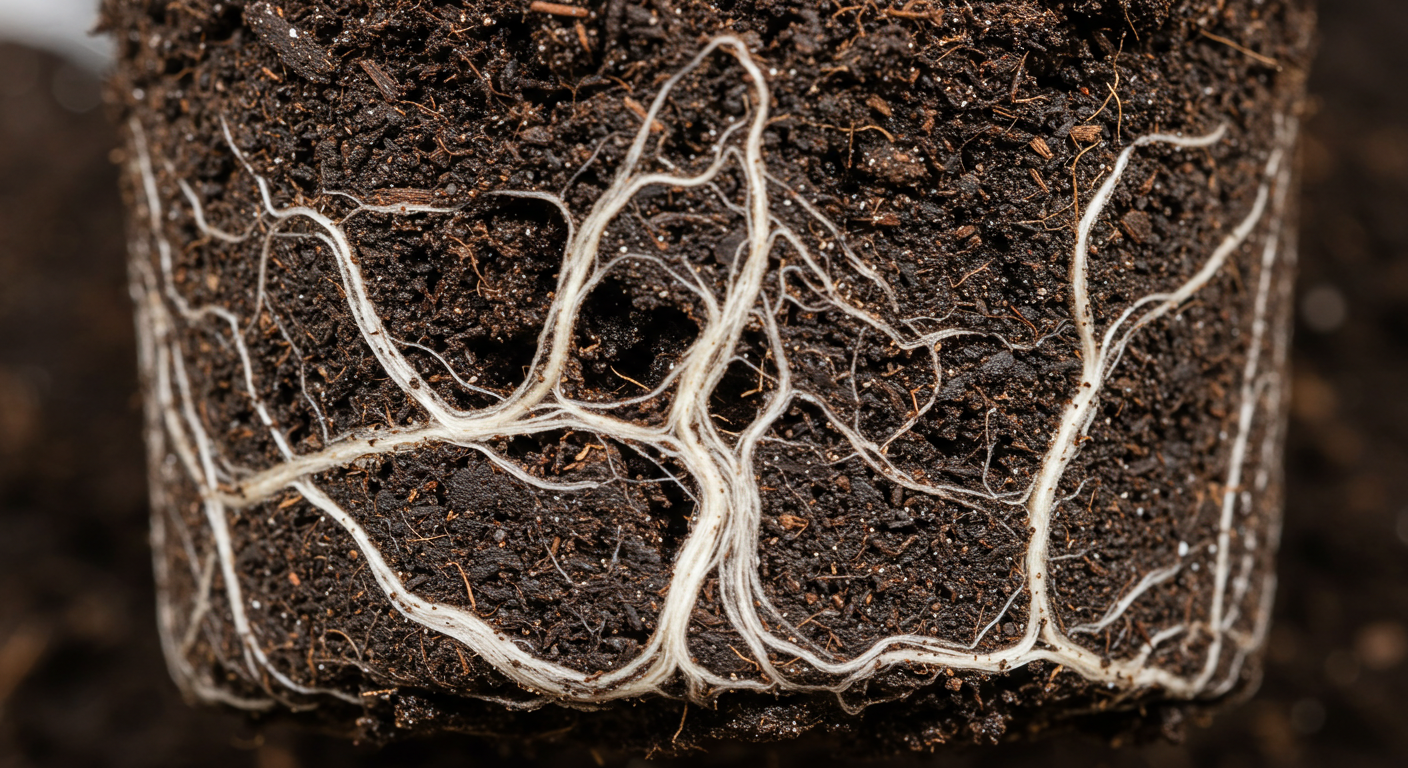
A large canopy supported by a small, damaged, oxygen-starved, or chemically concentrated root zone will eventually slow down. Roots need a workable balance of moisture and air. They also need enough physical volume and stable chemistry to supply the plant as flower demand rises.
Container size does not have one universal answer. The correct volume depends on plant size, medium, irrigation frequency, climate, and whether the grower can maintain an appropriate moisture range. A large container can buffer water and nutrition, but an oversized pot watered too frequently can remain wet for too long. A small pot can work with precise irrigation, but it offers less room for missed watering and salt accumulation.
Inspect what the root zone is doing, not only what the leaves look like. Track pot weight, moisture at depth, drainage speed, water use, input EC, root-zone or runoff trend when appropriate, and any sour smell or sudden slowdown. Pale leaves on a saturated plant do not automatically request more nutrients.
“My plant is large, but it is in a small pot and dries every day. Will more frequent feeding make the buds bigger?”
Question sent by: Owen Mercer, via e-mail.
More frequent irrigation may be necessary in a small, active root zone, but higher nutrient concentration is not the same solution. Rapid dry-back can concentrate salts and create strong daily swings. Check whether the medium rewets evenly, whether water moves straight through unused channels, and whether input and drainage trends are stable. The long-term lesson is to match root volume and irrigation capacity to the canopy before flower.
Water Consistency Protects Flower Growth
Water is part of photosynthesis, mineral transport, cell expansion, cooling, and turgor. Repeated severe drought can close stomata and reduce photosynthesis. Constant saturation limits oxygen around roots and can create symptoms that resemble hunger. Neither extreme is a reliable bud-building strategy.
The right irrigation pattern depends on the medium. Potting soil generally benefits from a thorough wetting followed by a meaningful but not extreme dry-down. Coco commonly uses more frequent fertigation with controlled root-zone EC and enough drainage strategy to prevent accumulation. Hydroponic systems depend on oxygenated solution, stable temperature, and clean delivery. In-ground outdoor soil requires attention to depth, drainage, weather, and the size of the explored root zone.
| Root-zone system | Useful pattern | Best signal | Mistake that limits buds |
|---|---|---|---|
| Potting soil | Thorough irrigation followed by a suitable dry-down | Pot weight plus moisture at depth | Small surface sips or constant saturation |
| Coco coir | Regular fertigation matched to root volume and demand | Input and drainage EC trend, volume, dry-back | Treating coco exactly like soil or allowing repeated extreme dry-back |
| DWC or recirculating hydro | Stable, oxygenated solution with monitored chemistry | Root appearance, solution temperature, pH and EC trend, water use | Chasing every pH movement or ignoring warm, low-oxygen solution |
| Outdoor ground soil | Deep irrigation adjusted to weather and soil structure | Moisture below the surface, plant response, local weather | Following a fixed calendar through heat, rain, and cool periods |
Tip: Record how much water the plant uses before you raise the feed. A crop that has suddenly stopped drinking may be stressed, overwatered, too cold, diseased, or close to finishing.
Balanced Nutrition Builds More Than Bloom Boosters
Cannabis needs nitrogen, phosphorus, potassium, calcium, magnesium, sulfur, and micronutrients through flowering. The proportions and total concentration may change with stage and system, but flowering does not turn the plant into a phosphorus-only organism.
Controlled research helps explain why booster advice often fails. In one soilless cannabis study, inflorescence yield responded to nitrogen and phosphorus within tested ranges, but did not respond to potassium across the tested range. Another study found that increasing root-zone phosphorus from an already adequate supply did not improve flower yield or cannabinoid concentration, while phosphorus loss increased sharply. The practical message is balance and adequacy, not starvation and not excess.
Do not copy a nutrient concentration from a paper as a universal recipe. A result belongs to its cultivar, system, source water, environment, light level, sampling method, and units. Use research to understand the direction of the response, then use your plant and root-zone measurements to manage the actual crop.
Nitrogen during flower
Nitrogen supports chlorophyll, proteins, enzymes, and working foliage. Excess nitrogen can create overly dark, soft growth, delay balanced maturation, and raise root-zone EC. Too little too early can remove productive leaf function while flowers are still building. Avoid both the abrupt “zero nitrogen at flip” rule and the habit of carrying a very aggressive vegetative feed deep into flower.
Phosphorus and potassium
Both are essential. Neither acts as a direct density switch. Phosphorus participates in energy transfer and cellular processes. Potassium supports osmotic regulation, stomatal function, enzyme activity, and transport. Once the plant has an adequate supply, pushing more can create waste, antagonism, and root-zone instability without increasing flower mass.
Calcium and magnesium
Calcium delivery depends on root health, water movement, and transpiration as well as concentration in the feed. Magnesium is central to chlorophyll and many enzymatic reactions. A Cal-Mag product can be useful when source water, medium, base nutrients, or plant demand justify it, but adding it automatically can raise EC and duplicate nutrients already present.
Do not stack several bloom products to make small buds catch up.
Small flowers can be caused by genetics, low light, shade, heat, water stress, root damage, pollination, disease, or early harvest. A higher EC can make several of those limits worse.
“Will a PK booster make my buds bigger in the last three weeks?”
Question sent by: Jasmine Patel, via e-mail.
Only a real deficiency can be corrected by supplying what is missing. Extra phosphorus and potassium cannot replace inadequate light, damaged roots, poor water balance, or unfinished genetics. Review the complete recipe, source water, input and root-zone trend, leaf condition, and flower progress before changing anything. A stable adequate program is usually more productive than a late concentration spike.
Temperature, Humidity, and Airflow Keep the Factory Open
Light can drive photosynthesis only when the rest of the environment allows leaves to exchange gases and move water. Excess heat can increase water demand, damage upper tissue, and reduce flower quality. Cold roots and low night temperatures can slow water and nutrient movement. Very dry air can drive water loss faster than roots can replace it, while high humidity can reduce transpiration and increase disease pressure in dense flowers.
VPD is useful because it connects temperature and humidity, but it is not a magic target by itself. Leaf temperature can differ from room temperature. Cultivar, rooting, light level, airflow, irrigation capacity, and growth stage change how the plant responds. Use VPD as a framework, then confirm with leaf posture, water use, growth, and flower health.
Airflow should move through and around the canopy without continuously blasting one flower. Leaves can move gently while sheltered interior pockets still remain stagnant, so inspect the middle of the plant. As flowers become denser, increase attention to night humidity, post-irrigation moisture, weather changes, and sections where branches touch.
Important: A dense cola is only valuable while it remains healthy. The same structure that looks impressive can trap moisture and hide early rot.
“My tent stays humid at night, but the buds are finally getting dense. Can I wait until harvest?”
Question sent by: Taylor Brooks, via Facebook page.
Do not wait for a visible dead patch. Improve dehumidification and air exchange, confirm that the host room is not returning moist exhaust, space touching branches where possible, and inspect inside the thickest flowers with clean hands. Avoid pointing a harsh fan directly at one cola. The goal is a drier, more even flower environment without damaging the canopy.
Carbon Dioxide Is an Advanced System Variable, Not a Shortcut
Carbon dioxide enrichment can increase the photosynthetic capacity of a well-controlled indoor crop when light, temperature, root-zone supply, irrigation, air sealing, and safety are designed around it. It does not repair poor light distribution or weak roots, and it is difficult to use efficiently in a leaky room.
A sealed or semi-sealed enriched room also needs reliable monitoring, climate equipment, safe gas handling, and a plan for people and pets. Do not use combustion equipment in a small grow space. Do not treat a consumer bag or improvised generator as proof that the canopy receives a stable, safe concentration.
For most home growers, better light uniformity, healthier roots, improved irrigation, and tighter temperature and humidity control should come first. Those upgrades keep helping even without enrichment.
Flower Timing Matters More Than a Fixed Week Number
Cannabis flowers do not gain all their mass at once. Early flower establishes sites and structure. Mid flower expands clusters and increases demand. Late flower may produce a visible swell as calyxes fill and existing clusters gain dry matter. The timing depends on cultivar, phenotype, light, environment, root health, and whether you count from the light switch or from actual flower formation.
A short-flowering cultivar may be ripening while a long-flowering cultivar is still actively building. Outdoor plants respond to a gradual seasonal signal, and autoflowers have no photoperiod flip date. Use the plant’s development and week-to-week change as the clock.
| Flower phase | What is happening | Best support | Mistake to avoid |
|---|---|---|---|
| Transition | Stretch, branch repositioning, first flower sites | Stable roots, complete nutrition, final structure and support decisions | Abrupt nutrient changes or heavy stress while the canopy is reorganizing |
| Flower set | Clusters form and productive sites become clear | Even light, consistent irrigation, measured cleanup, airflow | Keeping every weak shaded shoot or stripping too much at once |
| Mid flower | Flowers expand and water demand often rises | Healthy leaves, root-zone stability, branch support, climate control | Booster stacking or allowing repeated drought |
| Late bulking | Existing clusters may add visible volume and density | Protect the working system and inspect dense flowers | A major late pruning or forcing stress |
| Ripening | New mass slows while maturity and resin condition change | Stable finish, harvest assessment, disease prevention | Trying to restart mid-flower growth with extra feed |
Indoor and Outdoor Growers Reach the Same Biology Differently
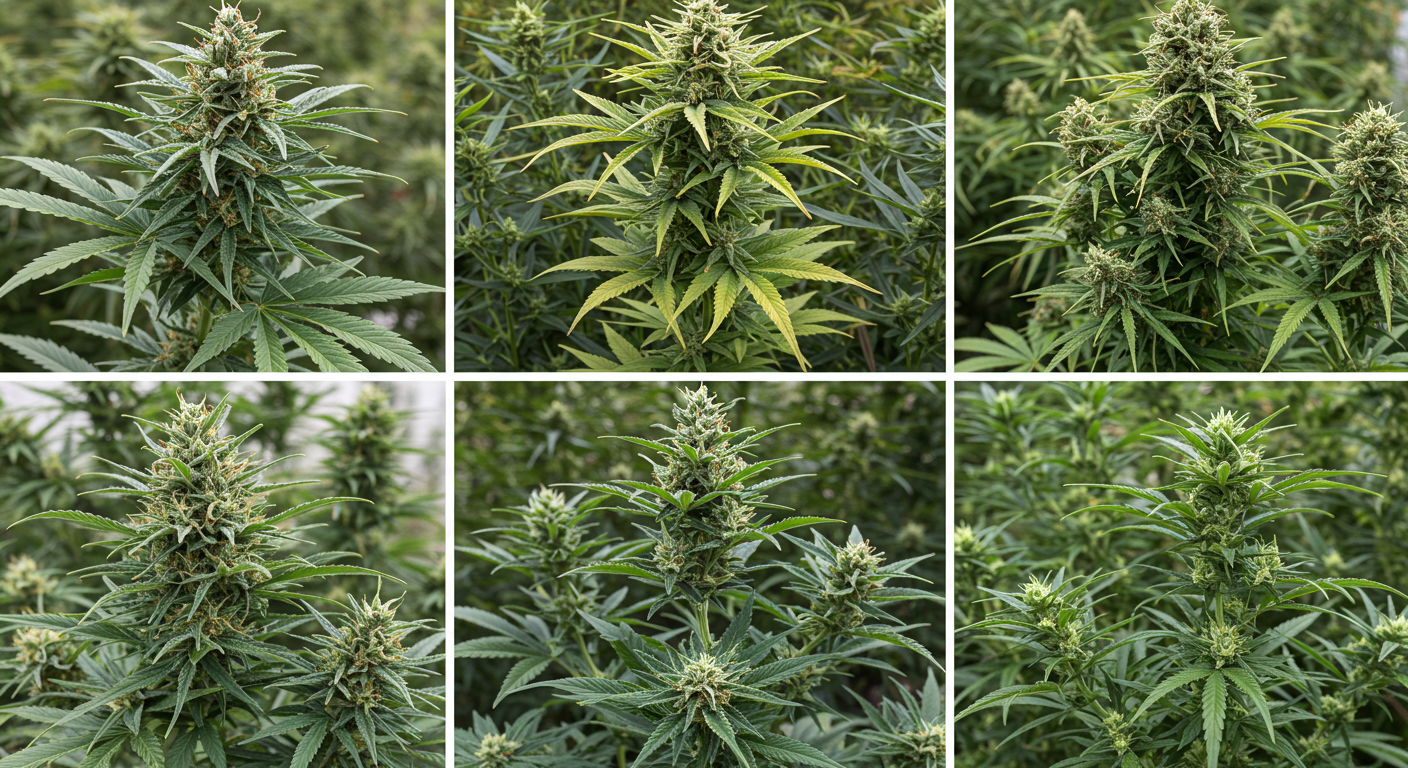
The plant still needs light, water, roots, nutrition, working leaves, and time in both environments. What changes is which part the grower controls. Indoors, you set the photoperiod, fixture, air path, container system, and much of the climate. Outdoors, the sun can provide a large energy supply, but weather, season length, rain, wind, and moving shade are less predictable.
| Factor | Indoor priority | Outdoor priority |
|---|---|---|
| Light | Fixture sizing, PPFD map, height, dimming, edge coverage | Seasonal sun path, shade changes, branch orientation |
| Timing | Flip size, stretch allowance, cultivar flower duration | Latitude, finish weather, daylight response, frost and rain window |
| Roots | Container or hydro capacity, oxygen, irrigation precision | Soil depth, drainage, heat, container volume, weather-driven demand |
| Climate | Heat and humidity removal, night control, air distribution | Rain, dew, wind, heat waves, cold nights, local microclimate |
| Disease pressure | Crowding, sanitation, night humidity, hidden canopy pockets | Wet flowers, insects, spores, storms, repeated dew |
| Main advantage | Repeatable control and year-round scheduling | Sunlight and potentially large root and canopy volume |
Indoors, the common mistake is to fill the enclosure beyond the light and ventilation system’s capacity. Outdoors, it is to grow a large plant that cannot finish before difficult weather or cannot be inspected inside. The best plant size is the one the environment can light, water, support, and protect all the way to harvest.
Pollination, Pests, and Stress Can Quietly Reduce Bud Development
Unpollinated female flowers are the target in most flower production. Pollination redirects development toward seed formation. A plant can be pollinated by an unnoticed male, intersex flowers, or pollen arriving from outside. Inspect plants regularly and follow local cultivation rules, especially if other growers or hemp fields are nearby.
Pests and disease also reduce the working leaf area and can damage flowers directly. Mites, thrips, root pathogens, caterpillars outdoors, powdery mildew, and Botrytis pressure all change what the plant can finish. The earlier a problem is identified, the more options remain. Avoid spraying dense flowers with improvised remedies close to harvest.
Repeated light leaks, severe heat, root-zone swings, physical damage, and major late pruning can interrupt normal development. Stress is not automatically beneficial because some controlled technique has an appealing name. If a treatment reduces photosynthesis or flower biomass, a small change in resin concentration does not necessarily improve total quality or total cannabinoid yield.
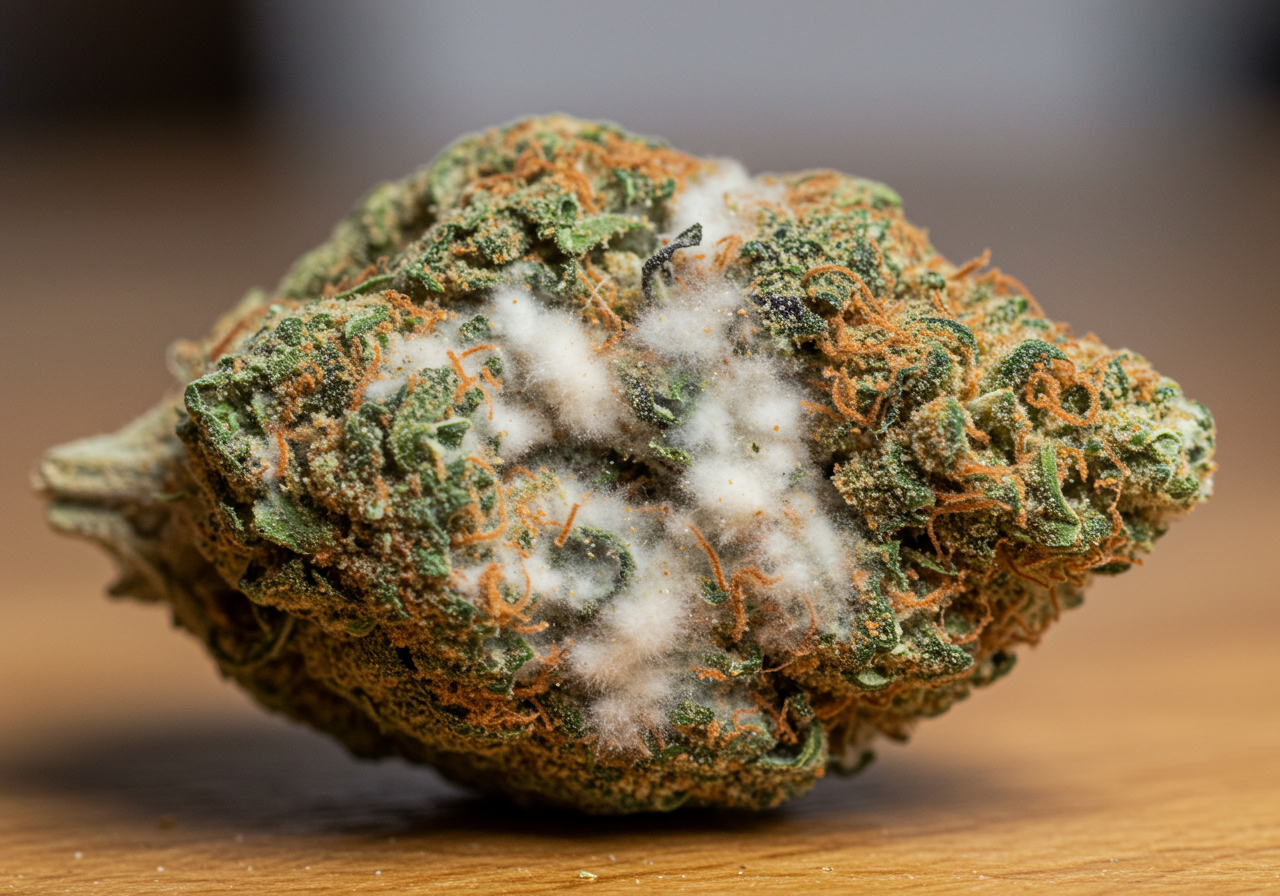
Never consume or process visibly moldy cannabis flowers.
Open suspicious dense colas carefully, isolate affected material, clean tools between cuts, and inspect nearby flowers. Trimming away a visible patch does not make contaminated flower safe.
Why Popular Big-Bud Shortcuts Fail
“More phosphorus creates bigger flowers”
Phosphorus is essential, but the response has a useful range. Once the root zone supplies enough, more does not guarantee more yield. Excess can increase waste and complicate nutrient balance.
“Remove every large fan leaf”
Large leaves may shade a site, but they also capture light. Selective removal can improve access and airflow. Routine severe removal can reduce the source tissue supporting flowers.
“Drought stress makes buds denser”
Water deficit can temporarily change how firm or wilted tissue feels. It can also restrict stomata, photosynthesis, and biomass. Cannabis drought responses vary by genotype and timing, so repeated dehydration is not a dependable route to larger buds.
“A stronger light always makes bigger buds”
Only when the canopy, climate, roots, irrigation, and carbon supply can use it. Excessive intensity can create heat stress, bleaching, uneven demand, and a center-heavy canopy. Increase light gradually and read plant response.
“One giant cola gives the best harvest”
A large central cola is visually impressive, but several well-lit tops can produce more uniform dry flower and lower the risk of a hidden wet center. Judge the full canopy and final dry yield.
“Harvesting late always adds more weight”
Flower growth eventually slows. Waiting beyond a suitable harvest window can increase degradation, weather exposure, disease risk, or undesirable maturity without adding meaningful dry mass. Use several maturity signals together.
“Sugar water feeds sweeter buds”
Roots absorb mineral ions and water, not finished flavor from household sugar. Adding sugars to a root zone can change microbial activity, oxygen demand, and sanitation without pouring sweetness into the flower. Aroma and flavor come from genetics, healthy plant metabolism, maturity, and careful post-harvest preservation.
Improve one measured limit at a time.
Record the change, protect the rest of the environment, and judge new growth rather than expecting old damage to disappear.
Combine light, feed, pruning, and irrigation changes.
When several variables move together, the plant can be stressed and the useful lesson disappears.
Diagnose Small or Airy Buds Before You Act
Small flowers are a symptom, not a diagnosis. Start with the pattern. Are all flowers small, only the lower ones, only the tent edges, or only one cultivar? Did development slow after a heat event, transplant, irrigation change, pest problem, or nutrient increase? Is the plant still building, or is it already ripening?
| Pattern | Likely limits | Confirm with | First useful response | Do not |
|---|---|---|---|---|
| Small buds across the whole canopy | Genetics, low total light, small root system, early stress, immature plant | Cultivar record, light map, root and water-use history, timeline | Correct the active limit and improve the next cycle’s foundation | Assume a late booster can rebuild lost vegetative capacity |
| Center tops large, edges small | Uneven fixture coverage, canopy height difference, side shade | Multi-point PPFD readings or careful position comparison | Improve distribution, spacing, and canopy shape | Raise center intensity blindly |
| Lower buds airy, tops normal | Canopy depth, shade, too many weak lower sites | Direct light duration, branch position, leaf and flower comparison | Keep the productive canopy healthy and plan earlier selective cleanup next cycle | Strip the top leaves late in flower |
| Flowers stall after feed increase | High EC, nutrient imbalance, impaired water uptake | Recipe, source water, input and root-zone trend, tip and leaf symptoms | Stop escalation and use a medium-specific correction | Add another supplement to treat each symptom |
| Flowers stall after hot or dry conditions | Drought, root heat, high leaf temperature, concentrated salts | Moisture, pot weight, climate log, leaf posture, recovery overnight | Restore stable water and temperature management | Respond first with stronger nutrients |
| Dense top browns inside | Botrytis or other flower disease | Careful internal inspection and nearby flower checks | Remove affected material, clean tools, improve inspection and climate control | Consume, process, or spray moldy flowers |
| One cultivar underperforms | Genetic structure, different feed tolerance, timing, root vigor | Separate cultivar records and position comparison | Manage cultivars by response where possible | Change the whole room from one plant |
| Buds look finished but are not large | Natural cultivar size, early harvest, past stress, low site potential | Maturity signals, flower history, dry yield, genetic expectations | Harvest at the correct window and improve the foundation next cycle | Extend indefinitely or force a last-minute feed |
“Should I grow one huge main cola or several medium tops?”
Question sent by: PrairieLamp, via X.
Several well-lit, supported tops often use a rectangular canopy more evenly and make inspection easier. One central cola can work, especially with suitable genetics and space, but it may create shade below and hold more moisture inside. Choose the structure that matches your light map, available height, climate, and ability to reach every flower. Compare final dry yield and quality, not only the largest wet cola.
A Practical Big-Bud Strategy From Start to Finish
1. Choose genetics for the actual environment
Match flower duration, stretch, density, plant size, disease tolerance, and quality to the room or outdoor season. Keep cultivar records so the second cycle starts with evidence.
2. Build roots before building a huge canopy
Use a suitable medium or hydro system, enough root-zone capacity, clean irrigation, and a wet-dry or fertigation pattern that keeps roots oxygenated. Do not push rapid top growth while roots are struggling.
3. Size the canopy to the usable light
Plan from the real fixture map or seasonal sun path. Include edge performance, canopy height, access, containers, branches, and airflow. More square footage is not useful if it cannot be lit evenly.
4. Train while the plant can recover
Top, bend, spread, or selectively clean branches while growth is vigorous and enough time remains. Install support before flowers make branches difficult to move.
5. Enter flower with stable water and nutrition
Use one coherent, complete program appropriate to the medium and source water. Record input pH and EC when relevant, irrigation volume, dry-back, and plant response. Avoid changing several products at the flip.
6. Increase demand gradually
As light and flower mass rise, water use may increase. Raise irrigation frequency, volume, light, or nutrition only when the plant and root zone justify the change. Preserve enough climate capacity for the added transpiration.
7. Protect mid and late flower
Keep useful leaves functional, support branches, inspect hidden flower interiors, manage night humidity, and avoid major stress. Let the cultivar complete its natural bulking and ripening pattern.
8. Harvest and dry for finished quality
Choose the harvest window from several maturity signals. Drying too hot or too fast can reduce aroma and make flowers seem thin or harsh. Bud size in the room matters less if post-harvest handling loses the quality the plant built.
Use a weekly scoreboard instead of a miracle product
Let us make this practical. Once a week, record canopy width, the weakest and strongest light positions, water use, root-zone trend, climate highs and lows, flower progress, and any new damage. Take one set of photos from the same angles.
When the plant slows, compare the latest record with the previous week. The useful next move is often obvious: improve distribution, correct water balance, support a branch, stabilize the environment, or simply give a healthy cultivar time to finish. That calm routine protects more flower than reacting to every change with another bottle.
- The cultivar can realistically finish in the available indoor height or outdoor season.
- The root zone drains, re-oxygenates, and rewets evenly.
- The canopy size matches the usable light footprint.
- Light reaches the center and edges without damaging the strongest tops.
- Healthy source leaves remain available to support developing flowers.
- Weak lower sites were managed early rather than stripped aggressively late.
- The nutrient program is complete, coherent, and not duplicated by several boosters.
- Watering responds to plant demand, medium, root volume, and weather.
- Temperature, humidity, and airflow remain manageable through the dark period.
- Dense colas can be reached, supported, and inspected internally.
- The crop is still actively building rather than already ripening.
- One measured variable will change at a time.
Frequently Asked Questions
What is the number one secret to big cannabis buds?
Keep the strongest limiting factor from holding the plant back. Genetics sets the ceiling, but usable light, healthy roots, balanced water and nutrition, productive leaves, suitable climate, and enough flowering time determine how much of that ceiling the plant reaches.
What nutrient makes cannabis buds bigger?
No single nutrient controls bud size. Cannabis needs a complete, balanced supply. Nitrogen, phosphorus, potassium, calcium, magnesium, sulfur, and micronutrients support different processes. Correct a confirmed shortage, but do not expect extra phosphorus or potassium to replace light, root health, or time.
Does molasses make buds bigger?
Molasses does not directly feed sugar into cannabis flowers. In some biologically managed soils it may influence microbes when used carefully, but it can also change oxygen demand, sanitation, and irrigation equipment. It is not a universal bud-size input and should not be added to hydroponic systems without a compatible, deliberate biological strategy.
Should I defoliate to make buds bigger?
Remove leaves only when they solve a specific airflow, disease, access, or light-distribution problem. Healthy fan leaves support photosynthesis. Heavy routine defoliation does not guarantee more yield and can reduce the leaf area powering flowers.
How can I make buds denser?
Start with genetics suited to dense flower, provide enough evenly distributed light, prevent heat and root stress, maintain balanced nutrition, and let the plant reach maturity. Remember that very dense flowers require stronger humidity control and closer mold inspection.
Do bigger pots make bigger buds?
A larger healthy root zone can support a larger plant and buffer water demand, but pot size alone does not create flowers. An oversized container can stay wet when irrigation is poorly matched. Choose a volume that fits plant size, medium, environment, and watering capacity.
Does more vegetative time create bigger buds?
More vegetative time can create a larger plant and more productive sites when light, space, roots, and climate can support them. It does not guarantee that each individual bud becomes larger. An overgrown canopy can reduce uniformity and increase humidity problems.
When do cannabis buds gain the most size?
Many cultivars show their strongest visible bulking from mid flower into the last several weeks before ripening, but there is no universal week. Track actual flower formation, cultivar duration, and weekly change rather than counting only from the photoperiod switch.
Can buds get bigger in the final two weeks?
Yes, if the cultivar is still actively building and the plant remains healthy. Some plants add meaningful volume late, while others are already ripening. Protect the system and avoid trying to force growth with a sudden feed increase.
Why are my buds large but airy?
Large volume with low density can reflect genetics, insufficient light, excessive heat, immature flowers, shade, or loose leafy structure. Compare dry trimmed weight, not only visual size. Check whether the flower is still building before changing the feed.
Can ultraviolet light make buds bigger?
UV is not a dependable bud-size shortcut. Research results on cannabinoids and other secondary metabolites vary with spectrum, dose, cultivar, and environment, and some studies report no useful cannabinoid response. UV can damage eyes and skin, so it should never be improvised or used without proper engineering and protection.
Should I use CO2 for bigger buds?
Only after the room can safely control light, temperature, humidity, irrigation, gas concentration, and air leakage. CO2 enrichment is an advanced system design choice. Most home gardens benefit more from correcting light distribution and root-zone stability first.
Does flushing make buds swell?
Flushing is not a bulking technique. A medium-specific rinse may be appropriate for confirmed salt accumulation, but routine preharvest flushing has not been shown to create larger flowers. Avoid turning a healthy late-flower root zone into a severe stress event.
Is one giant cola better than many tops?
Not automatically. Several evenly lit tops can improve canopy uniformity, access, and total dry yield. A giant cola can be harder to support and inspect and may trap more moisture. Choose the structure that fits the light and environment.
The Best Big-Bud Plan Is Built Early
If we wait until late flower to ask why the buds are small, many of the important decisions have already been made. Genetics was chosen, root volume was established, the canopy was shaped, and productive light positions were created. Late flower can protect and complete that work, but it cannot fully replace it.
Here is the practical recommendation: build a plant the environment can support. Give it a healthy root zone, an even light field, enough useful leaves, a complete nutrition plan, and a watering rhythm you can repeat. Then protect those systems while flowers gain mass. Support heavy branches, inspect dense tops, make small evidence-based corrections, and let the cultivar finish.
The secret is not hidden. It is the discipline to improve the real limit instead of chasing the most dramatic promise. When that becomes the routine, bigger buds are no longer a lucky late-flower surprise. They become one measurable result of a healthier, more complete grow.
Selected Research Behind This Guide
The studies below support the central ideas in this guide. Their exact treatments are not universal home-grow recipes. Cultivar, production system, climate, light, plant density, nutrition, and measurement method must travel with every result.
- Cannabis yield, potency, and leaf photosynthesis under increasing indoor light: dry inflorescence yield and apical density increased across the tested light range, while potency did not respond in the same way.
- Supplemental subcanopy and intercanopy lighting in cannabis: supports the importance of light distribution and flower uniformity, not only top-canopy intensity.
- Plant density and vegetative duration in medicinal cannabis: shows the tradeoff between yield per plant, yield per area, and the number of flower-bearing structures.
- Plant architecture and chemical uniformity in large cannabis plants: evaluates pruning, branch removal, defoliation, local light penetration, yield, and uniformity.
- Optimization of nitrogen, phosphorus, and potassium for flowering cannabis: demonstrates nutrient response ranges and the danger of treating more potassium as an automatic yield increase.
- Elevated root-zone phosphorus and cannabis yield: increased phosphorus supply did not improve flower yield or cannabinoid concentration in the tested crop and sharply increased phosphorus loss.
- Nutrient stress during flowering in cannabis: shows how lower fertilizer supply, nutrient-use efficiency, biomass, and cannabinoid yield can move differently.
- Water-stress timing, biomass, and secondary metabolism in cannabis: supports a cultivar- and timing-specific view of drought rather than a universal stress recipe.
- Vegetative and flowering light interactions in cannabis: reports that flowering-stage supplemental light increased flower yield in the tested greenhouse crop while quality responses remained more complex.
- Cannabis inflorescence morphology and yield distribution: examines flower size, shape, and weight across a large population of genotypes.
Share this article
A quick overview of the topics covered in this article.
Follow us
Latest articles
September 25, 2026

September 25, 2026
September 25, 2026
September 25, 2026