
Is It Bad to Keep Cannabis Grow Lights On 24/7?
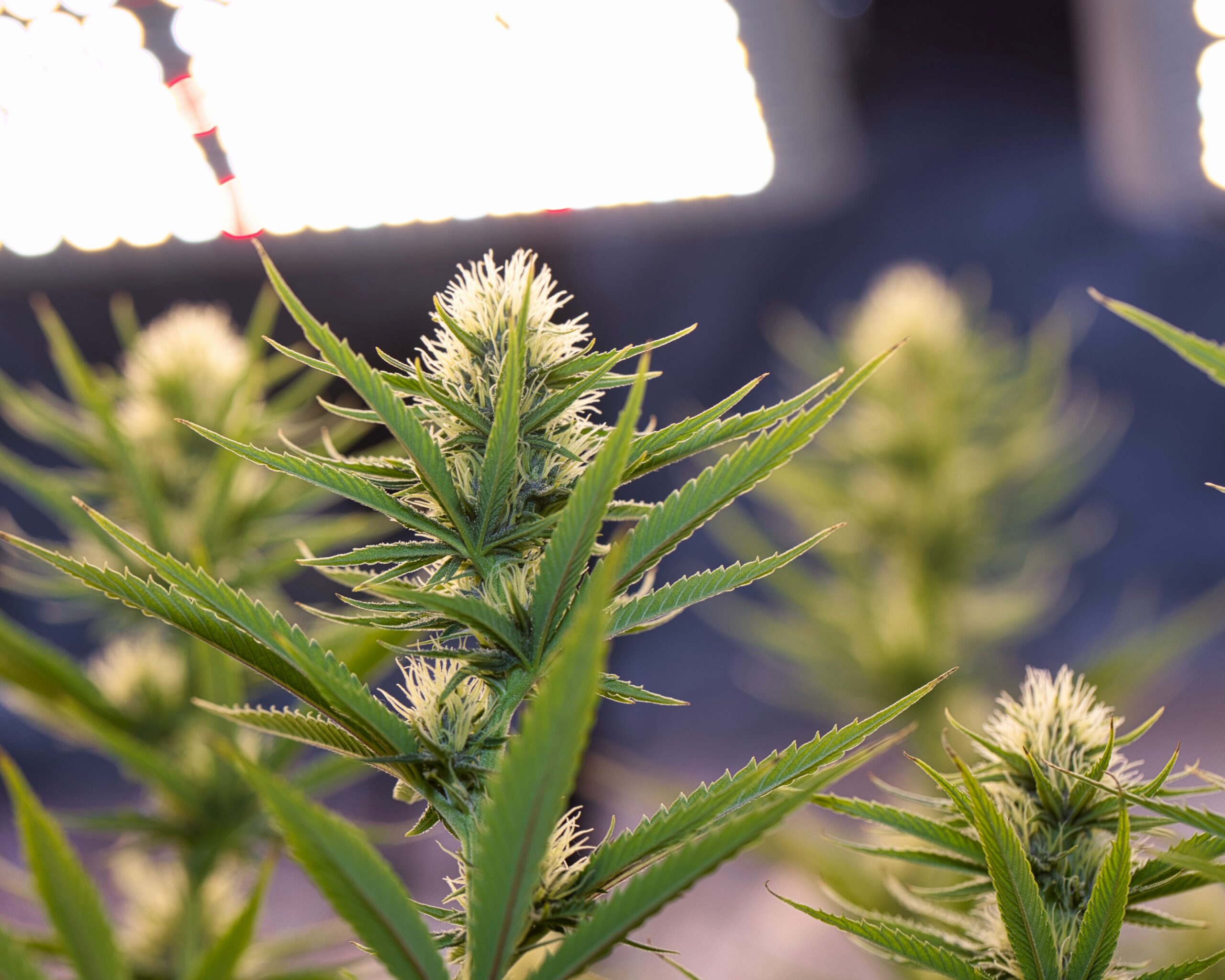
Leaving cannabis grow lights on 24/7 is not automatically fatal, but it is rarely the best default. Photoperiod plants can remain in vegetative growth under continuous light, and autoflowering plants may continue developing because age rather than night length drives their transition. The answer changes completely in photoperiod flowering: continuous light removes the long, uninterrupted night the plant uses as a flowering signal.
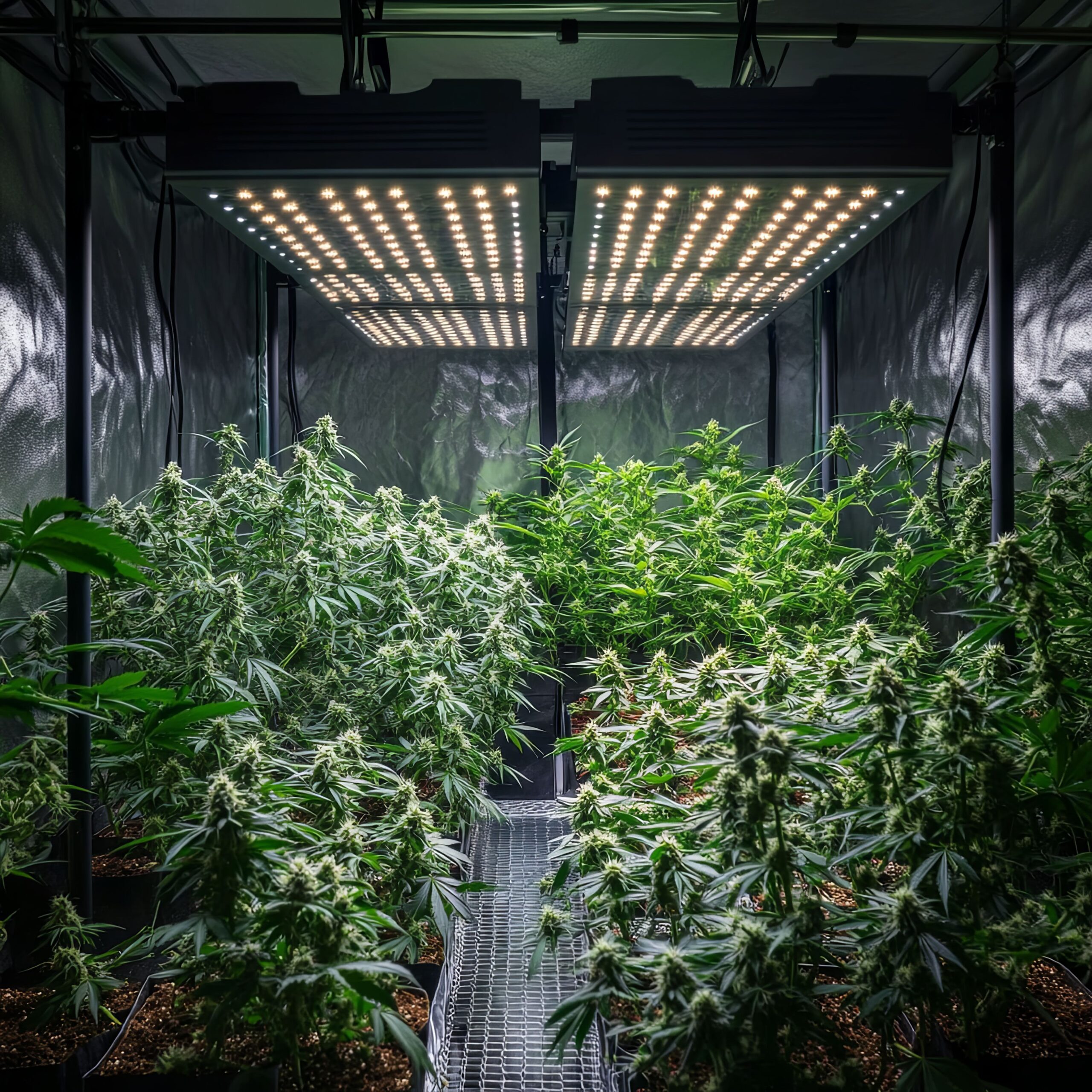
For most indoor gardens, 18 hours of light and 6 hours of darkness is the dependable vegetative starting point. A 20/4 schedule can be useful when the daily light target is too low and the room remains stable. A 24/0 schedule is a specialized option, not a free growth upgrade. It adds 33 percent more lighting time than 18/6, along with the corresponding electricity, heat, water demand, and fixture operating hours.
Let us make the choice from the plant’s actual situation. We will separate photoperiod and autoflower genetics, compare seedlings, vegetative plants, mothers, and flowering crops, then calculate what a longer day does to DLI. We will also deal with the question growers usually ask after a mistake: what should you do if the light stayed on all night?
Use this guide only for lawful cultivation with the property owner’s permission. Local rules may govern plant numbers, electrical work, locked access, ventilation, odor, visibility, and changes to a property. Use appropriately rated timers and electrical equipment. Bring in a qualified professional when circuit capacity, permanent wiring, or fire protection exceeds your competence.
A light schedule describes hours of light and darkness within one 24-hour day.
18/6 means 18 hours of light followed by 6 hours of darkness. 20/4 means 20 hours of light and 4 hours of darkness. 24/0 means continuous light. A 12/12 flowering schedule provides 12 hours of light and 12 hours of uninterrupted darkness.
Is 24/7 light bad for cannabis?
It depends on genetics and stage. During vegetative growth, many photoperiod-sensitive cannabis plants can tolerate a 24/0 schedule and remain vegetative. That does not prove they will convert every extra hour into proportional growth. Light intensity, daily light integral, cultivar, temperature, CO2, root health, irrigation, and acclimation determine whether the additional photons are useful or stressful.
Autoflowering cannabis does not require a long night to begin flowering. It can flower under 18/6, 20/4, or 24/0. Research that directly compares mature autoflower flower yield and quality under all three schedules remains limited, so claims that one schedule is universally best go beyond the evidence.
For flowering photoperiod plants, 24/0 is the wrong schedule. Most drug-type photoperiod cultivars are managed with a stable 12/12 cycle because the long night promotes and maintains reproductive development. Research also shows that the exact critical photoperiod differs among genotypes. This variation is a reason to protect the schedule, not a reason to gamble with continuous light.
| Plant or stage | Can 24/0 work? | Practical default | Main reason |
|---|---|---|---|
| Seedling | Possible at modest intensity, but not automatically better. | 18/6; consider 20/4 only when DLI is genuinely low. | Protect young roots from excess light demand and give the room a cooling window. |
| Fresh clone | Possible under gentle propagation light. | 18/6 to 20/4. | Rooting and water balance matter more than maximizing hours. |
| Photoperiod vegetative plant | Often, yes. | 18/6 for a stable, efficient baseline. | Long days maintain vegetative growth without the full cost of continuous light. |
| Mother plant | Usually possible. | 18/6 or 20/4. | The goal is steady, manageable growth rather than maximum daily expansion. |
| Autoflower | Yes, flowering can occur under 24/0. | 18/6 or 20/4; test 24/0 only with measured DLI and a stable room. | Age-controlled flowering removes the night-length requirement, but not light or heat limits. |
| Photoperiod flowering plant | No, not as a normal schedule. | 12/12 unless a cultivar-specific strategy has been validated. | A long uninterrupted night is the flowering signal. |
What to Remember: Continuous light is a photoperiod decision and a daily-light-dose decision at the same time. If you extend the day without lowering PPFD, you also raise DLI, electricity use, heat load, and water demand.
Darkness is a signal, not plant sleep
Plants are not small humans and do not sleep in the human sense. Photosynthesis requires light, while respiration and many metabolic processes continue through both light and dark periods. Cannabis also has photoreceptors and an internal circadian system that respond to daily timing. For photoperiod-sensitive plants, the uninterrupted night carries developmental information about season and flowering.
This distinction helps remove two common mistakes. The first is assuming that darkness is biologically useless because photosynthesis stops. The second is claiming that every cannabis plant must have darkness or it cannot grow. Continuous-light tolerance varies between species, cultivars, developmental stages, and environments. Cannabis-specific evidence is still developing.
A recent photoautotrophic micropropagation study compared 16-, 20-, and 24-hour days in a short-day medicinal cultivar and a day-neutral cultivar. Under those sterile plantlet conditions, 20 hours at moderate PPFD supported strong rooting and development, while continuous light and excessive intensity produced stress responses. The study is useful evidence against assuming that 24 hours is always better. It is not a mature flowering-room trial, so its exact settings should not be copied as a universal cannabis schedule.
Important: Do not justify 24/0 with the phrase “cannabis does not need sleep.” The practical question is whether a particular plant can use the daily photon dose while maintaining healthy roots, leaf temperature, water balance, and the correct flowering signal.
Why DLI matters more than hours alone
PPFD describes the rate of photosynthetic photons arriving at the canopy each second. DLI, or daily light integral, adds those photons across the whole light period. Extending a schedule from 18 to 24 hours raises DLI by one third when PPFD stays unchanged.
The formula is straightforward:
DLI = PPFD x hours of light x 3,600 / 1,000,000
At 400 micromoles per square meter per second, an 18-hour day delivers about 25.9 moles per square meter per day. The same fixture and dimmer setting under 24/0 deliver about 34.6. The plant did not receive “the same light for longer.” It received a substantially larger daily dose.
| Schedule | Light hours | Approximate DLI | Difference from 18/6 |
|---|---|---|---|
| 12/12 | 12 | 17.3 mol/m2/day | 33 percent lower. |
| 18/6 | 18 | 25.9 mol/m2/day | Baseline. |
| 20/4 | 20 | 28.8 mol/m2/day | About 11 percent higher. |
| 24/0 | 24 | 34.6 mol/m2/day | About 33 percent higher. |
These numbers are examples, not stage targets. A seedling at 400 PPFD may already be receiving more intensity than its roots can support. A mature flowering canopy at 400 PPFD may be underlit at the top. The calculation tells us what changed. Plant stage and environment tell us whether the result is useful.
Longer duration can sometimes raise DLI more gently than increasing PPFD. That may help a low-clearance propagation shelf where the fixture cannot spread more intensity safely. The same strategy can become wasteful when the crop already has an adequate DLI or when continuous operation keeps the room too warm.
Pro Tip: Before extending the day, measure canopy PPFD and calculate the current DLI. If the daily dose is already appropriate, another six hours may create operating cost and stress without solving the real limitation.
Seedlings and clones under continuous light
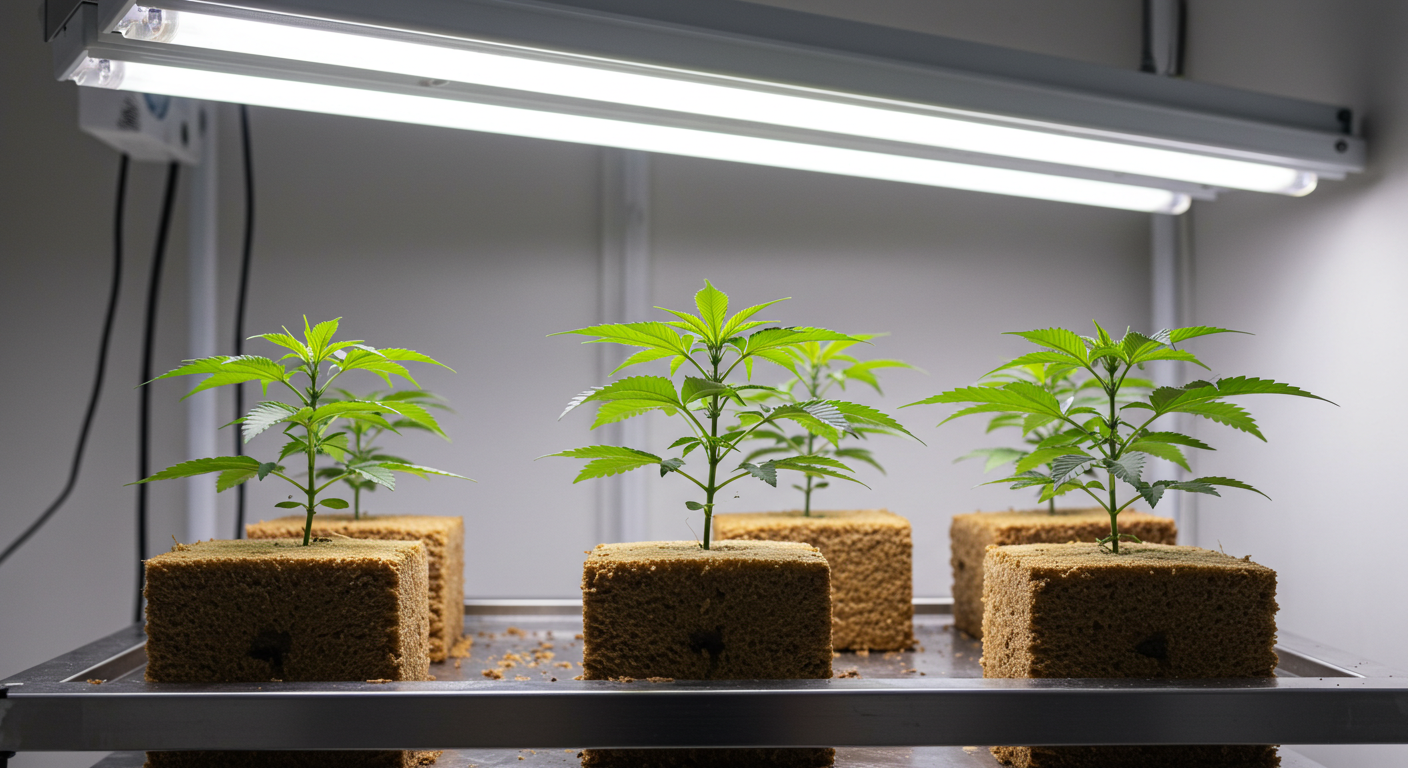
Young plants have small root systems and limited leaf area. Their first job is not to consume the largest possible DLI. It is to establish roots, maintain water balance, and build compact, functional growth. A gentle 18/6 schedule creates a forgiving baseline and a daily period when the propagation area can cool.
A 20/4 schedule may be useful under low-intensity bars if seedlings stretch and measured DLI is genuinely low. Raising intensity, lowering the fixture, or extending duration can all increase the daily dose, but they change the canopy in different ways. Make only one substantial adjustment at a time.
Fresh cuttings deserve extra caution. Until roots form, their ability to replace water is limited. Continuous light can extend transpiration demand even when the source looks gentle. Humidity, leaf temperature, medium moisture, and cutting condition matter more than the idea of pushing growth around the clock.
“I started my seedlings before the timer arrived. Did three days of 24-hour light damage them?”
Question sent by: Megan Brooks, via e-mail.
Probably not if the light was gentle and the seedlings still look healthy. Install the timer, move to a stable 18/6 schedule, and check the real symptoms rather than treating the calendar as damage. Watch for bleaching, upward edge curl, a hot canopy, unusually fast dry-back, or persistent droop. Do not compensate with a full day of darkness or several schedule changes.
Photoperiod cannabis in vegetative growth
Long days help photoperiod-sensitive cannabis remain vegetative. An 18/6 cycle is widely used because it provides a clear long-day signal while reserving six hours for lower electricity demand, heat removal, and environmental recovery. It is also easier to compare from cycle to cycle.
A 20/4 schedule adds about 11 percent more daily photons than 18/6 at the same PPFD. That can be useful when plants are healthy, the canopy is under its DLI target, and environmental control is stable. The extra four hours should not be treated as proof of faster or better growth. Record internode development, leaf posture, water use, room temperature, and growth per day before deciding that the added electricity is earning its place.
Photoperiod-sensitive hemp research shows that continuous light can delay or prevent flowering in many genotypes, which is consistent with using long days to maintain vegetative growth. The same research also shows genetic exceptions. Some day-neutral or weakly photoperiod-sensitive cultivars flowered even under 24-hour days. “Cannabis stays in veg under 24/0” is therefore a useful generalization for typical photoperiod drug cultivars, not a rule for every Cannabis sativa genotype.
Advice: Use 18/6 until the garden gives you a measured reason to change. A stable baseline teaches you more than switching between 18/6, 20/4, and 24/0 because another grower reported faster growth.
Mother plants do not need maximum speed
A mother plant is maintained for healthy cuttings over time. Uncontrolled expansion, constant pruning, and high water demand can make the plant harder to manage. An 18/6 or moderate 20/4 schedule usually provides a clear vegetative signal without forcing maximum daily growth.
Keep the canopy evenly lit and inspect new shoots for vigor, spacing, pests, and nutritional stability. The best mother schedule is the one that produces reliable cutting material while keeping the root zone and canopy manageable. Continuous light may be tolerated, but tolerance alone is not a reason to use it.
Autoflowers under 18/6, 20/4, and 24/0
Autoflowering cultivars are day-neutral in flowering behavior. Their reproductive transition is linked more strongly to developmental age than to the long-night signal used by photoperiod cultivars. This is why an autoflower can begin flowering under 18, 20, or 24 hours of light.
The practical choice is still about DLI and environment. A 24/0 schedule can deliver a high daily photon dose at modest PPFD. It can also keep the fixture, exhaust, and dehumidification load active without a break. An 18/6 schedule reduces energy use and creates a cooling window. A 20/4 schedule sits between them.
Because direct, controlled comparisons of mature autoflower flower yield, chemistry, and energy use across all three schedules are limited, avoid universal claims. Genetics that finish under continuous light do not necessarily produce their best quality or most efficient yield there.
| Schedule | Useful when | Main tradeoff | What to monitor |
|---|---|---|---|
| 18/6 | You want a stable baseline, lower energy use, and a cooling period. | Lower DLI than longer schedules at the same PPFD. | Stretch, canopy DLI, lights-off humidity, and daily growth. |
| 20/4 | The plant is healthy and needs a modest DLI increase without a large PPFD jump. | More operating hours and less time for the room to cool. | Leaf posture near the end of the day, heat, and dry-back. |
| 24/0 | You are deliberately testing continuous light at controlled PPFD. | Highest energy use, no dark cooling window, and limited comparative evidence. | DLI, leaf temperature, bleaching, water use, and cost per cycle. |
“Will my autoflower buds stay small if I give the plant six hours of darkness?”
Question sent by: Jason Miller, via Facebook page.
Not simply because the schedule is 18/6. Flower development depends on genetics, productive canopy, DLI, PPFD distribution, root health, water, nutrition, temperature, and harvest timing. If an 18/6 crop is underlit, measure the canopy before extending the day. Raising a low DLI can help, but 24/0 is not a substitute for healthy roots or even coverage.
Why 24/7 light is wrong for photoperiod flowering
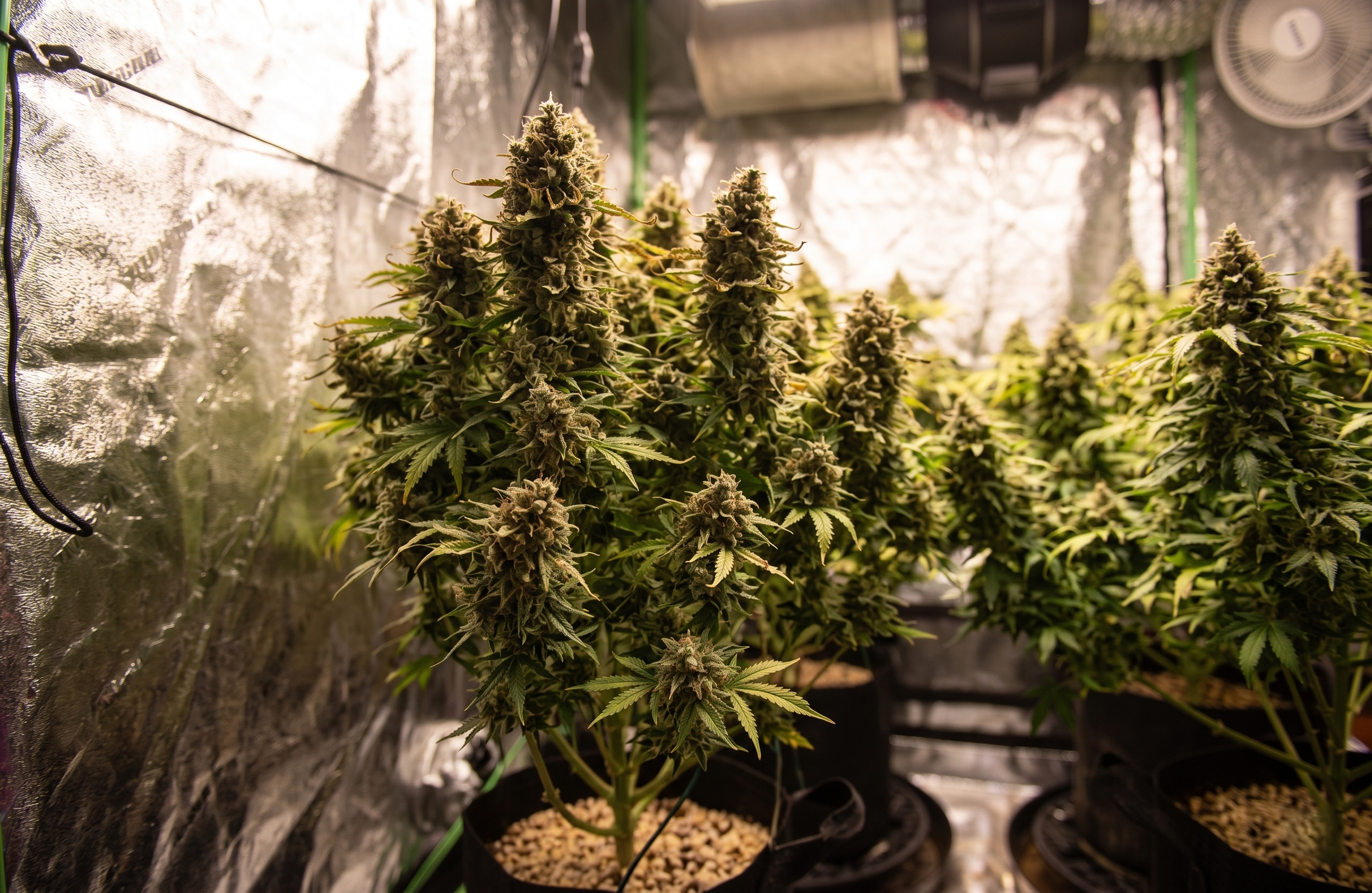
Photoperiod cannabis is a short-day, or more accurately a long-night, plant. A sufficiently long uninterrupted dark period shifts phytochrome signaling and supports floral initiation. Indoor growers commonly use 12 hours of light and 12 hours of darkness because it is a robust schedule across many drug-type cultivars.
The critical threshold is not identical for every genotype. Controlled studies have shown flowering under 13-hour and, in some cultivars, longer days. One study of two high-THC cultivars found that a 13-hour day could increase yield in its tested conditions, although flowering development changed and the result cannot be generalized to every cultivar. Other work found clear cultivar differences in how plants respond near the threshold.
This does not make 24/0 a flowering strategy. Continuous light removes the long night completely. A photoperiod plant may delay flowering, produce mixed vegetative and reproductive growth, or begin re-vegetating if long days are sustained. The exact response depends on genetics, maturity, duration, and previous schedule.
Do not run photoperiod flowering plants under continuous light.
Protect a stable, uninterrupted night. Repeated night interruptions or sustained long days can delay flowering and produce inconsistent development. Use a reliable timer, cover indicator lights, and schedule all inspection and maintenance during the light period.

How dark must the dark period be?
There is no universal “one photon” threshold for every cultivar, spectrum, and stage. Research on hemp found that very dim civil twilight around 2 micromoles per square meter per second was biologically effective in regulating flowering. Separate night-break research confirms that interrupting darkness can maintain vegetative behavior in photoperiod-sensitive cannabis.
For a home flowering room, the practical standard is simpler: remove avoidable light. Check the tent from inside after your eyes adapt. Cover bright controller, power-strip, humidifier, and fan indicators. Seal zipper gaps and duct openings that face room lights. Do not assume a green work light is invisible to cannabis. Strong or prolonged green light can still contribute photons and affect plant signaling.
Master Advice: Treat the flowering timer and lightproofing as one system. A perfect 12/12 setting cannot protect the crop if a controller LED, open zipper, or manual inspection repeatedly breaks the night.
What to do if the light stayed on all night
One accidental long day does not automatically ruin a flowering crop. Repeated interruptions, an unreliable timer, or several days of continuous light are more concerning. The first response should be calm and mechanical: remove the cause, restore the established schedule, and stop adding new timing changes.
If you discover the light during the normal dark period, switch it off and allow the remainder of the scheduled night. Let the timer resume the regular lights-on time. Avoid compensating with a full extra day of darkness, shifting the schedule back and forth, or changing nutrients at the same time.
Then inspect the equipment. Confirm that the timer is rated for the fixture’s electrical load and inrush behavior. Check that manual override is disabled, plugs are fully seated, and the clock retained its settings after a power interruption. Watch the plants over the following days for renewed vegetative leaf shapes, unusual single-bladed leaves, stalled floral progression, or irregular new growth. Do not diagnose re-vegetation from one drooping leaf the next morning.
“My flowering light stayed on for one full night. Should I give the plants 24 hours of darkness now?”
Question sent by: Ryan Caldwell, via e-mail.
No. Correct the timer and return to the established schedule. A compensatory 24-hour blackout adds another abrupt change and reduces photosynthesis without undoing the previous long day. One event may cause little visible effect. Record the date, check for repeated leaks or timer failures, and monitor new growth and flower progression before making any other correction.
Continuous light changes the whole room
A 24/0 schedule keeps the electrical and environmental load active all day. The fixture adds heat. Plants continue receiving radiation and may maintain higher transpiration. Containers can dry faster. Irrigation timing that worked under 18/6 may no longer fit. Exhaust, air conditioning, and dehumidification lose the opportunity to operate through a lower-load dark interval.
The result can be confusing. A grower may attribute drooping or pale tops to the missing dark period when the direct cause is excessive DLI, high leaf temperature, dry media, or a root zone that cannot support the new demand. Continuous light can be the decision that created those conditions without being the only mechanism behind each symptom.
Darkness also changes humidity management. Relative humidity often rises when lights turn off because the room cools. Removing the dark period can reduce that particular transition, but it does not remove water vapor from the room. A 24/0 schedule is not a dehumidification strategy. Moisture still needs a controlled removal path.
| Fixture input | 18/6 electricity per day | 24/0 electricity per day | Extra per 30 days |
|---|---|---|---|
| 150 W | 2.7 kWh | 3.6 kWh | 27 kWh |
| 300 W | 5.4 kWh | 7.2 kWh | 54 kWh |
| 500 W | 9.0 kWh | 12.0 kWh | 90 kWh |
| 700 W | 12.6 kWh | 16.8 kWh | 126 kWh |
The table includes fixture input only. Cooling, ventilation, dehumidification, and pumps can add more. Multiply the extra kilowatt-hours by your local electricity rate. The exact currency changes, but the physical energy difference does not.
Signs that the light schedule is not working
Do not diagnose by schedule alone. Read the pattern across the canopy and compare it with PPFD, temperature, humidity, medium moisture, and plant stage.
| What you see | What it may mean | Check first | Useful response |
|---|---|---|---|
| Bleached or pale upper leaves | Daily light dose or top-canopy intensity is too high. | PPFD, DLI, fixture distance, and leaf temperature. | Reduce intensity or return to the previous schedule, then observe new growth. |
| Upward edge curl or hot tops | Excess radiation, heat, low humidity, or strong airflow. | Leaf temperature, VPD, fan direction, and canopy distance. | Correct the environmental load rather than adding more water blindly. |
| Containers dry much faster | Longer light exposure increased water demand. | Moisture at depth, pot weight, runoff trend, and root health. | Adjust irrigation from measured dry-back, not from the clock alone. |
| Persistent late-day droop | DLI, root demand, heat, or circadian leaf movement may be involved. | Time pattern, medium moisture, temperature, and recovery after lights off. | Compare 18/6 and 20/4 under otherwise stable conditions. |
| Flowering stalls or leafy growth returns | Night interruption, timer failure, or sustained long days. | Actual timer events, light leaks, controller logs, and new leaf shape. | Restore a stable flowering night and remove the cause. |
| Growth does not improve despite higher cost | Light is no longer the limiting factor. | Roots, CO2, temperature, canopy structure, nutrition, and genetics. | Return to the efficient baseline and diagnose the real bottleneck. |
Choose a schedule from genetics, stage, PPFD, and DLI.
Use a reliable timer, record the daily dose, and change duration only when the plant and room can support it.
Use 24/0 to compensate for a weak or poorly distributed fixture.
Longer hours cannot repair dead corners, unsafe wiring, unhealthy roots, or a flowering photoperiod that needs darkness.
Build a schedule the room can repeat
The most useful schedule is one that stays stable through hot days, cold nights, irrigation changes, and ordinary maintenance. Start with 18/6 for seedlings, clones, vegetative photoperiod plants, mothers, and autoflowers unless there is a measured reason to choose differently. Place the dark period during the hottest hours if that helps the room manage temperature and electricity demand.
For photoperiod flowering, use a reliable 12/12 baseline. Advanced growers may test cultivar-specific 13-hour days, but this requires accurate light control, records, and a genotype known to flower under the longer photoperiod. It is not the same as leaving the timer on accidentally.
If you want to compare 18/6 with 20/4 or 24/0, keep PPFD, cultivar, plant age, medium, environment, and irrigation method as consistent as possible. Record DLI and energy use. Measure growth over several days rather than judging one morning’s leaf posture.
Use 18/6 as the control, then earn every extra hour
Here is a practical way to test a longer day without losing the plot. Begin with an 18/6 schedule and map PPFD across the real canopy. Calculate DLI, confirm that roots are active, and record the room’s temperature, humidity, and daily water use.
If the crop is healthy but clearly under its daily light target, move to 20/4 before jumping to continuous light. Let us keep the dimmer and the rest of the environment unchanged long enough to see what duration actually changed. Keep 24/0 only when the additional growth or operational benefit is measurable and worth the added energy.
Common myths about 24-hour cannabis lighting
“Cannabis must sleep for six hours”
Cannabis does not sleep like a person. Some cannabis plants tolerate continuous light during vegetative growth, and day-neutral plants can flower under it. Darkness remains an important timing signal, especially for photoperiod flowering, and a regular dark interval can make environmental and energy management easier.
“Six more hours means 33 percent faster growth”
Six extra hours raise DLI by 33 percent when moving from 18/6 to 24/0 at constant PPFD. Growth does not necessarily increase by the same percentage. Photosynthesis can become limited by light saturation, CO2, temperature, water, root function, nutrition, or genetics. Extra photons past the useful range become diminishing returns or stress.
“Autoflowers need 24/0 for large buds”
Autoflowers can flower under continuous light, but they do not universally require it. An evenly lit, healthy plant under 18/6 can outperform a heat-stressed, overlit plant under 24/0. Compare total daily light and the entire environment rather than photoperiod alone.
“One accidental long night of light ruins the harvest”
One event is not a guaranteed crop failure. The duration, cultivar, flowering stage, and repetition matter. Correct the timer, restore the normal schedule, and monitor. Do not create a larger disturbance through repeated compensatory schedule changes.
“A dim green light is always safe during flowering”
Green photons are not invisible to plants. A very dim, brief green work light may be less disruptive than bright broad-spectrum light, but there is no universal safe intensity and duration for every cannabis cultivar. Schedule work during lights-on whenever possible.
Frequently asked questions about keeping grow lights on
Can I leave cannabis grow lights on 24 hours during veg?
Many photoperiod plants can tolerate 24/0 and remain vegetative. An 18/6 schedule is usually the better starting point because it lowers energy use, creates a cooling window, and is easier to compare. Use 24/0 only after checking PPFD, DLI, heat, water demand, and the plant’s response.
Do cannabis seedlings need darkness?
Seedlings can grow under continuous gentle light, but they do not automatically benefit from it. Start with 18/6 at a suitable low PPFD. A recent plantlet study found advantages at 20 hours over continuous light under its specific tissue-culture conditions, which reinforces the need to test rather than assume.
Is 20/4 better than 18/6?
It can deliver about 11 percent more DLI at the same PPFD. That may help a healthy, underlit crop. It also uses more electricity and reduces the cooling interval. The better schedule is the one that reaches an appropriate daily dose without creating heat, water, or root-zone stress.
Can autoflowers grow under 24-hour light from seed to harvest?
Yes, day-neutral autoflowers can flower under continuous light. Whether they should depends on measured DLI, cultivar response, environment, and energy efficiency. Eighteen or 20 hours are more conservative starting points.
What happens if a photoperiod plant gets 24 hours of light in flower?
One accidental event may have little visible effect. Sustained or repeated long days can delay floral progression or encourage re-vegetative growth. Restore the established 12/12 schedule, repair the timer or light leak, and monitor new growth.
Should grow lights run at night instead of during the day?
They can. Indoor plants respond to the schedule you provide, not the wall clock. Running lights during cooler nighttime hours may help heat management or electricity cost where time-of-use pricing applies. Keep the cycle consistent and make sure the dark period remains protected.
Does a dark period make roots grow faster?
Do not treat that as a universal cannabis rule. Carbon allocation, respiration, circadian regulation, water status, and root growth interact across the full day. Cannabis plantlet research suggests photoperiod can affect rooting, but mature plants, media, cultivar, and environment may respond differently.
Can I use 24/0 because my grow light is weak?
Extending duration raises DLI, so it may help when measured daily light is low. It cannot fix severe edge weakness, poor spectrum data, unsafe equipment, or insufficient flowering darkness. A better-distributed fixture or smaller productive canopy may be the more efficient correction.
Give every hour a reason
Keeping grow lights on 24/7 is not inherently bad during vegetative growth or for autoflowers, but it is not the safest universal recommendation. Start with 18/6. Move to 20/4 when the measured daily dose and plant response justify it. Test 24/0 only when you can control PPFD, heat, water demand, and operating cost.
For photoperiod flowering, the decision is simpler: protect the night. Use a consistent flowering schedule, remove light leaks, and treat a timer as crop-control equipment rather than a convenience. The best schedule is the one that gives the plant enough usable light, preserves the developmental signal it needs, and leaves the room stable enough to repeat tomorrow.
- You know whether the plant is photoperiod-sensitive or autoflowering.
- The schedule matches the seedling, vegetative, mother, or flowering stage.
- You measured or reasonably estimated PPFD across the productive canopy.
- You calculated how the schedule changes DLI.
- The room can manage the added heat and humidity load.
- Irrigation is based on root-zone dry-back rather than the old clock time.
- The timer and circuit are rated for the fixture and its startup load.
- The flowering dark period is uninterrupted and protected from indicator lights.
- You will change duration, intensity, or another major variable one at a time.
- The added electricity produces a measurable benefit rather than an assumption.
Selected research behind this guide
Photoperiod response varies with genotype, developmental stage, intensity, and environment. The following studies support the distinctions between continuous light, long-day vegetative growth, day-neutral flowering, night interruption, and cultivar-specific flowering thresholds:
- Cannabis plantlet growth and rooting under 16-, 20-, and 24-hour LED photoperiods
- Photoperiodic flowering response of essential-oil, grain, and fiber hemp cultivars
- Photoperiodic response of in vitro Cannabis sativa plants
- Continuous and long-day lighting in a rapid-generation hemp protocol
- Twelve- versus thirteen-hour flowering days in two high-THC cultivars
- Cultivar variation in flowering under photoperiods longer than twelve hours
- Night-break lighting and vegetative DLI in Cannabis sativa
- Comparative genomics of photoperiod and autoflowering behavior in Cannabis sativa
Share this article
A quick overview of the topics covered in this article.
Follow us
Latest articles
September 25, 2026
September 25, 2026
September 25, 2026
September 25, 2026