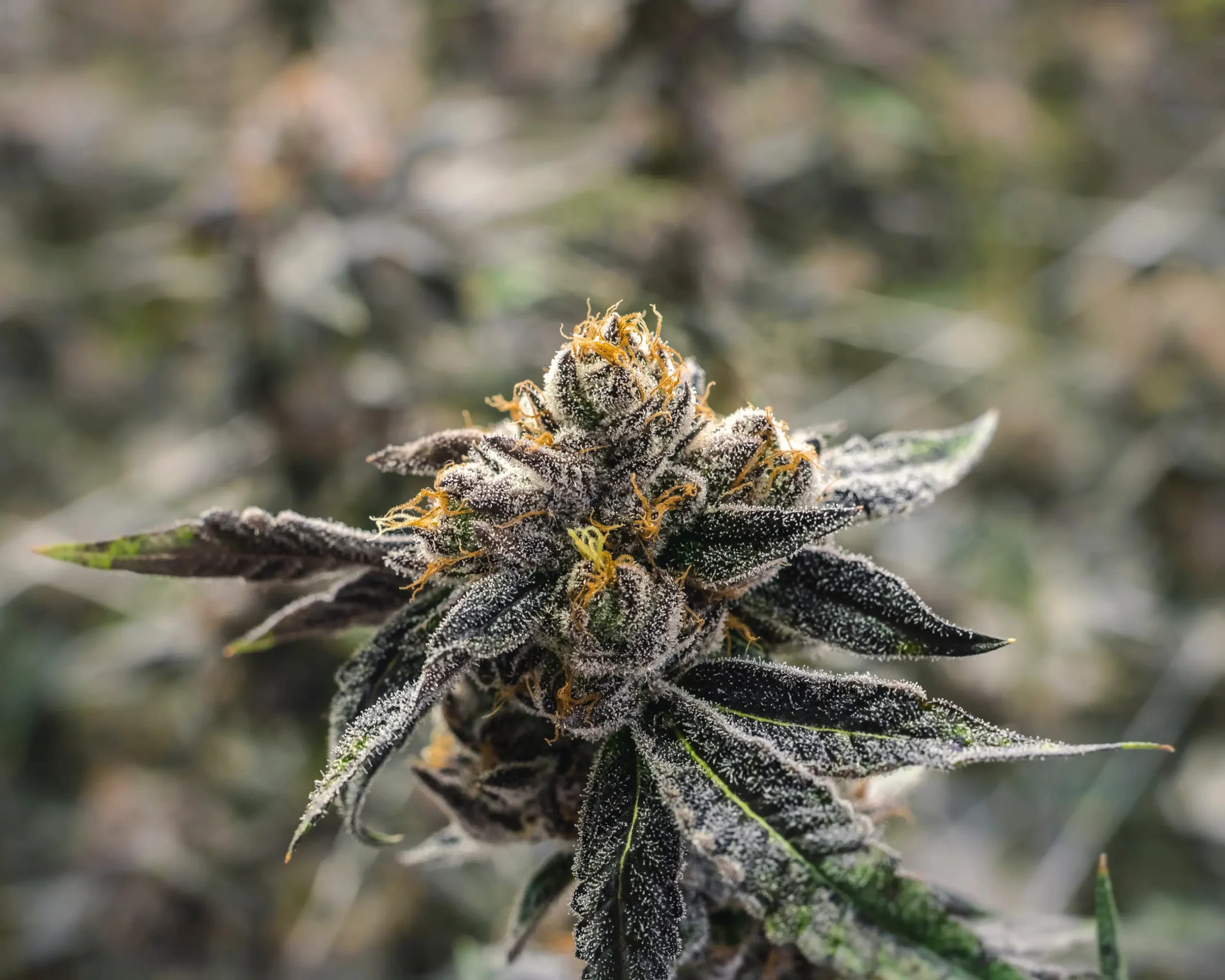
9 Pound Hammer
9 Pound Hammer is famous for a short flowering window and a heavy nighttime effect, but those two facts can make growers simplify the plant too aggressively. It is not merely a fast indica that can be placed in a corner and harvested on a calendar. The cultivar combines Gooberry, Hell's OG, and Jack the Ripper, and that three-way background creates more variation than the name's reputation suggests. Some expressions remain compact and Gooberry-dominant, with large calyxes and dense grape-lime flowers. Others show more vertical energy, citrus sharpness, or uneven branching.
The plant's most consistent strengths are early resin, a relatively fast finish, and flowers that become dense enough to demand moisture discipline. Early topping usually produces a productive bush. Lower cleanup can increase the proportion of stacked top flower. The cultivar is often described as mildew resistant, but resistance should not be confused with immunity. Hard buds still create a risk when the canopy is crowded or the drying room moves moisture unevenly.
The grower's central challenge is not keeping the plant alive. It is deciding when a fast-finishing plant is actually mature. Trichomes appear early, autumn colors may arrive quickly, and the first aroma can be strong enough to suggest that harvest is close. Yet some expressions continue expanding their calyxes after the plant already looks finished. Taking every plant at day fifty because a guide lists a short range can produce a brighter, thinner, less complete version of the cultivar.
9 Pound Hammer is best approached as a compact production plant with a quality checkpoint at the end. Build a strong frame, remove lower growth before it becomes sticky, preserve airflow around the dense tops, then let maturity decide whether the crop finishes at the early or late end of the window. After harvest, separate the largest flowers from smaller branches. The cultivar's speed in bloom should not be repeated as speed in drying.
Strain Features
| Feature | Details |
|---|---|
| Strain Type | Strongly indica-dominant hybrid |
| Genetic Profile | Gooberry x Hell's OG x Jack the Ripper |
| THC | Commonly reported around the high teens to low-20% range, with stronger batches possible |
| CBD | Usually very low |
| CBG | Some tested batches show measurable CBG, but this is not universal |
| Dominant Terpenes | Myrcene, beta-caryophyllene, limonene, and pinene commonly recur |
| Flavor and Aroma | Grape, berry, lime, sweet earth, pine, diesel, and light tropical or candy notes |
| Effect Character | Brief euphoria followed by strong physical relaxation, appetite, and sleepiness |
| Flowering Time | Commonly 50 to 60 days, though some plants need longer to reach complete maturity |
| Stretch | Usually low to moderate; phenotype dependent |
| Plant Architecture | Bushy, sturdy, and responsive to early topping |
| Bud Structure | Large calyxes, dense stacked flowers, and heavy resin coverage |
| Resin Timing | Often begins early and can mislead growers about harvest readiness |
| Mold and Mildew | Frequently described as resistant, but dense late flowers still require dry air |
| Training Compatibility | Early topping, branch spreading, lower cleanup, and a shallow screen work well |
| Yield Character | Medium to high under a uniform canopy; premium percentage improves with lollipopping |
| Odor Intensity | Moderate to high, with fruit and lime over an earthy OG base |
| Primary Cultivation Risk | Premature harvest, touching dense flowers, and uneven post-harvest moisture |
| Grow Difficulty | Easy to moderate for general cultivation, intermediate for best flower quality |
| Best Time of Use | Nighttime, low-demand evenings, or sleep preparation |
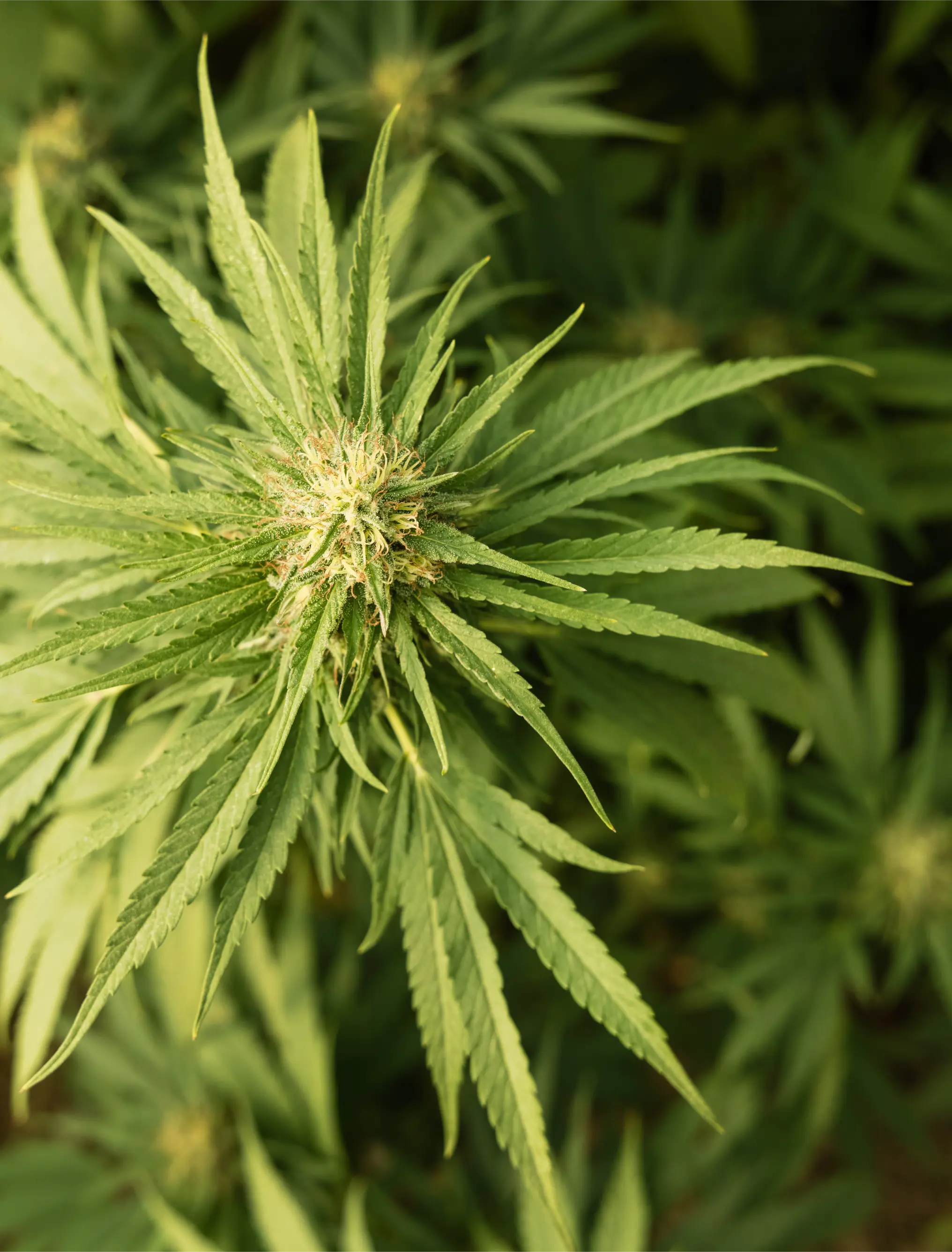
The structural presentation of 9 Pound Hammer is a masterclass in heavy indica dominance. In late vegetative growth, the cultivar establishes an exceptionally stout, muscular stalk with thick lateral branches and broad, leathery fan leaves of the deepest forest-green hue. Internodal spacing is remarkably compact, settling between one and one and a half inches, allowing lateral colas to cluster tightly around the central stem. Under 950 PPFD LED arrays, 9 Pound Hammer forms rock-hard, conical floral nodules that swell into dense, boulder-like spears completely frosted in a blinding crust of capitate-stalked glandular trichomes.
During weeks four through eight of bloom, the calyxes swell with astonishing speed, creating an extraordinarily high calyx-to-leaf ratio that makes hand manicuring rapid and rewarding. Glandular trichome heads display massive spherical caps measuring between one hundred and one hundred twenty-five microns in diameter, perched upon thick, sturdy stalks. Against the dark olive and sage-green calyxes, fiery copper and rust-hued pistils twist tightly, giving the dried flowers an intensely resinous, crystallized appearance.
Microscopic analysis reveals that the trichome heads are packed with heavy, resinous oils that resist ambient drying, creating a tacky, sticky resin cuticle that clings tenaciously to trimming shears and fingers. Cured colas are remarkably dense; even small nuggets feel weighty in the palm and yield an explosive burst of fragrance upon being broken apart.
The interior architecture of each cured cola is virtually solid. Bract tissue expands tightly against adjacent floral nodes, eliminating air voids and resulting in exceptional mass-to-volume density. When subjected to pressure, the flowers yield slightly before fracturing with a crisp snap, revealing an interior completely encrusted in amber-tinted resin glands.
During post-cure storage, 9 Pound Hammer maintains pristine floral integrity over six to eight months in airtight glass jars. The resin heads resist ambient oxidation, preserving their golden translucency and locking in volatile monoterpenes. When ground, the dense flowers yield an extraordinarily fluffy, resin-rich grind that packs firmly into pipes and rolls into slow-burning, oil-ringed joints.
Genetic Lineage
9 Pound Hammer brings together three parents with very different jobs. Gooberry contributes dense fruit, large calyxes, color, resin, and an indica-style frame. Hell's OG adds earthy fuel, physical weight, and the structural influence of the broader OG family. Jack the Ripper contributes citrus, vigor, and a brighter edge that can keep the plant from behaving like a completely slow, compact broad-leaf cultivar.
The result is commonly described as Gooberry-dominant, especially in plants that produce hard grape-scented buds and early resin. That expression is the source of the cultivar's reputation for large calyxes surrounded by autumn-colored leaves. It is also the expression most likely to convince a grower that the crop is ready before the flowers have finished expanding.
Other phenotypes may lean toward lime, lemon, pine, or sharper fuel. They can show slightly more stretch and a less compact canopy. A Jack the Ripper-influenced plant may feel more euphoric at first and smell brighter. A Hell's OG-leaning plant may be earthier, more sedating, and slower to reveal fruit. The name therefore describes a family of related expressions rather than one exact sensory formula.
The lineage also explains why the cultivar can be fast without being weak. Early flowering speed comes with active resin production and rapid flower stacking. The plant does not necessarily need a long ten-week period to create density. It does need enough root health and leaf function to complete the last portion of its shorter cycle.
For selection, a good keeper should combine fast completion with stable flower interiors. A plant that finishes early but develops loose or moisture-prone buds is less useful than one that takes several extra days and cures cleanly. Flavor should remain recognizable after drying. Grape and lime are especially valuable because they separate 9 Pound Hammer from heavier generic indica hybrids.
The cultivar's descendants and related hybrids often use it for sleep-oriented effects, fast resin, and fruit. That influence is meaningful, but the original plant is best understood through the relationship between speed and weight. It moves quickly, then lands heavily.
The genetic heritage of 9 Pound Hammer is one of the most celebrated achievements of breeder Jinxproof Genetics in collaboration with TGA Genetics. Jinxproof engineered this heavyweight powerhouse by crossing a selected female Gooberry with a potent male Hell’s OG x Jack the Ripper cross. Gooberry contributed deep grape confectionery aromas, dense calyx geometry, and devastating physical relaxation. Hell’s OG supplied classic fuel, raw somatic power, and intense analgesic depth. Jack the Ripper contributed vigorous resin production, citrus nuances, and a rapid, explosive flowering onset.
The resulting three-way hybrid captured the best qualities of its lineage while condensing flowering time into a brisk fifty to fifty-eight days. Analytical laboratory testing confirms that 9 Pound Hammer consistently produces between 23% and 28% THC, alongside significant levels of CBG and CBC, establishing its reputation as one of the hardest-hitting evening cultivars in contemporary cannabis culture.
Genomic sequencing reveals an exceptional concentration of terpene synthase genes inherited from the Hell’s OG and Gooberry maternal pools, driving high enzymatic production of myrcene and caryophyllene that accounts for its heavy sedative and analgesic potency.
Effect Breakdown
What happens before the hammer falls
The first stage can be more cheerful than the name suggests. Users often report a short period of euphoria, mood lift, or mental stimulation. Conversation may feel easier, music more engaging, and physical tension begins to soften. This opening is usually not as long or directional as a sativa effect. It feels like the mind is being cleared before the body becomes the main focus.
The center of gravity shifts
Relaxation builds steadily. The body becomes warm, appetite can increase, and movement feels less necessary. At a moderate dose, the user may remain awake and content but lose interest in demanding activity. The experience becomes ideal for a film, quiet music, or a low-pressure evening.
At this stage, harvest maturity becomes noticeable. Earlier flower can preserve more brightness and a lighter physical finish. Later-matured flower commonly produces stronger heaviness and a longer descent toward sleep.
The heavy end
At larger doses, 9 Pound Hammer earns its name. Sedation, couch-lock, and sleepiness become likely. Coordination and short-term concentration decline. The user may move from pleasant euphoria to a strong desire to remain still. Dry mouth and dry eyes are common, and dizziness can occur when the dose exceeds tolerance.
The cultivar is generally not suited to work, driving, or complicated social settings. Even when the opening feels manageable, the direction of the experience is toward physical shutdown. Low-tolerance users should wait before consuming more because the heaviest phase may arrive after the first mental effects have already encouraged another dose.
The next stage
Residual body calm can remain after the strongest effect fades. Some users wake feeling rested, while others experience grogginess. Dose, time of use, and personal response determine the outcome. For many people, the strain is most useful when the schedule already allows sleep.
Consuming 9 Pound Hammer delivers an uncompromising somatic experience that lives up to its heavy moniker. The onset initiates within moments of exhalation, beginning with a warm, tingling wave that settles directly behind the eyes and across the temples. Mental tension, intrusive thoughts, and daily stress are wiped away in an instant, replaced by a profound, blissful emotional stillness. The initial mental ease is tranquil and content, gently dissolving anxiety without cognitive agitation.
As the high broadens over the next twenty minutes, the crushing indica physical stone takes complete command of the body. Every major muscle group from the cervical spine down to the calves uncoils into deep, gravity-defying relaxation. The cultivar induces an irresistible couchlock that encourages reclining on soft cushions and abandoning physical tasks. In moderate to high dosages, 9 Pound Hammer facilitates a seamless, natural transition into deep, restorative, eight-hour sleep, making it an invaluable nocturnal medicine.
Clinical observation of consumers with chronic musculoskeletal conditions notes a rapid reduction in involuntary muscular guarding and peripheral neuropathic irritation. The persistent physical warmth prevents nocturnal awakening, providing uninterrupted physiological rest.
Flavor and Aroma Profile
The defining flavor relationship is grape and lime. Grape provides the dark sweet body, while lime cuts through it with acidity. Earth, pine, and diesel keep the profile from becoming candy. In some flowers, the first impression is berry jam over soil. In others, lime peel and resin appear before the grape becomes obvious.
The intact bud may smell sweet and earthy. Breaking it releases sharper fruit, citrus, and a faint OG fuel note. Large calyxes can hold concentrated resin in the interior, so the aroma often becomes stronger after grinding.
On inhalation, grape and berry usually lead. The sweetness can resemble dark fruit rather than syrup. Lime appears on the middle or exhale, sometimes with pine and pepper. A clean sample leaves a sweet-sour aftertaste. A poorly cured sample becomes earthy and flat, with the lime reduced to bitterness.
The fruit profile is vulnerable to warm drying. Grape can remain as a vague sweetness while lime and fresh berry disappear. Direct fan air creates a similar imbalance. The flower may still smell strong because earth and fuel are persistent, but the cultivar's defining contrast is gone.
The density of the flower creates another flavor issue. When the outside dries faster than the core, the cure becomes unstable. Moisture moves outward after the flower is sealed, which can produce a grassy smell, repeated wetness, or microbial risk. The solution is not constant jar opening after the problem begins. It is a more even dry before storage.
Outdoor flower may add more pine, herbs, and dark earth. Indoor flower can preserve clearer grape and lime. Color varies, and autumn tones should not be mistaken for stronger flavor. The keeper should be judged by the cured jar.
The organoleptic profile of 9 Pound Hammer is a luscious fusion of sweet dark fruit, tart citrus, and pungent earthy hash. Opening a sealed curing vault releases a heavy aromatic cloud of sweet candied grapes, lime zest, damp soil, and spicy musk. As the dense buds are ground, volatile secondary terpenes reveal sharp nuances of diesel gas, pine sap, and warm incense that give the bouquet incredible depth.
On inhalation, the smoke is dense, velvety, and rich, coating the palate in sweet grape jelly, sour citrus candy, and peppery earth. The exhale introduces a smooth, grounding wave of spicy hashish and pine cleaner, leaving a lingering sweet fruit and incense aftertaste that remains on the tongue for up to fifteen minutes. The burn is clean and even, producing pure white ash that signals complete nutrient assimilation.
Combustion dynamics confirm that properly cured 9 Pound Hammer produces a shimmering, thick oil ring right behind the cherry, burning with cool, smooth smoke that does not bite the throat despite its staggering cannabinoid concentration.
Dominant Terpenes
| Terpene | Sensory Contribution | Practical Relevance |
|---|---|---|
| Myrcene | Ripe fruit, earth, herbs, and musk | Helps build the grape-earth base and heavy physical finish |
| Beta-Caryophyllene | Pepper, dry spice, wood, and warm fuel | Adds structure to the exhale and keeps sweetness from becoming flat |
| Limonene | Lime peel, citrus brightness, and fruit lift | Creates the sharp contrast that defines the best expressions |
| Pinene | Pine resin, green wood, and fresh sharpness | Reinforces the OG side and brightens the earthy aroma |
| Humulene | Dry wood, hops, and savory earth | May deepen the darker finish in some phenotypes |
| Linalool | Floral softness and sweet spice | Can appear behind berry notes and round the sedating aroma |
Myrcene is often associated with the cultivar's body-centered character, but no terpene alone explains the effect. The table is most useful for understanding flavor preservation. Limonene and fresh pinene notes are more easily damaged by heat than the heavier earthy base. A harsh, dark sample may retain potency while losing the sensory balance that made the plant worth growing.
Gas chromatography-mass spectrometry (GC-MS) profiling of 9 Pound Hammer floral resin reveals a terpene profile dominated by myrcene, beta-caryophyllene, and alpha-pinene, supported by limonene, humulene, and linalool. Myrcene acts as the dominant constituent, delivering sweet herbal earth notes while enhancing the sedative action of THC across the blood-brain barrier.
Beta-caryophyllene adds a peppery kick while binding to peripheral CB2 receptors to mediate systemic anti-inflammatory actions. Alpha-pinene provides fresh pine accents and aids in bronchodilation, while linalool introduces subtle lavender floral undertones that promote deep physical relaxation and calm nervous signaling.
Secondary sesquiterpenes such as alpha-bisabolol and trans-nerolidol contribute delicate floral-tea nuances while amplifying the cultivar’s soothing gastrointestinal and dermal actions.
Indoor vs. Outdoor Growing
| Aspect | Indoor Growing | Outdoor Growing |
|---|---|---|
| Cycle Speed | Short flowering time allows efficient room turnover | Early finish can help avoid deep autumn weather |
| Plant Shape | Early topping creates a manageable bush | Can become wider and heavier with unrestricted roots |
| Canopy | A shallow, open screen improves uniformity | Broad branch spacing helps sun and wind reach the center |
| Flower Density | Climate control supports hard flowers but requires late humidity reduction | Dense tops remain vulnerable after rain despite reported resistance |
| Yield | Medium to high when lower growth is removed and light is even | Large root volume can create substantial per-plant output |
| Color | Stable late conditions may reveal autumn tones | Natural cooling can deepen color, but cold wet nights are risky |
| Flavor | Cleaner grape and lime separation | More earth, pine, and herbal complexity |
| Harvest Flexibility | Easy to compare early and late branches | Weather may decide whether the plant reaches the late end of the window |
| Drying | Branch sorting is essential because dense tops dry slowly | Outdoor colas may need to be divided before drying |
| Best Fit | Growers seeking fast, heavy nighttime flower | Dry climates with good late-season airflow |
The indoor advantage is control over the final ten days. A fast cultivar can be allowed to finish by maturity rather than harvested simply because another crop is waiting. The grower can also reduce humidity before the largest flowers become dangerous.
Outdoor cultivation benefits from the early finish. In many climates, 9 Pound Hammer can complete before very late autumn. That advantage should not encourage neglect. Dense flowers can trap moisture after dew or rain. A broad plant with separated tops is safer than one huge central cola.
The cultivar's mildew-resistant reputation is useful but limited. Leaf and flower architecture still matter. Resistance may reduce the likelihood of disease under moderate pressure; it does not protect a wet, crowded canopy indefinitely.
When grown outdoors, 9 Pound Hammer thrives in warm Mediterranean, arid, and semi-arid continental climates. Regions such as Central California, Southern Oregon, and the Yakima Valley in Washington provide ideal conditions. Because of its remarkably fast flowering cycle, outdoor specimens typically finish between late September and the first week of October, easily dodging the destructive autumn rains that threaten longer-flowering sativas.
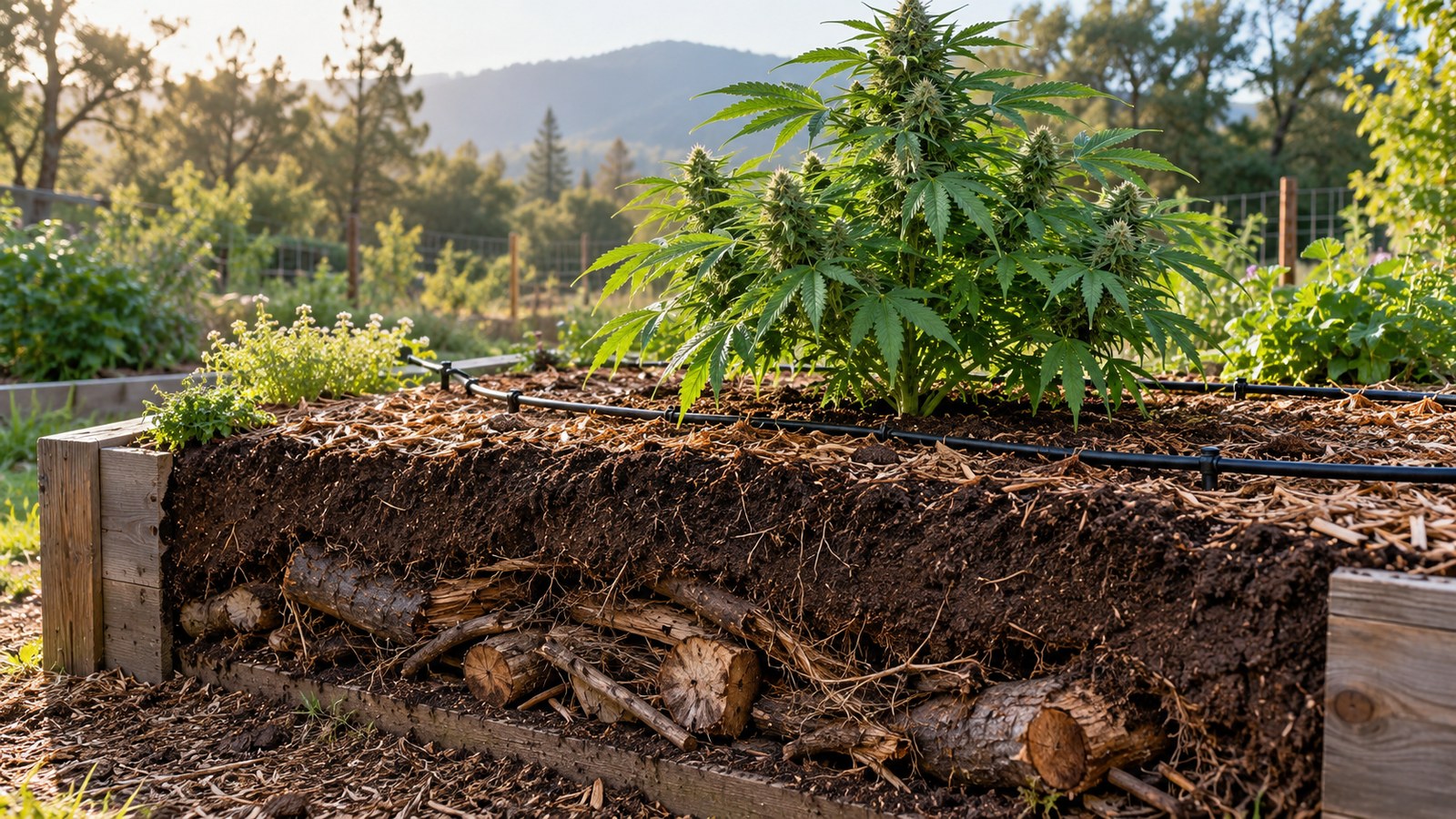
In large 100 to 200-gallon smart pots filled with organic living soil, plants develop into stout, six-to-eight-foot bushes capable of yielding 800 to 1,200 grams of premium flower per plant. Due to the extreme density of the flower clusters, maintaining aggressive internal canopy pruning and installing overhead rain protection during late September dews is strongly advised.
Strain-Specific Grow Guidance
Establish the frame early
9 Pound Hammer usually responds well to topping. Cut the main tip after the plant has developed enough healthy nodes, then allow the side branches to establish. One topping often creates the right number of mains. A second can be used when the room is wide and the vegetative period is long, but repeated topping can make the interior unnecessarily dense.
Low-stress branch spreading helps expose the center. The plant tends to become bushy, so the goal is to create outward direction before woody stems resist movement. A screen can hold the branches in separate lanes without forcing the canopy completely flat.
Lower cleanup is part of the cultivar's yield strategy
The plant can produce many small sites below the canopy. Early resin makes those sites look valuable, but shaded flowers remain less dense and require the same trimming and drying labor. Remove the lower branches and inner shoots that cannot reach useful light.
Complete the main cleanup before the flowers become sticky. A smaller adjustment can be made after stretch if hidden shoots remain. Avoid late aggressive removal that shocks a plant moving through a short flowering schedule.
Phenotype observation
Gooberry-dominant expressions often show compact growth, large calyxes, strong grape aroma, and early color. Jack the Ripper influence may increase citrus and vertical energy. Hell's OG influence may deepen fuel and body weight. Group plants by behavior rather than keeping one irrigation and canopy plan for every seed plant.
A more vigorous expression may need an earlier flip and wider spacing. A compact plant may require a slightly longer vegetative period. The fast flowering time does not mean all phenotypes enter flower with the same size.
Managing a mixed phenotype room
A seed-grown group should be sorted by behavior before the canopy becomes fixed. Compact Gooberry-leaning plants can remain closer to the center of the light and may need more vegetative time. Taller citrus-forward plants should be moved toward open screen areas or flipped earlier. When every plant is tied to the same grid before these differences appear, the vigorous expressions shade the compact ones and the compact plants are over-pruned to imitate the taller structure.
Irrigation should also be observed by phenotype. A broad plant with a large leaf area may dry the container faster than a narrow plant of the same height. Watering them as one unit can leave one dry and another saturated. Individual container weight or moisture behavior is more useful than a single room schedule during the first run.
Keep harvest labels attached through drying and cure. 9 Pound Hammer phenotypes can converge visually while remaining different in effect and aroma. One plant may provide the best grape-lime flavor, another the heaviest sleep effect, and a third the strongest structure. Mixing the crop before evaluation removes the information needed for a meaningful keeper decision.
Nutrition during a short cycle
A short cycle leaves less time to correct severe mistakes. Use moderate, consistent nutrition rather than alternating weak and aggressive feedings. The plant should enter flower healthy, with enough nitrogen to support transition but not so much that the leaves remain dark and clawed.
As flowers stack, reduce the vegetative emphasis. The cultivar can produce dense buds without extreme bloom strength. Overfeeding may increase leaf mass, reduce smoothness, and complicate root-zone moisture.
The fast timeline also means that premature flushing or starvation can remove support during the most important bulking period. One grow report of airy flowers described feed being stopped around week five, even though fresh pistils and late swelling remained. The lesson is to follow plant development, not a generic finishing calendar.
Watering and root behavior
Bushy plants can drink actively, but the container should still regain oxygen. Irrigate fully, then allow an appropriate dryback based on medium and root volume. Avoid maintaining a small plant in a large permanently wet pot.
During late flower, water demand may decline quickly. Adjust volume and frequency. A fixed schedule can create saturation exactly when dense buds and cooler nights increase humidity risk.
Flower density and airflow
9 Pound Hammer can stack dense buds along the upper branches. Keep those branches separated. Remove leaves that remain pressed against forming colas. Air should cross the plant at multiple levels.
Do not place a fan close enough to harden one side of the flower. The goal is air exchange around the canopy. Strong direct air can stress leaves and later create uneven drying if the habit continues after harvest.
Support
Branches are often sturdy, but dense flowers add weight quickly. Install support before the final swell. A second loose net or soft ties prevent tops from leaning together. Outdoors, a cage supports the broad shape and reduces breakage after wind or rain.
Reading maturity in a fast cultivar
The listed 50-to-60-day window is a guide. Some plants are ready at the early end; others need more time. Examine calyx expansion, pistil production, aroma, water use, and trichomes on the calyxes.
Early resin is not the same as mature resin. A frosty plant at day forty-five may still be actively building flower. A side-by-side branch comparison can be useful: an early sample shows the current effect and flavor, while the remaining plant continues to mature.
The last week is not a universal countdown
A fast cultivar encourages growers to create a fixed sequence: stop feeding, reduce irrigation, wait a set number of days, then harvest. 9 Pound Hammer benefits from a more responsive finish. If fresh pistils remain abundant, calyxes are still expanding, and the plant is using water normally, an aggressive shutdown can reduce the density that the final days were about to create. If water demand has fallen, leaves are naturally fading, and flower growth has slowed, the finish should become lighter and more conservative.
This difference is especially important in soil and other buffered media, where nutrient availability does not stop immediately when inputs change. The grower should avoid treating plain water as a magic flavor treatment. Smoothness depends on balanced nutrition throughout the run, complete maturation, and proper drying. Late decisions can protect quality, but they cannot erase chronic overfeeding from earlier weeks.
The correct end point is a plant that has completed its work without being kept excessively green or deliberately starved too early. That balance produces a stronger comparison between phenotypes and a more reliable repeat run.
Harvest and sanitation
Dense buds should be inspected before cutting. Remove damaged material separately and clean tools between suspicious areas. Outdoor plants exposed to rain need special attention at stem junctions and inside the largest flowers.
Dense flowers change the airflow plan
Fast flowering does not justify fast drying. The cultivar may complete bloom quickly, but its hard flowers still need slow, even moisture movement after harvest.
Canopy Defoliation and Airflow: Because 9 Pound Hammer forms an exceptionally dense foliage canopy, perform strategic defoliation at day twenty-one and day forty-two of bloom. Remove large inward-facing fan leaves to allow light and turbulent air to penetrate deep into the lower floral nodes.
Nutrient Stepping and Heavy Feeding: This cultivar is a vigorous feeder during floral bulking. Scale electrical conductivity up to 2.2 to 2.4 mS/cm between weeks four and six, supplying elevated phosphorus and potassium to fuel its rapid calyx expansion.
Volumetric Water Drybacks and Root Aeration: Maintain generous forty to forty-five percent drybacks in coco coir or organic living soil beds between irrigation events. 9 Pound Hammer’s dense root ball requires high oxygenation to prevent root pathogens and to stimulate defensive terpene resin synthesis.
Silica Fortification and Cellular Lignification: Supplying bioavailable monosilicic acid at a concentration of forty to sixty parts per million throughout the vegetative and early bloom phases dramatically improves mechanical stem strength in 9 Pound Hammer. Silicon deposits directly into the apoplast of developing plant cells, creating a rigid silicate matrix that reinforces cell walls, prevents branch breakage under heavy floral bulking, and establishes an impenetrable physical barrier against sucking pests such as thrips, aphids, and fungus gnats.
Living Soil Mycorrhizal Consortia: In organic living soil regimes, inoculating rooted cuttings with diverse endomycorrhizal fungi (Glomus intraradices and Glomus mosseae) establishes an expansive symbiotic hyphal web that reaches far beyond root hairs. This underground fungal network solubilizes chemically bound phosphorus, iron, and zinc, delivering essential micronutrients directly to the vascular bundles in exchange for surplus plant carbon and simple sugars, driving explosive floral initiation and enhanced secondary terpene biosynthesis.
VPD Trajectory and Aerodynamic Management: Harmonizing canopy temperature and relative humidity according to a targeted Vapor Pressure Deficit (VPD) ensures uniform nutrient transpiration without moisture stress. Maintain vegetative VPD between 0.9 and 1.1 kPa (78 to 81 degrees Fahrenheit and 62% to 68% relative humidity). Upon transition to peak flower, systematically elevate VPD to 1.35 to 1.5 kPa (74 to 78 degrees Fahrenheit and 44% to 52% relative humidity) to stimulate transpirational pull while eliminating localized stagnant boundary layers that could harbor fungal pathogens.
Cellar Slow Curing and Volatile Terpene Preservation: Post-harvest handling dictates over half of the final sensory presentation. Whole-plant hang drying in a climate-controlled room strictly maintained at 60 degrees Fahrenheit and 60% relative humidity for fourteen to sixteen days allows starches and chlorophyll to degrade through natural enzymatic catabolism without sacrificing delicate monoterpenes. Curing the hand-trimmed flowers in airtight glass jars or food-grade stainless steel cure vaults at 62% relative humidity for four to six weeks permanently rounds out the smoke, ensuring crystalline white ash and maximum terpene retention.
Weedth Bud Flavor Tips
Grape and lime require different protection. Grape sweetness can survive as a broad background note, while lime and fresh berry disappear quickly under heat. Preserve the top notes by keeping the final flowering period stable and the drying environment cool and indirect.
Harvest outdoor branches after dew evaporates. Move them into shade immediately. Indoor branches should be cut under moderate temperature rather than left beneath hot lights after the decision is made.
Sort the crop by flower density. Large tops with connected calyx stacks should not share the exact schedule of small branches. Divide unusually thick colas if the core is difficult to inspect or the plant was exposed to high humidity.
Drying should be slow enough for internal moisture to move outward. The outside of a dense bud can feel ready while the center remains soft. Test representative large pieces, not only small stems.
The early cure may emphasize earth and grape. Lime can become clearer as the smoke smooths. Allow several weeks before making a keeper decision. Store finished flower in smaller containers to protect the bright fraction from repeated air exposure.
To preserve delicate grape and lime monoterpenes, keep daytime room temperatures strictly between 74 and 76 degrees Fahrenheit during weeks four through eight of bloom. Lower room humidity to forty percent during the final two weeks of flowering to prevent moisture retention in the dense flower cores.
Harvest whole plants and hang them in complete darkness at 60 degrees Fahrenheit and 60% relative humidity for sixteen days. Cure the hand-trimmed flowers in airtight glass jars for thirty-five days, burping daily for the first fortnight to develop a creamy, mouth-watering smoke.
Weedth Bud Boost Tips
The cultivar's fast cycle makes pre-flower preparation more valuable than late corrections. Build the plant before the flip, select the strongest branches, and enter flowering with a clean lower zone.
Indoors, use an even canopy of medium colas. The plant's dense stacking can create more premium flower when light reaches every main branch. Crowding reduces both airflow and density below the top layer.
Outdoor plants benefit from early topping and a wide support cage. Large roots can increase yield, but the broad canopy must remain open. A few very large colas are not automatically better than several manageable ones.
Do not push the plant with excessive late nitrogen or salt strength. The genetics already create dense resinous buds. Stable roots, light distribution, and full maturity are the primary yield tools.
The final boost is timing. If the flowers are still producing fresh pistils and the calyxes are expanding, several extra days can add more usable weight than any additive.
To push yields past 550 grams per square meter indoors, supply 950 PPFD under high-efficiency LED fixtures paired with 1,200 ppm of carbon dioxide in sealed indoor rooms. Maintain canopy VPD between 1.35 and 1.5 kPa during mid-flower.
Supplement with monosilicic acid (fifty parts per million) and potassium silicate throughout vegetative and early bloom to build rigid stem walls capable of supporting heavy, dense colas without staking.
How can I maximize cola density on 9 Pound Hammer without increasing risk of mold in dense clusters?
Question sent by: Derek Hollister, via Discord from Spokane, Washington
Dense floral density on 9 Pound Hammer requires intense photonic drive coupled with strict climate management. Push lighting to 950 PPFD during weeks four through seven, maintaining canopy VPD at 1.4 kPa by keeping relative humidity at 45 percent. Crucially, prune interior sucker shoots during week three of bloom and install horizontal oscillating airflow both above and directly underneath the canopy grid to keep microclimates dry.
Medical Uses and Benefits
9 Pound Hammer is commonly chosen for sleep preparation, chronic physical discomfort, stress, and appetite loss. The later phase is strongly relaxing and may help users disengage from pain or tension.
The early euphoric stage can improve mood before sedation develops. This progression may be useful for people who want a pleasant transition into sleep rather than immediate mental shutdown.
High THC and strong body effects can also produce dizziness, anxiety, or excessive grogginess. The cultivar should not be described as treating a disease. Individual response and professional medical guidance remain important.
In clinical medical cannabis applications, 9 Pound Hammer is celebrated as an apex nighttime analgesic and sleep aid. Patients dealing with severe chronic spinal pain, neuropathic discomfort, and rheumatoid arthritis report rapid relief from persistent symptoms. The heavy myrcene-THC synergy provides profound sedation for individuals struggling with chronic sleep onset insomnia.
Ideal User Profile
9 Pound Hammer suits experienced users seeking nighttime body relaxation, appetite, and sleepiness. It fits quiet evenings and situations where reduced activity is acceptable.
It is less suitable for daytime work, driving, or users who dislike heavy physical effects. Beginners should start very low because the brief euphoric opening can hide the strength of the later phase.
For growers, it suits people who want a relatively fast cycle and dense resinous flower but are willing to manage humidity and maturity carefully.
9 Pound Hammer is tailored specifically for evening consumers, medical patients, indica enthusiasts, and individuals coping with high levels of chronic stress or physical discomfort. It is the quintessential nightcap cultivar for unwinding on the couch, streaming movies, and easing effortlessly into restorative slumber.
Grower Notes and Feedback
Growers consistently mention early resin and large calyxes. The plant can look finished well before the end of the published window. This visual speed is useful for excitement but dangerous for harvest timing.
Early topping is widely reported to improve the bush shape. Lower cleanup also appears repeatedly in successful runs. The cultivar converts a clean upper canopy into stacked dense flowers more efficiently than it converts a crowded lower interior.
Phenotype variation is meaningful. Not every plant is equally compact or equally grape-forward. Seed-grown rooms should be observed as groups rather than forced into one height and harvest date.
Resistance to mildew is commonly reported, yet dense flower remains the practical risk. Growers who maintain a clean open plant usually find the cultivar manageable. Those who allow touching tops or high late humidity may discover that genetic resistance cannot overcome poor architecture.
A second recurring lesson concerns flower sorting after harvest. The cultivar can produce small side buds, medium branch tops, and very dense terminal flowers on the same plant. When all three sizes are hung and jarred together, the small pieces become brittle while the main tops remain wet internally. Growers who separate the crop by density report a more stable cure and a clearer grape-lime profile.
The plant is also useful for learning the difference between visible resin and mature flower. Early trichome production gives beginners confidence, but it can hide incomplete calyx development. Keeping a written harvest note, including day count, trichome condition, water use, and cured effect, makes the next cycle far more precise than relying on photographs alone.
A fast finish also changes labor planning. Trimming, drying space, and storage containers should be ready before the first plant reaches the window because the remaining phenotypes may follow within days. Delays after harvest can force dense branches into crowded drying conditions. The cultivar performs best when the post-harvest room is treated as part of the crop schedule rather than organized after cutting begins.
When evaluating yield, separate premium tops, usable smaller flower, and low-density material. The plant can produce impressive total mass, but the real measure is how much of that harvest dries evenly and retains grape-lime clarity. Early lower cleanup usually improves this ratio more than extending vegetative time.
The short bloom period makes clone timing important. Cuttings should be healthy and fully rooted before the flowering room needs them, because a slow start consumes a larger percentage of the cultivar's total cycle than it would in a ten-week strain. Weak roots at the flip can produce small plants that begin flowering before the canopy has enough branch mass. The result may still be resinous, but the yield ceiling is permanently reduced.
Temperature should remain stable through the rapid stacking phase. A sudden hot period can increase water demand and stretch while reducing the clarity of lime and berry. A cold period can slow root activity and make a fast plant appear deficient. The cultivar's speed leaves less time for recovery, so gradual corrections are more useful than dramatic environmental changes.
When selecting a mother, include cloning behavior in the evaluation. Some phenotypes root quickly and return to vegetative growth with little delay. Others produce excellent flower but remain difficult to propagate. A home grower may accept the slower clone for superior flavor, while a repeat production room may value the expression that combines grape-lime quality with reliable rooting and uniform transition.
The cultivar also benefits from keeping one small reference branch untrimmed until the rest of the crop has been evaluated. That reference shows how much aroma and moisture were lost during handling. If the heavily manicured buds smell flatter, the next run should reduce unnecessary contact and preserve more protective leaf during the first stage of drying.
Commercial growers love 9 Pound Hammer for its short eight-week flowering turnover, immense resin production, and stellar bag appeal. Cuttings root quickly within ten to twelve days, and the dense, rock-hard buds hold up exceptionally well during packaging and distribution.
Weedth Editor’s Note
Cultivating 9 Pound Hammer in my controlled research facility has always been an exercise in appreciating sheer indica density and narcotic relaxation. I cultivate this heavy cultivar in five-gallon aerated fabric containers utilizing a high-porosity coco coir and coarse perlite medium (70/30 ratio). The plant exhibits dense, broadleaf morphology from early vegetative stages, establishing thick stalks and wide, dark green fan leaves that require strategic leaf tucking. I top the plants once at the fourth node and employ low-stress training to spread the stout lateral branches outward, preventing an overly clustered center.
When flipped to twelve-twelve lighting, 9 Pound Hammer stretches minimally, expanding only sixty to eighty percent in vertical height. This compact growth habit makes it an exceptional choice for low-clearance grow spaces. I deliver 850 to 950 micromoles per square meter per second of full-spectrum LED light throughout peak bloom, pairing this with an electrical conductivity of 2.2 to 2.4 mS/cm in my automated drip fertigation cycle. Daily nutrient feedings incorporate generous amounts of mono-potassium phosphate and magnesium sulfate during weeks four through six to support heavy floral bulking.
By day forty-five of bloom, the colas become extraordinarily heavy and hard as river stones, completely crusted in resin heads that smell intensely of candied grape, tart key lime, and hashish. I drop the room relative humidity to forty percent and lower night temperatures to sixty-six degrees Fahrenheit to preserve volatile monoterpenes and prevent any moisture condensation within the dense flower cores. I monitor trichomes closely and harvest precisely when twenty to twenty-five percent have turned amber, which reliably arrives at day fifty-six to fifty-eight of flowering.
Post-harvest handling demands patient attention to detail. Because the buds are exceptionally compact, I dry whole branches at 60 degrees Fahrenheit and 60 percent relative humidity for a full sixteen days to allow slow internal moisture migration. Following hand trimming, I cure the dense flowers in glass jars for thirty-five days, burping daily for the first ten days. The smoke is extraordinarily smooth, delivering an immediate, crushing physical stone. The only drawback is that novice growers often overwater this cultivar due to its compact root ball; allowing adequate dryback between waterings ensures pristine root health.
Weedth Score
Bag Appeal: 9.4/10, Chunky, rock-hard conical buds coated in a frosty, crystalline glaze of trichomes with contrasting olive-green calyxes and vibrant rust-colored pistils.
Aroma Intensity: 9.5/10, A pungent aromatic explosion of sweet grape candy, sour lime peel, earthy hash, and sweet incense that permeates containers effortlessly.
Flavor Quality: 9.3/10, Inhalation delivers a thick, creamy smoke reminiscent of grape pastry and tart citrus, followed by an earthy, piney hash exhale that lingers on the palate.
Potency: 9.6/10, A devastatingly potent cultivar testing between twenty-three and twenty-seven percent THC that delivers an uncompromising somatic knockout effect.
Onset Speed: 9.4/10, Effects take hold within two minutes, releasing facial tension and instilling a warm, heavy weight behind the eyes that swiftly descends into the limbs.
Duration of Effects: 9.5/10, Highly enduring psychoactive and physical plateau that remains potent for three to four hours, making it an undisputed heavyweight champion.
Ease of Growth: 8.9/10, Very manageable plant structure with short flowering cycles and strong pest resilience, though dense colas require strict humidity management.
Yield Potential: 9.1/10, Delivers impressive yields of 500 to 580 grams per square meter indoors when dialed in with high-intensity lighting and proper canopy spacing.
Hash & Extract Yield: 9.4/10, High gland head density and heavy cuticle walls make 9 Pound Hammer an absolute dream for solventless ice water hash and live rosin pressing.
Therapeutic Value: 9.7/10, One of the premier medical strains available for combating intractable insomnia, severe chronic pain, spasms, and stress-induced muscle rigidity.
Overall Weedth Score: 9.38/10, 9 Pound Hammer lives up to its formidable moniker, delivering crushing physical tranquility, luscious grape-citrus terpenes, and rapid flowering speeds that satisfy both craft growers and medical patients.
FAQ
What is the genetic heritage of 9 Pound Hammer?
9 Pound Hammer was bred by Jinxproof Genetics by combining Gooberry, Hell’s OG, and Jack the Ripper. This three-way hybrid blends fruit, gas, and citrus into an elite indica powerhouse.
How fast does 9 Pound Hammer flower?
It has an exceptionally brisk flowering cycle, finishing in just fifty to sixty days (seven to eight-and-a-half weeks) indoors, making it one of the fastest high-yielding indicas available.
Is 9 Pound Hammer suitable for daytime use?
Generally no. Due to its deeply sedating, narcotic physical effects, it is best reserved for late evening, post-work wind-down, or directly before bedtime.
What are the dominant terpenes found in 9 Pound Hammer?
Myrcene, beta-caryophyllene, and pinene lead the terpene hierarchy, with limonene and humulene contributing secondary citrus and woody undertones.
How should humidity be managed during late flower?
Because the colas are dense and compact, keep relative humidity below forty-five percent (ideally forty to forty-two percent) during weeks six through eight to prevent mold.
Similar Strains
Gooberry: A primary maternal parent that contributes deep grape confectionery notes, dense bud architecture, and profound physical calming properties.
Hell’s OG: The legendary OG Kush phenotype providing heavy diesel undertones, raw somatic knockout potency, and relentless pain-relieving effects.
Blackberry Kush: Another beloved dark-berry indica sharing sweet fruit-and-fuel aromatics, dense resinous buds, and dependable sleep-inducing properties.
Granddaddy Purple: A classic grape-scented California indica that mirrors 9 Pound Hammer’s mouth-watering fruit profile, heavy resin coverage, and evening utility.
Share this article
A quick overview of the topics covered in this article.