
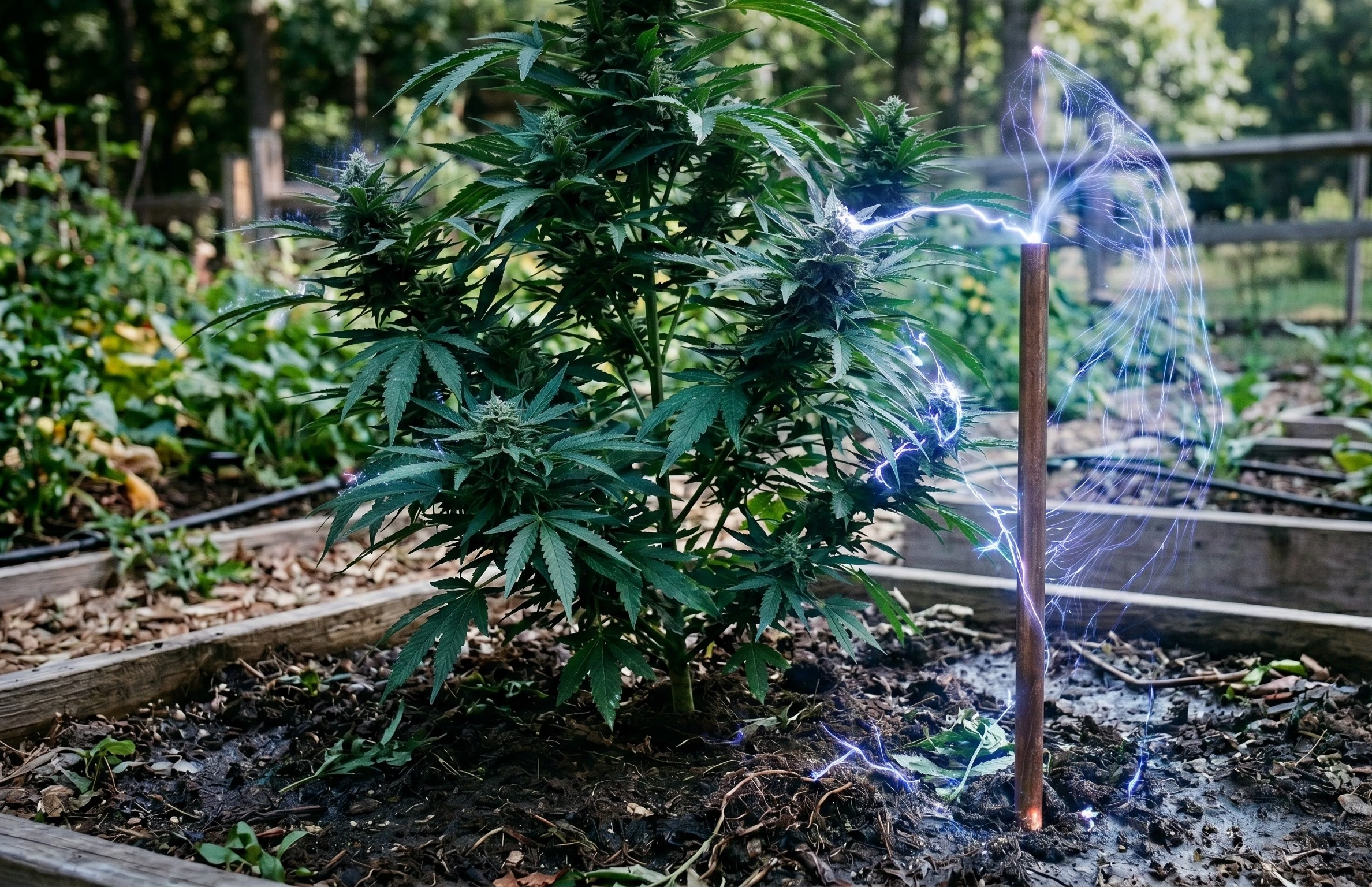
Cannabis Electroculture & Copper: Science vs. Fiction
Cannabis plants, like all crops, rely on a precise balance of nutrients and environmental conditions to grow optimally. In simple terms, this topic comes down to two questions: does copper help or hurt cannabis, and does electricity actually improve growth? Copper is an essential micronutrient for cannabis physiology, but its available range is very narrow. Deficiency and toxicity can both harm plants. Similarly, electrical stimulation, sometimes called “electroculture,” is a niche cultivation technique that claims to boost growth by exposing plants or their roots to electric and magnetic fields. Popular devices range from simple passive copper rods in the soil to high-voltage Tesla coils. Scientific studies in other plants suggest that passive methods generally do not boost yield, whereas carefully controlled electrical pulses can enhance growth under certain conditions.
For most readers, the practical answer is simple: copper is a real nutrient issue, passive copper rods are not a proven cannabis yield tool, and Tesla-coil-style electroculture remains experimental and risky. The following summarizes what is known about copper and electrical effects on cannabis, combining cannabis-specific guidance with broader plant research.
Electroculture
A broad term for methods that try to influence plant growth with electricity, electrical fields, magnetic fields, or electrically active devices. In practice, this can mean anything from a passive copper rod in the soil to a controlled high-voltage pulse system.
Copper in Cannabis Physiology
Essential but toxic in excess
Copper (Cu) is vital for photosynthesis, enzyme functions, pollen development and other plant processes. Put simply, copper is essential, but the safe range is small. Cannabis, in particular, can accumulate heavy metals in its tissues and has even been studied for phytoremediation of contaminated soil. However, like all plants, cannabis is very sensitive to high copper levels. One proteomic study noted that “copper is essential… but is extremely toxic to plants at high concentrations”. In practice, even moderate excess copper can kill cannabis; true copper toxicity is rare, but when it occurs it can severely damage or quickly kill the plant.
Deficiency is uncommon but serious
Conversely, copper deficiency in cannabis is unusual. Most growers do not run out of copper itself. They more often run into a copper-access problem. Typically it only appears when pH or nutrient-uptake issues lock out copper, rather than there simply being no copper in the soil. When it does happen, the effects are pronounced. Cannabis leaves will darken with a bluish or purplish tint and take on a shiny, almost metallic look, while the leaf tips and edges turn yellow or white. This often starts on the newest growth under the lights. Crucially, a copper deficiency during flowering can seriously disrupt bud development and reduce harvest quality. Even if older damaged leaves do not recover fully, correcting the underlying issue can allow healthier new growth and more normal flower development to resume.
pH interactions
Both copper deficiency and toxicity are often tied to pH. That means many copper problems are really root-zone chemistry problems first. Cannabis absorbs copper best in slightly acidic conditions. If the root-zone pH is off, copper becomes unavailable and deficiency symptoms appear. Conversely, extremely low pH can make copper too soluble and toxic. In practice, growers rarely lack copper in the medium. It’s more often a pH lockout problem. Remedies focus on pH adjustment: flushing with correctly buffered water and nutrients, ensuring hydroponic or soil pH stays in the ~5.5–6.5 range, and using a complete nutrient solution that includes copper. Most cannabis guides emphasize that if leaves exhibit copper-deficiency signs, first check and correct the pH.
Important: In real grows, many copper problems are not true “no copper” problems. They are access problems caused by pH, root-zone stress, or nutrient imbalance.
Summary of copper effects
- Deficiency symptoms: Dark glossy leaves with blue and purple tint; yellow and white tips and margins; slow, stunted bud growth.
- Toxicity symptoms: Rare but can cause rapid plant death if extreme. Subtle excess may first cause leaf tip burn or chlorosis.
- Crop impact: Both deficiency and toxicity can dramatically reduce yield and flower quality, especially if the problem develops early in flowering.
- Management: Maintain proper nutrient balance and pH. Add chelated copper micronutrients only if a true deficiency is confirmed; avoid overdose.
Electrical Stimulation (“Electroculture”) in Cannabis
“Electroculture” is a broad term for techniques that expose plants or their growing medium to electrical fields or currents. In plain language, people are trying to see whether electricity can push plants to grow differently. Practices range from passive methods, such as burying copper or other metal rods and antennae in the soil to passively pick up atmospheric electricity, to active systems that apply controlled pulsed fields or discharges. These methods claim to stimulate seed germination, root growth, or yield. We summarize the evidence below, focusing on relevance to cannabis.
Historical and anecdotal background
For centuries, gardeners and scientists have experimented with electricity and plants. Some 19th-century reports claimed large yield boosts from electrical treatments, such as potatoes growing “40–70%” better under electrical stimulus. In recent years, hobbyists have revived these ideas. “Electroculture” on social media often means simply sticking a copper-wrapped rod or a serpentine copper coil into the plant’s soil or pot. Commercial electroculture kits, including mini Tesla coil devices, are marketed to cannabis growers with sensational claims.
Do copper rods or Tesla-coil-style electroculture actually help cannabis, and if I still want to test it, is it smarter to build something simple myself or buy a ready-made device?
Question sent by: Felix, by email.
This article is basically the full answer. The short version is that copper as a nutrient is real, passive electroculture is not proven, and Tesla-coil-style growing remains experimental and risky. If you are still determined to experiment, a small, controlled, self-built test usually makes more sense than buying an expensive ready-made gadget, because it forces you to measure results instead of trusting marketing. That is not an endorsement of Tesla coils around plants. It is simply a reminder that if you test something unproven, control and measurement matter more than branding.
Scientific tests of passive electroculture
Modern controlled trials have generally found no reliable benefit from passive copper rods. This is the practical distinction that matters most: sticking a copper rod into the soil is not the same as using a real engineered electrical treatment. A prominent 2025 PLOS One study placed copper-wrapped wooden dowels into container gardens with mustard, kale, beets, and turnips to simulate home electroculture. The researchers explicitly tested whether buried copper boosts growth. They found no consistent yield improvement from passive copper rods for any species. Any minor biomass increase in turnips occurred only with buried rods and was not reproduced by bare copper, implying it was not an “electric” effect.
In summary:
- The study concluded that typical passive electroculture yields no growth advantage. The copper rods simply do not generate significant voltage or current to stimulate plants.
- As one team notes, “it is likely that copper rods produce too little voltage to affect plant physiology”. Indeed, millions of volts might be required to see any biological effect, far beyond what a buried rod naturally produces.
- They explicitly suggest that if anything, active electrical fields could affect plants, but the voltages from simple copper dowels, in the millivolt range, are orders of magnitude too low. Thus, buying copper rod electroculture kits is probably a waste.
Tip: Keep these two ideas separate in your mind: copper deficiency is a real plant problem, but a copper rod in the soil is not automatically a real cultivation solution.
Translating to cannabis
No published study has directly tested cannabis under passive electroculture. However, there is no reason to expect cannabis to behave fundamentally differently. The PLOS experiment showed no benefit in diverse vegetables. We infer that simply sticking a copper antenna or coil near cannabis roots will not reliably increase growth or yield. If passive electroculture were effective, many decades of controlled research would have revealed it. Current evidence suggests the opposite: these approaches have, at best, anecdotal and placebo-level effects. Grower reports of improved vigor from copper rods may simply be due to coincidental factors such as environment, watering, or the fertilizer in the soil rather than electricity.
If my flowering plant suddenly shows strange dark or twisted upper leaves, could copper deficiency still hurt the buds even if the whole plant does not look terrible yet?
Question sent by: Klara, by email.
Yes, it can. Copper problems can matter even before the whole plant looks dramatically sick, especially in flowering, where micronutrient disruption can interfere with normal bud development. But the first move still is not blind supplementation. The first move is to check pH, root-zone balance, and whether copper is actually unavailable rather than absent.
Active electrical stimulation
On the other hand, there is solid evidence that carefully controlled electrical pulses can affect plant growth. That sounds promising, but it belongs more to controlled experimental systems than to normal home growing. For example, a recent study on a medicinal plant found that pulsed high-voltage electroporation, or electrostimulation, in an aeroponic system significantly increased root biomass and bioactive compounds. Under optimized conditions, with a 3 kV/cm electric field, 100 µs pulses, and 10 pulses total, yields and active flavonoids increased by up to 2.5×. The authors conclude that electrical stimulation can be “an innovative and efficient way to increase plant growth and yield” when properly applied.
For cannabis, this suggests a caveat: applying electricity can stimulate growth, but only if done as an engineered process such as electroporation in nutrient film technique with specific voltage, current, and pulse parameters.
Electroporation and aeroponics
The cited study applied high-voltage pulses directly to roots in a mist environment. Such methods are high-tech, like lab pulse generators, and not the same as passive field exposure.
Implication
In principle, if a cannabis grower were to apply strong, controlled electrical pulses to the root zone, for instance via electrodes delivering a pulsed field, there may be growth or chemical yield benefits. However, this requires careful design with correct voltage and timing and is currently experimental.
Practical takeaway
Typical home setups, such as copper rods, coils, or even small custom Tesla coils, do not deliver comparable electric fields. The PLOS study authors note that “the voltages required [to benefit plants] exceed what is produced by copper-wrapped wooden dowels”. In other words, casual growers cannot replicate the lab’s conditions with off-the-shelf gear.
Electroculture vs. cannabis-specific context
Electroculture also appears in some cannabis-adjacent permaculture discussions and alternative cultivation circles, where it is sometimes blended with broader claims about Tesla coils or bioelectromagnetism. Yet the lack of rigorous cannabis trials means we still have to rely mostly on analogies from other plant systems. Based on broader plant science, passive electroculture is unlikely to meaningfully affect cannabis growth. Any perceived benefit from copper or Tesla coils should be treated skeptically unless backed by data.
Tesla Coils and High-Voltage Effects on Cannabis
Tesla coils are high-voltage, high-frequency transformers that produce visible sparks and ozone. In some alternative agriculture circles, Tesla coils or Lakhovsky-style multi-wave oscillators are claimed to boost plant health. What does the science say?
Nature of Tesla coil stimulation
A Tesla coil near plants creates a strong oscillating electric field and ozone from corona discharge. It can also produce radio-frequency EM radiation. In effect, the plant is exposed to a high-frequency electromagnetic field and slight ozone and ion exposure. Unlike copper rods, Tesla coils actively inject energy into the surrounding air or soil.
General plant response to high-frequency EMFs
Research, mostly in other species, shows that electromagnetic fields can influence plants, but effects depend on frequency, intensity, and duration. So the question is never just “does electricity do something?” The real question is “what kind of electrical exposure, at what strength, for how long, and in which species?” A 2024 summary of the field notes that specific frequencies can modify plant electrical signaling, gene expression, photosynthesis, and germination. Reviews suggest EMFs might enhance processes like seed germination, nutrient uptake, or stress resistance under some conditions. In other words, controlled EMF exposure has potential agronomic benefits in theory.
However, these findings are very system-specific. Many reported EMF effects resemble stress responses. High-intensity exposures often generate reactive oxygen species (ROS). For example, non-thermal plasmas and strong fields can increase seed germination rates by physically altering seed coats, but they also create oxidative stress and ozone, which are likely the main active agents. In practice, outcomes vary widely between plant species and treatment setups.
Plasma and seed germination
Tesla coils produce corona plasma in air. Plasma treatments, or electrical discharges, are known to improve germination in seeds of many crops by etching or perforating the seed coat. By creating micropores, plasma allows faster water uptake. Cannabis seeds could theoretically benefit in the same way. There are also unsupported claims that Tesla coil discharges may abrade hemp seed coats and speed germination, but those claims are not established here by direct cannabis evidence. While we have no cannabis-specific study, plasma-agriculture research supports that mild exposure often helps seeds sprout more uniformly.
Stresses and dangers
On the flip side, those same plasma discharges generate ozone (O₃) and other ROS. These reactive molecules can stress living tissue. The literature notes that “electric field treatment is accompanied by oxidative stress and ozone,” and ozone may be the primary agent of change. Excessive ozone or heat can damage plants or inhibit growth. Thus, a Tesla coil placed too close or run too long could harm rather than help. There is no free lunch: the device’s strong fields will impose stress on the plant environment.
If passive copper rods do so little, why do some growers still swear their plants looked happier after using them?
Question sent by: Psychedelic Garten, through our Facebook page.
Because grow rooms change all the time. Watering, dry-back rhythm, heat, feed strength, airflow, and plain expectation bias can all influence what a grower thinks they are seeing. If a method has no clear, repeatable result under controlled conditions, it is very easy for normal variation or placebo-level confidence to get mistaken for proof.
Tesla-Coil-Style Trials Can Damage Plants Fast
Tesla-coil-style experiments can expose plants to ozone, reactive oxygen stress, heat, and inconsistent electromagnetic intensity. That makes them a poor fit for casual trial-and-error around a crop you actually care about.
Empirical evidence
To date, no peer-reviewed study has tested a Tesla coil on cannabis plants. Anecdotal grower reports exist, but they are uncontrolled. In other plants, such as fruits and vegetables, Tesla coil demonstrations focus on dramatic effects like lighting bulbs and burning food rather than systematic growth tests. A few inventors claim “Tesla coil outputs ~16 ft coverage, 24h use, crystals, etc.”, but these are marketing and personal logs, not science.
What science suggests for cannabis
Given the above, we can cautiously infer:
- If you expose cannabis seeds or plants to a Tesla coil briefly, you might accelerate germination by a seed coat plasma effect or stimulate mild stress hormones. This is speculative. Some studies in other species report germination boosts with short plasma pulses.
- There is a high risk of damage. High-frequency fields can heat tissues or create lethal ozone. Without strict control, you could easily harm plants.
- In any case, one would not expect consistent yield gains from a casual coil. The Nature EMF summary emphasizes that responses are highly variable. Some species may react positively, others negatively.
At present, Tesla coils remain an experimental technique with no proven cannabis benefit. They fall under active electroculture, which, as noted, can have effects if engineered properly. But off-the-shelf coil devices should be treated as unproven and high-risk, not as serious evidence-based cultivation tools.
Summary of Findings
If someone only reads one section, this is the one they should read.
- Copper management is critical for cannabis: ensure adequate Cu availability via proper nutrition and pH, but avoid excess. Deficiency causes purple and dark leaves and stalled buds; toxicity is rare but lethal at high dose.
- Passive electroculture, such as copper rods, has no proven benefit for cannabis or most plants. A well-designed trial found no yield increase from buried copper and noted such rods produce too little voltage to affect plants.
- Controlled electrical stimulation can enhance growth in lab settings. Pulsed high-voltage fields dramatically increased growth in an aeroponic medicinal plant. This suggests mechanical electrical stimulation is potentially useful in advanced cultivation, such as customized hydroponics or aeroponics. However, replicating this outside a lab is non-trivial.
- Tesla coils and high-frequency EMF: There is no direct cannabis data. Theory and analogies suggest possible germination boost through plasma etching of seeds, but also risk of oxidative stress. General plant studies show EM fields can alter physiology, but outcomes are inconsistent. Tesla coils lie at one extreme of field strength and have not been validated in serious trials.
Remember: Copper as a nutrient question and copper as an electroculture gadget question are not the same conversation. One belongs to plant nutrition. The other belongs to experimental electrical treatment.
Conclusions and Recommendations
This is where the article becomes practical.
Focus on fundamentals
If you are really asking, “Should I put copper in the soil or use electroculture on cannabis?” the strongest answer in this article is straightforward: manage copper through proper nutrition and pH, do not expect passive copper rods to improve yield, and do not treat Tesla coils as a proven cannabis technique.
For most cannabis growers, copper nutrition and root-zone pH are far more important to control than exotic electrical interventions. Ensure nutrient solutions contain the trace Cu needed, and keep pH in the optimal range to avoid lockouts.
Be skeptical of passive electroculture
Given current evidence, burying copper rods or coils will almost certainly not boost your yield. It’s better to invest in proper fertilizers, lighting, and climate control.
There is also a simpler possibility that should not be ignored: if a technique has no clear, repeatable result, it may be functioning more like a market trap than a real cultivation tool. Some products are sold through hype, novelty, and the promise of a secret edge. If the effect is vague, short-lived, hard to measure, or impossible to separate from normal day-to-day variation in the grow, you may be looking at placebo-level reassurance rather than a real agronomic improvement. In plain terms, some sellers may be chasing attention, trend momentum, and your money more than they are offering a proven solution.
Use electricity only if properly engineered
If considering electro-stimulation to speed germination or growth, note that dosage matters. Short, low-energy exposures, such as brief plasma-torch seed treatment, can help germination in some crops, but high exposures can damage plants. Without controlled equipment, avoid running a powerful Tesla coil directly on or around plants. The benefits are unproven and risks are real.
Research is evolving
Some cutting-edge studies indicate innovative uses of electric fields, such as electroporation, can improve yields, but these are experimental. Watch future horticultural research for cannabis-specific trials. Always combine new methods with careful observation to verify any benefit.
No magic bullets
Ultimately, electricity and copper operate within the same biological constraints as other nutrients and stresses. That is the simplest way to understand the whole article: neither one is magic, and both only make sense inside a well-run grow. Treat them as one part of an integrated growing system. The best outcomes come from balanced nutrition, including copper, a stable environment, and proven agronomic practices.
And if you have actually tried copper rods, electroculture, Tesla-coil-style experiments, or any other electrical method around cannabis, it would be interesting to hear what you saw. Have you ever tested any of these methods yourself? Did you notice anything real, or did it feel like hype? Let us know in the comments.
Scientific References
- Ciscato, R., Valcke, R., van Loven, K., Clijsters, H., & Navari-Izzo, F. (1997). Effects of in vivo copper treatment on the photosynthetic apparatus of two Triticum durum cultivars with different stress sensitivity. Physiologia Plantarum, 100, 901–908.
- Kabała, K., Janicka-Russak, M., Burzyński, M., & Kłobus, G. (2008). Comparison of Heavy Metal Effect on the Proton Pumps of Plasma Membrane and Tonoplast in Cucumber Root Cells. Journal of Plant Physiology, 165(3), 278–288.
- Gerhardt, K. E., Huang, X.-D., Glick, B. R., & Greenberg, B. M. (2009). Phytoremediation and rhizoremediation of organic soil contaminants: Potential and challenges. Plant Science, 176(1), 20–30.
- Dziwulska-Hunek, A., Niemczynowicz, A., Kycia, R. A., Matwijczuk, A., Kornarzyński, K., Stadnik, J., & Szymanek, M. (2022). Stimulation of soy seeds using environmentally friendly magnetic and electric fields.
- Ferroni, L. M., Dolz, M. I., Guerra, M. F., & Makinistian, L. (2023). Static magnetic field stimulates growth of maize seeds.
- Dufour, T. (2026). At the Origins of Electroculture: A Retrodictive Modelling of Bertholon’s 18th-Century Electrovegetometer in the Pre-Corona Regime.
Share this article
A quick overview of the topics covered in this article.
Follow us
Latest articles
September 24, 2026

September 24, 2026
September 24, 2026
September 24, 2026
