
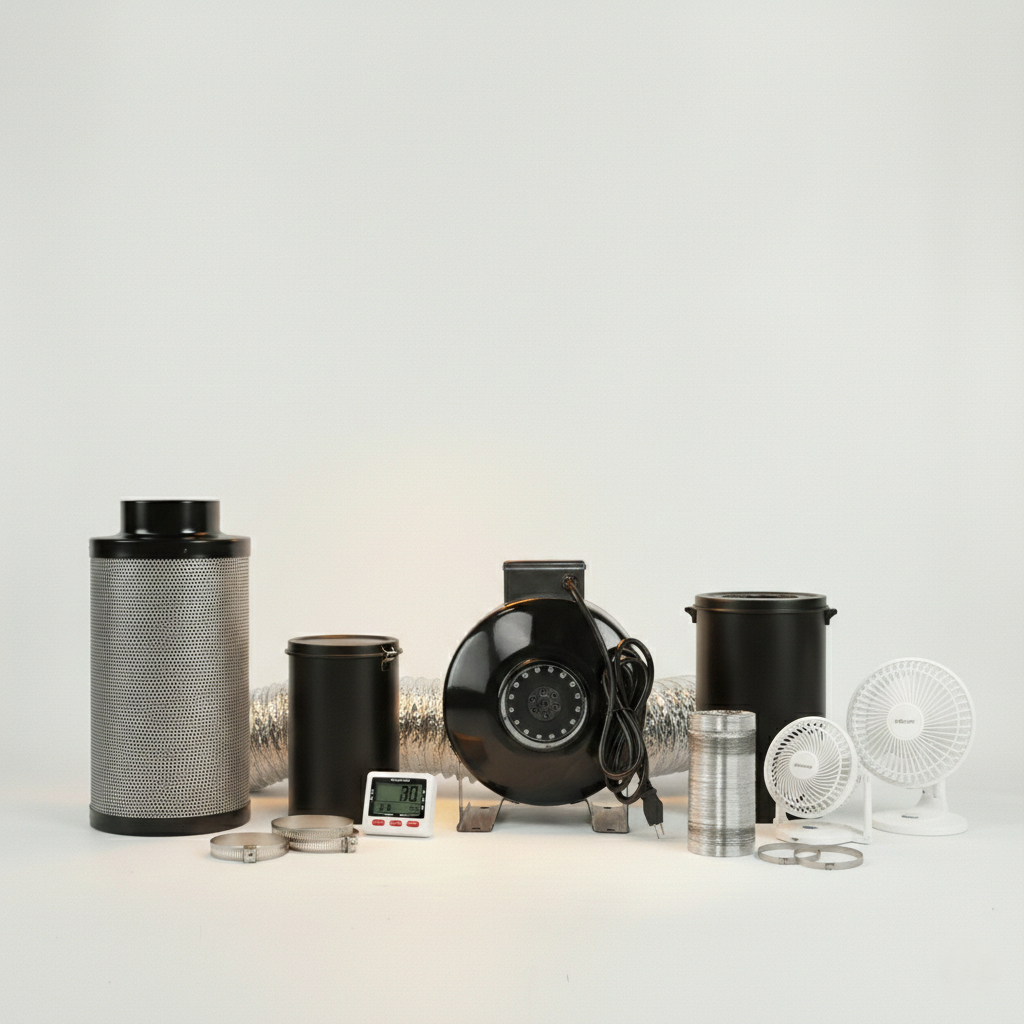
How Smelly Is a Cannabis Grow Tent?
How smelly is a cannabis grow tent? An unfiltered tent holding flowering plants can make the host room, nearby rooms, and eventually the exhaust area smell strongly of cannabis. A tent with a correctly sized carbon filter, continuous exhaust, sealed ducting, and slight negative pressure can reduce that odor dramatically while it remains closed. It still cannot promise that no one will ever smell the crop.
The difference matters because the fabric shell is only the boundary. Odor control comes from the complete air path: where air enters, how it crosses the canopy, whether every outgoing route passes through carbon, where the exhaust ends, and what happens when the door opens. Harvesting, trimming, and drying also create odor outside the normal closed-tent system.
Let us build a realistic expectation before buying equipment or reaching late flower. We will follow the smell from the plant to the room, separate normal cannabis aroma from warning odors, size the filter and fan as a working pair, and diagnose the places where an apparently good setup can still leak.
Master Advice: If your requirement is absolutely no detectable odor under every condition, a home grow tent cannot guarantee that standard. A well-designed system can make a closed tent far less noticeable, but opening the enclosure, handling mature flowers, equipment failure, filter breakthrough, and drying can all release aroma.
Use this guide only for lawful cultivation with the property owner’s permission. Local rules may govern plant numbers, locked access, odor, exhaust locations, tenancy conditions, ventilation changes, and electrical work. Odor control should reduce nuisance and protect indoor air quality, not be treated as a substitute for legal compliance.
The Direct Answer: How Much Can a Grow Tent Smell?
The answer ranges from a faint green plant smell to an unmistakable aroma that spreads beyond the room. Seedlings and small vegetative plants are often mild. Some cultivars become noticeable in late vegetative growth, while many increase sharply after flowers begin developing. Late flower, harvest, trimming, and early drying are the periods most likely to overwhelm a casual setup.
Plant count matters, but it is not a complete predictor. One mature aromatic plant can be more noticeable than several mild young plants. A compact canopy can also hold a surprising amount of flowering tissue, so a “one plant” plan is not automatically a low-odor plan. Cultivar chemistry, flower mass, temperature, handling, airflow, and filtration all change what reaches the nose.
A grow tent is not smell-proof. It is an airflow boundary that can make odor easier to capture.
The shell slows uncontrolled mixing with the room. The exhaust fan creates direction, the carbon filter adsorbs many airborne odor compounds, and negative pressure encourages unfiltered air to move inward instead of leaking outward.
A good way to set expectations is to think in three zones. Inside a late-flower tent, the aroma may be intense. In the host room, a working closed system may make it faint or unnoticeable, but opening the door can change that quickly. At the final exhaust point, detectable odor usually means the carbon bed, airflow, sealing, or installation needs attention.
| Stage or activity | Relative odor pressure | What usually changes | Planning response |
|---|---|---|---|
| Seedling and early vegetative growth | Usually low | Wet medium, fertilizers, and general plant aroma may be more noticeable than cannabis flowers | Install and test ventilation before odor becomes the test |
| Late vegetative growth and preflower | Low to moderate, cultivar-dependent | Larger leaf area, rubbing, pruning, and early reproductive development can make aroma easier to notice | Run the filter and confirm negative pressure before the transition |
| Early flowering | Moderate and increasing | More flower sites begin releasing a recognisable aromatic profile | Check the exhaust outlet and every duct joint under normal fan speed |
| Mid to late flowering | High to very high | Flower mass and odor-active volatile compounds increase; some cultivars rise sharply near maturity | Inspect filter performance, night humidity, fan continuity, and room leakage regularly |
| Harvest and trimming | Often the strongest short-term release | Cutting and handling expose more aromatic plant material outside the closed airflow path | Prepare a filtered work area and containers before cutting the first branch |
| Drying | High, then gradually declining | Whole branches or flowers continue releasing volatile compounds while moisture leaves | Treat the drying space as a second odor-producing enclosure with its own climate and filtration plan |
These descriptions are relative, not a universal calendar. Research on cannabis aroma shows meaningful chemical differences among cultivars. Work on volatile sulfur compounds also found a rapid rise toward the end of flowering that occurred alongside stronger skunk-like odor. A 2025 facility study found large variation by room and activity, with trimming producing the highest measured terpene emissions in that operation. Those findings support the practical pattern without turning it into a fixed week number for every plant.
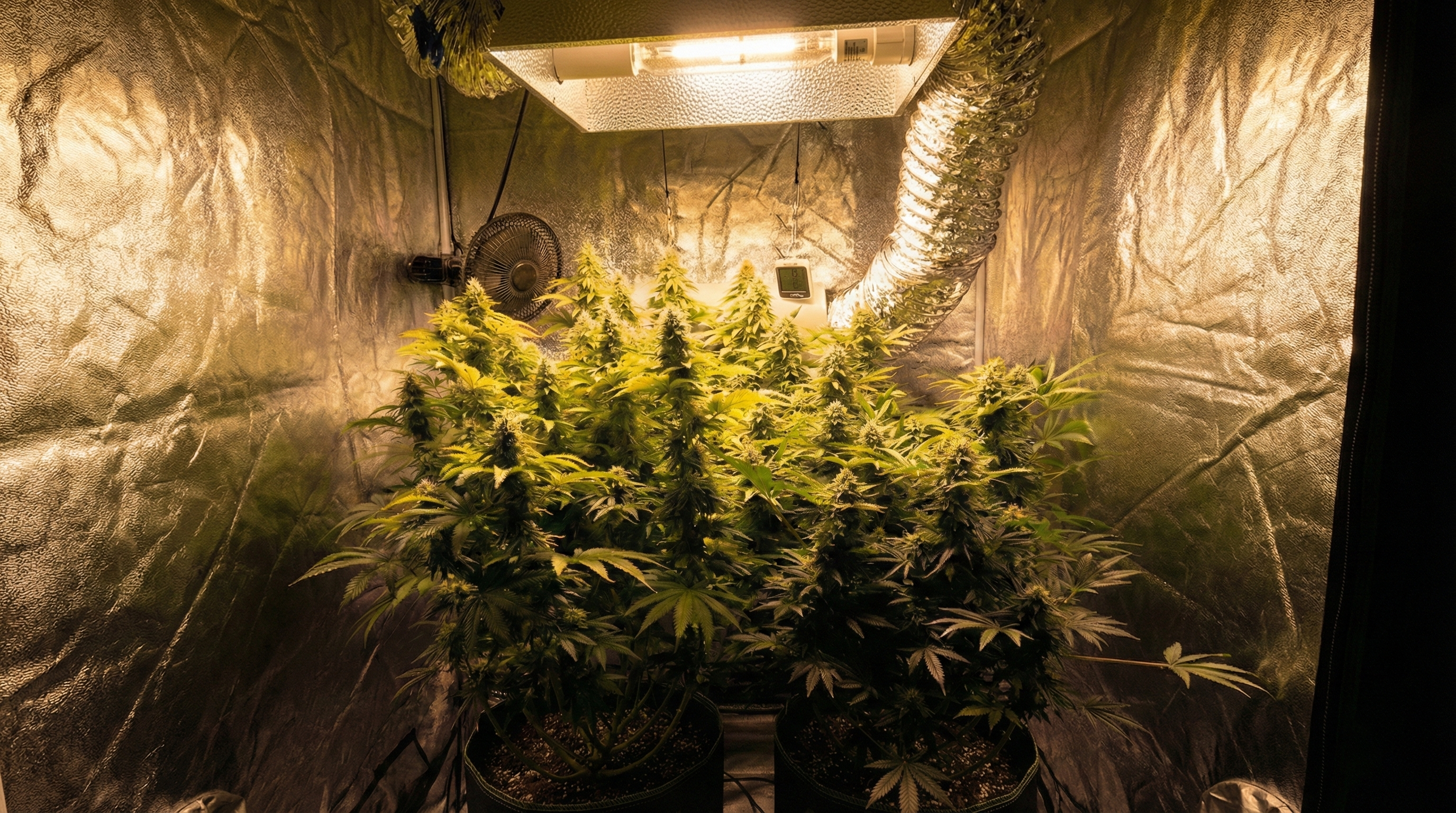
Remember: Do not wait until the first strong smell reaches the hallway to install the carbon filter. Test the complete air path during vegetative growth, when you can still correct ducting, noise, heat, and access without disturbing mature flowers.
Why Cannabis Smell Can Be Stronger Than the Plant Count Suggests
Cannabis odor is often described as “terpenes,” but the aroma is not produced by one chemical family. Terpenes and terpenoids contribute citrus, pine, floral, herbal, and many other notes. Research has also identified highly odor-active volatile sulfur compounds associated with skunk-like, tropical, fuel-like, and savory profiles. Some minor compounds can influence perception strongly even when present at low concentrations.
This helps explain why two tents with the same number of plants can smell completely different. The nose responds to the mixture and to the odor threshold of individual compounds, not simply to total terpene percentage. One cultivar may smell sweet and diffuse, another may create a sharp sulfurous note that is detectable at much lower concentration, and a third may change character as it matures.
Flower mass, temperature, and handling change the release
A larger amount of mature flower generally creates more potential emission, but environmental and working conditions decide how much enters the room. Warm air can increase the volatility of aromatic compounds. Direct airflow across flowers can carry them quickly toward an outlet. Pruning, brushing branches, moving pots, harvesting, and trimming disturb plant surfaces and can produce a short, obvious pulse.
Odor also accumulates when exhaust is reduced. A tent that seems mild under continuous filtration can smell much stronger after a fan stops, a controller raises the minimum too slowly, or a power interruption removes negative pressure. The plant did not suddenly change. The rate of removal changed.
“I only plan to grow one plant in a 2 x 2 tent. Will the apartment still smell?”
Question sent by: Marcus Hill, via e-mail.
It can. One trained plant may fill most of a 2 x 2 canopy and produce enough mature flower to make the room noticeable without filtration. Plan the enclosure around its finished canopy, not the number on the plant tag. A matched carbon filter, steady exhaust, sealed ducting, and slight negative pressure can reduce closed-tent odor substantially, but maintenance, harvest, and drying still need their own plan.
Low-odor genetics reduce pressure, not responsibility
Some cultivars are commonly described as milder than others, but “low odor” is not a measurable guarantee across every phenotype and environment. Seeds from the same named cultivar can express different aromatic intensity. Temperature, plant health, maturity, flower mass, and handling also change perception.
Choose genetics with a manageable aroma when that trait matters, but do not use the description as a replacement for exhaust filtration. The best time to discover that a phenotype is unusually loud is not the final two weeks of flower.
The Tent Does Not Remove Odor: The Air Path Does
A closed zipper slows direct exchange with the host room, but fabric, seams, sleeves, passive vents, cable openings, and pressure differences still move air. If the tent operates at neutral or positive pressure, aromatic air can leave through every available gap. If the exhaust creates slight negative pressure, those small openings become intake paths instead.
The complete route should be easy to describe: room air enters through screened passive or controlled intakes, crosses the plant zone, passes through the carbon filter, moves through the fan and sealed duct, then reaches a suitable exhaust destination. Any untreated shortcut around the carbon weakens the system.
Negative pressure means the tent exhaust removes slightly more air than the intake supplies.
The walls usually draw inward a little. This pressure direction helps keep unfiltered odor from being pushed through seams, but excessive suction can collapse walls, reduce usable space, strain the fan, and restrict intake airflow.
Negative pressure does not clean the air by itself. It only directs it. If the exhaust air bypasses the carbon, the system may keep the room cleaner while sending an obvious smell to the outlet. Containment and filtration must work together.
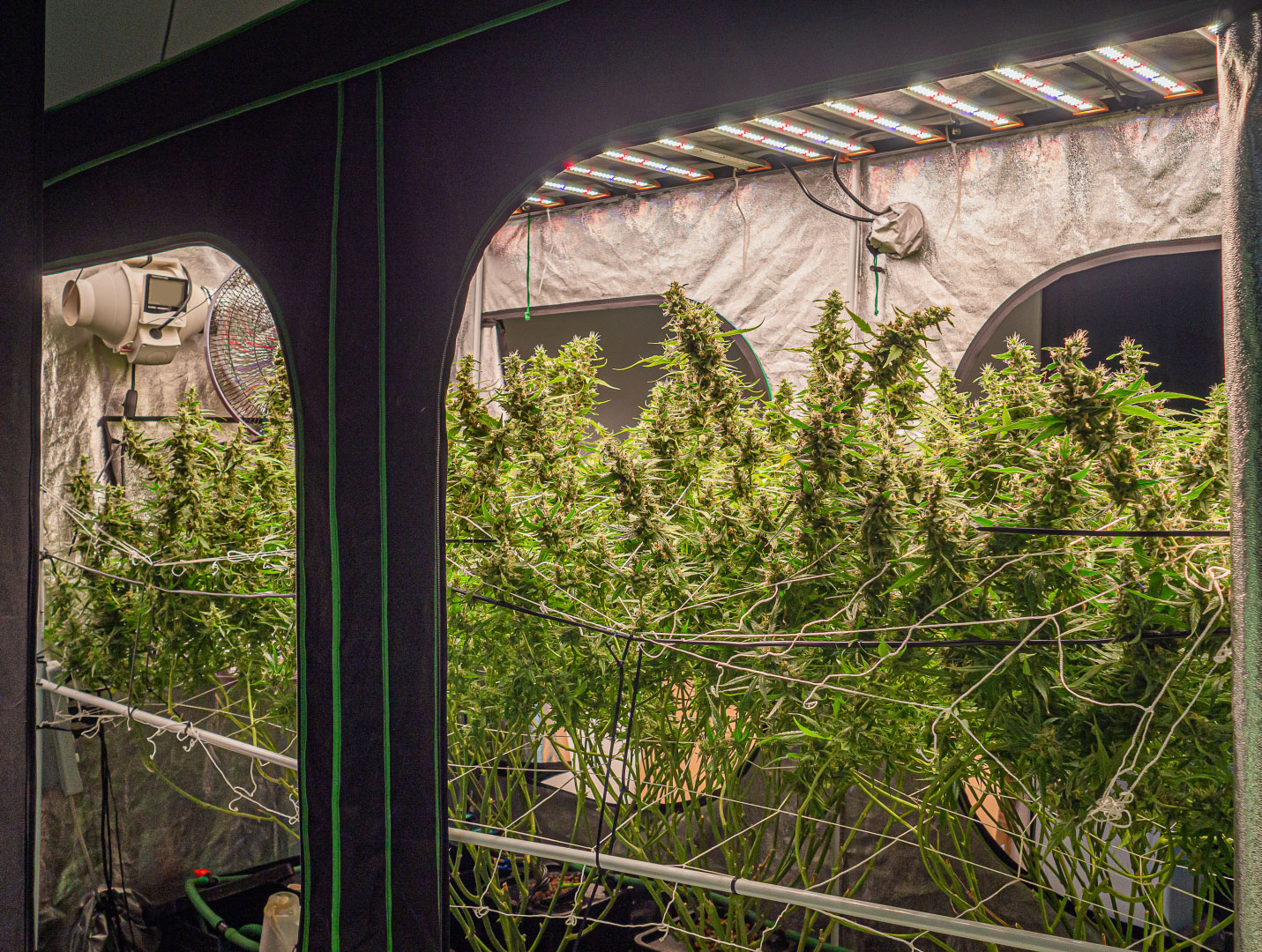
Pull-through and push-through filter layouts
In a common pull-through layout, the carbon filter sits inside the tent and the fan draws air through it before exhausting. This keeps the filter high in the warm air layer and makes a short filter-to-fan connection possible. A leak between the filter and fan can still draw untreated tent air into the duct, so clamps and joints remain important.
In a push-through layout, the fan sends air through a compatible carbon filter positioned later in the path. This can save tent height, but any positive-pressure duct leak before the filter can release untreated air into the room. Follow the filter manufacturer’s allowed airflow direction, prefilter placement, and maximum rating. Both arrangements can work when the parts are designed for the direction and the connections are airtight.
Advice: Keep the carbon path short enough to inspect. A complicated duct route hidden behind furniture may look tidy, but it makes crushed flex duct, loose clamps, bypass leaks, and standing condensation harder to find.
How Activated Carbon Reduces Cannabis Odor
Activated carbon removes many gaseous pollutants by adsorption. Molecules move from the air stream onto the solid carbon surface and into its pore structure. This is different from a HEPA filter, which is designed primarily to capture particles. Cannabis aroma is largely a gas-phase problem, so a thin dust filter alone cannot perform the same job.
Carbon has a finite working capacity. The US Environmental Protection Agency describes “breakthrough” as the point at which a meaningful amount of pollutant begins exiting the bed before the carbon reaches theoretical saturation. For a home grower, breakthrough is the practical moment when recognizable aroma appears at the filtered outlet even though the fan and ducting still operate correctly.
Filter performance depends on the carbon media, bed depth, air speed, odor load, humidity, temperature, sealing, and time in service. A date printed in an online article cannot know those conditions. Manufacturer service-life guidance is a starting point, while inspection at the outlet is the real field check.
Match the filter to actual operating airflow.
Use the fan performance curve, filter resistance, duct length, bends, silencers, and normal controller speed. Keep the real airflow within the filter manufacturer’s exhaust rating.
Choosing by duct diameter alone.
Two six-inch filters can contain different carbon masses, bed depths, pressure drops, and airflow limits. A matching flange does not prove that the fan and carbon bed are a working pair.
Too little airflow and too much airflow can both fail
Too little exhaust may not maintain negative pressure or remove odor at the rate it is produced. It can also allow heat and humidity to build. Excessive airflow creates a different problem: the fan may exceed the filter’s rated exhaust flow, reduce contact time, create noise, pull the walls inward aggressively, and make climate control difficult.
Start with tent volume, then account for the system rather than applying one universal multiplier. A 2 x 4 x 6.5 ft tent contains about 52 cubic feet (1.47 cubic metres). Exchanging that theoretical volume once per minute would begin near 52 CFM before restrictions. The final selection must then account for the carbon filter, duct length, bends, silencer, intake restriction, desired pressure, heat load, and the fan’s performance under static pressure.
Do not assume the free-air CFM printed in large type is the airflow you will get through a carbon bed and several bends. Compare the manufacturer’s performance data at resistance, then verify the result in the assembled tent. Slight wall draw, stable climate, and clean-smelling filtered exhaust are more useful than an isolated catalogue number.
| Component | Primary job | Common false assumption | Useful check |
|---|---|---|---|
| Tent shell | Creates a small, controllable airflow boundary | The fabric traps all smell by itself | Close the tent and confirm slight inward wall movement |
| Carbon filter | Adsorbs many gas-phase odor compounds from passing air | Any carbon layer removes every odor indefinitely | Compare the air before and after the filter at normal operation |
| Inline exhaust fan | Moves air and creates pressure direction | The free-air rating equals installed airflow | Use a performance curve and observe pressure with all restrictions installed |
| Ducting and clamps | Carry treated air to the intended destination | A loose sleeve connection is airtight | Inspect every joint, bend, pinhole, and unused port |
| Passive or active intake | Replaces exhausted air without overpowering the enclosure | More intake always improves ventilation | Confirm the intake does not create positive pressure |
| Host-room scrubber | Captures some odor released during access or work | It can replace filtering the tent exhaust | Use it as a secondary layer while keeping the source path controlled |
Humidity Can Reduce Carbon Filter Performance
Water vapour competes for adsorption space and can reduce the working capacity of activated carbon. The degree varies with carbon type, pore structure, air temperature, compounds, and moisture level. EPA technical material describes reduced activated-carbon performance in high relative humidity, and Can-Filters advises against running its products for long periods at or above 70% RH because moisture occupies the pore structure and shortens useful life.
That manufacturer number should not become a target for the crop. Dense flowering cannabis may need much drier conditions for disease management, depending on temperature, flower structure, air movement, and cultivar. The odor-control lesson is simpler: persistent high humidity is a problem for both mature flowers and the carbon system.
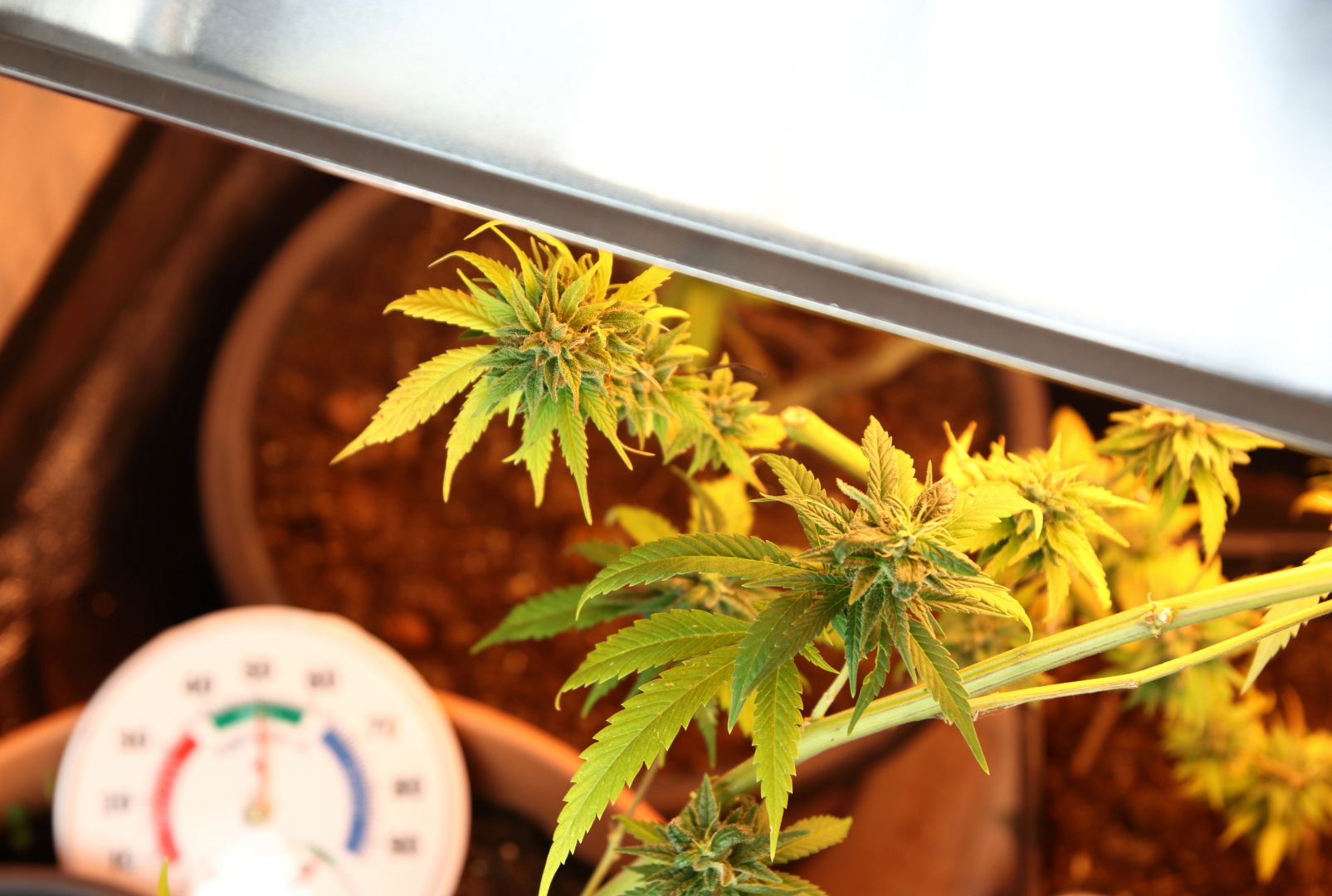
Why odor sometimes appears after lights-off
When the lights turn off, tent temperature can fall and relative humidity can rise even if the amount of water in the air changes slowly. Some controllers also reduce fan speed when heat disappears. That combination can weaken pressure, lower air exchange, and send wetter air through the carbon bed.
Keep a suitable minimum exhaust rate through the dark period unless the system is specifically engineered another way. Log both temperature and humidity, and check the host room or outlet at night. A daytime inspection can miss the exact conditions that produce the leak.
Pro Tip: Treat the host room as the tent’s lung room. If the room air is already warm, humid, or saturated with escaped odor, the enclosure cannot correct it by recirculating the same conditions.
Why a Tent Can Smell Even With a New Carbon Filter
A new filter does not prove that every outgoing molecule passes through its carbon. Installation errors often produce odor sooner than genuine saturation. Diagnose the location and timing of the smell before buying another filter.
Begin with three sniff points after spending several minutes in clean air: the closed-tent room, the duct joints, and the final exhaust outlet. Olfactory adaptation can make a grower underestimate a smell after working near the plants, so step away before checking. Do not put your face against moving machinery or open electrical equipment.
| What you notice | Likely area | What to inspect first | Best next action |
|---|---|---|---|
| Odor at the final exhaust outlet | Carbon performance or untreated bypass | Filter age, airflow rating, direction, humidity, filter-to-fan connection | Correct bypass or airflow; replace carbon if cleanly installed air still breaks through |
| Odor around a duct joint | Loose clamp, torn duct, or positive-pressure leak | Every connection between fan, filter, silencer, and outlet | Reseat, clamp, and seal with suitable HVAC materials |
| Odor in the room but not at the exhaust | Tent leak, door access, or unfiltered equipment port | Wall pressure, zippers, open sleeves, passive vents, recent maintenance | Restore negative pressure and close unused paths; add room scrubbing for access events |
| Odor only after lights-off | Controller minimum, humidity, or fan cycling | Night temperature, RH, exhaust speed, intake balance | Maintain a suitable minimum exhaust rate and manage the lung-room moisture |
| Odor returns gradually over weeks | Carbon breakthrough or dirty prefilter | Outlet aroma, prefilter dust, service time, current flower load | Clean or replace the prefilter as directed; replace the carbon when breakthrough is confirmed |
| Odor appears suddenly after moving equipment | Disconnected duct, shifted filter, or damaged seal | Physical connections and tent ports | Shut down safely, reconnect the path, then verify airflow before resuming normal work |
| Musty, sour, sewage-like, or rotten smell | Not normal flower aroma | Standing runoff, roots, reservoir, dead leaves, dense flowers, building moisture | Find and correct the biological or moisture source instead of masking it |
A musty or rotten smell deserves a different response from normal cannabis aroma. Inspect dense flowers for mold, the root zone for persistent saturation or decay, reservoirs for biofilm, trays for standing water, and the room for damp building materials. Carbon may reduce what you smell without solving the source.
A hot-plastic, burning, ozone-like, or electrical smell is not an odor-control problem.
Switch equipment off safely when possible, keep water away from electricity, and inspect plugs, cables, controllers, fan motors, and overloaded connections. Use a qualified electrician when the fault or circuit capacity exceeds your competence. Never keep a suspect device running because the crop needs ventilation.
The Door-Opening Problem
Opening the tent removes the pressure boundary at the largest possible point. The exhaust fan may still pull some air toward the filter, but aromatic air can roll into the room as branches move and the worker displaces air. Late flower can make even a brief opening obvious.
Plan routine access instead of leaving the door open while gathering tools. Prepare water, ties, scissors, waste bags, labels, and a clean tray first. Keep the exhaust running. Close the door between separate tasks when practical, and avoid brushing every flower while reaching for the back pots.
A secondary fan-and-carbon scrubber in the host room can help capture escaped gas-phase odor during maintenance. A portable purifier must contain a meaningful amount of sorbent designed for gases. A HEPA-only unit is useful for particles, but it should not be expected to adsorb cannabis aroma like a deep carbon bed.
“The exhaust smells clean, but the bedroom fills with odor whenever I water. Is the filter failing?”
Question sent by: Jenna Morrison, via Facebook page.
Not necessarily. A clean exhaust suggests the carbon is still doing useful work. The open door removes the enclosure boundary, and moving branches can release a strong pulse into the room. Prepare the task before opening, keep exhaust running, shorten the access period, and consider a suitable room scrubber. Also confirm that no intake fan creates positive pressure once the door closes.
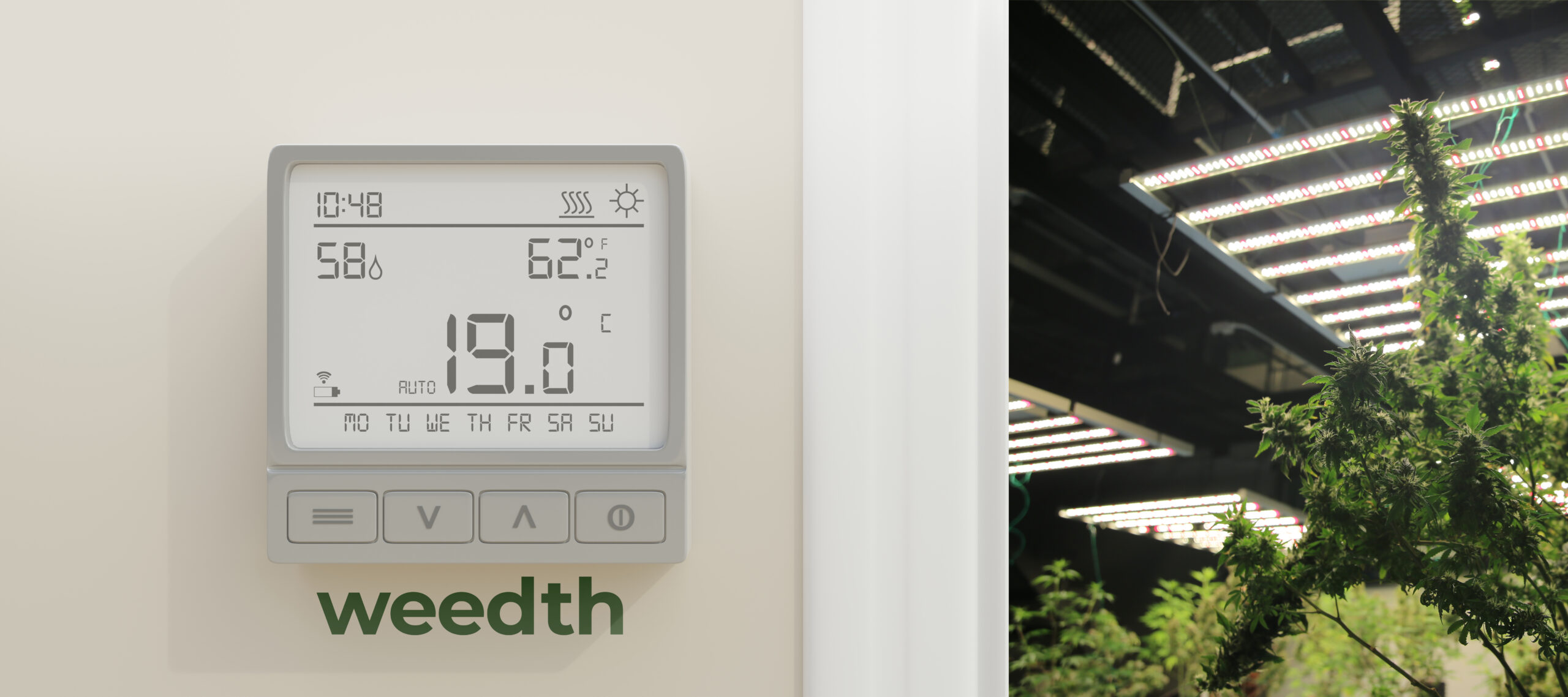
Harvest, Trimming, and Drying Need a Separate Odor Plan
Many otherwise successful systems fail at harvest because the crop leaves the controlled enclosure. A grower may cut several aromatic plants, carry branches through the home, trim for hours in an unfiltered room, then hang the crop in a closet with no carbon path. The flowering tent was only one part of the odor timeline.
Research from an indoor facility found the highest terpene emissions during trimming among the measured activities. A home harvest is smaller, but the mechanism is relevant: cutting and handling expose more surfaces and place the material outside its normal closed airflow path. Prepare the work area before harvest day.
If the grow tent will become the drying space, remove or safely reposition wet-crop equipment, protect darkness, maintain appropriate drying temperature and humidity, and keep the filtered exhaust operating at a rate that supports both climate and odor control. Do not crowd branches around a hot fan or force excessive direct airflow across flowers merely to increase carbon throughput.
If living plants remain in the tent, they still need their flowering light and climate. Freshly cut branches need a different dark environment. Trying to satisfy both in one open space can compromise drying quality and release odor. A staggered harvest therefore needs a separate filtered dry area or a cultivar and schedule plan that avoids the conflict.
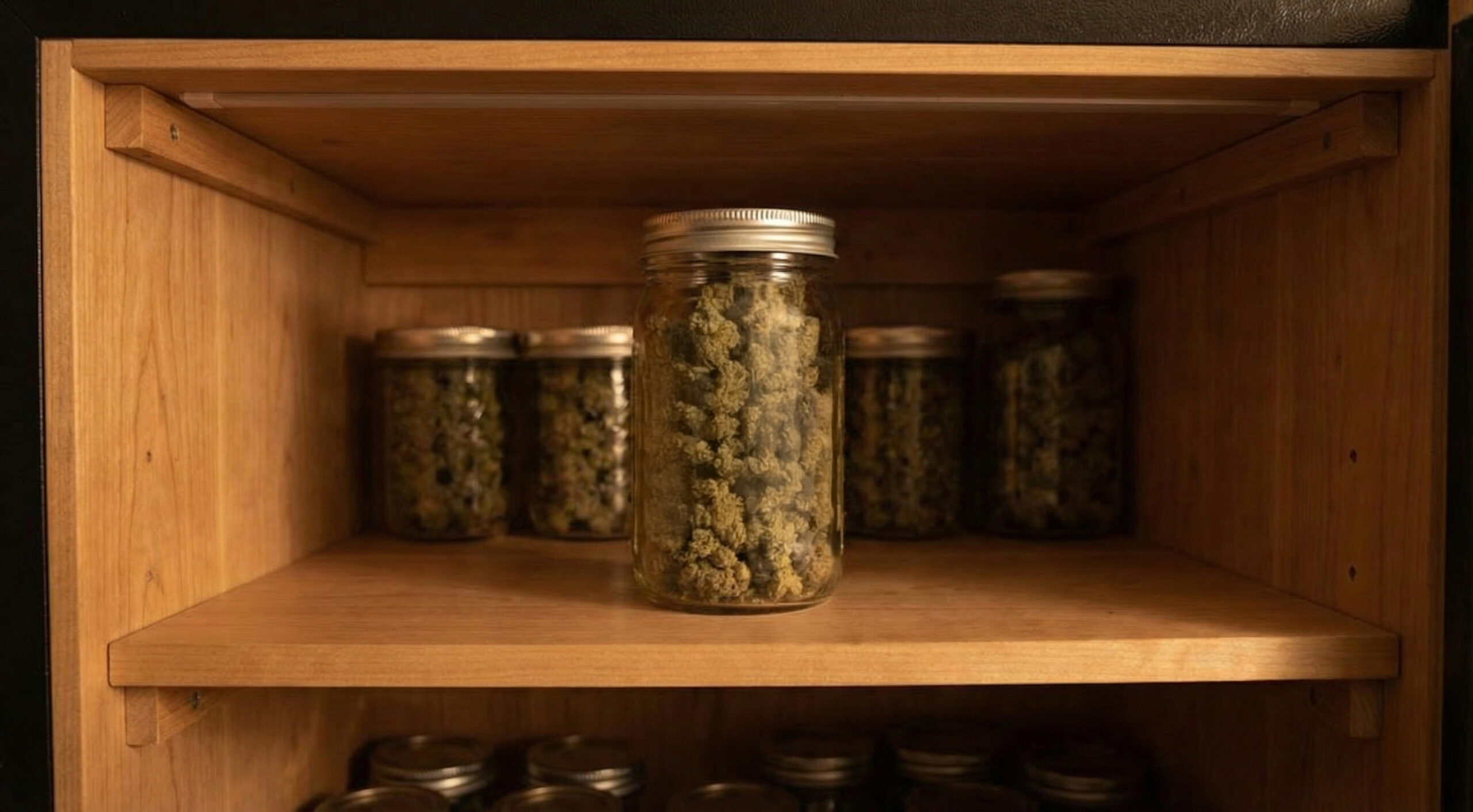
Important: Do not use fragrance sprays, essential-oil diffusers, incense, or odor-neutralizing gels inside the tent or drying space. Volatile fragrances and residues can affect the sensory quality of flowers, while smoke and aerosols add contaminants without repairing the airflow path.
Methods That Do Not Replace Carbon Filtration
Odor control products are often grouped together even though they solve different problems. Particle filters capture dust, spores, and other airborne particles. Sorbent media target gases. Fragrances add another odor. Oxidizing devices create reactive chemistry. Only the first two are filtration, and they are not interchangeable.
HEPA and thin carbon sheets
A HEPA filter can be useful for particles in a room, but cannabis aroma is not primarily a particle load. Some portable purifiers combine HEPA with activated carbon. EPA guidance notes that gas removal can be effective when the unit contains a large amount of appropriate carbon or other sorbent. A thin black pad marketed as “carbon” may have far less gas capacity than a packed grow-tent filter.
Masking fragrances and odor gels
Masking adds a competing smell. It does not prove that cannabis volatiles have been removed, and the combined odor may be even more noticeable. Keep strong fragrances away from the crop and from drying flowers. If a product is used elsewhere in a lawful home, follow its safety label and do not allow it to contaminate plant material.
Unfiltered outdoor exhaust
Sending raw tent air outdoors may remove odor from the room while moving the nuisance to neighbours, shared areas, windows, or the property boundary. Wind direction, outlet height, surrounding buildings, temperature, and background conditions make travel distance unpredictable. There is no honest universal answer to “how far will it smell.”
Filter the air before it reaches the final destination. Confirm that the discharge location complies with building, tenancy, fire, and local odor rules. Do not route moist exhaust into an attic, wall cavity, crawl space, or another area where condensation and mold can develop.
Do not use an ozone generator in an occupied home or grow area.
The California Air Resources Board warns that ozone generators can expose people and animals to harmful ozone and may create additional pollutants through indoor chemical reactions. Ozone can also deaden the sense of smell, which can hide a problem without providing safe source control.
Sealing the tent without dependable ventilation
Closing every vent and turning the fan off does not make a safe odor container. Heat and humidity can rise, carbon dioxide can fall, and odor accumulates until the door opens. A tent designed for continuous exchange needs a controlled intake and filtered exhaust, not a static bag around living plants.
How Long Does a Carbon Filter Last?
There is no single lifespan that fits every tent. Service life depends on carbon mass and type, odor concentration, airflow volume, humidity, temperature, dust loading, installation, and operating hours. Can-Filters gives a typical 12 to 18 months for one of its product lines, while also stating that contaminant concentration, relative humidity, and cleaned-air volume determine the real result. Apply the guidance for the product you actually own.
Do not replace a filter only because an online calendar reached a date, and do not keep it only because it looks clean outside. Record the installation date, flowering cycles, humidity events, and the first confirmed breakthrough. That history becomes a useful replacement forecast for the same setup.
Prefilter maintenance protects airflow
The fabric prefilter catches dust before it enters the carbon bed. As it loads, pressure drop increases and airflow can fall. Clean or replace it according to the manufacturer rather than washing the carbon bed itself. Water, detergents, and aggressive home refilling can damage performance or create channels.
A carbon filter is not necessarily ready for landfill the moment the room smells. First exclude an open door, duct leak, reversed installation, positive pressure, high humidity, a stopped fan, or untreated drying material. Replace the carbon when clean installation and correct airflow still produce recognizable filtered-outlet odor.
| Checkpoint | What to record | What a problem may cause | Response |
|---|---|---|---|
| Installation date | Date, filter model, carbon type, rated exhaust flow | Unknown age and mismatched parts | Keep the manual and label with the grow log |
| Prefilter condition | Visible dust and cleaning or replacement date | Higher resistance and lower airflow | Service only as the manufacturer directs |
| Humidity exposure | Long high-RH periods and condensation events | Reduced carbon capacity and biological growth risk | Correct the moisture source and reassess outlet odor |
| Installed airflow | Controller setting, duct changes, fan and filter pairing | Loss of pressure or excessive air speed through the bed | Use performance data and keep within the filter rating |
| Outlet odor | Date, crop stage, fan speed, RH, and whether the tent was closed | Confirmed breakthrough or bypass | Inspect sealing first, then replace carbon when breakthrough remains |
Power Outages and Fan Failures
When the exhaust stops, negative pressure disappears. Odor builds inside the enclosure and may diffuse through gaps, especially in late flower. Temperature and humidity can also rise, so the event is a crop and safety issue as well as a smell issue.
Use controllers and notifications that clearly report fan failure, high temperature, high humidity, or power loss when those features fit the setup. A compatible backup power supply may keep a small exhaust fan and controller operating briefly, but size and install it according to the electrical ratings. Do not improvise high-load battery systems or attempt to keep the entire lighting system running from unsuitable backup equipment.
Keep ports closed during an outage and avoid repeatedly opening the tent to check the smell. Restore safe ventilation first. If equipment smells hot, burned, or electrically abnormal, disconnect it safely and replace or repair it before restarting.
Field Advice: Test failure alarms before flowering. Unplug the fan at the controller during a supervised dry run, confirm the alert arrives, and verify that the system returns to its intended minimum speed after power is restored.
Odor Control Without Sacrificing Flower Quality
Odor control should support the crop environment rather than fight it. Running a fan at maximum speed solely to pull the walls inward can create unstable temperature, dry air, wind exposure, and noisy operation. Reducing exhaust too far to protect humidity can remove negative pressure and weaken carbon performance. The balanced setting meets climate and filtration needs together.
Do not spray flowers with perfumes, essential oils, deodorants, or household cleaners. Do not place masking gels inside the tent. Keep the canopy clean by removing dead material, controlling moisture, and preventing pests and mold, then let the carbon system handle airborne aroma.
Strong natural aroma is part of flower quality, but that aroma belongs in healthy mature flowers and controlled postharvest storage. A stable environment, gentle handling, clean drying space, and sealed curing containers protect the product while the ventilation system protects the surrounding room.
A Practical Odor-Control Setup Sequence
Build the system in an order that lets each decision support the next. Start with the lawful location and host room, then size the airflow path. Buying a filter before knowing the tent volume, duct route, heat load, and exhaust destination makes matching harder.
- Choose the host room. Confirm legal permission, electrical capacity, drainage, noise tolerance, intake air, and a suitable filtered exhaust destination.
- Calculate the enclosed volume. Record length, width, and height in cubic feet or cubic metres.
- Estimate the required operating airflow. Include heat, humidity, desired air exchange, filter resistance, duct length, bends, silencers, and intake restriction.
- Select a compatible fan and filter. Use performance curves and keep actual flow within the filter’s exhaust rating.
- Build the shortest practical sealed route. Support the equipment safely and keep joints accessible.
- Balance the intake. Create slight negative pressure without collapsing the tent.
- Run a full dry test. Operate lights, fan, controller, humidification or dehumidification, and the host room through day and night conditions.
- Test the access routine. Gather tools, open the tent, simulate watering and plant movement, then check how quickly the room scrubber and exhaust clear the released aroma.
- Plan harvest and drying. Decide where cut branches, trim waste, tools, and drying flowers will remain under controlled airflow.
- Log maintenance. Record filter installation, prefilter service, humidity events, duct changes, and odor checks.
We are not trying to create the strongest possible suction. We are creating one dependable route for odorous air, enough climate control to protect the plant, and a maintenance routine that catches failure before the room becomes the alarm.
Before Flowering Becomes Aromatic
- The cultivation location is lawful and permitted by the property owner.
- The carbon filter and fan are compatible at installed airflow, not only flange size.
- Every exhaust joint is clamped, sealed, supported, and accessible.
- The tent shows slight negative pressure with the door closed.
- The intake does not overpower the exhaust or blow the walls outward.
- The filtered exhaust has a suitable final destination.
- Night temperature and humidity have been measured, not assumed.
- The prefilter is clean and the carbon installation date is recorded.
- The room has a plan for odor released when the tent opens.
- Harvest, trimming, waste, transport through the home, and drying all have controlled locations.
- Power loss and fan-failure alerts have been tested.
- No ozone generator or strong fragrance product is used around people, animals, plants, or drying flowers.
Frequently Asked Questions About Grow Tent Smell
When do cannabis plants start to smell in a tent?
A light plant smell can appear during vegetative growth, and some cultivars become distinctive before flowering. The recognizable cannabis aroma usually rises as flowers develop, with late flower often producing the strongest closed-tent pressure. Install and test filtration before the transition rather than waiting for a specific week.
Can a carbon filter remove 100 percent of cannabis smell?
No home system can guarantee zero detection under every condition. A well-matched, sealed, and maintained carbon system can reduce closed-tent odor dramatically. The door opening, harvest, trimming, drying, power loss, high humidity, bypass leaks, or carbon breakthrough can still release aroma.
Should the exhaust fan run all night?
Most vented grow tents need a continuous minimum exhaust rate to maintain air exchange and negative pressure through the dark period. The exact speed depends on climate, plant load, filter, and host room. Do not let a temperature-only controller stop odor control whenever the light heat disappears.
Why does my new carbon filter still let smell through?
Check installation before assuming the carbon is defective. Common causes include excessive airflow, an unsealed connection, a leak between filter and fan, reversed or unsupported components, high humidity, positive pressure, open ports, or untreated air from harvesting and drying outside the tent.
Does a bigger carbon filter work better?
A larger compatible filter may provide more carbon mass, lower pressure drop, or longer contact time, but physical size alone is not the decision. Compare carbon type, bed depth, exhaust rating, flange, pressure drop, fan curve, mounting capacity, and available height. The tent frame must safely support the complete suspended load.
Is the filter better inside or outside the grow tent?
An internal pull-through layout is common because it captures warm tent air before the fan and keeps the untreated path short. An external push-through layout can save vertical space when the filter is designed for it. Either can work if airflow direction, prefilter placement, pressure zones, and duct sealing follow the manufacturer.
Will a normal air purifier remove cannabis odor?
A purifier needs a substantial gas-phase sorbent such as activated carbon to reduce odor. A HEPA-only purifier mainly captures particles. A room purifier can support the main tent system during access, but it should not replace filtering the source exhaust.
How far can grow tent smell travel?
There is no dependable distance. Odor movement depends on emission rate, filtration, outlet location, wind, temperature, humidity, terrain, building openings, and the sensitivity of the person smelling it. If the outlet is recognizably aromatic, correct the system instead of relying on distance.
Does drying cannabis smell more than growing it?
Drying can create strong whole-room odor because a large amount of cut flower is exposed outside the living-plant canopy. Harvest and trimming may produce the strongest short pulses, while early drying can remain continuously noticeable. Give the drying space controlled temperature, humidity, airflow, darkness, and carbon filtration.
Can I turn the carbon filter off during vegetative growth to make it last longer?
You may not need full odor-control airflow for a small vegetative canopy, but the tent still needs safe air exchange and climate control. If the filter is bypassed or removed early, reinstall and test it well before flowering. Do not learn the system under the first heavy odor load.
Build for the Strongest Week, Not the Mildest Day
A grow tent can be very smelly inside and still remain manageable outside when the air path is designed correctly. The shell gives us a small boundary. The fan gives the air direction. The carbon bed removes much of the gas-phase odor, and slight negative pressure keeps untreated air from taking easier routes.
The setup should be judged during late flower, with the real fan speed, night humidity, duct route, and door-opening routine. Then it must survive harvest and drying, when the crop leaves the enclosure and handling raises emissions. A clean-smelling outlet, stable climate, and repeatable maintenance record tell us more than a promise that a tent is “smell-proof.”
Plan for the strongest cultivar and the most aromatic task you reasonably expect. If the system handles that condition without compromising electrical safety, flower health, or drying quality, the quieter stages become much easier to manage.
Selected Research and Technical Sources
- Identification of prenylated volatile sulfur compounds in cannabis
- Terpene emission profiles through cannabis cultivation and processing activities
- US EPA guidance on activated-carbon adsorber performance and breakthrough
- US EPA guide to particle and gas-phase air cleaners
- California Air Resources Board warning on ozone-generating air cleaners
- New York Office of Cannabis Management home-cultivation odor guidance
- Can-Filters technical FAQ on airflow, humidity, prefilters, and service life
Share this article
A quick overview of the topics covered in this article.
Follow us
Latest articles
September 26, 2026
September 26, 2026
September 26, 2026
September 26, 2026