
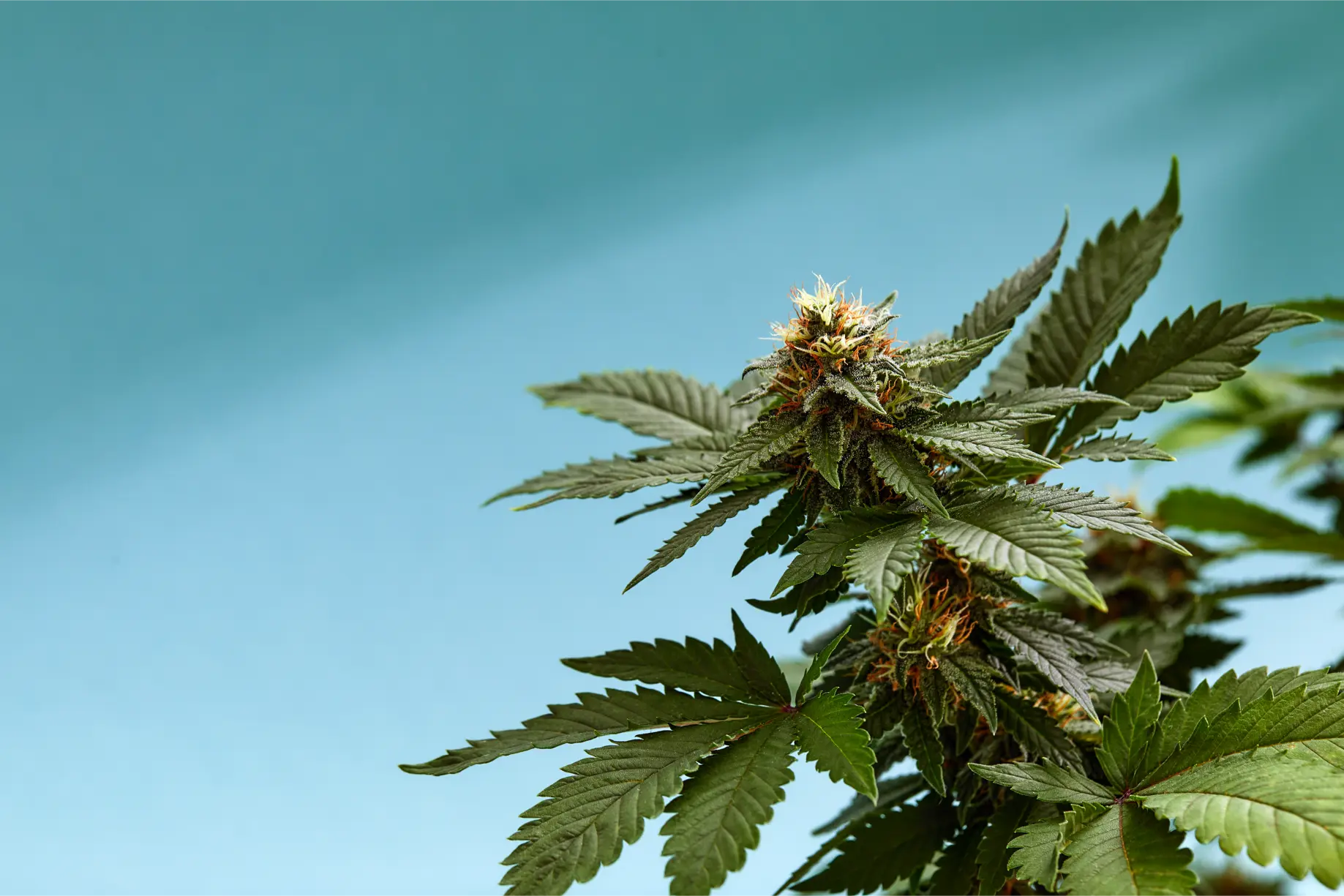
Ace Of Spades
Ace of Spades is an indica-leaning hybrid built from Black Cherry Soda x Jack the Ripper, and the practical value of that cross becomes obvious once the plant is grown rather than merely described. The Black Cherry Soda side can contribute dark fruit, broad branching, color, and physical relaxation. Jack the Ripper can add faster vertical movement, citrus, resin, and a brighter mental front end. The result is a cultivar that can become both bushy and tall, produce large heavy flowers, and finish with a flavor profile that moves from berry sweetness into lemon, earth, spice, and a faintly skunky background.
The cultivar is often described as easy because it grows quickly and produces generously, but that description misses its real cultivation challenge. Ace of Spades does not usually need complicated feeding or exotic techniques. It needs space planning, branch selection, support, and humidity discipline. A grower who leaves every vigorous side shoot can create an impressive plant with too many shaded flower sites. A grower who opens the structure early and protects the aromatic fruit and citrus notes during drying can produce a much higher percentage of premium flower.
This guide treats Ace of Spades as a quality-focused cultivar rather than a color novelty. Purple, blue, or pink tones can appear in some phenotypes, but pigmentation is not the target. Dense mature calyxes, clean resin, persistent berry-lemon flavor, and a balanced euphoric-to-relaxing effect are the real markers of a strong run.
Strain Features
| Feature | Details |
|---|---|
| Type | Indica-leaning hybrid |
| Genetics | Black Cherry Soda x Jack the Ripper |
| Typical THC | Commonly reported in the high teens to low 20s, with phenotype and test variation |
| CBD | Usually low |
| Flowering time | Commonly around 8-9 weeks indoors |
| Plant structure | Fast-growing, broad branching, medium-tall to tall depending on phenotype |
| Stretch | Moderate, sometimes stronger in Jack the Ripper-leaning plants |
| Yield | Medium-high to high with good canopy management |
| Bud structure | Large, heavy, resinous clusters; potentially colorful late in flower |
| Aroma | Cherry-like fruit, dark berry, lemon, earth, spice, skunk |
| Flavor | Sweet berry and citrus with earthy, peppery, herbal finish |
| Common terpene pattern | Limonene, caryophyllene, humulene are frequently reported |
| Grow difficulty | Moderate, easier biologically than structurally |
| Training response | Good response to topping, LST, pruning, and screens |
| Main indoor risk | Overcrowding and branch loading |
| Main outdoor risk | Dense flowers meeting late rain or prolonged humidity |
| Quality priority | Keep fruit and lemon clear through harvest, dry, and cure |
Genetic Lineage
Ace of Spades is best understood by looking at the tension between its two parents. Black Cherry Soda is associated with dark fruit, colorful expression, resin, a broad plant frame, and a calmer physical finish. Jack the Ripper is a more energetic genetic influence, known for citrus-forward aroma, strong resin production, rapid growth, and a more cerebral effect. Putting those together creates a plant that is neither a classic squat indica nor a narrow sativa.
That mixed architecture explains why Ace of Spades can surprise indoor growers. The leaf shape and early bushiness may suggest a compact plant, yet selected shoots can continue extending strongly after the photoperiod change. If the plant is allowed to enter flower with a dense ball of branches, the early stretch increases overlap rather than creating useful separation. The same genetic vigor is valuable when branches are organized into a deliberate canopy.
The Black Cherry Soda influence is especially relevant to flower quality. Some Ace of Spades phenotypes develop attractive red, violet, blue, or purple tones late in bloom. Those colors are partly genetic and can become stronger under cooler finishing temperatures, but forcing severe cold to increase pigmentation is poor cultivation. Anthocyanin expression does not compensate for stalled metabolism, wet roots, or condensation. A green phenotype with better resin, flavor, and flower structure is a better keeper than a purple phenotype with weak aroma.
Jack the Ripper contributes a second selection axis: citrus intensity and stretch. A more Jack-dominant plant may finish with sharper lemon, more upright flower spears, and a more stimulating onset. A Black Cherry Soda-dominant phenotype may stay broader, lean darker in fruit aroma, and finish with heavier body effects. The most balanced keepers often show dark-fruit aroma on the live flower, lemon when the resin is disturbed, and enough vigor to fill a canopy without becoming difficult to contain.
Phenotype selection should continue beyond harvest. Ace of Spades can smell impressive while growing because both fruit and citrus volatiles are expressive in fresh resin. What matters is whether the cured flower preserves that contrast. If all phenotypes are dried together under poor conditions, the grower loses the ability to distinguish genetic quality from post-harvest damage. Label plants individually and cure representative samples separately before deciding what to keep.
The genetic cross also helps explain why the cultivar has an effect that can begin brighter than expected. The early experience often includes euphoria, mental movement, and a lifted mood before the heavier relaxation builds. That progression is more informative than a simple indica percentage.
Effect Breakdown
Ace of Spades usually opens with a relatively quick shift in mood. Users commonly describe a euphoric or mentally loosened first stage, sometimes with a creative, conversational, or lightly focused quality. This early brightness is where the Jack the Ripper ancestry is easiest to recognize. The strain may feel more animated in the first twenty to forty minutes than its indica-leaning reputation suggests.
The emotional tone is generally warm rather than racy at moderate doses. The user may feel tension recede and attention become less rigid. Music, food, a film, or relaxed conversation can become more engaging. This does not mean the strain is universally calming. A high dose can still feel intense to a low-tolerance user, particularly when the material is potent and freshly cured.
As the high develops, physical relaxation becomes more obvious. Shoulders and limbs feel heavier, the urge to move can decrease, and appetite may increase. At this stage the cultivar becomes more clearly evening-oriented. The mental effect usually remains pleasant, but productivity becomes less predictable. A task that felt interesting during the onset may become optional once the body effect deepens.
The late phase can become sleepy. This is one reason Ace of Spades is often described by consumers as a nighttime strain. Dose is the deciding variable. A small amount may remain balanced and social. A larger amount can turn the same session into couch-focused relaxation and eventual drowsiness.
Because of that progression, the strain suits users who like a transition rather than an immediate sedative wall. It can fit the period between the end of work and sleep, where a consumer wants first to decompress and later to become physically quiet. It is less ideal for someone who needs guaranteed alertness for several hours.
Negative effects can include dry mouth, dry eyes, dizziness, anxiety, or a heavy feeling when too much is consumed. The combination of euphoric onset and later body load can be disorienting to a novice who redoses too quickly. Start low and wait for the full effect before adding more.
Harvest timing changes the emphasis. Earlier, mostly cloudy trichomes can preserve more brightness. Allowing a larger amber fraction generally shifts the experience toward heavier relaxation, but pushing the plant far beyond peak maturity can sacrifice citrus clarity and make the final effect less nuanced. The ideal harvest is therefore a compromise between flavor, resin maturity, and the desired effect.
Flavor & Aroma Profile
Ace of Spades is most interesting when the fruit and citrus remain separate enough to identify. The jar aroma can begin with dark berry, cherry skin, or sweet red fruit, followed by lemon peel, damp earth, pepper, herbs, and a mild skunk note. Some flowers lean more toward berry candy. Others are earthier and sharper.
The live plant tends to become increasingly pungent as the flowers swell. Stem rubs early in development may be mostly green, citrus, and spice. In mid bloom, dark fruit starts to appear. By late bloom, the best phenotypes smell like berry syrup cut with lemon rind and earthy resin rather than simple sweetness.
On inhalation, fruit is often strongest at lower vaporization temperatures, where cherry and berry can remain clear. The exhale reveals more citrus, pepper, earth, and herbal notes. Combustion naturally shifts the balance toward deeper roasted and spicy flavors, but a properly cured flower should still leave a recognizable sweet-fruit residue rather than becoming generic smoke.
The Black Cherry Soda side makes the cultivar vulnerable to one common quality failure: aroma without flavor. A jar can smell strongly of fruit while the smoke tastes flat if flowers were harvested too early, dried too quickly, or stored warm. Aroma intensity alone should not be used as the final quality metric. Weedth judges flavor persistence, smoothness, and whether the live plant character survives consumption.
The lemon side is equally fragile. Monoterpene-rich top notes are volatile, so prolonged high canopy temperatures or hot post-harvest air can strip the fresh part of the profile. If the cured flower tastes mostly earthy and peppery, the cultivar may still be potent, but much of its distinguishing identity has been lost.
Some phenotypes develop a mild sweet-and-sour character after several weeks of cure. The fruit becomes less candy-like and more like dark fruit skin, while citrus and spice integrate into the background. This is often preferable to an aggressively sweet early cure because it indicates the aroma is becoming layered rather than simply fading.
Dominant Terpenes
Common analytical profiles for Ace of Spades frequently emphasize limonene, caryophyllene, and humulene, although individual plants can differ substantially.
Limonene supports the lemon, citrus peel, and bright top end. It is particularly noticeable when the flower is broken open or vaporized. Because it is volatile, growers pursuing flavor should keep late-flower heat reasonable and avoid a fast, warm dry.
Caryophyllene contributes pepper, dry spice, and woody warmth. It helps bridge the sweet fruit and earthy base so the strain does not taste like candy alone. Caryophyllene is also studied for biological activity, but its presence in a strain is not evidence that the flower treats inflammation, pain, or anxiety.
Humulene can add dry wood, herbal depth, hop-like earth, and a slightly bitter edge. In a fruit-heavy phenotype it acts almost like structure in a food recipe, preventing sweetness from becoming one-dimensional.
Other terpenes may include myrcene, pinene, linalool, or smaller amounts of additional monoterpenes and sesquiterpenes. The exact ranking depends on genotype, environment, harvest stage, and lab method. Growers should treat a single terpene panel as a snapshot, not the permanent identity of the cultivar.
From a cultivation perspective, the key is not to manipulate one terpene in isolation. The plant's aromatic balance is a whole-system result. Healthy roots, adequate but not excessive nutrition, stable light, moderate flower temperature, full maturity, and controlled drying are more defensible tools than stress tricks designed to "force terpenes."
Indoor vs. Outdoor Growing
Indoors, Ace of Spades needs more lateral space than its indica label may suggest. The plant can branch heavily while also adding enough stretch to stack tops into each other. A grower using a small tent should limit plant count and train each plant into its own footprint. Crowding several vigorous plants together often creates more trimming work and lower-quality interior buds rather than more premium yield.
A screen works well because strong side branches can be distributed horizontally. However, the screen should not be filled completely in veg. Leave room for the branches to rise and widen during the first weeks of flower. The cultivar's eight-to-nine-week finish makes it reasonably efficient once the canopy is built.
Indoor environmental control is valuable for its dense flowers. Lower dark-period humidity as the colas harden. Air should pass through the canopy rather than only over the top. Large oscillating airflow directed straight at flowers can cause localized drying and leaf stress, so use multiple gentle air paths.
Outdoors, Ace of Spades can become a large, productive bush when root volume is generous. Early topping allows sunlight to reach several major arms. A wide structure also reduces wind leverage compared with one tall main stem. Support becomes increasingly important once the large flowers gain water weight after rain.
The main outdoor limitation is the relationship between flower density and autumn weather. The cultivar can finish relatively early compared with long tropical sativas, but dense flowers still dislike repeated wet nights. Growers in climates with reliable late-summer sun have an easier path. In humid regions, choose the most open site available and prepare rain protection that does not trap moisture.
Outdoor color can be dramatic when genetics and seasonal temperatures align. Do not chase it by withholding nutrients, flooding roots with cold water, or exposing flowers to frost. Healthy pigmentation is a bonus. The premium target remains resin condition, aroma, and disease-free flower.
Indoor production favors repeatability and flavor control. Outdoor production favors scale and natural branch development. Both can produce excellent Ace of Spades when the plant remains open enough to dry after irrigation, rain, or night humidity.
Strain-Specific Grow Guidance
Early vigor and spacing
Ace of Spades can establish rapidly. Seedlings and rooted clones often move from modest size to a broad vegetative frame once the root system is active. This is the moment to decide how many primary branches the final plant should carry. If every strong shoot is allowed to become a leader, the canopy becomes difficult to separate later.
For a small indoor plant, four to eight primary tops may be enough. In a larger footprint, more can be used, but each top should have its own light corridor. The objective is not mathematical symmetry. It is air and light around each future flower column.
Topping and LST
Top after the plant has enough healthy nodes and a vigorous root system. The cultivar generally recovers well. Once new leaders appear, bend them outward and slightly downward to establish branch angle. Black Cherry Soda influence can create substantial side branching, so the grower often needs fewer toppings than expected.
High-stress training late in veg should be used cautiously. Supercropping can control a dominant shoot, but repeated stem damage just before flowering can create uneven recovery. Use the least stressful method that achieves the structure.
Stretch
Stretch is phenotype-dependent. Jack the Ripper-leaning plants can move noticeably. Record flip height. If a first-run plant doubles, use that information rather than assuming a universal ratio. Tall expressions should be flipped earlier or trained longer horizontally.
When stretch begins, remove only weak shoots that clearly cannot reach the productive layer. A second cleanup after stretch can remove late interior growth. Avoid constant daily pruning; the plant benefits from periods of uninterrupted growth.
Leaf density and airflow
Ace of Spades can create large leaves and overlapping branch layers. The goal of defoliation is to break up moisture pockets, not to expose every bud directly. Remove leaves that lie on top of each other, touch the medium, or block airflow through the center. Keep healthy leaves that are actively supplying the branch.
Late in flower, inspect inside the largest colas. A room sensor can show 45% RH while the microclimate inside a dense cluster remains much wetter. Browning sugar leaves that pull out easily can indicate hidden flower damage and should trigger immediate inspection.
Root-zone behavior
The plant's fast top growth can encourage overwatering because a large canopy looks thirsty. Irrigation should still follow root demand and medium characteristics. In soil, allow enough dry-back for oxygen to return to pore spaces without taking the plant to severe wilt. In coco, maintain more frequent irrigation but preserve drainage and avoid stagnant runoff.
A container that stays wet for too long can slow growth and increase leaf density without improving flower quality. Root-zone oxygen is a yield factor.
Nutrient response
Ace of Spades generally performs well on moderate nutrition. Dark, clawed leaves are a sign to reduce nitrogen, particularly near the flowering transition. Excess nitrogen can extend leafy growth and reduce the clean separation between flower clusters.
During mid flower, maintain balanced phosphorus and potassium availability without treating "PK" as a cure-all. If the root system is unhealthy or the canopy is overheated, adding more salts will not create larger buds. Healthy tissue, light, water, and carbon supply are the foundation.
Light
The cultivar can use strong flower lighting when acclimated gradually. Even canopy distribution is more important than maximum center PPFD. High-output tops near the fixture may mature faster and dry more aggressively while edge branches lag. Measure several canopy points.
Cannabis research supports the general relationship between higher appropriate light intensity and higher flower yield, but does not support the idea that every plant should be pushed to the same maximum. Watch leaf posture, bleaching, temperature, and water demand.
Humidity
Humidity is the critical late-flower variable. As buds become large and heavy, reduce relative humidity and prevent sharp dark-period spikes. Dehumidification capacity should be sized for the plant's actual transpiration load, not the empty room.
The biggest risk occurs after lights off. Air cools, RH rises, and water can condense on cold surfaces. Keep air moving gently, maintain extraction, and avoid unnecessary temperature collapse.
Support
Build support before the flowers demand it
Install support while branches are still upright. A trellis can support multiple tops indoors. Outdoors, use individual stakes, perimeter cages, or horizontal netting. Do not wait for branches to crease under flower weight. Once stem tissue is damaged, the plant spends energy maintaining injured structure and infection risk increases.
Flower development
Ace of Spades often starts forming recognizable clusters quickly, then hardens and gains mass through mid and late flower. Color may appear gradually. Do not interpret purple as maturity. Look for calyx swelling, receding fresh pistils, resin opacity, aroma integration, and trichome development.
Harvest
A balanced harvest often occurs when most calyx trichomes are cloudy and a modest amber fraction has developed. Growers who want a brighter effect can harvest slightly earlier within full maturity; those who want heavier relaxation can wait longer. Avoid waiting so long that fresh lemon and berry notes become muted.
Phenotype Selection and Second-Run Optimization
Ace of Spades benefits from a more disciplined phenotype log than many growers give it. During vegetative growth, record branch angle, internodal spacing, leaf width, rooting speed, and how quickly the plant recovers from topping. Once flowering begins, add stretch ratio, time to visible flower formation, resin onset, aroma direction, and whether side branches can hold themselves upright. These observations make it possible to distinguish a plant that is merely vigorous from one that is genuinely efficient.
A useful keeper should convert its vegetative energy into flower without creating an excessive leaf burden. If two plants yield similarly, the phenotype with fewer weak interior sites and a cleaner calyx-to-leaf ratio usually produces more premium finished flower after trimming. That difference matters more than a small advantage in wet harvest weight.
Track aroma at three checkpoints. The first is mid flower, when the fruit and citrus begin to separate. The second is immediately before harvest, when the profile should feel mature rather than green. The third is after four to six weeks of cure. A phenotype that smells like cherry candy on the plant but cures into plain earth may be visually impressive without being a flavor keeper. A plant that retains dark fruit and lemon through cure deserves more attention even if its live aroma was less explosive.
The second run should use information from the first rather than repeating the same schedule. If the plant stretched more than expected, reduce flip height. If the lower branches remained soft, clean the next plant more aggressively before stretch ends. If top colas matured much earlier than the edges, improve light uniformity rather than simply adding intensity. If the dry finished too quickly, retain larger branches or more leaf material next time.
Diagnosing Quality Problems Before Harvest
If Ace of Spades develops very leafy flowers, first review late vegetative nitrogen and canopy light before adding more bloom inputs. Leafy flowers can be genetic, but excessive nitrogen and shaded bud sites often amplify the problem. If flowers are large but loose, inspect temperature, light intensity, root health, and whether the plant experienced repeated overwatering.
If color develops while resin remains clear, do not harvest for appearance. Pigment expression and gland maturity are separate processes. If aroma weakens abruptly in the final week, check canopy temperature and irrigation stress. A plant allowed to wilt repeatedly under strong light can lose aromatic intensity even if the flowers continue to look attractive.
If the largest buds show isolated brown sugar leaves, inspect immediately for internal damage. Do not simply pull the leaf and move on. A dead leaf can indicate a small section of Botrytis deeper in the flower. Open the cluster carefully, remove compromised material well beyond visible damage, sanitize tools, and reassess room humidity.
If the plant remains dark green and drinking heavily near harvest, do not force a dramatic fade. A natural finish is useful, but starving or severely drying a healthy plant is not required for smooth flower. Smoothness is influenced heavily by drying, curing, combustion conditions, and overall plant health, not by making leaves yellow on command.
Premium-Bud Percentage as the Real Yield Metric
Ace of Spades can produce impressive biomass, but the more useful question is how much of the dried harvest belongs in the premium jar. Large top flowers that are dense, aromatic, and evenly mature have greater value than an additional layer of shaded popcorn. For that reason, weigh or at least separate top-grade flower, secondary flower, and trim after the first run. The ratio reveals whether the canopy design was efficient.
If premium percentage is low, the first correction should usually be structural: fewer competing branches, shallower canopy depth, and more even light. If premium percentage is already high, then modest increases in total plant size or light intensity can be considered. This order prevents the common mistake of scaling an inefficient canopy.
The cultivar is capable of producing both visual appeal and strong flavor, so there is little reason to accept a harvest where one quality substitutes for the other. The goal is not simply purple flowers, nor simply high grams. The goal is mature resinous flowers that look attractive and still deliver dark fruit, lemon, earth, and spice after cure.
Weedth Bud Flavor Tips
Ace of Spades should finish with a dark-fruit and lemon contrast. The grower should protect that contrast from the final two weeks onward.
Do not increase flower temperature late in bloom in an attempt to accelerate finish. Warm flowers lose volatile top notes faster and may continue drinking while the grower assumes they are "ripening." Maintain a stable environment and allow the plant to finish biologically.
Avoid foliar products once flowers are dense. Even products considered safe in veg can leave residues or introduce moisture into flower interiors. Late flower should be clean.
Harvest during a cool part of the cycle if possible. The exact hour is less important than avoiding a hot canopy that has just spent hours under maximum light. Allow the room to return to a moderate condition before cutting.
Handle resinous branches gently. Ace of Spades can be very sticky. Every time flowers are squeezed, dragged through netting, or thrown into a bin, trichome heads are damaged. Cut support netting away from the plant rather than forcing large colas backward through small squares.
Dry in darkness with controlled temperature and humidity. A slower branch dry helps preserve fruit and citrus, but "slow" should not mean stagnant. Clean air exchange is necessary to remove water and prevent fungal growth. The correct pace is one where the outside does not become crisp while the inside remains wet.
Scientific post-harvest studies show that cannabis volatile profiles change during drying and storage. This supports a conservative approach: limit heat, light, and unnecessary air exchange after the flowers are dry enough for cure.
During cure, smell for three things. First, the fruit should become cleaner rather than fermented. Second, the lemon should remain present when a bud is broken. Third, earth and spice should integrate rather than dominate. An ammonia or wet-hay smell means moisture is too high and requires immediate correction.
Do not add fruit peels, flavorings, or external aromatic material to the curing container. These can add microbial risk and create an artificial smell that hides whether the cultivar actually retained its genetics.
For long-term storage, keep cured flower cool, dark, and sealed. Repeatedly opening a large master jar exposes the entire harvest to fresh oxygen. Divide long-term flower into smaller containers so only the active portion is opened frequently.
Weedth Bud Boost Tips
The main yield lever is early branch organization. Ace of Spades naturally wants to create side growth, so use that tendency instead of forcing a single-cola structure.
A screen can convert side branches into an even canopy, but do not let it become a tangled web. Each branch should be traceable from base to tip. If two branches occupy the same vertical channel, keep the stronger one and remove or redirect the weaker one.
The cultivar can perform in a Sea of Green style, but its bushy nature means plant density must be conservative. A true single-cola approach may not exploit the genetics as effectively as fewer plants with controlled branching.
Root volume influences final branch capacity. In soil, too small a pot can lead to frequent dry-back and unstable nutrient concentration late in flower. Too large a pot in early veg can encourage overwatering. Size containers to the intended veg duration and irrigation style.
Use strong light only after the canopy is uniform. The most efficient photons are those that hit productive tissue rather than the floor or a wall. Reflective surfaces help, but plant spacing and branch placement matter more.
CO2 enrichment is optional and only makes sense in a controlled high-light room. Without environmental control, increasing CO2 does not fix low light, hot roots, poor irrigation, or weak airflow.
Outdoors, build a structural cage around the plant early. When branches are young, they can be spread to occupy the full sun footprint. By late summer, the support should already be capable of carrying wet flower after a storm.
Do not use severe drought as a resin-boosting technique. Water stress can reduce photosynthesis and final biomass. Mild normal dry-back is enough. The same applies to deliberate stem splitting or other injury-based "boosts." Ace of Spades already produces resin when healthy.
If quality yield is the goal, remove tiny shaded lower sites. The wet weight may decline, but the ratio of dense, trichome-rich flowers rises. Premium-bud percentage is the correct yield metric for this cultivar.
Medical Uses & Benefits
Consumers frequently report choosing Ace of Spades for relaxation, sleepiness, stress reduction, appetite, and temporary relief from discomfort. These are user-reported experiences, not proof of treatment efficacy.
The effect progression provides a plausible experiential reason for these reports. The euphoric onset can make stress feel less central, while the later body heaviness can make rest easier. Some users also report increased appetite.
High THC can create the opposite response in sensitive individuals. Anxiety, dizziness, impaired coordination, and uncomfortable sedation are possible. Anyone using cannabis for a health condition should seek professional medical guidance and consider medication interactions and personal risk factors.
Terpenes commonly found in Ace of Spades are studied in pharmacology, but strain-level medical claims cannot be inferred from aroma chemistry alone. A cultivar is not a standardized dose.
For practical use, the strain is best described as potent and evening-leaning, with a dose-dependent transition from mood lift to physical relaxation. People who require daytime function should test cautiously before assuming the cultivar is compatible with work or driving. Driving while impaired is unsafe and illegal in many places.
Ideal User Profile
Ace of Spades suits consumers who like dark fruit but want more than dessert sweetness. The lemon, earth, pepper, and skunk underneath make the profile more mature and complex.
It also suits users who enjoy a high that changes over time. The opening can be social or euphoric; the finish can be heavy. This makes it more appropriate for late afternoon or evening than for a demanding morning.
Growers who enjoy training will find the plant rewarding. It is vigorous enough to recover from topping and flexible enough to spread, but the final flowers are heavy enough that support must be part of the plan.
The cultivar is less suitable for very small vertical spaces unless the grower flips early. It is also less suitable outdoors where autumn rain is persistent and there is no way to protect or dry the canopy.
Beginners can grow it successfully, but they should resist two common mistakes: keeping too many branches and feeding too aggressively. A simpler plant with clean structure usually produces a better first harvest.
Grower Notes and Feedback
Growers repeatedly describe Ace of Spades as fast and space-hungry. The plant's ability to become both broad and tall means veg time should be based on final footprint, not on an arbitrary number of weeks.
Color is another recurring attraction. Purple and blue expressions photograph beautifully, but growers should compare them after cure. Some colorful phenotypes are outstanding. Others are selected visually while a greener sibling actually has stronger aroma or better flower density.
The plant's large flowers can create a false sense of security because the exterior often looks dry and clean. Inspect inside the densest clusters during late flower. Any dead leaf emerging from the center deserves attention.
Trimming can be sticky but rewarding. A good calyx-to-leaf ratio means large flowers clean up well, and the resinous sugar leaves are useful material for non-flower applications where legal. Avoid aggressive handling simply because trim is abundant.
The cultivar generally handles training without becoming temperamental. That does not mean constant stress improves it. The most productive plants are usually shaped early, then allowed to grow steadily.
One of the best second-run improvements is reducing branch count. First-time growers often keep everything because the plant looks vigorous enough to support it. On the next cycle, removing weak interior arms creates larger, more uniform tops and a simpler dry.
Another improvement is harvest separation. If the highest flowers mature ahead of lower branches, a staged harvest can improve consistency. This is especially useful outdoors or under uneven indoor light.
Weedth Editor's Note
What matters after the headline numbers
The quality decision I would make with Ace of Spades is simple: I would grow for flavor persistence and premium flower percentage, not maximum branch count or maximum purple.
The plant gives plenty of visual feedback. It grows quickly. It can color. It becomes resinous. Those traits make it tempting to judge the crop before it is finished. I would wait until the cured flower answers the harder questions. Does the berry still show up in the smoke? Does the lemon remain after grinding? Are the largest buds dry all the way through without becoming brittle outside?
Structurally, I would top early and then stop trying to "improve" the plant every few days. Once the main arms are in place, I would use ties and a support net rather than repeated cutting. The plant has enough vigor on its own.
I would also make the dark period a priority in the last three weeks. Dense flowers and heavy transpiration can create a humidity rise that never appears during lights on. If I had budget for one environmental upgrade, reliable dehumidification would matter more than an exotic bloom additive.
For a beginner, Ace of Spades is a good lesson in the difference between easy growth and easy finishing. It is easy to make a large plant. It takes more judgment to turn that plant into evenly mature, aromatic, clean flower.
Weedth Score
Growing Experience – 8.6/10. Fast, resilient, trainable. Needs room and support.
Bud Structure & Visual Appeal – 9.2/10. Large flowers, heavy resin, and strong color potential make it visually impressive.
Aroma Complexity – 9.0/10. Dark fruit, lemon, earth, spice, and skunk provide more depth than a simple sweet strain.
Flavor & Smoothness – 8.8/10. Excellent with a slow dry. Fruit and citrus are easy to flatten with poor post-harvest handling.
Effects & High Experience – 8.7/10. Euphoric opening with a relaxing, sometimes sleepy finish. Dose control matters.
Overall Satisfaction & Recommendation – 8.9/10. A strong choice for growers who want color, resin, and flavor without an extremely long flowering cycle.
I would choose the keeper that stays cherry-lemon after cure, even if another plant turns darker purple in the room.
FAQ
What are the genetics of Ace of Spades?
The commonly documented lineage is Black Cherry Soda x Jack the Ripper. The cross explains the combination of dark fruit, color potential, citrus, resin, and a mixed euphoric-to-relaxing effect.
Is Ace of Spades indica or sativa?
It is generally described as indica-leaning, but classification does not fully predict the plant. It can stretch, grow tall, and begin with a brighter cerebral effect.
How long does Ace of Spades flower?
Around eight to nine weeks is a common indoor range. Phenotype and environment can move the finish. Harvest by actual maturity, not calendar alone.
Does it stretch?
Yes. Some plants stretch moderately, while Jack the Ripper-leaning phenotypes can move more strongly. Leave vertical room and record the first-run stretch ratio.
Does it need topping?
It does not require topping, but indoor plants usually benefit. Topping converts its natural side-branch vigor into multiple useful tops and helps control height.
Is SCROG a good choice?
Yes. The strong branches spread well under a screen. Keep the screen open enough for stretch and airflow.
Does Ace of Spades turn purple?
Some phenotypes can show purple, blue, or pink coloration. Color depends on genetics and environment. Do not force cold stress solely to increase pigmentation.
Is it mold resistant?
Do not rely on that assumption. The flowers can become large and dense. Late-flower humidity, dead tissue, and trapped moisture remain serious risks.
What is the main indoor problem?
Overcrowding. The plant can create more branches than the light can finish at premium quality. Select primary arms early.
What is the main outdoor problem?
Heavy flowers during wet autumn weather. Support and rain planning are essential.
What does Ace of Spades taste like?
Common descriptions combine berry or cherry sweetness with lemon, earth, pepper, herbs, and mild skunk.
Why can the flavor become flat after drying?
Fruit and citrus volatiles are sensitive to heat, excessive airflow, and rapid dehydration. Drying too fast leaves more earth and spice while reducing the high notes.
Is it a heavy feeder?
Usually no. Moderate, stable feeding is more effective than aggressive nutrient concentration. Reduce nitrogen if leaves become overly dark or clawed.
Should I remove lower growth?
Yes, when lower sites clearly sit below the productive light layer. Removing weak shoots improves airflow and premium-bud percentage.
When should branches be supported?
Before they lean. Install stakes or a second net by early to mid flower so heavy buds do not need to be handled later.
Is Ace of Spades suitable for beginners?
Yes, with space and basic environmental control. The plant grows readily, but dense flowers and a vigorous canopy still require attention.
Similar Strains
Black Cherry Soda: The clearest route into the dark-fruit, color, and relaxing side of Ace of Spades. Expect less citrus-driven cerebral energy.
Jack the Ripper: Highlights the sharper lemon, resin, and energetic side of the lineage. Usually feels brighter and can grow with more sativa-style movement.
Cherry Pie: A good alternative for consumers who enjoy dark fruit, earth, and balanced relaxation, though the genetic background is different.
Black Cherry Punch: Similar appeal for purple-fruit aroma, dense attractive flowers, and evening-friendly effects. Often leans sweeter and heavier.
Cinderella 99: Relevant for users who enjoy the brighter citrus and euphoric part of Ace of Spades but want a more clearly sativa-leaning experience.
Purple Punch: A useful comparison for those who care most about color, sweet fruit, and heavy body relaxation rather than the lemon-cerebral side.
Share this article
A quick overview of the topics covered in this article.
Follow us
Latest articles
September 9, 2026
September 9, 2026
September 9, 2026