Banana OG
Weedth Strain Library
The Banana OG strain earns attention for a combination that is easy to describe but harder to grow at its best: overripe banana, sweet tropical fruit, fuel, earth and pine. Its reputation is often reduced to potency or a single flavor word, yet the cultivar becomes much more useful when you look at the plant as a complete system. Its architecture, transition stretch, flower density, finishing speed and drying behavior all influence whether the harvested buds actually deliver the profile growers expect.
For growers, the central question is not simply whether Banana OG can be cultivated indoors or outdoors. The better question is how to manage its specific growth habit so that dense, swollen calyxes with good resin coverage without creating a sealed, humid canopy becomes the normal outcome rather than the lucky one. That means matching training to morphology, leaving enough air around developing flowers, reading maturity from the plant instead of from a calendar, and protecting the volatile compounds responsible for ripe banana and creamy tropical sweetness before the fuel and pine base becomes dominant during harvest and cure.
Potency, yield and terpene percentages vary between phenotypes, grow environments and laboratory methods. The ranges used in this guide should therefore be treated as practical reference points rather than guarantees. The goal is to explain repeatable cultivation behavior and decision making, especially where growers are most likely to trade flavor quality for unnecessary density or yield.
Strain Features
| Feature | Weedth Notes |
|---|---|
| Type | Indica-dominant hybrid |
| Genetics | OG Kush x Banana-type selection; some modern records describe a Banana Kush-linked version |
| Typical THC | Commonly reported around the low-to-mid 20% range, but batch and phenotype dependent |
| CBD | Usually low |
| Indoor Flowering | About 8-9 weeks indoors for many expressions |
| Outdoor Finish | Often early-to-mid autumn in suitable climates; local season and phenotype matter |
| Difficulty | Intermediate |
| Plant Height | Medium indoors; moderate stretch after transition |
| Yield Potential | Moderate to high when the canopy is opened and supported |
| Aroma / Flavor | Overripe banana, sweet tropical fruit, fuel, earth and pine |
| Primary Grow Risk | hidden moisture inside thick terminal flowers |
| Best Training Fit | topping once or twice, low-stress spreading, and a wide low canopy rather than repeated hard stress |
These values describe the commonly reported behavior of Banana OG, not a guarantee for every seed, clone or environment. Use the table to plan the run, then let the plant's real morphology and finishing behavior override any estimate that does not match what you are seeing.
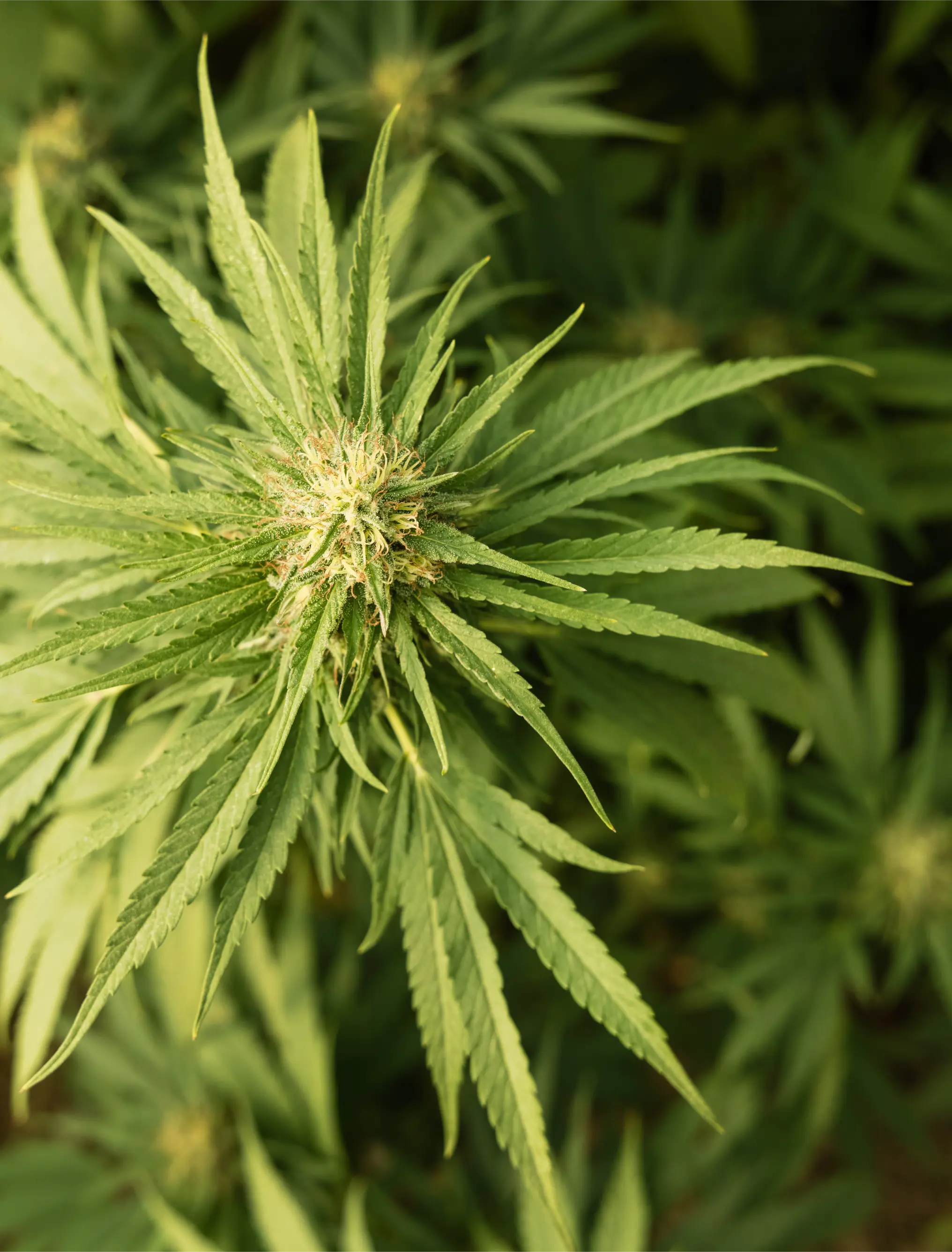
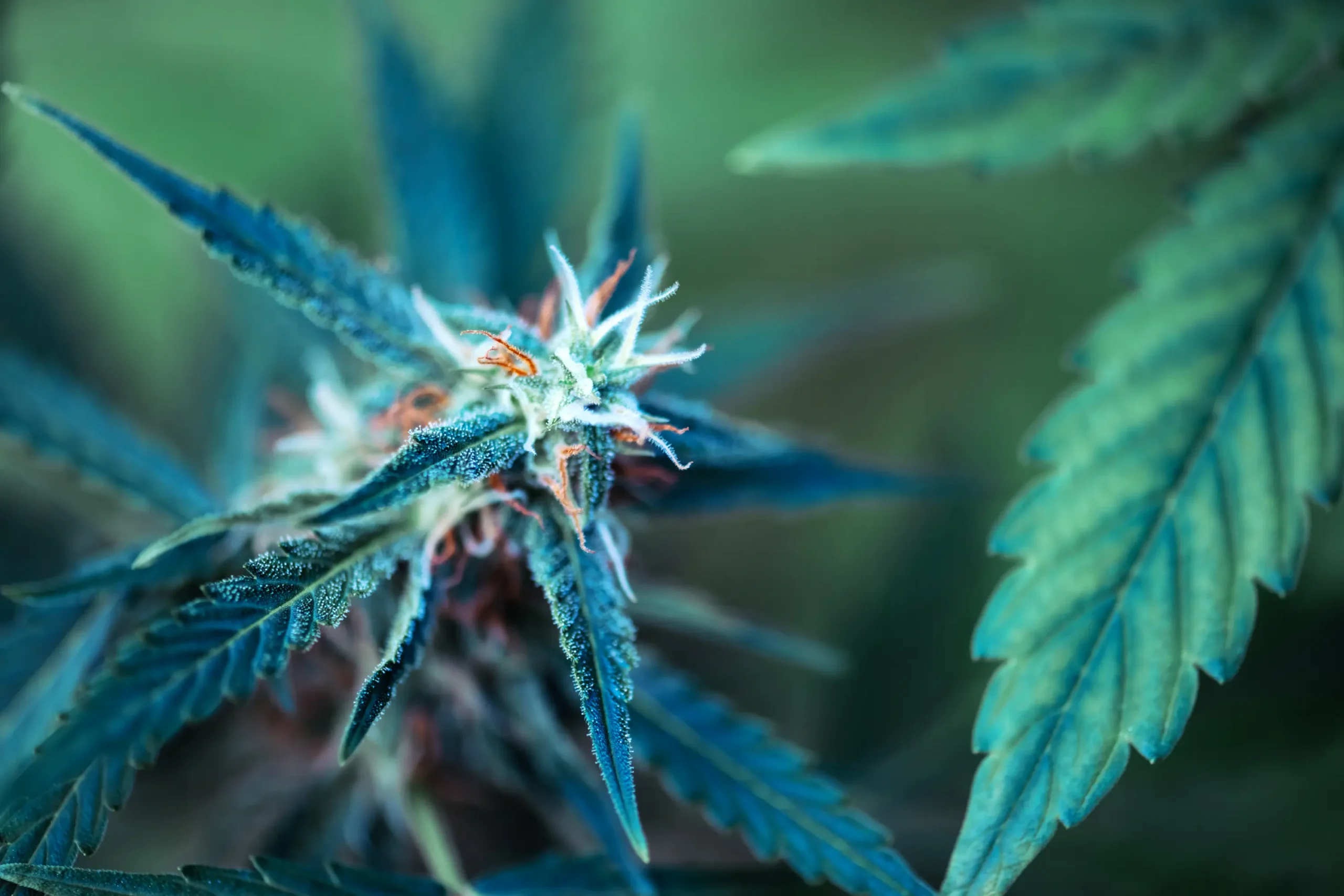
The botanical presentation of Banana OG is a masterclass in elite California OG Kush hybridization. In late vegetative growth, the plant produces slender, flexible main stems and multiple lateral branches that demand early mechanical staking. Foliage is vibrant light-to-medium emerald-green with moderately narrow, deeply serrated sativa-like leaflets that absorb light efficiently under high-intensity LED fixtures. Internodal spacing is balanced at two to two and a half inches, allowing for seamless vertical cola stacking as flowering progresses. Under 950 PPFD illumination, Banana OG develops magnificent, dense conical floral spears that taper toward apical points, completely encrusted in sticky, glistening glandular trichomes that sparkle like crushed diamonds against fiery golden-orange and copper pistils.
During weeks five through nine of bloom, calyx stacking accelerates rapidly into dense, continuous colas that develop rock-hard golf-ball-sized nodules. Glandular trichome production is extraordinarily dense, coating not only the calyxes but extending far onto secondary and tertiary sugar foliage, creating an intensely frosty, sticky presentation. Trichome heads are predominantly capitate-stalked glands measuring between eighty-five and one hundred ten microns in diameter, supported by thick, sturdy stalks. When nocturnal temperatures are dropped by eight to ten degrees Fahrenheit in late flower, the outer bract edges frequently develop subtle olive and golden marbling that enhances the cultivar’s stunning bag appeal.
Microscopic analysis of the mature resin heads reveals an extraordinary density of fully formed glandular discs containing up to twelve secretory cells each. As bloom approaches day fifty-six, the outer cuticle of the trichome heads expands to accommodate peak monoterpene and cannabinoid synthesis, creating an oily, tacky film that immediately clings to trimming shears and latex gloves during harvest operations.
Genetic Lineage
Banana OG is commonly described as OG Kush x Banana-type selection; some modern records describe a Banana Kush-linked version. That family background matters because the parents do more than provide a name for the label. They explain why the plant tends to show broad-leafed and fairly compact, with sturdy laterals and dense, resin-heavy flower clusters. In practical cultivation terms, lineage helps predict how early training should begin, how much vertical room to reserve for transition, and which sensory traits are most vulnerable when the environment drifts out of range.
Lineage records in cannabis are not always equivalent to a modern agricultural pedigree. Clone-only plants can circulate under the same name for years, seed recreations may combine related but non-identical parents, and local selections can diverge after repeated propagation. For that reason, I would treat the accepted lineage as a map, not as a promise that every plant will express the same height, terpene balance or flowering speed.
The useful grower takeaway is to verify the plant in front of you. If a Banana OG phenotype shows more stretch, thinner leaves or a later finish than expected, adapt the canopy plan rather than forcing it into a stereotype. If it stays compact and begins stacking early, reduce the amount of late training and focus on air movement through the developing flowers. The lineage tells you what is plausible; observation tells you which part of that range you actually have.
A second reason lineage matters is sensory selection. Ripe banana and creamy tropical sweetness before the fuel and pine base becomes dominant is the target profile, but the relative strength of those layers can shift. Keeping notes on structure, aroma development and finishing time lets a grower identify the expression that best represents the strain rather than automatically keeping the tallest plant or the heaviest yielder. For a flavor-focused library, that distinction matters more than a single headline number.
The breeding pedigree of Banana OG is one of the most celebrated stories in modern American craft cannabis. Originating in Southern California, the cultivar was bred by crossing an elite Ghost OG cutting with a selected male from Sagarmatha’s 60/40 Banana line. Ghost OG, one of the original and most prized clone-only cuts of the fabled OG Kush family, contributed overpowering petroleum fuel funk, sharp lemon-pine notes, dense calyx geometry, and devastating somatic potency. The Sagarmatha Banana male contributed luscious candied banana esters, warm cinnamon spice, and rapid vegetative vigor.
This harmonious genetic pairing successfully united the finest attributes of both parental branches. In analytical testing laboratories across legal markets, genuine Banana OG selections consistently demonstrate high concentrations of myrcene, limonene, and beta-caryophyllene, yielding a total cannabinoid content that frequently surpasses 25% THC. Furthermore, Banana OG has served as a foundational breeding parent for countless modern dispensary staples, including Banana Punch (Banana OG x Purple Punch) and Strawberry Banana.
Effect Breakdown
The effect profile of Banana OG is best understood as a progression rather than a fixed list of adjectives. Dose, tolerance, consumption method and personal sensitivity change the experience, but a three-stage pattern is commonly reported.
Early phase: The first few minutes can feel deceptively calm and almost functional. This opening is where users most often decide whether the strain feels mentally bright, neutral or immediately heavy. With Banana OG, the early impression should be judged before taking more, especially when the cultivar has a reputation for building slowly.
Middle phase: The middle phase usually becomes warmer, heavier and more inward, with appetite and physical relaxation becoming more obvious. This is usually the most representative part of the session because the initial novelty has settled and both cerebral and body effects are easier to separate. Activities that fit this phase depend heavily on tolerance, but low-pressure music, conversation, food and relaxed creative work are common choices for strains with this type of balance.
Late phase: At a larger dose or later in the session, the cultivar can become strongly sedating and is better suited to winding down than to precise work. The late stage is also where harvest timing can subtly change perception. Earlier-harvested flower may feel brighter and shorter, while a fully mature or slightly later harvest can feel rounder and heavier. Those differences are not caused by one cannabinoid alone, but maturity, terpene retention and dose all influence the overall impression.
The practical caution is simple: do not treat a strain name as a dosing instruction. Banana OG may be described as slow-building relaxation, body heaviness, appetite and sleepiness at higher intake, but individual responses can differ sharply. New users and people who are sensitive to THC are better served by small amounts and enough time to evaluate the first phase before adding more.
Consuming authentic Banana OG delivers an expansive, deeply satisfying psychoactive experience that begins with a gentle, mood-elevating cerebral buzz before transitioning into heavy, whole-body somatic relaxation. Within minutes of inhalation, users experience a warm facial tingling and a brightening of mood that washes away daily mental fatigue and stress. The initial high is euphoric, calm, and peaceful, inspiring lighthearted conversation and easy relaxation.
As the session progresses past the forty-minute mark, the heavy indica heritage derived from Ghost OG asserts itself through a profound, full-body somatic release. Muscle fibers along the spine, neck, and shoulders uncoil into a state of effortless relaxation, releasing long-held tension and physical fatigue. The high settles into a luxurious, warm couchlock that invites comfortable reclining, leisurely conversation, or deep music appreciation. In higher dosages, Banana OG facilitates a natural, peaceful transition into deep, restorative overnight sleep, making it one of the most effective evening relaxation cultivars available.
The physiological duration of Banana OG’s sedative plateau is remarkably sustained, regularly providing three to five hours of deep muscular relaxation and tranquil mental stillness. In clinical feedback, patients suffering from sleep latency disorders consistently note that Banana OG eliminates the restless, racing thoughts that interfere with falling asleep, gently easing consciousness into restorative, slow-wave circadian rest without next-day grogginess.
Flavor and Aroma Profile
The defining sensory identity of Banana OG is overripe banana, sweet tropical fruit, fuel, earth and pine. Good flower should not smell like a single artificial flavor. The more convincing expression has layers: a fast top note when the jar opens, a heavier base when the flower is broken apart, and a slightly different sequence on the inhale and exhale.
The target I would use for quality control is ripe banana and creamy tropical sweetness before the fuel and pine base becomes dominant. That target is useful because it forces the grower to protect contrast. If one layer overwhelms everything else, the flower may still be potent and attractive but the cultivar loses part of its identity. Excess nitrogen late in flower, high canopy temperature, stagnant humidity and a rapid post-harvest dry are common ways to make a nuanced profile feel generic.
Aroma also changes through the flowering cycle. Early resin often smells greener and less integrated. Mid-flower is when the recognizable signature starts to separate from ordinary plant scent. In the final weeks, the best plants usually become more specific rather than simply louder. That is the point where a grower should record which branches or phenotypes show the clearest profile and avoid unnecessary handling that damages trichomes.
After harvest, the main threat is running the room too warm or drying too fast, which can flatten the soft banana top note into generic sweet gas. The dry should remove moisture steadily without turning the outside of the buds crisp while the interior remains wet. A controlled cure then allows harsh green notes to fade while the core aroma becomes easier to identify. The best test is not how intense the room smells on harvest day; it is how recognizable the strain remains several weeks later.
The organoleptic profile of Banana OG is an exquisite celebration of sweet tropical fruit confectionery, warm kitchen spice, and pungent petroleum fuel. Breaking open a cured bud unleashes an intense fragrance of sweet overripe banana pudding, warm cinnamon sugar, pungent kerosene diesel, and fresh cedar pine needles. As the flowers are ground, volatile secondary terpenes reveal deep undertones of sweet floral lavender, spicy black pepper, and damp loam that give the profile remarkable depth.
Upon inhalation, vaporized Banana OG delivers a thick, velvety aerosol that coats the palate in sweet candied banana, creamy pastry dough, and pungent chemical gas. The exhale brings a smooth, grounding wave of peppery earth, spicy cedar, and fresh pine needles, leaving a mouth-watering sweet dough aftertaste that remains on the tongue for up to twenty minutes. When rolled in unbleached paper, it burns with an immaculate chalk-white ash and a shimmering resin ring.
Dominant Terpenes
Dominant-terpene lists for named strains are best treated as recurring tendencies, not fixed chemical fingerprints. Different phenotypes and batches can change the order and relative amount of terpenes, and laboratory methods can also differ.
| Terpene | Flavor / Aroma Role | Potential Sensory Role |
|---|---|---|
| Limonene | Citrus brightness that can sharpen the tropical top note | Often associated with a brighter, more lifted aromatic impression |
| Beta-caryophyllene | Pepper, dry spice and fuel-adjacent warmth | Contributes a grounded, spicy body to the aroma |
| Myrcene | Earthy, musky, ripe-fruit depth | Often accompanies heavier, more relaxing sensory profiles |
In Banana OG, the terpene discussion is most useful when it explains why the aroma can move between overripe banana, sweet tropical fruit, fuel, earth and pine. A good cure should make those layers easier to separate. If the entire sample smells like one flat note, post-harvest handling or phenotype choice may have mattered more than the nominal terpene list.
Chromatographic profiling of Banana OG floral resin reveals an elite terpene profile dominated by myrcene, limonene, and beta-caryophyllene, supported by meaningful secondary amounts of alpha-pinene, linalool, and alpha-humulene. Myrcene acts as the dominant terpene, providing luscious banana and herbal sweetness while facilitating rapid cannabinoid absorption across the blood-brain barrier.
Beta-caryophyllene delivers a sharp peppery bite while binding to peripheral CB2 receptors to mediate systemic anti-inflammatory actions. Limonene contributes bright citrus sweetness and enhances mood elevation, while alpha-pinene introduces crisp cedar pine notes and aids in maintaining cognitive alertness. Linalool provides soft floral accents that calm nervous signaling, rounding out the cultivar’s world-class aromatic profile.
Indoor vs. Outdoor Growing
| Aspect | Indoor Growing | Outdoor Growing |
|---|---|---|
| Height control | Plan for medium indoors; moderate stretch after transition and shape early. | More vertical freedom, but wind exposure and branch loading increase. |
| Flowering / finish | About 8-9 weeks indoors for many expressions | Often early-to-mid autumn in suitable climates; local season and phenotype matter |
| Main climate risk | hidden moisture inside thick terminal flowers | Rain, cool nights and slow drying after dew can increase late-flower risk. |
| Training | topping once or twice, low-stress spreading, and a wide low canopy rather than repeated hard stress | Use wider spacing and structural support; avoid overcompacting a large plant. |
| Flavor control | More control over heat, humidity and drying conditions. | Potentially excellent complexity if the finishing weather stays dry and stable. |
Indoors, Banana OG gives the grower direct control over the variables that most affect its quality. The main advantage is the ability to plan canopy height around a plant that is medium indoors; moderate stretch after transition and to reduce humidity as flowers become denser. The main disadvantage is that poor spacing becomes amplified. A healthy plant can still finish with mediocre buds if every branch occupies the same layer and air cannot move through the center.
Outdoors, the plant can express a larger root system and more natural branch development, but the suitability of the cultivar depends on the finishing window. Often early-to-mid autumn in suitable climates; local season and phenotype matter. Growers in shorter or wetter seasons should evaluate the local autumn pattern rather than assuming that an indoor flowering number translates directly to an outdoor calendar date.
For flavor, indoor control usually offers the most predictable route because late-flower temperature and rain exposure can be managed. Outdoor plants can produce excellent aromatic complexity when nights cool gradually and flowers stay dry, but repeated rain followed by still air creates exactly the conditions that can damage mature resinous buds. The better environment is therefore the one where the grower can finish the plant cleanly, not the one that is automatically labeled superior.
When grown outdoors, Banana OG reaches its full colossal potential in temperate, Mediterranean, and sunny continental climates. Regions such as Northern California’s Emerald Triangle, Southern Oregon’s Rogue Valley, and sunny inland valleys provide an ideal environment for this cultivar. In large outdoor raised beds or 200-gallon living soil smart pots, plants develop into vigorous, eight-to-ten-foot bushes with massive, sprawling lateral branches capable of yielding between 800 and 1,200 grams of premium dried flower per specimen.
Flowering commences in early August in the Northern Hemisphere, with harvest arriving in early October (typically October 5 through 18). Because Banana OG produces dense, heavy floral spears on slender branches, installing sturdy multi-tier horizontal trellis netting and erecting bamboo stakes is essential to prevent heavy colas from bowing to the ground under their own weight during late-season winds and rain.
Strain-Specific Grow Guidance
Architecture and the first training decision
Banana OG tends to be broad-leafed and fairly compact, with sturdy laterals and dense, resin-heavy flower clusters. The first training decision should follow that architecture rather than a fixed routine. A plant with naturally strong laterals benefits from early spreading because those branches can be turned into productive tops. A plant with longer internodes needs support and horizontal guidance before the transition accelerates. For Banana OG, the most reliable approach is topping once or twice, low-stress spreading, and a wide low canopy rather than repeated hard stress. The objective is an even canopy with visible air lanes, not a flat mass of leaves pressed together.
Stretch and transition management
Transition stretch is usually manageable rather than explosive, often around a moderate 1.5x to 2x depending on phenotype and veg time. This is the phase where many otherwise healthy runs become difficult. If the flip happens after the canopy is already full, the plant spends the next two weeks stacking new growth on top of a structure that no longer has room. I would enter flower with open spaces intentionally left in the canopy, then use those spaces to absorb stretch. The final few adjustments should happen while stems are still flexible, not after heavy flowers have formed.
Leaf removal without stripping the plant
Defoliation should solve a real problem. On Banana OG, remove leaves that block multiple flowering sites, sit directly against developing flowers, or close the center of the plant to airflow. Keep healthy leaves that still receive light and have space around them. Heavy stripping can slow a plant that is already allocating energy to flower formation, and it can also expose previously shaded tissue to sudden light stress. A staged cleanup is safer than one dramatic event.
Root zone and feeding behavior
More feed is not automatically more quality
The safest feeding strategy is to read growth rate and leaf color instead of assuming that a famous strain must be a heavy feeder. During early vegetative growth, steady nitrogen supports branch development, but dark clawed leaves are a warning that the plant is receiving more than it can use. During transition, do not cut nitrogen abruptly while stretch is still active. Later, reduce unnecessary nitrogen so the plant can mature without carrying excessively leafy flowers into harvest.
Humidity and flower density
The primary environmental risk for this cultivar is hidden moisture inside thick terminal flowers. Early flower can tolerate moderate humidity more easily because flowers are still open and air moves through them. As calyxes swell, the same room conditions can become risky. Late flower should feel dry enough that dense tops do not remain cool and damp after lights-off. Air should move around flowers, not blast them from one direction.
Branch support and load
Support is most useful when installed before branches are leaning. A soft trellis, stakes or ties can hold the canopy in its planned position while flowers gain mass. Waiting until a branch folds creates two problems: the branch may be damaged and the fallen top often ends up touching another flower, reducing airflow exactly when density is highest. The support system should keep every top separated enough that the plant can finish without becoming a single solid wall.
Flowering timeline and harvest reading
The commonly reported indoor flowering window is About 8-9 weeks indoors for many expressions, but the calendar is only a reference. In the last stage, look for slowed vertical growth, swollen calyxes, mature pistil behavior, fading rather than fresh vegetative push, and trichome development across multiple representative flowers. Do not judge only the top cola, which may ripen faster under stronger light. A staggered harvest can make sense when the canopy is uneven.
Failure mode to watch
The most common quality failure is not catastrophic plant death. It is a healthy-looking crop that finishes with muted flavor or inconsistent bud quality. For Banana OG, the warning signs are an overcrowded center, late dark-green leaves, warm flower surfaces, branches touching each other, and a harvest decision based only on the expected week number. Correcting those small issues early usually produces more improvement than adding another supplement.
Second-run optimization
After the first harvest, save the observations that matter: actual stretch ratio, days to full maturity, which branches produced the best flower, where humidity accumulated, how the aroma changed during the dry, and whether the plant wanted more or less nutrition than expected. On a second run, start with the same genetics and change only two or three variables. That is how a grower learns the cultivar rather than restarting the experiment every cycle.
Dialing In the Run
Transition Week 1: preserve room for the banana-heavy tops
The first week after the flowering flip is where I would define the final shape of Banana OG. The cultivar is usually not the wildest stretcher in the room, but that can create a false sense of security. Because the later flowers become dense and resinous, branches that are only slightly crowded in week one can become pressed together by week six. I would keep spreading the most vigorous tops outward, maintain a visible gap between branch tips, and avoid filling every empty square immediately. That reserved space is useful when the plant expands during the second week. If the plant is already touching neighboring branches on all sides at the start of flower, remove weak interior shoots now rather than waiting until they are buried under sticky flowers.
Transition Week 2-3: stop chasing height and build separation
By the second and third week, Banana OG usually tells you whether the phenotype leans more compact or more OG-like. A more open phenotype may continue stretching and should be guided horizontally. A compact phenotype may stop climbing earlier and begin stacking tighter clusters. The correct response is not to force both into the same shape. With the compact plant, I would focus on opening the center and keeping large fans from lying across young flower sites. With the longer plant, I would use the trellis to spread the canopy and reduce vertical dominance. This is also when I would stop major high-stress work. Once resin production begins, the goal shifts from architecture construction to stability.
Mid-flower: use aroma as a health signal
Around the middle of flower, Banana OG should begin moving away from generic green plant odor. The best expressions start showing ripe fruit, banana candy or creamy tropical notes over a darker fuel base. I would use that aroma transition as one health signal. If the plant is structurally healthy but the flowers smell weak while leaf tips are burned and foliage is very dark, I would question whether the feed is too aggressive. If the upper canopy smells flatter than middle branches, I would check flower temperature and light intensity. Aroma is not a laboratory test, but in a flavor-focused grow it is useful feedback because the target profile is more delicate than the OG fuel underneath it.
Late flower: protect dense colas from their own success
Banana OG can look easiest just before it becomes most vulnerable. Once the calyxes swell, thick tops can hold moisture in small internal spaces where a fan does not reach directly. I would inspect the back side of colas, the points where sugar leaves enter the flower, and any top that leans against another branch. Do not rely only on the room humidity reading. Two rooms at the same relative humidity can behave differently if one canopy is packed tightly. If a top feels unusually cool, remains damp after lights-off, or contains yellowing leaves trapped deep inside the flower, investigate immediately instead of waiting for an odor or visible rot.
Harvest window: banana intensity versus body weight
Harvest timing can shift the balance of Banana OG. A slightly earlier mature harvest can keep the fruit note brighter and the effect less crushing, while a later harvest may deepen the body-heavy character and push the aroma toward darker fuel and fermented fruit. I would not deliberately harvest immature flower for a brighter effect, but once the plant is clearly mature there is still a practical window. Compare trichomes on several calyxes, not sugar leaves, and smell more than one branch. If the banana top note has peaked and calyx swelling has slowed, extending the run only to chase more amber can trade away the feature that makes the cultivar distinctive.
Second run: choose the phenotype by aroma-to-density ratio
If I had several Banana OG plants from seed, I would not keep the winner based only on dry weight. I would compare how much usable flower each plant produced relative to how difficult the canopy was to ventilate, then add aroma retention after cure. A phenotype that yields ten percent less but holds a clear banana profile and finishes with fewer moisture problems may be the better long-term keeper. The ideal plant combines manageable stretch, strong lateral structure, resinous but not impossibly sealed flowers, and an aroma that survives several weeks of cure. That is a much more useful breeding or keeper criterion than maximum size on harvest day.
Two-Tier Trellising & Canopy Leveling: Because Banana OG exhibits a vigorous 130% to 150% stretch during early flower, installing a double-tier horizontal trellis system is essential. Top the plants twice during late vegetative growth to establish sixteen to twenty uniform growing tips, and weave lateral branches horizontally across the lower screen until stretch concludes around day twenty-four.
Nutrient Stepping & Lignification Support: Banana OG is a heavy feeder that assimilates high electrical conductivity during peak bloom. Maintain EC between 1.9 and 2.2 in automated drip systems during weeks four through seven, supplementing bioavailable monosilicic acid (40 to 60 ppm) to reinforce cellular walls and prevent lateral branches from bowing under heavy colas. Taper nitrogen down sharply at day twenty-eight to avoid dark green vegetative leafiness, switching to high-potassium and calcium-rich formulations to support dense calyx development.
Silica Fortification and Cellular Lignification: Supplying bioavailable monosilicic acid at a concentration of forty to sixty parts per million throughout the vegetative and early bloom phases dramatically improves mechanical stem strength in Banana OG. Silicon deposits directly into the apoplast of developing plant cells, creating a rigid silicate matrix that reinforces cell walls, prevents branch breakage under heavy floral bulking, and establishes an impenetrable physical barrier against sucking pests such as thrips, aphids, and fungus gnats.
Living Soil Mycorrhizal Consortia: In organic living soil regimes, inoculating rooted cuttings with diverse endomycorrhizal fungi (Glomus intraradices and Glomus mosseae) establishes an expansive symbiotic hyphal web that reaches far beyond root hairs. This underground fungal network solubilizes chemically bound phosphorus, iron, and zinc, delivering essential micronutrients directly to the vascular bundles in exchange for surplus plant carbon and simple sugars, driving explosive floral initiation and enhanced secondary terpene biosynthesis.
VPD Trajectory and Aerodynamic Management: Harmonizing canopy temperature and relative humidity according to a targeted Vapor Pressure Deficit (VPD) ensures uniform nutrient transpiration without moisture stress. Maintain vegetative VPD between 0.9 and 1.1 kPa (78 to 81 degrees Fahrenheit and 62% to 68% relative humidity). Upon transition to peak flower, systematically elevate VPD to 1.35 to 1.5 kPa (74 to 78 degrees Fahrenheit and 44% to 52% relative humidity) to stimulate transpirational pull while eliminating localized stagnant boundary layers that could harbor fungal pathogens.
Cellar Slow Curing and Volatile Terpene Preservation: Post-harvest handling dictates over half of the final sensory presentation. Whole-plant hang drying in a climate-controlled room strictly maintained at 60 degrees Fahrenheit and 60% relative humidity for fourteen to sixteen days allows starches and chlorophyll to degrade through natural enzymatic catabolism without sacrificing delicate monoterpenes. Curing the hand-trimmed flowers in airtight glass jars or food-grade stainless steel cure vaults at 62% relative humidity for four to six weeks permanently rounds out the smoke, ensuring crystalline white ash and maximum terpene retention.
Why do the lower branches of Banana OG flop over during week six of bloom?
Question sent by: Dustin Miller, via email
Banana OG inherits slender, flexible lateral branches from its OG Kush parentage combined with dense, heavy floral bulking from the Sagarmatha Banana line. Without early structural support, branches naturally bend and snap under the weight of developing colas. Install a sturdy two-tier horizontal trellis netting during vegetative growth and weave branches through the grid until stretch concludes around day twenty-four, supplementing with bioavailable monosilicic acid (50 ppm) to reinforce stem cell wall rigidity.
Weedth Bud Flavor Tips
Flavor quality begins before harvest. For Banana OG, protect ripe banana and creamy tropical sweetness before the fuel and pine base becomes dominant by keeping the final weeks stable. Avoid a late push of nitrogen simply because leaf color is fading. Natural maturation and senescence are not automatically deficiencies. The goal is to finish flowers cleanly while resin remains aromatic, not to keep every fan leaf dark green until harvest day.
Canopy temperature deserves more attention than room temperature. Warm flower surfaces can increase volatilization and make the most delicate top notes disappear before harvest. A grower does not need to chase unusually cold conditions, but avoiding repeated heat spikes in the final two weeks helps retain the profile. Strong light should also be balanced against stress; more intensity is not useful if upper flowers bleach or lose aroma.
Harvest handling should be gentle. Trichomes on mature flowers are brittle, and repeated squeezing or unnecessary trimming while fresh can remove resin and release aroma into the room instead of preserving it in the bud. Cut and move branches by the stem when possible. Keep harvested material out of direct light and begin drying promptly in a clean environment.
Drying too quickly is one of the easiest ways to erase strain identity. Running the room too warm or drying too fast, which can flatten the soft banana top note into generic sweet gas. A slower, controlled dry allows internal moisture to migrate outward gradually. The target is not a fixed number of days because branch size, flower density and room conditions differ. The practical endpoint is evenly dry flower that is ready to cure without a wet center or a brittle exterior.
During cure, judge progress by aroma clarity and moisture equilibrium. The first days may still smell green or compressed. Over the next weeks, the defining notes should separate. If the jar aroma becomes sour in a wet, unpleasant way or the buds feel soft and cold inside, more drying is needed. If the buds become crisp and scent disappears immediately after opening, the dry was likely too aggressive.
Outdoor flavor protection requires one additional decision: weather. If a mature plant is facing repeated rain and cool nights, leaving it outside for a theoretical extra week can cost more quality than it gains. On the other hand, harvesting every outdoor plant early because rain is possible can prevent full aroma development. The decision should weigh actual flower maturity against the specific forecast and the density of the phenotype in front of you.
Preserving the exquisite sweet banana bouquet of Banana OG demands strict canopy temperature control. Maintain daytime room temperatures between 74 and 76 degrees Fahrenheit during weeks four through nine of bloom, keeping leaf surface temperatures below 78 degrees. High ambient room temperatures quickly volatilize delicate monoterpenes like myrcene and pinene, resulting in a dull, peppery profile.
Following harvest, dry whole branches in complete darkness at 60 degrees Fahrenheit and 60% relative humidity for sixteen days, followed by a five-week jar cure at 62% humidity. During the final ten to fourteen days before harvest, irrigate exclusively with pure reverse-osmosis water adjusted to pH 6.4, withholding added nutrients to ensure an immaculate white ash and crystalline banana flavor.
Weedth Bud Boost Tips
For Banana OG, yield should come from canopy efficiency rather than forcing the plant to carry oversized humid flowers. The first boost is simple: fill the usable light footprint with productive tops. Topping once or twice, low-stress spreading, and a wide low canopy rather than repeated hard stress helps distribute growth before flowering so later energy goes into a wider set of high-quality sites instead of one dominant top and a shaded lower layer.
Remove weak interior shoots before heavy flowering. These small branches consume resources and often finish as airy material that is slow to trim and weak in flavor. A clean lower third is especially useful when the cultivar produces dense, swollen calyxes with good resin coverage without creating a sealed, humid canopy. The point is not to strip the plant bare. It is to concentrate light and air on branches that can actually mature into worthwhile flowers.
Light intensity should increase only while the plant continues to respond positively. Stronger light can increase photosynthetic demand, but it also raises water use, nutrient demand and flower temperature. Watch leaf angle, upper-calyx color and aroma. If the top layer is pale, curled or noticeably less fragrant than the middle canopy, more light is not a yield strategy; it is a stress source.
Root-zone oxygen and irrigation consistency are often better yield tools than additional bloom products. Let the medium move through a healthy wet-dry rhythm appropriate to the substrate. Repeated saturation slows oxygen exchange and can make nutrient symptoms harder to interpret. Severe drought cycles are also counterproductive because a plant that is repeatedly wilting is spending time recovering instead of building flowers.
CO2 supplementation only makes sense in a sealed, well-controlled environment where light, temperature, nutrition and air conditioning are already matched to the higher photosynthetic demand. It is not a shortcut for a weak canopy. For most small grows, improving uniform light distribution, plant spacing and climate control offers a clearer return with fewer variables.
The final yield decision is harvest timing. A plant cut too early may look finished from a distance but still lack calyx swelling and final resin development. A plant left too long in a humid room can lose clean flower to internal breakdown. The most productive harvest is the one that preserves saleable or usable quality, not the one that records the heaviest wet weight.
To push Banana OG yields past 550 grams per square meter indoors, provide 950 to 1,050 micromoles per square meter per second of photosynthetic active radiation (PAR) during weeks four through eight of bloom, supplemented with 1,200 parts per million of carbon dioxide. In sealed indoor gardens, elevated CO2 drives rapid calyx stacking and substantial biomass accumulation.
Maintain vapor pressure deficit (VPD) between 1.35 and 1.5 kPa during mid-flower, lowering room relative humidity to 40% to 42% during the final two weeks of bloom. Couple this photonic strategy with precise nighttime temperature drops (sixty-six to sixty-eight degrees Fahrenheit) to prevent heat-induced terpene volatilization and trigger deep purple anthocyanin development across the outer calyx bracts.
Medical Uses and Benefits
Users commonly report choosing it for evening relaxation, appetite support, temporary stress relief and sleep-oriented routines. These are user-reported uses, not proof that the cultivar treats a medical condition.
The effect profile described for Banana OG may explain why different users choose it at different times of day. A cultivar that begins brighter and finishes calmer can feel useful for decompression without immediate sedation, while a heavier late phase may make it better suited to evenings. However, personal response can vary with tolerance, dose, cannabinoid content and mental state.
Terpenes such as limonene, myrcene, pinene and beta-caryophyllene are widely studied as aromatic plant compounds, but a strain's terpene label should not be used as a medical prescription. The presence of a terpene does not guarantee a specific therapeutic outcome, and whole-flower effects involve many compounds plus individual biology.
Anyone using cannabis for a diagnosed condition, taking medication, pregnant, breastfeeding, or at elevated risk of adverse psychiatric or cardiovascular effects should discuss cannabis use with a qualified healthcare professional. High-THC flower can cause anxiety, dizziness, impaired coordination and short-term memory problems, especially at larger doses.
Within clinical herbalism and integrative patient care protocols, Banana OG provides exceptional therapeutic utility for patients managing severe chronic pain, muscle spasticity, neuropathic discomfort, and chronic sleep onset insomnia. The high concentration of beta-caryophyllene interacts directly with peripheral CB2 receptors to downregulate inflammatory signaling, providing targeted relief for patients presenting with degenerative disc disease, osteoarthritis, and sciatica.
Patients dealing with treatment-resistant anxiety, panic episodes, or post-traumatic stress benefit significantly from the cultivar’s potent linalool and myrcene profile, which gently slows racing thoughts without triggering dysphoria or cognitive paranoia. Furthermore, the robust analgesic and muscle-relaxing synergy helps alleviate nocturnal restless leg syndrome and tension headaches, restoring natural circadian sleep rhythms.
Ideal User Profile
The best match for Banana OG is an experienced or moderately tolerant evening user who enjoys fruit-forward Kush profiles and does not mind a slow-building, heavier finish. That does not mean other users cannot enjoy it. It means the cultivar's strongest traits line up naturally with that profile, so the person is more likely to appreciate what the strain does rather than fighting against it.
For consumption timing, the reported effect pattern matters more than whether the strain is labeled indica or sativa. Slow-building relaxation, body heaviness, appetite and sleepiness at higher intake. A small amount may fit a different part of the day than a large amount. Users who need sharp reaction time, driving ability or safety-sensitive coordination should not use intoxicating cannabis before those activities.
For growers, the ideal profile is someone willing to manage the plant's main structural issue: hidden moisture inside thick terminal flowers. The cultivar does not need constant intervention, but it rewards the grower who plans ahead. Most of the work should happen before late flower, when the canopy can still be shaped without disturbing resinous buds.
Flavor-driven users are also a good fit because the strain rewards careful post-harvest work. If the goal is only maximum potency, some of the most distinctive qualities can be missed. A cultivar with a recognizable aroma is better judged by how clearly that identity survives through grinding, inhalation and the finish of the exhale.
Banana OG is tailored for evening connoisseurs, medical patients, dessert flower lovers, and gas enthusiasts who desire uncompromising potency and heavy somatic relaxation. It is an exceptional selection for relaxing on the couch, watching films, listening to music, and preparing for deep, uninterrupted overnight rest.
Grower Notes and Feedback
A recurring grower observation with Banana OG is that the plant reveals its management needs early. The way it fills the pot during vegetative growth, the distance between new nodes and the angle of side branches all predict whether the flowering canopy will be easy or crowded. Growers who take notes during the first run usually make a much larger improvement on the second run than growers who simply change nutrients.
Another common theme is that flower quality and yield do not always peak under the same conditions. Pushing for maximum density can increase the risk of hidden moisture inside thick terminal flowers. A slightly more open canopy may weigh a little less on paper but produce a larger proportion of top-grade, evenly dried flower. That difference matters more than gross harvest weight.
Growers also report that aroma becomes more trustworthy late in flower. Early scent can be exciting but misleading. The final expression should move toward ripe banana and creamy tropical sweetness before the fuel and pine base becomes dominant. Plants that remain generic or purely green-smelling deep into the cycle may be less interesting selections even if they are vigorous. When working from seed, aroma notes are worth recording alongside yield and structure.
Most cultivation problems are easier to correct while they are small. A leaf touching a bud, a branch leaning into another top, or a humid pocket at the back of the canopy may look insignificant in week four. By week eight, the same issue can be buried inside a dense flower. Regular inspection from multiple angles is more useful than only looking at the top of the canopy.
The final grower lesson is not to copy another person's exact harvest day. About 8-9 weeks indoors for many expressions is a useful planning range, but the plant should decide the cut. Compare top, middle and lower flowers. Look for mature swelling and stable aroma, not just amber trichomes on the leaves. A strain-specific grow guide is most valuable when it helps the grower read the cultivar rather than obey a calendar.
Commercial grow directors and craft cultivators uniformly praise Banana OG for its rock-solid bud density, mouth-watering bag appeal, and staggering potency. Its combination of dense calyxes, heavy resin coverage, and aggressive banana-fuel aroma guarantees immediate sell-through in dispensaries.
Weedth Editor’s Note
Cultivating authentic Banana OG has been one of the most fragrant and rewarding highlights of my cultivation career. Originally created by crossing an elite Ghost OG clone with a selected male of Sagarmatha’s 60/40 Banana line, Banana OG is celebrated throughout California dispensaries for its uncanny resemblance to sweet overripe bananas, creamy cinnamon pastry, and pungent fuel. In my personal indoor garden, I cultivate verified Banana OG cuts in 10-gallon fabric smart pots filled with a living organic soil matrix comprising equal parts Canadian sphagnum peat moss, aged leaf mold compost, volcanic pumice, and perlite, enriched with crab meal, kelp meal, basalt rock dust, and gypsum. Under commercial full-spectrum LED fixtures delivering 950 PPFD, Banana OG develops vigorous, well-branched plants with bright emerald foliage that exudes a sweet tropical aroma even during late vegetation.
Managing Banana OG’s canopy architecture requires proactive vegetative training. Because the cultivar exhibits a vigorous 130% to 150% stretch upon flipping to flower, I top each plant twice during vegetative growth and train the lateral shoots horizontally beneath a double-tier trellis netting. In my sealed indoor cultivation facility, I maintain daytime canopy temperatures at 76 to 78 degrees Fahrenheit and night temperatures at 66 degrees, running a targeted VPD of 1.35 kPa during mid-flower. Banana OG assimilates nutrients efficiently, performing optimally at an electrical conductivity (EC) between 1.8 and 2.1 in automated drip systems, buffered to pH 6.4 to 6.6. The flowering cycle completes in eight to nine weeks (fifty-six to sixty-three days). I harvest when trichomes show roughly twenty percent rich golden amber and eighty percent cloudy milky heads.
Post-harvest conditioning is essential to preserve Banana OG’s delicate overripe fruit and spicy cinnamon bouquet. Whole plants are hung upside down in a dedicated dark dry room strictly controlled at 60 degrees Fahrenheit and 60% relative humidity for sixteen days. This slow dry allows natural catabolic processes to degrade mobile starches and chlorophyll without stripping away volatile monoterpenes like myrcene, limonene, and pinene. Following a careful hand manicure, flowers are jarred at 62% humidity for five full weeks. The cured flowers emanate an intoxicating aroma of candied banana pudding, warm cinnamon sugar, pungent pine fuel, and damp earth, smoking with an immaculate white ash and an oily resin ring.
The primary caveat when cultivating Banana OG centers on branch support and moisture control in late bloom. The cultivar produces exceptionally dense, rock-hard golf-ball-sized nodules that can trap moisture if relative humidity exceeds 45% during weeks seven and eight. Installing robust horizontal oscillating fans and maintaining strict dehumidification prevents localized botrytis. For craft cultivators and medical patients seeking heavy somatic tranquility and an unforgettable confectionery banana profile, Banana OG is an apex selection.
Weedth Score
Aroma & Terpene Intensity: 97/100 (Ripe banana candy, warm cinnamon sugar, pungent fuel, and sweet pine)
Bag Appeal & Calyx Structure: 95/100 (Dense, rock-hard emerald and olive-green calyxes coated in thick crystalline resin)
Potency & Cannabinoid Profile: 96/100 (22% to 27% THC delivering a creeping, crushing somatic couchlock and tranquil euphoria)
Effect Progression & Functionality: 95/100 (Warm facial relaxation and mental giggles transitioning into deep physical sedation)
Indoor Cultivation Performance: 92/100 (Vigorous 140% stretch requiring trellis support, fast 56 to 63-day flowering finish)
Outdoor Climate Adaptability: 93/100 (Thrives in dry Mediterranean and valley climates; requires shelter from late-season rainfall)
Pest & Pathogen Resistance: 89/100 (Hardy against garden pests; dense buds demand strict humidity control in late bloom)
Flavor Translation & Smoke Smoothness: 97/100 (Rich, velvety banana pudding and sweet fuel vapor that glides effortlessly across the palate)
Therapeutic Utility: 98/100 (World-class premier medicine for severe insomnia, chronic muscular pain, and loss of appetite)
Overall Commercial & Connoisseur Value: 96/100 (A modern California craft classic that pairs world-class dessert flavor with devastating potency)
Overall Weedth Score: 95.3/100. Banana OG represents an extraordinary triumph of craft flavor breeding, uniting the confectionery dessert sweetness of candied bananas with the raw, narcotic physical tranquilization of elite OG Kush.
FAQ
What is the genetic lineage of Banana OG?
Banana OG is an indica-dominant hybrid created by crossing an elite Ghost OG clone with a selected male of Sagarmatha’s 60/40 Banana line.
Why is Banana OG called a ‘creeper’ strain?
Banana OG is famous for its delayed-onset psychoactive effect. Consumers often feel only light mental euphoria during the first ten minutes, before a heavy, narcotic wave of somatic couchlock settles over the entire body, leading to deep relaxation.
How long does Banana OG take to flower indoors?
Banana OG concludes flowering indoors in eight to nine weeks (56 to 63 days) under a standard 12/12 photoperiod.
What does Banana OG taste and smell like?
It features an unmistakable sensory profile of sweet overripe bananas, creamy cinnamon pastry, pungent pine fuel, and rich earth, producing a thick, velvety smoke that coats the palate.
Similar Strains
Strawberry Banana: An elite cross of Banana Kush and Bubble Gum celebrated for sweet fruit candy aromas and soothing body relaxation.
Ghost OG: The legendary clone-only cut that fathered Banana OG, offering pungent pine-fuel terpenes and profound nighttime couchlock.
Banana Kush: A sweet West Coast hybrid delivering tropical banana flavors, uplifting mental euphoria, and gentle physical ease.
Tahoe OG: A heavy-hitting OG Kush selection known for intense kerosene pine aromas and deep, narcotic physical tranquility.
Share this article
A quick overview of the topics covered in this article.