Black Diamond
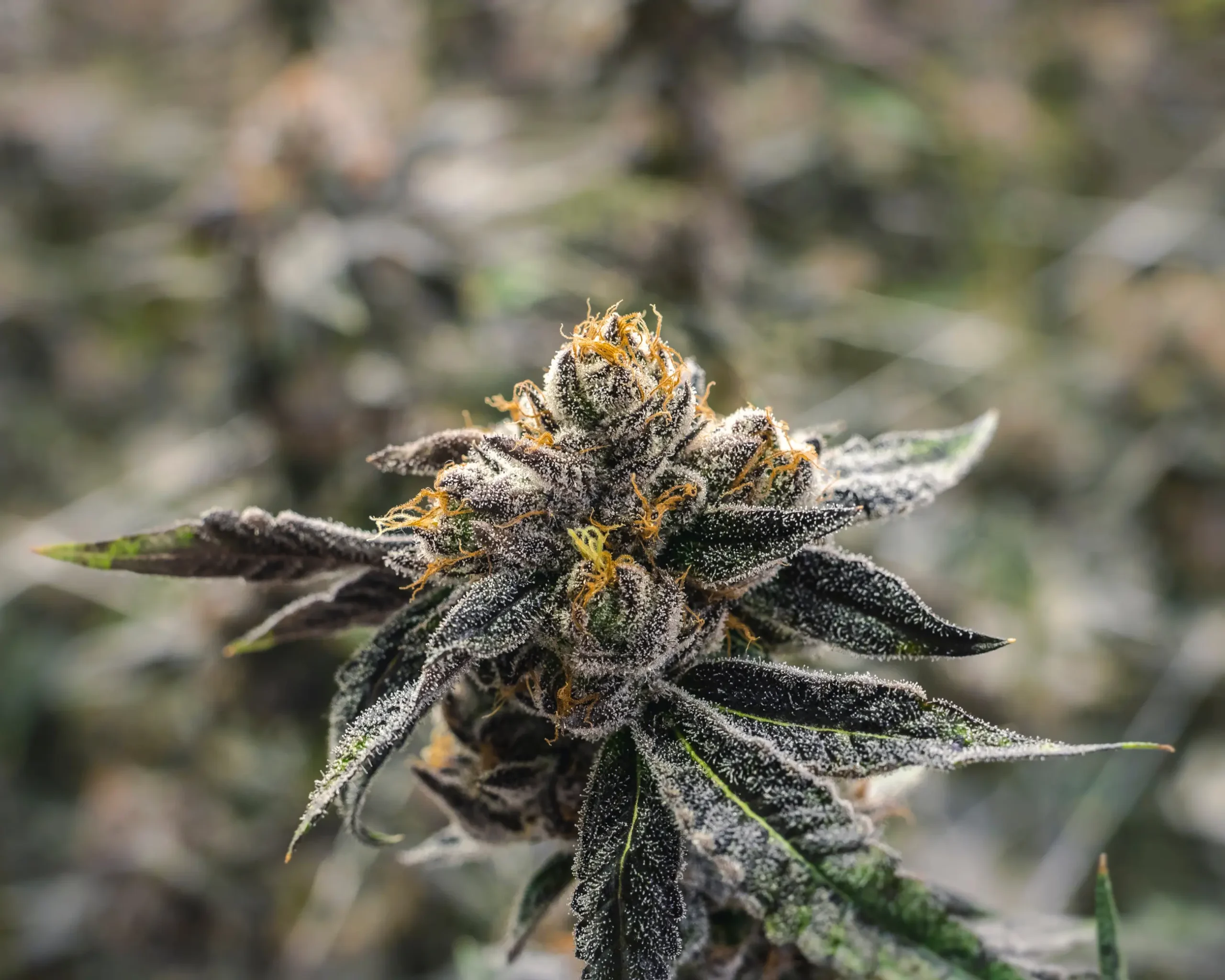
Black Diamond is an indica-dominant hybrid recognized for dark berry aroma, earthy Kush depth, purple potential, and a creeping effect that often becomes heavier than its social beginning suggests. Its parentage is commonly described as Blackberry x Diamond OG. That combination creates a short to medium plant with dense branching, compact flowers, and a tendency to develop deep color when the genetics and environment allow it.
The cultivar's most important grow question is how to open the center of a naturally compact plant without stripping away the leaf area needed to finish dense flowers. Black Diamond is not usually difficult because of extreme stretch. It is difficult because short internodes, broad leaves, and tight flower spacing can create humid interior zones. Growers who keep the middle open and avoid chasing purple color with excessive cold produce cleaner, smoother, more aromatic buds.
Strain Features
| Feature | Details |
|---|---|
| Strain Type | Indica-dominant hybrid |
| Genetic Profile | Blackberry x Diamond OG |
| THC | Commonly reported from the high teens into the mid-20% range, depending on the cut and test |
| CBD | Usually low, commonly below 1% |
| Dominant Terpenes | Myrcene, beta-caryophyllene, pinene, with limonene or humulene in some samples |
| Flavor / Aroma | Blackberry, grape skin, musky wine, earth, oak, coffee, pine, and pepper |
| Effect Character | Gentle euphoria and sociability followed by appetite, body relaxation, and sleepiness |
| Flowering Time | Usually about 8-10 weeks indoors |
| Outdoor Harvest | Commonly late September to mid-October in the Northern Hemisphere |
| Stretch | Low to moderate, often around 1.3x-1.6x |
| Plant Architecture | Short to medium, bushy, tight internodes, broad leaves, and a crowded interior if unmanaged |
| Bud Density | Dense and compact, with purple and dark green coloration in favorable expressions |
| Yield Character | Moderate; premium flower percentage matters more than raw biomass |
| Grow Difficulty | Moderate; compact structure and dense flowers need careful airflow management |
| Main Grow Risk | Humidity trapped inside the center of the plant and the largest colas |
Genetic Lineage
Black Diamond is generally traced to Blackberry and Diamond OG. Blackberry contributes berry sweetness, purple potential, compact morphology, and a softer euphoric quality. Diamond OG contributes pine, earth, fuel, resin, dense flower structure, and the heavier physical finish.
The exact commercial history is not perfectly documented, and multiple versions circulate under Black Diamond, Black Diamond OG, or Black Diamond Kush. Some are clone-based selections, while others are seed-line recreations. That means growers should expect differences in finish time, color, yield, and aroma.
The stable pattern is an indica-leaning plant with a dense center and a flavor profile that combines dark fruit with dry wood, earth, and Kush-like pine. Some phenotypes lean strongly toward blackberry and grape. Others are more musky, woody, and coffee-like. A few carry menthol or pepper around the edges.
Color is genetically influenced but not guaranteed. Anthocyanin-rich expressions can darken naturally as they mature, especially with cooler nights. Green phenotypes can still produce excellent flavor and potency. Color should be treated as one trait among many, not as proof of ripeness or quality.
Effect Breakdown
A sociable beginning
Black Diamond often begins more gently than a heavy indica label might suggest. The first phase can feel cheerful, calm, and conversational. Users may experience laughter, a lighter mood, and relief from mental tension without immediate immobilization. This makes the strain suitable for quiet social settings before the physical effects fully develop.
The appetite and body phase
The effect usually settles downward. Muscles relax, movement becomes slower, and appetite can increase sharply. The mind remains pleasant but less motivated. Television, music, and relaxed conversation may become more appealing than active tasks.
The late finish
At higher doses, Black Diamond can become deeply sedating. The body feels heavy, attention narrows, and sleep may come more easily. The transition is often gradual, which can lead users to consume more before the full weight arrives.
Common unwanted effects include dry mouth, dry eyes, dizziness, increased appetite, and anxiety when a strong sample is overused. Less experienced users should wait for the creeping body phase before taking another dose.
Flavor & Aroma Profile
Black Diamond's aroma sits between dark fruit and dry earth. It is not usually a bright candy-berry strain. The fruit is deeper, more like blackberry skin, grape must, or dark jam, with musky wood, pine, pepper, and coffee underneath.
Closed flower
A cured bud may smell earthy and musky at first, with blackberry or grape appearing after a few seconds. Some samples have a wine-like impression created by fruit, wood, and fermentation-like depth. This should not be interpreted as literal alcohol aroma.
Broken flower
Grinding releases more berry and pine, followed by oak, coffee, pepper, or light fuel. Purple phenotypes are not automatically fruitier, but many of the most aromatic examples carry strong dark-fruit notes.
Smoke and aftertaste
The inhale can be sweet, earthy, and slightly floral. The exhale becomes woodier and more peppery, with pine and coffee lingering. A slow cure smooths the musky base and allows the fruit to remain clear. Fast drying often leaves a flat earthy taste with little berry definition.
The aroma intensity is moderate to high. It is less sharp than a strong diesel strain but can become very noticeable when flowers are broken apart or dried in a warm room.
Dominant Terpenes
| Terpene | Likely Role in Black Diamond |
|---|---|
| Myrcene | Commonly supports the earthy, musky, herbal base and may align with the heavy physical finish. |
| Beta-Caryophyllene | Adds pepper, dry spice, wood, and depth beneath the berry notes. |
| Pinene | Reinforces pine, resin, and a fresh dry edge that prevents the profile from becoming purely sweet. |
| Limonene | Appears in some batches and may brighten the fruit or add a faint citrus lift. |
| Humulene | May contribute woody, earthy, hop-like background notes in some expressions. |
The terpene hierarchy varies among tested products. Black Diamond is better understood as a myrcene-caryophyllene-pinene family than as a cultivar with one universal dominant terpene. The most reliable sensory feature is the contrast between dark berry sweetness and dry earthy Kush depth.
Terpenes clearly shape aroma and flavor. Their exact contribution to sedation, appetite, or mood is less certain because THC, dose, other volatiles, and user biology also influence the experience.
Indoor vs. Outdoor Growing
| Factor | Indoor Growing | Outdoor Growing |
|---|---|---|
| Structure | Compact plants fit small rooms but require interior thinning | Plants remain manageable but can become wide and very dense |
| Stretch | Low to moderate, making height easy to control | Usually manageable, though a long veg creates a broad shrub |
| Humidity Risk | High inside crowded centers and dense colas | Rain, dew, and poor morning sun can create hidden rot |
| Color Expression | Cooler but safe night temperatures can reveal purple potential | Natural autumn cooling may deepen color in suitable phenotypes |
| Yield | Moderate, improved by canopy opening and even light | Moderate to good per plant with a long season and open structure |
| Support | Some branches need ties during final swell | Stakes may be needed after rain or wind loads heavy colas |
| Harvest Timing | Usually 8-10 weeks with strong control over finish | Late September to mid-October, depending on expression and latitude |
| Best Advantage | Precise humidity and temperature management | Natural seasonal color and full-spectrum sun |
| Main Limitation | Compact growth can trap moisture even in a dry room | Dense flowers are vulnerable during wet autumn weather |
Indoor growing is often the safer option for Black Diamond because the plant's weakness is internal humidity, not lack of vigor. A controlled room allows the grower to thin the center, direct air through the canopy, and finish dense flowers without exposing them to rain.
Outdoor growing can produce beautiful color and rich earth-fruit aroma in a dry, sunny climate. The site should receive early morning sun so dew evaporates quickly. Avoid low pockets where cool damp air settles. In rainy climates, the cultivar's dense flower structure can become a serious liability.
Strain-Specific Grow Guidance
Open the plant from the inside
Black Diamond usually grows with tight internodes and broad leaves. The canopy can look healthy while the inner branches receive little light or air. Topping once and spreading the main arms creates a wider, shallower plant. Low-stress training is especially useful because it opens the center without demanding repeated recovery.
Do not keep every side shoot. Remove thin branches growing toward the middle and shoots that remain below the productive light zone. The goal is a ring of strong flowering branches around an open interior.
Avoid excessive topping
The plant already branches readily. Repeated topping can create too many short leaders and make the center even denser. One topping, followed by branch spreading and selective pruning, is often enough. Mainlining can work, but it may add veg time without improving quality in a small space.
Manage leaves selectively
Broad fan leaves can overlap and trap moisture. Remove leaves that lie against flower sites, block several tops, or prevent air from crossing the center. Do not strip the plant heavily. Black Diamond needs sufficient leaf area to maintain a healthy finish and develop dense resinous flowers.
Grower Note: The best defoliation decision is usually based on airflow and contact points, not on a fixed number of leaves per branch.
Feeding behavior
More feed is not automatically more quality
Black Diamond generally responds well to moderate feeding. It does not need extreme nitrogen. Overfeeding can create very dark, thick leaves and make the compact canopy harder to ventilate. Start balanced and increase only when the plant demonstrates demand.
Watch root-zone moisture. The plant's broad leaves may create strong transpiration under light, but the dense root ball can remain wet in oversized containers or heavy soil. Use an aerated medium and allow reasonable dryback without severe wilt.
Light distribution
Because the plant stays relatively short, growers may be tempted to place the light very close. Dense top flowers can suffer heat stress even when the plant itself is compact. Maintain even intensity across the canopy and watch for bleaching or foxtailing.
Lower flowers can be useful if the canopy is opened. Shaded interior flowers usually remain small and should be removed after stretch. Black Diamond is better judged by the percentage of firm, aromatic buds than by total wet weight.
Humidity and disease prevention
Late flower is the critical stage. Dense colas can remain humid inside even when the room's average RH appears safe. Air should move around and between tops. Avoid placing multiple heavy flowers in direct contact.
Inspect any sugar leaf that browns or curls suddenly. It may signal hidden rot inside the bud. Outdoors, check plants after rain and remove damaged material immediately. Do not rely on purple color to hide tissue changes.
Color development without stress
Cooler night temperatures can help reveal anthocyanin in genetically capable phenotypes, but the temperature change should remain moderate. Extreme cold can slow nutrient movement, reduce metabolism, and damage flavor. A healthy green plant is better than a stressed purple plant.
Color should emerge as part of normal maturation. Do not starve or chill the plant to force a photograph. The best Black Diamond flower combines color with firm structure, intact trichomes, and a clear berry-earth aroma.
Harvest window
Many expressions finish in eight to ten weeks. Look for swollen calyxes, mostly cloudy trichomes, receding pistils, and a stable dark-fruit aroma. An earlier harvest can feel more social and euphoric. A later harvest generally produces stronger physical relaxation and sleepiness.
Very late harvest may reduce berry brightness and emphasize earth, wood, and sedation. Flavor-focused growers should harvest when the blackberry-grape note is still clear rather than waiting for excessive amber.
Weedth Bud Flavor Tips
Preserve the berry before it becomes generic earth
Dark fruit notes are less sharp than citrus, but they can still disappear under heat and rapid drying. Keep late-flower conditions stable and avoid allowing the tops to overheat. The berry expression is strongest when the plant finishes without repeated stress.
Dry according to bud density
Black Diamond's compact flowers need even moisture removal. Large colas may be divided into smaller branches. Use cool, dark conditions with gentle air exchange. Direct airflow dries the surface too quickly and can leave a wet center.
Cure until the musk softens
Freshly dried flower may smell more earthy than fruity. During cure, the berry, wine-like depth, pine, and coffee can become clearer as moisture equalizes. A few weeks is often enough to reveal the full profile. Repeatedly opening the container after stability has been reached only increases oxidation.
Avoid very late harvest for flavor
Allowing the plant to become heavily amber can deepen sedation but often makes the profile more woody and less berry-forward. Harvest timing should follow the desired balance between effect and flavor.
Flavor Tip: A purple appearance does not guarantee berry flavor. Aroma clarity depends more on phenotype, maturity, heat management, and drying speed.
Weedth Bud Boost Tips
Build a wide ring of tops
One topping followed by low-stress training creates several evenly lit branches and opens the center. This uses the cultivar's compact structure without allowing it to become a dense ball.
Remove inward-growing shoots
Branches that grow toward the center are more likely to shade one another and trap humidity. Keep outward-facing branches that can occupy their own space. This improves both premium yield and mold prevention.
Keep the productive zone shallow
Black Diamond does not need a deep canopy. Remove weak lower growth after stretch and concentrate light on the upper and mid-level flowers that can become dense.
Support only where needed
The plant is often sturdier than tall hybrids, but heavy colas can still lean. Use ties or a light trellis to keep flowers separated. Support should improve spacing rather than compress the canopy.
Maintain stable late-flower nutrition
Do not force a dramatic fade. Keep the plant healthy enough to finish, while avoiding excess nitrogen. Balanced nutrition and root-zone oxygen are more useful than aggressive bloom additives.
Medical Uses & Benefits
Black Diamond is a THC-dominant cultivar often chosen for evening stress, appetite, physical discomfort, and sleep preparation. These uses are based mainly on user reports and the strain's effect profile, not on clinical trials of the cultivar itself.
| Reported Need | Why Some Users Choose It | Limitation |
|---|---|---|
| Stress and tension | Gentle euphoria develops into calm physical relaxation | High doses can cause dizziness or mental fog |
| Appetite loss | Strong hunger is commonly reported | Appetite stimulation may be excessive |
| Pain | Body heaviness may reduce awareness of discomfort | Impairment can limit daytime usefulness |
| Sleep preparation | Later effects may become sedating | The early social phase may delay immediate sleep |
| Low mood | Initial warmth and laughter may improve mood temporarily | Sedation can reduce motivation |
The strain is generally more suitable for late afternoon or evening than for demanding daytime activity. It is not a high-CBD option and may be too intoxicating for users with low tolerance.
Cannabis should not be described as curing anxiety, insomnia, pain, or appetite disorders. People using it medically should consider dose, interactions, and professional advice where appropriate.
Ideal User Profile
Black Diamond suits consumers who want a classic dark-fruit indica experience without an immediate knockout. It works well for quiet social evenings, television, music, appetite stimulation, and gradual preparation for sleep.
Flavor-focused users should enjoy berry, grape, earth, pine, wood, coffee, and pepper. Those seeking bright citrus, tropical fruit, or a daytime creative effect may find it too dark and physically heavy.
It can work for intermediate users at moderate doses and experienced users at higher doses. Beginners should start low because the effect can creep and become stronger after the social beginning.
Grower Notes and Feedback
Growers often report that Black Diamond is easier to keep short than to keep open. Height is rarely the main problem. The interior canopy is. Plants that are not trained can produce a thick center full of overlapping leaves and small shaded flowers.
Color reports vary widely. Some plants turn deep purple with minimal temperature change. Others remain mostly green. This is a genetic difference, not necessarily a cultivation failure. A green plant can still produce excellent aroma and resin.
Yield is also described inconsistently. Some versions produce moderate harvests, while selected cuts perform better. The cultivar is generally valued more for flower quality and visual appeal than for maximum grams per square meter.
A repeated post-harvest observation is that the berry aroma may seem faint immediately after drying and become clearer during cure. Growers who dry too quickly often lose this recovery and end with a more generic earthy product.
Weedth Editor's Note
The decision I would not postpone
I would grow Black Diamond around airflow, not around height. The plant usually gives enough vertical room. What it does not give automatically is interior space. I would top once, pull the main branches outward, and remove shoots that grow back toward the center.
I would also resist the temptation to force color. Purple is attractive, but it is not worth sacrificing a healthy finish. If the phenotype wants to darken, moderate cool nights will help. If it does not, the grow should still be judged by resin, aroma, density, and smoothness.
The best finished flower has a quiet complexity. Blackberry and grape sit over earth, pine, oak, coffee, and pepper. It is not loud in the same way as garlic gas or sharp citrus, but it becomes richer after a controlled cure.
I consider it a good intermediate strain. The plant is manageable, but dense flowers and compact branching punish neglect in late flower. I would choose it for quality and evening character, not for record-setting yield.
Weedth Score
Growing Experience 7.7/10 Easy to keep short, harder to keep open and dry inside the canopy
Bud Structure & Visual Appeal 8.9/10 Dense resinous flowers with strong purple potential in the right phenotype
Aroma Complexity 8.3/10 Dark berry, wine-like musk, earth, pine, oak, and coffee create subtle depth
Flavor & Smoothness 8.2/10 Smooth and layered after cure, but fast drying reduces the fruit quickly
Effects & High Experience 8.4/10 Pleasant social start followed by appetite and strong evening relaxation
Overall Satisfaction & Recommendation 8.3/10 A quality-focused indica hybrid with attractive flowers and a dependable late effect
My final take: Open the center, protect the berry, and let color remain a bonus rather than the goal.
FAQ
Does Black Diamond always turn purple?
No. Purple expression depends on genetics and environment. Some phenotypes darken easily, while others remain green. Cooler nights may reveal existing potential but cannot create the trait in every plant.
How much does Black Diamond stretch?
Usually less than tall hybrids. A planning range of roughly 1.3x-1.6x is reasonable, though individual cuts vary.
Is Black Diamond prone to bud rot?
Dense flowers and a crowded interior can increase risk. Good airflow, selective thinning, and lower late-flower humidity are important, especially outdoors after rain.
Does Black Diamond respond well to topping?
Yes. One topping followed by low-stress training is usually enough to create a wide plant with an open center. Repeated topping can make the canopy too dense.
Why are my Black Diamond buds green instead of purple?
The plant may be a greener phenotype. Warm nights can also limit visible anthocyanin expression. Do not use severe cold or nutrient stress to force color.
When should Black Diamond be harvested?
Most expressions finish in about 8-10 weeks. Harvest when calyxes are swollen, trichomes are mostly cloudy, pistils have receded, and the berry-earth aroma is fully developed.
Is Black Diamond a high-yield strain?
It is usually moderate rather than exceptional. Training can improve usable yield, but its main strengths are flower density, resin, color potential, flavor, and effect.
Is it suitable for beginners?
A careful beginner can grow it, but it is better classed as moderate difficulty because the compact interior and dense buds need active humidity management.
Similar Strains
- Blackberry: Shares dark berry aroma, purple potential, and relaxing effects. Black Diamond adds more pine, earth, and OG weight.
- Granddaddy Purple: Similar grape, purple color, appetite, and evening use. Granddaddy Purple is usually sweeter and more overtly sedating.
- Purple Urkle: A close flavor comparison for grape, berry, and deep physical relaxation. Purple Urkle is often slower and lower yielding.
- Platinum OG: Shares dense resin, earth, pine, and heavy late effects. Platinum OG is less berry-focused and often more immediately sedating.
- Grape Ape: Similar dark fruit, color, and compact growth. Grape Ape tends to be sweeter and more straightforward in flavor.
- Bubba Kush: A useful alternative for coffee, earth, compact structure, and nighttime relaxation. Bubba Kush has less berry and more roasted, hash-like depth.
Share this article
A quick overview of the topics covered in this article.
Follow us
Latest articles
September 9, 2026
September 9, 2026
September 9, 2026