Blue Hash
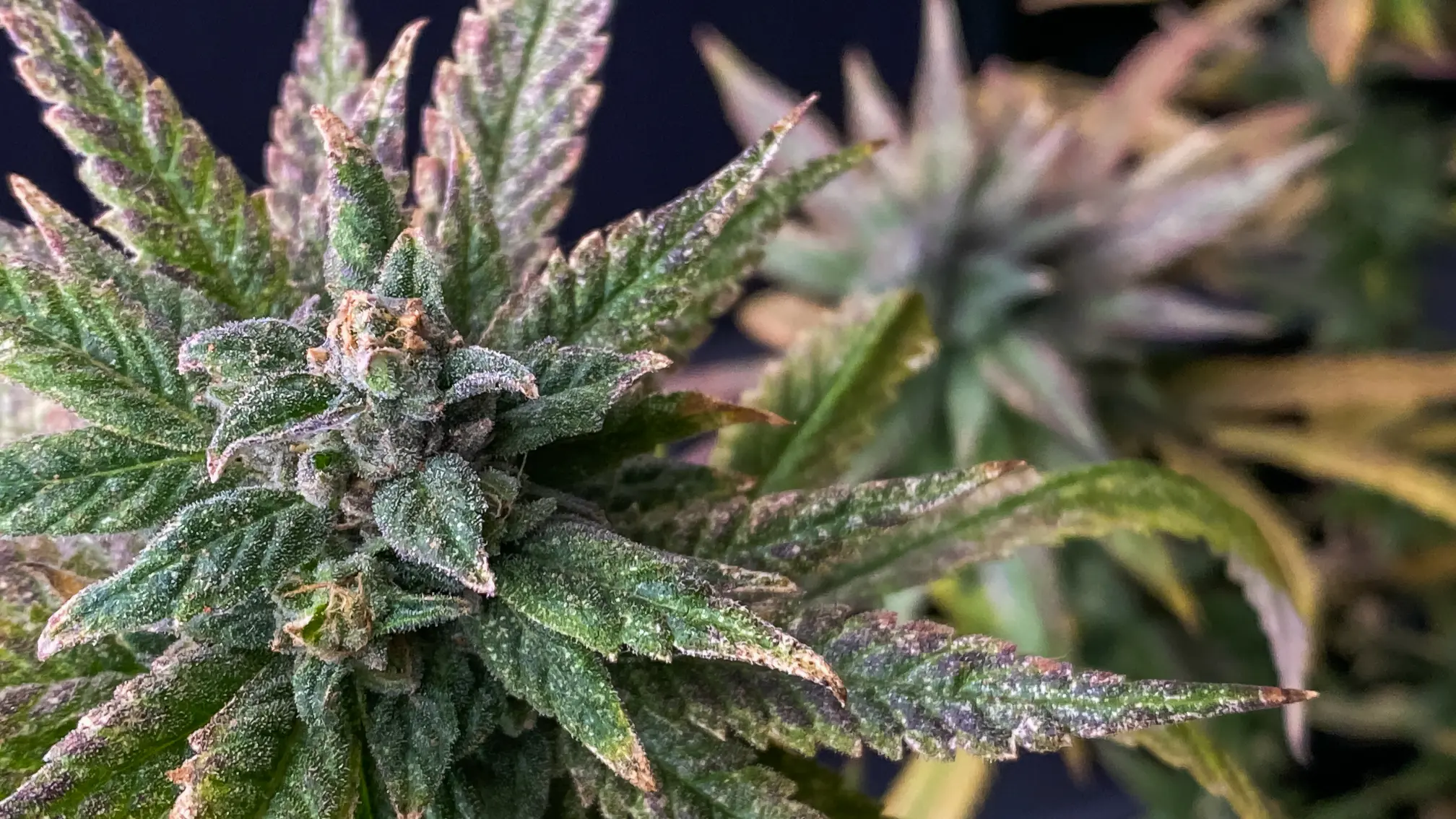
Blue Hash is an indica-leaning hybrid that becomes more interesting the closer you look at the contradictions in its reputation. It is commonly described as a sturdy, cold-tolerant plant with an easy flowering cycle, yet several real grow reports show far more post-flip stretch than many growers expect from its broad-leaf appearance. It is associated with dense berry-scented resinous flowers, but good examples can also carry pine, earth, hash, spice, and a darker Kush-like base. It is often recommended for difficult outdoor climates, yet its own dense flowers still need thoughtful moisture management.
The lineage most often given is Blueberry crossed with a Hash Plant selection. That pairing explains much of the cultivar's identity. Blueberry brings fruit, color potential, a calming emotional tone, and phenotype variation that can influence stretch and aroma. Hash Plant contributes a fast finish, resin, sturdy branching, earthy-hashy depth, and a strong physical effect. The combination can produce a plant that looks compact early, then opens dramatically during the flowering transition before settling into a fast bulking phase.
For a grower, the central question is therefore not simply whether Blue Hash is easy. It is how much space should be reserved for a plant whose flowering stretch can be much larger than its vegetative silhouette suggests. Once that is understood, the cultivar can be forgiving and productive. It suits growers who want an indica-like harvest window without assuming that indica-like leaves always mean indica-like height behavior.
How much room should I leave for Blue Hash after the flip?
More than its broad-leaf vegetative shape suggests. The safest first run leaves open canopy space, uses early lateral training and assumes the transition stretch may be substantial before the plant settles into its fast bulking phase.
Sent by: Daniel via e-mail
Strain Features
| Feature | Details |
|---|---|
| Strain Type | Indica-dominant hybrid |
| Genetic Profile | Blueberry-influenced hybrid crossed with a Hash Plant line |
| Lineage | Blueberry x Hash Plant |
| THC | Historically reported around the low-to-mid teens, though modern batches can test substantially higher |
| CBD | Usually low; older reports vary and should not be treated as fixed |
| Dominant Aroma | Blueberry, earth, hash, pine, spice, mild sweetness |
| Effect Character | Relaxed, euphoric, body-heavy, increasingly sleepy with dose |
| Flowering Time | Commonly about 7-9 weeks |
| Outdoor Harvest | Relatively early for many expressions, useful in cooler climates |
| Vegetative Shape | Bushy, broad-leaf, sturdy, with strong side branches |
| Stretch | Highly phenotype-dependent; some indoor reports describe unexpectedly large stretch |
| Bud Structure | Dense to moderately dense, resinous, often chunky rather than spear-like |
| Resin Production | Strong, consistent with Hash Plant ancestry |
| Color Potential | Blue, violet, and purple tones can appear in cool conditions and certain phenotypes |
| Climate Tolerance | Noted for good performance in cool, harsh, or humid outdoor conditions |
| Mold Resistance | Frequently described as better than average, but dense buds still require late-season monitoring |
| Training Compatibility | Good for topping, LST, supercropping, and controlled SOG/SCROG approaches |
| Yield | Medium-high, with strong outdoor potential in suitable conditions |
| Grow Difficulty | Easy to moderate; height planning is the main hidden challenge |
| Branch Strength | Generally strong, though heavy flowers can still need support |
| Best Quality Goal | Preserve berry-hash flavor while exploiting fast flowering and environmental resilience |
| Best Time of Use | Evening or night for most consumers |
The feature that deserves the most attention is stretch. A grower who plans Blue Hash as if it will remain a short hash-plant bush can end up with a canopy far closer to the light than intended. Its flowering speed can be indica-like while its transition growth is surprisingly expansive.
Genetic Lineage
Blue Hash combines two influential genetic directions: Blueberry and Hash Plant. The attraction of that cross is easy to understand. Blueberry lines are valued for fruit, color, broad-leaf morphology, and deeply relaxing effects. Hash Plant lines are valued for resin, fast flowering, dense flowers, and an earthy narcotic character. Blue Hash takes pieces from both, but the inheritance is not uniform enough to assume every plant will be short, blue, and strongly berry-scented.
Blueberry influence often appears first in aroma and coloration. Some expressions can develop a genuine berry sweetness that becomes clearer after cure. Others are less fruity and lean toward pine, earth, and hash. Cool nights may increase anthocyanin expression, especially in genetically receptive plants, but blue or purple coloration is not guaranteed.
Hash Plant ancestry explains the practical flowering window. Many plants finish faster than long modern hybrids, making Blue Hash attractive where autumn weather becomes risky. Resin begins building relatively early and flowers can harden quickly once stretch finishes. The plant often has enough structural strength to carry good weight without extremely elaborate support.
The surprising part is vertical behavior. Real grow reports have documented some Blue Hash plants stretching several times their vegetative height after the switch to flowering. That is much more than the average grower expects from an indica-dominant plant. It is likely a phenotype-dependent trait rather than a universal rule, but it is significant enough to change indoor planning.
This is also why the lineage should not be read as a simple formula. "Blueberry x Hash Plant" does not mean the result is exactly halfway between the parents. One plant can inherit Blueberry-like internode expansion while another stays closer to compact Hash Plant architecture. The grower should read the plant's early branching and internode length and adjust the flip date accordingly.
The genetic background also helps explain environmental resilience. Hash-oriented mountain and northern selections were historically favored for finishing in shorter seasons, while some Blueberry-derived lines tolerate cool nights and use them to deepen pigment. Blue Hash has been reported as reliable in cool or humid conditions where more delicate cultivars struggle. Still, environmental tolerance is relative, not immunity. Dense resinous buds can rot if kept wet long enough.
Effect Breakdown
Blue Hash usually begins with a gentle emotional lift rather than a sharp mental rush. Users often report feeling happier, calmer, and less preoccupied with stress. The onset can be pleasant enough that the strain does not initially seem especially heavy.
The physical phase follows fairly quickly. Muscles loosen, posture becomes more relaxed, and the body begins to feel settled. This stage can remain functional at lower doses. A user may still enjoy conversation, a meal, a film, or light creative activity without feeling immediately immobilized.
At a moderate dose, the balance tilts further toward the body. The strain's Hash Plant influence becomes easier to recognize. The mind can become softer and less demanding while the body feels heavier. Euphoria remains, but it is not an energetic form of euphoria. It is more contentment than excitement.
A larger dose can become sleepy. Some users report couch-lock, appetite, and a strong desire to rest. That makes Blue Hash better suited to the later part of the day. People who use it in the afternoon should consider tolerance and dose because the late phase can outlast the initial mood lift.
Potency deserves nuance. Older strain references often place THC in a moderate range. Modern flower from individual batches has sometimes tested considerably higher. These figures do not contradict one another so much as demonstrate the limits of using a historic strain name as a chemical guarantee. Different selections, growing conditions, harvest maturity, and laboratory methods all matter.
The flavor and effect experience may also differ by phenotype. A strongly berry-dominant plant can feel emotionally softer to some users, while a pine-hash expression may be perceived as heavier. That is subjective and should not be converted into a biological rule.
For users sensitive to THC, start small. Even a strain with a relaxing reputation can cause dizziness or anxiety if the dose exceeds tolerance. Dry mouth and dry eyes are common. Because the effect becomes heavier with time, wait before increasing the dose.
Flavor & Aroma Profile
Blue Hash works best when the berry component is allowed to sit on top of the hash base rather than being flattened into generic sweetness. The aroma usually begins with earth, resin, and pine, then introduces blueberry or dark fruit. Some expressions show more obvious berry than others.
The live plant can smell surprisingly green and piney before harvest. Berry may be present but partially hidden by fresh plant volatiles. After drying, the profile becomes darker and clearer. The hash-like base takes on a dry, resinous quality and the fruit begins to separate from the earth.
Breaking a cured flower often reveals the strongest blueberry note. The interior can smell sweeter and slightly creamy, while the exterior carries pine and dry spice. In some phenotypes, there is a mild floral edge. In others, the fruit is closer to dark grape or forest berry than literal blueberry.
The inhale typically begins with soft sweetness and earth. Mid-palate, pine and resin become more obvious. The exhale can carry hash, spice, and a lingering berry skin flavor. A good sample is not sugary; the fruit works more like a natural aromatic accent on a classic hash profile.
Poor drying damages this balance. Berry-associated volatile compounds are easier to lose than the heavier woody and earthy fractions. If the crop is dried too warm or placed under direct airflow, the final jar may keep hash and pine but lose much of the Blueberry identity.
Cooler outdoor-grown flower can develop an especially deep resin character. However, field-grown material often enters the dry room with more internal moisture and greater bud size. The grower should not use high heat to compensate. Space branches, keep the room moving gently, and give moisture time to equalize.
Cure duration matters. Two weeks may produce acceptable smoke, but four or more weeks often creates a smoother relationship between berry, pine, and hash. The fruit becomes less sharp and the resinous base less rough.
Dominant Terpenes
Available terpene data for Blue Hash is limited and varies by sample, but modern batches and related profiles frequently show myrcene, beta-caryophyllene, and pinene among the meaningful components.
| Terpene | Sensory Contribution | Likely Role in Blue Hash |
|---|---|---|
| Myrcene | Earth, herbs, musk | Supports the deep earthy body and may accompany relaxing chemotypes |
| Beta-Caryophyllene | Pepper, spice, dry wood | Adds hash-like spice and a warm finish |
| Alpha/Beta-Pinene | Pine needles, resin, fresh wood | Explains the conifer note that often sits beside the berry aroma |
| Limonene | Citrus brightness | Can appear in smaller amounts and brighten sweeter phenotypes |
| Linalool | Floral softness | May contribute to occasional floral or lavender-like nuances |
One recent flower analysis showed a myrcene-forward profile with meaningful caryophyllene and pinene. That should be treated as an example, not the universal chemical recipe of Blue Hash. A different phenotype grown elsewhere may shift those proportions.
Myrcene fits the cultivar particularly well because it reinforces the earthy, herbal side. Caryophyllene provides pepper and dry wood, while pinene creates the fresh resinous note that prevents the berry from becoming too sweet.
Terpene effects should be discussed conservatively. Myrcene is often associated with relaxing cannabis, but it does not single-handedly create sedation. Caryophyllene has known CB2 receptor activity, but that does not make every caryophyllene-rich flower medically predictable. For growers, the reliable value of these compounds is flavor and aroma.
Indoor vs. Outdoor Growing
| Factor | Indoor Cultivation | Outdoor Cultivation |
|---|---|---|
| Height | Can become unexpectedly tall after flip | Medium to large depending season and root space |
| Stretch | Main hidden challenge; some phenotypes stretch dramatically | Less problematic because vertical space is greater |
| Flowering Speed | Fast enough for efficient indoor cycles | Useful for regions with early autumn |
| Canopy Structure | Bushy base with strong laterals; needs height planning | Strong broad branching can use sun well |
| Climate | Easy to stabilize | Noted for above-average cold and humidity tolerance |
| Mold Pressure | Low to moderate with good airflow | Better resistance than many dense-bud cultivars, but not immune |
| Yield | Medium-high | High potential with large root volume |
| Color | Cool room nights can deepen pigments | Natural cold nights can encourage blue-purple tones |
| Training | Excellent for topping, LST, supercropping, SOG/SCROG | Early topping and branch support work well |
| Main Indoor Risk | Flipping too late and running out of height | Main outdoor risk is extended wet weather on dense mature buds |
| Best Reason to Choose | Fast finish and manageable flower development once stretch is controlled | Reliability in cooler, shorter, or less predictable seasons |
Indoors, Blue Hash should be planned more like a plant with uncertain stretch than like a guaranteed dwarf indica. Growers with limited headroom should flip earlier, particularly if internodes are already opening in vegetative growth. Supercropping can be useful if a branch becomes too tall during transition, but it is better as a correction than as the entire height-control plan.
The plant's side branching makes both SOG and SCROG possible, but the choice depends on phenotype. A very stretchy plant can be woven into a screen and spread horizontally. A compact phenotype may be more efficient with fewer training events and a shorter veg.
Outdoors, the cultivar's reputation makes more intuitive sense. Early flowering and resilience to cool conditions provide a real advantage. A plant in a large container or open ground can become broad and productive without the indoor ceiling problem.
The main outdoor limitation is still flower density. Better-than-average resistance does not mean a mature cola can remain soaked through several days of rain. Growers in humid areas should use branch spacing, morning sun, and physical rain protection where possible.
Strain-Specific Grow Guidance
Read the Internodes Before You Flip
Blue Hash can deceive the eye. Broad leaves and a bushy shape encourage the assumption that stretch will be minimal. Instead of relying on the indica label, look at the actual spacing between nodes during late veg.
If internodes begin lengthening rapidly and the main stem is accelerating, flip earlier than you would with a compact Hash Plant. If the plant stays tight and squat, allow more time to fill the footprint. The plant's pre-flower geometry is a better height predictor than the strain category.
Training Response
Topping generally works well because side branches are strong. One topping can produce several competitive leaders. LST is then useful for spreading those leaders before transition.
Stretchy phenotypes can respond well to supercropping during the first part of transition. Bend only healthy flexible stems and support them afterward. The objective is to level the canopy, not repeatedly injure the plant.
A screen can be useful when stretch is high. Start filling it before the flip, but leave openings for transition growth. If the phenotype proves compact, stop tucking earlier and let tops rise.
SOG can also work because the cultivar flowers quickly, but plant spacing must allow for phenotype variation. A group of unexpectedly stretchy individuals can become crowded quickly.
Vegetative Vigor
Blue Hash is generally considered easy and strong. It can develop a dense root system and a substantial branch network. This does not mean it should be overfed. Healthy vigor is best maintained through balanced nutrition and an oxygenated root zone.
Transplant before the root mass becomes severely bound. A vigorous plant in too small a container can dry erratically during stretch, increasing stress exactly when height is changing fastest.
Watering and Root Zone
The plant can use considerable water during transition. After stretch, demand may stabilize. Avoid watering only by schedule.
In soil or coco, good drainage helps maintain the resilient character growers expect. A saturated medium can make any cultivar look weak and can increase humidity around a dense canopy. Allow meaningful dryback without repeated severe wilting.
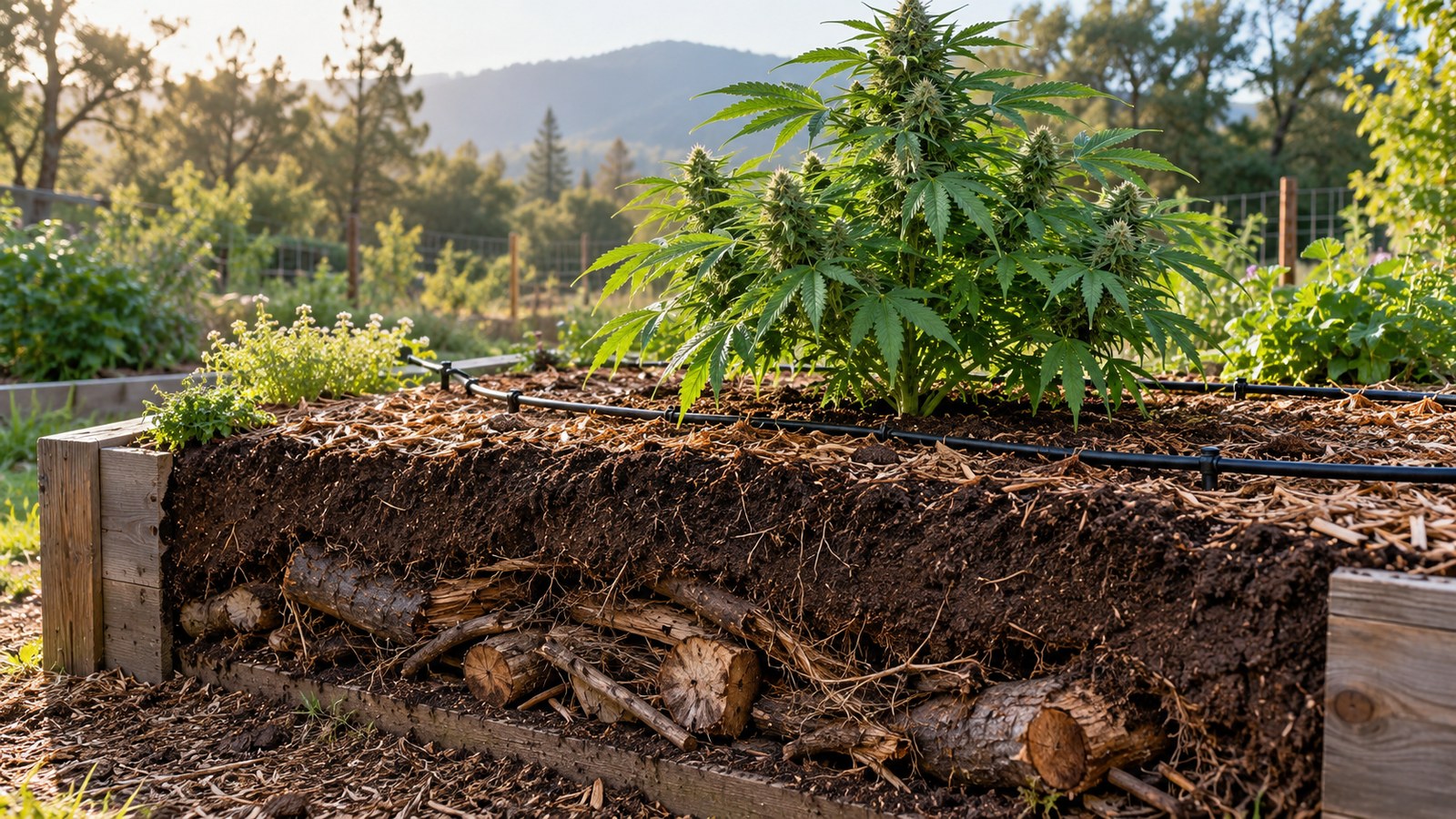
Outdoors, large plants benefit from deep irrigation that encourages roots to explore the full volume rather than constant shallow watering. Mulch can moderate surface evaporation, but the stem base should not remain wet and buried.
Feeding Behavior
Blue Hash is usually described as tolerant of normal feeding. Start moderate and increase only when the plant's growth supports it. Excess nitrogen during stretch can exaggerate leafy growth and make the eventual canopy harder to ventilate.
As flower development accelerates, maintain balanced bloom nutrition rather than chasing density with extreme phosphorus or potassium. The Hash Plant side already contributes resin and flower mass. Overfeeding can reduce root-zone efficiency and create dark, soft tissue.
A late natural fade is not necessarily a problem. In cool outdoor climates, color changes may involve both normal senescence and anthocyanin expression. Distinguish between a uniform late-season fade and an early deficiency pattern.
Light
Indoor plants respond well to strong, even light. Because stretch can place tops close to fixtures, check distance frequently during the first three weeks after the flip.
If a branch grows into an overly intense zone, lower or bend the branch instead of raising the light for the entire canopy. This preserves useful intensity for shorter tops.
Lower flower quality depends heavily on penetration. Remove the weakest shaded growth after stretch. Do not expect a tall Blue Hash phenotype to mature flowers deeply below a thick canopy.
Climate and Environmental Tolerance
Blue Hash is known for handling cooler conditions better than many modern hybrids. This is most valuable outdoors where night temperatures can fall before harvest. The plant may continue developing while more tropical cultivars slow substantially.
Humidity tolerance is also reported as relatively good. The likely advantage is a combination of genetics, finish speed, and flower structure. But "good resistance" should not be translated into "ignore humidity."
Indoors, maintain ordinary late-flower humidity discipline. Outdoors, prioritize morning sun and open branch spacing so dew dries quickly. Remove leaves that die inside the canopy.
Flower Development
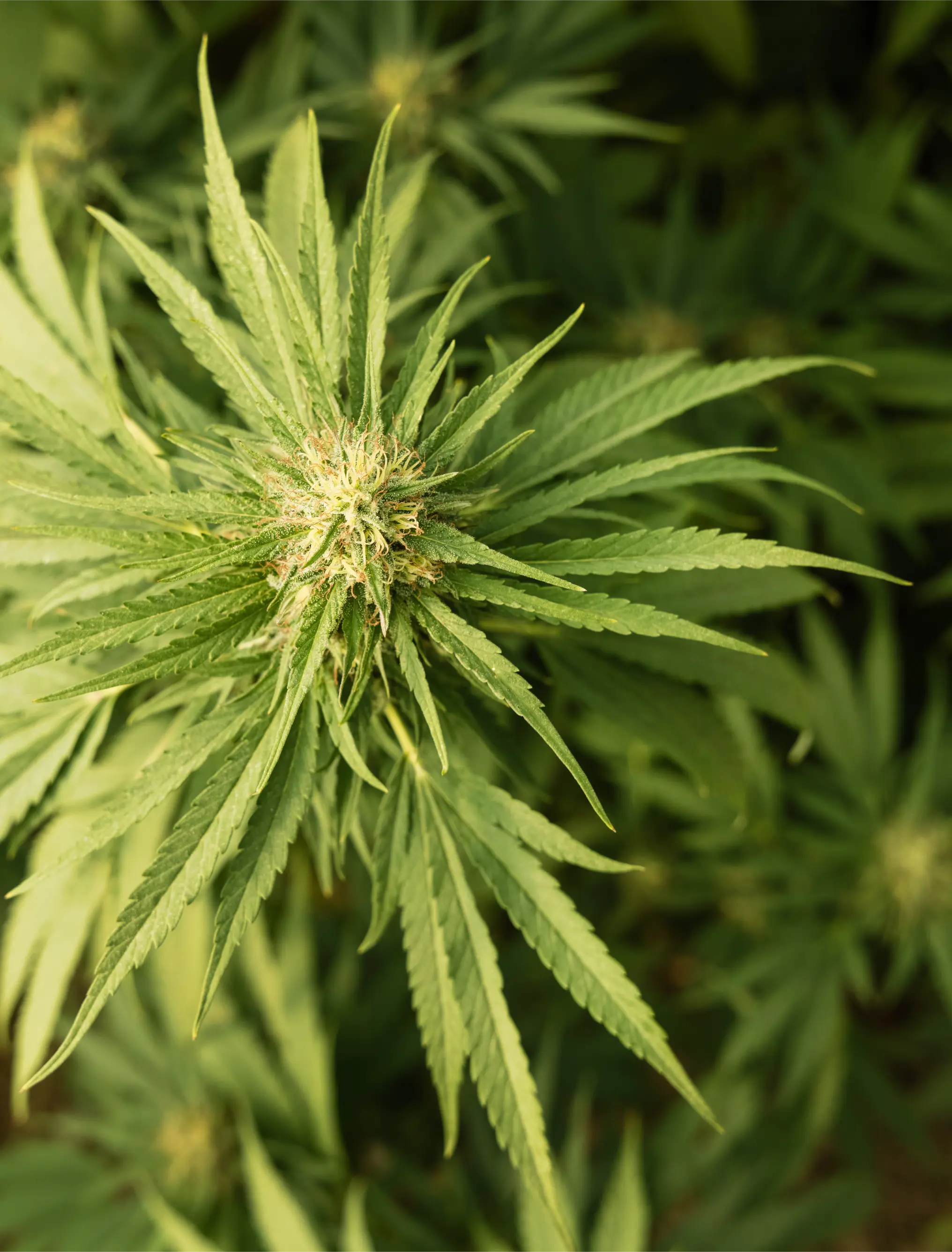
After the stretch phase ends, Blue Hash can shift rapidly into bud building. Flowers become chunky and resinous rather than extremely elongated. Calyxes may darken or purple in cooler conditions.
Because the finish can be quick, growers should begin maturity checks earlier than they would with a ten-to-twelve-week cultivar. Do not assume there will always be another two weeks to correct a problem.
Mold and Pest Pressure
Cold tolerance is not humidity immunity
Blue Hash can finish in cool conditions, but its dense flowers still trap moisture. Keep air moving through the interior, inspect the stem side of large tops and do not let cool nights push late-flower relative humidity upward.
Reports often praise Blue Hash for mold resistance. That is useful but should encourage sensible outdoor selection, not complacency. Dense buds remain biologically capable of trapping moisture.
Caterpillars can be particularly destructive outdoors because feeding damage opens the interior of buds to rot. Inspect flowers regularly. Indoor growers should keep the usual preventive focus on mites, thrips, and clean airflow.
Branch Support
Strong stems often hold themselves, but large outdoor plants can still need support. A wide cage works well because it allows lateral branches to move while keeping flowers separated.
Indoors, a net can serve two purposes: height control during stretch and weight support later. Install it before the canopy becomes sticky.
Harvest Timing
Blue Hash can mature relatively quickly. Look for calyx swelling, mostly cloudy trichomes, and a mature berry-resin aroma. Harvesting too early can leave a greener pine profile and reduce the depth of the hash flavor.
For a clearer effect, harvest near peak cloudy maturity with limited amber. For a heavier evening effect, allow a modest increase in amber while ensuring flowers are still healthy. Do not extend the plant simply to chase color; purple can develop independently of maturity.
Managing Phenotype Differences in the Same Room
A mixed Blue Hash seed run can require more individual management than the uniform indica appearance initially suggests. If one plant stretches much more aggressively, avoid raising the whole canopy to accommodate that one individual. Bend or lower the outlier so the compact plants can remain in their ideal light zone. This prevents a single tall phenotype from reducing intensity across the rest of the room.
The same principle applies to feeding. A vigorous tall plant may drink and feed faster than a short dense sister. Treating every pot identically can leave one plant hungry while another accumulates salts. Use runoff behavior, leaf color, dryback speed, and overall vigor to decide whether plants should share the same irrigation strength.
Phenotype labeling is especially valuable with this cultivar. Mark plants early and keep notes on pre-flip height, final height, flowering days, aroma, mold performance, and cured flavor. Blue Hash can reward a second run because a keeper clone removes much of the uncertainty that makes the first seed run harder to plan.
Outdoor Site Selection
Cold tolerance does not replace sunlight. Blue Hash still needs strong direct light to create dense, mature flowers. In cool climates, choose the warmest practical microclimate: a south-facing exposure in the Northern Hemisphere, good morning sun, and enough airflow that dew dries early.
Avoid low pockets where cold damp air settles overnight. A site that is only a few meters lower than the surrounding ground can remain wet far longer after sunrise. This matters because the cultivar may tolerate cool temperatures while the flowers remain vulnerable to prolonged surface moisture.
Wind protection should reduce damaging gusts without eliminating air exchange. A solid wall directly beside the plant can create turbulence and shade, while a permeable hedge or open support structure can moderate wind more gently. The objective is a plant that dries after rain and does not repeatedly fold under storms.
Finishing in a Short Season
Blue Hash is most valuable outdoors when its early finish is used strategically. Start with enough vegetative time to create a strong frame, but do not assume that a larger plant is always better. In marginal climates, a moderately sized plant with sunlight reaching the interior can mature more evenly than a huge bush whose center stays shaded and wet.
As autumn approaches, reduce late-season actions that create fresh soft growth. Heavy nitrogen, severe pruning, or unnecessary stress can delay the natural finish. Keep the plant healthy, supported, and dry enough to complete the flowers it already has.
If a prolonged storm is forecast when the upper flowers are mature but lower branches still need time, a staged harvest can make sense. Removing ready tops reduces risk and opens light and air to the remaining flowers. It is often a better quality decision than gambling the entire plant on one perfect harvest date.
Weedth Bud Flavor Tips
The main flavor objective is to protect the blueberry top note without losing the resinous hash foundation. The heavier earthy components are relatively difficult to erase. The fruit is easier to lose.
Harvest When Fruit and Resin Meet
A plant can smell berry-like before the flowers are fully mature. Do not use aroma alone. Wait for calyx development and trichome maturity. The best window often combines a developed berry smell with a richer resin-hash background.
An early harvest may smell fresh and fruity but taste thin. A very late harvest can feel heavier while the fruit loses brightness. Choose the window based on the desired balance.
Dry Cool and Gradually
High drying temperature disproportionately reduces volatile aroma compounds. For Blue Hash, that means the final jar can become earth-pine dominant if the harvest is dried warm.
Keep the drying environment dark with gentle indirect circulation. Dense flowers should not be stacked or crowded. Larger outdoor branches need more space than small indoor tops.
Do Not Mistake Cold-Grown Moisture for Readiness
Outdoor Blue Hash may be harvested during cool conditions. Cool flowers can feel firm while still holding substantial internal water. Give them time. Breaking down large colas into reasonable branch sections can reduce internal moisture risk without destroying bud structure.
Cure for Berry Integration
The first two weeks often emphasize hash, pine, and fresh plant notes. Around weeks three to five, berry sweetness can become cleaner and the smoke smoother. A longer cure may deepen earth and spice.
Avoid repeatedly opening mature jars simply to smell them. Use smaller containers for daily use and leave the rest sealed.
Storage
Blue Hash benefits from cool dark storage. Light and heat accelerate terpene and cannabinoid degradation. Keep containers airtight and avoid excessive dryness. Overdry flower loses the volatile fruit first and can become brittle enough that trichomes break away during handling.
Weedth Bud Boost Tips
Indoor: Plan Height Before Yield
The biggest yield boost is preventing a height crisis. If the plant stretches into the light, the grower may have to raise fixtures, supercrop aggressively, or reduce intensity. All of those emergency changes can reduce uniformity.
Flip stretchy phenotypes earlier. Use the first two weeks of transition to spread branches through a net. Once the final height stabilizes, stop training and let the flower set.
Use the Side Branches
Blue Hash often produces strong laterals that can carry real weight. Do not strip them simply to create one central cola. Bring healthy side branches into the productive canopy.
Remove weak lower shoots that never reach light. This improves premium flower percentage without sacrificing the strain's natural branching advantage.
Moderate Plant Count
A very dense SOG can work with compact phenotypes, but stretch variability makes moderate spacing safer. Give each plant enough room for lateral expansion. The few extra centimeters lost at the beginning can prevent a tangled canopy later.
Outdoor Root Volume
This cultivar can take advantage of large outdoor root space. In-ground culture or generous containers allow a broad plant that makes use of its relatively short finish.
Start early enough to establish structure, but remember that a huge bush creates a huge wet surface after rain. Prune the deepest interior and install support before flower.
Preserve Quality Yield
A "bigger bud" is not automatically a better bud. If a giant outdoor cola becomes impossible to dry evenly, total biomass has exceeded quality management. Branch spacing and selective pruning are yield strategies because they protect usable flower.
Blue Hash is already resinous. There is no need to rely on unproven stress practices such as prolonged darkness or severe late-flower drought to "increase trichomes." Stable health protects the chemistry the plant is genetically capable of producing.
Medical Uses & Benefits
Blue Hash's most commonly reported therapeutic-style uses revolve around relaxation, stress, sleep, and physical discomfort. These are user-reported patterns rather than strain-specific clinical evidence.
For stress, the initial emotional lift can be useful because the strain does not usually begin as a blunt sedative. The user may feel calmer and more positive before the body becomes heavy.
For physical tension or pain, THC-driven changes in perception and the strain's relaxing body effect may be appealing. Caryophyllene-rich samples also contain a terpene studied for inflammatory pathways, but that does not prove a medical outcome.
Sleep becomes more relevant at higher doses or later in the experience. The strain can become drowsy enough that nighttime users prefer it close to the end of the day.
Appetite may increase. This can be helpful for some medical cannabis users and unwanted for others.
People prone to THC-related anxiety should start low, especially because modern examples can be stronger than historical figures suggest. The "moderate THC classic" reputation should not be used as a dosing guarantee.
Ideal User Profile
Blue Hash is well suited to someone who likes berry flavor but does not want a purely sweet dessert strain. The hash, pine, and earth give it an older, resin-focused identity.
It is a logical evening strain for users who want mood improvement followed by physical calm. A light dose may remain social. A larger dose is better suited to a sofa, a meal, music, or sleep preparation.
For growers, the ideal user is someone in a cooler climate or a short outdoor season who wants a relatively fast finish. It is also useful for beginners because the plant is generally sturdy, provided they do not underestimate stretch. A first-time outdoor grower in a cool region may find Blue Hash easier to finish than a long-flowering tropical hybrid, but that advantage should be paired with realistic site planning. Morning sun, open branch spacing, and an early inspection routine still matter. The cultivar gives the grower a wider operating window; it does not replace observation.
Indoor growers with low ceilings should be more cautious. The strain can still work, but the flip must be timed based on actual internode behavior.
It is less ideal for consumers who need high daytime stimulation or growers seeking a completely predictable uniform short plant. Growers who dislike phenotype hunting may prefer a more stabilized compact cultivar, especially in very low indoor rooms where emergency supercropping would be difficult, undesirable, and stressful. A little unused vertical reserve is usually cheaper than rebuilding the canopy after stretch has already accelerated.
Grower Notes and Feedback
The most useful recurring observation is the stretch surprise. Some growers report plants reaching roughly four times their initial flowering height. That is not universal, but it is dramatic enough to be treated as a genuine phenotype possibility.
Another recurring theme is strength. Plants often tolerate training, temperature shifts, and ordinary feeding well. This contributes to the beginner-friendly reputation.
Outdoor growers praise its performance in cooler or more humid conditions. The fast finish is part of that success because the plant can be harvested before the worst autumn weather arrives.
Bud density is usually good, and resin coverage can be heavy. Some reports describe a slightly more open flower structure, which may be one reason certain phenotypes handle humidity better.
Color is inconsistent. Blue-purple tones may emerge, especially with cooler nights, but a green plant can still deliver the expected flavor and effect.
Modern potency reports also challenge older descriptions. Some recent flower has tested above 20% THC. That does not mean every plant will. It does mean growers should stop treating the strain's old published range as a permanent chemical limit.
A final grower observation concerns drying density. Even when Blue Hash resists mold well on the living plant, harvested branches no longer transpire or defend themselves. Large colas that were safe outdoors can become risky if crowded into a stagnant drying space. Experienced growers therefore tend to reduce branch mass, increase hanging distance, and check the center of the largest flowers during the first several days. That distinction matters: field resistance and post-harvest stability are not the same trait.
The cultivar is also a useful reminder that classic strain descriptions age. Modern selections may be more potent, more resinous, or more variable than older summaries suggest. When a grower's plant behaves outside the historical range, the first assumption should not be that the seed is mislabeled. Record the phenotype, finish it carefully, and judge the cured result.
Weedth Editor's Note
I would give Blue Hash more headroom than the leaves seem to ask for. That is the single decision most likely to make the grow easier. The plant can look like a classic compact indica in veg, and that visual cue is powerful. It invites the grower to veg longer. Then a stretchy phenotype flips the script.
My approach would be to watch internodes during the last week of vegetative growth. If they are already opening, I would flower earlier and use a net. If the plant stays genuinely tight, I would let it build more width. That is more useful than following one universal height recommendation.
I like the cultivar outdoors because its strengths solve real problems. A relatively fast finish and tolerance for cool weather matter more to me than a theoretical maximum yield. A strain that finishes cleanly before autumn becomes hostile is more valuable than a larger cultivar that never reaches proper maturity.
For flavor, I would be careful with the dry. The hash and earth will survive a lot. The blueberry note will not. When the berry disappears, the flower can still be good, but it loses the trait that makes Blue Hash distinct.
I also appreciate that the strain can bridge generations of cannabis flavor. It has fruit, but it does not taste like candy. The resin, pine, and earthy hash keep it grounded.
For a second run, I would select the keeper based on moderate stretch, strong side branches, clear berry aroma after cure, and early finish. I would not automatically choose the tallest or the darkest plant.
Weedth Score
Growing Experience – 8.7/10: Sturdy, fast, tolerant, and adaptable. The only major deduction is unpredictable stretch in some phenotypes, which can create indoor problems.
Bud Structure & Visual Appeal – 8.5/10: Resinous chunky flowers with possible blue-purple coloration are attractive. Not every phenotype becomes intensely colored or ultra-dense.
Aroma Complexity – 8.4/10: Berry, pine, hash, earth, spice, and sweetness create a satisfying profile. It is less complex than some modern polyhybrids but more distinctive than a simple berry strain.
Flavor & Smoothness – 8.3/10: Very good when the fruit survives drying. A rushed dry can reduce the profile to ordinary earth and hash, so execution matters.
Effects & High Experience – 8.4/10: Pleasant euphoria leading into body relaxation and sleepiness. It is versatile at low dose but mostly an evening strain.
Overall Satisfaction & Recommendation – 8.6/10: Strongly recommended for cooler outdoor climates and growers who want a fast resinous berry-hash hybrid. Indoor growers should treat stretch as a variable to measure, not an assumption.
Blue Hash earns its place by finishing like an indica while occasionally stretching like it forgot the label.
FAQ
How much does Blue Hash stretch?
It varies considerably. Some plants remain moderate, while documented grow reports describe very large stretch, even several times the pre-flip height. Watch internode length during late veg and leave extra headroom.
Is Blue Hash good for cold climates?
Yes, it has a strong reputation for tolerating cool conditions and finishing relatively early. That makes it useful in regions where autumn temperatures fall quickly. Cold tolerance does not mean the plant should be exposed to frost unnecessarily.
Is Blue Hash mold resistant?
It is often described as more resistant than average, especially outdoors, but it is not immune. Dense wet buds can still develop botrytis. Open the canopy, provide morning sun outdoors, and avoid prolonged late-flower humidity.
Does Blue Hash really taste like blueberries?
Some phenotypes have a clear blueberry or dark-berry note. Others lean more toward pine, earth, and hash. The berry often becomes clearer after several weeks of cure.
How long does Blue Hash flower?
Many expressions finish in roughly seven to nine weeks. Check trichomes and flower maturity early because the cultivar can finish quickly once bulking is complete.
Is Blue Hash good for beginners?
Generally yes. It is sturdy and forgiving. The main beginner trap is allowing too much vegetative height before flowering. If vertical space is limited, flip earlier than the broad-leaf appearance might suggest.
Can Blue Hash be grown in a SCROG?
Yes, particularly stretchy phenotypes. Use the net to convert vertical growth into horizontal canopy. Leave room for the transition stretch rather than completely filling the screen in veg.
Why is my Blue Hash not turning blue or purple?
Color is phenotype- and temperature-dependent. Some plants remain green. Cool nights can enhance pigment, but color should not be forced with unhealthy cold stress.
When should I harvest Blue Hash for the best flavor?
Harvest when calyxes are swollen, trichomes on the flower are mostly cloudy, fresh pistil production has slowed, and berry-resin aroma is mature. Very early harvest can taste green; very late harvest can mute the fruit.
How should I dry Blue Hash?
Dry in a dark, cool environment with gentle indirect circulation. Space dense branches so internal moisture can escape. Avoid heat and direct fans because the berry top notes are more fragile than the earth and hash base.
Is modern Blue Hash stronger than old descriptions suggest?
It can be. Historical references often list moderate THC, while some recent batches have tested above 20%. Strain names do not guarantee chemistry, so treat potency as batch-specific.
Similar Strains
Blueberry: The obvious flavor and genetic comparison. Blueberry offers the fruit and potential color that Blue Hash inherits, but it can be more phenotype-variable and less overtly hashy. Choose Blueberry if pure berry identity matters more than resinous earth.
Hash Plant: Similar for fast flowering, resin, compact-looking morphology, and heavy physical effects. Hash Plant is usually more straightforwardly earthy and hash-like, while Blue Hash adds fruit and can show more surprising stretch.
Shishkaberry: Another berry-forward indica with relaxed effects and manageable flowering. Shishkaberry is often sweeter and more fruit-dominant, while Blue Hash has a stronger pine-resin backbone.
Northern Lights: Similar for grower friendliness, relatively fast flowering, resin, and nighttime relaxation. Northern Lights is usually more stable in short compact structure and less berry-driven.
Blue Cheese: Comparable for Blueberry-influenced sweetness and evening use, but its pungent savory aroma is very different. Growers who enjoy Blue Hash fruit but want a louder, funkier profile may prefer Blue Cheese.
White Rhino: Similar in resin, sturdy growth, heavy body effects, and suitability for growers who value reliability. White Rhino is more earthy and woody, while Blue Hash contributes a clearer berry-pine identity.
Educational content. Always follow local laws and regulations.
Share this article
A quick overview of the topics covered in this article.