
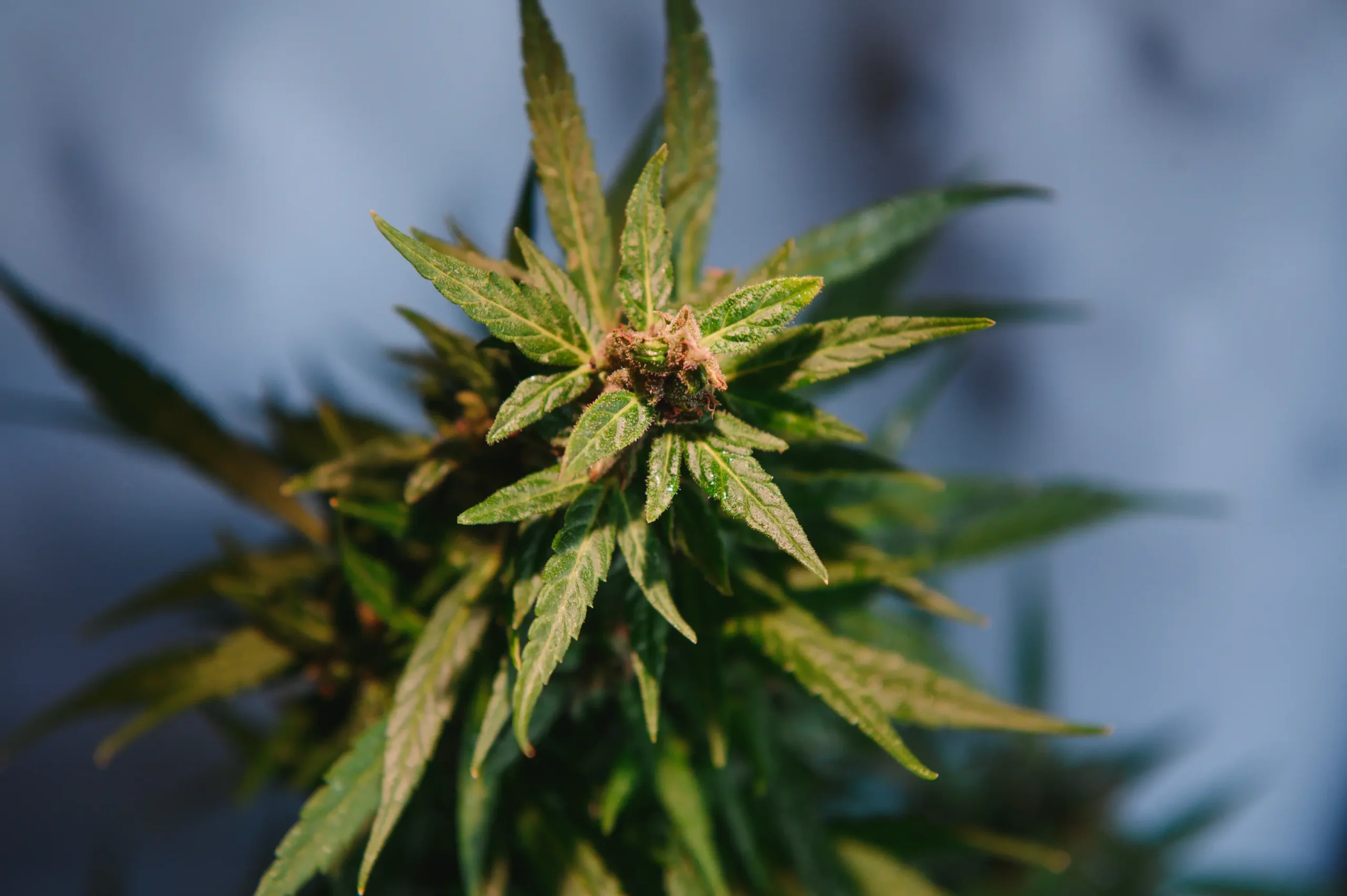
Blueberry Headband
WEEDTH STRAIN LIBRARY | CULTIVATION | BUD QUALITY | FLAVOR
Blueberry Headband has a naming problem before it has a growing problem. Several related but not identical lines have circulated under the name, and the genetic descriptions range from a simple Blueberry-by-Headband cross to more detailed pedigrees carrying OG, Sour Diesel and older Bubba ancestry. That uncertainty is not editorial trivia. It explains why one plant can present a sweeter, berry-led profile while another leans harder into pine, anise, pepper and fuel, and why reports on height and feeding are not perfectly consistent. The cultivation strategy should therefore be built around traits that repeat across the better-documented expressions: a medium-tall to tall branchy frame, substantial resin, generous colas, a nine-to-ten-week finish and a flavor that is at its best when berry sweetness remains clearly separated from the heavier gas-and-earth base. The grower should not chase a mythical single phenotype. The useful goal is to identify which expression is in front of you early, then shape and finish that plant accordingly.
Strain Features
| Feature | Details |
|---|---|
| Strain Type | Hybrid; the name is used for several related but not genetically identical lines |
| Genetic Profile | Usually tied to Blueberry and Headband-family genetics; some documented lines also include OG, Sour Diesel and pre-98 Bubba ancestry |
| THC | Common reports range from the mid-teens into the low 20s depending on line and batch |
| CBD | Generally very low |
| Flowering Time | About 9-10 weeks is common; some lines are listed around 65-70 days |
| Outdoor Harvest | Mid-autumn outdoors in suitable climates, often around October for longer lines |
| Dominant Terpene Pattern | Terpinolene, ocimene and pinene recur in some tested examples; other batches can shift toward myrcene, caryophyllene and limonene |
| Flavor / Aroma | Blueberry, mixed berry, sweet floral notes, pine, citrus peel, pepper, anise and varying diesel or gas depth |
| Effect Character | Euphoric and mentally lifted at first, followed by a calm body effect that can become sedating at higher doses |
| Grow Difficulty | Moderate; strong yields are possible, but canopy density and phenotype-dependent feeding make observation important |
| Plant Height / Shape | Medium-tall to tall, bushy and branchy, with substantial flower weight on productive laterals |
| Primary Grow Question | How do you manage a large, branchy Blueberry Headband canopy so the resinous colas finish evenly while keeping the berry top notes from disappearing behind generic gas and earth? |
Genetic Lineage
Blueberry Headband is not one perfectly standardized pedigree. The simplest description, Blueberry crossed with Headband-family genetics, is useful at the flavor-and-effect level, but several documented lines add OG, Sour Diesel and older Bubba ancestry. That is why published descriptions disagree about exact indica-sativa ratio, THC range and even the dominant terpene. The correct editorial approach is to describe the recurring phenotype family and acknowledge the uncertainty rather than pretending the name always identifies one genotype.
Blueberry influence helps explain the sweet berry, floral and occasional color expression. Headband-family and OG/Sour ancestry help explain the fuel, pine, pepper, stretch and long-lasting euphoric-to-relaxed effect. Where older Bubba influence is present, broader leaves, denser flowers and stronger late body effects can appear. A grower may see several of these traits in one plant because the name has been used across related breeding work.
The practical consequence is that selection matters. If flavor is the priority, keep notes on which plant carries a clear blueberry aroma before harvest and retains it after cure. If production is the priority, compare branch strength and uniformity of finish, not just raw wet weight. Blueberry Headband can be very good, but the best keeper is the individual that balances berry clarity, resin and manageable architecture.
Effect Breakdown
The Headband Rush
Blueberry Headband usually begins with a noticeable mental rise. The head change is euphoric and perceptual rather than purely sleepy, and many users describe a pleasant pressure-like awareness around the forehead or temples that fits the Headband name. Conversation and music can feel more absorbing during this first phase.
Hybrid Equilibrium
The middle of the experience is where the hybrid balance becomes obvious. Mental brightness remains, but the body begins to loosen. The strain can feel social and calm at the same time, which is one reason it is often chosen for late afternoon or early evening rather than only bedtime.
Where Relaxation Becomes Sedation
A larger dose changes the balance. Physical relaxation deepens, appetite can become stronger and the euphoric rush gives way to a slower, more inward state. Some phenotypes become clearly sedating in this phase, especially when harvested later.
Why Phenotype Matters
Because several genetic lines use the name, effect reports span a wider range than they do for a tightly held clone. The correct expectation is a euphoric-to-relaxed progression, with the exact speed and heaviness depending on phenotype, dose and harvest window.
Flavor & Aroma Profile
Berry Above Fuel
The recognizable sensory target for Blueberry Headband is blueberry, mixed berry, sweet floral notes, pine, citrus peel, pepper, anise and varying diesel or gas depth. The important point is separation between layers. Good flower should not smell like a generic mixture of earth and chlorophyll. It should present at least one clear top note before the heavier base aroma arrives.
Breaking the Bud
When a cured flower is opened, the first volatile impression should still show the cultivar's defining aromatic identity. Preserve blueberry and sweet floral top notes while allowing pine, pepper and fuel to stay underneath. Warm drying exaggerates the heavier base notes and can erase the reason growers chose this cultivar. Breaking or grinding the flower increases the resin surface and usually exposes deeper spice, wood or fuel. A phenotype that smells expressive only when crushed may still be good, but the strongest aromatic keepers announce themselves before that step.
Sweetness on the Palate
Blueberry Headband is most interesting when the inhale and exhale disagree slightly. The first draw can show blueberry or floral sweetness, while the finish brings pine, pepper, earth and fuel. That contrast is the identity. If the flower tastes like only berry, it lacks depth; if it tastes like only gas, the more delicate half of the profile was probably lost or never strongly expressed in that phenotype.
Cure and Phenotype Separation
Cure is also a phenotype test for Blueberry Headband. Sweet plants may gain floral depth, while fuel-forward plants often develop more pine and pepper. I would keep each plant separate so those differences remain visible. The preferred cure is the one that keeps berry above the base without making the flower wet or soft in pursuit of aroma.
Dominant Terpenes
| Terpene | Flavor / Aroma Role | Interpretation |
|---|---|---|
| Terpinolene | fresh herbal, floral and lightly citrus character | reported as prominent in some tested examples; not universal across every line sold under the name |
| Ocimene | sweet herbal, floral and tropical-leaning brightness | can support the lighter berry-floral side in tested examples |
| Pinene | pine needle, fresh wood and crisp herbal notes | fits the Headband-side pine character and appears in some tested examples |
The recurring terpene picture for Blueberry Headband is best treated as a pattern rather than a fixed chemical recipe. Terpinolene, ocimene and pinene recur in some tested examples; other batches can shift toward myrcene, caryophyllene and limonene. Cannabis terpene ratios move with genotype, environment, harvest timing and post-harvest handling, so one laboratory sample should not be used to promise that every flower carrying the name will smell or feel the same.
Blueberry Headband terpene reports vary, which fits the lineage ambiguity around the name. Terpinolene, ocimene, pinene and other profiles have all been reported in related material, but no single terpene list should be treated as universal. The useful conclusion is sensory: different cuts can emphasize berry-floral brightness or heavier pine-fuel character, and the grower should evaluate the plant in front of them.
The grower's flavor priority is protecting the berry top note because fuel and earth are more likely to survive rough post-harvest handling. A hot finish or quick dry can leave strong-smelling flower that no longer tastes like Blueberry Headband. Keep late heat controlled and dry gradually enough that sweetness remains distinct from the gas base.
Indoor vs. Outdoor Growing
| Aspect | Indoor Grow | Outdoor Grow |
|---|---|---|
| Plant architecture | Indoors, the useful goal is an open bush rather than a dense ball. Early topping and selective branch placement let the plant carry many tops without creating a dark humid center. | Outdoors, root space can turn the same genetics into a broad, heavy plant. The challenge becomes branch support and making sure inner flowers receive enough sun and air before autumn humidity rises. |
| Transition and stretch | Indoors, stretch should be read by phenotype. Tall fuel-leaning plants need earlier height control, while broader berry-heavy expressions may need more center thinning than vertical restraint. | Outdoors, both expressions have room to expand, but their support plan can differ. Open phenotypes need wind control; broad phenotypes need more spacing through the middle. |
| Flower character | Indoor tops can become chunky and resin-rich. Keep them separated and avoid filling the screen so deeply that lower flowers remain green while the top colas mature. | Outdoor colas can become larger and heavier, especially on broad plants. Sun exposure around the branch and enough air through the center protect both density and berry aroma. |
| Root-zone demand | A branchy indoor canopy can transpire heavily, yet dense container roots still dislike stale saturation. Consistent wet-to-dry rhythm is more useful than a rigid daily volume. | Outdoor root space supports a much larger shrub, so irrigation should penetrate deeply rather than repeatedly wet only the surface. Frequency should decrease as autumn demand falls. |
| Primary risk | Indoors, the hidden risk is phenotype mismatch: a canopy plan that suits the tall expression can overcrowd a broad one, leading to uneven maturity. | Outdoors, heavy branches and autumn moisture become more important. Dense top colas need support and enough separation that berry-rich flowers do not remain damp where branches touch. |
| Best quality strategy | Top early, spread four to eight strong arms and remove weak inward-growing branches. A screen can help support colas, but overfilling it reduces airflow and flavor quality. | For premium yield, prioritize fewer well-lit resinous colas over every possible branch. A clean middle canopy and branch support improve both usable weight and drying consistency. |
The indoor-versus-outdoor decision for Blueberry Headband is not simply control versus free sunlight. The better environment depends on which trait the grower wants to exploit. Indoors, the useful goal is an open bush rather than a dense ball. Early topping and selective branch placement let the plant carry many tops without creating a dark humid center. Outdoors, root space can turn the same genetics into a broad, heavy plant. The challenge becomes branch support and making sure inner flowers receive enough sun and air before autumn humidity rises.
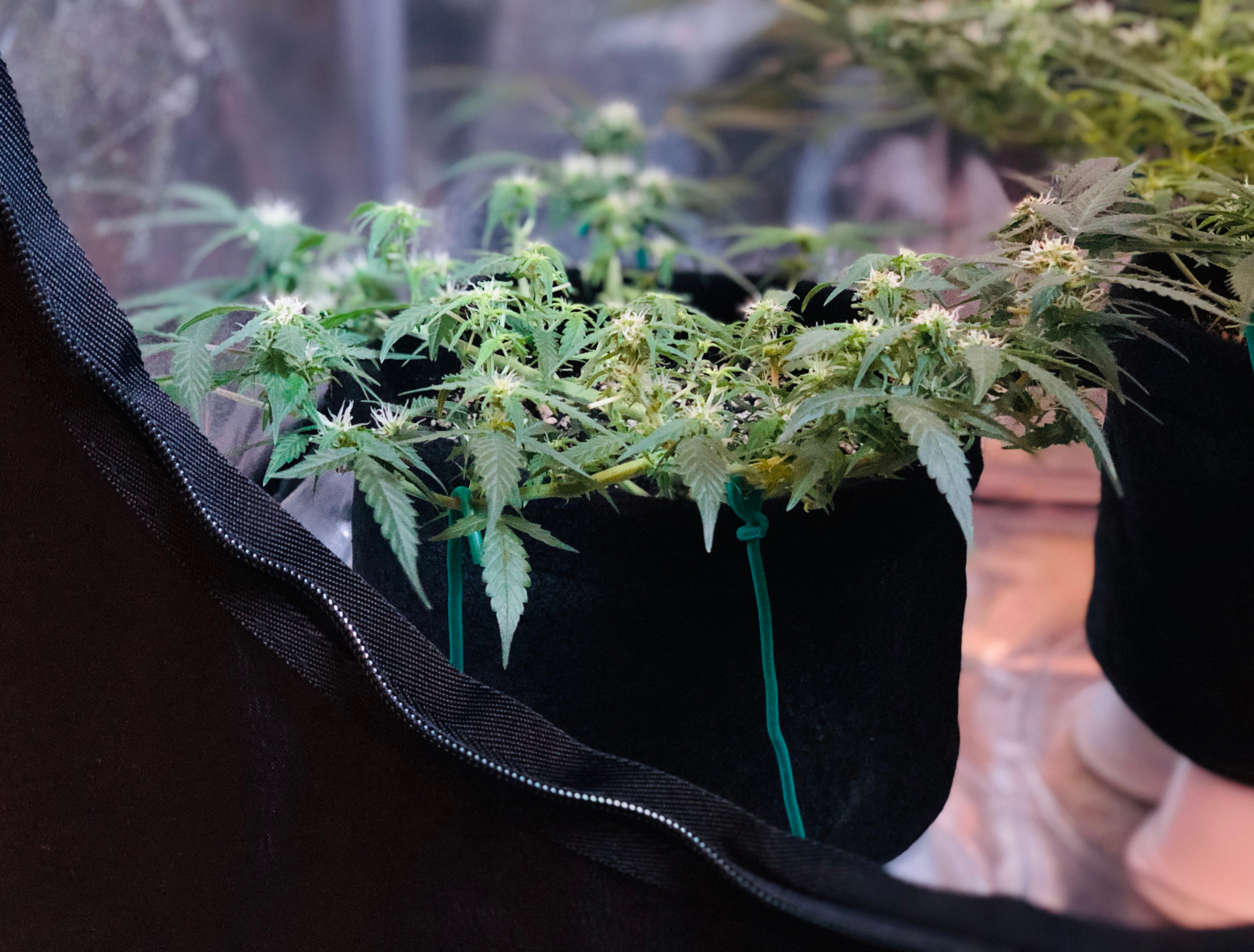
Indoor Blueberry Headband should be trained after its phenotype reveals itself. A tall, open plant can be bent early and spread into a wide plane; a broad berry-leaning plant may need more center thinning and fewer retained laterals. I would not commit every seedling to an identical screen. The branch pattern in veg should decide how the room is used.
Outdoors, Blueberry Headband can become a large branchy shrub with heavy resinous tops. The challenge is keeping the center open enough that those tops dry after weather and receive direct sun. Broad phenotypes need space between arms, while stretchier ones need support against wind. The same name can therefore require two different outdoor structures.
Strain-Specific Grow Guidance
The cultivation question that should guide the entire run is simple: How do you manage a large, branchy Blueberry Headband canopy so the resinous colas finish evenly while keeping the berry top notes from disappearing behind generic gas and earth?
Read the plant before you train it
Vegetative growth is usually branch-forward. Once established, laterals can compete strongly with the leader, which makes the cultivar naturally suited to a multi-top shape. The first useful decision is not which fashionable technique to apply. It is whether the plant is expressing strong apical dominance, strong laterals or a mixed frame. That observation determines how much topping is actually necessary. Top early, spread four to eight strong arms and remove weak inward-growing branches. A screen can help support colas, but overfilling it reduces airflow and flavor quality.
Plan the flowering transition early
Stretch is usually manageable but not negligible. Taller phenotypes with stronger Headband-family expression may lengthen more than berry-dominant compact plants. The correct flip point therefore depends on available height, branch count and how much horizontal space has already been filled. A crowded plant that enters flower with no empty canopy area has no place to put its transition growth.
Build a productive flower zone
Well-selected plants make chunky, resin-rich flowers. Dense top colas need airflow, while lower branches can still produce useful flower if they remain in the light plane. The goal is a layer of branches that remain illuminated and accessible from the beginning of flower to harvest. Small inward shoots that never reach that layer should be removed before they become a permanent humidity and labor cost.
Root zone and irrigation
Bushy plants with many active tops can transpire heavily, but their dense root balls also punish stale, saturated media. Consistent dryback matters more than rigid volume targets. Watering should follow plant demand, container mass, weather and root oxygen rather than a memorized calendar. Large leaves and fast transpiration do not justify keeping the medium permanently wet.
Nutrition without forcing the plant
Feeding behavior varies by line. Avoid assuming the biggest, darkest plant is the best. Keep nutrition steady and use leaf posture, tip condition and runoff behavior as feedback. Strong growth can tempt the grower to raise concentration repeatedly, but the best signal is balanced leaf color and uninterrupted flower development. If leaves become excessively dark, tips burn or clawing appears, adding more fertilizer is not a bud-boosting strategy.
Air movement must reach the vulnerable zone
Build support before the flowers demand it
The hidden risk is uneven canopy maturity. A large top may be ready while interior or lower flowers remain softer and greener, especially after a crowded veg. Fans or outdoor wind moving only above the canopy do not guarantee that flower interiors are dry. Inspect the actual zone where large flowers touch leaves, support netting or neighboring branches.
Support before the plant asks for it
For premium yield, prioritize fewer well-lit resinous colas over every possible branch. A clean middle canopy and branch support improve both usable weight and drying consistency. Install support while branches are still easy to position. Late ties placed after a branch has already folded can damage resinous flowers and force neighboring tops into shade.
Harvest by maturity, not reputation
Use aroma and resin with visual maturity. The berry note should smell ripe rather than green or grassy, while bracts are swollen and most trichomes have moved out of the clear stage. Calendar estimates are planning tools, not harvest commands. Compare several flowers across the canopy and, when phenotype differences are obvious, be willing to harvest in stages.
What to change on the second run
A second Blueberry Headband run should be built around the selected phenotype, not around the strain name. Record the plant's exact stretch, branch angle, berry intensity and final support needs. Once a keeper is chosen, the next canopy can be tailored to that expression and the grow becomes much more predictable.
Let phenotype decide the final strategy
A more berry-dominant compact plant and a taller fuel-forward plant should not be forced through identical training and harvest timing. Compare internodes, leaf width, aroma and stretch during transition, then adjust canopy depth and finish expectations to the expression actually present.
Reading the Transition by Phenotype
During the first part of flowering, Blueberry Headband should be judged by structure before flower size. Stretch is usually manageable but not negligible. Taller phenotypes with stronger Headband-family expression may lengthen more than berry-dominant compact plants. The grower should keep positioning stems only while they remain flexible, then allow the selected tips to establish their final flower lanes. Remove weak interior shoots that have no realistic route to productive light. Heavy defoliation is unnecessary unless large leaves are physically sealing the center. The goal is to enter true flower formation with every retained branch assigned useful space.
Supporting the Resin-Heavy Middle Weeks
Mid-flower is when irrigation and support begin to matter more than additional training. Well-selected plants make chunky, resin-rich flowers. Dense top colas need airflow, while lower branches can still produce useful flower if they remain in the light plane. Watch the relationship between branch angle and flower weight. If branches are already leaning before final swelling, add support now rather than waiting. Nutrition should remain consistent, with attention to tip burn, clawing and premature pale leaves. A healthy mid-cycle Blueberry Headband should be building resin and bract mass without producing a large amount of new leafy interior growth.
Separating Color from Maturity
In the final weeks, the question changes from making the plant larger to finishing the flower already present. Use aroma and resin with visual maturity. The berry note should smell ripe rather than green or grassy, while bracts are swollen and most trichomes have moved out of the clear stage. Reduce unnecessary handling because mature resin heads are fragile. Keep airflow moving through the canopy rather than directly blasting the flowers. Irrigation may change as transpiration slows, so do not keep applying the same volume only because it was correct in mid-flower. Stable finishing conditions usually preserve more aroma than a last-minute stress experiment.
When Branch Count Hides the Best Flowers
In Blueberry Headband, a visually healthy canopy can still hide a quality problem when berry-dominant and fuel-dominant phenotypes are forced into the same geometry. A broader plant may crowd the center while a taller expression may stack too many tops vertically. The correction is phenotype-specific: reduce interior branch count on dense plants and control height earlier on open, stretchier plants. Premium yield comes from matching the training plan to the expression rather than matching every expression to one training plan.
If Berry Disappears Behind Gas
If Blueberry Headband smells excellent at chop but generic after a week of drying, suspect post-harvest environment before blaming genetics. Preserve blueberry and sweet floral top notes while allowing pine, pepper and fuel to stay underneath. Warm drying exaggerates the heavier base notes and can erase the reason growers chose this cultivar. Warm rooms, strong direct air and very low humidity strip volatile compounds fastest from the outside of the flower. Once that upper aromatic layer is gone, the remaining profile usually feels heavier and less distinctive. Slower drying in darkness and careful moisture equalization during cure protect the cultivar's identity more reliably than trying to alter finished flower.
Choosing the Keeper After Cure
I would make the Blueberry Headband keeper decision only after cure. The chosen plant should retain berry or floral sweetness above the gas, produce a strong percentage of premium colas and fit the available room without constant correction. Color and frost are attractive, but they are secondary to cured flavor and manageable architecture.
Designing the Second Run Around the Chosen Cut
On a second run, use the keeper's known branch pattern. Shorten veg if it was a tall expression, or reduce the center earlier if it was broad and dense. If berry faded while the tops were held for lower flowers, test a staged harvest. The point is to cultivate the selected cut rather than a generic idea of Blueberry Headband.
Reading the Phenotype Before Committing the Canopy
Blueberry Headband should be observed for several weeks before the grower commits to an aggressive training plan because the name covers more than one closely related expression. A plant that opens its internodes quickly and carries strong fuel or pine early may need earlier height control and a wider branch layout. A shorter, broader berry-dominant expression can create a denser center and may benefit more from selective leaf and interior shoot removal. I would use the first part of veg to read branch angle, leaf width, internodal distance and recovery after one mild training event. Those traits tell more than a printed indica-sativa ratio. During transition, keep enough room for the longer phenotypes to continue stretching without stacking branches on top of each other. Once flower sites set, stop reshaping the canopy constantly and protect the branch positions that receive direct light. Large resinous colas can become heavy, so support should be ready before the final swell. The cultivar's variation is manageable when the grower responds to the individual plant. It becomes difficult when every seed is forced into one predetermined geometry simply because all of them share the Blueberry Headband name.
Weedth Bud Flavor Tips
Harvest the aroma, not just the trichomes
Use aroma and resin with visual maturity. The berry note should smell ripe rather than green or grassy, while bracts are swollen and most trichomes have moved out of the clear stage. Resin maturity remains important, but flavor quality also depends on when the plant's volatile profile is most complete. If the defining aroma is already fading while the plant is being held solely for more amber trichomes, the grower is trading flavor for a heavier finish.
Indoor flavor preservation
Preserve blueberry and sweet floral top notes while allowing pine, pepper and fuel to stay underneath. Warm drying exaggerates the heavier base notes and can erase the reason growers chose this cultivar. Keep late-flower heat under control and avoid blasting flowers with direct fan airflow. The goal is healthy air exchange around flowers, not dehydration on the plant.
Outdoor flavor preservation
Large Blueberry Headband colas should be harvested after surface moisture clears when possible. Dense tops can hold more water than their sugar leaves suggest, especially on a broad phenotype. Once indoors, give the heavy branches space and use gentle air exchange. Fast drying protects neither berry aroma nor the interior of a thick cola.
Drying speed matters more than a magic number
For Blueberry Headband, a gradual dry is especially valuable because its defining top notes are easier to lose than to recreate. Preserve blueberry and sweet floral top notes while allowing pine, pepper and fuel to stay underneath. Warm drying exaggerates the heavier base notes and can erase the reason growers chose this cultivar. A dry that races through the first days can make the exterior crisp while stems and dense flower interiors still hold moisture. That mismatch creates both flavor loss and uneven cure.
Cure for separation and smoothness
Blueberry Headband cure should make the berry-gas contrast clearer. The first green odor should recede, then sweetness should rise over pine, pepper and fuel. If the jar becomes mostly gas, compare that result with other phenotypes before blaming the cure. Genetic expression and post-harvest handling both shape the final balance.
Storage after the cure
For storage, keep Blueberry Headband phenotypes separate and use smaller cool, dark containers. That preserves the ability to compare them and reduces repeated oxygen exposure to the entire harvest. The berry-floral layer is the quality most worth protecting because the heavier gas notes are more persistent.
Keeping Berry Above the Gas
The most rewarding Blueberry Headband flowers do not taste like plain Blueberry and they do not taste like generic fuel. The appeal is the contrast: berry or floral sweetness sits above a darker gas, pine, pepper or earth base. Drying determines whether that contrast survives. The berry side is easier to lose than the heavier fuel note, so a warm, fast dry can leave a perfectly potent flower that no longer explains the cultivar's name. I would keep harvested material dark, avoid direct airflow and let the outside and center lose moisture gradually. During cure, separate phenotypes rather than mixing them into one jar. A berry-dominant plant may become clearer after several weeks, while a fuel-dominant plant can deepen into pine, spice and earthy sweetness. Keeping them separate is the only way to learn which expression deserves another cycle. Harvest maturity matters too. Purple or blue color is not a maturity test. Resin, bract swelling and overall flower development should decide the chop. The goal is to capture the berry top note while the flower is fully developed, then preserve it through drying so the gas remains a base note instead of becoming the whole flavor.
Weedth Bud Boost Tips
Choose premium flower percentage over raw branch count
For premium yield, prioritize fewer well-lit resinous colas over every possible branch. A clean middle canopy and branch support improve both usable weight and drying consistency. A crowded canopy can increase the number of flower sites while decreasing the percentage that finish as dense, aromatic and easy-to-dry buds. Weedth's preferred metric is quality yield: usable premium flower per unit of space, not the largest possible wet number.
Use training that matches the architecture
Top early, spread four to eight strong arms and remove weak inward-growing branches. A screen can help support colas, but overfilling it reduces airflow and flavor quality. If a technique creates more branch tips than the light or sun footprint can support, it has reduced efficiency rather than increased yield.
Keep the root system ahead of the canopy
Bushy plants with many active tops can transpire heavily, but their dense root balls also punish stale, saturated media. Consistent dryback matters more than rigid volume targets. Root volume, drainage and oxygen determine how much canopy the plant can support without repeated wilt or saturation. Container size should be chosen from expected final plant size, not from a generic strain chart.
Feed for uninterrupted flower building
Feeding behavior varies by line. Avoid assuming the biggest, darkest plant is the best. Keep nutrition steady and use leaf posture, tip condition and runoff behavior as feedback. A stable moderate program usually beats cycles of deficiency followed by heavy correction. Avoid treating PK products, carbohydrates or any single additive as a genetic yield switch. Flower mass comes primarily from healthy photosynthesis, root function, light capture and time.
Support final swelling
Heavy Blueberry Headband tops can pull branches inward late in flower. Support should hold them apart rather than merely keep them upright. Separation improves light around the cola sides and keeps dense flowers from resting against each other, which is especially useful on the broader phenotypes.
Second-run optimization
After the first harvest, compare the keeper by canopy zone. If only the top third kept real berry flavor and density, remove more lower growth next time. If the entire branch produced quality flower, preserve that branch architecture. The second run should increase the percentage of flower that carries the phenotype's defining berry-gas balance.
Medical Uses & Benefits
Reported consumers often mention stress relief and relaxed mood. Because the effect can move from euphoria into sedation, dose and time of day matter more than the simple hybrid label suggests. These patterns come primarily from user reports and from the overall cannabinoid-terpene profile, not from controlled clinical trials on Blueberry Headband itself.
Blueberry Headband is often reported as relaxing after an initially euphoric phase, which is why some consumers associate it with stress, tension or evening discomfort. Because multiple related lines circulate under the name, neither potency nor effect progression is perfectly uniform. THC-rich flower can also worsen anxiety or impairment. Medical use should therefore be framed as reported personal benefit, not a standardized therapeutic profile.
Terpene reports for Blueberry Headband are unusually variable, mirroring the genetic ambiguity around the name. That makes terpene-based medical claims especially weak. Berry, floral, pine and fuel aromas can help distinguish phenotypes, but they do not prove a particular analgesic, anti-anxiety or sedative effect. Any biological relevance should be described as an area of research rather than a predictable outcome of the cured flower.
Ideal User Profile
Best for growers who enjoy phenotype selection and flavor work, and for consumers who want berry sweetness with a more complex pine-gas backbone and a balanced mental-to-body progression. It is a better match for someone who values the cultivar's characteristic progression and flavor than for a shopper selecting only by THC percentage.
Blueberry Headband can feel sociable and euphoric before becoming more physically relaxed. That makes it flexible for afternoon or evening use, but the exact balance varies with phenotype and dose. A fuel-forward expression may feel sharper, while a broader berry-heavy plant can feel calmer. Users should treat the name as a family of related experiences rather than one guaranteed effect curve.
Blueberry Headband suits growers who are comfortable reading a phenotype before locking in the canopy. It is not exceptionally difficult, but it rewards flexibility. If every plant must fit one fixed height and branch count, the name's variation can be frustrating. If the grower can adjust training to the individual, the same variation becomes an opportunity to find a strong keeper.
Grower Notes and Feedback
Grower reports around Blueberry Headband are most useful when they describe behavior instead of just yield. Repeated observations include lineage ambiguity under one name, berry plus fuel profile, medium-tall bushy frame, large resinous colas. Those traits explain why two gardens can report different weights while agreeing on the overall personality of the plant.
The most common first-run mistake is to react too late to structure. Stretch is usually manageable but not negligible. Taller phenotypes with stronger Headband-family expression may lengthen more than berry-dominant compact plants. By the time a canopy looks obviously crowded, the plant may already have committed energy to branches that will remain shaded. Early simplification is less stressful than late correction.
Another recurring lesson is that finish quality matters more than early visual excitement. Use aroma and resin with visual maturity. The berry note should smell ripe rather than green or grassy, while bracts are swollen and most trichomes have moved out of the clear stage. Flowers can look large before they have completed resin and aroma development, and an early harvest often exaggerates green or sharp flavors.
Phenotype documentation is essential with Blueberry Headband because several lineages circulate under the name. Record leaf width, stretch, berry-versus-fuel aroma, flower density and color separately. Those notes make the finished crop intelligible and prevent a grower from assuming that one plant's behavior defines every Blueberry Headband expression.
Trim behavior differs by Blueberry Headband phenotype. Dense broad plants may carry more leaf around the cola, while open fuel-forward plants can be easier to manicure. In either case, a large amount of soft shaded flower indicates that branch count exceeded the productive light zone. Use trim day to decide which parts of the chosen phenotype are worth carrying next cycle.
A Keeper Test Built Around Cured Flower
Blueberry Headband selection should continue after harvest because the living plant can be misleading. Frost, color and large colas create strong visual bias, but a keeper earns its place only when the cured flower still carries the desired balance. I would label every phenotype through drying and compare four practical questions. Did the plant stretch into the available room without constant correction? Did its branches support the final flower weight? What percentage of the canopy became premium flower? Did the berry character remain clear after cure, or did it collapse into ordinary gas and earth? A phenotype that scores well across those questions is more valuable than the single highest-yielding plant. On the second run, use the first plant's actual stretch to set flip height and branch count. If the center became humid, open it earlier. If the lower third was consistently soft, remove it before flowering. If the best aroma came from a slightly earlier harvest, test that window deliberately. The name's lineage ambiguity makes this kind of record keeping especially useful. Rather than trying to prove which pedigree is 'correct,' the grower can identify the expression that performs best in the real garden and reproduce the cultivation plan around that plant.
Weedth Editor's Note
The point where this plant reveals itself
I would not decide what Blueberry Headband is supposed to be before seeing the plant. I would watch the veg structure, smell the stem and early flower, then choose training based on that expression. My keeper would be the plant that keeps real berry above the gas after cure. That flavor balance matters more to me than purple color or the biggest wet yield.
For flavor, I would protect the cultivar's defining aromatic layers rather than chase the last possible grams. Preserve blueberry and sweet floral top notes while allowing pine, pepper and fuel to stay underneath. Warm drying exaggerates the heavier base notes and can erase the reason growers chose this cultivar. I would rather give up a small amount of theoretical late weight than hold the plant in a hot room after the aroma has peaked. The same logic applies to drying. A slow, controlled finish is part of cultivation, not an afterthought.
What interests me about the second run is that the name becomes less important once the keeper is known. I would have a real stretch number, a real branch pattern and a cured flavor target. From that point, I can design the canopy around one plant instead of trying to average contradictory descriptions from different Blueberry Headband lines.
Weedth Score
Growing Experience 8.0/10 The score reflects how naturally the plant's main challenge can be managed. How do you manage a large, branchy Blueberry Headband canopy so the resinous colas finish evenly while keeping the berry top notes from disappearing behind generic gas and earth? It is rewarding, but the rating leaves room for the real work required by its architecture and finish.
Bud Structure & Visual Appeal 8.8/10 Well-grown flower should express the cultivar's natural architecture rather than an artificial density target. Well-selected plants make chunky, resin-rich flowers. Dense top colas need airflow, while lower branches can still produce useful flower if they remain in the light plane. The deduction, where present, reflects phenotype variation or the fact that visual density is not always the cultivar's strongest quality metric.
Aroma Complexity 8.9/10 The aromatic ceiling is high when harvest and drying protect the cultivar's defining layers. Preserve blueberry and sweet floral top notes while allowing pine, pepper and fuel to stay underneath. Warm drying exaggerates the heavier base notes and can erase the reason growers chose this cultivar. Poor drying can flatten the profile, so this rating assumes careful post-harvest work rather than rushed finishing.
Flavor & Smoothness 8.9/10 The palate can show blueberry, mixed berry, sweet floral notes, pine, citrus peel, pepper, anise and varying diesel or gas depth. Smoothness depends strongly on harvest maturity and moisture management, which is why the cultivar is not scored on genetics alone.
Effects & High Experience 8.7/10 The effect has a recognizable progression. Euphoric and mentally lifted at first, followed by a calm body effect that can become sedating at higher doses The score rewards that distinct character while recognizing that dose sensitivity can make the experience less universal.
Overall Satisfaction & Recommendation 8.7/10 Overall satisfaction balances cultivation usefulness, flower quality, flavor identity and the likelihood that a grower would want to run a selected keeper again. It is intentionally not inflated to a perfect score simply because the cultivar has history or strong fans.
I would keep the phenotype that holds real blueberry above the gas after cure; that balance is what makes the name worth the canopy space.
FAQ
Is Blueberry Headband actually easy to grow?
The answer is environment-dependent. Moderate; strong yields are possible, but canopy density and phenotype-dependent feeding make observation important. The plant can be vigorous and healthy while still creating management work through height, branch count, flowering duration or late flower density. A beginner with the right space may do well, while an experienced grower in the wrong room can still struggle.
How much does Blueberry Headband stretch after flowering begins?
Stretch is usually manageable but not negligible. Taller phenotypes with stronger Headband-family expression may lengthen more than berry-dominant compact plants. Treat that as a planning description rather than a guaranteed multiplier. Phenotype, light intensity, container size, veg duration and temperature all influence final stretch.
What flowering time should I plan for with Blueberry Headband?
A practical planning range is About 9-10 weeks is common; some lines are listed around 65-70 days. Do not use the first day of the estimate as an automatic harvest date. The plant is ready when flower structure, resin and aroma agree.
What is the biggest quality risk with Blueberry Headband?
The hidden risk is uneven canopy maturity. A large top may be ready while interior or lower flowers remain softer and greener, especially after a crowded veg. That risk is more relevant than chasing a universal EC, PPFD or humidity number because it follows the cultivar's actual architecture.
Which training method suits Blueberry Headband best?
Top early, spread four to eight strong arms and remove weak inward-growing branches. A screen can help support colas, but overfilling it reduces airflow and flavor quality. A screen is useful only when it improves light distribution or branch support. It should not be filled so densely that the cultivar's weak point becomes worse.
How should I feed Blueberry Headband?
Feeding behavior varies by line. Avoid assuming the biggest, darkest plant is the best. Keep nutrition steady and use leaf posture, tip condition and runoff behavior as feedback. Exact nutrient concentration should be adjusted to water quality, medium, light level and plant response. There is no strain-specific bottle dose that remains correct in every garden.
How do I get the best flavor from Blueberry Headband?
Preserve blueberry and sweet floral top notes while allowing pine, pepper and fuel to stay underneath. Warm drying exaggerates the heavier base notes and can erase the reason growers chose this cultivar. Harvest mature flower, avoid late heat, dry gradually in darkness and cure only after internal moisture has equalized. The defining top notes are easier to lose than to recreate.
Is Blueberry Headband better indoors or outdoors?
Indoors, the useful goal is an open bush rather than a dense ball. Early topping and selective branch placement let the plant carry many tops without creating a dark humid center. Outdoors, root space can turn the same genetics into a broad, heavy plant. The challenge becomes branch support and making sure inner flowers receive enough sun and air before autumn humidity rises. The best choice is the environment that controls the cultivar's main limitation while still giving its strongest trait room to express.
Should I harvest Blueberry Headband in stages?
Staged harvest can be useful when upper flowers mature noticeably ahead of lower or interior sites. Use aroma and resin with visual maturity. The berry note should smell ripe rather than green or grassy, while bracts are swollen and most trichomes have moved out of the clear stage. If the canopy is uniform, one harvest is simpler; if maturity is clearly uneven, forcing everything onto one date can reduce either top quality or lower-flower maturity.
What should I change on a second run of Blueberry Headband?
For Blueberry Headband, start with phenotype records: stretch, branch density, harvest maturity, berry retention and gas intensity after cure. Use those observations to select the cut and adjust its canopy. No additive can make a fuel-dominant phenotype become a berry keeper if that expression is not genetically present.
Similar Strains
Blueberry Headband comparisons should separate berry inheritance from Headband-style fuel and structure. The strains below overlap with one side of that identity, but differ in stretch, flower density or effect balance. That contrast helps a grower decide which part of Blueberry Headband they actually value.
Blueberry
The clearest flavor connection, but Blueberry is usually simpler, shorter and more purely relaxing.
Headband
Shares the pressure-like cerebral lift and fuel background, with less berry sweetness.
Blue Dream
Also combines Blueberry influence with an energetic side, but is usually more sativa-leaning and less gassy.
Blue Cheese
Shares berry sweetness and broad-leaf structure, but adds savory funk rather than Headband fuel.
Blue Zushi
Offers modern berry-gas appeal, though its genetics, density and flavor architecture are different.
Share this article
A quick overview of the topics covered in this article.
Follow us
Latest articles
September 29, 2026
September 29, 2026
September 29, 2026
September 29, 2026