

Brainstorm Haze
A Thai-led sativa hybrid that combines long-range stretch, dense Haze flowers, sandalwood-citrus aroma, and a delayed clear high that rewards careful canopy planning.
Brainstorm Haze is a sativa-dominant cultivar built for growers who enjoy managing movement rather than merely containing it. Its Thai ancestry pushes the plant upward and outward, while the compact hybrid side of the family shortens the cycle and tightens flower formation compared with a pure tropical line. The result is not a small plant, but it is a more workable expression of Southeast Asian vigor. When trained early and allowed enough root oxygen, it can create a broad canopy of long flowering spears instead of a single unmanageable tower.
The cultivar is most often associated with a Thai landrace selection crossed to Stargazer, itself a combination of Sensi Star, Warlock, and AK-47. That layered ancestry explains the unusual mix of features. Brainstorm Haze can show narrow leaves, long internodes, and a patient flowering rhythm, yet its buds are often denser than growers expect from a sativa of this type. The growth pattern makes it more productive than a loose equatorial Haze, but the denser flowers also create a late-cycle humidity concern that pure airy sativas sometimes avoid.
Flavor is one of the strongest reasons to grow it. The profile moves through sandalwood, dry spice, lemon peel, fresh fruit, earth, and a faint fuel note. Some phenotypes are brighter and more citrus-led, while others lean toward old wood, incense, and tropical floral tones. The effect follows a similarly layered path. It may seem quiet during the first minutes, then opens into focus, creative association, social energy, and a persistent mental lift. Heavy use can become nervous or over-stimulating, so dosage matters more than the name suggests.
Brainstorm Haze is best treated as a cultivar that needs a plan before flowering begins. The grower should decide how much horizontal space is available, how the branches will be supported, and whether the room can remain stable for ten to twelve weeks. Its yield potential is strong, but the best harvest is not created by feeding aggressively. It comes from early shaping, moderate nutrition, controlled leaf temperature, and patience during the final swelling stage.
Legal note: Educational content only. Always follow the cultivation and cannabis laws that apply in your location.
Strain Features
| Feature | Details |
|---|---|
| Type | Strongly sativa-dominant hybrid, commonly described near 90% sativa. |
| Common Lineage | Thai landrace selection x Stargazer. |
| Stargazer Background | Sensi Star x Warlock x AK-47. |
| Flowering Time | Usually about 10-12 weeks indoors; some compact phenotypes may finish near 70-80 days. |
| Outdoor Harvest | Best in warm, long-season regions; typically mid-to-late autumn depending on latitude and phenotype. |
| Indoor Height | Medium-tall to very tall unless flowered early and trained horizontally. |
| Outdoor Height | Large and highly branched in unrestricted soil; requires privacy, support, and a long finish. |
| Stretch | High. Continued vertical and lateral growth can persist well beyond the first three weeks of flower. |
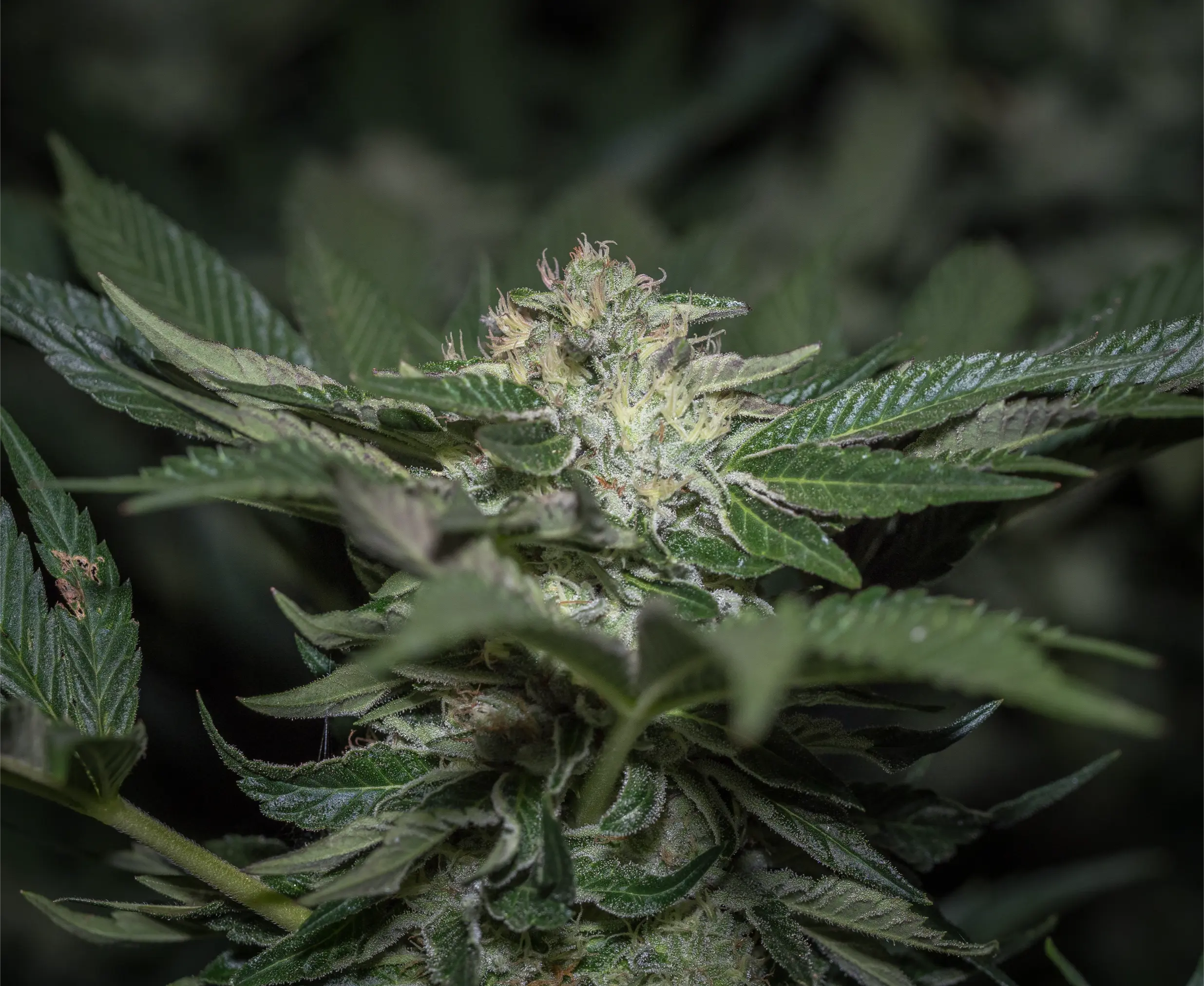
| Bud Structure | Long sativa spears with better density than many Thai-led cultivars; rounded calyxes and substantial resin by maturity. |
| Yield Potential | Medium-high to high when the canopy is filled without crowding and the full flowering period is completed. |
| Aroma | Sandalwood, lemon, sweet fruit, floral spice, earth, and occasional fuel. |
| Likely Terpene Direction | Often associated with terpinolene, limonene, beta-caryophyllene, pinene, and myrcene, though batch testing is limited. |
| Effects | Delayed uplift, creative focus, energy, sociability, and a light physical release. |
| Difficulty | Intermediate to advanced because of stretch, cycle length, support needs, and sensitivity to overfeeding. |
| Best Training | Early topping, repeated low-stress training, wide SCROG, selective supercropping before flower set, and staged support. |
| Main Grow Risks | Running out of vertical space, excess nitrogen, unstable irrigation during a long cycle, late canopy heat, and hidden moisture in dense spears. |
| Best Use Time | Morning through late afternoon for experienced users; not ideal close to sleep. |
| Medical Interest | Reported use for fatigue, low mood, stress, and focus, with caution for anxiety-sensitive users. |
Published descriptions of Brainstorm Haze are reasonably consistent about the Thai-led lineage, long flowering time, warm-climate preference, and energizing effect. Exact cannabinoid and terpene percentages vary too much between batches to present one number as universal. The practical identity is more reliable: a vigorous sativa hybrid with long branches, dense Haze-style flowers, and a delayed cerebral effect.
Grower priority: Reserve horizontal space before the flip. Brainstorm Haze is easier to control by redirecting growth early than by repeatedly cutting it back after stretch has begun.
Genetic Lineage
Thai Landrace Influence
The Thai side contributes the plant's most obvious traits: narrow leaflets, quick vertical movement, long internodes, flexible branches, and an effect that feels mentally active rather than physically heavy. Thai-derived plants often continue building structure deep into flowering. Brainstorm Haze retains that tendency, although the hybrid parent shortens the process and improves flower density. Growers should still expect the plant to behave more like a tropical sativa than a compact modern hybrid during the first half of bloom.
The Thai contribution also appears in the aroma. Sandalwood, dry wood, floral spice, citrus peel, and a slightly fermented fruit quality are all consistent with this heritage. These notes can be subtle on the living plant and become clearer after drying. A rushed cure may leave only lemon and generic earth, while a slower cure allows the woody and incense-like layers to separate.
What Stargazer Adds
Stargazer is generally documented as Sensi Star crossed with Warlock and AK-47. That background introduces shorter flowering tendencies, thicker floral clusters, stronger stems, and a more immediate resin response. It also adds sweetness, fuel, and earthy depth to the Thai foundation. The cross does not remove the sativa architecture, but it makes the final buds more substantial and the harvest more practical indoors.
This compacting influence explains why Brainstorm Haze can produce dense flowers despite its narrow-leaf appearance. It also creates a cultivation contradiction. The plant looks airy from a distance because of long internodes, yet individual spears can become thick enough to trap moisture. Growers who assume all sativa buds are mold-proof may overlook the inner sections of the most productive colas.
Phenotype Range
A Thai-forward phenotype usually stretches more, carries thinner branches, flowers longer, and expresses stronger sandalwood, spice, and floral citrus. Its buds may be longer and slightly less dense. A Stargazer-forward phenotype tends to remain shorter, forms rounder clusters, finishes closer to ten weeks, and may show more lemon, earth, sweetness, and fuel. Both can be desirable. The better keeper depends on the room, climate, and flavor goal.
Phenotype selection should be based on the full cured result rather than early vigor alone. The fastest plant may lose the sandalwood character, while the most aromatic plant may need extra support and two additional weeks. Label clones before flowering and compare flowering time, premium flower weight, resistance to heat, late-cycle water use, and aroma after at least four weeks of cure.
Lineage note: Brainstorm Haze is not a uniform pure Haze. Its value comes from the tension between Thai movement and compact hybrid flower density, so some variation should be expected and documented rather than treated as a defect.
Effect Breakdown
Stage One: A Quiet, Delayed Entry
Brainstorm Haze often has a slower psychological entry than its name implies. The first few minutes may feel clear and almost ordinary. A user who expects an immediate impact may consume again too quickly. Ten to twenty minutes later, the effect becomes more obvious as attention sharpens, sensory detail increases, and ordinary thoughts begin linking together more rapidly.
This delayed onset is one of the cultivar's most important dosage characteristics. A small amount can become significantly stronger after the user has already decided that it is mild. Waiting before increasing the dose preserves the focused quality and reduces the chance of nervousness, racing thought, or an uncomfortable heartbeat awareness.
Stage Two: Focus, Association, and Verbal Energy
At a moderate dose, the central phase is mentally bright. Brainstorm Haze can make planning, music, writing, conversation, and visual work feel more engaging. The effect is not always narrow focus. It may produce associative thinking, where one idea rapidly leads to several others. This can be useful for brainstorming and creative exploration, although it is less reliable for detailed administrative work that requires strict sequencing.
Social users may become more talkative and curious. The cultivar can reduce boredom and make familiar activities feel newly interesting. Because the body remains relatively light, users often continue moving, walking, cleaning, or working on a project. The experience is usually more motivating than sedating, but the exact balance depends on phenotype and harvest maturity.
Stage Three: Sustained Cerebral Lift
The peak can last longer than expected. Rather than rising sharply and disappearing, the effect may hold a stable mental plateau. This is one reason experienced users choose it for long creative sessions or daytime activities. The plateau is often accompanied by mild physical looseness around the shoulders and face, but it rarely develops into classic couch-lock at a moderate dose.
A Thai-forward phenotype can feel more psychedelic and less linear. Music may gain depth, time may feel stretched, and visual patterns can attract attention. A compact phenotype usually feels more grounded, with stronger mood elevation and less perceptual drift. Both remain predominantly cerebral.
Stage Four: Gradual Decline Without Heavy Burnout
The late phase usually fades through mental calm rather than sudden sleepiness. Some users feel physically tired after a long session, but the cultivar does not typically create a heavy appetite-and-sleep sequence. The best examples leave a clean afterglow. Overconsumption can produce the opposite outcome: mental fatigue, irritability, or difficulty switching off at night.
Dose, Tolerance, and Adverse Reactions
Low doses are best for focus, conversation, and outdoor activity. Medium doses increase creativity and sensory intensity. High doses can become scattered, anxious, or overly analytical, especially in users who are already stressed. Dry mouth and dry eyes are common. Headache or a tense forehead feeling may occur when the flower is consumed in a dehydrated state or when the dose is too high.
Brainstorm Haze is not an ideal first strain for someone who is sensitive to racing sativas. A calm setting, food, water, and a measured amount improve the experience. The cultivar should not be used before driving, operating machinery, or performing safety-sensitive work.
| Phase | Typical Experience | Practical Use |
|---|---|---|
| 0-15 minutes | Subtle onset, light mood shift, clearer sensory detail. | Wait before taking more. Good point to begin a simple activity. |
| 15-45 minutes | Creative association, focus, talkativeness, motivation. | Writing, music, walking, social conversation, idea generation. |
| 45-120 minutes | Sustained cerebral plateau with mild physical ease. | Long-form creative work or active recreation for experienced users. |
| Late phase | Gradual mental settling with limited body heaviness. | Transition to food, rest, or a quieter task. Avoid late-night redosing. |
Effect caution: The delayed onset can encourage accidental overconsumption. Give the first dose time to develop before deciding that the cultivar is weak.
Flavor & Aroma Profile
Aroma on the Living Plant
During early flower, Brainstorm Haze can smell greener and simpler than the cured product. Stem rubs often reveal lemon peel, fresh wood, and a faint peppery herbal note. As resin production increases, the canopy develops sweet fruit and floral spice. The strongest plants may release a dry sandalwood scent that is distinct from ordinary pine or cedar.
Odor intensity usually increases gradually rather than appearing all at once. This can mislead indoor growers into underestimating filtration needs. By late flower, a warm room may carry citrus, incense, earth, and fuel beyond the growing area. Stable negative pressure and a correctly sized filter are still necessary even though the aroma is less skunky than some compact hybrids.
Jar Aroma After Drying
A proper slow dry often begins with lemon, dry grass, and woody spice. During cure, the green edge recedes and the profile becomes rounder. Sandalwood and floral sweetness move forward, followed by ripe fruit, earth, and a light diesel accent. The jar should smell layered rather than sharp. If it smells only of hay, the flower was dried too quickly or sealed while internal moisture was still uneven.
Thai-forward phenotypes may suggest citrus blossom, incense, tropical wood, and fermented fruit. Stargazer-forward plants can smell sweeter and denser, with lemon candy, earth, pepper, and fuel. A balanced keeper combines bright citrus at the top with dry wood and spice underneath.
Flavor on Inhale
The first impression is often citrus and sweet herb. Vapor at a moderate temperature can reveal lemon zest, pale tropical fruit, and floral spice before the heavier compounds dominate. Smoke is fuller and more earthy, with the sandalwood note appearing as a dry, almost incense-like texture rather than a literal sweet wood flavor.
Flavor on Exhale
The exhale is where earth, pepper, fuel, and old wood become clearer. A good cure leaves a clean lemon-spice aftertaste that remains on the tongue. A hot or nutrient-heavy finish can replace this complexity with generic bitterness. Because the flowers can be dense, incomplete drying also creates a damp, muted aftertaste even when the outer bud seems ready.
How Harvest Timing Changes the Profile
An earlier cloudy harvest preserves sharper lemon, floral lift, and a more electric effect. Waiting until the calyxes fully swell deepens sandalwood, earth, and fruit while making the high more stable. Excessive amber can flatten the citrus and produce a duller herbal taste. The best window is usually found after the plant has stopped producing fresh white pistils but before the floral aroma becomes heavy and stale.
Cure Development
Brainstorm Haze benefits from a longer cure than many fast hybrids. At two weeks, the flower may still seem citrus-dominant. By four to six weeks, sandalwood, spice, and fruit become clearer. A well-selected phenotype can continue improving for two months if stored cool and dark. Frequent opening accelerates aroma loss, so divide the harvest into a working jar and long-term containers.
Flavor target: The finished profile should move from lemon and sweet fruit into sandalwood, spice, and a faint fuel-earth finish. If only one note remains, harvest or post-harvest handling likely compressed the profile.
Dominant Terpenes
Published laboratory data for Brainstorm Haze is limited, and the cultivar has been reproduced through different selections. No single terpene order should be treated as universal. The following compounds fit the most consistently reported aroma and effect patterns, but the actual cured batch should be tested when exact chemistry matters.
Terpinolene
Terpinolene is a plausible driver of the Haze-like floral, herbal, citrus, and fresh wood character found in some phenotypes. It often appears in cultivars with energetic, mentally expansive effects. When present at meaningful levels, it can make the aroma feel bright and complex rather than simply lemony. It is also volatile, so warm flowering rooms and fast drying can reduce its contribution.
Limonene
Limonene supports lemon peel, sweet citrus, and the optimistic opening of the effect. It is usually easiest to detect in freshly broken flower and lower-temperature vapor. A limonene-forward phenotype can feel cleaner and more direct than a wood-heavy plant. Excess heat during late flower or storage can quickly dull this top note.
Beta-Caryophyllene
Beta-caryophyllene contributes black pepper, dry spice, and some of the earthy fuel depth. It also interacts with CB2 receptors, which makes it scientifically interesting, but that does not turn the flower into a standardized anti-inflammatory treatment. In flavor terms, it gives the exhale structure and prevents the citrus from becoming thin.
Pinene
Pinene can reinforce fresh wood, pine needle, and mental clarity. It may be more obvious in compact phenotypes with a sharper, cleaner aroma. Pinene is sometimes associated with a more alert experience, although the total cannabinoid and terpene matrix matters more than one compound.
Myrcene
Myrcene provides earth, musk, ripe fruit, and a softer physical landing. It may be higher in the denser, sweeter phenotypes. A moderate amount rounds the effect without making it heavy. A strongly myrcene-led plant can feel more relaxing and less psychedelic than the classic Thai-forward expression.
Minor Floral and Woody Compounds
Linalool, humulene, ocimene, and other minor compounds may contribute lavender-like floral tones, dry wood, green fruit, and aromatic lift. Small differences in these compounds can explain why two plants with similar lemon and earth notes still feel very different in the jar.
Chemotype note: Choose keepers by cured aroma, effect, and performance. A familiar Haze smell does not guarantee the same terpene percentages from one plant or batch to another.
Indoor vs. Outdoor Growing
| Aspect | Indoor Cultivation | Outdoor Cultivation |
|---|---|---|
| Space Requirement | Needs horizontal room and early training. Vertical space should be protected before stretch. | Can become a large multi-branch plant with a wide root system and significant visibility. |
| Flowering Window | Usually 10-12 weeks. Compact expressions may finish near 70-80 days. | Requires a long, warm autumn or controlled light-deprivation schedule in shorter seasons. |
| Stretch | High and persistent. Branches may keep extending for five to eight weeks. | Very high if planted early in unrestricted soil. |
| Best Structure | Wide SCROG, multiple trained leaders, and two levels of support. | Open vase shape with a strong cage, wide spacing, and selective interior thinning. |
| Feeding | Moderate. Excess nitrogen delays flower set and increases leafy stretch. | Rich but well-drained soil is useful; avoid repeatedly adding high-nitrogen inputs. |
| Humidity Risk | Individual spears can become denser than expected. Late RH control remains necessary. | Airier than many indicas, but prolonged rain can damage long mature flowers. |
| Climate | Best with stable leaf temperature, strong light, and good root-zone oxygen. | Warm, sunny, long-season, semi-tropical or protected greenhouse conditions. |
| Yield Quality | High when the screen is filled evenly and lower weak sites are removed. | Potentially large, but only where the season allows complete ripening. |
| Main Advantage | Precise height, light, and aroma control. | Full solar expression, stronger branch development, and deeper woody spice. |
| Main Limitation | Long room occupancy and continuous canopy management. | Late finish, weather dependence, support needs, and security concerns. |
Why Indoor Growing Is Usually More Predictable
Indoor cultivation allows the grower to control the long transition period. A screen can redirect branches as they continue stretching, and the light schedule can be adjusted if a late phenotype refuses to finish. The main cost is time. The room remains occupied longer, irrigation demand changes across a broad flowering window, and support must be installed before the flowers become difficult to move.
A small tent can work only if the plant is flowered early and trained flat. Brainstorm Haze should not be treated like a compact hybrid that can be corrected after week three. Once the branches lignify and the flower spears form, aggressive bending increases breakage and disrupts the canopy.
Where Outdoor Growing Makes Sense
Outdoor plants perform best below roughly subtropical latitudes or in protected sites with a reliably long autumn. A greenhouse can extend the season, but it must vent heat and humidity. The plant's height and branching can turn a poorly ventilated greenhouse into a dense wall of foliage. Sidewall airflow and roof venting matter more than simply keeping rain off the flowers.
In shorter climates, light deprivation can initiate flowering earlier. This technique is useful only when the covering system is completely dark, dry, and ventilated. Repeatedly wrapping a large wet plant with plastic creates mold risk and branch damage. A permanent blackout structure is safer than improvised daily covers.
Environment choice: Choose indoor cultivation for control and repeatability. Choose outdoor cultivation only when the site can provide a genuinely long finish, strong support, and protection from prolonged autumn rain.
Strain-Specific Grow Guidance
Plan the Final Footprint Before Vegetative Growth
The easiest Brainstorm Haze grow begins with a drawing of the final canopy. Determine how many square feet each plant can occupy and where the support net will sit. A plant that is allowed to grow vertically for several weeks before training becomes difficult to flatten without creating empty spaces and uneven branch angles. Start redirecting the main stem while it is still soft.
One or two plants can fill a large screen. More plants shorten the vegetative period but increase irrigation points and make phenotype variation harder to manage. Seed plants should be spaced more generously than clones because their stretch can differ. If uniform production is the goal, select a mother before running a tightly packed canopy.
Root Zone and Container Strategy
A long-flowering sativa needs a root zone that stays oxygenated for months. In soil or soilless media, use a porous mix with enough structure to resist compaction after repeated irrigation. Oversized containers are not automatically safer. A small plant in a large wet volume can remain saturated and slow, while a fully rooted moderate container provides a more predictable dryback.
Transplant before the final container becomes root-bound, then allow the roots to establish before flowering. Brainstorm Haze can increase water use sharply during stretch. A well-colonized root ball handles that demand more consistently and reduces the temptation to water small amounts too frequently.
Vegetative Training
Top above a healthy node once the plant is actively growing. Allow the new leaders to extend, then pull them outward with soft ties. A second top can be useful in a large screen, but repeated topping delays the flip and can produce too many thin shoots. The goal is a limited number of strong branches with clear lanes, not the highest possible tip count.
Low-stress training is the main tool. Bend early, adjust frequently, and keep the center open. Selective supercropping can reduce height in late vegetative growth, but it should be completed before flower sites harden. The plant usually repairs well, yet a crushed branch still needs support and time.
The Eight-Week Stretch Problem
Unlike many hybrids that stop moving after the third week, Brainstorm Haze may continue extending through much of the first half of flower. The rate slows, but the cumulative growth is substantial. Keep tucking under the screen until clear flower stacks develop. After that point, guide the branches upward through assigned openings rather than forcing new horizontal bends.
If a top approaches the light, lower or spread it gradually. Emergency pruning of the tallest flowers wastes productive sites and can stimulate irregular side growth. A second net placed above the first gives each spear a vertical lane and prevents the canopy from collapsing when the flowers gain weight.
Light Intensity and Leaf Temperature
Brainstorm Haze uses strong light effectively when the roots and environment are healthy, but long upper branches can enter a hot zone near the fixture. Measure canopy temperature rather than relying only on room air. Pale top leaves, upward tacoing, and a loss of lemon aroma suggest excessive radiant load.
Increase intensity gradually after stretch begins to settle. Do not chase density by pushing the tallest spears into extreme light. The cultivar already forms denser flowers than a pure Thai. Moderate, even illumination preserves the Haze character and reduces bleaching, foxtailing, and terpene loss.
Feeding Without Darkening the Plant
Healthy leaves are usually medium to lime green rather than very dark. Excess nitrogen lengthens internodes, delays flower initiation, increases leaf mass inside the spears, and can make the smoke harsher. Begin with a moderate feed, observe tip response, and increase only when growth remains pale and vigorous without clawing.
During mid-flower, maintain balanced potassium, calcium, magnesium, sulfur, and micronutrients without using extreme bloom concentrations. Long-cycle plants accumulate salts over time even when each individual feeding seems mild. Periodic runoff monitoring in inert media and consistent moisture management in soil are more useful than a late corrective flush.
Irrigation Across a Long Flowering Cycle
Water demand rises during stretch, stabilizes during flower building, then may remain high longer than expected because the plant continues creating tissue. Record container weight or moisture readings. A fixed schedule becomes unreliable when canopy size, temperature, and root activity change.
Late in the cycle, some phenotypes slow suddenly. Reduce volume or frequency when dryback takes longer. Continuing peak irrigation into the final two weeks raises nighttime humidity and keeps the lower root zone oxygen-poor. The plant should not be forced into drought, but it should not sit in a cold wet container either.
Canopy Cleaning and Airflow
Build support before the flowers demand it
Remove weak lower shoots before the flip and again after the main stretch. Do not strip the plant bare. Long branches need leaves to support extended flowering, but crowded inner growth rarely forms premium flower. Keep airflow corridors below the screen and between the main spears.
Oscillating air should move leaves gently rather than blast one side of a cola. Strong direct wind can dry the exposed surface while the inner flower remains moist. Use multiple low-speed air paths and continuous extraction to keep the boundary layer from becoming stagnant.
Flower Support
Install the first net during vegetative training and a second support layer before the buds become heavy. Thin sativa branches can hold surprising weight until a late irrigation or fan movement causes them to fold. Individual ties are useful for outliers, but a broad support grid preserves spacing more reliably.
Pest and Disease Watch
The long cycle gives small pest populations time to become serious. Inspect leaf undersides weekly and maintain clean intake air. Avoid oil-based sprays after flowers begin forming because residues can remain on the resin. Biological controls and sanitation work best when introduced before an outbreak.
Dense spear sections should be checked during the final month, particularly after a humidity spike. Look for a single dead sugar leaf, softened tissue, or a musty odor. Remove suspicious material immediately and investigate the surrounding stem. The plant's sativa appearance should not create false confidence.
Harvest Window
Brainstorm Haze can appear unfinished for weeks, then swell rapidly. Wait for calyx expansion and a clear decline in fresh pistil production. Inspect trichomes on calyxes rather than sugar leaves, which may cloud earlier. A mostly cloudy window with limited amber preserves the energetic effect and bright aroma. More amber produces a rounder, calmer experience but can mute the lemon-floral top notes.
Because the upper and lower canopy may mature unevenly, a staged harvest can improve quality. Remove the fully swollen tops, reduce light intensity slightly, and allow lower sites additional time. This is useful only when the lower flowers are healthy and clearly behind, not as a mandatory technique.
| Growth Stage | Brainstorm Haze Priority | Mistake to Avoid |
|---|---|---|
| Early veg | Build root health and begin horizontal training. | Allowing a single main stem to dominate for too long. |
| Late veg | Select strong leaders and fill only the planned screen area. | Keeping every branch and creating an unmanageable tip count. |
| Flower weeks 1-4 | Continue tucking, reduce excess nitrogen, monitor stretch. | Assuming stretch ends after the normal three-week hybrid window. |
| Flower weeks 5-8 | Add upper support, maintain even light, clean weak interiors. | Hard bending after flower spears have formed. |
| Flower weeks 9-12 | Track dryback, protect aroma, inspect dense spear centers. | Holding peak irrigation and high canopy heat until harvest. |
| Harvest | Use calyx swelling, pistils, aroma, and trichomes together. | Harvesting because the calendar reached ten weeks. |
Master grow advice: Brainstorm Haze is controlled through early architecture and patient observation. Late rescue training usually costs more yield than it saves.
Weedth Bud Flavor Tips
Keep the Flowering Room Cooler Than the Maximum the Plant Can Survive
Brainstorm Haze may tolerate warm conditions, but tolerance is not the same as flavor optimization. Lemon, floral, and fresh wood notes decline when the upper canopy remains hot. Keep leaf temperature stable, increase air exchange during lights-on, and avoid positioning the most aromatic tops directly beneath the hottest point of the fixture.
Do Not Use Nitrogen Color as a Quality Goal
Very dark leaves look vigorous but often produce a leafier, slower, more herbal flower. Allow the plant to maintain a healthy medium green and begin a natural late fade. Flavor improves when the plant finishes without excess mobile nitrogen and salt accumulation.
Harvest by Aroma Development
Rub a small lower bract or smell an undamaged flower without squeezing it. Early aroma is usually sharp lemon and green herb. Mature aroma gains sandalwood, sweet fruit, and spice. If the flower becomes dull and overly earthy, the preferred flavor window may be passing.
Choose Whole-Plant or Large-Branch Drying Based on Density
A light, open phenotype can be dried as a whole plant in a controlled room. A dense compact phenotype may dry more safely as large branches with space between them. The goal is an even moisture decline through the thickest spear, not adherence to one universal method.
Dry With Air Exchange, Not Direct Wind
Use cool darkness, moderate humidity, and gentle circulation around the hanging material. Direct fan air strips the outer layer while the core remains wet. That creates a false dry surface and can trap moisture after jarring. Air should move through the room, not visibly flutter the flowers.
Cure Long Enough for Sandalwood to Appear
The cultivar often tastes simpler at two weeks than it does at six. Allow a gradual cure and open containers only as required to release excess moisture. Once the flower stabilizes, reduce opening frequency. The woody and incense-like layers are among the first to disappear through repeated oxygen exposure.
Store Whole Flowers Cool and Dark
Whole flowers retain volatile compounds better than material that is ground in advance. Keep the main harvest in small, full containers away from light and heat. Use a separate working jar so the long-term flower is not exposed every day. Scientific storage studies show that terpenes decline over time under all conditions, which makes minimizing heat, light, and repeated air exchange worthwhile.
Vapor Temperature and Flavor
A lower initial vapor setting highlights citrus, floral, and fresh wood. A later increase reveals pepper, earth, and resin. Combustion emphasizes the heavier spicy notes and can hide delicate fruit. Users evaluating phenotypes should compare them through the same device and temperature range.
Flavor checklist: Preserve a cool canopy, avoid excess nitrogen, wait for full calyx swelling, dry evenly, cure patiently, and limit long-term oxygen exposure.
Weedth Bud Boost Tips
Indoor: Fill Space With Branches, Not Plant Count
One trained Brainstorm Haze plant can occupy a large screen. Adding more plants does not guarantee more usable flower if the branches overlap. Choose a plant count that allows every main leader to receive its own light lane and support point.
Indoor: Use Two Support Levels
The lower net shapes the canopy. The upper net holds the spears. This separation lets the grower continue guiding stretch without relying on late ties and prevents heavy flowers from folding into each other. Better spacing improves both yield quality and drying uniformity.
Indoor: Remove Low-Value Flower Sites After Stretch
Brainstorm Haze can produce many small sites along long branches. Retain the well-lit upper and outer clusters and remove shaded interior popcorn after the main stretch. This redirects resources toward flowers with enough light and airflow to become premium.
Indoor: Carbon Dioxide Only in a Fully Balanced Room
Supplemental carbon dioxide can increase growth under high light, but it also increases irrigation demand, canopy mass, and heat load. It should be used only when temperature, light intensity, nutrition, and ventilation are measured. Adding carbon dioxide to an already crowded room creates more management problems than yield.
Outdoor: Start With Structural Support, Not Emergency Stakes
Install a broad cage while the plant is small. Train main branches outward and upward through the support. Late stakes placed beside mature roots can damage the root zone and still fail to control the full canopy. Early structure allows the plant to expand safely through wind and rain.
Outdoor: Improve the Site Before Increasing Fertility
Sun exposure, drainage, airflow, and season length determine success more than heavy feeding. A fertile shaded site produces a large unfinished plant. Choose the warmest, longest, driest location available and improve soil structure before adding strong nutrients.
Phenotype Selection as the Largest Yield Tool
The highest-yielding keeper is not necessarily the plant with the greatest wet weight. Compare dried premium flower, flowering duration, support requirements, aroma retention, and effect. A slightly smaller plant that finishes ten days earlier with stronger flavor may be more productive across a full year.
| Yield Lever | How It Helps This Cultivar | Limit |
|---|---|---|
| Early SCROG | Turns persistent stretch into a filled horizontal canopy. | Requires planning and frequent adjustment. |
| Second net | Keeps long spears upright and separated. | Must be installed before flowers become rigid. |
| Selective lollipopping | Reduces shaded popcorn and inner humidity. | Over-stripping removes useful leaf area for a long cycle. |
| Stable root oxygen | Supports sustained water and nutrient uptake. | Oversized wet containers reduce the benefit. |
| Keeper selection | Matches flowering time and structure to the room. | Requires labeled clones and a complete cure comparison. |
Yield principle: Brainstorm Haze rewards efficient canopy area and full maturity. It does not reward crowding or aggressive feeding.
Medical Uses & Benefits
Brainstorm Haze is primarily discussed as an energizing, mood-lifting cultivar. Reported medical use centers on fatigue, low mood, stress, and difficulty initiating tasks. These reports are observational and do not prove that the strain treats a medical condition. Chemical composition varies by phenotype and batch.
| Reported Use | How the Experience May Relate | Main Caution |
|---|---|---|
| Fatigue | The clear cerebral lift and motivation may help some users feel more active. | High doses can become scattered rather than productive. |
| Low mood | Euphoria, curiosity, and sensory engagement may interrupt rumination. | A stimulating effect can feel uncomfortable during acute anxiety. |
| Stress | Small doses may create distance from repetitive thoughts and tension. | Overconsumption can increase heartbeat awareness and worry. |
| Focus | The onset can support idea generation and engagement with a task. | Associative thinking may reduce precision on complex sequential work. |
| Pain | Mental absorption and mild physical loosening may reduce pain salience. | It is not usually a heavy analgesic or sedative profile. |
| Appetite | Some users notice increased interest in food after the peak. | The effect is less consistently appetite-heavy than many indicas. |
People with panic disorder, severe insomnia, bipolar-spectrum vulnerability, cardiovascular concerns, or strong sensitivity to THC should approach stimulating cannabis cautiously and consult a qualified clinician. The cultivar can impair reaction time and judgment even when the user feels alert.
Medical note: Use reports as a starting point, not a prescription. Begin with a low dose and evaluate the actual batch rather than relying only on the strain name.
Ideal User Profile
Brainstorm Haze suits experienced users who enjoy cerebral, creative, and social effects without a heavy body load. It is most appropriate when there is time to let the delayed onset develop and when the next several hours do not require driving or safety-sensitive work.
- Best suited to: creative sessions, music, conversation, walking, daytime recreation, and idea development.
- Grower profile: an intermediate or advanced cultivator with horizontal space, patient scheduling, and reliable climate control.
- Flavor preference: lemon, sandalwood, floral spice, earth, and restrained fuel rather than dessert sweetness.
- Less suitable for: users prone to panic, people seeking immediate sleep, very small untallied grow spaces, or wet short-season outdoor sites.
A new consumer can still appreciate the cultivar, but the starting dose should be very small. A new grower is more likely to succeed with a compact hybrid first, then return to Brainstorm Haze after learning irrigation, canopy training, and harvest assessment.
Grower Notes and Feedback
Common First-Grow Surprise: The Stretch Lasts Longer Than Expected
Growers often prepare for three weeks of stretch and relax too early. Brainstorm Haze may continue adding length well beyond that point. The later movement is slower, but it can still bring tops into the light. A second support layer and reserved headroom prevent this predictable problem.
The Plant Can Look Airy While Producing Dense Flowers
Long internodes create an open silhouette, yet the mature spears can be firm and moisture-retentive. Growers who lower humidity only for compact indicas may leave Brainstorm Haze too wet in the final month. Inspect individual colas rather than judging risk from overall plant shape.
Nitrogen Excess Is More Damaging Than Slight Hunger
Dark clawed leaves, delayed flower set, and excessive leaf growth are frequent signs of overfeeding. A slightly lighter plant often finishes with stronger citrus and cleaner smoke. The cultivar usually responds better to steady moderate nutrition than to repeated attempts to force rapid growth.
Phenotypes Can Finish at Different Times
Seed plants may differ by one to two weeks. Keeping them on one harvest date sacrifices either maturity or flavor. Label plants, inspect separately, and use staged harvesting when necessary. Uniform commercial scheduling requires a selected clone rather than an untested seed population.
The Cured Aroma Is More Informative Than the Flowering-Room Smell
Some plants smell spectacular in week eight but lose depth after drying. Others seem restrained on the plant and develop sandalwood during cure. Keeper selection should wait until the flower has stabilized. Early aroma alone can favor a loud but shallow phenotype.
Long-Cycle Irrigation Records Are Worth Keeping
Because the plant remains in flower for months, small irrigation mistakes can repeat many times. Recording volume, interval, runoff, and dryback exposes trends before symptoms become severe. This simple habit is especially useful when comparing Thai-forward and compact phenotypes.
Grower feedback summary: The cultivar is generous when trained early and fed moderately. Most problems begin when the grower treats it like an eight-week compact hybrid.
Weedth Editor's Note
The tradeoff I would plan around
I approach Brainstorm Haze as an architecture project before I think about yield. I want the final screen width, support height, and light distance decided before the plant enters flower. If those decisions are delayed, the plant makes them for the grower, usually by occupying space that was meant to remain open.
I would select a keeper only after a full cure. The most interesting plant is not automatically the tallest or fastest. I would look for sandalwood behind the lemon, a clear effect that does not become jagged, and flowers dense enough to feel substantial without becoming difficult to dry.
My feeding plan would stay conservative. A long sativa has many weeks to accumulate excess salts, and dark green leaves are not a sign that the flavor will be better. I would rather see steady growth, clean tips, and a controlled late fade than oversized leaves and delayed maturity.
During the final month, I would lower canopy heat, track dryback closely, and inspect the centers of the thickest spears. The plant looks open, but the best colas can become surprisingly dense. That contradiction is the detail most likely to separate a good harvest from a disappointing one.
I recommend Brainstorm Haze to a grower who enjoys training and observation. It is not difficult because it is weak. It is demanding because it keeps moving and keeps changing for a long time. When the structure is planned and the cure is patient, the sandalwood-citrus profile gives the work a clear purpose.
Weedth Score
Growing Experience 8.2/10 – Highly rewarding, but long stretch, support, and cycle length require planning.
Bud Structure & Visual Appeal 8.6/10 – Long resinous spears with better density than many Thai-led sativas.
Aroma Complexity 9.1/10 – Sandalwood, lemon, floral fruit, spice, earth, and fuel create real depth.
Flavor & Smoothness 8.8/10 – Excellent after a patient cure; warm or fast drying quickly reduces nuance.
Effects & High Experience 9.0/10 – Delayed, creative, focused, and long-lasting, with dose-sensitive intensity.
Overall Satisfaction & Recommendation 8.8/10 – A strong choice for experienced Haze growers and daytime flavor seekers.
Editor closer: The best jar smells like lemon over dry sandalwood and opens the mind slowly enough that the full effect arrives before you realize how far it has developed.
FAQ
What is Brainstorm Haze crossed with?
It is most commonly documented as a Thai landrace selection crossed with Stargazer. Stargazer itself combines Sensi Star, Warlock, and AK-47. Different reproductions may express the family differently, so the common lineage should be treated as a guide rather than proof that every labeled plant is identical.
How long does Brainstorm Haze flower?
Most plants need about ten to twelve weeks indoors. Some compact expressions finish near seventy to eighty days, while Thai-forward plants may require the full twelve weeks or slightly longer. Harvest by calyx maturity and trichomes rather than the shortest published estimate.
How much does Brainstorm Haze stretch?
Stretch is high and can continue well beyond the first three weeks. A plant may double or triple in effective canopy length depending on phenotype and training. Flower early, train horizontally, and reserve headroom.
Is Brainstorm Haze suitable for a small tent?
It can be grown in a small tent only with an early flip, a wide low screen, and disciplined branch selection. It is not a forgiving choice for a tall untrained plant in limited vertical space.
Does it need heavy feeding?
No. It usually performs best with moderate, steady nutrition. Excess nitrogen increases stretch and leafiness and can delay flowering. Raise concentration only when the plant clearly uses the previous level without darkening or tip burn.
What is the best training method?
Early topping followed by low-stress training into a SCROG is the most reliable method. Select a manageable number of leaders and use a second net for support. Late hard training should be avoided once flower spears form.
Can Brainstorm Haze grow outdoors?
Yes, but it needs a warm, long season. It is best in subtropical, Mediterranean, or protected greenhouse conditions. Short wet autumns can prevent full ripening and damage the long flowers.
Why are the buds denser than expected for a sativa?
The compact hybrid side of the lineage tightens flower formation. This is positive for yield, but it means late humidity and internal cola inspection remain important.
What does Brainstorm Haze taste like?
Common descriptions include lemon, sweet fruit, floral spice, sandalwood, earth, and a faint fuel note. Thai-forward plants are usually woodier and more incense-like, while compact phenotypes can be sweeter and more citrus-fuel driven.
Is the effect good for anxiety?
Some users report stress relief at low doses, but the cultivar is stimulating and can worsen anxiety when overused. Anxiety-sensitive consumers should start very low and wait for the delayed onset.
When should it be harvested for the clearest effect?
Harvest when most calyx trichomes are cloudy with little amber and the flowers have fully swollen. More amber usually softens the experience but may reduce citrus and increase mental heaviness.
How long should it cure?
Four to six weeks is a useful minimum for the sandalwood and spice to develop. Strong phenotypes can continue improving for two months when stored cool, dark, and with limited air exposure.
Similar Strains
- Haze Mist: A purer, taller sativa with an even longer flowering rhythm and stronger spicy Haze character.
- Very Berry Haze: Similar long branching and energetic effect, but with a more direct berry profile.
- Super Silver Haze: A classic energetic Haze hybrid with stronger incense-citrus identity and comparable training needs.
- Kali Mist: Clear, soaring, and long flowering, with lighter flowers and a more delicate spicy profile.
- Ghost Train Haze: More modern potency and sharper citrus-fuel intensity, often with a more forceful effect.
- Cinderella 99: Shorter flowering and easier height control, with tropical fruit and a faster cerebral onset.
Share this article
A quick overview of the topics covered in this article.
Follow us
Latest articles

September 28, 2026
September 28, 2026
September 28, 2026
September 28, 2026