
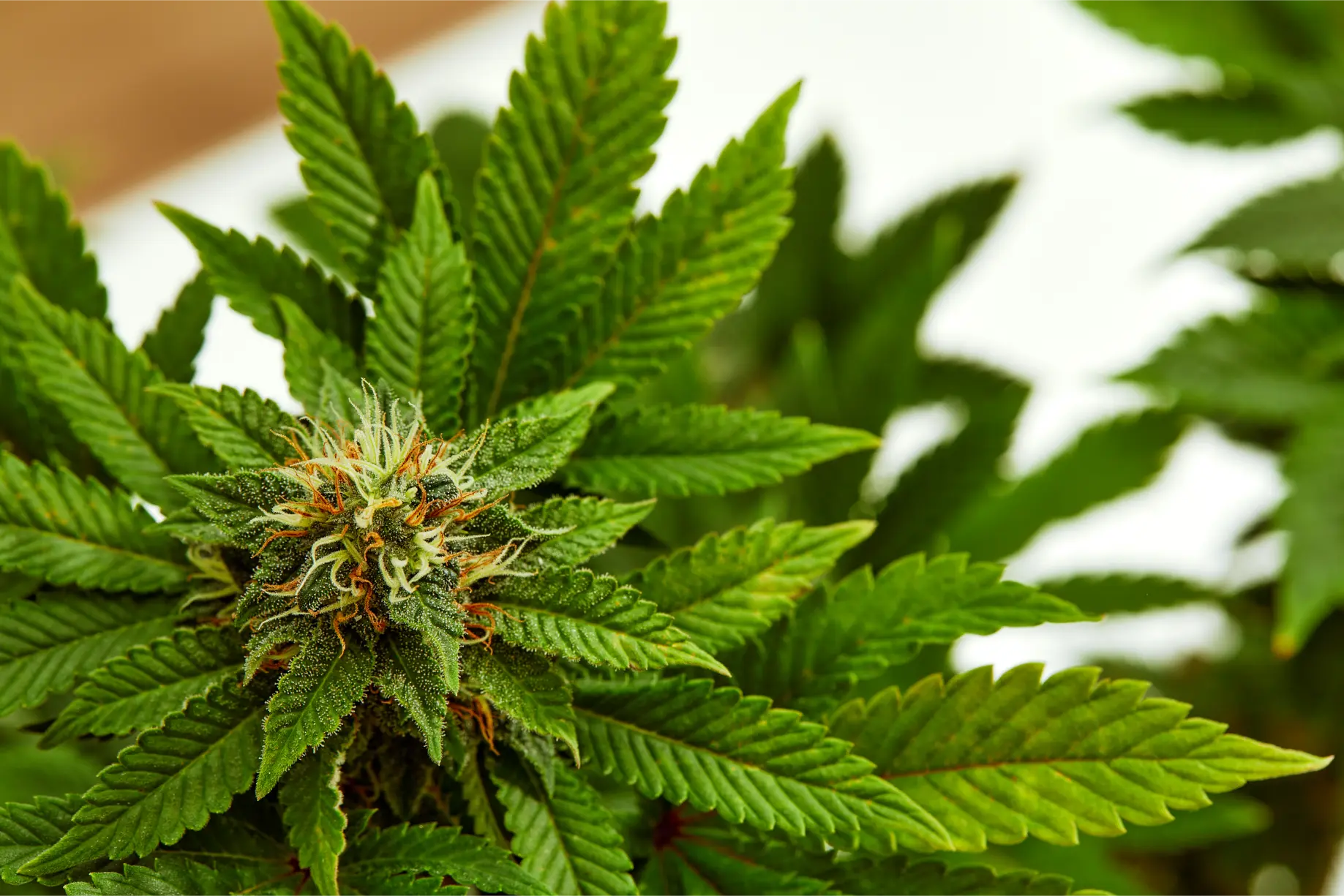
Cannatonic
Cannatonic helped establish the idea that a cannabis cultivar could be selected for balance rather than maximum THC. Its best-known expressions contain substantial CBD alongside enough THC to remain mildly psychoactive, but the strain name does not guarantee a one-to-one ratio. Some plants can be CBD-dominant, some mixed, and some much more THC-forward.
That chemical variability is the first grower problem. A plant can look healthy, smell woody and citrusy, finish in the expected nine-to-ten-week window, and still miss the cannabinoid balance the grower wanted. A Cannatonic grow is only successful when the desired chemotype and the desired flower quality exist in the same plant. Visual selection alone cannot confirm that.
The second challenge is humidity. Cannatonic is usually manageable in height, responds well to pruning and training, and can produce substantial flower. Yet multiple grow descriptions warn that dense flowers and an overcrowded canopy become vulnerable when moisture remains high late in bloom. The plant benefits from spacing more than from extreme canopy fill.
The cultivar's lineage is also historically disputed. Many modern references describe MK Ultra crossed with G13 Haze, while other historical records identify Reina Madre and NYC Diesel. That disagreement should not be hidden. What matters horticulturally is the recurring balanced-hybrid frame, moderate stretch, woody-earthy-citrus aroma, and meaningful chemotype variation.
Cannatonic therefore rewards a grower who thinks like a selector. The keeper is not automatically the biggest plant or the highest resin producer. It is the plant that combines clean structure, mold-free mature flower, useful aroma, and a verified cannabinoid profile.
Strain Features
| Feature | Details |
|---|---|
| Strain Type | Balanced hybrid with CBD-rich and mixed chemotypes |
| Genetic Profile | Lineage records disagree: MK Ultra × G13 Haze is common in modern databases; older accounts also cite Reina Madre × NYC Diesel |
| THC | Highly variable; many balanced examples remain in the low-to-mid range |
| CBD | Often substantial and can exceed THC in selected phenotypes |
| Cannabinoid Ratio | Not fixed; 1:1 is common in reputation, but CBD-dominant and THC-dominant plants also occur |
| Dominant Terpenes | Myrcene, pinene, and beta-caryophyllene recur frequently |
| Flavor / Aroma | Wood, earth, pine, sweet citrus, herbs, mild fruit |
| Effect Character | Mellow, focused, relaxed, lightly uplifted; intoxication depends strongly on chemotype |
| Flowering Time | Commonly around 9 to 10 weeks |
| Grow Difficulty | Moderate |
| Stretch | Moderate |
| Plant Architecture | Balanced medium frame with useful branching and manageable height |
| Bud Density | Medium-dense to dense |
| Mold Risk | Moderate to high if spacing and late-flower humidity are poor |
| Training Compatibility | Pruning, topping, LST, and open SCROG all work |
| Feeding Behavior | Best approached gradually rather than aggressively |
| Phenotype Variation | High in cannabinoid ratio and meaningful in structure and aroma |
| Best Time of Use | Daytime through evening depending on THC content |
Genetic Lineage
Cannatonic has one of the more confusing lineage histories among CBD-rich classics. Many current strain databases list MK Ultra and G13 Haze. Other historical sources describe Reina Madre and NYC Diesel. The disagreement is old enough that presenting one version as unquestioned fact would create false certainty.
The plant's broader identity is more useful than the argument over labels. Cannatonic usually behaves as a balanced hybrid rather than an extreme Haze or compact Afghan. It develops a medium frame, useful side branches, moderate stretch, and flowers that can become denser than the relatively open vegetative structure suggests.
The chemical inheritance matters more. Research on cannabis chemotypes shows that CBD-dominant, THC-dominant, and mixed plants can segregate genetically. That fits Cannatonic's long-standing reputation for producing different cannabinoid expressions within related populations.
A grower selecting from seed should therefore keep clones of promising plants until the finished flowers can be tested. The visual keeper and the chemical keeper may not be the same individual.
Cannatonic also became important as a parent of later CBD-rich cultivars. Its legacy is not simply that it contains CBD. It demonstrated that mixed cannabinoid chemistry could be selected and preserved as a horticultural target.
The lineage dispute is also a lesson in cannabis naming. Historical cultivar records were often maintained by growers, seed sellers, and communities rather than by a centralized registry. Later databases sometimes repeat whichever account became most visible. Weedth should preserve the uncertainty instead of converting repetition into proof.
What can be said with greater confidence is that Cannatonic helped normalize type-II cannabis, meaning plants that produce meaningful amounts of both THC and CBD. That chemical identity is more important to the cultivar's role than a precise indica-sativa percentage.
From a breeding perspective, mixed chemotypes are especially interesting because the ratio can segregate among offspring. That is why seed populations require selection and why clone preservation is valuable when a specific ratio is desired.
Effect Breakdown
Cannatonic's effect depends more strongly on chemotype than most high-THC strain profiles. A CBD-forward plant with modest THC may feel clear, relaxed, and functional. A balanced plant can create a definite but controlled high. A THC-forward phenotype may feel much more conventionally psychoactive.
At low to moderate doses from a mixed CBD/THC batch, users often report a calm mental shift, mild uplift, and reduced physical tension without strong cognitive disruption. Focus can remain usable, which is why the cultivar is often selected for daytime use.
The body effect is usually present but not crushing. Muscles can feel looser and discomfort less intrusive while the user remains able to read, converse, cook, or work at a desk.
Higher THC batches can produce more euphoria, anxiety, dry mouth, or headache. CBD does not make impairment impossible, and the strain name should never be treated as a guarantee of low intoxication.
The late phase is generally soft, with less of the heavy crash associated with potent nighttime indicas. That functional finish is one of the cultivar's central advantages when the chemistry is truly balanced.
A CBD-dominant Cannatonic can feel almost non-intoxicating to an experienced THC user yet still produce a clear change in body comfort. A beginner may notice more psychoactivity from the same flower. Dose and tolerance remain important even when CBD is prominent.
Balanced type-II flower can also feel different from simply mixing separate THC and CBD products because the complete flower contains its own terpene and minor-cannabinoid profile. That does not prove a special entourage effect, but it explains why users may perceive a distinct whole-flower experience.
The practical advantage is controllability. Many users can titrate Cannatonic in smaller steps than a very potent THC strain, which can make it easier to find a dose that changes symptoms or mood without overwhelming cognition.
Flavor & Aroma Profile
Cannatonic is usually more woody and herbal than sweet. Dry wood, earth, pine, and mild spice form the base. Sweet citrus or light fruit often appears after the flower is broken apart.
Some examples lean brighter, with lemon or orange peel. Others are deeper and more earthy. The difference can reflect phenotype and post-harvest quality rather than a simple right-or-wrong expression.
On inhale, well-cured flower often feels gentle, with wood and citrus first. The exhale brings pine, earth, and pepper. High-quality examples can be smooth because the aroma does not depend on an overwhelming fuel note.
Poorly dried Cannatonic becomes generic quickly. If the sweet citrus and pine disappear, only grass, wood, and stale earth remain. This makes the cultivar more sensitive to post-harvest execution than its moderate aroma intensity suggests.
The target is a clean medicinal-style flower that still feels sensory: wood, pine, earth, citrus, and a light sweetness should remain distinct.
Cannatonic's citrus expression can range from lemon peel to a softer orange or sweet fruit character. It should be treated as a secondary layer rather than the defining note in every phenotype.
Pine-forward plants often feel cleaner and drier on the palate, while myrcene-heavy expressions can seem earthier and more herbal. Neither is inherently superior. The better keeper is the one that combines the desired chemotype with a flavor the grower actually wants to consume repeatedly.
Because many medical users consume smaller amounts throughout the day, harshness matters. A modestly aromatic flower that burns cleanly can be more useful than a louder batch that irritates the throat.
Dominant Terpenes
| Terpene | Aroma Role | Cultivar Relevance | Scientific Caution |
|---|---|---|---|
| Myrcene | Earthy, herbal, musky | Frequently prominent and fits the grounded base | Does not prove sedation or pain relief |
| Alpha-pinene / beta-pinene | Pine, resin, fresh herbs | Explains the clear conifer edge found in many examples | Does not reliably prevent THC-related memory impairment |
| Beta-caryophyllene | Pepper, spice, wood | Supports the dry woody-spicy finish | CB2 interaction should not be turned into strain-specific treatment claims |
| Limonene | Citrus peel | Adds brightness to sweeter expressions | Often secondary and batch dependent |
Cannatonic's terpene profile is usually less important to intoxication than its cannabinoid ratio. Two flowers with similar myrcene and pinene can feel very different if one contains far more THC.
For keeper selection, terpene quality still matters. The best plant combines desired chemistry with a cured aroma strong enough to remain pleasant after storage.
Indoor vs. Outdoor Growing
| Decision Point | Indoor | Outdoor |
|---|---|---|
| Chemotype Selection | Controlled clone runs simplify comparison and retesting | Chemotype remains genetic, but environment can change total concentration |
| Spacing | Easy to keep plants separated and prune for airflow | More natural spacing is possible if enough land is available |
| Humidity | Strong advantage because dense flowers can be protected late | Autumn rain and dew can make mature buds risky |
| Stretch | Moderate and manageable | Height is rarely the main limitation |
| Training | Open SCROG or topped multi-branch structure works | Early shaping and wide spacing are usually enough |
| Harvest | Analytical sampling is easier to coordinate | Weather may force harvest before ideal chemistry or maturity |
| Best Fit | Growers prioritizing repeatable cannabinoid targets | Dry climates with room for open branching |
Indoors is the stronger environment for growers who care about repeatable cannabinoid ratios because a verified clone can be run under similar conditions cycle after cycle.
The main indoor mistake is overfilling the canopy. Cannatonic benefits from space between branches because dense mature flowers are more sensitive to high humidity than the medium-sized plant suggests.
Outdoors, the cultivar can perform well in dry conditions, but autumn rain may force a quality-versus-maturity decision. A CBD-rich flower is not protected from botrytis simply because it is medicinally oriented.
Indoor cultivation also simplifies representative sampling. A uniform canopy with similar light exposure produces fewer differences between top and lower flowers, making laboratory comparisons between plants easier to interpret.
Outdoor plants may produce more total biomass, but the chemistry of a selected clone can still shift somewhat in concentration with environment and maturity. The grower should focus on the broad CBD-to-THC relationship rather than expecting an identical percentage every season.
Greenhouses can work well if they provide real ventilation. A closed humid greenhouse removes the rain problem while preserving the mold problem, so active air exchange and branch spacing remain essential.
Strain-Specific Grow Guidance
Select the Chemotype Before You Optimize the Room
Keep copies of seed-derived plants until cannabinoid results are known. A visually excellent plant can still express the wrong CBD-to-THC ratio for the grower's purpose.
Once a keeper is verified, future runs become more useful because horticultural changes can be evaluated without genotype changing underneath the experiment.
Build an Open Hybrid Canopy
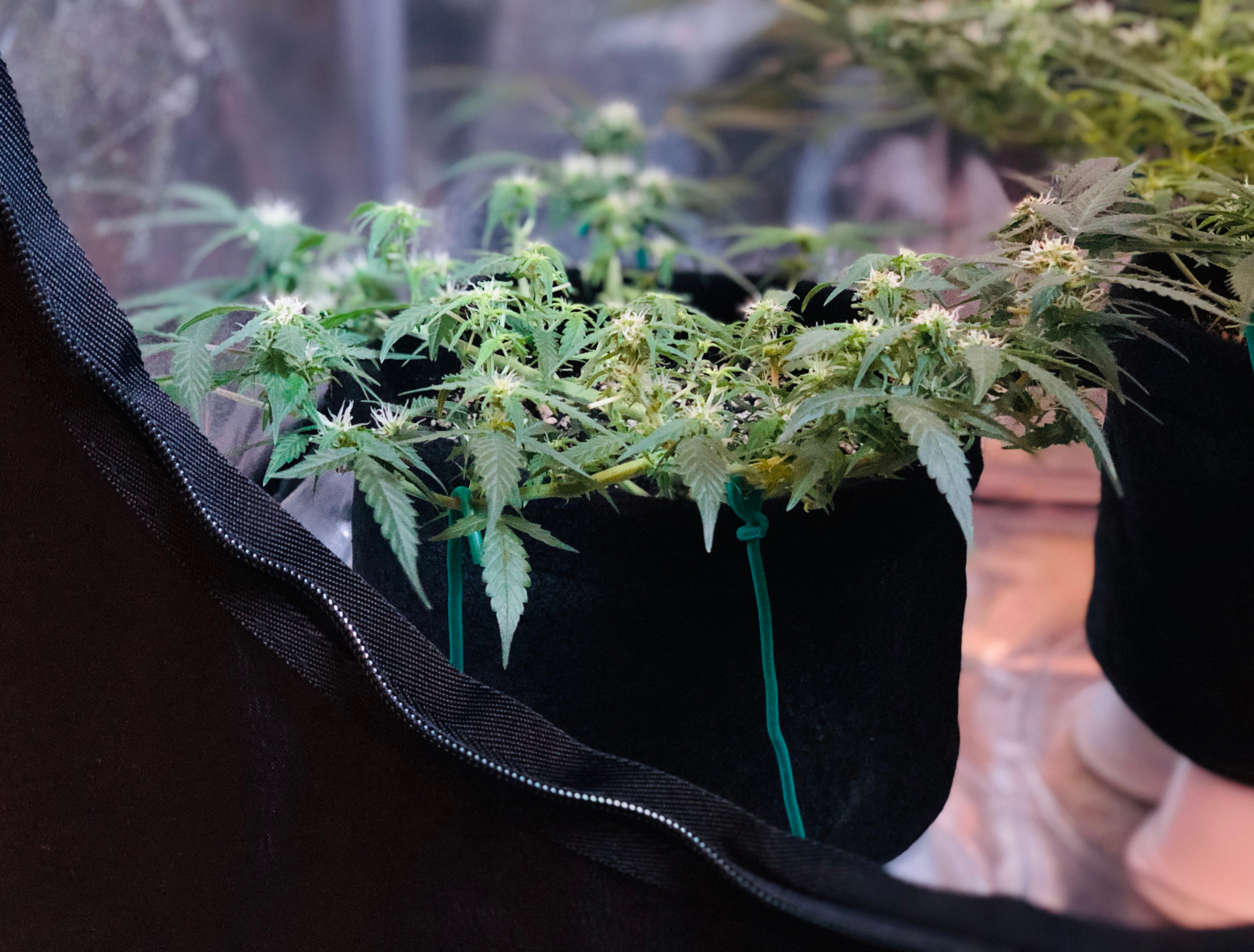
Cannatonic generally responds well to one early topping followed by branch spreading. Aim for several separated tops and visible air channels.
Do not fill every screen opening. The cultivar's flower density makes empty space valuable late in bloom.
Prune in Veg, Refine After Stretch
Remove inward shoots and weak lower branches during vegetative growth so the plant enters flower already organized.
After stretch, perform a smaller second pass to remove sites that clearly remain below useful light. Avoid major late-flower stripping.
Start Feeding Conservatively
The costly mistake to avoid with Cannatonic
Cultivation guidance repeatedly recommends beginning at lower feed strength and increasing gradually. That is sensible for a chemotype-focused plant where stress does not create a better cannabinoid ratio.
Use leaf color, growth rate, and water use to determine whether more nutrition is needed. Heavy feeding is not a CBD-boosting technique.
Protect the Root Zone From Chronic Saturation
A medium that stays wet slows growth and complicates nutrient diagnosis. Let the container regain air between irrigations.
If water use drops as flower develops, inspect roots, temperature, and salinity before increasing feed.
Humidity Is the Real Late-Flower Weakness
Dense flowers can trap moisture around the stem even when room humidity seems acceptable. Airflow should pass through the flowering zone.
Inspect the center of large tops and remove damaged leaves promptly. Two touching colas should be separated.
Do Not Use Trichome Color to Guess CBD Ratio
Cloudy and amber trichomes indicate maturity changes, not whether a plant is CBD-dominant. Cannabinoid ratio is a chemical trait that requires testing.
Harvest timing can affect total cannabinoid yield and aroma, but it cannot reliably convert a THC-forward plant into a balanced one.
Harvest for a Verified Plant's Best Combined Yield and Quality
A mature Cannatonic should show swollen calyxes, reduced fresh pistils, developed aroma, and mature flower trichomes.
If precision matters, staged laboratory sampling provides more value than generic advice to harvest CBD strains early.
Chemotype Selection Changes the Entire Meaning of Yield
For a conventional THC-focused crop, the largest healthy plant may be the obvious keeper. Cannatonic complicates that logic. If the goal is a particular CBD-to-THC ratio, a smaller plant with verified chemistry can be more valuable than a larger sibling with the wrong cannabinoid balance.
This means yield should be calculated after selection, not before it. First identify which plant meets the chemical target. Then improve the horticulture of that plant through cloning and repeated runs. Trying to optimize every seedling equally before knowing the chemotype can waste space on plants that will never serve the intended purpose.
Clone Retention Makes Seed Selection Much More Powerful
A practical selection run should preserve copies of each promising female before flowering. Labeling must remain accurate through harvest and testing. Once cannabinoid results return, the grower can remove unwanted mothers and keep only the plants that combine useful chemistry with desirable structure.
Without retained clones, the grower learns which seedling was best only after the plant has already been harvested. That information is interesting but difficult to use. Keeping clones converts one research run into a repeatable cultivar selection program.
Moderate Stretch Should Be Used to Open the Canopy
Cannatonic usually has enough transition growth to widen the plant after topping, but not so much that the room becomes unmanageable. Use the first two weeks of flower to guide branches into open spaces and create distance between future colas.
Once flowers are clearly established, stop constant manipulation. Continued bending and pruning after the plant has committed to bloom can delay development and create unnecessary wounds in a cultivar already sensitive to late humidity.
Mold Prevention Begins With Plant Count
Cannatonic is often described as needing room to breathe. That begins before defoliation. If too many plants are placed in one area, no amount of leaf removal can fully restore the missing space between root zones and branch systems.
A slightly lower plant count with wider branch separation can produce more usable flower because fewer buds are lost to shade, disease, or uneven maturity. This is particularly relevant to CBD-focused production where clean usable flower matters more than raw wet biomass.
Do Not Overinterpret CBD Percentage Changes From One Harvest
Environment and harvest timing can change total cannabinoid concentration, but one laboratory result should not automatically be interpreted as a genetic change. A clone can test somewhat differently between runs because flower maturity, sampling, and growing conditions vary.
The most useful measure is repeated testing under similar conditions. If the CBD-to-THC relationship remains broadly consistent across runs, the grower has much stronger evidence that the selected plant fits the desired chemotype.
Root-Zone Stress Can Distort the Entire Selection Process
A seedling with poor roots may appear to be a weak phenotype when the real problem is irrigation or transplant stress. During a selection run, give every candidate a fair root environment before judging vigor. Otherwise the grower may discard useful genetics based on an environmental mistake.
Consistent container volume, medium, irrigation practice, and light exposure make comparisons between seedlings more meaningful. A selection run is partly a controlled experiment.
Outdoor Cannatonic Needs Weather Planning at the Finish
A CBD-rich plant does not need a different disease standard from any other cannabis flower. If autumn weather becomes persistently wet, waiting for a theoretical cannabinoid peak can destroy more usable flower than it adds.
Outdoor growers should monitor both flower maturity and the forecast. When dense buds are already mature and repeated rain is approaching, a clean harvest can be the more rational quality decision.
Harvest Samples Should Represent the Flower You Actually Use
When laboratory testing is part of selection, sample handling matters. Testing only a tiny exposed top while most of the harvest comes from lower branches can give an incomplete picture of the crop. Use representative mature flower and keep sampling methods consistent between candidates.
The point is not to create laboratory-grade experimental precision at home. It is to reduce obvious sources of variation so the cannabinoid information actually helps future cultivation decisions.
Flower Density Should Guide Defoliation Intensity
Cannatonic can look relatively open early, then tighten as flowers fill. Defoliation decisions should therefore change with stage. Early in bloom, remove only clear blockers and buried leaves. Later, as buds gain density, small adjustments can open humid pockets without forcing the plant to rebuild a large amount of leaf area.
The center of the plant deserves more attention than the upper surface. A canopy that looks airy from above can still contain crossed branches and leaves pressed against developing flowers.
Do Not Chase a Laboratory Number at the Expense of Flower Maturity
A grower may be tempted to harvest at the first test showing a desired CBD percentage. That can be misleading if the flowers are still immature and total usable cannabinoid yield is still increasing. Concentration and total harvest yield are different questions.
The better approach is to identify a practical maturity window for the verified clone, then test across repeated runs if precision matters. This creates a useful relationship between flower quality, total yield, and chemistry rather than optimizing one number in isolation.
Weedth Bud Flavor Tips
Cannatonic's flavor is subtle enough that mistakes are obvious. Protect pine and citrus because the woody-earth base survives abuse more easily.
Allow the flower to mature aromatically before harvest. Green stems and fresh chlorophyll should not dominate the smell.
Dry without high heat. Research on cannabinoid-rich hemp shows rising drying temperature can sharply reduce terpene retention.
Dense tops should be separated if internal moisture is likely to remain trapped. A long wet dry is not safer simply because low temperature protects terpenes.
During cure, the goal is cleaner wood, pine, and citrus, not a dramatic increase in loudness.
Store cool and dark. Cannatonic is often kept for repeated functional use, so storage stability matters as much as first-week aroma.
Because Cannatonic aroma is often moderate, the drying room should not be judged by how loud it smells. A gentle woody-citrus flower can retain excellent flavor without filling the room with intense odor.
CBD-rich flower is sometimes dried more aggressively because the grower treats it as functional medicine rather than connoisseur flower. That is a mistake. Terpene loss still reduces sensory quality, and harsh dry flower can be less pleasant for repeated daily use.
Separate phenotypes during cure. A pine-heavy plant and a citrus-heavy plant should be evaluated independently so keeper selection reflects the actual flower rather than a blended jar aroma.
Because the cultivar is often consumed repeatedly rather than saved for an occasional high-potency session, consistency matters. A flower that remains smooth and aromatic after several weeks of storage can be more valuable than a louder first-week jar that quickly becomes dry and flat.
Weedth Bud Boost Tips
The best improvement is selecting the right plant before optimizing biomass. Verified chemistry turns every gram into useful yield for the intended purpose.
Use an open canopy. More tops are only helpful if each has enough air and light to finish cleanly.
Remove weak interior shoots after stretch to raise the percentage of mature flower.
Do not use stress, extreme light, or heavy bloom additives to chase CBD. The chemotype is genetically anchored.
Support dense tops if they lean. Flower contact can create hidden humidity.
Outdoors, spacing between plants is a yield tool because it reduces disease and lets side branches mature evenly.
Quality yield for Cannatonic means verified chemistry plus clean mature flower, not maximum raw biomass.
The most powerful 'boost' for Cannatonic is converting a verified keeper into a consistent clone run. Once every plant shares the same chemotype, the grower can optimize spacing, irrigation, and harvest timing without sibling variability confusing the result.
Even canopy height is valuable because it allows the entire crop to reach a similar maturity window. This makes both testing and final use more consistent.
Avoid sacrificing disease resistance for one extra percentage point on a laboratory report. A slightly lower cannabinoid concentration in clean mature flower is more useful than a higher concentration in a crop damaged by humidity.
Uniform clone height also improves post-harvest consistency. Similar flowers lose moisture at similar rates, which makes it easier to preserve both terpene quality and representative chemistry across the crop.
If one branch consistently matures later than the rest, adjust canopy position or prune that structure in the next run rather than delaying the entire harvest. Cannatonic benefits from a coherent maturity window because both testing and consumption become more predictable.
Medical Uses & Benefits
Cannatonic is widely associated with medical use because many expressions contain substantial CBD and moderate THC. Users commonly report pain relief, reduced tension, stress relief, and functional relaxation.
The strongest scientific caution is that a strain name is not a standardized medical preparation. Cannabinoid ratios vary, and smoked or vaporized flower cannot be assumed equivalent to purified prescription CBD.
Pain and anxiety are frequent user-reported reasons for use, but clinical evidence for CBD in these areas remains mixed and condition-specific.
CBD can interact with medications, including through liver enzyme pathways. Medical users should discuss cannabinoid use with a qualified clinician.
Even balanced Cannatonic can impair driving when THC is present. CBD-forward does not mean impairment-free.
Cannatonic's reputation around muscle spasm, migraine, and inflammation should be described carefully. These areas appear frequently in user reports and cannabinoid research, but the evidence does not validate the cultivar itself as a standardized treatment.
CBD's better-established medical evidence comes from purified prescription preparations for specific seizure disorders. That evidence should not be transferred directly to home-grown flower with variable CBD and THC concentrations.
The presence of THC may be beneficial for some symptom goals and undesirable for others. A balanced plant can produce more noticeable relief and more impairment than a CBD-dominant sibling. Testing helps users make that distinction.
Ideal User Profile
Cannatonic suits users who want a mild-to-moderate cannabis effect without the intensity of modern high-THC flower.
It can fit daytime use, desk work, light creative activity, or social settings when the actual THC content is modest.
Users should choose by laboratory data when possible. A 1:1 batch and a CBD-dominant batch can feel meaningfully different.
Flavor preference should lean toward wood, earth, pine, and citrus rather than dessert sweetness.
For growers, the ideal audience is someone interested in phenotype selection and cannabinoid balance, not only potency.
Grower Notes and Feedback
Growers frequently disagree about Cannatonic's exact lineage and cannabinoid ratio. Both disagreements are real parts of the cultivar's history.
A recurring practical observation is the need for spacing. Dense flowers and a full hybrid canopy can become vulnerable when humidity remains high.
Chemotype variation is the most important grower lesson. Plants sharing the name can produce very different CBD and THC relationships.
Feeding advice tends to be conservative, with gradual increases preferred over heavy early nutrition.
Aroma reports center on wood, earth, pine, and citrus, with sweetness and fruit changing by phenotype.
Cannatonic discussions often reveal that growers use the same name for very different chemical experiences. That is exactly why the strain is valuable educationally: it demonstrates the difference between cultivar identity and chemotype verification.
Growers who repeat the same clone generally report a much more predictable experience than growers working from unrelated seed populations. The practical lesson is that clone retention and testing can matter more here than with many THC-dominant classics.
Growers who select Cannatonic only by effect can also be misled by tolerance. A high-tolerance user may describe a mixed-ratio plant as almost non-intoxicating, while a new user experiences clear impairment. Laboratory data provides a more stable reference than subjective strength.
Another practical theme is that CBD-rich flower deserves the same resin and flavor standards as THC-rich flower. The plant should not be accepted as low quality simply because the grower's primary goal is chemistry.
Repeated clone runs are also the best way to learn Cannatonic's true harvest rhythm. Once genotype is fixed, the grower can compare an earlier and later harvest without sibling variation confusing the result. Over time this reveals whether the selected plant gains meaningful flower mass late, whether the citrus profile improves with extra maturity, and whether a slightly earlier window provides cleaner daytime effects. That information is far more useful than applying a universal CBD harvest rule.
Weedth Editor's Note
Where Cannatonic earns its space
Cannatonic is one of the few strains where I would put a laboratory result beside the grow journal and treat both as equally important. A beautiful plant with the wrong chemistry is the wrong keeper for a chemotype-driven project.
I would keep the canopy more open than my instinct might suggest. The plant is manageable enough that there is little reason to accept dense interior humidity just to fill every square.
I would also ignore any advice that promises to create CBD through late stress, feeding, or an early chop. Those practices cannot replace genetics.
The flavor is not loud, but that makes careful drying more rewarding. When the citrus and pine survive, the flower feels much more complete than generic woody CBD bud.
Its weakness is variability. Its strength is the reason that variability became worth studying in the first place: balanced cannabinoid chemistry.
I would consider Cannatonic a stronger teaching strain than a beginner strain. The plant itself is not unusually difficult, but it forces the grower to distinguish genetics, chemistry, and cultivation instead of treating them as one thing.
If I had only one testing budget, I would use it on the keeper-selection run. Once a mother is verified, repeated clone runs can be managed much more confidently.
I would also keep careful records of the exact sampled plant, harvest date, and cure stage when testing. Cannabinoid percentages can shift with sampling and maturity, so good labeling prevents the grower from drawing strong conclusions from mixed-up material. Cannatonic rewards this kind of discipline because chemistry is part of the cultivar's practical value.
Weedth Score
Growing Experience 8.0/10 Manageable plant, but chemotype selection and humidity control add complexity.
Bud Structure & Visual Appeal 7.9/10 Solid resinous flowers, though less display-focused than modern high-THC hybrids.
Aroma Complexity 7.8/10 Wood, earth, pine, citrus, and herbs are layered but usually moderate in intensity.
Flavor & Smoothness 8.2/10 Can be very clean when properly dried; delicate brightness is easy to lose.
Effects & High Experience 8.8/10 Balanced functional effects are the cultivar's main strength when chemistry is verified.
Overall Satisfaction & Recommendation 8.5/10 Highly valuable for CBD/THC balance projects and users seeking moderate intoxication.
Personal closer: I would keep the Cannatonic whose lab result matches the goal and whose cured flower still tastes like pine and citrus, not the biggest plant in the room.
FAQ
Is Cannatonic always a 1:1 strain?
No. Balanced 1:1 examples are famous, but CBD-dominant and THC-dominant plants also occur.
What is Cannatonic's real lineage?
Records disagree. MK Ultra × G13 Haze is common in modern databases, while older accounts also cite Reina Madre × NYC Diesel.
How can I know if my Cannatonic is CBD-rich?
Only chemical testing can confirm the cannabinoid ratio. Appearance, smell, and trichome color cannot.
How long does Cannatonic flower?
Nine to ten weeks is a common range.
Does Cannatonic respond well to topping?
Yes. One early topping and gentle branch spreading usually create a useful open canopy.
Is SCROG good for Cannatonic?
Yes if kept open. The goal is spacing and support rather than maximum screen fill.
Is Cannatonic prone to mold?
It can be under humid conditions because mature flowers become dense. Airflow and spacing are important.
Is Cannatonic a heavy feeder?
A conservative gradual approach is safer. Increase only when growth and water use justify it.
Should CBD strains be harvested early?
Not automatically. Harvest timing affects maturity and total cannabinoid yield, but chemotype is genetic.
Can trichomes tell me when CBD is highest?
They show maturity changes, not CBD-to-THC ratio. Analytical testing is required for precision.
Why does my Cannatonic feel stronger than expected?
The plant may contain more THC than the reputation suggests. Chemotype varies.
What does Cannatonic taste like?
Common notes are wood, earth, pine, herbs, and sweet citrus.
Can Cannatonic grow outdoors?
Yes in a dry climate, but dense flowers need protection from autumn rain and dew.
How can I preserve Cannatonic's citrus aroma?
Avoid hot drying, direct fan air, and over-dry storage.
Is Cannatonic good for daytime use?
Many balanced or CBD-forward examples are functional, but actual THC content and dose still matter.
For growers without access to testing, Cannatonic can still be grown for flower quality, but the exact cannabinoid ratio should remain an unknown. Effects can suggest a direction, yet subjective experience is not a substitute for analytical confirmation.
Similar Strains
Harlequin: Shares CBD-forward functional use but has a more sativa-leaning genetic story and woody-herbal profile.
ACDC: Often more strongly CBD-dominant and less intoxicating, with Cannatonic ancestry.
Pennywise: A more reliably balanced CBD/THC alternative with heavier physical character.
Sour Tsunami: Offers CBD-rich chemistry with a more sour, pungent flavor direction.
White Widow: A higher-THC comparison with similar balanced plant structure but far stronger intoxication.
Blue Dream: A functional daytime alternative with more THC, more stretch, and a sweeter berry profile.
Share this article
A quick overview of the topics covered in this article.
Follow us
Latest articles
September 29, 2026
September 29, 2026
September 29, 2026
September 29, 2026