
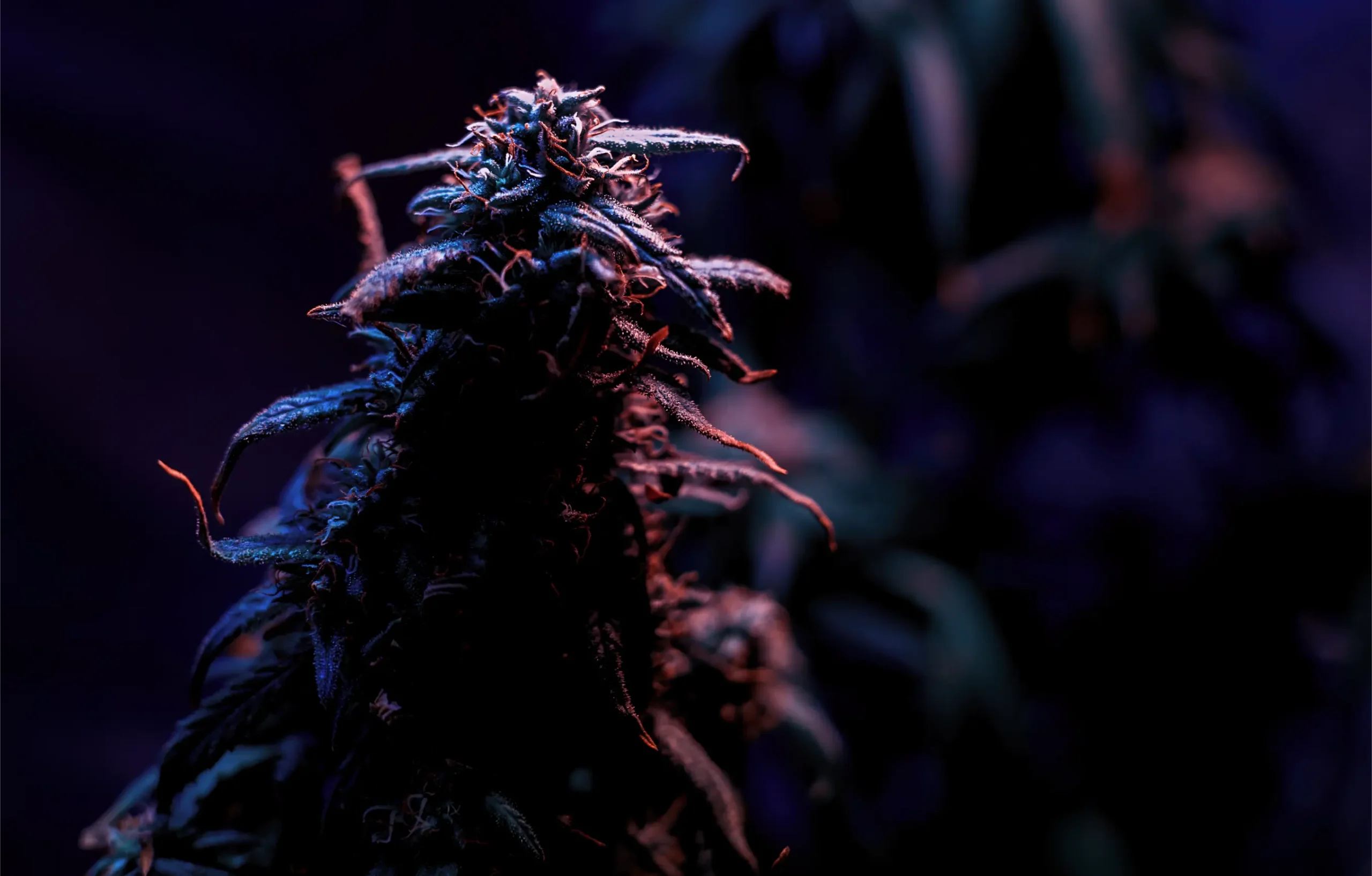
Chernobyl
Chernobyl is one of those cultivars that becomes recognizable before the buds are fully mature. The plant begins broadcasting sharp lime, sweet citrus and resinous pine while the flowers are still building their final shape. That aromatic brightness is matched by a sativa-leaning growth pattern: vigorous lateral development, meaningful stretch after the flip and long flower sites that can become unruly when the canopy is left unmanaged.
Its reputation often focuses on lime sherbet flavor and an energetic, mood-lifting effect. The more useful grower story is structural. Chernobyl can produce many valuable tops, but it does not naturally arrange them into a flat, efficient canopy. It rewards early topping, deliberate branch spacing and a support system installed before the flowers begin gaining weight. The strain is rarely difficult because it is fragile. It is difficult because its vigor creates more plant than an unprepared room can use well.
The best Chernobyl flower keeps three qualities distinct: tart lime at the top, sweeter tropical or creamy citrus through the middle and a dry pine-herbal finish beneath it. Heat, late harvest and fast drying can flatten that progression into generic lemon and earth. A successful run therefore depends on more than controlling height. It requires preserving the most volatile part of the cultivar's identity after the plant has already filled the space.
Strain Features
| Feature | Details |
|---|---|
| Strain Type | Sativa-leaning hybrid |
| Commonly Reported Lineage | Trainwreck, Trinity and Jack the Ripper ancestry; some records describe the direct cross as Bloodwreck x Jack the Ripper |
| THC | Commonly reported in the high teens to mid-20% range, with substantial variation between samples |
| CBD | Usually very low |
| Dominant Terpenes | Terpinolene, limonene and myrcene are frequently reported, with pinene and beta-caryophyllene often supporting |
| Flavor and Aroma | Lime peel, lemon-lime candy, tropical fruit, pine resin, sweet herbs and faint chemical sharpness |
| Effect Character | Fast mood lift, mental movement and sensory brightness, followed by a steadier relaxed phase |
| Flowering Time | Commonly around 8 to 10 weeks, phenotype-dependent |
| Outdoor Harvest | Usually early to mid-autumn where the season remains warm and relatively dry |
| Height | Medium to tall |
| Flowering Stretch | Moderate to strong, often concentrated in the first three weeks |
| Plant Architecture | Upright with vigorous lateral branches and moderate to open internodal spacing |
| Yield | Moderate to high when the canopy is trained and supported |
| Bud Structure | Elongated, resinous flower clusters; density varies from compact spears to looser foxtailed expressions |
| Training Compatibility | Very good for topping, LST, supercropping during early transition and SCROG |
| Main Cultivation Risk | Overgrown canopy, uneven light distribution and weak support around long flowering branches |
| Grow Difficulty | Moderate |
| Best Time of Use | Morning through late afternoon for experienced users; dose-dependent |
The table should not be read as a promise that every plant will behave identically. Chernobyl has circulated through several reproductions and selections. The strongest recurring fingerprint is not one exact THC number or one precise terpene order. It is the combination of rapid branching, citrus-forward resin and a brighter effect than the plant's eventual body relaxation might suggest.
Genetic Lineage
Chernobyl is most commonly described through a three-part family: Trainwreck, Trinity and Jack the Ripper. Some historical records compress that story into Bloodwreck x Jack the Ripper, with Bloodwreck referring to a Trainwreck and Trinity combination. Both descriptions point toward the same practical inheritance.
Trainwreck contributes much of the plant's urgency. It is associated with vigorous vertical growth, flexible early branches, rapid transition stretch and a mentally active effect. Chernobyl often keeps that ability to build a large frame quickly, but the flowers can be somewhat more organized and resin-heavy than a loose Trainwreck expression.
Trinity is less consistently documented, but it is repeatedly linked with aromatic sharpness, sweetness and old-school West Coast intensity. In Chernobyl, that influence is often discussed when the flower develops a sour tropical edge beneath the lime. The contribution may also help explain why some expressions smell creamy or candy-like rather than simply lemony.
Jack the Ripper brings another layer of citrus and resin. Its family is known for bright lemon notes, energetic mental effects and conspicuous trichome production. When this side dominates, Chernobyl may produce narrower leaves, faster lateral extension and a sharper lime-peel aroma. Those plants can also feel more stimulating and may need a little more time to settle into their final body phase.
What the Lineage Means in the Grow Room
The lineage predicts a plant that is neither a compact indica nor a fragile equatorial sativa. It typically establishes roots well, grows quickly once settled and responds strongly to training. It also tends to keep producing new vertical movement during the first part of bloom. A grower who flips a full canopy may find that branch tips crowd the light by week three.
The genetic blend also explains the cultivar's flower variation. Some plants form long, relatively open spears with visible calyx spacing. Others stack more tightly and finish with chunkier lime-green flowers. Neither expression is automatically superior. The more open phenotype may resist internal moisture better and preserve bright aroma through a slower finish. The denser phenotype may offer better visual weight but require more late-flower airflow and more careful drying.
Phenotype Variation to Expect
A taller lime-dominant phenotype commonly shows longer internodes, stronger stretch and a very sharp citrus top note. It often responds best to early topping and a wide screen. The finished effect may feel more focused or energetic.
A sweeter phenotype may lean toward tropical fruit, creamy citrus or candy. It may branch heavily but remain slightly shorter. Flower density can be higher, and the later effect often feels softer in the body.
A pine-herbal phenotype can appear less sweet in the jar. It may still produce excellent resin, but the flavor reads more like lime rind over pine sap and dry herbs. That plant may be especially attractive to users who prefer classic sharp cannabis aroma over dessert sweetness.
Because same-name cannabis samples can differ genetically and chemically, the most useful strategy is to evaluate the actual plant in front of you. Record stretch, aroma onset, flower density and finishing speed by phenotype. Those observations are more valuable on a second run than a generic label.
Effect Breakdown
Chernobyl is often described as energetic, but that word alone misses the sequence. The experience usually changes in three distinct ways: emotional tone improves first, attention begins moving faster second and physical relaxation arrives later.
The First Fifteen Minutes
The onset can be quick. Many users report a noticeable upward shift in mood after a relatively small amount. Conversation may feel easier, music becomes more detailed and routine activities can seem more interesting. The first stage is often bright rather than heavy.
The mental quality is not always narrow focus. Some users experience useful motivation and can move directly into a task. Others become curious and associative, jumping between ideas. The difference often depends on dose and setting. A light amount can support active work. A larger amount may produce so much sensory and mental movement that structured tasks become difficult.
The Active Middle
As the effect develops, Chernobyl can feel socially open and physically light. It suits activities that benefit from enthusiasm, imagination or movement. Walking, creative work, music, casual conversation and outdoor time are common matches.
This phase can last longer than the initial rush suggests. The cultivar has a reputation for a sustained mental atmosphere rather than a brief spike. Users who tolerate stimulating THC well may remain functional. Sensitive users may notice racing thoughts, dizziness or an uncomfortable increase in internal awareness.
Dose is the main dividing line between lively and overwhelming. A strain can be described as helping anxiety by one user and increasing anxiety in another. That contradiction is common with THC-rich, mentally active flower. It should not be presented as a guarantee of calm.
The Settling Phase
The later body phase is usually present, but it arrives underneath the cerebral effect rather than replacing it immediately. Muscles may relax, the face and shoulders soften and appetite can increase. The experience often becomes more reflective than energetic.
At moderate amounts, the finish may still be comfortable for daytime. At higher amounts, the body can become heavier and the mind more dreamy. Some users report that the strain eventually encourages rest even though the opening felt bright.
Dose and Harvest Window
A plant harvested at the earlier edge of maturity may emphasize speed, sharpness and sensory lift. Flower taken after fuller calyx swelling and some amber development can feel more rounded and physically settled. This does not mean harvest timing changes the strain into a completely different cultivar, but it can shift the balance.
Consumers with low tolerance should begin slowly. Common unwanted effects include dry mouth, dry eyes, dizziness and anxiety. The most appropriate user is someone who already understands how they respond to stimulating THC.
Flavor & Aroma Profile
Chernobyl's best aroma is not simply lemon. It has a layered citrus structure that changes as the flower is handled.
Fresh Flower and Late-Bloom Aroma
During late flower, the plant may smell like lime leaves, crushed citrus peel and sweet resin. Some phenotypes add a tropical note that resembles pineapple skin or green mango. Others develop a soft creamy sweetness that creates the familiar lime-sherbet comparison.
This stage is useful for phenotype selection. Plants that smell sharply citrus-forward before harvest are more likely to preserve a clear lime identity after cure, provided they are dried correctly. A plant that smells mostly green and pine late in flower may become cleaner after cure, but it is less likely to transform into a strong candy-lime phenotype.
Jar Aroma
A mature jar should open with lime zest or lemon-lime candy. Underneath that brightness, the flower may show pine sap, sweet herbs, damp earth and mild chemical sharpness. The aroma can be penetrating without carrying the heavy skunk character of some classic hybrids.
The sweet portion is phenotype-dependent. One jar may smell almost creamy. Another may resemble sour citrus peel and fresh pine. The useful standard is clarity, not one exact comparison. The lime should remain identifiable rather than disappearing into generic sweetness.
Broken Bud and Grinder Aroma
Breaking the flower usually releases more resinous and herbal notes. Pinene-like sharpness becomes clearer. A faint tropical note may rise from the center of the bud, especially in expressions that appeared sweet while flowering.
Overdried Chernobyl often reveals itself at this point. The grinder produces dry citrus dust and pine but little sweet depth. Properly dried flower releases a brighter, wetter aroma that expands quickly after the bud is broken.
Inhale, Exhale and Aftertaste
The inhale may begin with sweet lime and light tropical fruit. The middle of the palate often becomes herbal. The exhale tends to finish with pine resin, tart peel and mild spice.
Well-cured flower can feel smooth despite the sharp aroma. Poorly cured flower may be lung-expansive and bitter, with the lime becoming thin and acidic. That difference is one reason Chernobyl should not be judged immediately after drying.
How the Cure Changes the Flavor
During the first week after drying, the flower may smell louder than it tastes. The lime can feel sharp while the smoke remains grassy. After several weeks, the green edge recedes and the relationship between sweet citrus and pine becomes clearer.
A longer cure does not automatically make the flower sweeter. It often makes the layers easier to distinguish. The risk is excessive oxygen exposure or storage heat, which can remove the bright monoterpene-heavy top note while leaving the heavier woody base.
Dominant Terpenes
Available testing commonly places terpinolene, limonene and myrcene near the front of Chernobyl's terpene profile. Pinene and beta-caryophyllene may appear as important secondary compounds. The exact order can change by phenotype and environment.
| Terpene | Likely Sensory Role in Chernobyl | Responsible Interpretation |
|---|---|---|
| Terpinolene | Mixed citrus, sweet herbs, flowers and a slightly sharp fresh quality | May help shape the bright aromatic identity; it does not guarantee stimulation |
| Limonene | Lime peel, lemon zest and sweet citrus lift | Strongly relevant to aroma; mood claims should remain cautious |
| Myrcene | Ripe fruit, musk, earth and soft herbal depth | May contribute to the later relaxing character, but cannot explain it alone |
| Alpha/Beta-Pinene | Pine resin, fresh wood and dry sharpness | Supports the crisp finish and may vary considerably between samples |
| Beta-Caryophyllene | Pepper, spice and dry warmth | Has documented interaction with CB2 receptors, though cultivar-specific medical effects remain unproven |
Terpenes influence aroma with much greater certainty than they predict subjective effects. Chernobyl illustrates that limitation well. Two samples can both smell strongly of lime yet feel different because cannabinoid level, minor compounds, maturity and user response also matter.
The grower should therefore use terpene information as an aroma map, not a medical formula. A lime-dominant plant harvested mature and dried cool is more likely to preserve the cultivar's sensory identity. No terpene chart can replace those practical decisions.
Indoor vs. Outdoor Growing
| Decision Factor | Indoor Cultivation | Outdoor Cultivation |
|---|---|---|
| Main Advantage | Precise control over stretch, light distribution and drying quality | Space allows the cultivar's lateral vigor and long branches to develop fully |
| Main Limitation | Canopy can become too tall and crowded during the first three weeks of bloom | Wind, storms and autumn humidity can damage long resinous branches |
| Best Architecture | Topped multi-leader plant under a screen | Wide, open bush with layered support |
| Height Control | Essential before and during transition | Usually unnecessary unless discretion or wind exposure matters |
| Root Volume | Moderate to large containers improve recovery and water stability | In-ground or large containers support high seasonal demand |
| Flower Density | Easier to manage by phenotype | Sun can produce large colas, but late moisture remains a concern |
| Flavor Potential | Strongest control over lime preservation and a slow dry | Sun-grown flowers may show deeper pine, spice and tropical complexity |
| Support Needs | Trellis strongly recommended | Cage, stakes or multiple trellis layers recommended |
| Season Length | Predictable 8 to 10 week flower window | Needs enough warm autumn time for complete ripening |
| Best Grower | Someone comfortable shaping a fast canopy | Someone with space, sun and a plan for structural support |
Who Should Grow Chernobyl Indoors?
Indoor cultivation suits growers who want to select phenotypes and control aroma quality. The environment makes it easier to prevent the lime profile from being lost to late heat or rain. It also allows repeated observation of stretch and finishing time.
The challenge is space management. Chernobyl does not need an excessively long veg to occupy a screen. A plant that appears only two-thirds complete at the flip can fill the remaining area during transition. The biggest indoor mistake is treating it like a short hybrid and waiting until every gap is closed.
Who Benefits From Outdoor Cultivation?
Outdoor growers gain the most from the cultivar's natural vigor. Long branches can become productive flower-bearing arms rather than a ceiling problem. Full sun can also improve secondary branch development and create larger total yield.
The outdoor limitation is structural. A tall plant with many elongated colas acts like a sail. Support should be built into the plant before storms arrive. Waiting until branches lean under flower weight usually results in emergency tying that compresses the canopy and reduces airflow.
Which Environment Produces Better Flower?
Neither environment automatically produces superior flower. Indoor cultivation usually offers better consistency and post-harvest control. Outdoor cultivation can produce greater aromatic complexity and larger plants when the season is dry and sunny.
The better choice depends on whether the grower can manage the strain's weakness. Indoors, that weakness is height and crowding. Outdoors, it is exposure and support.
Strain-Specific Grow Guidance
Start With a Wide Rooted Plant, Not a Tall One
Chernobyl can establish vertical growth faster than the canopy is ready to support. During veg, encourage a wide base. Top after the plant is healthy and actively producing new nodes. Then guide the strongest laterals outward.
The objective is to create several branches of similar strength. One dominant stem and many weak side branches make the transition harder to control. A balanced frame allows the screen to distribute growth more evenly.
Time the Flip Around Remaining Space
A common indoor target is to enter flower when the intended canopy is around 60 to 70 percent occupied. This is not a universal number, but it reflects the cultivar's tendency to keep growing after the light change.
Leave vertical clearance above the canopy for stretch, fixture distance and air movement. If the plant reaches the final acceptable height before flowers have set, light intensity becomes uneven and the highest tops may bleach or foxtail.
Use a Trellis as a Steering Tool
Install the first net before transition. Use it to direct branch tips into empty areas during the first two weeks. Tucking should slow as stems harden and flower clusters begin forming.
A second support layer may be useful later. Chernobyl branches can remain flexible enough to bend under the weight of elongated colas. The second net should support flowers without pressing them together.
Important: A trellis that is completely packed with leaves is not an efficient canopy. Maintain visible channels for air and access.
Prune for Direction, Not Minimalism
This cultivar responds well to pruning, but heavy stripping is unnecessary. Remove weak shoots from the center, branches that will never reach the productive zone and growth trapped below the screen.
Keep the strong lateral framework. Those branches are the source of yield. The goal is to eliminate confused interior growth, not reduce the plant to a few naked stems.
Manage the Flowering Stretch by Stage
During the first week after the flip, continue moving branches laterally. During the second week, prioritize leveling the highest tips. During the third week, stop major repositioning unless a branch is clearly escaping.
Late supercropping can be used in an emergency, but it should not be the planned strategy. Bending a woody branch after flower formation increases the chance of splitting and creates a healing site that may remain weak under weight.
Feeding Behavior
Chernobyl is usually described as a moderate feeder. Vigorous growth can make the plant appear hungry, but heavy nutrition is not necessary for strong performance.
During veg, use enough nitrogen to support active leaf and branch development without pushing dark glossy foliage. Excess nitrogen can increase internodal extension and make the transition more difficult.
More feed is not automatically more quality
In flower, maintain steady nutrition through the stretch, then reduce nitrogen as flower building takes priority. Avoid dramatic increases in phosphorus and potassium based only on calendar week. Watch the plant. Burned tips, curled leaves and stalled aroma development are signs that more feed is not producing more quality.
Root-Zone and Watering Strategy
A large Chernobyl canopy can drink aggressively under strong light. That does not mean the medium should remain constantly wet. Use an aerated root zone and allow a clear wet-to-dry rhythm appropriate to the medium.
An under-rooted plant in an oversized pot may stay wet too long during early veg. Once the canopy is large, the opposite problem can appear: daily demand rises quickly. Container size should match the final plant plan.
Light Distribution
The cultivar can use strong light when the canopy is even. The greatest limitation is not usually light tolerance but unequal distance. Tall tops receive excessive intensity while lower branches remain underlit.
Flattening the canopy allows the room to run at a productive level without sacrificing the most vigorous branches. After stretch, inspect the lower half. Any flower site that remains permanently shaded is unlikely to become premium bud.
Humidity and Airflow
Chernobyl's more open flower structure can offer some protection against internal moisture, but dense phenotypes and crowded canopies still create risk. Air should move through the plant, especially around branch intersections and under the top layer.
Late flower humidity should be controlled according to density and room conditions. The point is not chasing an arbitrary number. The point is preventing still, damp pockets inside resinous clusters.
Outdoors, remove leaves that trap water against flowers after rain. Shake branches gently only when necessary and support them so water does not pool where colas touch.
Flower Development
Early flower often looks less impressive than the final result. The strain may spend the first part of bloom extending branches and setting many calyx sites. Resin can appear early, but meaningful swelling arrives later.
Do not judge yield in week four. The more useful indicators are whether the branch tips have stopped stretching, whether calyxes are stacking consistently and whether the lower productive zone is receiving light.
Harvest Signals
Chernobyl should be harvested after the flowers have completed their structural work. Look for calyx swelling, slowing fresh-pistil production and mostly cloudy trichomes on the calyxes.
For the brightest lime and most active effect, harvest near full cloudiness with limited amber. For a rounder flavor and calmer finish, allow a little more maturity. Avoid taking the plant early simply because the aroma is already strong.
Trimming and Resin Handling
The cultivar often has a favorable bud-to-leaf ratio, particularly in well-selected phenotypes. Trim can still be very resinous. Handle branches carefully, keep the work area cool and avoid compressing long flowers into piles.
Save clean sugar leaf if desired, but keep it separate from finished bud. Overtrimming can remove aromatic surface material and reduce the flower's natural shape.
Weedth Bud Flavor Tips
Chernobyl's flavor section deserves more attention than a generic instruction to dry slowly. The strain's most valuable compounds are concentrated in its bright top note, and that top note is the easiest part to lose.
Harvest for Aroma Maturity
The correct harvest window is not the first day the plant smells strongly of lime. Early aroma can be sharp and one-dimensional. Wait until the flowers have swollen and the lime begins to carry sweetness or tropical depth.
Rub only a small lower flower when evaluating aroma. Repeatedly squeezing top colas damages trichomes and can spread contamination.
Keep Heat Away From the Cut Plant
Harvest during the cooler part of the cycle. Outdoor branches should be moved out of sun immediately. Indoor lights should not remain heating cut material.
Monoterpene-rich profiles can change rapidly under heat and moving air. Chernobyl's lime and terpinolene-heavy freshness are especially vulnerable.
Choose the Drying Method by Flower Structure
An open, spear-like phenotype may dry faster than a dense chunkier phenotype. Do not assume every branch can hang for the same number of days.
For open flowers, hanging larger branches can help slow the process. For dense flowers, separate branches enough to prevent contact and inspect interior moisture. Whole-plant drying may be suitable only when the environment is stable and the plant is not too massive.
Avoid Direct Airflow
Air exchange should remove moisture from the room, not blast the flowers. Direct fans can dry the exterior while stems and central flower tissue remain wet. The result is brittle outer material, trapped internal moisture and reduced aroma.
Cure Until the Pine and Lime Separate
Freshly dried Chernobyl may smell like strong citrus but taste herbal. The cure is complete enough for evaluation when the inhale, exhale and jar aroma begin to agree.
After two to four weeks, the lime should feel less sharp and the pine-herbal finish should become cleaner. Some phenotypes continue improving for longer. Monitor moisture carefully rather than following a fixed calendar.
Store Whole Flowers in the Dark
Whole inflorescences preserve chemistry better than repeatedly ground material. Keep storage cool, dark and airtight. Use smaller containers for frequently accessed flower so the main supply is not exposed to fresh oxygen every day.
Indoor Flavor Strategy
Indoor growers should prioritize late-flower temperature stability and gentle drying. The controlled environment can produce a very clear candy-lime profile, but high canopy temperatures near the lights can strip the tops before harvest.
Inspect the highest flowers for heat stress. Foxtailing caused by excessive light or heat may produce attractive fresh growth while reducing uniform maturity and flavor clarity.
Outdoor Flavor Strategy
Outdoor growers should protect the plant from the final heat of the day and from late rain. Sun-grown Chernobyl may develop more pine, spice and tropical depth. It can also carry more environmental moisture into the drying room.
Do not hang wet branches densely. Remove damaged material before drying and keep outdoor harvest batches small enough to inspect.
Weedth Bud Boost Tips
The highest-quality yield comes from converting vigor into illuminated flower sites. More branches are not automatically better. More well-positioned branches are better.
Indoor Quality-Yield Plan
Top once or twice during active veg. Build six to twelve strong leaders depending on container size and footprint. Spread those leaders under a screen and remove secondary shoots that remain buried.
Enter flower before the screen is full. Let transition growth complete the canopy. Continue tucking for roughly the first two weeks, then allow vertical flower formation.
After stretch, define the productive zone. Remove small lower sites that receive little light. Keep enough leaf area to support the plant and avoid a severe one-day strip.
Support the upper branches before late swelling. A second net or individual ties can prevent leaning without crowding flowers together.
Outdoor Quality-Yield Plan
Begin structural training early in the season. Top the main stem and allow several framework branches to develop. Use a wide cage or radial support system.
Remove crossing branches from the center. Preserve outer branches with direct sun exposure. The objective is an open bowl or layered shape, not an impenetrable sphere.
Water deeply and consistently once the plant is large. Irregular drought followed by heavy irrigation can split stems and destabilize the canopy.
Install final support before flowers become heavy. Outdoor Chernobyl can produce long colas that catch wind. Multiple support points distribute force better than one central stake.
What Compromises Yield
- Flipping a completely full canopy
- Allowing one top to dominate the light zone
- Keeping every weak lower shoot
- Overfeeding nitrogen through mid-flower
- Adding support only after branches begin falling
- Harvesting before late calyx swelling
What Compromises Quality
- High late-flower canopy temperature
- Direct fan movement on developing or drying flowers
- Excessive handling of resinous spears
- Crowding flowers against one another under a support net
- Fast drying that preserves lime smell but destroys palate depth
The grower should decide whether the target is maximum wet weight or maximum premium dry flower. Chernobyl can produce plenty of biomass. The better run produces a smaller percentage of larf and a larger percentage of aromatic, intact tops.
Medical Uses & Benefits
Chernobyl is commonly selected by users who report stress, low mood, fatigue and appetite-related symptoms. Those reports are useful for describing patterns, but they do not establish that the cultivar treats a medical condition.
Mood and Stress
The fast uplift and sensory brightness may help some users temporarily step away from negative thought patterns. People often describe feeling more optimistic, social or engaged.
The limitation is equally important. A stimulating THC-rich profile may increase anxiety in sensitive users. Someone using cannabis for stress should not assume that an energetic cultivar is automatically calming.
Fatigue and Low Motivation
At low to moderate amounts, Chernobyl may feel activating. Users sometimes choose it when they want to remain engaged rather than sedated. This can be useful for fatigue associated with low mood or discomfort.
A high dose can reduce productivity by making attention too scattered. The dose that improves motivation for one person may create mental overload for another.
Pain and Physical Tension
The later body phase may provide reported relief from mild pain, headaches or muscle tension. It is generally less narcotic than heavy nighttime cultivars. Users seeking strong immobilizing pain relief may find it too mentally active.
Appetite and Nausea
Some users report appetite stimulation as the effect settles. Evidence is anecdotal and individual response varies. Inhaled cannabis also carries respiratory considerations that should be discussed with a qualified health professional.
Responsible Use Limitations
Chernobyl is typically low in CBD and driven mainly by THC. People with a history of panic, psychosis, cardiovascular sensitivity or problematic reactions to high-THC products should be cautious and seek professional guidance.
It should never be described as curing depression, anxiety, pain or appetite disorders. The responsible language is that users report temporary symptom relief and that clinical evidence for strain-specific effects remains limited.
Ideal User Profile
Chernobyl is most appropriate for a user who values mental lift and citrus flavor but does not want a completely weightless pure-sativa experience.
Best Match
- Moderate to experienced THC users
- People who enjoy lime, tropical citrus and pine
- Creative or social users who prefer daytime flower
- Consumers who like effects that begin bright and finish calmer
- Growers comfortable with topping and trellising
Less Suitable
- Users highly sensitive to racing thoughts
- People seeking immediate sleep or deep couch-lock
- Growers with very low ceilings who do not want to train
- Cultivators unable to provide odor control or branch support
- Anyone expecting one perfectly uniform phenotype from seed
Time of Use
Morning and afternoon use are common for experienced consumers. The cultivar can work in early evening at a moderate dose, especially when the selected phenotype has a stronger body finish. It is not the most reliable bedtime choice because the opening phase may remain mentally active.
Activity Compatibility
Chernobyl fits creative work, music, conversation, light exercise, nature and unstructured problem solving. It is less suitable for complex linear tasks when the dose is high. Users should not drive or operate machinery while impaired.
Grower Notes and Feedback
Several recurring patterns appear across cultivation reports.
The Stretch Is Easy to Underestimate
Growers often describe a manageable veg plant that becomes much more demanding after the flip. The lesson is not that Chernobyl is uncontrollable. The lesson is that training must begin before flower.
Early Topping Improves the Entire Run
A topped plant usually distributes vigor across productive branches. Untopped plants can still yield well, especially outdoors, but indoor rooms benefit from reduced apical dominance.
The Plant Can Look Messy Before It Looks Productive
Long petioles, moving branch tips and open internodes may create an untidy appearance during transition. Once stretch stops and flowers stack, the canopy becomes easier to evaluate. Premature heavy pruning can remove branches that would have become useful tops.
Aroma Arrives Before Final Weight
Growers frequently notice lime and citrus before the buds have reached full density. Strong smell is not a harvest signal. The plant often continues adding calyx mass after the aroma becomes obvious.
Trimming Is Usually Favorable
Many expressions have a good calyx-to-leaf ratio. The sugar leaves can be heavily coated, but the finished flower is not necessarily buried in foliage. This makes careful dry trimming efficient.
Phenotype Selection Matters
Growers disagree about whether Chernobyl is dense or airy, tall or medium, sweet or chemical. Those disagreements likely reflect genuine expression differences and the broad circulation of the name.
A second run should be based on notes from the first: exact stretch, branch angle, aroma, finish time, density and response to feed. The cultivar becomes easier once the grower stops treating all expressions as identical.
Weedth Editor's Note
The decision I would not postpone
I think the wrong way to grow Chernobyl is to spend the entire run fighting its vigor. The better approach is to give that vigor a destination.
I would top it early, set a wide screen and flip before the room appears finished. That decision protects the rest of the crop. It keeps the tops away from the light, prevents a pile of shaded lower growth and makes late support much simpler.
The strain's greatest strength is not raw potency. It is sensory identity. A good jar has lime that remains obvious after grinding and through the exhale. That quality is easy to lose. I would therefore pay as much attention to late canopy temperature and drying speed as I would to nutrition.
Its main weakness is inconsistency. Not every plant delivers the same sweet lime expression or the same flower density. I would consider phenotype selection part of the cultivar rather than an inconvenience outside it.
Chernobyl is a worthwhile grow for someone who enjoys active canopy management and flavor preservation. It is less suitable for a grower who wants a compact plant that can be left alone after the flip.
Weedth Score
Growing Experience 8.2/10 Vigorous, trainable and generally resilient, but stretch and canopy disorder require planning
Bud Structure and Visual Appeal 8.4/10 Strong resin and attractive lime-green spears; density and uniformity vary
Aroma Complexity 9.2/10 Lime, tropical sweetness, pine, herbs and chemical sharpness create a distinctive profile
Flavor and Smoothness 8.8/10 Excellent after a cool dry and complete cure; bright notes degrade quickly when rushed
Effects and High Experience 8.7/10 Long-lasting uplift with a useful later calm; anxiety risk lowers the score
Overall Satisfaction and Recommendation 8.7/10 Highly rewarding for flavor-focused growers with enough space and training skill
I would grow Chernobyl again for the moment a mature jar releases lime before the lid is fully open.
FAQ
How much does Chernobyl stretch after the flip?
Many expressions show moderate to strong stretch during the first two to three weeks. A plant may increase substantially in height and width, especially when it enters flower healthy and root-established. Flip before the canopy is full and leave enough room for the light fixture and safe canopy distance.
Is Chernobyl suitable for a small tent?
It can be grown in a small tent, but only with early topping, LST or a screen. An untrained plant may become too tall and uneven. A single well-shaped plant often uses the space more efficiently than several crowded plants.
Does Chernobyl respond well to SCROG?
Yes. The cultivar's lateral vigor and transition stretch make SCROG one of the most effective methods. Install the net before flower, leave open space and stop aggressive tucking once stems harden.
Why are my Chernobyl buds airy?
Possible causes include a naturally open phenotype, excessive heat, weak light penetration, overlong internodes from heavy nitrogen, poor canopy control or harvesting before full swelling. Open structure is not always low quality. Resin, aroma and calyx development matter more than appearance alone.
Is Chernobyl a heavy feeder?
It is usually better described as a moderate feeder with vigorous growth. Strong appetite may appear on a large plant, but heavy nutrient concentration is not automatically beneficial. Watch leaf color, tip condition and growth rate.
When should Chernobyl be harvested for the best lime flavor?
Harvest after calyx swelling when most trichomes on the flowers are cloudy and the lime aroma has gained sweetness. Taking the plant too early can preserve sharp citrus but leave the flavor thin and the effect restless.
Does Chernobyl need branch support?
Support is strongly recommended. Long laterals can carry elongated resinous flowers and may lean late in bloom. A trellis or multiple outdoor supports are safer than tying every branch after it falls.
Why does one Chernobyl plant smell sweeter than another?
Phenotype variation can shift the balance between lime candy, tropical fruit, pine and herbal sharpness. Environment, harvest maturity and cure also affect expression. Keep notes and preserve the plant that best matches your goal where legally permitted.
Is Chernobyl prone to mold?
Open phenotypes may be less vulnerable than dense indicas, but crowded foliage and large outdoor colas can still develop moisture problems. Airflow through the canopy and careful drying remain necessary.
How long should Chernobyl cure?
Two to four weeks usually reveals a clearer flavor than freshly dried flower. Some phenotypes continue improving beyond a month. Use aroma, moisture stability and smoothness as the guide rather than a fixed date.
Similar Strains
Trainwreck
Trainwreck shares vigor, stretch and a fast cerebral onset. It often feels sharper and may produce looser flowers. Chernobyl usually offers a sweeter lime profile and a somewhat more rounded finish.
Jack the Ripper
This relative emphasizes lemon, resin and mental energy. It may feel more intense and less physically settled. Growers who like Chernobyl's citrus side but want a harder edge may prefer it.
Space Queen
Space Queen offers fruit, resin and strong transition growth. Its flavor can lean toward apple, cherry or tropical sweetness rather than lime. The plant also benefits from early support and a wide canopy.
Super Lemon Haze
This strain provides brighter Haze energy and a long lemon profile. It usually flowers longer and stretches more. It suits growers who want greater sativa expression and can provide additional time.
Tangie
Tangie replaces lime with orange and tangerine. It can be similarly uplifting and aromatic, but may grow taller and carry a more direct citrus-peel flavor.
Lemon Tree
Lemon Tree offers citrus over diesel with a more balanced body finish. It can stretch strongly, but the flavor is more lemon-fuel than lime-sherbet and pine.
Share this article
A quick overview of the topics covered in this article.
Follow us
Latest articles
September 29, 2026
September 29, 2026
September 29, 2026
September 29, 2026