
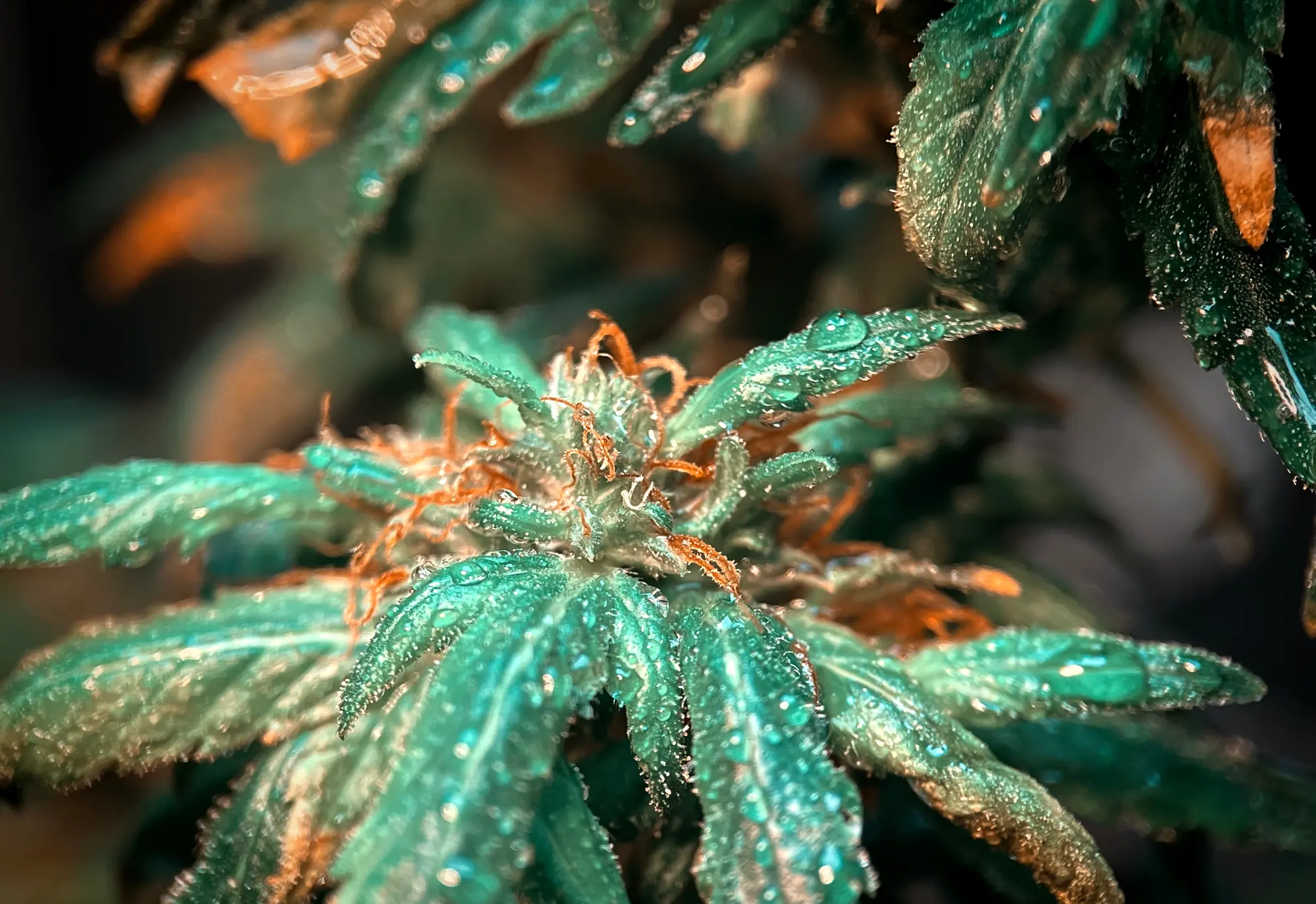
Colombian Gold
Colombian Gold is a strain that punishes modern impatience. Its historical identity comes from the Santa Marta region of Colombia, where tall, long-season cannabis could finish under tropical and subtropical conditions that most indoor rooms were never designed to imitate. The plant can grow upward and outward for weeks, remain flexible deep into transition, and continue producing fresh flower long after an eight-week hybrid would already be drying.
That long cycle is not a defect. It is the reason Colombian Gold has a different flower architecture from compact modern hybrids. Instead of concentrating all weight into a few extremely dense tops, classic sativa expressions build longer flowering runs with more air between individual calyx clusters. The structure reduces the humid core found inside a rock-hard indica cola, but it also means the grower needs more patience, more vertical planning, and better light distribution across a tall plant.
The central cultivation problem is therefore simple to state and difficult to solve: how do you control a landrace-style sativa that wants to keep stretching and flowering without reducing it to a stressed miniature plant? The answer is not endless topping. It is early structural planning, flexible branch positioning, a long enough flowering schedule, and a willingness to accept that the best Colombian Gold plant may never look like a compact modern commercial cultivar.
Colombian Gold also carries historical uncertainty. The original landrace population, later preserved seed lines, and modern plants sold under the name are not necessarily genetically identical. Some present-day examples finish in roughly ten to thirteen weeks, while older descriptions and landrace growers report substantially longer plants. The safest way to write about the cultivar is to treat long flowering, strong stretch, branchiness, skunky citrus-herbal aroma, and an energetic cerebral effect as the recurring information fingerprint while acknowledging that exact timing and potency vary.
For Weedth, the most important quality question is not how to force maximum density. It is how to finish a tall sativa cleanly enough that the flower preserves its clear, lively effect and its lemon-lime, pine, skunk, herb, and sweet-earth character. A rushed harvest can leave immature flower with weak aroma. A hot dry can remove the bright citrus. A low-ceiling room can turn the final month into emergency bending. Colombian Gold rewards growers who design the entire cycle around the plant before flowering begins.
Strain Features
| Feature | Details |
|---|---|
| Strain Type | Landrace or landrace-derived sativa; modern preservation lines vary |
| Origin | Santa Marta region of Colombia |
| Genetic Profile | Traditional Colombian sativa population rather than a modern named two-parent hybrid |
| THC | Modern tested examples vary widely; commonly moderate to strong rather than extreme by current standards |
| CBD | Usually low in THC-oriented modern examples |
| Dominant Terpenes | Limonene, myrcene, beta-caryophyllene, pinene, and terpinolene are reported across different samples |
| Flavor / Aroma | Lemon, lime, pine, skunk, sweet herbs, spice, fruit, and dry earth |
| Effect Character | Energetic, focused, creative, euphoric, sometimes psychedelic at higher doses |
| Flowering Time | Long and phenotype dependent; modern lines often report roughly 10 to 14 weeks, while more landrace-like plants may run longer |
| Outdoor Harvest | Late autumn in many Northern Hemisphere locations, often too late for wet short-season climates |
| Grow Difficulty | Moderate to advanced indoors; easier outdoors where season length is suitable |
| Stretch | Strong to extreme in landrace-leaning expressions |
| Plant Architecture | Tall, branchy, flexible, long internodes, strong lateral extension |
| Bud Density | Usually medium or airy-to-medium rather than rock hard |
| Training Compatibility | Topping, LST, wide SCROG, branch tying, and staged canopy control |
| Mold Risk | Often lower inside individual airy flowers than dense indicas, but long humid seasons still create disease risk |
| Best Time of Use | Daytime to early evening for many users |
Genetic Lineage
Colombian Gold is historically described as a Santa Marta Colombian landrace rather than a modern cross. That distinction matters because landrace populations contain diversity. They are regional gene pools shaped by geography, farmer selection, local climate, and repeated reproduction rather than one modern clone with a fixed laboratory profile.
The Santa Marta mountain region offered bright sun, seasonal rainfall, warm temperatures, and a long natural flowering opportunity. Plants adapted to such conditions could afford to grow tall, branch widely, and mature gradually. Those traits are exactly the ones that make authentic or landrace-leaning Colombian material challenging indoors.
Colombian Gold later became important in modern breeding, especially as one of the ancestral ingredients associated with early stabilized hybrids such as Skunk #1. That history should not be confused with the claim that every present-day Colombian Gold plant is an untouched 1970s landrace. Preservation, seed reproduction, and selection can change populations over time.
Modern sources disagree on exact flowering duration and even on how compact the plant should be. Some preservation lines have clearly been selected for indoor practicality. Others remain extremely sativa-like and can continue flowering for months. The grower should judge node spacing, leaf morphology, stretch, and flower development in the actual plant instead of assuming the name guarantees one behavior.
The genetic value of Colombian Gold lies less in maximal THC than in a combination of long-season morphology, clear cerebral effect, citrus-skunk-herbal aroma, and historical influence. A keeper should preserve those traits together. A plant that finishes very quickly but loses the open sativa structure and energetic effect may be convenient, but it may also be moving away from the cultivar's defining character.
Effect Breakdown
At a moderate dose, Colombian Gold is usually described as alerting rather than heavy. The first phase can feel mentally clean, with increased interest in conversation, music, movement, or detailed work. Many users report that attention becomes more focused without the immediate body weight associated with indica-dominant flower.
The emotional tone is often positive and expansive. Creativity can feel easier because associations arrive quickly, but the effect does not always become chaotic. In experienced users, this can be a useful daytime state. In sensitive users, the same mental acceleration can feel overstimulating if the dose is too high.
Physical effects are present but usually secondary. The body may feel lighter, warmer, or more energetic rather than deeply sedated. Appetite can increase, yet the strain is not commonly chosen primarily for couch-lock or sleep.
At higher doses, the classic sativa character can become more psychedelic or introspective. Time perception may shift, sensory details can become unusually vivid, and concentration can move from useful focus into looping thought. Anxiety is not inevitable, but any potent THC-rich sativa can become uncomfortable when tolerance is low or the setting is stressful.
The late phase often declines without a dramatic sleepy crash. Users may feel mentally tired after a long session, but the overall arc is more functional than sedating. This makes Colombian Gold attractive to people seeking a historically old-school daytime profile rather than maximum physical heaviness.
Flavor & Aroma Profile
Colombian Gold is often described with citrus first, but the profile is broader than lemon. Lime peel, sweet citrus, pine, dry herbs, skunk, and earthy spice can all appear. Some plants add mild fruit or mango-like sweetness. Others are drier, sharper, and more herbal.
Fresh flower can smell greener and more resinous than the cured product. As moisture leaves and the cure progresses, the best examples become cleaner. The citrus separates from the skunk, and a dry spicy-herbal base becomes easier to notice.
Because the flowers are often less dense than modern indicas, aroma can be spread across a larger surface area. Breaking the bud may not release one explosive burst, but the scent can remain persistent on the fingers and in the room.
On inhale, lemon-lime and herbs often lead. Pine and light sweetness can appear in the middle. The exhale moves toward skunk, dry spice, earth, and occasionally a soft floral note. Good flower should taste lively rather than grassy.
The main flavor vulnerability is heat. Long-flowering sativas are sometimes harvested into warm conditions, and growers may be tempted to dry them aggressively after such a long cycle. That is exactly when the bright citrus and pine can be lost. Once those top notes disappear, Colombian Gold can taste like generic dry herb and earth.
A mature cure should not make the flower heavier or sweeter than its genetics. The goal is clarity. Exceptional Colombian Gold keeps the citrus-skunk-herbal contrast intact and delivers a smooth enough smoke that the old-school flavor feels intentional rather than rough.
Dominant Terpenes
| Terpene | Aroma Role | Cultivar Relevance | Scientific Caution |
|---|---|---|---|
| Limonene | Lemon and lime peel | Fits the recurring bright citrus identity of many Colombian Gold samples | Does not guarantee stimulation or anxiety relief |
| Myrcene | Earth, herbs, musk | Can support the dry earthy base and appears frequently in cannabis landrace-derived samples | Does not independently determine sedation |
| Beta-caryophyllene | Pepper, dry spice, wood | Matches the spicy-skunky base beneath the citrus | CB2 receptor activity should not be converted into strain-specific medical claims |
| Pinene | Pine needles, resin | Consistent with the fresh pine edge reported in many examples | Often secondary and sample dependent |
| Terpinolene | Herbal, floral, fresh pine, light fruit | Can help explain brighter sativa-style aromatic complexity in some preserved lines | Not consistently dominant across all modern Colombian Gold material |
No single modern terpene table can define a landrace population. Different preservation lines and environments can produce different rankings. The more defensible conclusion is that Colombian Gold commonly combines citrus, herbs, pine, spice, skunk, and earth rather than one fixed chemical fingerprint.
Terpenes are most useful for explaining aroma. The energetic effect should be discussed as a whole-flower experience shaped by cannabinoids, dose, tolerance, and multiple volatile compounds rather than assigned to limonene or terpinolene alone.
Indoor vs. Outdoor Growing
| Decision Point | Indoor | Outdoor |
|---|---|---|
| Space Requirement | High vertical demand and wide lateral spread require early planning | Natural height is easier to accommodate if privacy and season length allow |
| Stretch | Strong to extreme; can continue for weeks | Becomes an advantage when branches have sun from multiple angles |
| Flowering Duration | Long room occupancy is the main production cost | Requires a long dry autumn or tropical/subtropical season |
| Training | Wide SCROG, topping, LST, and repeated branch repositioning can be useful | Early topping and broad branch spacing are usually enough |
| Bud Density | Open structure reduces some internal cola humidity | Airy-to-medium flowers can handle humidity better, but long rainy seasons remain risky |
| Lower Branches | Many will be unproductive under a deep indoor canopy | More can remain useful because sun changes angle |
| Harvest Risk | Indoor control protects a long finish from weather | Autumn rain and cold are the main threats outside the native climate |
| Best Fit | Experienced growers with height, patience, and a long flowering room | Warm, long-season climates with a dry enough finish |
Indoor Colombian Gold is a commitment to room time. A plant that flowers twelve to fourteen weeks occupies the same equipment long after faster hybrids would have completed another cycle. The reason to grow it indoors should therefore be genetic interest, flavor, effect, or preservation rather than simple grams per week.
The indoor advantage is control. Height can be redirected, light can be maintained through the long finish, and rain cannot destroy the final month. A wide screen is often more useful than a dense one because the plant wants to extend branches for a long time.
Outdoors, Colombian Gold can finally express its natural scale. The problem shifts from height to season length. In climates where October and November become cold and wet, the plant may still be actively flowering when disease pressure rises. A greenhouse can extend the season, but only if ventilation prevents humid stagnant air.
For a truly landrace-like expression, outdoor or greenhouse cultivation in a long warm climate is the more natural environment. For most temperate growers, indoors provides the only reliable way to let the plant finish fully.
Strain-Specific Grow Guidance
Design the Room Around the Final Plant, Not the Seedling
Colombian Gold can remain deceptively manageable in early vegetative growth, then accelerate after the light cycle changes. Reserve more vertical space than a modern hybrid would require. If the room cannot physically absorb strong stretch, begin training early rather than waiting for preflowers.
Horizontal space matters almost as much. Long side branches can become productive tops if they are given their own lane. Crowding several tall plants together forces the lower half into shade and creates a difficult tangle later.
Top Early, Then Use Flexible Branch Control
Topping is useful because it breaks a single dominant vertical path and creates several branches that can be spread. The first cut should happen early enough for recovery. Repeated topping can work, but every cut adds veg time and creates more leaders that still need room.
LST and branch tying are usually more valuable than endless cutting. Landrace-leaning stems often remain flexible for a long time, which lets the grower keep redirecting stretch without repeatedly stopping growth.
Expect the Transition to Last Longer Than a Fast Hybrid
Some Colombian Gold plants continue opening internodes well after the first visible flowers appear. Do not treat the first two weeks after flip as the complete stretch period. Keep adjustable ties available and monitor the tallest leaders deeper into transition.
If a branch begins dominating the canopy, lower it gradually. Emergency hard bends late in stretch create weak points just before months of flower weight begin accumulating.
Use a Wide, Reachable SCROG Rather Than a Packed Screen
A screen can turn vertical growth into useful horizontal flowering surface, but an overfilled net becomes impossible to access during a long bloom. Leave service lanes or open squares so the grower can reach the middle of the plant.
The screen should guide branches and later support them. It should not force every shoot into the canopy. Weak interior growth can be removed once stretch reveals which branches will never reach useful light.
Do Not Strip the Lower Plant Like a Short Indica
Indoors, some lower growth must be removed because the canopy can become deep. Yet Colombian Gold's long side branches can remain productive farther down than a compact cultivar if they receive side light.
Remove shoots that are permanently shaded, tangled inside the center, or too weak to reach the canopy. Keep edge branches that have their own light path. The goal is a tall open skeleton, not a bare trunk with only a few tops.
Root Volume Supports the Long Cycle
A long flowering plant needs a root zone that remains functional for months. Containers that become severely root-bound early can turn the final weeks into a struggle with rapid dryback and salt concentration.
Choose enough root volume for the intended plant size, maintain drainage, and avoid chronic saturation. The plant may drink aggressively under strong light, but frequent irrigation should still allow oxygen to return to the medium.
Feed for Duration, Not for One Big Mid-Flower Push
Grow reports vary on nutrient appetite. Some preserved lines tolerate substantial feeding, while others are happier at moderate strength. The reliable principle is continuity. A long-flowering plant needs stable nutrition for longer than a fast hybrid.
Do not let the stretch make the decisions
Avoid excessive early nitrogen that encourages even more stretch. Later in bloom, do not starve a plant that is still actively producing fresh calyxes simply because a normal hybrid would already be near harvest.
Light Distribution Must Follow the Long Branches
The highest top is not the entire crop. Colombian Gold can produce flower along long branches, so even side lighting and canopy spread matter more than pushing extreme intensity onto a few apices.
When the canopy is too deep, lower sites remain airy. Reduce depth by branch positioning and selective pruning rather than assuming more light power will penetrate unlimited foliage.
Air Movement Is Still Important Even With Airier Buds
Open sativa flowers may be less prone to hidden core moisture than compact indica colas, but the plant stays in flower for a long time. Dead leaves, branch intersections, and stagnant lower zones still create disease opportunities.
Air should move through the entire plant. Outdoors, wide spacing helps flowers dry after dew. Indoors, fans should circulate air around the canopy without blasting one flower continuously.
Support the Longest Laterals Before the Final Weeks
Colombian Gold flowers are not always rock hard, but long branches create leverage. A branch carrying flower over a large distance can sag or twist even when each individual bud is moderate in size.
A loose trellis, bamboo support, or perimeter tie system keeps the plant open and prevents branches from falling across one another late in the cycle.
Harvest Only After the Flower Has Truly Finished
Long-flowering sativas can keep producing fresh pistils for weeks. The useful signals are a slowdown in new growth, fuller calyx development, mature trichomes on the flowers, and an aroma that has moved from fresh green plant to citrus, skunk, pine, and spice.
Do not force a fourteen-week-looking plant into a ten-week schedule because a database gave a convenient number. At the same time, weather or disease can justify an earlier outdoor harvest. The best decision balances biological maturity against real environmental risk.
A Long Flowering Plant Needs a Long-Term Maintenance Mindset
Colombian Gold should not enter week ten looking like a crop that has already been exhausted by aggressive early flowering decisions. Leaves, roots, branch support, and irrigation all need to remain functional because some phenotypes still have a meaningful amount of development ahead.
This changes the grower's pacing. Major pruning and structural work should happen early enough that the plant can recover fully. The final month should be spent maintaining stability, inspecting the plant, and allowing the flowers to mature rather than repeatedly introducing new stress.
Landrace-Like Flowers Should Be Judged Differently
A grower accustomed to dense modern hybrids can mistakenly interpret open Colombian Gold flowers as underdeveloped. The more useful signs are resin maturity, calyx expansion, aromatic development, and whether the flower has finished producing new reproductive growth.
Trying to force hard density through excess feeding or extreme light can damage the very traits that make the cultivar valuable. The goal is mature sativa flower with good resin and flavor, not an artificial indica-style appearance.
Weedth Bud Flavor Tips
Colombian Gold's most fragile qualities are the bright ones: lemon, lime, fresh pine, light fruit, and volatile herbs. The earthy-skunky base survives rough handling more easily. Post-harvest strategy should therefore protect the top notes rather than simply preserve potency.
Long flowers can tempt growers to cut as soon as trichomes look cloudy. Wait for the aroma to mature as well. A green-smelling plant is unlikely to become fully citrus-skunky through curing alone.
Drying should be cool, dark, and even. Airier sativa flowers can dry faster than dense indica buds, so the grower must avoid assuming every harvest needs the same number of days. Judge moisture from the actual branches and buds.
Direct fan air can strip the surface quickly. Move air around the drying space and exchange humid air without turning the flowers into wind-dried herbs.
During cure, the green edge should recede and citrus, pine, and spice should become more distinct. A harsh hay-like result usually reflects immature harvest or drying that moved too quickly.
Outdoor flowers should be inspected carefully for debris, damaged tissue, and insects before drying. A long-season plant can carry hidden weather damage even when the outer flower looks healthy.
Store the finished flower cool, dark, and airtight. Colombian Gold is often grown for a specific old-school sensory experience. Repeated heat and oxygen exposure can erase the very details that justified the long cycle.
Weedth Bud Boost Tips
The most important yield decision is accepting that Colombian Gold produces quality through canopy area and time rather than extreme individual bud density. Trying to force every flower into hard indica-style nuggets can lead to excess feed, excess light, or late stress without improving the plant's natural structure.
Indoors, use the stretch to fill horizontal space deliberately. A wide trained canopy with separated branches produces more usable flower than several tall untrained stems competing for the same light.
Keep the productive zone reachable. If the screen becomes so full that the grower cannot remove dead leaves or inspect inner branches, theoretical yield has already started reducing practical quality.
Root volume matters because the plant remains active for a long time. A stable root system supports late flower filling better than repeated attempts to correct a root-bound plant with stronger nutrients.
Outdoor yield depends heavily on season length. A huge plant that cannot finish before persistent autumn rain is not a high-yielding success. In marginal climates, a smaller earlier-selected phenotype can produce more usable flower.
Branch support protects yield by preserving orientation and airflow. Long laterals that fall flat can shade their own flowers and trap moisture against neighboring branches.
Quality yield for Colombian Gold should be measured as mature, aromatic, clean flower that preserves the sativa effect. Raw biomass alone ignores the cultivar's reason for existing.
Medical Uses & Benefits
Colombian Gold is commonly associated with daytime mood support, fatigue, stress relief, and functional pain distraction. These are user-reported patterns rather than clinical proof that the cultivar treats a specific condition.
The energetic mental profile may appeal to users who dislike sedating cannabis. Some people report that it helps them remain engaged with ordinary activities while making discomfort or low mood less intrusive.
The same stimulation can be a limitation. People who are highly sensitive to THC, racing thoughts, or panic may find a large dose uncomfortable even when the strain has a reputation for clear-headed effects.
Because most modern examples are THC-dominant with little CBD, Colombian Gold should not be described as a low-intoxication medical option. Driving and safety-sensitive tasks remain unsafe while impaired.
Anyone using cannabis for a diagnosed condition or alongside prescription medication should discuss cannabinoid use with a qualified healthcare professional.
Ideal User Profile
Colombian Gold best fits a user who wants an active old-school sativa rather than a heavy modern indica. It suits daytime creative work, music, conversation, walks, and social settings when the dose remains comfortable.
The ideal flavor preference is citrus, pine, skunk, herbs, spice, and light fruit. People seeking dessert sweetness, cream, or heavy fuel may find it less immediately dramatic.
Experienced users may appreciate the long cerebral arc and lack of immediate body heaviness. Beginners should still start low because a high dose can become intensely mental.
For growers, the ideal profile is someone willing to trade flowering speed for genetic history, effect clarity, and a very different plant architecture from modern compact hybrids.
It is a poor choice for a low-ceiling room, a strict eight-week production schedule, or an outdoor climate that turns cold and wet early in autumn.
Grower Notes and Feedback
The most consistent grower observation is stretch. Even modern preserved lines can become much taller than expected, and more landrace-like plants may continue extending deep into transition.
Another recurring theme is flexibility. Long branches can remain surprisingly pliable, which makes LST and screen training useful well after a compact hybrid would have hardened.
Flowering-time reports vary widely. That variation should be treated as real, especially because different modern seed lines may contain different degrees of landrace preservation and selection.
Growers also report strong branching. The plant can fill horizontal space efficiently if the branches are directed early, but the same trait becomes a problem when several tall plants are crowded together.
Bud density is another source of confusion. Colombian Gold should not be judged by modern rock-hard indica standards. Open flowers can still be resinous, aromatic, potent, and mature.
Aroma reports commonly move between citrus, sweet fruit, skunk, pine, herbs, and spice. The best keeper is usually the plant that retains a distinct profile after cure rather than the one with the most generic high-THC appearance.
Indoor landrace growers also note that timing the light-cycle change is not always identical to timing visible flowering. Some plants take longer than modern hybrids to settle into full reproductive growth, which can make the calendar feel misleading.
Another recurring lesson is that the plant can continue producing useful new flower farther down the branch than compact hybrids when the canopy is well spread. This is one reason overly aggressive lower pruning can reduce yield on a well-lit Colombian Gold plant.
Weedth Editor's Note
How I would judge the finished flower
I would not grow Colombian Gold in a room unless I had already decided that the long cycle was part of the project. Trying to make it behave like a nine-week hybrid defeats the reason to grow it.
The first thing I would protect is space. I would top early, spread the main branches widely, and leave more empty screen than feels necessary. The plant will probably use that space later.
I would also resist heavy defoliation. A tall landrace-style plant needs airflow, but it does not need to be converted into a bare modern mainline simply for appearance. I would remove what is shaded, weak, or crowded and leave productive edge branches alone.
The harvest date would be the second place I refuse to rush. If the plant is still healthy, still swelling, and still improving aromatically, I would let it finish. The exception is outdoor disease pressure. Clean slightly early flower is better than mature flower lost to weather.
What I value most is the difference. Colombian Gold does not have to beat a modern hybrid on density or grams per week. It earns space by offering a tall historic plant, a clear energetic effect, and a citrus-skunk profile that feels structurally different from contemporary dessert cannabis.
Weedth Score
Growing Experience 7.4/10 Fascinating and responsive to training, but long flowering and extreme stretch raise the difficulty indoors.
Bud Structure & Visual Appeal 7.7/10 Airier sativa flowers can be beautiful and resinous, though growers expecting modern rock-hard density may be disappointed.
Aroma Complexity 8.6/10 Citrus, pine, skunk, herbs, fruit, spice, and earth create a distinctive old-school profile.
Flavor & Smoothness 8.3/10 Excellent when fully mature and dried gently; bright notes are easy to lose.
Effects & High Experience 8.9/10 Clear, energetic, creative, and historically distinctive without relying on heavy sedation.
Overall Satisfaction & Recommendation 8.3/10 Highly rewarding for sativa enthusiasts and preservation-minded growers, but inefficient for short-cycle production.
Personal closer: I would keep the Colombian Gold that finishes with a clear lemon-skunk aroma and an alert effect, even if another plant makes denser-looking buds.
FAQ
How long does Colombian Gold really flower?
Modern preservation lines often report roughly 10 to 14 weeks, but more landrace-like plants can run longer. Treat flowering time as phenotype dependent and harvest from maturity, not a fixed calendar.
How much does Colombian Gold stretch?
Strong stretch is normal. Some grow reports show plants multiplying their height several times after flowering begins, especially when started small.
Can Colombian Gold be grown indoors?
Yes, but it needs height planning, training, patience, and enough room time for a long flowering cycle.
Is SCROG good for Colombian Gold?
A wide, open SCROG is very useful because it converts vertical stretch into horizontal flowering surface. Avoid packing the screen completely.
How many times should Colombian Gold be topped?
One or more early toppings can help, but repeated topping is not mandatory. Branch tying and LST are often more efficient once the main structure is established.
Why are my Colombian Gold buds airy?
Open flower structure is normal for landrace-style sativas. Poor light can make flowers excessively airy, but they should not be expected to resemble dense Afghan colas.
Is Colombian Gold mold resistant?
Its open buds can reduce internal moisture compared with dense indicas, but the long flowering season still creates mold risk in humid environments.
Is Colombian Gold a heavy feeder?
Reports vary. Long-flowering plants need steady nutrition, but excessive nitrogen can make stretch harder to control. Feed the plant's actual demand.
Can I lollipop Colombian Gold?
Selective lower cleanup is useful indoors, but do not automatically remove every low branch. Strong edge laterals can remain productive when they receive side light.
When should Colombian Gold be harvested for the best effect?
Harvest after full calyx maturity and mature flower trichomes while the citrus-skunk aroma is complete. Earlier harvest tends to feel brighter; later harvest can feel heavier.
Why is my Colombian Gold taking much longer than the listed flowering time?
The name covers different preserved populations and phenotypes. A landrace-leaning plant can simply require a much longer cycle.
Is Colombian Gold suitable for a small tent?
Only with aggressive early planning and enough vertical control. A low tent is usually a poor match.
Can Colombian Gold finish outdoors in a cool climate?
It is risky. Long flowering can extend into cold, wet autumn weather. A greenhouse or indoor finish may be necessary.
How do I preserve Colombian Gold's lemon and lime flavor?
Let the flower mature fully, dry without high heat or direct fan air, and store cool and airtight.
Is Colombian Gold good for daytime use?
Many users describe it as energetic and focused, but dose and THC tolerance still determine how functional it feels.
Similar Strains
Durban Poison: Another classic sativa with energetic effects, but generally shorter flowering and a more anise-spice profile.
Acapulco Gold: Shares historical Latin American sativa character but often leans sweeter and more toffee-spice in flavor.
Super Silver Haze: Offers a modern, more standardized long-flowering sativa experience with stronger incense and citrus.
Jack Herer: A more manageable indoor alternative with clear cerebral effects and pine-spice flavor.
Skunk #1: Historically connected through breeding influence, with a much shorter and more standardized hybrid grow style.
Maui Wowie: A tropical-style sativa comparison with fruitier aroma and a more manageable modern flowering window.
Share this article
A quick overview of the topics covered in this article.
Follow us
Latest articles
September 9, 2026
September 9, 2026
September 9, 2026