
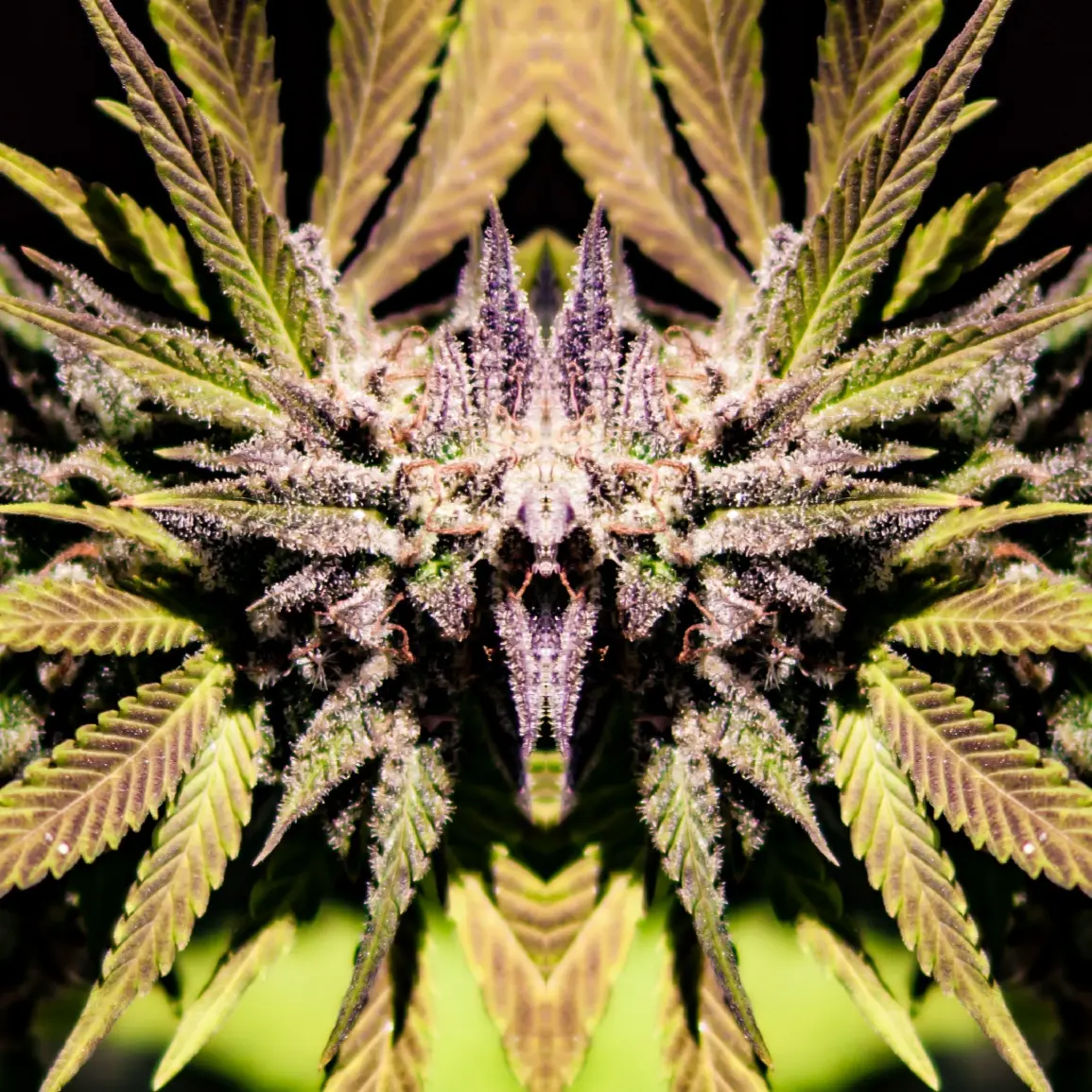
Critical Jack
A fast, high-yielding Jack-family hybrid with open branching, strong stretch, lemon-pine-incense aroma, and a functional cerebral effect that rewards precise canopy timing.
Critical Jack combines the production strength of a fast, branchy Critical-family plant with the aromatic and cerebral identity of Jack Herer. The result is a cultivar that can grow quickly, stretch hard, produce long resinous colas, and still finish near sixty days indoors when the environment remains stable.
Its biggest advantage is also the central cultivation problem. The plant creates many useful branches and large numbers of flower sites, but the transition can turn an orderly vegetative plant into a tall uneven canopy before the grower realizes how much space has been used. Strong yield depends on redirecting that stretch horizontally and supporting the branches before the flowers gain mass.
The quality target is not simply a large harvest. Critical Jack should preserve lemon peel, pine, incense, wood, spice, and a fresh herbal edge while delivering an energetic, focused opening and a warm physical undercurrent. Excess late nitrogen, hot drying, and a canopy that forces the lights too close can flatten the aroma and turn an elegant hybrid into generic high-yield flower.
Strain Features
| Feature | Details |
|---|---|
| Strain Type | Sativa-leaning hybrid, commonly around 60% sativa and 40% indica. |
| Lineage | Critical Plus crossed with Jack Herer. |
| THC Range | Commonly about 15-22%, with higher selected phenotypes possible. |
| CBD | Usually very low. |
| Dominant Terpenes | Often terpinolene, beta-caryophyllene, and pinene, with limonene, myrcene, and ocimene varying. |
| Aroma | Lemon peel, pine, incense, wood, herbs, spice, flowers, and mild sweet fruit. |
| Effect Character | Focused, energetic, uplifted, creative, and gradually physically warm rather than immediately sedating. |
| Flowering Time | Approximately 8-9 weeks indoors; many selected plants finish around day 60-63. |
| Outdoor Harvest | Late September to mid-October depending on latitude and phenotype. |
| Height | Medium to tall; outdoor plants can become very large. |
| Stretch | Strong, commonly 1.5-2.5 times pre-flower height. |
| Yield | High to very high when light distribution and branch support are optimized. |
| Bud Structure | Long spear-shaped colas with dense swollen calyxes and enough openness to improve airflow. |
| Training Response | Excellent for topping, LST, SCROG, supercropping during transition, and clone-based SOG. |
| Environmental Tolerance | Generally vigorous and resilient, with useful resistance to moderate humidity and some pests, but not immune. |
| Main Cultivation Risk | Uncontrolled stretch, high top-to-bottom light variation, branch collapse, and aroma loss from excessive canopy heat. |
| Grow Difficulty | Moderate. Vigorous and forgiving, but space planning is essential. |
| Best Time of Use | Morning through early evening for experienced users; heavy doses can become less functional. |
Critical Jack can yield impressively without an extremely long bloom, which makes it attractive for both indoor and outdoor growers. Its efficiency depends on recognizing that fast finishing does not mean compact growth.
The cultivar should be treated as a multi-branch production plant. It performs best when the grower uses the stretch to complete a planned canopy rather than fighting the plant after it reaches the light.
Genetic Lineage
Critical Plus contribution
The Critical-family side contributes rapid vegetative development, uniform branching, heavy flower production, and a strong ability to convert light into biomass. It also adds sweetness and a warm physical layer that prevents the final effect from feeling like a pure Haze.
This parentage explains why Critical Jack can produce large yields in a relatively short flowering period. It also explains the need for support. Branches grow quickly and can appear sturdy until the final weeks, when long flowers add more weight than the stem architecture can carry.
Jack Herer contribution
Jack Herer contributes height, open internodes, pine, incense, citrus, and an alert cerebral effect. It also adds variation. Some phenotypes are more compact and sweet, while others are taller, sharper, and more Haze-like in aroma and effect.
The Jack influence is responsible for much of the cultivar’s quality ceiling. A good plant produces more than high yield. It carries aromatic definition through the exhale and a clear mental experience that feels motivated rather than simply stimulated.
How the two sides interact
The ideal expression combines the rapid flower formation and supportable density of the Critical side with the open branching and lemon-incense identity of Jack. Too much Critical influence can create heavy, sweet, less distinctive flower. Too much Jack can create excessive stretch and a longer, less uniform finish.
Phenotype recognition
A compact phenotype has slightly broader leaves, shorter internodes, larger early flower clusters, and a warmer body effect. A Jack-forward phenotype has narrower leaves, more vertical movement, stronger pine-incense aroma, and a clearer high. The balanced phenotype usually offers the best yield-to-flavor ratio.
Lineage note: Use lineage to anticipate behavior. The Critical side builds weight; the Jack side builds vertical space and aromatic complexity. The canopy must accommodate both.
Effect Breakdown
Onset: clean mental ignition
Critical Jack usually begins with an uplifted, mentally organized effect. Focus can narrow onto a task, conversation feels easier, and fatigue may become less noticeable. The sensation is energetic without always feeling jittery.
A low dose can be productive for experienced users. Writing, design, walking, music, and repetitive work may feel easier to begin. The strain does not create competence, however, and detailed decisions can still be impaired even when motivation improves.
Peak: attention and sensory expansion
At the peak, the Jack side becomes more obvious. Sounds, visual detail, and ideas may feel more vivid. Some users become talkative or imaginative. Others experience strong task fixation and may spend too long on one detail.
Body layer
The Critical side adds warmth and physical ease beneath the mental activity. The body is usually relaxed rather than heavy at moderate doses. This balance is what makes the cultivar useful for daytime or early evening consumption.
High-dose shift
A large dose can turn focus into racing thoughts, anxiety, or circular thinking. The body may become more relaxed, but the mind can remain active. Some users later experience hunger and a soft comedown rather than direct sedation.
Duration and finish
The active phase can last two to three hours, followed by a gradual reduction in energy. Earlier-harvested flower may feel sharper and shorter. Later flower can carry more body comfort and a calmer finish.
| Dose | Mental Effect | Physical Effect | Caution |
|---|---|---|---|
| Light | Focused, uplifted, conversational. | Mild tension relief. | Can feel stronger after ten minutes. |
| Moderate | Creative, alert, sensory, task-oriented. | Warm and comfortable. | May narrow attention too strongly. |
| Heavy | Racing or dreamlike thoughts, time distortion. | Relaxed but not always sleepy. | Anxiety and dizziness become more likely. |
| Late phase | Calmer mood and reduced urgency. | Hunger and gentle fatigue. | Residual stimulation can delay sleep. |
Dose note: Critical Jack is most functional at a controlled dose. More flower does not necessarily create more useful focus.
Flavor & Aroma Profile
Aroma during cultivation
The plant begins with green herbs and fresh stems, then develops lemon peel, pine resin, and dry spice. Jack-forward phenotypes may smell like incense, cedar, or haze. Critical-forward plants can add sweet fruit, flowers, or a mild fermented note.
Odor becomes intense in the second half of bloom and can travel beyond the room. Outdoor plants are especially noticeable in warm afternoon air. Privacy and filtration planning should be completed before flower.
Jar aroma
A high-quality cure produces layered lemon, pine, incense, wood, pepper, and flowers. The profile should feel dry and bright rather than syrupy. A small sweet note may appear when the bud is broken.
Inhale
The inhale often starts with lemon and sweet herbs. Pine and floral notes sit in the middle. A terpinolene-rich phenotype can feel fresh, almost like citrus cleaner, without becoming chemical when grown and cured correctly.
Exhale and aftertaste
Incense, wood, pepper, and dry pine become stronger on the exhale. The aftertaste can remain lemon-herbal for several minutes. Poorly cured flower becomes hot and woody, losing the citrus first.
Aroma failures
High canopy temperature can reduce lemon and terpinolene brightness before harvest. Excess late nitrogen leaves a green herbal taste. Drying with direct air produces a crisp exterior and flat interior aroma. Critical Jack needs a mature but not overripe harvest and a cool post-harvest room.
Flavor identity: The flavor goal is lemon and pine carried by incense and dry wood, with enough sweetness to soften the finish.
Dominant Terpenes
Terpinolene
Terpinolene commonly creates a complex mixture of citrus, fresh herbs, flowers, pine, and light wood. It is central to the cultivar’s Jack-like brightness. Terpinolene-rich flowers can smell energetic even before consumption, but the compound is vulnerable to heat and fast drying.
Beta-caryophyllene
Beta-caryophyllene contributes pepper, dry spice, and some of the deeper woody finish. It can interact with CB2 receptors in laboratory research. That property is relevant scientifically but does not establish a medical effect for a named cultivar.
Pinene
Pinene reinforces pine resin, cedar, and fresh forest notes. It can make the opening feel clearer and helps separate Critical Jack from sweeter high-yield hybrids.
Limonene
Limonene adds lemon rind and a brighter emotional tone. In this cultivar it works with terpinolene rather than dominating alone. The best examples smell like fresh zest, not artificial lemon candy.
Myrcene and ocimene
Myrcene can add earth, ripe fruit, and physical comfort. Ocimene may contribute sweet herbs, tropical fruit, and a fresh green note. Their balance helps explain why some phenotypes feel warmer and others more electric.
Chemotype note: The terpene order varies with phenotype. A true Critical Jack profile should still preserve citrus, pine, herbs, and incense as a coherent group.
Indoor vs. Outdoor Growing
| Factor | Indoor Cultivation | Outdoor Cultivation |
|---|---|---|
| Height | Requires early flip and active transition training. | Can exceed 2-3 m with a long season. |
| Canopy style | Wide SCROG or multiple topped plants. | Large open framework with layered support. |
| Flowering | About 60-65 days for many phenotypes. | Late September to mid-October. |
| Yield | High per area when stretch fills the screen. | Very high per plant in full sun and large root volume. |
| Main risk | Tops reaching the light, uneven intensity, and support failure. | Storm damage, visibility, and a phenotype finishing too late. |
| Moisture | Open structure helps, but dense colas still need airflow. | Moderate tolerance does not eliminate bud-rot risk. |
| Flavor | Excellent when canopy temperature and drying are controlled. | Sun can deepen pine, incense, and lemon complexity. |
Indoor cultivation
Critical Jack is highly productive indoors when the grower flips early and uses the flowering stretch to fill horizontal space. A screen should not be full before the flip. Leave room for the branches to travel during the first two to three weeks.
The main indoor quality risk is an uneven canopy. Tall tops receive too much light and heat while lower branches remain underexposed. A level screen allows stronger average light without sacrificing the most aromatic flowers.
Outdoor cultivation
Outdoors, the plant can become enormous. It uses large root volume and direct sun efficiently, producing long branches covered in flowers. Early topping and a strong cage are necessary. The plant should not be allowed to grow as one unsupported central tree.
A dry, sunny, temperate climate is ideal. Some expressions handle humidity and early rain better than dense compact cultivars, but the long colas can still trap water around damaged tissue. Inspect after storms and protect the final weeks where practical.
Greenhouse cultivation
Critical Jack is a strong greenhouse candidate because height and season can be extended while rain is excluded. The structure must be tall and well vented. If the roof is low, the cultivar will reach the hot zone quickly and lose quality.
Environment priority: Indoor or outdoor, plan for more final height and branch weight than the vegetative plant appears to promise.
Strain-Specific Grow Guidance
Measure available vertical space before the flip
Account for container height, fixture depth, safe light distance, and working space above the canopy. Critical Jack can add 50-150% or more to its height. Flip while there is still room to bend and tuck the leaders.
Top early and preserve the useful laterals
One or two tops can create a broad frame. The plant naturally produces productive side branches, so avoid removing them simply because they grow fast. Redirect the strongest leaders and remove only the weak or badly positioned shoots.
Use SCROG as a timing system
A screen is not only support. It tells the grower where the stretch should go. Fill roughly half to two-thirds of the intended area before flowering, then tuck through transition. Stop when flowers set and the stems resist bending.
Use supercropping only while stems remain flexible
Do not let the stretch make the decisions
A runaway top can be gently crushed and bent during early transition. Support the bend and monitor recovery. Do not supercrop hard woody stems in established flower, where splitting and infection risk increase.
Feed the stretch without creating a dark leafy plant
Rapid growth increases nitrogen and micronutrient demand, but the Critical side can remain vigorous on moderate nutrition. Increase only when the plant is using water and building pale healthy new growth. Dark clawed leaves signal excess, not strength.
Manage calcium and magnesium through root conditions
Fast growth under strong light can reveal calcium or magnesium limitations. Confirm pH, salinity, and root-zone moisture before adding more supplements. A wet or salty medium can block uptake even when the nutrients are present.
Clean the lower canopy after stretch
Remove branches and flowers that remain below the productive light zone after stretch finishes. Critical Jack can create many sites, but lower shaded flowers are chemically and physically less uniform. A defined canopy depth improves premium yield.
Support each long branch
Use a second net or individual ties before the colas become heavy. The ideal branch remains upright without being pulled into its neighbor. Outdoor plants need multiple cage layers and flexible ties that allow movement without abrasion.
Protect the top flowers from heat
Tall tops are vulnerable to high leaf temperature, bleaching, and terpene loss. Level the canopy rather than raising the fixture for one branch. Maintain airflow above the tops and monitor the actual leaf surface temperature.
Do not confuse early pistil color with maturity
Some flowers darken pistils while calyxes continue expanding. Evaluate trichomes on the calyx, aroma development, and overall swelling. The plant can add meaningful weight and complexity in the final ten days.
Plan an outdoor harvest sequence
Large plants rarely mature uniformly. Upper and outer branches may finish first. A staged harvest can protect mature tops and give interior sites additional sun. Use clean cuts and avoid leaving damaged stubs that collect water.
| Cultivation Phase | Critical Jack Priority | What to Avoid |
|---|---|---|
| Vegetative | Create a wide branch framework. | Letting one top dominate until the flip. |
| Transition | Tuck stretch and keep the screen open. | Filling the entire screen before flower. |
| Early bloom | Stabilize nutrition and choose final sites. | Removing every lower branch before stretch is known. |
| Mid bloom | Support colas and maintain even light. | Letting tall tops heat while lower sites remain shaded. |
| Late bloom | Preserve aroma and finish swelling. | Harvesting on pistil color or advertised day alone. |
Master advice: Critical Jack converts space into yield quickly. The grower’s job is to decide where that space will be used before the plant decides for them.
Calculating the real stretch allowance
Measure from the top of the medium, not from the floor. Subtract container height, fixture depth, safe canopy distance, and the space needed to work above the plant. The remaining number is the true plant allowance. Critical Jack should be flipped while enough of that allowance remains for the tallest phenotype, not the average branch.
Daily transition checks
During the first fourteen days of flowering, spend a few minutes checking every leader. Tuck branches before they harden, rotate flexible ties, and identify tops that are escaping the screen. Daily small adjustments create less stress than one severe correction at the end of week two.
Preventing stem splits outdoors
Large outdoor plants can split where topped branches meet the main stem. Use a wide cage and support opposing branches independently so wind cannot pull them apart like levers. A soft central tie around the main fork can add insurance, but it must not tighten as the stem expands.
Managing a mixed-phenotype canopy
When several phenotypes share a room, place the tallest plants at the perimeter where branches can be bent outward. Raise shorter plants on stable platforms rather than lowering the entire light for them. Separate irrigation if water use differs. Uniformity should be created through placement and training, not by forcing every plant onto one feed and height.
Late-flower foxtailing diagnosis
Some Jack-forward flowers naturally extend narrow calyx towers. New pale foxtails limited to the hottest tops suggest excess light or heat. Natural foxtailing appears more evenly and continues to produce mature resin. Compare location, color, and trichome development before deciding whether the structure is genetic or environmental.
Outdoor aroma preservation
In very hot climates, late-afternoon canopy temperatures can flatten citrus. Maintain root moisture without saturation, use surrounding ground cover to reduce reflected heat, and harvest mature branches during a cooler part of the day. Move cut material into shade immediately rather than leaving it exposed while the entire plant is processed.
Weedth Bud Flavor Tips
Harvest after the lemon becomes layered
Early flower may smell sharply lemony but lack incense and depth. Wait until the citrus is supported by pine, wood, and spice. A very late harvest can reduce brightness and make the profile more earthy.
Keep canopy heat low before harvest
Flavor preservation begins on the living plant. Tops held too close to the fixture can lose terpinolene and limonene while remaining potent. Maintain distance, airflow, and leaf temperature during the final weeks.
Dry long colas with enough separation
The flowers are often elongated and moderately dense. Hang branches so the colas do not touch. Whole-plant drying can be useful in a dry room, but in normal humidity a branch dry offers better control.
Cure until incense separates from green herbs
The first weeks may emphasize lemon and fresh plant material. With time, pine, incense, wood, and pepper become clearer. Keep phenotypes separate because a sweeter Critical-forward plant can overwhelm a dry Jack-forward jar.
Use cooler vapor for the full profile
Lower vapor temperatures emphasize lemon, flowers, and terpinolene. Higher temperatures bring wood, spice, and body. A step-up session reveals more complexity than immediate high heat.
Flavor checkpoint: The best finished flower keeps lemon and incense in the same breath. If only wood remains, heat or drying probably removed the top notes.
Weedth Bud Boost Tips
Indoor: let stretch finish the screen
The most efficient SCROG begins with open space. Flip before the screen is full and direct each growing tip into a defined area. This shortens veg while producing a level field of long colas.
Indoor: use strong light across an even canopy
Research shows that higher light can increase cannabis inflorescence yield when other factors remain adequate. Critical Jack can use strong light, but only after the canopy is level and the roots can support the added water demand.
Indoor: improve lower consistency through canopy depth
Keep the productive zone shallow. Inter-canopy lighting can improve uniformity in advanced rooms, but it should not replace pruning. Remove sites that cannot receive meaningful light or airflow.
Outdoor: build a multi-level cage
Use the first cage to spread veg growth and a second layer to hold flower weight. Large plants may need vertical stakes tied into the cage. Flexible support prevents wind from using long branches as levers against the main stem.
Outdoor: manage irrigation at scale
A large Critical Jack can use significant water during hot weather. Irrigate deeply enough to wet the active root zone, then allow oxygen to return. Frequent shallow watering encourages surface roots and unstable demand.
Quality yield comes from uniform maturity
An even canopy and staged outdoor harvest increase the share of flowers collected at the correct ripeness. This is more valuable than adding late nutrients to already mature tops while waiting for shaded sites.
Yield principle: Critical Jack does not need to be forced into yield. It needs space, light distribution, and support that match its natural production capacity.
Medical Uses & Benefits
Critical Jack is commonly selected for fatigue, low mood, stress, headaches, and situations where users want relief without immediate sedation. These are reported experiences and should not be interpreted as clinical proof.
| Reported Use | Why Some Users Choose It | Potential Drawback |
|---|---|---|
| Fatigue | The energetic opening can make activity feel more approachable. | High doses may produce anxiety or mental exhaustion. |
| Low mood | Euphoria and sensory engagement may improve emotional tone temporarily. | Cannabis is not a substitute for depression treatment. |
| Stress | Focused attention can interrupt rumination while the body remains comfortable. | Task fixation can become unhelpful in anxious users. |
| Headache | Some consumers report reduced discomfort and improved mood. | Cannabis can worsen headaches in some people. |
| Appetite loss | Hunger may increase during the later phase. | The effect is less appetite-focused than heavy indicas. |
| Mild pain | Physical warmth can make discomfort less intrusive. | It may not provide enough body relief for severe pain. |
The stimulating profile requires caution for users prone to panic, racing thoughts, or insomnia. Begin with a small dose and avoid late-night use until the personal response is understood.
Medical note: Medical users should evaluate the actual batch and consult a qualified clinician, particularly when managing anxiety, cardiovascular conditions, or medication interactions.
Ideal User Profile
Critical Jack suits users who want a clear, aromatic, productive hybrid rather than a heavy nighttime strain.
- Experienced daytime users seeking focus, energy, and mood lift.
- Creative or social consumers who enjoy lemon, pine, incense, and herbs.
- Growers with enough vertical space or confidence using SCROG.
- Outdoor cultivators with full sun, strong support, and room for a large plant.
- Cultivators prioritizing high yield without abandoning flavor complexity.
It is less suitable for a very low ceiling, a user highly sensitive to stimulating THC, or a garden where odor and outdoor size create security problems. Beginners can grow it, but they need to flip earlier than instinct may suggest.
Why open buds can still be high quality
Critical Jack flowers may not feel as rock hard as compact dessert hybrids, especially on Jack-forward plants. The slightly open structure improves airflow and can preserve a high calyx-to-leaf ratio. Evaluate resin, aroma, maturity, and dry density rather than squeezing the bud and assuming harder is automatically better.
Managing harvest labor on large plants
A very large outdoor plant should be harvested as a sequence, not a single chaotic event. Prepare clean hanging space, labels, tools, and transport before cutting. Move mature outer branches first, inspect every cola, and keep questionable material separate. Good logistics protect more quality than rushing to finish in one night.
Clone selection for production
When selecting a mother, include rooting speed, branch flexibility, and canopy consistency alongside flower quality. A slightly less aromatic plant that roots reliably may be useful for production, while the most flavorful phenotype can be preserved for a smaller connoisseur run. The best choice depends on the garden’s purpose.
Managing light after a staged outdoor harvest
When mature tops are removed, previously shaded branches can receive sudden direct sun. This can bleach exposed tissue or dry it too quickly. Leave some protective leaf, harvest during a cooler period, and allow the remaining canopy to adjust. A staged harvest works best when the lower branches are already healthy and close to maturity.
Aroma as a canopy-temperature indicator
If the top flowers smell less lemony than lower shaded flowers, canopy heat may be reducing volatile compounds. Compare branches at the same maturity. This simple sensory check can reveal a light-distance problem before bleaching becomes severe.
Planning the drying room for spear-shaped colas
Long colas take more horizontal hanging space than compact golf-ball flowers. Prepare lines or racks that keep the branches separated from end to end. Folding long branches together to save room creates contact points and uneven drying, especially around the center of the spear.
Preventing a Productive Canopy From Becoming a Maintenance Problem
Critical Jack can create more viable branches than the room can finish evenly. During vegetative growth, that abundance looks like guaranteed yield, but overlapping leaders later compete for the same light and make inspection difficult. Choose the strongest outward-facing branches before flowering and assign each one a clear position in the screen. Remove crossing shoots that repeatedly return to the shaded center rather than weaving every branch merely because it is healthy.
After stretch, evaluate the canopy by flower-site quality rather than branch count. A branch carrying several illuminated sites may deserve support, while a longer branch hidden under the net can consume irrigation and nutrition without producing premium flower. Critical Jack rewards organized abundance, not maximum stem density.
Protecting the Lemon-Haze Profile During Final Swell
The final weeks are when Critical Jack gains much of its weight, yet this is also when excessive canopy temperature can flatten its brightest citrus notes. Avoid responding to late swelling with a sudden increase in light intensity. Maintain stable leaf temperature, keep the tallest spears away from the fixture, and allow air to travel beside the colas rather than directly through them at high speed. The best harvest combines completed calyx expansion with lemon, pine, incense, and spice that remain clearly separated.
Grower Notes and Feedback
The stretch is the defining lesson
Growers often describe the plant as easy until the transition. Once flowering begins, branches can rise quickly and fill every gap. Successful growers use a screen or early bending. Unprepared growers spend the rest of bloom chasing the lights upward.
Cuttings and roots are usually vigorous
Selected material often roots readily and produces strong branches. This makes clone-based SOG possible. Uniformity should still be confirmed because different mother plants can express different height and aroma.
The plant can tolerate weather but not neglect
Outdoor reports often praise resilience to moderate moisture and changing autumn conditions. Long colas are still vulnerable when water enters damaged tissue. Inspection after rain remains necessary.
Yield can hide quality differences
A Critical-forward plant may produce impressive weight with mild aroma. A Jack-forward plant may smell better but require more support and time. The best keeper is often the balanced expression rather than the extreme in either direction.
Drying mistakes are obvious
Fast-dried flower retains potency but loses lemon and incense. The remaining wood and pepper can feel harsh. Growers who slow the dry and avoid hot top flowers report a much clearer, more refined profile.
Grower note: Label height, flowering speed, aroma, and dry yield for every phenotype. Critical Jack selection is a four-variable decision, not a single yield contest.
Weedth Editor's Note
What matters after the headline numbers
Critical Jack is one of those plants where the grow plan should be drawn before the flip. I would decide the final canopy height, install the net, and leave visible empty space. The plant will use that space quickly.
I would top early, preserve the best laterals, and stop cutting once the structure is established. During transition I would tuck daily rather than waiting for one large correction. Small early movements are much safer than bending woody flowering stems.
Nutrition would be moderate and responsive. Rapid growth can look hungry, but I would check root-zone EC and water use before increasing feed. A dark leafy Jack hybrid loses some of the aromatic precision that makes it worth growing.
My quality focus would be the top-zone temperature. Critical Jack can produce excellent potency even when the lemon and incense are damaged by heat. I would rather reduce a small amount of intensity than finish with a large bland harvest.
I would recommend it to a grower who enjoys active canopy management and wants strong production from a relatively fast cycle. It is not a passive plant, but it gives clear feedback and rewards every good structural decision.
Weedth Score
Growing Experience 8.7/10 – Vigorous and resilient, with stretch and support as the main technical demands.
Bud Structure & Visual Appeal 8.8/10 – Long resinous spears with strong calyx development and good bag appeal.
Aroma Complexity 9.0/10 – Lemon, pine, incense, wood, spice, herbs, and flowers remain distinctive.
Flavor & Smoothness 8.8/10 – Bright and refined after a cool dry; top heat can reduce quality quickly.
Effects & High Experience 8.8/10 – Functional focus and euphoria with enough body comfort to stay balanced.
Overall Satisfaction & Recommendation 8.9/10 – A highly useful high-yield hybrid for growers who can direct its stretch.
Fast enough for production, aromatic enough for the personal jar, and energetic enough to make the afternoon feel longer.
FAQ
What is Critical Jack crossed with?
Critical Jack is a cross of Critical Plus and Jack Herer.
How long does Critical Jack flower?
Many plants finish around sixty to sixty-three days indoors, although phenotype and environment can move the harvest into the eight-to-nine-week range.
How much does it stretch?
Stretch is strong. A final height of 1.5 to 2.5 times the pre-flower height is realistic, with taller Jack-forward plants possible.
Is it good for SCROG?
Yes. Its long productive branches and flowering stretch make it an excellent SCROG cultivar. Leave open screen space before the flip.
Can it be grown in SOG?
Yes with uniform clones or selected material. Flower early and maintain spacing. Seed plants may vary too much for a perfectly level SOG.
Is Critical Jack mold resistant?
Its open structure and vigor can provide useful tolerance, but the long flowers are not immune. Airflow and post-rain inspection remain necessary.
Why is the lemon flavor weak?
The phenotype may be sweeter, or the top notes may have been lost through canopy heat, late harvest, fast drying, or warm storage.
When should it be harvested for daytime use?
Harvest after full calyx swelling with mostly cloudy trichomes and limited amber. Too many clear heads produce a thin, racing effect; too much amber reduces brightness.
Is it beginner-friendly?
The plant is vigorous and forgiving, but a beginner needs enough height and must manage stretch early. It is easier in a screen than as an untouched plant.
Similar Strains
- Jack Herer: The direct aromatic and cerebral reference, usually with more variation and less production weight.
- Critical Mass: Provides the fast high-yield side with denser flowers and a heavier body effect.
- Chernobyl: Similar citrus brightness and energetic creativity, with lime and tropical notes.
- Silver Haze: A more Haze-dominant alternative with longer stretch and a sharper cerebral experience.
- Cannalope Haze: Fast tropical Haze production with melon, spice, and strong vertical vigor.
- Super Silver Haze: Longer flowering and more intense incense-citrus energy for users who want the Haze side amplified.
Share this article
A quick overview of the topics covered in this article.
Follow us
Latest articles
August 21, 2026
August 21, 2026
August 21, 2026
August 21, 2026
