Critical Kush
Critical Kush is built around a contradiction that matters to growers. It combines a compact, indica-led plant with a very fast flowering window and the ability to produce flowers that become surprisingly large, sticky, and dense before the room has much time to correct mistakes. The plant does not ask for months of patience. It asks for early decisions that remain correct when the colas suddenly carry far more mass than the branches did a few weeks earlier.
The commonly documented lineage is Critical Mass crossed with OG Kush. The inheritance is easy to see. Critical Mass contributes the production side: rapid flower building, heavy tops, and a reputation for substantial usable yield. OG Kush contributes resin, earthy-pine-citrus character, a stronger Kush-style effect, and a denser late-flower finish. The result is an indica that can feel straightforward in vegetative growth and then become a structural and humidity-management project once the flowers harden.
Available cultivation data commonly place Critical Kush at roughly 50 to 60 days of flowering indoors, with around eight weeks being a practical expectation for many expressions. That short cycle is an advantage, but it reduces the time available for correction. If the center is overcrowded after stretch, there is little benefit in waiting for a later training window. If support is added only after heavy tops begin leaning together, the grower may solve branch sag while making the flower microclimate worse.
The central cultivation question is how to take advantage of Critical Kush's fast, heavy cola production without letting its compact branch system and dense flowers become an airflow, support, and drying liability. The best answer is not more feeding or more tops. It is a deliberate canopy with enough open space to carry weight, enough support to keep flowers separated, and a post-harvest plan sized for buds that can stay wet internally after their surface feels dry.
The sensory profile is darker than the yield-focused name suggests. Earth, wood, pine, pepper, hash-like spice, citrus peel, and a light Kush fuel character dominate. The effect is strongly evening-oriented: relaxed, sleepy, hungry, physically heavy, and less interested in mental speed as the dose rises. Critical Kush is therefore a useful strain to judge as a complete production-quality package rather than as a potency number or yield promise.
Strain Features
| Feature | Details |
|---|---|
| Strain Type | Indica-dominant hybrid |
| Genetic Profile | Critical Mass x OG Kush |
| THC | Commonly strong; exact results vary by phenotype, cultivation and testing |
| CBD | Usually low, despite occasional older descriptions of moderate CBD |
| Dominant Terpenes | Myrcene, beta-caryophyllene and limonene recur frequently |
| Flavor / Aroma | Earth, wood, pine, pepper, herbs, citrus peel, light Kush fuel |
| Effect Character | Sleepy, relaxed, hungry, calming and physically heavy |
| Flowering Time | Commonly about 50 to 60 days indoors |
| Stretch | Low to moderate in many expressions |
| Plant Architecture | Compact to medium, bushy, strong central framework with productive laterals |
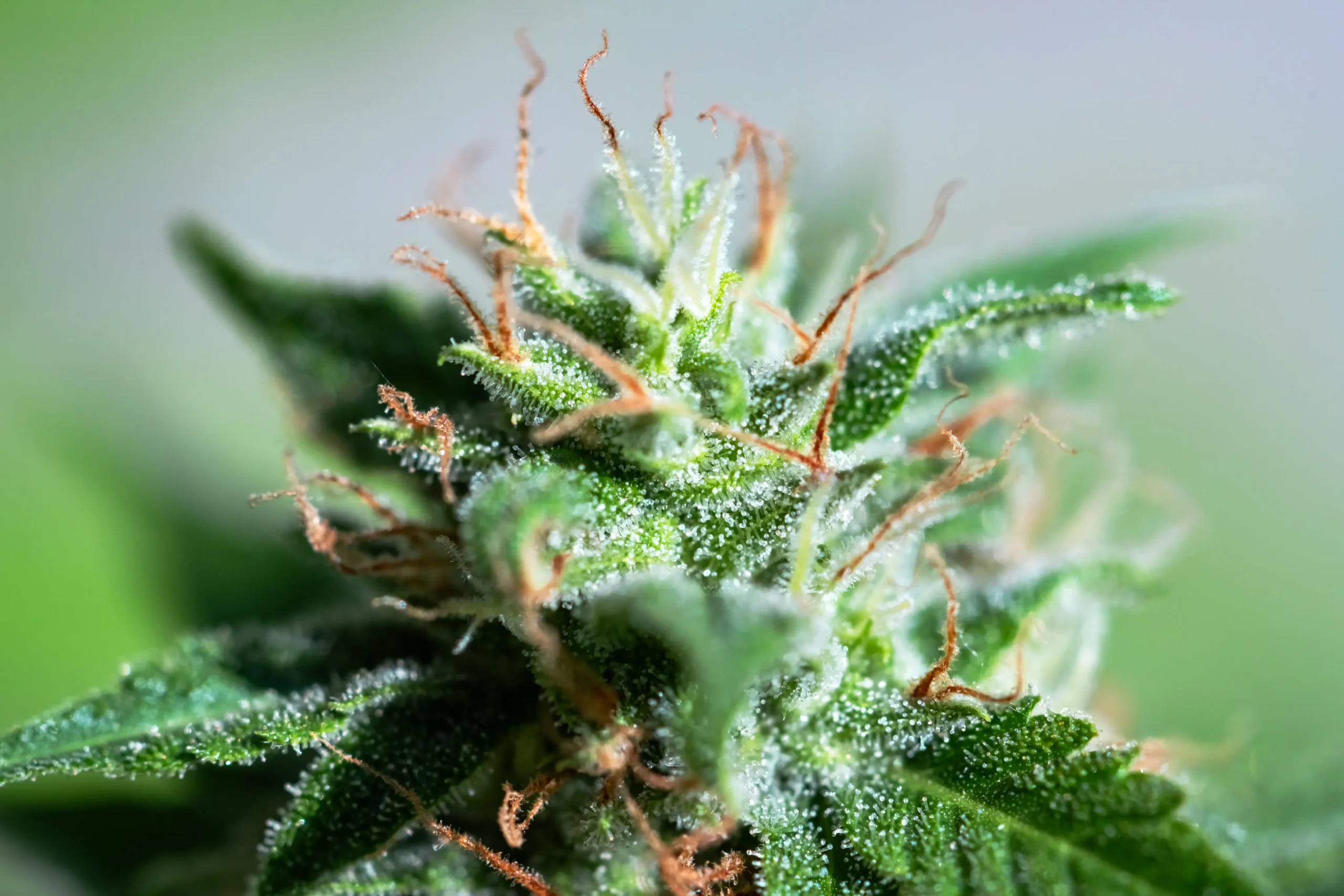
| Bud Structure | Large, sticky, dense to very dense colas |
| Yield Character | High potential, especially when large flower sites remain well lit and supported |
| Training Compatibility | Early topping, LST, selective pruning, low SCROG, compact multi-cola production |
| Support Need | Moderate to high once flowers gain late weight |
| Mold Risk | Meaningful in crowded or humid late-flower canopies because of dense bud structure |
| Grow Difficulty | Moderate; fast flowering is convenient but leaves little time to fix late structural mistakes |
| Best Time of Use | Evening and nighttime |
Genetic Lineage
Critical Kush brings together two genetic stories that pull in slightly different directions. Critical Mass is associated with production, quick flower development, and large buds that can become too heavy for their own structure. OG Kush contributes a more compact Kush identity, resin, dense flower, and a familiar earthy-pine-citrus profile. The cross does not simply make "more Kush." It creates a plant where the production traits are compressed into a relatively short flowering window.
That inheritance is visible in the way the canopy changes. Vegetative growth can look ordinary enough that a grower keeps too many shoots. After the flip, stretch is usually manageable compared with Haze or Diesel cultivars. The real expansion comes later through flower volume. Branches that seemed comfortably separated at the end of transition can begin touching when the colas thicken.
This is one reason the strain's yield reputation can mislead inexperienced growers. High yield does not mean the plant benefits from maximum branch count. The Critical Mass side already supplies the tendency to make substantial flower. The better question is how much of the plant can mature into premium flower without creating a humid interior or a forest of unsupported small branches.
OG Kush influence appears clearly in the finished sensory profile and effect. The flower tends to be earthier and more resinous than a purely sweet production strain, and the experience moves toward physical relaxation rather than the brighter mental balance some Critical-family hybrids can show.
Phenotype variation exists. Some plants stay shorter and more Kush-like, while others show more vigorous lateral production. Finish time can also move within the general 50-to-60-day window. The first run should therefore establish the selected clone's actual stretch, support timing, and final bud density rather than relying on an average description.
Effect Breakdown
Critical Kush does not usually need a complicated effect narrative because the direction is consistent: the experience moves toward physical stillness. What changes with dose is how quickly the user gets there.
At a light dose, the first phase can feel pleasantly warm and mentally calmer without immediate sleepiness. Tension feels less urgent, the mood can lift, and the body begins to soften. This can still suit quiet conversation, a film, or food, especially for experienced users who tolerate strong indica flower well.
At a moderate dose, the body effect becomes the main feature. Shoulders and limbs feel heavier, appetite often increases, and the desire to remain active declines. The mental tone can stay content and clear enough to follow entertainment, but motivation tends to narrow toward comfort rather than productivity.
A heavier dose pushes the strain into its most characteristic territory. Sleepiness and couch-lock become more likely, and the user may find the experience better suited to the end of the day than to any activity with timing or responsibility. The strain's nighttime reputation comes from this reliable movement from calm to heaviness rather than from a sudden knockout effect.
Dry mouth and dry eyes are common negative reports. Dizziness or anxiety can still occur, particularly when potency is underestimated. The fact that a strain feels physically calming does not remove THC-related risk for sensitive users.
The late phase is usually slow and physically relaxed. Some users appreciate that descent for sleep preparation; others may find it too heavy if consumed too early. Critical Kush is therefore more useful when the user wants a clear destination from the session rather than a flexible all-day effect.
Flavor & Aroma Profile
Critical Kush smells like its structure looks: dense, dark, and resinous. Earth is usually the foundation, joined by dry wood, pine, pepper, and a slightly herbal Kush tone. Citrus peel can brighten the top of the aroma, but it rarely turns the flower into a lemon-forward cultivar.
When a mature bud is broken open, the resinous side becomes stronger. Pepper and pine move forward, the earth becomes damp and hash-like, and some phenotypes add a faint fuel or sour note. This inner aroma is often more interesting than the closed-jar smell because the dense flower protects volatile compounds in the interior.
On inhale, the profile can begin with mild citrus and pine. The center becomes woody and earthy. The exhale leaves pepper, herbs, and a resinous aftertaste that can feel dry rather than sweet. A good cure makes those darker notes smooth rather than sharp.
The main flavor weakness is not a missing dessert note. It is roughness. Large dense flowers that are harvested a little early, dried unevenly, or sealed with too much internal moisture can produce smoke that feels heavy and green even when the aroma is strong. Critical Kush needs complete maturity and a disciplined dry more than it needs flavor enhancement.
Some expressions are more citrusy, while others lean almost entirely toward earth and pine. A keeper should be judged after cure because freshly dried buds can make the pepper and plant material seem stronger than they will be after several weeks of moisture equalization.
Excellent Critical Kush has a clean separation between the aromatic layers: pine and citrus first, earthy resin through the middle, pepper and hash at the end. Average flower often compresses all of that into a generic woody Kush taste.
Dominant Terpenes
| Terpene | Aroma Role | Cultivar Relevance | Scientific Caution |
|---|---|---|---|
| Myrcene | Earth, herbs, musk, ripe fruit | Frequently appears prominently and fits the deep earthy base | Does not independently explain sedation or couch-lock |
| Beta-caryophyllene | Pepper, wood, dry spice | Strong match for the peppery Kush finish | CB2 receptor activity does not prove strain-specific pain treatment |
| Limonene | Citrus peel | Helps explain the brighter lemon-orange edge in some phenotypes | Does not guarantee euphoria or anxiety relief |
| Pinene | Pine resin, fresh wood | Can support the forest-like top note found in some samples | Its presence does not prevent impairment or memory effects |
The recurring myrcene, caryophyllene, and limonene pattern is useful for describing Critical Kush, but exact terpene leadership varies among batches. One plant can smell strongly earthy and peppery while another shows more pine and citrus without either being an invalid expression.
The dense flower also changes how aroma is perceived. Outer flower can smell woody and dry while the broken interior releases sharper citrus or resin. Terpene testing captures concentration, but the sensory experience also depends on where those volatiles are retained in the flower and how the bud was dried.
Claims about medical effects should remain separate from the terpene table. These compounds are biologically interesting, but cultivar-specific therapeutic outcomes cannot be inferred simply from the fact that caryophyllene or myrcene is present.
Indoor vs. Outdoor Growing
| Decision Point | Indoor Growing | Outdoor Growing |
|---|---|---|
| Primary Challenge | Preventing a compact high-yield canopy from becoming crowded before dense colas finish | Protecting large dense flowers from rain, dew and late-season humidity |
| Flowering Speed | Very practical 50-to-60-day window in many expressions | Relatively early finish can help before deep autumn weather |
| Stretch | Low to moderate, making height easy to control | Plant can become wider and heavier with long vegetative growth |
| Plant Shape | Bushy and compact; works well as several separated main tops | Broad shrub with substantial lateral weight |
| Bud Density | Very high potential; internal flower humidity becomes important | Dense flowers make repeated wetting a major quality risk |
| Training | Early topping, LST, selective cleanup and a low support net | Topping plus cage or stakes to distribute branch weight |
| Support | Trellis is often valuable before late swell | Perimeter stakes or a cage help with wind and flower mass |
| Flavor Control | Stable indoor drying and canopy climate support a clean earthy-pine profile | Full sun can build excellent resin, but weather can force an early harvest |
| Best Fit | Growers who want a short cycle and can manage dense flowers carefully | Dry finishing climates where heavy branches can mature without prolonged rain |
Critical Kush makes sense indoors because its major weakness is easier to control there. The plant can be kept compact, the support system can be installed before the tops become sticky, and late humidity can be adjusted as the colas harden. Its relatively short flowering period also makes the room efficient.
The indoor limitation is crowding. High production can seduce the grower into keeping every branch and every bud site. That is exactly the wrong lesson. Critical Kush already knows how to make mass. The grower should protect the percentage of that mass that receives strong light and fresh air.
Outdoors, the plant gains room and root volume, which can turn the same genetics into a very heavy bush. The challenge shifts from space to weather. A dense cola that survives perfectly indoors can become vulnerable when it experiences repeated rain or cool dew and cannot dry internally.
For growers in a dry, sunny finishing climate, outdoor Critical Kush can use its high-yield background fully. In wet regions, the indoor environment is usually the more logical expression of the cultivar because the dense bud trait is too central to ignore.
Strain-Specific Grow Guidance
Use a simple frame and let the flowers create the weight
Critical Kush does not need an elaborate branch architecture to yield well. One early topping can create several leaders, and light LST can spread them enough that each main flower has its own zone. The plant's genetic tendency toward heavy bud development does the rest.
Repeated topping can work, but it often creates a canopy that is visually impressive in veg and inconvenient in week seven. The limiting factor is rarely the number of possible bud sites. It is the amount of dense flower the available air and light can support safely.
Finish major canopy cleanup soon after stretch
The plant's low-to-moderate stretch means the final structure becomes visible fairly early. Once the transition settles, identify branches that remain buried inside the plant and weak shoots that will never receive meaningful light.
Removing those early improves airflow around the strong tops and reduces the amount of leafy lower flower that must be trimmed later. Do not keep a weak branch simply because a high-yield strain seems capable of carrying it. Critical Kush rewards selectivity.
Keep broad leaves from sealing the center
The bushy indica structure can create a center where leaves overlap before the flowers are large. Use branch position as the first correction. Move leaders outward and create a clear path through the plant.
After that, selectively remove fan leaves that permanently cover a flower or close the remaining air channels. A complete strip is unnecessary. The target is a readable plant with functioning foliage and visible space between major flowers.
Feed for rapid flower production without forcing excess leaf
Critical Kush can produce substantial biomass in a short time, which can make it look like an automatic heavy-feeding candidate. A healthy plant may indeed use a strong nutrient supply, but the response is not limitless.
More feed is not automatically more quality
General cannabis nutrition research shows that flower yield does not rise indefinitely with more nitrogen, phosphorus, or potassium. For this cultivar, excessive late nitrogen is especially counterproductive because it keeps a dense canopy leafier and harder to dry.
Follow water use, leaf tone, tip condition, and root-zone behavior. If the plant is dark, slow to dry, and already building flower, additional concentration is unlikely to solve a meaningful problem.
Expect irrigation demand to change quickly
The short flowering window compresses the transition from vegetative growth to heavy flower. Water use can rise rapidly during stretch and early bud formation, then change again when vertical growth slows.
Do not maintain a fixed irrigation interval because the plant was thirsty two weeks earlier. Dense late flowers are safer when the root zone still receives oxygen and the canopy is not being supported by chronically saturated medium.
Install support before the plant looks like it needs support
Critical Kush branches can appear sturdy until the flowers enter their final swell. Once several large tops begin leaning, correcting them often pushes flowers into each other or requires handling sticky colas.
A low trellis or soft individual support installed earlier is easier. The purpose is to keep every major cola upright in its light lane and to preserve gaps between adjacent flowers. The net is a structural tool, not a way to compress the canopy into one surface.
Treat dense flower as a separate climate from the room
Cannabis research has shown that humidity inside an inflorescence can remain notably higher than ambient room humidity. Critical Kush makes this point practical because large colas can develop a cool, sheltered interior even when the leaves around them appear to be moving.
Inspect the bases of sugar leaves, contact points between buds, and any area where two heavy tops lean together. A sudden dead sugar leaf inside one cola is more important than a room sensor that looks perfect.
Increasing fan speed alone is not the ideal response. Physical separation comes first. Air movement can then pass through the canopy instead of striking the outside of a closed mass.
Protect the tops from excessive light late in flower
A high-yield strain does not need the fixture pushed closer simply because the buds are swelling. Once the upper colas are already dense, additional light that creates bleaching, heat, or stress can reduce aroma and create irregular late growth without improving usable yield.
Compare top and mid-canopy flower quality. If cooler mid-level buds smell cleaner and remain less stressed, the next cycle should improve canopy uniformity rather than add more intensity.
Harvest from flower completion, not from the fastest published date
Critical Kush commonly finishes quickly, but 50 or 56 days is not a command. Some expressions need more time. Look for completed calyx swelling, mature trichomes on the actual flower, a strong reduction in fresh pistil production, and a complete earthy-pine-citrus aroma.
The final week matters because large flowers can continue adding real weight late. Cutting early to match a calendar can sacrifice both density and smoothness. Waiting past full maturity in a humid canopy, however, adds risk without guaranteed quality. The correct window is cultivar maturity plus flower safety.
Weedth Bud Flavor Tips
Critical Kush is not a fragile fruit strain, but its best flavor still depends on preserving the lighter top notes that sit above the dense earthy base. Pine and citrus disappear before pepper, wood, and hash-like resin.
The first flavor decision occurs before harvest. Do not let the upper colas run hot in the final weeks simply because the plant is almost finished. If the tops begin smelling duller than the sides, reduce local heat and light stress rather than trying to replace lost aroma later.
Outdoor plants should be harvested from a clean weather window whenever possible. A mature flower that has been repeatedly soaked is a poor candidate for a slow controlled dry, while an immature flower cut simply to avoid one harmless shower can taste green. The grower has to balance maturity with actual weather risk.
Large Critical Kush colas should not be assumed to dry uniformly. A surface that feels ready can surround a center that is still holding significant moisture. If the top flowers are dramatically thicker than the side branches, separate the harvest into similar-density groups so each can reach storage condition at its own pace.
Direct fan air can create a dry shell while leaving the core wet. Use room circulation rather than airflow aimed at flower. The goal is an even transition, not the fastest possible moisture loss.
During cure, the raw herbal edge should fade and the pine-citrus detail should become easier to see above the earth. If the jar becomes sour, musty, or unusually warm after sealing, internal moisture was too high and the batch needs immediate correction.
Critical Kush often becomes smoother after several weeks because the woody and peppery profile can feel coarse when freshly dried. The cure is successful when the smoke becomes rounder without losing resinous intensity.
Average Critical Kush is heavy and pungent. Excellent Critical Kush is heavy, pungent, and clean enough that the citrus-pine top remains identifiable through the dense earthy finish.
Weedth Bud Boost Tips
The biggest yield advantage is already genetic. Critical Kush can build large flowers quickly, so the grower should spend less time trying to create more sites and more time making sure the selected sites mature at full quality.
Indoors, set the final number of leaders according to canopy area rather than to what the plant can physically produce. If six strong branches fit with gaps, eight branches are not automatically better. The extra two may reduce side light and make the final humidity problem worse.
A low SCROG can increase premium yield when it supports and separates the main tops. It becomes counterproductive when every square is filled before stretch and late colas grow into each other.
Lower growth removal should be evidence-based. If a side branch reaches the light and consistently makes dense flower, keep it. If interior sites stay pale and leafy, remove them earlier on the next run and let the plant concentrate its short flowering cycle on the productive zone.
Root volume should support the intended plant size without leaving a small root system inside a permanently wet container. A high-yield cultivar still depends on oxygenated roots. More medium is helpful only when the plant can use it predictably.
Do not use aggressive bloom boosting as a substitute for structure. General cannabis data do not support a simple relationship where ever-higher potassium creates ever-larger flowers. The plant's yield ceiling is more likely to be limited by light distribution, root health, and late flower climate.
Outdoor yield should be judged after weather loss. A giant plant with several damaged colas is not more productive than a slightly smaller, better-spaced bush that finishes every top cleanly.
Critical Kush quality yield is the highest amount of dry, mature, mold-free flower the canopy can support without colas touching, branches collapsing, or the drying room becoming the new bottleneck.
Medical Uses & Benefits
Critical Kush is most often chosen for relaxation, sleep, appetite, stress relief, and distraction from physical discomfort. Its strong indica-style effect makes those uses plausible from user experience, but they should remain anecdotal rather than described as clinical treatment.
Sleep is the most coherent reported use because the strain's effect naturally becomes heavier over time. A moderate-to-high dose can make activity less appealing and can help some users settle into a nighttime routine. That does not mean every person with insomnia will respond the same way.
Pain relief is also frequently reported. THC can change pain perception and the heavy body effect may reduce how intrusive physical discomfort feels. It is more accurate to describe this as symptom relief reported by users than to claim that the cultivar has a unique analgesic mechanism.
Appetite stimulation can be strong. For some users this is useful; for others it is a reason to avoid the strain. The same dose that helps someone eat may simply feel inconveniently hungry to another person.
High potency and low CBD also create limitations. Dizziness, anxiety, dry mouth, and dry eyes are possible, and heavy sedation can interfere with daytime function. Anyone using cannabis for a diagnosed condition or alongside medication should consult a qualified healthcare professional.
Ideal User Profile
Critical Kush suits the person who wants a clear evening destination: food, relaxation, reduced physical tension, and eventually sleep. It is less about enhancing an activity and more about making activity optional.
Users who enjoy earthy, woody, pine-forward flower will find the flavor familiar. People seeking fruit candy, cream, or a bright daytime citrus profile will probably find the strain too dark and traditional.
For growers, it is attractive to anyone who values a short flowering window and substantial bud mass but is willing to manage late density carefully. The cultivar can fit modest vertical spaces because stretch is generally manageable.
It is not ideal for a grower who enjoys leaving an extremely dense plant untouched until harvest. The plant may survive that approach, but premium yield and mold safety improve when the inner canopy is opened and heavy branches are supported before they need rescue.
Outdoor growers should choose it when the local finish is dry enough for dense flowers. In rainy autumn climates, the fast flowering time helps but does not erase the physical risk created by large compact colas.
Grower Notes and Feedback
A common surprise is how quickly the plant moves from ordinary-looking flowers to heavy colas. The short cycle makes late swell feel compressed. Growers who wait until the branches are already sagging often discover that installing support without crowding the buds is harder than expected.
Another recurring observation is that the canopy can look manageable from above while the interior becomes crowded. The broad indica structure hides overlapping leaves and small shaded branches below the top surface. Side inspection is often more informative than a top-down view.
Grower reports frequently discuss dense buds and mold concern together. That does not mean Critical Kush automatically rots. It means the cultivar gives the grower less margin for poor spacing or persistent humidity than a more open-flowered plant.
Yield reports are often enthusiastic, but they should be interpreted through quality. A cultivar that makes large flowers can produce impressive wet weight while still giving a disappointing premium percentage if the lower canopy remains leafy or the biggest tops are damaged during drying.
The plant is usually easier to manage than a long Haze because height and flowering duration are predictable. Its difficulty is concentrated in the second half of bloom rather than distributed across months.
Trim work can be efficient when the plant has been cleaned correctly. Large mature flowers and resinous sugar leaves are straightforward to process. An overcrowded plant produces more buried leaf and more small interior material, which makes the same genetics feel much less efficient.
The best repeat-run notes are the date stretch stopped, support week, final cola spacing, dryback change, how long the thickest flowers needed to dry, and the percentage of the harvest that graded as premium flower rather than small interior buds.
Weedth Editor's Note
What matters after the headline numbers
By late flower, yield would stop being my main concern with Critical Kush. Air space would become the priority. The plant has enough genetic capacity to make weight without being pushed into a solid wall of bud.
I would set the support before I need it and treat every gap between colas as part of the production system. A gap does not look impressive in a harvest photo, but it can be the reason both flowers reach the jar intact.
I would also refuse to feed the reputation. A strain described as high-yielding does not automatically need high nutrient concentration. If the leaves and roots say the plant is already satisfied, I would leave the chemistry alone and protect the environment.
The drying room deserves the same planning as the grow room. Critical Kush can produce enough dense material that a small drying area suddenly becomes crowded. I would rather break the harvest into well-spaced branch groups than stack large wet colas together after spending eight weeks keeping them apart.
What makes the strain worthwhile to me is efficiency: a relatively short cycle can produce serious resinous flower with a reliable evening effect. That efficiency disappears when the final canopy is treated like a competition for the most mass in the least space.
Weedth Score
Growing Experience 8.2/10 Short flowering and manageable height are strong advantages, but dense late colas demand airflow and support discipline.
Bud Structure & Visual Appeal 9.0/10 Large sticky flowers and strong resin give impressive bag appeal, with density that can also become the main grow risk.
Aroma Complexity 8.3/10 Earth, pine, wood, pepper and citrus are satisfying but less intricate than elite fruit or floral cultivars.
Flavor & Smoothness 8.5/10 A patient dry and cure produces clean classic Kush flavor; uneven drying makes the same profile rough and heavy.
Effects & High Experience 8.8/10 Strong nighttime relaxation, appetite and sleepiness are coherent and dependable for users who want that direction.
Overall Satisfaction & Recommendation 8.6/10 Excellent for growers who want fast dense production and are willing to treat humidity and drying as core parts of the grow.
Personal closer: I would keep the Critical Kush clone that finishes with the most separated heavy colas, not the plant that looks heaviest while the flowers are still wet.
FAQ
What is Critical Kush's lineage?
The most commonly documented lineage is Critical Mass crossed with OG Kush. That pairing explains the combination of high production, dense flowers, quick flowering, resin, and a heavy Kush-style effect.
How long does Critical Kush flower indoors?
Most descriptions place it around 50 to 60 days, with roughly eight weeks being common. Phenotype and environment can move the actual harvest date, so use flower maturity rather than a fixed calendar.
How much does Critical Kush stretch?
Usually low to moderate compared with sativa-dominant hybrids. Height is generally easier to manage than late flower density.
Does Critical Kush respond well to topping?
Yes. One early topping can create several strong leaders and distribute the plant's yield potential across the canopy. Repeated topping is useful only when the room can support the resulting number of colas.
Is Critical Kush good for SCROG?
A low open screen can work very well because it supports and separates heavy tops. Avoid completely filling the screen before the flip, since dense flowers need room to expand later.
Should I lollipop Critical Kush?
Remove weak interior and permanently shaded growth after stretch, but keep lower laterals that genuinely reach useful light. The goal is premium flower percentage rather than a fixed amount of bare stem.
Is Critical Kush a heavy feeder?
It can use a solid nutrient supply under vigorous growth, but high yield does not mean unlimited appetite. Follow root-zone behavior, water use, leaf color and tip condition rather than automatically increasing concentration.
Why are my Critical Kush buds touching late in flower?
The plant can gain more horizontal volume from bud swelling than from stem stretch. Leave larger branch gaps early and use support to preserve those lanes instead of pulling leaning colas inward.
Is Critical Kush susceptible to bud rot?
Dense mature flowers can hold internal humidity, especially when colas touch or the room remains damp. The cultivar is not guaranteed to rot, but its flower structure gives poor airflow less margin for error.
Does Critical Kush need a trellis?
It often benefits from one. Install support before the final swell so large tops remain upright and separated without heavy late handling.
Why does my Critical Kush take longer than 56 days?
Published flowering times describe a typical range, not every phenotype. If the plant is healthy and still completing calyx development, a few extra days can be normal.
When should Critical Kush be harvested?
Look for complete calyx swelling, mature trichomes on flower, a strong slowdown in fresh pistils, and a fully developed earthy-pine-citrus aroma. Do not cut only because the published day has arrived.
How should dense Critical Kush colas be dried?
Give them enough space and avoid direct fan air. If top branches are much thicker than the rest, separate the harvest into similar-density groups so the outside and center can dry more evenly.
Is Critical Kush good outdoors?
Yes in a sunny climate with a relatively dry finish. Its quick flowering is helpful, but large dense buds remain vulnerable to repeated rain and dew.
Is Critical Kush a daytime strain?
For most users it is better suited to evening or nighttime. Relaxation, hunger and sleepiness become stronger as the dose rises.
Similar Strains
Critical Mass: The obvious production-side comparison. It shares the heavy flowering tendency but is generally less Kush-heavy in flavor and effect.
OG Kush: The sensory and effect reference. OG Kush brings the earth-pine-citrus resin profile with less emphasis on oversized production colas.
Northern Lights: A similarly practical fast indica with manageable height and strong evening relaxation, usually with somewhat smaller and more classic pine-sweet flowers.
White Rhino: Another dense resinous indica-dominant option with strong yield potential and a similarly important late humidity conversation.
Bubba Kush: A heavier traditional Kush alternative with slower vegetative behavior and more coffee-earth character rather than production-focused cola mass.
Big Bud: A grow-style alternative for people who prioritize large harvest structure, with less of the OG Kush sensory identity and a different effect balance.
Share this article
A quick overview of the topics covered in this article.
Follow us
Latest articles
September 9, 2026
September 9, 2026
September 9, 2026